Brief Report

Leveraging Informatics to Manage Lifelong Monitoring in Childhood Cancer Survivors

1
Lisa Dean Moseley Foundation Institute for Cancer and Blood Disorders, Nemours Children’s Health, Delaware Valley, Wilmington, DE 19803, USA
2
Jefferson College of Population Health, Thomas Jefferson University, Philadelphia, PA 19107, USA
*
Author to whom correspondence should be addressed.
Current address: Leukemia & Lymphoma Society, Washington, DC 20005, USA.
Informatics 2026, 13(2), 23; https://doi.org/10.3390/informatics13020023
Submission received: 15 December 2025 / Revised: 26 January 2026 / Accepted: 27 January 2026 / Published: 29 January 2026

Abstract

Background: Electronic health records (EHR) have long held promise for sharing information efficiently, but this remains challenging. This quality improvement initiative sought to improve the accurate documentation of anthracycline and radiation therapy exposures in pediatric oncology patients who were treated at different institutions through a quality improvement methodology and EHR tools. Methods: A custom-built EHR smartform was previously created. Modifications were made to the smartform, and quality improvement methods were utilized to improve receipt of radiation summaries from other institutions and documentation of chemotherapeutic doses. Results: Three months after interventions, including clinician education and smartform updates, accurate anthracycline documentation improved from ≤60% to 100%. At 12 months post-intervention, accurate anthracycline documentation remained > 90%. Documentation of radiation therapy improved similarly at 3 months post-intervention, with sustained improvement to 81% at 12 months post-intervention. Conclusions: Accurate documentation of radiation and chemotherapeutic exposures for pediatric oncology patients improved with education and changes to an EHR smartform. A central data location with quality assurance tools to ensure accuracy is one solution enabling accurate tracking of exposures and care plans for children with chronic illnesses.

1. Introduction

Electronic health records (EHR) have long held promise as a mechanism to share information effectively and efficiently [1,2,3]. More than fifteen years after the passage of the Health Information Technology for Economic and Clinical Health Act (HITECH) in the United States [4], the use of the EHR has created new problems even as most healthcare information is captured electronically [5]. With healthcare in the United States often fragmented among institutions, it can be difficult to compile accurate data efficiently in one place or to share information, a concept that relies on interoperability.
With 85% of children with cancer in the US having survival rates beyond five years, with multiple potential long-term effects [6], information availability becomes even more important. The problem is complex because of the low number of locations for treatment of childhood cancer and the lack of a uniform system for collecting and sharing data. Pediatric oncology patients may receive their chemotherapy at a children’s hospital and then receive their radiation therapy at a different hospital [7,8]. The same is true for other medically complex children. Multiple barriers have been identified, including numerous different practices visited annually, complex health records, and the associated fragmentation among multiple information systems [8]. Rural settings, where there may be no local pediatric subspecialists, can face the same issue of lack of EHR integration [9]. Previous efforts to extract data efficiently from the EHR have included tools to quickly search and report data as well as modalities for tracking [10,11,12].
Easy and accurate access to contributors to cardiotoxicity in childhood cancer survivors is critical, as cardiotoxicity is a well-defined and life altering late effect of cancer treatment that primarily happens to adults who are no longer under the care of pediatric specialists [13]. Anthracyclines are chemotherapeutic agents known to be cardiotoxic. To predict childhood cancer survivors’ risk of developing cardiotoxicity years to decades after completion of therapy, one must know the cumulative anthracycline dose as well as the cumulative dose of radiation therapy received by the heart [14]. The relative risk of developing cardiotoxicity is correlated with the doses of these treatments. Given the need to monitor childhood cancer survivors over their lifespan for this potential complication, and the fact that the monitoring guidelines set forth by the Children’s Oncology Group (COG) require accurate knowledge of anthracycline and radiation exposures [14], a quality improvement project was created to focus on accurate documentation of anthracycline and radiation exposures in the EHR. This information could be used by practitioners to evaluate risk.
At Nemours Children’s Hospital Delaware (Nemours), a manual chart review showed that 23% (5/22) of patients completing chemotherapy had an accurate cumulative anthracycline (chemotherapy) dose—defined as matching the additive dose of anthracycline as given per medication review with the correct conversion—documented in the EHR during the 6 months prior to this project. For those receiving radiation therapy over the preceding 12-month period, 33% (3/9) of radiation doses were accurately documented.
The specific improvement aims to be achieved within 3 months of interventions were (1) to increase accurate documentation of anthracycline exposure in the smartform for oncology patients completing chemotherapy from a mean of 58% to 75%; (2) to increase accurate anthracycline doses documented in the smartform for oncology patients completing therapy from a mean of 20% to 75%; (3) to increase accurate documentation of radiation therapy documented in the smartform for oncology patients completing radiation in a given month from a mean of 33% to 75%; and (4) to increase the percentage of end-of-radiation treatment (EOT) summaries available in the Nemours EHR within 1 month of completion of radiation from a mean of 58% to 75%. An additional improvement aim was added after the pilot phase: to achieve and sustain accurate documentation for all measures to a mean of 90%.

2. Materials and Methods

Nemours Children’s Health is one of the largest integrated pediatric health systems in the United States. Nemours—Delaware cares for approximately 100 patients with a new cancer diagnosis annually. Nemours—Delaware refers patients who require radiation therapy to 2 outside institutions. Institution 1 uses the same EHR as Nemours. Institution 2 uses a different EHR.
A custom-built EHR smartform was created for pediatric oncology prior to this project to track diagnostic information, treatment, and adverse events. These trackable items were under-utilized. Additionally, chart reviews over a one-year period demonstrated that 44% (4/9) of radiation therapy EOT summaries were not found in the EHR within three months of completion of radiation. Without consistent usage of the smartform, there was no reliable way to track at-risk patients.
Oncology clinicians met to determine barriers to usage of the smartform, which included a lack of awareness of the smartform’s location, a perception that it added significant time to documentation, a lack of knowledge about how to convert different anthracyclines to doxorubicin equivalents, and the inability to find radiation therapy EOT summaries in the EHR.
The primary barrier to the receipt of radiation therapy EOT summaries from Institution 1 was documentation being placed in a letter. Despite utilization of the same EHR and the presence of shared clinic notes, the letters required separate steps to be sent. There seemed to be no triggers to ensure the letters were received by the referring institution. The second institution used a different EHR and required patients to opt-in to share data. EOT summaries were faxed. Discussions about ways to automate a monitoring process for receipt of EOT reports ensued as the identified barriers were institution dependent, and changing those practices was not in scope for this project.
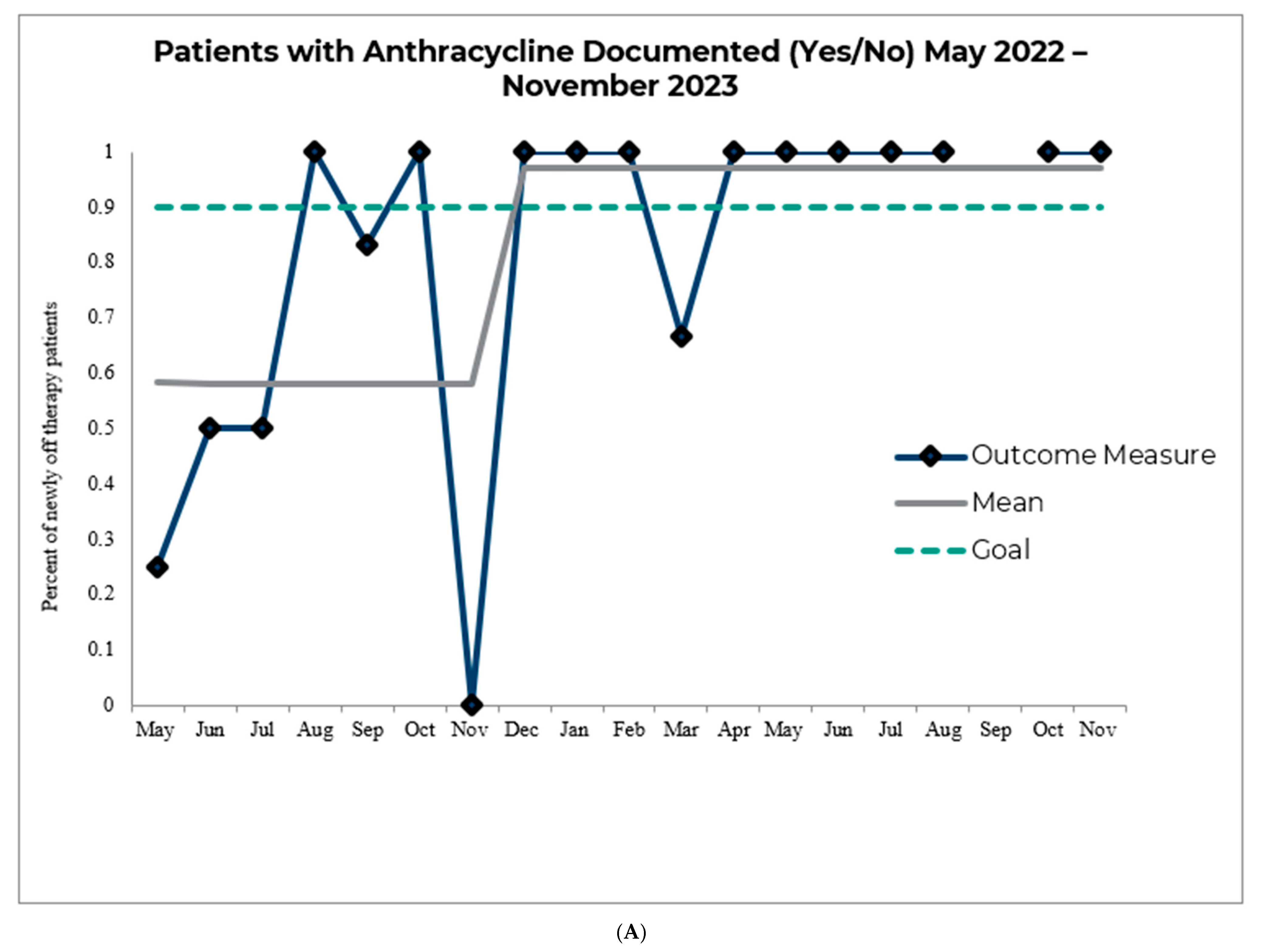
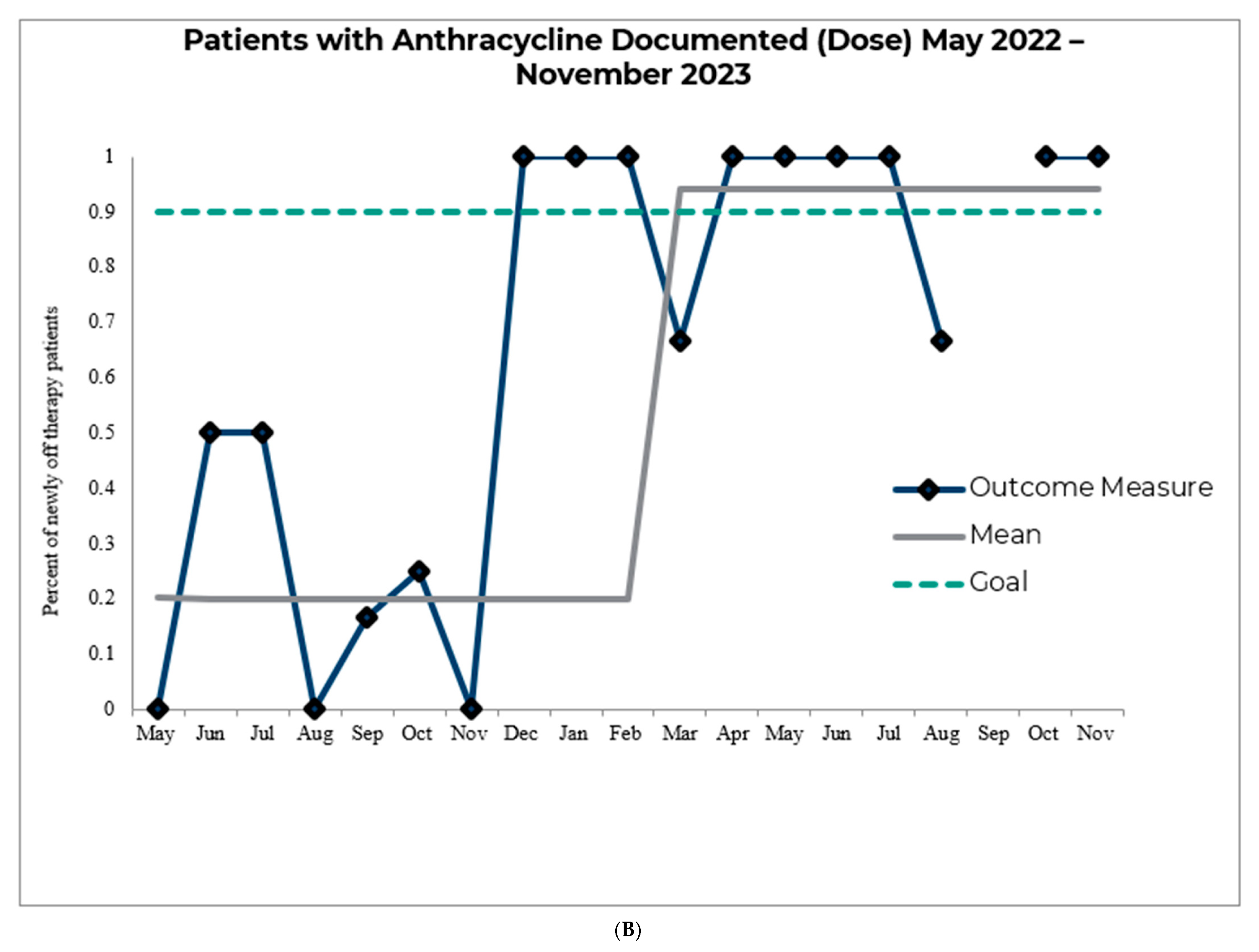
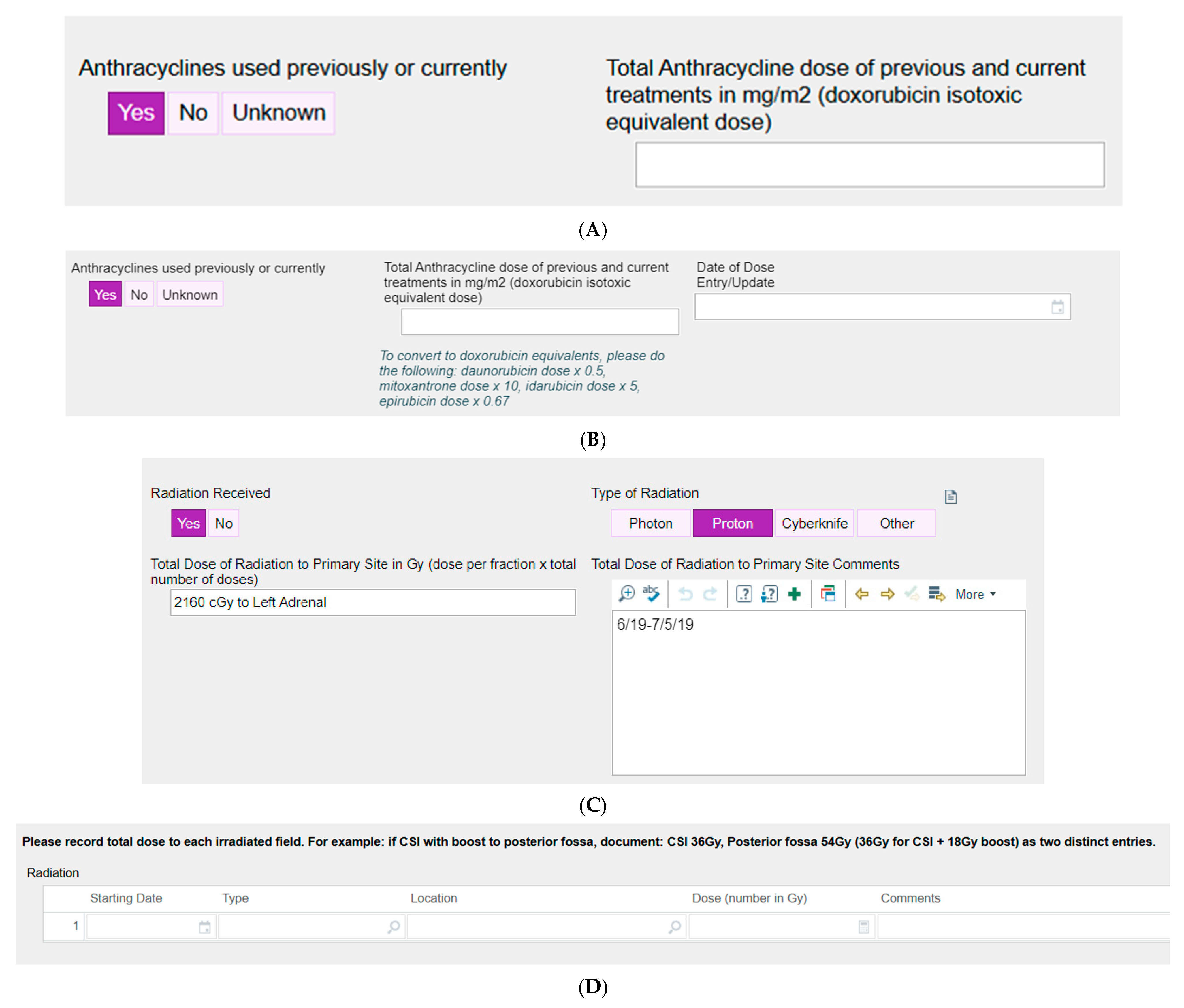
Serial plan-do-study-act (PDSA) cycles occurred. PDSA cycle 1 occurred in October 2022 and involved introducing an automated anthracycline conversion calculator into the EHR. This tool did not function correctly and was therefore quickly removed. The second PDSA cycle took place in December 2022. This improvement cycle included updates to the smartform and to clinician education. Figure 1A,B shows the changes to the anthracycline documentation. The changes made to both anthracycline and radiation documentation were discussed and agreed upon between the primary oncology stakeholders and three EHR specialists. Education was provided requesting that this information be entered at the end of a patient’s planned treatment course.
The risks for late effects depend on the radiation dose, so accurate documentation of the dose given to an anatomic structure is needed. For radiation exposure tracking, the documentation method was changed, as seen in Figure 1C,D. This model allows for variability among patients, including those who receive a basic dose to all targets followed by a boost to one specific area. PDSA cycle 3 was started in February 2023, with strategies being identified to prevent missed EOT summaries. Reports scanned into the EHR media tab were renamed with a uniform format to improve ease of identification. As a result of this project, Institution 1 underwent changes to the format of their EOT notes and are now visible through Care Everywhere, a health information exchange tool.
While these updates were occurring, PDSA cycle 3 focused on additional changes to the smartform that were made to improve usability. With this optimization, it became easier to persuade stakeholders to use the form. After completion of these changes, a detailed email was sent to all stakeholders with information regarding the updates and representative examples. Check-ins were held between team members and individual clinicians in whom perceived resistance to change was identified.
Clinicians were asked to enter the total anthracycline dose at the end of a patient’s total therapy and radiation doses at the end of radiation therapy to minimize work and maximize benefit. Receipt of radiation therapy EOT summaries and documentation within the oncology smartform were measured. PDSA cycle 4 was introduced in August 2023 and included weekly chart reviews for quality assurance. The charts for all patients completing therapy during the defined time frame were reviewed manually. Quarterly review of documentation was analyzed through data recorded on a run chart. Run charts included the mean and goal. A shift in the mean was charted if 6 or more consecutive points were either all above or all below the mean line.
This project was reviewed by the local Quality Review Committee at Nemours and did not require Institutional Review Board (IRB) approval. Because processes and behaviors at the referral institutions were not in scope and the project requested no changes in them, no effort was made to engage their IRBs.

3. Results

This project took place between June 2022 and November 2023. Electronic health record-based oncology smartform changes were instituted with clinician education in December 2022. The appropriate documentation of patients receiving anthracyclines and the total dose received increased to 100% within 3 months of the intervention, with a previous mean of 60% or less. In addition, within 3 months of the initial interventions, 100% of patients had radiation therapy treatments documented within the smartform, and all completed radiation therapy reports were available for review in the EHR.
Data continued to be collected for 12 months after the implementation of smartform changes and clinician education. For anthracycline documentation, a mean of 97% of patients who completed therapy had exposure to anthracycline documented (Figure 2A) and a mean of 94% had the dose documented (Figure 2B). The number of patient charts evaluated during this time ranged from 0 to 6 per month.
The project has continued beyond the one-year time point; 32 additional patients who received anthracyclines completed therapy by December 2024. In 2024, 31/32 (97%) of eligible patients had the “yes” option selected if they did receive anthracyclines. Of those, 25/31 (81%) had the correct dose documented. This decrease may have been related to several months without advanced practice providers (APPs) because the documentation improved again when new APPs were hired.
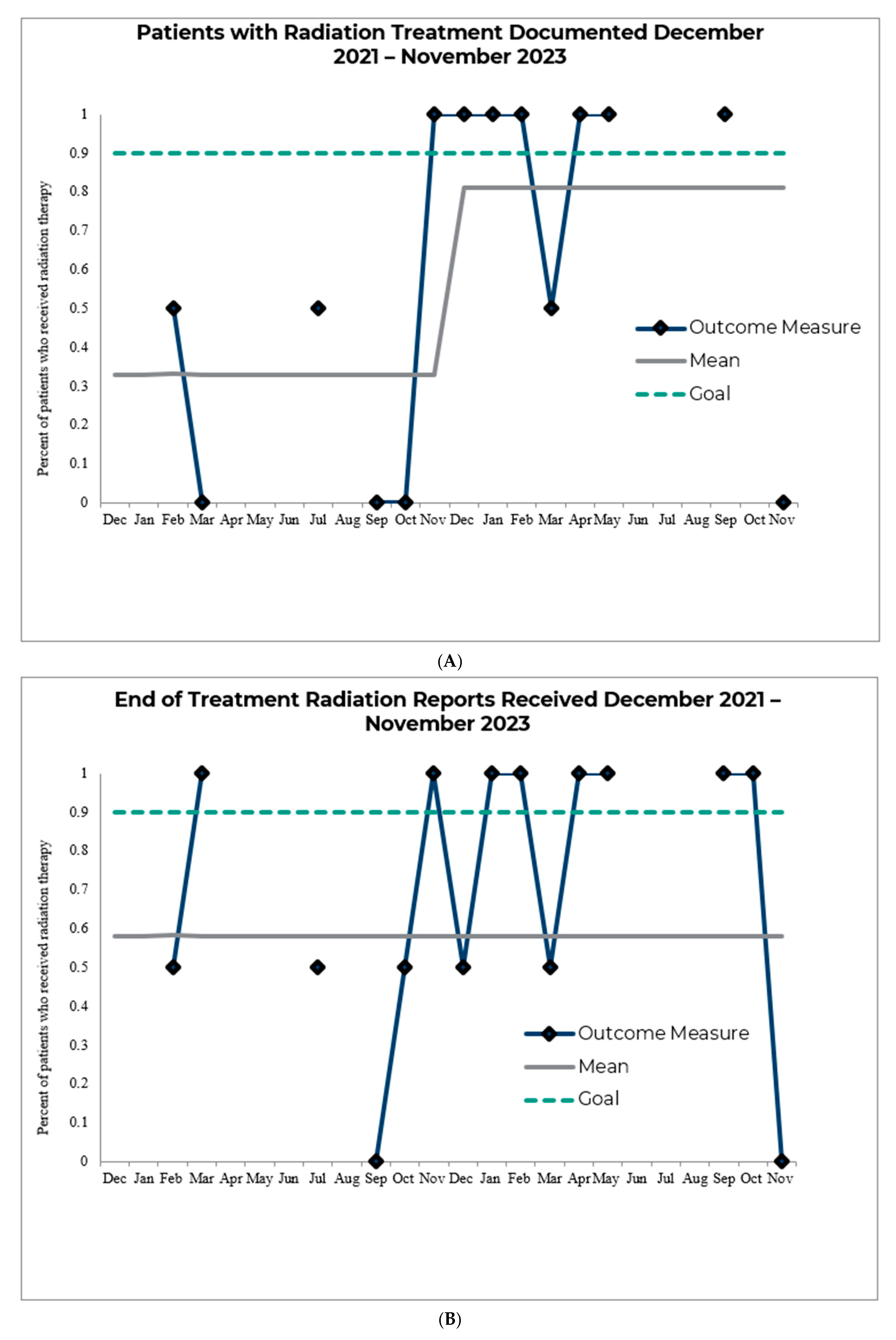
Fewer patients undergo radiation therapy per month than those who complete chemotherapy. In the 12 months following the initial intervention, there was a shift in the mean for radiation documentation to 81% (Figure 3A). The month of November 2023 is an outlier. Timely receipt of end of radiation treatment summaries remained below goal (Figure 3B). Of note, patients who undergo total body irradiation as conditioning for bone marrow transplant are only included in the end-of-radiation-treatment summary section, as bone marrow transplant documentation occurs outside of the oncology smartform.
Following this initial 12 months, there were an additional 19 patients who received radiation therapy before the end of 2024. Thirteen of fifteen eligible patients had radiation therapy documented (87%), an improvement from 2023. There remain patients for whom the EOT summaries have not been sent, but the processes in the other institutions remain out of scope.

4. Discussion

Through sequential interventions, which included changes to the smartform, new strategies for receiving EOT summaries from outside radiation oncology sites, and clinician education, the accurate documentation of anthracycline and radiation treatments increased. This was sustained over a 12-month period. Notably, documentation of both anthracycline therapy and radiation therapy increased prior to the intervention due to discussions among clinicians regarding this improvement project as it started in June 2022. However, the most dramatic increases in documentation were seen starting in December of 2022.
This work required several steps, including designing and implementing the smartform changes, standardizing how radiation reports are listed, trial of a proposed anthracycline calculator, analyzing the process of information sharing from outside institutions, and understanding the nuances of how different institutions decide how and when records are shared. Manual uploads of reports are still required, and the potential for patients to opt out of sharing data between and among institutions remains a barrier.
Despite the work in the past decade, sharing of information between institutions and usability of EHRs remains unoptimized. Teams that have the time and experience may be able to address information gathering from medically complex cases, but with funds to hospitals and healthcare at risk, clinicians may not prioritize this effort. Improving interoperability is necessary to efficiently and safely care for patients with complex medical needs. The barriers we encountered are not limited to pediatric oncology and need to be addressed nationwide.
There are several limitations to this study. This quality improvement project was completed at a single institution with direct informatics support and within a single EHR. It may be more difficult for others to replicate the improvement. However, the intent of the project, which was to evaluate documentation and workflow and introduce multiple solutions that were targeted to a user group, can be performed anywhere. A second limitation is that radiation was completed at outside institutions, and there were limitations to what interventions were possible with a team at another institution. As noted, there was a period of temporary decrease in documentation with staff turnover, though the quick improvement within a few months suggests that these methods are straightforward and continue to be taught.

5. Conclusions

Accurate identification of patients at risk for late cardiac effects via tracking of anthracycline and radiation therapy exposures is an important first step in improving patient outcomes. Though this data is now captured more than 85% of the time in this institution, further measures must be put in place to allow for ongoing quality assurance and automation. The solutions noted in this paper are one example of a way to identify and monitor childhood cancer survivors who are at risk for late cardiac effects. Though there are many ways to create and track smart data elements, this technology worked well for this institution. Notably, given the limitations of the EHR, a learning health system is required to maximize the use of the data entered. Informatics and information technology staff may not be available for projects that are limited to so few patients, despite the benefit to those patients. A project such as this may not be feasible for smaller pediatric oncology departments. However, shared data dictionaries between institutions can ensure that each one does not need to build solutions from scratch.

Author Contributions

K.A.D. conceptualized and designed this quality improvement work and data collection instruments, collected the data, carried out the analysis, drafted the initial manuscript, and critically reviewed and revised the manuscript. R.G. and E.A.K. conceptualized and designed this quality improvement work and critically reviewed and revised the manuscript. M.R.C. and E.G. drafted the initial manuscript and critically reviewed and revised the manuscript. All authors have read and agreed to the published version of the manuscript.

Funding

This research received no external funding.

Institutional Review Board Statement

This project was reviewed by the Nemours Quality Review Committee and was exempt from IRB approval. The Nemours Office of Human Subjects Protection has delegated to the Quality Review Committee (with oversight by the Institutional Review Board) the review of quality improvement (QI) projects. The Quality Review Committee reviews projects for adherence to a plan consistent with QI methodology and in accordance with DHHS and related regulations. This project was designed as a QI project and was therefore reviewed and approved by the Quality Review Committee in accordance with local policy.

Data Availability Statement

Data is available for review upon request. The corresponding author can be contacted to receive more information about the EHR tool discussed.

Conflicts of Interest

The authors declare no conflicts of interest.

References

  1. Millard, W.B. Electronic health records: Promises and realities: A 3-part series part I: The digital sea change, ready or not. Ann. Emerg. Med. 2010, 56, A17–A20. [Google Scholar] [CrossRef] [PubMed]
  2. Neidich, A.B. The promise of health information technology. Virtual Mentor. 2011, 13, 190–192. [Google Scholar] [CrossRef] [PubMed]
  3. Tondora, J.; Stanhope, V.; Grieder, D.; Wartenberg, D. The Promise and Pitfalls of Electronic Health Records and Person-Centered Care Planning. J. Behav. Health Serv. Res. 2021, 48, 487–496. [Google Scholar] [CrossRef] [PubMed]
  4. Burde, H. The HITECH Act: An Overview. Available online: https://journalofethics.ama-assn.org/article/hitech-act-overview/2011-03 (accessed on 29 May 2025).
  5. Tsai, C.H.; Eghdam, A.; Davoody, N.; Wright, G.; Flowerday, S.; Koch, S. Effects of Electronic Health Record Implementation and Barriers to Adoption and Use: A Scoping Review and Qualitative Analysis of the Content. Life 2020, 10, 327. [Google Scholar] [CrossRef] [PubMed]
  6. Long-Term and Late Effects of Childhood Cancer Treatment. Available online: https://www.cancer.org/cancer/childhood-cancer/late-effects-of-childhood-cancer-treatment.html (accessed on 29 May 2025).
  7. Holt, D.E.; Hiniker, S.M.; Kalapurakal, J.A.; Breneman, J.C.; Shiao, J.C.; Boik, N.; Cooper, B.T.; Dorn, P.L.; Hall, M.D.; Logie, N.; et al. Improving the Pediatric Patient Experience During Radiation Therapy-A Children’s Oncology Group Study. Int. J. Radiat. Oncol. Biol. Phys. 2021, 109, 505–514. [Google Scholar] [CrossRef] [PubMed]
  8. Ranade-Kharkar, P.; Narus, S.P.; Anderson, G.L.; Conway, T.; Del Fiol, G. Data standards for interoperability of care team information to support care coordination of complex pediatric patients. J. Biomed. Inform. 2018, 85, 1–9. [Google Scholar] [CrossRef] [PubMed]
  9. Peltz, A.; Wu, C.L.; White, M.L.; Wilson, K.M.; Lorch, S.A.; Thurm, C.; Hall, M.; Berry, J.G. Characteristics of Rural Children Admitted to Pediatric Hospitals. Pediatrics 2016, 137, e20153156. [Google Scholar] [CrossRef] [PubMed]
  10. Noyd, D.H.; Berkman, A.; Howell, C.; Power, S.; Kreissman, S.G.; Landstrom, A.P.; Khouri, M.; Oeffinger, K.C.; Kibbe, W.A. Leveraging Clinical Informatics Tools to Extract Cumulative Anthracycline Exposure, Measure Cardiovascular Outcomes, and Assess Guideline Adherence for Children With Cancer. JCO Clin. Cancer Inform. 2021, 5, 1062–1075. [Google Scholar] [CrossRef] [PubMed]
  11. Miller, R.; Coyne, E.; Crowgey, E.L.; Eckrich, D.; Myers, J.C.; Villanueva, R.; Wadman, J.; Jacobs-Allen, S.; Gresh, R.; Volchenboum, S.L.; et al. Implementation of a learning healthcare system for sickle cell disease. JAMIA Open 2020, 3, 349–359. [Google Scholar] [CrossRef] [PubMed]
  12. Mathioudakis, N.; Jeun, R.; Godwin, G.; Perschke, A.; Yalamanchi, S.; Everett, E.; Greene, P.; Knight, A.; Yuan, C.; Golden, S.H. Development and Implementation of a Subcutaneous Insulin Clinical Decision Support Tool for Hospitalized Patients. J. Diabetes Sci. Technol. 2019, 13, 522–532. [Google Scholar] [CrossRef] [PubMed]
  13. Armenian, S.H.; Armstrong, G.T.; Aune, G.; Chow, E.J.; Ehrhardt, M.J.; Ky, B.; Moslehi, J.; Mulrooney, D.A.; Nathan, P.C.; Ryan, T.D.; et al. Cardiovascular disease in survivors of childhood cancer: Insights into epidemiology, pathophysiology, and prevention. J. Clin. Oncol. 2018, 36, 2135–2144. [Google Scholar] [CrossRef] [PubMed]
  14. Children’s Oncology Group. Long-Term Follow-Up Guidelines for Survivors of Childhood, Adolescent and Young Adult Cancers, Version 6.0; Children’s Oncology Group: Monrovia, CA, USA, 2023. Available online: https://www.survivorshipguidelines.org (accessed on 1 December 2023).
Figure 1. (A) Previous version of smartform for anthracycline documentation. (B) New anthracycline documentation. Includes description about what to document and how to convert in addition to a date of entry. (C) Previous section for radiation documentation that only allowed for one entry and required scrolling over on the screen to enter all data. (D) New version of smartform, allowing for unlimited radiation treatments and with options to select from to standardize data entry.
Informatics 13 00023 g001
Figure 2. (A) Percent of eligible patients with anthracycline exposure documented (yes/no) for the year following intervention (May 2022–November 2023). No eligible patients in September 2023. Solid line represents mean. Dashed line represents goal. (B) Percent of eligible patients with anthracycline dose accurately documented for the year following intervention (May 2022–November 2023). No eligible patients in September 2023. Solid line represents mean. Dashed line represents goal.
Informatics 13 00023 g002aInformatics 13 00023 g002b
Figure 3. (A) Percent of eligible patients with radiation treatment documented for the year following intervention (December 2021–November 2023). No eligible patients in December 2021, January 2022, April–June 2022, August 2022, June–August 2023, and October 2023. (B) Percent of eligible patients with radiation treatment summaries uploaded in the EHR for the year following intervention (December 2021–November 2023). No eligible patients in December 2021, January 2022, April–June 2022, August 2022, and June–August 2023.
Informatics 13 00023 g003
Disclaimer/Publisher’s Note: The statements, opinions and data contained in all publications are solely those of the individual author(s) and contributor(s) and not of MDPI and/or the editor(s). MDPI and/or the editor(s) disclaim responsibility for any injury to people or property resulting from any ideas, methods, instructions or products referred to in the content.