


Abstract
In the present study we conduct a systematic review to evaluate the needs and experience of people with pediatric multiple sclerosis (MS) and their caregivers. The literature search was conducted across 10 academic databases, adhering to PRISMA-P guidelines. Quality appraisal was conducted using the mixed method appraisal test for individual studies, and GRADE-CERQual to establish overall confidence of findings. Results were analyzed using a process of narrative synthesis. We identified 26 studies which included 2253 children/adolescents with MS (CAMS) and 1608 caregivers. MS was reported to negatively impact experiences for CAMS in domains such as of school performance, social relationships, mental health, and overall physical functioning. Specifically, fatigue and social support were reported as the most important barriers and facilitators for CAMS, respectively. In terms of caregiver experience, negative impacts were reported on social functioning, mental health, and quality of life. Additionally, lack of awareness concerning MS was one of the biggest challenges reported. Caregivers expressed needs for psychological and social support. This study provides the first evidence regarding the needs and experiences of CAMS and their caregivers. Findings can be used to address policy gaps for supporting families affected by pediatric MS.
1. Introduction
Multiple sclerosis (MS) is an autoimmune inflammatory and neurodegenerative disease characterized by demyelination of the central nervous system [1,2,3]. Until recently, MS was considered a disease that predominantly affects adults, but recent evidence has shown a growing prevalence of MS in pediatric populations (≤18 years old) [4,5]. A recent epidemiological study by Yan, et al. [6] reported an overall global prevalence of 8.1 (95% C.I: 2.2 to 13.9), and an overall global incidence of around 0.87 (0.3 to 1.4) out of 100,000 people. This rise in prevalence has been widely attributed to developments in diagnostic measures and increasing awareness among healthcare professionals [7,8,9].
Research evaluating the pathophysiology of pediatric MS has reported that as compared to adult onset MS, the disease course differs considerably in terms of progression [3,10,11]. For example, Fay, et al. [11] reported that pediatric MS cases experience higher and more severe relapse events when compared with adult-onset MS. Nonetheless, pediatric cases exhibit a rather more pronounced recovery than in adult cases [11], primarily because of their body’s enhanced ability to repair and/or lessen the extent of irreversible neural damage during relapses [3].
Children and adolescents with MS (CAMS) may exhibit a wide array of deficits in psychological [12], cognitive [13], sensory [14], and physical domains [15], which may be because disease onset coincides with the developmental stage of the central nervous system [16]. These manifestations may in turn impact negatively on various aspects of life in CAMS [3], including in the context of education [17]. Lack of awareness regarding the impact of MS among teachers and peers further adds towards the disease burden which may adversely impact quality of life (QOL) [18].
It is well established that caregivers (i.e., those who tend to the needs or concerns of a person with short- or long-term limitations due to illness, injury or disability [19]) of adults with MS can experience considerable burdens [20], and recent evidence suggests that this may also be true for caregivers of CAMS, who are predominantly parents [21,22]. These negative consequences may occur during different stages of the disease (i.e., pre diagnosis, diagnosis, and management) impacting on psychological, social, and employment-related domains [23,24]. As a result, caregivers of CAMS fare poorly in terms of health-related QOL outcomes when compared with parents of children suffering from monophasic acquired demyelinating disorder [25], and healthy children [26]. Feelings of guilt, uncertainty, and stress, coupled with concern for their child’s future, lack of proper knowledge about MS, and overloaded schedules have been suggested to be as factors which may aggravate detrimental psychosocial consequences [27,28,29].
Despite having a profound negative impact on CAMS and their caregivers, gaps in policy frameworks have been widely reported in terms of addressing the needs of these groups and providing evidence-based care [8,22]. These include gaps in provision of, and access to, adequate healthcare for CAMS, as well as the lack of a uniform policy to facilitate financial support for families caring for those with pediatric MS. This may be compounded by the considerable variation in healthcare systems internationally (e.g., whether there is a system of universal or single payer healthcare in place). One of the major reasons for policy gaps is the lack of systematically synthesized evidence reporting the needs and experiences of CAMS and their caregivers, thereby making it difficult for policy makers to take necessary steps to address these limitations. In this present systematic review, we attempt to address this gap by establishing a state of evidence regarding the needs and experience of CAMS and their caregivers. The findings from this review will serve to be a vital source of information for medical practitioners, educators, policy, and decision makers to take adequate steps to ensure the highest quality of support for CAMS and also for their caregivers.
2. Materials and Methods
A systematic review was carried out in adherence to Preferred Reporting Items for Systematic Reviews and Meta-Analyses guidelines. The review was preregistered at OSF registries (osf.io/9bfnx). A PRISMA-P checklist has been provided in the Supplementary File S1.
2.1. Data Search Strategy
We systematically searched 10 academic databases (Web of Science, PEDro, EBSCO, MEDLINE, Scopus, CENTRAL, EMBASE, PROQUEST, PsychInfo, Pubmed) from inception until September 2020. Appropriate search terms and inclusion/exclusion criteria were determined by an expert panel in the European Multiple Sclerosis Platform (EMSP) and are listed in the protocol. We also searched the reference lists of eligible studies and requested articles from personal libraries of the expert panel on EMSP for additional literature.
The inclusion criteria of the studies were categorized according to the SPIDER (Sample, Phenomenon of Interest, Design, Evaluation, Research type) approach [30]. We included studies evaluating: (1) Children and adolescent with MS and/or (2) Formal or informal caregivers of CAMS; (3) Needs and experiences of CAMS and their caregivers; (4) Existing services, supports and/or consultation models offered by healthcare, social and educational services for CAMS and their caregivers; and/or (4) Qualitative or quantitative studies (except case series, review articles); (5) Studies published in peer-reviewed academic journals or conference proceedings. Abstract screening was independently performed by two groups of authors (Group 1: S.G, Group 2: R.M, E.K, R.L, M.M, N.C.B, V.V.P, A.C) with full texts of articles screened by two authors (S.G. and R.M). In cases of ambiguity regarding the study eligibility, discussions were held in monthly group meetings between authors to seek a consensus. After the selection of the studies the following data was extracted from the eligible studies: author details, study aims, country of research, study design, descriptive information of caregiver and/or individual with CAMS (i.e., sample size, age, gender), time from diagnosis of CAMS, assessment tools utilized, and study outcome(s).
2.2. Quality Assessment
Methodological quality of the included studies was assessed using the Mixed Method Appraisal Tool (MMAT) [31]. The MMAT enables the appraisal of mixed methods designs, qualitative designs, and a variety of different quantitative design types (e.g., randomized controlled trials, nonrandomized designs and descriptive designs). This tool includes a distinct set of screening questions depending on the methodological approach employed which enables a score to be computed based on the number of criteria (0–100%) met for each study based on their design. Following the MMAT guidelines of Pace, et al. [31], the categorization of the studies was done as high (four criteria met), moderate (two to three criteria met), and low (less than one criterion met) quality. Overall, this tool gives an indication of the methodological quality of studies in isolation.
2.3. Data Synthesis
Results were analyzed using the process of narrative synthesis. Outcomes regarding needs and experiences of pediatric multiple sclerosis and their caregivers were classified according to their nature as per the GRADE-CERQual evaluation (Grading of Recommendations Assessment, Development, and Evaluation of Confidence in the Evidence from Reviews of Qualitative research) approach. This approach allows an amalgamation of review findings that can help in the development of recommendations used to support CAMS and their caregivers based on four main criteria: methodological limitations, coherence of the review findings, adequacy of the data, and the relevance of the studies to the review question. The GRADE-CERQual approach can be used to estimate the level of confidence i.e., high, moderate, low, or very low on the outcomes of a knowledge synthesis [32]. The assessment of GRADE-CERQual was derived from both the individual study quality appraisals (because of the MMAT screening), and a consideration of the extent to which the overall review findings address the objectives of the review.
Summary findings from the review were also shared with a consortium of 35 identified experts (hereafter termed the “expert group”), previously been established by EMSP. This group comprised of a variety of stakeholders with either professional experience in caring and supporting people with pediatric MS, or who had lived experience of MS as a young person or caregiver. Specifically, the expert group involved healthcare professionals, including pediatric neurologists, MS society representatives from various European countries, and patient and caregiver research partners at the EMSP. In order to gather feedback, a lay summary of the review findings was developed and emailed to this expert group in December 2020. Experts were given the opportunity to indicate if and how the experiences and needs of CAMS and their caregivers identified in the review resonated with their own experiences. A total of 10 responses were received from experts spread across Portugal, Spain, Romania, Greece, Germany, Denmark, Iceland, Belgium, and Italy.
3. Results
3.1. Characteristics of the Studies
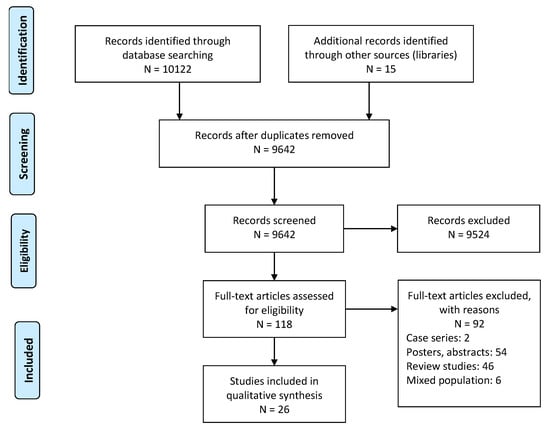
The initial search across 10 academic databases yielded a total of 10,122 studies (Web of Science: 197, PEDro:0, EBSCO:0, MEDLINE:8, Scopus:92, Cochrane central register of controlled trials: 6498, EMBASE:55, PROQUEST:80, PsychInfo:0, Pubmed:3192). We also included 15 additional studies from the personal libraries of the EMSP consortium. Thereafter, upon the implementation of our inclusion criteria the final number of studies was reduced to 26 (Figure 1). Of the 26 included studies, 11 were qualitative studies [18,23,27,28,33,34,35,36,37,38], 11 were cohort studies [24,25,26,39,40,41,42,43,44,45,46], and four were cross sectional studies [47,48,49,50]. Table 1 displays the summary characteristics of all studies included in the review.
Figure 1.
Illustrating the PRISMA flow chart for the included studies.
Table 1.
Illustrates the Grade-CERQual criteria from the included studies for the experiences of CAMS.
3.1.1. Country of Research
Of the included studies, eight were conducted in USA [23,29,34,35,36,43,48,49], and six were conducted in Canada [24,25,33,37,38,42]. Two studies were jointly carried out in Canada and USA [45,50]. Five studies were carried out in Italy [26,39,41,44,47], three in United Kingdom [18,27,28], one is Sweden [46], and one in Denmark [40].
3.1.2. Population Characteristics
Caregivers: A total of 16 studies including a total of 1608 caregivers were included in our review [18,23,24,25,26,27,28,29,33,34,35,36,37,39,43,48,50]. Of the 16 studies, 15 reported that the included caregivers were parents of CAMS, one study however reported that although the majority of the caregivers were mothers (i.e., 19), for one study, an aunt was reported as the primary caregiver [34]. In the included studies, four did not specify the gender distribution of their caregivers sample [25,29,43,48]. The remaining reported data from 424 females and 129 males [18,23,24,26,27,28,33,34,35,36,37,39,50], whereas data from 653 females and 29 males were reported for the parents of healthy age matched children groups [24,26]. This demonstrates that mothers had a prominent role in caregiving. The average age of the caregivers was reported for six studies as (mean ± standard deviation): 42.2 ± 6.3 years for caregivers of CAMS [18,23,24,26,34,36], and 36.5 ± 9.8 years by two studies for the parents of healthy children [24,26].
CAMS: Data of 2253 CAMS were included in all 26 studies. Here, three studies did not report the gender distribution [29,34,47]. In the other studies which reported the gender distribution of their sample, data of 1378 females and 800 males was reported. The age was reported as range by three studies [29,37,39], and from the rest of the studies the calculated average age was reported as 16.2 ± 3.9 years. Average time to diagnosis of MS was reported by 19 studies [18,23,25,26,27,34,35,36,39,40,41,43,44,45,47,48,49,50], except one study which reported the values as range [33], the average time to diagnosis was reported as 2.8 ± 1.2 years. Further, the average Expanded Disability Status Scale scores of the CAMS was reported as 1.6 ± 0.4 by only 10 studies [36,38,39,41,43,44,45,47,48,49].
Controls: In addition to CAMS, some studies had also included a control group to comparatively evaluate the differences in the needs and experiences with that of CAMS. Here, twelve studies had included a comparative evaluation of CAMS with healthy children, children with other neurological disorders, and people with adult-onset multiple sclerosis [24,25,39,40,41,42,43,44,45,46,47,49]. In the healthy control group nine studies [24,40,41,42,43,45,46,48,49] reported the data of 9938 age matched controls. Here, a total of 6207 females and 3142 males were included in the healthy control group, with an average age of 14.7 ± 4.8 years, one study did not report the gender distribution and the average age of their healthy control sample [40].
Additional control comparison of pediatric other neurological disorders was reported by three studies [25,40,43]. It is important to note that two studies discussed here had also jointly presented data of healthy controls discussed in the previous paragraph [40,43]. Nonetheless, these three studies presented the data of 9324 children with neurological disorders. In the three studies, one did not report neither the gender distribution nor the age of their sample [40]. In the rest of the two studies [25,43], there was a total of 98 females, and 118 males, with an average age of 10.8 ± 2.5 years.
Besides this, two studies in our review also compared the outcomes between CAMS and people with adult-onset MS [44,47]. Here, data were reported for a total of 135 adults with MS. In these two studies, one study did not report the gender distribution and the age of their sample [47]. The other study by Portaccio, et al. [44], however, had reported the data of 68 females, 47 males with an average age of 27.3 ± 8.0 years.
3.2. Assessment
In the included studies different methods of assessments were used to assess the needs and experiences of CAMS and their caregivers. Here, while 10 of the included studies had used interviews to assess the needs of CAMS and their caregivers [18,23,27,28,29,33,34,35,37,38]. The other 16 studies had used heterogenous quantitative assessment tools to assess the impact of MS on quality of life of CAMS, overall medical visits, social impact, adherence to medications, school performance, cognitive performance, etc. A detailed list of the assessment tools for each study has been provided in Table 1.
3.3. Mixed Method Appraisal Tool
After a methodological appraisal of all the studies, 17 were reported to be of high quality [24,26,27,28,34,35,36,38,39,40,41,42,43,44,45,46,47,50], whereas nine were observed to be of moderate quality [18,23,25,26,29,33,37,48,49]. A detailed description of the methodological appraisal for the quantitative nonrandomized trials and qualitative studies has been provided in Table 1. The majority of bias in cohort and cross-sectional studies were found because of lack of clarity regarding the presence of confounders in the study’s design and incomplete data outcomes, respectively. In qualitative studies, the majority of bias was observed due to lack of coherence between different phases of the study, i.e., data collection, analysis, and interpretation. A detailed description of the included studies has been provided in Table 1.
3.4. Synthesis of Findings and Grade-CERQual Assessment
The findings of the included studies were thematically analyzed according to the reported experiences of both CAMS (Table 2) and their caregivers (Table 3). This analysis illustrates the negative impacts that pediatric MS has on various domains of CAMS and caregiver functioning, as well as highlighting a number of barriers and facilitators to more positive outcomes in both these groups. In relation to caregivers, we also note evidence in relation to experiences at diagnosis and future concerns. This information is also presented in the context of the Grade-CERQual criteria suggesting some variability in confidence of these experiences.
Table 2.
Illustrates the Grade-CERQual criteria from the included studies for the experiences of CAMS.
Table 3.
Illustrates the information about the experiences of caregivers of CAMS.
Drawing on this information, an assessment of needs for families of CAMS was also developed (Table 4). This suggests a high level in confidence in existing needs for psycho-logical and social support, as well as additional information in relation to MS for families.
Table 4.
The needs of families of CAMS.
4. Discussion
Gaps in the existing literature with respect to the understanding of the incidence and outcomes of pediatric PMMS have been widely documented. International support groups including the World Health Organization [51] and Multiple Sclerosis International Federation [8], have repeatedly called upon the scientific and healthcare community to develop a state of evidence that clearly delineates the impact of pediatric multiple sclerosis on both children/adolescents and their caregivers. This present review addresses this gap by establishing a state of evidence regarding the needs and experiences of CAMS and their caregivers. We discuss the findings with respect to the experiences of CAMS and caregivers during and after the diagnostic phase of the disease and its impact on their activities of daily living.
4.1. Diagnostic Phase
One finding from the review was the difficulties associated with the diagnostic process itself, particularly from the point of view of the caregiver. An MS diagnosis may be delayed and difficult due to a lack of understanding among healthcare professionals and difficulties distinguishing diagnoses with that of associated demyelinating disorders (e.g., acute disseminating encephalomyelitis) [9]. Hinton and Kirk [27] after interviews with parents of CAMS, reported that misinterpretation of the symptoms of disease by the primary care practitioners was common. Medical practitioners lacked knowledge in interpreting neuroimaging reports, and sometimes confused MS incidence with other psychosocial developmental issues, resulting in delayed referral and diagnosis. Hebert, et al. [35] identified similar discrepancies in terms of diagnosis, reporting that an average of 3.6 ± 2.0 clinical visits were needed in a cohort of 42 children before receiving a diagnosis. This could possibly increase the financial burden on the family [52], and lead to a delay in the implementation of preventative therapies, eventually worsening the prognostic outcome of MS [3,35,53,54]. We identified the pre-diagnosis phase to be associated with aggravated levels of emotional distress (moderate confidence) especially for caregivers. One clear way to reduce such distress may therefore be to increase awareness of pediatric MS not only in neurologists and radiologists, but also pediatricians, pediatric neuropsychiatrists, and general physicians involved in the primary health care system. In addition to this, financial support, increased accessibility to a range of treatments, and coordinating referrals for psychological support to families during the pre- and postdiagnosis phases, may further alleviate emotional distress.
In our data synthesis, we identify, with a high level of confidence, that additional information about the course of the disease is needed by caregivers. We found that the process of communicating diagnosis to families served as another source of emotional distress for caregivers [27,29,35]. Some complained about receiving an overwhelming amount of information which left them feeling confused. While we might expect that specialist pediatric MS neurologists or those working in specialist MS centers should be better placed to disseminate information appropriately, increasing awareness and understanding of MS among all clinicians working with CAMS could enable them to disclose information in a manner that may reduce emotional distress associated with disease uncertainty in families. Moreover, our review found that, because diagnosis can be a shocking experience for parents and families of CAMS themselves, they might not be equipped to deliver this information to their children. This may be mitigated by providing advice to families regarding how to convey the diagnosis information to their children or by conveying diagnosis information in a tailored manner (e.g., providing tailored material about the prospective impact of MS with a multidisciplinary team including pediatric neurologists, psychologists to mitigate experiences of anxiety in both CAMS and caregivers) An additional aspect that may reduce emotional distress in CAMS is encouraging their own involvement during the diagnosis and decision-making process. This may allow them to develop a self-perception of control over MS and foster better treatment adherence [35,55].
4.2. Physical & Psychological Impact of MS
The multifaceted impact of MS on both the physical and psychological health of CAMS is now recognized. In the physical domain, fatigue is one of the major challenges faced by CAMS in carrying out basic activities of daily living [18,41,48,49,56]. Our synthesis found that physical fatigue acted as a deterrent for many activities, especially in coping with school related activities. Amato, et al. [39] reported a high prevalence of fatigue related outcomes in almost 73% of their cohort with MS, with fatigue-related symptoms associated with increased absence from school and cocurricular activities. Likewise, Carroll, et al. [18] reported that fatigue had a pronounced negative influence on school-related activities. CAMS in this study likened fatigue to a feeling of “wearing a giant sandbag” which eventually reduced their ability to carry out activities of daily living. Our review also identified caregivers to perceive the negative influence of fatigue on school performance. Yeh, et al. [45] for instance, reported that parents of CAMS perceived the school related performance of their child to be poorer as compared to parents of age-matched healthy controls. Here, mismanagement of time because of fatigue-related symptoms, the negative impact of fatigue on mental health, and lack of knowledge regarding how to manage fatigue-related symptoms were reported by caregivers as some factors leading to poorer school-related performance in CAMS [18,39,57,58]. Moreover, to add towards the burden of MS, a lack of awareness among teachers was reported in some of the studies reviewed [18,29,33,39]. Here, one study reported that teachers commonly misinterpreted fatigue-related symptoms of children as “laziness” [18,59]. As a consequence, increased pressure of school-related work and poorer academic performance could predispose CAMS towards poorer mental health and possibly negatively influence employment-related outcomes later on [40]. In our synthesis, we found with high overall confidence that fatigue is a prominent barrier for CAMS and also that school-related performance is negatively impacted. While there clearly are other factors which may impact on the experience of school and cognitive function in this population that were not explored in this study (e.g., lesion burden and location), these findings suggest that identifying ways to mitigate fatigue may be one way of facilitating a more positive educational experience for CAMS. Similarly, we have moderate confidence that lack of teacher’s knowledge acts as a barrier for CAMS, with teachers’ misinterpretation of symptoms common. This may be due to poor levels of awareness of PMS in the current educational system [18], and families’ miscommunication of the disease diagnosis to teachers, due to fear of prejudice and/or embarrassment [23,29,33]. Increased educational support, by means of both increased awareness and disease specific accommodations for CAMS by the school could help resolve this challenge [29]. We also recommend the facilitation of frequent lines of communication between parents and teachers to discuss disease-related outcomes. Previous studies have documented that disclosures of other pediatric diseases in the educational context led to enhanced accommodations in the teaching environment allowing children to better cope with the disease [27,60,61].
4.3. Social Impact of MS
Another important consequence of MS which is often overlooked is the social impact of the disease on both the child and their caregiver [12]. In CAMS, fatigue-related reduction in physical activity was identified as one of the major aspects that led to the worsening of peer relationships. Carroll, et al. [18], for instance, reported that the inability of CAMS to cope with peers forced them to opt-out of social relationships because of feelings of guilt. Failing to disclose diagnosis to peers because of fear of repercussions (e.g., differential treatment) was considered an additional aspect that negatively impacted social relationships of CAMS. An important area to look into is disease-related stigma prevention in the educational settings by peers and educators. Besides, we found with high confidence that providing additional social support to CAMS could be important in improving their quality of life. As fatigue and other unpredictable symptoms, such as relapses, as well as complexities in social relationships with peers and difficulties in educational settings result in experiences of mental health issues for CAMS (high level confidence finding), adequate psychological support should be provided to CAMS. In collaboration with patient organizations, adequate responses to this unmet need should be established to ensure that psychological support that suits CAMS according to their disease course stage, such as in-patient organizations groups or in educational and medical settings [21,62].
Similarly, caregivers reported a negative impact of MS on their social lives. Hinton and Kirk [28] reported that parents of CAMS suffered in terms of their social interactions primarily because of time constraints due to disease management and increased instances of disputations with peers, especially while discussing the diagnosis of their child. In addition to worsened peer relationships, both CAMS and their parents reported negative influences of the disease burden on familial relationships. Cross, et al. [23] reported that MS exerted extra demands on a family in terms of disease management. Moreover, the authors mentioned that the extra demands on the family resulted in strained marital and sibling relationships. Harris [34] too reported poor familial relationship outcomes especially between siblings, citing poor communication between family relations regarding adjustment and adaptation as the main reasons for this decline. In our review, we found that MS had an overall negative influence on social outcomes in both CAMS and their caregivers with a high level of confidence. In order to mediate this negative impact on social outcomes, a need for increased social support for both CAMS and their caregivers was identified in our data synthesis. Here, the organization of community support events by MS communities, to bring existing families of CAMS in contact with each other, was considered as a helpful measure to cope. Moreover, the organization of summer camps in which CAMS discuss their day-to-day experiences was reported to promote coping strategies [29,63].
4.4. Limitations
While this review provides good evidence of the various physical, psychological and social impacts that can be experienced by CAMS and their caregivers, there are likely to be many other factors that impact on these experiences that were not captured in the review. For example, socioeconomic factors, such as the cost of treatment, availability of health insurance, and access to appropriate healthcare, are likely to exacerbate difficulties for families impacted by pediatric MS. While we found no evidence to suggest any differences in experience of those living in countries differing in the whether or not there was provision of a universal healthcare system, it seems reasonable to expect that those unable to access healthcare would be more negatively impacted. Furthermore, our review did not capture differences in experiences according to type of MS, extent of progression or imaging severity. Since most of the studies included in the review comprised of participants with a low EDSS (e.g., 10 studies included CAMS with an EDSS of less than 1.6), the needs and experiences of CAMS with higher levels of disability and their caregivers may not be reflected in the review findings. Finally, there may be some limitations relating to the methodologies used to capture experiences in the included studies. For instance, the absence of quantitative measurements for some variables means that these can only be interpreted subjectively.
5. Conclusions
This systematic review presents the first detailed synthesis of current evidence regarding the needs and experiences of CAMS and their caregivers. Most importantly, the findings of the present review resonated with the experiences of MS patient organizations, expert members, MS support groups, and patient research partners affiliated with the European Multiple Sclerosis Platform. We identify specific gaps in the existing policies and support systems based on the experiences of CAMS and their caregivers. We also identify specific needs in terms of psychological, social, educational, informational, and financial support which the policymakers and existing support systems can specifically use to bridge the gaps in existing policies and enhance the quality of care to both CAMS and their caregivers.
Supplementary Materials
The following are available online at https://www.mdpi.com/article/10.3390/children8060445/s1, Supplementary File S1: PRISMA-P checklist.
Author Contributions
Conceptualization, S.G., E.K., and R.M.; methodology, S.G. and R.M.; review protocol, S.G., R.M.; data search, S.G., R.M., E.K., R.L., M.M., N.C.B., V.v.P. and A.C.; writing—original draft preparation, S.G.; writing—review and editing, S.G., R.M., E.K., R.L., M.M., N.C.B., V.v.P. and A.C.; visualization, S.G.; project administration, S.G., R.M., E.K. All authors have read and agreed to the published version of the manuscript.
Funding
The APC was funded by European Multiple Sclerosis Platform. This publication is part of the EMSP Caregivers for Pediatric MS initiative which has been co-financed by Biogen, Merck, Novartis, Roche.
Institutional Review Board Statement
Not applicable.
Informed Consent Statement
Not applicable.
Data Availability Statement
Not applicable.
Acknowledgments
The corresponding author S.G received research funding from European Multiple Sclerosis Platform for conducting the study. S.G also received funding from Fonds de Recherche du Québec-Santé Postdoctoral award. The authors would also like to thank Nora Kriauzaite and the EMSP expert group for the feedback on this project.
Conflicts of Interest
The authors declare no conflict of interest.
References
- Bar-Or, A. Multiple sclerosis and related disorders: Evolving pathophysiologic insights. Lancet Neurol. 2016, 15, 9–11. [Google Scholar] [CrossRef] [Scilit]
- Frohman, E.M.; Racke, M.K.; Raine, C.S. Multiple sclerosis—the plaque and its pathogenesis. N. Engl. J. Med. 2006, 354, 942–955. [Google Scholar] [CrossRef] [Scilit]
- Yeh, E.A.; Chitnis, T.; Krupp, L.; Ness, J.; Chabas, D.; Kuntz, N.; Waubant, E.; US Network of Pediatric Multiple Sclerosis Centers of Excellence. Pediatric multiple sclerosis. Nat. Rev. Neurol. 2009, 5, 621. [Google Scholar] [CrossRef] [Scilit] [PubMed]
- Jeong, A.; Oleske, D.M.; Holman, J. Epidemiology of Pediatric-Onset Multiple Sclerosis: A Systematic Review of the Literature. J. Child. Neurol. 2019, 34, 705–712. [Google Scholar] [CrossRef] [Scilit] [PubMed]
- Ghezzi, A. Pediatric multiple sclerosis: Epidemiology, clinical aspects, diagnosis and treatment. Neurodegener. Dis. Manag. 2017, 7, 23–25. [Google Scholar] [CrossRef] [Scilit] [PubMed]
- Yan, K.; Balijepalli, C.; Desai, K.; Gullapalli, L.; Druyts, E. Epidemiology of pediatric multiple sclerosis: A systematic literature review and meta-analysis. Mult. Scler. Relat. Disord. 2020, 44, 102260. [Google Scholar] [CrossRef] [Scilit]
- Chitnis, T.; Pohl, D. Pediatric demyelinating disorders. Neurology 2016, 87, S1. [Google Scholar] [CrossRef] [Scilit]
- The Multiple Sclerosis International Federation. Atlas of MS, 3rd ed.; The Multiple Sclerosis International Federation: London, UK, 2020. [Google Scholar]
- Krupp, L.B.; Tardieu, M.; Amato, M.P.; Banwell, B.; Chitnis, T.; Dale, R.C.; Ghezzi, A.; Hintzen, R.; Kornberg, A.; Pohl, D. International Pediatric Multiple Sclerosis Study Group criteria for pediatric multiple sclerosis and immune-mediated central nervous system demyelinating disorders: Revisions to the 2007 definitions. Mult. Scler. J. 2013, 19, 1261–1267. [Google Scholar] [CrossRef] [Scilit]
- Vargas-Lowy, D.; Chitnis, T. Pathogenesis of Pediatric Multiple Sclerosis. J. Child. Neurol. 2012, 27, 1394–1407. [Google Scholar] [CrossRef] [Scilit]
- Fay, A.J.; Mowry, E.M.; Strober, J.; Waubant, E. Relapse severity and recovery in early pediatric multiple sclerosis. Mult. Scler. J. 2012, 18, 1008–1012. [Google Scholar] [CrossRef] [Scilit]
- MacAllister, W.S.; Boyd, J.R.; Holland, N.J.; Milazzo, M.C.; Krupp, L.B. The psychosocial consequences of pediatric multiple sclerosis. Neurology 2007, 68, S66–S69. [Google Scholar] [CrossRef] [Scilit]
- Amato, M.P.; Krupp, L.B.; Charvet, L.E.; Penner, I.; Till, C. Pediatric multiple sclerosis: Cognition and mood. Neurology 2016, 87, S82–S87. [Google Scholar] [CrossRef] [Scilit] [PubMed]
- Huppke, B.; Ellenberger, D.; Rosewich, H.; Friede, T.; Gärtner, J.; Huppke, P. Clinical presentation of pediatric multiple sclerosis before puberty. Eur. J. Neurol. 2014, 21, 441–446. [Google Scholar] [CrossRef] [Scilit] [PubMed]
- Grover, S.A.; Aubert-Broche, B.; Fetco, D.; Collins, D.L.; Arnold, D.L.; Finlayson, M.; Banwell, B.L.; Motl, R.W.; Yeh, E.A. Lower physical activity is associated with higher disease burden in pediatric multiple sclerosis. Neurology 2015, 85, 1663–1669. [Google Scholar] [CrossRef] [Scilit] [PubMed]
- Banwell, B.; Ghezzi, A.; Bar-Or, A.; Mikaeloff, Y.; Tardieu, M. Multiple sclerosis in children: Clinical diagnosis, therapeutic strategies, and future directions. Lancet Neurol. 2007, 6, 887–902. [Google Scholar] [CrossRef] [Scilit]
- Sinay, V.; Perez Akly, M.; Zanga, G.; Ciardi, C.; Racosta, J.M. School performance as a marker of cognitive decline prior to diagnosis of multiple sclerosis. Mult. Scler. J. 2015, 21, 945–952. [Google Scholar] [CrossRef] [Scilit]
- Carroll, S.; Chalder, T.; Hemingway, C.; Heyman, I.; Moss-Morris, R. “It feels like wearing a giant sandbag”. Adolescent and parent perceptions of fatigue in paediatric multiple sclerosis. Eur. J. Paediatr. Neurol. 2016, 20, 938–945. [Google Scholar] [CrossRef] [Scilit] [PubMed]
- What Is A Caregiver? Available online: https://www.hopkinsmedicine.org/about/community_health/johns-hopkins-bayview/services/called_to_care/what_is_a_caregiver.html (accessed on 17 May 2021).
- Maguire, R.; Maguire, P. Caregiver Burden in Multiple Sclerosis: Recent Trends and Future Directions. Curr. Neurol. Neurosci. Rep. 2020, 20, 1–9. [Google Scholar] [CrossRef] [Scilit]
- Kouzoupis, A.B.; Paparrigopoulos, T.; Soldatos, M.; Papadimitriou, G.N. The family of the multiple sclerosis patient: A psychosocial perspective. Int. Rev. Psychiatry 2010, 22, 83–89. [Google Scholar] [CrossRef] [Scilit]
- Maguire, R.; Kasilingam, E.; Kriauzaite, N. Caring for Children and Adolescents with Multiple Sclerosis. Eur. Mult. Scler. Platf. 2019. [Google Scholar]
- Cross, T.P.; Shanks, A.K.; Duffy, L.V.; Rintell, D.J. Families’ Experience of Pediatric Onset Multiple Sclerosis. J. Child. Adolesc. Trauma 2019, 12, 425–435. [Google Scholar] [CrossRef] [Scilit] [PubMed]
- Marrie, R.A.; O’Mahony, J.; Maxwell, C.; Ling, V.; Yeh, E.A.; Arnold, D.L.; Bar-Or, A.; Banwell, B.; Canadian Pediatric Demyelinating Disease Network. Increased mental health care use by mothers of children with multiple sclerosis. Neurology 2020, 94, e1040–e1050. [Google Scholar] [CrossRef] [Scilit] [PubMed]
- O’Mahony, J.; Marrie, R.A.; Laporte, A.; Bar-Or, A.; Yeh, E.A.; Brown, A.; Dilenge, M.-E.; Banwell, B. Pediatric-onset multiple sclerosis is associated with reduced parental health–related quality of life and family functioning. Mult. Scler. J. 2019, 25, 1661–1672. [Google Scholar] [CrossRef] [Scilit] [PubMed]
- Uccelli, M.M.; Traversa, S.; Trojano, M.; Viterbo, R.G.; Ghezzi, A.; Signori, A. Lack of information about multiple sclerosis in children can impact parents’ sense of competency and satisfaction within the couple. J. Neurol. Sci. 2013, 324, 100–105. [Google Scholar] [CrossRef] [Scilit]
- Hinton, D.; Kirk, S. Paediatric multiple sclerosis: A qualitative study of families’ diagnosis experiences. Arch. Dis. Child. 2015, 100, 623–629. [Google Scholar] [CrossRef] [Scilit]
- Hinton, D.; Kirk, S. Living with uncertainty and hope: A qualitative study exploring parents’ experiences of living with childhood multiple sclerosis. Chronic Illn. 2017, 13, 88–99. [Google Scholar] [CrossRef] [Scilit]
- Krupp, L.B.; Rintell, D.; Charvet, L.E.; Milazzo, M.; Wassmer, E. Pediatric multiple sclerosis. Neurology 2016, 87, S4. [Google Scholar] [CrossRef] [Scilit]
- Cooke, A.; Smith, D.; Booth, A. Beyond PICO: The SPIDER tool for qualitative evidence synthesis. Qual. Health Res. 2012, 22, 1435–1443. [Google Scholar] [CrossRef] [Scilit]
- Pace, R.; Pluye, P.; Bartlett, G.; Macaulay, A.C.; Salsberg, J.; Jagosh, J.; Seller, R. Testing the reliability and efficiency of the pilot Mixed Methods Appraisal Tool (MMAT) for systematic mixed studies review. Int. J. Nurs. Stud. 2012, 49, 47–53. [Google Scholar] [CrossRef] [Scilit]
- Lewin, S.; Booth, A.; Glenton, C.; Munthe-Kaas, H.; Rashidian, A.; Wainwright, M.; Bohren, M.A.; Tunçalp, Ö.; Colvin, C.J.; Garside, R.; et al. Applying GRADE-CERQual to qualitative evidence synthesis findings: Introduction to the series. Implement. Sci. 2018, 13, 2. [Google Scholar] [CrossRef] [Scilit]
- Boyd, J.R.; MacMillan, L.J. Experiences of children and adolescents living with multiple sclerosis. J. Neurosci. Nurs. 2005, 37, 334. [Google Scholar] [CrossRef] [Scilit]
- Harris, Y.C. A Qualitative Descriptive Study Exploring the Adaptation of Families of Children with Multiple Sclerosis from the Perspective of Caregivers. Ph.D. Thesis, University of Alabama at Birmingham, Birmingham, AL, USA, 2018. [Google Scholar]
- Hebert, D.; Geisthardt, C.; Hoffman, H. Insights and Recommendations From Parents Receiving a Diagnosis of Pediatric Multiple Sclerosis for Their Child. J. Child. Neurol. 2019, 34, 464–471. [Google Scholar] [CrossRef] [Scilit] [PubMed]
- Lulu, S.; Julian, L.; Shapiro, E.; Hudson, K.; Waubant, E. Treatment adherence and transitioning youth in pediatric multiple sclerosis. Mult. Scler. Relat. Disord. 2014, 3, 689–695. [Google Scholar] [CrossRef] [Scilit] [PubMed]
- Thannhauser, J.E. Navigating life and loss in pediatric multiple sclerosis. Qual. Health Res. 2014, 24, 1198–1211. [Google Scholar] [CrossRef] [Scilit]
- Yeh, E.A.; Chiang, N.; Darshan, B.; Nejati, N.; Grover, S.A.; Schwartz, C.E.; Slater, R.; Finlayson, M.; Pediatric MS Adherence Study Group. Adherence in youth with multiple sclerosis: A qualitative assessment of habit formation, barriers, and facilitators. Qual. Health Res. 2019, 29, 645–657. [Google Scholar] [CrossRef] [Scilit] [PubMed]
- Amato, M.P.; Goretti, B.; Ghezzi, A.; Lori, S.; Zipoli, V.; Portaccio, E.; Moiola, L.; Falautano, M.; De Caro, M.F.; Lopez, M.; et al. Cognitive and psychosocial features of childhood and juvenile MS. Neurology 2008, 70, 1891–1897. [Google Scholar] [CrossRef] [Scilit] [PubMed]
- Boesen, M.S.; Blinkenberg, M.; Thygesen, L.C.; Eriksson, F.; Magyari, M. School performance, psychiatric comorbidity, and healthcare utilization in pediatric multiple sclerosis: A nationwide population-based observational study. Mult. Scler. J. 2020, 27, 259–267. [Google Scholar] [CrossRef] [Scilit]
- Goretti, B.; Portaccio, E.; Ghezzi, A.; Lori, S.; Moiola, L.; Falautano, M.; Viterbo, R.; Patti, F.; Vecchio, R.; Pozzilli, C.; et al. Fatigue and its relationships with cognitive functioning and depression in paediatric multiple sclerosis. Mult. Scler. J. 2012, 18, 329–334. [Google Scholar] [CrossRef] [Scilit]
- Marrie, R.A.; O’Mahony, J.; Maxwell, C.J.; Ling, V.; Yeh, E.A.; Arnold, D.L.; Bar-Or, A.; Banwell, B.; Canadian Pediatric Demyelinating Disease, N. High rates of health care utilization in pediatric multiple sclerosis: A Canadian population-based study. PLoS ONE 2019, 14, e0218215. [Google Scholar] [CrossRef] [Scilit]
- Mowry, E.M.; Julian, L.J.; Im-Wang, S.; Chabas, D.; Galvin, A.J.; Strober, J.B.; Waubant, E. Health-related quality of life is reduced in pediatric multiple sclerosis. Pediatr. Neurol. 2010, 43, 97–102. [Google Scholar] [CrossRef] [Scilit]
- Portaccio, E.; Simone, M.; Prestipino, E.; Bellinvia, A.; Pastò, L.; Niccolai, M.; Razzolini, L.; Fratangelo, R.; Tudisco, L.; Fonderico, M. Cognitive reserve is a determinant of social and occupational attainment in patients with pediatric and adult onset multiple sclerosis. Mult. Scler. Relat. Disord. 2020, 42, 102145. [Google Scholar]
- Yeh, E.A.; Grover, S.A.; Powell, V.E.; Alper, G.; Banwell, B.L.; Edwards, K.; Gorman, M.; Graves, J.; Lotze, T.E.; Mah, J.K. Impact of an electronic monitoring device and behavioral feedback on adherence to multiple sclerosis therapies in youth: Results of a randomized trial. Qual. Life Res. 2017, 26, 2333–2349. [Google Scholar] [CrossRef] [Scilit]
- McKay, K.A.; Friberg, E.; Razaz, N.; Alexanderson, K.; Hillert, J. Long-term Socioeconomic Outcomes Associated With Pediatric-Onset Multiple Sclerosis. JAMA Neurol. 2021, 78, 478–482. [Google Scholar] [CrossRef] [Scilit] [PubMed]
- Lanzillo, R.; Chiodi, A.; Carotenuto, A.; Magri, V.; Napolitano, A.; Liuzzi, R.; Costabile, T.; Rainone, N.; Freda, M.F.; Valerio, P. Quality of life and cognitive functions in early onset multiple sclerosis. Eur. J. Paediatr. Neurol. 2016, 20, 158–163. [Google Scholar] [CrossRef] [Scilit]
- MacAllister, W.S.; Christodoulou, C.; Troxell, R.; Milazzo, M.; Block, P.; Preston, T.E.; Bender, H.A.; Belman, A.; Krupp, L.B. Fatigue and quality of life in pediatric multiple sclerosis. Mult. Scler. J. 2009, 15, 1502–1508. [Google Scholar] [CrossRef] [Scilit] [PubMed]
- Parrish, J.B.; Weinstock-Guttman, B.; Smerbeck, A.; Benedict, R.H.B.; Yeh, E.A. Fatigue and depression in children with demyelinating disorders. J. Child. Neurol. 2013, 28, 713–718. [Google Scholar] [CrossRef] [Scilit] [PubMed]
- Schwartz, C.E.; Grover, S.A.; Powell, V.E.; Noguera, A.; Mah, J.K.; Mar, S.; Mednick, L.; Banwell, B.L.; Alper, G.; Rensel, M.; et al. Risk factors for non-adherence to disease-modifying therapy in pediatric multiple sclerosis. Mult. Scler. J. 2018, 24, 175–185. [Google Scholar] [CrossRef] [Scilit]
- World Health Organization. Atlas: Multiple Sclerosis Resources in the World 2008; World Health Organization: Geneva, Switzerland, 2008. [Google Scholar]
- De Judicibus, M.A.; McCabe, M.P. The impact of the financial costs of multiple sclerosis on quality of life. Int. J. Behav. Med. 2007, 14, 3. [Google Scholar] [CrossRef] [Scilit]
- Goodin, D.S.; Bates, D. Treatment of early multiple sclerosis: The value of treatment initiation after a first clinical episode. Mult. Scler. J. 2009, 15, 1175–1182. [Google Scholar] [CrossRef] [Scilit]
- Alroughani, R.; Boyko, A. Pediatric multiple sclerosis: A review. BMC Neurol. 2018, 18, 27. [Google Scholar] [CrossRef] [Scilit]
- Miller, V.A. Involving youth with a chronic illness in decision-making: Highlighting the role of providers. Pediatrics 2018, 142, S142–S148. [Google Scholar] [CrossRef] [Scilit] [PubMed]
- Holland, A.A.; Graves, D.; Greenberg, B.M.; Harder, L.L. Fatigue, emotional functioning, and executive dysfunction in pediatric multiple sclerosis. Child. Neuropsychol. 2014, 20, 71–85. [Google Scholar] [CrossRef] [Scilit] [PubMed]
- Lin, W.-S.; Lin, S.-J.; Hsu, T.-R. Cognitive Assessment and Rehabilitation for Pediatric-Onset Multiple Sclerosis: A Scoping Review. Children 2020, 7, 183. [Google Scholar] [CrossRef] [Scilit] [PubMed]
- Spiro, D.B. Early onset multiple sclerosis: A review for nurse Practitioners. J. Pediatr. Health Care 2012, 26, 399–408. [Google Scholar] [CrossRef] [Scilit] [PubMed]
- Pétrin, J.; Fiander, M.D.J.; Doss, P.M.I.A.; Yeh, E. A scoping review of modifiable risk factors in pediatric onset multiple sclerosis: Building for the future. Children 2018, 5, 146. [Google Scholar] [CrossRef] [Scilit] [PubMed]
- Cunningham, M.M.; Wodrich, D.L. The Effect of Sharing Health Information on Teachers’ Production of Classroom Accommodations. Psychol. Sch. 2006, 43, 553–564. [Google Scholar] [CrossRef] [Scilit]
- Mostofsky, D.I. The Handbook of Behavioral Medicine; John Wiley & Sons: Hoboken, NJ, USA, 2014. [Google Scholar]
- Ghodusi Burojeni, M.; Heidari, M.; Neyestanak, S.; Shahbazi, S. Correlation of perceived social support and some of the demographic factors in patients with Multiple Sclerosis. J. Health Promot. Manag. 2013, 2, 6216. [Google Scholar]
- Block, P.; Rodriguez, E. Team building: An anthropologist, an occupational therapist, and the story of a pediatric multiple sclerosis community. Pract. Anthropol. 2008, 30, 6–9. [Google Scholar] [CrossRef] [Scilit]

Publisher’s Note: MDPI stays neutral with regard to jurisdictional claims in published maps and institutional affiliations. |
© 2021 by the authors. Licensee MDPI, Basel, Switzerland. This article is an open access article distributed under the terms and conditions of the Creative Commons Attribution (CC BY) license (https://creativecommons.org/licenses/by/4.0/).