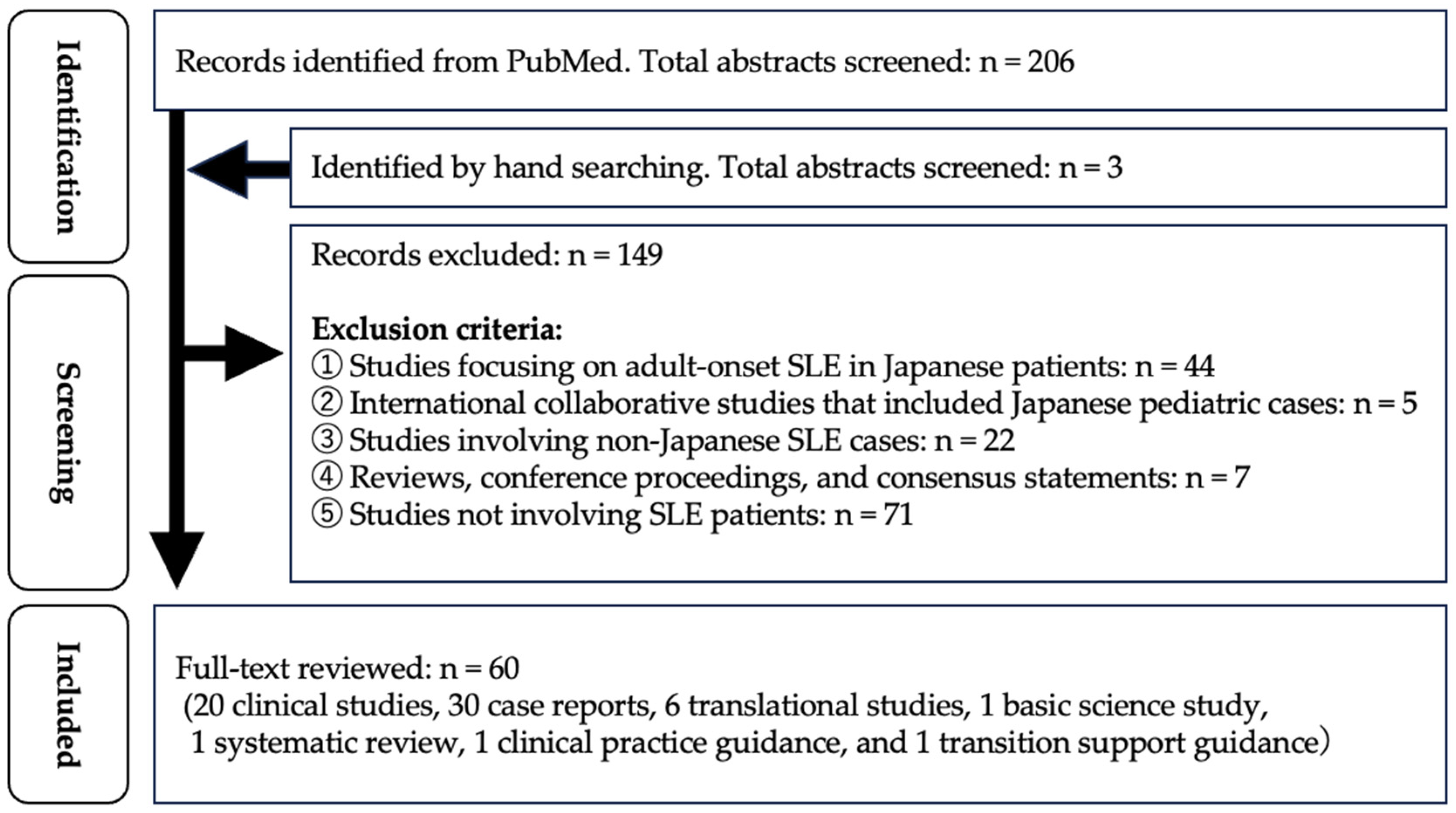
Childhood-Onset Systemic Lupus Erythematosus Research over the Past Decade in Japan

Highlights
- Research on childhood-onset SLE in Japan has grown notably since 2015.
- Lupus nephritis and type I interferon signaling remain central research themes.
- Accumulating evidence supports GC-sparing approaches in childhood-onset SLE.
- Multicenter collaboration is essential to strengthen pediatric-specific evidence.
Abstract
1. Introduction
2. Materials and Methods
2.1. Literature Search
2.2. Inclusion and Exclusion Criteria
2.3. Data Extraction and Classification
3. Results
3.1. Clinical Studies
3.2. Case Reports
3.3. Translational Research
3.4. Basic Science Studies
3.5. Systematic Reviews
3.6. Clinical Practice Guidance
3.7. Transition Care Guidance
4. Discussion
5. Future Research Directions and Unmet Needs
6. Conclusions
Author Contributions
Funding
Institutional Review Board Statement
Informed Consent Statement
Data Availability Statement
Acknowledgments
Conflicts of Interest
Abbreviations
| ACR | The 1997 American College of Rheumatology classification criteria |
| ADAMTS13 | ADAM metallopeptidase with thrombospondin type 1 motif 13 |
| APS | Antiphospholipid syndrome |
| β2-MG/TP | β2-Microglobulin/total protein |
| COVID-19 | Coronavirus disease 2019 |
| cSLE | Childhood-onset systemic lupus erythematosus |
| CXCL9 | C-X-C motif chemokine ligand 9 |
| EULAR/ACR | The 2019 European League Against Rheumatism and American College of Rheumatology classification criteria |
| GC | Glucocorticoid |
| HCQ | Hydroxychloroquine |
| HRQOL | Health-related quality of life |
| IFN | Interferon |
| IgA | Immunoglobulin A |
| IKZF1 | IKAROS family zinc finger 1 |
| IL | Interleukin |
| ILD | Interstitial lung disease |
| ISN | International Society of Nephrology |
| JDG | The Japanese diagnostic guidance for childhood-onset systemic lupus erythematosus |
| LAHPS | Lupus anticoagulant–hypoprothrombinemia syndrome |
| LN | Lupus nephritis |
| MAS | Macrophage activation syndrome |
| MeSH | Medical Subject Headings |
| MMF | Mycophenolate mofetil |
| MRI | Magnetic resonance imaging |
| NP-SLE | Neuropsychiatric systemic lupus erythematosus |
| PRICURE | Pediatric Rheumatology International Collaboration Unit Registry |
| PSL | Prednisolone |
| RPS | Renal Pathology Society |
| SLE | Systemic lupus erythematosus |
| SLEDAI | Systemic lupus erythematosus disease activity index |
| SLICC | The 2012 Systemic Lupus International Collaborating Clinics classification criteria |
| sTNF-RII | Soluble tumor necrosis factor receptor II |
| TMA | Thrombotic microangiopathy |
| TTP | Thrombotic thrombocytopenic purpura |
References
- Hoi, A.; Igel, T.; Mok, C.C.; Arnaud, L. Systemic lupus erythematosus. Lancet 2024, 403, 2326–2338. [Google Scholar] [CrossRef]
- Takei, S.; Igarashi, T.; Kubota, T.; Tanaka, E.; Yamaguchi, K.; Yamazaki, K.; Itoh, Y.; Arai, S.; Okamoto, K.; Mori, M. Clinical practice guidance for childhood-onset systemic lupus erythematosus-secondary publication. Mod. Rheumatol. 2022, 32, 239–247. [Google Scholar] [CrossRef]
- Barber, M.R.W.; Drenkard, C.; Falasinnu, T.; Hoi, A.; Mak, A.; Kow, N.Y.; Svenungsson, E.; Peterson, J.; Clarke, A.E.; Ramsey-Goldman, R. Global epidemiology of systemic lupus erythematosus. Nat. Rev. Rheumatol. 2021, 17, 515–532. [Google Scholar] [CrossRef]
- Aggarwal, A.; Fernandes, T.A.P.; Migowa, A.; Smith, E.M.D.; Hanif, M.; Webb, K.; Lewandowski, L.B. Childhood-onset systemic lupus erythematosus (cSLE): An international perspective. Curr. Allergy Asthma Rep. 2024, 24, 559–569. [Google Scholar] [CrossRef]
- Matsushita, M.; Sakai, R.; Yokogawa, N.; Shimizu, M.; Inoue, Y.; Inoue, E.; Yamaji, K.; Mori, M.; Miyamae, T. Prevalence of systemic lupus erythematosus and age-stratified treatment trends in the Japanese population: A cross-sectional study based on the National Database of Health Insurance Claims. Mod. Rheumatol. 2025, 35, 850–858. [Google Scholar] [CrossRef] [PubMed]
- Ad Hoc Subcommittee of the Japanese College of Rheumatology. Clinical Practice Guidance for Childhood-Onset Systemic Lupus Erythematosus 2018; Study Group for Childhood-Onset Systemic Lupus Erythematosus in the Japanese Ministry of Health, Ed.; Labour and Welfare Grants-in-Aid for Scientific Research; Yodosha: Tokyo, Japan, 2018. (In Japanese) [Google Scholar]
- Hochberg, M.C. Updating the American College of Rheumatology revised criteria for the classification of systemic lupus erythematosus. Arthritis Rheum. 1997, 40, 1725. [Google Scholar] [CrossRef]
- Weening, J.J.; D’Agati, V.D.; Schwartz, M.M.; Seshan, S.V.; Alpers, C.E.; Appel, G.B.; Balow, J.E.; Bruijn, J.A.; Cook, T.; Ferrario, F.; et al. The classification of glomerulonephritis in systemic lupus erythematosus revisited. J. Am. Soc. Nephrol. 2004, 15, 241–250. [Google Scholar] [CrossRef] [PubMed]
- Bajema, I.M.; Wilhelmus, S.; Alpers, C.E.; Bruijn, J.A.; Colvin, R.B.; Cook, H.T.; D’Agati, V.D.; Ferrario, F.; Haas, M.; Jennette, J.C.; et al. Revision of the International Society of Nephrology/Renal Pathology Society classification for lupus nephritis: Clarification of definitions, and modified National Institutes of Health activity and chronicity indices. Kidney Int. 2018, 93, 789–796. [Google Scholar] [CrossRef]
- Inoue, Y.; Kishi, T.; Sato, T.; Yamazaki, K.; Iwata, S.; Abe, A.; Sada, K.E.; Tanaka, E.; Nishida, K.; Kawakami, A.; et al. Telemedicine for paediatric rheumatic diseases in Japan: A national survey of physicians’ perspectives. Mod. Rheumatol. 2025, 36, 83–89. [Google Scholar] [CrossRef] [PubMed]
- Saito, J.; Yamatani, A.; Akabane, M.; Sako, M.; Nozu, K.; Iijima, K.; Nakamura, H. Population pharmacokinetic analysis in children with different diseases treated with mycophenolate mofetil-Integrated analysis of clinical trials and real-world clinical data. Eur. J. Pharm. Sci. 2025, 204, 106970. [Google Scholar] [CrossRef]
- Tanaka, H.; Aizawa, T.; Endo, M. Long-term outcome of tacrolimus-based immunosuppressive treatment for patients with paediatric-onset lupus nephritis. Nephrology 2024, 29, 901–908. [Google Scholar] [CrossRef] [PubMed]
- Hashimoto, S.; Fujita, M.; Aizawa, T.; Watanabe, S.; Tsugawa, K.; Tanaka, H. Early add-on use of Belimumab as induction therapy for patients with childhood-onset systemic lupus erythematosus. Lupus 2024, 33, 543–544. [Google Scholar] [CrossRef]
- Goto, K.; Imaizumi, T.; Hamada, R.; Ishikura, K.; Kosugi, T.; Narita, I.; Sugiyama, H.; Shimizu, A.; Yokoyama, H.; Sato, H.; et al. Renal pathology in adult and paediatric population of Japan: Review of the Japan renal biopsy registry database from 2007 to 2017. J. Nephrol. 2023, 36, 2257–2267. [Google Scholar] [CrossRef]
- Wakiguchi, H.; Kaneko, U.; Sato, S.; Imagawa, T.; Narazaki, H.; Miyamae, T. Clinical features of COVID-19 in pediatric rheumatic diseases: 2020–2022 survey of the pediatric rheumatology association of Japan. Viruses 2023, 15, 1205. [Google Scholar] [CrossRef]
- Nishimura, T.; Uemura, O.; Hibino, S.; Tanaka, K.; Iwata, N.; Yamamoto, M.; Matsukuma, E.; Miyake, Y.; Gotoh, Y.; Fujita, N. Analysis of the ratio of urinary beta-2-microglobulin to total protein concentration in children with isolated tubulointerstitial disease. Clin. Exp. Nephrol. 2023, 27, 701–706. [Google Scholar] [CrossRef]
- Narazaki, H.; Akioka, S.; Akutsu, Y.; Araki, M.; Fujieda, M.; Fukuhara, D.; Hara, R.; Hashimoto, K.; Hattori, S.; Hayashibe, R.; et al. Epidemiology conduction of paediatric rheumatic diseases based on the registry database of the Pediatric Rheumatology Association of Japan. Mod. Rheumatol. 2023, 33, 1021–1029. [Google Scholar] [CrossRef]
- Ohara, A.; Iwata, N.; Sugiura, S.; Abe, N.; Nakaseko, H.; Kawabe, S. Evaluation of the European League Against Rheumatism/American College of Rheumatology-2019 classification criteria in patients with childhood-onset systemic lupus erythematosus: A single-center retrospective study. Clin. Rheumatol. 2022, 41, 2483–2489. [Google Scholar] [CrossRef] [PubMed]
- Nishi, K.; Ogura, M.; Ishiwa, S.; Kanamori, T.; Okutsu, M.; Yokota, S.; Nada, T.; Sato, M.; Kamei, K.; Ishikura, K.; et al. Glucocorticoid discontinuation in pediatric-onset systemic lupus erythematosus: A single-center experience. Pediatr. Nephrol. 2022, 37, 2131–2139. [Google Scholar] [CrossRef]
- Kishi, T.; Sakai, R.; Tani, Y.; Nagata, S.; Katsumata, Y.; Miyamae, T.; Harigai, M. Trends in actual medication use for child-onset systemic lupus erythematosus using the Japanese health insurance database 2009–18. Mod. Rheumatol. 2022, 32, 565–570. [Google Scholar] [CrossRef]
- Sato, S.; Uejima, Y.; Arakawa, Y.; Furuichi, M.; Suganuma, E.; Fujinaga, S.; Nakazawa, A.; Kawano, Y. Clinical features of macrophage activation syndrome as the onset manifestation of juvenile systemic lupus erythematosus. Rheumatol. Adv. Pract. 2019, 3, rkz013. [Google Scholar] [CrossRef] [PubMed]
- Ishimori, S.; Kaito, H.; Shima, Y.; Kamioka, I.; Hamahira, K.; Nozu, K.; Nakanishi, K.; Tanaka, R.; Yoshikawa, N.; Iijima, K. Clinicopathological characteristics and renal outcomes of childhood-onset lupus nephritis with acute kidney injury: A multicenter study. Mod. Rheumatol. 2019, 29, 970–976. [Google Scholar] [CrossRef]
- Kawano, Y.; Nambu, M.; Uejima, Y.; Sato, S.; Suganuma, E.; Takano, T.; Oh-Ishi, T. Risk factors for thyroid cancer in systemic lupus erythematosus. Glob. Pediatr. Health 2017, 4, 2333794X17736700. [Google Scholar] [CrossRef] [PubMed]
- Wakiguchi, H.; Takei, S.; Kubota, T.; Miyazono, A.; Kawano, Y. Treatable renal disease in children with silent lupus nephritis detected by baseline biopsy: Association with serum C3 levels. Clin. Rheumatol. 2017, 36, 433–437. [Google Scholar] [CrossRef] [PubMed]
- Fujinaga, S.; Nishino, T. Ten-year treatment with mycophenolate mofetil using therapeutic drug monitoring for childhood-onset lupus nephritis in Japan. Pediatr. Nephrol. 2017, 32, 189–190. [Google Scholar] [CrossRef]
- Hara, R.; Miyazawa, H.; Nishimura, K.; Momoi, T.; Nozawa, T.; Kikuchi, M.; Sakurai, N.; Kizawa, T.; Shimamura, S.; Yasuda, S.; et al. A national survey on current use of mycophenolate mofetil for childhood-onset systemic lupus erythematosus in Japan. Mod. Rheumatol. 2015, 25, 858–864. [Google Scholar] [CrossRef]
- Kawasaki, Y.; Ohara, S.; Miyazaki, K.; Kanno, S.; Ono, A.; Suyama, K.; Sato, M.; Suzuki, S.; Maeda, R.; Nagasawa, K.; et al. Incidence and prognosis of systemic lupus erythematosus in a 35 year period in Fukushima, Japan. Pediatr. Int. 2015, 57, 650–655. [Google Scholar] [CrossRef]
- Kizawa, T.; Nozawa, T.; Kikuchi, M.; Nagahama, K.; Okudela, K.; Miyamae, T.; Imagawa, T.; Nakamura, T.; Mori, M.; Yokota, S.; et al. Mycophenolate mofetil as maintenance therapy for childhood-onset systemic lupus erythematosus patients with severe lupus nephritis. Mod. Rheumatol. 2015, 25, 210–214. [Google Scholar] [CrossRef]
- Uechi, T.; Horinouchi, T.; Inoki, Y.; Tanaka, Y.; Kitakado, H.; Ueda, C.; Nagano, C.; Yamaguchi, M.; Tsuji, Y.; Nozu, K. 12-year-old girl with systemic lupus erythematosus complicated by gangrene and intermittent claudication. Mod. Rheumatol. Case Rep. 2025, 9, rxaf006. [Google Scholar] [CrossRef]
- Shmizu, M.; Kaneko, S.; Shimbo, A.; Hatano, M.; Miyaoka, F.; Irabu, H.; Akutsu, Y.; Hayashi, Y.; Akamine, K.; Mori, M. Anifrolumab for refractory cutaneous lupus lesions in pediatric systemic lupus erythematosus. Lupus 2025, 34, 533–536. [Google Scholar] [CrossRef] [PubMed]
- Kise, T.; Uehara, M. Effectiveness of Belimumab for glucocorticoid discontinuation in juvenile-onset lupus nephritis. Indian J. Nephrol. 2025, 35, 85–87. [Google Scholar] [CrossRef]
- Wakatsuki, R.; Shimizu, M.; Shimbo, A.; Adachi, E.; Kanamori, T.; Yamazaki, S.; Udagawa, T.; Takasawa, K.; Kashimada, K.; Morio, T.; et al. Atrophic autoimmune thyroiditis complicated with systemic lupus erythematosus. Mod. Rheumatol. Case Rep. 2023, 7, 65–67. [Google Scholar] [CrossRef]
- Kawaguchi, T.; Inamo, Y. Inappropriate secretion of fibroblast growth factor 23 despite hypophosphataemia with changes in bone turnover markers in a girl with systemic lupus erythematosus: Case report and review of the literature. Mod. Rheumatol. Case Rep. 2023, 7, 60–64. [Google Scholar] [CrossRef]
- Uda, K.; Shigehara, K.; Yashiro, M. Neck pain with abdominal distention in a patient with systemic lupus erythematosus. Gastroenterology 2023, 164, e4–e6. [Google Scholar] [CrossRef]
- Kaneko, S.; Shimizu, M.; Shimbo, A.; Irabu, H.; Yamazaki, S.; Kanamori, T.; Udagawa, T.; Morio, T.; Mori, M. A girl with hearing loss, dizziness, hypertension, and pyelonephritis with ureteral edema: Answers. Pediatr. Nephrol. 2022, 37, 3059–3061. [Google Scholar] [CrossRef] [PubMed]
- Kaneko, S.; Shimizu, M.; Shimbo, A.; Irabu, H.; Yamazaki, S.; Kanamori, T.; Udagawa, T.; Morio, T.; Mori, M. A girl with hearing loss, dizziness, hypertension, and pyelonephritis with ureteral edema: Questions. Pediatr. Nephrol. 2022, 37, 3057–3058. [Google Scholar] [CrossRef]
- Shimazaki, S.; Kazukawa, I.; Yamammoto, H.; Mori, K.; Kihara, M.; Naruke, Y.; Minagawa, M. Elevation of serum fibroblast growth factor 23 level in a pediatric patient with lupus nephritis. CEN Case Rep. 2022, 11, 50–54. [Google Scholar] [CrossRef] [PubMed]
- Hoshi, Y.; Shimizu, M.; Shimbo, A.; Yamazaki, S.; Mori, M. Overt myositis in a girl with systemic lupus erythematosus. Pediatr. Int. 2022, 64, e15338. [Google Scholar] [CrossRef]
- Endo, S.; Fujinaga, S.; Takemasa, Y.; Oonuki, Y.; Sakuraya, K. Thrombotic thrombocytopenic purpura as initial presentation of systemic lupus erythematosus. Pediatr. Int. 2022, 64, e15297. [Google Scholar] [CrossRef] [PubMed]
- Shimizu, M.; Shimbo, A.; Yamazaki, S.; Segawa, Y.; Mori, M. Septic arthritis of the pubic symphysis in a patient with SLE. Pediatr. Int. 2022, 64, e14875. [Google Scholar] [CrossRef]
- Kama, Y.; Tada, A.; Sakama, T.; Ochiai, S.; Takakura, H.; Hirai, K.; Kato, M. Anti-cyclic citrullinated peptide antibody-positive girl with chronic polyarthritis later diagnosed with juvenile systemic lupus erythematosus: A case report. Tokai J. Exp. Clin. Med. 2022, 47, 36–40. [Google Scholar]
- Korenaga, Y.; Wakiguchi, H.; Matsushige, T.; Inoue, H.; Mizutani, M.; Furuta, T.; Kawamura, M.; Nakamura, T.; Okazaki, F.; Yasudo, H.; et al. Juvenile neuropsychiatric systemic lupus erythematosus with magnetic resonance imaging findings similar to acute necrotizing encephalopathy. J. Clin. Rheumatol. 2021, 27, S625–S626. [Google Scholar] [CrossRef] [PubMed]
- Shimizu, M.; Shimbo, A.; Yamazaki, S.; Mori, M. Concurrent lupus enteritis and cystitis. Pediatr. Int. 2021, 63, 1142–1143. [Google Scholar] [CrossRef]
- Sakamoto, A.; Ogura, M.; Hattori, A.; Tada, K.; Horikawa, R.; Nakadate, H.; Matsumoto, K.; Nogami, K.; Ieko, M.; Ishiguro, A. Lupus anticoagulant hypoprothrombinemia syndrome associated with bilateral adrenal haemorrhage in a child: Early diagnosis and intervention. Thromb. J. 2021, 19, 19. [Google Scholar] [CrossRef]
- Matsumura, R.; Mochizuki, S.; Maruyama, N.; Morishita, Y.; Kawaguchi, H.; Okada, S.; Tsumura, M.; Kaji, S.; Shimizu, J.; Shimada, A.; et al. Bone marrow transplantation from a human leukocyte antigen-mismatched unrelated donor in a case with C1q deficiency associated with refractory systemic lupus erythematosus. Int. J. Hematol. 2021, 113, 302–307. [Google Scholar] [CrossRef]
- Uejima, Y.; Suganuma, E.; Kawano, Y.; Sato, S. Anti-MDA5 antibody-positive juvenile dermatomyositis overlap with neuropsychiatric systemic lupus erythematosus: A case report. Clin. Exp. Rheumatol. 2021, 39, 27–28. [Google Scholar]
- Kaneda, T.; Tanaka, E.; Akutsu, Y.; Kanamori, T.; Mouri, M.; Morio, T.; Mori, M. Refractory secondary thrombotic microangiopathy with kidney injury associated with systemic lupus erythematosus in a pediatric patient. CEN Case Rep. 2020, 9, 301–307. [Google Scholar] [CrossRef] [PubMed]
- Sato, S.; Ohnishi, T.; Uejima, Y.; Furuichi, M.; Fujinaga, S.; Imai, K.; Nakamura, K.; Kawano, Y.; Suganuma, E. Induction therapy with rituximab for lupus nephritis due to prolidase deficiency. Rheumatology 2020, 59, e57–e59. [Google Scholar] [CrossRef] [PubMed]
- Doi, Y.; Kitayama, H.; Yamada, M.; Miyama, Y. Severe complications from an unexpectedly high serum mycophenolic acid concentration in a patient with renal failure secondary to lupus nephritis: A case report. Case Rep. Nephrol. Dial. 2019, 9, 72–78. [Google Scholar] [CrossRef]
- Inoue, M.; Kawamura, M.; Yamamoto, H.; Takahashi, T.; Kihara, S. Juvenile-onset systemic lupus erythematosus with severe hypertriglyceridemia induced by anti-apolipoprotein C-II antibody. Pediatr. Int. 2019, 61, 201–203. [Google Scholar] [CrossRef]
- Nagata, H.; Sato, M.; Ogura, M.; Yoshikawa, T.; Yamamoto, K.; Matsumura, S.; Kano, Y.; Saida, K.; Sako, M.; Kamei, K.; et al. Coagulopathy as a complication of kidney biopsies in paediatric systemic lupus erythematosus patients with antiphospholipid syndrome. Nephrology 2018, 23, 592–596. [Google Scholar] [CrossRef]
- Kurosawa, H.; Mizukami, T.; Nunoi, H.; Kato, M.; Sato, Y.; Okuya, M.; Fukushima, K.; Katsuyama, Y.; Arisaka, O. Necrotizing ulcer after BCG vaccination in a girl with leukocyte-adhesion deficiency Type 1. J. Pediatr. Hematol. Oncol. 2018, 40, 63–66. [Google Scholar] [CrossRef]
- Shingu, K.; Funakoshi, Y.; Ito, N.; Okada, M.; Moriuchi, H. Development of systemic lupus erythematosus 5 years after onset of thrombotic thrombocytopenic purpura. Pediatr. Int. 2017, 59, 943–944. [Google Scholar] [CrossRef] [PubMed]
- Sato, S.; Takahashi, H.; Sato, M.; Yokoyama, M.; Itoi, T.; Kawano, Y.; Kawashima, H. A case of walled-off necrosis with systemic lupus erythematosus: Successful treatment with endoscopic necrosectomy. Semin. Arthritis Rheum. 2016, 46, e13–e14. [Google Scholar] [CrossRef] [PubMed]
- Hirano, Y.; Itonaga, T.; Yasudo, H.; Isojima, T.; Miura, K.; Harita, Y.; Sekiguchi, M.; Kato, M.; Takita, J.; Oka, A. Systemic lupus erythematosus presenting with mixed-type fulminant autoimmune hemolytic anemia. Pediatr. Int. 2016, 58, 527–530. [Google Scholar] [CrossRef]
- Nakagishi, Y.; Shimizu, M.; Kasai, K.; Miyoshi, M.; Yachie, A. Successful therapy of macrophage activation syndrome with dexamethasone palmitate. Mod. Rheumatol. 2016, 26, 617–620. [Google Scholar] [CrossRef]
- Yamazaki, S.; Endo, A.; Iso, T.; Abe, S.; Aoyagi, Y.; Suzuki, M.; Fujii, T.; Haruna, H.; Ohtsuka, Y.; Shimizu, T. Cytomegalovirus as a potential trigger for systemic lupus erythematosus: A case report. BMC Res. Notes 2015, 8, 487. [Google Scholar] [CrossRef]
- Kise, T.; Yoshimura, H.; Fukuyama, S.; Uehara, M. Successful treatment with mycophenolate mofetil and tacrolimus in juvenile severe lupus nephritis. Case Rep. Pediatr. 2015, 2015, 651803. [Google Scholar] [CrossRef] [PubMed]
- Aringer, M.; Costenbader, K.; Daikh, D.; Brinks, R.; Mosca, M.; Ramsey-Goldman, R.; Smolen, J.S.; Wofsy, D.; Boumpas, D.T.; Kamen, D.L.; et al. 2019 European League Against Rheumatism/American College of Rheumatology classification criteria for systemic lupus erythematosus. Arthritis Rheumatol. 2019, 71, 1400–1412. [Google Scholar] [CrossRef] [PubMed]
- Petri, M.; Orbai, A.M.; Alarcón, G.S.; Gordon, C.; Merrill, J.T.; Fortin, P.R.; Bruce, I.N.; Isenberg, D.; Wallace, D.J.; Nived, O.; et al. Derivation and validation of the Systemic Lupus International Collaborating Clinics classification criteria for systemic lupus erythematosus. Arthritis Rheum. 2012, 64, 2677–2686. [Google Scholar] [CrossRef]
- Kaneko, S.; Hatano, M.; Shimbo, A.; Miyaoka, F.; Irabu, H.; Akutsu, Y.; Hayashi, Y.; Mizuta, M.; Nakagishi, Y.; Akamine, K.; et al. Serum cytokine profiling differentiates underlying diseases in cytokine storm syndrome. Arthritis Rheumatol. 2025; in press. [Google Scholar] [CrossRef] [PubMed]
- Mizuta, M.; Shimizu, M.; Irabu, H.; Usami, M.; Inoue, N.; Nakagishi, Y.; Wada, T.; Yachie, A. Comparison of serum cytokine profiles in macrophage activation syndrome complicating different background rheumatic diseases in children. Rheumatology 2021, 60, 231–238. [Google Scholar] [CrossRef]
- Usami, M.; Shimizu, M.; Mizuta, M.; Inoue, N.; Irabu, H.; Sakumura, N.; Nakagishi, Y.; Yachie, A. Extensive serum biomarker analysis in patients with macrophage activation syndrome associated with systemic lupus erythematosus. Clin. Immunol. 2019, 208, 108255. [Google Scholar] [CrossRef]
- Sakumura, N.; Yokoyama, T.; Usami, M.; Hosono, Y.; Inoue, N.; Matsuda, Y.; Tasaki, Y.; Wada, T. CD169 expression on monocytes as a marker for assessing type I interferon status in pediatric inflammatory diseases. Clin. Immunol. 2023, 250, 109329. [Google Scholar] [CrossRef]
- Ikezumi, Y.; Kondoh, T.; Matsumoto, Y.; Kumagai, N.; Kaneko, M.; Hasegawa, H.; Yamada, T.; Kaneko, U.; Nikolic-Paterson, D.J. Steroid treatment promotes an M2 anti-inflammatory macrophage phenotype in childhood lupus nephritis. Pediatr. Nephrol. 2021, 36, 349–359. [Google Scholar] [CrossRef]
- Hoshino, A.; Okada, S.; Yoshida, K.; Nishida, N.; Okuno, Y.; Ueno, H.; Yamashita, M.; Okano, T.; Tsumura, M.; Nishimura, S.; et al. Abnormal hematopoiesis and autoimmunity in human subjects with germline IKZF1 mutations. J. Allergy Clin. Immunol. 2017, 140, 223–231. [Google Scholar] [CrossRef]
- Ohto, T.; Tayeh, A.A.; Nishikomori, R.; Abe, H.; Hashimoto, K.; Baba, S.; Arias-Loza, A.P.; Soda, N.; Satoh, S.; Matsuda, M.; et al. Intracellular virus sensor MDA5 mutation develops autoimmune myocarditis and nephritis. J. Autoimmun. 2022, 127, 102794. [Google Scholar] [CrossRef]
- Yamazaki, S.; Izawa, K.; Matsushita, M.; Moriichi, A.; Kishida, D.; Yoshifuji, H.; Yamaji, K.; Nishikomori, R.; Mori, M.; Miyamae, T. Promoting awareness of terminology related to unmet medical needs in context of rheumatic diseases in Japan: A systematic review for evaluating unmet medical needs. Rheumatol. Int. 2023, 43, 2021–2030. [Google Scholar] [CrossRef]
- Mori, M.; Akioka, S.; Igarashi, T.; Inoue, Y.; Umebayashi, H.; Ohshima, S.; Nishiyama, S.; Hashimoto, M.; Matsui, T.; Miyamae, T.; et al. Transitioning from paediatric to adult rheumatological healthcare: English summary of the Japanese Transition Support Guide. Mod. Rheumatol. 2022, 32, 248–255. [Google Scholar] [CrossRef]
- De Mutiis, C.; Wenderfer, S.E.; Basu, B.; Bagga, A.; Orjuela, A.; Sar, T.; Aggarwal, A.; Jain, A.; Boyer, O.; Yap, H.K.; et al. Development of clinical and laboratory biomarkers in an international cohort of 428 children with lupus nephritis. Pediatr. Nephrol. 2024, 39, 2959–2968. [Google Scholar] [CrossRef]
- De Mutiis, C.; Wenderfer, S.E.; Basu, B.; Bagga, A.; Orjuela, A.; Sar, T.; Aggarwal, A.; Jain, A.; Yap, H.K.; Teo, S.; et al. International cohort of 382 children with lupus nephritis—Presentation, treatment and outcome at 24 months. Pediatr. Nephrol. 2023, 38, 3699–3709. [Google Scholar] [CrossRef]
- De Mutiis, C.; Wenderfer, S.E.; Orjuela, A.; Bagga, A.; Basu, B.; Sar, T.; Aggarwal, A.; Jain, A.; Yap, H.K.; Ito, S.; et al. Defining renal remission in an international cohort of 248 children and adolescents with lupus nephritis. Rheumatology 2022, 61, 2563–2571. [Google Scholar] [CrossRef] [PubMed]
- Trindade, V.C.; Carneiro-Sampaio, M.; Bonfa, E.; Silva, C.A. An update on the management of childhood-onset systemic lupus erythematosus. Paediatr. Drugs 2021, 23, 331–347. [Google Scholar] [CrossRef] [PubMed]
- Fanouriakis, A.; Kostopoulou, M.; Andersen, J.; Aringer, M.; Arnaud, L.; Bae, S.C.; Boletis, J.; Bruce, I.N.; Cervera, R.; Doria, A.; et al. EULAR recommendations for the management of systemic lupus erythematosus: 2023 update. Ann. Rheum. Dis. 2024, 83, 15–29. [Google Scholar] [CrossRef] [PubMed]
- Brunner, H.I.; Vadhariya, A.; Dickson, C.; Crandall, W.; Kar-Chan Choong, C.; Birt, J.A.; Ruperto, N.; Ramanan, A.V. Treatment patterns in paediatric and adult patients with SLE: A retrospective claims database study in the USA. Lupus Sci. Med. 2023, 10, e000817. [Google Scholar] [CrossRef]
- Smith, E.M.D.; Aggarwal, A.; Ainsworth, J.; Al-Abadi, E.; Avcin, T.; Bortey, L.; Burnham, J.; Ciurtin, C.; Hedrich, C.M.; Kamphuis, S.; et al. Towards development of treat to target (T2T) in childhood-onset systemic lupus erythematosus: PReS-endorsed overarching principles and points-to-consider from an international task force. Ann. Rheum. Dis. 2023, 82, 788–798. [Google Scholar] [CrossRef]
- Ghodke-Puranik, Y.; Olferiev, M.; Crow, M.K. Systemic lupus erythematosus genetics: Insights into pathogenesis and implications for therapy. Nat. Rev. Rheumatol. 2024, 20, 635–648. [Google Scholar] [CrossRef] [PubMed]


| No. | Author (Year) | Study Type | Participating Institution | Sample Size | Purpose | Key Findings |
|---|---|---|---|---|---|---|
| 1 | Inoue et al. (2025) [10] | Retrospective observational study | Multicenter | Pediatric rheumatologists (n = 128) | To evaluate the perceived necessity, advantages, and challenges of telemedicine in cSLE management. | Among the surveyed physicians 76.6% reported patients traveling over an hour for visits. Telemedicine benefits were noted by most respondents, including reduced travel and consultation time (92.2%), with 80.2% supporting its use, particularly in remission or stable disease (76.3%). |
| 2 | Matsushita et al. (2025) [5] | Retrospective observational study | National database | cSLE (n = 782) | To characterize age-specific treatment patterns of SLE in Japan. | Pediatric patients showed lower GC use (78.8%) than did adults (89.5% in ages 40–64 years) but higher MMF use (49.2% vs. 12.2%). Use of biologics (rituximab or belimumab) was higher in children (4–5%) than in adults (<1%). |
| 3 | Saito et al. (2025) [11] | Retrospective observational study | Multicenter | Pediatric diseases (n = 249; LN, n = 17) | To identify factors affecting MMF pharmacokinetics in pediatric patients. | MMF clearance was significantly influenced by body weight, serum albumin, kidney transplant status, and concomitant PPI use. |
| 4 | Tanaka et al. (2024) [12] | Retrospective observational study | Single center | LN (n = 13) | To evaluate long-term outcomes of tacrolimus-based therapy. | Over a 10-year follow-up period, SLEDAI scores, complement levels, anti-dsDNA antibody levels, and proteinuria improved within 1 year and remained stable thereafter. Over 10 years, the median prednisolone (PSL) dose decreased from 18.7 mg/day at treatment initiation to 3.5 mg/day. |
| 5 | Hashimoto et al. (2024) [13] | Retrospective observational study | Single center | cSLE (n = 6) | To investigate the efficacy of early belimumab combination therapy. | Patients receiving GCs in combination with MMF and HCQ were divided into two groups: those who initiated intravenous belimumab within 1 month and those who did not receive belimumab. Although disease activity improved in both groups, patients who received early belimumab initiation achieved more rapid and smoother tapering of GCs. |
| 6 | Goto et al. (2023) [14] | Retrospective observational study | Multicenter (Registry-based) | Pediatric renal diseases (n = 3526; LN, n = 160) | To describe renal biopsy diagnoses in Japan. | IgA nephropathy (36.1%) and minimal change disease (17.6%) were most frequent in pediatric biopsies, while LN accounted for 4.5%. |
| 7 | Wakiguchi et al. (2023) [15] | Retrospective observational study | Multicenter | Pediatric rheumatic diseases (n = 156; cSLE, n = 37) | To examine COVID-19 severity in pediatric rheumatic disease. | Most infections were asymptomatic or mild (97%), with no severe or fatal outcomes. Use of immunosuppressants or biologics did not correlate with increased infection severity. |
| 8 | Nishimura et al. (2023) [16] | Retrospective observational study | Single center | LN (n = 14), Dent disease (n = 23) | To compare urinary β2-MG/TP ratios across pediatric kidney diseases. | The β2-MG/TP ratio was significantly higher in Dent disease than in LN, distinguishing tubulointerstitial from glomerular pathologies and highlighting its diagnostic utility. |
| 9 | Narazaki et al. (2023) [17] | Retrospective observational study | Multicenter (Registry-based) | Pediatric rheumatic diseases (n = 402; cSLE, n = 40) | To characterize demographic and diagnostic features of pediatric SLE. | Median onset age was 12.1 years, with a girl: boy ratio of 3.4:1. Diagnosis was established earlier in SLE cases than in juvenile dermatomyositis and Sjögren’s disease cases. Kidney biopsy was performed in 81.8% of SLE cases. |
| 10 | Ohara et al. (2022) [18] | Retrospective observational study | Single center | cSLE (n = 53), disease controls (n = 53) | To assess the performance of EULAR/ACR criteria in children. | The 2019 criteria demonstrated high sensitivity and specificity, including early disease phases (≤3 months). Performance surpassed ACR and SLICC criteria in diagnostic balance. |
| 11 | Nishi et al. (2022) [19] | Retrospective observational study | Single center | cSLE (n = 31) | To evaluate GC tapering and discontinuation. | GC withdrawal was achieved in 61% of patients, with cumulative discontinuation rates of 26% at 3 years, 63% at 5 years, and 95% at 10 years. Early MMF initiation and prompt transition to maintenance were associated with sustained remission. |
| 12 | Kishi et al. (2022) [20] | Retrospective observational study | National database | cSLE (n = 182) | To examine treatment trends over a decade. | Oral PSL was administered to >97% of patients, with the maximum dose declining over time. Intravenous cyclophosphamide use declined post-2016, while MMF and HCQ use increased. Combination therapy became more common. |
| 13 | Sato et al. (2019) [21] | Retrospective observational study | Single center | cSLE (n = 46; MAS, n = 11) | To describe MAS as an initial manifestation. | MAS occurred at onset in 23.9% of cases. Early GCs with immunosuppressants were commonly used, and laboratory features were described. |
| 14 | Ishimori et al. (2019) [22] | Retrospective observational study | Multicenter | LN (n = 36) | To characterize LN presenting with acute kidney injury at onset. | Nineteen percent of patients presented with acute kidney injury displaying higher disease activity and proliferative pathology. Six of seven recovered renal function within 6 months, while one progressed to end-stage kidney disease. |
| 15 | Kawano et al. (2017) [23] | Retrospective observational study | Single center | cSLE (n = 29) | To identify thyroid cancer risk factors in cSLE. | Three patients with cSLE developed thyroid cancer; lymphadenopathy/splenomegaly, weight loss, urinary granular casts, and anemia were identified as predisposing factors. |
| 16 | Wakiguchi et al. (2017) [24] | Retrospective observational study | Single center | cSLE (n = 45) | To examine the association of complement levels with LN. | In silent LN, 24% had class III lesions. C3 levels correlated with pathology class but not in overt LN. C4 showed no significant difference. |
| 17 | Fujinaga and Nishino (2017) [25] | Retrospective observational study | Single center | LN (n = 6) | To evaluate the impact of therapeutic drug monitoring on long-term MMF therapy. | Median treatment duration was 9.8 years. The SLEDAI score decreased from 7 to 0, with no renal flares or chronic kidney disease observed. PSL dose decreased from 10.8 to 1.8 mg/day. Maintaining MMF trough levels at 2–5 μg/mL was associated with disease stability. |
| 18 | Hara et al. (2015) [26] | Retrospective observational study | Multicenter | cSLE (n = 115) | To characterize the nationwide use, efficacy, and safety of MMF. | GC dose decreased significantly, complement levels increased, and anti-dsDNA titers decreased. Adverse events occurred in 24 cases (4.3/100 person-years). |
| 19 | Kawasaki et al. (2015) [27] | Retrospective observational study | Multicenter | cSLE (n = 37) | To examine incidence, clinical features, treatment, and outcomes over 35 years. | While incidence remained stable, treatment was initiated earlier, immunosuppressant use increased, remission rates rose to 94%, and renal failure was eliminated. |
| 20 | Kizawa et al. (2015) [28] | Retrospective observational study | Single center | LN (n = 9) | To assess 12-month maintenance therapy with MMF plus GCs following induction therapy. | Eighty-nine percent of patients showed histologic improvement, with the SLEDAI score decreasing from 16.2 to 2.0, complement and anti-dsDNA improving, and no relapses. GC doses were significantly reduced while maintaining remission. |
| No. | Author (Year) | Age/ Sex | Criteria/ Guidance Met (1) | Major Complications | Key Findings |
|---|---|---|---|---|---|
| 1 | Uechi et al. (2025) [29] | 12 y/F | EULAR/ACR SLICC JDG | APS, popliteal artery occlusion | The patient presented with intermittent claudication and toe discoloration and was diagnosed with SLE and APS complicated by popliteal artery occlusion. Early vascular assessment and combination therapy with GCs, MMF, HCQ, and anticoagulation were administered to preserve limb function. |
| 2 | Shmizu et al. (2025) [30] | 12 y/M | EULAR/ACR SLICC JDG | ILD, refractory skin lesions, MAS | The patient developed MAS and was treated with dexamethasone palmitate, cyclosporine, and ruxolitinib. Long-term disease control was achieved with ruxolitinib and PSL. The patient’s skin manifestations were unresponsive to ruxolitinib but showed marked improvement after initiating anifrolumab. |
| 3 | Shmizu et al. (2025) [30] | 12 y/F | EULAR/ACR SLICC JDG | Refractory skin lesions, LN class II | The patient received methylPSL pulse therapy followed by PSL and mizoribine. However, skin lesions remained GC-dependent despite additional treatment with tacrolimus, MMF, HCQ, and belimumab. Initiation of anifrolumab led to dramatic improvement. |
| 4 | Kise and Uehara (2025) [31] | 18 y/F | NA | LN class IV | The patient received PSL (6 mg), MMF (500 mg), and belimumab. Three months later, belimumab was switched to intravenous administration to reduce injection pain. Following PSL discontinuation, she remained relapse-free for 31 months. |
| 5 | Kise and Uehara (2025) [31] | 15 y/M | NA | LN class IV | After 3 years of remission, the patient’s SLE worsened due to poor adherence. She received PSL, MMF, and IV belimumab. Following PSL tapering, a flare occurred, which responded to methylPSL pulse therapy. PSL was gradually discontinued, and she remained relapse-free for 8 months before transfer to adult care. |
| 6 | Wakatsuki et al. (2023) [32] | 14 y/F | EULAR/ACR SLICC JDG | Atrophic autoimmune thyroiditis, LN class II | The patient with severe hypothyroidism and class II LN presented with anorexia, numbness, and edema. Myxedema-related effusions resolved with hormone replacement and immunosuppressive therapy, resulting in remission. |
| 7 | Kawaguchi and Inamo (2023) [33] | 11 y/F | EULAR/ACR SLICC JDG | Hypophosphatemia, LN class II | The patient exhibited marked hypophosphatemia and elevated fibroblast growth factor 23 levels at onset. Treatment with methylPSL pulse therapy, oral PSL, MMF, HCQ, and phosphate supplementation rapidly normalized phosphate levels without recurrence. |
| 8 | Uda et al. (2023) [34] | 13 y/M | NA | Pneumatosis cystoides intestinalis, pneumomediastinum | During SLE treatment, the patient developed mild neck pain, abdominal distension, and subcutaneous emphysema. Imaging revealed mediastinal emphysema and pneumatosis intestinalis without perforation. Conservative management with oxygen therapy, antibiotics, bowel rest, total parenteral nutrition, and GC tapering resulted in full resolution. |
| 9 | Kaneko et al. (2022) [35,36] | 14 y/F | EULAR/ACR SLICC JDG | Vestibular neuritis, LN class III(C) + V | The patient presented with prolonged dizziness and hearing loss. MethylPSL pulse therapy was followed by oral PSL and azathioprine, leading to the resolution of systemic manifestations and vestibular symptoms. |
| 10 | Shimazaki et al. (2022) [37] | 12 y/F | EULAR/ACR SLICC JDG | Hypophosphatemia, autoimmune thyroiditis, LN class V | The patient presented with hypophosphatemia and elevated fibroblast growth factor 23 levels at diagnosis. Treatment with MMF and GCs improved complement levels and reduced fibroblast growth factor 23 levels. |
| 11 | Hoshi et al. (2022) [38] | 14 y/F | EULAR/ACR SLICC JDG | Myositis, LN class II | The patient’s MRI revealed high signal intensity in the quadriceps and sartorius muscles. The patient was treated with methylPSL pulse therapy, PSL, HCQ, and MMF, resulting in clinical and radiological improvement, with normalization of serum interferon-alpha levels. |
| 12 | Endo et al. (2022) [39] | 7 y/M | EULAR/ACR SLICC JDG | TTP, LN class III | The patient presented with fever, purpura, and nausea. Laboratory findings confirmed SLE-associated TTP. Plasma exchange and methylPSL pulse therapy improved platelet counts and renal function. Maintenance therapy with cyclophosphamide and HCQ sustained remission. |
| 13 | Shimizu et al. (2022) [40] | 14 y/F | NA | Septic arthritis of the pubic symphysis | The patient developed septic arthritis of the pubic symphysis, presenting with sudden-onset pubic pain and restricted hip motion during remission. Treatment with vancomycin, intravenous immunoglobulin, and a 4-week course of oral clindamycin resolved the infection without recurrence. |
| 14 | Kama et al. (2022) [41] | 12 y/F | EULAR/ACR SLICC JDG | Polyarthritis, LN class II | The patient initially presented with chronic polyarthritis and elevated anti-cyclic citrullinated peptide antibody levels, leading to a provisional diagnosis of polyarticular juvenile idiopathic arthritis. Six months later, SLE was diagnosed. Remission was achieved after two courses of methylPSL pulse therapy, followed by PSL and HCQ. |
| 15 | Korenaga et al. (2021) [42] | 15 y/F | EULAR/ACR SLICC JDG | NP-SLE, Acute necrotizing encephalopathy-like encephalopathy | The patient presented with seizures, altered consciousness, and fever. MRI revealed bilateral thalamic high-signal lesions resembling acute necrotizing encephalopathy. Treatment with methylPSL pulse therapy and cyclophosphamide improved consciousness. One year later, only mild cognitive impairment remained. |
| 16 | Shimizu et al. (2021) [43] | 11 y/F | EULAR/ACR SLICC JDG | Lupus enteritis, lupus cystitis, LN class II | The patient presented with persistent abdominal pain, watery diarrhea, and weight loss. Imaging revealed bowel wall thickening and mesenteric vascular proliferation. PSL 1 mg/kg/day rapidly improved symptoms within 2 weeks. |
| 17 | Sakamoto et al. (2021) [44] | 9 y/M | EULAR/ACR SLICC JDG | LAHPS, adrenal hemorrhage, LN class unknown | The patient initially presented with abdominal pain and coagulopathy, leading to a diagnosis of lupus anticoagulant–hypoprothrombinemia syndrome complicated by bilateral adrenal hemorrhage. One year later, SLE developed, which responded well to immunosuppressive therapy, resulting in remission. |
| 18 | Matsumura et al. (2021) [45] | 12 y/F | EULAR/ACR SLICC JDG | C1q deficiency | The patient had refractory SLE due to C1q deficiency. Allogeneic bone marrow transplantation achieved complete donor chimerism and resolution of clinical symptoms, with normalization of C1q levels. |
| 19 | Uejima et al. (2021) [46] | 9 y/F | SLICC JDG | Juvenile dermatomyositis, ILD, NP-SLE | The patient was diagnosed with overlap syndrome of juvenile dermatomyositis and SLE complicated by rapidly progressive ILD. Later, NP-SLE developed. Intensive immunosuppressive therapy, including rituximab and plasma exchange, led to clinical improvement. |
| 20 | Kaneda et al. (2020) [47] | 5 y/F | EULAR/ACR SLICC JDG | TMA, LN class IV-S(A) | The patient presented with fever, edema, cytopenia, hemolytic anemia, thrombocytopenia, and renal dysfunction. Intensive immunosuppressive therapy, including methylPSL, plasma exchange, MMF, and cyclophosphamide, achieved disease control. |
| 21 | Sato et al. (2020) [48] | 15 y/M | EULAR/ACR SLICC JDG | Prolidase deficiency, LN class IV | The patient presented with malar rash, hematuria, positive anti-dsDNA antibodies, and hypocomplementemia. High-dose GCs and four doses of rituximab led to improvement in proteinuria, complement levels, and skin ulcers, with no relapse observed. |
| 22 | Doi et al. (2019) [49] | 17 y/F | SLICC JDG | NP-SLE, LN class IV-G(A) | SLE was diagnosed at age 14. During maintenance therapy, relapse occurred, followed by severe MMF toxicity manifesting as seizures, acute kidney injury, leukopenia, and thrombocytopenia. After MMF was discontinued, renal function and hematological parameters normalized, and no neurological sequelae were observed. |
| 23 | Inoue et al. (2019) [50] | 11 y/F | EULAR/ACR SLICC JDG | Hyperlipidemia, anti-apolipoprotein C-II autoantibody | The patient presented with malar rash and polyarthritis. Laboratory findings revealed severe hypertriglyceridemia, decreased high-density lipoprotein cholesterol and low-density lipoprotein cholesterol levels, and the presence of anti-apolipoprotein C-II autoantibodies. Treatment with bezafibrate, PSL, and MMF normalized triglyceride levels within 2 weeks. |
| 24 | Nagata et al. (2018) [51] | 8 y/M | EULAR/ACR SLICC JDG | APS, renal hematoma, LN class III(A), | The patient was initially diagnosed with APS and developed SLE 14 months later. Renal biopsy confirmed class III LN, and a large subcapsular renal hematoma occurred 9 days after the procedure. |
| 25 | Nagata et al. (2018) [51] | 13 y/M | EULAR/ACR SLICC JDG | APS, deep vein thrombosis, pulmonary artery thrombosis, LN class III(A) | The patient was diagnosed with SLE and APS. Renal biopsy revealed LN and TTP. Six days after biopsy, deep vein thrombosis and pulmonary embolism occurred. |
| 26 | Kurosawa et al. (2018) [52] | 7 y/F | EULAR/ACR SLICC JDG | Leukocyte adhesion deficiency type 1, necrotizing ulcer | The patient developed necrotizing ulcers following Bacillus Calmette–Guérin vaccination and was diagnosed with leukocyte adhesion deficiency type 1. One year later, SLE was diagnosed. Hematopoietic stem cell transplantation from a human leukocyte antigen-matched sibling achieved long-term remission without further immunosuppressive therapy. |
| 27 | Shingu et al. (2017) [53] | 8 y/M | EULAR/ACR SLICC JDG | TTP | The patient presented with fever, thrombocytopenia, Coombs-negative hemolytic anemia, and neurological symptoms. Severe ADAMTS13 deficiency and anti-ADAMTS13 antibodies were detected. Despite repeated relapses, combination therapy with plasma exchange, GCs, cyclophosphamide, and azathioprine achieved sustained remission. |
| 28 | Sato et al. (2016) [54] | 13 y/F | EULAR/ACR SLICC JDG | MAS, acute pancreatitis, walled-off pancreatic necrosis | The patient was diagnosed with SLE and MAS. Acute pancreatitis developed 2 days after initiating high-dose GCs. Walled-off necrosis and infected pancreatic abscess required multiple endoscopic necrosectomies and stent placement. Long-term disease control was achieved with PSL and MMF. |
| 29 | Hirano et al. (2016) [55] | 9 y/F | EULAR/ACR SLICC JDG | Mixed-type autoimmune hemolytic anemia, pericarditis, LN class II | The patient presented with autoimmune hemolytic anemia, skin rash, oral ulcers, serositis, and renal involvement. Treatment with GCs and MMF led to GC-free remission, which was maintained for 18 months. |
| 30 | Nakagishi et al. (2016) [56] | 15 y/F | EULAR/ACR SLICC JDG | MAS | Four days after starting PSL, the patient with cSLE developed MAS with fever, rash, pancytopenia, hyperferritinemia, and liver injury. She was unresponsive to methylPSL and cyclosporine but improved rapidly after dexamethasone and remains in remission. |
| 31 | Yamazaki et al. (2015) [57] | 12 y/F | EULAR/ACR SLICC JDG | Cytomegalovirus infection, LN class III | The patient presented with lymphadenopathy and liver dysfunction, later developing fever and malar rash. Concurrent primary cytomegalovirus infection was confirmed. Combined therapy with GCs, cyclophosphamide, and ganciclovir led to complete remission without relapse. |
| 32 | Kise et al. (2015) [58] | 13 y/F | EULAR/ACR SLICC JDG | LN class IV-G(A) + V | The patient was diagnosed with SLE and LN at age 11 and experienced a relapse due to poor adherence. Combination therapy with MMF and tacrolimus successfully induced remission and improved renal function. |
| No. | Author (Year) | Study Type | Participating Institution | Sample Size | Purpose | Key Findings |
|---|---|---|---|---|---|---|
| 1. | Kaneko et al. (2025) [61] | Retrospective observational study | Multicenter | Cytokine storm syndrome (n = 143; SLE with MAS, n = 10), healthy controls (n = 22) | To characterize cytokine profiles in cytokine storm syndrome and identify disease-specific patterns. | This study measured 48 serum cytokines in patients with cytokine storm syndrome. Five disease-related clusters were identified, with IFN-α levels markedly elevated in SLE-associated MAS, implicating the type I interferon pathway in disease pathogenesis. |
| 2. | Sakumura et al. (2023) [64] | Retrospective observational study | Single center | Pediatric inflammatory diseases (n = 43; cSLE, n = 10) | To assess the clinical significance of CD169 expression. | This study investigated the clinical significance of CD169 expression on monocytes in pediatric inflammatory diseases, including 10 patients with SLE. Surface CD169 on CD14+ monocytes and soluble CD169 levels were quantified and correlated with type I interferon activity. The SLE group showed significantly higher CD169 expression levels than those of other febrile disease groups. Notably, IFN-α concentrations and soluble CD169 levels exhibited strong positive correlations. |
| 3. | Ikezumi et al. (2021) [65] | Retrospective observational study | Single center | LN (n = 32) | To examine GC effects on macrophage polarization. | This study examined the effect of GC therapy on macrophage polarization in pediatric LN. Seventeen GC-naïve patients were compared with fifteen who had received GCs prior to biopsy. In untreated patients, M1 macrophages predominated, whereas GC-treated patients exhibited a shift toward M2 macrophage dominance, reflected by an approximately six-fold increase in the M2/M1 ratio. |
| 4. | Mizuta et al. (2021) [62] | Retrospective observational study | Multicenter | Pediatric rheumatic diseases (n = 278; cSLE, n = 12; cSLE with MAS, n = 5) | To compare cytokine profiles across MAS etiologies. | This study compared serum cytokine profiles among patients with MAS secondary to various rheumatic diseases, including five pediatric patients with SLE-associated MAS. Cytokine measurements and clustering analyses revealed that SLE-associated MAS was characterized by higher IFN-γ, IL-18, CXCL9, and sTNF-RII levels than those of MAS associated with other diseases, indicating a disease-specific inflammatory pattern. |
| 5. | Usami et al. (2019) [63] | Retrospective observational study | Single center | cSLE with MAS (n = 4), cSLE without MAS (n = 4) | To analyze cytokine changes in SLE-associated MAS. | This study simultaneously measured 174 serum cytokines in eight pediatric patients with SLE, including four with MAS, to analyze MAS-associated cytokine changes. Thirty-one cytokines were significantly elevated during MAS compared to active SLE without MAS, with particularly marked increases in CXCL9 and sTNF-RII levels, reflecting heightened disease activity in SLE-associated MAS. |
| 6. | Hoshino et al. (2017) [66] | Retrospective observational study | Multicenter | IKZF1 mutation (heterozygous) (n = 9) | To describe immune abnormalities in IKZF1-mutated patients. | This study analyzed hematopoietic and immunological features in nine pediatric patients with heterozygous germline IKZF1 mutations. Four patients developed autoimmune diseases, including one with systemic lupus erythematosus. These findings suggest that germline IKZF1 mutations may predispose individuals to immune dysregulation and the development of autoimmune diseases, such as SLE. |
Disclaimer/Publisher’s Note: The statements, opinions and data contained in all publications are solely those of the individual author(s) and contributor(s) and not of MDPI and/or the editor(s). MDPI and/or the editor(s) disclaim responsibility for any injury to people or property resulting from any ideas, methods, instructions or products referred to in the content. |
© 2026 by the authors. Licensee MDPI, Basel, Switzerland. This article is an open access article distributed under the terms and conditions of the Creative Commons Attribution (CC BY) license.
Share and Cite
Tamai, T.; Wakiguchi, H.; Ihara, K. Childhood-Onset Systemic Lupus Erythematosus Research over the Past Decade in Japan. Children 2026, 13, 250. https://doi.org/10.3390/children13020250
Tamai T, Wakiguchi H, Ihara K. Childhood-Onset Systemic Lupus Erythematosus Research over the Past Decade in Japan. Children. 2026; 13(2):250. https://doi.org/10.3390/children13020250
Chicago/Turabian StyleTamai, Tasuku, Hiroyuki Wakiguchi, and Kenji Ihara. 2026. "Childhood-Onset Systemic Lupus Erythematosus Research over the Past Decade in Japan" Children 13, no. 2: 250. https://doi.org/10.3390/children13020250
APA StyleTamai, T., Wakiguchi, H., & Ihara, K. (2026). Childhood-Onset Systemic Lupus Erythematosus Research over the Past Decade in Japan. Children, 13(2), 250. https://doi.org/10.3390/children13020250