Dextrose with Insulin During Neonatal Resuscitation for Prolonged Asphyxia in a Near-Term Ovine Model: A Proof-of-Concept Study
 , , ,
, , ,  , and
, and
Highlights
- In this proof-of-concept study using a near-term ovine model of prolonged asphyxia cardiac arrest, co-administration of dextrose and insulin with epinephrine was associated with a higher incidence of return of spontaneous circulation (ROSC) compared to epinephrine alone.
- Administration of dextrose/insulin with epinephrine may offer therapeutic benefits for cardiac resuscitation following prolonged perinatal asphyxia. However, due to the small sample size and lack of statistical significance, larger translational studies are necessary to confirm these findings and establish the clinical potential of this metabolic resuscitation strategy.
Abstract
1. Introduction
2. Materials and Methods
2.1. Ethics and Animal Model
2.2. Surgical Preparation and Instrumentation
2.3. Induction of Asphyxia and Cardiac Arrest
2.4. Randomization and Blinding
2.5. Resuscitation Protocol
2.6. Outcome Measures
2.7. Blood Gas Analysis
2.8. Statistical Analysis and Sample Size Estimation
3. Results
3.1. Baseline Characteristics
3.2. Incidence and Time to Return of Spontaneous Circulation
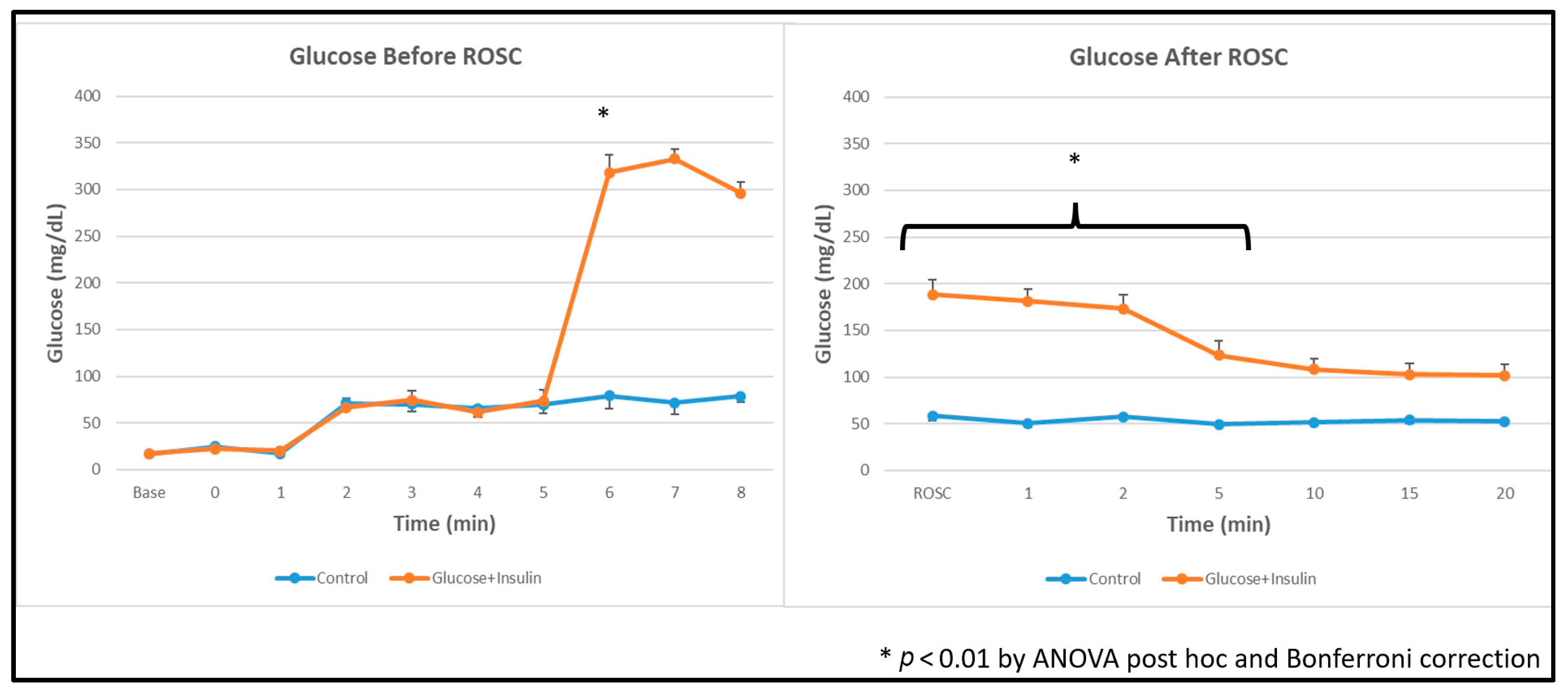
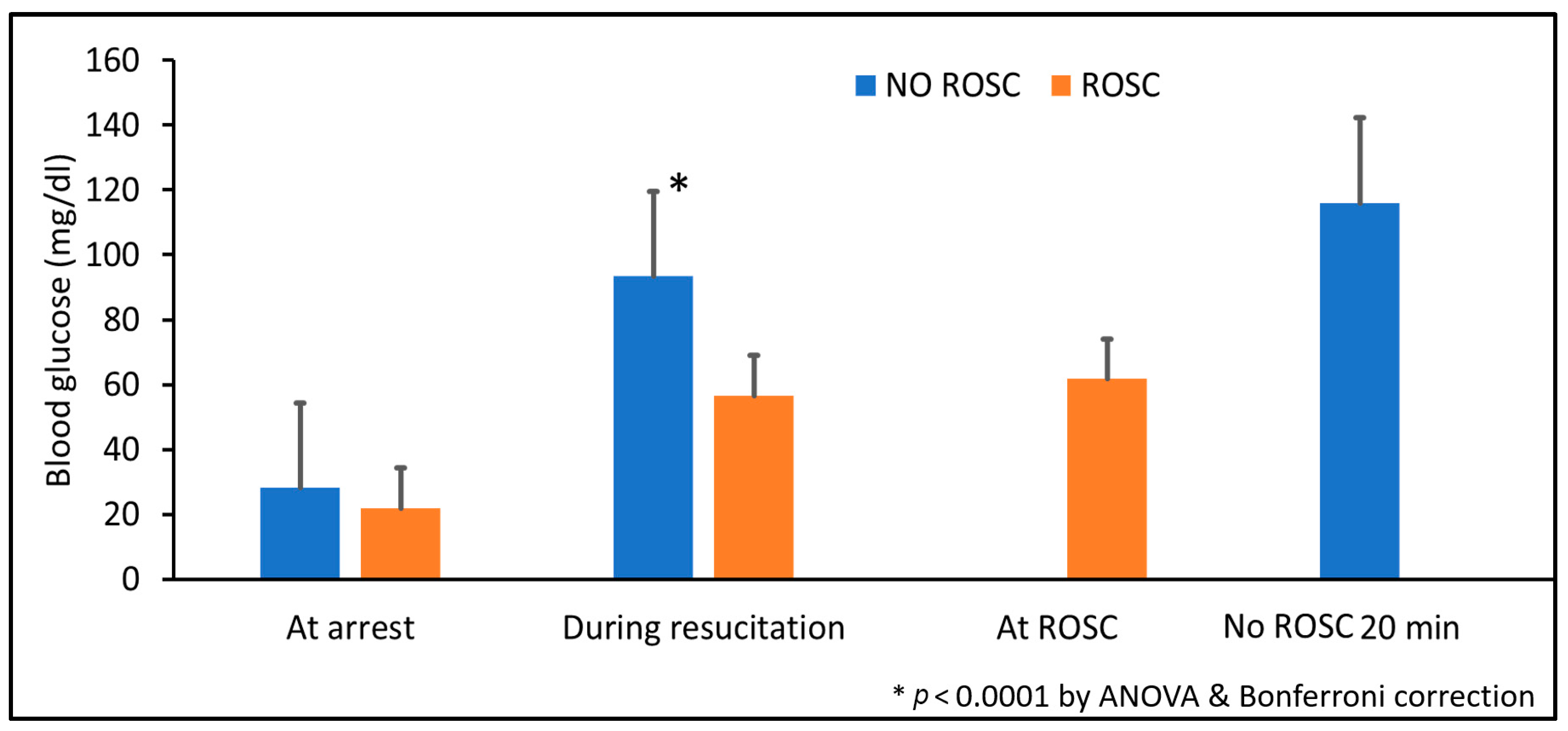
3.3. Blood Glucose Levels
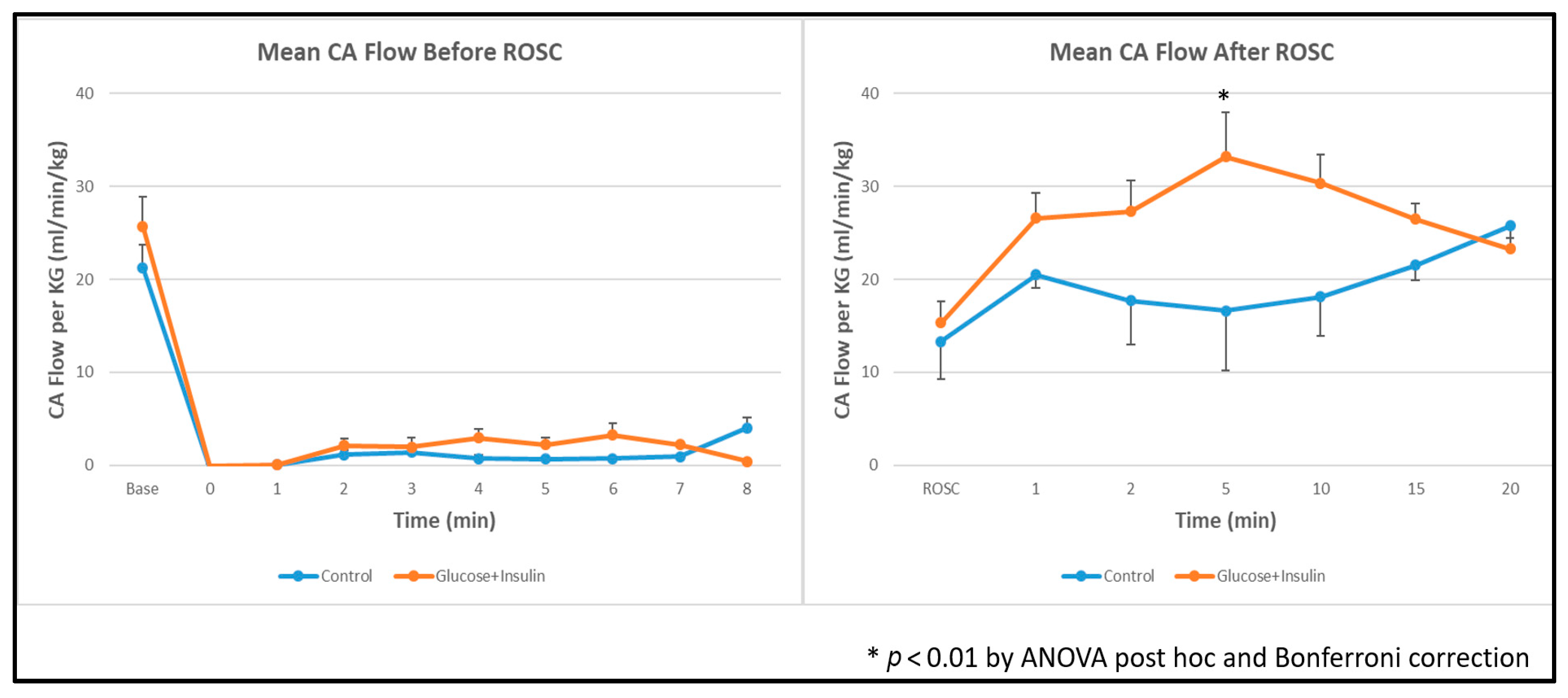
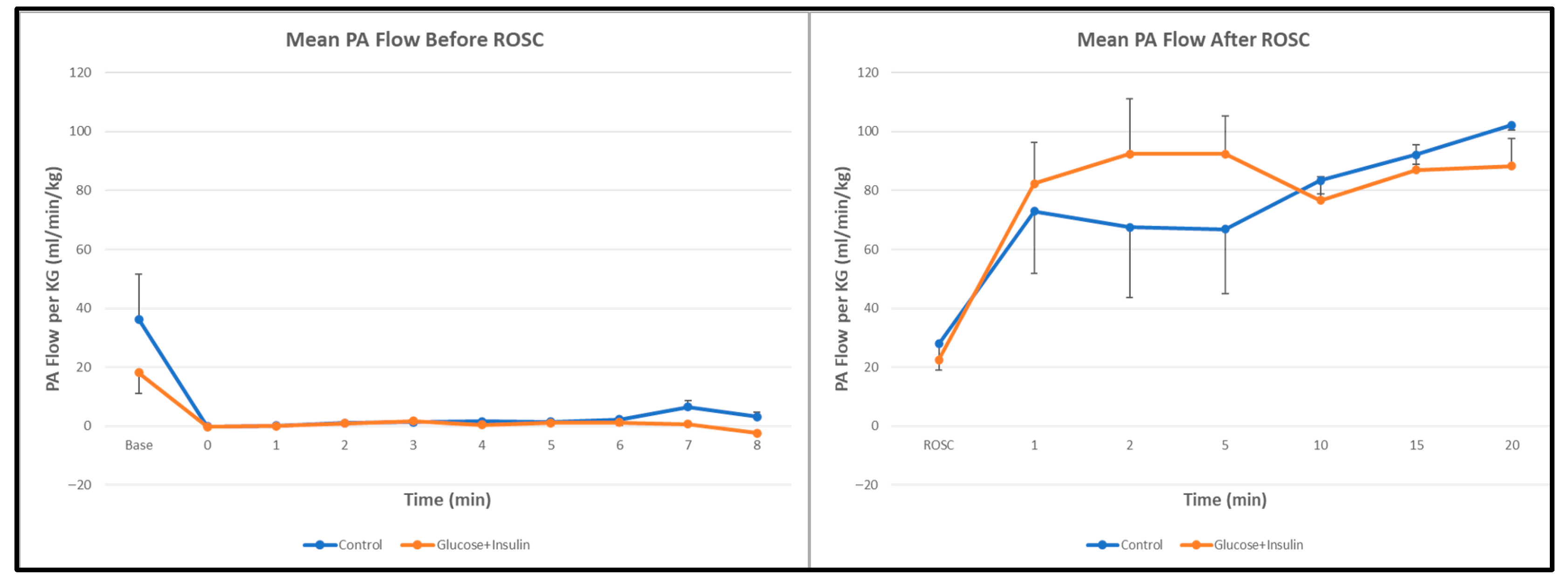
3.4. Hemodynamic Parameters
3.5. Blood Pressure
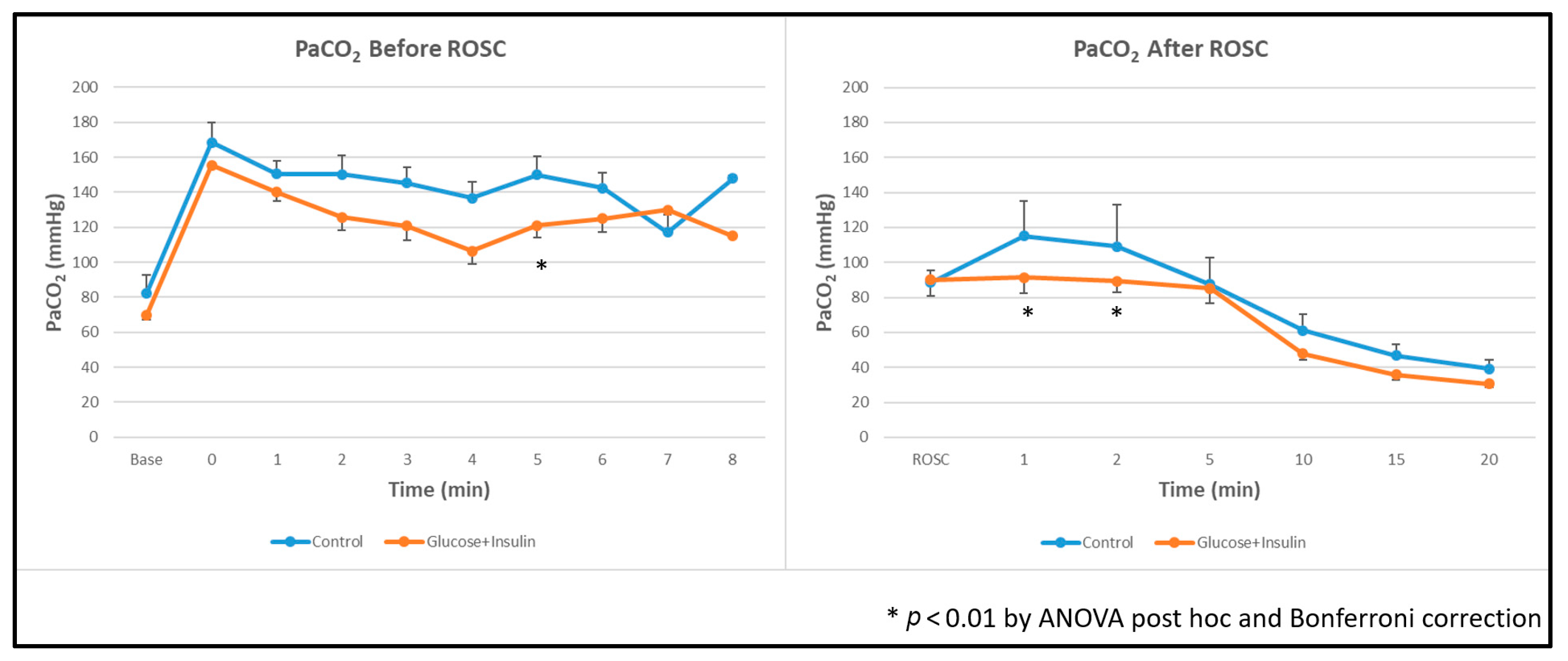
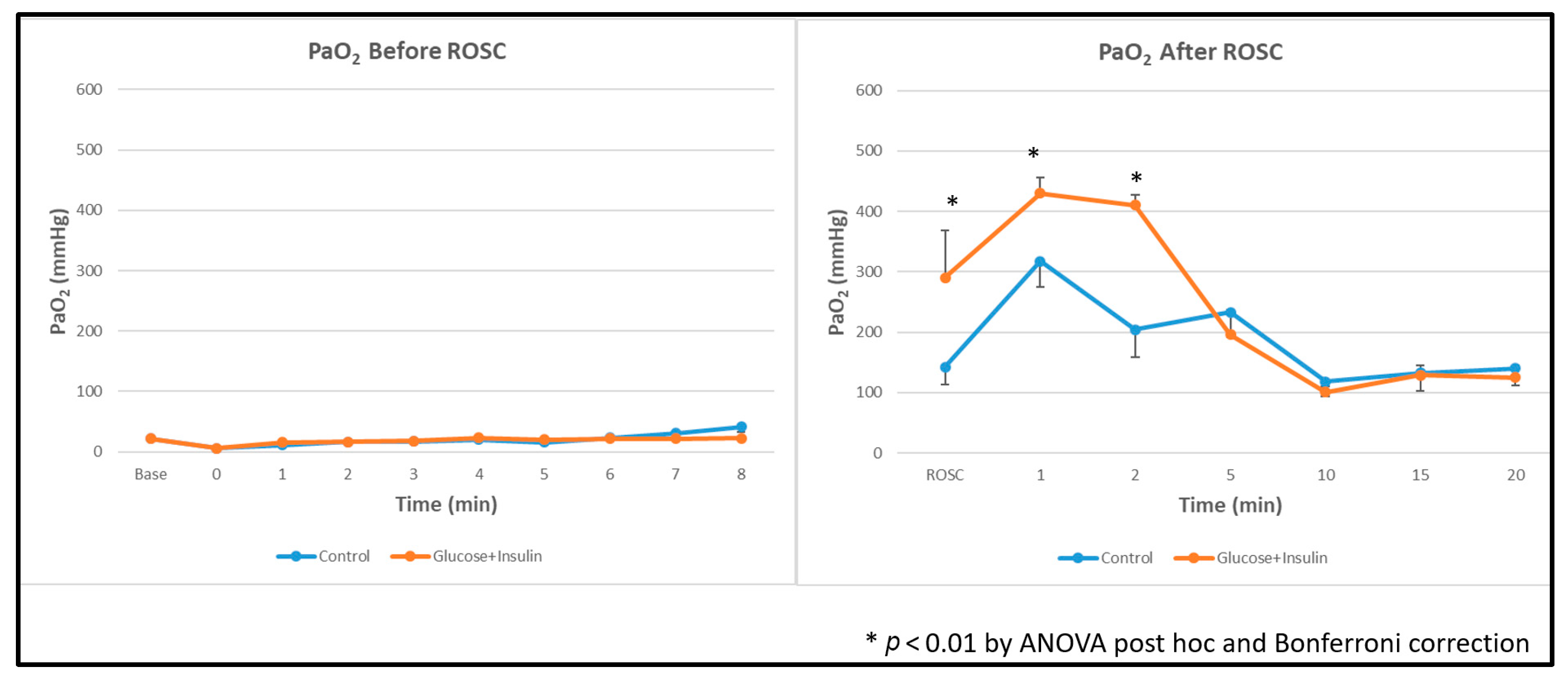
3.6. Gas Exchange
4. Discussion
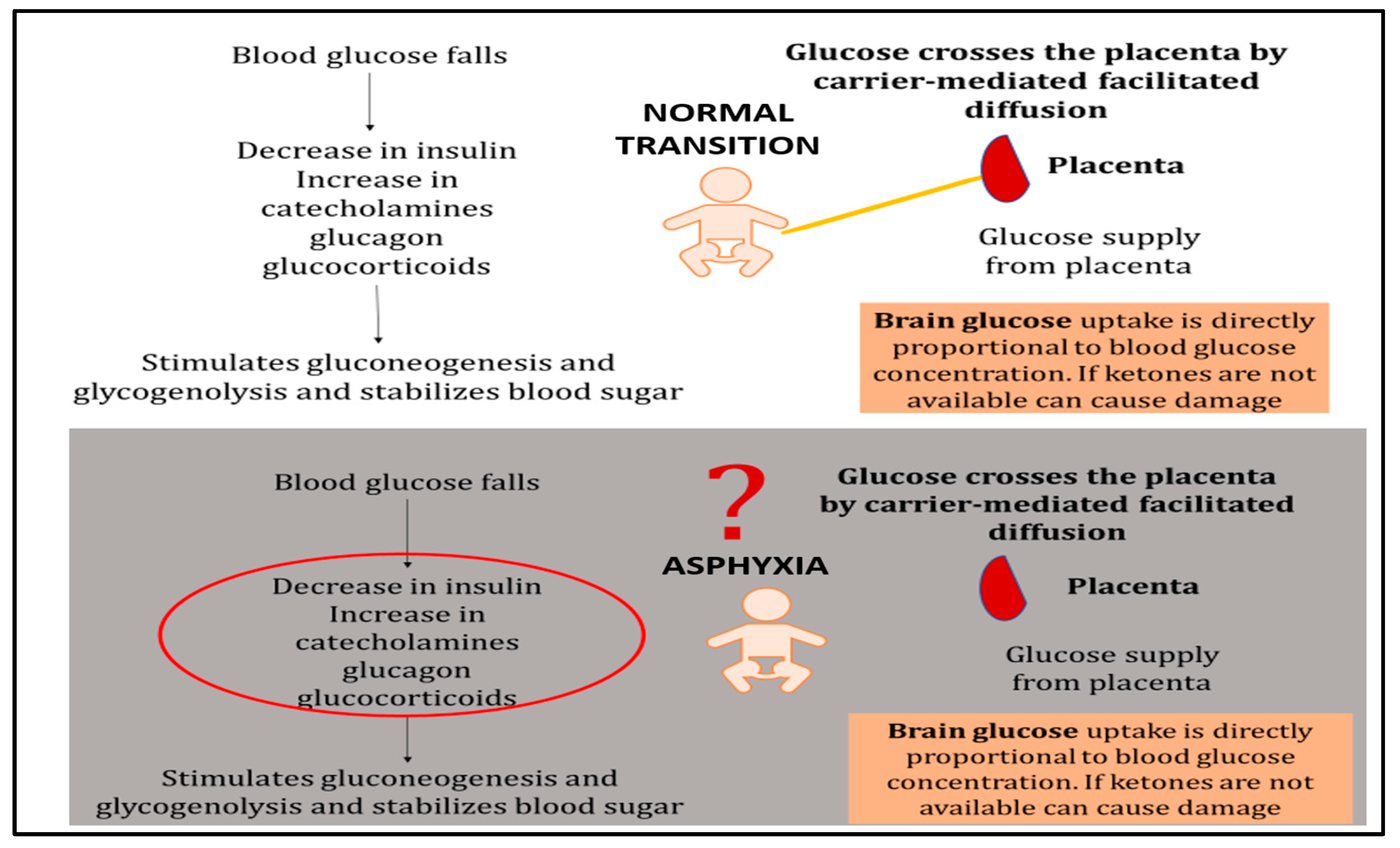
4.1. Glucose Metabolism and the Asphyxiated Myocardium
4.2. Clinical Context: Duration of Resuscitation and the Need for Metabolic Adjuncts
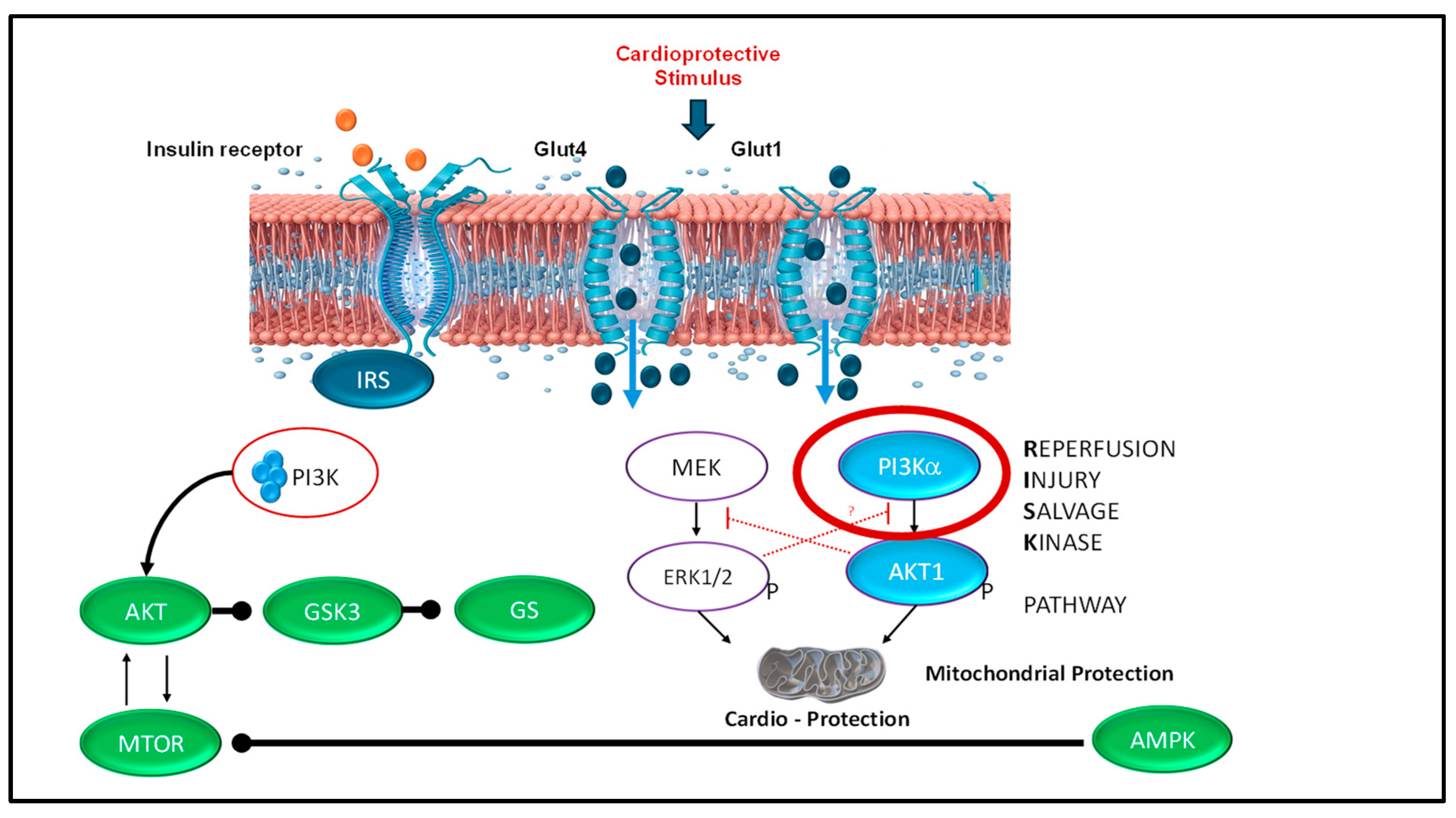
4.3. Mechanistic Hypothesis: The RISK Pathway and Cardio Protection (Figure 9)

4.4. Clinical Context: Glucose–Insulin–Potassium (GIK) Therapy
4.5. Hemodynamic and Gas Exchange Findings
4.6. Paradoxical Hyperglycemia
4.7. Timing and Pharmacokinetics of Insulin
4.8. Limitations
4.9. Future Directions
5. Conclusions
Author Contributions
Funding
Institutional Review Board Statement
Informed Consent Statement
Data Availability Statement
Acknowledgments
Conflicts of Interest
Abbreviations
| DI | Dextrose and insulin |
| BG | blood glucose |
| ROSC | Return of Spontaneous Circulation |
| RISK | Reperfusion Injury Salvage Kinase |
| IRS | Insulin Receptor Substrate |
| PI3K | Phosphatidylinositol 3-kinase |
| AKT | Protein Kinase B (also known as PKB) |
| GSK3 | Glycogen Synthase Kinase-3 |
| GS | Glycogen Synthase |
| MEK | Mitogen-activated protein kinase kinase (also known as MAP2K) |
| ERK1/2 | Extracellular signal-regulated kinases 1 and 2 |
| mTOR | Mechanistic Target of Rapamycin |
| AMPK | AMP-activated protein kinase |
| Glut1 | Glucose transporter type 1 |
| Glut4 | Glucose transporter type 4 |
References
- Committee on Fetus and Newborn; Adamkin, D.H. Postnatal glucose homeostasis in late-preterm and term infants. Pediatrics 2011, 127, 575–579. [Google Scholar] [CrossRef] [PubMed]
- Basu, P.; Som, S.; Choudhuri, N.; Das, H. Contribution of the blood glucose level in perinatal asphyxia. Eur. J. Pediatr. 2009, 168, 833–838. [Google Scholar] [CrossRef] [PubMed]
- Basu, S.K.; Ottolini, K.; Govindan, V.; Mashat, S.; Vezina, G.; Wang, Y.; Ridore, M.; Chang, T.; Kaiser, J.R.; Massaro, A.N. Early Glycemic Profile Is Associated with Brain Injury Patterns on Magnetic Resonance Imaging in Hypoxic Ischemic Encephalopathy. J. Pediatr. 2018, 203, 137–143. [Google Scholar] [CrossRef] [PubMed]
- Davis, D.J.; Creery, W.D.; Radziuk, J. Inappropriately high plasma insulin levels in suspected perinatal asphyxia. Acta Paediatr. 1999, 88, 76–81. [Google Scholar] [CrossRef] [PubMed]
- Weiner, G.M.; Cooper, C.M.; Lee, H.C. (Eds.) Textbook of Neonatal Resuscitation, 9th ed.; American Academy of Pediatrics: Washington, DC, USA, 2025. [Google Scholar]
- Foglia, E.E.; Weiner, G.; de Almeida, M.F.B.; Wyllie, J.; Wyckoff, M.H.; Rabi, Y.; Guinsburg, R.; International Liaison Committee on Resuscitation Neonatal Life Support Task Force. Duration of Resuscitation at Birth, Mortality, and Neurodevelopment: A Systematic Review. Pediatrics 2020, 146, e20201449. [Google Scholar] [CrossRef] [PubMed]
- Chandrasekharan, P.; Rawat, M.; Gugino, S.F.; Koenigsknecht, C.; Helman, J.; Nair, J.; Vali, P.; Lakshminrusimha, S. Effect of various inspired oxygen concentrations on pulmonary and systemic hemodynamics and oxygenation during resuscitation in a transitioning preterm model. Pediatr. Res. 2018, 84, 743–750. [Google Scholar] [CrossRef] [PubMed]
- Bawa, M.; Gugino, S.; Helman, J.; Bradley, N.; Nielsen, L.; Prasath, A.; Blanco, C.; Rawat, M.; Chandrasekharan, P. Neonatal resuscitation for bradycardia (HR < 60 bpm)—An alternate approach using an ovine model. Pediatr. Res. 2025; Advance online publication. [Google Scholar] [CrossRef]
- Allgoewer, A.; Mayer, B. Sample size estimation for pilot animal experiments by using a Markov Chain Monte Carlo approach. Altern. Lab. Anim. 2017, 45, 83–90. [Google Scholar] [CrossRef] [PubMed]
- Gherardi, R.; Baudrimont, M.; Nguyen, J.P.; Gaston, A.; Cesaro, P.; Degos, J.D.; Caron, J.P.; Poirier, J. Monstrocellular heavily lipidized malignant glioma. Acta Neuropathol. 1986, 69, 28–32. [Google Scholar] [CrossRef] [PubMed]
- Tang, H.; Sun, L.; Huang, J.; Yang, Z.; Li, C.; Zhou, X. The mechanism and biomarker function of Cavin-2 in lung ischemia-reperfusion injury. Comput. Biol. Med. 2022, 151, 106234. [Google Scholar] [CrossRef] [PubMed]
- Yellon, D.M.; Beikoghli Kalkhoran, S.; Davidson, S.M. The RISK pathway leading to mitochondria and cardioprotection: How everything started. Basic Res. Cardiol. 2023, 118, 22. [Google Scholar] [CrossRef] [PubMed]
- Gong, G.Q.; Bilanges, B.; Allsop, B.; Masson, G.R.; Roberton, V.; Askwith, T.; Oxenford, S.; Madsen, R.R.; Conduit, S.E.; Bellini, D.; et al. A small-molecule PI3Kalpha activator for cardioprotection and neuroregeneration. Nature 2023, 618, 159–168. [Google Scholar] [CrossRef] [PubMed]
- Udelson, J.E.; Selker, H.P.; Braunwald, E. Glucose-Insulin-Potassium Therapy for Acute Myocardial Infarction: 50 Years On and Time for a Relook. Circulation 2022, 146, 503–505. [Google Scholar] [CrossRef] [PubMed]
- Simon, L.V.; Hashmi, M.F.; Farrell, M.W. Hyperkalemia. In StatPearls; StatPearls Publishing: Treasure Island, FL, USA, 2025. [Google Scholar]
- Guellec, I.; Ancel, P.Y.; Beck, J.; Loron, G.; Chevallier, M.; Pierrat, V.; Kayem, G.; Vilotitch, A.; Baud, O.; Ego, A.; et al. Glycemia and Neonatal Encephalopathy: Outcomes in the LyTONEPAL (Long-Term Outcome of Neonatal Hypoxic EncePhALopathy in the Era of Neuroprotective Treatment with Hypothermia) Cohort. J. Pediatr. 2023, 257, 113350. [Google Scholar] [CrossRef] [PubMed]



| Parameters | Control (N = 6) (Sham Treatment with Epinephrine) | Experimental (N = 5) (Dextrose + Insulin with Epinephrine) |
|---|---|---|
| Gestational age (days) | 140 ± 2.0 | 140 ± 1.5 |
| Birth weight (kg) | 4.20 ± 1.2 | 4.23 ± 1.5 |
| Sex (N) | M-3, F-3 | M-2, F-3 |
| Blood glucose at the start of resuscitation (mg/dL) | 25.0 ± 4.7 | 22.5 ± 8.2 |
| Parameters | Control (N = 6) (Sham Treatment with Epinephrine) | Experimental (N = 5) (Dextrose + Insulin with Epinephrine) |
|---|---|---|
| ROSC | 3/6 (50%) | 5/5 (100%) |
| Time to ROSC (seconds) | 400 ± 53 | 424 ± 54 |
| Time: no ROSC (seconds) | 1200 ± 0 | NA |
Disclaimer/Publisher’s Note: The statements, opinions and data contained in all publications are solely those of the individual author(s) and contributor(s) and not of MDPI and/or the editor(s). MDPI and/or the editor(s) disclaim responsibility for any injury to people or property resulting from any ideas, methods, instructions or products referred to in the content. |
© 2025 by the authors. Licensee MDPI, Basel, Switzerland. This article is an open access article distributed under the terms and conditions of the Creative Commons Attribution (CC BY) license.
Share and Cite
Chandrasekharan, P.; Prasath, A.; Gugino, S.; Helman, J.; Nielsen, L.; Bradley, N.; Bawa, M.; Blanco, C.; Kasu, M.D.; Abbasi, H.; et al. Dextrose with Insulin During Neonatal Resuscitation for Prolonged Asphyxia in a Near-Term Ovine Model: A Proof-of-Concept Study. Children 2026, 13, 50. https://doi.org/10.3390/children13010050
Chandrasekharan P, Prasath A, Gugino S, Helman J, Nielsen L, Bradley N, Bawa M, Blanco C, Kasu MD, Abbasi H, et al. Dextrose with Insulin During Neonatal Resuscitation for Prolonged Asphyxia in a Near-Term Ovine Model: A Proof-of-Concept Study. Children. 2026; 13(1):50. https://doi.org/10.3390/children13010050
Chicago/Turabian StyleChandrasekharan, Praveen, Arun Prasath, Sylvia Gugino, Justin Helman, Lori Nielsen, Nicole Bradley, Mausma Bawa, Clariss Blanco, Mary Divya Kasu, Hamza Abbasi, and et al. 2026. "Dextrose with Insulin During Neonatal Resuscitation for Prolonged Asphyxia in a Near-Term Ovine Model: A Proof-of-Concept Study" Children 13, no. 1: 50. https://doi.org/10.3390/children13010050
APA StyleChandrasekharan, P., Prasath, A., Gugino, S., Helman, J., Nielsen, L., Bradley, N., Bawa, M., Blanco, C., Kasu, M. D., Abbasi, H., Rawat, M., & Slone, J. (2026). Dextrose with Insulin During Neonatal Resuscitation for Prolonged Asphyxia in a Near-Term Ovine Model: A Proof-of-Concept Study. Children, 13(1), 50. https://doi.org/10.3390/children13010050