
Article

Resiliency in Child–Caregiver Dyads and the Impact on Health Outcomes in Sickle Cell Disease
1
Department of Pediatrics, Indiana University, Indianapolis, IN 46202, USA
2
Department of Psychological and Brain Sciences, Washington University, St. Louis, MO 63103, USA
3
Department of Pediatrics, Medical College of Wisconsin, Milwaukee, WI 53226, USA
4
Department of Internal Medicine (Hematology), Yale University, New Haven, CT 06510, USA
*
Author to whom correspondence should be addressed.
Children 2025, 12(4), 394; https://doi.org/10.3390/children12040394

Submission received: 26 February 2025 / Revised: 14 March 2025 / Accepted: 17 March 2025 / Published: 21 March 2025

Abstract

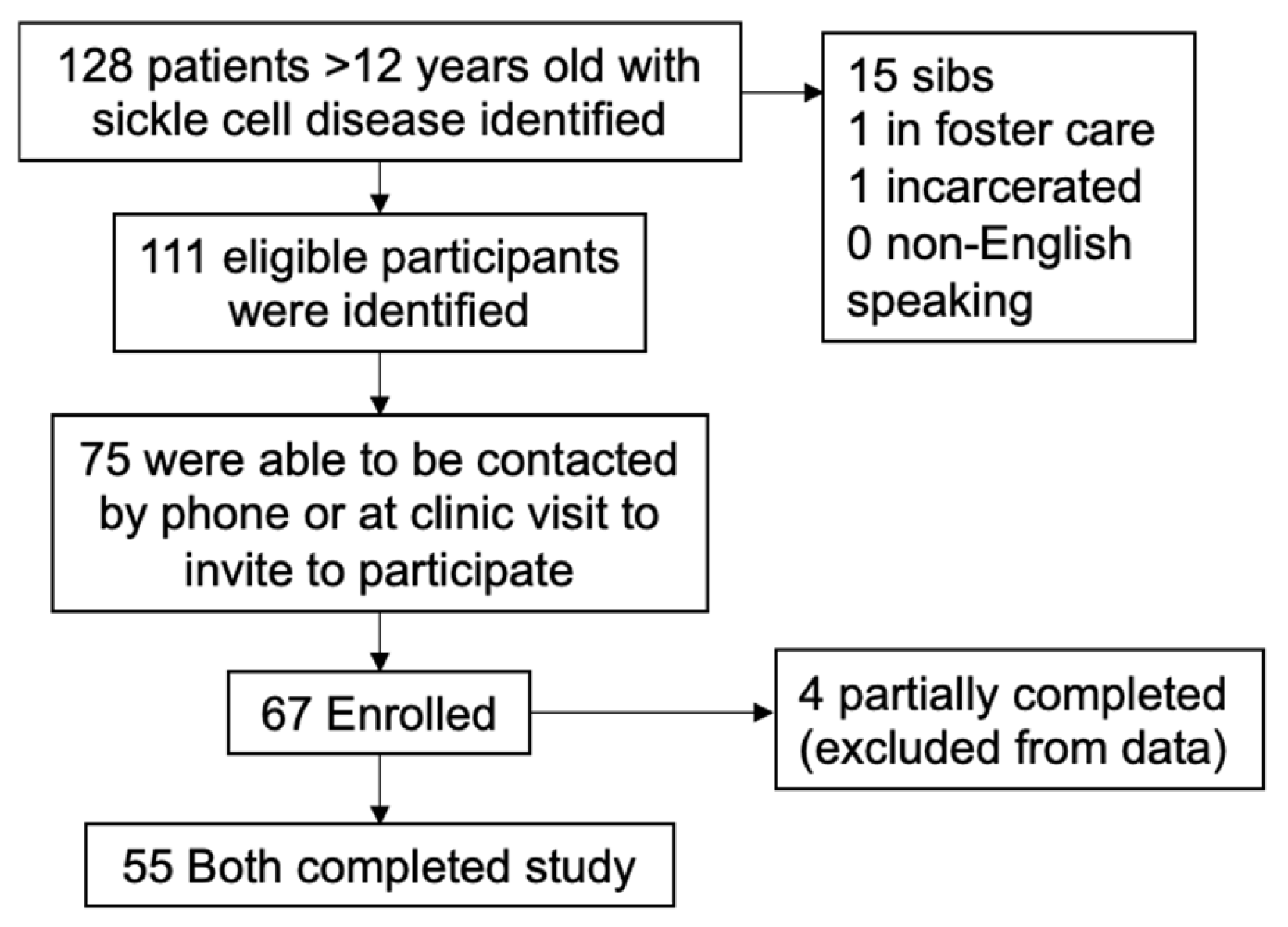
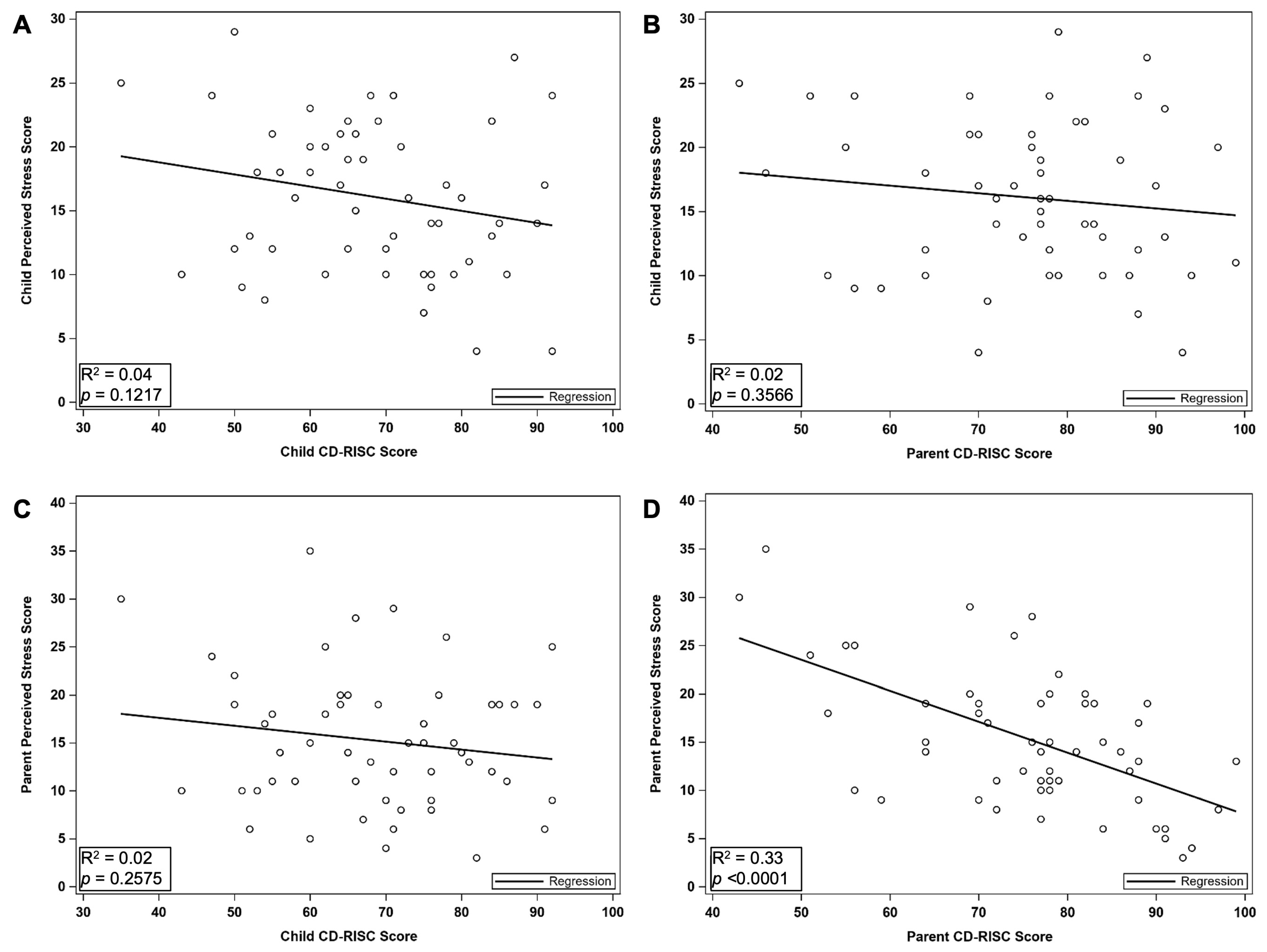
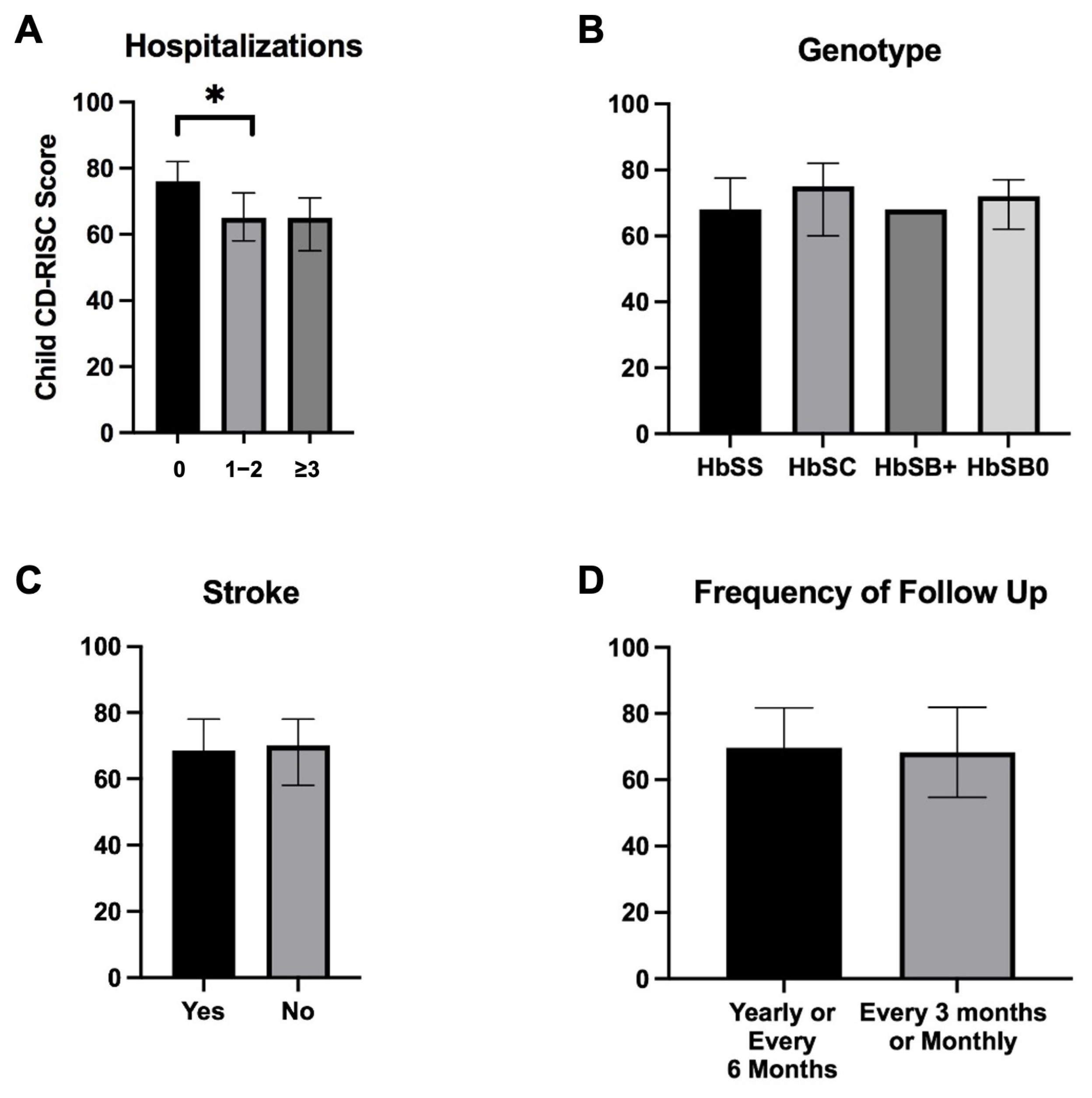
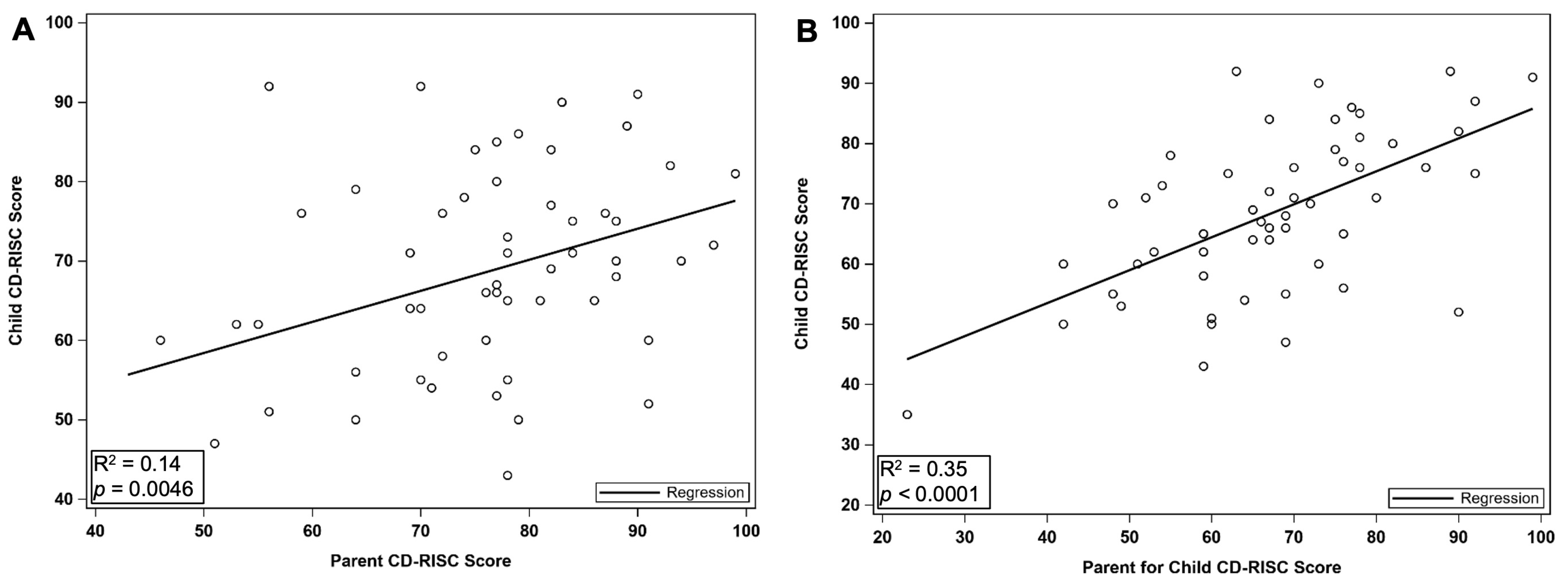
Background/Objectives: Resiliency is critical in coping with stressors associated with chronic health diseases. Sickle cell disease (SCD) is a chronic blood disorder in which familial psychosocial functioning impacts disease outcomes. We hypothesized that caregiver perceived stress and resiliency are related to the resiliency of children with SCD and may influence SCD clinical outcomes. Methods: Child–caregiver dyads completed the Perceived Stress Scale (PSS-10), Connor Davidson-Resilience Scale (CD-RISC), and used a 1–5 Likert scale to rate the frequency of stressors they experience, including the COVID-19 pandemic. Results: Of the 55 child participants, 36% reported a history of stroke, 7% a bone marrow transplant, and 25% frequent (≥3) emergency room visits within last year. Dyad median resiliency scores (68.5 vs. 75.8) and stress scores (16.1 vs. 15.3) were similar and consistent with population studies. Child resiliency was not associated with child (r = −0.21, p = 0.12) or caregiver (r = −0.16, p = 0.26) perceived stress. Caregiver and child resiliencies had a significant positive correlation (r = 0.38, p = 0.0046) but no relationship across dyads with perceived stress scores. Children with one to two hospitalizations within the last year had significantly lower median resiliency scores compared with those who had experienced no hospitalizations (median 65 vs. 76, p = 0.0386), but displayed no relationship with genotype, history of stroke, or stem cell transplant. During the COVID-19 pandemic, both groups rated “worry about my/my child’s sickle cell disease” as the most frequent psychosocial stressor. Conclusions: In a cross-sectional cohort study that explored the relationship between caregiver resiliency and child resiliency in SCD, we found that caregiver resiliency and child resiliency were strongly correlated, while child resiliency showed no significant association with perceived stress. Higher child resiliency scores were associated with fewer hospitalizations. The results indicate the need for interventions to increase both child and caregiver resiliency in SCD, as it may contribute to health outcomes in SCD. Further research is needed to explore cofounding factors influencing resiliency in children with SCD.
Keywords: resiliency; sickle cell disease; stress; COVID-19 resiliency; sickle cell disease; stress; COVID-19