

Finding the Prevalence of Autism in Female Mental Illness: Improving Child Development for an Underdiagnosed and Undertreated Population
Abstract
1. Introduction
1.1. Problem Statement
1.2. The Importance of Autism Spectrum Disorder (ASD) as a Mental Health Comorbidity in Adolescent Girls and Young Women
- First: Mental health conditions and mental wellbeing.
- Second: Identifying people with autism/diagnosis.
- Fifth: Issues impacting women with autism.
“girls without intellectual impairments or language delays may go unrecognized, perhaps because of subtler manifestation of social and communication difficulties. In comparison with males with ASD, females may have better reciprocal conversation, and be more likely to share interests, to integrate verbal and non-verbal behavior, and to modify their behavior by situation, despite having similar social understanding difficulties as males. Attempting to hide or mask autistic behavior (e.g., by copying the dress, voice and manner of socially successful women) may result in the underdiagnosis of ASD in some females. Repetitive behaviors may be somewhat less evident in females than in males, on average, and special interests may have a more social (e.g., a singer, an actor) or ‘normative’ focus (e.g., horses), while remaining unusual in their intensity”.
- “Girly” in their interests and the subtleties of approach to their interests are missed;
- Less likely to externalize and more likely to be anxious;
- Inherently more socially aware;
- Better in their apparent language skills, at least initially;
- Better at masking during tests;
- Disadvantaged by tests tailored more for boys.
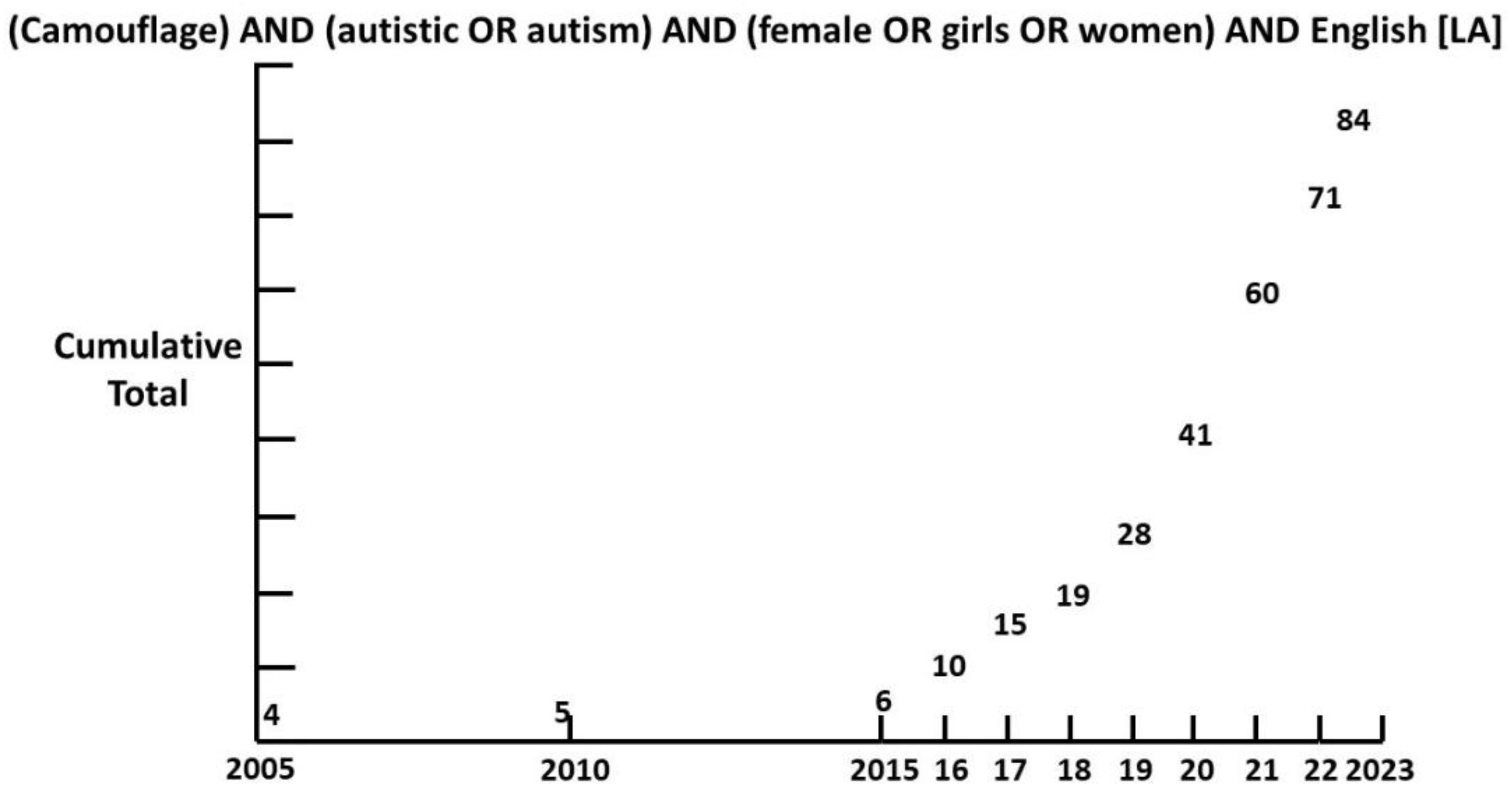
1.3. Camouflaging
1.4. Diagnostic Overshadowing
1.5. Neurodiversity: The Set of the Neurotypical and the Neurodivergent
1.6. ASD and Attention Deficit Hyperactivity Disorder (ADHD)
1.7. Mental Illness Guidelines and ASD
- The National Institute for Health and Care Excellence (NICE) guideline in the 2022 [42] entry for the treatment and management of depression in adults lists bipolar disorder, PTSD, and anxiety as comorbidities. If there are “language or communication difficulties e.g., autism”, the guideline suggests referring to the NICE Autism guideline but does not mention female camouflage possibly hiding comorbid ASD. The assumption appears to be that the possibility of ASD has been recognized. If it has not, the skills of female camouflaging would require a very good understanding of female ASD by the clinician. The language and communication skills in female ASD can appear quite satisfactory, and the pathway would be difficult to navigate for a general practitioner/primary care physician.
- An adolescent depression primary care screening in 2018 did not mention ASD among mental health risk factors [43].
- A 2021 paper on postpartum depression and psychosis [46] examined the prevalence of neurodevelopmental disorders in children but not in mothers.
- It has been suggested [47] that pediatricians have a role to play in reducing perinatal mortality and noted that some do screen for maternal depression. ASD is not mentioned. We would add that this is an area where pediatric expertise could indeed be very useful if looking for ASD became routine, perhaps in partnership with midwives [48] aware of both depression and ASD (Section 3.1.6 and Section 4.5).
- A study [49] characterizing treatment-resistant anorexia nervosa (TRAN) from 2000 to 2016 in patients aged 17 and upwards was published in 2021. It did not mention ASD but did speculate that TRAN might be a different concept warranting additional research. There is qualitative information to support this [36,50].
- The American Psychiatric Association 2023 guideline [51] for treating eating disorders lists other psychiatric disorders that should be particularly considered. ASD is not among them.
- A recent review of eating disorders [52] does not mention the relation of ASD to anorexia nervosa (AN) though it does mention the relation to avoidant–restrictive food intake disorder (ARFID), discussed in Section 3.2.5.
- A 2023 paper [53] on difficult-to-treat bipolar disorder mentioned ADHD, but not ASD.
- A discussion of treatment resistance in mental illness [54] lists autism being misdiagnosed as schizophrenia but does not list schizophrenia spectrum disorder as being comorbid with ASD.
- A 2023 paper [55] listing comorbidities of borderline personality disorder (BPD) quotes BPD as a comorbidity in 37.7% of ADHD cases but does not list ASD.
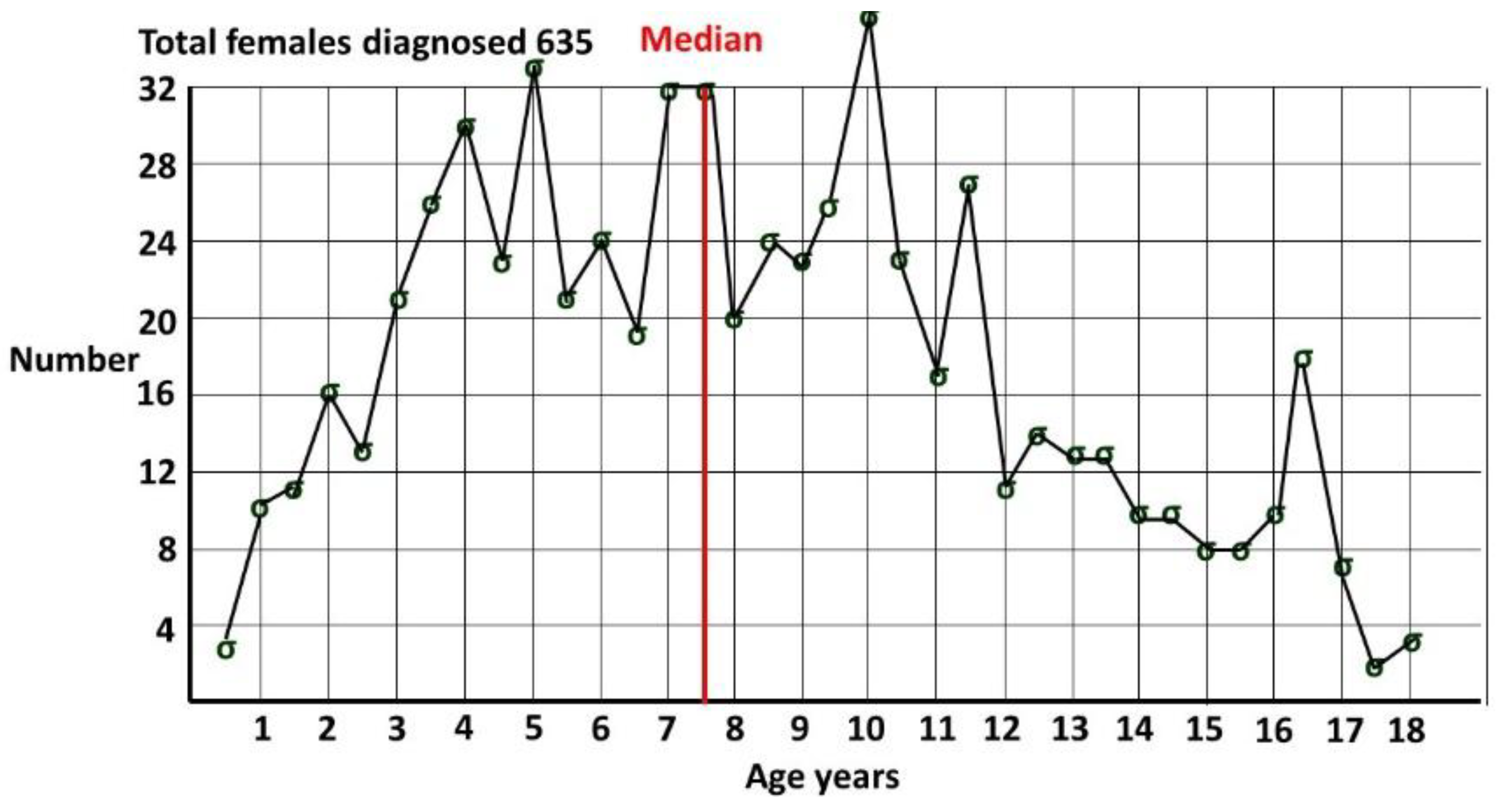
1.8. Problems Diagnosing the Prevalence of Female ASD
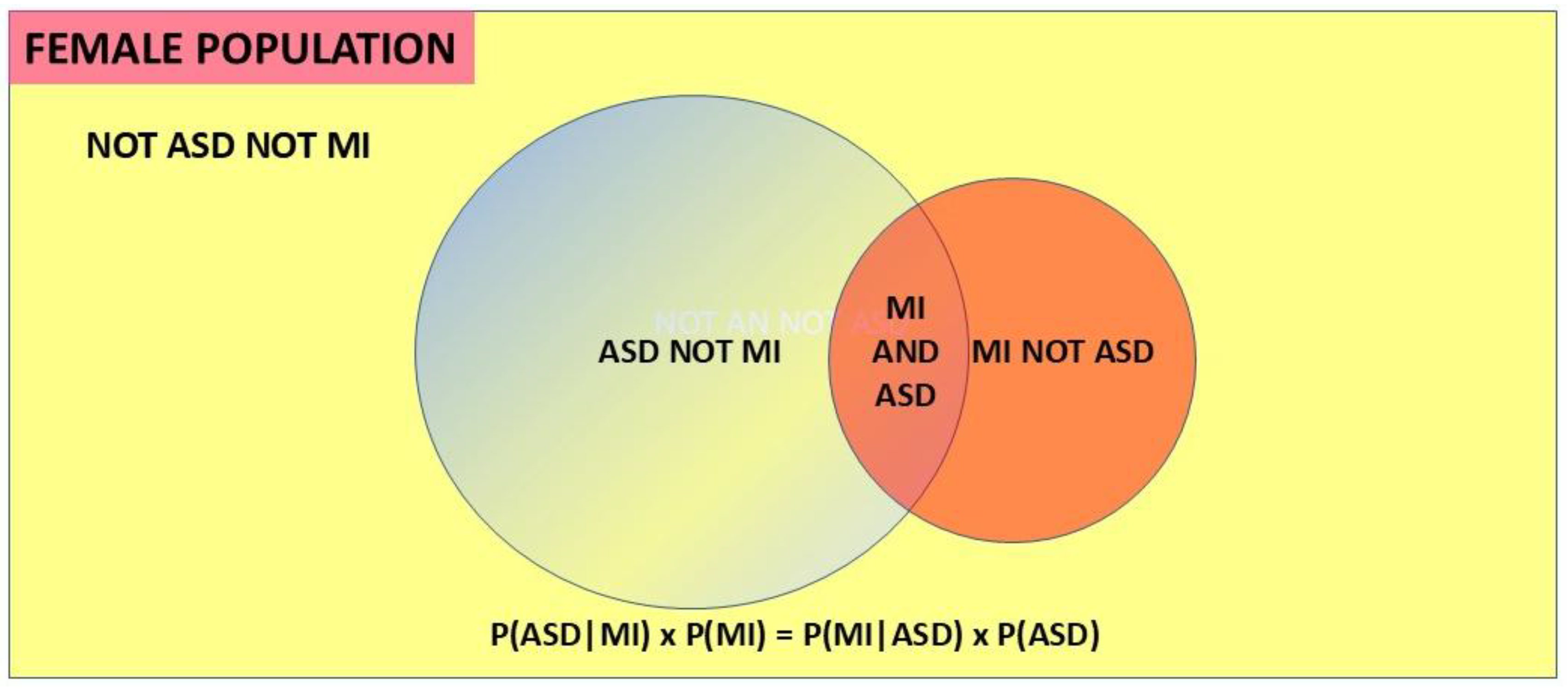
1.9. Conditional Probability and Bayes’ Theorem
1.10. P(ASD)
2. Methods
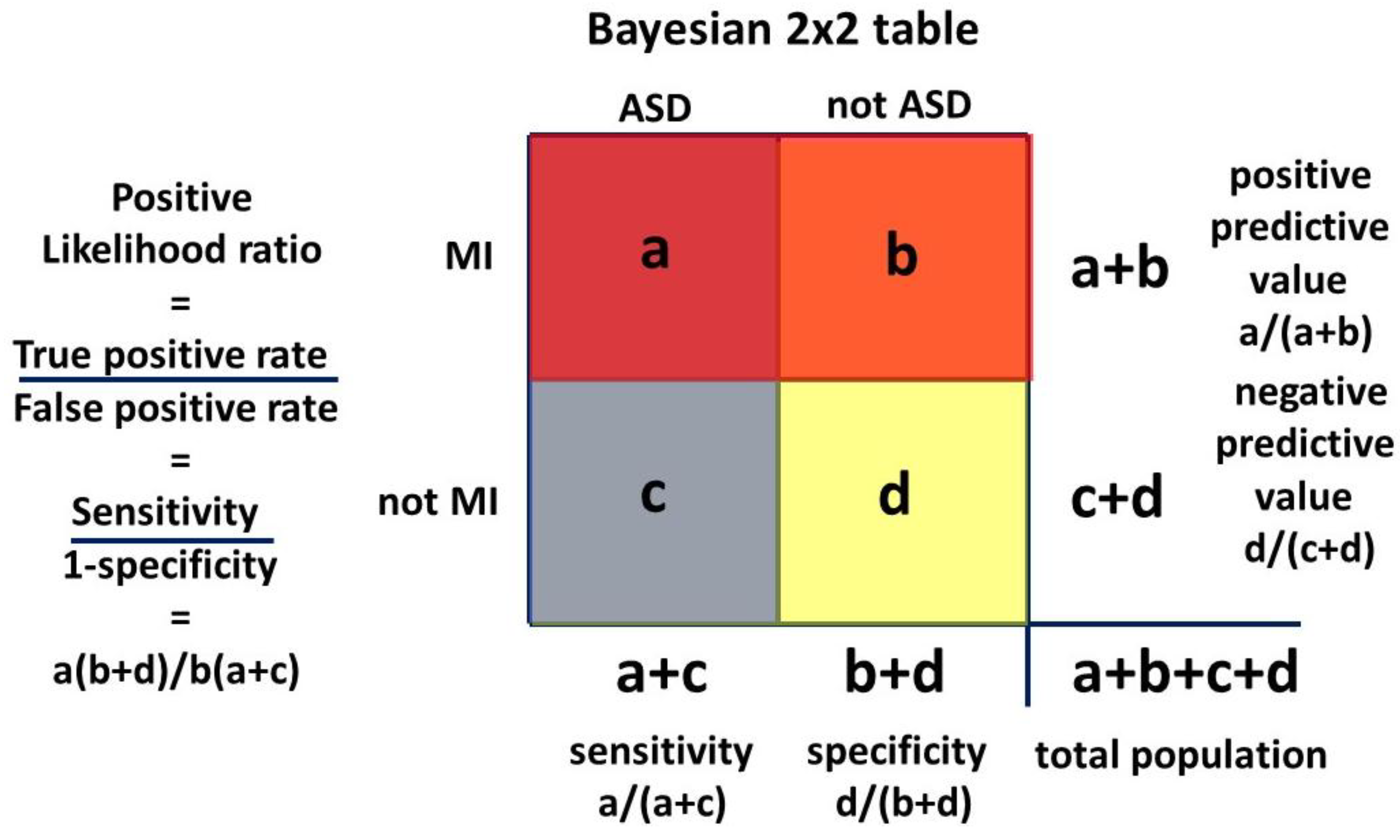
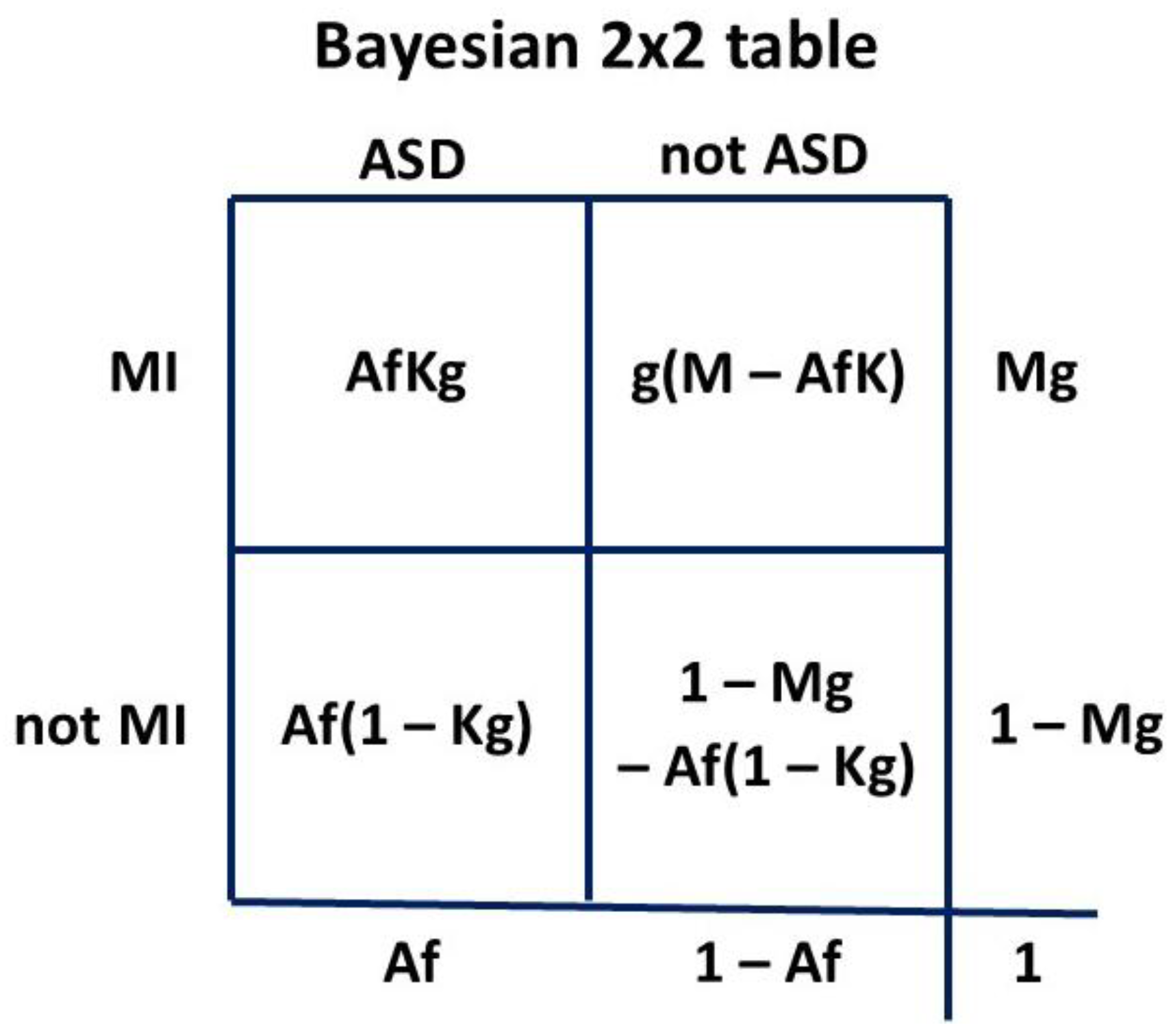
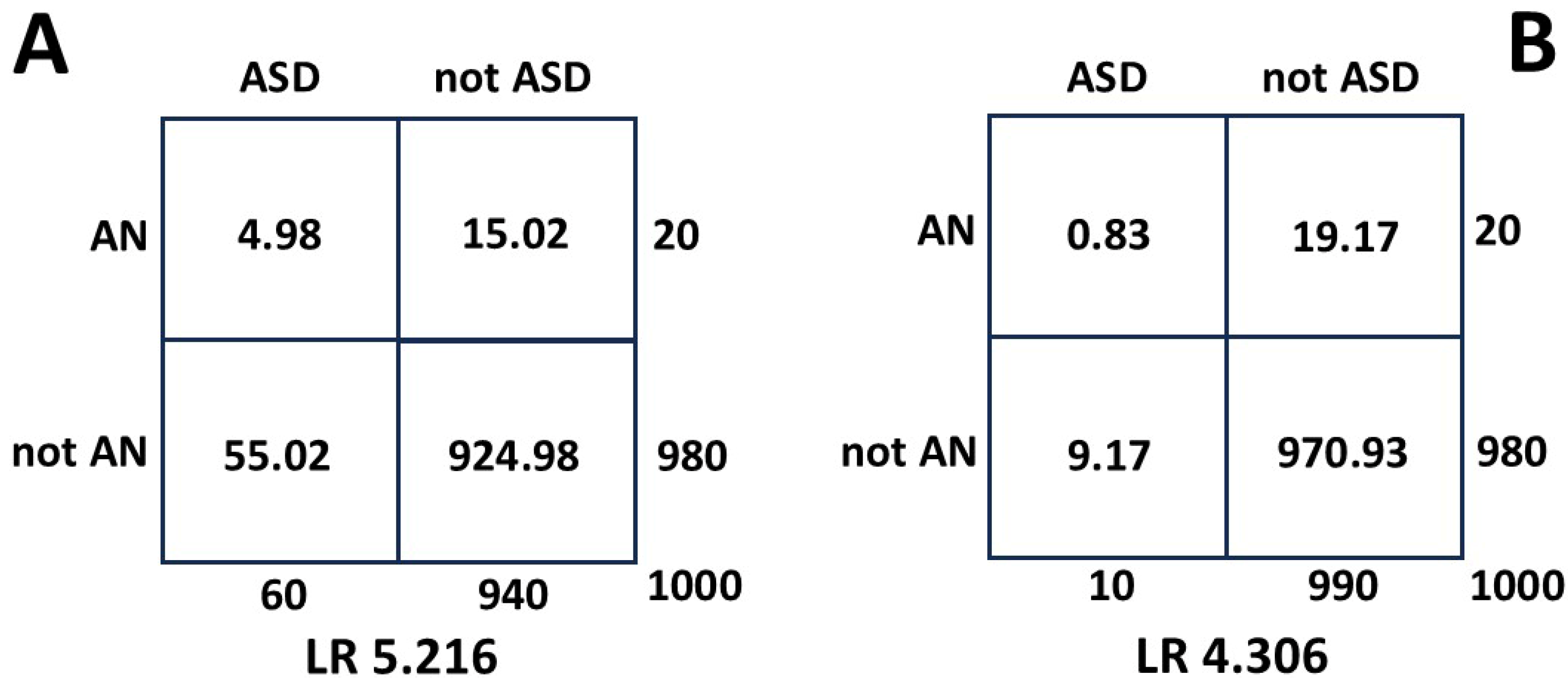
- P(ASD|MI) using the probability form of Bayes’ theorem with P(ASD), P(MI), and P(MI|ASD).P(ASD|MI) using the odds form of Bayes’ theorem with P(ASD) and the RR or HR.
- P(ASD) using the probability form of Bayes’ theorem if data is opportunistically available with P(MI), P(MI|ASD), and P(ASD|MI).
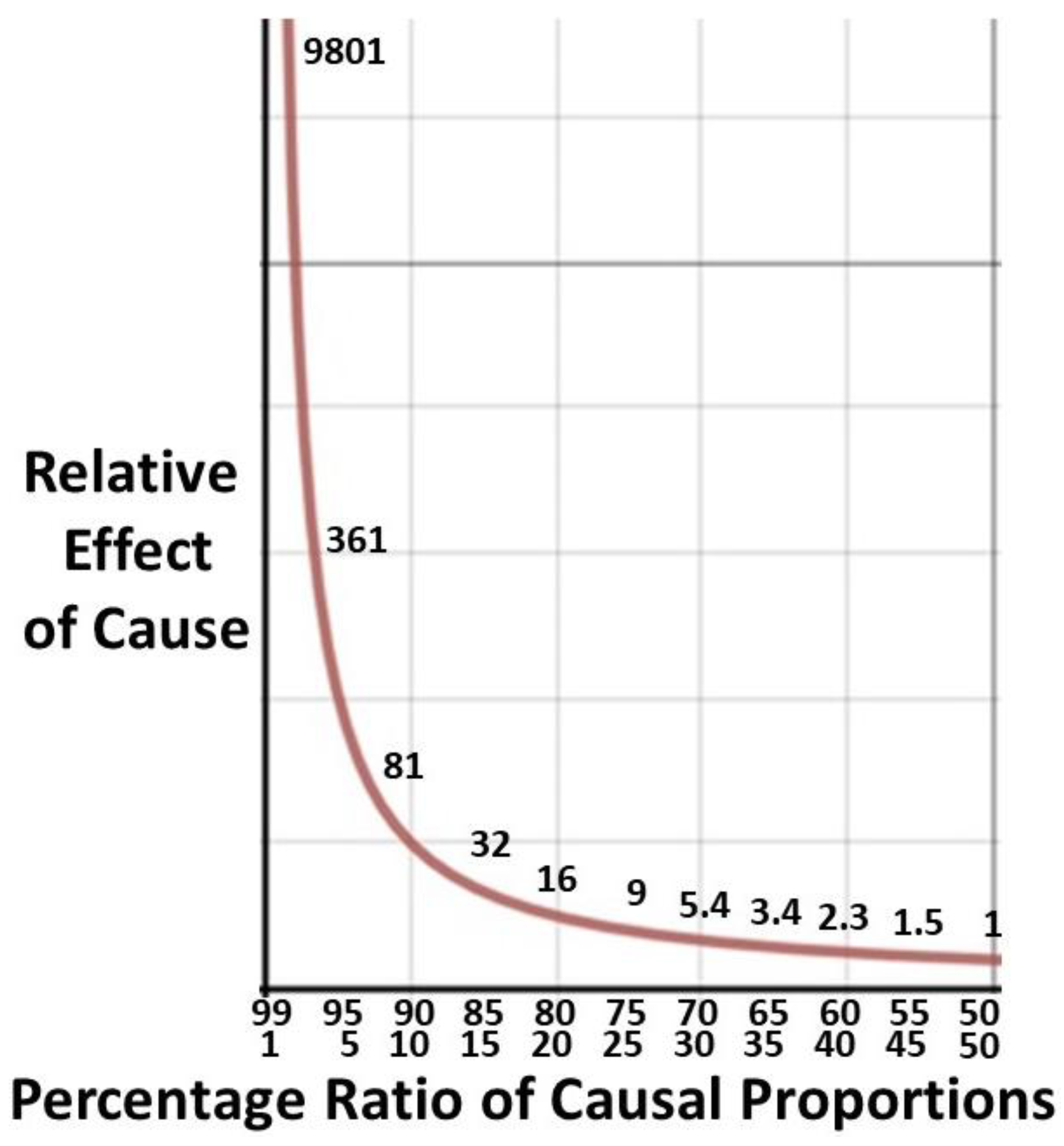
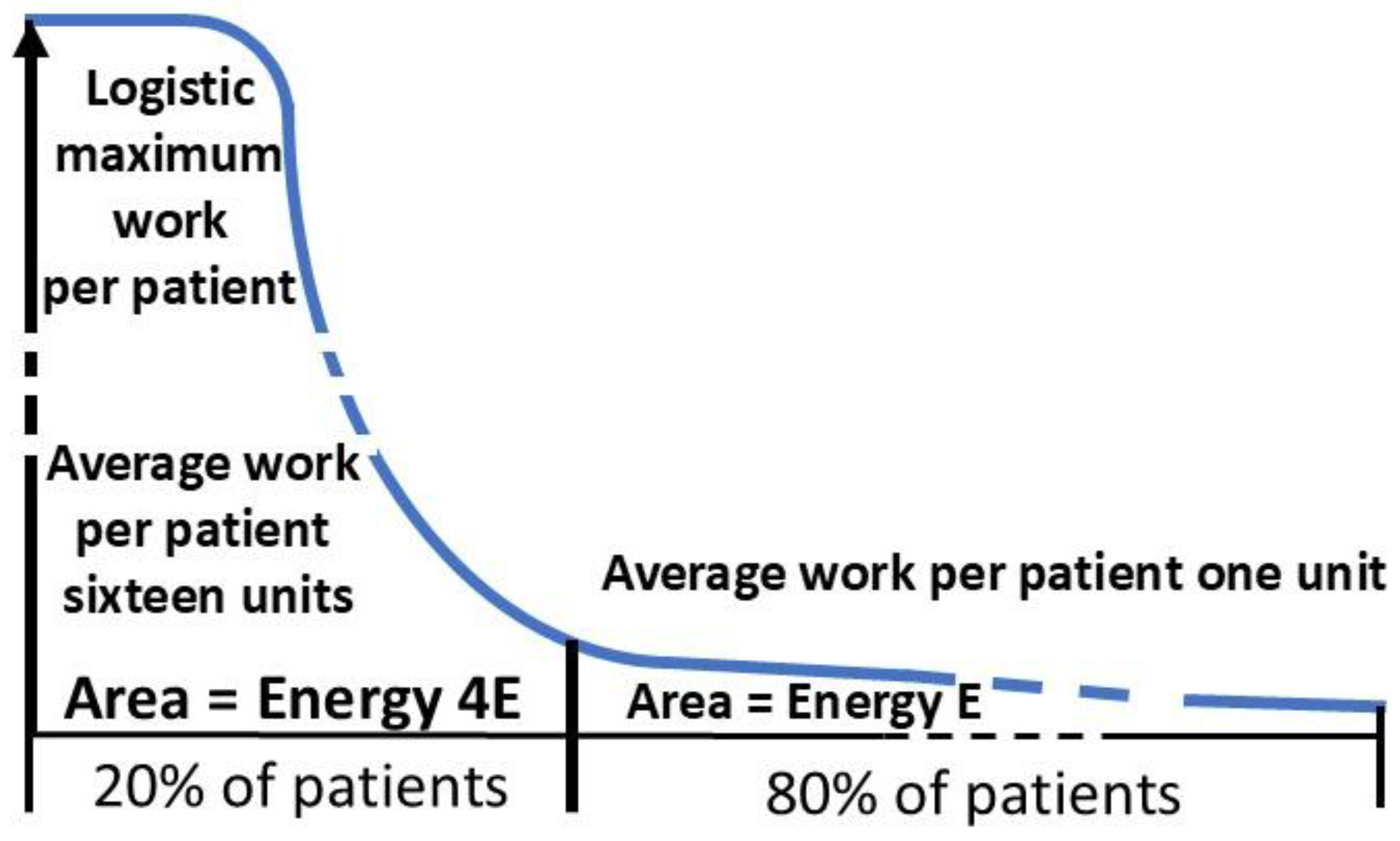
- Estimates of savings in therapist time to allow for an improved overall patient care by Pareto analysis. The derivation of the Pareto formula and calculation of possible efficiencies are detailed in Appendix B.
3. Results
3.1. P(ASD|MI) for Selected Mental Illnesses in Children, Adolescents, and Young Adults
3.1.1. Context
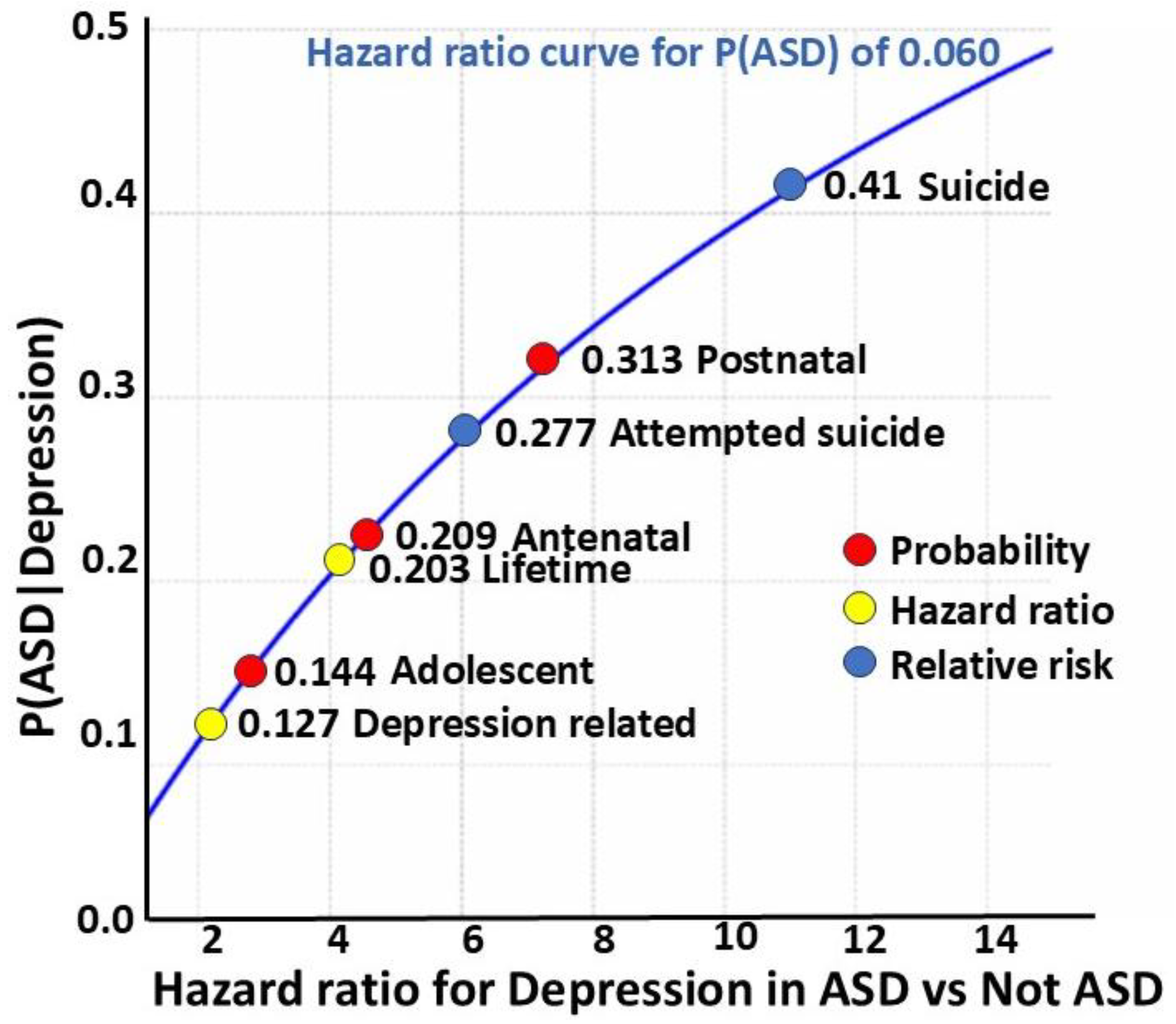
3.1.2. Depression (DP)
3.1.3. Perinatal Depression
3.1.4. Anxiety Disorders (ANX)
3.1.5. Social Anxiety Disorder (SA)
3.1.6. Bipolar Disorder (BP)
3.1.7. Schizophrenia Spectrum Disorder (SSD)
3.1.8. Obsessive–Compulsive Disorder (OCD)
3.1.9. Anorexia Nervosa (AN)
3.1.10. Borderline Personality Disorder (BPD)
3.1.11. Post-Traumatic Stress Disorder (PTSD)
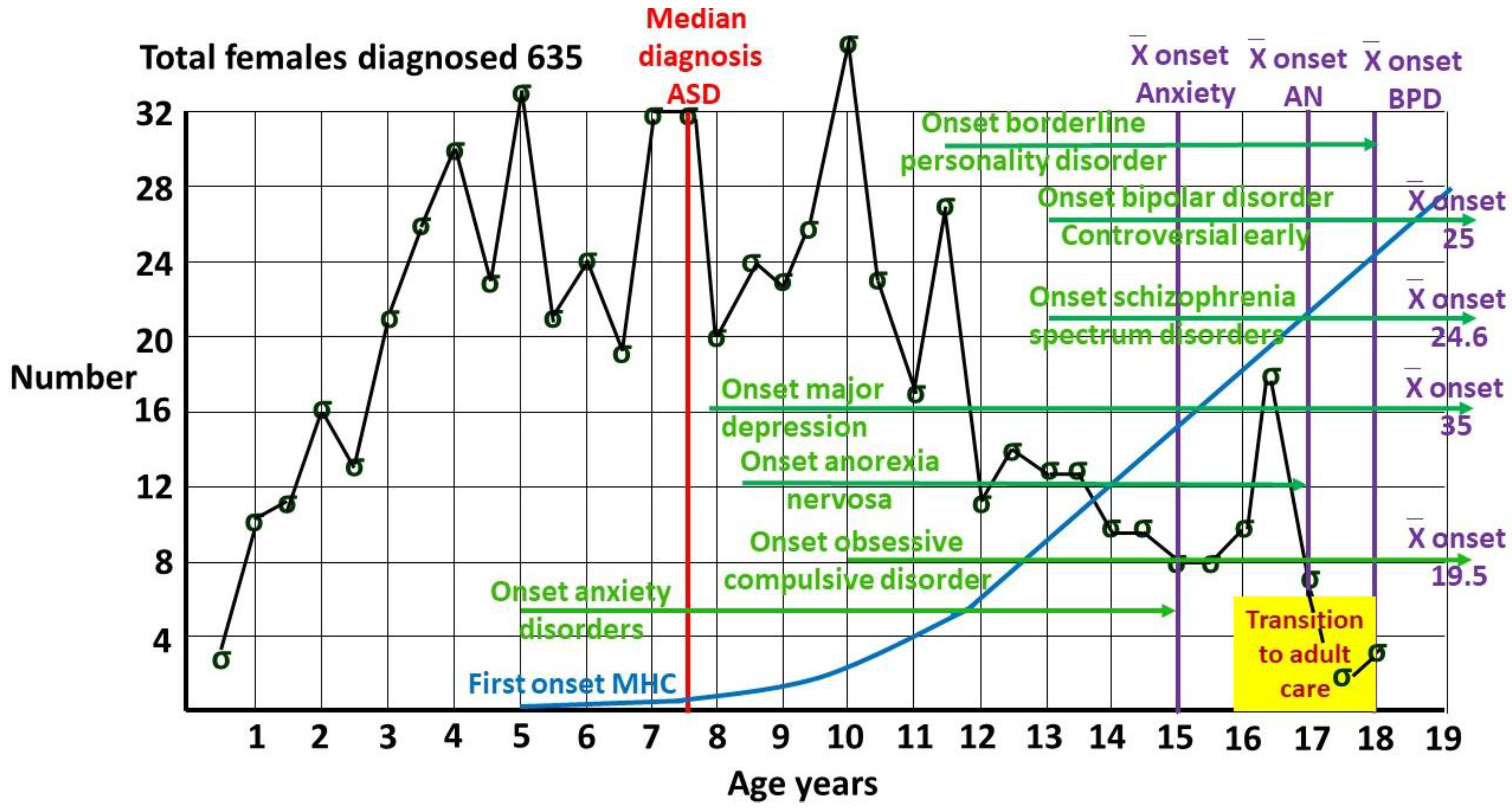
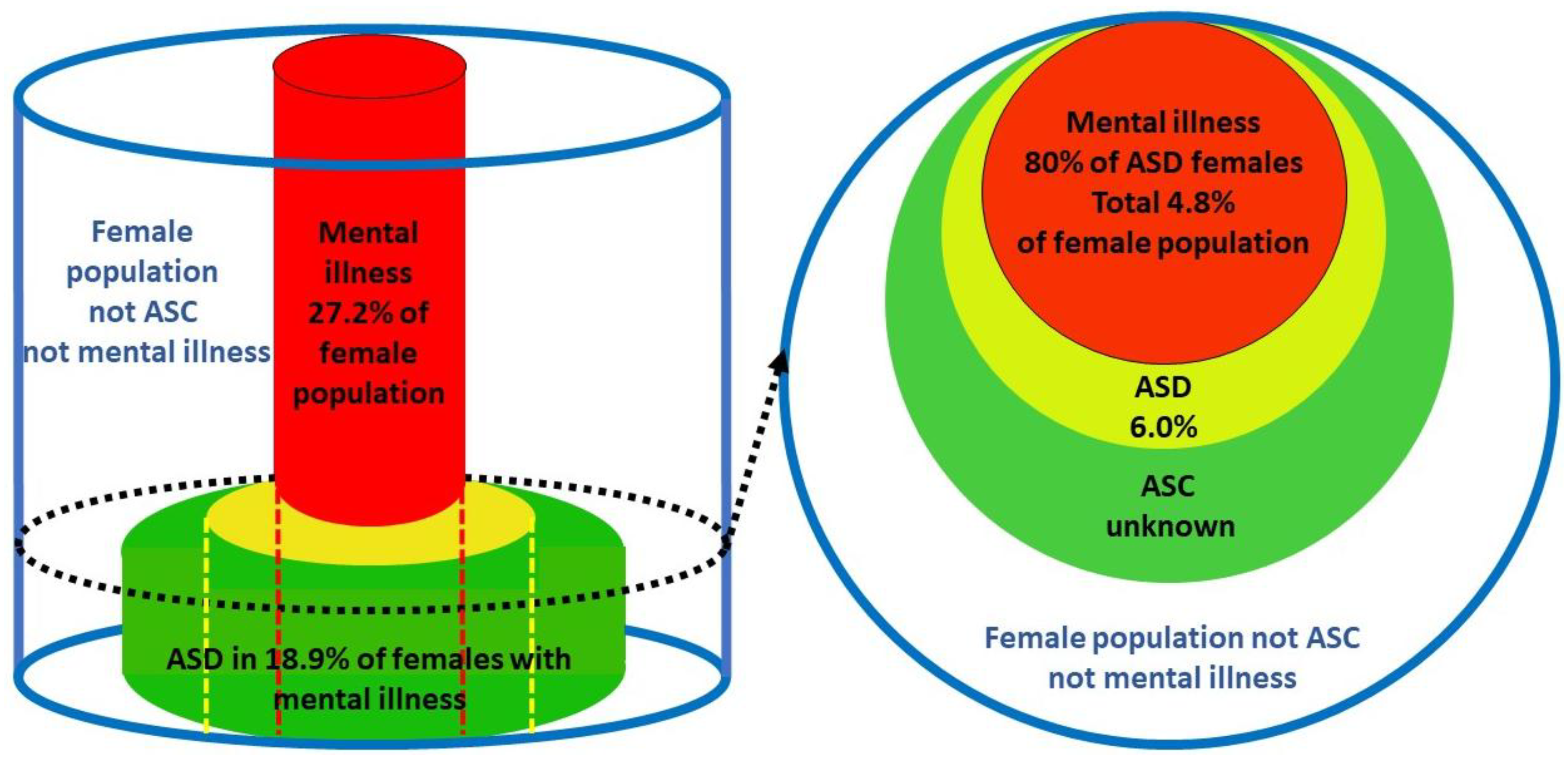
3.1.12. Any Mental Health Disorder (MI)
3.2. Proportion of Female ASD in Conditions Consequent on or Associated with ASD and Female MI
3.2.1. Attempted Suicide
3.2.2. Completed Suicide
3.2.3. Sexual Violence
3.2.4. Sleep Problems
3.2.5. Avoidant–Restrictive Food Intake Disorder
- Avoidance based on the sensory characteristics of food.
- Apparent lack of interest in eating and in food.
- Concern about adverse consequences of eating.
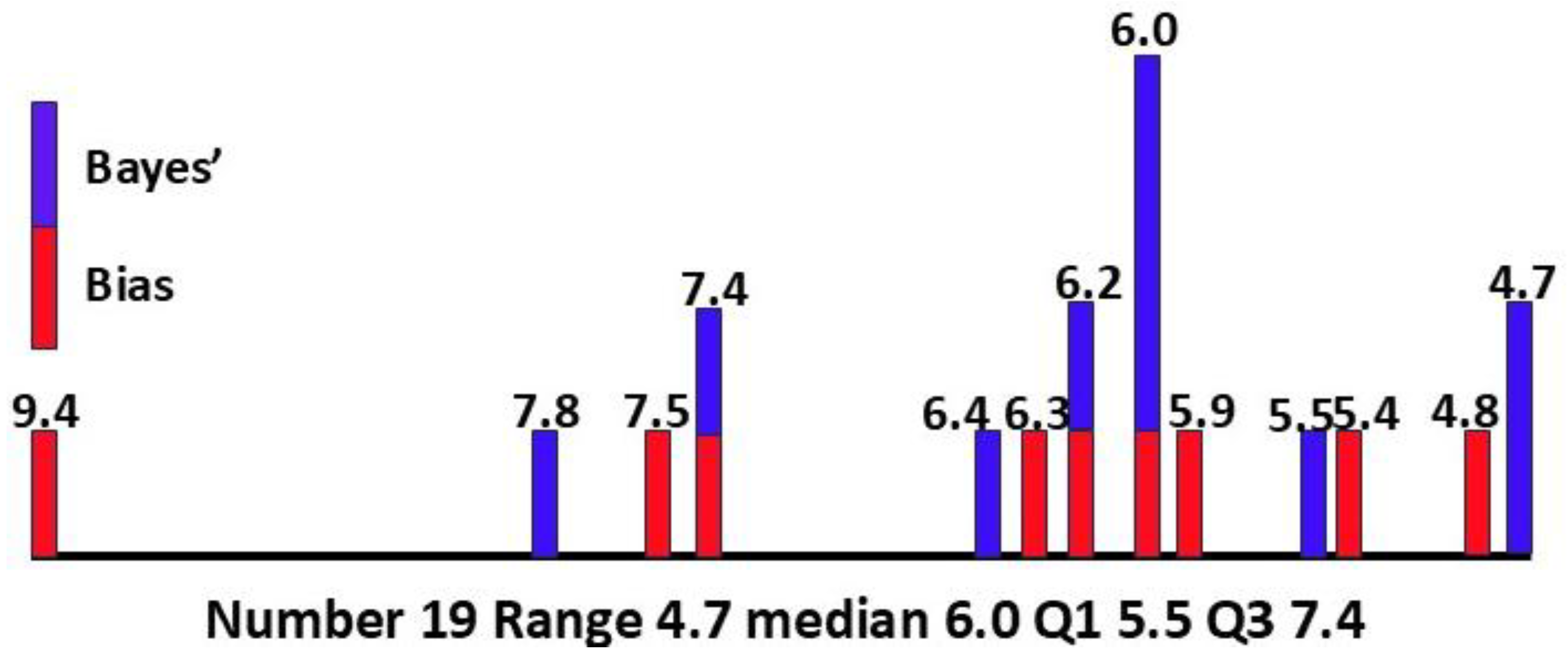
3.3. Validation of the Female Prevalence Value for P(ASD)
4. Discussion
4.1. Intervening in the Intergenerational Cycle
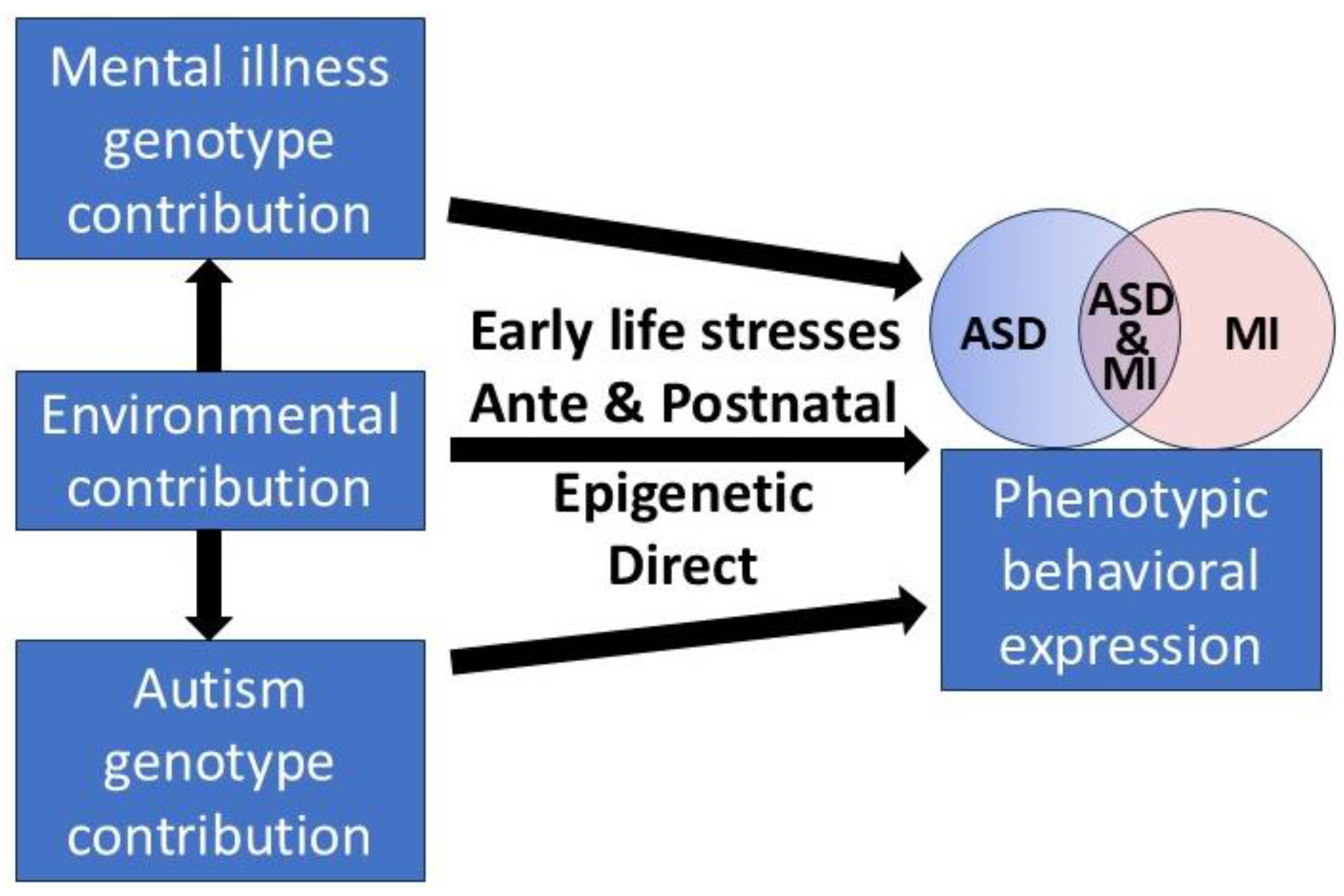
4.1.1. The Cycle
4.1.2. Regulation of Development
4.1.3. The Scenario
4.2. Stumbling Blocks
- Services are accessed by only 1/5 of youths with autism.
- About 70% of pediatricians do not support youths during the transition process and >50% of families lack information on how to proceed.
- Little is still known about the effects of comorbid MI. Adult physicians need to monitor ongoing symptoms of ASD—which can intensify and diminish—to guide diagnosis and treatment choices.
- Specific barriers include a shortage of health care services, poor physician knowledge, cost of services, lack of family and individual knowledge, stigma, and language barriers.
4.3. Conditional Probability: Transposing the Conditional
4.4. Effective Therapy
- Be a change agent in the mental health workplace.
- Make thoughtful language choices.
- Individualize treatment.
- Leverage patient strengths.
- Agree on practical goals in navigating life situations.
4.5. The Argument for Implementing a Screening Program
- The condition should be an important health problem.This is common with significant intergenerational morbidity.
- There should be a recognizable latent or early symptomatic stage.There are multiple routes to early diagnosis once the need to search is recognized.
- The natural history of the condition, including development from latent to declared disease, should be adequately understood.
- There should be a suitable test or examination.There are multiple diagnostic pathways.
- The test should be acceptable to the population.
- There should be an accepted treatment for patients with recognized disease.
- There should be an agreed policy on whom to treat as patients.
- 2.
- Facilities for diagnosis and treatment should be available.
- 3.
- The cost of case-findings (including the diagnosis and treatment of patients diagnosed) should be economically balanced in relation to possible expenditure on medical care as a whole.
- 4.
- Case-findings should be a continuing process and not a ‘once and for all’ project.
4.6. The Art of the Possible
4.7. It Takes a Village
4.8. The Long View
“Difficult problems are best solved when they are easy.
Great projects are best started when they are small.
The Master never takes on more than she can handle,
Which means she leaves nothing undone.”
4.9. Overview
5. Limitations of the Study
6. Future Directions
7. Conclusions
- A median P(ASD) of 6.0% has received further confirmation.
- Female camouflaging appears to begin at a very early age.
Funding
Institutional Review Board Statement
Informed Consent Statement
Data Availability Statement
Conflicts of Interest
Appendix A. Accuracy of the Likelihood Ratio in Calculating P(ASD|MI)


Appendix B. Degree of Benefit: Pareto Calculations
Appendix B.1. The Pareto Principle in Health
Appendix B.2. Derivation of Pareto Formulae


Appendix B.3. A Worked Example
Appendix B.4. Downstream Effects
Appendix C. Calculate P(ASD) from the Value of P(ASD|CS) of 0.415 [92]
Appendix D. The Risk of Autism with Exposure to Acetaminophen in Pregnancy
References
- Cage, E.; Crompton, C.J.; Dantas, S.; Strachan, K.; Birch, R.; Robinson, M.; Morgan-Appel, S.; MacKenzie-Nash, C.; Gallagher, A.; Botha, M. What are the autism research priorities of autistic adults in Scotland? Autism Int. J. Res. Pract. 2024, 28, 2179–2190. [Google Scholar] [CrossRef] [PubMed]
- American Psychiatric Association. Diagnostic and Statistical Manual of Mental Disorders, 5th ed.; Arlington, V.A., Ed.; American Psychiatric Association: Washington, DC, USA, 2013; Text Revision 2022. [Google Scholar] [CrossRef]
- Dell’Osso, L.; Toschi, D.; Carpita, B.; Amatori, G. Female autism: Grunya Sukhareva’s pioneering description reinterpreted in light of DSM-5-TR and the concept of camouflaging. Ital. J. Psychiatry 2024, 10, 1–3. [Google Scholar] [CrossRef]
- Sher, D.A.; Gibson, J.L. Pioneering, prodigious and perspicacious: Grunya Efimovna Sukhareva’s life and contribution to conceptualizing autism and schizophrenia. Eur. Child Adolesc. Psychiatry 2023, 32, 475–490. [Google Scholar] [CrossRef] [PubMed]
- Simmonds, C.; Sukhareva, G.E. The first account of the syndrome Asperger described? Part 2: The girls. Eur. Child Adolesc. Psychiatry 2023, 29, 549–564. [Google Scholar] [CrossRef]
- McCrossin, R. Finding the true number of females with autistic spectrum disorder by estimating the biases in initial recognition and clinical diagnosis. Children 2022, 9, 272. [Google Scholar] [CrossRef]
- Burrows, C.A.; Grzadzinski, R.L.; Donovan, K.; Stallworthy, I.C.; Rutsohn, J.; St John, T.; Marrus, N.; Parish-Morris, J.; MacIntyre, L.; Hampton, J.; et al. A data-driven approach in an unbiased sample reveals equivalent sex ratio of autism spectrum disorder–associated impairment in early childhood. Biol. Psychiatry 2022, 92, 654–662. [Google Scholar] [CrossRef]
- Rodgaard, E.-M.; Jensen, K.; Miskowiak, K.W.; Mottron, L. Autism comorbidities show elevated female-to-male odds ratios and are associated with the age of first autism diagnosis. Acta Psychiatr. Scand. 2021, 144, 475–486. [Google Scholar] [CrossRef]
- Gesi, C.; Migliarese, G.; Torriero, S.; Capellazzi, M.; Omboni, A.C.; Cerveri, G.; Mencacci, C. Gender differences in misdiagnosis and delayed diagnosis among adults with autism spectrum disorder with no language or intellectual disability. Brain Sci. 2021, 11, 912. [Google Scholar] [CrossRef]
- Downs, J.M.; Lehler, S.; Dean, H.; Sears, N.; Patel, R.; Shetty, H.; Simonoff, E.; Hotopf, M.; Ford, T.J.; Diaz-Caneja, C.M.; et al. The association between comorbid autism spectrum disorders and antipsychotic treatment failure in early-onset psychosis: A historical cohort using electronic health records. J. Clin. Psychiatry 2017, 78, e1233–e1241. [Google Scholar] [CrossRef]
- Kinnaird, E.; Norton, C.; Tchanturia, K. Clinicians’ views on working with anorexia nervosa and autism spectrum disorder comorbidity: A qualitative study. BMC Psychiatry 2017, 17, 292. [Google Scholar] [CrossRef]
- Kinnaird, E.; Oakley, M.; Lawrence, V.; Shergill, S.; Tchanturia, K. A peer interview qualitative study exploring support for carers of people with comorbid autism and eating disorders. J. Eat. Disord. 2021, 9, 42. [Google Scholar] [CrossRef]
- Leppanen, J.; Sedgewick, F.; Halls, D.; Tchanturia, K. Autism and anorexia nervosa: Longitudinal prediction of eating disorder outcomes. Front. Psychiatry 2022, 13, 985867. [Google Scholar] [CrossRef] [PubMed]
- Nazar, B.P.; Peynenburg, V.; Rhind, C.; Hibbs, R.; Schmidt, U.; Gowers, S.; Macdonald, P.; Goddard, E.; Todd, G.; Micali, N.; et al. An examination of the clinical outcomes of adolescents and young adults with broad autism spectrum traits and autism spectrum disorder and anorexia nervosa: A multi centre study. Int. J. Eat. Disord. 2018, 51, 174–179. [Google Scholar] [CrossRef] [PubMed]
- El Baou, C.; Bell, G.; Saunders, R.; Buckman, J.E.J.; Mandy, W.; Dagnan, D.; O’NIons, E.; Pender, R.; Clements, H.; Pilling, S.; et al. Effectiveness of primary care services for treating depression and anxiety in autistic adults in England: A retrospective, matched, observational cohort study of national health-care records. Lancet Psychiatry 2023, 10, 944–954. [Google Scholar] [CrossRef] [PubMed]
- Secci, I.; Petigas, L.; Cuenod, A.; Klauser, P.; Kapp, C.; Novatti, A.; Armando, M. Case report: Treatment-resistant depression, multiple trauma exposure and suicidality in an adolescent female with previously undiagnosed autism spectrum disorder. Front. Psychiatry 2023, 14, 1151293. [Google Scholar] [CrossRef]
- Cassidy, S.A.; Gould, K.; Townsend, E.; Pelton, M.; Robertson, A.E.; Rodgers, J. Is camouflaging autistic traits associated with suicidal thoughts and behaviours? Expanding the interpersonal psychological theory of suicide in an undergraduate student sample. J. Autism Dev. Disord. 2020, 50, 3638–3648. [Google Scholar] [CrossRef]
- McCrossin, R. Finding the proportion of females with autistic spectrum disorder who develop anorexia nervosa, the true prevalence of female ASD and its clinical significance. Children 2023, 1, 272. [Google Scholar] [CrossRef]
- Isaac, J.; Jeremias, D.; Rocha Almeida, C.; Albuquerque, R. Beyond what clinicians see: Missed diagnosis and misdiagnosis of a woman with autism spectrum disorder. BMJ Case Rep. 2022, 15, e246320. [Google Scholar] [CrossRef]
- Yanai, I.; Lercher, M. A hypothesis is a liability. Genome Biol. 2020, 21, 231. [Google Scholar] [CrossRef]
- Hernan, M.A.; Greenland, S. Why stating hypotheses in grant applications is unnecessary. JAMA 2024, 331, E1–E2. [Google Scholar] [CrossRef]
- Harmens, M.; Sedgewick, F.; Hobson, H. Autistic women’s diagnostic experiences: Interactions with identity and impacts on well-being. Women’s Health 2022, 18, 17455057221137477. [Google Scholar] [CrossRef]
- Bargiela, S.; Steward, R.; Mandy, W. The experiences of late-diagnosed women with autism spectrum conditions: An investigation of the female autism phenotype. J. Autism Dev. Disord. 2016, 46, 3281–3294. [Google Scholar] [CrossRef]
- Hull, L.; Petrides, K.V.; Allison, C.; Smith, P.; Baron-Cohen, S.; Lai, M.C.; Mandy, W. “Putting on my Best normal”: Social camouflaging in adults with autism spectrum conditions. J. Autism Dev. Disord. 2017, 47, 2519–2534. [Google Scholar] [CrossRef]
- Zubia, A.G.; Saucedo, I.C.C. Exploración del enmascaramiento en mujeres autistas y la presencia de sintomatología ansiosa y depresiva. Ehquidad Int. J. Welf. Policies Soc. Work 2023, 20, 99–110. [Google Scholar] [CrossRef]
- Wing, L. Sex ratios in early childhood autism and related conditions. Psychiatry Res. 1981, 5, 129–137. [Google Scholar] [CrossRef] [PubMed]
- Cage, E.; Troxell-Whitman, Z. Understanding the reasons, contexts and costs of camouflaging for autistic adults. J. Autism Dev. Disord. 2019, 49, 1899–1911. [Google Scholar] [CrossRef] [PubMed]
- Jacobs, E.G. Bridging the neuroscience gender divide. Nature 2023, 623, 667. [Google Scholar] [CrossRef] [PubMed]
- Bhargava, A.; Ashwin, C. Barriers and facilitators towards an autism diagnosis for females within healthcare: A thematic analysis of interviews with UK healthcare professionals. Res. Autism 2025, 121–122, 202547. [Google Scholar] [CrossRef]
- Cook, J.; Hull, L.; Mandy, W. Improving diagnostic procedures in autism for girls and women: A narrative review. Neuropsychiatr. Dis. Treat. 2024, 20, 505–514. [Google Scholar] [CrossRef]
- Carroll, L. Ch.2 The pool of tears. In Alice’s Adventures in Wonderland, 1st ed.; Macmillan and Co.: London, UK, 1866. [Google Scholar]
- Singer, J. “Why can’t you be normal for once in your life?” From a problem with no name to the emergence of a new category of difference. In Disability Discourse; Corker, M., French, S., Eds.; Open University Press: Buckingham, UK, 1999; pp. 59–67. [Google Scholar]
- Layinka, O.; Hargitai, L.D.; Shah, P.; Waldren, L.H.; Leung, F.Y.N. Five interdisciplinary tensions and opportunities in neurodiversity research. eLife 2024, 13, e98461. [Google Scholar] [CrossRef]
- Milton, D.; Gurbuz, E.; Lopez, B. The ‘double empathy problem’: Ten years on. Autism 2022, 26, 1901–1903. [Google Scholar] [CrossRef]
- Kroll, E.; Lederman, M.; Kohlmeier, J.; Kumar, K.; Ballard, J.; Zant, I.; Fenkel, C. The positive impact of identity-affirming mental health treatment for neurodivergent individuals. Front. Psychol. 2024, 15, 1403129. [Google Scholar] [CrossRef]
- Babb, C.; Brede, J.; Jones, C.R.G.; Elliott, M.; Zanker, C.; Tchanturia, K.; Serpell, L.; Mandy, W.; Fox, J.R.E. ‘It’s not that they don’t want to access the support… it’s the impact of the autism’: The experience of eating disorder services from the perspective of autistic women, parents and healthcare professionals. Autism 2021, 25, 1409–1421. [Google Scholar] [CrossRef] [PubMed]
- Malik-Soni, N.; Shaker, A.; Luck, H.; Mullin, A.E.; Wiley, R.E.; Lewis, M.E.S.; Fuentes, J.; Frazier, T.W. Tackling healthcare access barriers for individuals with autism from diagnosis to adulthood. Pediatr. Res. 2022, 91, 1028–1035. [Google Scholar] [CrossRef] [PubMed]
- Bernard, S.; Grosjean, B.; Caravallah, L. Neurodiversity and early autism. JAMA Pediatr. 2022, 176, 1272–1273. [Google Scholar] [CrossRef] [PubMed]
- Hours, C.; Recasens, C.; Baleyte, J.-M. ASD and ADHD comorbidity: What are we talking about? Front. Psychiatry 2022, 13, 837424. [Google Scholar] [CrossRef]
- Zaleski, A.L.; Kelly, J.; Craig, T.; Khan, R.; Waber, R.; Xin, W.; Powers, M.; Ramey, U.; Verbrugge, D.J.; Fernandez-Turner, D. Real-world evaluation of prevalence, cohort characteristics, and healthcare utilization and expenditures among adults and children with autism spectrum disorder, attention-deficit hyperactivity disorder, or both. BMC Health Serv. Res. 2025, 25, 1048. [Google Scholar] [CrossRef]
- French, B.; Daley, D.; Groom, M.; Cassidy, S. Risks associated with undiagnosed ADHD and/or autism: A mixed-method systematic review. J. Atten. Disord. 2023, 27, 1393–1410. [Google Scholar] [CrossRef]
- NICE Guidelines. 2022. Available online: www.nice.org.uk/guidance/ng222 (accessed on 1 November 2023).
- Zuckerbrot, R.A.; Cheung, A.; Jensen, P.S.; Stein, R.E.K.; Laraque, D. Guidelines for adolescent depression in primary care (GLAD-PC): Part, I. Practice preparation, identification, assessment, and initial management. Pediatrics 2018, 141, e20174081. [Google Scholar] [CrossRef]
- Wiles, N.; Taylor, A.; Turner, N.; Barnes, M.; Campbell, J.; Lewis, G.; Morrison, J.; Peters, T.J.; Thomas, L.; Turner, K.; et al. Management of treatment-resistant depression in primary care: A mixed-methods study. Br. J. Gen. Pract. 2018, 68, e673–e681. [Google Scholar] [CrossRef]
- White, M.J. Treatment-resistant depression: Consider autism. Br. J. Gen. Pract. 2019, 69, 14. [Google Scholar] [CrossRef] [PubMed]
- Chen, M.-H. Postpartum depression and psychosis and subsequent severe mental illness in mothers and neurodevelopmental disorders in children. J. Clin. Psychiatry 2021, 82, 20m13735. [Google Scholar] [CrossRef] [PubMed]
- Scott, K.; Gregory, E.F.; Burrus, H.H. Addressing Maternal Mortality in the US—A Pediatrics Responsibility. JAMA 2023, 329, 1819–1820. [Google Scholar] [CrossRef] [PubMed]
- Fox, D. Exploring how health inequalities can be addressed through autism training and understanding in maternity services. MIDIRS Midwifery Dig. 2022, 32, 279–282. [Google Scholar]
- Smith, S.; Woodside, D.B. Characterizing Treatment-Resistant Anorexia Nervosa. Front. Psychiatry 2021, 11, 542206. [Google Scholar] [CrossRef] [PubMed]
- Brede, J.; Babb, C.; Jones, C.; Elliott, M.; Zanker, C.; Tchanturia, K.; Serpell, L.; Fox, J.; Mandy, W. “For me, the anorexia is just a symptom, and the cause is the autism”: Investigating restrictive eating disorders in autistic women. J. Autism Dev. Disord. 2020, 50, 4280–4296. [Google Scholar] [CrossRef]
- Crone, C.; Fochtmann, L.J.; Attia, E.; Boland, R.; Escobar, J.; Formari, V.; Golden, N.; Guarda, A.; Jackson-Triche, M.; Manzo, L.; et al. The American Psychiatric Association practice guideline for the treatment of patients with eating disorders. Am. J. Psychiatry 2023, 180, 167–171. [Google Scholar] [CrossRef]
- Attia, E.; Walsh, T. Eating disorders: A review. JAMA 2025, 333, 1242–1252. [Google Scholar] [CrossRef]
- Suran, M. Treating bipolar disorder is notoriously difficult, but research underway could lead to new options. JAMA 2023, 330, 395–398. [Google Scholar] [CrossRef]
- Howes, O.D.; Thase, M.E.; Pillinger, T. Treatment resistance in psychiatry: State of the art and new directions. Mol. Psychiatry 2022, 27, 58–72. [Google Scholar] [CrossRef]
- Leichsenring, F. Borderline personality disorder. A review. JAMA 2023, 329, 670–679. [Google Scholar] [CrossRef]
- D’Mello, A.M.; Frosch, I.R.; Li, C.E.; Cardinaux, A.L.; Gabrieli, J.D.E. Exclusion of females in autism research: Empirical evidence for a “leaky” recruitment-to-research pipeline. Autism Res. 2022, 15, 1929–1940. [Google Scholar] [CrossRef] [PubMed]
- Maenner, M.J.; Warren, Z.; Williams, A.R.; Amoakohene, E.; Bakian, A.V.; Bilder, D.A.; Durkin, M.S.; Fitzgerald, R.T.; Furnier, S.M.; Hughes, M.M.; et al. Prevalence and characteristics of autism spectrum disorder among children aged 8 years: Autism and developmental disabilities monitoring network, 11 sites, United States, 2020. Morb. Mortal. Wkly. Rep. Surveill. Summ. 2023, 72, 1–14. [Google Scholar] [CrossRef] [PubMed]
- Gill, C.J.; Sabin, L.; Schmid, C.H. Why clinicians are natural Bayesians. BMJ 2005, 330, 1080–1083. [Google Scholar] [CrossRef] [PubMed]
- Koch, S.V.; Larsen, J.T.; Mouridsen, S.E.; Bentz, M.; Petersen, L.V.; Bulik, C.; Mortensen, P.B.; Plessen, K.J. Autism spectrum disorder in individuals with anorexia nervosa and in their first- and second-degree relatives: Danish nationwide register-based cohort-study. Br. J. Psychiatry 2015, 206, 401–407. [Google Scholar] [CrossRef]
- Solmi, M.; Radua, J.; Olivola, M.; Croce, E.; Soardo, L.; de Pablo, G.S.; Shin, J.I.; Kirkbride, J.B.; Jones, P.; Kim, J.H.; et al. Age at onset of mental disorders worldwide: Large-scale metaanalysis of 192 epidemiological studies. Mol. Psychiatry 2022, 27, 281–295. [Google Scholar] [CrossRef]
- Kirsch, A.C.; Huebner, A.R.S.; Mehta, S.Q.; Howie, F.R.; Weaver, A.L.; Myers, S.M.; Voigt, R.G.; Katusic, S.K. Association of comorbid mood and anxiety disorders with autism spectrum disorder. JAMA Pediatr. 2020, 174, 63–70. [Google Scholar] [CrossRef]
- Pezzimenti, F.; Han, G.T.; Vasa, R.A.; Gotham, K. Depression in youth with autism spectrum disorder. Child Adolesc. Psychiatr. Clin. N. Am. 2019, 28, 397–409. [Google Scholar] [CrossRef]
- Hudson, C.C.; Hall, L.; Harkness, K.L. Prevalence of depressive disorders in individuals with autism spectrum disorder: A meta-analysis. J. Abnorm. Child Psychol. 2019, 47, 165–175. [Google Scholar] [CrossRef]
- Pohl, A.L.; Crockford, S.K.; Blakemore, M.C.; Allison, C.; Baron-Cohen, S. A comparative study of autistic and nonautistic women’s experience of motherhood. Mol. Autism 2020, 11, 3. [Google Scholar] [CrossRef]
- Luca, D.L.; Margiotta, C.; Staatz, C.; Garlow, E.; Christensen, A.; Zivin, K. Financial toll of untreated perinatal mood and anxiety disorders among 2017 births in the United States. Am. J. Public Health 2020, 110, 888–896. [Google Scholar] [CrossRef]
- Croen, L.; Zerbo, O.; Qian, Y.; Massolo, M.L.; Rich, S.; Sidney, S.; Kripke, C. The health status of adults on the autistic spectrum. Autism 2015, 19, 814–823. [Google Scholar] [CrossRef]
- McLean, C.P.; Asnaani, A.; Litz, B.T.; Hofmann, S.G. Gender differences in anxiety disorders: Prevalence, course of Illness, comorbidity and burden of illness. J. Psychiatr. Res. 2011, 45, 1027–1035. [Google Scholar] [CrossRef]
- Dunalska, A.; Rzeszutek, M.; Dębowska, Z.; Bryńska, A. Comorbidity of bipolar disorder and autism spectrum disorder—Review paper. Psychiatr. Pol. 2021, 55, 1421–1431. [Google Scholar] [CrossRef]
- National Institute for Mental Health. National Comorbidity Survey Adolescent Supplement; Inter-University Consortium for Political and Social Research (ICPSR): Ann Arbor, MI, USA, 2017. Available online: https://www.nimh.nih.gov/health/statistics/bipolar-disorder (accessed on 9 November 2025).
- Rapoport, J.; Chavez, A.; Greenstein, D.; Addington, A.; Gogtay, N. Autism spectrum disorders and childhood onset schizophrenia: Clinical and biological contributions to a relationship revisited. J. Am. Acad. Child Adolesc. Psychiatry 2009, 48, 10–16. [Google Scholar] [CrossRef] [PubMed]
- Kincaid, D.L.; Doris, M.; Shannon, C.; Mulholland, M. What is the prevalence of autism spectrum disorder and ASD traits in psychosis? A systematic review. Psychiatry Res. 2017, 250, 99–105. [Google Scholar] [CrossRef] [PubMed]
- Zheng, Z.; Zheng, P.; Zou, X. Association between schizophrenia and autism spectrum disorder: A systematic review and meta-analysis. Autism Res. 2018, 11, 1110–1119. [Google Scholar] [CrossRef] [PubMed]
- Li, X.; Zhou, W.; Yi, Z. A glimpse of gender differences in schizophrenia. Gen. Psychiatry 2022, 35, e100823. [Google Scholar] [CrossRef]
- Marin, J.L.; Rodriguez-Franco, M.A.; Chugani, V.M.; Maganto, M.M.; Villoria, E.D.; Bedia, R.C. Prevalence of schizophrenia disorders in average-IQ adults with autism-spectrum disorders: A meta-analysis. J. Autism Dev. Disord. 2018, 48, 239–250. [Google Scholar] [CrossRef]
- Rees, E.; Creeth, H.D.J.; Hwu, H.-G.; Chen, W.J.; Tsuang, M.; Glatt, S.J.; Rey, R.; Kirov, G.; Walters, J.T.R.; Holmans, P.; et al. Schizophrenia, autism spectrum disorders and developmental disorders share specific disruptive coding mutations. Nat. Commun. 2021, 12, 5353. [Google Scholar] [CrossRef]
- Martin, A.F.; Jassi, A.; Cullen, A.E.; Broadbent, M.; Downs, J.; Krebs, G. Co-occurring obsessive–compulsive disorder and autism spectrum disorder in young people: Prevalence, clinical characteristics and outcomes. Eur. Child Adolesc. Psychiatry 2020, 29, 1603–1611. [Google Scholar] [CrossRef]
- Fawcett, E.J.; Power, H.; Fawcett, J.M. Women are at greater risk of OCD than men: A meta-analytic review of OCD prevalence worldwide. J. Clin. Psychiatry 2020, 23, 19r13085. [Google Scholar] [CrossRef]
- Westwood, H.; Tchanturia, K. Autism spectrum disorder in anorexia nervosa: An updated literature review. Curr. Psychiatry Rep. 2017, 19, 41. [Google Scholar] [CrossRef] [PubMed]
- Pruccoli, J.; Solari, A.; Terenzi, L.; Malaspina, E.; Angotti, M.; Pignataro, V.; Gualandi, P.; Sacrato, L.; Cordelli, D.M.; Franzoni, E.; et al. Autism spectrum disorder and anorexia nervosa: An Italian prospective study. Ital. J. Pediatr. 2021, 47, 59. [Google Scholar] [CrossRef]
- Margari, L.; Palumbi, R.; Peschechera, A.; Craig, F.; de Giambattista, C.; Ventura, P.; Margari, F. Sex-gender comparisons in comorbidities of children and adolescents with high functioning autism spectrum disorder. Front. Psychiatry 2019, 10, 159. [Google Scholar] [CrossRef]
- Camm-Crosbie, L.; Bradley, L.; Shaw, R.; Baron-Cohen, S.; Cassidy, S. ‘People like me don’t get support’: Autistic adults’ experiences of support and treatment for mental health difficulties, self-injury and suicidality. Autism 2019, 23, 1431–1441. [Google Scholar] [CrossRef] [PubMed]
- Hofvander, B.; Delorme, R.; Chaste, P.; Nydén, A.; Wentz, E.; Ståhlberg, O.; Herbrecht, E.; Stopin, A.; Anckarsäter, H.; Gillberg, C.; et al. Psychiatric and psychosocial problems in adults with normal-intelligence autism spectrum disorders. BMC Psychiatry 2009, 9, 35. [Google Scholar] [CrossRef] [PubMed]
- Olff, M. Sex and gender differences in post-traumatic stress disorder: An update. Eur. J. Psychotraumatol. 2017, 8 (Suppl. S4), 1351204. [Google Scholar] [CrossRef]
- Rumball, F.; Happé, F.; Grey, N. Experience of trauma and PTSD symptoms in autistic adults: Risk of PTSD development following DSM-5 and non-DSM-5 traumatic life events. Autism Res. 2020, 13, 2122–2132. [Google Scholar] [CrossRef]
- Nyrenius, J.; Eberhard, J.; Ghaziuddin, M.; Gillberg, C.; Billstedt, E. Prevalence of autism spectrum disorders in adult outpatient psychiatry. J. Autism Dev. Disord. 2021, 52, 3769–3779. [Google Scholar] [CrossRef]
- LeCavalier, L.; McCracken, C.E.; Aman, M.G.; McDougle, C.J.; McCracken, J.; Tierney, E.; Smith, T.; Johnson, C.; King, B.; Handen, B.; et al. An exploration of concomitant psychiatric disorders in children with autism spectrum disorder. Compr. Psychiatry 2019, 88, 57–64. [Google Scholar] [CrossRef] [PubMed]
- Lever, A.G.; Geurts, H.M. Psychiatric co-occurring symptoms and disorders in young, middle-aged, and older adults with autism spectrum disorder. J. Autism Dev. Disord. 2016, 46, 1916–1930. [Google Scholar] [CrossRef] [PubMed]
- National Institute of Mental Health: Statistics. 2021. Available online: https://www.nimh.nih.gov/health/statistics (accessed on 1 November 2023).
- Kalb, L.G.; Contractor, A.; Engel, C. Advancing collaborative care for autistic children and adolescents. JAMA Pediatr. 2023, 177, 1125–1126. [Google Scholar] [CrossRef] [PubMed]
- Kolves, K.; Fitzgerald, C.; Nordentoft, M.; Wood, S.J.; Erlangsen, A. Assessment of suicidal behaviors among individuals with autism spectrum disorder in Denmark. JAMA Netw. Open 2021, 4, e2033565. [Google Scholar] [CrossRef]
- Hirvikoski, T.; Mittendorfer-Rutz, E.; Boman, M.; Larsson, H.; Lichtenstein, P.; Bolte, S. Premature mortality in autism spectrum disorder. Br. J. Psychiatry 2015, 208, 232–238. [Google Scholar] [CrossRef]
- Cassidy, S.; Au-Yeung, S.; Robertson, A.; Cogger-Ward, H.; Richards, G.; Allison, C.; Bradley, L.; Kenny, R.; O’Connor, R.; Mosse, D.; et al. Autism and autistic traits in those who died by suicide in England. Br. J. Psychiatry 2022, 221, 683–691. [Google Scholar] [CrossRef]
- Ryan, E.P.; Oquendo, M.A. Suicide risk assessment and prevention: Challenges and opportunities. Focus (Am. Psychiatr. Publ.) 2020, 18, 88–99. [Google Scholar] [CrossRef]
- Cazalis, F.; Reyes, E.; Leduc, S.; Gourion, D. Evidence that nine autistic women out of ten have been victims of sexual violence. Front. Behav. Neurosci. 2022, 16, 852203. [Google Scholar] [CrossRef]
- Sardinha, L.; Giroux, M.M.; Stockl, H.S.; Meyer, S.R.; Moreno, C.G. Global, regional, and national prevalence estimates of physical or sexual, or both, intimate partner violence against women in 2018. Lancet 2022, 399, 803–813. [Google Scholar] [CrossRef]
- Hailes, H.P.; Yu, R.; Danese, A.; Fazel, S. Long-term outcomes of childhood sexual abuse: An umbrella review. Lancet Psychiatry 2019, 6, 830–839. [Google Scholar] [CrossRef]
- Gowin, J.L.; Stoddard, J.; Doykos, T.K.; Sammel, M.D.; Bernert, R.A. Sleep disturbance and subsequent suicidal behaviors in preadolescence. JAMA Netw. Open 2024, 7, e2433734. [Google Scholar] [CrossRef] [PubMed]
- Estes, A.; Munson, J.; St John, T.; Finlayson, R.; Pandey, J.; Gottlieb, B.; Herrington, J.; Schultz, R.T. Sleep problems in autism: Sex differences in the school-age population. Autism Res. 2023, 16, 164–173. [Google Scholar] [CrossRef] [PubMed]
- Halstead, E.; Sullivan, E.; Zambelli, Z.; Ellis, J.G.; Dimitriou, D. The treatment of sleep problems in autistic adults in the United Kingdom. Autism 2021, 25, 2412–2417. [Google Scholar] [CrossRef]
- Souza, J.C.; Magna, L.A.; Reimão, R. Excessive daytime sleepiness in Campo Grande General Population, Brazil. Arq. Neuro-Psiquiatr. 2002, 60, 558–562. [Google Scholar] [CrossRef][Green Version]
- Hedley, D.; Haschek, A.; Brown, C.; Batterham, P.; Dwyer, P.; Gibbs, V.; den Houting, J.; John, T.; Lawson, W.; Rabba, A.S.; et al. Suicide in Autism: Research Evidence and Policy Brief; La Trobe Report; La Trobe University: Melbourne, Australia, 2024. [Google Scholar] [CrossRef]
- Kambanis, E.; Thomas, J.J. Assessment and treatment of avoidant/restrictive food intake disorder. Curr. Psychiatry Rep. 2023, 25, 53–64. [Google Scholar] [CrossRef]
- Van Buuren, L.; Fleming, C.A.K.; Hay, P.; Bussey, K.; Trompeter, N.; Lonergan, A.; Mitchison, D. The prevalence and burden of avoidant/restrictive food intake disorder (ARFID) in a general adolescent population. J. Eat. Disord. 2023, 11, 104. [Google Scholar] [CrossRef]
- Koomar, T.; Thomas, T.R.; Pottschmidt, N.R.; Lutter, M.; Michaelson, J.J. Estimating the prevalence and genetic risk mechanisms of ARFID in a large autism cohort. Front. Psychiatry 2021, 12, 668297. [Google Scholar] [CrossRef]
- Haidar, E.; Sanchez-Cerezo, J.; Neale, J.; Julius, N.; Lynn, R.; Hudson, L.D.; Nicholls, D. Comparison of clinical presentation and management of children and adolescents with ARFID between paediatrics and child and adolescent psychiatry: A prospective surveillance study. Arch. Dis. Child. 2024, 110, 144–150. [Google Scholar] [CrossRef]
- Wronski, M.L.; Kuja-Halkola, R.; Hedlund, E.; Martini, M.I.; Lichtenstein, P.; Lundström, S.; Larsson, H.; Taylor, M.J.; Micali, N.; Bulik, C.M.; et al. Mental and somatic conditions in children with the broad avoidant restrictive food intake disorder phenotype. JAMA Pediatr. 2025, 179, 428. [Google Scholar] [CrossRef]
- Jensen Peña, C. Epigenetic regulation of brain development, plasticity, and response to early-life stress. Neuropsychopharmacology 2025, 51, 5–15. [Google Scholar] [CrossRef]
- Baker, A.E.; Adriana Galvan, A.; Fuligni, A.J. The connecting brain in context: How adolescent plasticity supports learning and development. Dev. Cogn. Neurosci. 2024, 71, 101486. [Google Scholar] [CrossRef]
- Damme, K.S.F.; Seidlitz, J.; Keller, A.S. Neurodevelopmental timing, links, stress and psychopathology. JAMA Pediatr. 2025, 179, 1057–1058. [Google Scholar] [CrossRef]
- Hagatulah, N.; Brann, E.; Oberg, A.S.; Valdimarsdottir, U.A.; Shen, Q.; Lu, D. Perinatal depression and risk of mortality: Nationwide, register based study in Sweden. BMJ 2024, 384, e075462. [Google Scholar] [CrossRef] [PubMed]
- Netsi, E.; Pearson, R.M.; Murray, L.; Cooper, P.; Craske, M.G.; Stein, A. Association of persistent and severe postnatal depression with child outcomes. JAMA Psychiatry 2018, 75, 247–253. [Google Scholar] [CrossRef] [PubMed]
- Jawahar, M.C.; Murgatroyd, M.; Harrison, E.L.; Baune, B.T. Epigenetic alterations following early postnatal stress: A review on novel aetiological mechanisms of common psychiatric disorders. Clin. Epigenetics 2015, 7, 122. [Google Scholar] [CrossRef] [PubMed]
- Ozonoff, S.; Young, G.S.; Bradshaw, J.; Tony Charman, T.; Chawarska, K.; Iverson, J.M.; Klaiman, C.; Landa, R.J.; McDonald, N.; Messinger, D.; et al. Familial recurrence of autism: Updates from the baby siblings research consortium. Pediatrics 2024, 154, e2023065297. [Google Scholar] [CrossRef]
- Wang, R.; Susumu, Y. Factors of bullying victimization among students on the autism spectrum: A systematic review. Rev. J. Autism Dev. Disord. 2024, 1–20. [Google Scholar] [CrossRef]
- Libster, N.; Knox, A.; Engin, S.; Geschwind, D.; Parish-Morris, J.; Kasari, C. Personal victimization experiences of autistic and non-autistic children. Mol. Autism 2022, 13, 51. [Google Scholar] [CrossRef]
- Taleb, A.; Lin, W.; Xu, X.; Zhang, G.; Zhou, Q.-G.; Naveed, M.; Meng, F.; Fukunaga, K.; Han, F. Emerging mechanisms of valproic acid-induced neurotoxic events in autism and its implications for pharmacological treatment. Biomed. Pharmacother. 2021, 137, 111322. [Google Scholar] [CrossRef]
- Hutton, J. Does rubella cause autism: A 2015 reappraisal? Front. Neurosci. 2016, 10, 25. [Google Scholar] [CrossRef]
- O’Nions, E.; Petersen, I.; Buckman, J.E.J.; Charlton, R.; Cooper, C.; Corbett, A.; Happé, F.; Manthorpe, J.; Richards, M.; Saunders, R.; et al. Autism in England: Assessing underdiagnosis in a population based cohort study of prospectively collected primary care data. Lancet Reg. Health–Eur. 2023, 29, 100626. [Google Scholar] [CrossRef] [PubMed]
- Alkhaldi, R.S.; Sheppard, E.; Burdett, E.; Mitchell, P. Do neurotypical people like or dislike autistic people? Autism Adulthood 2021, 3, 275–279. [Google Scholar] [CrossRef] [PubMed]
- Ribolsi, M.; Nastro, F.; Pelle, M.; Medici, C.; Sacchetto, S.; Lisi, G.; Riccioni, A.; Siracusano, M.; Mazzone, L.; Di Lorenzo, G. Recognizing psychosis in autism spectrum disorder. Front. Psychiatry 2022, 13, 768586. [Google Scholar] [CrossRef] [PubMed]
- Nyrenius, J.; Eberhard, J.; Ghaziuddin, M.; Gillberg, C.; Billstedt, E. The ‘lost generation” in adult psychiatry: Psychiatric, neurodevelopmental and sociodemographic characteristics of psychiatric patients with autism unrecognized in childhood. BJPsych Open 2023, 9, e89. [Google Scholar] [CrossRef]
- Maddox, B.B.; Gaus, V.L. Community mental health services for autistic adults: Good news and bad news. Autism Adulthood 2019, 1, 15–19. [Google Scholar] [CrossRef]
- Auger, N.; Potter, B.J.; Ukah, U.V.; Low, N.; Israel, M.; Steiger, H.; Healey-Profitos, J.; Paradis, G. Anorexia and the long-term risk of mortality in women. World Psychiatry 2021, 20, 448–449. [Google Scholar] [CrossRef]
- Accurso, E.C.; Sim, L.; Muhlheim, L.; Lebow, J. Parents know best: Caregiver perspectives on eating disorder recovery. Int. J. Eat. Dis. 2019, 53, 1252–1260. [Google Scholar] [CrossRef]
- Tchanturia, K.; Dandil, Y.; Li, Z.; Smith, K.; Leslie, M.; Byford, S. A novel approach for autism spectrum condition patients with eating disorders: Analysis of treatment cost savings. Eur. Eat. Disord. Rev. 2020, 29, 514–518. [Google Scholar] [CrossRef]
- Hicks, T.; Buckleton, J.; Castella, V.; Evett, I.; Jackson, G. A logical framework for forensic DNA interpretation. Genes 2022, 13, 957. [Google Scholar] [CrossRef]
- Doyle, N. Neurodiversity at work: A biopsychosocial model and the impact on working adults. Br. Med. Bull. 2020, 135, 108–125. [Google Scholar] [CrossRef]
- Lewis, D.M. WHO definition of health remains fit for purpose. BMJ 2011, 343, d5357. [Google Scholar] [CrossRef]
- Pellicano, E.; den Houting, J. Annual Research Review: Shifting from ‘normal science’ to neurodiversity in autism science. J. Child Psychol. Psychiatry 2021, 63, 381–396. [Google Scholar] [CrossRef]
- Lerner, M.D.; Gurba, A.N.; Gassner, D. A Framework for Neurodiversity-Affirming Interventions for Autistic Individuals. J. Consult. Clin. Psychol. 2023, 91, 503–504. [Google Scholar] [CrossRef]
- Field, S.L.; Fox, J.R.E.; Jones, C.R.G.; Williams, M.O. “Work WITH us”: A Delphi study about improving eating disorder treatment for autistic women with anorexia nervosa. J. Eat. Disord. 2023, 11, 17. [Google Scholar] [CrossRef]
- Ahn-Horst, R.Y.; Bourgeois, F.T. Mental health-related outpatient visits among adolescents and young adults, 2006–2019. JAMA Netw. Open 2024, 7, e241468. [Google Scholar] [CrossRef]
- López, B. Commentary on autism and the double-empathy problem: Implications for development and mental health. Br. J. Dev. Psychol. 2022, 40, 368–370. [Google Scholar] [CrossRef]
- Hume, R.; Burgess, H. “I’m human after all”: Autism, trauma, and affective empathy. Autism Adulthood 2021, 3, 221–229. [Google Scholar] [CrossRef]
- Brosnan, M.; Ashwin, C. Thinking, fast and slow on the autism spectrum. Autism 2023, 27, 1245–1255. [Google Scholar] [CrossRef]
- Spain, D.; Happé, F. How to optimise cognitive behaviour therapy (CBT) for people with autism spectrum disorders (ASD): A Delphi study. J. Ration.-Emotive Cogn.-Behav. Ther. 2020, 38, 184–208. [Google Scholar] [CrossRef]
- Riches, S.; Hammond, N.; Bianco, M.; Fialho, C.; Acland, J. Adapting cognitive behaviour therapy for adults with autism: A lived experience-led consultation with specialist psychological therapists. Cogn. Behav. Ther. 2023, 16, e13. [Google Scholar] [CrossRef]
- Gilmore, D.; Longo, A.; Krantz, M.; Radford, D.; Hand, B.N. Five ways providers can improve mental healthcare for autistic adults: A review of mental healthcare use, barriers to care, and evidence--based recommendations. Curr. Psychiatry Rep. 2022, 24, 565–571. [Google Scholar] [CrossRef]
- Kentrou, V.; Livingston, L.A.; Grove, R.; Rosa, A.; Hoekstra, R.A.; Begeer, S. Perceived misdiagnosis of psychiatric conditions in autistic adults. eClinicalMedicine 2024, 71, 102586. [Google Scholar] [CrossRef]
- Australian Government Department of Health. Population Based Screening Framework; Australian Government Department of Health: Canberra, Australia, 2018. Available online: https://www.health.gov.au/sites/default/files/documents/2019/09/population-based-screening-framework_0.pdf (accessed on 8 November 2025).
- Wilson, R.B.; Thompson, A.R.; Rowse, G.; Richard Smith, R.; Dugdale, A.-S.; Freeth, M. Autistic women’s experiences of selfcompassion after receiving their diagnosis in adulthood. Autism 2023, 27, 1336–1347. [Google Scholar] [CrossRef]
- Berenson, R.A. If you can’t measure performance, can you improve it? JAMA Forum 2016, 315, 645–646. [Google Scholar] [CrossRef]
- Marmot, M. Evidence based policy or policy based evidence? BMJ 2004, 328, 906–907. [Google Scholar] [CrossRef]
- Reupert, A.; Straussner, S.L.; Weimand, B.; Maybery, D. It takes a village to raise a child: Understanding and expanding the concept of the “Village”. Front. Public Health 2022, 10, 756066. [Google Scholar] [CrossRef]
- King, S.L. How do maternity services support autistic women and birthing people now? What improvements could be made to help autistic people who are pregnant and giving birth and the staff who support them? MIDIRS Midwifery Dig. 2022, 32, 283–288. [Google Scholar]
- de Nocker, Y.L.; Toolan, C.K. Using telehealth to provide interventions for children with ASD: A systematic review. Rev. J. Autism Dev. Disord. 2023, 10, 82–112. [Google Scholar] [CrossRef]
- Zuccala, E.; Skilton, M. Intergenerational equity and the health of Australia’s young people. Med. J. Aust. 2024, 221, 505. [Google Scholar] [CrossRef]
- Proulx, K.; Daelmans, B.; Baltag, V.; Banati, P. Climate change impacts on child and adolescent health and wellbeing: A narrative review. J. Glob. Health 2024, 14, 04061. [Google Scholar] [CrossRef]
- Lao, T. Tao Te Ching. Ch 63. Available online: http://www.wright-house.com/religions/taoism/tao-te-ching.html (accessed on 7 September 2024).
- Pellicano, E.; Heyworth, M. The foundations of autistic flourishing. Curr. Psychiatry Rep. 2023, 25, 419–427. [Google Scholar] [CrossRef]
- Mayes, S.D.; Waxmonsky, J.; Calhoun, S.L.; Kokotovich, C.; Mathiowetz, C.; Baweja, R. Disruptive mood dysregulation disorder (DMDD) symptoms in children with autism, ADHD, and neurotypical development and impact of co-occurring ODD, depression, and anxiety. Res. Autism Spectr. Disord. 2015, 18, 64–72. [Google Scholar] [CrossRef]
- Carroll, L. Book III. The biliteral diagram. In Symbolic Logic and The Game of Logic; Dover Publications, Inc.: Mineola, NY, USA, 1958. [Google Scholar]
- Yan, L.; Sun, Y.; Boivin, M.R.; Kwon, P.O.; Li, Y. Revealing facts and avoiding biases: A review of several common problems in statistical analyses of epidemiological data. Front. Public Health 2016, 4, 207. [Google Scholar] [CrossRef]
- Lai, M.-C.; Lombardo, M.V.; Ruigrok, A.N.V.; Chakrabarti, B.; Auyeung, B.; Peter Szatmari, P.; Francesca Happé, F.; Baron-Cohen, S.; MRC AIMS Consortium. Quantifying and exploring camouflaging in men and women with autism. Autism 2017, 21, 690–702. [Google Scholar] [CrossRef]
- Hull, L.; Levy, L.; Lai, M.-C.; Petrides, K.V.; Baron-Cohen, S.; Allison, C.; Smith, P.; Mandy, W. Is social camouflaging associated with anxiety and depression in autistic adults? Mol. Autism 2021, 12, 13. [Google Scholar] [CrossRef]
- Krieg, C.; Hudon, C.; Chouinard, M.-C.; Dufour, I. Individual predictors of frequent emergency department use: A scoping review. BMC Health Serv. Res. 2016, 16, 594. [Google Scholar] [CrossRef]
- Naoum, V.; Kyriopoulos, D.; Charonis, A.; Athanasakis, K.; Kyriopoulos, J. The Pareto principle (“80−20 rule”) in healthcare services in Greece PHS82. Value Health 2016, 19, A618. [Google Scholar] [CrossRef]
- Hardtstock, F.; Knapp, R.; Maywald, U.; Wilke, T. Health care spending and the Pareto principle -the minority that causes the majority. Value Health 2020, 23, S604. [Google Scholar]
- Bralten, J.; van Hulzen, K.L.; Martens, M.B.; Galesloot, T.L.; Arias Vasquez, A.; Kiemeney, L.A.; Buitelaar, J.K.; Muntjewerff, J.W.; Franke, B.; Poelmans, G. Autism spectrum disorders and autistic traits share genetics and biology. Mol. Psychiatry 2018, 23, 1205–1212. [Google Scholar] [CrossRef]
- Karazewska, D.; Cleintuar, P.; Oudijn, M.; Lok, A.; van Elburg, A.; Denys, D.; Mocking, R. Efficacy and safety of deep brain stimulation for treatment refractory anorexia nervosa: A systematic review and metaanalysis. Transl. Psychiatry 2022, 12, 333. [Google Scholar] [CrossRef]
- Babb, C.; Brede, J.; Jones, C.R.G.; Serpell, L.; Mandy, W.; Fox, J. A comparison of the eating disorder service experiences of autistic and non-autistic women in the UK. Eur. Eat. Disord. Rev. 2022, 30, 616–627. [Google Scholar] [CrossRef] [PubMed]
- Taylor, H.L.; Menachemi, N.; Gilbert, A.; Chaudhary, J.; Blackburn, J. Economic burden associated with untreated mental illness in Indiana. JAMA Health Forum 2023, 4, e233535. [Google Scholar] [CrossRef] [PubMed]
- Moore Simas, T.A.; Whelan, A.; Byatt, N. Postpartum depression-new screening recommendations and treatments. JAMA 2023, 330, 2295–2296. [Google Scholar] [CrossRef]
- Hosozawa, M.; Cable, N.; Ikehara, S.; Aochi, Y.; Tanigawa, K.; Baba, S.; Hirokawa, K.; Kimura, T.; Sobue, T.; Iso, H. Maternal autistic traits and adverse birth outcomes. JAMA Netw. Open 2024, 7, e2352809. [Google Scholar] [CrossRef]
- McDonnell, C.G.; DeLucia, E.A. Pregnancy and parenthood among autistic adults: Implications for advancing maternal health and parental well-being. Autism Adulthood 2021, 3, 100–115. [Google Scholar] [CrossRef] [PubMed]
- Ahlqvist, V.H.; Sjoqvist, H.; Dalman, C.; Karlsson, H.; Stephansson, O.; Magnusson, C.; Gardner, R.M.; Lee, B.K. Acetaminophen use during pregnancy and children’s risk of autism, ADHD, and intellectual disability. JAMA 2024, 331, 1205–1214. [Google Scholar] [CrossRef] [PubMed]



| Age of onset in years | 3 | 4 | 5 | 6 | 7 | 8 | 9 | 10 | 11 | 12 | 13 | 14 | 15 | 16 | 17 |
| Number = 82 | 1 | 4 | 8 | 16 | 9 | 7 | 5 | 13 | 5 | 4 | 3 | 1 | 2 | 2 | 2 |
| Condition | P(ASD|MI) | 20 References | Given Value or Bayes’ Calculation |
|---|---|---|---|
| Depression | 0.127 0.144 0.203 | 18, 61 6, 62 18, 63 | Bayes’ odds Bayes’ probability Bayes’ odds |
| Postnatal Depression | 0.313 | 6, 64, 65 | Bayes’ probability |
| Anxiety Disorders Social Anxiety Disorder | 0.157 0.170 0.262 | 18, 61 18, 66 6, 67 | Bayes’ odds Bayes’ odds Bayes’ probability |
| Bipolar Disorder | 0.272 0.277 | 18, 61 18, 68 | Bayes’ odds Bayes’ odds |
| Schizophrenia Spectrum D | 0.434 | 6, 70–75 | Bayes’ probability |
| Obsessive–Compulsive D | 0.232 | 6, 76, 77 | Given |
| Anorexia Nervosa | 0.20–0.30 0.23 | 78 79 | Given Given |
| Borderline Personality D | 0.146 | 81 | Given |
| Post-Traumatic Stress D | 0.30 | 6, 82, 83 | Bayes’ probability |
| Any Mental Illness | 0.189 | 84 | Given |
| 0.176 | 6, 85–87 | Bayes’ probability |
| Method | Number | Range | Median | 1st Quartile | 3rd Quartile | Mean |
|---|---|---|---|---|---|---|
| Bias | 9 | 0.048–0.094 | 0.062 | 0.0565 | 0.074 | 0.065 |
| Bayes’ | 10 | 0.047–0.078 | 0.060 | 0.055 | 0.064 | 0.061 |
| Ensemble | 19 | 0.047–0.094 | 0.060 | 0.055 | 0.074 | 0.063 |
Disclaimer/Publisher’s Note: The statements, opinions and data contained in all publications are solely those of the individual author(s) and contributor(s) and not of MDPI and/or the editor(s). MDPI and/or the editor(s) disclaim responsibility for any injury to people or property resulting from any ideas, methods, instructions or products referred to in the content. |
© 2025 by the author. Licensee MDPI, Basel, Switzerland. This article is an open access article distributed under the terms and conditions of the Creative Commons Attribution (CC BY) license (https://creativecommons.org/licenses/by/4.0/).
Share and Cite
McCrossin, R. Finding the Prevalence of Autism in Female Mental Illness: Improving Child Development for an Underdiagnosed and Undertreated Population. Children 2025, 12, 1600. https://doi.org/10.3390/children12121600
McCrossin R. Finding the Prevalence of Autism in Female Mental Illness: Improving Child Development for an Underdiagnosed and Undertreated Population. Children. 2025; 12(12):1600. https://doi.org/10.3390/children12121600
Chicago/Turabian StyleMcCrossin, Robert. 2025. "Finding the Prevalence of Autism in Female Mental Illness: Improving Child Development for an Underdiagnosed and Undertreated Population" Children 12, no. 12: 1600. https://doi.org/10.3390/children12121600
APA StyleMcCrossin, R. (2025). Finding the Prevalence of Autism in Female Mental Illness: Improving Child Development for an Underdiagnosed and Undertreated Population. Children, 12(12), 1600. https://doi.org/10.3390/children12121600