Review

Exploring Current Trends, Challenges and Future Directions of Intraoral Digital Impression in the Management of Patients with Cleft Lip and/or Palate: A Narrative Literature Review

by
Jyotsna Unnikrishnan
1,*,
Mahmoud Bakr
1,
Robert M. Love
1 and
Ghassan Idris
1,2
1
School of Medicine and Dentistry, Griffith University, Gold Coast, QLD 4222, Australia
2
Children’s Oral Health Service and Child Specialist Services, Metro North Hospital and Health Services, Queensland Children’s Hospital, South Brisbane, QLD 4101, Australia
*
Author to whom correspondence should be addressed.
Children 2025, 12(12), 1579; https://doi.org/10.3390/children12121579
Submission received: 31 August 2025 / Revised: 13 November 2025 / Accepted: 18 November 2025 / Published: 21 November 2025

Abstract

Introduction: Cleft lip and palate (CL/P) patients require long-term interdisciplinary care to enhance function, aesthetics, and quality of life. Digital impressions (DI) using intraoral scanners (IOS) have become a viable substitute for traditional impressions in all areas of dentistry, including CL/P care. This review summarises the literature on DI’s potential to replace conventional impressions (CI) in the care of CL/P patients, evaluating clinical integration, accuracy, patient and clinician perceptions, and implementation challenges. Methods: A comprehensive literature search was performed across PubMed, Scopus, Web of Science, Embase, Cochrane Library, and Google Scholar to identify all published studies utilising digital impressions in the clinical care of cleft lip and palate (CL/P) patients up to March 2024. Predefined inclusion and exclusion criteria were applied. Out of 503 initially retrieved records, 27 studies met the final eligibility criteria and were included in this review. Results: DI demonstrated comparable accuracy to CI in capturing oral structures in CL/P patients, with minimal discrepancies in intra-arch measurements. Patients and parents perceived DI as less invasive and more comfortable, while clinicians noted reduced respiratory complications. Challenges included capturing deep cleft areas and managing unique neonatal and infant anatomy. The review highlights the need for further research on optimal scanning techniques, scanner design, and standardised protocols to enhance DI effectiveness in CL/P care. Conclusions: DI is a viable alternative to CI in CL/P management, offering efficient, patient-centred workflows. Integrating digital technologies can enhance clinical outcomes, but ongoing research is essential to refine scanning strategies, improve accuracy, and address anatomical challenges in this population.

1. Introduction

Cleft lip and palate (CL/P) is a prevalent congenital craniofacial anomaly, occurring at a global rate of roughly 7.94 per 10,000 live births, with variations ranging from 3.13 in South Africa to 19.2 in Japan [1]. Children born with CL/P require long-term, multidisciplinary management commencing at birth, with accurate documentation being essential for effective treatment planning and outcome evaluation [2]. According to the World Health Organisation (WHO), study models should be recorded soon after birth, before lip repair, between 5 and 10 years of age, and again between 18 and 20 years [3].
Orthodontic intervention, often referred to as early maxillary orthopaedics or pre-surgical orthopaedic treatment (PSOT), forms an integral part of the comprehensive management of CL/P [4,5]. The initial oral impression taken in infancy serves as both a diagnostic aid and a means of fabricating pre-surgical infant orthopaedic (PSIO) appliances. Repeated impressions at different stages of treatment allow clinicians to evaluate growth and the effectiveness of interventions [3]. The accuracy of both the impression and the fabricated appliance play a pivotal role in determining the quality of the surgical outcome. Hence, ensuring precision and reproducibility during the scanning process is essential for clinical success [5]. Recent advancements in digital dental technology, particularly intraoral digital impressions (DI) and digital models, are beginning to transform the treatment approach for this vulnerable population [6,7,8]. However, conventional impression (CI) techniques using alginate or rubber-based materials are highly technique-sensitive and pose considerable risks for neonates, particularly airway obstruction and cyanotic episodes [9]. These risks arise from factors such as the engagement of undercuts, material fragmentation, and backflow into the oropharynx, all of which can lead to respiratory compromise. As infants are obligatory nasal breathers, even minor obstructions can result in significant oxygen desaturation during the procedure [10]. Restricted mouth opening, limited visibility, and the mobility of the premaxilla further complicate the accurate recording of cleft morphology [11,12].
To minimise complications, impressions in neonates with clefts should be performed in hospital settings equipped to manage airway emergencies [5]. The infant must remain awake during the procedure, and crying is considered a reassuring sign of an open airway. High-volume suction should be available to manage regurgitation, and custom trays are recommended to capture the complete maxillary anatomy, though these add complexity and preparation time [13]. Despite these precautions, the conventional approach remains challenging and carries inherent risks.
DI offers several advantages over traditional methods, including enhanced accuracy, reduced chair time, and improved patient comfort. The elimination of impression materials significantly decreases the risk of airway obstruction, making this technology especially beneficial for paediatric and cleft patients. Moreover, digital models overcome the limitations of plaster casts, such as the need for physical storage, transportation difficulties, and the risk of damage or loss [14].
Nevertheless, integrating DI into CL/P management is not without challenges. Anatomical variations associated with cleft conditions may complicate the scanning process, and the cost of intraoral scanning technology can limit access, particularly in resource-constrained settings. Additionally, clinicians require adequate training to effectively utilise digital tools and interpret the resulting data, underscoring the need for educational updates and workflow adaptation.
The management of CL/P represents a complex intersection of surgical, orthodontic, and prosthodontic disciplines. The emergence of DI technologies holds great potential to enhance diagnostic precision, treatment efficiency, and overall patient safety. This narrative review aims to critically evaluate the current evidence on the use of DI in the management of patients with CL/P. Specifically, it examines the potential of DI techniques to replace or complement conventional impression methods, assessing their clinical accuracy, safety, efficiency, and user acceptability among both patients and clinicians. Furthermore, the review explores the extent of integration of digital technologies into multidisciplinary CL/P care, identifies barriers to their widespread adoption, and highlights gaps in current knowledge to guide future research and clinical innovation.

2. Materials and Methods

A comprehensive search strategy was employed to identify studies related to the use of DI and IOS in the treatment of patients with CL/P. The electronic search was conducted across six databases—PubMed, Scopus, Web of Science, Embase, Cochrane Library, and Google Scholar—using keywords including cleft, lip, palate, orofacial, alveolus, intraoral scans, 3D scans, digital models, and digital workflow. Search terms were combined using Boolean operators [AND/OR] and applied consistently across all databases to maximise the capture of relevant literature addressing digital applications in CL/P diagnosis, treatment, and workflow integration (Table 1). To ensure completeness, electronic searches were supplemented by manual searches of key orthodontic and craniofacial journals, including American Journal of Orthodontics and Dentofacial Orthopaedics, European Journal of Orthodontics, Angle Orthodontist, and The Cleft Palate–Craniofacial Journal. Reference lists of all included studies were also reviewed to identify any additional relevant articles.
No restrictions were applied regarding the year of publication, as the aim was to capture both historical developments and the most recent advancements in digital approaches to CL/P management. Similarly, no limitations were placed on patient age or gender. The literature search was conducted up to March 2024, ensuring inclusion of the most recent and relevant studies available at the time of review.
Inclusion criteria comprised studies that discussed the application of digital technologies in CL/P treatment, specifically those using IOS to produce digital models. Exclusion criteria included studies using digital models generated from laboratory scanners, those involving cone-beam computed tomography (CBCT), non-English publications, conference abstracts, and studies not specifically addressing CL/P treatment.
All retrieved records were imported into Covidence for systematic management and screening, with duplicates automatically removed. Two independent reviewers screened the titles and abstracts of the identified studies, followed by full-text evaluation according to the predefined inclusion and exclusion criteria. Extracted information was organised under key themes, including current applications of digital technologies in CL/P management, accuracy, patient- and clinician-related outcomes, identified challenges and limitations, and proposed future directions. The findings from individual studies were compared and summarised to highlight emerging trends, gaps in evidence, and areas for future research. Any disagreements between reviewers were resolved through discussion and consensus, and when necessary, a third reviewer was consulted to reach a final decision. As this study followed a narrative review approach, data were synthesised qualitatively to summarise key themes rather than through a systematic or quantitative process.
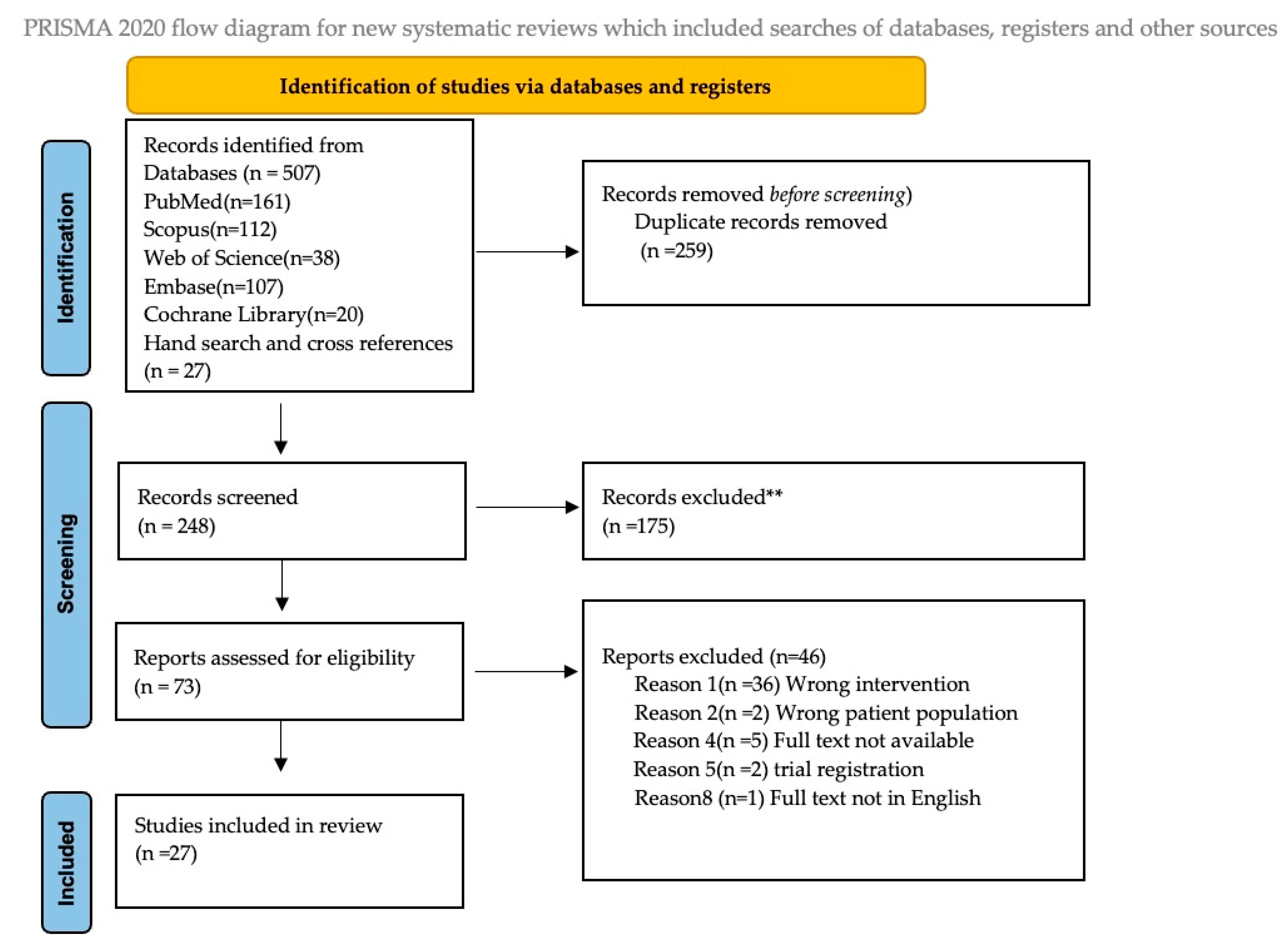
A total of 503 articles were initially identified. After the removal of duplicates and screening of titles, abstracts, and full texts, 27 studies met the inclusion criteria and were included in the final review. The study selection process is summarised in the PRISMA flowchart Figure 1.

3. Results

A total of 27 studies that met the inclusion criteria were analysed and are summarised in Table 1. These studies explored the use of DI obtained through IOS or direct digital models (DDM) in the management of patients with cleft lip and palate (CL/P). The selected studies were published between 2016 and 2024, reflecting the growing integration of digital technologies into clinical and research practices related to cleft care.
The included studies were categorised based on their primary focus areas: accuracy, patient comfort, time efficiency, use as diagnostic aids, treatment planning or treatment monitoring, and use as outcome measures. Among the 27 studies, 7 primarily evaluated the accuracy of DI or digital models when compared with conventional techniques. Five studies examined patient comfort, reporting improved acceptance and reduced discomfort associated with intraoral scanning compared with traditional impressions. Five studies assessed the time required, generally indicating shorter clinical chairside time and improved workflow efficiency.
In addition, four studies investigated the use of DI as diagnostic aids, highlighting their value in visualising complex cleft morphologies and facilitating interdisciplinary communication. Ten studies focused on treatment planning and treatment evaluation, demonstrating the potential of digital models to assist in surgical and orthodontic planning, simulate treatment outcomes, and enhance precision in interdisciplinary management. Finally, four studies utilised direct digital models as outcome measures, allowing objective evaluation of treatment results and longitudinal comparison of morphological changes (Table 2).

4. Discussion

4.1. Current Trends in the Use of Intraoral Scanning in Patients with CL/P: Accuracy, Feasibility, and Clinical Application

4.1.1. Accuracy and Reliability of DI in CL/P Patients

Accurate reproduction of the complex intraoral anatomy in CL/P patients is essential for diagnosis, appliance fabrication, and treatment planning. Recent research consistently demonstrates that IOS can achieve accuracy comparable to CI, though variations may occur depending on cleft morphology and clinical handling (Table 3).
Patel et al. [12] compared direct digital models obtained using an IOS with conventional plaster models in infants with bilateral CL/P (BCL/P). The greatest surface discrepancy occurred in the premaxillary segment, largely attributed to soft tissue compression during conventional impression making rather than limitations of the digital method. This highlights that DI minimises tissue distortion inherent in CI techniques, thereby improving the fidelity of digital models.
ElNaghy et al. evaluated the precision of DI versus CI in infants with unilateral CL/P (UCL/P) and reported excellent agreement between the two, with dimensional differences ranging from only 0.01 to 0.1 mm [31]. These results confirm that IOS—particularly 3Shape TRIOS systems, which were the most frequently used scanners across studies—can accurately capture fine intraoral details even in irregular cleft morphologies. Other studies using Carestream and Medit i700 (Medit Corp, Seoul, Republic of Korea) scanners also reported no statistically significant differences in model accuracy compared with CI, confirming the reliability of different IOS technologies in CL/P applications [15,17,33,36,37].
Unnikrishnan et al. analysed intra-arch measurements and surface discrepancies between digital models generated from DI and those obtained using conventional alginate and silicone-based impressions. No statistically significant difference (p < 0.05) was observed between the superimposed models, reinforcing the accuracy and reproducibility of DI in CL/P patients [37]. However, there are currently no comparative studies evaluating the accuracy of different intraoral scanners in CL/P patients, which highlights an important area for further research.
Zeidan and Kamiloglu et al. [26] extended these findings by comparing indirect digital models obtained from IOS of plaster models with those generated from Cone Beam Computed Tomography (CBCT) scans. Apart from posterior cleft width, all intra-arch measurements demonstrated excellent reliability, underscoring the consistency of IOS in capturing detailed oral structures [26].
Similarly, Dalessandri et al. demonstrated that a DI-based workflow in PSOT for newborns with CL/P showed minimal deviation from the traditional tray and putty method (mean difference: −0.2 mm to −0.3 mm) [7]. A recent systematic review also confirmed that DI in infants with CL/P provides accuracy comparable to CI for intra-arch measurements [39].

4.1.2. Patients’, Parents’ and Clinicians’ Experience with DI in CL/P Patients

Patients’ or Parents’ Experience with DI in CL/P Patients
Patient and parent perception plays a vital role in the successful adoption of digital technologies in CL/P management. Across multiple studies, DI using IOS has consistently been perceived as more comfortable, less invasive, and less distressing compared to CI (Table 4).
Chalmer et al. [15] compared comfort and time requirements between CI and DI in infants with CL/P, using structured questionnaires completed by patients’ parents. Scanning comfort was rated substantially higher (84.8%) than CI (44.2%) (p < 0.05). Although the perceived scanning time was slightly longer (56.6% vs. 51.2%), this difference was not statistically significant (p > 0.05). Importantly, none of the participants reported disliking digital scanning, whereas 16.3% expressed discomfort with CI [15]. These findings highlight the superior patient and caregiver tolerance of DI, particularly for infants who may experience respiratory distress or gagging during CI procedures.
Dalessandri et al. assessed mothers’ perceptions of tray-and-putty impressions versus DI obtained using a 3Shape TRIOS scanner, reporting that DI was viewed as less invasive and easier to tolerate during PSOT [7]. Similar observations were reported by Fomenko et al. and Soliman et al., both of whom found that parents preferred DI due to the absence of impression materials, reduced risk of airway obstruction, and improved overall comfort [17,36].
A recent systematic review further consolidated these findings, showing a clear preference among parents and clinicians for DI in infants with CL/P. The review highlighted additional advantages, including the ability to pause or rescan during the procedure, better visualisation of the oral anatomy, and immediate availability of digital records [39]. While most studies utilised 3Shape TRIOS scanners, other scanning systems have also demonstrated similar patient acceptance and ease of use.
Overall, current evidence suggests that DI provides a safer, more comfortable, and more efficient experience for CL/P patients and their parents compared with CI, supporting the broader clinical shift toward digital workflows in craniofacial care.
Clinicians’ Experiences and Practical Challenges with DI in CL/P Patients
Clinical experience within CL/P care demonstrates substantial advantages in safety and workflow, though challenges remain in capturing complex anatomy. Most studies report that DI provides satisfactory clinical outcomes, yet deep cleft regions and undercuts are often difficult to record completely [6,22,33] (Table 4).
Operator expertise and scanner design play crucial roles in accuracy and efficiency. Gong et al. noted that scanners with smaller tips and faster acquisition speeds, such as the 3Shape TRIOS and Medit i700, facilitated easier scanning, though infant uncooperativeness often necessitated rescanning [22]. Shanbhag et al. similarly reported that multiple scans were needed due to movement, with smaller scanner heads preferred for procedures lasting about 20 min [23]. Batra et al. found that “child-sized” scanning tips reduced procedure time to 90–120 s [40].
Wiese et al. observed that scanning deeper palatal clefts required the use of cotton swabs to bridge tissue gaps, extending scan times to a median of 151 s [25]. ElNaghy et al. confirmed similar challenges, with operators using bonding brush handles and reporting scan durations of 80–120 s [31]. Excessive salivation and movement also prolonged scanning in some cases, as described by Okazaki et al. and Soliman et al. [33,36].
Although large cohort studies reported no adverse events, scan time varied by cleft severity, ranging from 60 s for cleft palate to 150 s for bilateral CL/P [8]. Post-processing challenges, such as trimming digital casts to correct incomplete surface capture, were also reported [28].
Overall, current evidence supports DI as a safe and efficient alternative to CI. However, limitations persist in scanning deep clefts and managing infant cooperation. Importantly, no comparative studies have evaluated the performance of different IOS systems, indicating a key direction for future research.

4.1.3. Clinical Application of DI in CL/P Patients

DI obtained through IOS has become an integral part of the clinical management of patients with CL/P. They provide accurate 3D representations of the cleft anatomy, supporting diagnosis, treatment planning, appliance fabrication, and assessment of treatment outcomes across various stages of care (Table 5).
Diagnostic Use of DI in CL/P Patients
The diagnostic application of DI has expanded rapidly in recent years. Studies have demonstrated that digital models generated by IOS can accurately reproduce cleft morphology and maxillary arch dimensions in both unilateral (UCL/P) and bilateral (BCL/P) cases [12,16,27,34,41]. Choi et al. used DI to evaluate maxillary arch width and cleft dimensions pre-palatoplasty, confirming its reliability as a non-invasive diagnostic tool. The study also illustrated how 3D-scanned images can be used to create digital cleft models for training surgical residents, enhancing understanding of palatal contours and enabling simulation-based education [16].
Woodsend et al. [27] further demonstrated the diagnostic potential of DI by developing digital models for automated landmark identification in the deciduous dentition using machine learning. This application of digital models enhances diagnostic precision and standardises measurement in CL/P assessment [34,41].
Moreover, some studies have explored the use of IOS for extraoral scanning, integrating nasal and lip morphology into 3D craniofacial analyses [29,42,43,44]. These approaches highlight the potential of DI to complement traditional imaging modalities and provide comprehensive assessments of cleft anatomy.
Treatment Planning or Treatment with DI in CL/P Patients
DI obtained through IOS has become an increasingly valuable component in the treatment planning and management of CL/P patients, particularly in the design and fabrication of presurgical nasoalveolar moulding (NAM) appliances. Several studies have reported the successful integration of fully digital workflows for NAM fabrication, involving direct intraoral scanning, computer-aided design (CAD), and additive manufacturing [6,8,18,19,21,23,24,25,30]. This approach reduces reliance on CI, which are often challenging in newborns due to limited oral access and potential airway risks.
Compared to traditional methods, CAD-based NAM fabrication offers notable advantages, including improved precision, reproducibility, and patient comfort. For example, Batra et al. and Meyer et al. described the use of digitally designed sequential NAM aligners incorporating controlled expansion of the posterior arch width to support transverse growth [20,35]. Similarly, Gong et al. demonstrated that digital workflows significantly reduced manual adjustments, improved appliance fit, and decreased chairside time and the number of clinical visits for both clinicians and families [45].
Nonetheless, challenges remain. Accurate intraoral scanning in infants with wide or deep clefts is technically demanding, often requiring multiple scans or specialised auxiliary tools to capture complex undercut areas. Digital trimming and segmentation of models can also be limited when cleft margins are deep or irregular, as current software algorithms may not always accurately delineate these regions.
Overall, the integration of DI and CAD-based workflows has transformed NAM appliance fabrication by enhancing standardisation, customisation, and clinical efficiency. Future studies should aim to evaluate the long-term clinical outcomes, cost-effectiveness, and the potential of integrating newer IOS technologies with automated design systems to further improve precision and workflow efficiency.
Outcome Measures with DI in CL/P Patients
IOS has emerged as a valuable tool for assessing treatment outcomes in patients with CL/P, enabling precise evaluation of NAM and surgical procedures through accurate digital measurements [7,15,17,30,32,45,46]. Chalmers et al. [15] evaluated the use of DI as an alternative to CI, applying digital models derived from IOS to assess intra-arch measurements using the GOSLON and MHB indices. These indices served as objective measures for determining surgical outcomes. Similarly, Gong et al. investigated a comprehensive digital workflow for the design and fabrication of NAM appliances, assessing treatment effectiveness by comparing intraoral scanned images captured pre- and post-treatment. The use of IOS-generated digital models facilitated treatment modifications, thereby enhancing clinicians’ ability to monitor progress and improve clinical outcomes.

4.2. Challenges Related to DI in Patients with CL/P

Even though DI and 3D printing techniques in the care of patients with CL/P have seen significant advancement in recent years, DI using IOS could pose some challenges in neonates, infants and children with cleft lip and palate that impact effectiveness and efficiency. These challenges influence both the effectiveness and efficiency of digital workflows [39]. One primary difficulty reported across the studies is the capture of deep cleft areas, which often result in incomplete scans. This limitation is primarily attributed to the small mouth opening of the children, the large scanner head and the inability of the scanner head to reach the deepest part of the cleft defect [6,33]. Studies using TRIOS (3Shape, Copenhagen, Denmark) and iTero (Align Technologies, Tempe, AZ, USA) scanners noted that smaller scanner tips and pre-warming the scanner head improved accessibility and patient comfort, although deep clefts remained difficult to image completely.
A distinctive feature in this population is the discontinuity of the dental arch caused by the alveolar cleft. Considerations should be given to bridge the cleft gap before palatal repair, especially when the clefts are deeper and wider. Novel methodologies have been explored to overcome this, as most scanning software algorithms lack the capability to bridge the cleft defect automatically. Weise et al. described ways to build a ‘virtual bridge’ between the cleft segments by either inserting cotton swabs or using the tip of a glove to connect the gaps in the cleft segments during scanning. Similarly, another investigation employed bonding brush handles to bridge the gaps, facilitating more accurate alignment in wider clefts [6,31]. These innovations demonstrate how simple, low-cost adjuncts can improve data capture across different scanner systems. Moreover, an altered scanning pattern that includes intact areas of the lip, jaw, palate, and nose as reference points has been shown to enhance scanning.
Other limitations highlighted include head movement, excessive salivation, and restricted mouth opening, all of which affect image stitching and the accuracy of scans in infants [23,35]. Excessive salivation has been shown to have a negative impact on the quality of scans obtained during DI [32]. To mitigate these challenges, clinicians have suggested utilising a smaller scanner tip, a pre-warmed scanning tip, and the use of scanners with a faster scanning process. The presence of a cleft and these adverse intraoral factors underscores the significance of skilled operators who are proficient in scanning to provide a high-quality scan [47]. Research has demonstrated that the operator’s proficiency substantially impacts the precision of DIs produced by the various intraoral scanning systems (IOS) [48,49].
Cost and accessibility also play a decisive role in the adoption of IOS technology. The financial investment for IOS devices ranges from USD 12,000 to 35,000, with additional annual software subscription costs [50]. Despite this, multiple studies concluded that DI becomes cost-effective over time, particularly in high-volume clinical environments. For example, practices performing two DIs daily could recover costs in approximately one year, while those performing five could do so in five months. Compared with CI, which requires ongoing expenses for trays, alginate, plaster, and trimmers, DI substantially reduce material use and chairside time [50].
Considering the reduced number of plaster models, patient visits, and time required to create individual casts, treatment planning and treatment using digital models in NAM can be cost-effective in CL/P care [7,51,52]. Studies such as those by Grill et al. demonstrated that semi-automated rapid NAM plates fabricated via digital workflows were more economical than conventional NAM plates [53]. However, when the costs of scanners, 3D printers, and software are included, digital workflows may remain challenging for smaller or resource-limited centres.
Despite these limitations, the global adoption of IOS is increasing—an international survey of 1072 respondents across 109 countries found that 78.8% of clinicians use IOS in daily practice, representing 36 scanner types and 38.6% using CAD software, underscoring the rapid integration of digital workflows into modern dentistry [54]. A recent study presented a comprehensive, step-by-step protocol for integrating digital scanning into the presurgical infant orthopedics (PSIO) workflow in cleft lip and palate (CLP) care [55]. Another protocol, successfully implemented across two cleft centres, detailed the optimal positioning of the patient, clinician, scanner, and monitor, enabling accurate digital capture of the lip, nose, and cleft palate within approximately one minute in both outpatient and operative settings [56]. This work provides practical guidance for incorporating intraoral scanning into early cleft management and reflects the growing shift toward adopting digital impressions as a routine practice in CLP care, replacing conventional impression techniques.

4.3. Future Pathways in DI for Cleft Care

The ideal scanner for managing cleft lip and palate patients, especially neonates and infants, must overcome current limitations in capturing complex intraoral anatomy. Essential features should include the ability to capture the deep parts of the cleft region accurately, rapid image acquisition to minimise discomfort and a smaller scanner head for improved manoeuvrability within the confined spaces of the oral cavity. Additionally, an advanced software algorithm is essential for accurately capturing the intricate details of a cleft, where arch discontinuities are present.
Hence, the factors that need to be explored for optimising intraoral scanners in CL/P are:

4.3.1. Scanning Tip

The influence of scanning tip size on the accuracy of intraoral digital scans in patients with CL/P remains underexplored. Okazaki et al. and Abreu et al. reported difficulties in recording the deepest cleft areas due to limited access with standard tips [28,33]. In cases involving large oronasal fistulas, it was noted that obtaining precise three-dimensional data was particularly challenging unless the scanner tip was sufficiently small to enter and record the internal surface [57,58]. These findings highlight the need for redesigned tips that combine sufficient miniaturisation for neonatal use with maintained optical precision. A laboratory comparison of Carestream (standard and side-tip) and Trios 4 scanners found comparable accuracy for alveolar cleft depth (p > 0.05), yet none could consistently capture the deepest regions [38].

4.3.2. Scanning Strategy

The rehabilitation of patients with a cleft lip and palate begins shortly after birth and continues through adolescence and adulthood [59]. Consequently, intraoral scanning in these patients spans across developmental stages: from edentulous arches in neonates, to partially dentate arches in infancy, and fully dentate arches in adulthood. While the accuracy of complete arch scanning in edentulous adults is comparable to CI [60]. Comparative studies of complete arch scanning of dentulous and edentulous arches reveal that edentulous arch scanning is particularly imprecise [61]. Since the scan of CL/P patients involves edentulous stages in neonates, partially dentulous stages in infants, and fully dentulous stages in later years, the accuracy of IOS can vary. Considering these factors, an optimal scanning strategy must be developed for CL/P patients to ensure accuracy.
Manufacturers’ recommended scanning strategies vary based on the technologies used, which can influence accuracy and quality. The scan path, the scanner’s position relative to the tissue surface, and maintaining a consistent distance during scanning can affect the quality of the scan [62,63]. However, limited evidence exists on optimal strategies for neonates with CL/P. In a laboratory study, two approaches were investigated: the traditional cleft-unobstructed technique and the cleft-obstructed method, as described by Weise et al., where the cleft region is temporarily filled with soft material to make the arch continuous. Findings revealed that cleft-obstructed scanning significantly reduced scan time and the number of scan interruptions across all scanners tested. Nevertheless, neither strategy successfully captured the deepest part of the alveolar cleft, suggesting that current techniques are inadequate for comprehensive imaging in neonates with CL/P [38]. These results indicate the need for further refinement of scanning strategies and clinician training to improve clinical outcomes.

4.3.3. Scanner Type

The accuracy and clinical applicability of intraoral scanners (IOS) in full-arch and complex morphology scanning have been evaluated by several studies, including those by Amornvit et al., Michelinakis et al., and Kernen et al. [64,65,66]. Intraoral scanners are digital devices composed of a portable camera, computer, and processing software, used to capture three-dimensional representations of dental and soft tissue structures, typically stored in STL file format.
The scanning methodologies employed are diverse and rely on the applied technology. These include passive techniques, such as ambient light, and active techniques, such as structured light, encompassing triangulation, confocal imaging, Active Wavefront Sampling (AWS), and stereophotogrammetry. The quality and usability of the intraoral scanners are influenced by the different approaches used by the systems to capture images and calculate distances to the surface to be scanned [67]. Moreover, each scanner is equipped with unique technologies and sensors that directly affect the dimensions and weight of the scanning unit [68]. Hence, identifying the scanning technique that captures even the deepest part of the cleft while maintaining faster scanning is a prerequisite of an ideal scanner in patients with a CL/P.
In an investigation, three scanners—Trios 4, Carestream, and iTero—were assessed for scan time, interruptions, and scan quality using both cleft-obstructed and unobstructed strategies. Although no statistically significant differences were observed between devices in efficiency metrics, all scanners failed to capture the deepest portion of the cleft [60].
Collectively, these results reveal a current limitation of IOS technologies in managing CL/P cases and underscore the need for continued innovation. Scanner tip design, resolution, and adaptive software may all require modification to meet the demands of neonatal cleft imaging. Future research should focus on developing purpose-built systems or enhanced protocols specifically for use in this patient population.
This review provides a comprehensive synthesis of the current applications of digital technologies in cleft care, identifying existing gaps and practical challenges. Unlike previous reviews, it specifically examines variations in accuracy, clinical outcomes, and implementation feasibility across different digital systems. The insights generated highlight emerging opportunities for optimising digital workflows and guiding future research directions in this evolving field.
Future research should systematically evaluate scanning tip size, scanner type, and optimal scanning strategies to improve the accuracy and efficiency of DIs in cleft lip and palate (CL/P) management. Comparative studies of scanner technologies and protocols are needed to identify the most reliable approaches for capturing complex CL/P anatomy, particularly in neonates and infants. Well-designed controlled trials comparing digital and conventional methods, along with longitudinal studies on performance, safety, cost-effectiveness, and patient outcomes, are essential to establish evidence-based guidelines. Research should also explore integration with advanced digital workflows and operator training to standardise protocols and enhance clinical decision-making in CL/P care.

5. Study Limitation

This narrative review summarises the available clinical literature on the use of DIs (DI) in cleft lip and palate (CL/P). However, the methodological quality and risk of bias of the included studies were not formally assessed, and the limited number of high-quality investigations—many being small case series or pilot studies—may reduce the robustness of the conclusions. Few studies have systematically evaluated the challenges of intraoral scanning in neonates and infants or validated the reported advantages through controlled comparisons, and considerable variability in scanner types, scanning protocols, and outcome measures further hinders direct comparison. Additionally, this review was limited to studies published in English, which may have introduced publication bias and restricted the inclusion of relevant evidence from non-English sources.

6. Conclusions

This review highlights the growing role of DIs (IOS) in cleft lip and palate (CL/P) care. Current evidence suggests that IOS offers accuracy comparable to CI while improving patient comfort and reducing procedure time. Clinicians value IOS for its adaptability and lower risk of respiratory complications, particularly in newborns. DIs enhance diagnosis, treatment planning, and outcome evaluation. Future research should refine scanning strategies and algorithms to improve the accuracy and reliability of alveolar cleft recordings.

Author Contributions

Conceptualisation, G.I. and J.U.; methodology, J.U.; data curation, J.U., M.B. and G.I.; writing—original draft preparation, J.U.; writing—review and editing, J.U., M.B., R.M.L. and G.I.; supervision, M.B., R.M.L. and G.I. All authors have read and agreed to the published version of the manuscript.

Funding

This research received no external funding.

Institutional Review Board Statement

Not applicable.

Informed Consent Statement

Not applicable.

Data Availability Statement

No new data were created or analyzed in this study.

Conflicts of Interest

The authors declare no conflicts of interest.

References

  1. Tanaka, S.A.; Mahabir, R.C.; Jupiter, D.C.; Menezes, J.M. Updating the Epidemiology of Cleft Lip with or without Cleft Palate. Plast. Reconstr. Surg. 2012, 129, 511e–518e. [Google Scholar] [CrossRef]
  2. Nahai, F.R.; Williams, J.K.; Burstein, F.D.; Martin, J.; Thomas, J. The Management of Cleft Lip and Palate: Pathways for Treatment and Longitudinal Assessment. Semin. Plast. Surg. 2005, 19, 275–285. [Google Scholar] [CrossRef]
  3. World Health Organization. Global Strategies to Reduce the Health Care Burden of Craniofacial Anomalies: Report of WHO Meetings on International Collaborative Research on Craniofacial Anomalies. Cleft Palate Craniofac. J. 2004, 41, 238–243. [Google Scholar] [CrossRef]
  4. Shetye, P.R. Orthodontic Treatment for Orofacial Clefting in Preadolescence. In Cleft and Craniofacial Orthodontics; John Wiley & Sons, Ltd.: Hoboken, NJ, USA, 2023; pp. 261–278. ISBN 978-1-119-77838-7. [Google Scholar]
  5. Jacobson, B.N.; Rosenstein, S.W. Early Maxillary Orthopedics for the Newborn Cleft Lip and Palate Patient. An Impression and an Appliance. Angle Orthod. 1984, 54, 247–263. [Google Scholar] [CrossRef]
  6. Krey, K.-F.; Ratzmann, A.; Metelmann, P.H.; Hartmann, M.; Ruge, S.; Kordaß, B. Fully Digital Workflow for Presurgical Orthodontic Plate in Cleft Lip and Palate Patients Vollständiger Digitaler Workflow Für Die Herstellung von Prächirurgischen Kieferorthopädischen Platten Bei Patienten Mit Lippen-Kiefer-Gaumenspalten. Int. J. Comput. Dent. 2018, 21, 251. [Google Scholar]
  7. Dalessandri, D.; Tonni, I.; Laffranchi, L.; Migliorati, M.; Isola, G.; Bonetti, S.; Visconti, L.; Paganelli, C. Evaluation of a Digital Protocol for Pre-Surgical Orthopedic Treatment of Cleft Lip and Palate in Newborn Patients: A Pilot Study. Dent. J. 2019, 7, 111. [Google Scholar] [CrossRef]
  8. Zarean, P.; Zarean, P.; Thieringer, F.M.; Mueller, A.A.; Kressmann, S.; Erismann, M.; Sharma, N.; Benitez, B.K. A Point-of-Care Digital Workflow for 3D Printed Passive Presurgical Orthopedic Plates in Cleft Care. Children 2022, 9, 1261. [Google Scholar] [CrossRef] [PubMed]
  9. Chate, R.A. A Report on the Hazards Encountered When Taking Neonatal Cleft Palate Impressions (1983–1992). Br. J. Orthod. 1995, 22, 299–307. [Google Scholar] [CrossRef] [PubMed]
  10. Yilmaz, H.; Aydin, M.N. Digital versus Conventional Impression Method in Children: Comfort, Preference and Time. Int. J. Paediatr. Dent. 2019, 29, 728–735. [Google Scholar] [CrossRef]
  11. Bittermann, G.K.P.; de Ruiter, A.P.; Janssen, N.G.; Bittermann, A.J.N.; van der Molen, A.M.; van Es, R.J.J.; Rosenberg, A.J.W.P.; Koole, R. Management of the Premaxilla in the Treatment of Bilateral Cleft of Lip and Palate: What Can the Literature Tell Us? Clin. Oral Investig. 2016, 20, 207–217. [Google Scholar] [CrossRef] [PubMed]
  12. Patel, J.; Winters, J.; Walters, M. Intraoral Digital Impression Technique for a Neonate with Bilateral Cleft Lip and Palate. Cleft Palate Craniofacial J. 2019, 56, 1120–1123. [Google Scholar] [CrossRef]
  13. Chen Philip, K.T. An Integrated Approach to the Primary Lip/Nasal Repair in the Bilateral Cleft Lip and Palate: Operative Syllabus; Noordhoff Craniofacial Foundation: Taipei, Tanwan, 2008; ISBN 978-986-83950-3-9. [Google Scholar]
  14. Kravitz, N.D.; Groth, C.; Jones, P.E.; Graham, J.W.; Redmond, W.R. Intraoral Digital Scanners. J. Clin. Orthod. 2014, 48, 337–347. [Google Scholar]
  15. Chalmers, E.V.; Mcintyre, G.T.; Wang, W.; Gillgrass, T.; Martin, C.B.; Mossey, P.A. Intraoral 3D Scanning or Dental Impressions for the Assessment of Dental Arch Relationships in Cleft Care: Which Is Superior? Cleft Palate Craniofacial J. 2016, 53, 568–577. [Google Scholar] [CrossRef]
  16. Choi, Y.S.; Shin, H.S. Preoperative Planning and Simulation in Patients with Cleft Palate Using Intraoral Three-Dimensional Scanning and Printing. J. Craniofacial Surg. 2019, 30, 2245–2248. [Google Scholar] [CrossRef]
  17. Fomenko, I.; Maslak, E.; Timakov, I.; Tsoy, T. Use of Virtual 3D-Model for the Assessment of Premaxilla Position in 3–4-Year-Olds with Complete Bilateral Cleft Lip and Palate—A Pilot Study. In Proceedings of the 2019 12th International Conference on Developments in eSystems Engineering (DeSE), Kazan, Russia, 7–10 October 2019; pp. 933–938. [Google Scholar]
  18. Ahmed, M.K.; Ahsanuddin, S.; Retrouvey, J.-M.; Koka, K.S.; Qureshi, H.; Bui, A.H.; Taub, P.J. Fabrication of Nasoalveolar Molding Devices for the Treatment of Cleft Lip and Palate, Using Stereolithography Additive Manufacturing Processes and Computer-Aided Design Manipulation Software. J. Craniofacial Surg. 2019, 30, 2604–2608. [Google Scholar] [CrossRef]
  19. Naveau, A.; Grémare, A.; Plaire, V.; Ducret, M.; Loot, M.; Noirrit-Esclassan, E. Digital Management of Low Cost Presurgical Plates for Young Patients with Palatal Cleft. French J. Dent. Med. 2021. [Google Scholar]
  20. Batra, P.; Gribel, B.F.; Abhinav, B.A.; Arora, A.; Raghavan, S. OrthoAligner “NAM”: A Case Series of Presurgical Infant Orthopedics (PSIO) Using Clear Aligners. Cleft Palate Craniofacial J. 2020, 57, 646–655. [Google Scholar] [CrossRef] [PubMed]
  21. Bous, R.M.; Kochenour, N.; Valiathan, M. A Novel Method for Fabricating Nasoalveolar Molding Appliances for Infants with Cleft Lip and Palate Using 3-Dimensional Workflow and Clear Aligners. Am. J. Orthod. Dentofac. Orthop. 2020, 158, 452–458. [Google Scholar] [CrossRef] [PubMed]
  22. Gong, X.; Dang, R.; Xu, T.; Yu, Q.; Zheng, J. Full Digital Workflow of Nasoalveolar Molding Treatment in Infants with Cleft Lip and Palate. J. Craniofacial Surg. 2020, 31, 367–371. [Google Scholar] [CrossRef] [PubMed]
  23. Shanbhag, G.; Pandey, S.; Mehta, N.; Kini, Y.; Kini, A. A Virtual Noninvasive Way of Constructing a Nasoalveolar Molding Plate for Cleft Babies, Using Intraoral Scanners, CAD, and Prosthetic Milling. Cleft Palate Craniofacial J. 2020, 57, 263–266. [Google Scholar] [CrossRef]
  24. Wang, J.; Ho, V.; Kau, C.H. Orthodontic Management of a Palatal Fistula in a Patient with Pierre Robin Sequence Using 3D Intraoral Scanning and Computer-Aided Design. Cleft Palate Craniofacial J. 2021, 58, 1556–1559. [Google Scholar] [CrossRef] [PubMed]
  25. Weise, C.; Frank, K.; Wiechers, C.; Weise, H.; Reinert, S.; Koos, B.; Xepapadeas, A.B. Intraoral Scanning of Neonates and Infants with Craniofacial Disorders: Feasibility, Scanning Duration, and Clinical Experience. Eur. J. Orthod. 2022, 44, 279–286. [Google Scholar] [CrossRef]
  26. Zeidan, M.; Kamiloǧlu, B. Three-Dimensional Imaging Technique to Compare Digital Impression CEREC Omnicam Intraoral Camera (CAD) and Tri-Dimensional Cone-Beam Computed Tomography, to Measure Maxillary Casts: Unilateral and Bilateral Cleft Lip and Palate up to 6 Months of Age, Applied in Nanotechnology. Appl. Nanosci. 2023, 13, 1753–1759. [Google Scholar] [CrossRef]
  27. Woodsend, B.; Koufoudaki, E.; Lin, P.; McIntyre, G.; El-Angbawi, A.; Aziz, A.; Shaw, W.; Semb, G.; Reesu, G.V.; Mossey, P.A. Development of Intra-Oral Automated Landmark Recognition (ALR) for Dental and Occlusal Outcome Measurements. Eur. J. Orthod. 2022, 44, 43–50. [Google Scholar] [CrossRef]
  28. Abreu, A.; Lima, M.H.; Hatten, E.; Klein, L.; Levy-Bercowski, D. Intraoral Digital Impression for Speech Aid/Obturator in Children: Report of 2 Cases. Cleft Palate Craniofacial J. 2022, 59, 262–267. [Google Scholar] [CrossRef] [PubMed]
  29. Benitez, B.K.; Brudnicki, A.; Surowiec, Z.; Wieprzowski, Ł.; Rasadurai, A.; Nalabothu, P.; Lill, Y.; Mueller, A.A. Digital Impressions from Newborns to Preschoolers with Cleft Lip and Palate: A Two-Centers Experience. J. Plast. Reconstr. Aesthetic Surg. 2022, 75, 4233–4242. [Google Scholar] [CrossRef]
  30. Carter, C.B.; Gallardo, F.F.; Colburn, H.E.; Schlieder, D.W. Novel Digital Workflow for Nasoalveolar Molding and Postoperative Nasal Stent for Infants with Cleft Lip and Palate. Cleft Palate Craniofacial J. 2022, 60, 1176–1181. [Google Scholar] [CrossRef]
  31. ElNaghy, R.; Amin, S.A.; Hasanin, M. Evaluating the Accuracy of Intraoral Direct Digital Impressions in 2 Infants with Unilateral Cleft Lip and Palate Compared with Digitized Conventional Impression. Am. J. Orthod. Dentofac. Orthop. 2022, 162, 403–409. [Google Scholar] [CrossRef]
  32. Viñas, M.J.; Galiotto-Barba, F.; Cortez-Lede, M.G.; Rodríguez-González, M.Á.; Moral, I.; Delso, E.; González-Meli, B.; Lobo, F.; López-Cedrún, J.L.; Neagu, D.; et al. Craniofacial and Three-Dimensional Palatal Analysis in Cleft Lip and Palate Patients Treated in Spain. Sci. Rep. 2022, 12, 18837. [Google Scholar] [CrossRef]
  33. Okazaki, T.; Kawanabe, H.; Fukui, K. Comparison of Conventional Impression Making and Intraoral Scanning for the Study of Unilateral Cleft Lip and Palate. Congenit. Anom. 2023, 63, 16–22. [Google Scholar] [CrossRef]
  34. Zhang, M.; Hattori, M.; Akiyama, M.; Elbashti, M.E.; Liu, R.; Sumita, Y.I. Three-Dimensional Evaluation of the Dental Arch in Cleft Lip and Palate after Prosthetic Treatment. J. Prosthodont. Res. 2023, 67, 87–92. [Google Scholar] [CrossRef]
  35. Meyer, S.; Benitez, B.K.; Thieringer, F.M.; Mueller, A.A. 3D-Printable Open-Source Cleft Lip and Palate Impression Trays—A Single-Impression-Workflow. Plast. Reconstr. Surg. 2023, 153, 462–465. [Google Scholar] [CrossRef]
  36. Soliman, I.; Sharaf, D.; Shawky, A.; Atteya, A. Diagnostic Evaluation and Guardian Assessment of Using Digital Impression in Neonates versus the Conventional Techniques. Alex. Dent. J. 2023, 49, 129–133. [Google Scholar] [CrossRef]
  37. Unnikrishnan, J.; Bakr, M.; Love, R.; Idris, G. The Accuracy of Digital Impressions versus Conventional Impressions in Neonates with Cleft Lip and/or Palate: A Laboratory-Based Study. Children 2024, 11, 827. [Google Scholar] [CrossRef] [PubMed]
  38. Unnikrishnan, J.; Bakr, M.; Love, R.; Idris, G. Enhancing Effective Scanning Techniques for Digital Impression in Neonates with Cleft Lip and/or Palate: A Laboratory Study Investigating the Impact of Different Scanners, Scanning Tip Sizes, and Strategies. Children 2024, 11, 1435. [Google Scholar] [CrossRef]
  39. Unnikrishnan, J.; Etemad Shahidi, Y.; Bakr, M.; Love, R.; Idris, G. Clinician- and Patient-Centred Outcomes of Digital Impressions in Infants with Cleft Lip and Palate: A Systematic Review. Children 2024, 11, 343. [Google Scholar] [CrossRef] [PubMed]
  40. Batra, P.; Raghavan, S. Technological Advancements in Presurgical Infant Orthopedics. In Cleft and Craniofacial Orthodontics; John Wiley & Sons, Ltd.: Hoboken, NJ, USA, 2023; pp. 149–157. ISBN 978-1-119-77838-7. [Google Scholar]
  41. Zhang, Y.-J.; Shi, J.; Qian, S.; Qiao, S.-C.; Lai, H.-C. Accuracy of Full-Arch Digital Implant Impressions Taken Using Intraoral Scanners and Related Variables: A Systematic Review. Int. J. Oral Implantol. 2021, 14, 157–179. [Google Scholar]
  42. Ayoub, A.; Khan, A.; Aldhanhani, A.; Alnaser, H.; Naudi, K.; Ju, X.; Gillgrass, T.; Mossey, P. The Validation of an Innovative Method for 3D Capture and Analysis of the Nasolabial Region in Cleft Cases. Cleft Palate Craniofacial J. 2021, 58, 98–104. [Google Scholar] [CrossRef]
  43. Abd El-Ghafour, M.; Aboulhassan, M.A.; El-Beialy, A.R.; Fayed, M.M.S.; Eid, F.H.K.; El-Gendi, M.; Emara, D. Is Taping Alone an Efficient Presurgical Infant Orthopedic Approach in Infants with Unilateral Cleft Lip and Palate? A Randomized Controlled Trial. Cleft Palate Craniofacial J. 2020, 57, 1382–1391. [Google Scholar] [CrossRef]
  44. Chawla, O.; Atack, N.E.; Deacon, S.A.; Leary, S.D.; Ireland, A.J.; Sandy, J.R. Three-Dimensional Digital Models for Rating Dental Arch Relationships in Unilateral Cleft Lip and Palate. Cleft Palate Craniofacial J. 2013, 50, 182–186. [Google Scholar] [CrossRef]
  45. Gong, X.; Yu, Q. Correction of Maxillary Deformity in Infants with Bilateral Cleft Lip and Palate Using Computer-Assisted Design. Oral Surg. Oral Med. Oral Pathol. Oral Radiol. 2012, 114, S74–S78. [Google Scholar] [CrossRef] [PubMed]
  46. Verma, S.; Singh, S.; K Verma, R.; Singh, S.P.; Kumar, V.; Sharma, S.; Kalra, P. Three Dimensional Changes of Maxillary Arch in Unilateral Cleft Lip and Palate Patients Following Comprehensive Orthodontic Treatment on Digital Study Models. J. Orthod. Sci. 2022, 11, 19. [Google Scholar] [CrossRef] [PubMed]
  47. Ma, X.; Martin, C.; McIntyre, G.; Lin, P.; Mossey, P. Digital Three-Dimensional Automation of the Modified Huddart and Bodenham Scoring System for Patients with Cleft Lip and Palate. Cleft Palate Craniofacial J. 2017, 54, 481–486. [Google Scholar] [CrossRef]
  48. Revell, G.; Simon, B.; Mennito, A.; Evans, Z.P.; Renne, W.; Ludlow, M.; Vág, J. Evaluation of Complete-Arch Implant Scanning with 5 Different Intraoral Scanners in Terms of Trueness and Operator Experience. J. Prosthet. Dent. 2022, 128, 632–638. [Google Scholar] [CrossRef]
  49. Resende, C.C.D.; Barbosa, T.A.Q.; Moura, G.F.; Tavares, L.D.N.; Rizzante, F.A.P.; George, F.M.; Neves, F.D.D.; Mendonça, G. Influence of Operator Experience, Scanner Type, and Scan Size on 3D Scans. J. Prosthet. Dent. 2021, 125, 294–299. [Google Scholar] [CrossRef]
  50. Resnick, C.M.; Doyle, M.; Calabrese, C.E.; Sanchez, K.; Padwa, B.L. Is It Cost Effective to Add an Intraoral Scanner to an Oral and Maxillofacial Surgery Practice? J. Oral Maxillofac. Surg. 2019, 77, 1687–1694. [Google Scholar] [CrossRef]
  51. Rau, A.; Ritschl, L.M.; Mücke, T.; Wolff, K.-D.; Loeffelbein, D.J. Nasoalveolar Molding in Cleft Care--Experience in 40 Patients from a Single Centre in Germany. PLoS ONE 2015, 10, e0118103. [Google Scholar] [CrossRef]
  52. Shen, C.; Yao, C.A.; Magee, W.; Chai, G.; Zhang, Y. Presurgical Nasoalveolar Molding for Cleft Lip and Palate: The Application of Digitally Designed Molds. Plast. Reconstr. Surg. 2015, 135, 1007e–1015e. [Google Scholar] [CrossRef]
  53. Grill, F.D.; Ritschl, L.M.; Bauer, F.X.; Rau, A.; Gau, D.; Roth, M.; Eblenkamp, M.; Wolff, K.-D.; Loeffelbein, D.J. A Semi-Automated Virtual Workflow Solution for the Design and Production of Intraoral Molding Plates Using Additive Manufacturing: The First Clinical Results of a Pilot-Study. Sci. Rep. 2018, 8, 11845. [Google Scholar] [CrossRef]
  54. Al-Hassiny, A.; Végh, D.; Bányai, D.; Végh, Á.; Géczi, Z.; Borbély, J.; Hermann, P.; Hegedüs, T. User Experience of Intraoral Scanners in Dentistry: Transnational Questionnaire Study. Int. Dent. J. 2023, 73, 754–759. [Google Scholar] [CrossRef] [PubMed]
  55. Gomez, J.P.; Batra, P.; Echeverry, C.; Dominguez, M.; Ahuja, D.; Saha, B. A Step-by-Step Guide for Implementing Digital Scanning in Presurgical Infant Orthopedics (PSIO). Cleft Palate Craniofacial J. 2025, 23, 10556656251380611. [Google Scholar] [CrossRef] [PubMed]
  56. Nalabothu, P.; Benitez, B.K.; de Macedo Santos, J.W.; Mueller, A.A. Cleft Lip and Palate Digital Impression Workflow. Plast. Reconstr. Surg.-Glob. Open 2025, 13, e6741. [Google Scholar] [CrossRef] [PubMed]
  57. Xu, Y.; Huang, H.; Wu, M.; Tian, Y.; Wan, Q.; Shi, B.; Hu, T.; Spintzyk, S. Rapid Additive Manufacturing of a Superlight Obturator for Large Oronasal Fistula in Pediatric Patient. Laryngoscope 2023, 133, 1507–1512. [Google Scholar] [CrossRef] [PubMed]
  58. Krämer Fernandez, P.; Kuscu, E.; Weise, H.; Engel, E.M.; Spintzyk, S. Rapid Additive Manufacturing of an Obturator Prosthesis with the Use of an Intraoral Scanner: A Dental Technique. J. Prosthet. Dent. 2022, 127, 189–193. [Google Scholar] [CrossRef]
  59. Burston, W.R. The Early Orthodontic Treatment of Alveolar Clefts. Proc. R. Soc. Med. 1965, 58, 767–772. [Google Scholar] [CrossRef]
  60. Lo Russo, L.; Caradonna, G.; Troiano, G.; Salamini, A.; Guida, L.; Ciavarella, D. Three-Dimensional Differences between Intraoral Scans and Conventional Impressions of Edentulous Jaws: A Clinical Study. J. Prosthet. Dent. 2020, 123, 264–268. [Google Scholar] [CrossRef]
  61. Schimmel, M.; Akino, N.; Srinivasan, M.; Wittneben, J.-G.; Yilmaz, B.; Abou-Ayash, S. Accuracy of Intraoral Scanning in Completely and Partially Edentulous Maxillary and Mandibular Jaws: An in Vitro Analysis. Clin. Oral Investig. 2021, 25, 1839–1847. [Google Scholar] [CrossRef]
  62. Logozzo, S.; Zanetti, E.M.; Franceschini, G.; Kilpelä, A.; Mäkynen, A. Recent Advances in Dental Optics—Part I: 3D Intraoral Scanners for Restorative Dentistry. Opt. Lasers Eng. 2014, 54, 203–221. [Google Scholar] [CrossRef]
  63. Logozzo, S.; Kilpelä, A.; Mäkynen, A.; Zanetti, E.M.; Franceschini, G. Recent Advances in Dental Optics—Part II: Experimental Tests for a New Intraoral Scanner. Opt. Lasers Eng. 2014, 54, 187–196. [Google Scholar] [CrossRef]
  64. Amornvit, P.; Rokaya, D.; Sanohkan, S. Comparison of Accuracy of Current Ten Intraoral Scanners. BioMed Res. Int. 2021, 2021, 2673040. [Google Scholar] [CrossRef]
  65. Michelinakis, G.; Apostolakis, D.; Tsagarakis, A.; Kourakis, G.; Pavlakis, E. A Comparison of Accuracy of 3 Intraoral Scanners: A Single-Blinded in Vitro Study. J. Prosthet. Dent. 2020, 124, 581–588. [Google Scholar] [CrossRef] [PubMed]
  66. Kernen, F.; Schlager, S.; Seidel Alvarez, V.; Mehrhof, J.; Vach, K.; Kohal, R.; Nelson, K.; Flügge, T. Accuracy of Intraoral Scans: An in Vivo Study of Different Scanning Devices. J. Prosthet. Dent. 2022, 128, 1303–1309. [Google Scholar] [CrossRef] [PubMed]
  67. Richert, R.; Goujat, A.; Venet, L.; Viguie, G.; Viennot, S.; Robinson, P.; Farges, J.-C.; Fages, M.; Ducret, M. Intraoral Scanner Technologies: A Review to Make a Successful Impression. J. Healthc. Eng. 2017, 2017, 8427595. [Google Scholar] [CrossRef]
  68. Zimmermann, M.; Mehl, A.; Mörmann, W.H.; Reich, S. Intraoral Scanning Systems—A Current Overview. Int. J. Comput. Dent. 2015, 18, 101–129. [Google Scholar] [PubMed]
Figure 1. PRISMA Flow chart-The study selection process.
Children 12 01579 g001
Table 1. Search strategy used.
DatabaseSearch Strategy
Pubmedcleft*[Title/Abstract] AND (lip*[Title/Abstract] OR palate*[Title/Abstract] OR orofacial[Title/Abstract] OR alveolus[Title/Abstract])) AND ((intraoral[Title/Abstract] AND scan*[Title/Abstract]) OR “3D scan*”[Title/Abstract] OR “digital model*”[Title/Abstract] OR “digital impression*”[Title/Abstract] OR “3D model*”[Title/Abstract] OR “digital workflow*”[Title/Abstract] OR “digital work flow”[Title/Abstract] OR “3D print*”[Title/Abstract])
ScopusTITLE-ABS-KEY ((“cleft lip and palate” OR “orofacial cleft*” OR “alveolar cleft”) AND (“intraoral scan*” OR “3D scan*” OR “digital impression*” OR “digital workflow*” OR “3D print*” OR “computer aided” OR “CAD”)) AND (LIMIT-TO (SUBJAREA, “MEDI”) OR LIMIT-TO (SUBJAREA, “DENT”)) AND (LIMIT-TO (LANGUAGE, “English”))
Web of ScienceALL = ((“cleft lip and palate” OR “orofacial cleft*” OR “alveolar cleft”) AND (“intraoral scan*” OR “3D scan*” OR “digital impression*” OR “digital workflow*” OR “3D print*” OR “computer aided”))
Cochrane
Library
((“cleft lip and palate” OR “orofacial cleft*” OR “alveolar cleft”) AND (“intraoral scan*” OR “3D scan*” OR “digital impression*” OR “digital workflow*” OR “3D print*” OR “computer aided” OR “CAD”))
Embase(cleft*[Title/Abstract] AND (lip*[Title/Abstract] OR palate*[Title/Abstract] OR orofacial[Title/Abstract] OR alveolus[Title/Abstract])) AND ((intraoral[Title/Abstract] AND scan*[Title/Abstract]) OR “3D scan*”[Title/Abstract] OR “digital model*”[Title/Abstract] OR “digital impression*”[Title/Abstract] OR “3D model*”[Title/Abstract] OR “digital workflow*”[Title/Abstract] OR “digital work flow”[Title/Abstract] OR “3D print*”[Title/Abstract])
Google Scholar(“cleft lip and palate” OR “orofacial cleft*” OR “alveolar cleft”) AND (“intraoral scan*” OR “3D scan*” OR “digital impression*” OR “digital workflow*” OR “3D print*” OR “computer aided”)
Table 2. Overview of the 27 studies (2016–2024) on DIs and direct digital models in cleft lip and palate care, categorised by focus on accuracy, patient comfort, time efficiency, diagnostic use, treatment planning, and outcome assessment.
References DI with Intraoral Scanner or Direct Digital Models (DDM) in the Care of Patients with CL/P
AccuracyEffect of Scanning Parameters on Scanning EfficiencyPatient ComfortTime RequiredAs Diagnostic AidsTx Planning/TreatmentAs Outcome Measures
N = 7N = 1N = 5N = 5N = 4N = 10N = 4
Chalmers, 2016 [15]Children 12 01579 i001 Children 12 01579 i001Children 12 01579 i001 Children 12 01579 i001
Choi, 2019 [16] Children 12 01579 i001
Dalessandri, 2019 [7]Children 12 01579 i001 Children 12 01579 i001 Children 12 01579 i001
Fomenko, 2019 [17] Children 12 01579 i001
Ahmed, 2019 [18] Children 12 01579 i001
Patel, 2019 [12]Children 12 01579 i001 Children 12 01579 i001Children 12 01579 i001
Adrien Naveau, 2020 [19] Children 12 01579 i001
Batra, 2020 [20] Children 12 01579 i001
Bous, 2020 [21] Children 12 01579 i001
Gong, 2020 [22] Children 12 01579 i001
Shanbhag, 2020 [23] Children 12 01579 i001
Wang, 2021 [24] Children 12 01579 i001
Weise, 2021 [25] Children 12 01579 i001Children 12 01579 i001
Zeidan, 2021 [26]Children 12 01579 i001
Woodsend, 2022 [27] Children 12 01579 i001
Abreu, 2022 [28] Children 12 01579 i001
Benitez, 2022 [29] Children 12 01579 i001Children 12 01579 i001
Carter, 2022 [30] Children 12 01579 i001
ElNaghy, 2022 [31]Children 12 01579 i001 Children 12 01579 i001
Viñas, 2022 [32] Children 12 01579 i001
Zarean, 2022 [8] Children 12 01579 i001
Okazaki, 2023 [33]Children 12 01579 i001
Zhang, 2023 [34] Children 12 01579 i001
Meyer, 2023 [35] Children 12 01579 i001
Soliman, 2023 [36]Children 12 01579 i001
Unnikrishnan, 2024 [37]Children 12 01579 i001
Unnikrishnan, 2024 [38] Children 12 01579 i001
Table 3. Accuracy of Intraoral Scanners.
Author and YearInterventionScanner UsedComparisonOutcome MeasuredPopulationSample SizeAgeResult
Patel, 2019 [12]Intraoral scannerTrios
3 Shape
Indirect digital model
(From Alginate impression)
Surface discrepancy between superimposed models.Male; infant with BCL/P13 months oldDI demonstrates comparable
accuracy to CI
Chalmers, 2016 [15]Intraoral scannerTrios
3 Shape
Indirect digital model
(From alginate impression)
GOSLON and modified Huddart Bodenham (MHB) indicesNon-syndromic UCL/P43Between 9 and 21 yearsDI demonstrates comparable
accuracy to CI
Dalessandri, 2019 [7]Intraoral scannerCS3600, Carestream
Dental
Indirect digital model
(From tray and Putty)
Difference in the outcome of or by Intra-arch measurementsUCL/P and BCL/P6NewbornDI demonstrates comparable
accuracy to CI
Zeidan and Kamiloglu, 2021 [26]Intraoral scannerCEREC OmnicamCBCTIntra-arch measurementsPlaster models of both sexes CL/P44Models of infants up to 6 months of age.DI demonstrates comparable
accuracy to CI
Elnaghy, 2022 [31]Intraoral scannerTrios
3 Shape
Indirect digital model
(From alginate Impression)
3-D surface model discrepancy by superimpositionMale and female UCL/P24-week-old girl
5–week–old boy
DI demonstrates comparable
accuracy to CI
Okazaki, 2023 [33]Intraoral scannerTrios
3 Shape
Indirect digital modelsIntra-arch measurements
3-D surface model discrepancy by superimposition
Male and female
UCL/P
7Mean age of 108 daysDI demonstrates comparable
accuracy to CI
Soliman, 2023 [36]Intraoral scannerMedit i700,
Medit Corp.,
Seoul, Republic
of Korea
Indirect digital model
(From alginate Impression)
Intra-arch measurements
3-D surface model discrepancy by superimposition
Male and female UCL/P7infantsDI demonstrates comparable
accuracy to CI
Unnikrishnan, 2024 [37]Intraoral scannerTrios
3 Shape
Indirect digital models
(From rubber-based &alginate Impression)
Intra-arch measurements
3-D surface model discrepancy by superimposition
Soft acrylic models42NeoantesDI demonstrates comparable
accuracy to CI
Table 4. Clinician and patient/parents reported outcome.
Author and YearObjectivePopulationSample SizeAgeMethod of
Assessment
Clinician-Reported OutcomePatient/Parent Related Outcome
Chalmers, 2016 [15]To evaluate intraoral 3D scans for assessing dental
arch relationships and obtain patient/parent perceptions of impressions and intraoral 3D
scanning.
Non-syndromic unilateral cleft lip and palate435–21 yearsQuestionnaire-Patients had higher ratings for scanning comfort than impressions and for scanning time than impressions.
Dalessandri, 2019 [7]To evaluate the accuracy, invasiveness and impact on clinical results of a digital oral impression protocol in the PSOT of newborn cleft lip and palate (CL/P) patients undergoing primary alveolar surgical repair.BCL/P and UCL/P6NewbornQuestionnaire
  • Repetition of Impressions:
    The scanner head, preheated, facilitated scanning, resulting in approximately 30 s
    of scanning time, with no repetition of DI compared to CI.
  • Clinician’s experience:
    The clinician who took all the impressions considered the IOS method to be less stressful compared to the T&P method.
The scanner head, preheated, facilitated scanning, resulting in approximately 30 s
of scanning time, with no repetition of DI compared to CI.
Parents of children preferred DI
Patel, 2019 [12]To document the innovative use of a digital impression technique to assess arch form in an infant with bilateral CL/P.Male; infant with BCL/P13 months oldObservationTime required:1 min
Weise, 2021 [25]To evaluate intraoral scanning (IOS) in infants, neonates, and small children with craniofacial anomalies for its feasibility, scanning duration, and success rate.Neonates, infants and small children with craniofacial disorders, including CL/P141Median age of 137 days.Observation
  • Median scanning duration-151s (36–537) in CL/P patients
  • Longest scanning duration in CL/P patients
  • IOS in 4 CL/P patients was repeated.
  • One CL/P patient, IOS could not be done
Benitez, 2022 [29]To investigate the implementation and risks of digital impressions for the youngest patients with orofacial clefts.Children with CL/P342Median age of 8.7 months.Observation
  • No adverse device events or adverse events
  • No repetition of scans
  • Median scan duration of 85.5 in cleft palate
  • 50 s for cleft lip and nose scan
  • Younger patients need more time for intraoral scanning.
  • No significant difference in scanning time between awake and anesthetized patients (p-value > 0.05)
  • Cleft type affects scanning duration in awake patients
Abreu, 2022 [28]To show the clinical use of an intraoral digital impression in the fabrication of obturator/speech aid appliances in children with cleft lip and palate deformity.Children with repaired bilateral cleft lip and palate and isolated cleft of the hard and soft palate24–5 yearsobservationTrimming the digital casts is challenging due to the depth of the cleft and the software’s struggle in recognising the most apical portion of the cleft deformity-
ElNaghy, 2022 [31]To evaluate the accuracy of intraoral digital impression compared to conventional impression in patients with CL/PMale and female UCL/P24-week-old girl
5–week–old boy
observationTime required: 80–120 s
Table 5. Effectiveness of Intraoral scanners/Direct digital models in the clinical care of patients with CL/P.
Author &YearPurposePopulationAgeSample SizeCriteria Assessed
Choi, 2019 [16]Diagnosticchildren with CL/PMean age of 13 months3Maxillary arch dimension and cleft size
Patel, 2019 [12]DiagnosticInfants with BCL/P3 months1Arch form
Woodsend, 2021 [27]Diagnostic239 models, of which 161 are from cleft palate5 years239Identification of landmarks and the modified Huddart-Bodenham scoring system.
Zhang, 2023 [34]DiagnosticPatients with UCL/P& BCL/P-18Stable areas of the maxillary arch
Dalessandri 2019
[7]
Treatment planning, Treatment,
outcome measures
infants with CL/PNewborn6Fabrication of using nasoalveolar moulding plate using digital models.
Treatment changes with digital protocol and conventional nasoalveolar moulding.
Ahmed, 2019 [18]Treatment planning,-----------------Construction of NAM plate
Shanbhag, 2020 [23]Treatment planning &
Treatment,
Infant with CL/P2 months1Construction of NAM plate
Naveau, 2020 [19]Treatment planning,Newborn with Unilateral CL/P
4-year-old girl with primary cleft lip repair
3 weeks2Construction of NAM plate
Gong, 2020 [22]Treatment planning Treatment &
Outcome measures
Infants with CBCL/PMean age of 1.1 weeks9Fabrication of CAD-NAM
Comparison of pre- and post-treatment
Bous, 2020 [21]Treatment planning
& Treatment
Infants with CUCL/P21 Days1Fabrication of 3D printed clear aligner NAM device.
Batra, 2020 [20]Treatment planning & TreatmentInfants with UCL/P1 month4Fabrication of 3D printed clear aligner NAM device.
Wang, 2021 [24]Treatment planning & TreatmentPierre Robin syndrome with CL/P7 years1Fabrication of a custom-fitted temporary vacuum-formed prosthetic obturator
Zarean, 2022 [8]Treatment planning & TreatmentNewborn with CL/Pnewborn Fabrication of CAD-NAM
Chalmers, 2016 [15]Outcome measuresPatients with UCL/PBetween 5 and 21 years43GOSLON and MHB indices to evaluate the dental arch relationship as a measure of a surrogate for primary surgery outcome.
Carter, 2022 [30]Treatment planning Treatment &
Outcome measures
Infant with UCL/P4.5 months1Extra-oral facial scans and intra-oral impressions are compared between 3 timepoints: pre-treatment, post-treatment with NAM, and postsurgical treatment.
Viñas, 2022 [32]Outcome MeasuresCL.UCL/P, BCL/P, CPOYoung Adults83Craniofacial growth alterations
Fomenko, 2019 [17]Outcome measureChildren with CBCL/P3–4 years22Premaxilla’s size and position
Disclaimer/Publisher’s Note: The statements, opinions and data contained in all publications are solely those of the individual author(s) and contributor(s) and not of MDPI and/or the editor(s). MDPI and/or the editor(s) disclaim responsibility for any injury to people or property resulting from any ideas, methods, instructions or products referred to in the content.