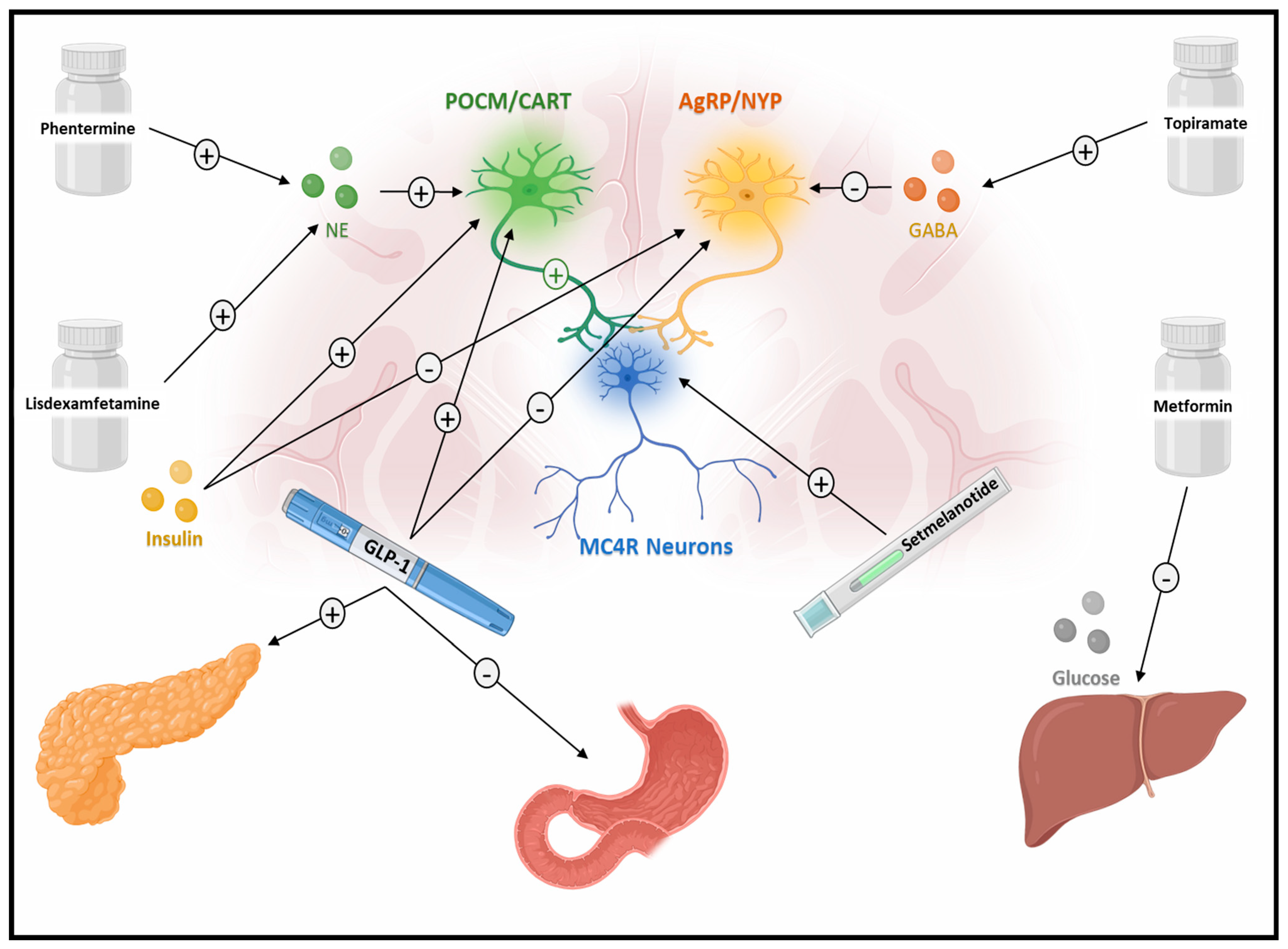
Updates on Anti-Obesity Medications in Children and Adolescents


Abstract
1. Introduction
2. Pharmacological Treatment of Pediatric Obesity in Children Aged < 12 Years
2.1. Topiramate
2.2. Lisdexamfetamine
2.3. Glucagon-like Peptide 1 (GLP-1) Receptor Agonists
2.4. Metformin
2.5. Setmelanotide
3. Pharmacological Treatment of Pediatric Obesity in Children Aged ≥ 12 Years
3.1. GLP-1 Receptor Agonists
3.1.1. Semaglutide
3.1.2. Liraglutide
3.2. Phentermine
3.3. Phentermine/Topiramate ER
3.4. Topiramate
3.5. Orlistat
3.6. Metformin
4. The Future of Anti-Obesity Pharmacotherapy
5. Conclusions
Author Contributions
Funding
Institutional Review Board Statement
Informed Consent Statement
Data Availability Statement
Conflicts of Interest
References
- Loos, R.J.F.; Yeo, G.S.H. The genetics of obesity: From discovery to biology. Nat. Rev. Genet. 2022, 23, 120–133. [Google Scholar] [CrossRef] [PubMed]
- Yusuf, Z.I.; Dongarwar, D.; Yusuf, R.A.; Bell, M.; Harris, T.; Salihu, H.M. Social Determinants of Overweight and Obesity Among Children in the United States. Int. J. MCH AIDS 2020, 9, 22–33. [Google Scholar] [CrossRef] [PubMed]
- Salama, M.; Balagopal, B.; Fennoy, I.; Kumar, S. Childhood Obesity, Diabetes. and Cardiovascular Disease Risk. J. Clin. Endocrinol. Metab. 2023, 108, 3051–3066. [Google Scholar] [CrossRef] [PubMed]
- Skinner, A.C.; Ravanbakht, S.N.; Skelton, J.A.; Perrin, E.M.; Armstrong, S.C. Prevalence of Obesity and Severe Obesity in US Children, 1999–2016. Pediatrics 2018, 141, e20173459. [Google Scholar] [CrossRef]
- Stierman, B.; Afful, J.; Carroll, M.D.; Chen, T.C.; Davy, O.; Fink, S.; Fryar, C.D.; Gu, Q.; Hales, C.M.; Hughes, J.P.; et al. National Health and Nutrition Examination Survey 2017–March 2020 Prepandemic Data Files—Development of Files and Prevalence Estimates for Selected Health Outcomes. Natl. Health Stat. Rep. 2021, 158. [Google Scholar] [CrossRef]
- Munte, E.; Zhang, X.; Khurana, A.; Hartmann, P. Prevalence of Extremely Severe Obesity and Metabolic Dysfunction Among US Children and Adolescents. JAMA Netw. Open 2025, 8, e2521170. [Google Scholar] [CrossRef]
- Hampl, S.E.; Hassink, S.G.; Skinner, A.C.; Armstrong, S.C.; Barlow, S.E.; Bolling, C.F.; Avila Edwards, K.C.; Eneli, I.; Hamre, R.; Joseph, M.M.; et al. Clinical Practice Guideline for the Evaluation and Treatment of Children and Adolescents With Obesity. Pediatrics 2023, 151, e2022060640. [Google Scholar] [CrossRef]
- Force, U.S.P.S.T.; Grossman, D.C.; Bibbins-Domingo, K.; Curry, S.J.; Barry, M.J.; Davidson, K.W.; Doubeni, C.A.; Epling, J.W., Jr.; Kemper, A.R.; Krist, A.H.; et al. Screening for Obesity in Children and Adolescents: US Preventive Services Task Force Recommendation Statement. JAMA 2017, 317, 2417–2426. [Google Scholar] [CrossRef]
- Skelton, J.A.; Irby, M.B.; Beech, B.M.; Rhodes, S.D. Attrition and family participation in obesity treatment programs: Clinicians’ perceptions. Acad. Pediatr. 2012, 12, 420–428. [Google Scholar] [CrossRef]
- Skelton, J.A.; Martin, S.; Irby, M.B. Satisfaction and attrition in paediatric weight management. Clin. Obes. 2016, 6, 143–153. [Google Scholar] [CrossRef]
- Kumar, S.; King, E.C.; Christison, A.L.; Kelly, A.S.; Ariza, A.J.; Borzutzky, C.; Cuda, S.; Kirk, S.; POWER Work Group. Health Outcomes of Youth in Clinical Pediatric Weight Management Programs in POWER. J. Pediatr. 2019, 208, 57–65.e4. [Google Scholar] [CrossRef] [PubMed]
- Armstrong, S.C.; Eneli, I.; Osganian, S.K.; Wagner, B.E.; Waldrop, S.W.; Kelly, A.S. Pediatric Obesity Pharmacotherapy: State of the Science, Research Gaps, and Opportunities. Pediatrics 2024, 154, e2024067858. [Google Scholar] [CrossRef] [PubMed]
- Ryan, P.M.; Seltzer, S.; Hayward, N.E.; Rodriguez, D.A.; Sless, R.T.; Hawkes, C.P. Safety and Efficacy of Glucagon-Like Peptide-1 Receptor Agonists in Children and Adolescents with Obesity: A Meta-Analysis. J. Pediatr. 2021, 236, 137–147.e13. [Google Scholar] [CrossRef] [PubMed]
- Weghuber, D.; Barrett, T.; Barrientos-Perez, M.; Gies, I.; Hesse, D.; Jeppesen, O.K.; Kelly, A.S.; Mastrandrea, L.D.; Sorrig, R.; Arslanian, S.; et al. Once-Weekly Semaglutide in Adolescents with Obesity. N. Engl. J. Med. 2022, 387, 2245–2257. [Google Scholar] [CrossRef]
- Kelly, A.S.; Bensignor, M.O.; Hsia, D.S.; Shoemaker, A.H.; Shih, W.; Peterson, C.; Varghese, S.T. Phentermine/topiramate for the treatment of adolescent obesity. NEJM Evid. 2022, 1, EVIDoa2200014. [Google Scholar] [CrossRef]
- Clement, K.; van den Akker, E.; Argente, J.; Bahm, A.; Chung, W.K.; Connors, H.; De Waele, K.; Farooqi, I.S.; Gonneau-Lejeune, J.; Gordon, G.; et al. Efficacy and safety of setmelanotide, an MC4R agonist, in individuals with severe obesity due to LEPR or POMC deficiency: Single-arm, open-label, multicentre, phase 3 trials. Lancet Diabetes Endocrinol. 2020, 8, 960–970. [Google Scholar] [CrossRef]
- Haws, R.; Brady, S.; Davis, E.; Fletty, K.; Yuan, G.; Gordon, G.; Stewart, M.; Yanovski, J. Effect of setmelanotide, a melanocortin-4 receptor agonist, on obesity in Bardet-Biedl syndrome. Diabetes Obes. Metab. 2020, 22, 2133–2140. [Google Scholar] [CrossRef]
- Fantasia, H.C. Migraine headache prophylaxis in adolescents. Nurs. Womens Health 2014, 18, 420–424. [Google Scholar] [CrossRef]
- Deaton, T.L.; Mauro, L.S. Topiramate for migraine prophylaxis in pediatric patients. Ann. Pharmacother. 2014, 48, 638–643. [Google Scholar] [CrossRef]
- U.S. Food and Drug Administration. Topamax (Topiramate) Prescribing Information; FDA: Silver Spring, MD, USA, 2017. Available online: https://www.accessdata.fda.gov/drugsatfda_docs/label/2017/020505s057_020844s048lbl.pdf (accessed on 30 August 2025).
- Caricilli, A.M.; Penteado, E.; de Abreu, L.L.; Quaresma, P.G.; Santos, A.C.; Guadagnini, D.; Razolli, D.; Mittestainer, F.C.; Carvalheira, J.B.; Velloso, L.A.; et al. Topiramate treatment improves hypothalamic insulin and leptin signaling and action and reduces obesity in mice. Endocrinology 2012, 153, 4401–4411. [Google Scholar] [CrossRef]
- Berman, C.; Naguib, M.; Hegedus, E.; Vidmar, A.P. Topiramate for Weight Management in Children With Severe Obesity. Child. Obes. 2023, 19, 219–225. [Google Scholar] [CrossRef] [PubMed]
- Delgado, T.C. Glutamate and GABA in Appetite Regulation. Front. Endocrinol 2013, 4, 103. [Google Scholar] [CrossRef]
- Stanley, B.G.; Urstadt, K.R.; Charles, J.R.; Kee, T. Glutamate and GABA in lateral hypothalamic mechanisms controlling food intake. Physiol. Behav. 2011, 104, 40–46. [Google Scholar] [CrossRef]
- Batt, C.E.; Puccio, O.C.; Kelsey, M.M.; Boles, R.E.; Moore, J.M. Real-World Use of Phentermine and Topiramate for Adolescent Obesity: Retrospective Effectiveness and Safety Analysis. Child. Obes. 2025, 21, 580–588. [Google Scholar] [CrossRef]
- Aminlari, A.; East, M.; Wei, W.; Quillen, D. Topiramate induced acute angle closure glaucoma. Open Ophthalmol. J. 2008, 2, 46–47. [Google Scholar] [CrossRef]
- Balasubramanian, R.; Nallasamy, V.; Pakkir Maideen, N.M.; Chidambaram, K.; Amirthalingam, P. Clinical insights on the complications of TPM use during pregnancy-enabling expectant mothers to make informed choices for their health and the future of their offspring. Eur. J. Obstet. Gynecol. Reprod. Biol. 2025, 313, 114614. [Google Scholar] [CrossRef]
- Fariba, K.A.; Saadabadi, A. Topiramate. [Updated 2024 Jun 8]; StatPearls Publishing: Treasure Island, FL, USA, 2025. Available online: https://www.ncbi.nlm.nih.gov/books/NBK554530/ (accessed on 30 August 2025).
- Najib, J.; Didenko, E.; Meleshkina, D.; Yusupov, K.; Maw, K.; Ramnarain, J.; Tabassum, M. Review of lisdexamfetamine dimesylate in children and adolescents with attention deficit/hyperactivity disorder. Curr. Med. Res. Opin. 2020, 36, 1717–1735. [Google Scholar] [CrossRef]
- Rutledge-Jukes, H.; Jonnalagadda, P.; McIntosh, A.P.; Krstovski, S.; Andriani, N.; Smith, I.R.; Prendergast, L.; Lynch, J.M. Lisdexamfetamine’s Efficacy in Treating Attention Deficit Hyperactivity Disorder (ADHD): A Meta-Analysis and Review. Cureus 2024, 16, e68324. [Google Scholar] [CrossRef]
- Schneider, E.; Higgs, S.; Dourish, C.T. Lisdexamfetamine and binge-eating disorder: A systematic review and meta-analysis of the preclinical and clinical data with a focus on mechanism of drug action in treating the disorder. Eur. Neuropsychopharmacol. 2021, 53, 49–78. [Google Scholar] [CrossRef]
- Ermer, J.C.; Pennick, M.; Frick, G. Lisdexamfetamine Dimesylate: Prodrug Delivery, Amphetamine Exposure and Duration of Efficacy. Clin. Drug Investig. 2016, 36, 341–356. [Google Scholar] [CrossRef]
- Salama, M.; Leopold, K.; Hentz, R.; Kumar, S. Weight loss following lisdexamfetamine in children and adolescents with attention deficit hyperactivity disorder and overweight and obesity. Pediatr. Obes. 2025, 20, e70024. [Google Scholar] [CrossRef] [PubMed]
- Salama, M.; Hassan, D.; Pittock, S.; Kumar, S. Weight Loss Effect of Lisdexamfetamine in Children with Severe Obesity: A Case Series. Child. Obes. 2025. Epub ahead of print. [Google Scholar] [CrossRef] [PubMed]
- Findling, R.L.; Cutler, A.J.; Saylor, K.; Gasior, M.; Hamdani, M.; Ferreira-Cornwell, M.C.; Childress, A.C. A long-term open-label safety and effectiveness trial of lisdexamfetamine dimesylate in adolescents with attention-deficit/hyperactivity disorder. J. Child Adolesc. Psychopharmacol. 2013, 23, 11–21. [Google Scholar] [CrossRef] [PubMed]
- Childress, A.C.; Lloyd, E.; Johnson, S.A., Jr.; Gunawardhana, L.; Arnold, V. A Long-Term, Open-Label Safety and Tolerability Study of Lisdexamfetamine Dimesylate in Children Aged 4–5 Years with Attention-Deficit/Hyperactivity Disorder. J. Child Adolesc. Psychopharmacol. 2022, 32, 98–106. [Google Scholar] [CrossRef]
- Faraone, S.V.; Spencer, T.J.; Kollins, S.H.; Glatt, S.J. Effects of lisdexamfetamine dimesylate treatment for ADHD on growth. J. Am. Acad. Child Adolesc. Psychiatry 2010, 49, 24–32. [Google Scholar] [CrossRef]
- Coghill, D.R.; Caballero, B.; Sorooshian, S.; Civil, R. A systematic review of the safety of lisdexamfetamine dimesylate. CNS Drugs 2014, 28, 497–511. [Google Scholar] [CrossRef]
- Banaschewski, T.; Johnson, M.; Nagy, P.; Otero, I.H.; Soutullo, C.A.; Yan, B.; Zuddas, A.; Coghill, D.R. Growth and Puberty in a 2-Year Open-Label Study of Lisdexamfetamine Dimesylate in Children and Adolescents with Attention-Deficit/Hyperactivity Disorder. CNS Drugs 2018, 32, 455–467. [Google Scholar] [CrossRef]
- Pediatric Endocrine Society Obesity Committee. Anti-Obesity Medication Protocols (PES AOM Guidelines); Pediatric Endocrine Society: McLean, VA, USA, 2023; Available online: https://pedsendo.org/wp-content/uploads/2023/11/AOM-guidelines-for-PES-website_11-05-2023.pdf (accessed on 30 August 2025).
- Bomberg, E.M.; Clark, J.; Rudser, K.D.; Gross, A.C.; Kelly, A.S.; Fox, C.K. Clinical effectiveness and predictors of response to topiramate plus lifestyle modification in youth with obesity seen in a weight management clinical setting. Front. Endocrinol. 2024, 15, 1369270. [Google Scholar] [CrossRef]
- Yanovski, J.A.; Krakoff, J.; Salaita, C.G.; McDuffie, J.R.; Kozlosky, M.; Sebring, N.G.; Reynolds, J.C.; Brady, S.M.; Calis, K.A. Effects of metformin on body weight and body composition in obese insulin-resistant children: A randomized clinical trial. Diabetes 2011, 60, 477–485. [Google Scholar] [CrossRef]
- de Jager, J.; Kooy, A.; Lehert, P.; Wulffele, M.G.; van der Kolk, J.; Bets, D.; Verburg, J.; Donker, A.J.; Stehouwer, C.D. Long term treatment with metformin in patients with type 2 diabetes and risk of vitamin B-12 deficiency: Randomised placebo controlled trial. BMJ 2010, 340, c2181. [Google Scholar] [CrossRef]
- McDonagh, M.S.; Selph, S.; Ozpinar, A.; Foley, C. Systematic review of the benefits and risks of metformin in treating obesity in children aged 18 years and younger. JAMA Pediatr. 2014, 168, 178–184. [Google Scholar] [CrossRef]
- Argente, J.; Verge, C.F.; Okorie, U.; Fennoy, I.; Kelsey, M.M.; Cokkinias, C.; Scimia, C.; Lee, H.M.; Farooqi, I.S. Setmelanotide in patients aged 2–5 years with rare MC4R pathway-associated obesity (VENTURE): A 1 year, open-label, multicenter, phase 3 trial. Lancet Diabetes Endocrinol. 2025, 13, 29–37. [Google Scholar] [CrossRef]
- Trapp, C.M.; Censani, M. Setmelanotide: A promising advancement for pediatric patients with rare forms of genetic obesity. Curr. Opin. Endocrinol. Diabetes Obes. 2023, 30, 136–140. [Google Scholar] [CrossRef]
- Kuhnen, P.; Wabitsch, M.; von Schnurbein, J.; Chirila, C.; Mallya, U.G.; Callahan, P.; Gnanasakthy, A.; Poitou, C.; Krabusch, P.M.; Stewart, M.; et al. Quality of life outcomes in two phase 3 trials of setmelanotide in patients with obesity due to LEPR or POMC deficiency. Orphanet J. Rare Dis. 2022, 17, 38. [Google Scholar] [CrossRef] [PubMed]
- Sridharan, K.; Sivaramakrishnan, G. Adverse event profile of setmelanotide in obesity: An integrated assessment and systematic review using disproportionality analysis, case reports and meta-analysis. Expert Opin. Drug Saf. 2025, 1–10. [Google Scholar] [CrossRef] [PubMed]
- Bjerre Knudsen, L.; Madsen, L.W.; Andersen, S.; Almholt, K.; de Boer, A.S.; Drucker, D.J.; Gotfredsen, C.; Egerod, F.L.; Hegelund, A.C.; Jacobsen, H.; et al. Glucagon-like Peptide-1 receptor agonists activate rodent thyroid C-cells causing calcitonin release and C-cell proliferation. Endocrinology 2010, 151, 1473–1486. [Google Scholar] [CrossRef]
- Kelly, A.S.; Auerbach, P.; Barrientos-Perez, M.; Gies, I.; Hale, P.M.; Marcus, C.; Mastrandrea, L.D.; Prabhu, N.; Arslanian, S.; Investigators, N.N.T. A Randomized, Controlled Trial of Liraglutide for Adolescents with Obesity. N. Engl. J. Med. 2020, 382, 2117–2128. [Google Scholar] [CrossRef]
- Fox, C.K.; Barrientos-Perez, M.; Bomberg, E.M.; Dcruz, J.; Gies, I.; Harder-Lauridsen, N.M.; Jalaludin, M.Y.; Sahu, K.; Weimers, P.; Zueger, T.; et al. Liraglutide for Children 6 to <12 Years of Age with Obesity—A Randomized Trial. N. Engl. J. Med. 2025, 392, 555–565. [Google Scholar] [CrossRef]
- Tamborlane, W.V.; Barrientos-Perez, M.; Fainberg, U.; Frimer-Larsen, H.; Hafez, M.; Hale, P.M.; Jalaludin, M.Y.; Kovarenko, M.; Libman, I.; Lynch, J.L.; et al. Liraglutide in Children and Adolescents with Type 2 Diabetes. N. Engl. J. Med. 2019, 381, 637–646. [Google Scholar] [CrossRef]
- Gadde, K.M.; Yonish, G.M.; Foust, M.S.; Allison, D.B. Phentermine/Topiramate for Obesity Management: Efficacy, Safety, and Clinical Considerations. Diabetes Metab. Syndr. Obes. 2018, 11, 165–175. [Google Scholar]
- Grewal, D.S.; Goldstein, D.A.; Khatana, A.K.; Tanna, A.P. Bilateral angle closure following use of a weight loss combination agent containing topiramate. J. Glaucoma 2015, 24, e132–e136. [Google Scholar] [CrossRef] [PubMed]
- Marie-Laure, F.; De Filippo, G. Drug Treatment of Child And Adolescent Obesity; European Childhood Obesity Group (ECOG): Brussels, Belgium, 2015. [Google Scholar]
- Ryder, J.R.; Kaizer, A.; Rudser, K.D.; Gross, A.; Kelly, A.S.; Fox, C.K. Effect of phentermine on weight reduction in a pediatric weight management clinic. Int. J. Obes. 2017, 41, 90–93. [Google Scholar] [CrossRef] [PubMed]
- Cosentino, G.; Conrad, A.O.; Uwaifo, G.I. Phentermine and topiramate for the management of obesity: A review. Drug Des. Dev. Ther. 2013, 7, 267–278. [Google Scholar] [CrossRef] [PubMed]
- Chanoine, J.P.; Hampl, S.; Jensen, C.; Boldrin, M.; Hauptman, J. Effect of orlistat on weight and body composition in obese adolescents: A randomized controlled trial. JAMA 2005, 293, 2873–2883. [Google Scholar] [CrossRef]
- Pilitsi, E.; Farr, O.M.; Polyzos, S.A.; Perakakis, N.; Nolen-Doerr, E.; Papathanasiou, A.E.; Mantzoros, C.S. Pharmacotherapy of obesity: Available medications and drugs under investigation. Metabolism 2019, 92, 170–192. [Google Scholar] [CrossRef]
- Filippatos, T.D.; Derdemezis, C.S.; Gazi, I.F.; Nakou, E.S.; Mikhailidis, D.P.; Elisaf, M.S. Orlistat-associated adverse effects and drug interactions: A critical review. Drug Saf. 2008, 31, 53–65. [Google Scholar] [CrossRef]
- Drucker, D.J. GLP-1 physiology informs the pharmacotherapy of obesity. Mol. Metab. 2022, 57, 101351. [Google Scholar] [CrossRef]
- van Bloemendaal, L.; Ten Kulve, J.S.; la Fleur, S.E.; Ijzerman, R.G.; Diamant, M. Effects of glucagon-like peptide 1 on appetite and body weight: Focus on the CNS. J. Endocrinol. 2014, 221, T1–T16. [Google Scholar] [CrossRef]
- Madsbad, S.; Holst, J.J. Cardiovascular effects of incretins: Focus on glucagon-like peptide-1 receptor agonists. Cardiovasc. Res. 2023, 119, 886–904. [Google Scholar] [CrossRef]
- Chen, J.; Cooper, M.E.; Coughlan, M.T. Renoprotective mechanisms of glucagon-like peptide-1 receptor agonists. Diabetes Metab. 2025, 51, 101641. [Google Scholar] [CrossRef]
- Madsen, L.W.; Knauf, J.A.; Gotfredsen, C.; Pilling, A.; Sjogren, I.; Andersen, S.; Andersen, L.; de Boer, A.S.; Manova, K.; Barlas, A.; et al. GLP-1 receptor agonists and the thyroid: C-cell effects in mice are mediated via the GLP-1 receptor and not associated with RET activation. Endocrinology 2012, 153, 1538–1547. [Google Scholar] [CrossRef] [PubMed]
- Mastrandrea, L.D.; Witten, L.; Carlsson Petri, K.C.; Hale, P.M.; Hedman, H.K.; Riesenberg, R.A. Liraglutide effects in a paediatric (7-11 y) population with obesity: A randomized, double-blind, placebo-controlled, short-term trial to assess safety, tolerability, pharmacokinetics, and pharmacodynamics. Pediatr. Obes. 2019, 14, e12495. [Google Scholar] [CrossRef] [PubMed]
- American Diabetes Association Professional Practice Committee. 14. Children and Adolescents: Standards of Care in Diabetes-2024. Diabetes Care 2024, 47 (Suppl. S1), S258–S281. [Google Scholar] [CrossRef]
- Raman, V.; Foster, C.M. Metformin Treatment of Pediatric Obesity. Pediatrics 2021, 147, e2020044982. [Google Scholar] [CrossRef]
- Masarwa, R.; Brunetti, V.C.; Aloe, S.; Henderson, M.; Platt, R.W.; Filion, K.B. Efficacy and Safety of Metformin for Obesity: A Systematic Review. Pediatrics 2021, 147, e20201610. [Google Scholar] [CrossRef]
- Pfeifer, K.J.; Selzer, A.; Mendez, C.E.; Whinney, C.M.; Rogers, B.; Simha, V.; Regan, D.; Urman, R.D.; Mauck, K. Preoperative Management of Endocrine, Hormonal, and Urologic Medications: Society for Perioperative Assessment and Quality Improvement (SPAQI) Consensus Statement. Mayo Clin. Proc. 2021, 96, 1655–1669. [Google Scholar] [CrossRef]
- Park, H.K.; Ahima, R.S. Leptin signaling. F1000Prime Rep. 2014, 6, 73. [Google Scholar] [CrossRef]
- Baldini, G.; Phelan, K.D. The melanocortin pathway and control of appetite-progress and therapeutic implications. J. Endocrinol. 2019, 241, R1–R33. [Google Scholar] [CrossRef]
- Melluso, A.; Secondulfo, F.; Capolongo, G.; Capasso, G.; Zacchia, M. Bardet-Biedl Syndrome: Current Perspectives and Clinical Outlook. Ther. Clin. Risk Manag. 2023, 19, 115–132. [Google Scholar] [CrossRef]
- Rubino, D.; Abrahamsson, N.; Davies, M.; Hesse, D.; Greenway, F.L.; Jensen, C.; Lingvay, I.; Mosenzon, O.; Rosenstock, J.; Rubio, M.A.; et al. Effect of Continued Weekly Subcutaneous Semaglutide vs Placebo on Weight Loss Maintenance in Adults With Overweight or Obesity: The STEP 4 Randomized Clinical Trial. JAMA 2021, 325, 1414–1425. [Google Scholar] [CrossRef]
- Kelly, A.S.; Armstrong, S.C.; Michalsky, M.P.; Fox, C.K. Obesity in Adolescents: A Review. JAMA 2024, 332, 738–748. [Google Scholar] [CrossRef] [PubMed]
- van Boxel, E.J.; Rahman, S.; Lai, K.; Boulos, N.; Davis, N. Semaglutide treatment for children with obesity: An observational study. Arch. Dis. Child. 2024, 109, 822–825. [Google Scholar] [CrossRef] [PubMed]
- Bartel, S.; McElroy, S.L.; Levangie, D.; Keshen, A. Use of glucagon-like peptide-1 receptor agonists in eating disorder populations. Int. J. Eat. Disord. 2024, 57, 286–293. [Google Scholar] [CrossRef] [PubMed]
- Wharton, S.; Davies, M.; Dicker, D.; Lingvay, I.; Mosenzon, O.; Rubino, D.M.; Pedersen, S.D. Managing the gastrointestinal side effects of GLP-1 receptor agonists in obesity: Recommendations for clinical practice. Postgrad. Med. 2022, 134, 14–19. [Google Scholar] [CrossRef]
- Mozaffarian, D.; Agarwal, M.; Aggarwal, M.; Alexander, L.; Apovian, C.M.; Bindlish, S.; Bonnet, J.; Butsch, W.S.; Christensen, S.; Gianos, E.; et al. Nutritional priorities to support GLP-1 therapy for obesity: A joint Advisory from the American College of Lifestyle Medicine, the American Society for Nutrition, the Obesity Medicine Association, and The Obesity Society. Obesity 2025, 33, 1475–1503. [Google Scholar] [CrossRef]
- Chavez, A.M.; Carrasco Barria, R.; Leon-Sanz, M. Nutrition support whilst on glucagon-like peptide-1 based therapy. Is it necessary? Curr. Opin. Clin. Nutr. Metab. Care 2025, 28, 351–357. [Google Scholar] [CrossRef]
- Wilding, J.P.H.; Batterham, R.L.; Davies, M.; Van Gaal, L.F.; Kandler, K.; Konakli, K.; Lingvay, I.; McGowan, B.M.; Oral, T.K.; Rosenstock, J.; et al. Weight regain and cardiometabolic effects after withdrawal of semaglutide: The STEP 1 trial extension. Diabetes Obes. Metab. 2022, 24, 1553–1564. [Google Scholar] [CrossRef]
- Quarenghi, M.; Capelli, S.; Galligani, G.; Giana, A.; Preatoni, G.; Turri Quarenghi, R. Weight Regain After Liraglutide, Semaglutide or Tirzepatide Interruption: A Narrative Review of Randomized Studies. J. Clin. Med. 2025, 14, 3791. [Google Scholar] [CrossRef]
- Gasoyan, H.; Pfoh, E.R.; Schulte, R.; Le, P.; Rothberg, M.B. Early- and later-stage persistence with antiobesity medications: A retrospective cohort study. Obesity 2024, 32, 486–493. [Google Scholar] [CrossRef]
- Do, D.; Lee, T.; Peasah, S.K.; Good, C.B.; Inneh, A.; Patel, U. GLP-1 Receptor Agonist Discontinuation Among Patients With Obesity and/or Type 2 Diabetes. JAMA Netw. Open 2024, 7, e2413172. [Google Scholar] [CrossRef]
- Gleason, P.P.; Urick, B.Y.; Marshall, L.Z.; Friedlander, N.; Qiu, Y.; Leslie, R.S. Real-world persistence and adherence to glucagon-like peptide-1 receptor agonists among obese commercially insured adults without diabetes. J. Manag. Care Spec. Pharm. 2024, 30, 860–867. [Google Scholar] [CrossRef]
- Richards, J.R.; Khalsa, S.S. Highway to the danger zone? A cautionary account that GLP-1 receptor agonists may be too effective for unmonitored weight loss. Obes. Rev. 2024, 25, e13709. [Google Scholar] [CrossRef]
- Cooper, D.M.; Rothstein, M.A.; Amin, A.; Hirsch, J.D.; Cooper, E. Unintended consequences of glucagon-like peptide-1 receptor agonists medications in children and adolescents: A call to action. J. Clin. Transl. Sci. 2023, 7, e184. [Google Scholar] [CrossRef]
- Kim, A.; Nguyen, J.; Babaei, M.; Kim, A.; Geller, D.H.; Vidmar, A.P. A Narrative Review: Phentermine and Topiramate for the Treatment of Pediatric Obesity. Adolesc. Health Med. Ther. 2023, 14, 125–140. [Google Scholar] [CrossRef]
- Ritchey, M.E.; Harding, A.; Hunter, S.; Peterson, C.; Sager, P.T.; Kowey, P.R.; Nguyen, L.; Thomas, S.; Cainzos-Achirica, M.; Rothman, K.J.; et al. Cardiovascular Safety During and After Use of Phentermine and Topiramate. J. Clin. Endocrinol. Metab. 2019, 104, 513–522. [Google Scholar] [CrossRef]
- Borzutzky, C.; King, E.; Fox, C.K.; Stratbucker, W.; Tucker, J.; Yee, J.K.; Kumar, S.; Cuda, S.; Sweeney, B.; Kirk, S.; et al. Trends in prescribing anti-obesity pharmacotherapy for paediatric weight management: Data from the POWER Work Group. Pediatr. Obes. 2021, 16, e12701. [Google Scholar] [CrossRef] [PubMed]
- Fox, C.K.; Kaizer, A.M.; Rudser, K.D.; Nathan, B.M.; Gross, A.C.; Sunni, M.; Jennifer Abuzzahab, M.; Schwartz, B.L.; Kumar, S.; Petryk, A.; et al. Meal replacements followed by topiramate for the treatment of adolescent severe obesity: A pilot randomized controlled trial. Obesity 2016, 24, 2553–2561. [Google Scholar] [CrossRef] [PubMed]
- Sadeghi, A.; Mousavi, S.M.; Mokhtari, T.; Parohan, M.; Milajerdi, A. Metformin Therapy Reduces Obesity Indices in Children and Adolescents: A Systematic Review and Meta-Analysis of Randomized Clinical Trials. Child. Obes. 2020, 16, 174–191. [Google Scholar] [CrossRef]
- Davies, M.J.; Aroda, V.R.; Collins, B.S.; Gabbay, R.A.; Green, J.; Maruthur, N.M.; Rosas, S.E.; Del Prato, S.; Mathieu, C.; Mingrone, G.; et al. Management of Hyperglycemia in Type 2 Diabetes, 2022. A Consensus Report by the American Diabetes Association (ADA) and the European Association for the Study of Diabetes (EASD). Diabetes Care 2022, 45, 2753–2786. [Google Scholar] [CrossRef]
- Aronne, L.J.; Sattar, N.; Horn, D.B.; Bays, H.E.; Wharton, S.; Lin, W.Y.; Ahmad, N.N.; Zhang, S.; Liao, R.; Bunck, M.C.; et al. Continued Treatment With Tirzepatide for Maintenance of Weight Reduction in Adults With Obesity: The SURMOUNT-4 Randomized Clinical Trial. JAMA 2024, 331, 38–48. [Google Scholar] [CrossRef]
- Asano, M.; Sekikawa, A.; Kim, H.; Gasser, R.A., Jr.; Robertson, D.; Petrone, M.; Jermutus, L.; Ambery, P. Pharmacokinetics, safety, tolerability and efficacy of cotadutide, a glucagon-like peptide-1 and glucagon receptor dual agonist, in phase 1 and 2 trials in overweight or obese participants of Asian descent with or without type 2 diabetes. Diabetes Obes. Metab. 2021, 23, 1859–1867. [Google Scholar] [CrossRef] [PubMed]
- le Roux, C.W.; Steen, O.; Lucas, K.J.; Startseva, E.; Unseld, A.; Hennige, A.M. Glucagon and GLP-1 receptor dual agonist survodutide for obesity: A randomised, double-blind, placebo-controlled, dose-finding phase 2 trial. Lancet Diabetes Endocrinol. 2024, 12, 162–173. [Google Scholar] [CrossRef] [PubMed]
- Nahra, R.; Wang, T.; Gadde, K.M.; Oscarsson, J.; Stumvoll, M.; Jermutus, L.; Hirshberg, B.; Ambery, P. Effects of Cotadutide on Metabolic and Hepatic Parameters in Adults With Overweight or Obesity and Type 2 Diabetes: A 54-Week Randomized Phase 2b Study. Diabetes Care 2021, 44, 1433–1442. [Google Scholar] [CrossRef] [PubMed]
- Jastreboff, A.M.; Kaplan, L.M.; Frias, J.P.; Wu, Q.; Du, Y.; Gurbuz, S.; Coskun, T.; Haupt, A.; Milicevic, Z.; Hartman, M.L.; et al. Triple-Hormone-Receptor Agonist Retatrutide for Obesity—A Phase 2 Trial. N. Engl. J. Med. 2023, 389, 514–526. [Google Scholar] [CrossRef]
- Knop, F.K.; Aroda, V.R.; do Vale, R.D.; Holst-Hansen, T.; Laursen, P.N.; Rosenstock, J.; Rubino, D.M.; Garvey, W.T.; OASIS 1 Investigators. Oral semaglutide 50 mg taken once per day in adults with overweight or obesity (OASIS 1): A randomised, double-blind, placebo-controlled, phase 3 trial. Lancet 2023, 402, 705–719. [Google Scholar] [CrossRef]
- Wharton, S.; Blevins, T.; Connery, L.; Rosenstock, J.; Raha, S.; Liu, R.; Ma, X.; Mather, K.J.; Haupt, A.; Robins, D.; et al. Daily Oral GLP-1 Receptor Agonist Orforglipron for Adults with Obesity. N. Engl. J. Med. 2023, 389, 877–888. [Google Scholar] [CrossRef]
- Frias, J.P.; Hsia, S.; Eyde, S.; Liu, R.; Ma, X.; Konig, M.; Kazda, C.; Mather, K.J.; Haupt, A.; Pratt, E.; et al. Efficacy and safety of oral orforglipron in patients with type 2 diabetes: A multicentre, randomised, dose-response, phase 2 study. Lancet 2023, 402, 472–483. [Google Scholar] [CrossRef]


| Drug Name | Age | Weight Outcome | FDA-Approved Indication | Dose Titration | Comment | Potential Side Effects |
|---|---|---|---|---|---|---|
| Topiramate | <12 years | In a case series of 5 children, 12% reduction in BMI% of the 95th percentile after 16 weeks [22]. | Not FDA-approved for obesity as monotherapy | Titrate weekly; typical doses are 25–100 mg daily or maximum tolerated effective dose [40]. | Should be tapered gradually to avoid seizure risk, even in patients without epilepsy [28]. | Paresthesia, cognitive slowing, somnolence, nephrolithiasis and metabolic acidosis [25]. The rare adverse effects are acute-angle closure glaucoma and serious skin reactions such as Stevens–Johnson syndrome [26]. |
| Adolescents | A 3.4% reduction in BMI and decrease in the BMI% of the percentile by 9.3% after 12 months of therapy [41]. | Teratogenic risks, including increased rates of oral clefts and neurodevelopmental disorders. | ||||
| Lisdexamfetamine | <12 years | Case series of five children with severe obesity, (median age 6.5 years). Decrease in the BMI% of the 95th percentile by 24% after 12 months [34]. In children with ADHD, BMI z score decreased by –0.41 in severe obesity group and by −0.44 in mild-to-moderate obesity group [33]. | FDA-approved for ADHD in children ≥ 6 y; weight management is off-label | Start 20–30 mg daily; titrate based on response (max 70 mg daily) [40]. | Contraindicated in children with history of substance abuse, symptomatic cardiovascular disease, hypertension, hyperthyroidism, or with MAOI use within 14 days. Must be used cautiously in those with structural heart disease or psychiatric disorders. | Decreased appetite, insomnia, irritability, increased heart rate, and anxiety [39]. |
| Metformin | <12 years | RCT: Children (6–12 years) with severe obesity plus lifestyle interventions, decreased BMI z-score (−0.07 ± 0.03, p = 0.02) compared to placebo after 6 months [42]. | Children ≥ 10 y with T2DM | Start 500 mg daily; titrate to 1500–2000 mg daily or maximum tolerated effective dose [42]. | Contraindicated in cases of severe renal impairment (eGFR < 30 mL/min/1.73 m2), cardiopulmonary insufficiency, mitochondrial disorders, cirrhosis, hepatitis, or a history of alcohol use disorder, in addition to cases of hypersensitivity to metformin [43]. | GI disturbance, vitamin B12 deficiency, and lactic acidosis [43]. |
| Adolescents | Systematic review: decrease in BMI by 1.16 kg/m2 after 6 mo [44]. | |||||
| Setmelanotide | POMC/PCSK1 deficiency: weight change −25.6% at 1 y; LEPR deficiency: 45% lost >10% body weight at 1 y; Bardet–Biedl syndrome: weight change −16.3% at 12 months [16,17,45]. | ≥2 y with pathogenic/likely pathogenic/uncertain variants in LEPR, POMC, or PCSK1 deficiency; Bardet–Biedl syndrome [45,46,47] | Ages 2–6: start 0.5 mg daily; 6–12: start 1 mg daily; >12: start 2 mg daily. Titrate up to 3 mg daily or down to 0.5 mg based on response and tolerability [16,45]. | Injection site reactions, skin hyperpigmentation, rash, alopecia, GI disturbance, and flu-like symptoms [48]. | ||
| Semaglutide | Adolescents | RCT: mean BMI reduction by 16.1% from baseline vs. 0.6% in placebo [14]. | Weight management in adolescents ≥12 y; weekly dosing 0.25–2.4 mg | Start 0.25 mg weekly; titrate every 4 weeks to max 2.4 mg weekly or maximum tolerated effective dose [14]. | Contraindicated in patients with a personal or family history of MEN 2A or 2B or medullary thyroid carcinoma [49]. | Gastrointestinal disturbance (nausea, diarrhea, and vomiting), headaches, hypoglycemia, cholelithiasis, and pancreatitis [14,50]. |
| Liraglutide | <12 years | RCT: a mean BMI reduction of –5.8% at week 56 [51]. | Not approved | |||
| Adolescents | RCT: mean BMI difference of −4.6% (−4.2 ± 0.88 with liraglutide and 0.35 ± 0.91 in placebo) [50]. | T2DM in adolescents ≥ 10 y (0.6–1.8 mg daily); weight management in adolescents ≥ 12 y (0.6–3 mg daily) [52] | Start 0.6 mg daily; increase weekly to target dose (max 3 mg) or maximum tolerated effective dose [50]. | |||
| Phentermine/Topiramate | Adolescents | RCT: mid dose BMI change −8.11%; high dose −10.44% [15]. | Weight management in adolescents ≥ 12 y | Start with 3.75/23 mg daily for 14 days, then 7.5/46 mg daily. If inadequate weight/BMI improvement after 12 weeks, titrate to 11.25/69 mg for 14 days, then to 15/92 mg daily [15]. | Contraindicated in hyperthyroidism, pregnancy, glaucoma, cardiac disease; avoid within 2 wk. of MAOI use [28,53,54]. | Topiramate: previously discussed. Phentermine: Dry mouth, insomnia, irritability, slightly increased heart rate, increased blood pressure, constipation, and anxiety [55]. |
| Phentermine | Adolescents | BMI decreased by 4.1% at 6 months [56]. | Short-term weight management in adolescents ≥ 17 y (short-term) | Start 15 mg daily; adjust based on response and tolerability, dose ranging from 15 mg to 37.5 mg per day [40]. | Contraindicated in hyperthyroidism, uncontrolled hypertension, cardiac disease, history of drug abuse and pregnancy [57]. | Previously discussed. |
| Orlistat | RCT: BMI change −0.55 kg/m2 vs. +0.31 in placebo group [58]. | Weight management in adolescents ≥ 12 y | 120 mg three times daily with meals containing fat [59]. | Contraindicated in cholestasis. | Abdominal discomfort, flatulence, and fat-soluble vitamin deficiency [60]. |
Disclaimer/Publisher’s Note: The statements, opinions and data contained in all publications are solely those of the individual author(s) and contributor(s) and not of MDPI and/or the editor(s). MDPI and/or the editor(s) disclaim responsibility for any injury to people or property resulting from any ideas, methods, instructions or products referred to in the content. |
© 2025 by the authors. Licensee MDPI, Basel, Switzerland. This article is an open access article distributed under the terms and conditions of the Creative Commons Attribution (CC BY) license (https://creativecommons.org/licenses/by/4.0/).
Share and Cite
Salama, M.; Hassan, D.; Kumar, S. Updates on Anti-Obesity Medications in Children and Adolescents. Children 2025, 12, 1390. https://doi.org/10.3390/children12101390
Salama M, Hassan D, Kumar S. Updates on Anti-Obesity Medications in Children and Adolescents. Children. 2025; 12(10):1390. https://doi.org/10.3390/children12101390
Chicago/Turabian StyleSalama, Mostafa, Doha Hassan, and Seema Kumar. 2025. "Updates on Anti-Obesity Medications in Children and Adolescents" Children 12, no. 10: 1390. https://doi.org/10.3390/children12101390
APA StyleSalama, M., Hassan, D., & Kumar, S. (2025). Updates on Anti-Obesity Medications in Children and Adolescents. Children, 12(10), 1390. https://doi.org/10.3390/children12101390