Review

Can Exercise-Induced Muscle Damage Be a Good Model for the Investigation of the Anti-Inflammatory Properties of Diet in Humans?


by
Spyridon Methenitis
1,
Ioanna Stergiou
2,3,
Smaragdi Antonopoulou
3 and
Tzortzis Nomikos
3,*
1
Sports Performance Laboratory, School of Physical Education & Sports Science, National and Kapodistrian University of Athens, 17237 Athens, Greece
2
Bioiatriki, Ergometric and Nutrition Center, 11526 Athens, Greece
3
Department of Nutrition & Dietetics, School of Health Sciences and Education, Harokopio University, 17671 Athens, Greece
*
Author to whom correspondence should be addressed.
Biomedicines 2021, 9(1), 36; https://doi.org/10.3390/biomedicines9010036

Submission received: 9 November 2020 / Revised: 23 December 2020 / Accepted: 29 December 2020 / Published: 5 January 2021

Abstract

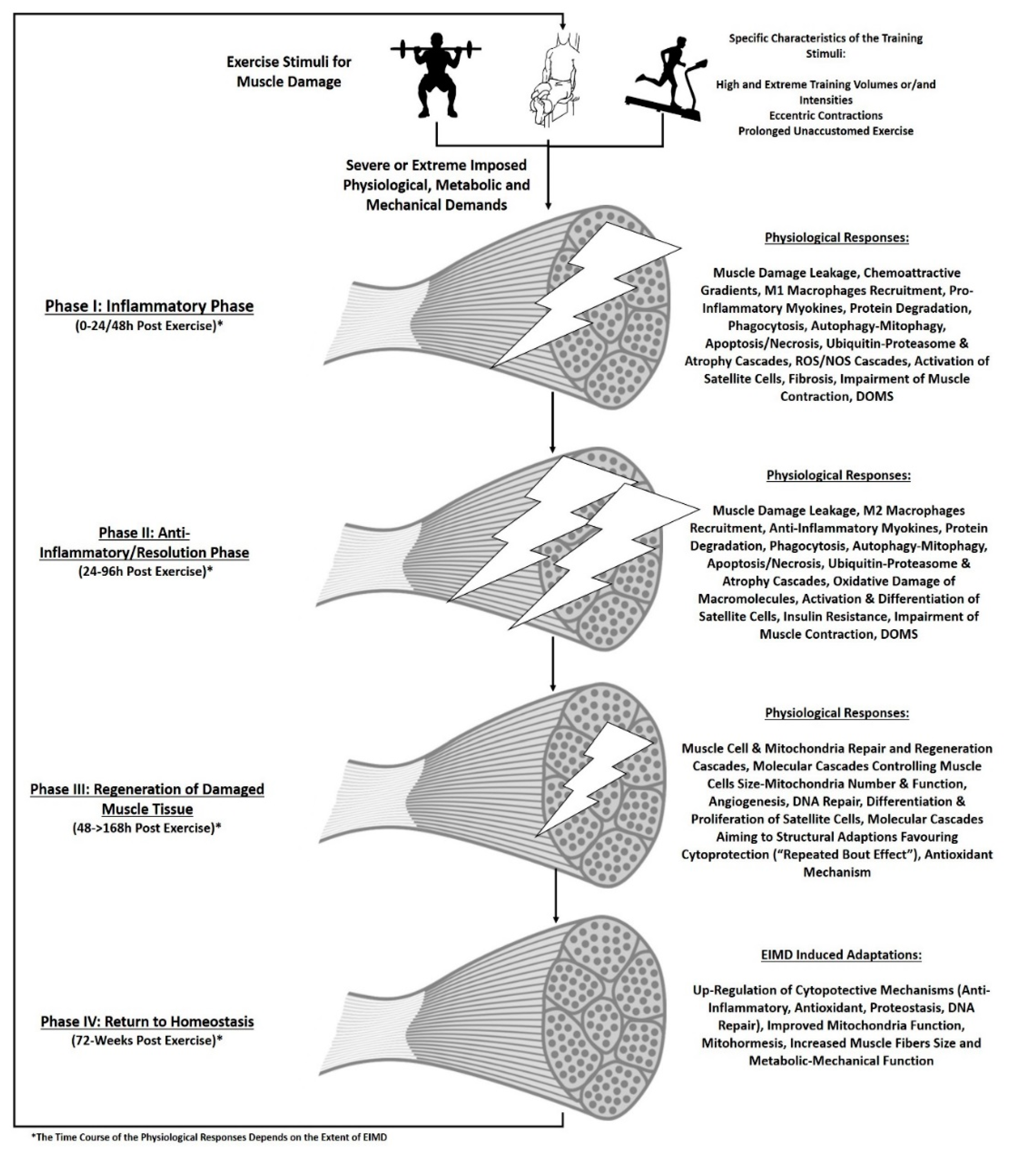
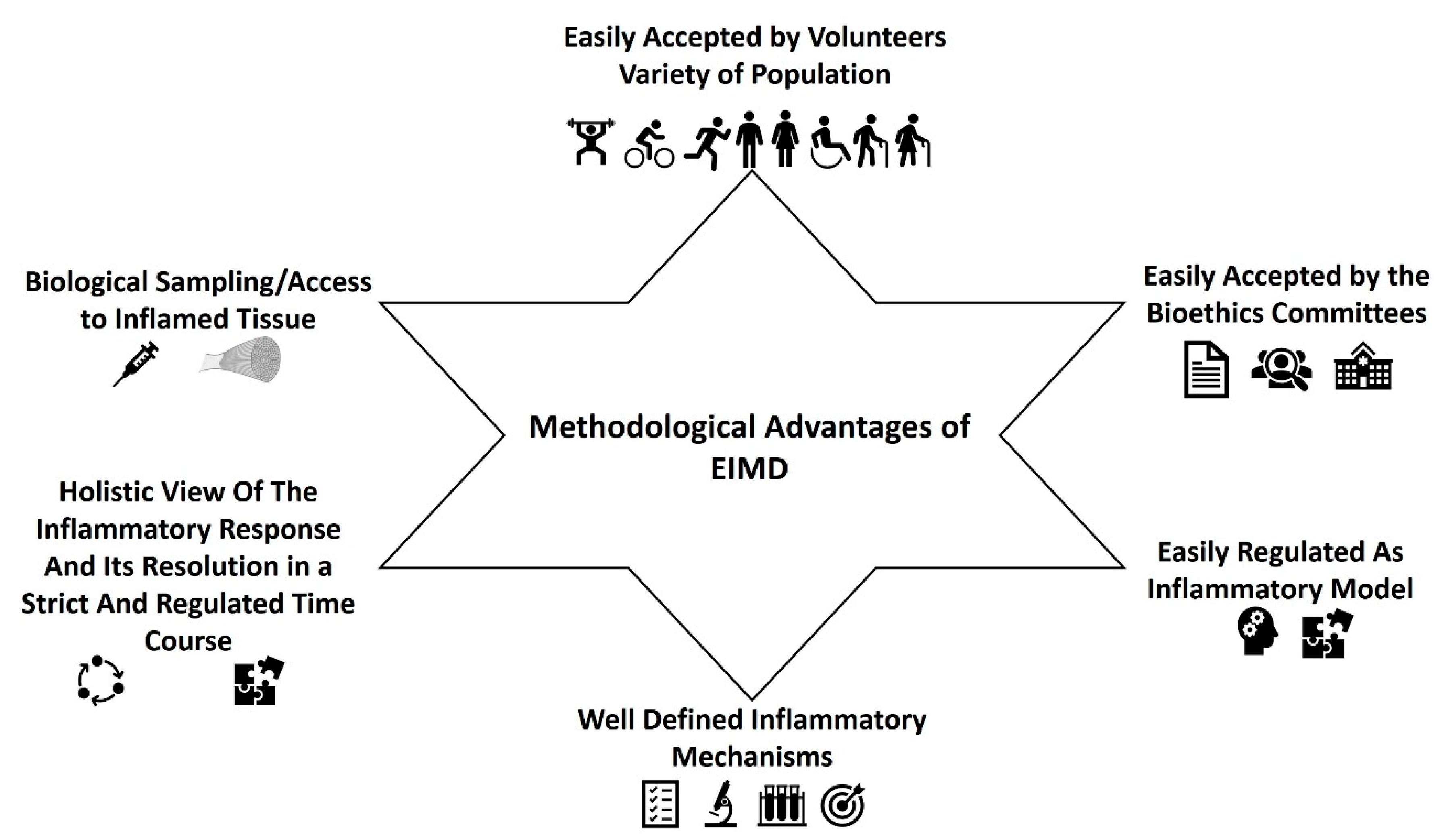
Subclinical, low-grade, inflammation is one of the main pathophysiological mechanisms underlying the majority of chronic and non-communicable diseases. Several methodological approaches have been applied for the assessment of the anti-inflammatory properties of nutrition, however, their impact in human body remains uncertain, because of the fact that the majority of the studies reporting anti-inflammatory effect of dietary patterns, have been performed under laboratory settings and/or in animal models. Thus, the extrapolation of these results to humans is risky. It is therefore obvious that the development of an inflammatory model in humans, by which we could induce inflammatory responses to humans in a regulated, specific, and non-harmful way, could greatly facilitate the estimation of the anti-inflammatory properties of diet in a more physiological way and mechanistically relevant way. We believe that exercise-induced muscle damage (EIMD) could serve as such a model, either in studies investigating the homeostatic responses of individuals under inflammatory stimuli or for the estimation of the anti-inflammatory or pro-inflammatory potential of dietary patterns, foods, supplements, nutrients, or phytochemicals. Thus, in this review we discuss the possibility of exercise-induced muscle damage being an inflammation model suitable for the assessment of the anti-inflammatory properties of diet in humans.
Keywords: oxidative stress; experimental model; anti-inflammatory diets; inflammatory response; chronic inflammation; low grade chronic inflammation; inflammatory models oxidative stress; experimental model; anti-inflammatory diets; inflammatory response; chronic inflammation; low grade chronic inflammation; inflammatory models