Role of Organ-Specific Endothelial Cells in Melanoma Adhesion Patterns
 ,
, 
 and
and
Abstract
1. Introduction
2. Materials and Methods
2.1. Melanoma Cell Lines and Cell Cultures
2.2. Endothelial Cell Cultures
2.3. Melanoma Tissue Samples
2.4. Fluorescent Labeling of Melanoma Cells
2.5. In Vitro Quantitative Adhesion Assay
2.6. Separation of Adherent and Non-Adherent Melanoma Cells
2.7. RNA Isolation and Quantitative Real-Time PCR
2.8. Statistical Analysis
3. Results
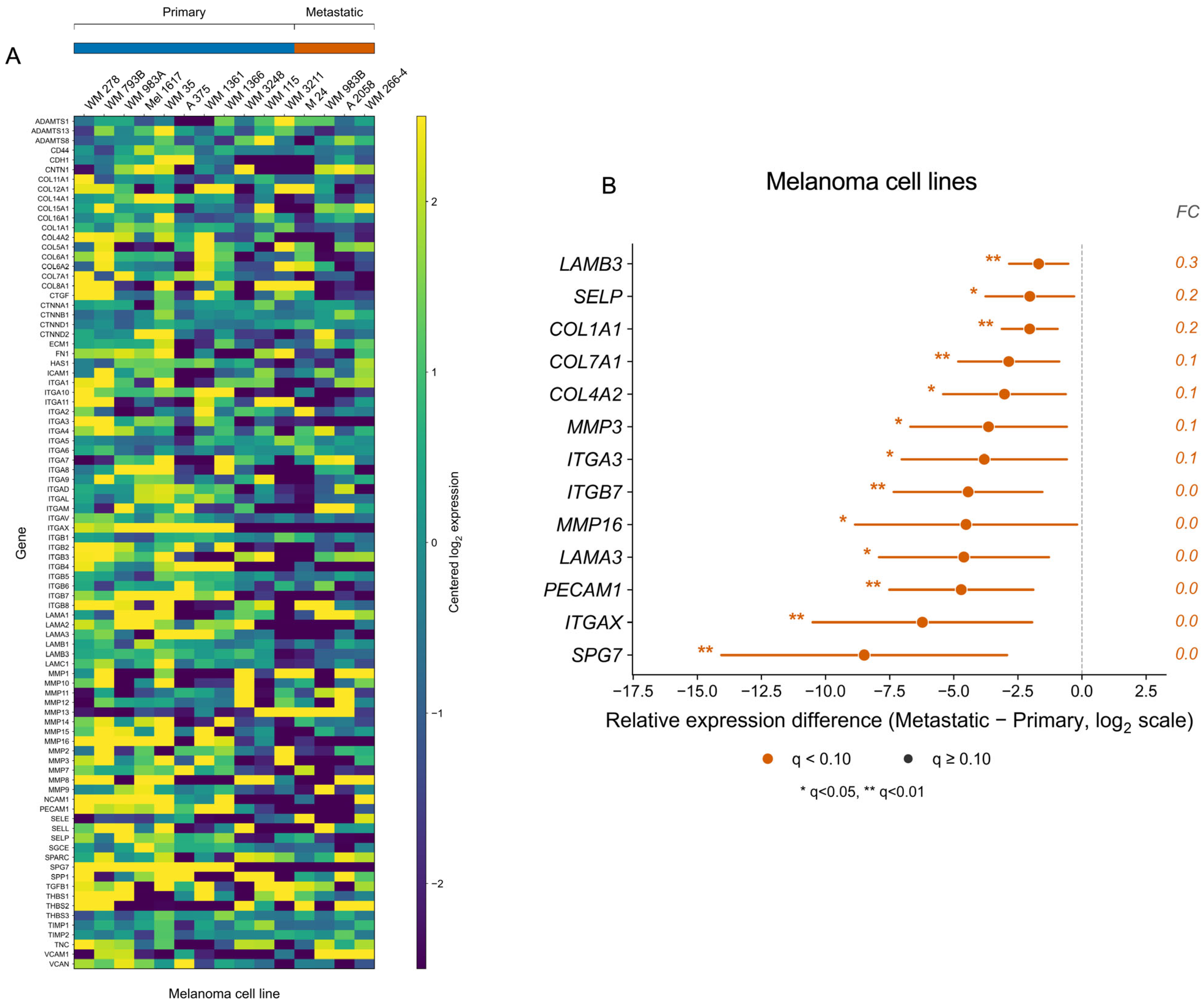
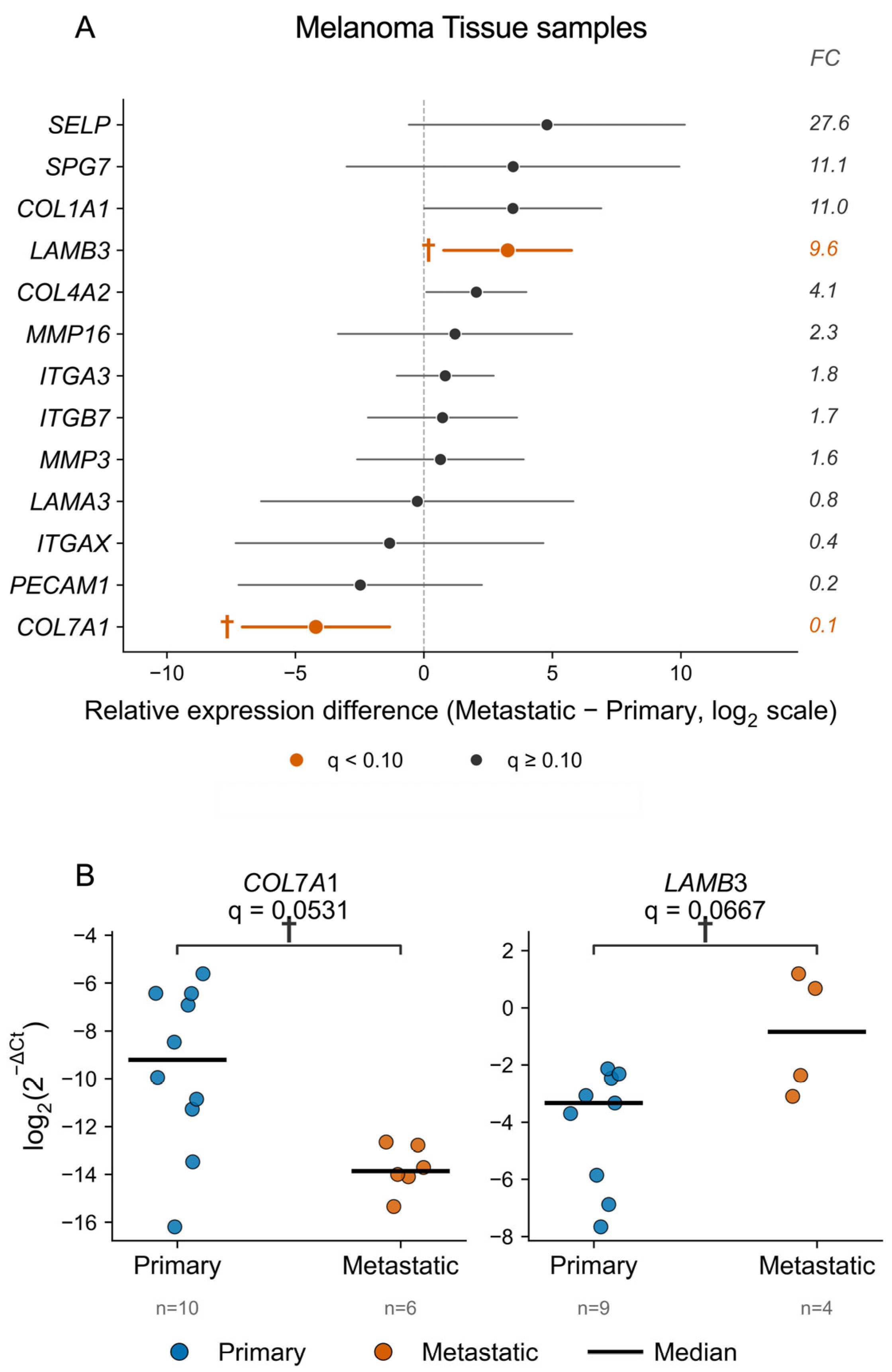
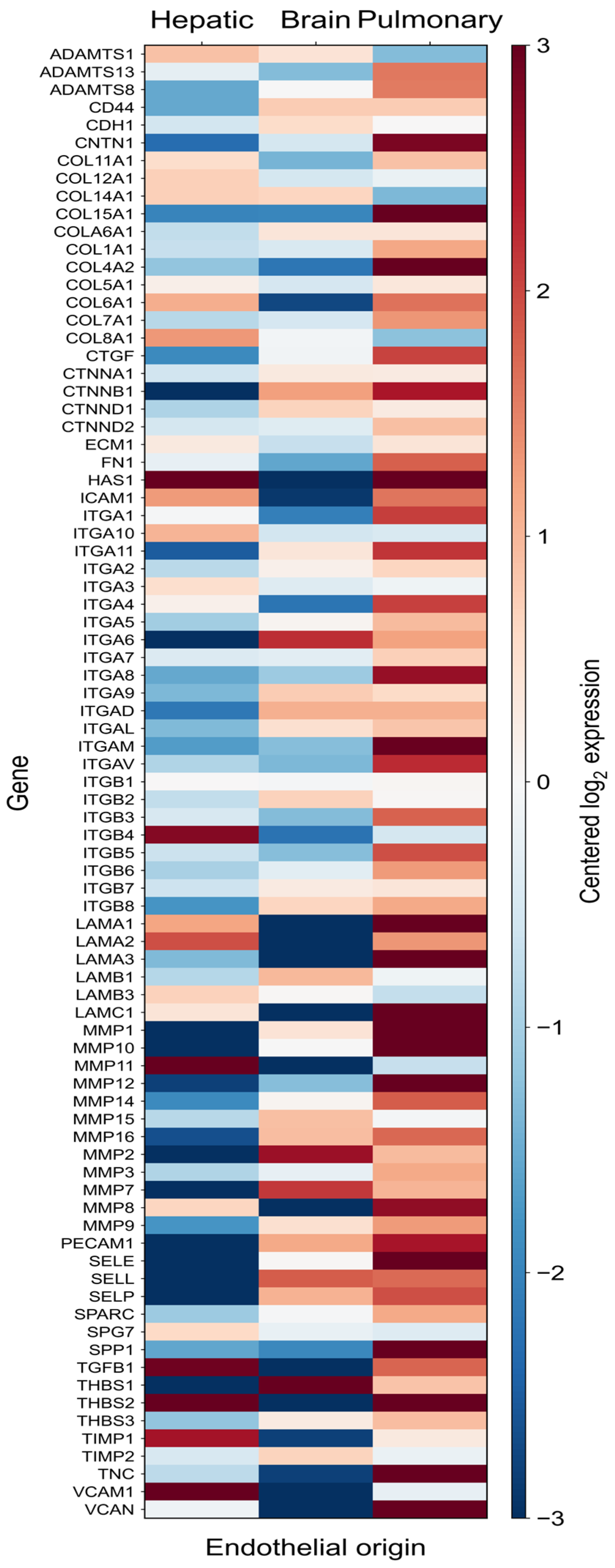
3.1. Gene Expression Patterns of Adhesion- and ECM-Related Genes in Melanoma Cell Lines, Melanoma Tumor Samples, and Endothelial Cells
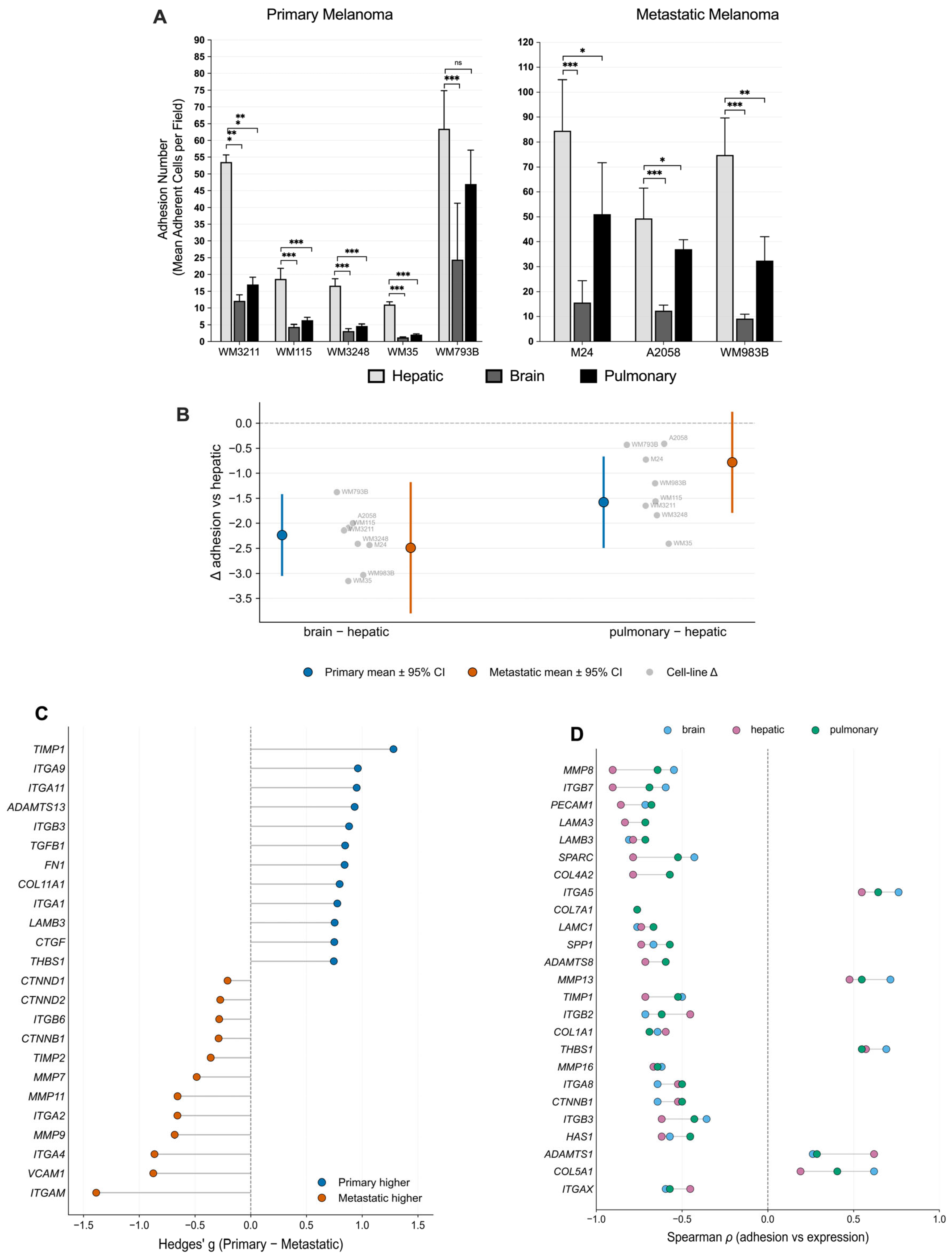
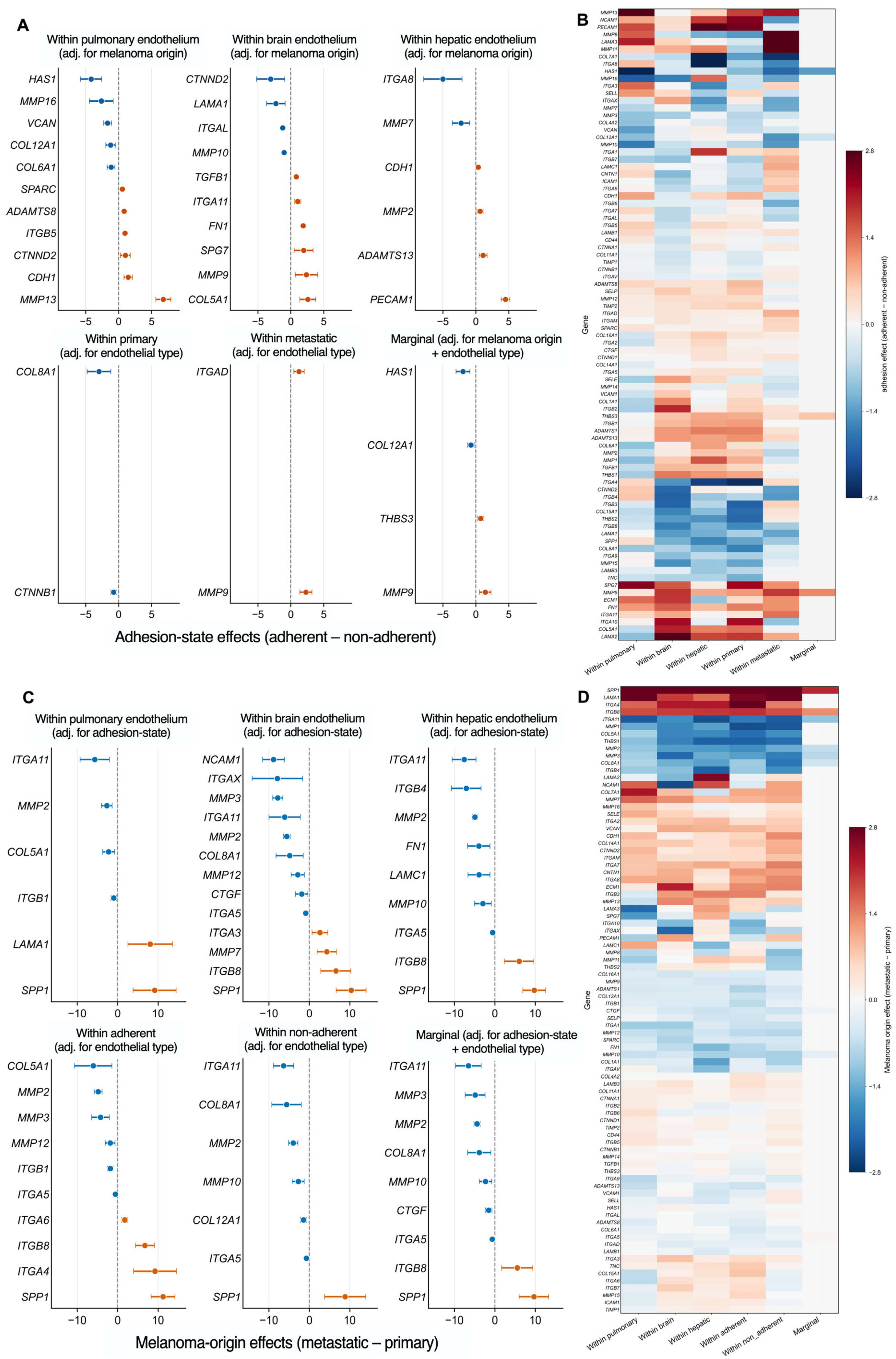
3.2. Identification of Adhesion Molecular Patterns in Melanoma Cell Lines and Associated Gene Expression Profiles Across Brain, Hepatic, and Pulmonary Endothelial Types
3.3. Characterizing the Endothelial-Dependent Gene Expression Shifts in Primary and Metastatic Melanoma Cells
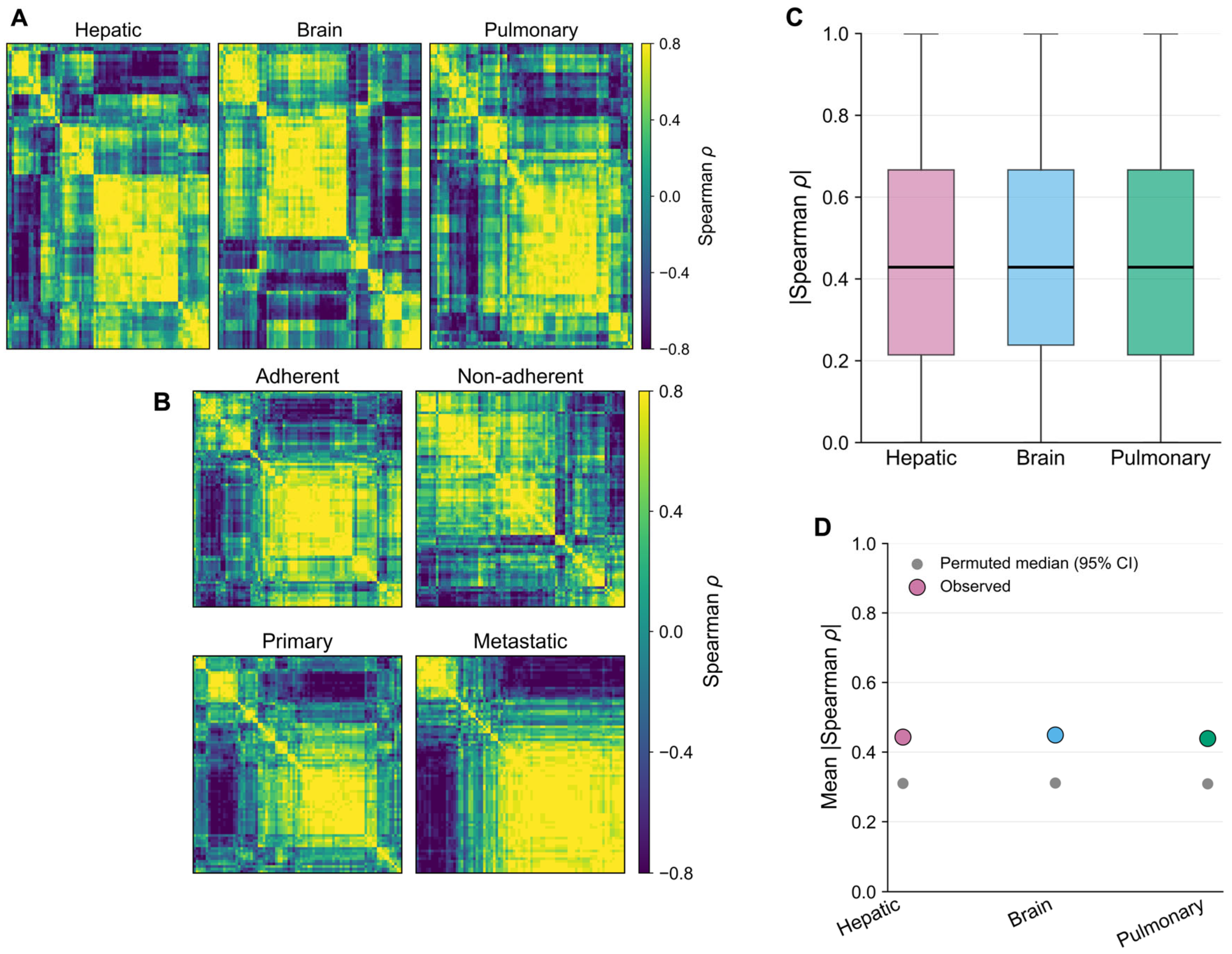
3.4. Divergent Gene Co-Expression Patterns in Melanoma Across Distinct Endothelial Types
4. Discussion
5. Conclusions
Supplementary Materials
Author Contributions
Funding
Institutional Review Board Statement
Data Availability Statement
Conflicts of Interest
Abbreviations
| ECGS | Endothelial cell growth supplement |
| ECM | Extracellular matrix/Endothelial cell medium |
| EDTA | Ethylenediaminetetraacetic acid |
| FBS | Fetal bovine serum |
| FDR | False discovery rate |
| FFPE | Formalin-fixed paraffin-embedded |
| HINT-I | Human Integrin Signaling Primer Library |
| ICAM-1 | Intercellular adhesion molecule 1 |
| LMM | Linear mixed-effect model |
| MAPK | Mitogen-activated protein kinase |
| MCAM/CD146 | Melanoma cell adhesion molecule |
| PECAM-1 | Platelet endothelial cell adhesion molecule 1 |
| PI3K–AKT | Phosphoinositide 3-kinase—Protein kinase B |
| REML | Restricted maximum likelihood |
| VCAM-1 | Vascular cell adhesion molecule 1 |
References
- Jenkins, R.W.; Fisher, D.E. Treatment of Advanced Melanoma in 2020 and Beyond. J. Investig. Dermatol. 2021, 141, 23–31. [Google Scholar] [CrossRef] [PubMed]
- Slominski, A.; Wortsman, J.; Carlson, A.J.; Matsuoka, L.Y.; Balch, C.M.; Mihm, M.C. Malignant Melanoma. Arch. Pathol. Lab. Med. 2001, 125, 1295–1306. [Google Scholar] [CrossRef] [PubMed]
- Abbas, O.; Miller, D.D.; Bhawan, J. Cutaneous Malignant Melanoma: Update on Diagnostic and Prognostic Biomarkers. Am. J. Dermatopathol. 2014, 36, 363–379. [Google Scholar] [CrossRef] [PubMed]
- Carr, S.; Smith, C.; Wernberg, J. Epidemiology and Risk Factors of Melanoma. Surg. Clin. N. Am. 2020, 100, 1–12. [Google Scholar] [CrossRef] [PubMed]
- Druskovich, C.; Kelley, J.; Aubrey, J.; Palladino, L.; Wright, G.P. A Review of Melanoma Subtypes: Genetic and Treatment Considerations. J. Surg. Oncol. 2025, 131, 356–364. [Google Scholar] [CrossRef] [PubMed]
- Hanahan, D.; Weinberg, R.A. The Hallmarks of Cancer. Cell 2000, 100, 57–70. [Google Scholar] [CrossRef] [PubMed]
- Nguyen, D.X.; Bos, P.D.; Massagué, J. Metastasis: From Dissemination to Organ-Specific Colonization. Nat. Rev. Cancer 2009, 9, 274–284. [Google Scholar] [CrossRef] [PubMed]
- Al-Mehdi, A.B.; Tozawa, K.; Fisher, A.B.; Shientag, L.; Lee, A.; Muschel, R.J. Intravascular Origin of Metastasis from the Proliferation of Endothelium-Attached Tumor Cells: A New Model for Metastasis. Nat. Med. 2000, 6, 100–102. [Google Scholar] [CrossRef] [PubMed]
- Wang, H.; Fu, W.; Im, J.H.; Zhou, Z.; Santoro, S.A.; Iyer, V.; DiPersio, C.M.; Yu, Q.-C.; Quaranta, V.; Al-Mehdi, A.; et al. Tumor Cell A3β1 Integrin and Vascular Laminin-5 Mediate Pulmonary Arrest and Metastasis. J. Cell Biol. 2004, 164, 935–941. [Google Scholar] [CrossRef] [PubMed]
- Schlüter, K.; Gassmann, P.; Enns, A.; Korb, T.; Hemping-Bovenkerk, A.; Hölzen, J.; Haier, J. Organ-Specific Metastatic Tumor Cell Adhesion and Extravasation of Colon Carcinoma Cells with Different Metastatic Potential. Am. J. Pathol. 2006, 169, 1064–1073. [Google Scholar] [CrossRef] [PubMed]
- Chambers, A.F.; Groom, A.C.; MacDonald, I.C. Dissemination and Growth of Cancer Cells in Metastatic Sites. Nat. Rev. Cancer 2002, 2, 563–572. [Google Scholar] [CrossRef] [PubMed]
- Yayan, J.; Franke, K.-J.; Berger, M.; Windisch, W.; Rasche, K. Adhesion, Metastasis, and Inhibition of Cancer Cells: A Comprehensive Review. Mol. Biol. Rep. 2024, 51, 165. [Google Scholar] [CrossRef] [PubMed]
- Chriqui, L.-E.; Cavin, S.; Perentes, J.Y. Dual Implication of Endothelial Adhesion Molecules in Tumor Progression and Cancer Immunity. Cell Adhes. Migr. 2025, 19, 2472308. [Google Scholar] [CrossRef] [PubMed]
- Bombeli, T.; Schwartz, B.R.; Harlan, J.M. Adhesion of Activated Platelets to Endothelial Cells: Evidence for a GPIIbIIIa-Dependent Bridging Mechanism and Novel Roles for Endothelial Intercellular Adhesion Molecule 1 (ICAM-1), Avβ3 Integrin, and GPIbα. J. Exp. Med. 1998, 187, 329–339. [Google Scholar] [CrossRef] [PubMed]
- Amos, S.E.; Choi, Y.S. The Cancer Microenvironment: Mechanical Challenges of the Metastatic Cascade. Front. Bioeng. Biotechnol. 2021, 9, 625859. [Google Scholar] [CrossRef] [PubMed]
- Koroknai, V.; Szász, I.; Várvölgyi, T.; Emri, G.; Fodor, Á.; Balázs, M. Cytokine and Chemokine-Associated Signatures Underlying Dermal Invasion and Skin Metastasis in Melanoma. Int. J. Mol. Sci. 2025, 26, 9334. [Google Scholar] [CrossRef] [PubMed]
- Ludwig, B.S.; Kessler, H.; Kossatz, S.; Reuning, U. RGD-Binding Integrins Revisited: How Recently Discovered Functions and Novel Synthetic Ligands (Re-)Shape an Ever-Evolving Field. Cancers 2021, 13, 1711. [Google Scholar] [CrossRef] [PubMed]
- Pang, X.; He, X.; Qiu, Z.; Zhang, H.; Xie, R.; Liu, Z.; Gu, Y.; Zhao, N.; Xiang, Q.; Cui, Y. Targeting Integrin Pathways: Mechanisms and Advances in Therapy. Signal Transduct. Target. Ther. 2023, 8, 1. [Google Scholar] [CrossRef] [PubMed]
- Hamidi, H.; Ivaska, J. Every Step of the Way: Integrins in Cancer Progression and Metastasis. Nat. Rev. Cancer 2018, 18, 533–548, Erratum in: Nat. Rev. Cancer 2019, 19, 179.. [Google Scholar] [CrossRef] [PubMed]
- Niland, S.; Riscanevo, A.X.; Eble, J.A. Matrix Metalloproteinases Shape the Tumor Microenvironment in Cancer Progression. Int. J. Mol. Sci. 2021, 23, 146. [Google Scholar] [CrossRef] [PubMed]
- Liu, F.; Wu, Q.; Dong, Z.; Liu, K. Integrins in Cancer: Emerging Mechanisms and Therapeutic Opportunities. Pharmacol. Ther. 2023, 247, 108458. [Google Scholar] [CrossRef] [PubMed]
- Schlippe, M.V.; Marshall, J.F.; Perry, P.; Stone, M.; Zhu, A.J.; Hart, I.R. Functional Interaction between E-Cadherin and Av-Containing Integrins in Carcinoma Cells. J. Cell Sci. 2000, 113, 425–437. [Google Scholar] [CrossRef] [PubMed]
- White, D.E.; Kurpios, N.A.; Zuo, D.; Hassell, J.A.; Blaess, S.; Mueller, U.; Muller, W.J. Targeted Disruption of Β1-Integrin in a Transgenic Mouse Model of Human Breast Cancer Reveals an Essential Role in Mammary Tumor Induction. Cancer Cell 2004, 6, 159–170. [Google Scholar] [CrossRef] [PubMed]
- Zhou, P.; Erfani, S.; Liu, Z.; Jia, C.; Chen, Y.; Xu, B.; Deng, X.; Alfáro, J.E.; Chen, L.; Napier, D.; et al. CD151-A3β1 Integrin Complexes Are Prognostic Markers of Glioblastoma and Cooperate with EGFR to Drive Tumor Cell Motility and Invasion. Oncotarget 2015, 6, 29675–29693. [Google Scholar] [CrossRef] [PubMed]
- Mei, H.; Campbell, J.M.; Paddock, C.M.; Lertkiatmongkol, P.; Mosesson, M.W.; Albrecht, R.; Newman, P.J. Regulation of Endothelial Cell Barrier Function by Antibody-Driven Affinity Modulation of Platelet Endothelial Cell Adhesion Molecule-1 (PECAM-1). J. Biol. Chem. 2014, 289, 20836–20844. [Google Scholar] [CrossRef] [PubMed]
- Coppo, R.; Orso, F.; Virga, F.; Dalmasso, A.; Baruffaldi, D.; Nie, L.; Clapero, F.; Dettori, D.; Quirico, L.; Grassi, E.; et al. ESDN Inhibits Melanoma Progression by Blocking E-Selectin Expression in Endothelial Cells via STAT3. Cancer Lett. 2021, 510, 13–23. [Google Scholar] [CrossRef] [PubMed]
- Park, J.-Y.; Park, H.-M.; Kim, S.; Jeon, K.-B.; Lim, C.-M.; Hong, J.T.; Yoon, D.-Y. Human IL-32θA94V Mutant Attenuates Monocyte-Endothelial Adhesion by Suppressing the Expression of ICAM-1 and VCAM-1 via Binding to Cell Surface Receptor Integrin αVβ3 and αVβ6 in TNF-α-Stimulated HUVECs. Front. Immunol. 2023, 14, 1160301. [Google Scholar] [CrossRef] [PubMed]
- Giavazzi, R.; Foppolo, M.; Dossi, R.; Remuzzi, A. Rolling and Adhesion of Human Tumor Cells on Vascular Endothelium under Physiological Flow Conditions. J. Clin. Investig. 1993, 92, 3038–3044. [Google Scholar] [CrossRef] [PubMed]
- Le, H.A.; Mayor, R. Cell–Matrix and Cell–Cell Interaction Mechanics in Guiding Migration. Biochem. Soc. Trans. 2023, 51, 1733–1745. [Google Scholar] [CrossRef] [PubMed]
- Hennigs, J.K.; Matuszcak, C.; Trepel, M.; Körbelin, J. Vascular Endothelial Cells: Heterogeneity and Targeting Approaches. Cells 2021, 10, 2712. [Google Scholar] [CrossRef] [PubMed]
- Papadimitriou, M.N.B.; Menter, D.G.; Konstantopoulos, K.; Nicolson, G.L.; McIntire, L.V. Integrin A4β1/VCAM-1 Pathway Mediates Primary Adhesion of RAW117 Lymphoma Cells to Hepatic Sinusoidal Endothelial Cells under Flow. Clin. Exp. Metastasis 1999, 17, 669–676. [Google Scholar] [CrossRef] [PubMed]
- Khalili, A.; Ahmad, M. A Review of Cell Adhesion Studies for Biomedical and Biological Applications. Int. J. Mol. Sci. 2015, 16, 18149–18184. [Google Scholar] [CrossRef] [PubMed]
- Benjamini, Y.; Krieger, A.M.; Yekutieli, D. Adaptive Linear Step-up Procedures That Control the False Discovery Rate. Biometrika 2006, 93, 491–507. [Google Scholar] [CrossRef]
- Sung, H.; Ferlay, J.; Siegel, R.L.; Laversanne, M.; Soerjomataram, I.; Jemal, A.; Bray, F. Global Cancer Statistics 2020: GLOBOCAN Estimates of Incidence and Mortality Worldwide for 36 Cancers in 185 Countries. CA Cancer J. Clin. 2021, 71, 209–249. [Google Scholar] [CrossRef] [PubMed]
- Hartmann, T.N. Editorial: Metabolism and Cell Adhesion in Cancer. Front. Cell Dev. Biol. 2022, 10, 871471. [Google Scholar] [CrossRef] [PubMed]
- Jassam, S.; Maherally, Z.; Smith, J.; Ashkan, K.; Roncaroli, F.; Fillmore, H.; Pilkington, G. CD15s/CD62E Interaction Mediates the Adhesion of Non-Small Cell Lung Cancer Cells on Brain Endothelial Cells: Implications for Cerebral Metastasis. Int. J. Mol. Sci. 2017, 18, 1474. [Google Scholar] [CrossRef] [PubMed]
- Tas, F. Metastatic Behavior in Melanoma: Timing, Pattern, Survival, and Influencing Factors. J. Oncol. 2012, 2012, 647684. [Google Scholar] [CrossRef] [PubMed]
- Leiter, U.; Meier, F.; Schittek, B.; Garbe, C. The Natural Course of Cutaneous Melanoma. J. Surg. Oncol. 2004, 86, 172–178. [Google Scholar] [CrossRef] [PubMed]
- Wouters, J.; Kalender-Atak, Z.; Minnoye, L.; Spanier, K.I.; De Waegeneer, M.; Bravo González-Blas, C.; Mauduit, D.; Davie, K.; Hulselmans, G.; Najem, A.; et al. Robust Gene Expression Programs Underlie Recurrent Cell States and Phenotype Switching in Melanoma. Nat. Cell Biol. 2020, 22, 986–998. [Google Scholar] [CrossRef] [PubMed]
- Martins, V.L.; Vyas, J.J.; Chen, M.; Purdie, K.; Mein, C.A.; South, A.P.; Storey, A.; McGrath, J.A.; O’Toole, E.A. Increased Invasive Behaviour in Cutaneous Squamous Cell Carcinoma with Loss of Basement-Membrane Type VII Collagen. J. Cell Sci. 2009, 122, 1788–1799. [Google Scholar] [CrossRef] [PubMed]
- Tsuruta, D.; Kobayashi, H.; Imanishi, H.; Sugawara, K.; Ishii, M.; Jones, J. Laminin-332-Integrin Interaction: A Target For Cancer Therapy? Curr. Med. Chem. 2008, 15, 1968–1975. [Google Scholar] [CrossRef] [PubMed]
- Gillet, J.-P.; Varma, S.; Gottesman, M.M. The Clinical Relevance of Cancer Cell Lines. JNCI J. Natl. Cancer Inst. 2013, 105, 452–458. [Google Scholar] [CrossRef] [PubMed]
- Aran, D.; Sirota, M.; Butte, A.J. Systematic Pan-Cancer Analysis of Tumour Purity. Nat. Commun. 2015, 6, 8971, Erratum in Nat. Commun.. 2016, 7, 10707. [Google Scholar] [CrossRef] [PubMed]
- Sandberg, R.; Ernberg, I. Assessment of Tumor Characteristic Gene Expression in Cell Lines Using a Tissue Similarity Index (TSI). Proc. Natl. Acad. Sci. USA 2005, 102, 2052–2057. [Google Scholar] [CrossRef] [PubMed]
- Joyce, J.A.; Pollard, J.W. Microenvironmental Regulation of Metastasis. Nat. Rev. Cancer 2009, 9, 239–252. [Google Scholar] [CrossRef] [PubMed]
- Fu, Y.; Zhang, Y.; Lei, Z.; Liu, T.; Cai, T.; Wang, A.; Du, W.; Zeng, Y.; Zhu, J.; Liu, Z.; et al. Abnormally Activated OPN/Integrin αVβ3/FAK Signalling Is Responsible for EGFR-TKI Resistance in EGFR Mutant Non-Small-Cell Lung Cancer. J. Hematol. Oncol. 2020, 13, 169. [Google Scholar] [CrossRef] [PubMed]
- Kiss, T.; Jámbor, K.; Koroknai, V.; Szász, I.; Bárdos, H.; Mokánszki, A.; Ádány, R.; Balázs, M. Silencing Osteopontin Expression Inhibits Proliferation, Invasion and Induce Altered Protein Expression in Melanoma Cells. Pathol. Oncol. Res. 2021, 27, 581395. [Google Scholar] [CrossRef] [PubMed]
- Koroknai, V.; Szász, I.; Jámbor, K.; Balázs, M. Expression Pattern of Osteopontin Isoforms in Malignant Melanoma Cell Lines. Clin. Transl. Sci. 2024, 17, e13694. [Google Scholar] [CrossRef] [PubMed]
- Jámbor, K.; Koroknai, V.; Kiss, T.; Szász, I.; Pikó, P.; Balázs, M. Gene Expression Patterns of Osteopontin Isoforms and Integrins in Malignant Melanoma. Pathol. Oncol. Res. 2022, 28, 1610608. [Google Scholar] [CrossRef] [PubMed]
- Szász, I.; Koroknai, V.; Kiss, T.; Vízkeleti, L.; Ádány, R.; Balázs, M. Molecular Alterations Associated with Acquired Resistance to BRAFV600E Targeted Therapy in Melanoma Cells. Melanoma Res. 2019, 29, 390–400. [Google Scholar] [CrossRef] [PubMed]
- Meng, N.; Li, Y.; Jiang, P.; Bu, X.; Ding, J.; Wang, Y.; Zhou, X.; Yu, F.; Zhang, Y.; Zhang, J.; et al. A Comprehensive Pan-Cancer Analysis of the Tumorigenic Role of Matrix Metallopeptidase 7 (MMP7) Across Human Cancers. Front. Oncol. 2022, 12, 916907. [Google Scholar] [CrossRef] [PubMed]
- Khan, Z.; Marshall, J.F. The Role of Integrins in TGFβ Activation in the Tumour Stroma. Cell Tissue Res. 2016, 365, 657–673. [Google Scholar] [CrossRef] [PubMed]
- Khademi, R.; Malekzadeh, H.; Bahrami, S.; Saki, N.; Khademi, R.; Villa-Diaz, L.G. Regulation and Functions of A6-Integrin (CD49f) in Cancer Biology. Cancers 2023, 15, 3466. [Google Scholar] [CrossRef] [PubMed]
- Auguste, P.; Fallavollita, L.; Wang, N.; Burnier, J.; Bikfalvi, A.; Brodt, P. The Host Inflammatory Response Promotes Liver Metastasis by Increasing Tumor Cell Arrest and Extravasation. Am. J. Pathol. 2007, 170, 1781–1792. [Google Scholar] [CrossRef] [PubMed]
- Pober, J.S.; Sessa, W.C. Evolving Functions of Endothelial Cells in Inflammation. Nat. Rev. Immunol. 2007, 7, 803–815. [Google Scholar] [CrossRef] [PubMed]
- Humphries, J.D.; Byron, A.; Humphries, M.J. Integrin Ligands at a Glance. J. Cell Sci. 2006, 119, 3901–3903. [Google Scholar] [CrossRef] [PubMed]
- Hynes, R.O. Integrins. Cell 2002, 110, 673–687. [Google Scholar] [CrossRef] [PubMed]
- Boz Er, A.B.; Sheldrake, H.M.; Sutherland, M. Overcoming Vemurafenib Resistance in Metastatic Melanoma: Targeting Integrins to Improve Treatment Efficacy. Int. J. Mol. Sci. 2024, 25, 7946. [Google Scholar] [CrossRef] [PubMed]
- Ley, K.; Rivera-Nieves, J.; Sandborn, W.J.; Shattil, S. Integrin-Based Therapeutics: Biological Basis, Clinical Use and New Drugs. Nat. Rev. Drug Discov. 2016, 15, 173–183. [Google Scholar] [CrossRef] [PubMed]
- Kotteas, E.A.; Boulas, P.; Gkiozos, I.; Tsagkouli, S.; Tsoukalas, G.; Syrigos, K.N. The Intercellular Cell Adhesion Molecule-1 (Icam-1) in Lung Cancer: Implications for Disease Progression and Prognosis. Anticancer Res. 2014, 34, 4665–4672. [Google Scholar] [PubMed]
- Ley, K.; Laudanna, C.; Cybulsky, M.I.; Nourshargh, S. Getting to the Site of Inflammation: The Leukocyte Adhesion Cascade Updated. Nat. Rev. Immunol. 2007, 7, 678–689. [Google Scholar] [CrossRef] [PubMed]
- Mitchell, M.J.; King, M.R. Physical Biology in Cancer. 3. The Role of Cell Glycocalyx in Vascular Transport of Circulating Tumor Cells. Am. J. Physiol.-Cell Physiol. 2014, 306, C89–C97. [Google Scholar] [CrossRef] [PubMed]
- Hatherell, K.; Couraud, P.-O.; Romero, I.A.; Weksler, B.; Pilkington, G.J. Development of a Three-Dimensional, All-Human in Vitro Model of the Blood–Brain Barrier Using Mono-, Co-, and Tri-Cultivation Transwell Models. J. Neurosci. Methods 2011, 199, 223–229. [Google Scholar] [CrossRef] [PubMed]
- Aird, W.C. Phenotypic Heterogeneity of the Endothelium: II. Representative Vascular Beds. Circ. Res. 2007, 100, 174–190. [Google Scholar] [CrossRef] [PubMed]
- Morimoto, M.; Maishi, N.; Tsumita, T.; Alam, M.T.; Kikuchi, H.; Hida, Y.; Yoshioka, Y.; Ochiya, T.; Annan, D.A.; Takeda, R.; et al. miR-1246 in Tumor Extracellular Vesicles Promotes Metastasis via Increased Tumor Cell Adhesion and Endothelial Cell Barrier Destruction. Front. Oncol. 2023, 13, 973871. [Google Scholar] [CrossRef] [PubMed]
- Follain, G.; Osmani, N.; Azevedo, A.S.; Allio, G.; Mercier, L.; Karreman, M.A.; Solecki, G.; Garcia Leòn, M.J.; Lefebvre, O.; Fekonja, N.; et al. Hemodynamic Forces Tune the Arrest, Adhesion, and Extravasation of Circulating Tumor Cells. Dev. Cell 2018, 45, 33–52.e12. [Google Scholar] [CrossRef] [PubMed]
- Azevedo, A.S.; Follain, G.; Patthabhiraman, S.; Harlepp, S.; Goetz, J.G. Metastasis of Circulating Tumor Cells: Favorable Soil or Suitable Biomechanics, or Both? Cell Adhes. Migr. 2015, 9, 345–356. [Google Scholar] [CrossRef] [PubMed]
- Bhatia, S.N.; Ingber, D.E. Microfluidic Organs-on-Chips. Nat. Biotechnol. 2014, 32, 760–772. [Google Scholar] [CrossRef] [PubMed]
- Chen, J.; Li, J.; Sun, Y. Microfluidic Approaches for Cancer Cell Detection, Characterization, and Separation. Lab. Chip 2012, 12, 1753. [Google Scholar] [CrossRef] [PubMed]



| Variable | Model | Contrast | Response Rate 1 | Mean Absolute Effect Size 2 |
|---|---|---|---|---|
| adhesion | context | adhesion | organ = brain | 0.11 | 0.46 |
| adhesion | context | adhesion | organ = hepatic | 0.07 | 0.44 |
| adhesion | context | adhesion | organ = pulmonary | 0.13 | 0.37 |
| adhesion | context | adhesion | origin = metastatic | 0.02 | 0.37 |
| adhesion | context | adhesion | origin = primary | 0.02 | 0.47 |
| adhesion | marginal | adhesion | marginal | 0.05 | 0.32 |
| origin | context | origin | adhesion = adherent | 0.12 | 0.80 |
| origin | context | origin | adhesion = non-adherent | 0.08 | 0.67 |
| origin | context | origin | organ = brain | 0.15 | 0.87 |
| origin | context | origin | organ = hepatic | 0.10 | 0.79 |
| origin | context | origin | organ = pulmonary | 0.07 | 0.60 |
| origin | marginal | origin | marginal | 0.10 | 0.63 |
| Model 1 | Contrast | Gene | Estimate 2 | −log10(q Value) 3 | Effect Size 4 |
|---|---|---|---|---|---|
| marginal | adhesion | marginal | HAS1 | −1.95 | 1.63 | −1.13 |
| marginal | adhesion | marginal | THBS3 | 0.74 | 1.31 | 0.89 |
| marginal | adhesion | marginal | MMP9 | 1.44 | 1.31 | 0.80 |
| context | adhesion | organ = brain | MMP9 | 2.37 | 1.28 | 1.33 |
| context | adhesion | organ = brain | TGFB1 | 0.83 | 7.25 | 1.12 |
| context | adhesion | organ = brain | CTTND2 | −3.06 | 1.33 | −1.09 |
| context | adhesion | organ = hepatic | PECAM1 | 4.52 | 37.98 | 1.59 |
| context | adhesion | organ = hepatic | ITGA8 | −5.00 | 1.87 | −1.23 |
| context | adhesion | organ = hepatic | MMP7 | −2.24 | 1.87 | −1.00 |
| context | adhesion | organ = pulmonary | HAS1 | −4.18 | 5.36 | −2.42 |
| context | adhesion | organ = pulmonary | MMP13 | 6.78 | 28.85 | 2.15 |
| context | adhesion | organ = pulmonary | MMP16 | −2.63 | 1.48 | −1.19 |
| context | adhesion | origin = metastatic | ITGAD | 1.24 | 1.03 | 1.22 |
| context | adhesion | origin = primary | COL8A1 | −2.99 | 1.33 | −0.97 |
| context | adhesion | origin = primary | CTNNB1 | −0.77 | 1.56 | −0.78 |
| marginal | origin | marginal | MMP2 | −4.40 | 26.90 | −1.82 |
| marginal | origin | marginal | ITGA11 | −6.54 | 2.96 | −1.78 |
| marginal | origin | marginal | SPP1 | 9.66 | 5.23 | 1.72 |
| context | origin | organ = brain | MMP3 | −7.80 | 32.50 | −2.09 |
| context | origin | organ = brain | ITGAX | −7.90 | 1.09 | −1.99 |
| context | origin | organ = brain | MMP7 | 4.31 | 2.28 | 1.91 |
| context | origin | organ = hepatic | ITGB4 | −7.06 | 2.49 | −1.62 |
| context | origin | organ = hepatic | LAMC1 | −3.91 | 1.33 | −1.61 |
| context | origin | organ = hepatic | FN1 | −3.97 | 1.33 | −1.49 |
| context | origin | organ = pulmonary | LAMA1 | 8.03 | 1.15 | 1.52 |
| context | origin | adhesion = adherent | ITGB1 | −1.81 | 5.40 | −1.74 |
| context | origin | adhesion = adherent | ITGA4 | 9.22 | 2.21 | 1.72 |
| context | origin | adhesion = adherent | COL5A1 | −6.03 | 1.09 | −1.59 |
| context | origin | adhesion = non-adherent | COL12A1 | −1.44 | 2.68 | −1.16 |
Disclaimer/Publisher’s Note: The statements, opinions and data contained in all publications are solely those of the individual author(s) and contributor(s) and not of MDPI and/or the editor(s). MDPI and/or the editor(s) disclaim responsibility for any injury to people or property resulting from any ideas, methods, instructions or products referred to in the content. |
© 2026 by the authors. Licensee MDPI, Basel, Switzerland. This article is an open access article distributed under the terms and conditions of the Creative Commons Attribution (CC BY) license.
Share and Cite
Hamdan, M.; Szász, I.; Várvölgyi, T.; Balázs, M.; Koroknai, V. Role of Organ-Specific Endothelial Cells in Melanoma Adhesion Patterns. Biomedicines 2026, 14, 1409. https://doi.org/10.3390/biomedicines14071409
Hamdan M, Szász I, Várvölgyi T, Balázs M, Koroknai V. Role of Organ-Specific Endothelial Cells in Melanoma Adhesion Patterns. Biomedicines. 2026; 14(7):1409. https://doi.org/10.3390/biomedicines14071409
Chicago/Turabian StyleHamdan, Marwa, István Szász, Tünde Várvölgyi, Margit Balázs, and Viktória Koroknai. 2026. "Role of Organ-Specific Endothelial Cells in Melanoma Adhesion Patterns" Biomedicines 14, no. 7: 1409. https://doi.org/10.3390/biomedicines14071409
APA StyleHamdan, M., Szász, I., Várvölgyi, T., Balázs, M., & Koroknai, V. (2026). Role of Organ-Specific Endothelial Cells in Melanoma Adhesion Patterns. Biomedicines, 14(7), 1409. https://doi.org/10.3390/biomedicines14071409