Article

Biophysical and Computational Insights into Alpha-1 Antitrypsin Aggregation and Its Inhibition by Natural Polyphenols

by
Tarique Sarwar
1,
Ahmed Abdur Rehman
2,
Hussain Arif
2,
Wanian M. Alwanian
1,
Hajed Obaid A. Alharbi
1 and
Arshad Husain Rahmani
1,*
1
Department of Medical Laboratories, College of Applied Medical Sciences, Qassim University, Buraydah 51452, Saudi Arabia
2
Department of Biochemistry, Faculty of Life Sciences, Aligarh Muslim University, Aligarh 202002, India
*
Author to whom correspondence should be addressed.
Biomedicines 2026, 14(6), 1310; https://doi.org/10.3390/biomedicines14061310

Submission received: 10 April 2026 / Revised: 22 May 2026 / Accepted: 7 June 2026 / Published: 9 June 2026

Abstract

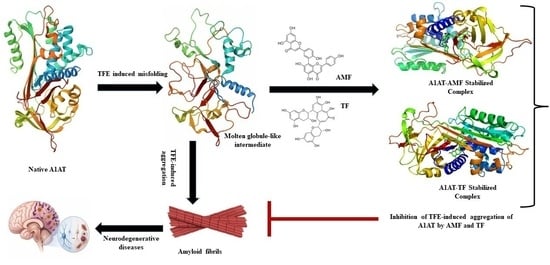
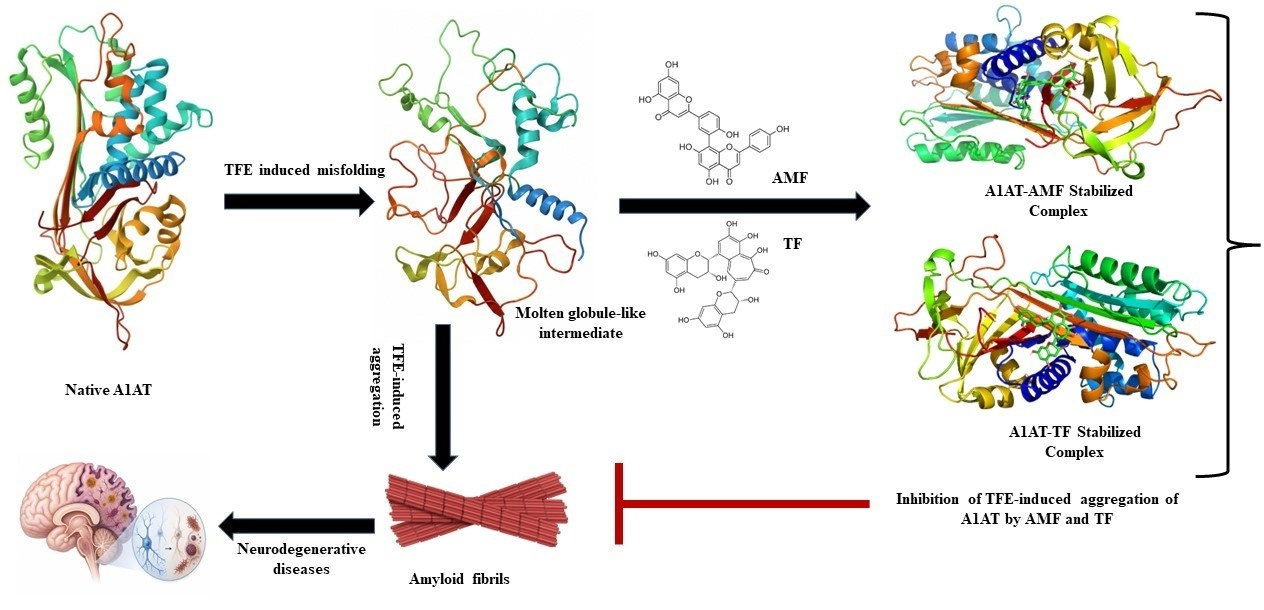
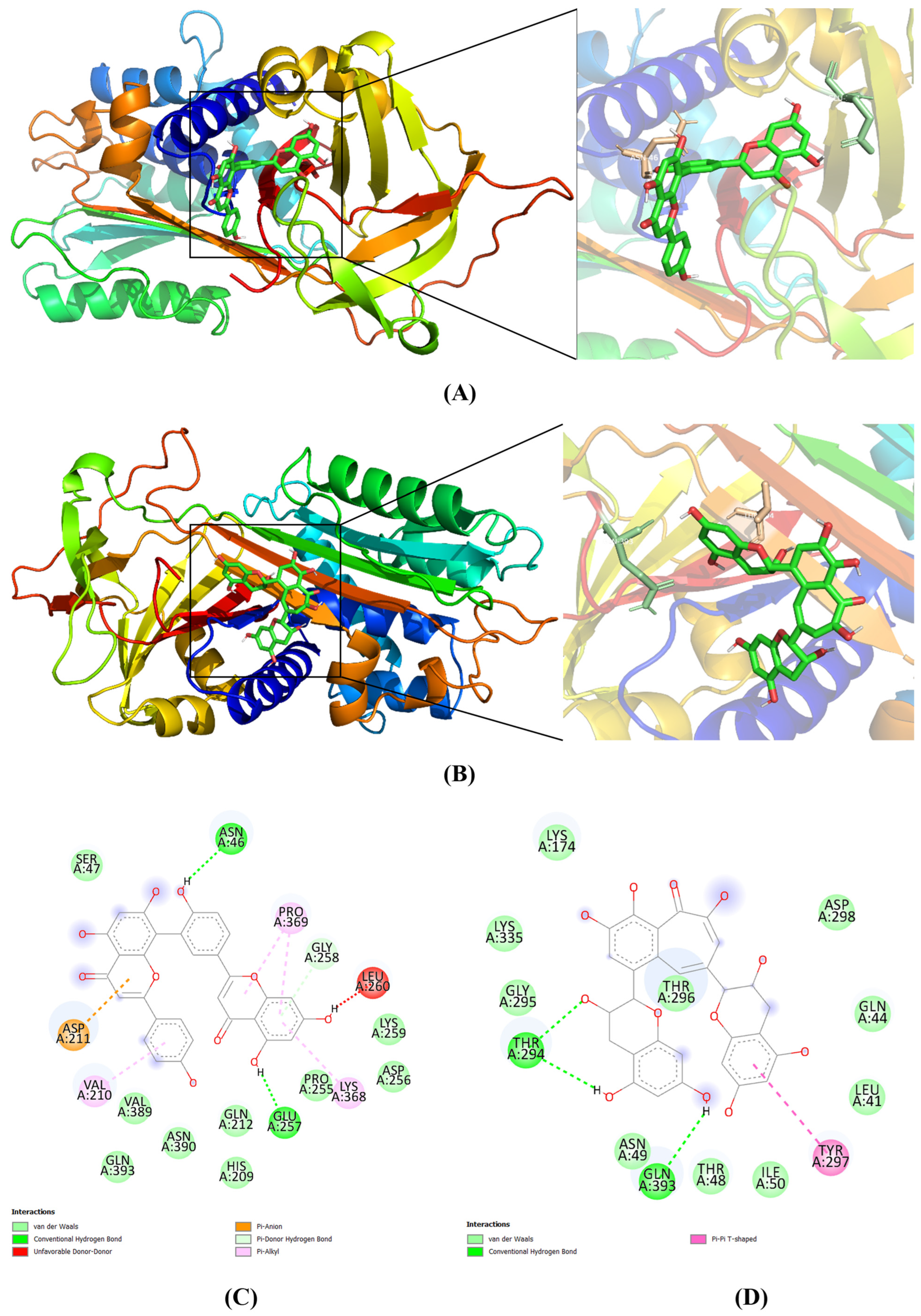
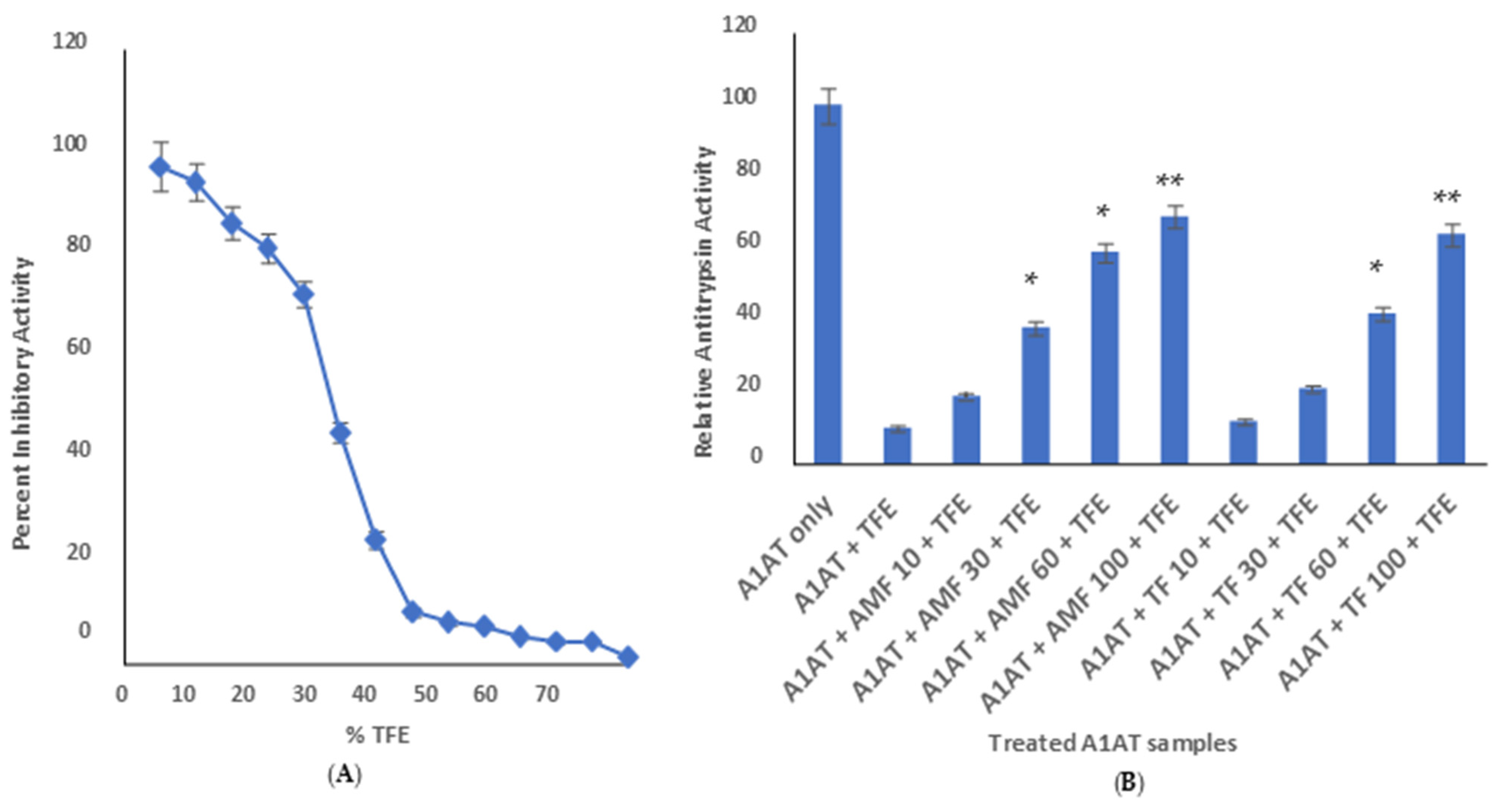
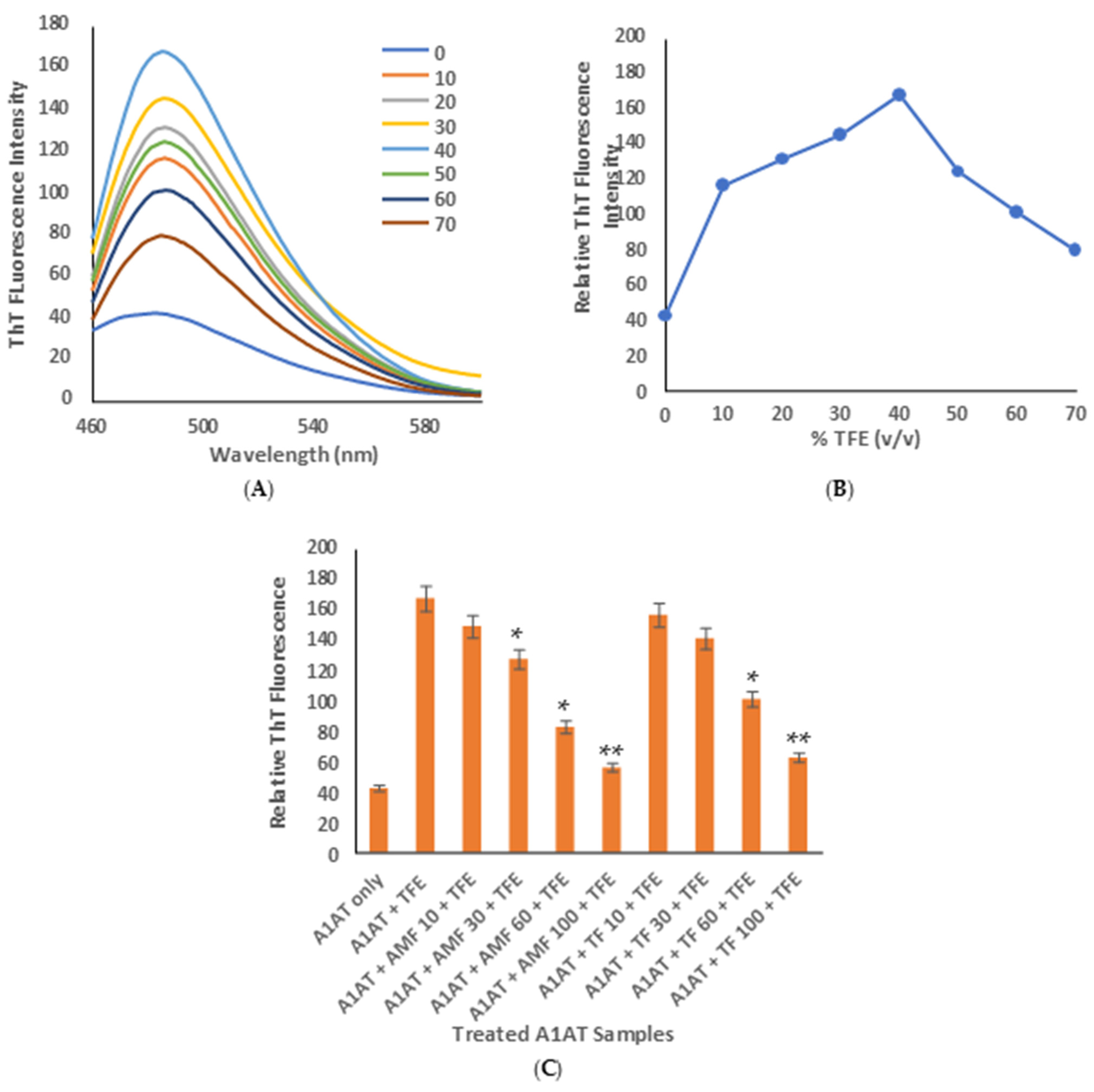
Background/Objectives: Protein misfolding and amyloid fibril formation underlie several degenerative diseases, including Alzheimer’s disease and Parkinson’s disease. Alpha-1 antitrypsin (A1AT), a serpin protein, is particularly prone to misfolding, with polymerization and aggregation implicated in alpha-1 antitrypsin deficiency and associated hepatic and pulmonary disorders. In this study, we examined the structural changes in A1AT induced by the fluorinated alcohol, trifluoroethanol (TFE), and assessed the inhibitory effects of two natural polyphenols, amentoflavone (AMF) and theaflavin (TF), on aggregation and fibril formation. Methods: A library of selected phytocompounds was virtually screened against the crystal structure of A1AT (PDB 3NE4) using AutoDock Vina to elucidate their binding affinity towards it. Based on binding affinities, two compounds, AMF and TF, were selected for further studies. Protein aggregation was induced with TFE, and the protective effects of AMF and TF were evaluated using protease inhibitory activity, intrinsic fluorescence, turbidity, Rayleigh scattering, ANS fluorescence, and ThT fluorescence assays. Furthermore, 100 ns molecular dynamics simulation and MM-PBSA calculations were performed to assess the stability and binding interactions of the A1AT–ligand complexes. Results: Pre-treatment of A1AT with AMF or TF significantly inhibited TFE-induced aggregation in a dose-dependent manner, with AMF being consistently more effective. ThT fluorescence analysis revealed a ~60–65% decrease in aggregate formation upon treatment with polyphenols, with IC50 values estimated at ~40 µM for AMF and ~50 µM for TF, both of which are statistically significant. Molecular docking and 100 ns molecular dynamics simulation also revealed stable A1AT–polyphenol interactions, with AMF exhibiting greater binding affinity and greater attenuation of solvent-induced conformational perturbation. Conclusions: Collectively, our findings show that TFE causes A1AT misfolding via a molten globule-like intermediate, resulting in fibril formation at 30–40% TFE, and natural polyphenols AMF and TF inhibited aggregation in a concentration-dependent manner. These observations suggest the potential of AMF and TF as lead scaffolds for anti-aggregation strategies, as modulators of amyloidogenic processes.
Keywords: alpha-1-antitrypsin; protein; amentoflavone; theaflavin; aggregation; molecular dynamics simulation; polyphenols; amyloid fibrils; molten globule; inhibition alpha-1-antitrypsin; protein; amentoflavone; theaflavin; aggregation; molecular dynamics simulation; polyphenols; amyloid fibrils; molten globule; inhibition
Graphical Abstract