ZIP7 Drives Glycolytic Reprogramming and Lactate-Mediated Immune Remodeling in Lung Adenocarcinoma Through GSK3β-NRF2 Signaling

Abstract
1. Introduction
2. Materials and Methods
2.1. Cell Lines and Culture Conditions
2.2. Genetic Manipulations
2.3. Conditioned Medium Preparation and Macrophage Polarization Induction
2.4. Immunohistochemistry (IHC) and Immunofluorescence (IF)
2.5. Human Samples Collection
2.6. Western Blot
2.7. RNA Extraction and Quantitative PCR
2.8. ROS Detection
2.9. Cell Proliferation Assays
2.10. Apoptosis Assay
2.11. Cell Migration and Invasion
2.12. Colony Formation Assay
2.13. Glycolysis Assays
2.14. In Vivo Tumor Models
2.15. Bioinformatics Analysis
2.16. Statistical Analysis
3. Results
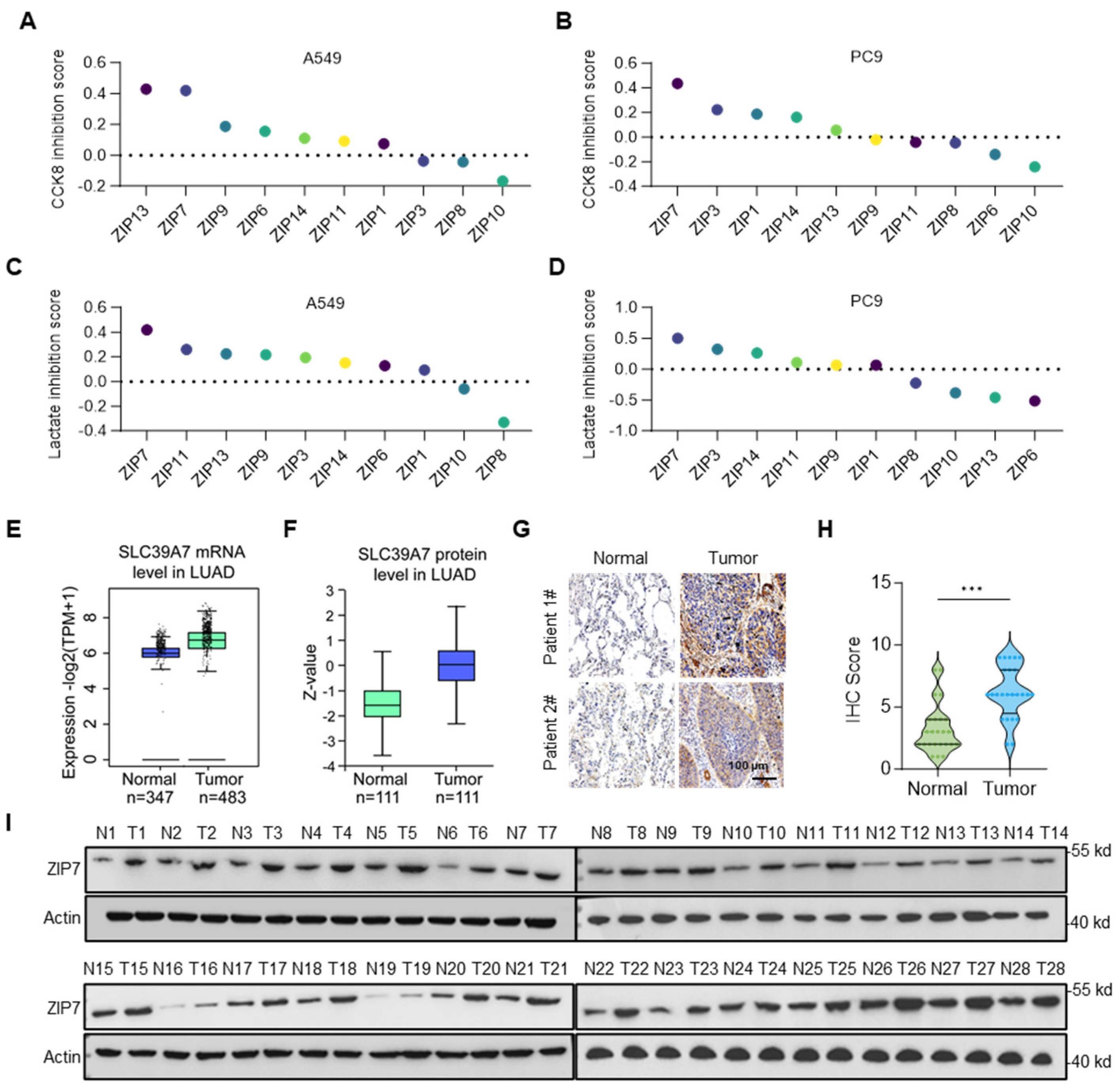
3.1. Functional Screening Identifies ZIP7 as a Glycolysis-Linked Dependency in LUAD
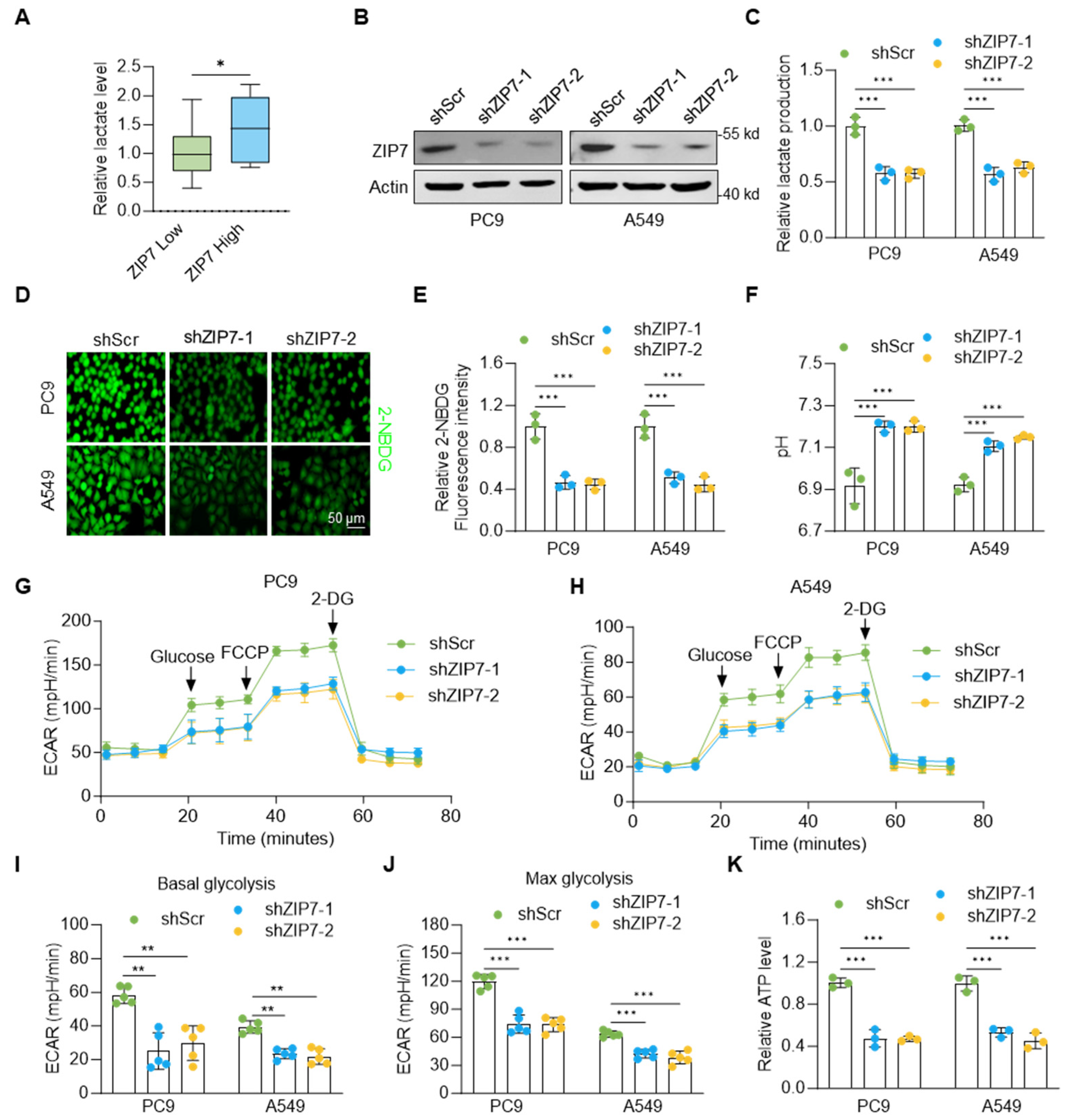
3.2. ZIP7 Sustains Aerobic Glycolysis and Glycolytic ATP Production
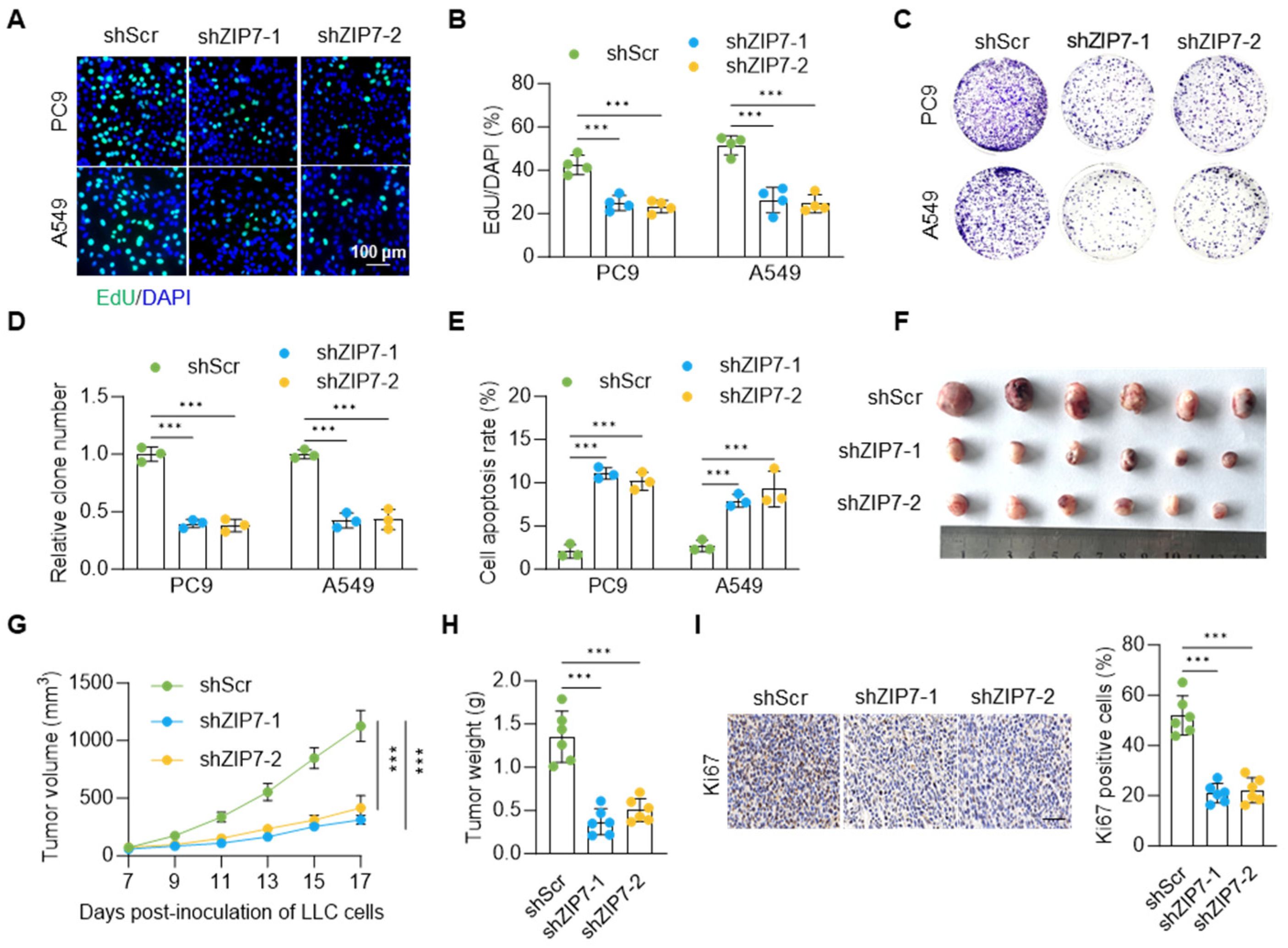
3.3. ZIP7 Contributes to LUAD Growth and Metastasis In Vitro and In Vivo
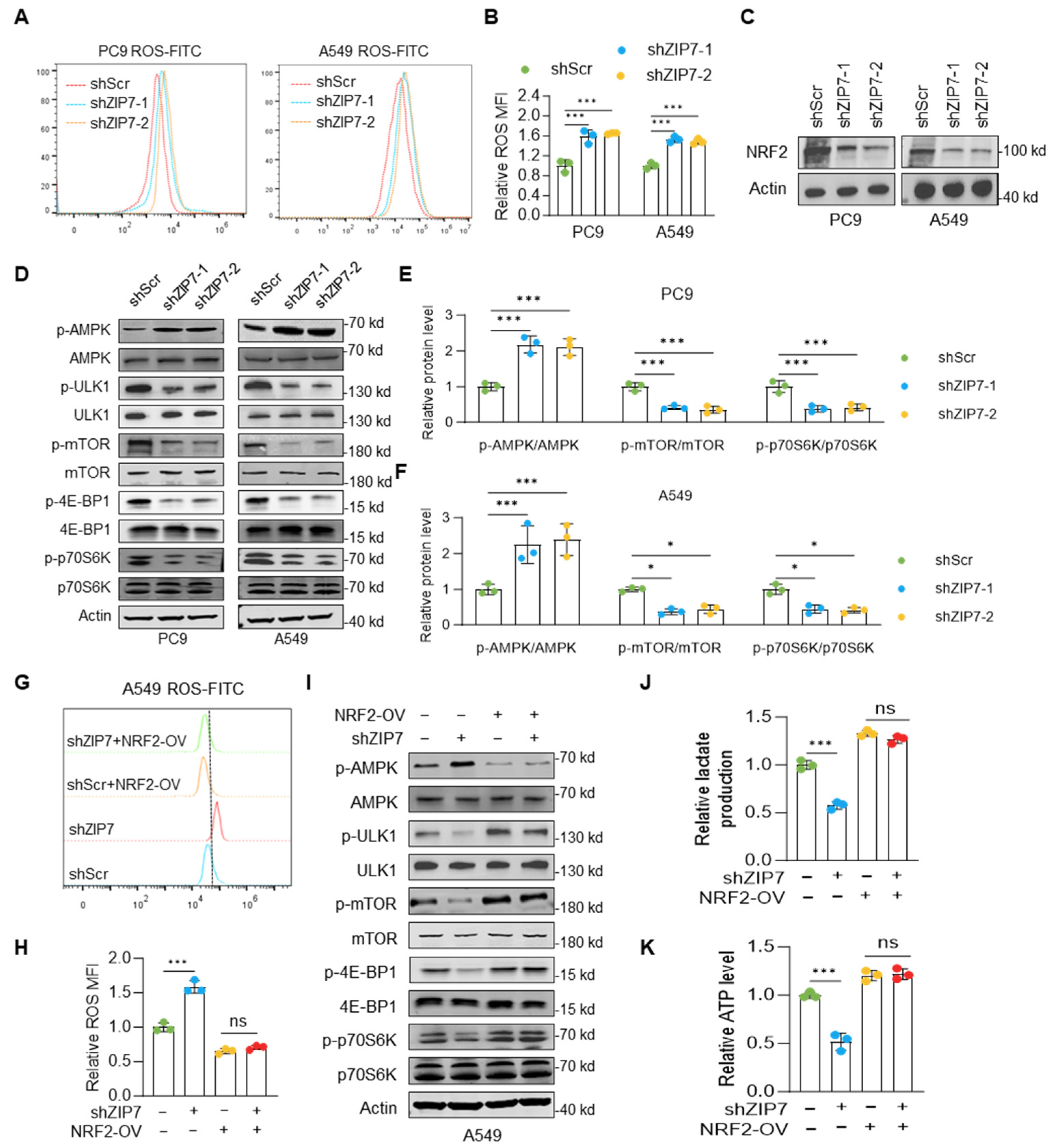
3.4. ZIP7 Restrains ROS Accumulation and Sustains NRF2-Dependent AMPK-mTOR Signaling
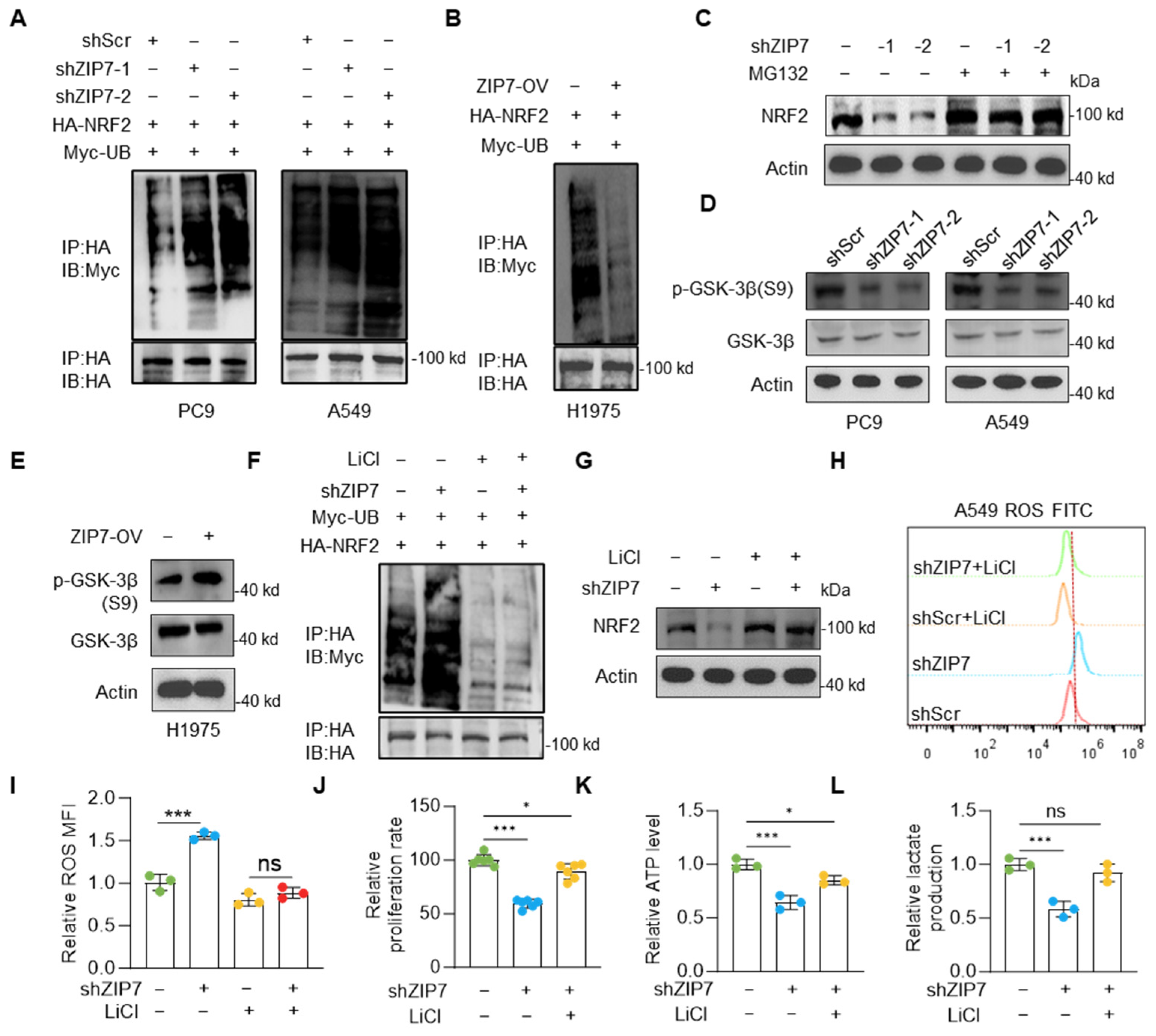
3.5. ZIP7 Stabilizes NRF2 Through Inhibition of GSK3β-Dependent Ubiquitination
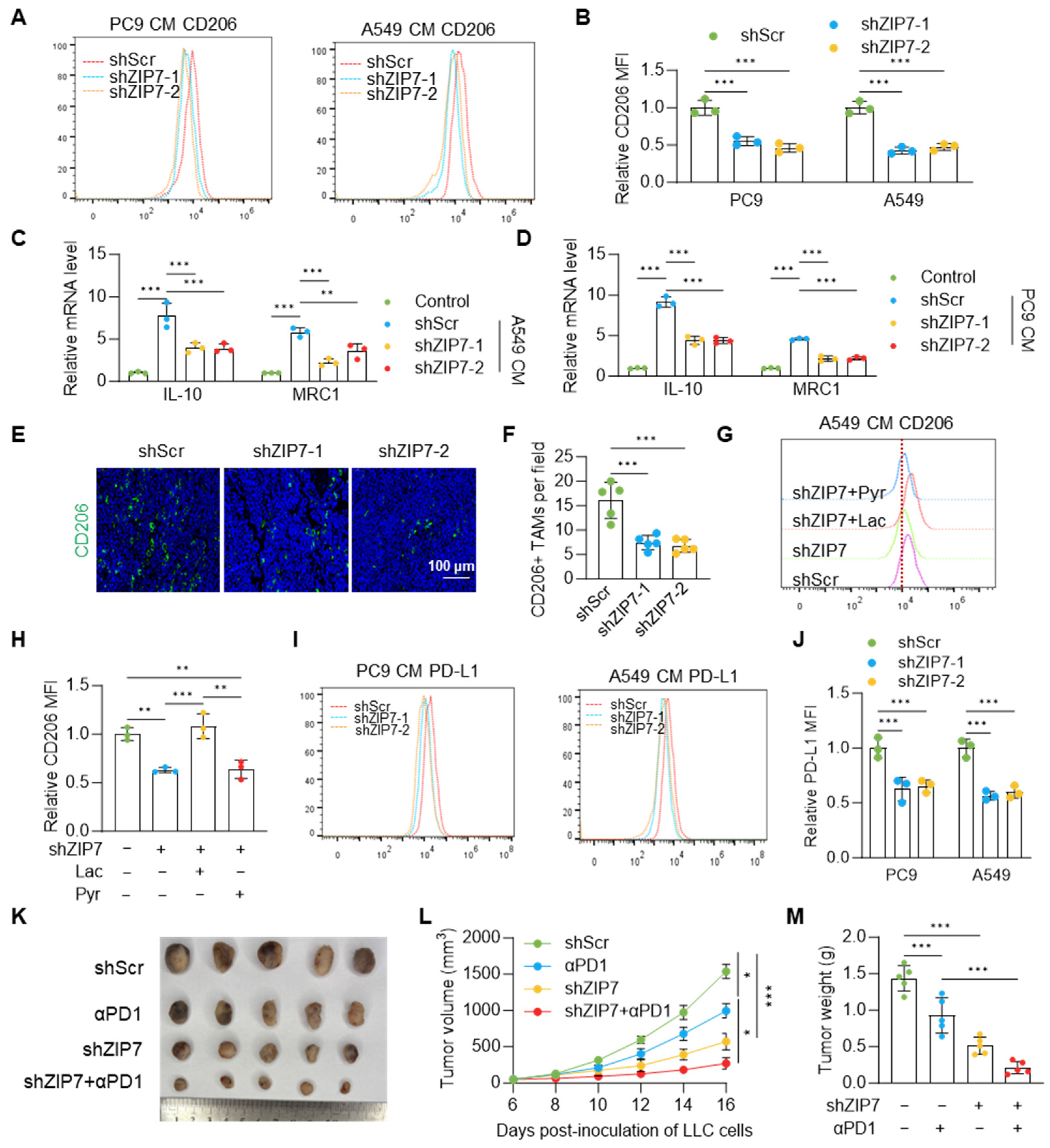
3.6. ZIP7-Driven Lactate Accumulation Programs M2-like Macrophage Polarization and PD-L1 Expression
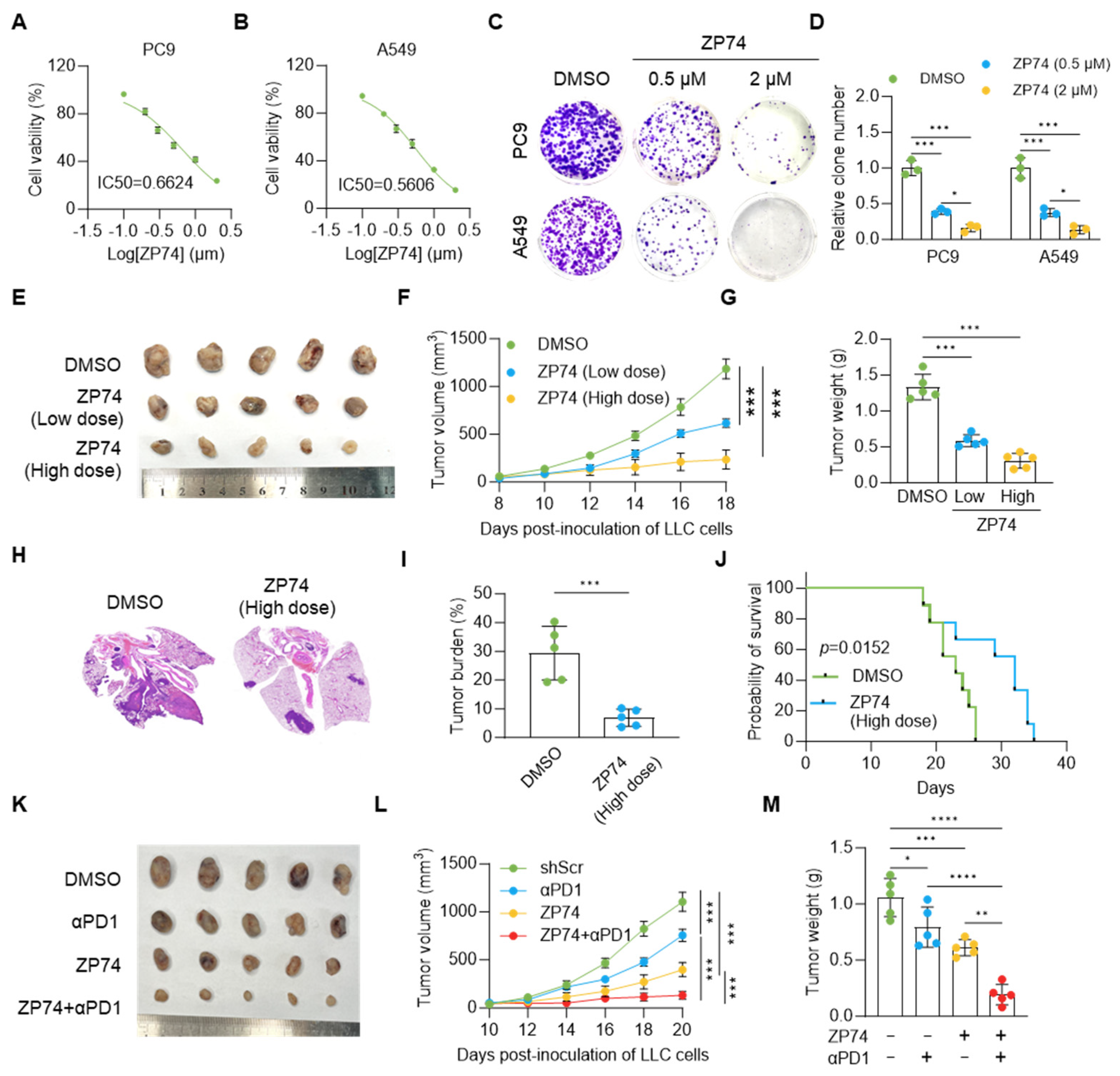
3.7. Pharmacologic Inhibition of ZIP7 by ZP74 Suppresses LUAD Progression and Enhances Immunotherapy Efficacy
4. Discussion
5. Conclusions
Supplementary Materials
Author Contributions
Funding
Institutional Review Board Statement
Informed Consent Statement
Data Availability Statement
Acknowledgments
Conflicts of Interest
Abbreviations
| AMPK | AMP-activated protein kinase |
| ATP | Adenosine triphosphate |
| CCK-8 | Cell Counting Kit-8 |
| CM | Conditioned medium |
| DAB | 3,3′-Diaminobenzidine |
| DAPI | 4′,6-Diamidino-2-phenylindole |
| DCFH-DA | 2′,7′-Dichlorodihydrofluorescein diacetate |
| ECAR | Extracellular acidification rate |
| ECL | Enhanced chemiluminescence |
| EdU | 5-Ethynyl-2′-deoxyuridine |
| ER | Endoplasmic reticulum |
| FBS | Fetal bovine serum |
| GSK3β | Glycogen synthase kinase 3 beta |
| HO1 | Heme oxygenase 1 |
| HRP | Horseradish peroxidase |
| IB | Immunoblotting |
| IF | Immunofluorescence |
| IHC | Immunohistochemistry |
| IL-10 | Interleukin-10 |
| IP | Immunoprecipitation |
| LUAD | Lung adenocarcinoma |
| MFI | Mean fluorescence intensity |
| MRC1 | Mannose receptor C-type 1 |
| mTOR | Mechanistic target of rapamycin |
| NRF2 | Nuclear factor erythroid 2-related factor 2 |
| NQO1 | NAD(P)H quinone dehydrogenase 1 |
| PBS | Phosphate-buffered saline |
| PD-1 | Programmed cell death protein 1 |
| PD-L1 | Programmed death-ligand 1 |
| PI | Propidium iodide |
| PVDF | Polyvinylidene fluoride |
| qPCR | Quantitative polymerase chain reaction |
| ROS | Reactive oxygen species |
| RPMI | Roswell Park Memorial Institute medium |
| SDS-PAGE | Sodium dodecyl sulfate-polyacrylamide gel electrophoresis |
| siRNA | Small interfering RNA |
| TAMs | Tumor-associated macrophages |
| WB | Western blot |
| ZIP7 | Zinc transporter 7 (SLC39A7) |
References
- Ge, E.J.; Bush, A.I.; Casini, A.; Cobine, P.A.; Cross, J.R.; DeNicola, G.M. Connecting copper and cancer: From transition metal signalling to metalloplasia. Nat. Rev. Cancer 2022, 22, 102–113. [Google Scholar] [CrossRef] [PubMed]
- Zheng, J.; Conrad, M. Ferroptosis: When metabolism meets cell death. Physiol. Rev. 2025, 105, 651–706. [Google Scholar] [CrossRef]
- Hu, J.; Jiang, X. When essential metal elements become culprits-Cuproptosis in focus. Cancer Cell 2025, 43, 1181–1185. [Google Scholar] [CrossRef]
- Fan, Y.; Wu, T.; Zhao, L.; Jia, R.; Ren, H.; Hou, W. From zinc homeostasis to disease progression: Unveiling the neurodegenerative puzzle. Pharmacol. Res. 2024, 199, 107039. [Google Scholar] [CrossRef]
- Chen, B.; Yu, P.; Chan, W.N.; Xie, F.; Zhang, Y.; Liang, L. Cellular zinc metabolism and zinc signaling: From biological functions to diseases and therapeutic targets. Signal Transduct. Target. Ther. 2024, 9, 6. [Google Scholar] [CrossRef]
- Guo, H.; Wang, S.; Zhang, H.; Li, J.; Wang, C.; Liu, Z. Research progress on the molecular structure, function, and application in tumor therapy of zinc transporter ZIP4. Int. J. Biol. Sci. 2024, 20, 5910–5924. [Google Scholar] [CrossRef] [PubMed]
- Fendt, S. 100 years of the Warburg effect: A cancer metabolism endeavor. Cell 2024, 187, 3824–3828. [Google Scholar] [CrossRef]
- Elia, I.; Rowe, J.H.; Johnson, S.; Joshi, S.; Notarangelo, G.; Kurmi, K. Tumor cells dictate anti-tumor immune responses by altering pyruvate utilization and succinate signaling in CD8(+) T cells. Cell Metab. 2022, 34, 1137–1150. [Google Scholar] [CrossRef]
- Cai, J.; Song, L.; Zhang, F.; Wu, S.; Zhu, G.; Zhang, P. Targeting SRSF10 might inhibit M2 macrophage polarization and potentiate anti-PD-1 therapy in hepatocellular carcinoma. Cancer Commun. 2024, 44, 1231–1260. [Google Scholar] [CrossRef]
- Sica, A.; Strauss, L.; Consonni, F.M.; Travelli, C.; Genazzani, A.; Porta, C. Metabolic regulation of suppressive myeloid cells in cancer. Cytokine Growth Factor. Rev. 2017, 35, 27–35. [Google Scholar] [CrossRef] [PubMed]
- Sheline, C.T.; Behrens, M.M.; Choi, D.W. Zinc-induced cortical neuronal death: Contribution of energy failure attributable to loss of NAD(+) and inhibition of glycolysis. J. Neurosci. 2000, 20, 3139–3146. [Google Scholar] [CrossRef]
- Kim, B.; Kim, H.Y.; Yoon, B.R.; Yeo, J.; In Jung, J.; Yu, K. Cytoplasmic zinc promotes IL-1β production by monocytes and macrophages through mTORC1-induced glycolysis in rheumatoid arthritis. Sci. Signal. 2022, 15, eabi7400. [Google Scholar] [CrossRef]
- Yang, P.; Li, H.; Sun, M.; Guo, X.; Liao, Y.; Hu, M. Zinc deficiency drives ferroptosis resistance by lactate production in esophageal squamous cell carcinoma. Free Radic. Biol. Med. 2024, 213, 512–522. [Google Scholar] [CrossRef]
- Ge, J.; Fang, C.; Tan, H.; Zhan, M.; Gu, M.; Ni, J. Endogenous Zinc-Ion-Triggered In Situ Gelation Enables Zn Capture to Reprogram Benign Hyperplastic Prostate Microenvironment and Shrink Prostate. Adv. Mater. 2024, 36, e2307796. [Google Scholar] [CrossRef]
- Kambe, T.; Tsuji, T.; Hashimoto, A.; Itsumura, N. The Physiological, Biochemical, and Molecular Roles of Zinc Transporters in Zinc Homeostasis and Metabolism. Physiol. Rev. 2015, 95, 749–784. [Google Scholar] [CrossRef]
- Nolin, E.; Gans, S.; Llamas, L.; Bandyopadhyay, S.; Brittain, S.M.; Bernasconi-Elias, P. Discovery of a ZIP7 inhibitor from a Notch pathway screen. Nat. Chem. Biol. 2019, 15, 179–188. [Google Scholar] [CrossRef] [PubMed]
- Taylor, K.M.; Vichova, P.; Jordan, N.; Hiscox, S.; Hendley, R.; Nicholson, R.I. ZIP7-mediated intracellular zinc transport contributes to aberrant growth factor signaling in antihormone-resistant breast cancer Cells. Endocrinology 2008, 149, 4912–4920. [Google Scholar] [CrossRef] [PubMed]
- Dong, Q.; Xiong, Y.; Xiong, S.; Yuan, R.; Li, S.; Zhan, X. Zinc-dependent Zip7-MAZ-MYBL2 axis promotes prostate cancer metastasis. Commun. Biol. 2026, 10, 1038. [Google Scholar] [CrossRef] [PubMed]
- Zhang, Y.; Bai, J.; Si, W.; Yuan, S.; Li, Y.; Chen, X. SLC39A7, regulated by miR-139-5p, induces cell proliferation, migration and inhibits apoptosis in gastric cancer via Akt/mTOR signaling pathway. Biosci. Rep. 2020, 40, BSR20200041. [Google Scholar] [CrossRef]
- Chen, P.; Wu, J.; Xu, Y.; Ding, C.C.; Mestre, A.A.; Lin, C. Zinc transporter ZIP7 is a novel determinant of ferroptosis. Cell Death Dis. 2021, 12, 198. [Google Scholar] [CrossRef]
- Allemani, C.; Matsuda, T.; Di Carlo, V.; Harewood, R.; Matz, M.; Nik, I. M Global surveillance of trends in cancer survival 2000-14 (CONCORD-3): Analysis of individual records for 37 513 025 patients diagnosed with one of 18 cancers from 322 population-based registries in 71 countries. Lancet 2018, 391, 1023–1075. [Google Scholar] [CrossRef]
- Melocchi, V.; Dama, E.; Mazzarelli, F.; Cuttano, R.; Colangelo, T.; Di Candia, L. Aggressive early-stage lung adenocarcinoma is characterized by epithelial cell plasticity with acquirement of stem-like traits and immune evasion phenotype. Oncogene 2021, 40, 4980–4991. [Google Scholar] [CrossRef]
- Gatenby, R.A.; Gillies, R.J. Why do cancers have high aerobic glycolysis? Nat. Rev. Cancer 2004, 4, 891–899. [Google Scholar] [CrossRef] [PubMed]
- Szwed, A.; Kim, E.; Jacinto, E. Regulation and metabolic functions of mTORC1 and mTORC2. Physiol. Rev. 2021, 101, 1371–1426. [Google Scholar] [CrossRef]
- Zhao, Y.; Hu, X.; Liu, Y.; Dong, S.; Wen, Z.; He, W. ROS signaling under metabolic stress: Cross-talk between AMPK and AKT pathway. Mol. Cancer 2017, 16, 79. [Google Scholar] [CrossRef]
- Panwar, V.; Singh, A.; Bhatt, M.; Tonk, R.K.; Azizov, S.; Raza, A.S. Multifaceted role of mTOR (mammalian target of rapamycin) signaling pathway in human health and disease. Signal Transduct. Target. Ther. 2023, 8, 375. [Google Scholar] [CrossRef]
- Guo, X.; Mutch, M.; Torres, A.Y.; Nano, M.; Rauth, N.; Harwood, J. The Zn(2+) transporter ZIP7 enhances endoplasmic-reticulum-associated protein degradation and prevents neurodegeneration in Drosophila. Dev. Cell 2024, 59, 1655–1667. [Google Scholar] [CrossRef]
- Bhattarai, K.R.; Riaz, T.A.; Kim, H.; Chae, H. The aftermath of the interplay between the endoplasmic reticulum stress response and redox signaling. Exp. Mol. Med. 2021, 53, 151–167. [Google Scholar] [CrossRef] [PubMed]
- Xiong, S.; Chng, W.; Zhou, J. Crosstalk between endoplasmic reticulum stress and oxidative stress: A dynamic duo in multiple myeloma. Cell. Mol. Life Sci. 2021, 78, 3883–3906. [Google Scholar] [CrossRef] [PubMed]
- Makio, T.; Chen, J.; Simmen, T. ER stress as a sentinel mechanism for ER Ca(2+) homeostasis. Cell Calcium 2024, 124, 102961. [Google Scholar] [CrossRef]
- Kobayashi, A.; Kang, M.; Okawa, H.; Ohtsuji, M.; Zenke, Y.; Chiba, T. Oxidative stress sensor Keap1 functions as an adaptor for Cul3-based E3 ligase to regulate proteasomal degradation of Nrf2. Mol. Cell. Biol. 2004, 24, 7130–7139. [Google Scholar] [CrossRef]
- Hayes, J.D.; Dayalan Naidu, S.; Dinkova-Kostova, A.T. Regulating Nrf2 activity: Ubiquitin ligases and signaling molecules in redox homeostasis. Trends Biochem. Sci. 2025, 50, 179–205. [Google Scholar] [CrossRef] [PubMed]
- Panda, H.; Rowland, N.G.; Krall, C.M.; Bowman, B.M.; Major, M.B.; Zolkind, P. NRF2 immunobiology in cancer: Implications for immunotherapy and therapeutic targeting. Oncogene 2025, 44, 3641–3651. [Google Scholar] [CrossRef] [PubMed]
- Chowdhry, S.; Zhang, Y.; McMahon, M.; Sutherland, C.; Cuadrado, A.; Hayes, J.D. Nrf2 is controlled by two distinct β-TrCP recognition motifs in its Neh6 domain, one of which can be modulated by GSK-3 activity. Oncogene 2013, 32, 3765–3781. [Google Scholar] [CrossRef]
- Rada, P.; Rojo, A.I.; Chowdhry, S.; McMahon, M.; Hayes, J.D.; Cuadrado, A. SCF/β-TrCP promotes glycogen synthase kinase 3-dependent degradation of the Nrf2 transcription factor in a Keap1-independent manner. Mol. Cell. Biol. 2011, 31, 1121–1133. [Google Scholar] [CrossRef]
- Jain, A.K.; Jaiswal, A.K. GSK-3beta acts upstream of Fyn kinase in regulation of nuclear export and degradation of NF-E2 related factor 2. J. Biol. Chem. 2007, 282, 16502–16510. [Google Scholar] [CrossRef]
- Nimmanon, T.; Ziliotto, S.; Morris, S.; Flanagan, L.; Taylor, K.M. Phosphorylation of zinc channel ZIP7 drives MAPK, PI3K and mTOR growth and proliferation signalling. Met. Integr. Biometal Sci. 2017, 9, 471–481. [Google Scholar] [CrossRef]
- Hogstrand, C.; Kille, P.; Ackland, M.L.; Hiscox, S.; Taylor, K.M. A mechanism for epithelial-mesenchymal transition and anoikis resistance in breast cancer triggered by zinc channel ZIP6 and STAT3 (signal transducer and activator of transcription 3). Biochem. J. 2013, 455, 229–237. [Google Scholar] [CrossRef]
- Cai, J.; Zhang, P.; Cai, Y.; Zhu, G.; Chen, S.; Song, L. Lactylation-Driven NUPR1 Promotes Immunosuppression of Tumor-Infiltrating Macrophages in Hepatocellular Carcinoma. Adv. Sci. 2025, 12, e2413095. [Google Scholar] [CrossRef] [PubMed]
- Zhang, A.; Xu, Y.; Xu, H.; Ren, J.; Meng, T.; Ni, Y. Lactate-induced M2 polarization of tumor-associated macrophages promotes the invasion of pituitary adenoma by secreting CCL17. Theranostics 2021, 11, 3839–3852. [Google Scholar] [CrossRef]
- Su, S.; Liu, Q.; Chen, J.; Chen, J.; Chen, F.; He, C. A positive feedback loop between mesenchymal-like cancer cells and macrophages is essential to breast cancer metastasis. Cancer Cell 2014, 25, 605–620. [Google Scholar] [CrossRef] [PubMed]
- Mantovani, A.; Marchesi, F.; Malesci, A.; Laghi, L.; Allavena, P. Tumour-associated macrophages as treatment targets in oncology. Nat. Rev. Clin. Oncol. 2017, 14, 399–416. [Google Scholar] [CrossRef]
- Xiang, X.; Wang, J.; Lu, D.; Xu, X. Targeting tumor-associated macrophages to synergize tumor immunotherapy. Signal Transduct. Target. Ther. 2021, 6, 75. [Google Scholar] [CrossRef] [PubMed]
- Huang, Z.; Zhang, X.; Zhang, L.; Liu, L.; Zhang, J.; Sun, Y. STAT5 promotes PD-L1 expression by facilitating histone lactylation to drive immunosuppression in acute myeloid leukemia. Signal Transduct. Target. Ther. 2023, 8, 391. [Google Scholar] [CrossRef] [PubMed]
- Morrissey, S.M.; Zhang, F.; Ding, C.; Montoya-Durango, D.E.; Hu, X.; Yang, C. Tumor-derived exosomes drive immunosuppressive macrophages in a pre-metastatic niche through glycolytic dominant metabolic reprogramming. Cell Metab. 2021, 33, 2040–2058. [Google Scholar] [CrossRef]
- Zhao, S.; Zhao, H.; Yang, W.; Zhang, L. The next generation of immunotherapies for lung cancers. Nat. Rev. Clin. Oncol. 2025, 22, 592–616. [Google Scholar] [CrossRef]


Disclaimer/Publisher’s Note: The statements, opinions and data contained in all publications are solely those of the individual author(s) and contributor(s) and not of MDPI and/or the editor(s). MDPI and/or the editor(s) disclaim responsibility for any injury to people or property resulting from any ideas, methods, instructions or products referred to in the content. |
© 2026 by the authors. Licensee MDPI, Basel, Switzerland. This article is an open access article distributed under the terms and conditions of the Creative Commons Attribution (CC BY) license.
Share and Cite
Tang, Z.; Shi, Y.; Jiang, X.; Jiang, S.; Maihemuti, N.; Zhang, J.; Tang, B.; Xu, Z. ZIP7 Drives Glycolytic Reprogramming and Lactate-Mediated Immune Remodeling in Lung Adenocarcinoma Through GSK3β-NRF2 Signaling. Biomedicines 2026, 14, 1262. https://doi.org/10.3390/biomedicines14061262
Tang Z, Shi Y, Jiang X, Jiang S, Maihemuti N, Zhang J, Tang B, Xu Z. ZIP7 Drives Glycolytic Reprogramming and Lactate-Mediated Immune Remodeling in Lung Adenocarcinoma Through GSK3β-NRF2 Signaling. Biomedicines. 2026; 14(6):1262. https://doi.org/10.3390/biomedicines14061262
Chicago/Turabian StyleTang, Zhihua, Yueli Shi, Xinyuan Jiang, Sujing Jiang, Nueraili Maihemuti, Jie Zhang, Bufu Tang, and Zhiyong Xu. 2026. "ZIP7 Drives Glycolytic Reprogramming and Lactate-Mediated Immune Remodeling in Lung Adenocarcinoma Through GSK3β-NRF2 Signaling" Biomedicines 14, no. 6: 1262. https://doi.org/10.3390/biomedicines14061262
APA StyleTang, Z., Shi, Y., Jiang, X., Jiang, S., Maihemuti, N., Zhang, J., Tang, B., & Xu, Z. (2026). ZIP7 Drives Glycolytic Reprogramming and Lactate-Mediated Immune Remodeling in Lung Adenocarcinoma Through GSK3β-NRF2 Signaling. Biomedicines, 14(6), 1262. https://doi.org/10.3390/biomedicines14061262