Exosomal miR-373-3p Derived from Docetaxel-Resistant Lung Cancer Cells Targets PDCD4 to Promote Proliferation and Inhibit Apoptosis in Lung Cancer Cells

 ,
,
Abstract
1. Introduction
2. Materials and Methods
2.1. Cell Culture and the Establishment of Docetaxel-Resistant Cells
2.2. Exosome Isolation and Purification
2.3. Transmission Electron Microscopy (TEM) and Nanoparticle Tracking Analysis (NTA) for Exosomes
2.4. Cell Transfection and Lentiviral Transduction
2.5. Quantitative Reverse Transcription-Polymerase Chain Reaction (qRT-PCR)
2.6. Western Blot Analysis
2.7. Cell Proliferation Assay
2.8. Colony Formation Assay
2.9. TUNEL Assay
2.10. Flow Cytometry
2.11. Dual-Luciferase Reporter Assay
2.12. Animal Study
2.13. Hematoxylin and Eosin (H&E) Staining and Immunohistochemistry (IHC) Analysis
2.14. Statistical Analysis
3. Results
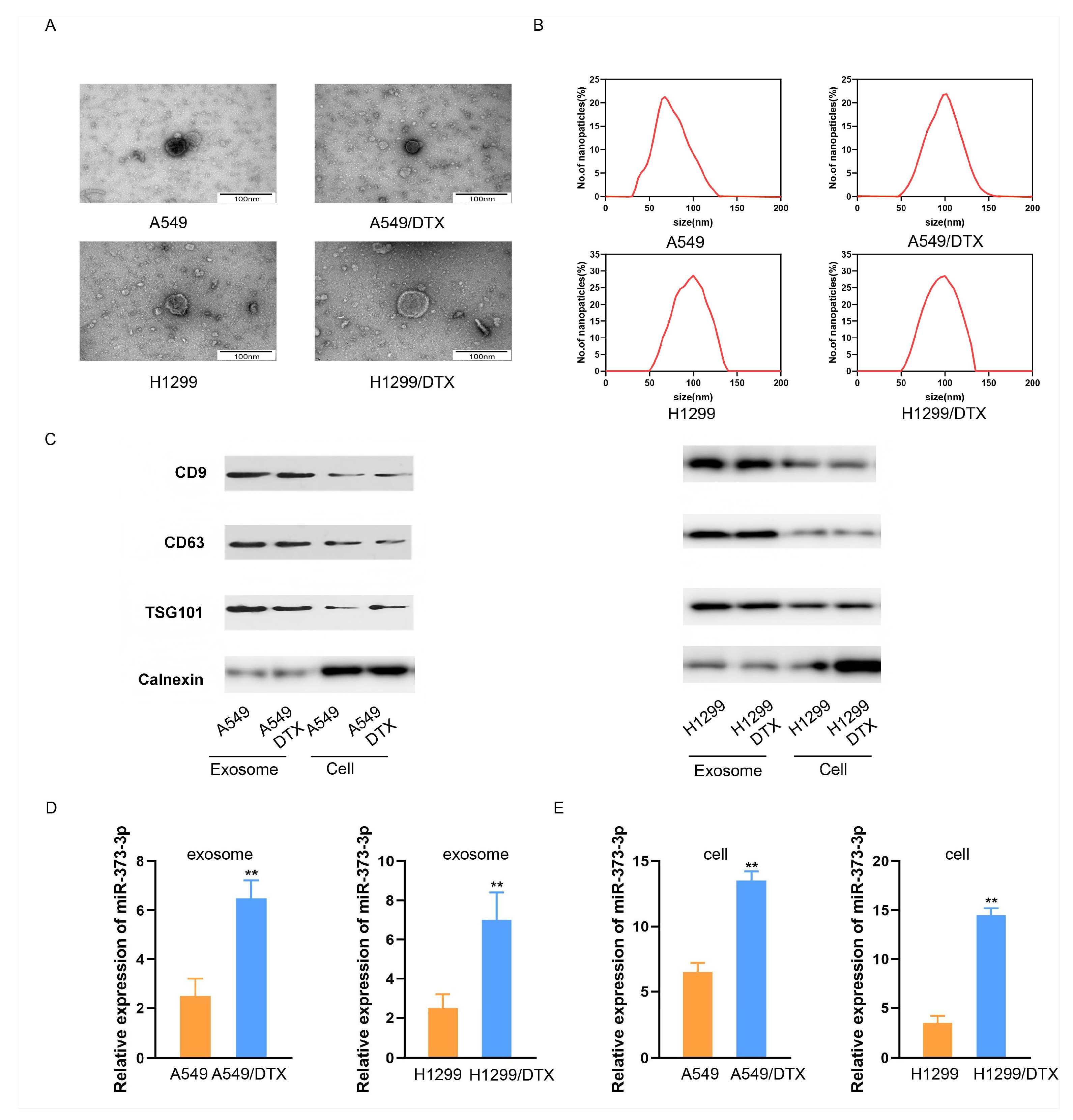
3.1. Docetaxel-Resistant Lung Cancer Cells Secrete Exosomes with High Levels of miR-373-3p
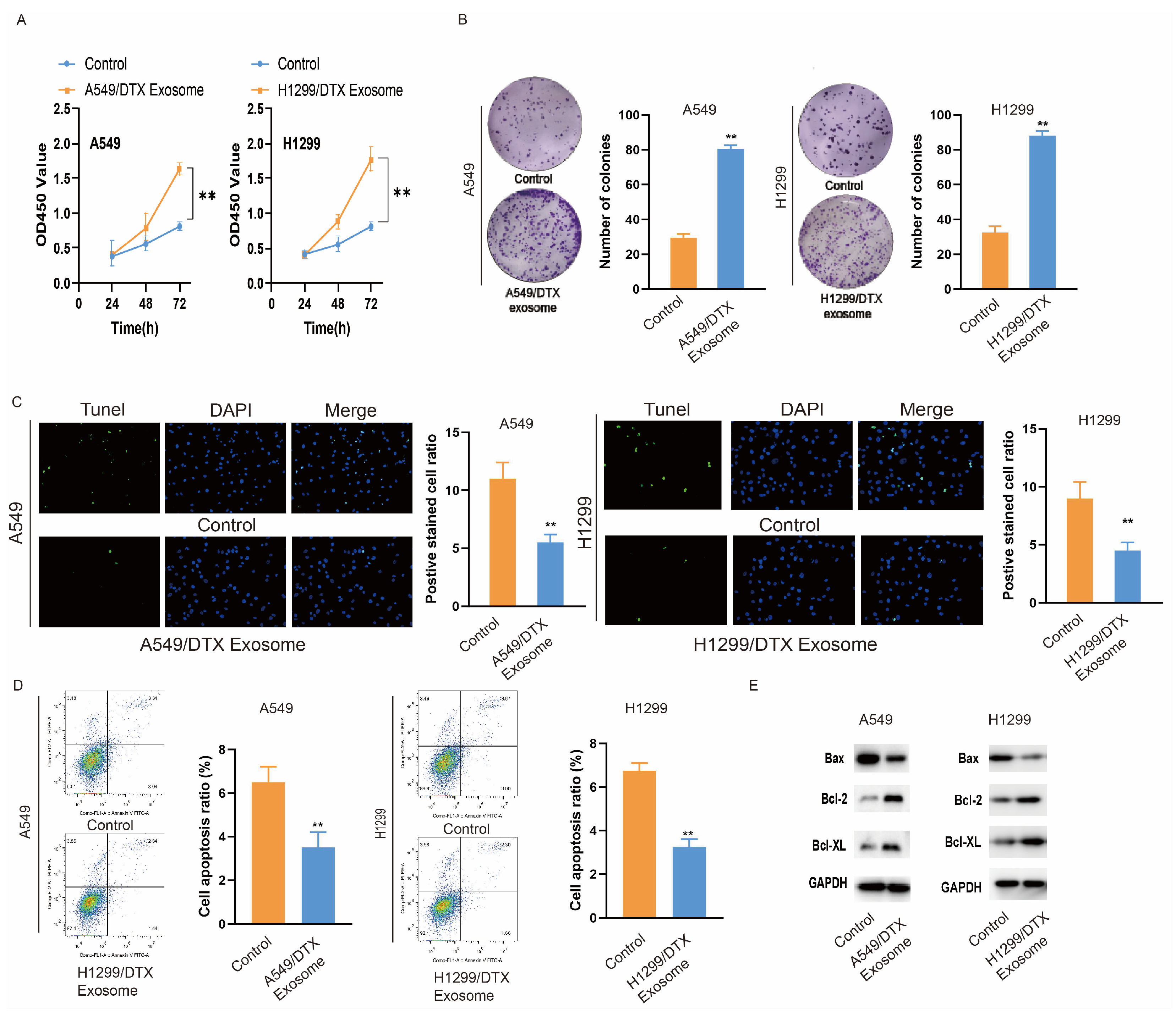
3.2. Exosomes Derived from Docetaxel-Resistant Lung Cancer Cells Affect the Biological Functions of Docetaxel-Sensitive Cells
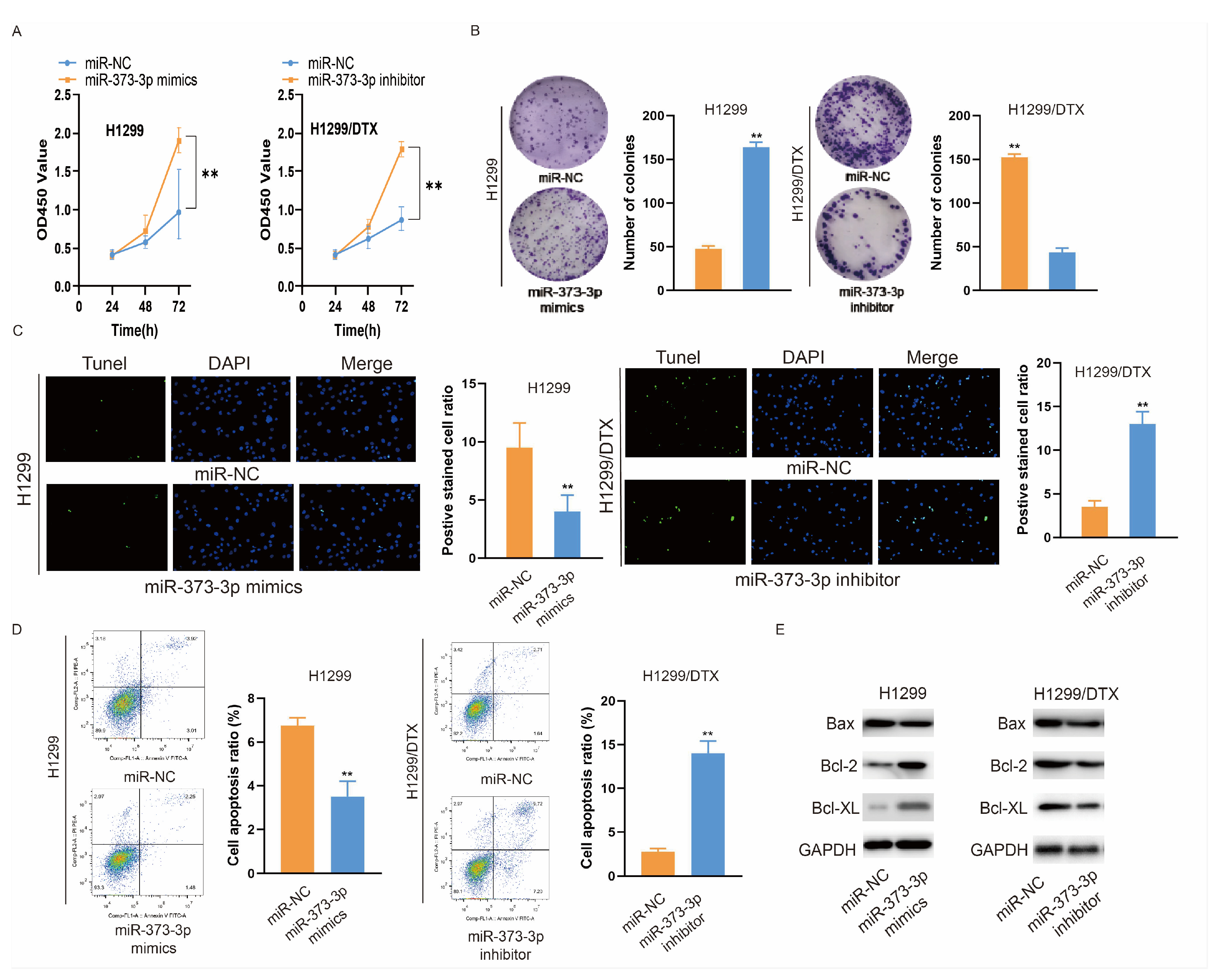
3.3. miR-373-3p Enhances the Proliferation and Suppresses the Apoptosis of Lung Cancer Cells
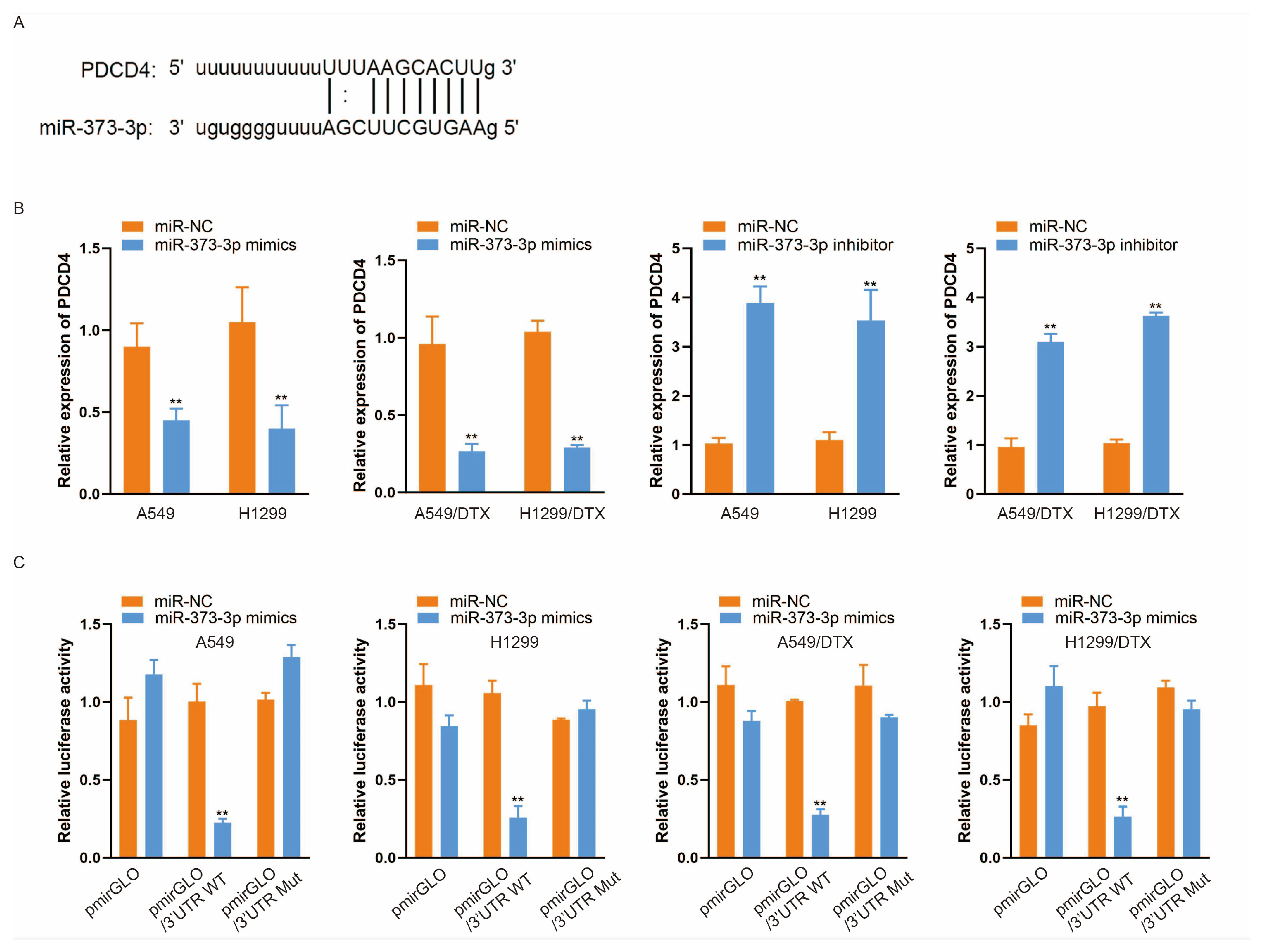
3.4. miR-373-3p Inhibits the Expression of Its Target Gene PDCD4
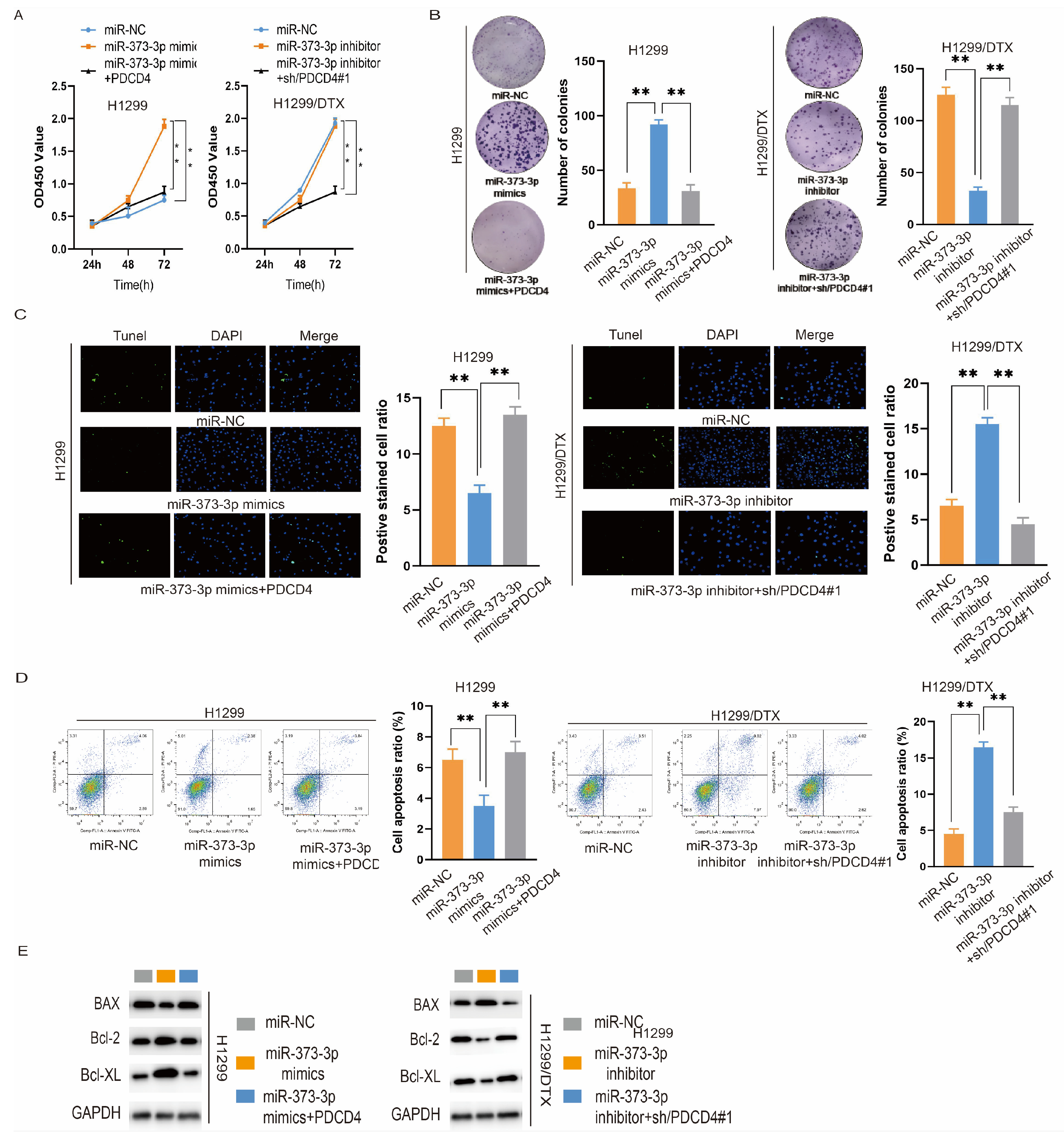
3.5. miR-373-3p Targets PDCD4 to Regulate the Proliferation and Apoptosis of Lung Cancer Cells
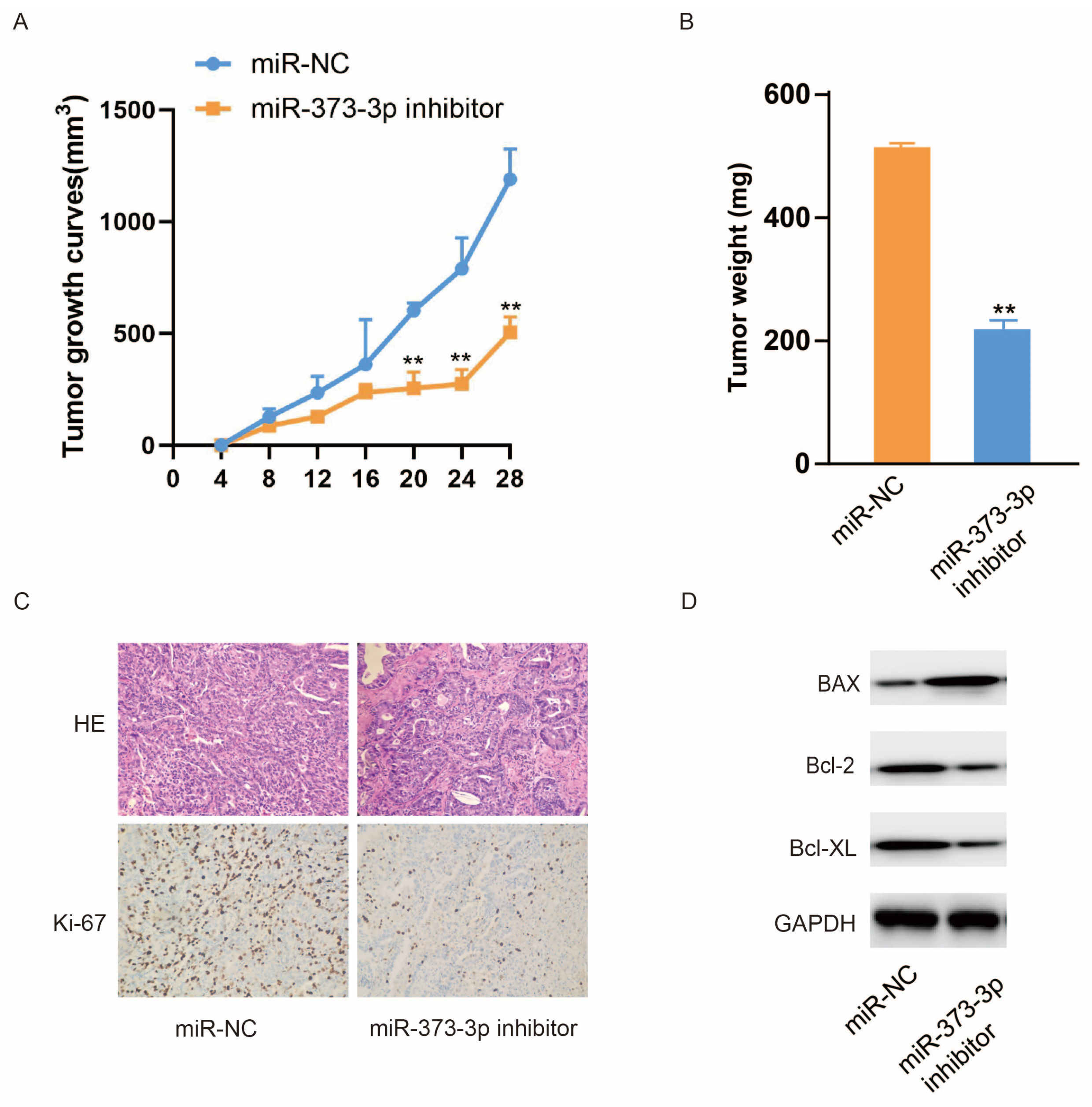
3.6. Down-Regulation of miR-373-3p in Lung Cancer Cells Inhibits Tumor Growth In Vivo
4. Discussion
5. Conclusions
Author Contributions
Funding
Institutional Review Board Statement
Informed Consent Statement
Data Availability Statement
Acknowledgments
Conflicts of Interest
References
- Siegel, R.L.; Kratzer, T.B.; Wagle, N.S.; Sung, H.; Jemal, A. Cancer statistics, 2026. CA Cancer J. Clin. 2026, 76, e70043. [Google Scholar] [CrossRef]
- Hendriks, L.E.; Remon, J.; Faivre-Finn, C.; Garassino, M.C.; Heymach, J.V.; Kerr, K.M.; Tan, D.S.; Veronesi, G.; Reck, M. Non-small-cell lung cancer. Nat. Rev. Dis. Primers 2024, 10, 71. [Google Scholar] [CrossRef]
- Chen, Y.; Knosel, T.; Kristiansen, G.; Pietas, A.; Garber, M.E.; Matsuhashi, S.; Ozaki, I.; Petersen, I. Loss of PDCD4 expression in human lung cancer correlates with tumour progression and prognosis. J. Pathol. 2003, 200, 640–646. [Google Scholar] [CrossRef]
- Han, Q.F.; Li, W.J.; Hu, K.S.; Gao, J.; Zhai, W.L.; Yang, J.H.; Zhang, S.J. Exosome biogenesis: Machinery, regulation, and therapeutic implications in cancer. Mol. Cancer 2022, 21, 207. [Google Scholar] [CrossRef] [PubMed]
- Lin, S.; Yu, Z.; Chen, D.; Wang, Z.; Miao, J.; Li, Q.; Zhang, D.; Song, J.; Cui, D. Progress in Microfluidics-Based Exosome Separation and Detection Technologies for Diagnostic Applications. Small 2019, 16, e1903916. [Google Scholar] [CrossRef] [PubMed]
- Tang, X.H.; Guo, T.; Gao, X.Y.; Wu, X.L.; Xing, X.F.; Ji, J.F.; Li, Z.Y. Exosome-derived noncoding RNAs in gastric cancer: Functions and clinical applications. Mol. Cancer 2021, 20, 99. [Google Scholar] [CrossRef]
- Li, M.Y.; Liu, L.Z.; Dong, M. Progress on pivotal role and application of exosome in lung cancer carcinogenesis, diagnosis, therapy and prognosis. Mol. Cancer 2021, 20, 22. [Google Scholar] [CrossRef] [PubMed]
- Hu, J.L.; Wang, W.; Lan, X.L.; Zeng, Z.C.; Liang, Y.S.; Yan, Y.R.; Song, F.Y.; Wang, F.F.; Zhu, X.H.; Liao, W.J.; et al. CAFs secreted exosomes promote metastasis and chemotherapy resistance by enhancing cell stemness and epithelial-mesenchymal transition in colorectal cancer. Mol. Cancer 2019, 18, 91. [Google Scholar] [CrossRef]
- Cao, L.Q.; Yang, X.W.; Chen, Y.B.; Zhang, D.W.; Jiang, X.F.; Xue, P. Exosomal miR-21 regulates the TETs/PTENp1/PTEN pathway to promote hepatocellular carcinoma growth. Mol. Cancer 2019, 18, 148. [Google Scholar] [CrossRef]
- Fu, W.; Lei, C.; Liu, S.; Cui, Y.; Wang, C.; Qian, K.; Li, T.; Shen, Y.; Fan, X.; Lin, F.; et al. CAR exosomes derived from effector CAR-T cells have potent antitumour effects and low toxicity. Nat. Commun. 2019, 10, 4355. [Google Scholar] [CrossRef]
- Wu, A.; Li, J.; Wu, K.; Mo, Y.; Luo, Y.; Ye, H.; Shen, X.; Li, S.; Liang, Y.; Liu, M.; et al. MiR-373-3p Promotes Invasion and Metastasis of Lung Adenocarcinoma Cells. Zhongguo Fei Ai Za Zhi 2015, 18, 427–435. [Google Scholar] [CrossRef] [PubMed]
- Wei, F.; Cao, C.; Xu, X.; Wang, J. Diverse functions of miR-373 in cancer. J. Transl. Med. 2015, 13, 162. [Google Scholar] [CrossRef]
- van der Sijde, F.; Homs, M.Y.; van Bekkum, M.L.; van den Bosch, T.P.; Bosscha, K.; Besselink, M.G.; Bonsing, B.A.; de Groot, J.W.B.; Karsten, T.M.; Groot Koerkamp, B.; et al. Serum miR-373-3p and miR-194-5p Are Associated with Early Tumor Progression during FOLFIRINOX Treatment in Pancreatic Cancer Patients: A Prospective Multicenter Study. Int. J. Mol. Sci. 2021, 22, 10902. [Google Scholar] [CrossRef]
- Weng, W.; Liu, C.; Li, G.; Ruan, Q.; Li, H.; Lin, N.; Chen, G. Long non-coding RNA SNHG16 functions as a tumor activator by sponging miR-373-3p to regulate the TGF-β-R2/SMAD pathway in prostate cancer. Mol. Med. Rep. 2021, 24, 843. [Google Scholar] [CrossRef]
- Lun, J.; Zhang, Y.; Yu, M.; Zhai, W.; Zhu, L.; Liu, H.; Guo, J.; Zhang, G.; Qiu, W.; Fang, J. Circular RNA circHIPK2 inhibits colon cancer cells through miR-373-3p/RGMA axis. Cancer Lett. 2024, 593, 216957. [Google Scholar] [CrossRef]
- Wang, L.Q.; Yu, P.; Li, B.; Guo, Y.H.; Liang, Z.R.; Zheng, L.L.; Yang, J.H.; Xu, H.; Liu, S.; Zheng, L.S.; et al. miR-372 and miR-373 enhance the stemness of colorectal cancer cells by repressing differentiation signaling pathways. Mol. Oncol. 2018, 12, 1949–1964. [Google Scholar] [CrossRef]
- Seol, H.S.; Akiyama, Y.; Shimada, S.; Lee, H.J.; Im Kim, T.; Chun, S.M.; Singh, S.R.; Jang, S.J. Epigenetic silencing of microRNA-373 to epithelial-mesenchymal transition in non-small cell lung cancer through IRAK2 and LAMP1 axes. Cancer Lett. 2014, 353, 232–241. [Google Scholar] [CrossRef] [PubMed]
- Adi Harel, S.; Bossel Ben-Moshe, N.; Aylon, Y.; Bublik, D.R.; Moskovits, N.; Toperoff, G.; Azaiza, D.; Biagoni, F.; Fuchs, G.; Wilder, S.; et al. Reactivation of epigenetically silenced miR-512 and miR-373 sensitizes lung cancer cells to cisplatin and restricts tumor growth. Cell Death Differ. 2015, 22, 1328–1340. [Google Scholar] [CrossRef] [PubMed]
- Lu, Y.; Li, X.; Zuo, Y.; Xu, Q.; Liu, L.; Wu, H.; Chen, L.; Zhang, Y.; Liu, Y.; Li, Y. miR-373-3p inhibits epithelial-mesenchymal transition via regulation of TGFβR2 in choriocarcinoma. J. Obstet. Gynaecol. Res. 2021, 47, 2417–2432. [Google Scholar] [CrossRef]
- Luo, M.; Deng, S.; Han, T.; Ou, Y.; Hu, Y. LncRNA NR2F2-AS1 functions as a tumor suppressor in gastric cancer through targeting miR-320b/PDCD4 pathway. Histol. Histopathol. 2022, 37, 575–585. [Google Scholar] [CrossRef]
- Kumar, R.; Poria, D.K.; Ray, P.S. RNA-binding proteins La and HuR cooperatively modulate translation repression of PDCD4 mRNA. J. Biol. Chem. 2020, 296, 100154. [Google Scholar] [CrossRef]
- Rong, B.; Chen, X.; Xie, G.; Han, L.; Chen, H.; Sun, Q.; Zhou, Y. Gastric Cancer Growth Modulated by circSNTB2/miR-6938-5p/G0S2 and PDCD4. Comb. Chem. High Throughput Screen. 2022, 26, 1990–2002. [Google Scholar] [CrossRef] [PubMed]
- Cai, Q.; Yang, H.S.; Li, Y.C.; Zhu, J. Dissecting the Roles of PDCD4 in Breast Cancer. Front. Oncol. 2022, 12, 855807. [Google Scholar] [CrossRef]
- Li, C.; Du, L.; Ren, Y.; Liu, X.; Jiao, Q.; Cui, D.; Wen, M.; Wang, C.; Wei, G.; Wang, Y.; et al. SKP2 promotes breast cancer tumorigenesis and radiation tolerance through PDCD4 ubiquitination. J. Exp. Clin. Cancer Res. 2019, 38, 76. [Google Scholar] [CrossRef]
- Guo, P.; Li, H.; Zhu, C.; Kong, X.; Feng, Y.; Liu, W.; Li, S.; Li, Z.; Han, K.; Yao, W.; et al. Down-Regulation of PDCD4 Promotes Proliferation, Angiogenesis and Tumorigenesis in Glioma Cells. Front. Cell Dev. Biol. 2020, 8, 593685. [Google Scholar] [CrossRef]
- Hwang, S.K.; Jeong, Y.J.; Chang, Y.C. PDCD4 inhibits lung tumorigenesis by the suppressing p62-Nrf2 signaling pathway and upregulating Keap1 expression. Am. J. Cancer Res. 2020, 10, 424. [Google Scholar]
- Zhen, Y.; Liu, Z.; Yang, H.; Yu, X.; Wu, Q.; Hua, S.; Long, X.; Jiang, Q.; Song, Y.; Cheng, C.; et al. Tumor suppressor PDCD4 modulates miR-184-mediated direct suppression of C-MYC and BCL2 blocking cell growth and survival in nasopharyngeal carcinoma. Cell Death Dis. 2013, 4, e872. [Google Scholar] [CrossRef]
- Fan, Q.; Lu, Q.; Wang, G.; Zhu, W.; Teng, L.; Chen, W.; Bi, L. Optimizing component formula suppresses lung cancer by blocking DTL-mediated PDCD4 ubiquitination to regulate the MAPK/JNK pathway. J. Ethnopharmacol. 2022, 299, 115546. [Google Scholar] [CrossRef] [PubMed]
- Liu, D.; Ke, J.; Liu, Y.; Rao, H.; Tang, Z.; Liu, Y.; Zhang, Z.; You, L.; Luo, X.; Sun, Z.; et al. The interaction between PDCD4 and YB1 is critical for cervical cancer stemness and cisplatin resistance. Mol. Carcinog. 2021, 60, 813–825. [Google Scholar] [CrossRef] [PubMed]
- Li, J.; Huang, L.; He, Z.; Chen, M.; Ding, Y.; Yao, Y.; Duan, Y.; Zixuan, L.; Qi, C.; Zheng, L.; et al. Andrographolide Suppresses the Growth and Metastasis of Luminal-Like Breast Cancer by Inhibiting the NF-κB/miR-21-5p/PDCD4 Signaling Pathway. Front. Cell Dev. Biol. 2021, 9, 643525. [Google Scholar] [CrossRef]
- Cui, H.; Wang, Q.; Lei, Z.; Feng, M.; Zhao, Z.; Wang, Y.; Wei, G. DTL promotes cancer progression by PDCD4 ubiquitin-dependent degradation. J. Exp. Clin. Cancer Res. 2019, 38, 350. [Google Scholar] [CrossRef]
- Chen, R.; Wang, Z.; Wu, B.; Liu, D.; Xu, Y. Role of microRNA-761 in modulating laryngeal cancer cell proliferation, metastasis, and apoptosis: Regulation of PDCD4 as a key mechanism. Mol. Biol. Rep. 2025, 52, 1039. [Google Scholar] [CrossRef]
- Lv, L.; Du, J.; Wang, D.; Yan, Z. Circular RNA hsa_circ_0026344 suppresses gastric cancer cell proliferation, migration and invasion via the miR-590-5p/PDCD4 axis. J. Pharm. Pharmacol. 2022, 74, 1193–1204. [Google Scholar] [CrossRef]
- Cai, Y.; Zhao, X.; Chen, D.; Zhang, F.; Chen, Q.; Shao, C.-C.; Ouyang, Y.-X.; Feng, J.; Cui, L.; Chen, M.; et al. circ-NOL10 regulated by MTDH/CASC3 inhibits breast cancer progression and metastasis via multiple miRNAs and PDCD4. Mol. Ther. Nucleic Acids 2021, 26, 773–786. [Google Scholar] [CrossRef]
- Sun, L.-H.; Tian, D.; Yang, Z.-C.; Li, J.-L. Exosomal miR-21 promotes proliferation, invasion and therapy resistance of colon adenocarcinoma cells through its target PDCD4. Sci. Rep. 2020, 10, 8271. [Google Scholar] [CrossRef] [PubMed]
- Reis, P.P.; Tomenson, M.; Cervigne, N.K.; Machado, J.; Jurisica, I.; Pintilie, M.; Sukhai, M.A.; Perez-Ordonez, B.; Grénman, R.; Gilbert, R.W.; et al. Programmed cell death 4 loss increases tumor cell invasion and is regulated by miR-21 in oral squamous cell carcinoma. Mol. Cancer 2010, 9, 238. [Google Scholar] [CrossRef]
- Zhu, F.; Zhang, X.; Wen, J.; Liu, Y.; Zhu, Y. Celastrus orbiculatus extract reverses precancerous lesions of gastric cancer by inhibiting autophagy via regulating the PDCD4-ATG5 signaling pathway. J. Pharm. Pharmacol. 2024, 76, 257–268. [Google Scholar] [CrossRef] [PubMed]
- Gao, F.; Zhang, P.; Zhou, C.; Li, J.; Wang, Q.; Zhu, F.; Ma, C.; Sun, W.; Zhang, L. Frequent loss of PDCD4 expression in human glioma: Possible role in the tumorigenesis of glioma. Oncol. Rep. 2007, 17, 123–128. [Google Scholar] [CrossRef] [PubMed][Green Version]
- Wang, Q.; Sun, Z.; Yang, H.S. Downregulation of tumor suppressor Pdcd4 promotes invasion and activates both beta-catenin/Tcf and AP-1-dependent transcription in colon carcinoma cells. Oncogene 2008, 27, 1527–1535. [Google Scholar] [CrossRef]
- Tesfamariam, B. Involvement of platelets in tumor cell metastasis. Pharmacol. Ther. 2016, 157, 112–119. [Google Scholar] [CrossRef]
- Mantovani, A.; Allavena, P.; Sica, A.; Balkwill, F. Cancer-related inflammation. Nature 2008, 454, 436–444. [Google Scholar] [CrossRef]
- Morel, L.; Regan, M.; Higashimori, H.; Ng, S.K.; Esau, C.; Vidensky, S.; Rothstein, J.; Yang, Y. Neuronal exosomal miRNA-dependent translational regulation of astroglial glutamate transporter GLT1. J. Biol. Chem. 2013, 288, 7105–7116. [Google Scholar] [CrossRef] [PubMed]
- Mathivanan, S.; Fahner, C.J.; Reid, G.E.; Simpson, R.J. ExoCarta 2012: Database of exosomal proteins, RNA and lipids. Nucleic Acids Res. 2012, 40, D1241–D1244. [Google Scholar] [CrossRef] [PubMed]
- Keith, W.; Stallard, S.; Brown, R. Expression of mdr1 and gst-pi in human breast tumours: Comparison to in vitro chemosensitivity. Br. J. Cancer 1990, 61, 712–716. [Google Scholar] [CrossRef] [PubMed]
- Jing, C.; Cao, H.; Qin, X.; Yu, S.; Wu, J.; Wang, Z.; Ma, R.; Feng, J. Exosome-mediated gefitinib resistance in lung cancer HCC827 cells via delivery of miR-21. Oncol. Lett. 2018, 15, 9811–9817. [Google Scholar] [CrossRef] [PubMed]
- Cortez, M.A.; Bueso-Ramos, C.; Ferdin, J.; Lopez-Berestein, G.; Sood, A.K.; Calin, G.A. MicroRNAs in body fluids—The mix of hormones and biomarkers. Nat. Rev. Clin. Oncol. 2011, 8, 467–477. [Google Scholar] [CrossRef]
- Schwarzenbach, H. The clinical relevance of circulating, exosomal miRNAs as biomarkers for cancer. Expert Rev. Mol. Diagn. 2015, 15, 1159–1169. [Google Scholar] [CrossRef]
- Suliman, B.A. A PDCD4-Based Gene Expression Signature Predicts Overall Survival in Renal Cell Carcinoma: A TCGA-Based Discovery and External Validation Study. Curr. Issues Mol. Biol. 2026, 48, 22. [Google Scholar] [CrossRef]
- Zhang, H.; Ozaki, I.; Mizuta, T.; Hamajima, H.; Yasutake, T.; Eguchi, Y.; Ideguchi, H.; Yamamoto, K.; Matsuhashi, S. Involvement of programmed cell death 4 in transforming growth factor-beta1-induced apoptosis in human hepatocellular carcinoma. Oncogene 2006, 25, 6101–6112. [Google Scholar] [CrossRef]
- Marhamati, S.; Abbasalipourkabir, R.; Seyedkhan, Z.; Ziamajidi, N.; Bahreini, F.; Razavi, A.E.; Bahmani, M. Investigating the expression of hsa_circ_0036722/hsa-miR-503-5p/PDCD4 axis in esophageal cancer. Discov. Oncol. 2025, 17, 72. [Google Scholar] [CrossRef]
- Lankat-Buttgereit, B.; Goke, R. The tumour suppressor Pdcd4: Recent advances in the elucidation of function and regulation. Biol. Cell 2009, 101, 309–317. [Google Scholar] [CrossRef] [PubMed]
- Fehler, O.; Singh, P.; Haas, A.; Ulrich, D.; Müller, J.P.; Ohnheiser, J.; Klempnauer, K.-H. An evolutionarily conserved interaction of tumor suppressor protein Pdcd4 with the poly(A)-binding protein contributes to translation suppression by Pdcd4. Nucleic Acids Res. 2014, 42, 11107–11118. [Google Scholar] [CrossRef] [PubMed]
- Liwak, U.; Thakor, N.; Jordan, L.E.; Roy, R.; Lewis, S.M.; Pardo, O.E.; Seckl, M.; Holcik, M. Tumor suppressor PDCD4 represses internal ribosome entry site-mediated translation of antiapoptotic proteins and is regulated by S6 kinase 2. Mol. Cell. Biol. 2012, 32, 1818–1829. [Google Scholar] [CrossRef]
- Wang, Q.; Zhu, J.; Wang, Y.-W.; Dai, Y.; Wang, Y.-L.; Wang, C.; Liu, J.; Baker, A.; Colburn, N.H.; Yang, H.-S. Tumor suppressor Pdcd4 attenuates Sin1 translation to inhibit invasion in colon carcinoma. Oncogene 2017, 36, 6225–6234. [Google Scholar] [CrossRef]
- Huang, S.; Zhou, H. Role of mTOR signaling in tumor cell motility, invasion and metastasis. Curr. Protein Pept. Sci. 2011, 12, 30–42. [Google Scholar] [CrossRef] [PubMed]


Disclaimer/Publisher’s Note: The statements, opinions and data contained in all publications are solely those of the individual author(s) and contributor(s) and not of MDPI and/or the editor(s). MDPI and/or the editor(s) disclaim responsibility for any injury to people or property resulting from any ideas, methods, instructions or products referred to in the content. |
© 2026 by the authors. Licensee MDPI, Basel, Switzerland. This article is an open access article distributed under the terms and conditions of the Creative Commons Attribution (CC BY) license.
Share and Cite
Yuan, Y.; Zhu, B.; Yang, L.; Leng, Y.; Chen, F.; Yang, Z.; Gu, W.; Zhang, K. Exosomal miR-373-3p Derived from Docetaxel-Resistant Lung Cancer Cells Targets PDCD4 to Promote Proliferation and Inhibit Apoptosis in Lung Cancer Cells. Biomedicines 2026, 14, 986. https://doi.org/10.3390/biomedicines14050986
Yuan Y, Zhu B, Yang L, Leng Y, Chen F, Yang Z, Gu W, Zhang K. Exosomal miR-373-3p Derived from Docetaxel-Resistant Lung Cancer Cells Targets PDCD4 to Promote Proliferation and Inhibit Apoptosis in Lung Cancer Cells. Biomedicines. 2026; 14(5):986. https://doi.org/10.3390/biomedicines14050986
Chicago/Turabian StyleYuan, Yuan, Buyi Zhu, Linfei Yang, Yumu Leng, Feifei Chen, Zhenhua Yang, Wei Gu, and Kai Zhang. 2026. "Exosomal miR-373-3p Derived from Docetaxel-Resistant Lung Cancer Cells Targets PDCD4 to Promote Proliferation and Inhibit Apoptosis in Lung Cancer Cells" Biomedicines 14, no. 5: 986. https://doi.org/10.3390/biomedicines14050986
APA StyleYuan, Y., Zhu, B., Yang, L., Leng, Y., Chen, F., Yang, Z., Gu, W., & Zhang, K. (2026). Exosomal miR-373-3p Derived from Docetaxel-Resistant Lung Cancer Cells Targets PDCD4 to Promote Proliferation and Inhibit Apoptosis in Lung Cancer Cells. Biomedicines, 14(5), 986. https://doi.org/10.3390/biomedicines14050986