Circulating Lymphocyte Subsets Are Associated with Diabetic Kidney Disease and Overall Survival in Patients with Type 2 Diabetes

 ,
,
Abstract
1. Introduction
2. Materials and Methods
2.1. Study Population of Observational Analysis
2.2. Clinical Outcome of Observational Analysis
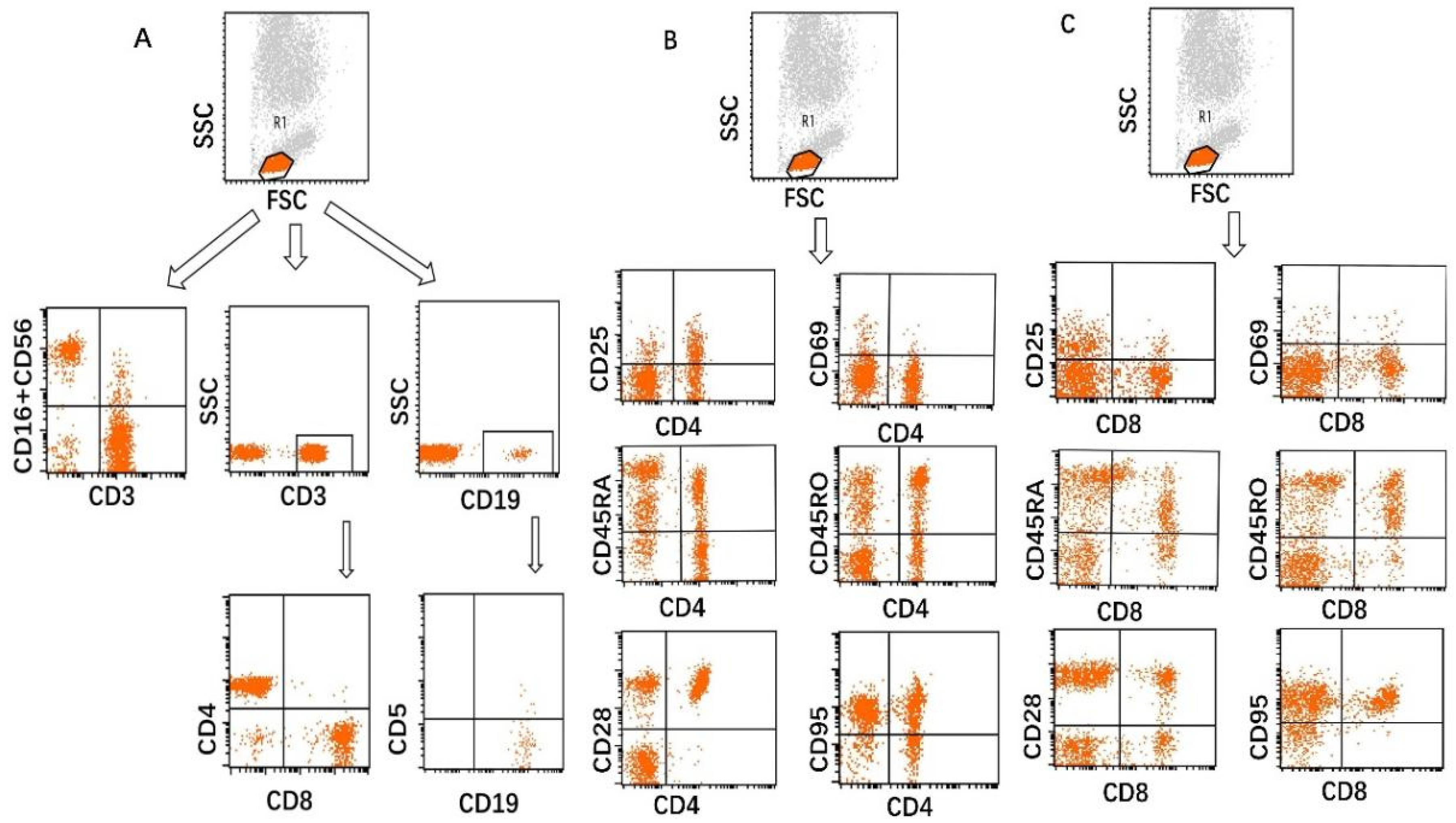
2.3. Flow Cytometry Analysis of Observational Analysis
2.4. Statistical Analysis of Observational Analysis
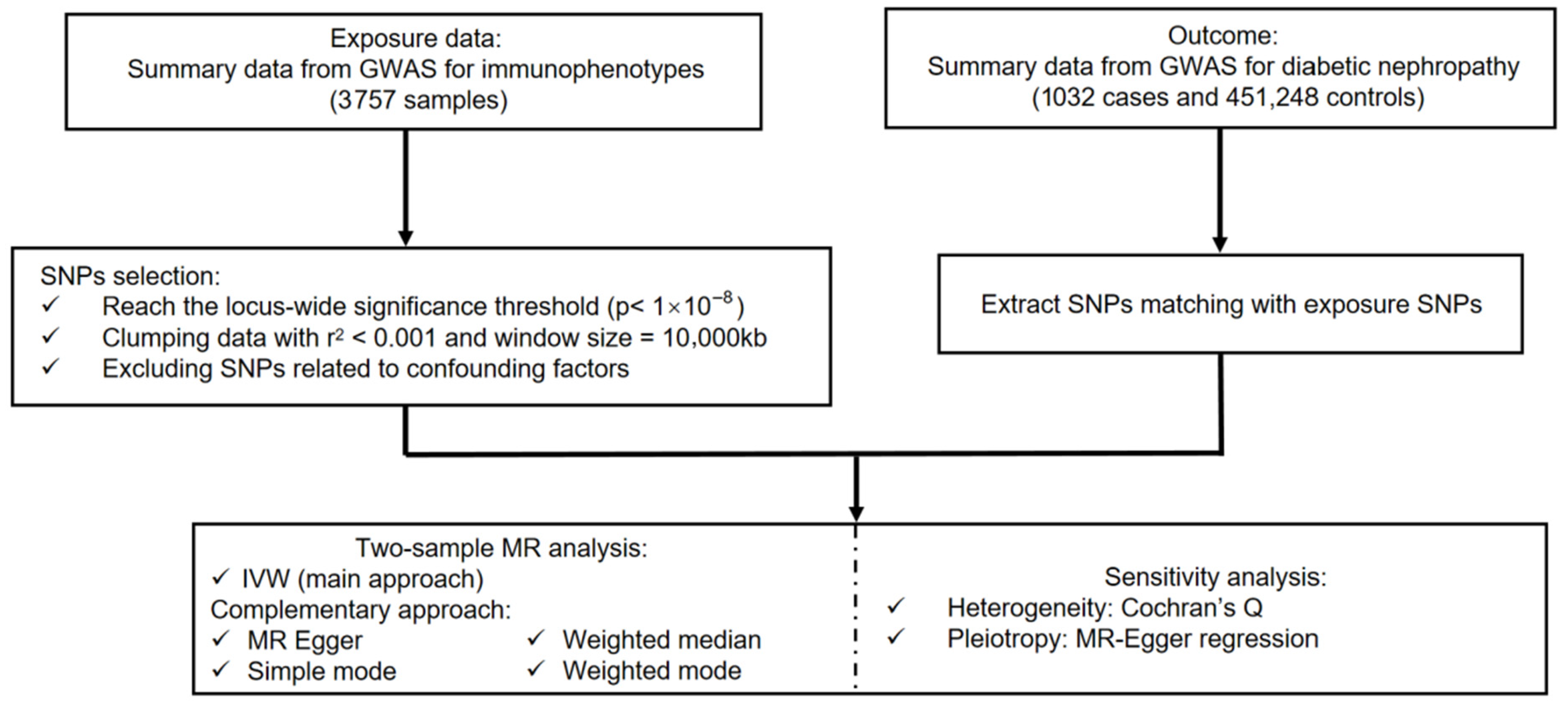
2.5. Data Sources in Mendelian Randomization (MR) Analysis
2.6. Instrumental Variables (IVs) in MR Analysis
2.7. Statistical Analysis of MR Analysis
3. Results
3.1. The Characteristics of Patients
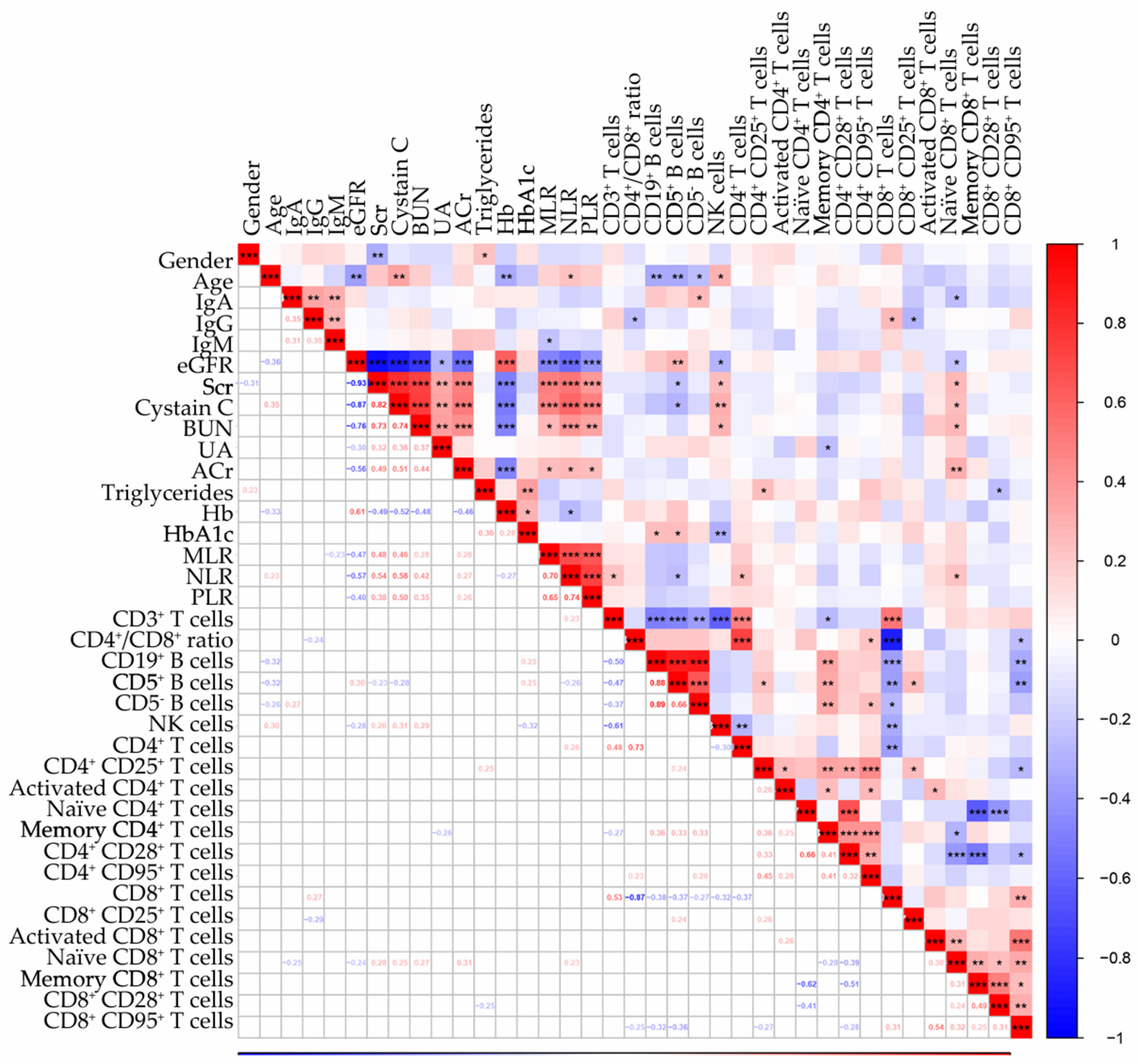
3.2. The Correlation Between Lymphocyte Subsets and Clinical Data
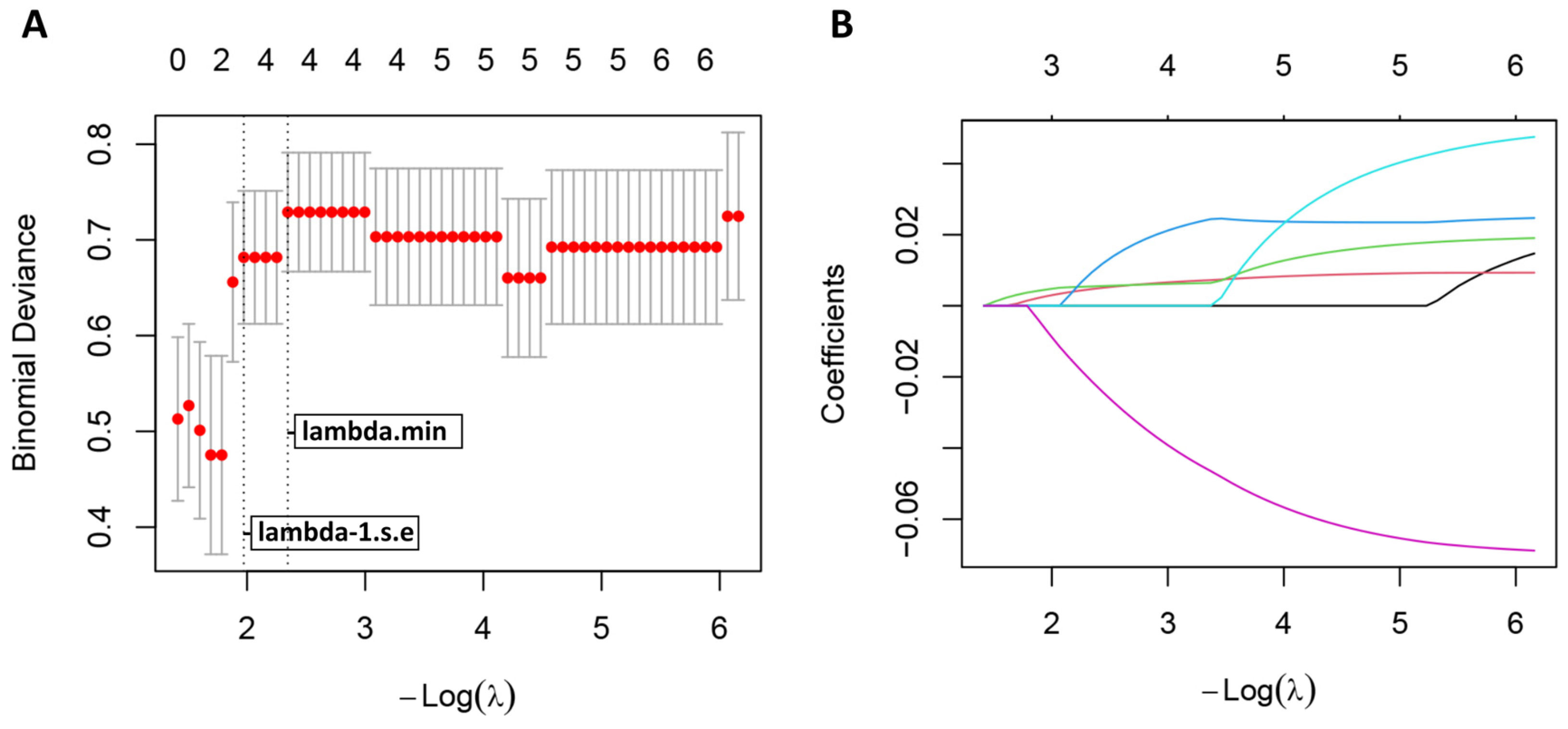
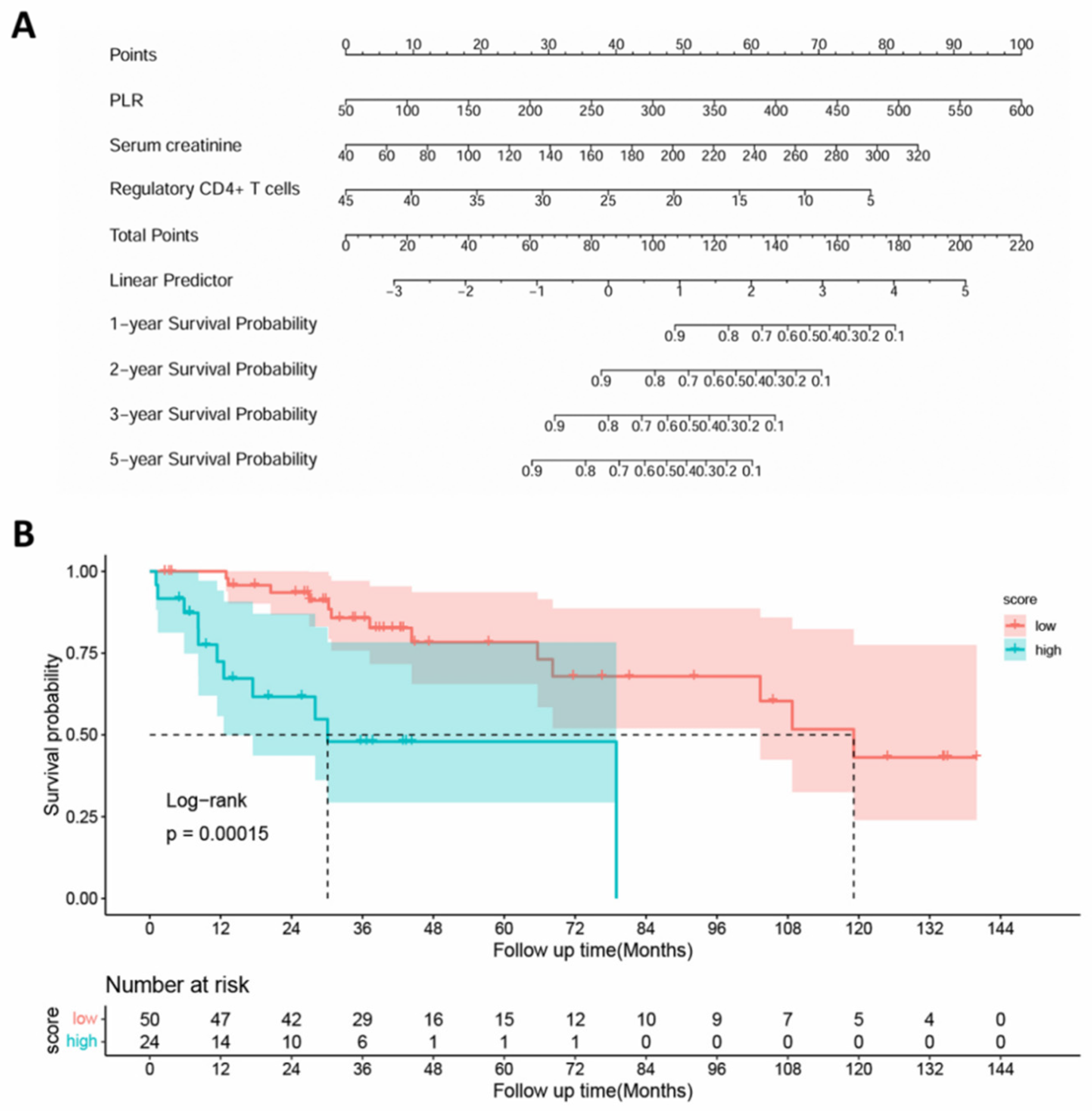
3.3. Prognostic Factors for Overall Survival in Patients with DKD
3.4. Extended Prognostic Modeling in the Whole T2DM Cohort
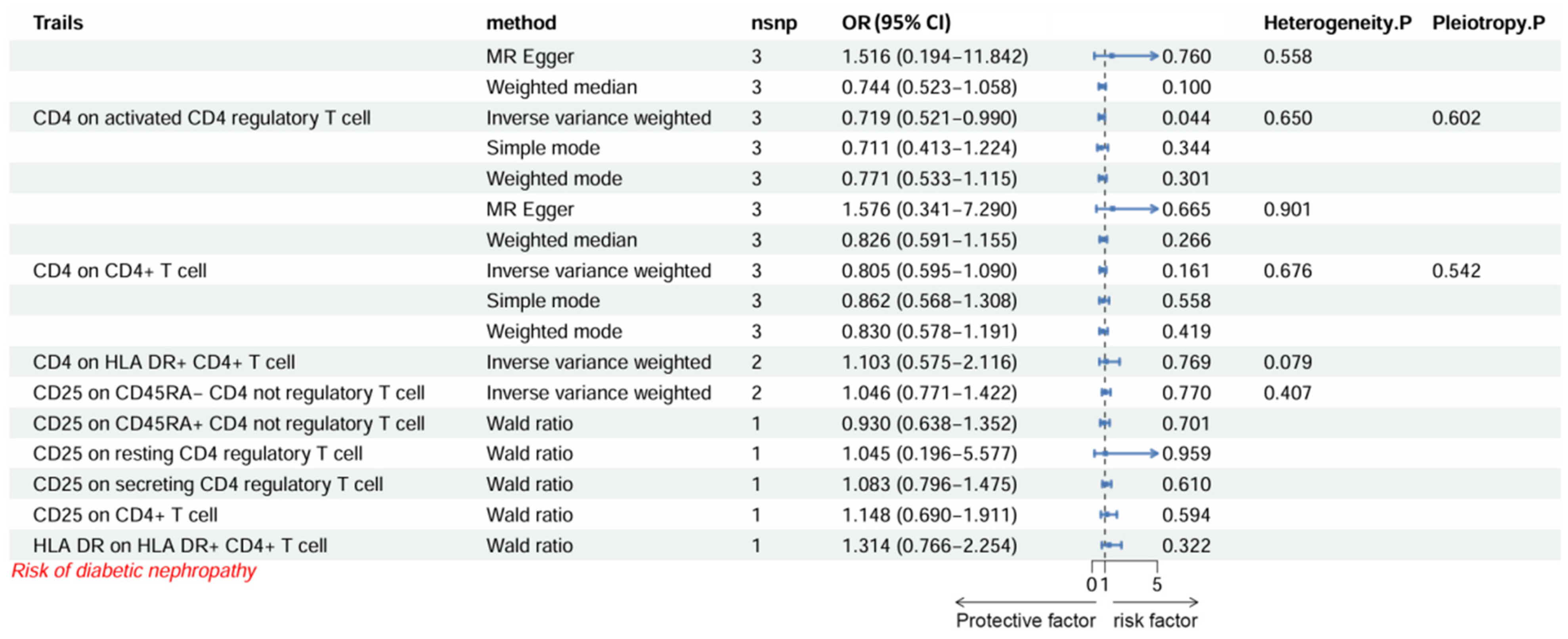
3.5. Further Exploratory Analysis of Immune-Related Traits and DKD Susceptibility
4. Discussion
5. Conclusions
Supplementary Materials
Author Contributions
Funding
Institutional Review Board Statement
Informed Consent Statement
Data Availability Statement
Conflicts of Interest
References
- Xiong, Y.; Zhou, L. The Signaling of Cellular Senescence in Diabetic Nephropathy. Oxid. Med. Cell. Longev. 2019, 2019, 7495629. [Google Scholar] [CrossRef]
- Bell, S.; Fletcher, E.; Brady, I.; Looker, H.; Levin, D.; Joss, N.; Traynor, J.; Metcalfe, W.; Conway, B.; Livingstone, S.; et al. End-stage renal disease and survival in people with diabetes: A national database linkage study. QJM Int. J. Med. 2015, 108, 127–134. [Google Scholar] [CrossRef]
- Han, Q.; Zhu, H.; Chen, X.; Liu, Z. Non-genetic mechanisms of diabetic nephropathy. Front. Med. 2017, 11, 319–332. [Google Scholar] [CrossRef] [PubMed]
- Zheng, Z.; Zheng, F. Immune Cells and Inflammation in Diabetic Nephropathy. J. Diabetes Res. 2016, 2016, 1841690. [Google Scholar] [CrossRef]
- Moon, J.-Y.; Jeong, K.-H.; Lee, T.-W.; Ihm, C.-G.; Lim, S.J.; Lee, S.-H. Aberrant recruitment and activation of T cells in diabetic nephropathy. Am. J. Nephrol. 2012, 35, 164–174. [Google Scholar] [CrossRef] [PubMed]
- Li, T.; Yu, Z.; Qu, Z.; Zhang, N.; Crew, R.; Jiang, Y. Decreased number of CD19+CD24hiCD38hi regulatory B cells in Diabetic nephropathy. Mol. Immunol. 2019, 112, 233–239. [Google Scholar] [CrossRef] [PubMed]
- Zuo, M.; Tang, J.; Xiang, M.; Long, Q.; Dai, J.; Yu, G.; Zhang, H.; Hu, H. Clinical observation of the reduced glutathione in the treatment of diabetic chronic kidney disease. J. Cell Biochem. 2019, 120, 8483–8491. [Google Scholar] [CrossRef]
- Valentini, V.; van Stiphout, R.G.; Lammering, G.; Gambacorta, M.A.; Barba, M.C.; Bebenek, M.; Bonnetain, F.; Bosset, J.-F.; Bujko, K.; Cionini, L.; et al. Nomograms for predicting local recurrence, distant metastases, and overall survival for patients with locally advanced rectal cancer on the basis of European randomized clinical trials. J. Clin. Oncol. 2011, 29, 3163–3172. [Google Scholar] [CrossRef]
- Lin, Z.; Hong, T.; Wang, W.; Xie, S.; Chen, C.; Yang, F.; Jiang, D.; Wan, J.; Xie, Z.; Xu, Y. Development and validation of a predictive nomogram for differentiating diabetic nephropathy from non-diabetic nephropathy in patients with T2DM: A multicenter study. Front. Nutr. 2025, 12, 1605841. [Google Scholar] [CrossRef]
- Dai, M.; Wu, J.; Ji, Z.; Chen, P.; Yang, C.; Luo, J.; Shan, P.; Xu, M. Construction of a metabolic-immune model for predicting the risk of diabetic nephropathy and study of gut microbiota. J. Diabetes Investig. 2025, 16, 863–873. [Google Scholar] [CrossRef]
- Skrivankova, V.W.; Richmond, R.C.; Woolf, B.A.R.; Davies, N.M.; Swanson, S.A.; VanderWeele, T.J.; Timpson, N.J.; Higgins, J.P.T.; Dimou, N.; Langenberg, C.; et al. Strengthening the reporting of observational studies in epidemiology using mendelian randomisation (STROBE-MR): Explanation and elaboration. BMJ 2021, 375, n2233. [Google Scholar] [CrossRef] [PubMed]
- Davey Smith, G. Capitalizing on Mendelian randomization to assess the effects of treatments. J. R. Soc. Med. 2007, 100, 432–435. [Google Scholar] [CrossRef]
- Davies, N.M.; Howe, L.J.; Brumpton, B.; Havdahl, A.; Evans, D.M.; Smith, G.D. Within family Mendelian randomization studies. Hum. Mol. Genet. 2019, 28, R170–R179. [Google Scholar] [CrossRef]
- Ye, Y.; Dai, L.; Gu, H.; Yang, L.; Xu, Z.; Li, Z. The causal relationship between immune cells and diabetic retinopathy: A Mendelian randomization study. Front. Immunol. 2024, 15, 1381002. [Google Scholar] [CrossRef] [PubMed]
- Jiang, P.; Liu, D.; Yu, Y.; Wu, J.; Hu, G.; Yang, X.; Liu, P. Immune cells in diabetic retinopathy: A Mendelian randomization study. Medicine 2025, 104, e44549. [Google Scholar] [CrossRef]
- National Kidney Foundation. KDOQI Clinical Practice Guideline for Diabetes and CKD: 2012 Update. Am. J. Kidney Dis. 2012, 60, 850–886. [Google Scholar] [CrossRef]
- Stevens, P.E.; Levin, A. Kidney Disease: Improving Global Outcomes Chronic Kidney Disease Guideline Development Work Group M. Evaluation and management of chronic kidney disease: Synopsis of the kidney disease: Improving global outcomes 2012 clinical practice guideline. Ann. Intern. Med. 2013, 158, 825–830. [Google Scholar] [CrossRef] [PubMed]
- Zhang, J.-H.; Deng, J.-H.; Yao, X.-L.; Wang, J.-L.; Xiao, J.-H. CD4+CD25+ Tregs as dependent factor in the course of bleomycin-induced pulmonary fibrosis in mice. Exp. Cell Res. 2020, 386, 111700. [Google Scholar] [CrossRef]
- Ziegler, S.F.; Ramsdell, F.; Alderson, M.R. The activation antigen CD69. Stem Cells 1994, 12, 456–465. [Google Scholar] [CrossRef]
- Pilling, D.; Akbar, A.N.; Bacon, P.A.; Salmon, M. CD4+CD45RA+T cells from adults respond to recall antigens after CD28 ligation. Int. Immunol. 1996, 8, 1737–1742. [Google Scholar] [CrossRef]
- Esensten, J.H.; Helou, Y.A.; Chopra, G.; Weiss, A.; Bluestone, J.A. CD28 Costimulation: From Mechanism to Therapy. Immunity 2016, 44, 973–988. [Google Scholar] [CrossRef]
- Guegan, J.P.; Legembre, P. Nonapoptotic functions of Fas/CD95 in the immune response. FEBS J. 2018, 285, 809–827. [Google Scholar] [CrossRef]
- Lee, S.K.; Kwon, J.H.; Jang, J.W.; Bae, S.H.; Yoon, S.K.; Jung, E.S.; Choi, J.Y. The Critical Role of Regulatory T Cells in Immune Tolerance and Rejection Following Liver Transplantation: Interactions with the Gut Microbiome. Transplantation 2025, 109, 784–793. [Google Scholar] [CrossRef] [PubMed]
- Qi, C.; Mao, X.; Zhang, Z.; Wu, H. Classification and Differential Diagnosis of Diabetic Nephropathy. J. Diabetes Res. 2017, 2017, 8637138. [Google Scholar] [CrossRef] [PubMed]
- Pichler, R.; Afkarian, M.; Dieter, B.P.; Tuttle, K.R. Immunity and inflammation in diabetic kidney disease: Translating mechanisms to biomarkers and treatment targets. Am. J. Physiol. Ren. Physiol. 2017, 312, F716–F731. [Google Scholar] [CrossRef] [PubMed]
- Xiao, X.; Ma, B.; Dong, B.; Zhao, P.; Tai, N.; Chen, L.; Wong, F.S.; Wen, L. Cellular and humoral immune responses in the early stages of diabetic nephropathy in NOD mice. J. Autoimmun. 2009, 32, 85–93. [Google Scholar] [CrossRef]
- Selby, N.M.; Taal, M.W. An updated overview of diabetic nephropathy: Diagnosis, prognosis, treatment goals and latest guidelines. Diabetes Obes. Metab. 2020, 22, 3–15. [Google Scholar] [CrossRef]
- Brummelman, J.; Pilipow, K.; Lugli, E. The Single-Cell Phenotypic Identity of Human CD8+ and CD4+ T Cells. Int. Rev. Cell Mol. Biol. 2018, 341, 63–124. [Google Scholar]
- Guégan, J.P.; Ginestier, C.; Charafe-Jauffret, E.; Ducret, T.; Quignard, J.-F.; Vacher, P.; Legembre, P. CD95/Fas and metastatic disease: What does not kill you makes you stronger. Semin. Cancer Biol. 2020, 60, 121–131. [Google Scholar] [CrossRef]
- Ju, S.-T.; Panka, D.J.; Cui, H.; Ettinger, R.; Ei-Khatib, M.; Sherr, D.H.; Stanger, B.Z.; Marshak-Rothstein, A. Fas(CD95)/FasL interactions required for programmed cell death after T-cell activation. Nature 1995, 373, 444–448. [Google Scholar] [CrossRef]
- Alderson, M.R.; Tough, T.W.; Davis-Smith, T.; Braddy, S.; Falk, B.; A Schooley, K.; Goodwin, R.G.; A Smith, C.; Ramsdell, F.; Lynch, D.H. Fas ligand mediates activation-induced cell death in human T lymphocytes. J. Exp. Med. 1995, 181, 71–77. [Google Scholar] [CrossRef]
- Gao, Y.; Tang, J.; Chen, W.; Li, Q.; Nie, J.; Lin, F.; Wu, Q.; Chen, Z.; Gao, Z.; Fan, H.; et al. Inflammation negatively regulates FOXP3 and regulatory T-cell function via DBC1. Proc. Natl. Acad. Sci. USA 2015, 112, E3246–E3254. [Google Scholar] [CrossRef]
- Eller, K.; Kirsch, A.; Wolf, A.M.; Sopper, S.; Tagwerker, A.; Stanzl, U.; Wolf, D.; Patsch, W.; Rosenkranz, A.R.; Eller, P. Potential role of regulatory T cells in reversing obesity-linked insulin resistance and diabetic nephropathy. Diabetes 2011, 60, 2954–2962. [Google Scholar] [CrossRef] [PubMed]
- Zhang, C.; Xiao, C.; Wang, P.; Xu, W.; Zhang, A.; Li, Q.; Xu, X. The alteration of Th1/Th2/Th17/Treg paradigm in patients with type 2 diabetes mellitus: Relationship with diabetic nephropathy. Hum. Immunol. 2014, 75, 289–296. [Google Scholar] [CrossRef]
- Lin, J.; Tang, W.; Liu, W.; Yu, F.; Wu, Y.; Fang, X.; Zhou, M.; Hao, W.; Hu, W. Decreased B1 and B2 Lymphocytes Are Associated with Mortality in Elderly Patients with Chronic Kidney Diseases. Front. Med. 2020, 7, 75. [Google Scholar] [CrossRef]
- Iwasaki, Y.; Yamato, H.; Nii-Kono, T.; Fujieda, A.; Uchida, M.; Hosokawa, A.; Motojima, M.; Fukagawa, M. Uremic toxin and bone metabolism. J. Bone Miner. Metab. 2006, 24, 172–175. [Google Scholar] [CrossRef]
- Chen, J.; Tan, Y.; Sun, F.; Hou, L.; Zhang, C.; Ge, T.; Yu, H.; Wu, C.; Zhu, Y.; Duan, L.; et al. Single-cell transcriptome and antigen-immunoglobin analysis reveals the diversity of B cells in non-small cell lung cancer. Genome Biol. 2020, 21, 152. [Google Scholar] [CrossRef]



| Variables | DKD Group | Non-DKD Group | p Value |
|---|---|---|---|
| Cases | 39 | 35 | |
| Age (years) | 86.0 (82.5, 88.0) | 80.0 (74.0, 83.5) | 0.001 * |
| Men, n (%) | 31 (79.5) | 29 (82.9) | 0.942 |
| Hypertension, n (%) | 35 (89.7) | 33 (94.30) | 0.413 |
| Duration of diabetes (years) | 11.0 (10.0, 20.0) | 10.0 (3.50, 20.0) | 0.115 |
| Hb (g/L) | 112 ± 19.8 | 133 ± 14.6 | <0.001 * |
| White blood cells (109/L) | 5.89 (5.54, 7.06) | 6.31 (5.49, 7.32) | 0.681 |
| Neutrophil (109/L) | 3.84 (3.30, 4.72) | 3.81 (3.17, 4.90) | 0.673 |
| Lymphocytes (109/L) | 1.35 (1.17, 1.74) | 1.72 (1.37, 2.10) | 0.010 * |
| Monocytes (109/L) | 0.50 (0.44, 0.63) | 0.49 (0.41, 0.61) | 0.439 |
| Platelets (109/L) | 194 (154, 242) | 179 (153, 218) | 0.404 |
| IgA (g/L) | 2.39 (1.88, 3.43) | 2.87 (1.46, 3.59) | 0.845 |
| IgG (g/L) | 11.8 (10.8, 13.8) | 12.2 (10.2, 14.2) | 0.799 |
| IgM (g/L) | 0.63 (0.48, 0.98) | 0.52 (0.32, 0.81) | 0.037 * |
| HbA1c (%) | 7.30 (6.20, 7.90) | 6.60 (6.15, 7.65) | 0.404 |
| Alb (g/L) | 34.0 ± 3.17 | 36.3 ± 3.05 | 0.002 * |
| Urinary β2 microglobulin (mg/L) | 3.27 (0.68, 16.3) | 0.33 (0.12, 1.24) | <0.001 * |
| Uric acid (μmol/L) | 388 ± 105 | 358 ± 83.8 | 0.170 |
| SCr (μmol/L) | 137 (90.2, 196) | 74.3 (69.3, 84.0) | <0.001 * |
| BUN (mmol/L) | 10.5 (6.50, 14.4) | 5.08 (4.35, 6.22) | <0.001 * |
| Cystatin C (mg/L) | 2.18 (1.43, 2.81) | 1.09 (0.92, 1.33) | <0.001 * |
| eGFR CKD-EPI (ml/min/1.73 m2) | 40.3 (25.6, 61.6) | 83.7 (72.9, 88.5) | <0.001 * |
| ACr (mg/g Cr) | 273 (63.8, 1225) | 12.3 (4.96, 31.6) | <0.001 * |
| All-cause mortality, n (%) | |||
| 1 years | 6 (15.4%) | 0 (0.00%) | 0.026 * |
| 2 years | 10 (25.6%) | 1 (2.86%) | 0.015 * |
| 3 years | 14 (35.9%) | 3 (8.57%) | 0.012 * |
| 5 years | 14 (35.9%) | 4 (11.4%) | 0.029 * |
| Variables | All (n = 74) | DKD Group (n = 39) | Non-DKD Group (n = 35) | p Value |
|---|---|---|---|---|
| MLR | 0.34 (0.26, 0.47) | 0.37 (0.31, 0.50) | 0.29 (0.23, 0.39) | 0.011 * |
| NLR | 2.50 (1.86, 3.77) | 2.98 (2.08, 4.31) | 2.24 (1.67, 2.72) | 0.007 * |
| PLR | 119 (91.2, 160) | 148 (96.9, 208) | 108 (87.1, 129) | 0.003 * |
| CD3+ T cells | 70.5 (65.9, 76.9) | 69.6 (65.6, 75.6) | 73.9 (66.5, 77.1) | 0.381 |
| CD19+ B cells | 7.00 (3.86, 11.5) | 7.38 (3.45, 11.4) | 6.85 (4.64, 12.8) | 0.338 |
| NK cells | 16.4 (13.8, 23.2) | 18.3 (14.0, 25.4) | 15.1 (13.5, 18.0) | 0.038 * |
| CD5+ B cells | 1.50 (0.69, 3.89) | 1.45 (0.69, 2.88) | 1.89 (0.74, 4.72) | 0.188 |
| CD5− B cells | 4.78 (3.00, 8.53) | 5.23 (2.68, 8.48) | 4.62 (3.33, 8.22) | 0.782 |
| CD4+ T cells | 41.7 ± 9.81 | 42.1 ± 9.19 | 41.2 ± 10.6 | 0.708 |
| CD8+ T cells | 23.6 (17.4, 29.4) | 23.1 (17.5, 28.3) | 24.1 (16.7, 31.0) | 0.858 |
| CD4+CD25+ T cells | 19.9 (14.5, 25.8) | 20.6 (16.1, 25.5) | 19.3 (14.1, 25.8) | 0.492 |
| CD8+CD25+ T cells | 2.01 (1.11, 3.41) | 2.01 (1.00, 3.19) | 2.00 (1.49, 3.79) | 0.227 |
| Activated CD4+ T cells | 2.00 (1.16, 2.71) | 1.80 (1.22, 2.56) | 2.05 (1.11, 2.93) | 0.519 |
| Activated CD8+ T cells | 3.03 (2.32, 4.78) | 3.12 (2.00, 5.03) | 2.99 (2.40, 4.20) | 0.880 |
| Naïve CD4+ T cells | 17.2 (12.8, 23.6) | 15.8 (13.2, 28.6) | 18.3 (12.6, 20.2) | 0.978 |
| Naïve CD8+ T cells | 21.1 (17.4, 29.4) | 22.5 (18.1, 29.5) | 19.4 (15.3, 28.5) | 0.258 |
| Memory CD4+ T cells | 32.1 ± 8.60 | 31.5 ± 7.76 | 32.7 ± 9.53 | 0.558 |
| Memory CD8+ T cells | 15.1 (11.8, 21.9) | 15.5 (12.5, 20.9) | 14.8 (11.6, 23.0) | 0.991 |
| CD4+ CD28+ T cells | 37.9 (32.2, 44.4) | 39.5 (32.2, 45.5) | 37.5 (32.2, 43.6) | 0.816 |
| CD8+ CD28+ T cells | 13.6 (10.4, 17.6) | 13.0 (9.39, 16.3) | 14.5 (11.8, 19.4) | 0.071 |
| CD4+ CD95+ T cells | 33.1 ± 9.19 | 33.1 ± 9.52 | 33.0 ± 8.94 | 0.965 |
| CD8+ CD95+ T cells | 25.1 (17.1, 31.5) | 25.1 (15.8, 27.5) | 24.0 (19.0, 32.4) | 0.131 |
| Variables | Univariate Analysis | Lasso-Multivariate Analysis | ||
|---|---|---|---|---|
| HR (95% CI) | p Value | HR (95% CI) | p Value | |
| Age | 0.990 (0.904, 1.084) | 0.821 | ||
| Men | 0.281 (0.037, 2.153) | 0.222 | ||
| Hypertension | Not estimable # | 0.998 | ||
| Duration of diabetes | 1.022 (0.957, 1.092) | 0.512 | ||
| Hemoglobin | 0.978 (0.953, 1.004) | 0.100 | ||
| Lymphocytes | 0.790 (0.258, 2.413) | 0.679 | ||
| NLR | 1.312 (0.973, 1.769) | 0.075 * | ||
| MLR | 1.903 (0.089, 40.630) | 0.680 | ||
| PLR | 1.010 (1.003, 1.016) | 0.004 * | 1.009 (1.002, 1.016) | 0.013 * |
| Immunoglobin M | 1.073 (0.460, 2.507) | 0.870 | ||
| HbA1c | 0.761 (0.530, 1.091) | 0.138 | ||
| Urinary β2 microglobulin | 0.990 (0.968, 1.013) | 0.402 | ||
| SCr | 1.012 (1.004, 1.021) | 0.005 * | 1.009 (1.000, 1.019) | 0.047 * |
| BUN | 1.089 (1.020, 1.162) | 0.011 * | ||
| Cystatin C | 1.395 (0.717, 2.715) | 0.327 | ||
| eGFR CKD-EPI | 0.974 (0.947, 1.002) | 0.068 * | ||
| ACr | 1.000 (1.000,1.000) | 0.562 | ||
| CD3+ T cells | 1.020 (0.959, 1.085) | 0.533 | ||
| CD19+ B cells | 0.967 (0.874, 1.070) | 0.518 | ||
| NK cells | 1.000 (0.945, 1.058) | 0.998 | ||
| CD5+ B cells | 0.775 (0.564, 1.065) | 0.116 | ||
| CD5− B cells | 1.007 (0.876, 1.158) | 0.918 | ||
| CD4+ T cells | 1.036 (0.975, 1.100) | 0.258 | ||
| CD8+ T cells | 0.967 (0.904, 1.035) | 0.334 | ||
| CD4+CD25+ T cells | 0.929 (0.855, 1.008) | 0.078 * | 0.931 (0.848, 1.023) | 0.136 |
| CD8+CD25+ T cells | 1.030 (0.654, 1.622) | 0.898 | ||
| Activated CD4+ T cells | 1.069 (0.699, 1.636) | 0.758 | ||
| Activated CD8+ T cells | 0.937 (0.757, 1.159) | 0.546 | ||
| Naïve CD4+ T cells | 0.971 (0.910, 1.035) | 0.366 | ||
| Naïve CD8+ T cells | 1.029 (0.965, 1.098) | 0.384 | ||
| Memory CD4+ T cells | 1.002 (0.934, 1.075) | 0.954 | ||
| Memory CD8+ T cells | 1.045 (0.966, 1.130) | 0.271 | ||
| CD4+ CD28+ T cells | 0.970 (0.911, 1.033) | 0.347 | ||
| CD8+ CD28+ T cells | 1.046 (0.952, 1.149) | 0.351 | ||
| CD4+ CD95+ T cells | 0.980 (0.924, 1.040) | 0.511 | ||
| CD8+ CD95+ T cells | 1.002 (0.939, 1.071) | 0.943 | ||
| Variables | Before Lasso Analysis | After Lasso Analysis | ||
|---|---|---|---|---|
| VIF | Tolerance | VIF | Tolerance | |
| NLR | 2.321 | 0.431 | ||
| PLR | 1.984 | 0.504 | 1.143 | 0.875 |
| SCr | 7.384 | 0.135 | 1.164 | 0.859 |
| BUN | 1.835 | 0.545 | ||
| eGFRCKD-EPI | 7.337 | 0.136 | ||
| CD4+CD25+ T cells | 1.099 | 0.910 | 1.041 | 0.961 |
| Variables | Lasso-Multivariate Analysis | |
|---|---|---|
| HR (95% CI) | p Value | |
| PLR | 1.008 (1.001, 1.014) | 0.017 * |
| SCr | 1.013 (1.006, 1.020) | <0.001 * |
| CD4+CD25+ T cells | 0.920 (0.858, 0.986) | 0.019 * |
| Variables | Low-Risk Group | High-Risk Group | p Value |
|---|---|---|---|
| Cases | 50 | 24 | |
| DKD | 17 (34.0%) | 22 (91.7%) | <0.001 * |
| Hb (g/L) | 126 ± 17.1 | 113 ± 23.5 | 0.016 * |
| Lymphocytes (109/L) | 1.71 (1.37, 2.12) | 1.24 (0.92, 1.54) | <0.001 * |
| Platelets (109/L) | 176 (150, 213) | 213 (173, 262) | 0.032 * |
| Alb (g/L) | 35.7 ± 3.02 | 33.9 ± 3.59 | 0.047 * |
| Urinary β2 microglobulin (mg/L) | 0.48 (0.12, 2.66) | 9.59 (1.05, 33.9) | <0.001 * |
| SCr (μmol/L) | 77.9 (69.2, 88.5) | 168 (136, 212) | <0.001 * |
| BUN (mmol/L) | 5.47 (4.43, 7.62) | 11.5 (9.64, 15.3) | <0.001 * |
| Cystatin C (mg/L) | 1.17 (0.99, 1.51) | 2.55 (2.04, 3.03) | <0.001 * |
| eGFR CKD-EPI (ml/min/1.73 m2) | 75.8 (67.4, 85.6) | 31.1 (19.7, 40.1) | <0.001 * |
| ACr (mg/g Cr) | 23.9 (6.29, 47.4) | 500 (91.7, 1512) | <0.001 * |
| NLR | 2.20 (1.69, 2.78) | 3.68 (2.81, 5.20) | <0.001 * |
| MLR | 0.30 (0.23, 0.38) | 0.48 (0.36, 0.68) | <0.001 * |
| PLR | 106 (87.6, 134) | 174 (128, 256) | <0.001 * |
| NK cells | 15.1 (11.2, 19.1) | 18.8 (16.2, 25.8) | 0.011 * |
| CD5+ B cells | 1.65 (0.87, 4.49) | 1.11 (0.40, 2.30) | 0.036 * |
| CD4+CD25+ T cells | 21.1 (15.2, 27.5) | 17.4 (13.4, 23.1) | 0.078 |
| Naïve CD8+ T cells | 19.5 (16.1, 23.7) | 25.0 (20.7, 33.3) | 0.007 * |
| Analytical Objective | OpenGWAS ID | Protein Expression Trait | Sample Size |
|---|---|---|---|
| Baseline Assessment: Assesses the generic effect of CD4 or CD25 expression level. | ebi-a-GCST90002022 | CD4 on CD4+ T cell | 2912 |
| ebi-a-GCST90001960 | CD25 on CD4+ T cell | 2920 | |
| Identify Causal Cell Type: Treg; Naïve conventional T cell; effector conventional T cell | ebi-a-GCST90001936 | CD25 on CD4 regulatory T cell | 3435 |
| ebi-a-GCST90001934 | CD25 on CD45RA+ CD4 not regulatory T cell | 3435 | |
| ebi-a-GCST90001933 | CD25 on CD45RA− CD4 not regulatory T cell | 3435 | |
| Treg Functional State | ebi-a-GCST90001937 | CD25 on resting CD4 regulatory T cell | 3434 |
| ebi-a-GCST90001941 | CD25 on secreting CD4 regulatory T cell | 3435 | |
| ebi-a-GCST90001939 | CD25 on activated CD4 regulatory T cell | 3435 | |
| ebi-a-GCST90002066 | CD4 on activated CD4 regulatory T cell | 2920 | |
| Control for general T cell activation status | ebi-a-GCST90001959 | CD4 on HLA DR+ CD4+ T cell | 3060 |
| ebi-a-GCST90002114 | HLA DR on HLA DR+ CD4+ T cell | 3060 |
Disclaimer/Publisher’s Note: The statements, opinions and data contained in all publications are solely those of the individual author(s) and contributor(s) and not of MDPI and/or the editor(s). MDPI and/or the editor(s) disclaim responsibility for any injury to people or property resulting from any ideas, methods, instructions or products referred to in the content. |
© 2026 by the authors. Licensee MDPI, Basel, Switzerland. This article is an open access article distributed under the terms and conditions of the Creative Commons Attribution (CC BY) license.
Share and Cite
Li, G.; Chen, J.; Xu, C.; He, G.; Yu, F.; Liu, W.; Wu, Y.; Hao, W.; Hu, W. Circulating Lymphocyte Subsets Are Associated with Diabetic Kidney Disease and Overall Survival in Patients with Type 2 Diabetes. Biomedicines 2026, 14, 1171. https://doi.org/10.3390/biomedicines14051171
Li G, Chen J, Xu C, He G, Yu F, Liu W, Wu Y, Hao W, Hu W. Circulating Lymphocyte Subsets Are Associated with Diabetic Kidney Disease and Overall Survival in Patients with Type 2 Diabetes. Biomedicines. 2026; 14(5):1171. https://doi.org/10.3390/biomedicines14051171
Chicago/Turabian StyleLi, Guanglan, Jiayi Chen, Chenfeng Xu, Ganyuan He, Feng Yu, Wei Liu, Yanhua Wu, Wenke Hao, and Wenxue Hu. 2026. "Circulating Lymphocyte Subsets Are Associated with Diabetic Kidney Disease and Overall Survival in Patients with Type 2 Diabetes" Biomedicines 14, no. 5: 1171. https://doi.org/10.3390/biomedicines14051171
APA StyleLi, G., Chen, J., Xu, C., He, G., Yu, F., Liu, W., Wu, Y., Hao, W., & Hu, W. (2026). Circulating Lymphocyte Subsets Are Associated with Diabetic Kidney Disease and Overall Survival in Patients with Type 2 Diabetes. Biomedicines, 14(5), 1171. https://doi.org/10.3390/biomedicines14051171