The Coronary Venous System in Acute Coronary Syndrome: A Narrative Review


Abstract
1. Introduction
Aims of This Review
2. Embryology and Histology of the Coronary Venous System
2.1. Embryologic Development
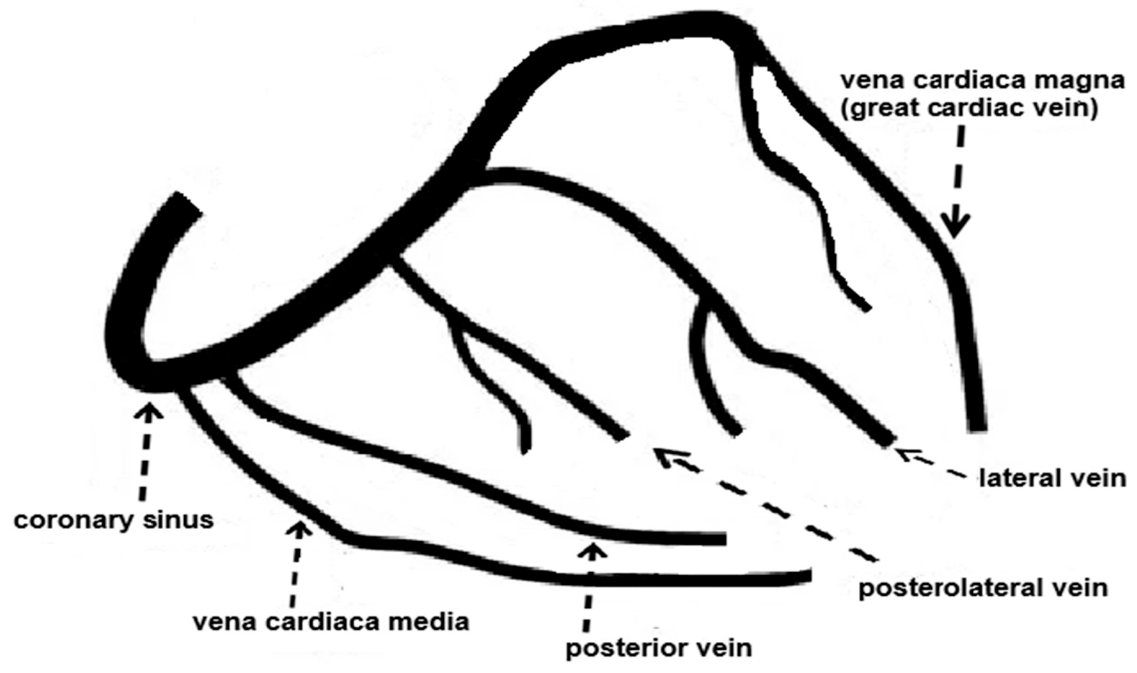
2.2. Histological and Anatomical Features
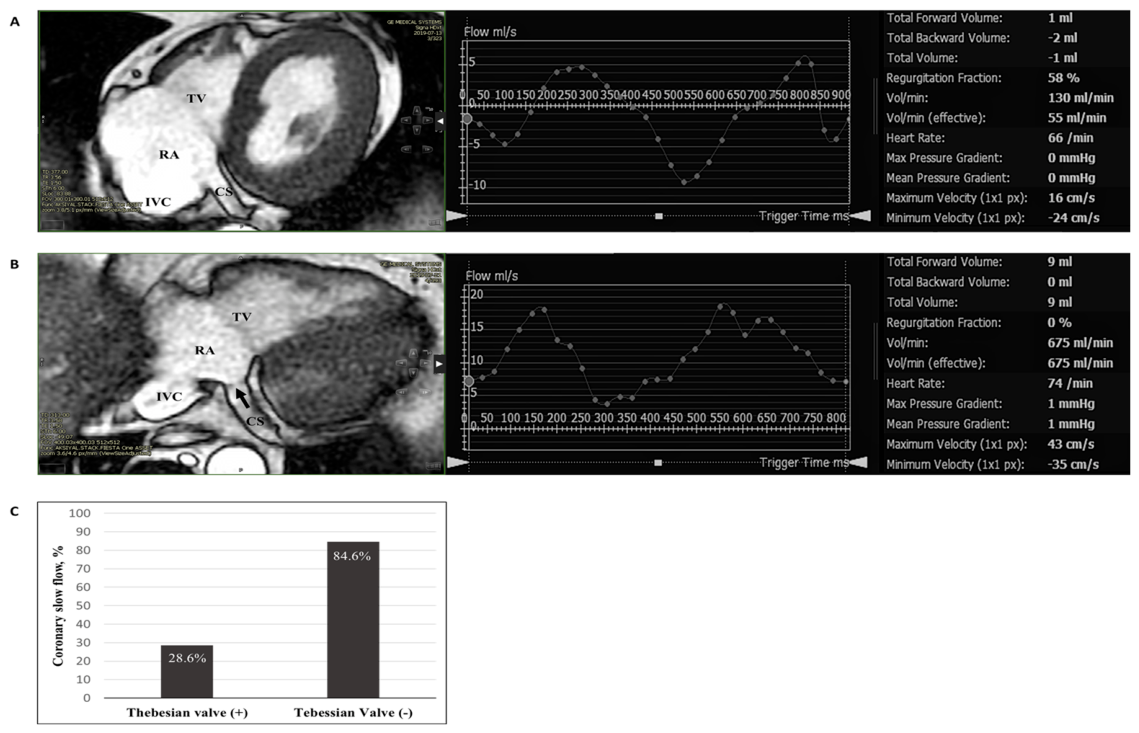
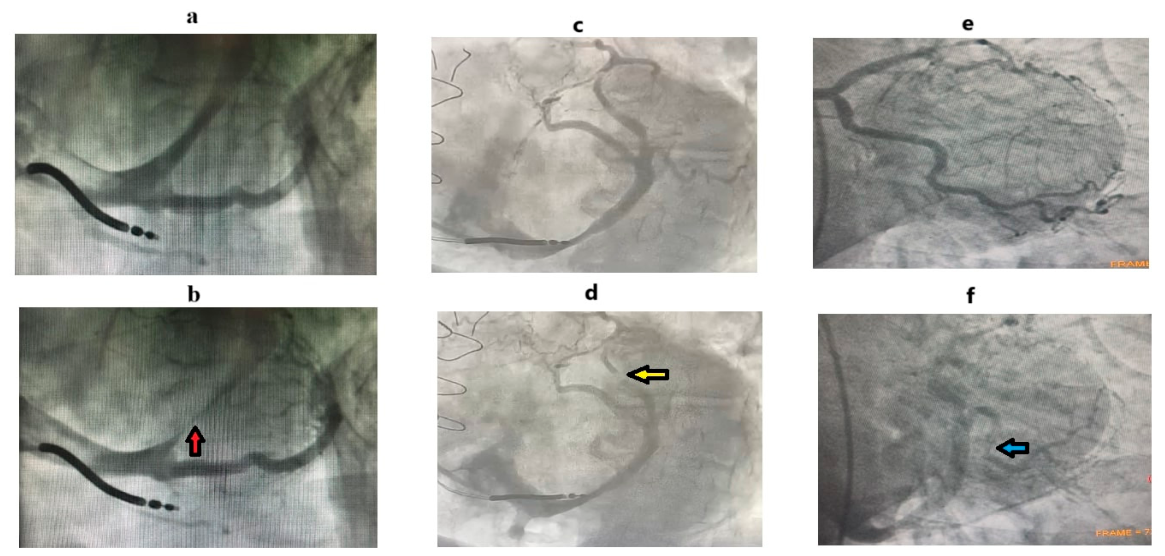
2.3. Coronary Venous System Anomalies and Their Influence on Coronary Arterial Perfusion
3. Hemodynamics of the Coronary Venous System in ACS
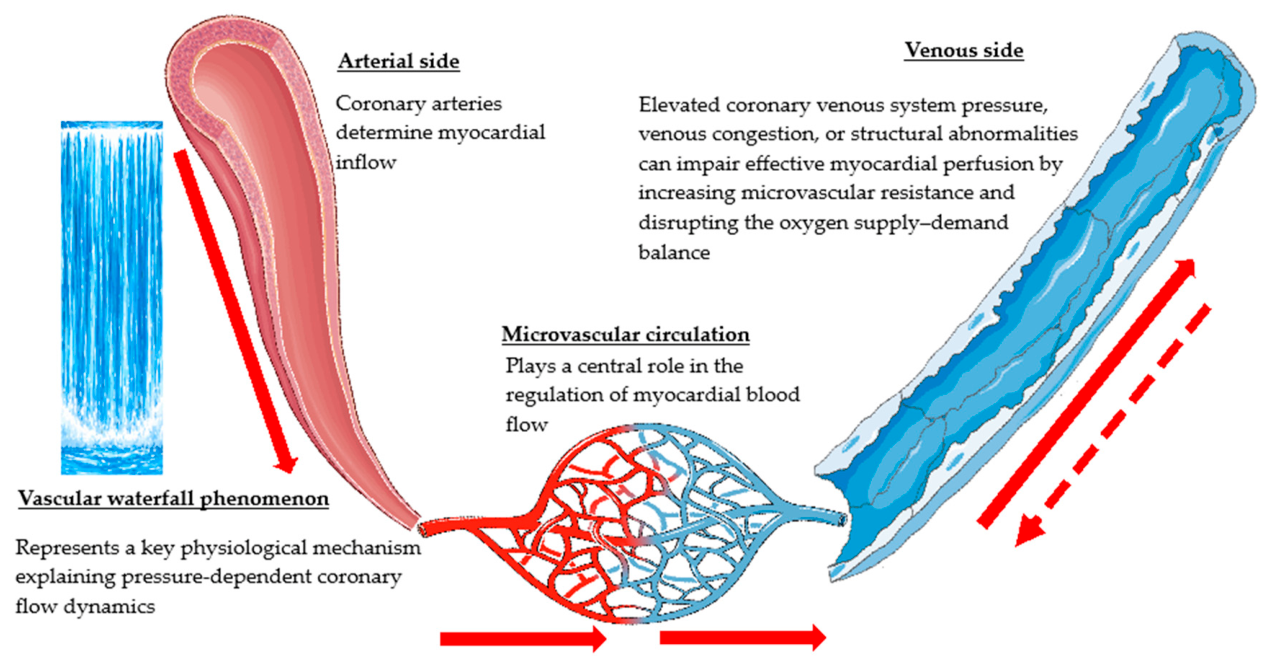
3.1. Dynamics of Blood Flow in the Coronary Venous System
3.2. Coronary Venous System and MINOCA
3.3. Studies Examining the Coronary Venous System in ACS
3.4. Interventions via the Coronary Venous System in ACS
3.5. New Knowledge, Novelty, and Future Directions
4. Conclusions
Author Contributions
Funding
Institutional Review Board Statement
Informed Consent Statement
Data Availability Statement
Conflicts of Interest
Abbreviations
| ACS | Acute coronary syndrome |
| AMI | Acute myocardial infarction |
| AP | Angina pectoris |
| CABG | Coronary artery bypass grafting |
| CAD | Coronary artery disease |
| CAG | Coronary angiography |
| CCTA | Coronary computed tomography angiography |
| CFR | Coronary flow reserve |
| CMR | Cardiac magnetic resonance |
| COUP-TFII | Chicken ovalbumin upstream promoter-transcription factor -II |
| CoVI | Coronary venous insufficiency |
| CS | Coronary sinus |
| CSBF | Coronary sinus blood flow |
| CVD | Cardiovascular disease |
| CVS | Coronary venous system |
| EPDCs | Epicardial-derived cells |
| FFR | Fractional flow reserve |
| g-CFR | Global coronary flow reserve |
| h-CSF | Hyperemic coronary sinus flow |
| LAD | Left anterior descending artery |
| LMCA | Left main coronary artery |
| LVEF | Left ventricular ejection fraction |
| MACE | Major adverse cardiac events |
| MFR | Myocardial flow reserve |
| MINOCA | Myocardial infarction with non-obstructive coronary arteries |
| MVB | Myocardial venous bridge |
| MVD | Microvascular dysfunction |
| PCI | Percutaneous coronary intervention |
| PDGF | Platelet-derived growth factor |
| PET | Positron emission tomography |
| PiCSO | Pressure-controlled intermittent coronary sinus occlusion |
| PLSVC | Persistent left superior vena cava |
| STEMI | ST-segment elevation myocardial infarction |
| TEE | Transesophageal echocardiography |
| TGF-β | Transforming growth factor-beta |
| TTE | Transthoracic echocardiography |
| VEGF | Vascular endothelial growth factor |
| VTI | Velocity time integral |
References
- Palaniappan, L.P.; Allen, N.B.; Almarzooq, Z.I.; Anderson, C.A.M.; Arora, P.; Avery, C.L.; Baker-Smith, C.M.; Bansal, N.; Currie, M.E.; Earlie, R.S.; et al. 2026 Heart Disease and Stroke Statistics: A Report of US and Global Data From the American Heart Association. Circulation 2026, 153, 9. [Google Scholar] [CrossRef]
- Díez-Villanueva, P.; Jiménez-Méndez, C.; Cepas-Guillén, P.; Arenas-Loriente, A.; Fernández-Herrero, I.; García-Pardo, H.; Díez-Delhoyo, F. Current Management of Non-ST-Segment Elevation Acute Coronary Syndrome. Biomedicines 2024, 12, 1736. [Google Scholar] [CrossRef]
- Rittiphairoj, T.; Bulstra, C.; Ruampatana, C.; Stavridou, M.; Grewal, S.; Reddy, C.L.; Atun, R. The economic burden of ischaemic heart diseases on health systems: A systematic review. BMJ Glob. Health 2025, 10, e015043. [Google Scholar] [CrossRef]
- Shakya, S.; Shrestha, A.; Robinson, S.; Randall, S.; Mnatzaganian, G.; Brown, H.; Boyd, J.; Xu, D.; Lee, C.M.Y.; Brumby, S.; et al. Global comparison of the economic costs of coronary heart disease: A systematic review and meta-analysis. BMJ Open 2025, 15, e084917. [Google Scholar] [CrossRef]
- Kazi, D.S.; Elkind, M.S.V.; Deutsch, A.; Dowd, W.N.; Heidenreich, P.; Khavjou, O.; Mark, D.; Mussolino, M.E.; Ovbiagele, B.; Patel, S.S.; et al. Forecasting the Economic Burden of Cardiovascular Disease and Stroke in the United States Through 2050: A Presidential Advisory From the American Heart Association. Circulation 2024, 150, e89–e101. [Google Scholar] [CrossRef]
- Pintos-Rodríguez, S.; Jiménez Díaz, V.A.; Veiga, C.; Martínez García, C.; Caamaño Isorna, F.; Íñiguez Romo, A.; Juan-Salvadores, P. Coronary Artery Disease in Very Young Women: Risk Factors and Prognostic Insights from Extended Follow-Up. J. Cardiovasc. Dev. Dis. 2025, 12, 34. [Google Scholar] [CrossRef] [PubMed]
- Song, J.; Yuan, K.; Huang, Y.; Chen, Z.; Wang, X.; Wang, Z.; Zhang, L. Global, regional, and national burden of ischemic heart disease in young and middle-aged population from 1990 to 2021. Sci. Rep. 2025, 15, 41982. [Google Scholar] [CrossRef] [PubMed]
- Angeli, F.; Bucciarelli, V.; Moscucci, F.; Sciomer, S.; Ricci, F.; Coppi, F.; Bergamaschi, L.; Armillotta, M.; Casuso, A.M.; Renda, G.; et al. Gender and Sex-related differences in Type 2 Myocardial Infarction: The undervalued side of a neglected disease. Trends Cardiovasc. Med. 2026, 36, 27–34. [Google Scholar] [CrossRef] [PubMed]
- Handari, S.D.; Rohman, M.S.; Sargowo, D.; Aulanni’am; Qosimah, D.; Lestari, B.; Nugraha, R.A. Targeting Inflammation with Galectin-3 and PIIINP Modulation Among ST-Segment Elevation Acute Coronary Syndrome Patients Underwent Delayed Percutaneous Coronary Intervention. Biomedicines 2025, 13, 259. [Google Scholar] [CrossRef]
- Vargas-Alarcón, G.; Pérez-Méndez, Ó.; Posadas-Sánchez, R.; González-Pacheco, H.; Luna-Luna, M.; Escobedo, G.; Fragoso, J.M. Associations of the CYP7A1 Gene Polymorphisms Located in the Promoter and Enhancer Regions with the Risk of Acute Coronary Syndrome, Plasma Cholesterol, and the Incidence of Diabetes. Biomedicines 2024, 12, 617. [Google Scholar] [CrossRef]
- Yin, L.; Wang, X.; Xiong, N.; Xiong, J.; Liu, Q.; Li, H.; Huang, Y.; Lv, J.; Wang, Y.; Wang, Z. The Role of the NF-κB Signaling Pathway in Atherosclerotic Plaque Rupture and Targeted Therapeutic Strategies. Biomedicines 2026, 14, 201. [Google Scholar] [CrossRef]
- Mitsis, A.; Myrianthefs, M.; Sokratous, S.; Karmioti, G.; Kyriakou, M.; Drakomathioulakis, M.; Tzikas, S.; Kadoglou, N.P.E.; Karagiannidis, E.; Nasoufidou, A.; et al. Emerging Therapeutic Targets for Acute Coronary Syndromes: Novel Advancements and Future Directions. Biomedicines 2024, 12, 1670. [Google Scholar] [CrossRef] [PubMed]
- Thygesen, K.; Alpert, J.S.; Jaffe, A.S.; Chaitman, B.R.; Bax, J.J.; Morrow, D.A.; White, H.D.; ESC Scientific Document Group. Fourth universal definition of myocardial infarction (2018). Eur. Heart J. 2019, 40, 237–269. [Google Scholar] [CrossRef]
- Rao, S.V.; O’Donoghue, M.L.; Ruel, M.; Rab, T.; Tamis-Holland, J.E.; Alexander, J.H.; Baber, U.; Baker, H.; Cohen, M.G.; Cruz-Ruiz, M.; et al. 2025 ACC/AHA/ACEP/NAEMSP/SCAI Guideline for the management of patients with acute coronary syndromes. Circulation 2025, 85, 2135–2237. [Google Scholar] [CrossRef]
- Downey, J.M.; Kirk, E.S. Inhibition of coronary blood flow by a vascular waterfall mechanism. Circ. Res. 1975, 36, 753–760. [Google Scholar] [CrossRef] [PubMed]
- Wahba, A.; Kunst, G.; De Somer, F.; Agerup, K.H.; Milne, B.; Kjellberg, G.; Bauer, A.; Beyersdorf, F.; Berg, R.H.; Debeuckelaere, G.; et al. 2024 EACTS/EACTAIC/EBCP Guidelines on cardiopulmonary bypass in adult cardiac surgery. Interdiscip. Cardiovasc. Thorac. Surg. 2025, 40, ivaf002. [Google Scholar]
- De Maria, G.L.; Greenwood, J.P.; Zaman, A.G.; Carrié, D.; Coste, P.; Valgimigli, M.; Behan, M.; Berry, C.; Erglis, A.; Panoulas, V.F.; et al. Pressure-Controlled Intermittent Coronary Sinus Occlusion (PiCSO) in Acute Myocardial Infarction: The PiCSO-AMI-I Trial. Circ. Cardiovasc. Interv. 2024, 17, e013675. [Google Scholar] [CrossRef]
- Tomaniak, M.; Bednarek, A.; Włodarczak, A. Coronary Sinus Reduction for Refractory Angina Caused by Microvascular Dysfunction—A Systematic Review. J. Clin. Med. 2026, 15, 291. [Google Scholar] [CrossRef]
- Veeraraghavan, S.; Kidambi, B.R.; Naik, S.K.; Manohar, T.R.; Vijay, S.; Varshney, A.; Munisingh, A. The Missing Coronary: A Case Series of Inferior Wall Myocardial Infarction Due to Coronary Anomalies. Cureus 2024, 16, e65288. [Google Scholar] [CrossRef]
- Giordano, M.; Evangelista, M.; Piccinelli, E.; Moscatelli, S.; Sirico, D.; Meliota, G.; Giovanna Russo, M.; Butera, G.; Castaldi, B.; Chessa, M.; et al. Anomalous Coronary Artery Origin from Pulmonary Artery and Coronary Fistulas: A Review About Coronary Steal Phenomenon. Children 2026, 13, 424. [Google Scholar] [CrossRef] [PubMed]
- Zhang, C.; Shi, D. Left anomalous coronary artery originating from the opposite sinus causes acute myocardial infarction with syncope in a young woman: A case report. Medicine 2024, 103, e39850. [Google Scholar] [CrossRef] [PubMed]
- Evangelista, M.; Ferrero, P.; D’Aiello, A.F.; Negura, D.; Micheletti, A.; Bevilacqua, F.; Pasqualin, G.; Chessa, M. Coronary artery anomalies: What are they? when to suspect? how to treat? a narrative review. Transl. Pediatr. 2024, 13, 1242–1257. [Google Scholar] [CrossRef] [PubMed]
- Thiene, G.; Frescura, C.; Padalino, M.; Basso, C.; Rizzo, S. Coronary Arteries: Normal Anatomy with Historical Notes and Embryology of Main Stems. Front. Cardiovasc. Med. 2021, 8, 649855. [Google Scholar] [CrossRef]
- Nowak, D.; Kozłowska, H.; Żurada, A.; Jerzy, G. Development of the cardiac venous system in prenatal human life. Cent. Eur. J. Med. 2011, 6, 227–232. [Google Scholar] [CrossRef][Green Version]
- Nordick, K.; Weber, C.; Singh, P. Anatomy, Thorax, Heart Thebesian Veins. In StatPearls; StatPearls Publishing: Treasure Island, FL, USA, 2025. [Google Scholar]
- Aoyagi, Y.; Schwartz, A.W.; Li, Z.; Bai, H.; Gonzalez, L.; Lazcano, E.C.; Ohashi, Y.; Kano, M.; Ho, B.; Martin, K.; et al. Changes in vascular identity during vascular remodeling. JVS-Vasc. Sci. 2025, 6, 100282. [Google Scholar] [CrossRef]
- Herbert, S.P.; Stainier, D.Y.R. Molecular control of endothelial cell behaviour during blood vessel morphogenesis. Nat. Rev. Mol. Cell Biol. 2011, 12, 551–564. [Google Scholar] [CrossRef]
- You, L.R.; Lin, F.J.; Lee, C.T.; DeMayo, F.J.; Tsai, M.J.; Tsai, S.Y. Suppression of Notch signalling by the COUP-TFII transcription factor regulates vein identity. Nature 2005, 435, 98–104. [Google Scholar] [CrossRef]
- Hamada, K.; Oike, Y.; Ito, Y.; Maekawa, H.; Miyata, K.; Shimomura, T.; Suda, T. Distinct roles of ephrin-B2 forward and EphB4 reverse signaling in endothelial cells. Arterioscler. Thromb. Vasc. Biol. 2003, 23, 190–197. [Google Scholar] [CrossRef] [PubMed]
- Yıldırım, Ö.T.; Özgeyik, M. Embryology of the coronary venous system. In Coronary Venous System Diseases, 1st ed.; Altay, S., Akşit, E., Kemaloğlu Öz, T., Eds.; Türkiye Klinikleri: Ankara, Turkey, 2025; pp. 2–8. [Google Scholar]
- Barceló, A.; De la Fuente, L.M.; Stertzer, S.H. Anatomic and Histologic Review of the Coronary Sinus. Int. J. Morphol. 2004, 22, 331–338. [Google Scholar] [CrossRef]
- Agarwal, J.; Agarwal, A.; Kumar, V.; Devendra, N.S.; Sudhahar, T.; Naithani, M. Morphological and histological study of coronary sinus in human hearts from north-western region of Uttar Pradesh and its clinical implication. Asian J. Med. Sci. 2022, 13, 43–47. [Google Scholar] [CrossRef]
- Arslan, M. Histology of the coronary venous system. In Coronary Venous System Diseases, 1st ed.; Altay, S., Akşit, E., Kemaloğlu Öz, T., Eds.; Türkiye Klinikleri: Ankara, Turkey, 2025; pp. 10–12. [Google Scholar]
- Kugler, S.; Nagy, N.; Rácz, G.; Tőkés, A.M.; Dorogi, B.; Nemeskéri, Á. Presence of cardiomyocytes exhibiting Purkinje-type morphology and prominent connexin45 immunoreactivity in the myocardial sleeves of cardiac veins. Heart Rhythm 2018, 15, 258–264. [Google Scholar] [CrossRef] [PubMed]
- Zhang, J. Stringer Ophthalmic and facial veins are not valveless. Clin. Exp. Ophthalmol. 2010, 38, 502–510. [Google Scholar] [CrossRef]
- Saremi, F.; Muresian, H.; Sánchez-Quintana, D. Coronary veins: Comprehensive CT-anatomic classification and review of variants and clinical implications. Radiographics 2012, 32, E1–E32. [Google Scholar] [CrossRef]
- Sirajuddin, A.; Chen, M.Y.; White, C.S.; Arai, A.E. Coronary venous anatomy and anomalies. J. Cardiovasc. Comput. Tomogr. 2020, 14, 80–86. [Google Scholar] [CrossRef] [PubMed]
- Mahmud, E.; Raisinghani, A.; Keramati, S.; Auger, W.; Blanchard, D.G.; DeMaria, A.N. Dilation of the coronary sinus on echocardiogram: Prevalence and significance in patients with chronic pulmonary hypertension. J. Am. Soc. Echocardiogr. 2001, 14, 44–49. [Google Scholar] [CrossRef] [PubMed]
- Lee, M.S.; Shah, A.P.; Dang, N.; Berman, D.; Forrester, J.; Shah, P.K.; Aragon, J.; Jamal, F.; Makkar, R.R. Coronary sinus is dilated and outwardly displaced in patients with mitral regurgitation: Quantitative angiographic analysis. Catheter. Cardiovasc. Interv. 2006, 67, 490–494. [Google Scholar] [CrossRef] [PubMed]
- Gondorf, D.; Triantafyllou, G.; Paschopoulos, I.; Arkoudis, N.A.; Prountzos, S.; Samolis, A.; Tsakotos, G.; Piagkou, M. Prevalence of persistent left superior vena cava in the general population: A systematic review with meta-analysis. Anat. Sci. Int. 2026; Epub ahead of print. [CrossRef]
- Bisbee, C.R.; Sherard, C.; Rajab, T.K. Left Superior Vena Cava Draining to Left Atrium: A Case Report, Review of the Literature, and Classification. Pediatr. Cardiol. 2024, 45, 1838–1840. [Google Scholar] [CrossRef]
- Goerne, H.; Rajiah, P.S. Total Anomalous Pulmonary Venous Return. Radiology 2023, 307, e222085. [Google Scholar] [CrossRef]
- Jong, W.; Yee, S.; Srivastava, R.; Alkhars, H.; Lichtenberger, J.P., 3rd. Pulmonary Venous Anomalies in the Adult. Semin. Roentgenol. 2025, 62, 150966. [Google Scholar] [CrossRef]
- Mladenovic Markovic, A.; Tomic, A.; Nisevic, M.; Nedeljkovic Arsenovic, O.; Vukmirovic, J.; Kostic, J.; Filipovic, A.; Bogdanovic, L.; Giga, V. Chest Discomfort: Could Coronary Pathology Extend Beyond Atherosclerosis? J. Clin. Med. 2026, 15, 1185. [Google Scholar] [CrossRef]
- Awad, A.K.; Tang, A.; Pettersson, G.B.; Koprivanac, M.; Bakaeen, F.G. Right Coronary Artery to Coronary Sinus Fistula: A Rare Problem with an Elegant Solution. JACC Case Rep. 2026, 31, 106297. [Google Scholar] [CrossRef] [PubMed]
- Wei, P.; Li, Y.; Li, X.; Zhu, W.; Xu, L.; Wan, J.; Zhang, F.; Tse, G.; Chan, J.S.K.; Wang, S.; et al. Prevalence, management, and prognosis of isolated coronary artery fistulas: A 12-year single-center retrospective computed tomographic study. Quant. Imaging Med. Surg. 2026, 16, 174. [Google Scholar] [CrossRef] [PubMed]
- Mahdy, T.; Mansour, M.; Hoey, E.; Bhatia, G.; Pulikal, G. Conservative Management of a Rare Congenital Left Circumflex Coronary Artery Fistula Draining Into the Coronary Sinus. JACC Case Rep. 2026, 31, 106039. [Google Scholar] [CrossRef] [PubMed]
- Kaplan, B.; Evans, W.N.; Restrepo, H.; Rothman, A. Atresia of the Midportion of the Coronary Sinus: A Case Report. World J. Pediatr. Congenit. Heart Surg. 2022, 13, 802–804. [Google Scholar] [CrossRef]
- Kumar, V.; Kumar, V.; Arora, V. A rare case of hypoplastic coronary sinus partially draining into right superior vena cava: A case report. Pacing Clin. Electrophysiol. 2021, 44, 178–180. [Google Scholar] [CrossRef]
- Song, G.; Ren, W.; Chen, Y. Coronary Sinus Orifice Atresia Associated with Persistent Left Superior Vena Cava: A Case Report with Literature Review. Echocardiography 2016, 33, 926–931. [Google Scholar] [CrossRef]
- Pan, C.; Huang, A.H.; Dorsey, L.M. Hemodynamic significance of the coronary vein valves. Ann. Thorac. Surg. 1994, 57, 424. [Google Scholar] [CrossRef]
- Akşit, E.; Barutçu, A.; Şehitoğlu, M.H.; Kıırlmaz, B.; Arslan, M.; Gazi, E.; Tok, Ö.Ö. Association of abnormal coronary sinus reflux with coronary slow flow and importance of the Thebesian valve. Int. J. Cardiol. 2020, 319, 26–31. [Google Scholar] [CrossRef]
- Wu, S.; Wu, D.; Li, X. Unveiling the Masquerading of Myocardial Bridging in Cardiovascular Diseases. Rev. Cardiovasc. Med. 2025, 26, 36868. [Google Scholar] [CrossRef]
- Daba, M.; Bineyam, D.; Yohannes, I.; Yohannes, B.; Waktola, R.; Bedada, E. Myocardial Bridging, Unusual Cause of Myocardial Infarction; Case Report and Review of Literature. Clin. Case Rep. 2025, 13, e70055. [Google Scholar] [CrossRef]
- De Ornelas, B.; Sucato, V.; Vadalà, G.; Buono, A.; Galassi, A.R. Myocardial Bridge and Atherosclerosis, an Intimal Relationship. Curr. Atheroscler. Rep. 2024, 26, 353–366. [Google Scholar] [CrossRef]
- Matta, A.; Roncalli, J.; Carrié, D. Update review on myocardial bridging: New insights. Trends Cardiovasc. Med. 2024, 34, 10–15. [Google Scholar] [CrossRef]
- Akşit, E.; Taylan, G.; Küçük, U.; Kırılmaz, B. Myocardial Venous Bridge: Images of the First Cases Detected by Conventional Angiography and Venography. Balk. Med. J. 2025, 42, 485–486. [Google Scholar] [CrossRef]
- Watanabe, Y.; Arakawa, T.; Kageyama, I.; Aizawa, Y.; Kumaki, K.; Miki, A.; Terashima, T. Gross anatomical study on the human myocardial bridges with special reference to the spatial relationship among coronary arteries, cardiac veins, and autonomic nerves. Clin. Anat. 2016, 29, 333–341. [Google Scholar] [CrossRef]
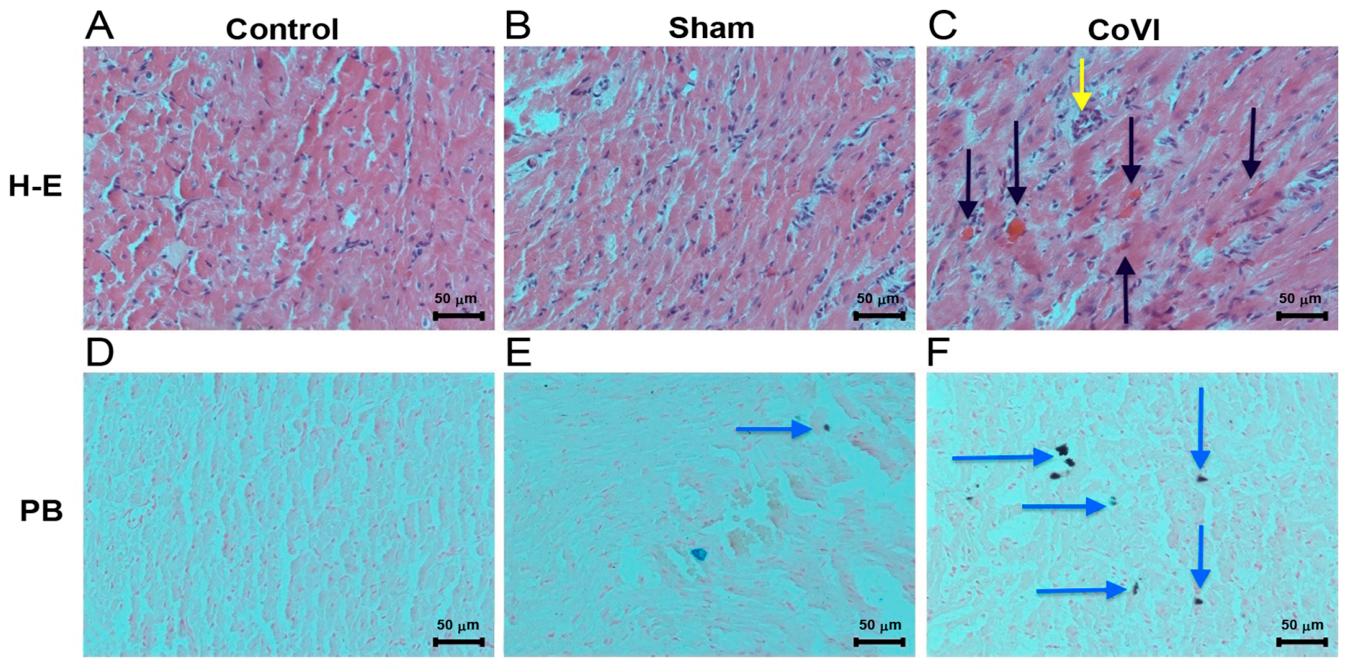
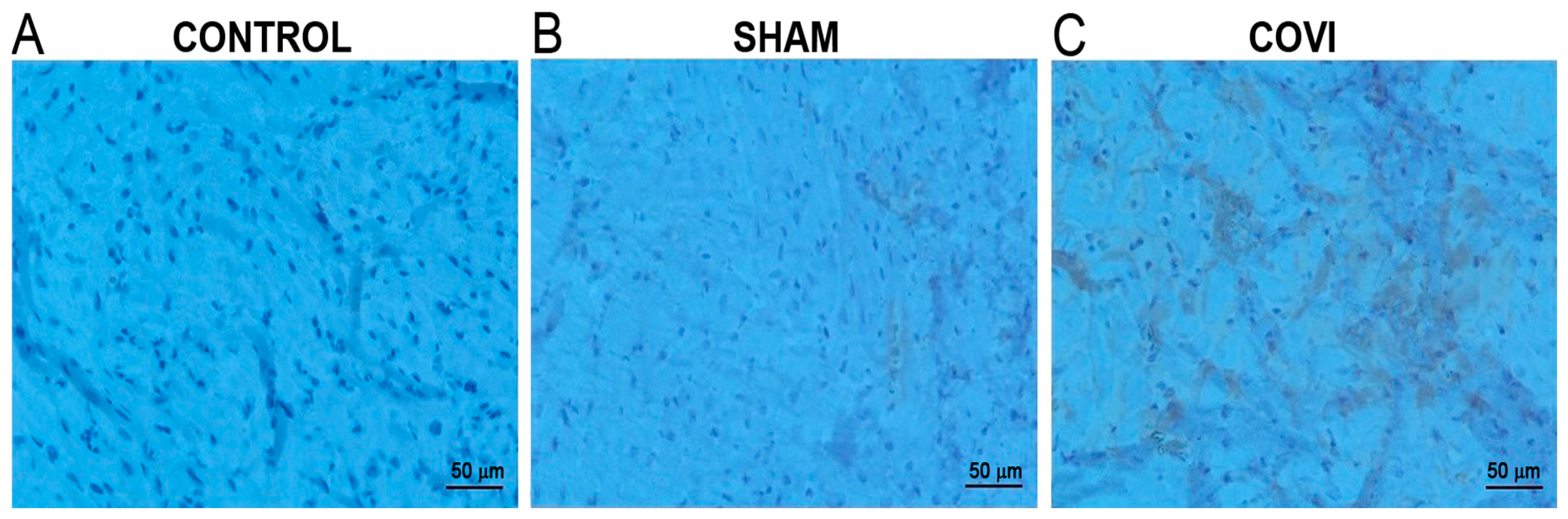
- Akşit, E.; Büyük, B.; Oğuz, S. Histopathological changes in myocardial tissue due to coronary venous hypertension. Arch. Med. Sci. 2020, 19, 1714–1720. [Google Scholar] [CrossRef]
- Marinescu, D.; Barbu, L.A.; Cojan, T.S.Ț.; Pătrascu, Ș.; Bică, M.; Marinescu, R.A.; Săndulescu, S.M.; Șurlin, V.; Ciurea, A.-M. Concomitant Venous Disease in Patients with Advanced Peripheral Arterial Disease: A Patient- and Limb-Level Analysis. Life 2026, 16, 312. [Google Scholar] [CrossRef] [PubMed]
- Ammermann, F.; Meinel, F.G.; Beller, E.; Busse, A.; Streckenbach, F.; Teichert, C.; Weinrich, M.; Neumann, A.; Weber, M.A.; Heller, T. Concomitant chronic venous insufficiency in patients with peripheral artery disease: Insights from MR angiography. Eur. Radiol. 2020, 30, 3908–3914. [Google Scholar] [CrossRef] [PubMed]
- Matic, M.; Matic, A.; Djuran, V.; Gajinov, Z.; Prcic, S.; Golusin, Z. Frequency of Peripheral Arterial Disease in Patients with Chronic Venous Insufficiency. Iran. Red Crescent Med. J. 2016, 18, e20781. [Google Scholar] [CrossRef] [PubMed]
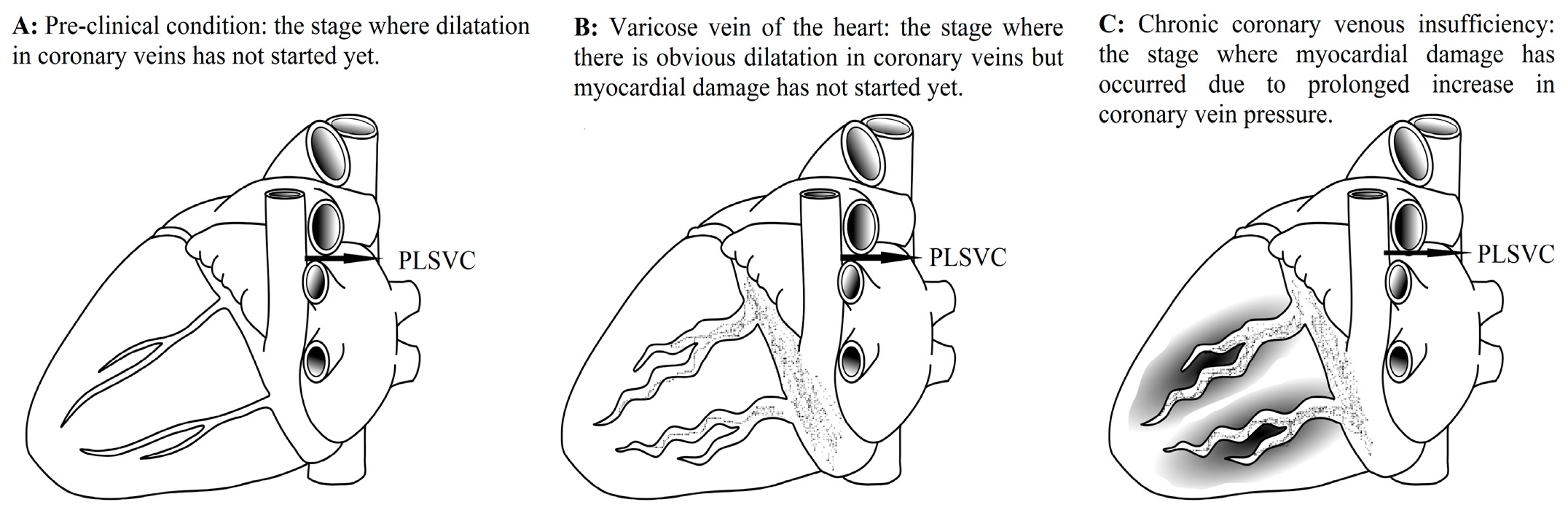
- Akşit, E.; Oğuz, S.; Aşgün, H.F.; Gazi, E.; Kırılmaz, B.; Yıldırım, Ö.T. How Does Persistent Left Superior Vena Cava Affect Human Heart Health? Acta Cardiol. Sin. 2021, 37, 321–322. [Google Scholar]
- Ahmed, S.A.; Dahir, O.F.; Abdi, A.E.; Adan, A.S.; Abdi, I.A.; Waberi, M.M.; Mohamud, M.A.; Fujeyra, A.M.H.; Ali, A.A.; Ahmed, M.A.M. Late Presentation of Isolated Persistent Left Superior Vena Cava with Absent Right Superior Vena Cava Manifesting as Heart Failure: A Case Report. Int. Med. Case Rep. J. 2025, 18, 811–816. [Google Scholar] [CrossRef]
- Sorensen, C.; Shahab, A.; Hu, J.; Dendi, R.; Emert, M.; Noheria, A.; Pimentel, R.; Ramirez, R.; Reddy, Y.M.; Sheldon, S.H. Impact of Persistent Left Superior Vena Cava on Outcomes with Atrial Fibrillation Ablation. Pacing Clin. Electrophysiol. 2025, 48, 1176–1183. [Google Scholar] [CrossRef] [PubMed]
- Akşit, E.; Taylan, G.; Çinier, G.; Karabay, C.Y.; Akgün, T. Persistent left superior vena cava: Is it an incidental pathology detected during pacemaker implantation or one of the causes of sick sinus syndrome? Europace 2022, 24, 173. [Google Scholar] [CrossRef]
- Smolarek, D.; Jankowska, H.; Dorniak, K.; Hellmann, M. A rare case of isolated persistent left superior vena cava diagnosed by echocardiography. J. Cardiothorac. Surg. 2024, 19, 175. [Google Scholar] [CrossRef]
- Moey, M.Y.Y.; Ebin, E.; Marcu, C.B. Venous varices of the heart: A case report of spontaneous coronary sinus thrombosis with persistent left superior vena cava. Eur. Heart J. Case Rep. 2018, 2, yty092. [Google Scholar] [CrossRef] [PubMed]
- Carabello, A.B. Understanding Coronary Blood Flow: The Wave of the Future. Circulation 2006, 113, 1721–1722. [Google Scholar] [CrossRef] [PubMed]
- Gregg, E.D. Effect of Coronary Perfusion Pressure or Coronary Flow on Oxygen Usage of the Myocardium. Circ. Res. 1963, 13, 497–500. [Google Scholar] [CrossRef]
- Sivashanmugarajah, A.S.; Roberts-Thomson, R. Coronary Venous System Physiology, Microcirculation and Venous Return. In Coronary Venous System Diseases, 1st ed.; Altay, S., Akşit, E., Kemaloğlu Öz, T., Eds.; Türkiye Klinikleri: Ankara, Turkey, 2025; pp. 27–38. [Google Scholar]
- Rouleau, J.R.; White, M. Effects of coronary sinus pressure elevation on coronary blood flow distribution in dogs with normal preload. Can. J. Physiol. Pharmacol. 1985, 63, 787–797. [Google Scholar] [CrossRef]
- Goodwill, A.G.; Dick, G.M.; Kiel, A.M.; Tune, J.D. Regulation of Coronary Blood Flow. Compr. Physiol. 2017, 7, 321–382. [Google Scholar] [CrossRef]
- Pang, C.C. Autonomic control of the venous system in health and disease: Effects of drugs. Pharmacol. Ther. 2001, 90, 179–230. [Google Scholar] [CrossRef]
- Davis, M.J.; Hill, M.A. Signaling mechanisms underlying the vascular myogenic response. Physiol. Rev. 1999, 79, 387–423. [Google Scholar] [CrossRef]
- Gori, T.; Münzel, T. Oxidative stress and endothelial dysfunction: Therapeutic implications. Ann. Med. 2011, 43, 259–272. [Google Scholar] [CrossRef]
- Seiler, C. The human coronary collateral circulation. Heart 2003, 89, 1352–1357. [Google Scholar] [CrossRef] [PubMed]
- Tousoulis, D.; Kampoli, A.M.; Tentolouris, C.; Papageorgiou, N.; Stefanadis, C. The role of nitric oxide on endothelial function. Curr. Vasc. Pharmacol. 2012, 10, 4–18. [Google Scholar] [CrossRef] [PubMed]
- Beghini, A.; Sammartino, A.M.; Papp, Z.; von Haehling, S.; Biegus, J.; Ponikowski, P.; Adamo, M.; Falco, L.; Lombardi, C.M.; Pagnesi, M.; et al. 2024 update in heart failure. ESC Heart Fail. 2025, 12, 8–42. [Google Scholar] [CrossRef] [PubMed]
- McDonagh, T.A.; Metra, M.; Adamo, M.; Gardner, R.S.; Baumbach, A.; Böhm, M.; Burri, H.; Butler, J.; Čelutkienė, J.; Chioncel, O.; et al. 2023 Focused Update of the 2021 ESC Guidelines for the diagnosis and treatment of acute and chronic heart failure. Eur. Heart J. 2023, 44, 3627–3639. [Google Scholar] [CrossRef]
- Miyahara, K.; Sakamoto, H.; Sakamoto, H.; Satoh, E. Myocardial infarction induced by coronary venous thrombosis-an experimental study. Jpn. Circ. J. 1990, 54, 1165–1173. [Google Scholar] [CrossRef]
- Wells, C.A.; Senior, A.J. Coronary sinus thrombosis and myocardial infarction secondary to ventriculoatrial shunt insertion. J. Pediatr. Surg. 1990, 25, 1214–1215. [Google Scholar] [CrossRef]
- Yeo, K.K.; Davenport, J.; Raff, G.; Laird, J.R. Life-threatening coronary sinus thrombosis following catheter ablation: Case report and review of literature. Cardiovasc. Revasc. Med. 2010, 11, 262.e1–262.e5. [Google Scholar] [CrossRef]
- Yi, C. Coronary sinus thrombosis: Insights from a comprehensive literature review. Thromb. J. 2025, 23, 24. [Google Scholar] [CrossRef]
- Szymczyk, K.; Polguj, M.; Szymczyk, E.; Majos, A.; Grzelak, P.; Stefańczyk, L. Persistent left superior vena cava with an absent right superior vena cava in a 72-year-old male with multivessel coronary artery disease. Folia Morphol. 2013, 72, 271–273. [Google Scholar] [CrossRef][Green Version]
- Kusaka, Y.; Sawai, T.; Nakahira, J.; Minami, T. Persistent left superior vena cava with absent right superior vena cava detected during emergent coronary artery bypass grafting surgery. JA Clin. Rep. 2015, 1, 2. [Google Scholar] [CrossRef]
- Jan, M.; Kumari, U.; Hassan, Z.; Daggula, N.R.; Surani, S. Concomitant Coronary Artery Disease and Persistent Left Superior Vena Cava in a Patient Presenting with Symptomatic Sinus Bradycardia: A Case Report. Cureus 2023, 15, e37579. [Google Scholar] [CrossRef]
- Xie, J.; Chen, A.; Ma, Z.; Xu, X.; Wei, X. Intramyocardial dissecting hematoma associated with a coronary sinus diverticulum: A rare cause of chest pain. Intern. Emerg. Med. 2023, 18, 667–669. [Google Scholar] [CrossRef]
- Sun, Y.; Arruda, M.; Otomo, K.; Beckman, K.; Nakagawa, H.; Calame, J.; Po, S.; Spector, P.; Lustgarten, D.; Herring, L.; et al. Coronary sinus-ventricular accessory connections producing posteroseptal and left posterior accessory pathways: Incidence and electrophysiological identification. Circulation 2002, 106, 1362–1367. [Google Scholar] [CrossRef] [PubMed]
- Kurt, I.H. Myocardial infarction caused by a fistula between the left anterior descending coronary artery and the left ventricle. Tex. Heart Inst. J. 2009, 36, 177–179. [Google Scholar]
- Dadarwal, A.; Kapoor, A.; Sahu, A.K. Peculiar association of a small coronary arteriovenous fistula with inferior wall myocardial infarction: A bystander or culprit? Heart India 2022, 10, 160–164. [Google Scholar] [CrossRef] [PubMed]
- Mirmohammadsadeghi, M.; Salimi-Jazi, F.; Rabbani, M. Multiple right coronary artery fistulas to coronary sinus: A case report and literature review. ARYA Atheroscler. 2016, 12, 192–194. [Google Scholar] [PubMed]
- Sharifkazemi, M.; Mohseni-Badalabadi, R.; Hosseinsabet, A.; Hajizeinali, A. Case report: Multimodal imaging diagnosis of a giant coronary artery fistula: A report of two cases. Front. Cardiovasc. Med. 2022, 9, 986078. [Google Scholar] [CrossRef]
- Haddad, A.; Ybarra, L.F. Coronary Artery Fistulas: Algorithmic Approach to Diagnosis and Management. Can. J. Cardiol. 2026, 42, 786–789. [Google Scholar] [CrossRef]
- Murtaza, G.; Mukherjee, D.; Gharacholou, S.M.; Nanjundappa, A.; Lavie, C.J.; Khan, A.A.; Shanmugasundaram, M.; Paul, T.K. An Updated Review on Myocardial Bridging. Cardiovasc. Revasc. Med. 2020, 21, 1169–1179. [Google Scholar] [CrossRef] [PubMed]
- Ji, Q.; Shen, J.; Xia, L.; Ding, W.; Wang, C. Surgical treatment of symptomatic left anterior descending myocardial bridges: Myotomy vs. bypass surgery. Surg. Today 2020, 50, 685–692. [Google Scholar] [CrossRef]
- Mundigler, G.; Zehetgruber, M.; Christ, G.; Siostrzonek, P. Comparison of transesophageal coronary sinus and left anterior descending coronary artery Doppler measurements for the assessment of coronary flow reserve. Clin. Cardiol. 1997, 20, 225–231. [Google Scholar] [CrossRef]
- Vrublevsky, A.V.; Boshchenko, A.A.; Karpov, R.S. Reduced coronary flow reserve in the coronary sinus is a predictor of hemodynamically significant stenoses of the left coronary artery territory. Eur. J. Echocardiogr. 2004, 5, 294–303. [Google Scholar] [CrossRef] [PubMed]
- Ng, D.W.; Vlachonassios, K.; Nimalasuriya, A.R.; Nguyen, V.T.; Wijesekera, C.; Khan, A.; Chandraratna, P.A. Usefulness of transthoracic echocardiography in demonstrating coronary blood flow after coronary artery bypass grafting. Am. J. Cardiol. 2004, 93, 923–925. [Google Scholar] [CrossRef]
- Nishino, M.; Hoshida, S.; Egami, Y.; Kondo, I.; Shutta, R.; Yamaguchi, H.; Tanaka, K.; Tanouchi, J.; Hori, M.; Yamada, Y. Coronary flow reserve by contrast enhanced transesophageal coronary sinus Doppler measurements can evaluate diabetic microvascular dysfunction. Circ. J. 2006, 70, 1415–1420. [Google Scholar] [CrossRef]
- Tabel, G.M.; Vlachonassios, K.; Tabel, M.; Vaghafi, H.; Abdelmessih, N.; Chandraratna, P.A. Detection of impaired coronary flow reserve in coronary artery disease using transthoracic echocardiographic assessment of coronary sinus blood flow. Echocardiography 2006, 23, 843–845. [Google Scholar] [CrossRef]
- Hajaghaei, M.; Maleki, M.; Salehi, H.; Ojaghi, Z.; Noohi, F. Coronary flow reserve measurement in the coronary sinus in pre and post CABG status. Int. Cardiovasc. Res. J. 2007, 1, 87–91. [Google Scholar]
- Toufan, M.; Samadikhah, J.; Alizadeh-Asl, A.; Azarfarin, R.; Hakim, S.H.; Yaghoubi, A.; Farzam, S. Measurement of coronary sinus blood flow after first anterior myocardial infarction with transthoracic echocardiography and its correlation with wall motion scorin index. Saudi Med. J. 2007, 28, 1545–1549. [Google Scholar] [CrossRef]
- Zheng, X.; Ji, P.; Mao, H.; Hu, J. Reduced antegrade flow in the coronary sinus is a predictor of coronary artery stenosis in hypertensive patients. J. Ultrasound Med. 2012, 31, 7–14. [Google Scholar] [CrossRef]
- Haridasan, V.; Nandan, D.; Raju, D.; Rajesh, G.N.; Sajeev, C.G.; Vinayakumar, D.; Muneer, K.; Babu, K.; Krishnan, M.N. Coronary sinus filling time: A novel method to assess microcirculatory function in patients with angina and normal coronaries. Indian Heart J. 2013, 65, 142–146. [Google Scholar] [CrossRef]
- Meenakshi, K.; Swaminathan, S.; Manickam, R. Role of transthoracic echocardiography in the estimation of coronary sinus blood flow in coronary artery disease. Heart Asia 2013, 5, 168–171. [Google Scholar] [CrossRef]
- Nakamori, S.; Sakuma, H.; Dohi, K.; Ishida, M.; Tanigawa, T.; Yamada, A.; Takase, S.; Nakajima, H.; Sawai, T.; Masuda, J.; et al. Combined Assessment of Stress Myocardial Perfusion Cardiovascular Magnetic Resonance and Flow Measurement in the Coronary Sinus Improves Prediction of Functionally Significant Coronary Stenosis Determined by Fractional Flow Reserve in Multivessel Disease. J. Am. Heart Assoc. 2018, 7, e007736. [Google Scholar] [CrossRef]
- Lyubarova, R.; Boden, W.E.; Fein, S.A.; Schulman-Marcus, J.; Torosoff, M. Successful percutaneous coronary intervention significantly improves coronary sinus blood flow as assessed by transthoracic echocardiography. J. Echocardiogr. 2018, 16, 65–71. [Google Scholar] [CrossRef]
- Indorkar, R.; Kwong, R.Y.; Romano, S.; White, B.E.; Chia, R.; Trybula, M.; Evans, K.; Shenoy, C.; Farzaneh-Far, A. Global Coronary Flow Reserve Measured During Stress Cardiac Magnetic Resonance Imaging Is an Independent Predictor of Adverse Cardiovascular Events. JACC Cardiovasc. Imaging 2019, 12, 1686–1695. [Google Scholar] [CrossRef] [PubMed]
- Sambasiva, R.C.; Nagula, P.; Ravi, S.; Adikesava, N.O. A Comparative Study of Coronary Sinus Flow by Transthoracic Echocardiography in ST-segment Elevation Myocardial Infarction with Significant Coronary Stenosis and Normal Persons. IOSR J. Dent. Med. Sci. 2019, 18, 1–6. [Google Scholar] [CrossRef]
- Hamaya, R.; Kanaji, Y.; Hada, M.; Kanno, Y.; Usui, E.; Hoshino, M.; Yamaguchi, M.; Sumino, Y.; Horie, T.; Hirano, H.; et al. Prognostic implication of global myocardial blood flow in patients with ST-segment elevation myocardial infarction. Heart Vessel. 2020, 35, 936–945. [Google Scholar] [CrossRef]
- Kato, S.; Fukui, K.; Kodama, S.; Azuma, M.; Iwasawa, T.; Kimura, K.; Tamura, K.; Utsunomiya, D. Incremental prognostic value of coronary flow reserve determined by phase-contrast cine cardiovascular magnetic resonance of the coronary sinus in patients with diabetes mellitus. J. Cardiovasc. Magn. Reson. 2020, 22, 73. [Google Scholar] [CrossRef]
- Kato, S.; Fukui, K.; Kodama, S.; Azuma, M.; Nakayama, N.; Iwasawa, T.; Kimura, K.; Tamura, K.; Utsunomiya, D. Prognostic value of resting coronary sinus flow determined by phase-contrast cine cardiovascular magnetic resonance in patients with known or suspected coronary artery disease. J. Cardiovasc. Magn. Reson. 2021, 23, 97. [Google Scholar] [CrossRef]
- Al-Rikabi, Z.A.; Affan, E.H.; Haji, G.F. Transthoracic echocardiographic assessment of global left ventricular perfusion before and after percutaneous coronary intervention in patients with chronic stable angina. Arch. Venez. Farmacol. Ter. 2021, 40, 431–435. [Google Scholar] [CrossRef]
- Kanaji, Y.; Sugiyama, T.; Hoshino, M.; Yasui, Y.; Nogami, K.; Ueno, H.; Yun, T.; Nagamine, T.; Misawa, T.; Hada, M.; et al. Prognostic Value of Coronary Sinus Flow Quantification by Cardiac Magnetic Resonance Imaging in Patients With Acute Myocardial Infarction. J. Am. Heart Assoc. 2022, 11, e023519. [Google Scholar] [CrossRef] [PubMed]
- Gyllenhammar, T.; Carlsson, M.; Jögi, J.; Arheden, H.; Engblom, H. Myocardial perfusion by CMR coronary sinus flow shows sex differences and lowered perfusion at stress in patients with suspected microvascular angina. Clin. Physiol. Funct. Imaging 2022, 42, 208–219. [Google Scholar] [CrossRef]
- Banjanovic, B.; Karabic, I.H.; Straus, S.; Granov, N.; Kabil, E.; Jakirlic, M.; Pilav, I.; Djedovic, M. Non Invasive Detection of Coronary Sinus Flow Changes Over Time After CABG. Acta Inform. Medica 2022, 30, 220–224. [Google Scholar] [CrossRef]
- Nakamura, S.; Ishida, M.; Nakata, K.; Takafuji, M.; Nakamori, S.; Kurita, T.; Ito, H.; Dohi, K.; Sakuma, H. Complementary prognostic value of stress perfusion imaging and global coronary flow reserve derived from cardiovascular magnetic resonance: A long-term cohort study. J. Cardiovasc. Magn. Reson. 2023, 25, 20. [Google Scholar] [CrossRef] [PubMed]
- Abhiram, K.; Sanjay, C.P. Measurement of coronary sinus blood flow in acute myocardial infarction with transthoracic echocardiography and its correlation with coronary angiographic findings before and after percutaneous coronary intervention. Indian Heart J. 2024, 76, S73. [Google Scholar]
- Sethi, S.P.; Satpathy, C.; Mishra, T.K. A Comparative Study of Coronary Sinus Flow in Normal Healthy Controls with that of Patients of ST Segment Elevation Myocardial Infarction and Significant Coronary Artery Disease by Transthoracic Echocardiography. Is there any Gender Difference? Indian J. Cardiovasc. Dis. Women 2025, 10, 179–185. [Google Scholar] [CrossRef]
- Parvathareddy, K.M.; Birajdar, A.; Nagula, P.; Konda, B.; Patil, S.; Karumuri, S. Echocardiographic assessment of coronary sinus blood flow in coronary artery disease: Clinical implications and diagnostic value. J. Indian Acad. Echocardiogr. Cardiovasc. Imaging 2025, 9, 168–172. [Google Scholar] [CrossRef]
- Kanai, M.; Nagao, M.; Yamamoto, A.; Nakao, R.; Sakai, A.; Inoue, A.; Kaneko, K.; Yamaguchi, J. Association between coronary sinus flow estimated using dynamic coronary CT angiography and 13N ammonia PET-derived myocardial flow reserve. Eur. J. Radiol. 2025, 184, 111987. [Google Scholar] [CrossRef]
- Ikeda, A.; Fukushima, K.; Katahira, M.; Ukon, N.; Yamakuni, R.; Akama, J.; Shimizu, T.; Kiko, T.; Ishii, S.; Oikawa, M.; et al. Simultaneous measurement of coronary sinus flow and myocardial flow reserve using hybrid 13N-ammonia PETMR in patients with ischemic heart disease. Int. J. Cardiovasc. Imaging 2025, 41, 2373–2381. [Google Scholar] [CrossRef]
- Akşit, E.; Bozkurt, H.; Arslan, M. Association of Coronary Sinus Flow with Long-Term Risk of Acute Coronary Syndrome and Composite Cardiovascular Events. Biomedicines 2026, 14, 808. [Google Scholar] [CrossRef]
- Tanigaki, T.; Kato, S.; Azuma, M.; Ito, M.; Horita, N.; Utsunomiya, D. Coronary flow reserve evaluated by phase-contrast cine cardiovascular magnetic resonance imaging of coronary sinus: A meta-analysis. J. Cardiovasc. Magn. Reson. 2023, 25, 11. [Google Scholar] [CrossRef] [PubMed]
- Schwitter, J.; DeMarco, T.; Kneifel, S.; von Schulthess, G.K.; Jörg, M.C.; Arheden, H.; Rühm, S.; Stumpe, K.; Buck, A.; Parmley, W.W.; et al. Magnetic resonance-based assessment of global coronary flow and flow reserve and its relation to left ventricular functional parameters: A comparison with positron emission tomography. Circulation 2000, 101, 2696–2702. [Google Scholar] [CrossRef]
- Salehi, M.; Ochieng, L.; Gosling, R.; Morgan, K. Coronary sinus thrombosis as a complication of myocardial infarction-associated ventricular wall rupture: An unusual cause of collapse. BMJ Case Rep. 2022, 15, e248815. [Google Scholar] [CrossRef]
- Kaziród-Wolski, K.; Sielski, J.; Gąsior, M.; Bujak, K.; Hawranek, M.; Pyka, Ł.; Gierlotka, M.; Pawłowski, T.; Siudak, Z. Factors affecting short- and long-term survival of patients with acute coronary syndrome treated invasively using intravascular ultrasound and fractional flow reserve: Analysis of data from the Polish Registry of Acute Coronary Syndromes 2017–2020. Kardiol. Pol. 2023, 81, 265–272. [Google Scholar] [CrossRef] [PubMed]
- Brener, S.J.; Cristea, E.; Lansky, A.J.; Fahy, M.; Mehran, R.; Stone, G.W. Operator versus core laboratory assessment of angiographic reperfusion markers in patients undergoing primary percutaneous coronary intervention for ST-segment-elevation myocardial infarction. Circ. Cardiovasc. Interv. 2012, 5, 563–569. [Google Scholar] [CrossRef] [PubMed]
- Farkouh, M.E.; Reiffel, J.; Dressler, O.; Nikolsky, E.; Parise, H.; Cristea, E.; Baran, D.A.; Dizon, J.; Merab, J.P.; Lansky, A.J.; et al. Relationship between ST-segment recovery and clinical outcomes after primary percutaneous coronary intervention: The HORIZONS-AMI ECG substudy report. Circ. Cardiovasc. Interv. 2013, 6, 216–223. [Google Scholar] [CrossRef]
- De Maria, G.L.; Kassimis, G.; Raina, T.; Banning, A.P. Reconsidering the back door approach by targeting the coronary sinus in ischaemic heart disease. Heart 2016, 102, 1263–1269. [Google Scholar] [CrossRef]
- Rao, J.; Wang, Y.; Tan, L.; Hu, L.; Zeng, X. Transcoronary Sinus Therapy for Coronary Microvascular Dysfunction. Rev. Cardiovasc. Med. 2025, 26, 38565. [Google Scholar] [CrossRef]
- Lillehei, C.W.; DeWall, R.A.; Gott, V.L.; Varco, R.L. The direct vision correction of calcific aortic stenosis by means of a pump oxygenator and retrograde coronary sinus perfusion. Dis. Chest 1956, 30, 123–132. [Google Scholar] [CrossRef][Green Version]
- Snyder, H.E.; Smithwick, W.; Wingard, J.T.; Agnew, R.C. Retrograde coronary sinus perfusion. Ann. Thorac. Surg. 1988, 46, 389–390. [Google Scholar] [CrossRef]
- Cordell, A.R. Milestones in the development of cardioplegia. Ann. Thorac. Surg. 1995, 60, 793–796. [Google Scholar] [CrossRef] [PubMed]
- Farcot, J.C.; Meerbaum, S.; Lang, T.W.; Kaplan, L.; Corday, E. Synchronized retroperfusion of coronary veins for circulatory support of jeopardized ischemic myocardium. Am. J. Cardiol. 1978, 41, 1191–1201. [Google Scholar] [CrossRef]
- Ugo, F.; Franzino, M.; Cavallino, C.; Abdirashid, M.; Maltese, L.; Rametta, F. Coronary Sinus Reducer: History, Current Applications, and Future Perspectives. Rev. Cardiovasc. Med. 2025, 26, 39309. [Google Scholar] [CrossRef]
- Gott, V.L.; Gonzalez, J.L.; Zuhdi, M.N.; Varco, R.L.; Lillehei, C.W. Retrograde perfusion of the coronary sinus for direct vision aortic surgery. Surg. Gynecol. Obstet. 1957, 104, 319–328. [Google Scholar] [PubMed]
- Yuan, X.; Nienaber, S.; Akin, I.; Kabir, T.; Nienaber, C.A. Acute Coronary Syndromes: State-of-the-Art Diagnosis, Management, and Secondary Prevention. J. Clin. Med. 2025, 15, 16. [Google Scholar] [CrossRef] [PubMed]



| Authors, Year | Patients, Design | Method | Result |
|---|---|---|---|
| Mundigler et al. 1997 [97] | 16 CAD patients, case–control | TEE, CFR in CS | Decrease in CFR in stenotic LAD lesion |
| Vrublevsky A. et al. 2004 [98] | 65 CAD patients, case–control | TEE, CFR in CS | Decrease in CFR < 2.0 |
| Ng Daniel et al. 2004 [99] | 15 patients, before and after CABG | TTE, CSBF in CS | Increase in CSBF after reperfusion |
| Nishino et al. 2006 [100] | 16 DM-MVD patients, case–control | TEE, CFR in CS | Decrease in CFR in diabetic MVD |
| Tabel et al. 2006 [101] | 14 CAD patients, case–control | TTE, CFR in CS | Decrease in CFR in patients with CAD |
| Hajaghaei et al. 2007 [102] | 19 patients, before and after CABG | TTE, CFR in CS | Increase in CFR after reperfusion |
| Toufan et al. 2007 [103] | 20 Anterior AMI, case–control | TTE, CSBF, and CSVTI | Decrease in CSBF and CSVTI |
| Zheng et al. 2012 [104] | 36 patients HT-CAD, case–control | TTE, CSBF in CS | Decrease in CSBF in hypertensive patients with CAD |
| Haridasan et al. 2013 [105] | 41 patients with AP, case–control | CAG, CSFT in CS | CSFT delay in patients with AP |
| Akşit et al. 2020 [52] | 13 CSF patients, case–control | CMR, CS flow in CS | Significant relationship between CSF and CS reflux |
| Meenakshi et al. 2013 [106] | 232 CAD patients, case–control | TTE, CSBF in CS | Increase in CSBF after reperfusion |
| Nakamori et al. 2018 [107] | 96 CAD patients, retrospective | CMR, CFR in CS | Decrease in CFR is consistent with the decrease in FFR |
| Lyubarova et al. 2018 [108] | 24 CAD patients, case–control | TTE, CSBF in CS | CSBF increased after PCI |
| Indorkar et al. 2019 [109] | 507 known or suspected patients with CAD, cohort | CMR, CFR in CS | CFR is an independent predictor of MACE |
| Sambasiva et al. 2019 [110] | 50 STEMI patients, retrospective | TTE, CSBF, and CSVTI | Decrease in CSBF and CSVTI |
| Hamaya et al. 2020 [111] | 237 STEMI patients, cohort | CMR, MBF in CS | Higher MACE risk with low hyperemic MBF |
| Kato et al. 2020 [112] | 326 DM with known or suspected CAD patients, retrospective | CMR, CFR in CS | CFR < 2.0, higher MACE |
| Kato et al. 2021 [113] | 693 CAD patients, retrospective | CMR, CSBF in CS | Increased MACE risk with higher CSBF |
| Al-Rikabi et al. 2021 [114] | 92 CAD patients, case–control | TTE, CSBF in CS | Increase in CSBF after reperfusion |
| Kanaji et al. 2022 [115] | 523 AMI patients, retrospective | CMR, CSBF, and CFR | Impaired g-CFR and h-CSF |
| Gyllenhammar et al. 2022 [116] | 19 CAD patients, case–control | CMR, GMP in CS | Decrease in GMP in CAD |
| Banjanovic et al. 2022 [117] | 61 patients, before and after CABG | TTE, CS flow CSVTI | Increase in CSBF after reperfusion |
| Nakamura et al. 2023 [118] | 933 known or suspected patients with CAD, cohort | CMR, CFR in CS | CFR < 2.5, higher MACE |
| Abhiram et al. 2024 [119] | 100 ACS patients, before and after revascularization | TTE, CSBF in CS | Decrease in CSBF in patients with ACS, increase after reperfusion |
| Sethi et al. 2024 [120] | 50 STEMI patients, retrospective | TTE, CSBF, and CSVTI | Decrease in CSBF and CSVTI |
| Parvathareddy et al. 2025 [121] | 70 CAD patients, case–control | TTE, CSBF in CS | Decrease in CSBF in CAD |
| Kanai et al. 2025 [122] | 40 CAD patients, case–control | PET-derived MFR, CCTA CS start time | Delayed CS start time-linked to reduced MFR |
| Ikeda et al. 2025 [123] | 119 CAD patients, retrospective | 13N ammonia PET-CMR, MFR, and CFR | Moderate correlation but poor agreement MR-CFR vs. PET-MFR |
| Akşit et al. 2026 [124] | 50 CAD patients, retrospective cohort | TTE, CSBF | Basal high CSBF linked to refractory angina, but not to long-term risk of ACS |
Disclaimer/Publisher’s Note: The statements, opinions and data contained in all publications are solely those of the individual author(s) and contributor(s) and not of MDPI and/or the editor(s). MDPI and/or the editor(s) disclaim responsibility for any injury to people or property resulting from any ideas, methods, instructions or products referred to in the content. |
© 2026 by the authors. Licensee MDPI, Basel, Switzerland. This article is an open access article distributed under the terms and conditions of the Creative Commons Attribution (CC BY) license.
Share and Cite
Akşit, E.; Demir, C.; Özpınar, U.; Duman Acar, E. The Coronary Venous System in Acute Coronary Syndrome: A Narrative Review. Biomedicines 2026, 14, 1063. https://doi.org/10.3390/biomedicines14051063
Akşit E, Demir C, Özpınar U, Duman Acar E. The Coronary Venous System in Acute Coronary Syndrome: A Narrative Review. Biomedicines. 2026; 14(5):1063. https://doi.org/10.3390/biomedicines14051063
Chicago/Turabian StyleAkşit, Ercan, Cengiz Demir, Uğur Özpınar, and Esra Duman Acar. 2026. "The Coronary Venous System in Acute Coronary Syndrome: A Narrative Review" Biomedicines 14, no. 5: 1063. https://doi.org/10.3390/biomedicines14051063
APA StyleAkşit, E., Demir, C., Özpınar, U., & Duman Acar, E. (2026). The Coronary Venous System in Acute Coronary Syndrome: A Narrative Review. Biomedicines, 14(5), 1063. https://doi.org/10.3390/biomedicines14051063