Article

CT-Malaria Detection via Adaptive-Weighted Deep Learning Models
1
Department of Computer Science, College of Computer and Information Sciences, Jouf University, Sakaka 72388, Saudi Arabia
2
Faculty of Computing and Information, Al-Baha University, Al-Baha 65528, Saudi Arabia
3
ReDCAD Laboratory, University of Sfax, Sfax 3038, Tunisia
4
Department of Information System, College of Computer and Information Sciences, Jouf University, Sakaka 72388, Saudi Arabia
5
Department of Information Technology, College of Computing and Information Technology at Khulais, University of Jeddah, Jeddah 21959, Saudi Arabia
6
Department of Physics, College of Science, Jouf University, Sakaka 72341, Saudi Arabia
*
Author to whom correspondence should be addressed.
Biomedicines 2026, 14(4), 898; https://doi.org/10.3390/biomedicines14040898

Submission received: 5 March 2026 / Revised: 6 April 2026 / Accepted: 13 April 2026 / Published: 15 April 2026

Abstract

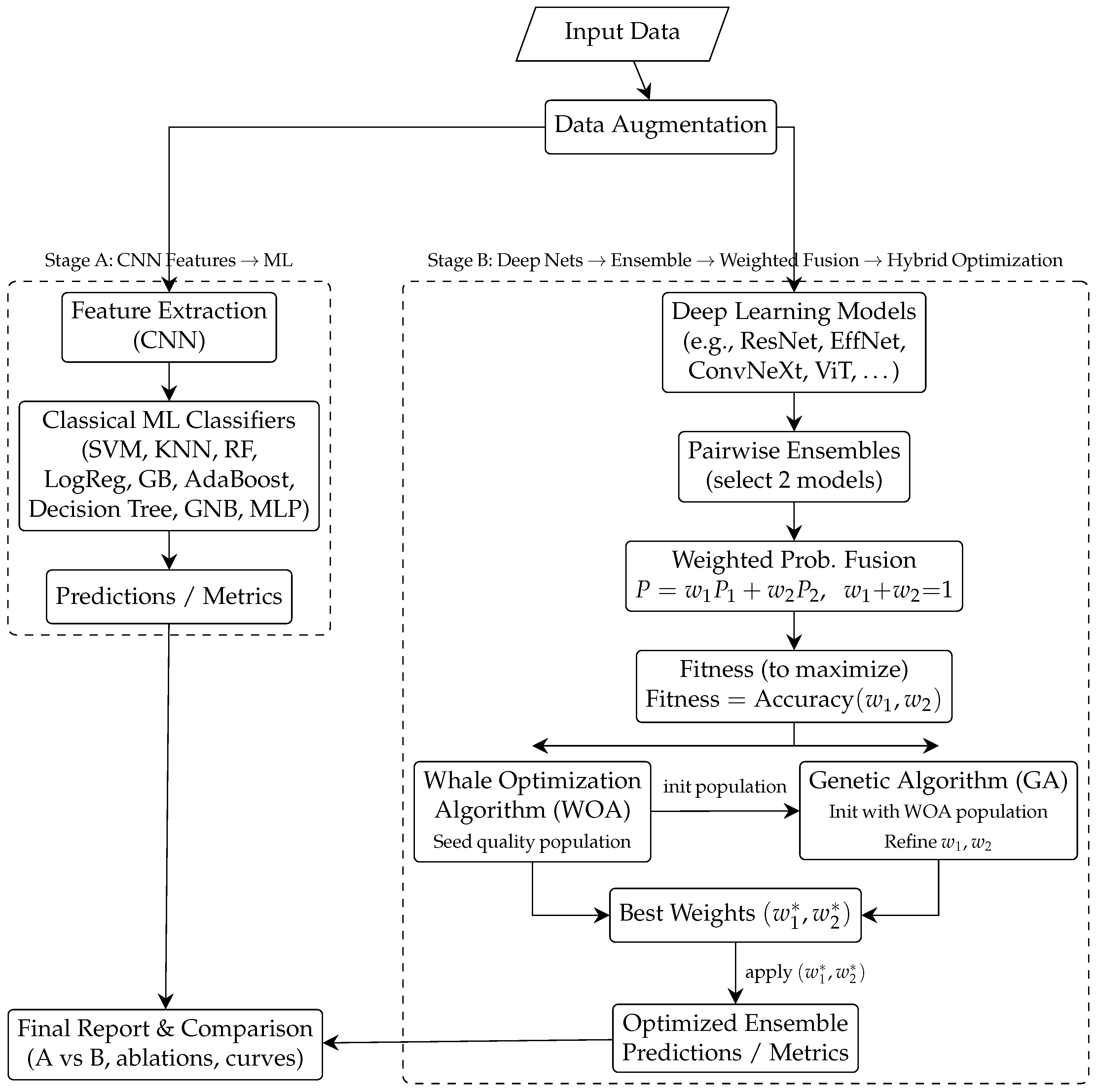
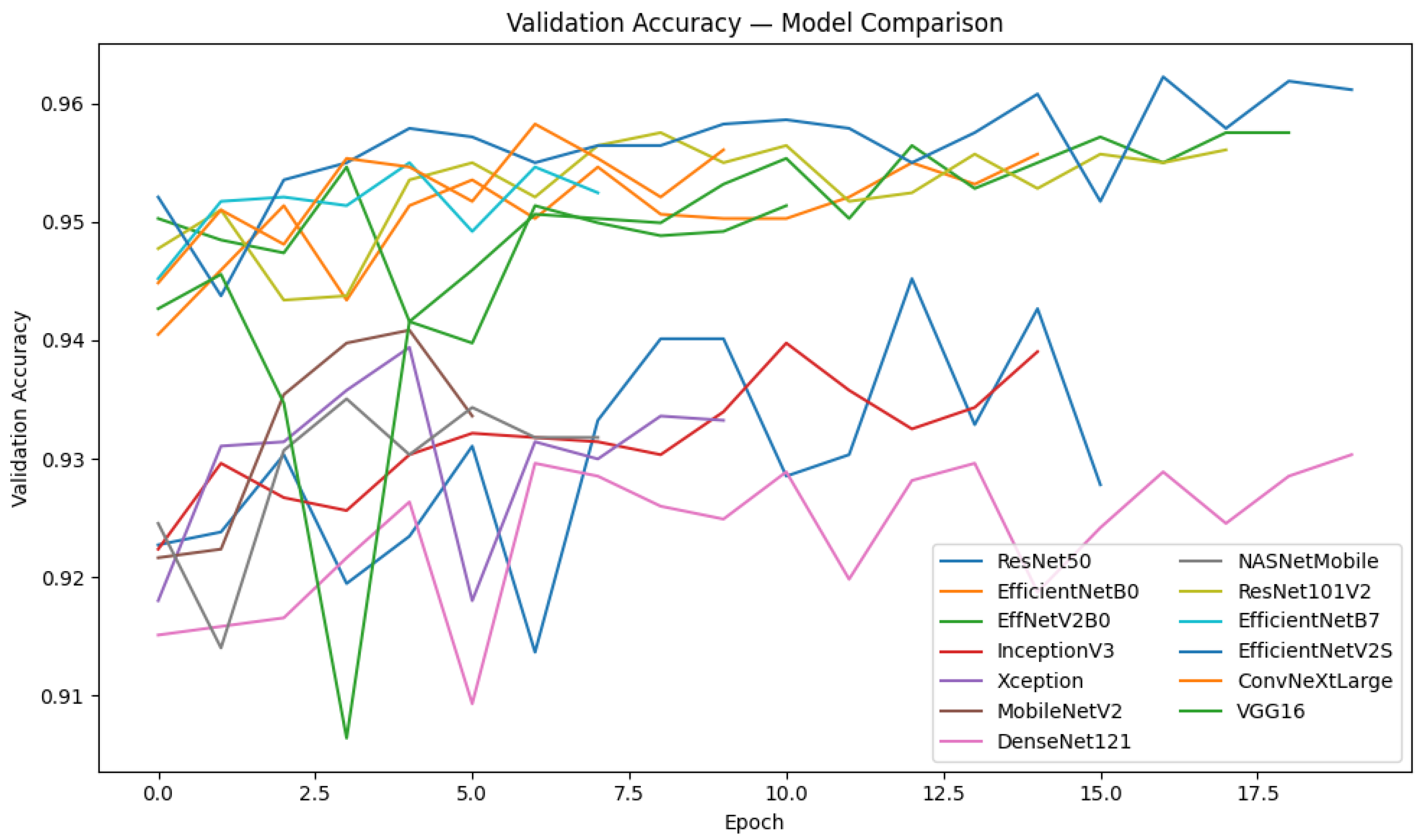
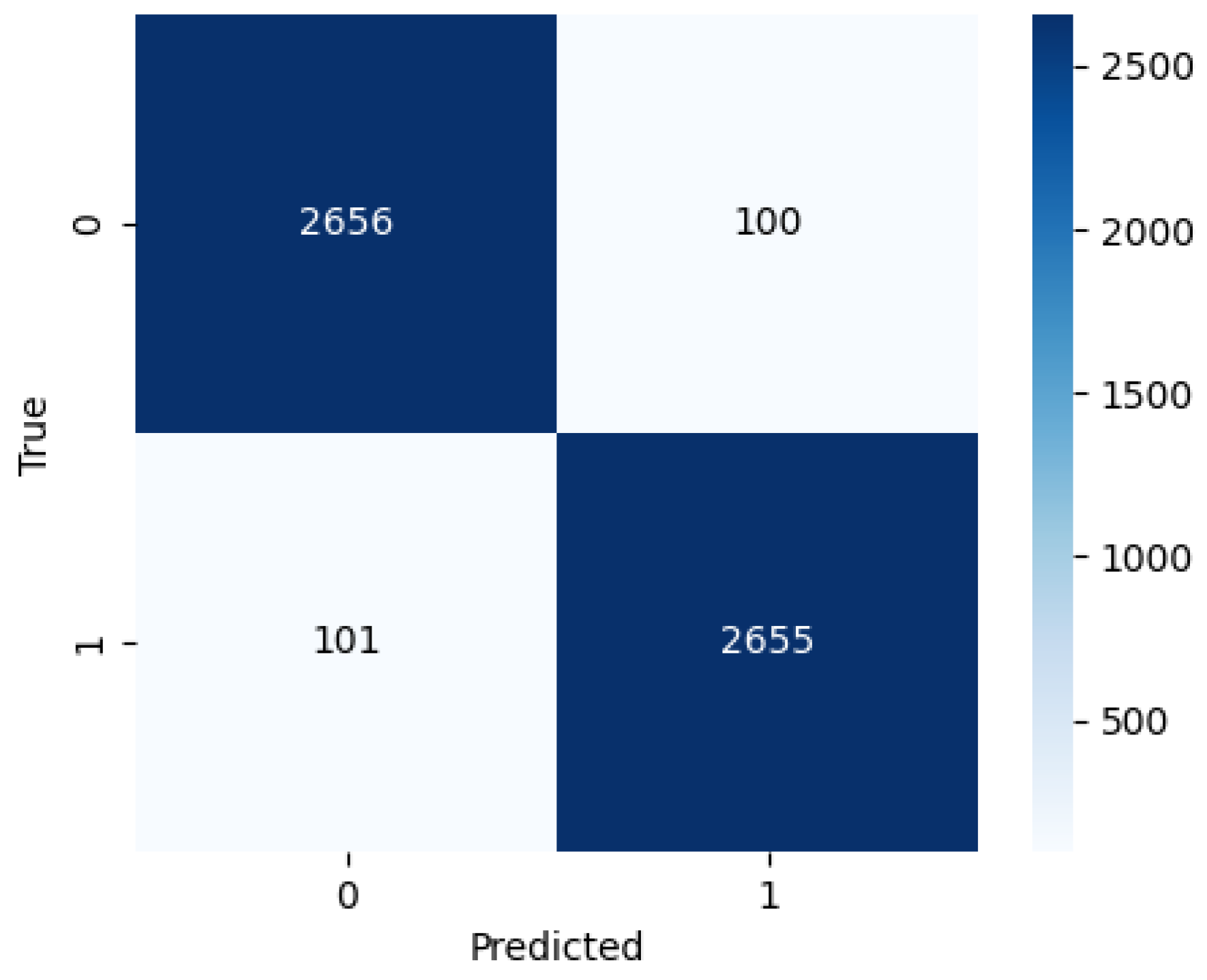
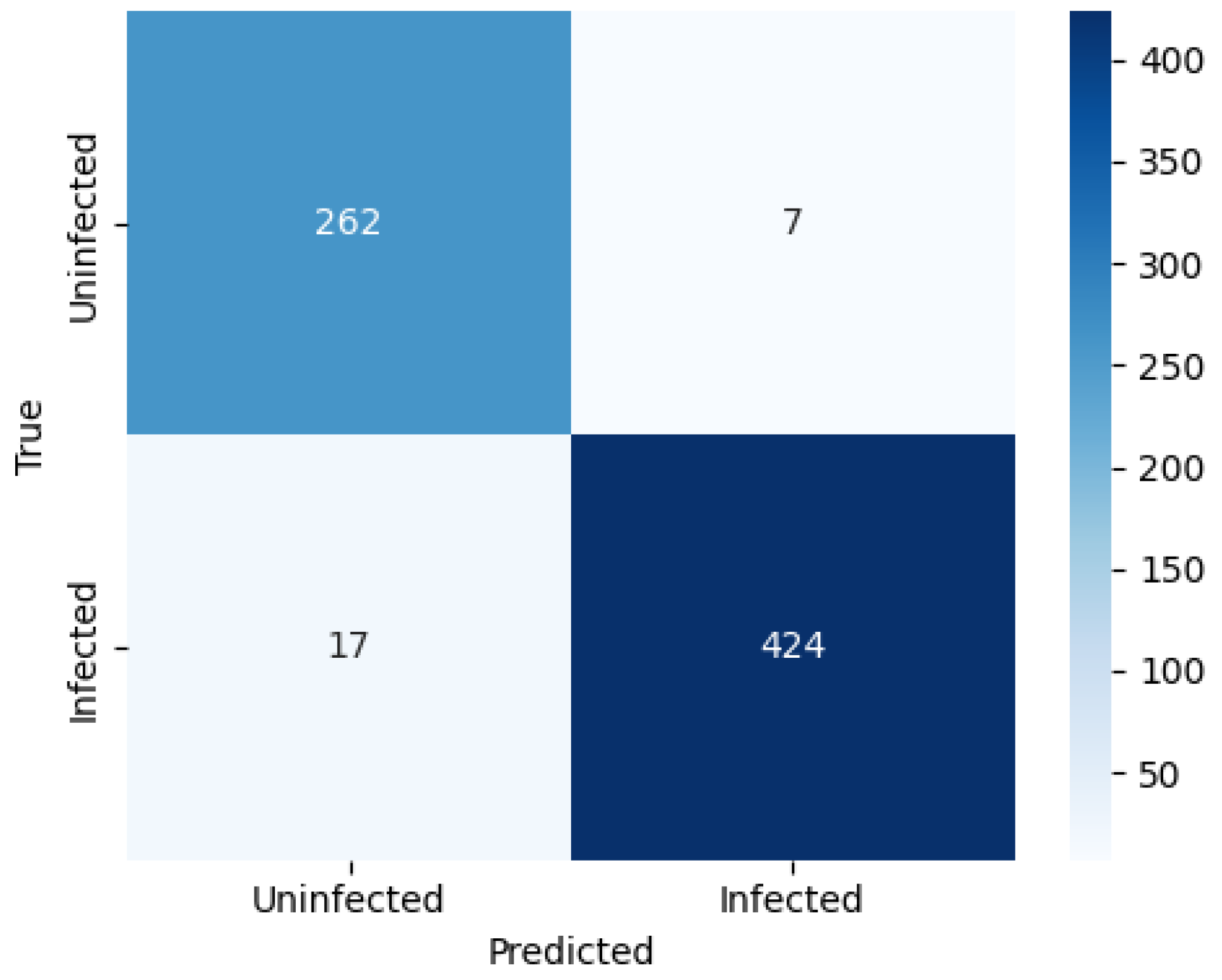
Context: In numerous low- and middle-income nations, malaria remains a significant issue due to the challenges associated with diagnosing it through thin blood smears. The appearance of images can vary significantly depending on the microscope type, magnification, lighting conditions, slide preparation methods, and staining techniques. Due to the delicate morphology of parasites, false negatives might adversely affect patient care. Objective: To achieve optimal outcomes from validation, it is essential to construct a robust and easily replicable process. This pipeline should integrate the optimal elements of classical machine learning and end-to-end deep learning, enhance reliability by pairwise ensembling, and select ensemble weights in a logical, data-driven manner. Method: To achieve our objective, we propose two tracks. The initial track encompasses real-time augmentation, convolution-based feature extraction, and the training of calibrated classical classifiers. The second module focuses on training many convolutional networks from inception to completion. Subsequently, we construct paired ensembles and employ a hybrid methodology to select convex weights for combining the findings. This method initially evaluates a set of candidate weights and then refines them to maximise validation accuracy. Results: The precision of the two-track architecture consistently improves, transitioning from conventional baselines to end-to-end models. Optimal and consistent enhancements are achieved through weighted ensembling. Utilising optimised fusion reduces the incidence of false negatives for subtle parasites and false positives caused by staining artefacts. This yields an accuracy of 96.35% on the reserved data and reduced variance across folds. Conclusions: The integration of augmentation, multiple modelling tracks, and optimal pairwise ensembling yields the highest accuracy in categorising malaria smears. It facilitates further enhancements by incorporating supplementary models, multi-class extensions, and operating-point calibration.
Keywords: SDG 3; malaria detection; optimal algorithm; ensemble learning SDG 3; malaria detection; optimal algorithm; ensemble learning