Tissue Reaction to Monofilament Grafts of Different Weights Used for Abdominal Wall Reinforcement

 , and
, and
Abstract
1. Introduction
2. Materials and Methods
2.1. Material Analysis
2.2. Animals and Housing
2.3. Experimental Design
2.4. Tissue Collection, Processing, and Immunohistochemical Staining
2.5. Molecule Expression Quantification
2.6. Statistical Analysis
3. Results
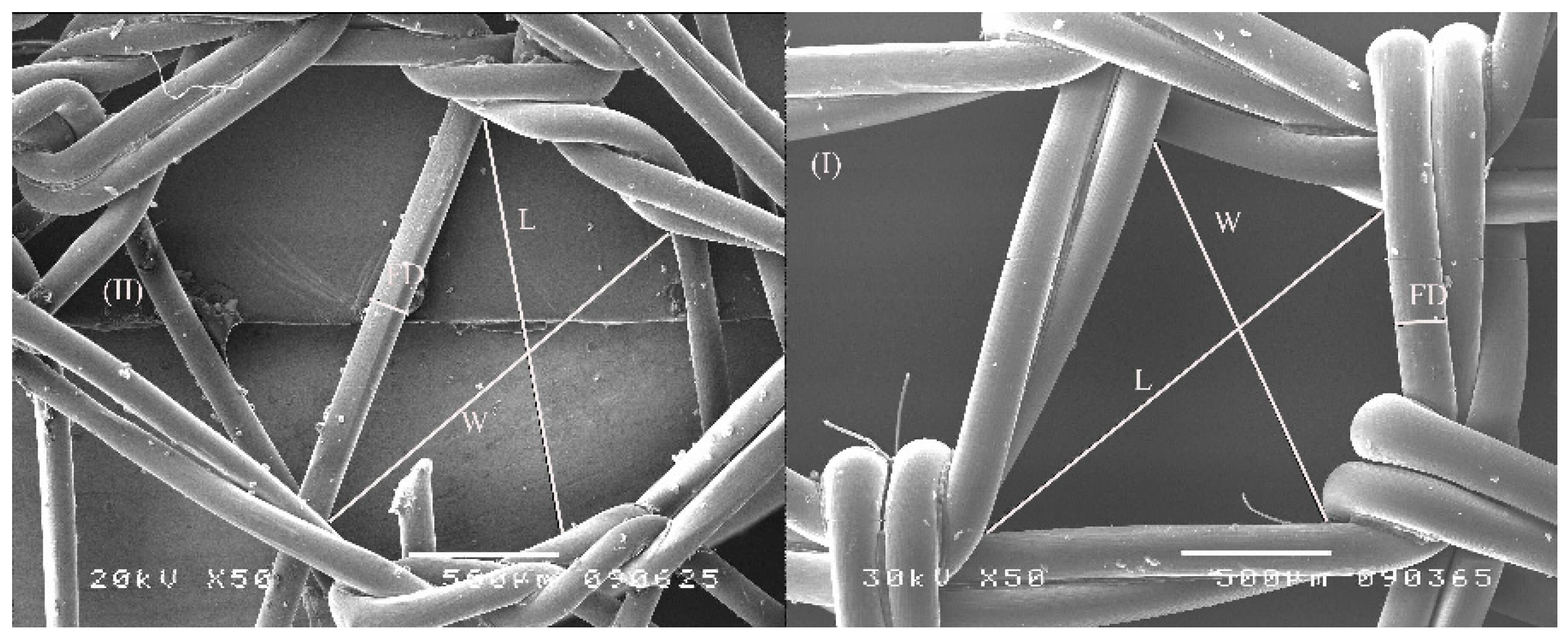
3.1. Material Characteristics
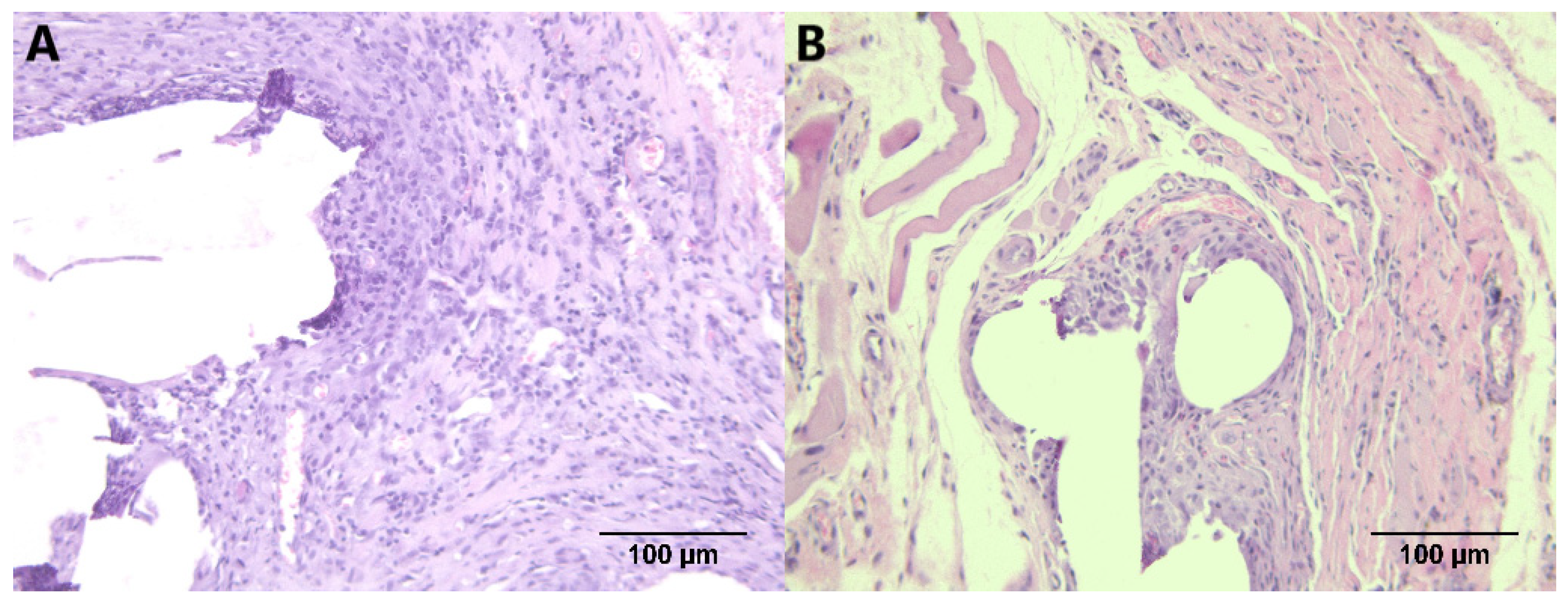
3.2. Tissue Appearance on Standard Histological Staining
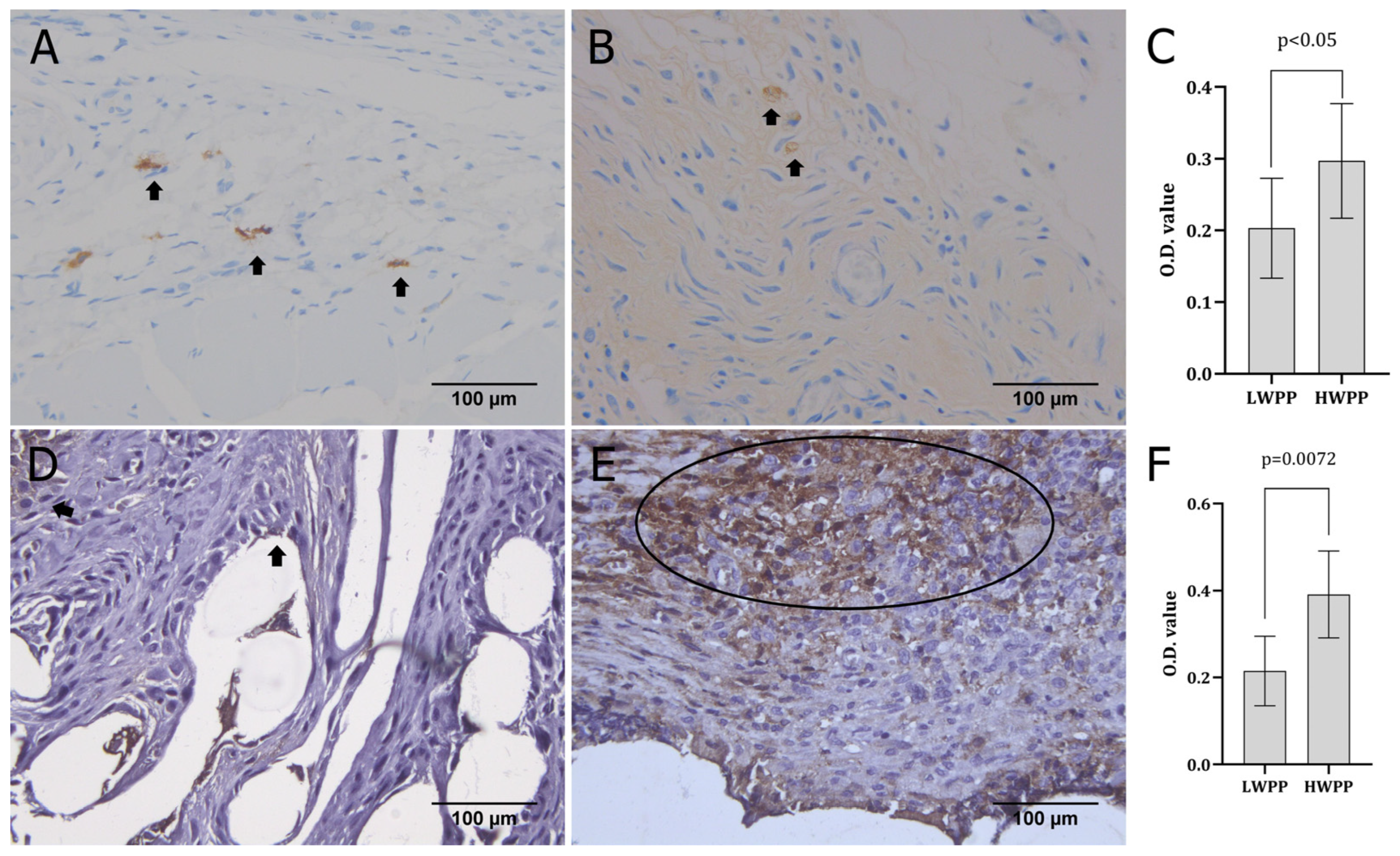
3.3. Inflammatory Phase Related Markers Quantification
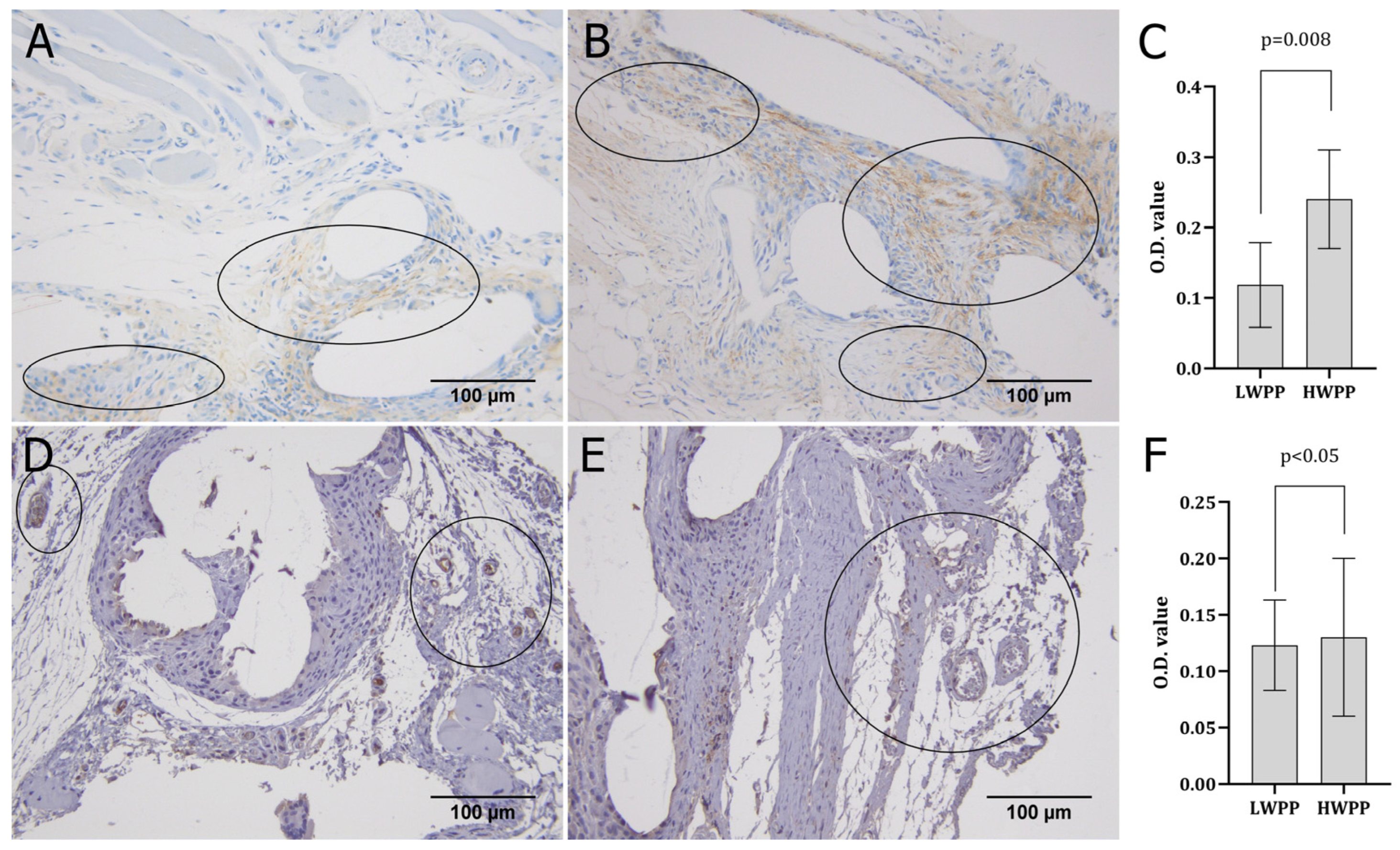
3.4. Proliferative Phase Related Markers Quantification
3.5. Remodelling Phase Related Markers Quantification
4. Discussion
5. Conclusions
Author Contributions
Funding
Institutional Review Board Statement
Informed Consent Statement
Data Availability Statement
Acknowledgments
Conflicts of Interest
Abbreviations
| CD68 | Cluster of Differentiation 68 |
| CD56 | Cluster of Differentiation 56 (Neural Cell Adhesion Molecule, NCAM) |
| CD138 | Cluster of Differentiation 138 (Syndecan-1) |
| GATA-3 | GATA Binding Protein 3 |
| LWPP | Lightweight Polypropylene Mesh |
| HWPP | Heavyweight Polypropylene Mesh |
| SEM | Scanning Electron Microscopy |
| HE | Hematoxylin and Eosin |
| HRP | Horseradish Peroxidase |
| DAB | 3,3′-Diaminobenzidine |
| ROI | Region of Interest |
| O.D. | Optical Density |
| SD | Standard Deviation |
| STAT3 | Signal Transducer and Activator of Transcription 3 |
| ILC2 | Type 2 Innate Lymphoid Cells |
| TLR4 | Toll-Like Receptor 4 |
| TGF-β | Transforming Growth Factor Beta |
References
- Hollinsky, C. Biomaterials for hernia repair. In Comprehensive Biomaterials II; Ducheyne, P., Ed.; Elsevier: Oxford, UK, 2017; pp. 777–792. [Google Scholar] [CrossRef]
- Ulrich, D.; Edwards, S.L.; White, J.F.; Supit, T.; Ramshaw, J.A.; Lo, C.; Rosamilia, A.; Werkmeister, J.A.; Gargett, C.E. A preclinical evaluation of alternative synthetic biomaterials for fascial defect repair using a rat abdominal hernia model. PLoS ONE 2012, 7, e50044. [Google Scholar] [CrossRef]
- Dart, A.J.; Dart, C.M. Suture material: Conventional and stimuli responsive. In Comprehensive Biomaterials II; Ducheyne, P., Ed.; Elsevier: Oxford, UK, 2017; pp. 573–587. [Google Scholar]
- Li, J.; Shao, X.; Cheng, T. Comparison of different weight meshes in ventral/incisional hernia repair: The outcomes of systematic review and meta-analysis. Surg. Laparosc. Endosc. Percutan. Tech. 2023, 33, 402–410. [Google Scholar] [CrossRef]
- Neethirajan, S.; Clond, M.A.; Vogt, A. Medical biofilms—Nanotechnology approaches. J. Biomed. Nanotechnol. 2014, 10, 2806–2827. [Google Scholar] [CrossRef]
- Koh, T.J.; DiPietro, L.A. Inflammation and wound healing: The role of the macrophage. Expert Rev. Mol. Med. 2011, 13, e23. [Google Scholar] [CrossRef] [PubMed]
- Boukani, L.M.; Khosroshahi, R.F.; Kh, S.A.; Rashtbar, M.; Khosroshahi, A.F. Statistical study of clinical trials with stem cells and their function in skin wound. Cell Tissue Res. 2023, 393, 217–228. [Google Scholar] [CrossRef]
- Gurtner, G.C.; Werner, S.; Barrandon, Y.; Longaker, M.T. Wound repair and regeneration. Nature 2008, 453, 314–321. [Google Scholar] [CrossRef] [PubMed]
- Hinz, B. Formation and function of the myofibroblast during tissue repair. J. Investig. Dermatol. 2007, 127, 526–537. [Google Scholar] [CrossRef] [PubMed]
- Shi, S.; Ou, X.; Long, J.; Lu, X.; Xu, S.; Li, G. The role of multiomics in revealing the mechanism of skin repair and regeneration. Front. Pharmacol. 2025, 16, 1497988. [Google Scholar] [CrossRef]
- Krstić, M.; Stojanović, N.M.; Stojnev, S.; Radenković, G.; Čukuranović Kokoris, J.; Mladenović, B.; Janković Veličković, L. Interplay between STAT3, Cell Adhesion Molecules and Angiogenesis-Related Parameters in Gastric Carcinoma. Does STAT3 Really Have a Prognostic Value? Medicina 2019, 55, 300. [Google Scholar] [CrossRef]
- Cizkova, K.; Foltynkova, T.; Gachechiladze, M.; Tauber, Z. Comparative analysis of immunohistochemical staining intensity determined by light microscopy, ImageJ and QuPath in placental Hofbauer cells. Acta Histochem. Cytochem. 2021, 54, 21–29. [Google Scholar] [CrossRef]
- Dimov, A.V.; Gillen, K.M.; Nguyen, T.D.; Kang, J.; Sharma, R.; Pitt, D.; Gauthier, S.A.; Wang, Y. Magnetic susceptibility source separation solely from gradient echo data: Histological validation. Tomography 2022, 8, 1544–1551. [Google Scholar] [CrossRef]
- Mane, D.R.; Kale, A.D.; Belaldavar, C. Validation of immunoexpression of tenascin-C in oral precancerous and cancerous tissues using ImageJ analysis with novel immunohistochemistry profiler plugin: An immunohistochemical quantitative analysis. J. Oral Maxillofac. Pathol. 2017, 21, 211–217. [Google Scholar] [CrossRef] [PubMed]
- Gomes, C.M.; Carvalho, F.L.; Bellucci, C.H.S.; Hemerly, T.S.; Baracat, F.; Bessa, J.D. Update on complications of synthetic suburethral slings. Int. Braz. J. Urol. 2017, 43, 822–834. [Google Scholar] [CrossRef]
- Potić, M.; Ignjatović, I.; Vučković, B. Predictive value of tissue-induced oxidative stress on urogynecology synthetic graft reinforcement: An experimental animal study. Clin. Exp. Obstet. Gynecol. 2022, 49, 182–189. [Google Scholar] [CrossRef]
- Deveci, C.D.; Öberg, S.; Rosenberg, J. Definition of mesh weight and pore size in groin hernia repair: A systematic scoping review of randomised controlled trials. J. Abdom. Wall Surg. 2023, 2, 11179. [Google Scholar] [CrossRef]
- Zhu, L.M.; Schuster, P.; Klinge, U. Mesh implants: An overview of crucial mesh parameters. World J. Gastrointest. Surg. 2015, 7, 226–236. [Google Scholar] [CrossRef]
- Klosterhalfen, B.; Klinge, U. Retrieval study at 623 human mesh explants made of polypropylene—Impact of mesh class and indication for mesh removal on tissue reaction. J. Biomed. Mater. Res. B Appl. Biomater. 2013, 101, 1393–1399. [Google Scholar] [CrossRef]
- Mudalige, T.; Pathiraja, V.; Delanerolle, G.; Cavalini, H.; Wu, S.; Taylor, J.; Kurmi, O.; Elliot, K.; Hinchliff, S.; Atkinson, C.; et al. Systematic Review and Meta-Analysis of Pelvic Organ Prolapse and Vaginal Prolapse among the Global Population. BJUI Compass 2024, 6, e464. [Google Scholar] [CrossRef]
- Schröder, C.; Pantenburg, J.F.; Tascón Padrón, L.; Feodorovici, K.; Otten, L.A.; Wittershagen, S.; Mustea, A.; Koensgen, D. Mesh-sacropexy in women with apical pelvic organ prolapse—Results of a single-centre prospective cohort study. BMC Women’s Health 2026, 26, 195. [Google Scholar] [CrossRef]
- ISO 10993-6:2016; Biological Evaluation of Medical Devices—Part 6: Tests for Local Effects After Implantation. International Organization for Standardization: Geneva, Switzerland, 2016.
- Brochhausen, C.; Schmitt, V.H.; Mamilos, A.; Schmitt, C.; Planck, C.N.; Rajab, T.K.; Hierlemann, H.; Kirkpatrick, C.J. Expression of CD68 positive macrophages in the use of different barrier materials to prevent peritoneal adhesions—An animal study. J. Mater. Sci. Mater. Med. 2017, 28, 15. [Google Scholar] [CrossRef] [PubMed]
- Pycek, M.; Zarzecka, J.M.; Majkusiak, W.; Barcz, E.M.; Zwierzchowska, A. Current approach to the use of transvaginal mesh systems in pelvic organ prolapse. Ginekol. Pol. 2025, 96, 414–419. [Google Scholar] [CrossRef]
- Bagabir, R.A.; Syed, F.; Shenjere, P.; Paus, R.; Bayat, A. Identification of a potential molecular diagnostic biomarker in keloid disease: Syndecan-1 (CD138) is overexpressed in keloid scar tissue. J. Investig. Dermatol. 2016, 136, 2319–2323. [Google Scholar] [CrossRef]
- Gao, M.; Guo, H.; Dong, X.; Wang, Z.; Yang, Z.; Shang, Q.; Wang, Q. Regulation of inflammation during wound healing: The function of mesenchymal stem cells and strategies for therapeutic enhancement. Front. Pharmacol. 2024, 15, 1345779. [Google Scholar] [CrossRef] [PubMed]
- Meng, C.; Wei, Q.; Sun, L.; Zhang, X.; Liu, Y.; Gao, J.; Wei, P.; Yang, Z.; Yao, H.; Zhang, Z. Effects of different mesh materials on complications after prophylactic placement for stoma formation: A systematic review and network meta-analysis. Hernia 2024, 28, 1039–1052. [Google Scholar] [CrossRef]
- Krzyszczyk, P.; Schloss, R.; Palmer, A.; Berthiaume, F. The role of macrophages in acute and chronic wound healing and interventions to promote pro-wound healing phenotypes. Front. Physiol. 2018, 9, 419. [Google Scholar] [CrossRef]
- Davies, L.C.; Jenkins, S.J.; Allen, J.E.; Taylor, P.R. Tissue-resident macrophages. Nat. Immunol. 2013, 14, 986–995. [Google Scholar] [CrossRef]
- Szatmári, T.; Ötvös, R.; Hjerpe, A.; Dobra, K. Syndecan-1 in cancer: Implications for cell signaling, differentiation, and prognostication. Dis. Markers 2015, 2015, 796052. [Google Scholar] [CrossRef] [PubMed]
- Frese, C.K.; Mikhaylova, M.; Stucchi, R.; Gautier, V.; Liu, Q.; Mohammed, S.; Heck, A.J.R.; Altelaar, A.F.M.; Hoogenraad, C.C. Quantitative map of proteome dynamics during neuronal differentiation. Cell Rep. 2017, 18, 1527–1542. [Google Scholar] [CrossRef] [PubMed]
- Kang, S.; Shi, X.; Chen, Y.; Zhang, L.; Liu, Q.; Lin, Z.; Lu, H.; Pan, H. Injectable decellularized Wharton’s jelly hydrogel containing CD56+ umbilical cord mesenchymal stem cell-derived exosomes for meniscus tear healing and cartilage protection. Mater. Today Bio 2024, 29, 101258. [Google Scholar] [CrossRef]
- Van Acker, H.H.; Capsomidis, A.; Smits, E.L.; Van Tendeloo, V.F. CD56 in the immune system: More than a marker for cytotoxicity? Front. Immunol. 2017, 8, 892. [Google Scholar] [CrossRef]
- Tollance, A.; Prola, A.; Michel, D.; Bouche, A.; Turzi, A.; Hannouche, D.; Berndt, S.; Laumonier, T. Platelet-rich plasma promotes the expansion of human myoblasts and favors the in vitro generation of human muscle reserve cells in a deeper state of quiescence. Stem Cell Rev. Rep. 2024, 20, 1981–1994. [Google Scholar] [CrossRef] [PubMed]
- Wan, Y.Y. GATA3: A master of many trades in immune regulation. Trends Immunol. 2014, 35, 233–242. [Google Scholar] [CrossRef]
- Furuya, H.; Toda, Y.; Iwata, A.; Kanai, M.; Kato, K.; Kumagai, T.; Kageyama, T.; Tanaka, S.; Fujimura, L.; Sakamoto, A.; et al. Stage-specific GATA3 induction promotes ILC2 development after lineage commitment. Nat. Commun. 2024, 15, 5610. [Google Scholar] [CrossRef]
- Eriksson, J.E.; Dechat, T.; Grin, B.; Helfand, B.; Mendez, M.; Pallari, H.M.; Goldman, R.D. Introducing intermediate filaments: From discovery to disease. J. Clin. Investig. 2009, 119, 1763–1771. [Google Scholar] [CrossRef] [PubMed]
- Suprewicz, Ł.; Fiedoruk, K.; Skłodowski, K.; Hutt, E.; Zakrzewska, M.; Walewska, A.; Deptuła, P.; Lesiak, A.; Okła, S.; Galie, P.A.; et al. Extracellular vimentin is a damage-associated molecular pattern protein serving as an agonist of TLR4 in human neutrophils. Cell Commun. Signal. 2025, 23, 64. [Google Scholar] [CrossRef]
- Walker, J.L.; Bleaken, B.M.; Romisher, A.R.; Alnwibit, A.A.; Menko, A.S. In wound repair vimentin mediates the transition of mesenchymal leader cells to a myofibroblast phenotype. Mol. Biol. Cell 2018, 29, 1555–1570. [Google Scholar] [CrossRef]
- Cheng, F.; Shen, Y.; Mohanasundaram, P.; Lindström, M.; Ivaska, J.; Ny, T.; Eriksson, J.E. Vimentin coordinates fibroblast proliferation and keratinocyte differentiation in wound healing via TGF-β-Slug signaling. Proc. Natl. Acad. Sci. USA 2016, 113, E4320–E4327. [Google Scholar] [CrossRef]
- Knight, K.M.; King, G.E.; Palcsey, S.L.; Suda, A.; Liang, R.; Moalli, P.A. Mesh deformation: A mechanism underlying polypropylene prolapse mesh complications in vivo. Acta Biomater. 2022, 148, 323–335. [Google Scholar] [CrossRef] [PubMed]



| Material Type | Weight (g/m2) | Pore Size (mm2) | p-Value | Fibre Thickness (mm) | p-Value |
|---|---|---|---|---|---|
| LWPP | 43 | 0.49 ± 0.01 | >0.01 | 0.068 ± 0.009 | >0.01 |
| HWPP | 76 | 0.57 ± 0.02 | >0.01 | 0.085 ± 0.013 | >0.01 |
Disclaimer/Publisher’s Note: The statements, opinions and data contained in all publications are solely those of the individual author(s) and contributor(s) and not of MDPI and/or the editor(s). MDPI and/or the editor(s) disclaim responsibility for any injury to people or property resulting from any ideas, methods, instructions or products referred to in the content. |
© 2026 by the authors. Licensee MDPI, Basel, Switzerland. This article is an open access article distributed under the terms and conditions of the Creative Commons Attribution (CC BY) license.
Share and Cite
Potić, M.; Ignjatović, I.; Bašić, D.; Dinić, L.; Vučković, B.; Jovanović, N.; Stojnev, S. Tissue Reaction to Monofilament Grafts of Different Weights Used for Abdominal Wall Reinforcement. Biomedicines 2026, 14, 896. https://doi.org/10.3390/biomedicines14040896
Potić M, Ignjatović I, Bašić D, Dinić L, Vučković B, Jovanović N, Stojnev S. Tissue Reaction to Monofilament Grafts of Different Weights Used for Abdominal Wall Reinforcement. Biomedicines. 2026; 14(4):896. https://doi.org/10.3390/biomedicines14040896
Chicago/Turabian StylePotić, Milan, Ivan Ignjatović, Dragoslav Bašić, Ljubomir Dinić, Bojan Vučković, Nebojša Jovanović, and Slavica Stojnev. 2026. "Tissue Reaction to Monofilament Grafts of Different Weights Used for Abdominal Wall Reinforcement" Biomedicines 14, no. 4: 896. https://doi.org/10.3390/biomedicines14040896
APA StylePotić, M., Ignjatović, I., Bašić, D., Dinić, L., Vučković, B., Jovanović, N., & Stojnev, S. (2026). Tissue Reaction to Monofilament Grafts of Different Weights Used for Abdominal Wall Reinforcement. Biomedicines, 14(4), 896. https://doi.org/10.3390/biomedicines14040896