1. Introduction
Intracranial aneurysm (IA) has become a major cause of subarachnoid hemorrhage (SAH), with a high mortality and morbidity rate [
1,
2]. Because of the poor outcome after the onset or recurrence of SAH, some IAs with a higher probability of rupture or those already ruptured are surgically treated to prevent rupture and resultant deterioration. Currently, more and more IAs are endovascularly treated due to the less invasive nature compared with micro-neurosurgical clipping [
3]. The development of a novel endovascular device to effectively treat IAs is thus essential for society.
To develop a novel device, a preclinical animal model to validate various aspects required for an endovascular device, such as effectiveness or safety, plays a crucial role. Nowadays, medium-to-large animals are used, most typically pigs or rabbits, and only the morphological aspect of IA lesions is mimicked by a venous pouch or the ligation of an artery, like the vertebral artery, to create a blind end [
4,
5]. However, such an animal model is costly and fails to reproduce IA pathology and the response of IA walls to a deployed device.
In addition, most existing models are artificially created and do not reproduce aneurysm formation at arterial bifurcation sites or the spontaneous development process observed in human IAs.
In the present study, to overcome many limitations of the above animal models, we have established a rat model of IAs that reproduces IA progression as observed in human cases.
This model uniquely enables spontaneous aneurysm formation at arterial bifurcation sites and demonstrates histopathological features closely resembling those of human intracranial aneurysms.
Furthermore, prototype devices for human clinical usage can be deployed in this model.
2. Materials and Methods
2.1. Study Approval of Animal Experiments
All of the following experiments, including animal care and use, complied with the National Institute of Health’s Guide for the Care and Use of Laboratory Animals, followed the ARRIVE guidelines (
https://arriveguidelines.org), and were approved by the Institutional Animal Care and Use Committee of the Jikei University School of Medicine (Approval Number; #2023-004).
2.2. Induction of Aneurysm in Rats
Nine-week-old male Sprague–Dawley rats were purchased from Japan SLC (Slc: SD, Shizuoka, Japan). Animals were maintained on a light/dark cycle of 12 h/12 h and had free access to chow and water.
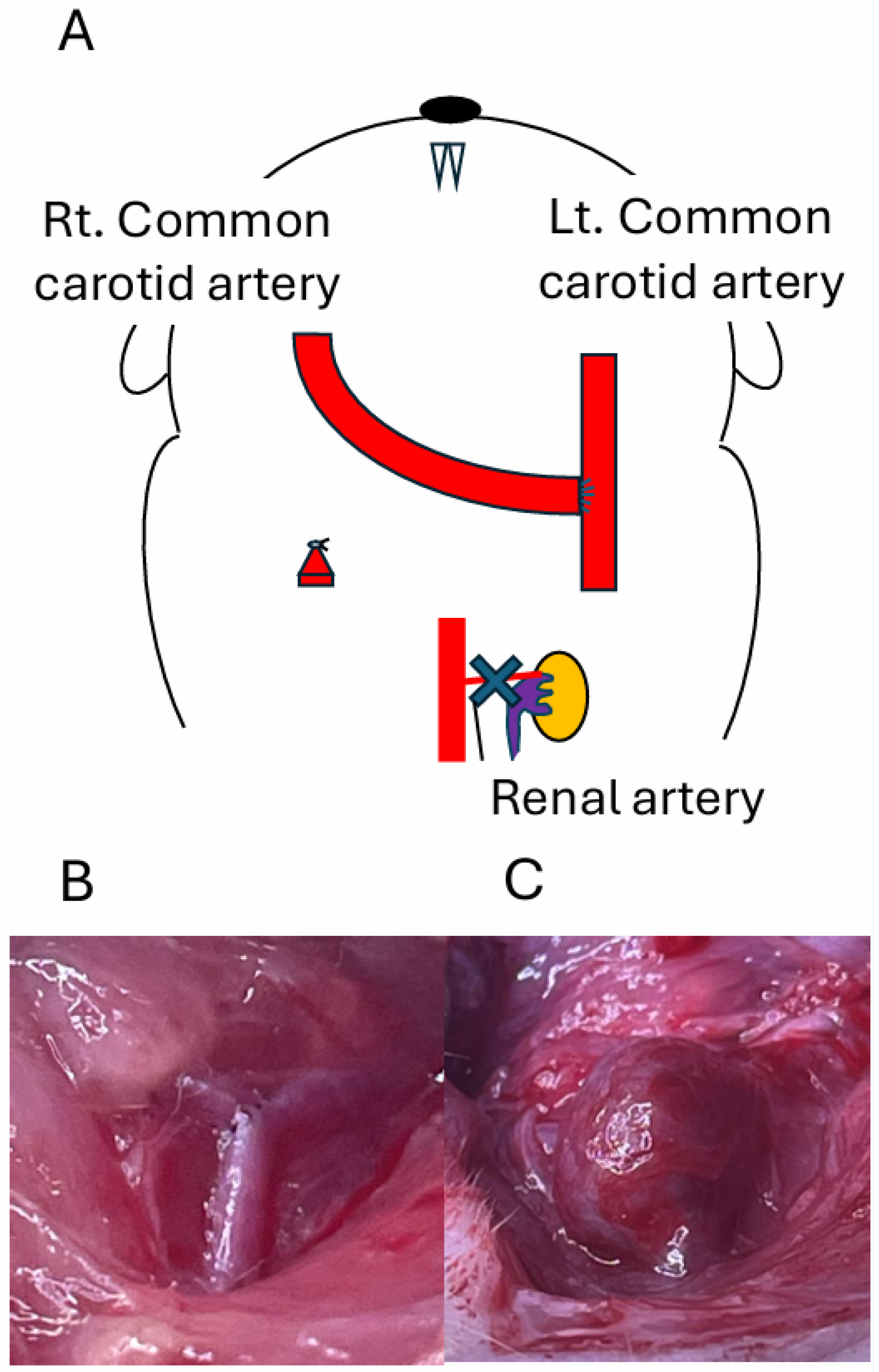
To induce aneurysm, under general anesthesia by inhalation of isoflurane (induction; 5.0%, maintenance; 1.5~2.0%, #IYESC-0001, Pfizer Inc., New York, NY, USA), animals were subjected to the cutting of the right common carotid artery and then anastomosed to the left common carotid artery in an end-to-side fashion to create a bifurcation with a 10-0 nylon suture. The left renal artery was also ligated with a 10-0 nylon. All experimental procedures were conducted at room temperature. The carotid artery occlusion time (ischemia time) was approximately 30 min. The suturing was performed using interrupted stitches rather than continuous sutures. Systemic heparinization was not administered during the procedure. Immediately after the above surgical manipulations, animals were fed chow containing 8% sodium chloride and 0.12% 3-aminopropionitrile (Tokyo Chemical Industry, Tokyo, Japan), an inhibitor of lysyl oxidase that catalyzes the cross-linking of collagen and elastin. These procedures were performed in accordance with previously established intracranial aneurysm models [
6]. This combination of procedures is based on previously established experimental models of intracranial aneurysms, in which increased hemodynamic stress induced by hypertension and structural weakening of the arterial wall synergistically promote aneurysm formation. Renal artery ligation and a high-salt diet were used to induce hypertension, while 3-aminopropionitrile was administered to inhibit collagen cross-linking and facilitate degeneration of the vascular wall.
Two weeks after the above surgical manipulations, animals were subjected to digital subtraction angiography and endovascular coiling as described in the following section. We selected 14 days as the observation endpoint based on our previous experimental experience, in which aneurysm formation was consistently observed at approximately two weeks after the surgical procedures [
7].
2.3. Digital Subtraction Angiography and Endovascular Coiling
Digital Subtraction Angiography was done by using X-ray fluoroscopy (#Artis zee, Siemens, Munich, Germany) via the tail artery or the femoral artery under general anesthesia by inhalation of isoflurane (induction; 5.0%, maintenance; 1.5~2.0%, #IYESC-0001, Pfizer Inc.).
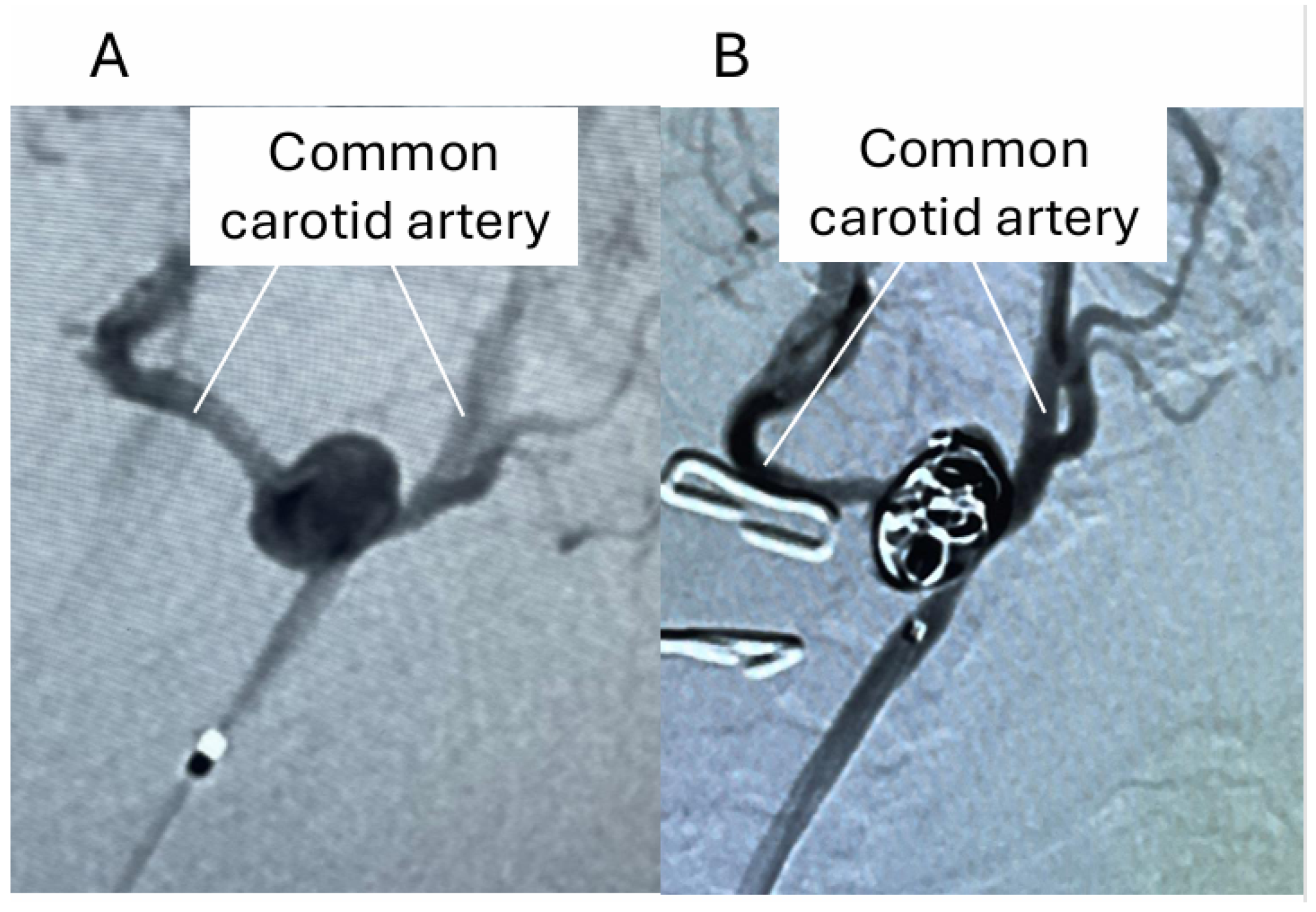
For the angiography technique in rats, we incised the skin of the tail. Then we were able to see the tail artery, clip it, and cut down the artery wall. After that, we directly inserted the microcatheter (Excelsior SL-10, Stryker, Kalamazoo, MI, USA). The microcatheter was advanced into the left CCA under fluoroscopy guidance. Once in position, the guidewire was withdrawn. A 0.5 mL bolus of contrast agent (Iohexol, 300 mg iodine/mL; Daiichi Sankyo, Tokyo, Japan) mixed with heparin (1 mg Iohexol: 10 units heparin) was injected rapidly. The platinum coil (Target 360, Stryker, USA) was then deployed by using the microcatheter.
3. Results
3.1. Induction of Aneurysm Lesion at the Surgically Created Bifurcation in Carotid Artery of Rats
The bifurcation site was created by the end-to-side anastomosis of common carotid arteries (
Figure 1A). Aneurysm lesions with a balloon-like shape were induced at the newly formed bifurcation at about 14 days after the surgical manipulation (
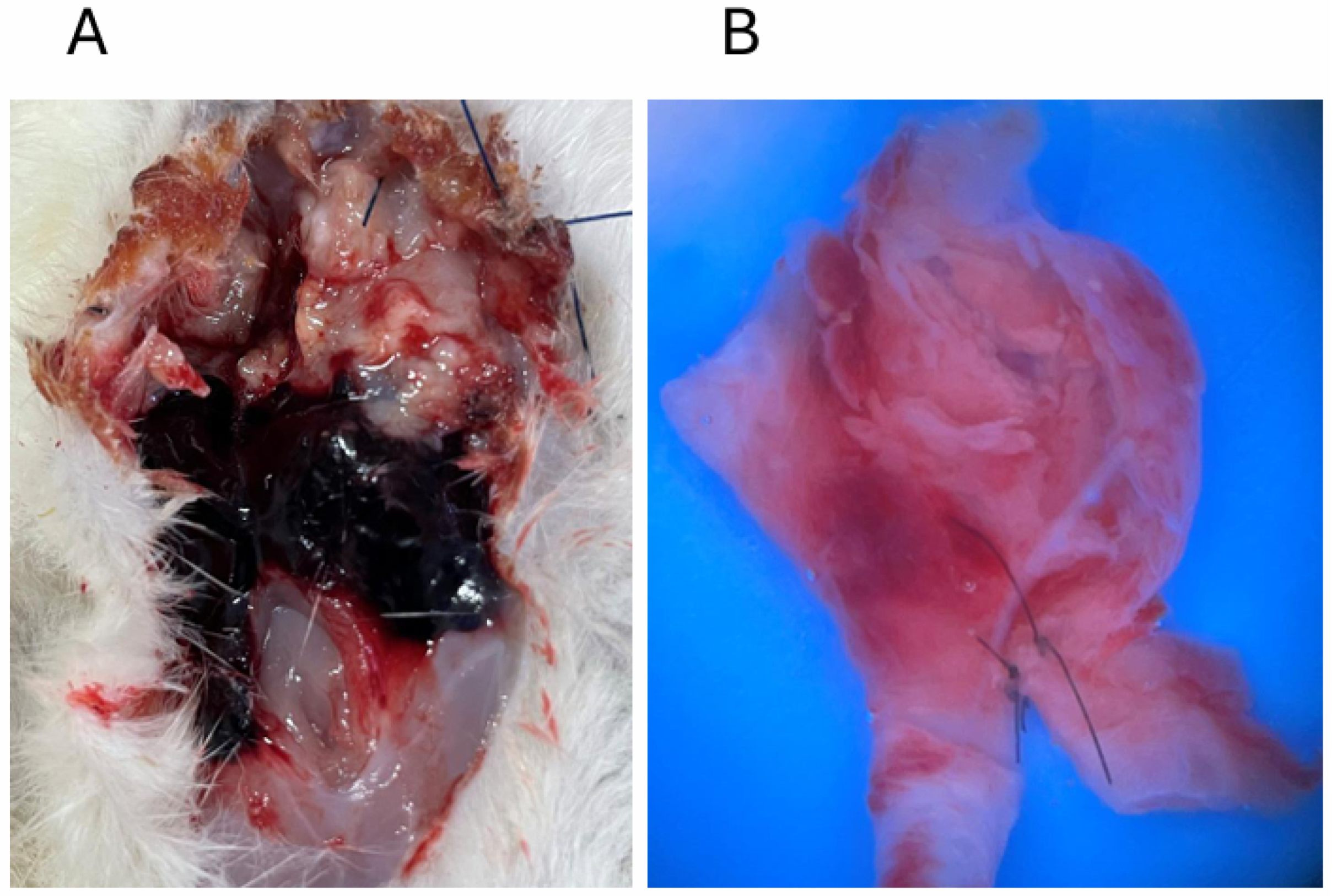
Figure 1B,C). Induced aneurysms sometimes spontaneously ruptured (
Figure 2), like IAs in human cases (rupture was observed in 2 out of 12 rats). We used 12 rats for this model, and nine aneurysms were detected on the angiography. The remaining three rats did not develop aneurysms.
3.2. Histology of the Aneurysm in This Model
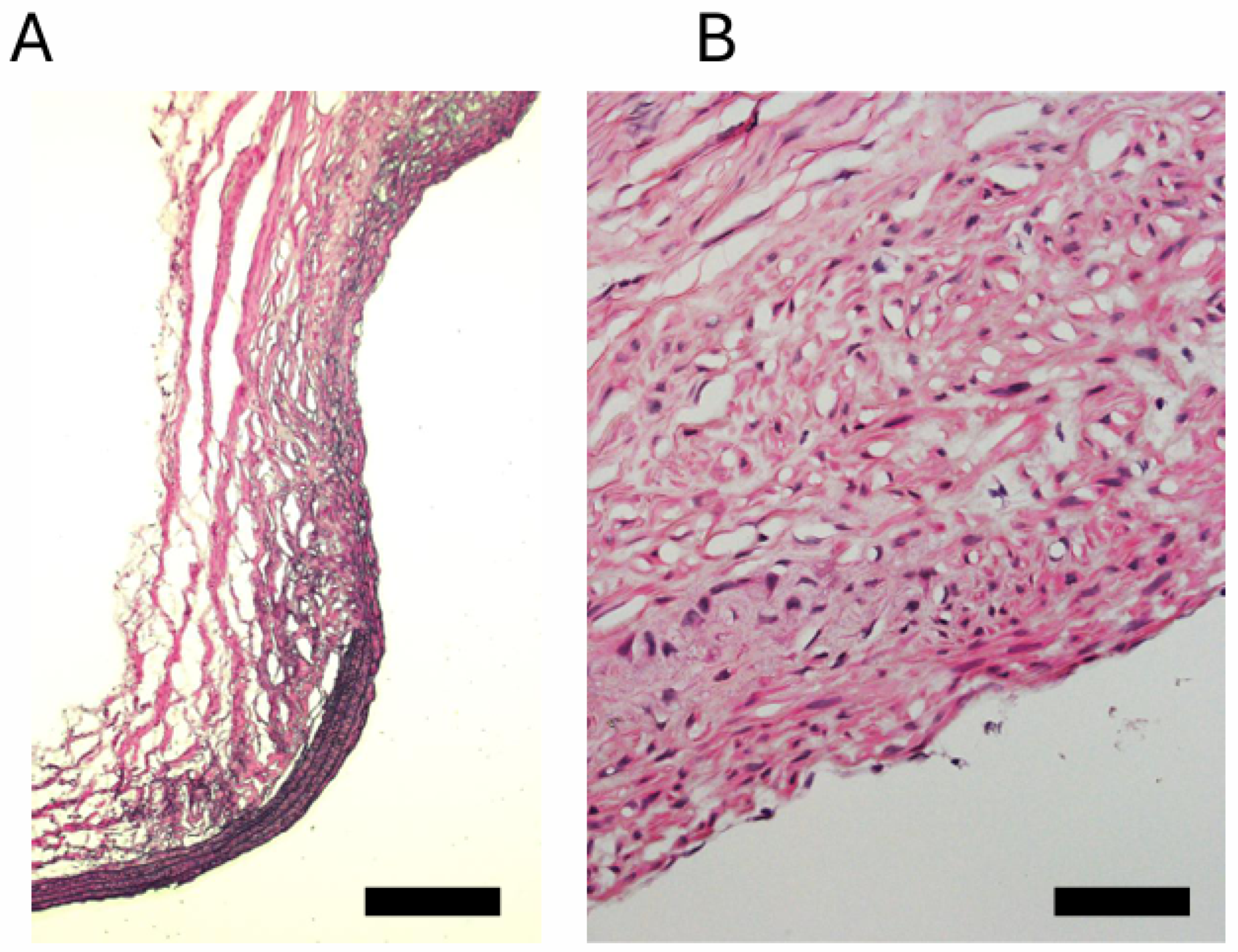
Histopathological analysis revealed disruption of the internal elastic lamina, accompanied by thinning of the medial layer. The smooth muscle cell layer appeared sparse and disorganized, and inflammatory cell infiltration was observed predominantly in the adventitial side of the aneurysm wall (
Figure 3).
3.3. Endovascular Coiling of Induced Aneurysm in Rats
Endovascular coiling of the induced aneurysm lesion at the newly formed bifurcation of the carotid arteries was successfully done by using a micro-catheter and coil used at the clinical site (
Figure 4), as in human cases.
3.4. Result of All Procedures
Aneurysm formation was observed in 9 out of 12 rats (75%). Among these, spontaneous ruptures occurred in two cases. In addition, one aneurysm ruptured after coil embolization. Endovascular access using a microcatheter was successfully achieved in all animals, and coil embolization was successfully performed in all aneurysm-bearing cases (9/9). The remaining two rats did not develop aneurysms.
4. Discussion
We have developed the rat model of IAs that can reproduce the IA progression of human cases and allows endovascular coiling by using coils for clinical usage. The rat model of IAs we have developed has considerable merit compared with the widely used models in medium-to-large animals. The rat model has cost-effectiveness; therefore, various prototypes of devices can be easily tested. Also, this kind of model can contribute to clarifying the response of IA walls to deployed devices that are not examined in other currently used models. Thereby, the established rat model of IAs can contribute to the development of a novel endovascular device and will thus improve treatment outcome.
Furthermore, this model has additional advantages in that aneurysms are formed spontaneously at arterial bifurcation sites and exhibit histopathological features closely resembling those of human intracranial aneurysms. Although pseudoaneurysm formation cannot be completely excluded, the histopathological findings in this study suggest that the lesion is distinct from a pseudoaneurysm and resembles human intracranial aneurysms.
Through the recent advancement of experimental techniques to establish gene-modified rats, especially by the CRISPR-Cas9 system [
8,
9,
10,
11], various kinds of gene-modified rat strains can be applied to the established model. Such a model using gene-modified animals makes it possible to conduct experiments to analyze molecular machineries regulating the healing process after the deployment of a device, or to monitor the response of a specific type of cell. In this respect, the present model has the potential to provide additional experimental opportunities compared with conventional models.
5. Imitation
This study has several limitations. First, the model allows the use of only small-diameter microcatheters, which may restrict the applicability of certain endovascular devices. Second, the induced aneurysms are formed in extracranial vessels rather than intracranial arteries, which may limit the extent to which this model fully replicates the anatomical and physiological conditions of human intracranial aneurysms. Third, the sample size was limited and the follow-up period was relatively short; therefore, further validation is required.
6. Conclusions
To our knowledge, this study presents a rat model of intracranial aneurysm that enables endovascular coil embolization using clinically relevant devices.
This model should be considered as a proof-of-concept and may serve as a platform for preliminary evaluation of endovascular devices, taking advantage of the benefits of small animal models. Further studies are required to validate its translational applicability.
Author Contributions
M.I. and T.A. planned the experiments. M.I. acquired the data. M.I. and T.A. interpreted the data. M.I. and T.A. wrote the manuscript. All authors have read and agreed to the published version of the manuscript.
Funding
This work was supported by a grant from Japan Society for the Promotion of Science (grant ID: 22H00584, T.A.), the Jikei University School of Medicine (grant ID: 2025-101-SS and 2025-203-HK for T.A.), SENSHIN Medical Research Foundation (T.A.), and The Chemo-Sero-Therapeutic Research Institute (grant ID: 2024a003, T.A.).
Institutional Review Board Statement
All of the experiments, including animal care and use, complied with the National Institute of Health’s Guide for the Care and Use of Laboratory Animals, followed the ARRIVE guidelines (
https://arriveguidelines.org), and were approved by the Institutional Animal Care and Use Committee of the Jikei University School of Medicine (Approval Number; #2023-004; 22 May 2023).
Informed Consent Statement
Not applicable.
Data Availability Statement
The original contributions presented in this study are included in the article. Further inquiries can be directed to the corresponding author.
Conflicts of Interest
The authors declare no conflicts of interest.
References
- Lawton, M.T.; Vates, G.E. Subarachnoid Hemorrhage. N. Engl. J. Med. 2017, 377, 257–266. [Google Scholar] [CrossRef] [Scilit] [PubMed]
- Macdonald, R.L.; Schweizer, T.A. Spontaneous subarachnoid haemorrhage. Lancet 2017, 389, 655–666. [Google Scholar] [CrossRef] [Scilit] [PubMed]
- Calvanese, F.; Auricchio, A.M.; Pohjola, A.; Hafez, A.; Nurminen, V.; Korja, M.; Numminen, J.; Lehecka, M.; Raj, R.; Niemelä, M. Changes in treatment of intracranial aneurysms during the last decade in a large European neurovascular center. Acta Neurochir. 2024, 166, 173. [Google Scholar] [CrossRef] [Scilit] [PubMed]
- Ding, Y.H.; Ghozy, S.; Dai, D.; Brinjikji, W.; Kallmes, D.F.; Kadirvel, R. Rabbit Elastase Aneurysm Model Mimics the Recurrence Rate of Human Intracranial Aneurysms following Platinum Coil Embolization. Am. J. Neuroradiol. 2022, 43, 741–747. [Google Scholar] [CrossRef] [Scilit] [PubMed]
- Raymond, J.; Salazkin, I.; Metcalfe, A.; Robledo, O.; Gevry, G.; Roy, D.; Weill, A.; Guilbert, F. Lingual artery bifurcation aneurysms for training and evaluation of neurovascular devices. Am. J. Neuroradiol. 2004, 25, 1387–1390. [Google Scholar] [PubMed]
- Aoki, T.; Miyata, H.; Abekura, Y.; Koseki, H.; Shimizu, K. Rat Model of Intracranial Aneurysm: Variations, Usefulness, and Limitations of the Hashimoto Model. In Subarachnoid Hemorrhage; Springer: Cham, Switzerland, 2020; Volume 127, pp. 35–41. [Google Scholar] [CrossRef] [Scilit]
- Shimizu, K.; Kataoka, H.; Imai, H.; Yamamoto, Y.; Yamada, T.; Miyata, H.; Koseki, H.; Abekura, Y.; Oka, M.; Kushamae, M.; et al. Hemodynamic Force as a Potential Regulator of Inflammation-Mediated Focal Growth of Saccular Aneurysms in a Rat Model. J. Neuropathol. Exp. Neurol. 2021, 80, 79–88. [Google Scholar] [CrossRef] [Scilit] [PubMed]
- Doudna, J.A.; Charpentier, E. Genome editing. The new frontier of genome engineering with CRISPR-Cas9. Science 2014, 346, 1258096. [Google Scholar] [CrossRef] [Scilit] [PubMed]
- Jinek, M.; Chylinski, K.; Fonfara, I.; Hauer, M.; Doudna, J.A.; Charpentier, E. A programmable dual-RNA-guided DNA endonuclease in adaptive bacterial immunity. Science 2012, 337, 816–821. [Google Scholar] [CrossRef] [Scilit] [PubMed]
- Jinek, M.; East, A.; Cheng, A.; Lin, S.; Ma, E.; Doudna, J. RNA-programmed genome editing in human cells. eLife 2013, 2, e00471. [Google Scholar] [CrossRef] [Scilit] [PubMed]
- O’Connell, M.R.; Oakes, B.L.; Sternberg, S.H.; East-Seletsky, A.; Kaplan, M.; Doudna, J.A. Programmable RNA recognition and cleavage by CRISPR/Cas9. Nature 2014, 516, 263–266. [Google Scholar] [CrossRef] [Scilit] [PubMed]
| Disclaimer/Publisher’s Note: The statements, opinions and data contained in all publications are solely those of the individual author(s) and contributor(s) and not of MDPI and/or the editor(s). MDPI and/or the editor(s) disclaim responsibility for any injury to people or property resulting from any ideas, methods, instructions or products referred to in the content. |