Advances in SRNS Gene Research: From Precision Classification to Precision Diagnosis and Treatment


Abstract
1. Introduction
2. Precision Classification of SRNS: Stratification Based on Genetics and Pathogenesis
2.1. Genetic SRNS (Accounting for 38–58% of Pediatric SRNS Cases)
2.2. Non-Genetic/Immune-Mediated SRNS (40–60%)
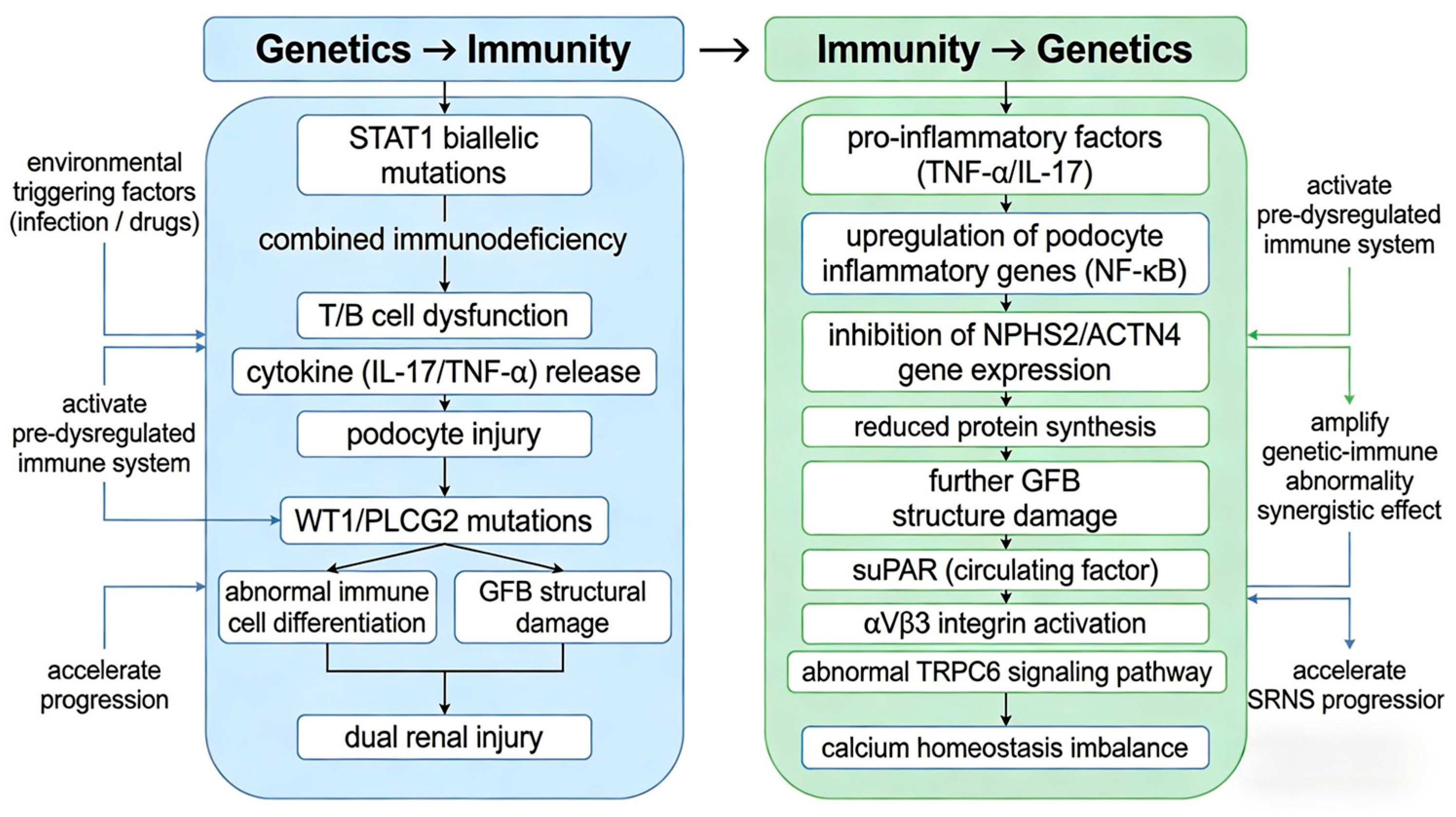
2.3. Genetic–Immunological Interactions in SRNS
3. Genetic Diagnosis of SRNS: Adaptation Table for Different Populations
3.1. Core Gene Panel Testing: First-Line Screening for “Typical Phenotype, Moderate Genetic Risk” Populations
- Children with isolated symptoms: Presenting with classic nephrotic syndrome without extrarenal complications and showing no response to steroid therapy.
- Mid-age onset Children: Onset between 1 and 12 years (a period where variations in core pathogenic genes like NPHS2 and ADCK4 account for 62% of cases, with stable phenotypes and no extreme age-related rare genetic features).
3.2. Whole-Exome Sequencing (WES): Upgraded Protocol for Negative Core Panel Results, Suited for “Atypical Phenotype, High Genetic Suspicions” Populations
- Complex cases with extrarenal symptoms: Beyond nephrotic syndrome, concurrent extrarenal abnormalities such as hearing/visual impairment (suggesting COL4A5-related Alport syndrome); ocular structural defects (e.g., congenital cataracts, warranting LAMB2 gene screening); or neuromuscular symptoms (e.g., muscle weakness, potentially linked to INF2 gene variants).
- Extreme age at onset: Onset < 1 year (infantile SRNS, where monogenic causes account for 61%, often involving rare variants poorly covered by core panels); onset > 12 years (adolescent/adult SRNS, with lower genetic contribution but frequently involving genes like ACTN4 and TRPC6 not included in core panels).
- Definite familial genetic background: First-degree relatives (parents, siblings) with nephrotic syndrome or chronic renal failure; consanguineous parents (offspring at higher risk of carrying homozygous rare variants not covered by core panels); or multiple affected family members (suggesting autosomal dominant inheritance, e.g., TRPC6 dominant mutations) [29,30,31].
3.3. Whole-Genome Sequencing (WGS): Core Upgraded Detection for Refractory Cases with Structural/Non-Coding Variant Suspicions
- Suspected non-coding region variants: Clinically strong genetic suspicion (e.g., clear family history, typical phenotype) but negative WES for coding region variants, requiring investigation of non-coding anomalies such as gene promoter methylation defects (e.g., NPHS2 promoter abnormalities affecting gene expression) or deep intronic variants causing mRNA splicing errors—a typical type of loss-of-function variant (e.g., large insertions in WT1 introns).
- Suspected chromosomal structural abnormalities: Karyotype analysis or chromosomal microarray (CMA) indicating segmental abnormalities (e.g., large deletions/duplications); suspected pathogenic chromosomal translocations or inversions (e.g., large deletions in the 11p13 region harboring WT1); or multi-gene joint variants requiring analysis of non-coding regulatory networks beyond WES coverage.
- Globally rare refractory cases: Negative results from both panel and WES testing with no known pathogenic genes matching the phenotype; enrollment in rare disease research programs to identify novel causative genes (e.g., non-coding RNA or regulator variants); or cases requiring genetic exclusion to guide treatment after inconclusive multidisciplinary consultations [7,33].
3.4. Multi-Omics and Long-Range Sequencing: Supplementary and Exploratory Detection for Refractory Negative Cases
3.4.1. Multi-Omics Technology: Supplementary Detection for Rare Mutations with Functional Abnormality Suspicions
3.4.2. Long-Range Sequencing: Exploratory Detection for Conventional Short-Read Sequencing Negative Cases
4. Clinical Diagnostic System for SRNS: Gene-Directed Therapy and Monitoring
4.1. Mechanistic Differences Among Genes and Therapeutic Implications
4.1.1. Classification and Functional Background of SRNS-Associated Core Genes
4.1.2. Differential Pathogenic Mechanisms Among Genes
Slit Diaphragm Structural Disruption Type (e.g., NPHS1, NPHS2)
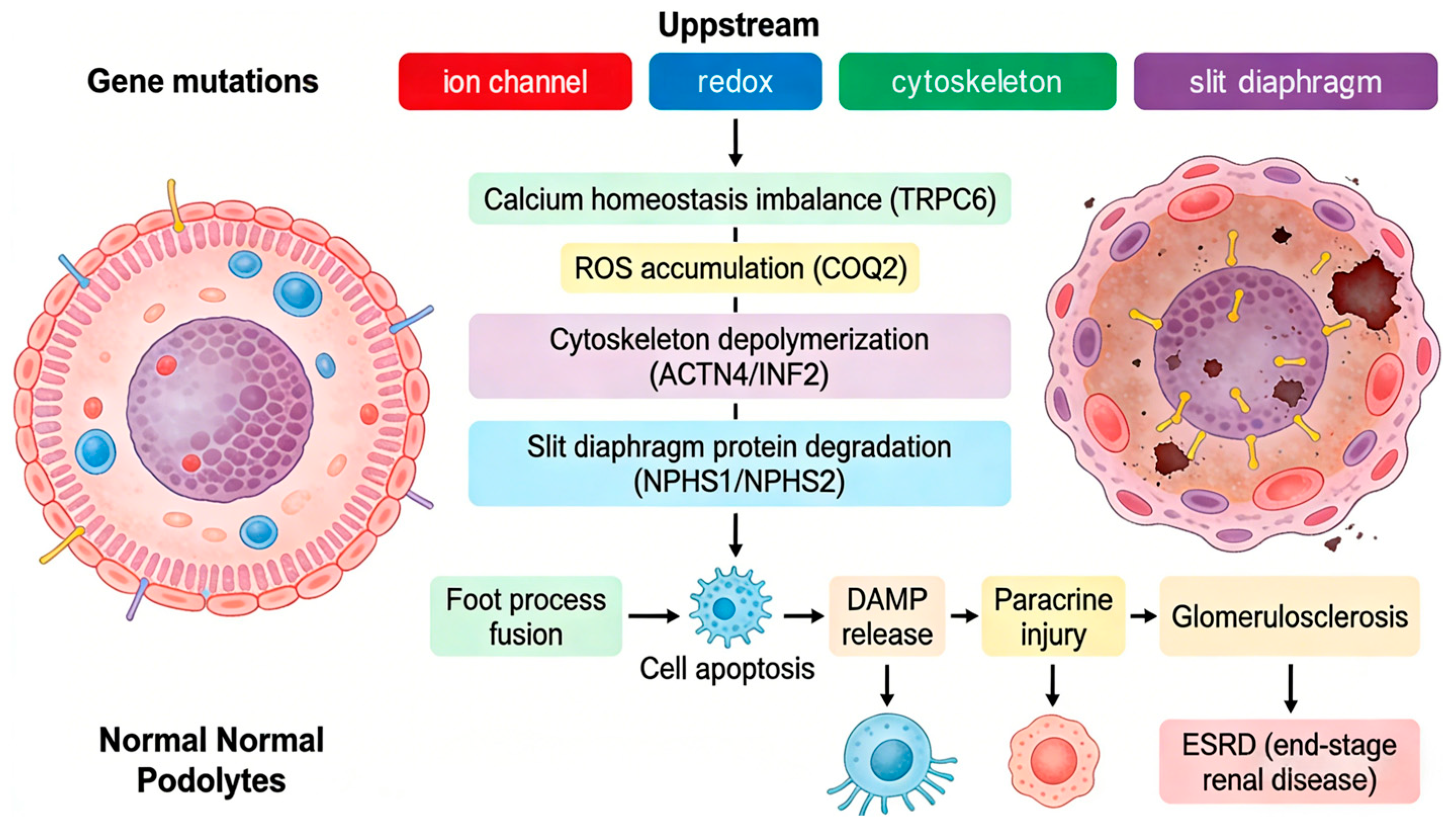
Podocyte Cytoskeleton Disorder Subtype (e.g., ACTN4, INF2, TRPC6)
Signal Pathway Abnormality Type (e.g., WT1, LAMB2, CD2AP)
Energy Metabolism Disorder Type (e.g., COQ2, PDSS2)
4.1.3. Correlation Between Pathogenic Mechanism Differences and Therapeutic Strategies in SRNS
4.2. Precision Intervention in Monogenic Cases
4.2.1. Significance of Precision Intervention
4.2.2. Current Status of Precision Intervention
Intervention for Structural Protein-Related Genetic Defects (e.g., NPHS1, NPHS2, ACTN4)
Intervention for Signaling Pathway-Related Genetic Defects (e.g., WT1)
Intervention for Energy Metabolism-Related Genetic Defects (e.g., CoQ10)
4.3. Genetic Heterogeneity of SRNS
4.4. Advances in Gene Therapy for SRNS
4.4.1. Adeno-Associated Virus-Mediated Gene Therapy
4.4.2. Preclinical Advances and Translation Challenges with CRISPR-Cas
5. Dilemmas and Prospects of Genetic Diagnosis and Treatment for SRNS
5.1. Dilemmas in Genetic Diagnosis and Treatment of SRNS
5.2. Prospects of Genetic Diagnosis and Treatment for SRNS
6. Conclusions and Future Perspectives
Author Contributions
Funding
Institutional Review Board Statement
Informed Consent Statement
Data Availability Statement
Conflicts of Interest
References
- Nandlal, L.; Naicker, T.; Bhimma, R. Nephrotic Syndrome in South African Children: Changing Perspectives in the New Millennium. Kidney Int. Rep. 2019, 4, 522–534. [Google Scholar] [CrossRef] [Scilit] [PubMed]
- Lee, J.M.; Kronbichler, A.; Shin, J.I.; Oh, J. Current understandings in treating children with steroid-resistant nephrotic syndrome. Pediatr. Nephrol. 2020, 36, 747–761. [Google Scholar] [CrossRef] [Scilit]
- Nourbakhsh, N.; Mak, R.H. Steroid-resistant nephrotic syndrome: Past and current perspectives. Pediatr. Health Med. Ther. 2017, 8, 29–37. [Google Scholar] [CrossRef] [Scilit]
- Cara-Fuentes, G.; Wasserfall, C.H.; Wang, H.; Johnson, R.J.; Garin, E.H. Minimal change disease: A dysregulation of the podocyte CD80-CTLA-4 axis? Pediatr. Nephrol. 2014, 29, 2333–2340. [Google Scholar] [CrossRef] [Scilit]
- Zhang, L.; Zhao, F.; Ding, G.; Chen, Y.; Zhao, S.; Chen, Q.; Sha, Y.; Che, R.; Huang, S.; Zheng, B.; et al. Monogenic Causes Identified in 23.68% of Children with Steroid-Resistant Nephrotic Syndrome: A Single-Centre Study. Kidney Dis. 2024, 10, 61–68. [Google Scholar] [CrossRef] [Scilit]
- Cheong, H.I. Genetic tests in children with steroid-resistant nephrotic syndrome. Kidney Res. Clin. Pract. 2020, 39, 7–16. [Google Scholar] [CrossRef] [Scilit]
- Preston, R.; Stuart, H.M.; Lennon, R. Genetic testing in steroid-resistant nephrotic syndrome: Why, who, when and how? Pediatr. Nephrol. 2017, 34, 195–210. [Google Scholar] [CrossRef] [Scilit]
- Soliman, N.A.; Elmonem, M.A.; El-Sayed, A.F.; Ramadan, E.; Badr, A.M.; Atia, F.M.; Helmy, R.; Amer, M.O.; El-Raouf, A.A.; El-Garhy, F.M.; et al. Whole genome sequencing identifies monogenic disease in 56.1% of families with early-onset steroid-resistant nephrotic syndrome. Hum. Genet. 2025, 144, 727–740. [Google Scholar] [CrossRef] [Scilit]
- Deng, J.; Zhu, L.; Zhu, X. Immune mechanisms and immunomodulatory therapies in steroid-resistant nephrotic syndrome. Ren. Fail. 2025, 47, 2556486. [Google Scholar] [CrossRef] [Scilit] [PubMed]
- Trautmann, A.; Vivarelli, M.; Samuel, S.; Gipson, D.; Sinha, A.; Schaefer, F.; Hui, N.K.; Boyer, O.; Saleem, M.A.; Feltran, L.; et al. IPNA clinical practice recommendations for the diagnosis and management of children with steroid-resistant nephrotic syndrome. Pediatr. Nephrol. 2020, 35, 1529–1561. [Google Scholar] [CrossRef] [Scilit] [PubMed]
- Deltas, C. Digenic inheritance and genetic modifiers. Clin. Genet. 2018, 93, 429–438. [Google Scholar] [CrossRef] [Scilit]
- Becherucci, F.; Landini, S.; Cirillo, L.; Mazzinghi, B.; Romagnani, P. Look Alike, Sound Alike: Phenocopies in Steroid-Resistant Nephrotic Syndrome. Int. J. Environ. Res. Public Health 2020, 17, 8363. [Google Scholar] [CrossRef] [Scilit]
- Roa-Bautista, A.; Sohail, M.; Wakeling, E.; Gilmour, K.C.; Davis, M.; Gait, A.; Lucchini, G.; Cox, D.; Elfeky, R.; Kusters, M. Combined novel homozygous variants in both SGPL1 and STAT1 presenting with severe combined immune deficiency: Case report and literature review. Front. Immunol. 2023, 14, 1186575. [Google Scholar] [CrossRef] [Scilit]
- Ahmadian, E.; Saadat, Y.R.; Abdolahinia, E.D.; Bastami, M.; Shoja, M.M.; Vahed, S.Z.; Ardalan, M. The Role of Cytokines in Nephrotic Syndrome. Mediat. Inflamm. 2022, 2022, 6499668. [Google Scholar] [CrossRef] [Scilit]
- Ivanov, D.; Weber, L.T.; Levtchenko, E.; Vakulenko, L.; Ivanova, M.; Zavalna, I.; Lagodych, Y.; Boiko, N. Rituximab Administration to Treat Nephrotic Syndrome in Children: 2-Year Follow-Up. Biomedicines 2024, 12, 2600. [Google Scholar] [CrossRef] [Scilit]
- Davin, J.-C. The glomerular permeability factors in idiopathic nephrotic syndrome. Pediatr. Nephrol. 2015, 31, 207–215. [Google Scholar] [CrossRef] [Scilit]
- Lopez-Gonzalez, M.; Ariceta, G. WT1-related disorders: More than Denys-Drash syndrome. Pediatr. Nephrol. 2024, 39, 2601–2609. [Google Scholar]
- Gbadegesin, R.A.; Adeyemo, A.; Webb, N.J.; Greenbaum, L.A.; Abeyagunawardena, A.; Thalgahagoda, S.; Kale, A.; Gipson, D.; Srivastava, T.; Lin, J.-J.; et al. HLA-DQA1 and PLCG2 Are Candidate Risk Loci for Childhood-Onset Steroid-Sensitive Nephrotic Syndrome. J. Am. Soc. Nephrol. 2015, 26, 1701–1710. [Google Scholar] [CrossRef] [Scilit] [PubMed]
- Mason, A.E.; Saleem, M.A.; Bierzynska, A. A critical re-analysis of cases of post-transplantation recurrence in genetic nephrotic syndrome. Pediatr. Nephrol. 2021, 36, 3757–3769. [Google Scholar] [CrossRef] [Scilit] [PubMed]
- Abrahamson, D.R.; Steenhard, B.M.; Stroganova, L.; Zelenchuk, A.; John, P.L.S.; Petroff, M.G.; Patarroyo, M.; Borza, D.B. Maternal alloimmune IgG causes anti-glomerular basement membrane disease in perinatal transgenic mice that express human laminin α5. Kidney Int. 2019, 96, 1320–1331. [Google Scholar] [CrossRef] [Scilit] [PubMed]
- Deepthi, B.; Sivakumar, R.R.; Krishnasamy, S.; Gochhait, D.; Mandal, K.; Krishnamurthy, S. Congenital nephrotic syndrome with diffuse mesangial sclerosis caused by compound heterozygous mutation in LAMA5 gene. Pediatr. Nephrol. 2023, 39, 1421–1425. [Google Scholar] [CrossRef] [Scilit] [PubMed]
- Megremis, S.; Mitsioni, A.; Fylaktou, I.; Tzeli, S.K.; Komianou, F.; Stefanidis, C.J.; Kanavakis, E.; Traeger-Synodinos, J. Broad and unexpected phenotypic expression in Greek children with steroid-resistant nephrotic syndrome due to mutations in the Wilms’ tumor 1 (WT1) gene. Eur. J. Pediatr. 2011, 170, 1529–1534. [Google Scholar] [CrossRef] [Scilit]
- Raglianti, V.; Angelotti, M.L.; Cirillo, L.; Ravaglia, F.; Landini, S.; Palazzo, V.; Melica, M.E.; Antonelli, G.; Conte, C.; Buti, E.; et al. Anti-slit diaphragm antibodies on kidney biopsy identify pediatric patients with steroid-resistant nephrotic syndrome responsive to second-line immunosuppressants. Kidney Int. 2024, 106, 1124–1134. [Google Scholar] [CrossRef] [Scilit]
- Ahn, Y.H.; Park, E.J.; Kang, H.G.; Kim, S.H.; Cho, H.Y.; Shin, J.I.; Lee, J.H.; Park, Y.S.; Kim, K.S.; Ha, I.-S.; et al. Genotype–phenotype analysis of pediatric patients with WT1 glomerulopathy. Pediatr. Nephrol. 2016, 32, 81–89. [Google Scholar] [CrossRef] [Scilit] [PubMed]
- Shirai, Y.; Miura, K.; Ishizuka, K.; Ando, T.; Kanda, S.; Hashimoto, J.; Hamasaki, Y.; Hotta, K.; Ito, N.; Honda, K.; et al. A multi-institutional study found a possible role of anti-nephrin antibodies in post-transplant focal segmental glomerulosclerosis recurrence. Kidney Int. 2023, 105, 608–617. [Google Scholar] [CrossRef] [Scilit]
- Cheng, X.; Chen, J.; Yang, X.; Chan, H.; Yang, X.; Jiao, J.; Wang, A.; Zhang, G.; Chen, X.; Li, X.; et al. Comparison of different genetic testing modalities applied in paediatric patients with steroid-resistant nephrotic syndrome. Ital. J. Pediatr. 2024, 50, 85. [Google Scholar] [CrossRef] [Scilit]
- Siji, A.; Karthik, K.N.; Pardeshi, V.C.; Hari, P.S.; Vasudevan, A. Targeted gene panel for genetic testing of south Indian children with steroid resistant nephrotic syndrome. BMC Med. Genet. 2018, 19, 200. [Google Scholar] [CrossRef] [Scilit]
- Sen, E.S.; Dean, P.; Yarram-Smith, L.; Bierzynska, A.; Woodward, G.; Buxton, C.; Dennis, G.; Welsh, G.I.; Williams, M.; Saleem, M.A. Clinical genetic testing using a custom-designed steroid-resistant nephrotic syndrome gene panel: Analysis and recommendations. J. Med Genet. 2017, 54, 795–804. [Google Scholar] [CrossRef] [Scilit]
- Landini, S.; Mazzinghi, B.; Becherucci, F.; Allinovi, M.; Provenzano, A.; Palazzo, V.; Ravaglia, F.; Artuso, R.; Bosi, E.; Stagi, S.; et al. Reverse Phenotyping after Whole-Exome Sequencing in Steroid-Resistant Nephrotic Syndrome. Clin. J. Am. Soc. Nephrol. 2019, 15, 89–100. [Google Scholar] [CrossRef] [Scilit] [PubMed]
- Warejko, J.K.; Tan, W.; Daga, A.; Schapiro, D.; Lawson, J.A.; Shril, S.; Lovric, S.; Ashraf, S.; Rao, J.; Hermle, T.; et al. Whole Exome Sequencing of Patients with Steroid-Resistant Nephrotic Syndrome. Clin. J. Am. Soc. Nephrol. 2018, 13, 53–62. [Google Scholar] [CrossRef] [Scilit]
- Klämbt, V.; Mao, Y.; Schneider, R.; Buerger, F.; Shamseldin, H.; Onuchic-Whitford, A.C.; Deutsch, K.; Kitzler, T.M.; Nakayama, M.; Majmundar, A.J.; et al. Generation of Monogenic Candidate Genes for Human Nephrotic Syndrome Using 3 Independent Approaches. Kidney Int. Rep. 2020, 6, 460–471. [Google Scholar] [CrossRef] [Scilit] [PubMed]
- Meienberg, J.; Bruggmann, R.; Oexle, K.; Matyas, G. Clinical sequencing: Is WGS the better WES? Hum. Genet. 2016, 135, 359–362. [Google Scholar] [CrossRef] [Scilit] [PubMed]
- Prakash, S.; Gharavi, A.G. Diagnosing kidney disease in the genetic era. Curr. Opin. Nephrol. Hypertens. 2015, 24, 380–387. [Google Scholar] [CrossRef] [Scilit]
- Braconi, D.; Nadwa, H.; Bernardini, G.; Santucci, A. Omics and rare diseases: Challenges, applications, and future perspectives. Expert Rev. Proteom. 2025, 22, 107–122. [Google Scholar] [CrossRef] [Scilit]
- Bierzynska, A.; McCarthy, H.J.; Soderquest, K.; Sen, E.S.; Colby, E.; Ding, W.Y.; Nabhan, M.M.; Kerecuk, L.; Hegde, S.; Hughes, D.; et al. Genomic and clinical profiling of a national nephrotic syndrome cohort advocates a precision medicine approach to disease management. Kidney Int. 2017, 91, 937–947. [Google Scholar] [CrossRef] [Scilit]
- Begum, G.; Albanna, A.; Bankapur, A.; Nassir, N.; Tambi, R.; Berdiev, B.K.; Akter, H.; Karuvantevida, N.; Kellam, B.; Alhashmi, D.; et al. Long-Read Sequencing Improves the Detection of Structural Variations Impacting Complex Non-Coding Elements of the Genome. Int. J. Mol. Sci. 2021, 22, 2060. [Google Scholar] [CrossRef] [Scilit]
- Negi, S.; Stenton, S.L.; Berger, S.I.; Canigiula, P.; McNulty, B.; Violich, I.; Gardner, J.; Hillaker, T.; O’rOurke, S.M.; O’lEary, M.C.; et al. Advancing long-read nanopore genome assembly and accurate variant calling for rare disease detection. Am. J. Hum. Genet. 2025, 112, 428–449. [Google Scholar] [CrossRef] [Scilit]
- Zhu, X.; Zhang, Y.; Yu, Z.; Yu, L.; Huang, W.; Sun, S.; Li, Y.; Wang, M.; Li, Y.; Sun, L.; et al. The Clinical and Genetic Features in Chinese Children With Steroid-Resistant or Early-Onset Nephrotic Syndrome: A Multicenter Cohort Study. Front. Med. 2022, 9, 885178. [Google Scholar] [CrossRef] [Scilit]
- Daehn, I.S.; Duffield, J.S. The glomerular filtration barrier: A structural target for novel kidney therapies. Nat. Rev. Drug Discov. 2021, 20, 770–788. [Google Scholar] [CrossRef] [Scilit]
- Bianchi, G.; Bellucci, L.; Morello, W.; Turolo, S.; Cricrì, G.; Caicci, F.; Tamburello, C.; Villa, S.; Prati, D.; Montini, G.; et al. Effects of steroid-resistant nephrotic syndrome serum on AA pathway in podocytes cultured in 3D in vitro glomerular model. Sci. Rep. 2025, 15, 12802. [Google Scholar] [CrossRef] [Scilit] [PubMed]
- Drummond, B.E.; Ercanbrack, W.S.; Wingert, R.A. Modeling Podocyte Ontogeny and Podocytopathies with the Zebrafish. J. Dev. Biol. 2023, 11, 9. [Google Scholar] [CrossRef] [Scilit]
- Machuca, E.; Benoit, G.; Antignac, C. Genetics of nephrotic syndrome: Connecting molecular genetics to podocyte physiology. Hum. Mol. Genet. 2009, 18, R185–R194. [Google Scholar] [CrossRef] [Scilit]
- Patrakka, J.; Tryggvason, K. Nephrin—A unique structural and signaling protein of the kidney filter. Trends Mol. Med. 2007, 13, 396–403. [Google Scholar] [CrossRef] [Scilit]
- Al Riyami, M.S.; Al Alawi, I.; Al Gaithi, B.; Al Maskari, A.; Al Kalbani, N.; Al Hashmi, N.; Al Balushi, A.; Al Shahi, M.; Al Saidi, S.; Al Bimani, M.; et al. Genetic analysis and outcomes of Omani children with steroid-resistant nephrotic syndrome. Mol. Genet. Genom. Med. 2023, 11, e2201. [Google Scholar] [CrossRef] [Scilit]
- Bouchireb, K.; Boyer, O.; Gribouval, O.; Nevo, F.; Huynh-Cong, E.; Morinière, V.; Campait, R.; Ars, E.; Brackman, D.; Dantal, J.; et al. NPHS2 mutations in steroid-resistant nephrotic syndrome: A mutation update and the associated phenotypic spectrum. Hum. Mutat. 2013, 35, 178–186. [Google Scholar] [CrossRef] [Scilit]
- Huber, T.B.; Simons, M.; Hartleben, B.; Sernetz, L.; Schmidts, M.; Gundlach, E.; Saleem, M.A.; Walz, G.; Benzing, T. Molecular basis of the functional podocin-nephrin complex: Mutations in the NPHS2 gene disrupt nephrin targeting to lipid raft microdomains. Hum. Mol. Genet. 2003, 12, 3397–3405. [Google Scholar] [CrossRef] [Scilit] [PubMed]
- Aude, D.; Irene, G.; Alison, G.; Thanushi, P.; Thomas, F.; Michael, S.; Mithun, D.; Moin, S.; Catherine, Q.; Kynan, L.; et al. Kidney Organoids Generated Using an Allelic Series of NPHS2 Point Variants Reveal Distinct Intracellular Podocin Mistrafficking. J. Am. Soc. Nephrol. 2022, 34, 88–109. [Google Scholar] [CrossRef] [Scilit] [PubMed]
- Miyasako, K.; Maeoka, Y.; Adachi, Y.; Tamura, R.; Ishiuchi, N.; Nagano, C.; Nozu, K.; Masaki, T. Early use of renin–angiotensin–aldosterone system inhibitors and stable renal function in familial focal segmental glomerulosclerosis with ACTN4 mutation: A case report and literature review. BMC Nephrol. 2025, 26, 521. [Google Scholar] [CrossRef] [Scilit] [PubMed]
- Frazier, E.; Sabour, R.; Nguyen, M.D.; Le, D.; Hanna, R. Novel WT1 and ACTN4 co-mutations in a patient with Denys-Drash syndrome and an atypical, potentially attenuated presentation of nephropathy: A case report. BMC Nephrol. 2025, 26, 508. [Google Scholar] [CrossRef] [Scilit]
- Khurana, S.; Chakraborty, S.; Lam, M.; Liu, Y.; Su, Y.-T.; Zhao, X.; Saleem, M.A.; Mathieson, P.W.; Bruggeman, L.A.; Kao, H.-Y. Familial Focal Segmental Glomerulosclerosis (FSGS)-linked α-Actinin 4 (ACTN4) Protein Mutants Lose Ability to Activate Transcription by Nuclear Hormone Receptors. J. Biol. Chem. 2012, 287, 12027–12035. [Google Scholar] [CrossRef] [Scilit]
- A, M.; Fung, T.S.; Kettenbach, A.N.; Chakrabarti, R.; Higgs, H.N. A complex containing lysine-acetylated actin inhibits the formin INF2. Nat. Cell Biol. 2019, 21, 592–602. [Google Scholar] [CrossRef] [Scilit]
- Ueda, H.; Tran, Q.T.H.; Tran, L.N.T.; Higasa, K.; Ikeda, Y.; Kondo, N.; Hashiyada, M.; Sato, C.; Sato, Y.; Ashida, A.; et al. Characterization of cytoskeletal and structural effects of INF2 variants causing glomerulopathy and neuropathy. Sci. Rep. 2023, 13, 12003. [Google Scholar] [CrossRef] [Scilit]
- Barua, M.; Brown, E.J.; Charoonratana, V.T.; Genovese, G.; Sun, H.; Pollak, M.R. Mutations in the INF2 gene account for a significant proportion of familial but not sporadic focal and segmental glomerulosclerosis. Kidney Int. 2013, 83, 316–322. [Google Scholar] [CrossRef] [Scilit]
- Riehle, M.; Büscher, A.K.; Gohlke, B.-O.; Kaßmann, M.; Kolatsi-Joannou, M.; Bräsen, J.H.; Nagel, M.; Becker, J.U.; Winyard, P.; Hoyer, P.F.; et al. TRPC6 G757D Loss-of-Function Mutation Associates with FSGS. J. Am. Soc. Nephrol. 2016, 27, 2771–2783. [Google Scholar] [CrossRef] [Scilit]
- Verheijden, K.A.; Sonneveld, R.; Bebber, M.B.-V.; Wetzels, J.F.; van der Vlag, J.; Nijenhuis, T. The Calcium-Dependent Protease Calpain-1 Links TRPC6 Activity to Podocyte Injury. J. Am. Soc. Nephrol. 2018, 29, 2099–2109. [Google Scholar] [CrossRef] [Scilit] [PubMed]
- Dong, L.; Pietsch, S.; Englert, C. Towards an understanding of kidney diseases associated with WT1 mutations. Kidney Int. 2015, 88, 684–690. [Google Scholar] [CrossRef] [Scilit]
- Chen, H.; Zhang, M.; Lin, J.; Lu, J.; Zhong, F.; Zhong, F.; Gao, X.; Liao, X. Genotype-phenotype correlation of WT1 mutation-related nephropathy in Chinese children. Front. Pediatr. 2023, 11, 1192021. [Google Scholar] [CrossRef] [Scilit]
- Zapata-Benavides, P.; Arellano-Rodríguez, M.; Bollain-Y-Goytia, J.J.; Franco-Molina, M.A.; Rangel-Ochoa, G.A.; Avalos-Díaz, E.; Herrera-Esparza, R.; Rodríguez-Padilla, C. Cytoplasmic Localization of WT1 and Decrease of miRNA-16-1 in Nephrotic Syndrome. BioMed Res. Int. 2017, 2017, 9531074. [Google Scholar] [CrossRef] [Scilit] [PubMed]
- Falix, F.A.; Bennebroek, C.A.; van der Zwaag, B.; Lapid-Gortzak, R.; Florquin, S.; Oosterveld, M.J. A novel mutation of laminin β2 (LAMB2) in two siblings with renal failure. Eur. J. Pediatr. 2017, 176, 515–519. [Google Scholar] [CrossRef] [Scilit] [PubMed]
- Funk, S.D.; Bayer, R.H.; Malone, A.F.; McKee, K.K.; Yurchenco, P.D.; Miner, J.H. Pathogenicity of a Human Laminin β2 Mutation Revealed in Models of Alport Syndrome. J. Am. Soc. Nephrol. 2017, 29, 949–960. [Google Scholar] [CrossRef] [Scilit]
- Funk, S.D.; Bayer, R.H.; McKee, K.K.; Okada, K.; Nishimune, H.; Yurchenco, P.D.; Miner, J.H. A deletion in the N-terminal polymerizing domain of laminin β2 is a new mouse model of chronic nephrotic syndrome. Kidney Int. 2020, 98, 133–146. [Google Scholar] [CrossRef] [Scilit] [PubMed]
- Schwarz, K.; Simons, M.; Reiser, J.; Saleem, M.A.; Faul, C.; Kriz, W.; Shaw, A.S.; Holzman, L.B.; Mundel, P. Podocin, a raft-associated component of the glomerular slit diaphragm, interacts with CD2AP and nephrin. J. Clin. Investig. 2001, 108, 1621–1629. [Google Scholar] [CrossRef] [PubMed]
- Tossidou, I.; Niedenthal, R.; Klaus, M.; Teng, B.; Worthmann, K.; King, B.L.; Peterson, K.J.; Haller, H.; Schiffer, M. CD2AP Regulates SUMOylation of CIN85 in Podocytes. Mol. Cell. Biol. 2012, 32, 1068–1079. [Google Scholar] [CrossRef] [Scilit] [PubMed]
- Saurus, P.; Tolvanen, T.A.; Lindfors, S.; Kuusela, S.; Holthöfer, H.; Lehtonen, E.; Lehtonen, S. Inhibition of SHIP2 in CD2AP-deficient podocytes ameliorates reactive oxygen species generation but aggravates apoptosis. Sci. Rep. 2017, 7, 10731. [Google Scholar] [CrossRef] [Scilit]
- Tan, W.; Airik, R. Primary coenzyme Q10 nephropathy, a potentially treatable form of steroid-resistant nephrotic syndrome. Pediatr. Nephrol. 2021, 36, 3515–3527. [Google Scholar] [CrossRef] [Scilit]
- Park, P.G.; Choi, S.; Ahn, Y.H.; Kim, S.H.; Kim, C.; Kim, H.J.; Kang, H.G. Single-cell transcriptomics in a child with coenzyme Q10 nephropathy: Potential of single-cell RNA sequencing in pediatric kidney disease. Pediatr. Nephrol. 2025, 40, 1653–1662. [Google Scholar] [CrossRef] [Scilit]
- Xu, K.; Mao, X.Y.; Yao, Y.; Cheng, H.; Zhang, X.J. Clinical analysis of one infantile nephrotic syndrome caused by COQ2 gene mutation and literature review. Zhonghua er ke za zhi = Chin. J. Pediatr. 2018, 56, 662–666. [Google Scholar]
- Büscher, A.K.; Beck, B.B.; Melk, A.; Hoefele, J.; Kranz, B.; Bamborschke, D.; Baig, S.; Lange-Sperandio, B.; Jungraithmayr, T.; Weber, L.T.; et al. Rapid Response to Cyclosporin A and Favorable Renal Outcome in Nongenetic Versus Genetic Steroid–Resistant Nephrotic Syndrome. Clin. J. Am. Soc. Nephrol. 2016, 11, 245–253. [Google Scholar] [CrossRef] [Scilit]
- Lee, J.X.; Tan, Y.J.; Ismail, N.A.S. NPHS Mutations in Pediatric Patients with Congenital and Steroid-Resistant Nephrotic Syndrome. Int. J. Mol. Sci. 2024, 25, 12275. [Google Scholar] [CrossRef] [Scilit]
- Caridi, G.; Gigante, M.; Ravani, P.; Trivelli, A.; Barbano, G.; Scolari, F.; Dagnino, M.; Murer, L.; Murtas, C.; Edefonti, A.; et al. Clinical Features and Long-Term Outcome of Nephrotic Syndrome Associated with Heterozygous NPHS1 and NPHS2 Mutations. Clin. J. Am. Soc. Nephrol. 2009, 4, 1065–1072. [Google Scholar] [CrossRef] [Scilit]
- Li, Y.; Tian, C.; Wang, Y.; Ma, G.; Chen, R. Isolated steroid-resistant nephrotic syndrome in a Chinese child carrying a de novo mutation in WT1 gene:a case report and literature review. BMC Pediatr. 2022, 22, 349. [Google Scholar] [CrossRef] [Scilit]
- Weber, S.; Gribouval, O.; Esquivel, E.L.; Morinière, V.; Tête, M.-J.; Legendre, C.; Niaudet, P.; Antignac, A. NPHS2 mutation analysis shows genetic heterogeneity of steroid-resistant nephrotic syndrome and low post-transplant recurrence. Kidney Int. 2004, 66, 571–579. [Google Scholar] [CrossRef] [Scilit]
- Pantel, D.; Mertens, N.D.; Schneider, R.; Hölzel, S.; Kari, J.A.; El Desoky, S.; Shalaby, M.A.; Lim, T.Y.; Sanna-Cherchi, S.; Shril, S.; et al. Copy number variation analysis in 138 families with steroid-resistant nephrotic syndrome identifies causal homozygous deletions in PLCE1 and NPHS2 in two families. Pediatr. Nephrol. 2024, 39, 455–461. [Google Scholar] [CrossRef] [Scilit]
- Tan, W.; Lovric, S.; Ashraf, S.; Rao, J.; Schapiro, D.; Airik, M.; Shril, S.; Gee, H.Y.; Baum, M.; Daouk, G.; et al. Analysis of 24 genes reveals a monogenic cause in 11.1% of cases with steroid-resistant nephrotic syndrome at a single center. Pediatr. Nephrol. 2017, 33, 305–314. [Google Scholar] [CrossRef] [Scilit]
- Philippe, A.; Nevo, F.; Esquivel, E.L.; Reklaityte, D.; Gribouval, O.; Loirat, C.; Dantal, J.; Fischbach, M.; Pouteil-Noble, C.; Hoehne, M.; et al. Nephrin mutations can cause childhood-onset steroid-resistant nephrotic syndrome. J. Am. Soc. Nephrol. 2008, 19, 1871–1878. [Google Scholar] [CrossRef] [Scilit]
- Beltcheva, O.; Martin, P.; Lenkkeri, U.; Tryggvason, K. Mutation spectrum in the nephrin gene (NPHS1) in congenital nephrotic syndrome. Hum. Mutat. 2001, 17, 368–373. [Google Scholar] [CrossRef] [Scilit]
- Benoit, G.; Machuca, E.; Antignac, C. Hereditary nephrotic syndrome: A systematic approach for genetic testing and a review of associated podocyte gene mutations. Pediatr. Nephrol. 2010, 25, 1621–1632. [Google Scholar] [CrossRef] [Scilit] [PubMed]
- Wang, M.; Chun, J.; Genovese, G.; Knob, A.U.; Benjamin, A.; Wilkins, M.S.; Friedman, D.J.; Appel, G.B.; Lifton, R.P.; Mane, S.; et al. Contributions of Rare Gene Variants to Familial and Sporadic FSGS. J. Am. Soc. Nephrol. 2019, 30, 1625–1640. [Google Scholar] [CrossRef] [Scilit] [PubMed]
- Yang, S.; He, Y.; Zhou, J.; Yuan, H.; Qiu, L. Steroid-resistant nephrotic syndrome associated with certain SGPL1 variants in a family: Case report and literature review. Front. Pediatr. 2023, 11, 1079758. [Google Scholar] [CrossRef] [Scilit] [PubMed]
- Boyer, O.; Benoit, G.; Gribouval, O.; Nevo, F.; Pawtowski, A.; Bilge, I.; Bircan, Z.; Deschênes, G.; Guay-Woodford, L.M.; Hall, M.; et al. Mutational analysis of the PLCE1 gene in steroid resistant nephrotic syndrome. J. Med. Genet. 2010, 47, 445–452. [Google Scholar] [CrossRef] [Scilit]
- Ramanathan, A.S.K.; Vijayan, M.; Rajagopal, S.; Rajendiran, P.; Senguttuvan, P. WT1 and NPHS2 gene mutation analysis and clinical management of steroid-resistant nephrotic syndrome. Mol. Cell. Biochem. 2016, 426, 177–181. [Google Scholar] [CrossRef] [Scilit] [PubMed]
- Phelan, P.J.; Hall, G.; Wigfall, D.; Foreman, J.; Nagaraj, S.; Malone, A.F.; Winn, M.P.; Howell, D.N.; Gbadegesin, R. Variability in phenotype induced by the podocin variant R229Q plus a single pathogenic mutation. Clin. Kidney J. 2015, 8, 538–542. [Google Scholar] [CrossRef] [Scilit]
- Guaragna, M.S.; Lutaif, A.C.G.; Piveta, C.S.; Souza, M.L.; de Souza, S.R.; Henriques, T.B.; Maciel-Guerra, A.T.; Belangero, V.M.; Guerra-Junior, G.; De Mello, M.P. NPHS2 mutations account for only 15% of nephrotic syndrome cases. BMC Med. Genet. 2015, 16, 88. [Google Scholar] [CrossRef] [Scilit]
- Ding, W.Y.; Kuzmuk, V.; Hunter, S.; Lay, A.; Hayes, B.; Beesley, M.; Rollason, R.; Hurcombe, J.A.; Barrington, F.; Masson, C.; et al. Adeno-associated virus gene therapy prevents progression of kidney disease in genetic models of nephrotic syndrome. Sci. Transl. Med. 2023, 15, eabc8226. [Google Scholar] [CrossRef] [Scilit]
- Zhao, P.; Tassew, G.B.; Lee, J.Y.; Oskouian, B.; Muñoz, D.P.; Hodgin, J.B.; Watson, G.L.; Tang, F.; Wang, J.-Y.; Luo, J.; et al. Efficacy of AAV9-mediated SGPL1 gene transfer in a mouse model of S1P lyase insufficiency syndrome. J. Clin. Investig. 2021, 6, e145936. [Google Scholar] [CrossRef] [Scilit]
- Wu, G.; Liu, S.; Hagenstein, J.; Alawi, M.; Hengel, F.E.; Schaper, M.; Akyüz, N.; Liao, Z.; Wanner, N.; Tomas, N.M.; et al. Adeno-associated virus–based gene therapy treats inflammatory kidney disease in mice. J. Clin. Investig. 2024, 134, e174722. [Google Scholar] [CrossRef] [Scilit]
- Asokan, A.; Wilson, M.H. Filtering through AAV capsid libraries for effective kidney gene transfer. Kidney Int. 2025, 107, 591–593. [Google Scholar] [CrossRef] [Scilit]
- Rocca, C.J.; Ur, S.N.; Harrison, F.; Cherqui, S. rAAV9 combined with renal vein injection is optimal for kidney-targeted gene delivery: Conclusion of a comparative study. Gene Ther. 2014, 21, 618–628. [Google Scholar] [CrossRef] [Scilit] [PubMed]
- Ertl, H.C.J. Immunogenicity and toxicity of AAV gene therapy. Front. Immunol. 2022, 13, 975803. [Google Scholar] [CrossRef] [Scilit]
- Yang, T.-Y.; Braun, M.; Lembke, W.; McBlane, F.; Kamerud, J.; DeWall, S.; Tarcsa, E.; Fang, X.; Hofer, L.; Kavita, U.; et al. Immunogenicity assessment of AAV-based gene therapies: An IQ consortium industry white paper. Mol. Ther.—Methods Clin. Dev. 2022, 26, 471–494. [Google Scholar] [PubMed]
- Duan, D. Lethal immunotoxicity in high-dose systemic AAV therapy. Mol. Ther. 2023, 31, 3123–3126. [Google Scholar] [CrossRef] [Scilit]
- Daga, S.; Donati, F.; Capitani, K.; Croci, S.; Tita, R.; Giliberti, A.; Valentino, F.; Benetti, E.; Fallerini, C.; Niccheri, F.; et al. New frontiers to cure Alport syndrome: COL4A3 and COL4A5 gene editing in podocyte-lineage cells. Eur. J. Hum. Genet. 2019, 28, 480–490, Erratum in Eur. J. Hum. Genet. 2024, 32, 131. https://doi.org/10.1038/S41431-023-01287-Y. [Google Scholar] [CrossRef] [Scilit]
- Wang, G.; Wu, H.; Zhai, X.; Zhang, L.; Zhang, C.; Cheng, C.; Xu, X.; Gao, E.; Xiong, X.; Zhang, J.; et al. Kidney Organoid Modeling of WT1 Mutations Reveals Key Regulatory Paths Underlying Podocyte Development. Adv. Sci. 2024, 11, e2308556. [Google Scholar] [CrossRef] [Scilit] [PubMed]
- Rosenblum, D.; Gutkin, A.; Dammes, N.; Peer, D. Progress and challenges towards CRISPR/Cas clinical translation. Adv. Drug Deliv. Rev. 2020, 154–155, 176–186. [Google Scholar] [CrossRef] [Scilit] [PubMed]
- Naveed, M.; Tabassum, N.; Aziz, T.; Shabbir, M.A.; Alkhateeb, M.A.; Alghamdi, S.; Babalghith, A.O.; Alsaiari, A.A.; Alshareef, S.A.; Barqawi, A.A. CRISPR-Cas9 guided RNA-based model for the silencing of spinal bulbar muscular atrophy: A functional genetic disorder. Cell. Mol. Biol. 2024, 70, 74–80. [Google Scholar] [CrossRef] [Scilit] [PubMed]



| Functional Category | Representative Genes | Pathogenic Mechanism |
|---|---|---|
| Podocyte cytoskeleton/adhesion | NPHS1 (nephrin), NPHS2 (podocin), ACTN4 | Disrupted cytoskeletal stability causing glomerular filtration barrier (GFB) leakage |
| Glomerular basement membrane | LAMB2, COL4A3/A4/A5 | Structural abnormalities impairing GFB integrity |
| Energy metabolism | COQ2, COQ8B, PDSS2 | Mitochondrial respiratory chain dysfunction; podocyte energy depletion |
| Ion channels | TRPC6, CLCN5 | Calcium/chloride homeostasis imbalance leading to foot process fusion |
| Transcriptional regulation | WT1, PAX2 | Abnormal podocyte development with extrarenal malformations |
| Mutation Combination Category | Representative Mutation Combination | Core Clinical Features |
|---|---|---|
| Energy metabolism gene + Podocyte cytoskeleton gene | COQ2 + ACTN4 | Rapid disease progression with accelerated deterioration of renal function based on the core monogenic phenotype |
| Glomerular basement membrane (GBM) gene + Transcriptional regulatory gene | LAMB2 + WT1 | Severe extrarenal manifestations (cataracts, genital malformations) superimposed on the core monogenic renal phenotype |
| Non-coding region variant + Coding region mutation | NPHS2 promoter variant + NPHS1 coding mutation | Easily missed by conventional genetic testing; unresponsive to immunosuppressive therapy, with more severe proteinuria than single coding region mutation |
| Subtype | Diagnostic Biomarkers | Key Mechanisms |
|---|---|---|
| T-cell mediated | CD4+CD25+ Treg <5%; IL-17 > 10 pg/mL; T-bet overexpression | Defective Treg suppression enables Th1/Th17 activation and cytokine-mediated podocyte injury |
| Circulating factor | suPAR > 3 ng/mL (serum), >1.5 ng/mgCr (urine); FSGS factor positivity | suPAR-uPAR interaction activates αVβ3 integrin signaling, disrupting podocyte adhesion |
| B-cell mediated | CD19+ B cells > 15%; anti-podocyte antibodies; IgG > 16 g/L | Autoantibody-mediated complement activation (C1q pathway) causing podocyte damage |
| Mechanism Type | Representative Genes | Core Therapeutic Strategy | Therapeutic Response Characteristics |
|---|---|---|---|
| Slit Diaphragm Disruption | NPHS1, NPHS2 | NPHS1: early dialysis/renal transplantation (no effective pharmacotherapy); NPHS2: trial of CNI (e.g., tacrolimus) combined with low-protein diet. | NPHS1: universal non-response to pharmacotherapy; NPHS2: about 30–40% short-term response to CNI, with long-term drug resistance. |
| Podocyte Cytoskeleton Disorder | ACTN4, INF2, TRPC6 | Symptomatic management (blood pressure control, antiproteinuric therapy); avoid potent immunosuppressants; TRPC6 variants: trial of calcium channel blockers. | <20% response rate to corticosteroids/CNI; management focuses on disease progression delay; majority require eventual renal transplantation. |
| Signaling Pathway Abnormality | WT1, LAMB2, CD2AP | WT1/LAMB2: Early renal transplantation (multidisciplinary evaluation required for associated malformations); CD2AP: Trial of CNI combined with glucocorticoids. | WT1/LAMB2: no therapeutic response; CD2AP: about 40% response to CNI with high recurrence rate. |
| Energy Metabolism Disorder | COQ2, PDSS2 | Coenzyme Q10 supplementation (10–30 mg/kg/d) combined with symptomatic supportive care. | Most patients demonstrate proteinuria reduction within 1–3 months of CoQ10 supplementation; partial cases achieve complete remission, preventing end-stage renal disease. |
Disclaimer/Publisher’s Note: The statements, opinions and data contained in all publications are solely those of the individual author(s) and contributor(s) and not of MDPI and/or the editor(s). MDPI and/or the editor(s) disclaim responsibility for any injury to people or property resulting from any ideas, methods, instructions or products referred to in the content. |
© 2026 by the authors. Licensee MDPI, Basel, Switzerland. This article is an open access article distributed under the terms and conditions of the Creative Commons Attribution (CC BY) license.
Share and Cite
Ye, Y.; Huang, L.; Fu, H.; Wang, J.; Jin, Y. Advances in SRNS Gene Research: From Precision Classification to Precision Diagnosis and Treatment. Biomedicines 2026, 14, 711. https://doi.org/10.3390/biomedicines14030711
Ye Y, Huang L, Fu H, Wang J, Jin Y. Advances in SRNS Gene Research: From Precision Classification to Precision Diagnosis and Treatment. Biomedicines. 2026; 14(3):711. https://doi.org/10.3390/biomedicines14030711
Chicago/Turabian StyleYe, Yuhong, Limin Huang, Haidong Fu, Jingjing Wang, and Yanyan Jin. 2026. "Advances in SRNS Gene Research: From Precision Classification to Precision Diagnosis and Treatment" Biomedicines 14, no. 3: 711. https://doi.org/10.3390/biomedicines14030711
APA StyleYe, Y., Huang, L., Fu, H., Wang, J., & Jin, Y. (2026). Advances in SRNS Gene Research: From Precision Classification to Precision Diagnosis and Treatment. Biomedicines, 14(3), 711. https://doi.org/10.3390/biomedicines14030711