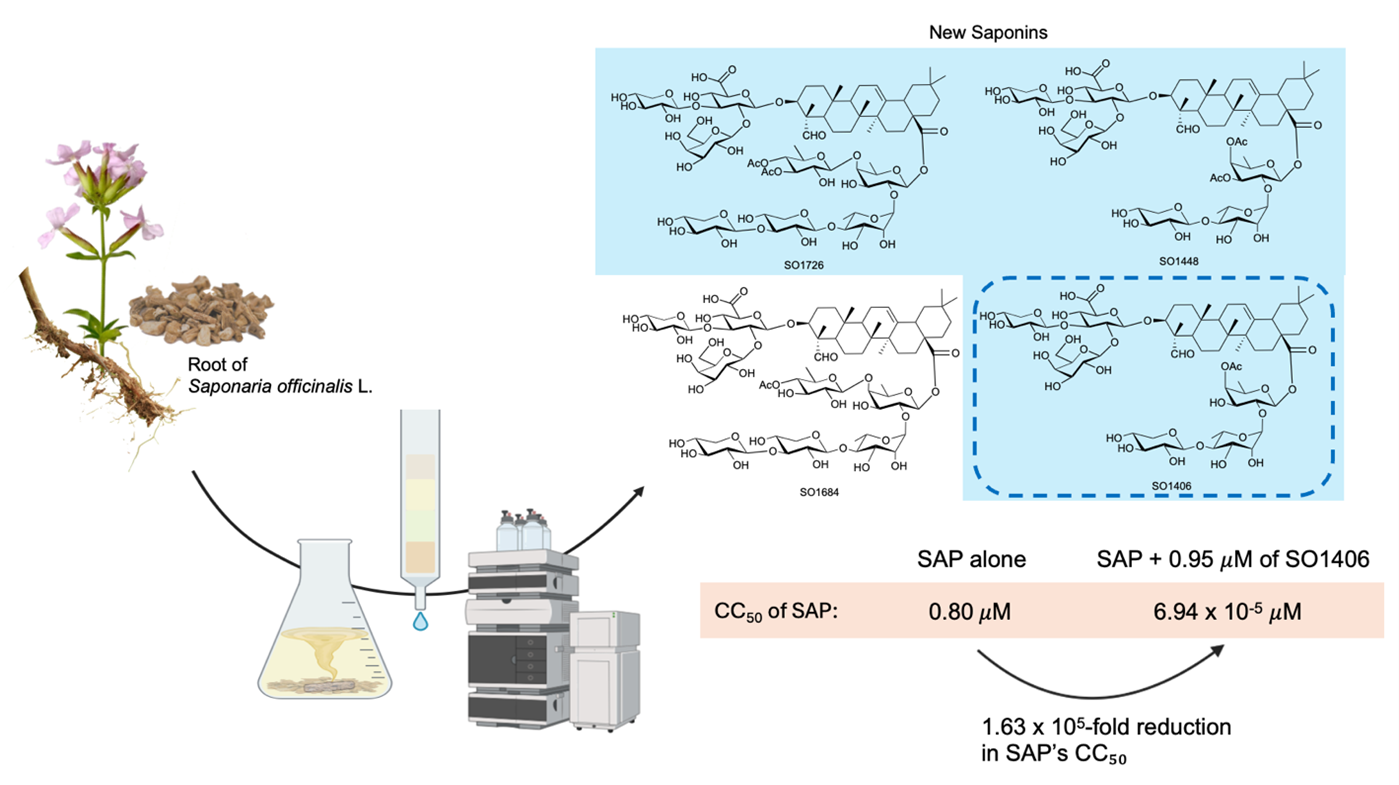
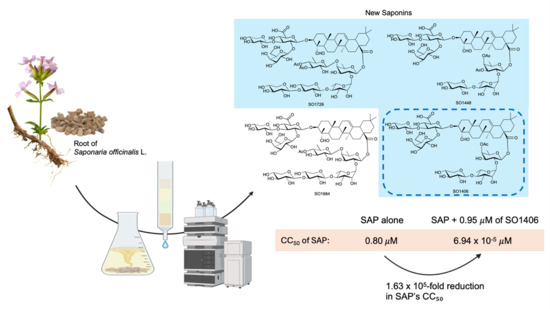
Improving Cytotoxicity of Saporin with Saponin SO1406 Isolated from the Roots of Saponaria Officinalis


Abstract
1. Introduction
2. Materials and Methods
2.1. General Experimental Procedures
2.2. Plant Samples
2.3. Extraction and Isolation
2.4. Hemolysis Assay
2.5. Cell Culture
2.6. Cytotoxicity Assays
3. Results
3.1. Structure Elucidation
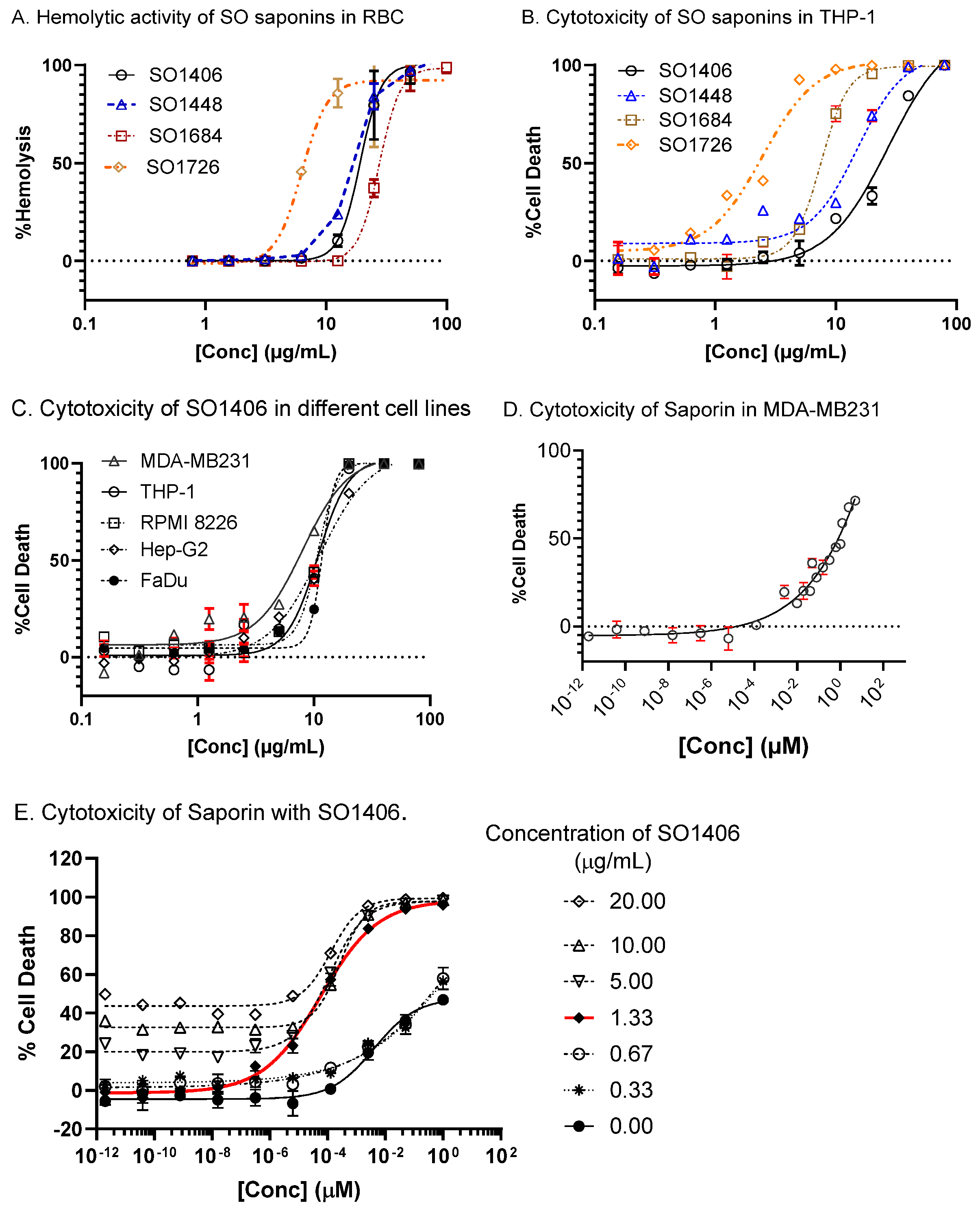
3.2. Hemolytic Activity
3.3. Cytotoxicity
3.4. Synergistic Effect
4. Discussion
5. Conclusions
6. Patents
Supplementary Materials
Author Contributions
Funding
Data Availability Statement
Conflicts of Interest
Abbreviations
| ATCC | American Type Culture Collection |
| ATP | Adenosine triphosphate |
| COSY | Homonuclear correlated spectroscopy |
| ESI–TOF | Electrospray ionization time-of-flight mass spectrometry |
| HMBC | Heteronuclear multiple-bond correlation spectroscopy |
| HSQC | Heteronuclear single quantum coherence |
| NOESY | Nuclear Overhauser effect spectroscopy |
| NMR | Nuclear magnetic resonance |
| PBS | Phosphate-buffered saline |
| RBC | Red blood cell |
| TOCSY | Total correlation spectroscopy |
References
- Elekofehinti, O.O.; Iwaloye, O.; Olawale, F.; Ariyo, E.O. Saponins in Cancer Treatment: Current Progress and Future Prospects. Pathophysiology 2021, 28, 250–272. [Google Scholar] [CrossRef] [Scilit]
- Podolak, I.; Galanty, A.; Sobolewska, D. Saponins as cytotoxic agents: A review. Phytochem. Rev. 2010, 9, 425–474. [Google Scholar] [CrossRef] [Scilit]
- Podolak, I.; Grabowska, K.; Sobolewska, D.; Wróbel-Biedrawa, D.; Makowska-Wąs, J.; Galanty, A. Saponins as cytotoxic agents: An update (2010–2021). Part II—Triterpene saponins. Phytochem. Rev. 2022, 22, 113–167. [Google Scholar] [CrossRef] [Scilit]
- Majnooni, M.B.; Fakhri, S.; Ghanadian, S.M.; Bahrami, G.; Mansouri, K.; Iranpanah, A.; Farzaei, M.H.; Mojarrab, M. Inhibiting Angiogenesis by Anti-Cancer Saponins: From Phytochemistry to Cellular Signaling Pathways. Metabolites 2023, 13, 323. [Google Scholar] [CrossRef] [Scilit] [PubMed]
- Thakur, M.; Melzig, M.F.; Fuchs, H.; Weng, A. Chemistry and pharmacology of saponins: Special focus on cytotoxic properties. Bot. Targets Ther. 2011, 1, 19–29. [Google Scholar] [CrossRef] [Scilit]
- Xu, X.H.; Li, T.; Fong, C.M.; Chen, X.; Chen, X.J.; Wang, Y.T.; Huang, M.Q.; Lu, J.J. Saponins from Chinese Medicines as Anticancer Agents. Molecules 2016, 21, 1326. [Google Scholar] [CrossRef] [Scilit] [PubMed]
- Koczurkiewicz, P.; Czyz, J.; Podolak, I.; Wojcik, K.; Galanty, A.; Janeczko, Z.; Michalik, M. Multidirectional effects of triterpene saponins on cancer cells—Mini-review of in vitro studies. Acta Biochim. Pol. 2015, 62, 383–393. [Google Scholar] [CrossRef] [Scilit]
- Albuquerque, K.R.S.; Pacheco, N.M.; Del Rosario Loyo Casao, T.; de Melo, F.; Novaes, R.D.; Goncalves, R.V. Applicability of Plant Extracts in Preclinical Studies of Melanoma: A Systematic Review. Mediat. Inflamm. 2018, 2018, 6797924. [Google Scholar] [CrossRef] [Scilit]
- Fuchs, H.; Niesler, N.; Trautner, A.; Sama, S.; Jerz, G.; Panjideh, H.; Weng, A. Glycosylated Triterpenoids as Endosomal Escape Enhancers in Targeted Tumor Therapies. Biomedicines 2017, 5, 14. [Google Scholar] [CrossRef] [Scilit]
- Giansanti, F.; Flavell, D.J.; Angelucci, F.; Fabbrini, M.S.; Ippoliti, R. Strategies to Improve the Clinical Utility of Saporin-Based Targeted Toxins. Toxins 2018, 10, 82. [Google Scholar] [CrossRef] [Scilit] [PubMed]
- Gilabert-Oriol, R.; Weng, A.; Trautner, A.; Weise, C.; Schmid, D.; Bhargava, C.; Niesler, N.; Wookey, P.J.; Fuchs, H.; Thakur, M. Combinatorial approach to increase efficacy of Cetuximab, Panitumumab and Trastuzumab by dianthin conjugation and co-application of SO1861. Biochem. Pharmacol. 2015, 97, 247–255. [Google Scholar] [CrossRef] [Scilit] [PubMed]
- Hebestreit, P.; Weng, A.; Bachran, C.; Fuchs, H.; Melzig, M.F. Enhancement of cytotoxicity of lectins by Saponinum album. Toxicon 2006, 47, 330–335. [Google Scholar] [CrossRef] [Scilit]
- Heisler, I.; Sutherland, M.; Bachran, C.; Hebestreit, P.; Schnitger, A.; Melzig, M.F.; Fuchs, H. Combined application of saponin and chimeric toxins drastically enhances the targeted cytotoxicity on tumor cells. J. Control. Release 2005, 106, 123–137. [Google Scholar] [CrossRef] [Scilit]
- Thakur, M.; Mergel, K.; Weng, A.; von Mallinckrodt, B.; Gilabert-Oriol, R.; Durkop, H.; Melzig, M.F.; Fuchs, H. Targeted tumor therapy by epidermal growth factor appended toxin and purified saponin: An evaluation of toxicity and therapeutic potential in syngeneic tumor bearing mice. Mol. Oncol. 2013, 7, 475–483. [Google Scholar] [CrossRef] [Scilit] [PubMed]
- Weng, A.; Bachran, C.; Fuchs, H.; Krause, E.; Stephanowitz, H.; Melzig, M.F. Enhancement of saporin cytotoxicity by Gypsophila saponins—More than stimulation of endocytosis. Chem. Biol. Interact. 2009, 181, 424–429. [Google Scholar] [CrossRef] [Scilit] [PubMed]
- Weng, A.; Thakur, M.; Beceren-Braun, F.; Bachran, D.; Bachran, C.; Riese, S.B.; Jenett-Siems, K.; Gilabert-Oriol, R.; Melzig, M.F.; Fuchs, H. The toxin component of targeted anti-tumor toxins determines their efficacy increase by saponins. Mol. Oncol. 2012, 6, 323–332. [Google Scholar] [CrossRef] [Scilit] [PubMed]
- Weng, A.; Thakur, M.; von Mallinckrodt, B.; Beceren-Braun, F.; Gilabert-Oriol, R.; Wiesner, B.; Eichhorst, J.; Bottger, S.; Melzig, M.F.; Fuchs, H. Saponins modulate the intracellular trafficking of protein toxins. J. Control. Release 2012, 164, 74–86. [Google Scholar] [CrossRef] [Scilit] [PubMed]
- Bottger, S.; Westhof, E.; Siems, K.; Melzig, M.F. Structure-activity relationships of saponins enhancing the cytotoxicity of ribosome-inactivating proteins type I (RIP-I). Toxicon 2013, 73, 144–150. [Google Scholar] [CrossRef] [Scilit] [PubMed]
- Cao, X.W.; Wang, F.J.; Liew, O.W.; Lu, Y.Z.; Zhao, J. Analysis of Triterpenoid Saponins Reveals Insights into Structural Features Associated with Potent Protein Drug Enhancement Effects. Mol. Pharm. 2020, 17, 683–694, Erratum in Mol. Pharm. 2020, 17, 1757. https://doi.org/10.1021/acs.molpharmaceut.0c00216. [Google Scholar] [CrossRef] [Scilit]
- Gilabert-Oriol, R.; Thakur, M.; Haussmann, K.; Niesler, N.; Bhargava, C.; Gorick, C.; Fuchs, H.; Weng, A. Saponins from Saponaria officinalis L. Augment the Efficacy of a Rituximab-Immunotoxin. Planta Med. 2016, 82, 1525–1531. [Google Scholar] [CrossRef] [Scilit]
- Lorent, J.H.; Quetin-Leclercq, J.; Mingeot-Leclercq, M.P. The amphiphilic nature of saponins and their effects on artificial and biological membranes and potential consequences for red blood and cancer cells. Org. Biomol. Chem. 2014, 12, 8803–8822. [Google Scholar] [CrossRef] [Scilit]
- Neundorf, I.; Rennert, R.; Hoyer, J.; Schramm, F.; Löbner, K.; Kitanovic, I.; Wölfl, S. Fusion of a Short HA2-Derived Peptide Sequence to Cell-Penetrating Peptides Improves Cytosolic Uptake, but Enhances Cytotoxic Activity. Pharmaceuticals 2009, 2, 49–65. [Google Scholar] [CrossRef] [Scilit] [PubMed]
- Fuchs, H.; Weng, A.; Gilabert-Oriol, R. Augmenting the Efficacy of Immunotoxins and Other Targeted Protein Toxins by Endosomal Escape Enhancers. Toxins 2016, 8, 200. [Google Scholar] [CrossRef] [Scilit] [PubMed]
- Andersson, Y.; Engebraaten, O.; Fodstad, Ø. Synergistic Anti-Cancer Effects of Immunotoxin and Cyclosporin In Vitro and In Vivo. Br. J. Cancer 2009, 101, 1307–1315. [Google Scholar] [CrossRef] [Scilit] [PubMed]
- Wu, Y.N.; Gadina, M.; Tao-Cheng, J.H.; Youle, R.J. Retinoic Acid Disrupts the Golgi Apparatus and Increases the Cytosolic Routing of Specific Protein Toxins. J. Cell Biol. 1994, 125, 743–753. [Google Scholar] [CrossRef] [Scilit]
- Griffin, T.; Raso, V. Monensin in Lipid Emulsion for the Potentiation of Ricin A Chain Immunotoxins. Cancer Res. 1991, 51, 4316–4322. [Google Scholar]
- Handa, J.T.; Houston, L.L.; Jaffe, G.J. Monensin Enhances the Cytotoxic Effect of Antitransferrin Receptor Immunotoxin on Cultured RPE Cells. Curr. Eye Res. 1993, 12, 45–53. [Google Scholar] [CrossRef] [Scilit]
- Bachran, D.; Schneider, S.; Bachran, C.; Urban, R.; Weng, A.; Melzig, M.F.; Hoffmann, C.; Kaufmann, A.M.; Fuchs, H. Epidermal Growth Factor Receptor Expression Affects the Efficacy of the Combined Application of Saponin and a Targeted Toxin on Human Cervical Carcinoma Cells. Int. J. Cancer 2010, 127, 1453–1461. [Google Scholar] [CrossRef] [Scilit]
- Bachran, C.; Sutherland, M.; Heisler, I.; Hebestreit, P.; Melzig, M.F.; Fuchs, H. The saponin-mediated enhanced uptake of targeted saporin-based drugs is strongly dependent on the saponin structure. Exp. Biol. Med. 2006, 231, 412–420. [Google Scholar] [CrossRef] [Scilit]
- Sama, S.; Jerz, G.; Thakur, M.; Melzig, M.F.; Weng, A. Structure-Activity Relationship of Transfection-Modulating Saponins—A Pursuit for the Optimal Gene Trafficker. Planta Med. 2019, 85, 513–518. [Google Scholar] [CrossRef] [Scilit]
- Sama, S.; Jerz, G.; Schmieder, P.; Woith, E.; Melzig, M.F.; Weng, A. Sapofectosid—Ensuring non-toxic and effective DNA and RNA delivery. Int. J. Pharm. 2017, 534, 195–205. [Google Scholar] [CrossRef] [Scilit]
- Weng, A.; Jenett-Siems, K.; Schmieder, P.; Bachran, D.; Bachran, C.; Gorick, C.; Thakur, M.; Fuchs, H.; Melzig, M.F. A convenient method for saponin isolation in tumour therapy. J. Chromatogr. B 2010, 878, 713–718. [Google Scholar] [CrossRef] [Scilit]
- Jia, Z.; Koike, K.; Nikaido, T. Major triterpenoid saponins from Saponaria officinalis. J. Nat. Prod. 1998, 61, 1368–1373. [Google Scholar] [CrossRef] [Scilit]
- Lu, Y.; Van, D.; Deibert, L.; Bishop, G.; Balsevich, J. Antiproliferative quillaic acid and gypsogenin saponins from Saponaria officinalis L. roots. Phytochemistry 2015, 113, 108–120. [Google Scholar] [CrossRef] [Scilit] [PubMed]
- Haddad, M.; Miyamoto, T.; Ramezani, M.; Lacaille-Dubois, M.A. New triterpene saponins from Acanthophyllum pachystegium. Helv. Chim. Acta 2004, 87, 73–81. [Google Scholar] [CrossRef] [Scilit]
- Koczurkiewicz-Adamczyk, P.; Grabowska, K.; Karnas, E.; Piska, K.; Wnuk, D.; Klas, K.; Galanty, A.; Wojcik-Pszczola, K.; Michalik, M.; Pekala, E.; et al. Saponin Fraction CIL1 from Lysimachia ciliata L. Enhances the Effect of a Targeted Toxin on Cancer Cells. Pharmaceutics 2023, 15, 1350. [Google Scholar] [CrossRef] [Scilit] [PubMed]
- Weng, A.; Bachran, D.; Gorick, C.; Bachran, C.; Fuchs, H.; Melzig, M.F. A simple method for isolation of Gypsophila saponins for the combined application of targeted toxins and saponins in tumor therapy. Planta Med. 2009, 75, 1421–1422. [Google Scholar] [CrossRef] [Scilit]
- Bhargava, C.; Durkop, H.; Zhao, X.; Weng, A.; Melzig, M.F.; Fuchs, H. Targeted dianthin is a powerful toxin to treat pancreatic carcinoma when applied in combination with the glycosylated triterpene SO1861. Mol. Oncol. 2017, 11, 1527–1543. [Google Scholar] [CrossRef] [Scilit]
- Wensley, H.J.; Johnston, D.A.; Smith, W.S.; Holmes, S.E.; Flavell, S.U.; Flavell, D.J. A Flow Cytometric Method to Quantify the Endosomal Escape of a Protein Toxin to the Cytosol of Target Cells. Pharm. Res. 2019, 37, 16. [Google Scholar] [CrossRef] [Scilit]
- von Mallinckrodt, B.; Thakur, M.; Weng, A.; Gilabert-Oriol, R.; Durkop, H.; Brenner, W.; Lukas, M.; Beindorff, N.; Melzig, M.F.; Fuchs, H. Dianthin-EGF is an effective tumor targeted toxin in combination with saponins in a xenograft model for colon carcinoma. Future Oncol. 2014, 10, 2161–2175. [Google Scholar] [CrossRef] [Scilit]
- Panjideh, H.; Niesler, N.; Weng, A.; Fuchs, H. Improved Therapy of B-Cell Non-Hodgkin Lymphoma by Obinutuzumab-Dianthin Conjugates in Combination with the Endosomal Escape Enhancer SO1861. Toxins 2022, 14, 478, Erratum in Toxins 2022, 14, 703. https://doi.org/10.3390/toxins14100703. [Google Scholar] [CrossRef] [Scilit]
- Masilamani, A.P.; Huber, N.; Nagl, C.; Dettmer-Monaco, V.; Monaco, G.; Wolf, I.; Schultze-Seemann, S.; Taromi, S.; Gratzke, C.; Fuchs, H.; et al. Enhanced cytotoxicity of a Pseudomonas Exotoxin A based immunotoxin against prostate cancer by addition of the endosomal escape enhancer SO1861. Front. Pharmacol. 2023, 14, 1211824. [Google Scholar] [CrossRef] [Scilit]
- Fischer, A.; Masilamani, A.P.; Schultze-Seemann, S.; Wolf, I.; Gratzke, C.; Fuchs, H.; Wolf, P. Synergistic Cytotoxicity of a Toxin Targeting the Epidermal Growth Factor Receptor and the Glycosylated Triterpenoid SO1861 in Prostate Cancer. J. Cancer 2023, 14, 3039–3049. [Google Scholar] [CrossRef] [Scilit] [PubMed]
- Schulze, F.J.; Asadian-Birjand, M.; Pradela, M.; Niesler, N.; Nagel, G.; Fuchs, H. A cleavable peptide adapter augments the activity of targeted toxins in combination with the glycosidic endosomal escape enhancer SO1861. BMC Biotechnol. 2024, 24, 24. [Google Scholar] [CrossRef] [Scilit] [PubMed]
- Flavell, D.J.; Flavell, S.U. Plant-Derived Type I Ribosome Inactivating Protein-Based Targeted Toxins: A Review of the Clinical Experience. Toxins 2022, 14, 563. [Google Scholar] [CrossRef] [Scilit]
- Ancheta, L.R.; Shramm, P.A.; Bouajram, R.; Higgins, D.; Lappi, D.A. Saporin as a Commercial Reagent: Its Uses and Unexpected Impacts in the Biological Sciences-Tools from the Plant Kingdom. Toxins 2022, 14, 184. [Google Scholar] [CrossRef] [Scilit] [PubMed]
- Polito, L.; Bortolotti, M.; Mercatelli, D.; Battelli, M.G.; Bolognesi, A. Saporin-S6: A useful tool in cancer therapy. Toxins 2013, 5, 1698–1722. [Google Scholar] [CrossRef] [Scilit]
- Rochd, M.; Fons, F.; Chahlaoui, A.; Henry, M. How to characterize three caryophyllaceous species by the mean of the ratio of two glucuronide prosaponins? Acta Bot. Gall. 2004, 151, 285–292. [Google Scholar] [CrossRef] [Scilit]
- Jia, Z.; Koike, K.; Nikaido, T. Saponarioside C, the First a-D-Galactose Containing Triterpenoid Saponin, and Five Related Compounds from Saponaria officinalis. J. Nat. Prod. 1999, 62, 449–453. [Google Scholar] [CrossRef] [Scilit]
- Koike, K.; Jia, Z.; Nikaido, T. New Triterpenoid Saponins and Sapogenins from Saponaria officinalis. J. Nat. Prod. 1999, 62, 1655–1659. [Google Scholar] [CrossRef] [Scilit]
- Moniuszko-Szajwaj, B.; Pecio, Ł.; Kowalczyk, M.; Simonet, A.M.; Macias, F.A.; Szumacher-Strabel, M.; Cieślak, A.; Oleszek, W.; Stochmal, A. New Triterpenoid Saponins from the Roots of Saponaria officinalis. Nat. Prod. Commun. 2013, 8, 1687–1690. [Google Scholar] [CrossRef] [Scilit]
- Moniuszko-Szajwaj, B.; Masullo, M.; Kowalczyk, M.; Pecio, Ł.; Szumacher-Strabel, M.; Cieślak, A.; Piacente, S.; Oleszek, W.; Stochmal, A. Highly Polar Triterpenoid Saponins from the Roots of Saponaria officinalis L. Helv. Chim. Acta 2016, 99, 347–354. [Google Scholar] [CrossRef] [Scilit]
- Takahashi, N.; Iguchi, T.; Kuroda, M.; Mishima, M.; Mimaki, Y. Novel Oleanane-Type Triterpene Glycosides from the Saponaria officinalis L. Seeds and Apoptosis-Inducing Activity via Mitochondria. Int. J. Mol. Sci. 2022, 23, 2047. [Google Scholar] [CrossRef] [Scilit]
- Thakur, M.; Jerz, G.; Tuwalska, D.; Gilabert-Oriol, R.; Wybraniec, S.; Winterhalter, P.; Fuchs, H.; Weng, A. High-speed countercurrent chromatographic recovery and off-line electrospray ionization mass spectrometry profiling of bisdesmodic saponins from Saponaria officinalis possessing synergistic toxicity enhancing properties on targeted antitumor toxins. J. Chromatogr. B 2014, 955–956, 1–9. [Google Scholar] [CrossRef] [Scilit]
- Charalambous, D.; Christoforou, M.; Christou, K.; Christou, M.; Ververis, A.; Andreou, M.; Christodoulou, K.; Koutsoulidou, A.; Papachrysostomou, C.; Pantelidou, M. Saponin and Phenolic Composition and Assessment of Biological Activities of Saponaria officinalis L. Root Extracts. Plants 2024, 13, 1982. [Google Scholar] [CrossRef] [Scilit]
- Chen, Q.; Luo, J.-G.; Kong, L.-Y. New triterpenoid saponins from the roots of Gypsophila perfoliata Linn. Carbohydr. Res. 2011, 346, 2206–2212. [Google Scholar] [CrossRef] [Scilit]
- Pertuit, D.; Baghery Lotfabad, T.; Mitaine-Offer, A.C.; Miyamoto, T.; Tanaka, C.; Lacaille-Dubois, M.A. Two New Triterpene Saponins from Acanthophyllum laxiusculum. Helv. Chim. Acta 2015, 98, 611–617. [Google Scholar] [CrossRef] [Scilit]
- Pertuit, D.; Avunduk, S.; Mitaine-Offer, A.-C.; Miyamoto, T.; Tanaka, C.; Paululat, T.; Delemasure, S.; Dutartre, P.; Lacaille-Dubois, M.-A. Triterpenoid saponins from the roots of two Gypsophila species. Phytochemistry 2014, 102, 182–188. [Google Scholar] [CrossRef] [Scilit] [PubMed]
- Gaidi, G.; Miyamoto, T.; Ramezani, M.; Lacaille-Dubois, M.-A. Glandulosides A-D, Triterpene Saponins from Acanthophyllum glandulosum. J. Nat. Prod. 2004, 67, 1114–1118. [Google Scholar] [CrossRef] [Scilit] [PubMed]
- Kensil, C.R.; Wu, J.Y.; Soltysik, S. Structural and immunological characterization of the vaccine adjuvant QS-21. Pharm. Biotechnol. 1995, 6, 525–541. [Google Scholar] [CrossRef] [Scilit] [PubMed]



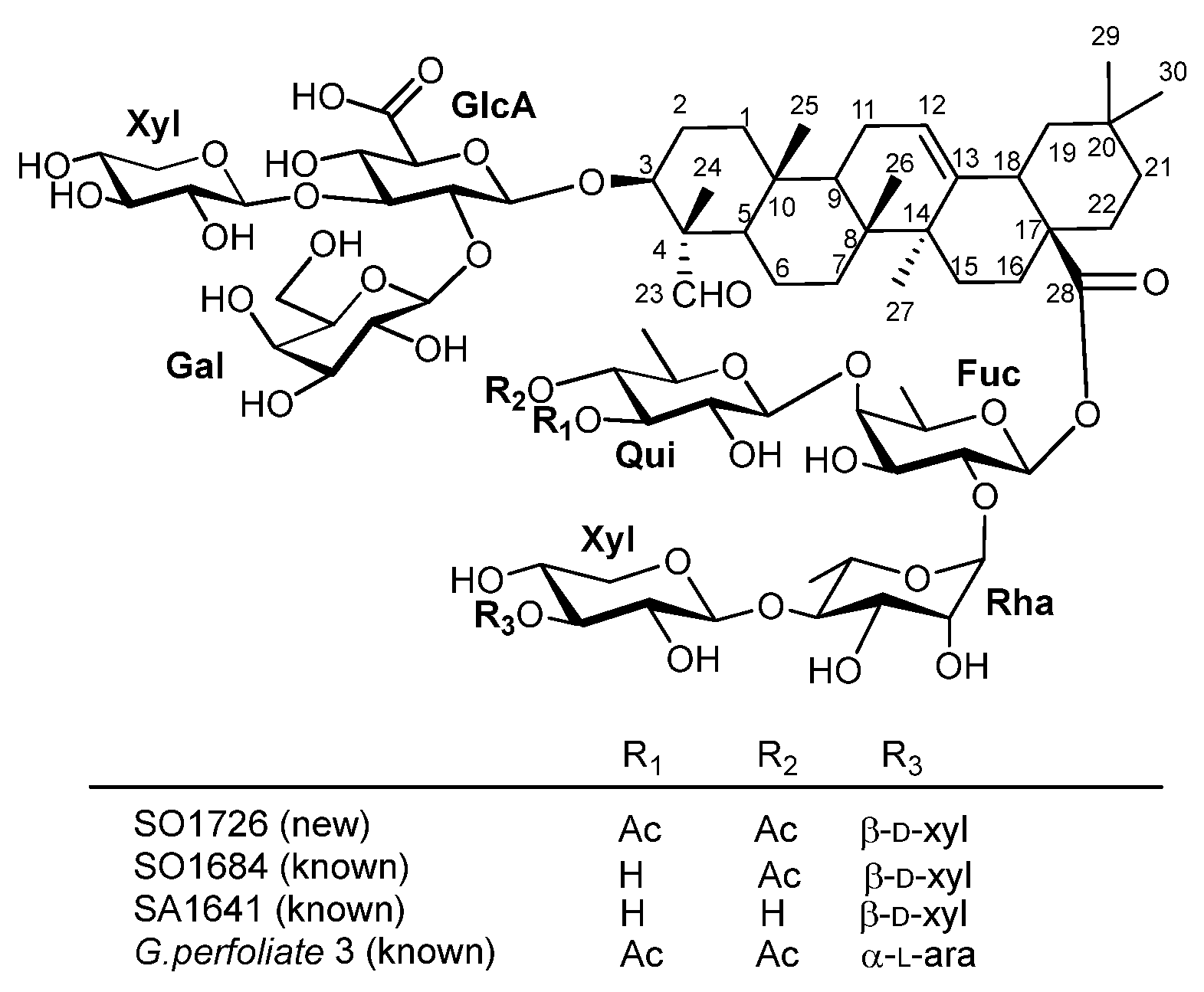
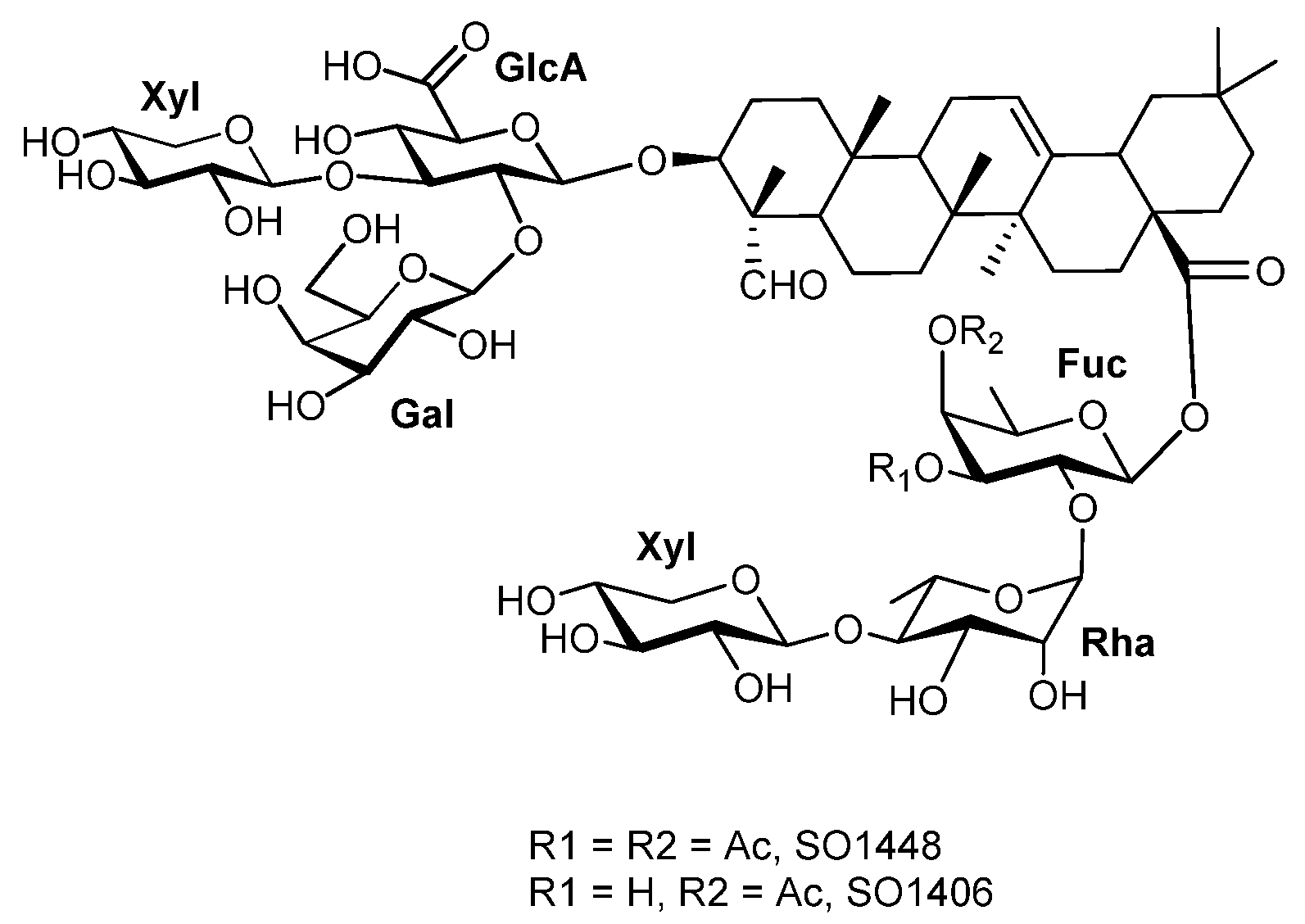
| SO1726 (C) | SO1406 (D) | |||
| 3-O- | 13C | 1H | 13C | 1H |
| GlcA | δc | δH (m, J (Hz)) | δc | δH (m, J (Hz)) |
| 1 | 104.53 | 4.87 (d, 7.1) | 104.58 | 4.46 (d, 7.4) |
| 2 | 78.66 | 4.32 (m) | 78.11 | 3.66 (d, 8.9) |
| 3 | 86.58 | 4.27 (m) | 86.61 | 3.69 (d, 7.6) |
| 4 | 71.86 | 4.45 (m) | 71.39 | 3.56 (m) |
| 5 | 77.76 | 4.49 (m) | 76.52 | 3.81 (m) |
| 6 | nd | - | 170.31 | - |
| Gal | ||||
| 1 | 104.48 | 5.59 (d, 7.5) | 103.76 | 4.80 (d, 7.0) |
| 2 | 73.99 | 4.51 (m) | 73.58 | 3.44 (m) |
| 3 | 75.94 | 4.16 (m) | 75.36 | 3.43 (m) |
| 4 | 70.65 | 4.59 (m) | 70.77 | 3.83 (m) |
| 5 | 76.95 | 4.01 (m) | 76.66 | 3.49 (m) |
| 6 | 61.99 | 4.41 (m) | 62.15 | 3.76 (m) |
| 4.55 (m) | 3.75 (m) | |||
| Xyl (I) | ||||
| 1 | 105.5 | 5.36 (d, 7.5) | 104.93 | 4.57 (d, 7.7) |
| 2 | 75.78 | 3.97 (m) | 75.24 | 3.23 (d, 9.1) |
| 3 | 79.08 | 4.13 (m) | 78.21 | 3.31 (m) |
| 4 | 71.29 | 4.15 (m) | 70.93 | 3.49 (m) |
| 5 | 67.73 | 3.68 (m) | 67.15 | 3.90 (m) |
| 4.28 (m) | 3.25 (t, 10.6) | |||
| 28-O- | ||||
| Fuc | ||||
| 1 | 94.79 | 5.97 (d, 8.2) | 94.99 | 5.40 (d, 8.1) |
| 2 | 74.62 | 4.56 (m) | 75.07 | 3.76 (m) |
| 3 | 77.12 | 4.21 (m) | 74.79 | 3.89 (m) |
| 4 | 84.28 | 3.99 (m) | 75.23 | 5.08 (d, 3.5) |
| 5 | 71.78 | 3.93 (q, 6.6) | 71.13 | 3.85 (m) |
| 6 | 17.49 | 1.51 (d, 6.3) | 16.49 | 1.07 (d, 6.4) |
| Qui | ||||
| 1 | 106.23 | 5.07 (d, 7.8) | ||
| 2 | 73.58 | 4.04 (m) | ||
| 3 | 76.63 | 5.64 (t, 9.5) | ||
| 4 | 74.8 | 5.08 (s) | ||
| 5 | 70.71 | 3.71 (m) | ||
| 6 | 18.16 | 1.26 (d, 6.1) | ||
| Rha | ||||
| 1 | 101.84 | 6.32 (s, br) | 101.64 | 5.34 (d, 1.4) |
| 2 | 72.01 | 4.75 (s, br) | 71.87 | 3.94 (dd, 3.0, 1.8) |
| 3 | 72.94 | 4.59 (m) | 72.29 | 3.81 (m) |
| 4 | 85.78 | 4.31 (m) | 85.01 | 3.49 (m) |
| 5 | 68.49 | 4.39 (m) | 68.81 | 3.80 (m) |
| 6 | 18.95 | 1.65 (d, 6.1) | 18.29 | 1.28 (d, 6.2) |
| Xyl (II) | ||||
| 1 | 107.46 | 5.02 (d, 7.4) | 107.48 | 4.41 (d, 7.7) |
| 2 | 75.47 | 3.99 (m) | 76.26 | 3.17 (t, 9.5) |
| 3 | 87.58 | 4.03 (m) | 78.35 | 3.30 (m) |
| 4 | 69.24 | 4.11 (m) | 70.99 | 3.47 (m) |
| 5 | 67.45 | 3.5 (t, 10.8) | 67.26 | 3.83 (m) |
| 4.24 (m) | 3.16 (t, 9.8) | |||
| Xyl (III) | ||||
| 1 | 106.17 | 5.19 (d, 7.5) | ||
| 2 | 75.47 | 4.07 (m) | ||
| 3 | 78.46 | 4.15 (m) | ||
| 4 | 71.18 | 4.15 (m) | ||
| 5 | 67.83 | 4.29 (m) | ||
| 3.67 (m) | ||||
| Qui-3-OAc | 170.83 | |||
| 21.18 | 1.98 (s) | |||
| Qui-4-OAc | 170.56 | |||
| 21.16 | 2.06 (s) | |||
| Fuc-4-OAc | 172.78 | |||
| 20.80 | 2.16 (s) | |||
Disclaimer/Publisher’s Note: The statements, opinions and data contained in all publications are solely those of the individual author(s) and contributor(s) and not of MDPI and/or the editor(s). MDPI and/or the editor(s) disclaim responsibility for any injury to people or property resulting from any ideas, methods, instructions or products referred to in the content. |
© 2026 by the authors. Licensee MDPI, Basel, Switzerland. This article is an open access article distributed under the terms and conditions of the Creative Commons Attribution (CC BY) license.
Share and Cite
Lim-Paik, C.; Zeng, Q.; Beyea, R.; Boohaker, R.; Wang, P. Improving Cytotoxicity of Saporin with Saponin SO1406 Isolated from the Roots of Saponaria Officinalis. Biomedicines 2026, 14, 626. https://doi.org/10.3390/biomedicines14030626
Lim-Paik C, Zeng Q, Beyea R, Boohaker R, Wang P. Improving Cytotoxicity of Saporin with Saponin SO1406 Isolated from the Roots of Saponaria Officinalis. Biomedicines. 2026; 14(3):626. https://doi.org/10.3390/biomedicines14030626
Chicago/Turabian StyleLim-Paik, Chaeeun, Qinghua Zeng, Rebekah Beyea, Rebecca Boohaker, and Pengfei Wang. 2026. "Improving Cytotoxicity of Saporin with Saponin SO1406 Isolated from the Roots of Saponaria Officinalis" Biomedicines 14, no. 3: 626. https://doi.org/10.3390/biomedicines14030626
APA StyleLim-Paik, C., Zeng, Q., Beyea, R., Boohaker, R., & Wang, P. (2026). Improving Cytotoxicity of Saporin with Saponin SO1406 Isolated from the Roots of Saponaria Officinalis. Biomedicines, 14(3), 626. https://doi.org/10.3390/biomedicines14030626