Multi-Patient Vision Transformer for Markerless Tumor Motion Forecasting

Abstract
1. Introduction
- We introduce a novel markerless real-time tumor tracking framework that explicitly addresses short-term tumor motion forecasting to compensate for system latency in radiotherapy delivery;
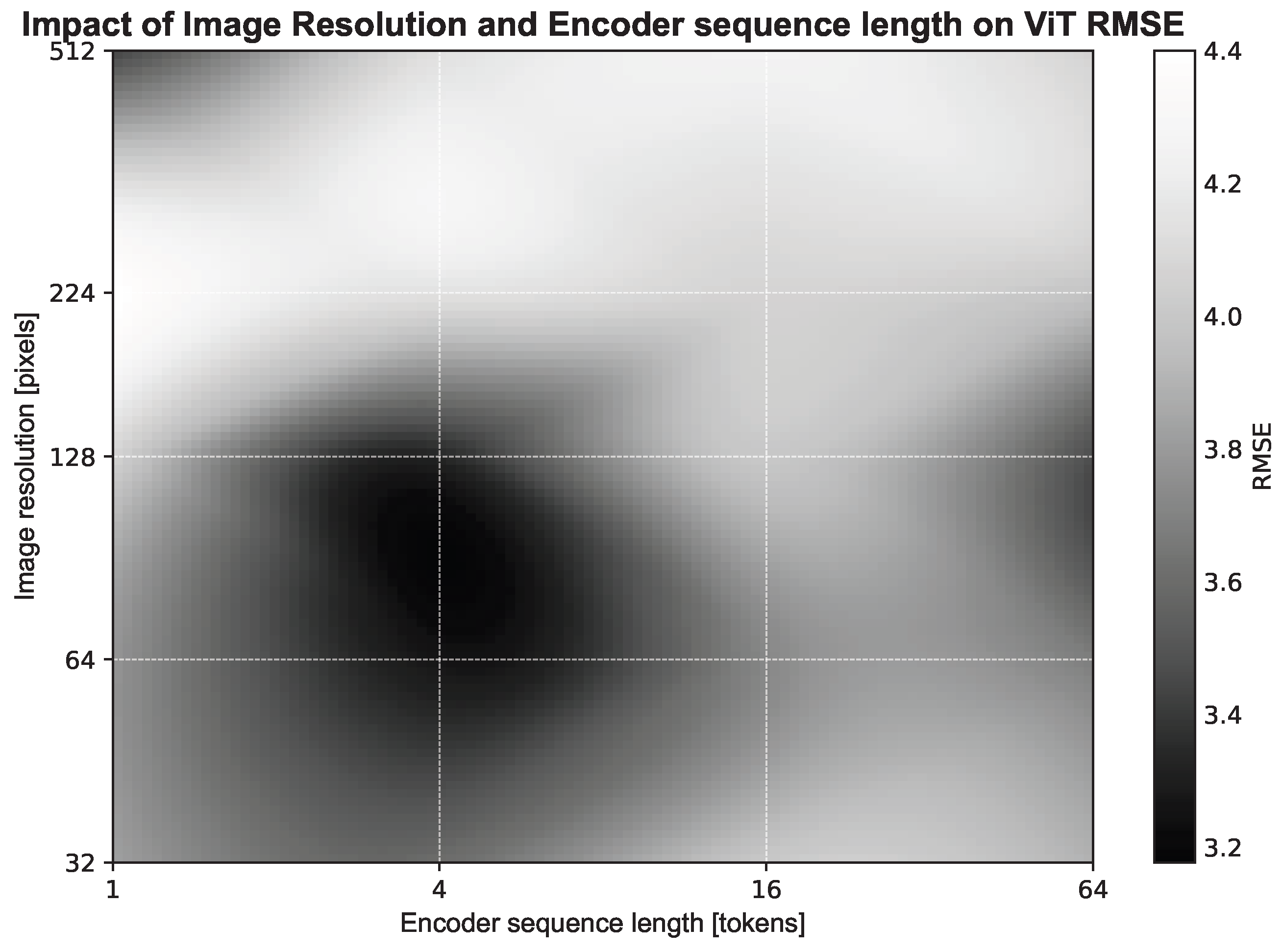
- We design an encoder–decoder vision transformer architecture tailored to DRR sequences, highlighting a trade-off between image resolution and temporal context;
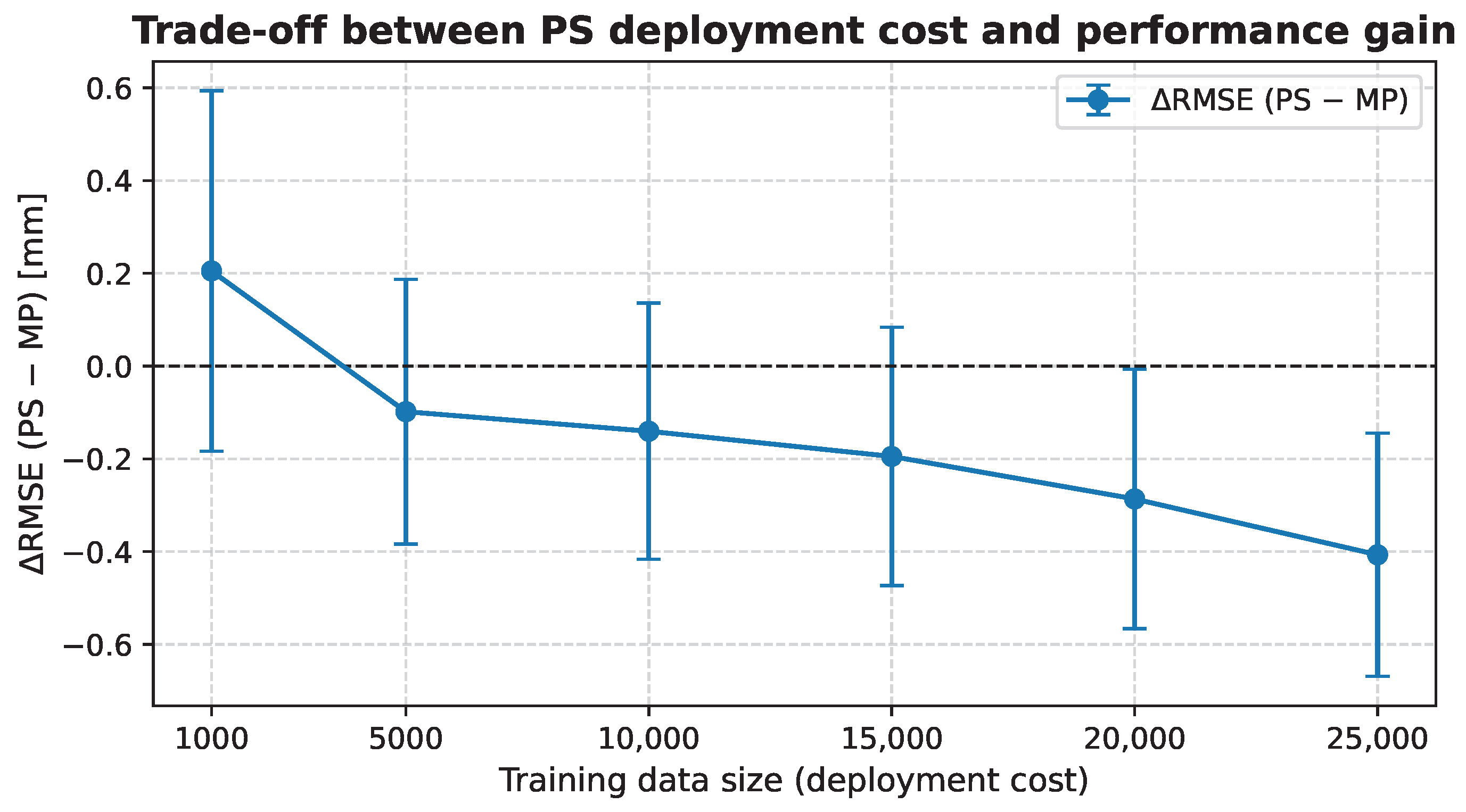
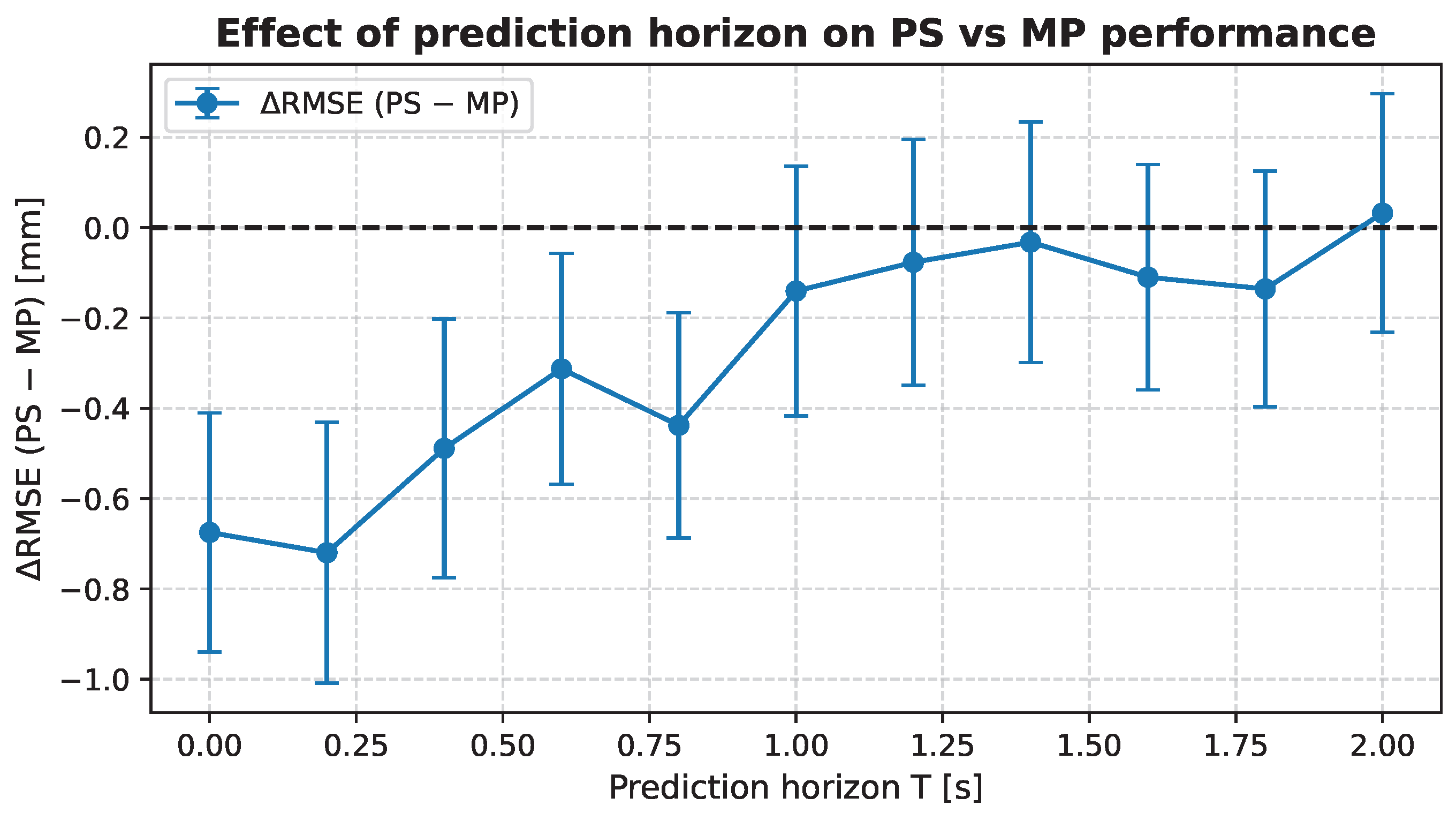
- We provide a quantitative evaluation of multi-patient pre-training and patient-specific strategies, analyzing their data efficiency and robustness across multiple prediction horizons and demonstrating the benefit of multi-patient learning;
- We release a publicly available GitHub repository (https://github.com/GauthierRotsart/ARIES) enabling reproducible DRR generation and standardized benchmarking of tumor motion forecasting models.
2. Materials and Methods
2.1. Materials
2.2. Methodology
2.2.1. Problem Formulation
2.2.2. Data Processing
DRRs Generation and Preprocessing
Training and Test Sets
2.2.3. Model Architecture and Training
Model Architecture
Training Setup
2.2.4. Experimental Setup
3. Results
3.1. Spatio-Temporal Analysis
3.1.1. Spatial Dimension
3.1.2. Temporal Dimension
3.2. Training Strategy
3.2.1. Patient-Specific Data
3.2.2. Prediction Horizon
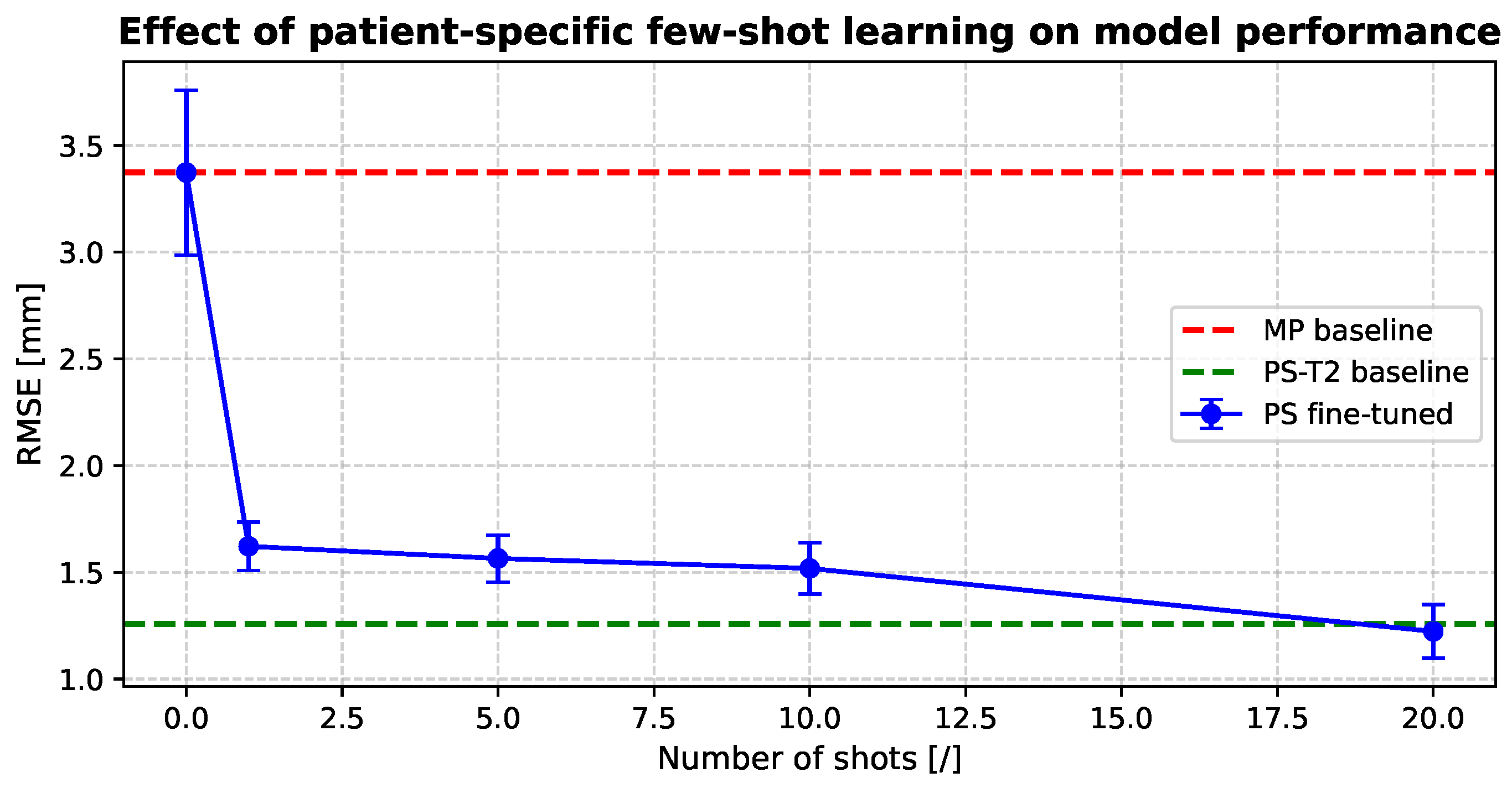
3.2.3. Hybrid Strategy: Patient-Specific Fine-Tuning
3.3. Generalization Across Datasets
3.4. Architecture Comparison
4. Discussion
4.1. Comparison to Other State-of-the-Art Methods
4.2. Training Strategies in Clinical Workflow
4.3. Spatial Resolution and Patch Size of the ViT
4.4. Limitations and Future Works
5. Conclusions
Author Contributions
Funding
Institutional Review Board Statement
Informed Consent Statement
Data Availability Statement
Conflicts of Interest
Abbreviations
| RTTT | Real-Time Tumor Tracking |
| CT | Computed Tomography |
| CNN | Convolutional Neural Network |
| ConvLSTM | Convolutional Long Short-Term Memory |
| ViT | Vision Transformer |
| DRR | Digitally Reconstructed Radiograph |
| TCIA | The Cancer Imaging Archive |
| GTV | Gross Tumor Volume |
| RMSE | Root Mean Square Error |
| MP | Multi-Patient |
| PS | Patient-Specific |
References
- Dieterich, S.; Suh, Y. Tumor motion ranges due to respiration and respiratory motion characteristics. In Treating Tumors That Move with Respiration; Springer: Berlin/Heidelberg, Germany, 2007; pp. 3–13. [Google Scholar]
- Murphy, M.J.; Martin, D.; Whyte, R.; Hai, J.; Ozhasoglu, C.; Le, Q.T. The effectiveness of breath-holding to stabilize lung and pancreas tumors during radiosurgery. Int. J. Radiat. Oncol. Biol. Phys. 2002, 53, 475–482. [Google Scholar] [CrossRef] [Scilit]
- Nelson, C.; Starkschall, G.; Balter, P.; Fitzpatrick, M.J.; Antolak, J.A.; Tolani, N.; Prado, K. Respiration-correlated treatment delivery using feedback-guided breath hold: A technical study. Med. Phys. 2005, 32, 175–181. [Google Scholar] [CrossRef] [Scilit] [PubMed]
- Nissen, H.D.; Appelt, A.L. Improved heart, lung and target dose with deep inspiration breath hold in a large clinical series of breast cancer patients. Radiother. Oncol. 2013, 106, 28–32. [Google Scholar] [CrossRef] [Scilit] [PubMed]
- Lin, L.; Souris, K.; Kang, M.; Glick, A.; Lin, H.; Huang, S.; Stützer, K.; Janssens, G.; Sterpin, E.; Lee, J.A.; et al. Evaluation of motion mitigation using abdominal compression in the clinical implementation of pencil beam scanning proton therapy of liver tumors. Med. Phys. 2017, 44, 703–712. [Google Scholar] [CrossRef] [Scilit] [PubMed]
- Shirato, H.; Shimizu, S.; Kunieda, T.; Kitamura, K.; Van Herk, M.; Kagei, K.; Nishioka, T.; Hashimoto, S.; Fujita, K.; Aoyama, H.; et al. Physical aspects of a real-time tumor-tracking system for gated radiotherapy. Int. J. Radiat. Oncol. Biol. Phys. 2000, 48, 1187–1195. [Google Scholar] [CrossRef] [Scilit]
- Berbeco, R.I.; Nishioka, S.; Shirato, H.; Chen, G.T.; Jiang, S.B. Residual motion of lung tumours in gated radiotherapy with external respiratory surrogates. Phys. Med. Biol. 2005, 50, 3655. [Google Scholar] [CrossRef] [Scilit]
- Keall, P.J.; Mageras, G.S.; Balter, J.M.; Emery, R.S.; Forster, K.M.; Jiang, S.B.; Kapatoes, J.M.; Low, D.A.; Murphy, M.J.; Murray, B.R.; et al. The management of respiratory motion in radiation oncology report of AAPM Task Group 76 a. Med Phys. 2006, 33, 3874–3900. [Google Scholar] [CrossRef] [Scilit]
- Shirato, H.; Harada, T.; Harabayashi, T.; Hida, K.; Endo, H.; Kitamura, K.; Onimaru, R.; Yamazaki, K.; Kurauchi, N.; Shimizu, T.; et al. Feasibility of insertion/implantation of 2.0-mm-diameter gold internal fiducial markers for precise setup and real-time tumor tracking in radiotherapy. Int. J. Radiat. Oncol. Biol. Phys. 2003, 56, 240–247. [Google Scholar] [CrossRef] [Scilit]
- Putra, D.; Haas, O.; Mills, J.; Bumham, K. Prediction of Tumour Motion using Interacting Multiple Model Filter. In Proceedings of the 2006 IET 3rd International Conference On Advances in Medical, Signal and Information Processing—MEDSIP 2006; Institution of Engineering and Technology: London, UK, 2006; pp. 1–4. [Google Scholar] [CrossRef] [Scilit]
- Jöhl, A.; Ehrbar, S.; Guckenberger, M.; Klöck, S.; Meboldt, M.; Zeilinger, M.; Tanadini-Lang, S.; Schmid Daners, M. Performance comparison of prediction filters for respiratory motion tracking in radiotherapy. Med. Phys. 2020, 47, 643–650. [Google Scholar] [CrossRef] [Scilit]
- Krauss, A.; Nill, S.; Oelfke, U. The comparative performance of four respiratory motion predictors for real-time tumour tracking. Phys. Med. Biol. 2011, 56, 5303. [Google Scholar] [CrossRef] [Scilit]
- Jiang, K.; Fujii, F.; Shiinoki, T. Prediction of lung tumor motion using nonlinear autoregressive model with exogenous input. Phys. Med. Biol. 2019, 64, 21NT02. [Google Scholar] [CrossRef] [Scilit]
- Teo, T.P.; Ahmed, S.B.; Kawalec, P.; Alayoubi, N.; Bruce, N.; Lyn, E.; Pistorius, S. Feasibility of predicting tumor motion using online data acquired during treatment and a generalized neural network optimized with offline patient tumor trajectories. Med. Phys. 2018, 45, 830–845. [Google Scholar] [CrossRef] [Scilit]
- Wang, R.; Liang, X.; Zhu, X.; Xie, Y. A feasibility of respiration prediction based on deep Bi-LSTM for real-time tumor tracking. IEEE Access 2018, 6, 51262–51268. [Google Scholar] [CrossRef] [Scilit]
- Lin, H.; Shi, C.; Wang, B.; Chan, M.F.; Tang, X.; Ji, W. Towards real-time respiratory motion prediction based on long short-term memory neural networks. Phys. Med. Biol. 2019, 64, 085010. [Google Scholar] [PubMed]
- Pohl, M.; Uesaka, M.; Takahashi, H.; Demachi, K.; Chhatkuli, R.B. Prediction of the position of external markers using a recurrent neural network trained with unbiased online recurrent optimization for safe lung cancer radiotherapy. Comput. Methods Programs Biomed. 2022, 222, 106908. [Google Scholar] [CrossRef] [Scilit]
- Nuyttens, J.; Prévost, J.B.; Praag, J.; Hoogeman, M.; Van Klaveren, R.; Levendag, P.; Pattynama, P. Lung tumor tracking during stereotactic radiotherapy treatment with the CyberKnife: Marker placement and early results. Acta Oncol. 2006, 45, 961–965. [Google Scholar] [CrossRef] [Scilit]
- Prévost, J.B.G.; Nuyttens, J.J.; Hoogeman, M.S.; Pöll, J.J.; Van Dijk, L.C.; Pattynama, P.M. Endovascular coils as lung tumour markers in real-time tumour tracking stereotactic radiotherapy: Preliminary results. Eur. Radiol. 2008, 18, 1569–1576. [Google Scholar] [CrossRef] [Scilit] [PubMed]
- Abdefg, S.A.; Abcdeg, A.Y.; Bdf, B.B.; Özlem Uzman, B.; Edhem Ünver, B.; Esen Akkaya, D. CT-guided transthoracic fine needle aspiration of pulmonary lesions: Accuracy and complications in 294 patients. Signature 2002, 8, 497. [Google Scholar]
- Li, R.; Lewis, J.H.; Cervino, L.I.; Jiang, S.B. A feasibility study of markerless fluoroscopic gating for lung cancer radiotherapy using 4DCT templates. Phys. Med. Biol. 2009, 54, N489. [Google Scholar] [CrossRef] [Scilit]
- van der Voort van Zyp, N.C.; Prévost, J.B.; Hoogeman, M.S.; Praag, J.; van der Holt, B.; Levendag, P.C.; van Klaveren, R.J.; Pattynama, P.; Nuyttens, J.J. Stereotactic radiotherapy with real-time tumor tracking for non-small cell lung cancer: Clinical outcome. Radiother. Oncol. 2009, 91, 296–300. [Google Scholar]
- Cerviño, L.I.; Chao, A.K.; Sandhu, A.; Jiang, S.B. The diaphragm as an anatomic surrogate for lung tumor motion. Phys. Med. Biol. 2009, 54, 3529. [Google Scholar] [CrossRef] [Scilit] [PubMed]
- Cerviño, L.I.; Jiang, Y.; Sandhu, A.; Jiang, S.B. Tumor motion prediction with the diaphragm as a surrogate: A feasibility study. Phys. Med. Biol. 2010, 55, N221. [Google Scholar] [CrossRef] [Scilit]
- Petkov, S.; Romero, A.; Suarez, X.C.; Radeva, P.; Gatta, C. Robust and accurate diaphragm border detection in cardiac x-ray angiographies. In Proceedings of the Statistical Atlases and Computational Models of the Heart. Imaging and Modelling Challenges: Third International Workshop, STACOM 2012, Held in Conjunction with MICCAI 2012, Nice, France, 5 October 2012; Revised Selected Papers 3; Springer: Berlin/Heidelberg, Germany, 2013; pp. 225–234. [Google Scholar]
- Petkov, S.; Carrillo, X.; Radeva, P.; Gatta, C. Diaphragm border detection in coronary X-ray angiographies: New method and applications. Comput. Med. Imaging Graph. 2014, 38, 296–305. [Google Scholar] [CrossRef] [Scilit]
- Hirai, R.; Sakata, Y.; Tanizawa, A.; Mori, S. Regression model-based real-time markerless tumor tracking with fluoroscopic images for hepatocellular carcinoma. Phys. Medica 2020, 70, 196–205. [Google Scholar] [CrossRef] [Scilit]
- de Bruin, K.; Dahele, M.; Mostafavi, H.; Slotman, B.J.; Verbakel, W.F. Markerless real-time 3-dimensional kV tracking of lung tumors during free breathing stereotactic radiation therapy. Adv. Radiat. Oncol. 2021, 6, 100705. [Google Scholar] [CrossRef] [Scilit]
- de Vries, I.R.; Dahele, M.; Mostafavi, H.; Slotman, B.; Verbakel, W. Markerless 3D tumor tracking during single-fraction free-breathing 10MV flattening-filter-free stereotactic lung radiotherapy. Radiother. Oncol. 2021, 164, 6–12. [Google Scholar] [CrossRef] [Scilit]
- Fu, Y.; Zhang, P.; Fan, Q.; Cai, W.; Pham, H.; Rimner, A.; Cuaron, J.; Cervino, L.; Moran, J.M.; Li, T.; et al. Deep learning-based target decomposition for markerless lung tumor tracking in radiotherapy. Med. Phys. 2024, 51, 4271–4282. [Google Scholar] [CrossRef] [Scilit]
- Hirai, R.; Sakata, Y.; Tanizawa, A.; Mori, S. Real-time tumor tracking using fluoroscopic imaging with deep neural network analysis. Phys. Medica 2019, 59, 22–29. [Google Scholar] [CrossRef] [Scilit]
- Zhao, W.; Shen, L.; Han, B.; Yang, Y.; Cheng, K.; Toesca, D.A.; Koong, A.C.; Chang, D.T.; Xing, L. Markerless pancreatic tumor target localization enabled by deep learning. Int. J. Radiat. Oncol. Biol. Phys. 2019, 105, 432–439. [Google Scholar] [CrossRef] [Scilit] [PubMed]
- Terunuma, T.; Sakae, T.; Hu, Y.; Takei, H.; Moriya, S.; Okumura, T.; Sakurai, H. Explainability and controllability of patient-specific deep learning with attention-based augmentation for markerless image-guided radiotherapy. Med. Phys. 2023, 50, 480–494. [Google Scholar] [CrossRef] [Scilit] [PubMed]
- Wei, R.; Zhou, F.; Liu, B.; Bai, X.; Fu, D.; Li, Y.; Liang, B.; Wu, Q. Convolutional neural network (CNN) based three dimensional tumor localization using single X-ray projection. IEEE Access 2019, 7, 37026–37038. [Google Scholar] [CrossRef] [Scilit]
- Wei, R.; Zhou, F.; Liu, B.; Bai, X.; Fu, D.; Liang, B.; Wu, Q. Real-time tumor localization with single x-ray projection at arbitrary gantry angles using a convolutional neural network (CNN). Phys. Med. Biol. 2020, 65, 065012. [Google Scholar] [CrossRef] [Scilit]
- Wang, J.; Dai, J.; Li, N.; Zhang, C.; Zhang, J.; Silayi, Z.; Wu, H.; Xie, Y.; Liang, X.; Zhang, H. Robust Real-Time Cancer Tracking via Dual-Panel X-Ray Images for Precision Radiotherapy. Bioengineering 2024, 11, 1051. [Google Scholar] [CrossRef] [Scilit]
- Yan, Y.; Fujii, F.; Shiinoki, T.; Liu, S. Markerless Lung Tumor Localization From Intraoperative Stereo Color Fluoroscopic Images for Radiotherapy. IEEE Access 2024, 12, 40809–40826. [Google Scholar] [CrossRef] [Scilit]
- Poulsen, P.R.; Cho, B.; Sawant, A.; Ruan, D.; Keall, P.J. Detailed analysis of latencies in image-based dynamic MLC tracking a. Med Phys. 2010, 37, 4998–5005. [Google Scholar] [CrossRef] [Scilit]
- Bedford, J.L.; Fast, M.F.; Nill, S.; McDonald, F.M.; Ahmed, M.; Hansen, V.N.; Oelfke, U. Effect of MLC tracking latency on conformal volumetric modulated arc therapy (VMAT) plans in 4D stereotactic lung treatment. Radiother. Oncol. 2015, 117, 491–495. [Google Scholar] [CrossRef] [Scilit]
- Hugo, G.D.; Weiss, E.; Sleeman, W.C.; Balik, S.; Keall, P.J.; Lu, J.; Williamson, J.F. Data from 4D lung imaging of NSCLC patients. The Cancer Imaging Archive. 2016. [Google Scholar] [CrossRef] [Scilit]
- Wuyckens, S.; Dasnoy, D.; Janssens, G.; Hamaide, V.; Huet, M.; Loÿen, E.; de Hertaing, G.R.; Macq, B.; Sterpin, E.; Lee, J.; et al. OpenTPS–Open-source treatment planning system for research in proton therapy. arXiv 2023, arXiv:2303.00365. [Google Scholar]
- Dosovitskiy, A.; Beyer, L.; Kolesnikov, A.; Weissenborn, D.; Zhai, X.; Unterthiner, T.; Dehghani, M.; Minderer, M.; Heigold, G.; Gelly, S.; et al. An image is worth 16x16 words: Transformers for image recognition at scale. arXiv 2020, arXiv:2010.11929. [Google Scholar]
- Rotsart de Hertaing, G.; Manjah, D.; Macq, B. TrajViViT: A Trajectory Video Vision Transformer Network for Trajectory Forecasting. In Proceedings of the 13th International Conference on Pattern Recognition Applications and Methods ICPRAM-Volume 1; SciTePress: Setúbal, Portugal, 2024. [Google Scholar]
- Vaswani, A.; Shazeer, N.; Parmar, N.; Uszkoreit, J.; Jones, L.; Gomez, A.N.; Kaiser, Ł.; Polosukhin, I. Attention is all you need. Adv. Neural Inf. Process. Syst. 2017, 30, 1–11. [Google Scholar]
- Loshchilov, I.; Hutter, F. Sgdr: Stochastic gradient descent with warm restarts. arXiv 2016, arXiv:1608.03983. [Google Scholar]
- Glorot, X.; Bengio, Y. Understanding the difficulty of training deep feedforward neural networks. In Proceedings of the Thirteenth International Conference on Artificial Intelligence and Statistics; JMLR Workshop and Conference Proceedings; JMLR: Cambridge, MA, USA, 2010; pp. 249–256. [Google Scholar]
- Williams, R.J.; Zipser, D. A learning algorithm for continually running fully recurrent neural networks. Neural Comput. 1989, 1, 270–280. [Google Scholar] [CrossRef] [Scilit]
- Hu, E.J.; Shen, Y.; Wallis, P.; Allen-Zhu, Z.; Li, Y.; Wang, S.; Wang, L.; Chen, W. Lora: Low-rank adaptation of large language models. ICLR 2022, 1, 3. [Google Scholar]
- Shi, X.; Chen, Z.; Wang, H.; Yeung, D.Y.; Wong, W.K.; Woo, W.c. Convolutional LSTM network: A machine learning approach for precipitation nowcasting. Adv. Neural Inf. Process. Syst. 2015, 28, 802–810. [Google Scholar]
- Di Perri, D.; Lee, J.A.; Bol, A.; Hanin, F.X.; Janssens, G.; Labar, D.; Robert, A.; Sterpin, E.; Geets, X. Correlation analysis of [18F]fluorodeoxyglucose and [18F]fluoroazomycin arabinoside uptake distributions in lung tumours during radiation therapy. Acta Oncol. 2017, 56, 1181–1188. [Google Scholar] [CrossRef] [Scilit]
- Di Perri, D.; Colot, A.; Delor, A.; Ghoul, R.; Janssens, G.; Lacroix, V.; Matte, P.; Annie, R.; Souris, K.; Geets, X. Effect of continuous positive airway pressure administration during lung stereotactic ablative radiotherapy: A comparative planning study. Strahlenther. Onkol. 2018, 194, 591–599. [Google Scholar] [CrossRef] [Scilit] [PubMed]
- Sakata, Y.; Hirai, R.; Kobuna, K.; Tanizawa, A.; Mori, S. A machine learning-based real-time tumor tracking system for fluoroscopic gating of lung radiotherapy. Phys. Med. Biol. 2020, 65, 085014. [Google Scholar] [CrossRef] [Scilit]
- Li, F.; Porikli, F. Tracking Lung Tumors in Orthogonal X-Rays. Comput. Math. Methods Med. 2013, 2013, 650463. [Google Scholar] [CrossRef] [Scilit] [PubMed]
- Zhou, D.; Nakamura, M.; Mukumoto, N.; Yoshimura, M.; Mizowaki, T. Development of a deep learning-based patient-specific target contour prediction model for markerless tumor positioning. Med. Phys. 2022, 49, 1382–1390. [Google Scholar] [CrossRef] [Scilit]



| FT Data | Dataset | X [mm] | Y [mm] | Z [mm] | RMSE [mm] |
|---|---|---|---|---|---|
| 1 | SM | ||||
| SV | |||||
| 20 | SM | ||||
| SV |
| Samples | Models | TCIA | SM | SV |
|---|---|---|---|---|
| FT = 1 | ConvLSTM | |||
| ViT | ||||
| TrajViViT | ||||
| FT = 20 | ConvLSTM | |||
| ViT | ||||
| TrajViViT |
Disclaimer/Publisher’s Note: The statements, opinions and data contained in all publications are solely those of the individual author(s) and contributor(s) and not of MDPI and/or the editor(s). MDPI and/or the editor(s) disclaim responsibility for any injury to people or property resulting from any ideas, methods, instructions or products referred to in the content. |
© 2026 by the authors. Licensee MDPI, Basel, Switzerland. This article is an open access article distributed under the terms and conditions of the Creative Commons Attribution (CC BY) license.
Share and Cite
Rotsart de Hertaing, G.; Manjah, D.; Macq, B. Multi-Patient Vision Transformer for Markerless Tumor Motion Forecasting. Biomedicines 2026, 14, 496. https://doi.org/10.3390/biomedicines14030496
Rotsart de Hertaing G, Manjah D, Macq B. Multi-Patient Vision Transformer for Markerless Tumor Motion Forecasting. Biomedicines. 2026; 14(3):496. https://doi.org/10.3390/biomedicines14030496
Chicago/Turabian StyleRotsart de Hertaing, Gauthier, Dani Manjah, and Benoît Macq. 2026. "Multi-Patient Vision Transformer for Markerless Tumor Motion Forecasting" Biomedicines 14, no. 3: 496. https://doi.org/10.3390/biomedicines14030496
APA StyleRotsart de Hertaing, G., Manjah, D., & Macq, B. (2026). Multi-Patient Vision Transformer for Markerless Tumor Motion Forecasting. Biomedicines, 14(3), 496. https://doi.org/10.3390/biomedicines14030496