Effects of Treatment with Glucagon-like Peptide-1 Receptor Analogues on the Diabetic Foot
 , and
, and
Abstract
1. Introduction
2. Materials and Methods
3. Results
3.1. Diabetic Foot Disease: Peripheral Neuropathy
3.2. Impact on Hospital Admissions
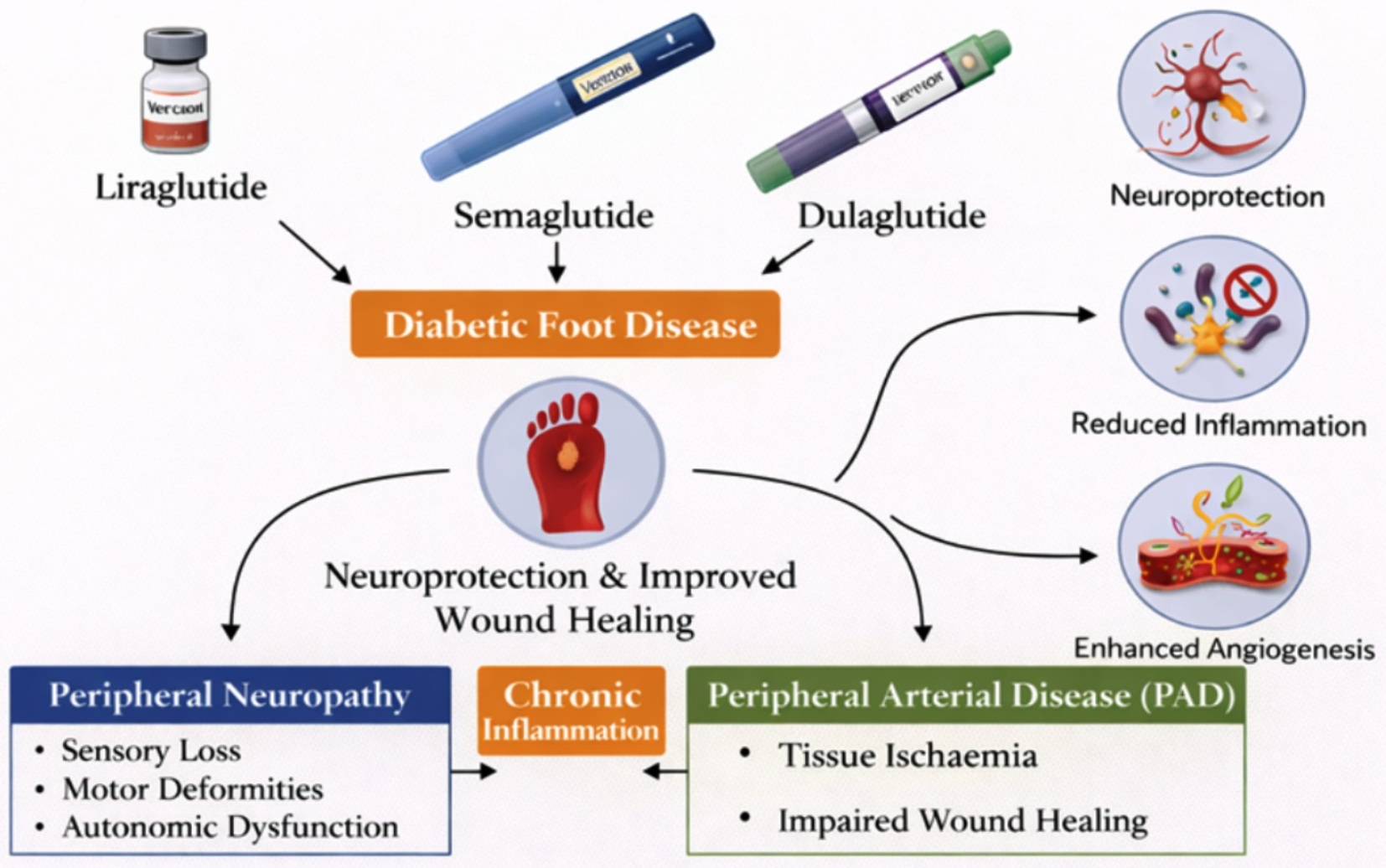
3.3. Biological Mechanisms Underlying the Effects of GLP-1 Receptor Agonists
4. Discussion
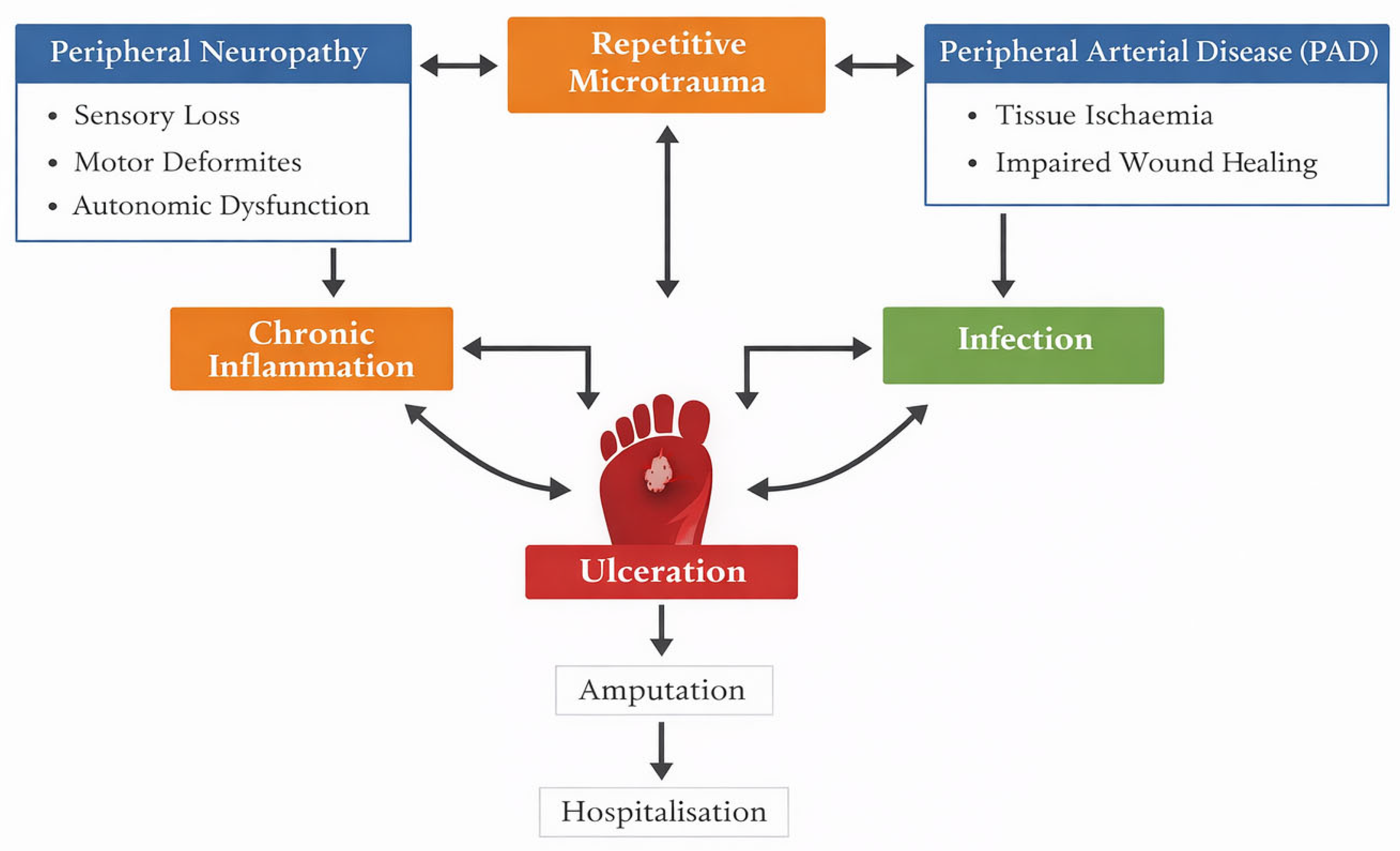
4.1. Diabetic Foot Disease as a Systemic Condition
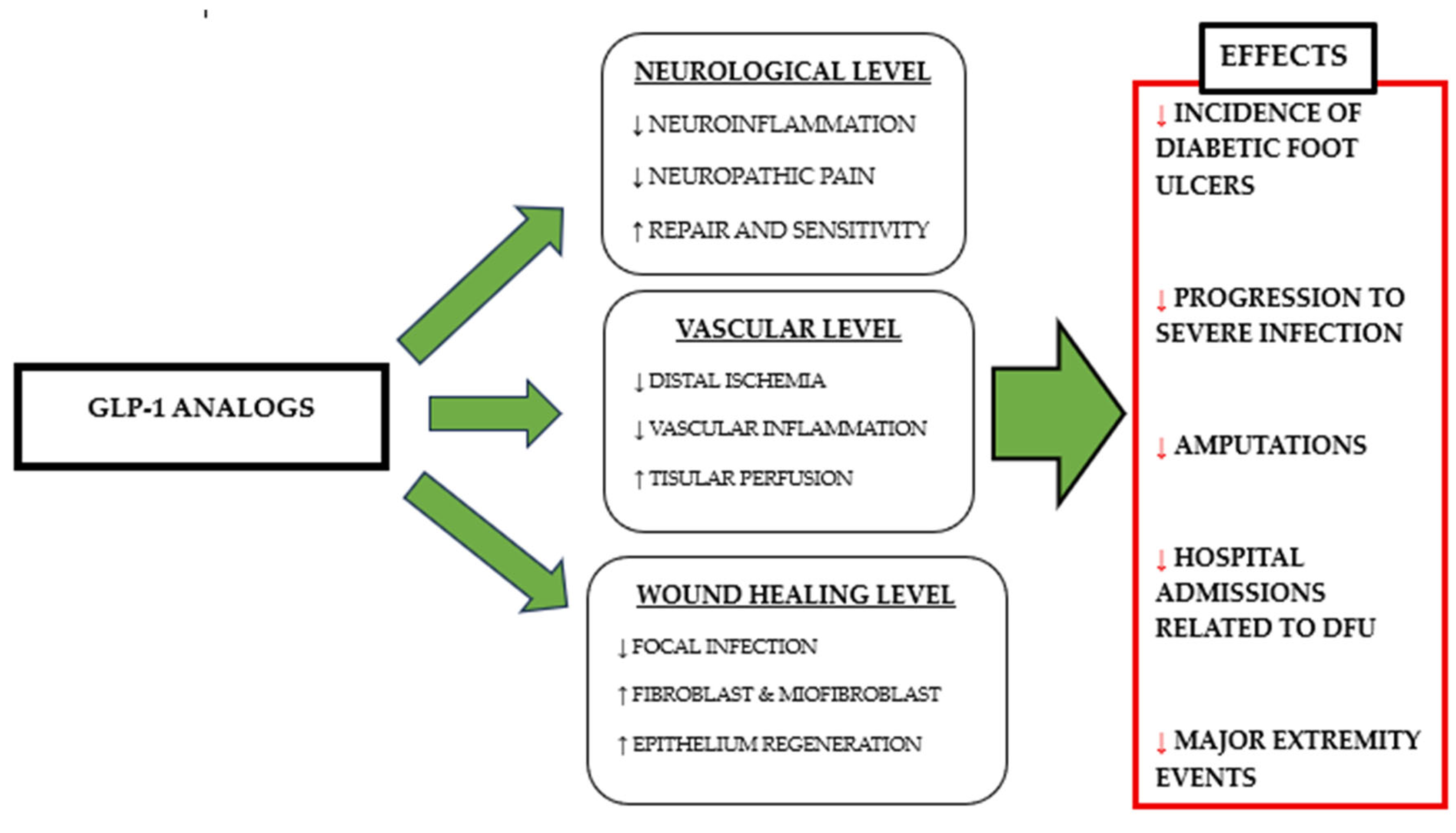
4.2. Pathophysiological Mechanisms of GLP-1 Receptor Agonists
4.3. Integration with Clinical Evidence and Limitations
4.4. Limitations
5. Conclusions
Author Contributions
Funding
Data Availability Statement
Conflicts of Interest
Abbreviations
| AMPK | Multidisciplinary Digital Publishing Institute |
| AgRP | Directory of open access journals |
| GLP-1 ra | GLP-1 receptor agonist |
| CART | Cocaine- and amphetamine-regulated transcript |
| CV | Cardiovascular |
| CVOT | Cardiovascular outcomes trial |
| DFU | Diabetic foot ulcer |
| DM | Diabetes mellitus |
| DPP-4 | Dipeptidyl peptidase-4 |
| PAD | Peripheral arterial disease |
| ERK | Extracellular signal-regulated kinase |
| GLP-1 | Glucagon-like peptide-1 |
| HbA1c | Glycated haemoglobin |
| IL | Interleukin |
| MALE | Major adverse limb events |
| MACE | Major adverse cardiovascular events |
| NF-kB | Nuclear factor kappa B |
| NO | Nitric oxide |
| NPY | Neuropeptide Y |
| DFD | Diabetic foot disease |
| PI3K | Phosphoinositide 3-kinase |
| POMC | Pro-opiomelanocortin |
| ROS | Reactive oxygen species |
| SGLT2i | Sodium–glucose cotransporter-2 inhibitors |
| TNF-α | Tumour necrosis factor alpha |
| VEGF | Vascular endothelial growth factor |
References
- International Working Group on the Diabetic Foot. IWGDF Guidelines on the Prevention and Management of Diabetic Foot Disease; International Working Group on the Diabetic Foot: Amsterdam, The Netherlands, 2023. [Google Scholar]
- Boulton, A.J.M.; Armstrong, D.G.; Hardman, M.J.; Krisner, R.; Attinger, C.; Lavery, L.; Lipsky, B.; Mills, J.; Steinberg, J. Diagnosis and management of diabetic foot complications. ADA Clin. Compend. 2018, 2018. [Google Scholar] [CrossRef] [PubMed]
- Armstrong, D.G.; Boulton, A.J.M.; Bus, S.A. Diabetic foot ulcers and their recurrence. N. Engl. J. Med. 2017, 376, 2367–2375. [Google Scholar] [CrossRef] [PubMed]
- Zhang, P.; Lu, J.; Jing, Y.; Tang, S.; Zhu, D.; Bi, Y. Global epidemiology of diabetic foot ulceration: A systematic review and meta-analysis. Ann. Med. 2017, 49, 106–116. [Google Scholar] [CrossRef]
- Fuentes Santos, C.; Rueda Camino, J.A.; Asenjo Mota, Á.; Castaneda Pastor, A.; Zapatero Gaviria, A.; Canora Lebrato, J.; Barba-Martín, R. Diabetic foot infections in Internal Medicine services in Spain (2018–2022). Rev. Clin. Esp. 2025, 225, 125–130. [Google Scholar] [CrossRef] [PubMed]
- Brownrigg, J.R.W.; Davey, J.; Holt, P.J.E.; Davis, W.A.; Thompson, M.M.; Ray, K.K.; Hinchliffe, R.J. The association of ulceration of the foot with cardiovascular and all-cause mortality in patients with diabetes. Diabetologia 2012, 55, 2906–2912. [Google Scholar] [CrossRef]
- Marso, S.P.; Daniels, G.H.; Brown-Frandsen, K.; Kristensen, P.; Mann, J.F.E.; Nauck, M.A.; Nissen, S.E.; Pocock, S.; Poulter, N.R.; Ravn, L.S.; et al. Liraglutide and cardiovascular outcomes in type 2 diabetes. N. Engl. J. Med. 2016, 375, 311–322. [Google Scholar] [CrossRef]
- Gerstein, H.C.; Colhoun, H.M.; Dagenais, G.R.; Diaz, R.; Lakshmanan, M.; Pais, P.; Probstfield, J.; Riesmeyer, J.S.; Riddle, M.C.; Rydén, L.; et al. Dulaglutide and cardiovascular outcomes in type 2 diabetes. Lancet 2019, 394, 121–130. [Google Scholar] [CrossRef]
- Mann, J.F.E.; Ørsted, D.D.; Brown-Frandsen, K.; Marso, S.P.; Poulter, N.R.; Rasmussen, S.; Tornøe, K.; Zinman, B.; Buse, J.B. Liraglutide and renal outcomes in type 2 diabetes. N. Engl. J. Med. 2017, 377, 839–848. [Google Scholar] [CrossRef]
- Muscogiuri, G.; DeFronzo, R.A.; Gastaldelli, A.; Holst, J.J. Glucagon-like peptide-1 and the central/peripheral nervous system: Crosstalk in diabetes. Trends Endocrinol. Metab. 2017, 28, 88–103. [Google Scholar] [CrossRef]
- Kuthati, Y.; Naidu, V.G.M.; Wong, C.S. Therapeutic effects of GLP-1 receptor agonists and DPP-4 inhibitors on neuropathic pain: Mechanisms and Clinical Implications. Biomolecules 2025, 15, 622. [Google Scholar] [CrossRef]
- Gruzmark, F.S.; Beraja, G.E.; Jozic, I.; Lev-Tov, H.A. Exploring the role of GLP-1 agents in managing diabetic foot ulcers: A narrative and systematic review. Wound Repair Regen. 2025, 33, e70085. [Google Scholar] [CrossRef] [PubMed]
- Sattar, N.; Lee, M.M.Y.; Kristensen, S.L.; Branch, K.R.H.; Del Prato, S.; Khurmi, N.S.; Lam, C.S.P.; Lopes, R.D.; McMurray, J.J.V.; Pratley, R.E.; et al. Cardiovascular, mortality, and kidney outcomes with GLP-1 receptor agonists in type 2 diabetes. Lancet Diabetes Endocrinol. 2019, 7, 776–790. [Google Scholar]
- Werkman, N.C.C.; Driessen, J.H.M.; Klungel, O.H.; Schaper, N.S.; Souverein, P.C.; Stehouwer, C.D.A.; Nielen, J.T.H. Incretin-based therapy and the risk of diabetic foot ulcers and related events. Diabetes Obes. Metab. 2024, 26, 3764–3780. [Google Scholar] [CrossRef] [PubMed]
- Hong, A.T.; Luu, I.Y.; Lin, F.; Shin, L.; Hsu, C.H.; Shih, C.D.; Armstrong, D.G.; Tan, T.W. Differential effect of GLP-1 receptor agonists and SGLT2 inhibitors on lower-extremity amputation outcomes in type 2 diabetes: A nationwide retrospective cohort study. Diabetes Care 2025, 48, 1728–1736. [Google Scholar] [CrossRef]
- Tesfaye, S.; Boulton, A.J.M.; Dyck, P.J.; Freeman, R.; Horowitz, M.; Kempler, P.; Lauria, G.; Malik, R.A.; Spallone, V.; Vinik, A.; et al. Diabetic neuropathies: Update on definitions, diagnostic criteria, estimation of severity, and treatments. Diabetes Care 2010, 33, 2285–2293. [Google Scholar] [CrossRef]
- Rubio, J.A.; Cecilia-Matilla, A.; Jiménez-González, S. Complicaciones crónicas de la diabetes mellitus (VI). Pie diabético. In Manual de Endocrinología y Nutrición; Sociedad Española de Endocrinología y Nutrición (SEEN): Madrid, Spain, 2025; Available online: https://www.seen.es (accessed on 12 January 2026).
- Callaghan, B.C.; Cheng, H.T.; Stables, C.L.; Smith, A.L.; Feldman, E.L. Diabetic neuropathy: Clinical manifestations and current treatments. Lancet Neurol. 2012, 11, 521–534. [Google Scholar] [CrossRef]
- Yang, J.; Zhang, X.; Wang, Z. GLP-1 receptor agonist impairs keratinocytes inflammatory signals by activating AMPK. Exp. Mol. Pathol. 2019, 107, 124–128. [Google Scholar] [CrossRef]
- Młynarska, E.; Czarnik, W.; Dzieża, N.; Jędraszak, W.; Majchrowicz, G.; Prusinowski, F.; Stabrawa, M.; Rysz, J.; Franczyk, B. Type 2 Diabetes Mellitus: New Pathogenetic Mechanisms, Treatment and the Most Important Complications. Int. J. Mol. Sci. 2025, 26, 1094. [Google Scholar] [CrossRef]
- Julla, J.B.; Jolivet, T.; Estellat, C.; Varoquaux, G.; Carlier, A.; Gautier, J.-F.; Alberge, J.; Abouleka, Y.; Bergès, A.; Liu, E.; et al. Incidence of death and amputation in patients with a first diabetic foot ulcer: Results from the CODIA cohort. Diabetes Metab. 2025, 51, 101700. [Google Scholar] [CrossRef]
- Ferguson, K.; Alam, S.M.; Phillips, C.; Spencer, L.; Goodeve, M.; Begum, S.; Travis, H.; Tang, J.; Feinn, R.; McHugh, D.; et al. Factors influencing major amputation and death following limb salvage surgery in a diabetic population: Systematic review and real-world comparison. Complications 2025, 2, 26. [Google Scholar] [CrossRef]
- Chen, L.; Sun, S.; Gao, Y.; Ran, X. Global mortality of diabetic foot ulcer: A systematic review and meta-analysis of observational studies. Diabetes Obes. Metab. 2023, 25, 36–45. [Google Scholar] [CrossRef]
- Schmidt, B.M.; Kaye, K.S.; Armstrong, D.G.; Pop-Busui, R. Empirical antibiotic therapy in diabetic foot ulcer infection. Open Forum Infect. Dis. 2023, 10, Ofad495. [Google Scholar] [CrossRef] [PubMed]
- Lu, Y.; Guo, C. Risk of lower limb amputation in diabetic patients using sodium-glucose cotransporter 2 inhibitors versus DPP4 inhibitors or glucagon-like peptide-1 receptor agonists: A meta-analysis of 2 million patients. Ther. Adv. Drug Saf. 2023, 14, 20420986231178126. [Google Scholar] [CrossRef] [PubMed]
- Lewis, J.E.; Omenge, D.K.; Patterson, A.R.; Anwaegbu, O.; Tabukum, N.N.; Lewis, J.E.; Lee, W.C. The impact of semaglutide on wound healing in diabetes-related foot ulcer patients: A TriNetX database study. Diabetes Vasc. Dis. Res. 2025, 22, 14791641251322909. [Google Scholar] [CrossRef] [PubMed]
- Martínez-Moreno, J.M.; Lázaro-Martínez, J.L.; Álvaro-Afonso, F.J.; Molines-Barroso, R.J.; García-Madrid, M. Terapia basada en incretinas y el riesgo de úlceras del pie diabético y eventos relacionados. Rev. Clin. Esp. 2024. Epub ahead of printing. [Google Scholar]
- Caruso, P.; Angelino, S.; Matrone, R.; Scappaticcio, L.; Longo, M.; Volatile, A.; Petrizzo, M.; Pontillo, A.; Caputo, M.; Carbone, C.; et al. Association of semaglutide with less limb events in people with type 2 diabetes and peripheral artery disease or foot ulcers. Diabetes Obes. Metab. 2025, 27, 5506–5513. [Google Scholar] [CrossRef]
- Dhanapalaratnam, R.; Issar, T.; Lee, A.T.K.; Poynten, A.M.; Milner, K.-L.; Kwai, N.C.G. Glucagon-like peptide-1 receptor agonists reverse nerve morphological abnormalities in diabetic peripheral neuropathy. Diabetologia 2024, 67, 561–566. [Google Scholar] [CrossRef]
- Lee, S.O.; Kuthati, Y.; Huang, W.H.; Wong, C.S. Semaglutide ameliorates diabetic neuropathic pain by inhibiting neuroinflammation in the spinal cord. Cells 2024, 13, 1857. [Google Scholar] [CrossRef]
- Gong, N.; Xiao, Q.; Zhu, B.; Zhang, C.-Y.; Wang, Y.-C.; Fan, H.; Ma, A.-N.; Wang, Y.-X. Activation of spinal glucagon-like peptide-1 receptors specifically suppresses pain hypersensitivity. J. Neurosci. 2014, 34, 5322–5334. [Google Scholar] [CrossRef]
- Faber, R.; Zander, M.; Pena, A.; Michelsen, M.M.; Mygind, N.D. Effect of the glucagon-like peptide-1 analogue liraglutide on coronary microvascular function in patients with type 2 diabetes—A randomized, single-blinded, cross-over pilot study. Cardiovasc. Diabetol. 2015, 14, 41. [Google Scholar] [CrossRef]
- Ghebrehiwet-Kuflom, J.; Mehta, A.; Lim, P.; Dahle, S.; Isseroff, R.R. GLP-1 receptor agonists as emerging modulators of inflammation and angiogenesis in chronic cutaneous wound healing. J. Invest. Dermatol. 2025, 145, 2981–2988. [Google Scholar] [CrossRef]
- Moiz, A.; Filion, K.B.; Tsoukas, M.A.; Yu, O.H.; Peters, T.M.; Eisenberg, M.J. Mechanisms of GLP-1 receptor agonist-induced weight loss: A review of central and peripheral pathways in appetite and energy regulation. Am. J. Med. 2025, 138, 934–940. [Google Scholar] [CrossRef] [PubMed]
- Zheng, Z.; Zong, Y.; Ma, Y.; Tian, Y.; Pang, Y.; Zhang, C.; Gao, J. Glucagon-like peptide-1 receptor: Mechanisms and advances in therapy. Signal Transduct. Target. Ther. 2024, 9, 100. [Google Scholar] [CrossRef]
- Cornell, S. A review of GLP-1 receptor agonists in type 2 diabetes: A focus on the mechanism of action of once-weekly agents. J. Clin. Pharm. Ther. 2020, 45, 17–27. [Google Scholar] [CrossRef]
- Apelqvist, J.; Bakker, K.; van Houtum, W.H.; Schaper, N.C. Practical guidelines on the management and prevention of the diabetic foot. Diabetes Metab. Res. Rev. 2008, 24, S181–S187. [Google Scholar] [CrossRef]
- Drucker, D.J. Mechanisms of action and therapeutic application of glucagon-like peptide-1. Cell Metab. 2018, 27, 740–756. [Google Scholar] [CrossRef]
- Yue, H.; Zhang, X.; Zhao, Z.; Gong, S.; Shao, S. Pro-healing impact of liraglutide on skin wounds in normoglycemic mice. Int. Immunopharmacol. 2025, 147, 114050. [Google Scholar] [CrossRef]



| Sensory Neuropathy | Motor Neuropathy | Autonomic Neuropathy |
|---|---|---|
| Loss of protective sensation (pain, pressure, and temperature). | Intrinsic muscle atrophy and biomechanical imbalance of the foot. | Reduced sweating and impaired cutaneous vascular regulation. |
| Repeated unperceived microtrauma, development of painless ulcers, delayed diagnosis, and increased risk of infection. | Foot deformities (claw toes, bony prominences), increased plantar pressures, hyperkeratosis, and pressure-related ulceration. | Dry and fissured skin, impaired skin barrier function, increased susceptibility to infection, and poor wound healing. |
| Author (Year) | Study Design/Data Source | Population | Exposure | Main Outcomes Assessed | Key Findings |
|---|---|---|---|---|---|
| Werkman et al. (2024) [14] | Population-based cohort study (CPRD Aurum database). | Patients with T2DM. | GLP-1 RAs vs. other glucose-lowering agents. | Diabetic foot ulcers, lower-limb amputations, and foot-related hospitalisations. | GLP-1 RAs were associated with a significantly lower risk of diabetic foot ulcers, amputations, and related hospitalisations compared with other antidiabetic treatments. |
| Hong et al. (2025) [15] | Nationwide retrospective cohort study. | >180,000 matched patients with T2DM. | GLP-1 RAs vs. SGLT2 inhibitors. | Major and minor lower-extremity amputations, mortality. | GLP-1 RAs were associated with a lower incidence of lower-limb amputations and reduced mortality compared with SGLT2 inhibitors. |
| Lewis et al. (2025) [26] | Real-world database analysis (TriNetX network). | Patients with active diabetic foot ulcers. | Semaglutide vs. non-GLP-1RA therapies. | Wound-healing complications, infections, and amputations. | Semaglutide use was associated with reduced rates of non-healing wounds, recurrent infections, and both minor and major amputations. |
| Caruso et al. (2025) [28] | Observational cohort study. | Patients with T2DM and peripheral arterial disease or foot ulcers. | Semaglutide vs. standard care. | Major adverse limb events, amputations. | Semaglutide was associated with a 23% reduction in major adverse limb events and a 50% reduction in amputations. |
| Lu and Guo (2023) [25] | Meta-analysis of observational studies (>2 million patients). | Patients with T2DM. | GLP-1 RAs vs. SGLT2 inhibitors and DPP-4 inhibitors. | Lower-limb amputation. | GLP-1 RAs showed a favourable safety profile, with no increased amputation risk and a trend toward lower risk versus other drug classes. |
| Study | Experimental Model | GLP-1 RA | Main Mechanistic Findings | Relevance to DFD |
|---|---|---|---|---|
| Gong et al., 2014 [31] | Streptozotocin-induced diabetic rats. | Liraglutide | Reduced oxidative stress, decreased inflammatory cytokine expression, and improved nerve conduction velocity. | Neuroprotection and attenuation of diabetic peripheral neuropathy. |
| Lu et al., 2023 [25] | Diabetic mouse model. | Exenatide | Suppressed microglial activation and neuronal apoptosis; improved nociceptive thresholds. | Preservation of peripheral nerve integrity. |
| Yang et al., 2019 [19] | Diabetic rodents with cutaneous wounds. | Liraglutide | Accelerated wound closure via enhanced angiogenesis and increased VEGF expression. | Improved wound healing in diabetic foot ulcers. |
| Zhang et al., 2017 [4] | High-fat diet/STZ-induced diabetes model. | Semaglutide | Reduced systemic inflammation and endothelial dysfunction; improved microvascular perfusion. | Potential improvement of neuro-ischaemic diabetic foot pathology. |
| Lee et al., 2024 [30] | Diabetic rat neuropathy model. | Dulaglutide | Reduced oxidative stress and neuronal degeneration; improved peripheral nerve morphology. | Disease-modifying effects on diabetic neuropathy. |
| Study | Study Design | Population | GLP-1 Receptor Agonist | Main Findings |
|---|---|---|---|---|
| Werkman et al., 2024 [14] | Retrospective cohort (CPRD Aurum). | Patients with T2DM. | GLP-1 RAs (class). | Reduced risk of diabetic foot ulceration, amputations, and foot-related hospitalisations compared with other glucose-lowering therapies. |
| Hong et al., 2025 [15] | Population-based comparative cohort. | Patients with T2DM. | GLP-1 RAs vs. SGLT2 inhibitors. | Lower incidence of major and minor amputations and diabetic foot ulcers. |
| Caruso et al., 2025 [28] | Observational cohort. | Patients with peripheral arterial disease or active foot ulcers. | Semaglutide | Reduced major adverse limb events and lower amputation rates. |
| TriNetX analysis, 2023 [26] | Real-world database analysis. | Patients with active diabetic foot ulcers. | Semaglutide | Reduced rates of non-healing ulcers, recurrent infections, and amputations. |
Disclaimer/Publisher’s Note: The statements, opinions and data contained in all publications are solely those of the individual author(s) and contributor(s) and not of MDPI and/or the editor(s). MDPI and/or the editor(s) disclaim responsibility for any injury to people or property resulting from any ideas, methods, instructions or products referred to in the content. |
© 2026 by the authors. Licensee MDPI, Basel, Switzerland. This article is an open access article distributed under the terms and conditions of the Creative Commons Attribution (CC BY) license.
Share and Cite
Ortiz Romero, M.; Rodríguez de Vera Gómez, D.; Rodríguez de Vera Gómez, P.; Gordillo Fernández, L.M. Effects of Treatment with Glucagon-like Peptide-1 Receptor Analogues on the Diabetic Foot. Biomedicines 2026, 14, 406. https://doi.org/10.3390/biomedicines14020406
Ortiz Romero M, Rodríguez de Vera Gómez D, Rodríguez de Vera Gómez P, Gordillo Fernández LM. Effects of Treatment with Glucagon-like Peptide-1 Receptor Analogues on the Diabetic Foot. Biomedicines. 2026; 14(2):406. https://doi.org/10.3390/biomedicines14020406
Chicago/Turabian StyleOrtiz Romero, Mercedes, David Rodríguez de Vera Gómez, Pablo Rodríguez de Vera Gómez, and Luis María Gordillo Fernández. 2026. "Effects of Treatment with Glucagon-like Peptide-1 Receptor Analogues on the Diabetic Foot" Biomedicines 14, no. 2: 406. https://doi.org/10.3390/biomedicines14020406
APA StyleOrtiz Romero, M., Rodríguez de Vera Gómez, D., Rodríguez de Vera Gómez, P., & Gordillo Fernández, L. M. (2026). Effects of Treatment with Glucagon-like Peptide-1 Receptor Analogues on the Diabetic Foot. Biomedicines, 14(2), 406. https://doi.org/10.3390/biomedicines14020406