Diagnostic Role of Chromatic Full-Field Stimulus Test in Rod–Cone Versus Cone Dystrophies
 , , ,
, , , 
Abstract
1. Introduction
2. Materials and Methods
2.1. Study Design and Participants
2.2. Inclusion Criteria
- Age ≥ 9 years.
- Genetically confirmed inherited retinal dystrophy with pathogenic or likely pathogenic mutations.
- Ability to cooperate with FST testing procedures.
- Clear ocular media allowing adequate stimulus presentation.
- Complete FST and genetic data available.
- Standard full-field ERG had been performed as part of routine care in many patients earlier in the disease course; however, in this advanced clinic population, ERG responses were frequently non-recordable or too attenuated for consistent quantitative analysis, and ERG results were therefore not used as a formal inclusion criterion or primary comparator in this study.
2.3. Exclusion Criteria
- The exclusion criteria included concurrent retinal diseases not related to the inherited dystrophy:
- Significant cataract or other media opacity affecting light transmission.
- History of retinal detachment or vitreoretinal surgery.
- Inability to maintain stable fixation during testing.
2.4. Genetic Classification
2.5. Testing Sequence and Protocol
2.6. Full-Field Stimulus Threshold Testing Protocol
2.7. Pre-Testing Preparation
- Pupil dilation with tropicamide 1% and cyclopentolate 1%.
- A 20 min dark adaptation period in a light-tight room.
- Comprehensive instruction and a practice session for patients unfamiliar with the procedure.
2.8. Stimulus Parameters
- White stimulus: Broad-spectrum white light (2700 K color temperature).
- Red stimulus: Long-wavelength light (peak 630 nm, half-bandwidth 20 nm).
- Blue stimulus: Short-wavelength light (peak 470 nm, half-bandwidth 20 nm).
- Stimulus duration: 200 milliseconds.
- Inter-stimulus interval: 2–4 s (randomized).
2.9. Testing Procedure
2.10. Quality Control
- Real-time monitoring of patient fixation and attention.
- Threshold confirmation with repeat measurements when the variability exceeded 2 dB.
- Test termination and rescheduling if patient fatigue was evident.
- Test–retest reliability assessment in a subset of patients.
2.11. Statistical Analysis
2.12. Between-Group Comparisons
- Independent t-tests for normally distributed continuous variables.
- Mann–Whitney U tests for non-normally distributed variables.
- Chi-square tests for categorical variables.
- Blue–red threshold differences calculated as (blue FST threshold—red FST threshold) for each individual eye, then averaged per patient.
2.13. Gene-Wise Comparisons
- Gene-wise comparisons were performed by both one-way ANOVA with Bonferroni-corrected post hoc tests and Kruskal–Wallis tests, as appropriate.
2.14. Correlation Analyses
- Pearson correlation coefficients for inter-eye FST measurements.
- Spearman correlation coefficients for age-related changes.
2.15. Diagnostic Performance
3. Results
3.1. Patient Demographics and Genetic Mutations
3.2. FST Data Completeness and Quality
3.3. FST Threshold Comparisons
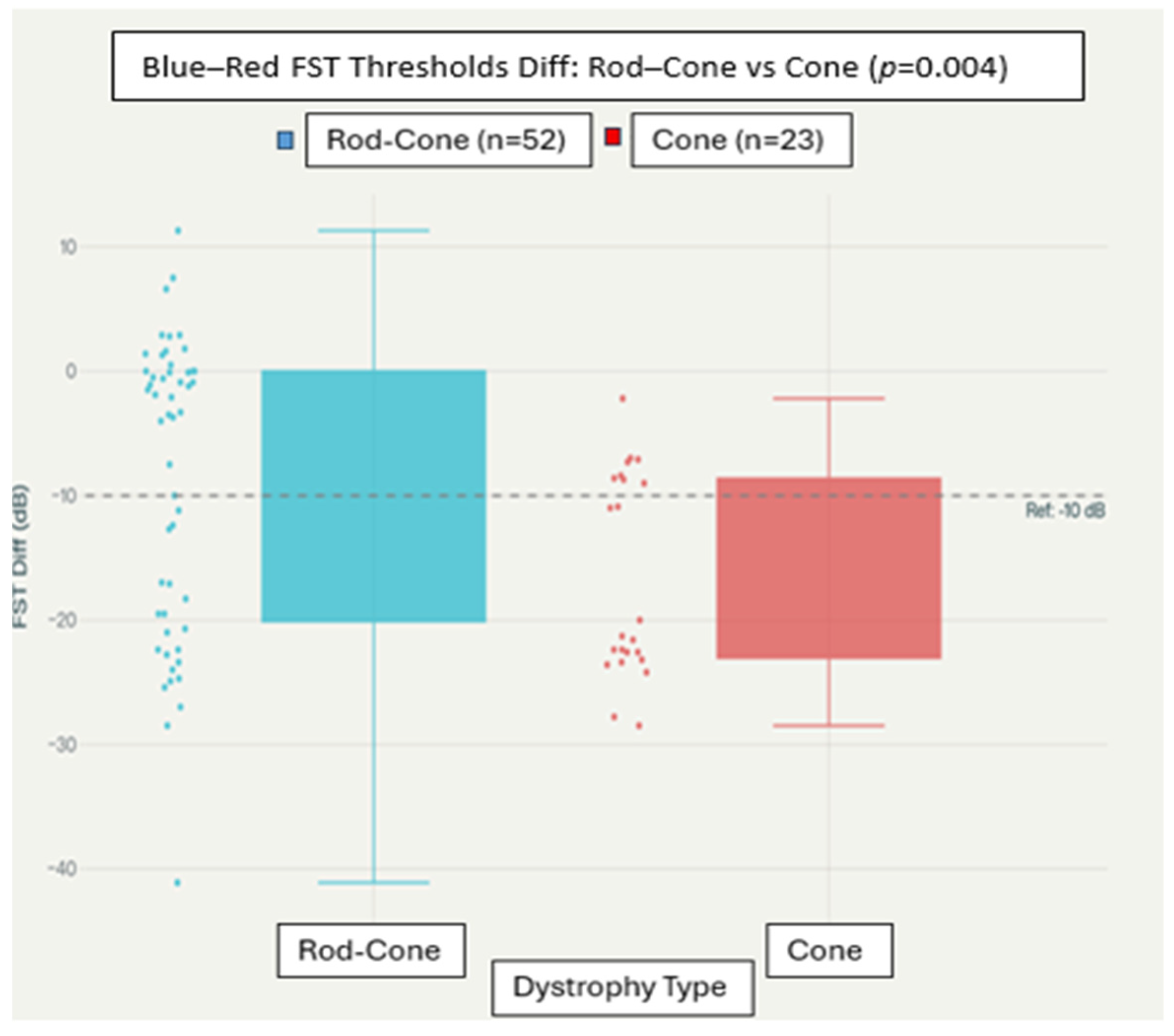
3.4. Distribution of FST Sensitivities Between Diagnosis Groups
3.5. Diagnostic Discrimination by Blue vs. Red FST
3.6. FST Thresholds by Genotype
3.7. Blue–Red FST Difference as a Diagnostic Marker
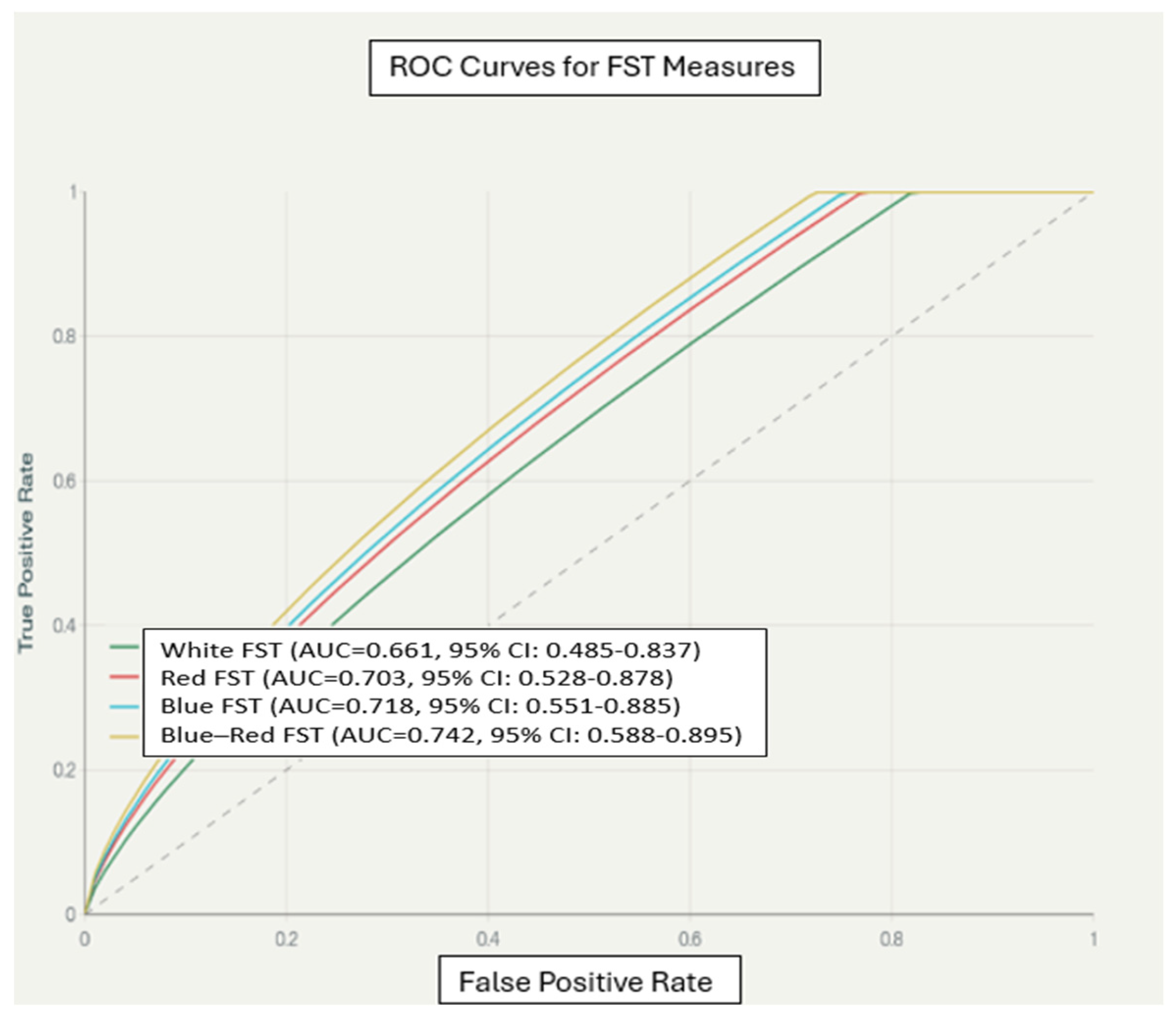
3.8. Diagnostic Performance by ROC
3.9. Inter-Eye Correlation Analysis
3.10. Mutation-Specific FST Patterns
3.11. Age-Related Patterns
3.12. ERG-FST Correlation Analysis
4. Discussion
4.1. Clinical Significance of Chromatic FST Testing
4.2. Comparison with the Previous FST Literature
4.3. Mutation-Specific Insights
4.4. Physiological Basis and Limitations
4.5. Implications for Clinical Trial Endpoints
4.6. Technical Considerations and Standardization
4.7. Limitations
4.8. Future Research Directions
4.9. Clinical Implementation
5. Conclusions
Author Contributions
Funding
Institutional Review Board Statement
Informed Consent Statement
Data Availability Statement
Acknowledgments
Conflicts of Interest
Abbreviations
| FST | Full-Field Stimulus Threshold |
| IRD | Inherited Retinal Dystrophy |
| ERG | Electroretinography |
| ISCEV | International Society for Clinical Electrophysiology of Vision |
| IPS | International Perimetric Society |
| CNGA3 | Cyclic Nucleotide-Gated Channel Alpha 3 |
| CNGB1 | Cyclic Nucleotide-Gated Channel Beta 1 |
| CNGB3 | Cyclic Nucleotide-Gated Channel Beta 3 |
| GUCY2D | Guanylate Cyclase 2D |
| NR2E3 | Nuclear Receptor Subfamily 2 Group E Member 3 |
| PDE6A | Phosphodiesterase 6A |
| PDE6B | Phosphodiesterase 6B |
| RHO | Rhodopsin |
| BCVA | Best-Corrected Visual Acuity |
| OCT | Optical Coherence Tomography |
| NGS | Next-Generation Sequencing |
| ACMG | American College of Medical Genetics and Genomics |
| ROC | Receiver Operating Characteristic |
| AUC | Area Under the Curve |
References
- Hamel, C. Retinitis pigmentosa. Orphanet J. Rare Dis. 2006, 1, 40. [Google Scholar] [CrossRef]
- Kumaran, N.; Moore, A.T.; Weleber, R.G.; Michaelides, M. Leber congenital amaurosis/early-onset severe retinal dystrophy: Clinical features, molecular genetics and therapeutic interventions. Br. J. Ophthalmol. 2017, 101, 1147–1154. [Google Scholar] [CrossRef]
- Koenekoop, R.K. An overview of Leber congenital amaurosis: A model to understand human retinal development. Surv. Ophthalmol. 2004, 49, 379–398. [Google Scholar] [CrossRef] [PubMed]
- McCulloch, D.L.; Marmor, M.F.; Brigell, M.G.; Hamilton, R.; Holder, G.E.; Tzekov, R.; Bach, M. ISCEV Standard for full-field clinical electroretinography (2015 update). Doc. Ophthalmol. 2015, 130, 1–12. [Google Scholar] [CrossRef]
- Birch, D.G.; Anderson, J.L.; Fish, G.E. Yearly rates of rod and cone functional loss in retinitis pigmentosa and cone-rod dystrophy. Ophthalmology 1999, 106, 258–268. [Google Scholar] [CrossRef]
- Berson, E.L.; Rosner, B.; Sandberg, M.A.; Weigel-DiFranco, C.; Brockhurst, R.J.; Hayes, K.C.; Johnson, E.J.; Anderson, E.J.; Johnson, C.A.; Gaudio, A.R.; et al. Clinical trial of lutein in patients with retinitis pigmentosa receiving vitamin A. Arch. Ophthalmol. 2010, 128, 403–411. [Google Scholar] [CrossRef]
- Hoffman, D.R.; Locke, K.G.; Wheaton, D.H.; Fish, G.E.; Spencer, R.; Birch, D.G. A randomized, placebo-controlled clinical trial of docosahexaenoic acid supplementation for X-linked retinitis pigmentosa. Am. J. Ophthalmol. 2004, 137, 704–718. [Google Scholar] [PubMed]
- Roman, A.J.; Schwartz, S.B.; Aleman, T.S.; Cideciyan, A.V.; Chico, J.D.; Windsor, E.A.M.; Gardner, L.M.; Ying, G.-S.; Smilko, E.E.; Maguire, M.G.; et al. Quantifying rod photoreceptor-mediated vision in retinal degenerations: Dark-adapted thresholds as outcome measures. Exp. Eye Res. 2005, 80, 259–272. [Google Scholar] [CrossRef] [PubMed]
- Jacobson, S.G.; Aleman, T.S.; Cideciyan, A.V.; Sumaroka, A.; Schwartz, S.B.; Windsor, E.A.; Traboulsi, E.I.; Heon, E.; Pittler, S.J.; Milam, A.H.; et al. Identifying photoreceptors in blind eyes caused by RPE65 mutations: Prerequisite for human gene therapy success. Proc. Natl. Acad. Sci. USA 2005, 102, 6177–6182. [Google Scholar] [CrossRef]
- Klein, M.; Birch, D.G. Psychophysical assessment of low visual function in patients with retinal degenerative diseases. Optom. Vis. Sci. 2009, 86, 1188–1196. [Google Scholar]
- Alexander, K.R.; Hutman, L.P.; Fishman, G.A. Dark-adapted foveal thresholds and visual acuity in retinitis pigmentosa. Arch. Ophthalmol. 1986, 104, 390–394. [Google Scholar] [CrossRef]
- Messias, K.; Jägle, H.; Saran, R.; Ruppert, A.D.P.; Siqueira, R.; Jorge, R.; Messias, A. Psychophysically determined full-field stimulus thresholds (FST) in retinitis pigmentosa: Relationships with electroretinography and visual field outcomes. Doc. Ophthalmol. 2013, 127, 123–129. [Google Scholar] [CrossRef] [PubMed]
- Schönbach, E.M.; Janeschitz-Kriegl, L.; Strauss, R.W.; Cattaneo, M.E.; Fujinami, K.; Birch, D.G.; Cideciyan, A.V.; Sunness, J.S.; Weleber, R.G.; Ip, M.S.; et al. The Progression of Stargardt Disease Using Volumetric Hill of Vision Analyses Over 24 Months: ProgStar Report No.15. Am. J. Ophthalmol. 2021, 230, 123–133. [Google Scholar] [CrossRef]
- Collison, F.T.; Fishman, G.A.; McAnany, J.J.; Zernant, J.; Allikmets, R. Psychophysical measurement of rod and cone thresholds in Stargardt disease with full-field stimuli. Retina 2014, 34, 1888–1895. [Google Scholar] [CrossRef] [PubMed]
- Roman, A.J.; Cideciyan, A.V.; Aleman, T.S.; Jacobson, S.G. Full-field stimulus testing (FST) to quantify visual perception in severely blind candidates for treatment trials. Physiol. Meas. 2007, 28, N51–N56. [Google Scholar] [CrossRef] [PubMed]
- Hood, D.C.; Birch, D.G. Rod phototransduction in retinitis pigmentosa: Estimation and interpretation of parameters derived from the rod a-wave. Investig. Ophthalmol. Vis. Sci. 1994, 35, 2948–2961. [Google Scholar]
- Alexander, K.R.; Fishman, G.A.; Peachey, N.S.; Marchese, A.L.; Tso, M.O. ‘On’ response defect in paraneoplastic night blindness with cutaneous malignant melanoma. Investig. Ophthalmol. Vis. Sci. 1998, 39, 477–483. [Google Scholar]
- Cideciyan, A.V.; Hauswirth, W.W.; Aleman, T.S.; Kaushal, S.; Schwartz, S.B.; Boye, S.L.; Windsor, E.A.M.; Conlon, T.J.; Sumaroka, A.; Roman, A.J.; et al. Vision 1 year after gene therapy for Leber’s congenital amaurosis. N. Engl. J. Med. 2009, 361, 725–727. [Google Scholar] [CrossRef]
- Hunt, D.M.; Carvalho, L.S.; Cowing, J.A.; Davies, W.L. Evolution and spectral tuning of visual pigments in birds and mammals. Philos. Trans. R. Soc. Lond. B Biol. Sci. 2009, 364, 2941–2955. [Google Scholar] [CrossRef]
- Neitz, J.; Neitz, M. The genetics of normal and defective color vision. Vis. Res. 2011, 51, 633–651. [Google Scholar] [CrossRef]
- Stockman, A.; Sharpe, L.T. The spectral sensitivities of the middle- and long-wavelength-sensitive cones derived from measurements in observers of known genotype. Vis. Res. 2000, 40, 1711–1737. [Google Scholar] [PubMed]
- Thompson, D.A.; Bach, M.; McAnany, J.J.; Šuštar Habjan, M.; Viswanathan, S.; Robson, A.G. ISCEV standard for clinical pattern electroretinography (2024 update). Doc. Ophthalmol. 2024, 148, 75–85. [Google Scholar] [CrossRef] [PubMed]
- Hood, D.C.; Cideciyan, A.V.; Halevy, D.A.; Jacobson, S.G. Sites of disease action in a retinal dystrophy with supernormal and delayed rod electroretinogram b-waves. Vis. Res. 1996, 36, 889–901. [Google Scholar] [CrossRef]
- Coppieters, F.; Leroy, B.P.; Beysen, D.; Hellemans, J.; De Bosscher, K.; Haegeman, G.; Robberecht, K.; Wuyts, W.; Coucke, P.J.; De Baere, E. Recurrent mutation in the first zinc finger of the orphan nuclear receptor NR2E3 causes autosomal dominant retinitis pigmentosa. Am. J. Hum. Genet. 2007, 81, 147–157. [Google Scholar] [CrossRef] [PubMed]
- Dryja, T.P.; Finn, J.T.; Peng, Y.W.; McGee, T.L.; Berson, E.L.; Yau, K.W. Mutations in the gene encoding the alpha subunit of the rod cGMP-gated channel in autosomal recessive retinitis pigmentosa. Proc. Natl. Acad. Sci. USA 1995, 92, 10177–10181. [Google Scholar]
- Kong, M.D.; Bailey, J.A.; Exinor, A.; Heaps, N.; Duong, J.; Hou, B.; Piamjitchol, C.; Demirkol, A.; Brodie, S.E.; Sparrow, J.R.; et al. Ellipsoid Zone Loss as an Outcome Measure in MAK-Associated Retinitis Pigmentosa. Am. J. Ophthalmol. 2025, 278, 282–291. [Google Scholar] [CrossRef] [PubMed]
- Faruque, P.R.; Sylla, M.M.; Maumenee, I.H.; Soucy, M.; Duong, J.K.; Demirkol, A.; Brodie, S.E.; Tsang, S.H. Natural History of DHDDS-Associated Retinitis Pigmentosa 59. Investig. Ophthalmol. Vis. Sci. 2024, 65, 3113. [Google Scholar]
- McLaughlin, M.E.; Sandberg, M.A.; Berson, E.L.; Dryja, T.P. Recessive mutations in the gene encoding the beta-subunit of rod phosphodiesterase in patients with retinitis pigmentosa. Nat. Genet. 1993, 4, 130–134. [Google Scholar] [CrossRef]
- Dryja, T.P.; Rucinski, D.E.; Chen, S.H.; Berson, E.L. Frequency of mutations in the gene encoding the alpha subunit of rod cGMP-phosphodiesterase in autosomal recessive retinitis pigmentosa. Investig. Ophthalmol. Vis. Sci. 1999, 40, 1859–1865. [Google Scholar]
- Huang, S.H.; Pittler, S.J.; Huang, X.; Oliveira, L.; Berson, E.L.; Dryja, T.P. Autosomal recessive retinitis pigmentosa caused by mutations in the alpha subunit of rod cGMP phosphodiesterase. Nat. Genet. 1995, 11, 468–471. [Google Scholar] [CrossRef]
- Martínez-Fernández de la Cámara, C.; Sequedo, M.D.; Gómez-Pinedo, U.; Jaijo, T.; Aller, E.; Garcia-Tarraga, P.; García-Verdugo, J.M.; Millán, J.M.; Rodrigo, R. Phosphodiesterase inhibition induces retinal degeneration, oxidative stress and inflammation in cone-enriched cultures of porcine retina. Exp. Eye Res. 2013, 111, 122–133. [Google Scholar] [CrossRef]
- Danciger, M.; Blaney, J.; Gao, Y.Q.; Zhao, D.Y.; Heckenlively, J.R.; Jacobson, S.G.; Farber, D.B. Mutations in the PDE6B gene in autosomal recessive retinitis pigmentosa. Genomics 1995, 30, 1–7. [Google Scholar] [CrossRef]
- Gal, A.; Orth, U.; Baehr, W.; Schwinger, E.; Rosenberg, T. Heterozygous missense mutation in the rod cGMP phosphodiesterase beta-subunit gene in autosomal dominant stationary night blindness. Nat. Genet. 1994, 7, 551–559. [Google Scholar] [CrossRef] [PubMed]
- Haider, N.B.; Jacobson, S.G.; Cideciyan, A.V.; Swiderski, R.; Streb, L.M.; Searby, C.; Beck, G.; Hockey, R.; Hanna, D.B.; Gorman, S.; et al. Mutation of a nuclear receptor gene, NR2E3, causes enhanced S cone syndrome, a disorder of retinal cell fate. Nat. Genet. 2000, 24, 127–131. [Google Scholar] [CrossRef] [PubMed]
- Demirkol, A.; Li, J.; Tsang, S.H. Generating a Preclinical Model for PITPNM3 and Evaluating Genotype–Phenotype Concordance: Insights from a Mouse Model. Cells 2025, 14, 1626. [Google Scholar] [CrossRef] [PubMed]
- Caruso, S.M.; Cui, X.; Robbings, B.M.; Heapes, N.; Demirkol, A.; Lopes Da Costa, B.; Hass, D.T.; Quinn, P.M.; Du, J.; Hurley, J.B.; et al. Ablating VHL in rod photoreceptors modulates RPE glycolysis and improves preclinical model of retinitis pigmentosa. J. Clin. Investig. 2025, 135, e185796. [Google Scholar] [CrossRef] [PubMed] [PubMed Central]
- Birch, D.G.; Bennett, L.D.; Duncan, T.; Weleber, R.G.; Pennesi, M.E. Long-term follow-up of patients with retinitis pigmentosa receiving intraocular ciliary neurotrophic factor implants. Am. J. Ophthalmol. 2016, 170, 10–14. [Google Scholar] [CrossRef]
- Koenekoop, R.K.; Sui, R.; Sallum, J.; Van Den Born, L.I.; Ajlan, R.; Khan, A.; den Hollander, A.I.; Cremers, F.P.M.; Mendola, J.D.; Bittner, A.K.; et al. Oral 9-cis retinoid for childhood blindness due to Leber congenital amaurosis caused by RPE65 or LRAT mutations: An open-label phase 1b trial. Lancet 2014, 384, 1513–1520. [Google Scholar] [CrossRef]
- Weleber, R.G.; Pennesi, M.E.; Wilson, D.J.; Kaushal, S.; Erker, L.R.; Jensen, L.; McBride, M.T.; Flotte, T.R.; Humphries, M.; Calcedo, R.; et al. Results at 2 years after gene therapy for RPE65-deficient leber congenital amaurosis and severe early-childhood-onset retinal dystrophy. Ophthalmology 2016, 123, 1606–1620. [Google Scholar] [CrossRef]
- Chung, D.C.; McCague, S.; Yu, Z.F.; Thill, S.; DiStefano-Pappas, J.; Bennett, J.; Cross, D.; Marshall, K.; Wellman, J.; High, K.A. Novel mobility test to assess functional vision in patients with inherited retinal dystrophies. Clin. Exp. Ophthalmol. 2018, 46, 247–259. [Google Scholar] [CrossRef]
- Aleman, T.S.; Cideciyan, A.V.; Sumaroka, A.; Windsor, E.A.; Herrera, W.; White, D.A.; Kaushal, S.; Naidu, A.; Roman, A.J.; Schwartz, S.B.; et al. Retinal laminar architecture in human retinitis pigmentosa caused by rhodopsin gene mutations. Investig. Ophthalmol. Vis. Sci. 2008, 49, 1580–1590. [Google Scholar] [CrossRef]
- Maguire, A.M.; High, K.A.; Auricchio, A.; Wright, J.F.; Pierce, E.A.; Testa, F.; Mingozzi, F.; Bennicelli, J.L.; Ying, G.-S.; Rossi, S.; et al. Age-dependent effects of RPE65 gene therapy for Leber’s congenital amaurosis: A phase 1 dose-escalation trial. Lancet 2009, 374, 1597–1605. [Google Scholar] [PubMed]
- Bainbridge, J.W.; Smith, A.J.; Barker, S.S.; Robbie, S.; Henderson, R.; Balaggan, K.; Viswanathan, A.; Holder, G.E.; Stockman, A.; Tyler, N.; et al. Effect of gene therapy on visual function in Leber’s congenital amaurosis. N. Engl. J. Med. 2008, 358, 2231–2239. [Google Scholar] [CrossRef] [PubMed]
- Hauswirth, W.W.; Aleman, T.S.; Kaushal, S.; Cideciyan, A.V.; Schwartz, S.B.; Wang, L.; Conlon, T.J.; Boye, S.L.; Flotte, T.R.; Byrne, B.J.; et al. Treatment of leber congenital amaurosis due to RPE65 mutations by ocular subretinal injection of adeno-associated virus gene vector: Short-term results of a phase I trial. Hum. Gene Ther. 2008, 19, 979–990. [Google Scholar] [PubMed]
- Testa, F.; Maguire, A.M.; Rossi, S.; Pierce, E.A.; Melillo, P.; Marshall, K.; Banfi, S.; Surace, E.M.; Sun, J.; Acerra, C.; et al. Three-year follow-up after unilateral subretinal delivery of adeno-associated virus in patients with Leber congenital amaurosis type 2. Ophthalmology 2013, 120, 1283–1291. [Google Scholar]
- Russell, S.; Bennett, J.; Wellman, J.A.; Chung, D.C.; Yu, Z.F.; Tillman, A.; Wittes, J.; Pappas, J.; Elci, O.; Marshall, K.A.; et al. Efficacy and safety of voretigene neparvovec (AAV2-hRPE65v2) in patients with RPE65-mutation-associated inherited retinal dystrophy: A randomised, controlled, open-label, phase 3 trial. Lancet 2017, 390, 849–860. [Google Scholar] [CrossRef]
- Komissarov, G.; Pandey, K.; Nolan, N.D.; Winogrodzki, T.; Hass, D.T.; Demirkol, A.; Robbings, B.M.; Hurley, J.B.; Tsang, S.H. Protocol to assess retinal metabolic flux of mice via stable isotope-resolved metabolomics. STAR Protoc. 2025, 7, 104252. [Google Scholar] [CrossRef]
- Nolan, N.D.; Cui, X.; Robbings, B.M.; Demirkol, A.; Pandey, K.; Wu, W.H.; Hu, H.F.; Jenny, L.A.; Lin, C.S.; Hass, D.T.; et al. CRISPR editing of anti-anemia drug target rescues independent preclinical models of retinitis pigmentosa. Cell Rep. Med. 2024, 5, 101459. [Google Scholar] [CrossRef] [PubMed] [PubMed Central]
- Costa, B.L.D.; Quinn, P.M.J.; Wu, W.H.; Liu, S.; Nolan, N.D.; Demirkol, A.; Tsai, Y.T.; Caruso, S.M.; Cabral, T.; Wang, N.K.; et al. Targeting miR-181a/b in retinitis pigmentosa: Implications for disease progression and therapy. Cell Biosci. 2024, 14, 64. [Google Scholar] [CrossRef] [PubMed] [PubMed Central]
- Stockman, A.; Sharpe, L.T. Into the twilight zone: The complexities of mesopic vision and luminous efficiency. Ophthalmic Physiol. Opt. 2006, 26, 225–239. [Google Scholar] [CrossRef]
- Bach, M.; Brigell, M.G.; Hawlina, M.; Holder, G.E.; Johnson, M.A.; McCulloch, D.L.; Meigen, T.; Viswanathan, S. ISCEV standard for clinical pattern electroretinography (PERG): 2012 update. Doc. Ophthalmol. 2013, 126, 1–7. [Google Scholar] [CrossRef]
- Grigoropoulos, V.G.; Emfietzoglou, J.; Nikolaidis, P.; Chatzistefanou, K.; Vergados, J.; Theodossiadis, G.P.; Theodossiadis, P.G. Optical coherence tomography findings in patients with retinitis pigmentosa and low visual acuity. Ophthalmic Surg. Lasers Imaging Retin. 2010, 41, 35–39. [Google Scholar] [CrossRef]
- Birch, D.G.; Cheng, P.; Duncan, J.L.; Ayala, A.R.; Maguire, M.G.; Audo, I.; Cheetham, J.K.; Durham, T.A.; Fahim, A.T.; Ferris, F.L., III; et al. The RUSH2A Study: Best-Corrected Visual Acuity, Full-Field Electroretinography Amplitudes, and Full-Field Stimulus Thresholds at Baseline. Transl. Vis. Sci. Technol. 2020, 9, 9. [Google Scholar] [CrossRef]
- Westall, C.A.; Dhaliwal, H.S.; Panton, C.M.; Sigesmund, D.; Levin, A.V.; Nischal, K.K.; Héon, E. Values of electroretinogram responses according to axial length. Doc. Ophthalmol. 2001, 102, 115–130. [Google Scholar] [CrossRef]
- Strauss, R.W.; Lang, L.; Ho, A.; Jha, A.; Ip, M.; Bernstein, P.S.; Birch, D.G.; Cideciyan, A.V.; Michaelides, M.; Audo, I.; et al. The Progression of Stargardt Disease as Determined by Spectral-Domain Optical Coherence Tomography over a 24-Month Period (ProgStar Report No. 18). Ophthalmic Res. 2024, 67, 435–447. [Google Scholar] [CrossRef] [PubMed]
- RetNet—Retinal Information Network. Available online: https://retnet.org/ (accessed on 17 September 2025).
- Stone, E.M. Leber congenital amaurosis—A model for efficient genetic testing of heterogeneous disorders: LSUHSC O’Brian Lecture. Investig. Ophthalmol. Vis. Sci. 2007, 48, 1430–1436. [Google Scholar]
- Cremers, F.P.; van den Hurk, J.A.; den Hollander, A.I. Molecular genetics of Leber congenital amaurosis. Hum. Mol. Genet. 2002, 11, 1169–1176. [Google Scholar] [CrossRef] [PubMed]
- den Hollander, A.I.; Roepman, R.; Koenekoop, R.K.; Cremers, F.P. Leber congenital amaurosis: Genes, proteins and disease mechanisms. Prog. Retin. Eye Res. 2008, 27, 391–419. [Google Scholar] [CrossRef]
- Fishman, G.A.; Bozbeyoglu, S.; Massof, R.W.; Kimberling, W. Natural course of visual field loss in patients with Type 2 Usher syndrome. Retina 2007, 27, 601–608. [Google Scholar] [CrossRef]
- Sujirakul, T.; Lin, M.K.; Duong, J.; Wei, Y.; Lopez-Pintado, S.; Tsang, S.H. Multimodal imaging of central retinal disease progression in a 2-year mean follow-up of retinitis pigmentosa. Am. J. Ophthalmol. 2015, 160, 786–798. [Google Scholar] [CrossRef]
- Sandberg, M.A.; Weigel-DiFranco, C.; Rosner, B.; Berson, E.L. The relationship between visual field size and electroretinogram amplitude in retinitis pigmentosa. Investig. Ophthalmol. Vis. Sci. 1996, 37, 1693–1698. [Google Scholar]
- Massof, R.W.; Finkelstein, D. Two forms of autosomal dominant primary retinitis pigmentosa. Doc. Ophthalmol. 1981, 51, 289–346. [Google Scholar] [CrossRef]
- Fulton, A.B.; Hansen, R.M.; Petersen, R.A.; Vanderveen, D.K. The rod photoreceptors in retinopathy of prematurity: An electroretinographic study. Arch. Ophthalmol. 2001, 119, 499–505. [Google Scholar]
- Hansen, R.M.; Fulton, A.B. Dark-adapted thresholds of 10-week-old infants. Vis. Neurosci. 1999, 16, 867–871. [Google Scholar]
- Mayer, D.L.; Hansen, R.M.; Moore, B.D.; Kim, S.; Fulton, A.B. Cycloplegic refractions in healthy children aged 1 through 48 months. Arch. Ophthalmol. 2001, 119, 1625–1628. [Google Scholar] [CrossRef]
- Hood, D.C.; Bach, M.; Brigell, M.; Keating, D.; Kondo, M.; Lyons, J.S.; Marmor, M.F.; McCulloch, D.L.; Palmowski-Wolfe, A.M. ISCEV standard for clinical multifocal electroretinography (mfERG) (2011 edition). Doc. Ophthalmol. 2012, 124, 1–13. [Google Scholar] [CrossRef]
- Robson, A.G.; Nilsson, J.; Li, S.; Jalali, S.; Fulton, A.B.; Tormene, A.P.; Holder, G.E.; Brodie, S.E. ISCEV guide to visual electrodiagnostic procedures. Doc. Ophthalmol. 2018, 136, 1–26. [Google Scholar] [CrossRef] [PubMed]
- Thompson, D.A.; Gal, A. Vitamin A metabolism in the retinal pigment epithelium: Genes, mutations, and diseases. Prog. Retin. Eye Res. 2003, 22, 683–703. [Google Scholar] [CrossRef] [PubMed]
- Marmor, M.F.; Fulton, A.B.; Holder, G.E.; Miyake, Y.; Brigell, M.; Bach, M. ISCEV Standard for full-field clinical electroretinography (2008 update). Doc. Ophthalmol. 2009, 118, 69–77. [Google Scholar] [CrossRef] [PubMed]



| Parameter | Rod–Cone Dystrophy (n = 27) | Cone Dystrophy (n = 12) | p-Value |
|---|---|---|---|
| Age (years) | 45.1 ± 19.8 | 47.2 ± 21.1 | 0.742 |
| Sex (M/F) | 14/13 | 7/5 | 0.881 |
| BCVA (logMAR) | 0.85 ± 0.68 | 0.91 ± 0.72 | 0.815 |
| Disease duration (years) * | 12.4 ± 8.9 | 14.1 ± 9.7 | 0.658 |
| Mutation | n Patients | Dystrophy Type |
|---|---|---|
| Rod–cone Dystrophies | 27 | |
| PDE6A | 10 (25.6%) | ROD–CONE |
| RHO | 7 (17.9%) | ROD–CONE |
| PDE6B | 6 (15.4%) | ROD–CONE |
| CNGB1 | 4 (10.3%) | ROD–CONE |
| Cone Dystrophies | 12 | |
| CNGA3 | 4 (10.3%) | CONE |
| NR2E3 † | 4 (10.3%) | CONE |
| GUCY2D | 2 (5.1%) | CONE |
| CNGB3 | 2 (5.1%) | CONE |
| Parameter | Rod–Cone Dystrophy (n = 27) | Cone Dystrophy (n = 12) | p-Value (Uncorrected) | p-Value (Bonferroni) * |
|---|---|---|---|---|
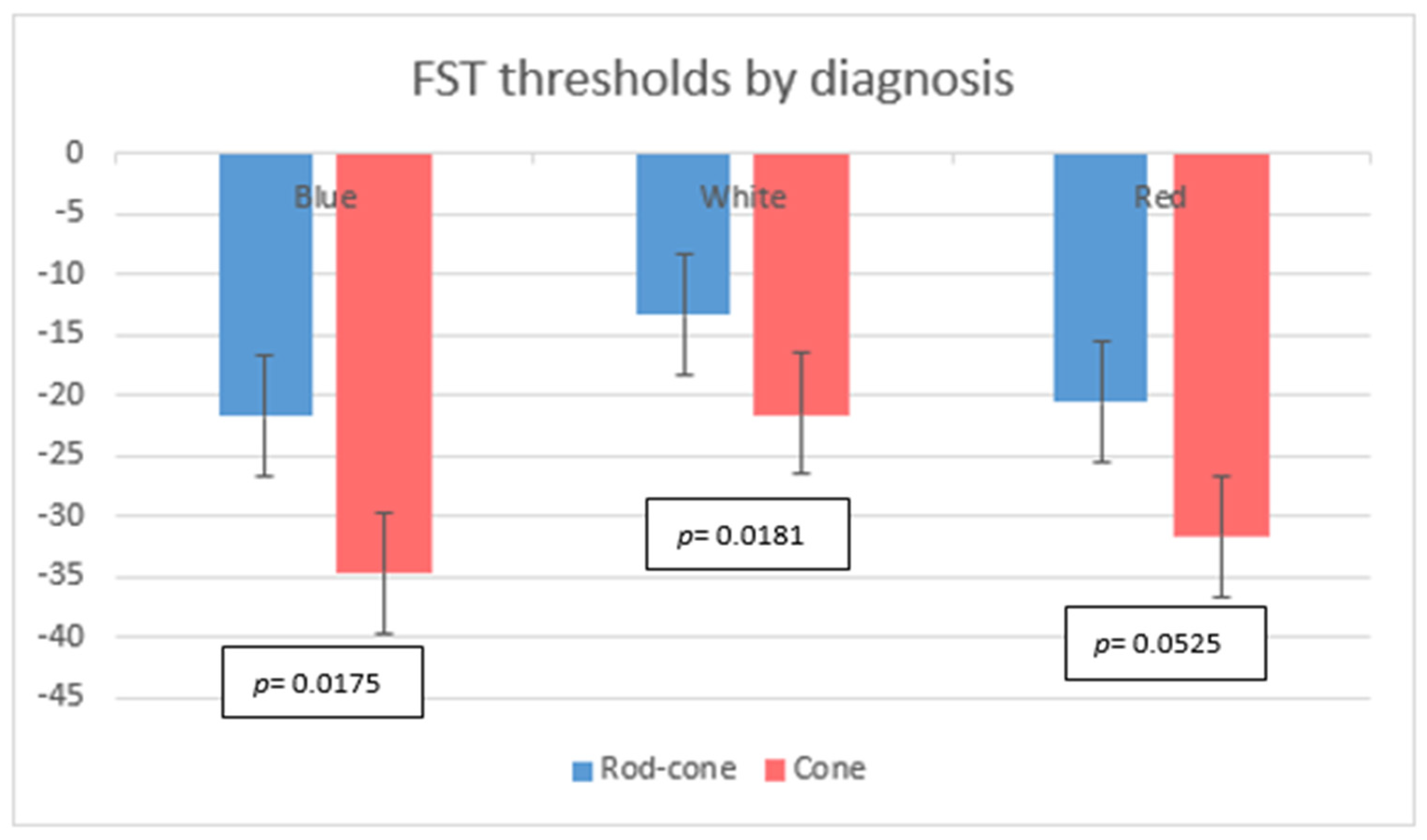
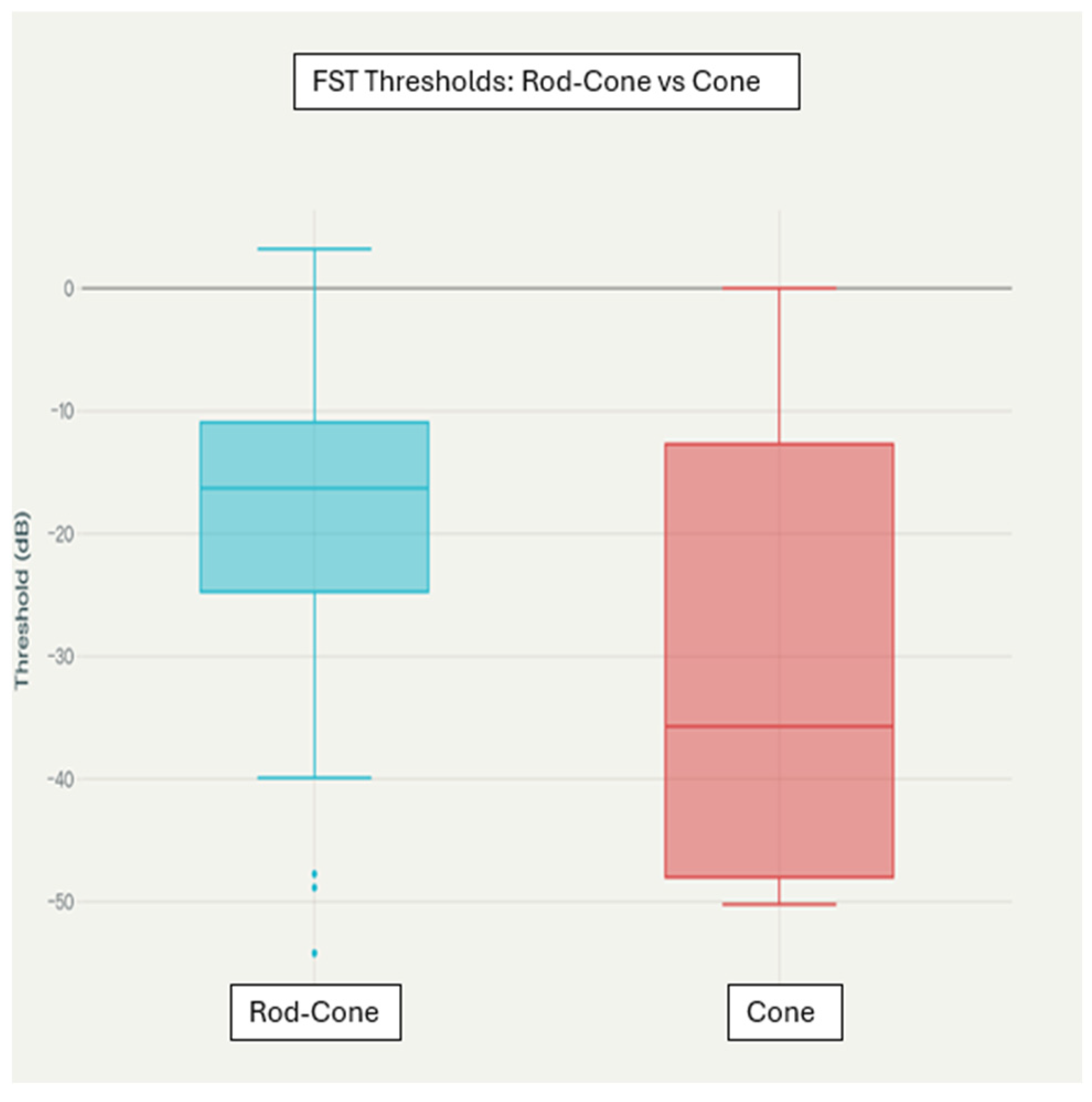
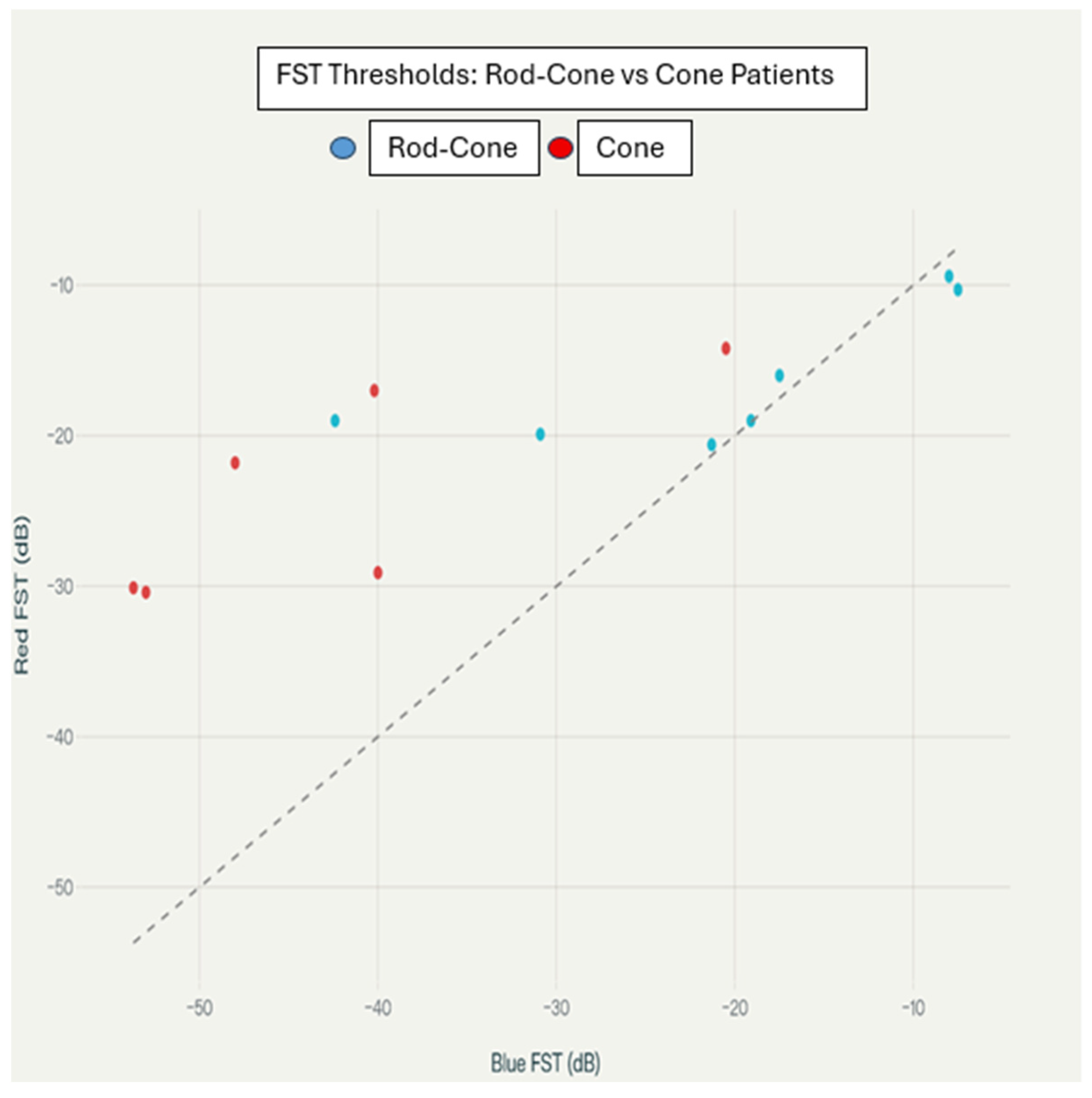
| Blue FST (dB) | −21.68 ± 13.80 | −34.64 ± 17.58 | 0.0175 | 0.0700 |
| White FST (dB) | −13.33 ± 6.53 | −21.44 ± 13.81 | 0.0181 | 0.0722 |
| Red FST (dB) | −20.52 ± 15.28 | −31.60 ± 17.38 | 0.0525 | 0.2100 |
| Blue–Red Difference (dB) | −8.35 ± 10.37 | −11.20 ± 14.60 | 0.5005 | >0.999 |
| Gene | n | White FST (dB) | Red FST (dB) | Blue FST (dB) | Blue–Red Diff (dB) |
|---|---|---|---|---|---|
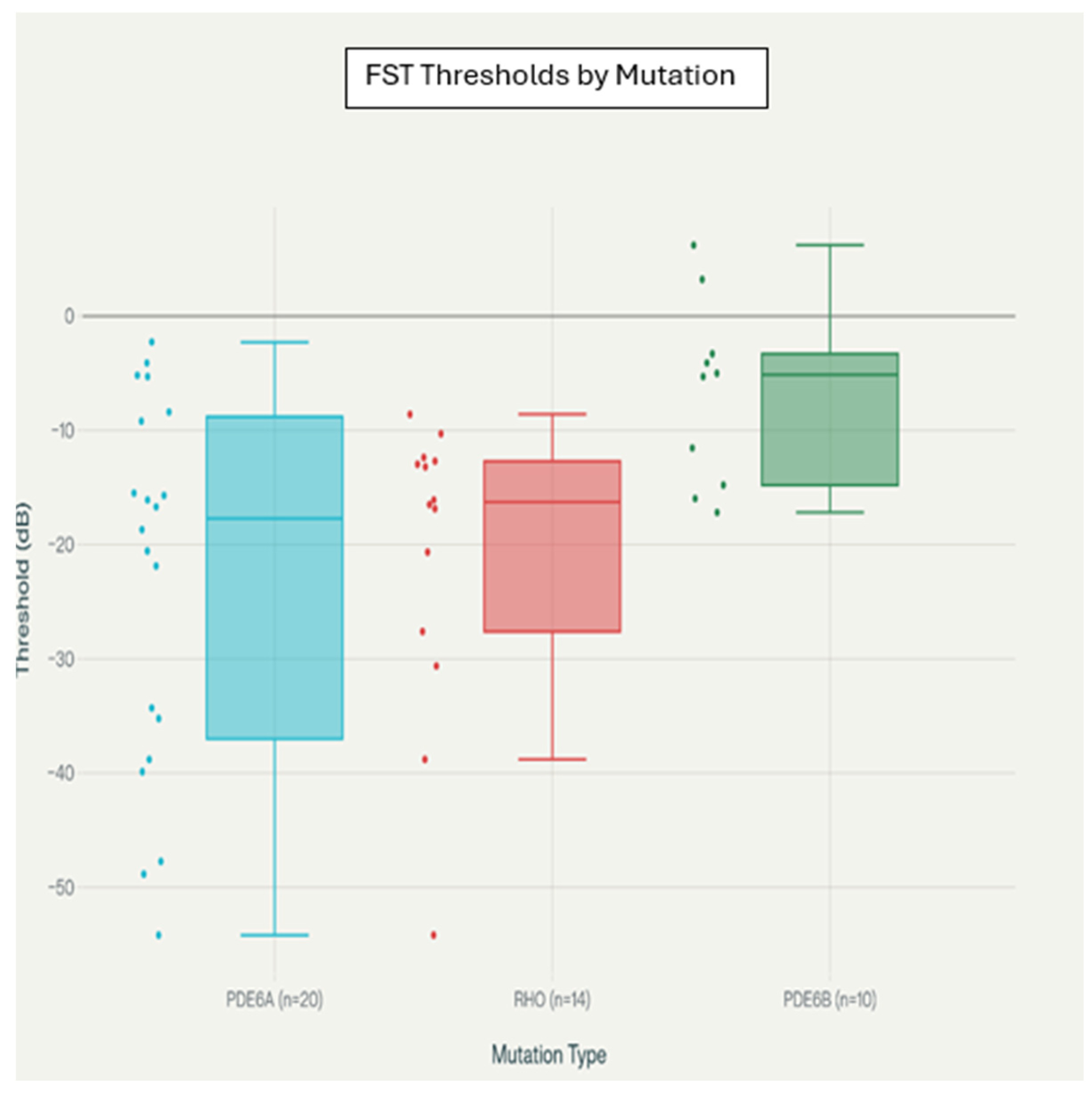
| PDE6A | 10 | −24.7 ± 18.2 | −13.8 ± 7.1 | −28.9 ± 16.8 | −15.1 ± 14.2 |
| RHO | 7 | −18.9 ± 8.4 | −12.7 ± 5.9 | −19.8 ± 9.1 | −7.1 ± 8.7 |
| PDE6B | 6 | −13.4 ± 4.7 | −11.9 ± 6.8 | −15.2 ± 7.4 | −3.3 ± 5.9 |
| CNGB1 | 4 | −16.1 ± 12.8 | −18.7 ± 4.2 | −17.1 ± 13.7 | 1.6 ± 11.4 |
| Gene | n | White FST (dB) | Red FST (dB) | Blue FST (dB) | Blue–Red Diff (dB) |
|---|---|---|---|---|---|
| CNGA3 | 4 | −47.1 ± 3.2 | −29.8 ± 11.2 | −51.2 ± 10.4 | −21.4 ± 7.8 |
| NR2E3 | 4 | −13.9 ± 3.1 | −12.9 ± 4.2 | −19.7 ± 4.8 | −6.8 ± 2.9 |
| GUCY2D | 2 | −42.6 ± 1.0 | −19.5 ± 3.2 | −44.6 ± 7.0 | −25.1 ± 3.8 |
| CNGB3 | 2 | −48.9 ± 0.1 | −30.9 ± 0.5 | −56.3 ± 2.4 | −25.4 ± 1.9 |
Disclaimer/Publisher’s Note: The statements, opinions and data contained in all publications are solely those of the individual author(s) and contributor(s) and not of MDPI and/or the editor(s). MDPI and/or the editor(s) disclaim responsibility for any injury to people or property resulting from any ideas, methods, instructions or products referred to in the content. |
© 2026 by the authors. Licensee MDPI, Basel, Switzerland. This article is an open access article distributed under the terms and conditions of the Creative Commons Attribution (CC BY) license.
Share and Cite
Demirkol, A.; Sahli, E.; Hou, B.; Faruque, P.R.; Demirkol, I.; Soydas, K.; Tsang, S.H. Diagnostic Role of Chromatic Full-Field Stimulus Test in Rod–Cone Versus Cone Dystrophies. Biomedicines 2026, 14, 377. https://doi.org/10.3390/biomedicines14020377
Demirkol A, Sahli E, Hou B, Faruque PR, Demirkol I, Soydas K, Tsang SH. Diagnostic Role of Chromatic Full-Field Stimulus Test in Rod–Cone Versus Cone Dystrophies. Biomedicines. 2026; 14(2):377. https://doi.org/10.3390/biomedicines14020377
Chicago/Turabian StyleDemirkol, Aykut, Esra Sahli, Baichun Hou, Promie R. Faruque, Ilay Demirkol, Kuzey Soydas, and Stephen H. Tsang. 2026. "Diagnostic Role of Chromatic Full-Field Stimulus Test in Rod–Cone Versus Cone Dystrophies" Biomedicines 14, no. 2: 377. https://doi.org/10.3390/biomedicines14020377
APA StyleDemirkol, A., Sahli, E., Hou, B., Faruque, P. R., Demirkol, I., Soydas, K., & Tsang, S. H. (2026). Diagnostic Role of Chromatic Full-Field Stimulus Test in Rod–Cone Versus Cone Dystrophies. Biomedicines, 14(2), 377. https://doi.org/10.3390/biomedicines14020377