Review

Glial Activation, Neuroinflammation, and Loss of Neuroprotection in Chronic Pain: Cellular Mechanisms and Emerging Therapeutic Strategies


by
Alyssa McKenzie
1,*,
Rachel Dombrower
1,
Nitchanan Theeraphapphong
1,
Sophia McKenzie
2 and
Munther A. Hijazin
3,4
1
School of Medicine, St. Georges University, University Centre Grenada, West Indies 11739, Grenada
2
School of Medicine, Uniformed Services University of the Health Sciences, Bethesda, MD 20814, USA
3
Prentice, Mitri & Hijazin Neurological Associates, Downey, CA 90241, USA
4
Keck School of Medicine, University of Southern California, Los Angeles, CA 90033, USA
*
Author to whom correspondence should be addressed.
Biomedicines 2026, 14(1), 58; https://doi.org/10.3390/biomedicines14010058

Submission received: 25 November 2025 / Revised: 21 December 2025 / Accepted: 25 December 2025 / Published: 26 December 2025
(This article belongs to the Special Issue Neuroinflammation and Neuroprotection)

Abstract

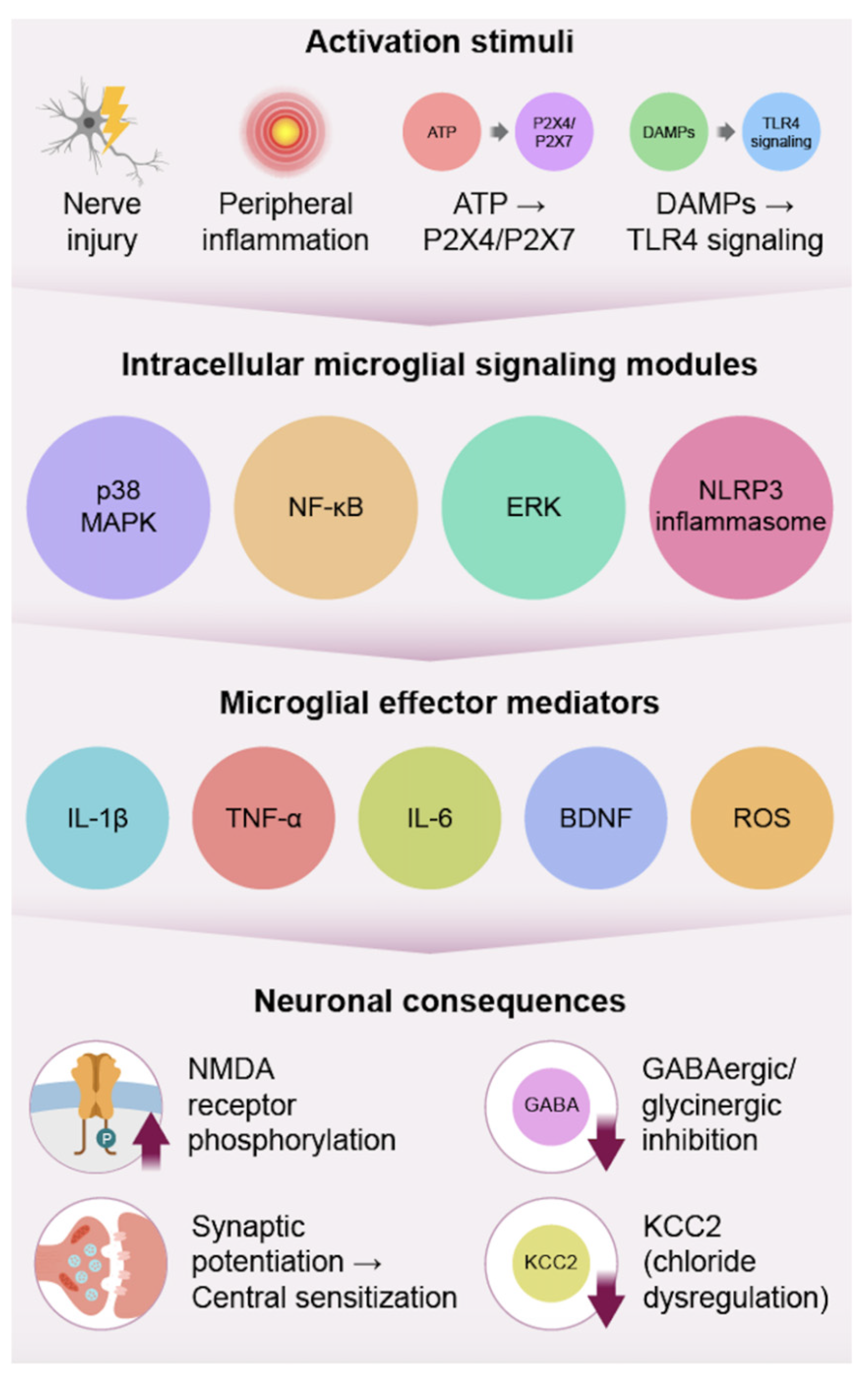
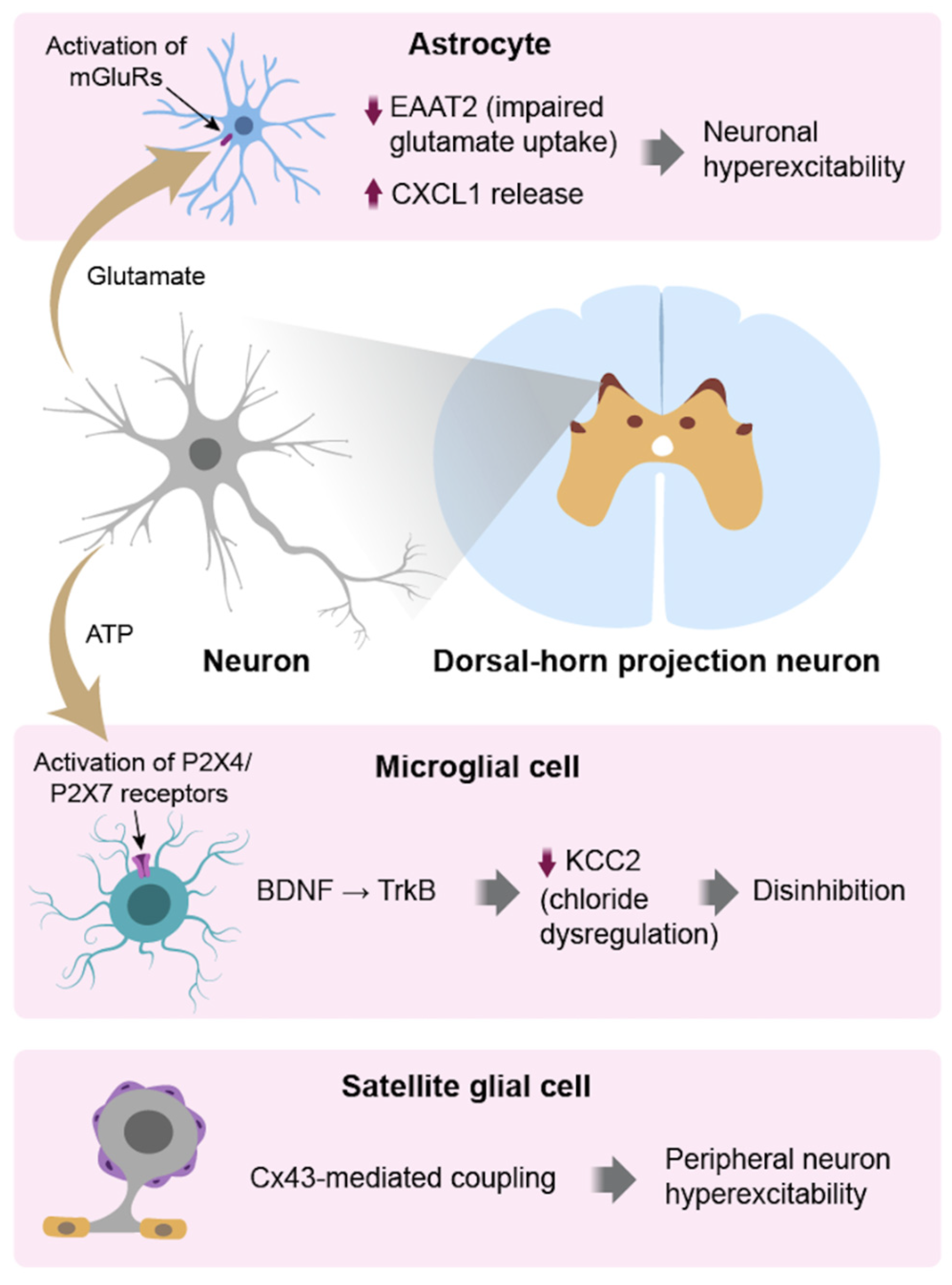
Chronic pain is increasingly regarded as a condition of glia–neuronal dysregulation driven by persistent neuroinflammatory signaling. Following injury to nerves or tissues, glial cells, including astrocytes or satellite glial cells, undergo changes in their phenotype, thereby amplifying painful stimuli mediated by cytokines, chemokines, or ATP signaling. In response to injuries, activated microglia release several mediators such as BDNF, IL-1β, or TNF-α, thereby disrupting chloride homeostasis and inducing disinhibition in the dorsal horn, and sustaining maladaptive neuroimmune activity. Dysfunction of astrocytes, characterized by impaired glutamate clearance via excitatory amino acid transporter 2 and elevated C-X-C motif chemokine ligand 1 (CXCL1) and ATP release, drives neuronal sensitization, loss of neuroprotective metabolic support, and persistence of pain. In peripheral ganglia, connexin–43–mediated satellite glial cell coupling leads to hyperexcitability, resulting in neuropathic and orofacial pain and contributing to peripheral neuroinflammation. Presently, there is no unified framework for glial cell types, and the molecular mechanisms underlying microglial, astrocyte, and satellite glial cell contributions to the transition to chronic pain from acute pain are not completely elucidated. This review synthesizes current evidence on cellular and molecular mechanisms linking glial reactivity to pain chronification through sustained neuroinflammatory remodeling and impaired neuroprotection. It evaluates therapeutic strategies, including purinergic receptor P2X4 and toll-like receptor 4 antagonists, to metabolic reprogramming, exosome therapy, and neuromodulation, aimed at restoring homeostatic glial function and re-establishing neuroprotective glia–neuron interactions. A deeper understanding of the temporal and spatial dynamics of glial activation may enable personalized, non-opioid interventions that not only achieve durable analgesia but also prevent progressive neuroinflammatory damage and support long-term functional recovery.
Keywords: microglia; astrocytes; satellite glial cells; glial activation; neuroinflammation; neuroprotection; neuroimmune signaling; reactive gliosis; glial-neuron interactions; chronic pain microglia; astrocytes; satellite glial cells; glial activation; neuroinflammation; neuroprotection; neuroimmune signaling; reactive gliosis; glial-neuron interactions; chronic pain