Article

Pharmacogenomic Pathways Underlying Variable Vedolizumab Response in Crohn’s Disease Patients: A Rare-Variant Analysis

by
Biljana Stankovic
1,
Mihajlo Stasuk
1,
Vladimir Gasic
1,
Bojan Ristivojevic
1,
Ivana Grubisa
1,
Branka Zukic
1,
Aleksandar Toplicanin
2,
Olgica Latinovic Bosnjak
3,
Brigita Smolovic
4,5,
Srdjan Markovic
6,7,
Aleksandra Sokic Milutinovic
2,6 and
Sonja Pavlovic
1,*
1
Institute of Molecular Genetics and Genetic Engineering, University of Belgrade, 11042 Belgrade, Serbia
2
Clinic for Gastroenterohepatology, University Clinical Center of Serbia, 11000 Belgrade, Serbia
3
Clinic for Gastroenterology and Hepatology, University Clinical Center of Vojvodina, 21000 Novi Sad, Serbia
4
Internal Clinic, Department of Gastroenterohepatology, Clinical Center of Montenegro, 81000 Podgorica, Montenegro
5
Faculty of Medicine, University of Montenegro, 81000 Podgorica, Montenegro
6
School of Medicine, University of Belgrade, 11000 Belgrade, Serbia
7
Department of Gastroenterology and Hepatology, University Hospital Medical Center “Zvezdara”, 11120 Belgrade, Serbia
*
Author to whom correspondence should be addressed.
Biomedicines 2026, 14(1), 203; https://doi.org/10.3390/biomedicines14010203

Submission received: 26 August 2025 / Revised: 9 January 2026 / Accepted: 15 January 2026 / Published: 17 January 2026

Abstract

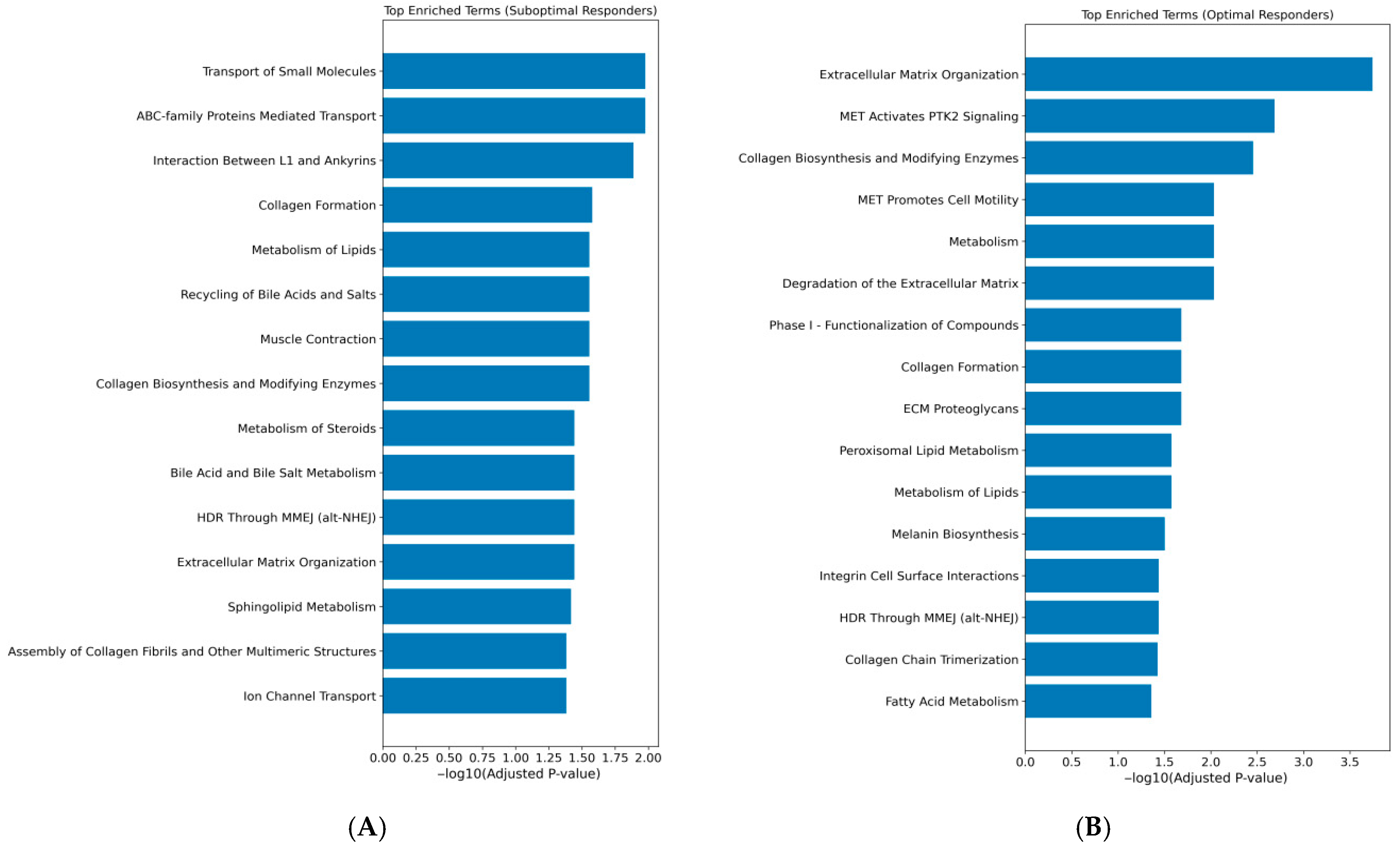
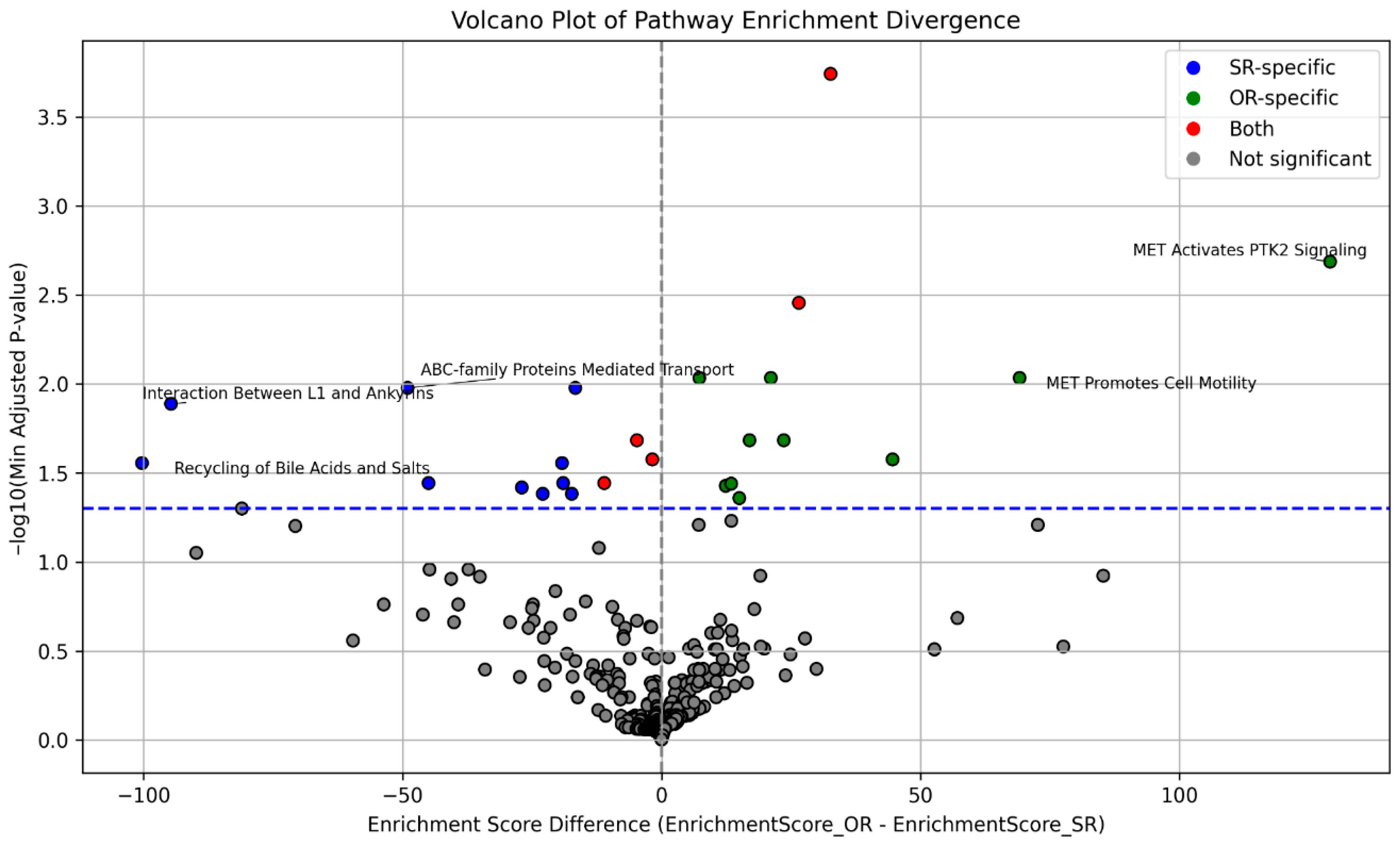
Background/Objectives: Vedolizumab (VDZ), a monoclonal antibody targeting α4β7 integrin, is used in Crohn’s disease (CD) management, yet patients’ responses vary, underscoring the need for pharmacogenomic (PGx) markers. This study aimed to identify PGx pathways associated with suboptimal VDZ response using a rare-variant analytical framework. Methods: DNA from 63 CD patients treated with VDZ as first-line advanced therapy underwent whole-exome sequencing. Clinical response at week 14 classified patients as optimal responders (ORs) or suboptimal responders (SRs). Sequencing data were processed using GATK Best Practices, annotated with variant effect predictors, and filtered for rare damaging variants (damaging missense and high-confidence loss-of-function; minor allele frequency < 0.05). Variants were mapped to genes specific for SRs and ORs, and analyzed for pathway enrichment using the Reactome database. Rare-variant burden and composition differences were assessed with Fisher’s exact test and SKAT-O gene-set association analysis. Results: Suboptimal VDZ response was associated with pathways related to membrane transport (ABC-family proteins, ion channels), L1–ankyrin interactions, and bile acid recycling, while optimal response was associated with pathways involving MET signaling. SKAT-O identified lipid metabolism-related pathways as significantly different—SRs harbored variants in pro-inflammatory lipid signaling and immune cell trafficking genes (e.g., PIK3CG, CYP4F2, PLA2R1), whereas ORs carried variants in fatty acid oxidation and detoxification genes (e.g., ACADM, CYP1A1, ALDH3A2, DECR1, MMUT). Conclusions: This study underscores the potential of exome-based rare-variant analysis to stratify CD patients and guide precision medicine approaches. The identified genes and pathways are potential PGx markers for CD patients treated with VDZ.
Keywords: Crohn’s disease; gene-set burden analysis; pharmacogenomics; rare variants; vedolizumab Crohn’s disease; gene-set burden analysis; pharmacogenomics; rare variants; vedolizumab