Potential Molecular Targets of the Broad-Range Antimicrobial Peptide Tyrothricin in the Apicomplexan Parasite Toxoplasma gondii

 , , , and
Abstract
1. Introduction
2. Materials and Methods
2.1. Cell Culture Equipment and Media, Biochemicals and Compounds
2.2. Toxoplasma gondii Strains and Human Foreskin Fibroblast (HFF) Host Cells
2.3. Measurement of Anti-Proliferative Activities of AMPs Against T. gondii-β-Gal Tachyzoites
2.4. In Vitro Assessment of AMP Cytotoxicity Against HFF
2.5. Assessment of the Effects of Tyrothricin on Proliferation of Murine Splenic B- and T-Cell Populations
2.6. Assessment of the Effects of Tyrothricin on Early Zebrafish Embryo Development
2.7. Transmission Electron Microscopy (TEM)
2.8. Tetramethylrhodamine Ethyl Ester (TMRE) Uptake Assay for Assessment of Changes in the Mitochondrial Membrane Potential (MMP)
2.9. Differential Affinity Chromatography (DAC) of T. gondii Cell-Free Extract Using Tyrocidine A and Gramicidin Coupled to Sepharose 4 FAST FLOW Matrix
2.10. Proteomics Analyses
3. Results
3.1. In Vitro Screening of AMPs Against T. gondii and HFF Host Cells and Identification of Tyrothricin
3.2. Tyrothricin Treatment Is Detrimental to the Viability of Murine T Cells and Zebrafish (Danio Rerio) Embryos In Vitro
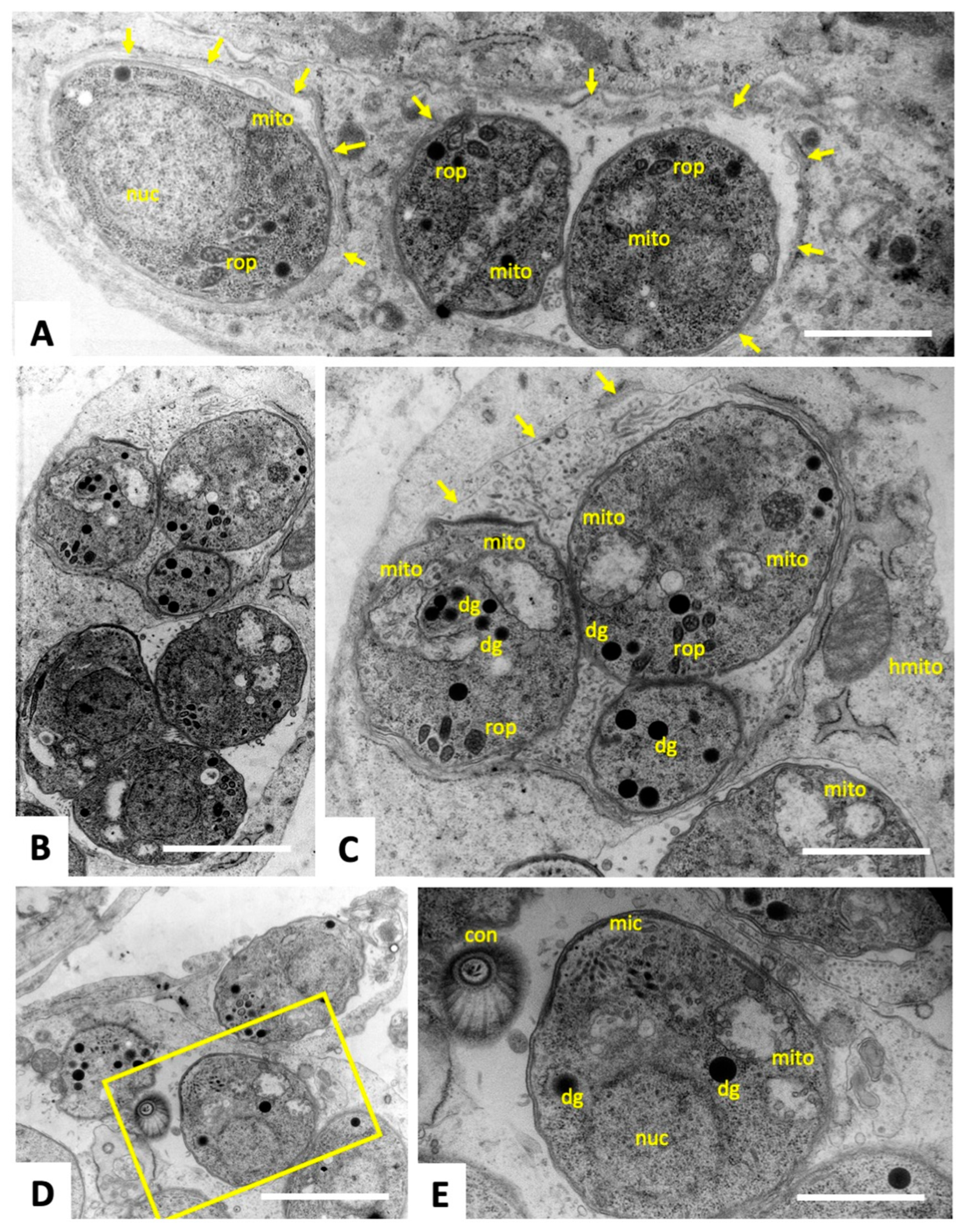
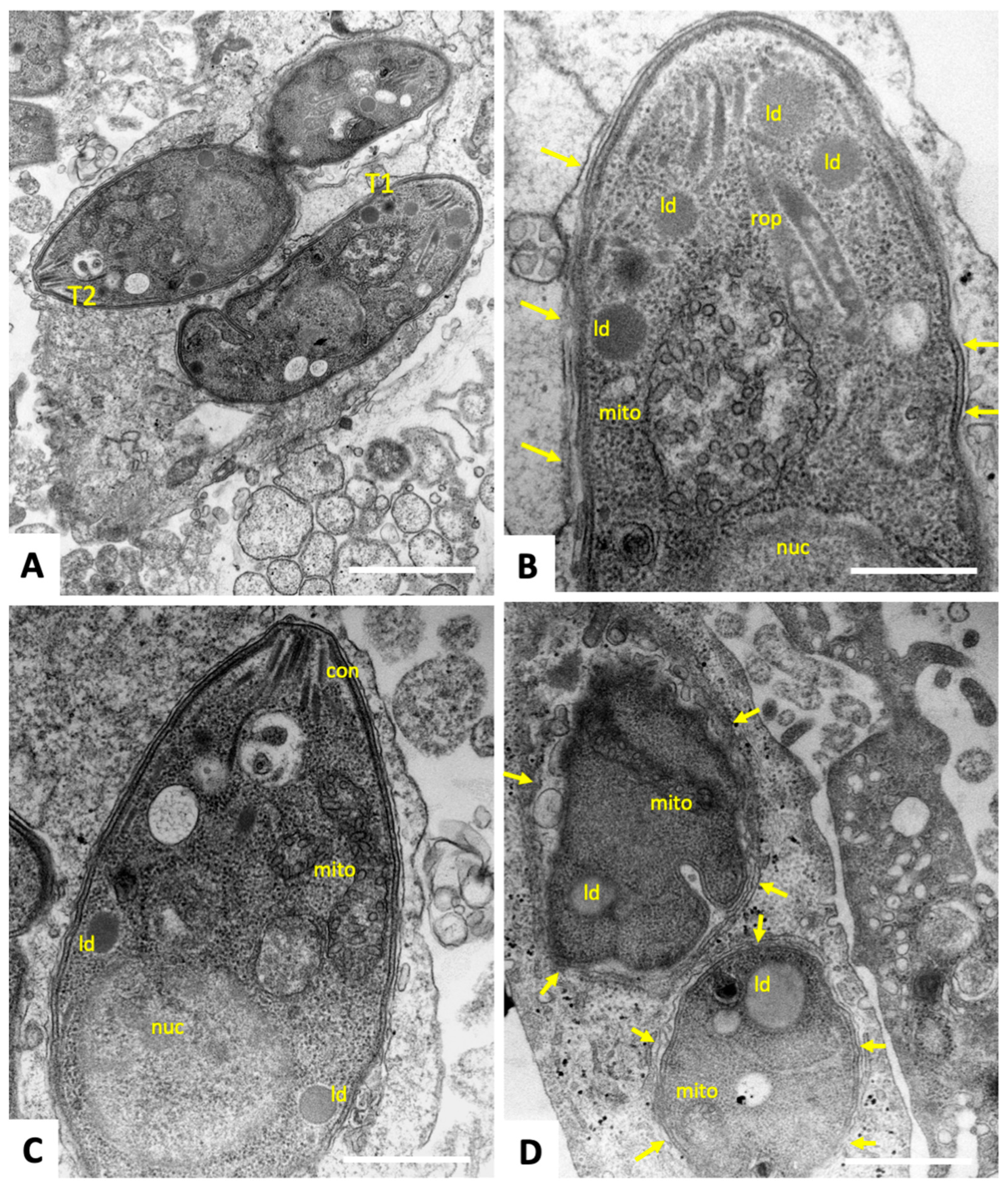
3.3. Tyrothricin Treatment of T. gondii Tachyzoites Transiently Induces Structural Alterations
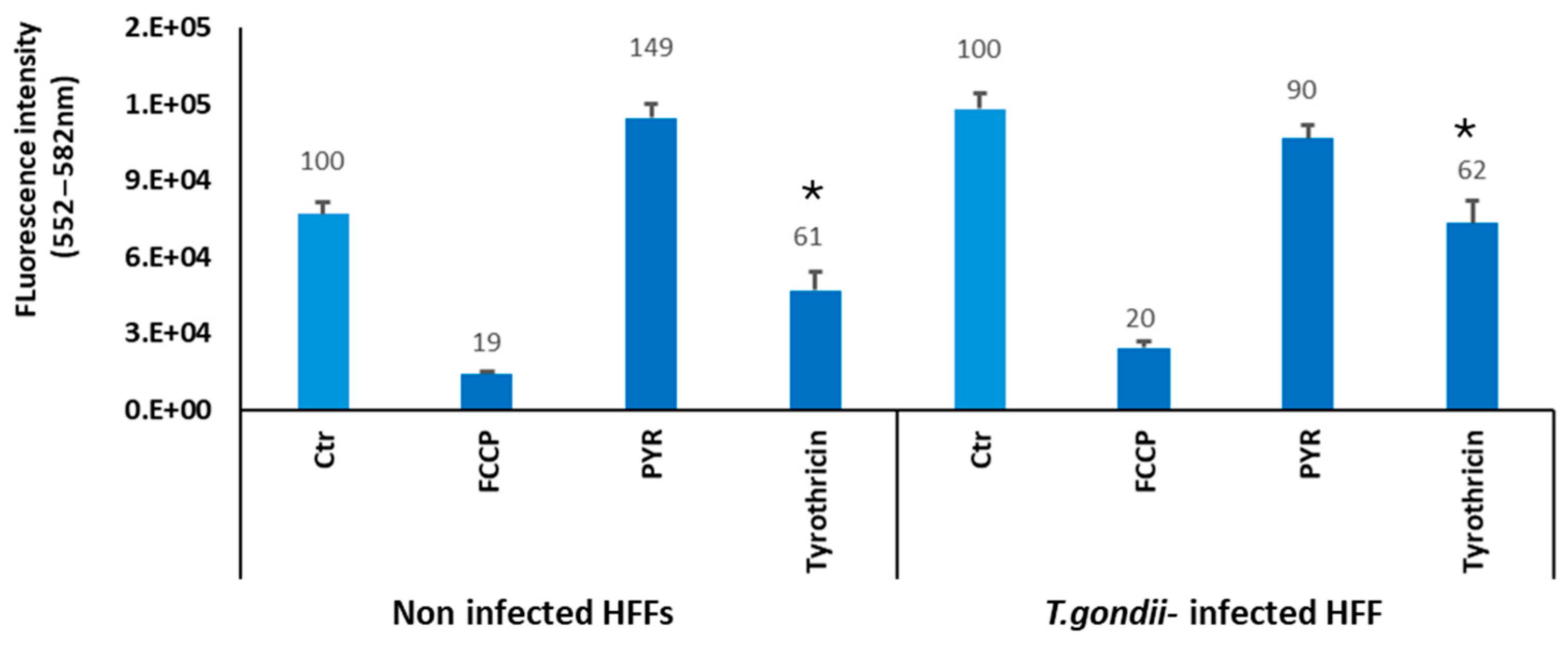
3.4. Tyrothricin Affects the Mitochondrial Membrane Potential (MMP)
3.5. The Tyrothricin Component Tyrocidine, but Not Gramicidin, Is Active Against T. gondii Tachyzoites and Impairs HFF and Zebrafish Embryo Viability
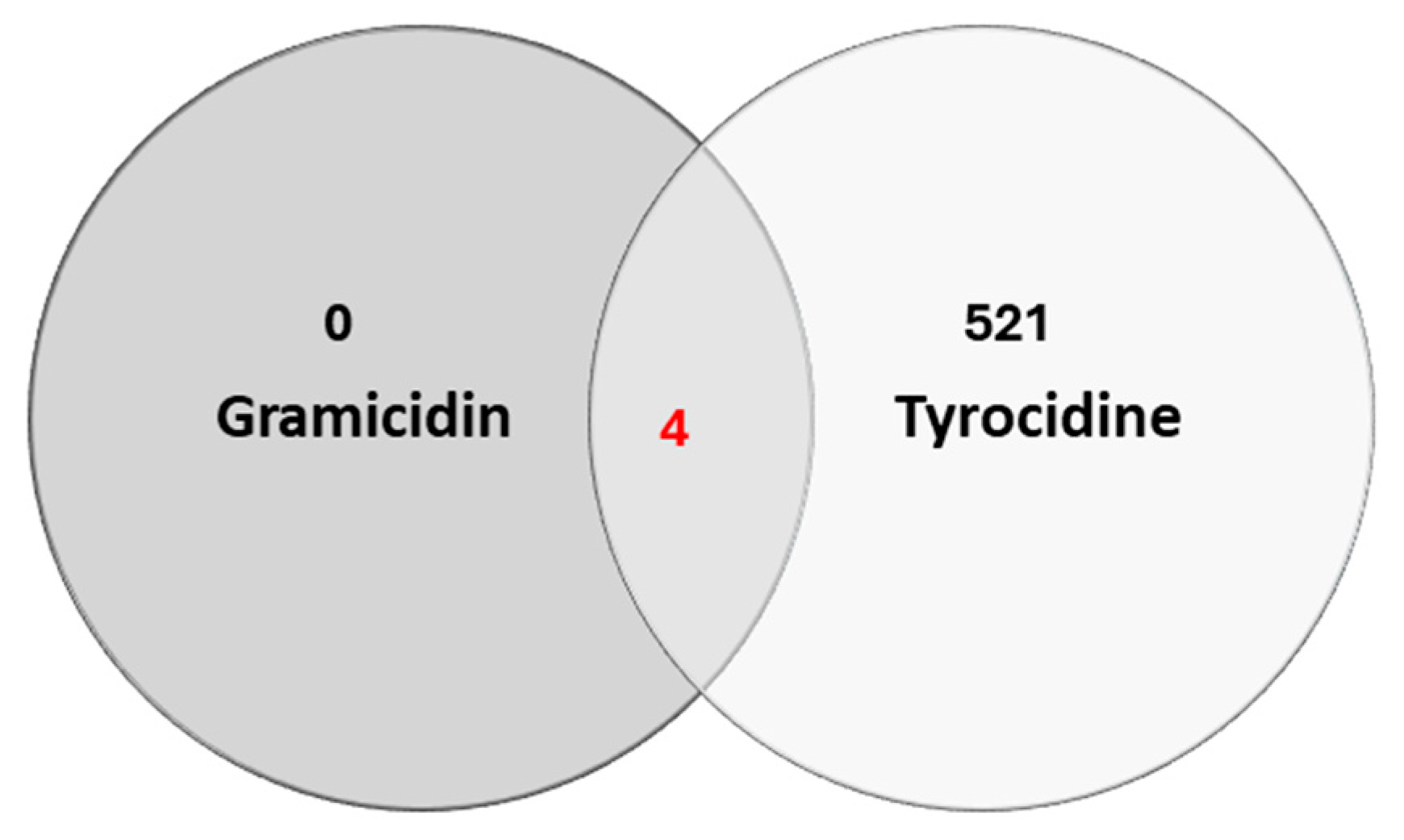
3.6. Identification of Tyrocidine A and Gramicidin A Binding Proteins in T. gondii Extracts by DAC-MS-Proteomics
4. Discussion
5. Conclusions
Supplementary Materials
Author Contributions
Funding
Institutional Review Board Statement
Informed Consent Statement
Data Availability Statement
Conflicts of Interest
References
- Lindsay, D.S.; Dubey, J.P. Neosporosis, Toxoplasmosis, and Sarcocystosis in Ruminants: An Update. Vet. Clin. N. Am. Food Anim. Pract. 2020, 36, 205–222. [Google Scholar] [CrossRef]
- Almeria, S.; Dubey, J.P. Foodborne Transmission of Toxoplasma gondii Infection in the Last Decade. An Overview. Res. Vet. Sci. 2021, 135, 371–385. [Google Scholar] [CrossRef] [PubMed]
- Tenter, A.M.; Heckeroth, A.R.; Weiss, L.M. Toxoplasma gondii: From Animals to Humans. Int. J. Parasitol. 2000, 30, 1217–1258. [Google Scholar] [CrossRef] [PubMed]
- Dubey, J.P. Toxoplasmosis of Animals and Humans, 3rd ed.; CRC Press: Boca Raton, FL, USA, 2010. [Google Scholar]
- Dubey, J.P.; Murata, F.H.A.; Cerqueira-Cézar, C.K.; Kwok, O.C.H.; Villena, I. Congenital Toxoplasmosis in Humans: An Update of Worldwide Rate of Congenital Infections. Parasitology 2021, 148, 1406. [Google Scholar] [CrossRef] [PubMed]
- Petersen, E.; Kijlstra, A.; Stanford, M. Epidemiology of Ocular Toxoplasmosis. Ocul. Immunol. Inflamm. 2012, 20, 68–75. [Google Scholar] [CrossRef]
- Garweg, J.G. Ocular Toxoplasmosis: An Update. Klin. Monbl Augenheilkd. 2016, 233, 534–539. [Google Scholar] [CrossRef]
- Di Cristina, M.; Marocco, D.; Galizi, R.; Proietti, C.; Spaccapelo, R.; Crisanti, A. Temporal and Spatial Distribution of Toxoplasma gondii Differentiation into Bradyzoites and Tissue Cyst Formation In Vivo. Infect. Immun. 2008, 76, 3491–3501. [Google Scholar] [CrossRef]
- Konstantinovic, N.; Guegan, H.; Stäjner, T.; Belaz, S.; Robert-Gangneux, F. Treatment of Toxoplasmosis: Current Options and Future Perspectives. Food Waterborne Parasitol. 2019, 15, e00036. [Google Scholar] [CrossRef]
- Montazeri, M.; Mehrzadi, S.; Sharif, M.; Sarvi, S.; Shahdin, S.; Daryani, A. Activities of Anti-Toxoplasma Drugs and Compounds against Tissue Cysts in the Last Three Decades (1987 to 2017), a Systematic Review. Parasitol. Res. 2018, 117, 3045–3057. [Google Scholar] [CrossRef]
- Murata, Y.; Sugi, T.; Weiss, L.M.; Kato, K. Identification of Compounds That Suppress Toxoplasma gondii Tachyzoites and Bradyzoites. PLoS ONE 2017, 12, e0178203. [Google Scholar] [CrossRef]
- Zasloff, M. Antimicrobial Peptides of Multicellular Organisms. Nature 2002, 415, 389–395. [Google Scholar] [CrossRef] [PubMed]
- Agerberth, B.; Charo, J.; Werr, J.; Olsson, B.; Idali, F.; Lindbom, L.; Kiessling, R.; Jornvall, H.; Wigzell, H.; Gudmundsson, G.H. The Human Antimicrobial and Chemotactic Peptides LL-37 and α-Defensins Are Expressed by Specific Lymphocyte and Monocyte Populations. Blood 2000, 96, 3086–3093. [Google Scholar] [CrossRef]
- Rautenbach, M.; Troskie, A.M.; Vosloo, J.A. Antifungal Peptides: To Be or Not to Be Membrane Active. Biochimie 2016, 130, 132–145. [Google Scholar] [CrossRef]
- Tang, Y.; Hou, S.; Li, X.; Wu, M.; Ma, B.; Wang, Z.; Jiang, J.; Deng, M.; Duan, Z.; Tang, X.; et al. Anti-Parasitic Effect on Toxoplasma gondii Induced by a Spider Peptide Lycosin-I. Exp. Parasitol. 2019, 198, 17–25. [Google Scholar] [CrossRef]
- Liu, X.; Zhang, P.; Liu, Y.; Li, J.; Yang, D.; Liu, Z.; Jiang, L. Anti-Toxoplasma Gondii Effects of Lipopeptide Derivatives of Lycosin-I. Toxins 2023, 15, 477. [Google Scholar] [CrossRef]
- Brand, M.; Wang, L.; Agnello, S.; Gazzola, S.; Gall, F.M.; Raguž, L.; Kaiser, M.; Schmidt, R.S.; Ritschl, A.; Jelk, J.; et al. AntiprotozoalS Tructure-Activity RelationshipsofS Ynthetic Leucinostatin Derivatives and Elucidation of Their Mode of Action. Angew. Chem. Int. Ed. Engl. 2021, 60, 15613–15621. [Google Scholar] [CrossRef]
- Müller, J.; Boubaker, G.; Imhof, D.; Hänggeli, K.; Haudenschild, N.; Uldry, A.C.; Braga-Lagache, S.; Heller, M.; Ortega-Mora, L.M.; Hemphill, A. Differential Affinity Chromatography Coupled to Mass Spectrometry: A Suitable Tool to Identify Common Binding Proteins of a Broad-Range Antimicrobial Peptide Derived from Leucinostatin. Biomedicines 2022, 10, 2675. [Google Scholar] [CrossRef] [PubMed]
- Zheng, S.; Tu, Y.; Li, B.; Qu, G.; Li, A.; Peng, X.; Li, S.; Shao, C. Antimicrobial Peptide Biological Activity, Delivery Systems and Clinical Translation Status and Challenges Journal of Translational Medicine. J. Transl. Med. 2025, 23, 292. [Google Scholar] [CrossRef] [PubMed]
- Rojas-Pirela, M.; Kemmerling, U.; Quiñones, W.; Michels, P.A.M.; Rojas, V. Antimicrobial Peptides (AMPs): Potential Therapeutic Strategy against Trypanosomiases? Biomolecules 2023, 13, 599. [Google Scholar] [CrossRef]
- Harrington, J.M. Antimicrobial Peptide Killing of African Trypanosomes. Parasite Immunol. 2011, 33, 461. [Google Scholar] [CrossRef]
- Haines, L.R.; Thomas, J.M.; Jackson, A.M.; Eyford, B.A.; Razavi, M.; Watson, C.N.; Gowen, B.; Hancock, R.E.W.; Pearson, T.W. Killing of Trypanosomatid Parasites by a Modified Bovine Host Defense Peptide, BMAP-18. PLoS Negl. Trop. Dis. 2009, 3, e373. [Google Scholar] [CrossRef]
- Yoshida, S.; Shimada, Y.; Kondoh, D.; Kouzuma, Y.; Ghosh, A.K.; Jacobs-Lorena, M.; Sinden, R.E. Hemolytic C-Type Lectin CEL-III from Sea Cucumber Expressed in Transgenic Mosquitoes Impairs Malaria Parasite Development. PLoS Pathog. 2007, 3, e192. [Google Scholar] [CrossRef]
- Carballar-Lejarazú, R.; Rodríguez, M.H.; De La Cruz Hernández-Hernández, F.; Ramos-Castañeda, J.; Possani, L.D.; Zurita-Ortega, M.; Reynaud-Garza, E.; Hernández-Rivas, R.; Loukeris, T.; Lycett, G.; et al. Recombinant Scorpine: A Multifunctional Antimicrobial Peptide with Activity against Different Pathogens. Cell Mol. Life Sci. 2008, 65, 3081. [Google Scholar] [CrossRef] [PubMed]
- Pulido, D.; Rivas, L.; Torrent, M.; Andreu, D. Antimicrobial Peptide Action on Parasites. Curr. Drug Targets 2012, 13, 1138–1147. [Google Scholar] [CrossRef]
- Díaz-Achirica, P.; Ubach, J.; Guinea, A.; Andreu, D.; Rivas, L. The Plasma Membrane of Leishmania Donovani Promastigotes Is the Main Target for CA(1-8)M(1-18), a Synthetic Cecropin A-Melittin Hybrid Peptide. Biochem. J. 1998, 330, 453. [Google Scholar] [CrossRef]
- El-Dirany, R.; Shahrour, H.; Dirany, Z.; Abdel-Sater, F.; Gonzalez-Gaitano, G.; Brandenburg, K.; Martinez de Tejada, G.; Nguewa, P.A. Activity of Anti-Microbial Peptides (AMPs) against Leishmania and Other Parasites: An Overview. Biomolecules 2021, 11, 984. [Google Scholar] [CrossRef]
- Ramseier, J.; Imhof, D.; Hänggeli, K.P.A.; Anghel, N.; Boubaker, G.; Beteck, R.M.; Ortega-Mora, L.M.; Haynes, R.K.; Hemphill, A. In Vitro versus in Mice: Efficacy and Safety of Decoquinate and Quinoline-O-Carbamate Derivatives against Experimental Infection with Neospora caninum Tachyzoites. Pathogens 2023, 12, 447. [Google Scholar] [CrossRef] [PubMed]
- Srinivasan, S.; Mueller, J.; Suana, A.; Hemphill, A. Vaccination with Microneme Protein NcMIC4 Increases Mortality in Mice Inoculated with Neospora caninum. J. Parasitol. 2007, 93, 1046–1055. [Google Scholar] [CrossRef]
- Müller, J.; Hemphill, A. Identification of a Host Cell Target for the Thiazolide Class of Broad-Spectrum Anti-Parasitic Drugs. Exp. Parasitol. 2011, 128, 145–150. [Google Scholar] [CrossRef]
- Winzer, P.; Müller, J.; Aguado-Martínez, A.; Rahman, M.; Balmer, V.; Manser, V.; Ortega-Mora, L.M.; Ojo, K.K.; Fan, E.; Maly, D.J.; et al. In Vitro and in Vivo Effects of the Bumped Kinase Inhibitor 1294 in the Related Cyst-Forming Apicomplexans Toxoplasma gondii and Neospora caninum. Antimicrob. Agents Chemother. 2015, 59, 6361–6374. [Google Scholar] [CrossRef] [PubMed]
- Müller, J.; Anghel, N.; Imhof, D.; Hänggeli, K.; Uldry, A.C.; Braga-Lagache, S.; Heller, M.; Ojo, K.K.; Ortega-Mora, L.M.; Van Voorhis, W.C.; et al. Common Molecular Targets of a Quinolone Based Bumped Kinase Inhibitor in Neospora caninum and Danio Rerio. Int. J. Mol. Sci. 2022, 23, 2381. [Google Scholar] [CrossRef]
- Müller, J.; Hemphill, A. New Approaches for the Identification of Drug Targets in Protozoan Parasites. Int. Rev. Cell Mol. Biol. 2013, 301, 359–401. [Google Scholar] [CrossRef] [PubMed]
- Anghel, N.; Winzer, P.A.; Imhof, D.; Müller, J.; Langa, X.; Rieder, J.; Barrett, L.K.; Vidadala, R.S.R.; Huang, W.; Choi, R.; et al. Comparative Assessment of the Effects of Bumped Kinase Inhibitors on Early Zebrafish Embryo Development and Pregnancy in Mice. Int. J. Antimicrob. Agents 2020, 56, 106099. [Google Scholar] [CrossRef] [PubMed]
- Boubaker, G.; Bernal, A.; Vigneswaran, A.; Imhof, D.; de Sousa, M.C.F.; Hänggeli, K.P.A.; Haudenschild, N.; Furrer, J.; Păunescu, E.; Desiatkina, O.; et al. In Vitro and in Vivo Activities of a Trithiolato-DiRuthenium Complex Conjugated with Sulfadoxine against the Apicomplexan Parasite Toxoplasma gondii. Int. J. Parasitol. Drugs Drug Resist. 2024, 25, 100544. [Google Scholar] [CrossRef]
- Semeraro, M.; Boubaker, G.; Scaccaglia, M.; Imhof, D.; de Sousa, M.C.F.; Hänggeli, K.P.A.; Löwe, A.; Genchi, M.; Kramer, L.H.; Vismarra, A.; et al. In Vivo Safety and Efficacy of Thiosemicarbazones in Experimental Mice Infected with Toxoplasma gondii Oocysts. Biomedicines 2025, 13, 1879. [Google Scholar] [CrossRef]
- Imhof, D.; Anghel, N.; Winzer, P.; Balmer, V.; Ramseier, J.; Hänggeli, K.; Choi, R.; Hulverson, M.A.; Whitman, G.R.; Arnold, S.L.M.; et al. In Vitro Activity, Safety and in Vivo Efficacy of the Novel Bumped Kinase Inhibitor BKI-1748 in Non-Pregnant and Pregnant Mice Experimentally Infected with Neospora caninum Tachyzoites and Toxoplasma gondii Oocysts. Int. J. Parasitol. Drugs Drug Resist. 2021, 16, 90–101. [Google Scholar] [CrossRef]
- Ajiboye, J.; Uldry, A.C.; Heller, M.; Naguleswaran, A.; Fan, E.; Van Voorhis, W.C.; Hemphill, A.; Müller, J. Molecular Targets of the 5-Amido-Carboxamide Bumped Kinase Inhibitor BKI-1748 in Cryptosporidium parvum and HCT-8 Host Cells. Int. J. Mol. Sci. 2024, 25, 2707. [Google Scholar] [CrossRef]
- Kessler, N.; Schuhmann, H.; Morneweg, S.; Linne, U.; Marahiel, M.A. The Linear Pentadecapeptide Gramicidin Is Assembled by Four Multimodular Nonribosomal Peptide Synthetases That Comprise 16 Modules with 56 Catalytic Domains. J. Biol. Chem. 2004, 279, 7413–7419. [Google Scholar] [CrossRef] [PubMed]
- Sebastian, A. (Ed.) A Dictionary of the History of Medicine, 1st ed.; CRC Press: London, UK, 2011; p. 788. [Google Scholar]
- Agrillo, B.; Porritiello, A.; Gratino, L.; Balestrieri, M.; Proroga, Y.T.; Mancusi, A.; Cozzi, L.; Vicenza, T.; Dardano, P.; Miranda, B.; et al. Antimicrobial Activity, Membrane Interaction and Structural Features of Short Arginine-Rich Antimicrobial Peptides. Front. Microbiol. 2023, 14, 1244325. [Google Scholar] [CrossRef]
- Xu, L.; Shao, C.; Li, G.; Shan, A.; Chou, S.; Wang, J.; Ma, Q.; Dong, N. Conversion of Broad-Spectrum Antimicrobial Peptides into Species-Specific Antimicrobials Capable of Precisely Targeting Pathogenic Bacteria. Sci. Rep. 2020, 10, 944. [Google Scholar] [CrossRef]
- Zong, X.; Fu, J.; Xu, B.; Wang, Y.; Jin, M. Interplay between Gut Microbiota and Antimicrobial Peptides. Anim. Nutr. 2020, 6, 389–396. [Google Scholar] [CrossRef] [PubMed]
- Tanaka, T.; Maeda, H.; Matsuo, T.; Boldbattar, D.; Umemiya-Shirafuji, R.; Kume, A.; Suzuki, H.; Xuan, X.; Tsuji, N.; Fujisaki, K. Parasiticidal Activity of Haemaphysalis Longicornis Longicin P4 Peptide against Toxoplasma gondii. Peptides 2012, 34, 242–250. [Google Scholar] [CrossRef]
- De León-Nava, M.A.; Romero-Núñez, E.; Luna-Nophal, A.; Bernáldez-Sarabia, J.; Sánchez-Campos, L.N.; Licea-Navarro, A.F.; Morales-Montor, J.; Muñiz-Hernández, S. In Vitro Effect of the Synthetic Cal14.1a Conotoxin, Derived from Conus Californicus, on the Human Parasite Toxoplasma gondii. Mar. Drugs 2016, 14, 66. [Google Scholar] [CrossRef]
- Liu, R.; Ni, Y.; Song, J.; Xu, Z.; Qiu, J.; Wang, L.; Zhu, Y.; Huang, Y.; Ji, M.; Chen, Y. Research on the Effect and Mechanism of Antimicrobial Peptides HPRP-A1/A2 Work against Toxoplasma gondii Infection. Parasite Immunol. 2019, 41, e12619. [Google Scholar] [CrossRef]
- Liu, Y.; Tang, Y.; Tang, X.; Wu, M.; Hou, S.; Liu, X.; Li, J.; Deng, M.; Huang, S.; Jiang, L. Anti-Toxoplasma Gondii Effects of a Novel Spider Peptide Xyp1 in Vitro and in Vivo. Biomedicines 2021, 9, 934. [Google Scholar] [CrossRef]
- Li, J.; Wu, K.; Liu, X.; Yang, D.; Xie, J.; Wang, Y.; Liu, K.; Wang, Z.; Liu, W.; Jiang, L. Anti-Toxoplasma Gondii Effects of XYP1-Derived Peptides and Regulatory Mechanisms of XYP1. Parasit. Vectors 2024, 17, 376. [Google Scholar] [CrossRef] [PubMed]
- Coppens, I.; Joiner, K.A. Host but Not Parasite Cholesterol Controls Toxoplasma Cell Entry by Modulating Organelle Discharge. Mol. Biol. Cell 2003, 14, 3804–3820. [Google Scholar] [CrossRef] [PubMed]
- Romano, J.D.; Sonda, S.; Bergbower, E.; Smith, M.E.; Coppens, I. Toxoplasma gondii Salvages Sphingolipids from the Host Golgi through the Rerouting of Selected Rab Vesicles to the Parasitophorous Vacuole. Mol. Biol. Cell 2013, 24, 1974–1995. [Google Scholar] [CrossRef]
- Sibley, L.D. Invasion and Intracellular Survival by Protozoan Parasites. Immunol. Rev. 2011, 240, 72–91. [Google Scholar] [CrossRef]
- Semeraro, M.; Boubaker, G.; Scaccaglia, M.; Müller, J.; Vigneswaran, A.; Hänggeli, K.P.A.; Amdouni, Y.; Kramer, L.H.; Vismarra, A.; Genchi, M.; et al. Transient Adaptation of Toxoplasma Gondii to Exposure by Thiosemicarbazone Drugs That Target Ribosomal Proteins Is Associated with the Upregulated Expression of Tachyzoite Transmembrane Proteins and Transporters. Int. J. Mol. Sci. 2024, 25, 25. [Google Scholar] [CrossRef]
- Ramseier, J.; Imhof, D.; Anghel, N.; Hänggeli, K.; Beteck, R.M.; Balmer, V.; Ortega-mora, L.M.; Sanchez-sanchez, R.; Ferre, I.; Haynes, R.K.; et al. Assessment of the Activity of Decoquinate and Its Quinoline-O-Carbamate Derivatives against Toxoplasma Gondii In Vitro and in Pregnant Mice Infected with T. Gondii Oocysts. Molecules 2021, 26, 6393. [Google Scholar] [CrossRef]
- Anghel, N.; Müller, J.; Serricchio, M.; Jelk, J.; Bütikofer, P.; Boubaker, G.; Imhof, D.; Ramseier, J.; Desiatkina, O.; Păunescu, E.; et al. Cellular and Molecular Targets of Nucleotide-Tagged Trithiolato-Bridged Arene Ruthenium Complexes in the Protozoan Parasites Toxoplasma Gondii and Trypanosoma Brucei. Int. J. Mol. Sci. 2021, 22, 10787. [Google Scholar] [CrossRef]
- Lemgruber, L.; Lupetti, P.; Martins-Duarte, E.S.; De Souza, W.; Vommaro, R.C. The Organization of the Wall Filaments and Characterization of the Matrix Structures of Toxoplasma Gondii Cyst Form. Cell Microbiol. 2011, 13, 1920–1932. [Google Scholar] [CrossRef] [PubMed]
- Peixoto, L.; Chen, F.; Harb, O.S.; Davis, P.H.; Beiting, D.P.; Brownback, C.S.; Roos, D.S. Integrative Genomic Approaches Highlight a Family of Parasite-Specific Kinases That Regulate Host Responses. Cell Host Microbe 2010, 8, 208–218. [Google Scholar] [CrossRef]
- Kropf, C.; Debache, K.; Rampa, C.; Barna, F.; Schorer, M.; Stephens, C.E.; Ismail, M.A.; Boykin, D.W.; Hemphill, A. The Adaptive Potential of a Survival Artist: Characterization of the in Vitro Interactions of Toxoplasma Gondii Tachyzoites with Di-Cationic Compounds in Human Fibroblast Cell Cultures. Parasitology 2012, 139, 208–220. [Google Scholar] [CrossRef]
- Leussa, A.N.N.; Rautenbach, M. Antiplasmodial Cyclodecapeptides from Tyrothricin Share a Target with Chloroquine. Antibiotics 2022, 11, 801. [Google Scholar] [CrossRef] [PubMed]
- Rautenbach, M.; Vlok, N.M.; Stander, M.; Hoppe, H.C. Inhibition of Malaria Parasite Blood Stages by Tyrocidines, Membrane-Active Cyclic Peptide Antibiotics from Bacillus Brevis. Biochim. Biophys. Acta 2007, 1768, 1488–1497. [Google Scholar] [CrossRef]
- Wallace, B.A. Common Structural Features in Gramicidin and Other Ion Channels. BioEssays 2000, 22, 227–234. [Google Scholar] [CrossRef]
- Wenzel, M.; Rautenbach, M.; Vosloo, J.A.; Siersma, T.; Aisenbrey, C.H.M.; Zaitseva, E.; Laubscher, W.E.; van Rensburg, W.; Behrends, J.C.; Bechinger, B.; et al. The Multifaceted Antibacterial Mechanisms of the Pioneering Peptide Antibiotics Tyrocidine and Gramicidin S. mBio 2018, 9, e00802-18. [Google Scholar] [CrossRef]
- Spathelf, B.M.; Rautenbach, M. Anti-Listerial Activity and Structure–Activity Relationships of the Six Major Tyrocidines, Cyclic Decapeptides from Bacillus Aneurinolyticus. Bioorg Med. Chem. 2009, 17, 5541–5548. [Google Scholar] [CrossRef]
- Troskie, A.M.; de Beer, A.; Vosloo, J.A.; Jacobs, K.; Rautenbach, M. Inhibition of Agronomically Relevant Fungal Phytopathogens by Tyrocidines, Cyclic Antimicrobial Peptides Isolated from Bacillus Aneurinolyticus. Microbiology 2014, 160, 2089–2101. [Google Scholar] [CrossRef]
- Fan, B.; Qin, B.; Li, M.; Zhu, Y.; Fan, F.; Xu, H.; Xue, L.; Chen, Y.; Pan, M.; Shen, B. The Critical Role of Toxoplasma Gondii GRA1 in Nutrient Salvage. mBio 2025, 16, e0124225. [Google Scholar] [CrossRef]
- Seidi, A.; Muellner-Wong, L.S.; Rajendran, E.; Tjhin, E.T.; Dagley, L.F.; Aw, V.Y.; Faou, P.; Webb, A.I.; Tonkin, C.J.; van Dooren, G.G. Elucidating the Mitochondrial Proteome of Toxoplasma gondii Reveals the Presence of a Divergent Cytochrome c Oxidase. eLife 2018, 36, e38131. [Google Scholar] [CrossRef]
- Mallo, N.; Ovciarikova, J.; Martins-Duarte, E.S.; Baehr, S.C.; Biddau, M.; Wilde, M.-L.; Uboldi, A.D.; Lemgruber, L.; Tonkin, C.J.; Wideman, J.G.; et al. Depletion of a Toxoplasma Porin Leads to Defects in Mitochondrial Morphology and Contacts with the Endoplasmic Reticulum. J. Cell Sci. 2021, 134, jcs255299. [Google Scholar] [CrossRef]
- Lekutis, C.; Ferguson, D.J.P.; Grigg, M.E.; Camps, M.; Boothroyd, J.C. Surface Antigens of Toxoplasma Gondii: Variations on a Theme. Int. J. Parasitol. 2001, 31, 1285–1292. [Google Scholar] [CrossRef] [PubMed]
- Kim, K.; Weiss, L.M. Toxoplasma Gondii: The Model Apicomplexan. Int. J. Parasitol. 2004, 34, 423–432. [Google Scholar] [CrossRef] [PubMed]
- Cohen, O.; Maru, P.; Liang, Q.; Saeij, J.P.J. Surface Antigen SAG1 Mediates Toxoplasma Gondii Fitness and Host Cell Attachment in IFNγ-Stimulated Cells. Infect. Immun. 2025, 93, 12. [Google Scholar] [CrossRef] [PubMed]
- Schnell, J.R.; Chou, J.J. Structure and Mechanism of the M2 Proton Channel of Influenza A Virus. Nature 2008, 451, 591–595. [Google Scholar] [CrossRef]
- Nasuhidehnavi, A.; Zhao, Y.; Punetha, A.; Hemphill, A.; Li, H.; Bechtel, T.J.; Rager, T.; Xiong, B.; Petrou, V.I.; Gubbels, M.-J.; et al. A Role for Basigin in Toxoplasma Gondii Infection. Infect. Immun. 2022, 90, e0020522. [Google Scholar] [CrossRef] [PubMed]
- Huynh, M.-H.; Carruthers, V.B.; Harry Feinstone, W. Toxoplasma MIC2 Is a Major Determinant of Invasion and Virulence. PLoS Pathog. 2006, 2, e84. [Google Scholar] [CrossRef]
- Tachibana, Y.; Sasai, M.; Kosako, H.; Takashima, E.; Carruthers, V.B.; Soldati-Favre, D.; Yamamoto, M. An in Vivo Fitness Gene of Toxoplasma, MIC11, Is Essential for PLP1-Mediated Egress from Host Cells. Biorxiv 2025. [Google Scholar] [CrossRef]
- Bargieri, D.Y.; Andenmatten, N.; Lagal, V.; Thiberge, S.; Whitelaw, J.A.; Tardieux, I.; Meissner, M.; Ménard, R. ARTICLE Apical Membrane Antigen 1 Mediates Apicomplexan Parasite Attachment but Is Dispensable for Host Cell Invasion. Nat. Commun. 2013, 4, 2552. [Google Scholar] [CrossRef]
- Krishnamurthy, C.; Deng, S.; Del Rio, B.; Buchholz, R.R.; Treeck, K.R.; Urban, M.; Boothroyd, S.; Lam, J.; Ward, Y.-W.E. Not a Simple Tether: Binding of Toxoplasma gondii AMA1 to RON2 during Invasion Protects AMA1 from Rhomboid-Mediated Cleavage and Leads to Dephosphorylation of Its Cytosolic Tail. mBio 2016, 7, 754–770. [Google Scholar] [CrossRef]
- Sun, W.; Jiang, N.; Li, Q.; Liu, Y.; Zhang, Y.; Chen, R.; Feng, Y.; Sang, X.; Long, S.; Chen, Q. Calcium-Binding Protein TgpCaBP Regulates Calcium Storage of the Zoonotic Parasite Toxoplasma gondii. Microbil. Spectr. 2024, 12, e0066124. [Google Scholar] [CrossRef]
- Tang, Q.; Andenmatten, N.; Hortua Triana, M.A.; Deng, B.; Meissner, M.; Moreno, S.N.J.; Ballif, B.A.; Ward, G.E. Calcium-Dependent Phosphorylation Alters Class XIVa Myosin Function in the Protozoan Parasite Toxoplasma gondii. Mol. Biol. Cell 2014, 25, 2579–2591. [Google Scholar] [CrossRef] [PubMed]
- Pace, D.A.; McKnight, C.A.; Liu, J.; Jimenez, V.; Moreno, S.N.J. Calcium Entry in Toxoplasma gondii and Its Enhancing Effect of Invasion-Linked Traits. J. Biol. Chem. 2014, 289, 19637–19647. [Google Scholar] [CrossRef]
- Pazicky, S.; Dhamotharan, K.; Kaszuba, K.; Mertens, H.D.T.; Gilberger, T.; Svergun, D.; Kosinski, J.; Weininger, U.; Löw, C. Structural Role of Essential Light Chains in the Apicomplexan Glideosome. Comun. Biol. 2020, 13, 568. [Google Scholar] [CrossRef] [PubMed]
- Lis, A.; Baptista, C.G.; Dahlgren, K.; Corvi, M.M.; Blader, I.J. Identification of Toxoplasma Calcium-Dependent Protein Kinase 3 as a Stress-Activated Elongation Factor 2 Kinase. mSphere 2023, 8, 24. [Google Scholar] [CrossRef] [PubMed]
- Rutaganira, F.U.; Barks, J.; Dhason, M.S.; Wang, Q.; Lopez, M.S.; Long, S.; Radke, J.B.; Jones, N.G.; Maddirala, A.R.; Janetka, J.W.; et al. Inhibition of Calcium Dependent Protein Kinase 1 (CDPK1) by Pyrazolopyrimidine Analogs Decreases Establishment and Reoccurrence of Central Nervous System Disease by Toxoplasma Gondii. J. Med. Chem. 2017, 60, 9976–9989. [Google Scholar] [CrossRef]



| HFF | T. gondii β-Gal | |||
|---|---|---|---|---|
| * Viability | * Proliferation | |||
| AMP | 0.1 μM | 1 μM | 0.1 μM | 1 μM |
| Cecropin | 153 ± 13 | 62 ± 20 | 113 ± 11 | 98 ± 5 |
| Phylloseptin-1 | 123 ± 3 | 60 ± 17 | 105 ± 16 | 101 ± 10 |
| Melitin | 167 ± 16 | 64 ± 15 | 133 ± 6 | 104 ± 14 |
| Temporin B | 125 ± 12 | 114 ± 2 | 108 ± 14 | 106 ± 10 |
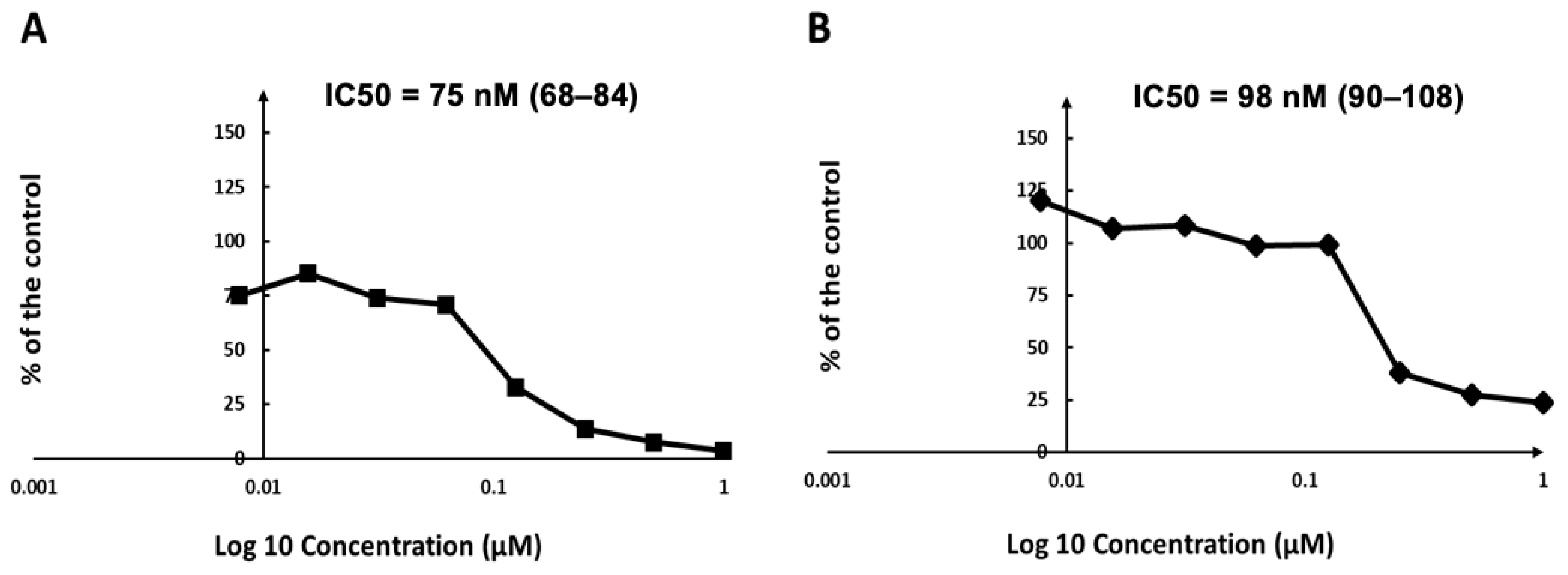
| Tyrothricin | 83 ± 12 | 62 ± 10 | 49 ± 5 | 3 ± 2 |
| LL-37 | 111 ± 15 | 129 ± 17 | 95 ± 11 | 89 ± 3 |
| BMAP-18 | 111 ± 16 | 96 ± 11 | 107 ± 6 | 103 ± 7 |
| Neg. Control | Solvent Control | Pos. Control BKI-1750 | Tyrothricin | ||||
|---|---|---|---|---|---|---|---|
| Conc. (µM) | 50 | 20 | 10 | 1 | 0.2 | ||
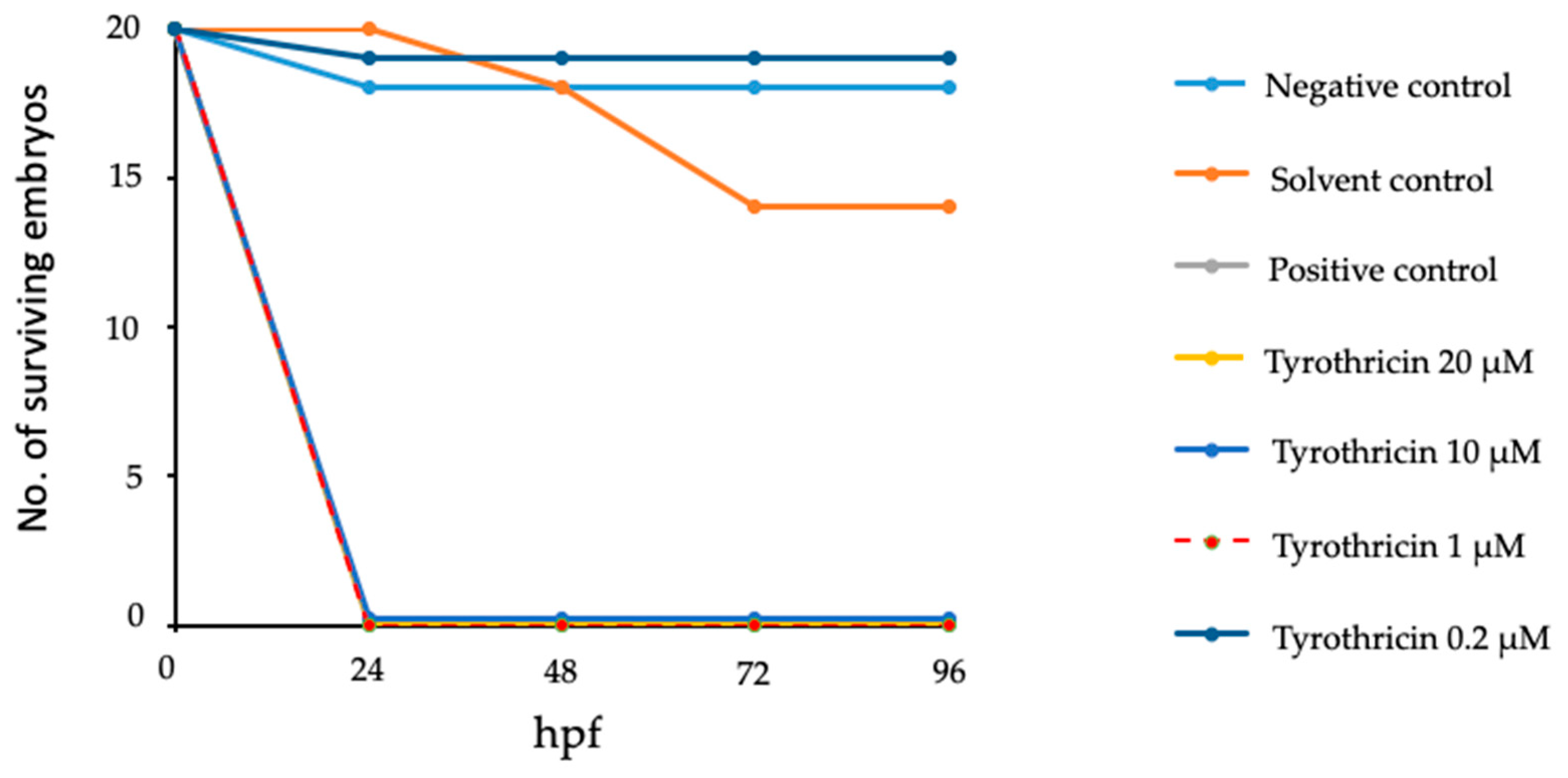
| Mortality | 2/20 | 3/20 | 20/20 | 20/20 | 20/20 | 20/20 | 1/20 |
| Malformations | 4/20 | 3/20 | 0/20 | 0/20 | 0/20 | 0/20 | 0/20 |
| Non-affected | 14/20 | 14/20 | 0/20 | 0/20 | 0/20 | 0/20 | 19/20 |
| HFF | T. gondii β-Gal | |||
|---|---|---|---|---|
| Viability | Proliferation | |||
| 0.1 μM | 1 μM | 0.1 μM | 1 μM | |
| Gramicidin A | 108 ± 19 | 115 ± 0 | 107 ± 19 | 118 ± 8 |
| Tyrocidine A | 30 ± 9 | 22 ± 8 | 81 ± 20 | 9 ± 5 |
| Negative Control | Solvent Control | Tyrocidine A | Gramicidin A | |||||||
|---|---|---|---|---|---|---|---|---|---|---|
| Conc. (µM) | 20 | 10 | 1 | 0.2 | 20 | 10 | 1 | 0.2 | ||
| Mortality | 2/20 | 3/20 | 20/20 | 20/20 | 20/20 | 4/20 | 0/20 | 0/20 | 0/20 | 0/20 |
| Malformations | 4/20 | 3/20 | 0/20 | 0/20 | 0/20 | 1/20 | 4/20 | 0/20 | 0/20 | 0/20 |
| Non-affected | 14/20 | 14/20 | 0/20 | 0/20 | 0/20 | 15/20 | 16/20 | 20/20 | 20/20 | 20/20 |
| ToxoDB ORF | Annotation | rAbu |
|---|---|---|
| TGME49_285870 | SAG-related sequence SRS20A | 89 |
| TGME49_221620 | beta-tubulin, putative | 8 |
| TGME49_250770 | eukaryotic initiation factor-4A, putative | 3 |
| TGME49_261740 | hypothetical protein | 1 |
| ToxoDB ORF | Annotation | rAbu |
|---|---|---|
| TGME49_270250 | dense granule protein GRA1 | 8.4 |
| TGME49_297810 | hypothetical protein (cytochrome c oxidase subunit ApiCOX30) | 3.8 |
| TGME49_229480 | calcium binding protein precursor, putative | 3.3 |
| TGME49_315320 | SAG-related sequence SRS52A | 3.3 |
| TGME49_233480 | SAG-related sequence SRS29C | 2.7 |
| TGME49_263300 | voltage-dependent anion-selective channel protein | 2.3 |
| TGME49_308840 | SAG-related sequence SRS51 | 1.9 |
| TGME49_211680 | protein disulfide isomerase | 1.5 |
| TGME49_268850 | enolase 2 | 1.4 |
| TGME49_214940 | MIC2-associated protein M2AP | 1.3 |
| TGME49_308020 | SAG-related sequence SRS57 | 1.3 |
| TGME49_232350 | lactate dehydrogenase LDH1 | 1.2 |
| TGME49_214080 | Toxofilin | 1.2 |
| TGME49_204530 | microneme protein MIC11 | 1.0 |
| TGME49_236040 | fructose-1,6-bisphosphate aldolase | 1.0 |
| TGME49_208370 | dense granule protein GRA46 | 1.0 |
| TGME49_258660 | rhoptry protein ROP6 | 0.9 |
| TGME49_221510 | cytochrome c oxidase subunit ApiCOX18 | 0.9 |
| TGME49_224900 | adenylate kinase, putative | 0.9 |
| TGME49_255260 | apical membrane antigen AMA1 | 0.9 |
Disclaimer/Publisher’s Note: The statements, opinions and data contained in all publications are solely those of the individual author(s) and contributor(s) and not of MDPI and/or the editor(s). MDPI and/or the editor(s) disclaim responsibility for any injury to people or property resulting from any ideas, methods, instructions or products referred to in the content. |
© 2026 by the authors. Licensee MDPI, Basel, Switzerland. This article is an open access article distributed under the terms and conditions of the Creative Commons Attribution (CC BY) license.
Share and Cite
Amdouni, Y.; Boubaker, G.; Müller, J.; Sousa, M.C.F.d.; Hänggeli, K.P.A.; Uldry, A.-C.; Braga-Lagache, S.; Heller, M.; Hemphill, A. Potential Molecular Targets of the Broad-Range Antimicrobial Peptide Tyrothricin in the Apicomplexan Parasite Toxoplasma gondii. Biomedicines 2026, 14, 172. https://doi.org/10.3390/biomedicines14010172
Amdouni Y, Boubaker G, Müller J, Sousa MCFd, Hänggeli KPA, Uldry A-C, Braga-Lagache S, Heller M, Hemphill A. Potential Molecular Targets of the Broad-Range Antimicrobial Peptide Tyrothricin in the Apicomplexan Parasite Toxoplasma gondii. Biomedicines. 2026; 14(1):172. https://doi.org/10.3390/biomedicines14010172
Chicago/Turabian StyleAmdouni, Yosra, Ghalia Boubaker, Joachim Müller, Maria Cristina Ferreira de Sousa, Kai Pascal Alexander Hänggeli, Anne-Christine Uldry, Sophie Braga-Lagache, Manfred Heller, and Andrew Hemphill. 2026. "Potential Molecular Targets of the Broad-Range Antimicrobial Peptide Tyrothricin in the Apicomplexan Parasite Toxoplasma gondii" Biomedicines 14, no. 1: 172. https://doi.org/10.3390/biomedicines14010172
APA StyleAmdouni, Y., Boubaker, G., Müller, J., Sousa, M. C. F. d., Hänggeli, K. P. A., Uldry, A.-C., Braga-Lagache, S., Heller, M., & Hemphill, A. (2026). Potential Molecular Targets of the Broad-Range Antimicrobial Peptide Tyrothricin in the Apicomplexan Parasite Toxoplasma gondii. Biomedicines, 14(1), 172. https://doi.org/10.3390/biomedicines14010172