Article

The Potential Diagnostic Utility of SMAD4 and ACCS in the Context of Inflammation in Type 2 Diabetes Mellitus Patients

by
Habiba Khdair Abdalsada
1,
Yusra Sebri Abdulsaheb
2,
Samaneh Zolghadri
3,
Hussein Kadhem Al-Hakeim
4,* and
Agata Stanek
5,*
1
Department of Clinical Laboratory Sciences, College of Pharmacy, Al-Muthanna University, Al-Muthanna 66001, Iraq
2
Clinical Pharmacy Department, College of Pharmacy, Missan University, Missan 62001, Iraq
3
Department of Biology, Jahrom Branch, Islamic Azad University, Jahrom 7414785318, Iran
4
Department of Chemistry, Faculty of Science, University of Kufa, Najaf 54001, Iraq
5
Department and Clinic of Internal Medicine, Angiology and Physical Medicine, Faculty of Medical Sciences in Zabrze, Medical University of Silesia, Batorego 15 St, 41-902 Bytom, Poland
*
Authors to whom correspondence should be addressed.
Biomedicines 2024, 12(9), 2015; https://doi.org/10.3390/biomedicines12092015

Submission received: 30 July 2024 / Revised: 24 August 2024 / Accepted: 30 August 2024 / Published: 4 September 2024

Abstract

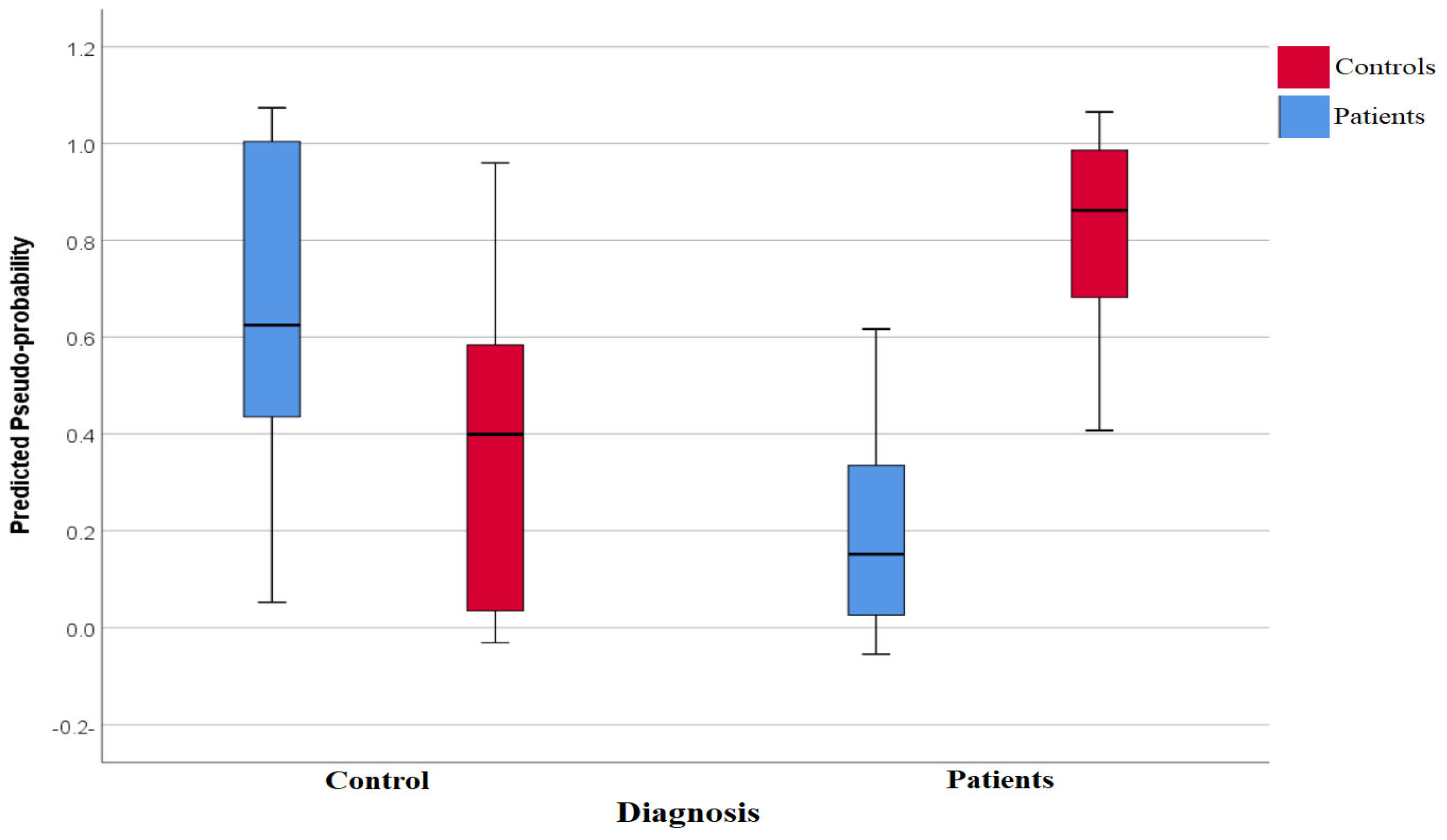
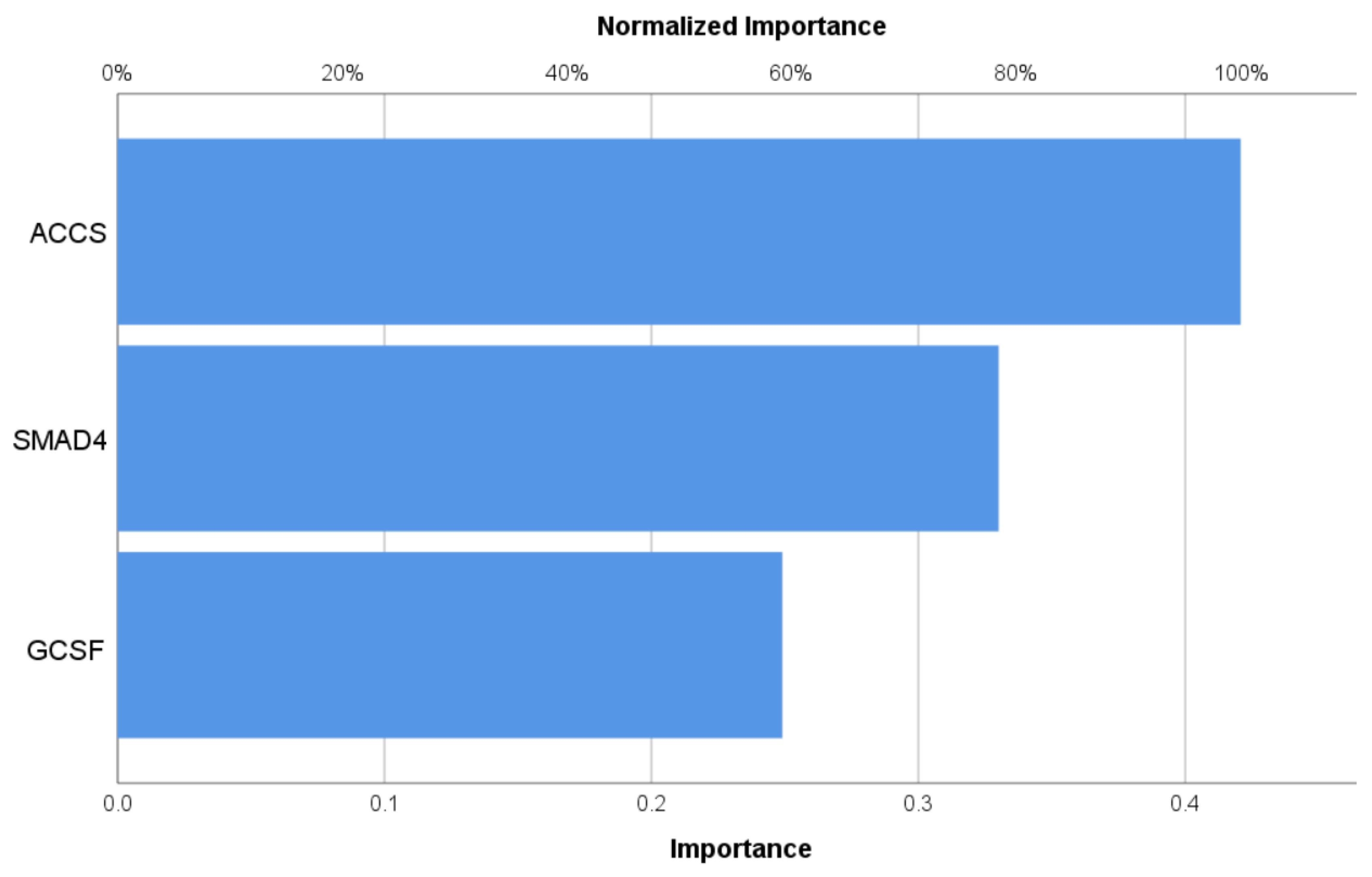
The search for new parameters for the prediction of type 2 diabetes mellitus (T2DM) or its harmful consequences remains an important field of study. Depending on the low-grade inflammatory nature of diabetes, we investigated three proteins in T2DM patients: 1-aminocyclopropane-1-carboxylate synthase (ACCS), granulocyte–colony-stimulating factor (G-CSF), and Sma Mothers Against Decapentaplegic homolog-4 (SMAD4). In brief, sixty T2DM and thirty healthy controls had their serum levels of ACCS, G-CSF, SMAD4, and insulin tested using the ELISA method. The insulin resistance (IR) parameter (HOMA2IR), beta-cell function percentage (HOMA2%B), and insulin sensitivity (HOMA2%S) were all determined by the Homeostasis Model Assessment-2 (HOMA2) calculator. The predictability of these protein levels was investigated by neural network (NN) analysis and was associated with measures of IR. Based on the results, ACCS, G-CSF, and SMAD4 increased significantly in the T2DM group compared with the controls. Their levels depend on IR status and inflammation. The multivariate GLM indicated the independence of the levels of these proteins on the covariates or drugs taken. The receiver operating characteristic area under the curve (AUC) for the prediction of T2DM using NN analysis is 0.902, with a sensitivity of 71.4% and a specificity of 93.8%. The network predicts T2DM well with predicted pseudoprobabilities over 0.5. The model’s predictive capability (normalized importance) revealed that ACCS is the best model (100%) for the prediction of T2DM, followed by G-CSF (75.5%) and SMAD4 (69.6%). It can be concluded that ACCS, G-CSF, and SMAD4 are important proteins in T2DM prediction, and their increase is associated with the presence of inflammation.
Keywords: Sma mothers against decapentaplegic homolog-4 (SMAD4); 1-aminocyclopropane-1-carboxylate synthase (ACCS); granulocyte–colony-stimulating factor (G-CFS); diabetes mellitus; insulin resistance Sma mothers against decapentaplegic homolog-4 (SMAD4); 1-aminocyclopropane-1-carboxylate synthase (ACCS); granulocyte–colony-stimulating factor (G-CFS); diabetes mellitus; insulin resistance