Article

Understanding Neuropathy Features in the Context of Nitrous Oxide Abuse: A Combined Electrophysiological and Metabolic Approach


1
Biology Center, Biochemistry Department, Lille University Hospital, 59000 Lille, France
2
IMPact de l’Environnement Chimique sur la Santé (IMPECS), University of Lille, 59000 Lille, France
3
Reference Center for Neuromuscular Diseases, Neurology Department, Lille University Hospital, 59000 Lille, France
4
Neurophysiology Department, Lille University Hospital, 59000 Lille, France
5
Emergency Department, Lille University Hospital, 59000 Lille, France
*
Author to whom correspondence should be addressed.
Biomedicines 2024, 12(2), 429; https://doi.org/10.3390/biomedicines12020429

Submission received: 30 January 2024 / Revised: 8 February 2024 / Accepted: 10 February 2024 / Published: 14 February 2024
(This article belongs to the Section Drug Discovery, Development and Delivery)

Abstract

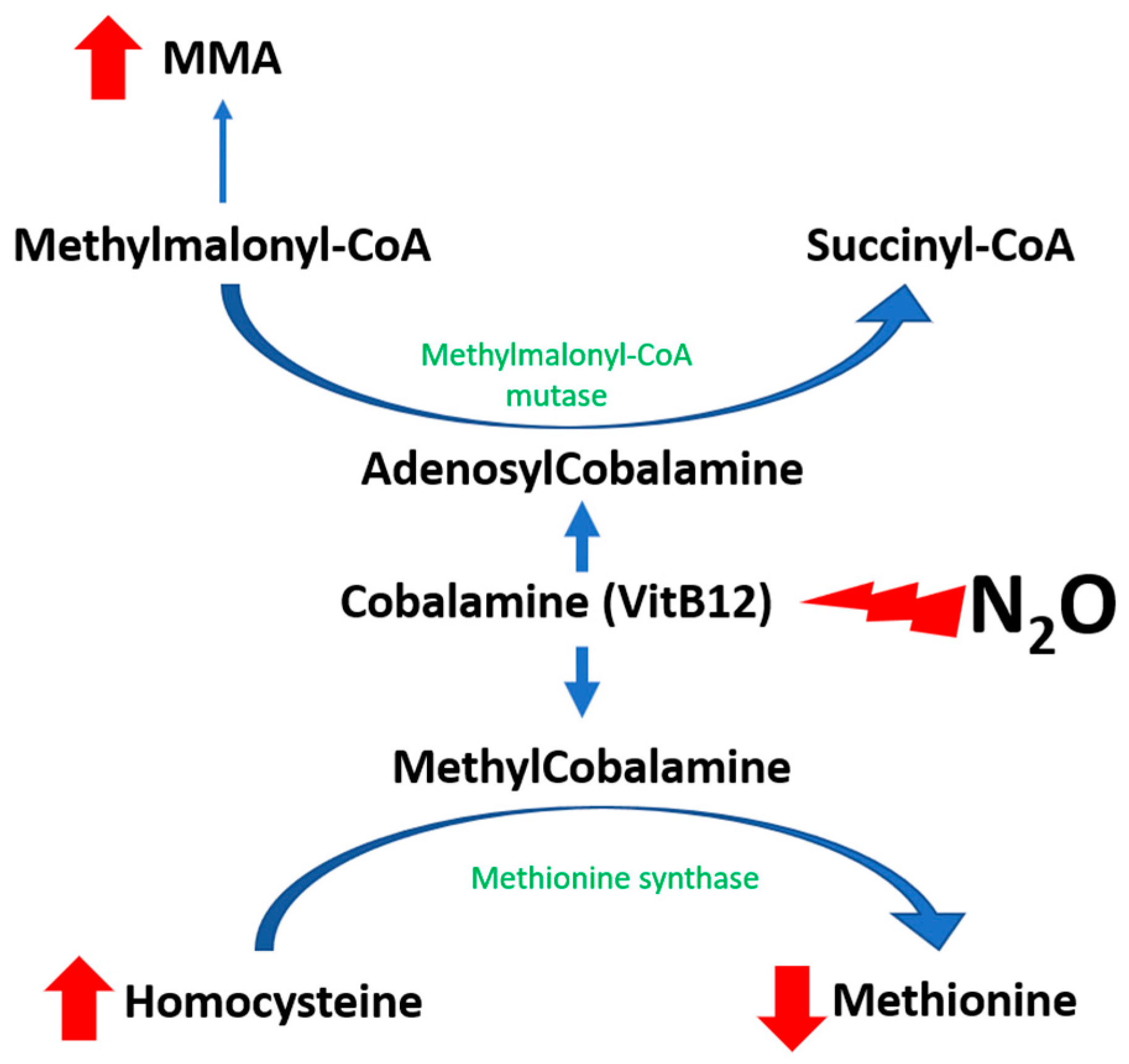
Background: The incidence of neurological complications associated with nitrous oxide (N2O) abuse, including N2O-induced myelopathy and neuropathy, has risen in the past decade. N2O-induced neuropathy often presents as a subacute axonal pathology; however, demyelinating patterns mimicking Guillain–Barré syndrome have also been observed. This study explores the metabolic pathophysiology of N2O-induced neuropathy, focusing on the alteration in metabolism to provide a deeper understanding of the biochemical pathways influencing the diverse electrophysiological patterns observed. Methods: We conducted a combined metabolic and electrophysiological exploration of 35 patients who underwent electromyographic exams at our referral center over a three-year period for sensorimotor symptoms linked to recreational N2O use. We collected demographic, clinical, radiological, electrophysiological, and biological data. Patients were categorized into axonal or demyelinating groups based on their electrophysiological patterns, and metabolic parameters were compared. Results: Our cohort predominantly exhibited a length-dependent sensorimotor axonal symmetrical neuropathy affecting the lower limbs. Among the patients, 40% met the demyelinating criteria, with four patients exhibiting conduction blocks. The demyelinating group had a significantly higher peripheral neuropathy disability (PND) score at diagnosis. Elevated homocysteine and methylmalonic acid (MMA) levels were noted in all patients, but these were lower in the demyelinating group. Conclusions: This study highlights the diverse electrophysiological manifestations of N2O-induced neuropathy and underscores the potential role of metabolic parameters as biomarkers to understand its pathophysiology. Lower hyperhomocysteinemia and MMA levels were observed in demyelinating patterns. In this study, we did not observe further improvement, but it is well-known that demyelinating features have a better prognosis related to the further remyelination. These findings contribute to a better understanding of N2O-related neuropathic damage and could guide future therapeutic interventions based on biochemical–neurophysiological stratifications.
Keywords: nitrous oxide; neurological damage; metabolism; cobalamin; homocysteine; methylmalonic acid; neurology nitrous oxide; neurological damage; metabolism; cobalamin; homocysteine; methylmalonic acid; neurology