Review

Microbiota Orchestra in Parkinson’s Disease: The Nasal and Oral Maestros

1
Egas Moniz Center for Interdisciplinary Research (CiiEM), Egas Moniz School of Health and Science, Campus Universitário, Quinta da Granja, 2829-511 Monte de Caparica, Portugal
2
Department of Neurology, Hospital Garcia de Orta EPE (HGO), 2805-267 Almada, Portugal
3
Department of Gastroenterology, Hospital Garcia de Orta EPE (HGO), 2805-267 Almada, Portugal
*
Author to whom correspondence should be addressed.
Biomedicines 2024, 12(11), 2417; https://doi.org/10.3390/biomedicines12112417

Submission received: 29 August 2024 / Revised: 15 October 2024 / Accepted: 17 October 2024 / Published: 22 October 2024
(This article belongs to the Special Issue Understanding Diseases Affecting the Central Nervous System)

Abstract

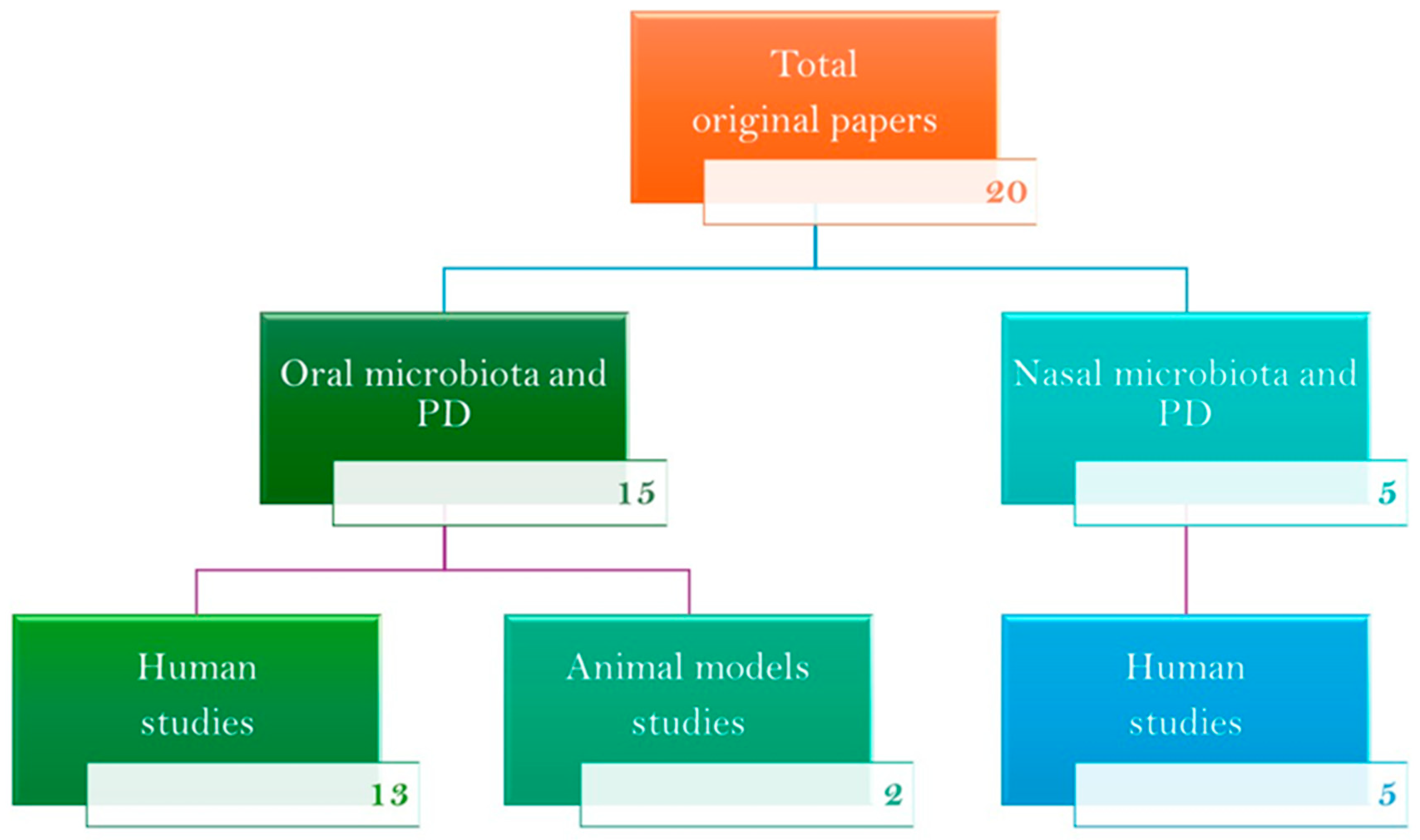
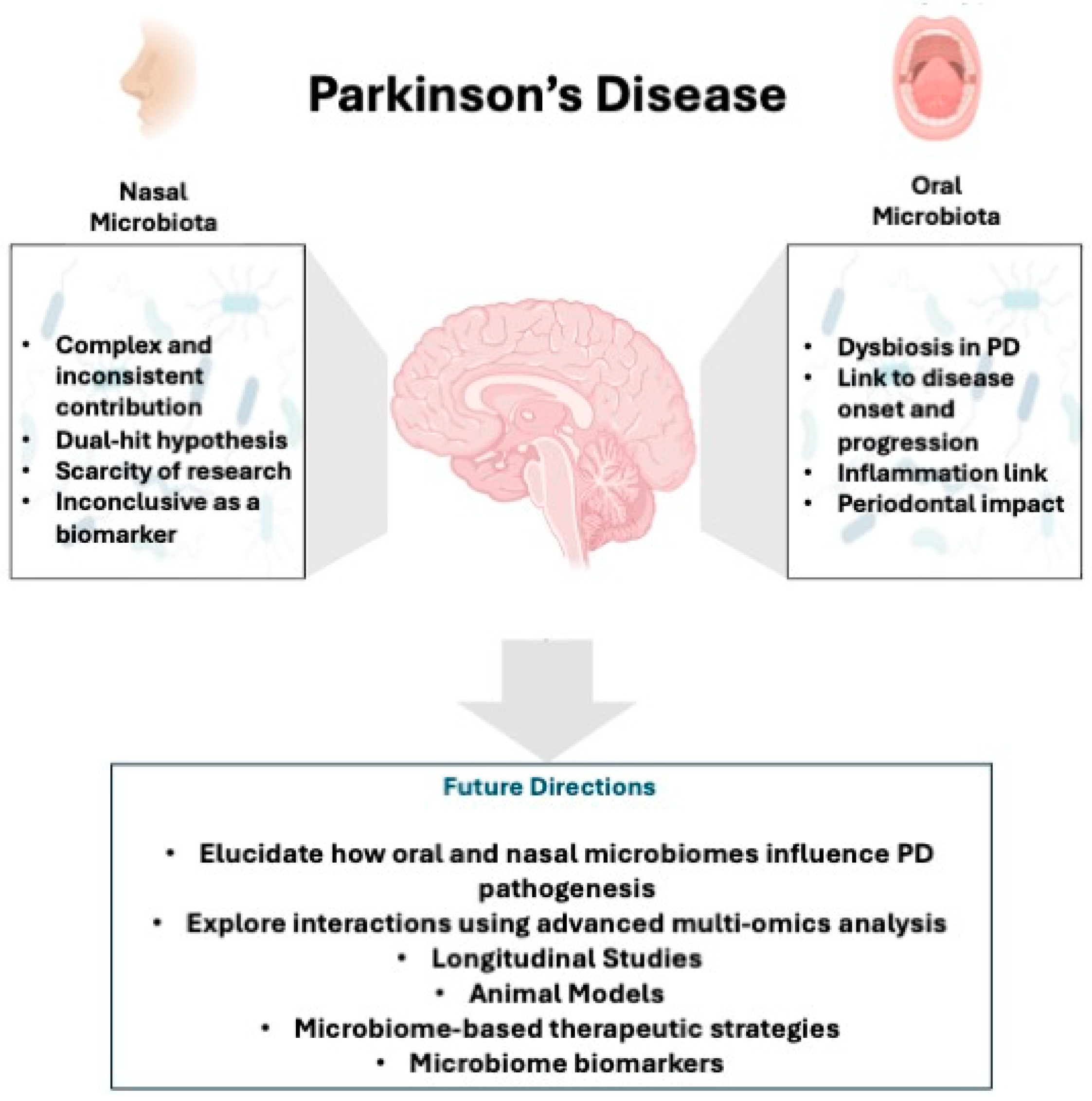
Parkinson’s disease (PD) is characterized by the progressive degeneration of dopaminergic neurons, leading to a range of motor and non-motor symptoms. Background/Objectives: Over the past decade, studies have identified a potential link between the microbiome and PD pathophysiology. The literature suggests that specific bacterial communities from the gut, oral, and nasal microbiota may be involved in neuroinflammatory processes, which are hallmarks of PD. This review aims to comprehensively analyze the current research on the composition, diversity, and dysbiosis characteristics of the nasal and oral microbiota in PD. Methods: Through a comprehensive search across scientific databases, we identify twenty original studies investigating the nasal and oral microbiota in PD. Results: Most of these studies demonstrate the substantial roles of bacterial communities in neuroinflammatory pathways associated with PD progression. They also underscore the influences of microbiota-derived factors on key aspects of PD pathology, including alpha-synuclein aggregation and immune dysregulation. Conclusions: Finally, we discuss the potential diagnostic and therapeutic implications of modulating the nasal and oral microbiota in PD management. This analysis seeks to identify potential avenues for future research in order to clarify the complex relationships between these microorganisms and PD.
Keywords: Parkinson’s disease; nasal microbiota; oral microbiota; microbiome; dysbiosis Parkinson’s disease; nasal microbiota; oral microbiota; microbiome; dysbiosis