Review

Current Perspectives on Olfactory Loss in Atypical Parkinsonisms—A Review Article
by
Katarzyna Bochniak
1,†,
Mateusz Soszyński
1,†,
Natalia Madetko-Alster
2 and
Piotr Alster
2,*
1
Department of Medicine, Faculty of Medicine, Medical University of Warsaw, Żwirki i Wigury 61, 02-091 Warsaw, Poland
2
Department of Neurology, Medical University of Warsaw, Kondratowicza 8, 03-242 Warsaw, Poland
*
Author to whom correspondence should be addressed.
These authors contributed equally to this work.
Biomedicines 2024, 12(10), 2257; https://doi.org/10.3390/biomedicines12102257

Submission received: 20 August 2024 / Revised: 1 October 2024 / Accepted: 1 October 2024 / Published: 4 October 2024
(This article belongs to the Special Issue Pathophysiological Mechanisms of Parkinson's Disease)

Abstract

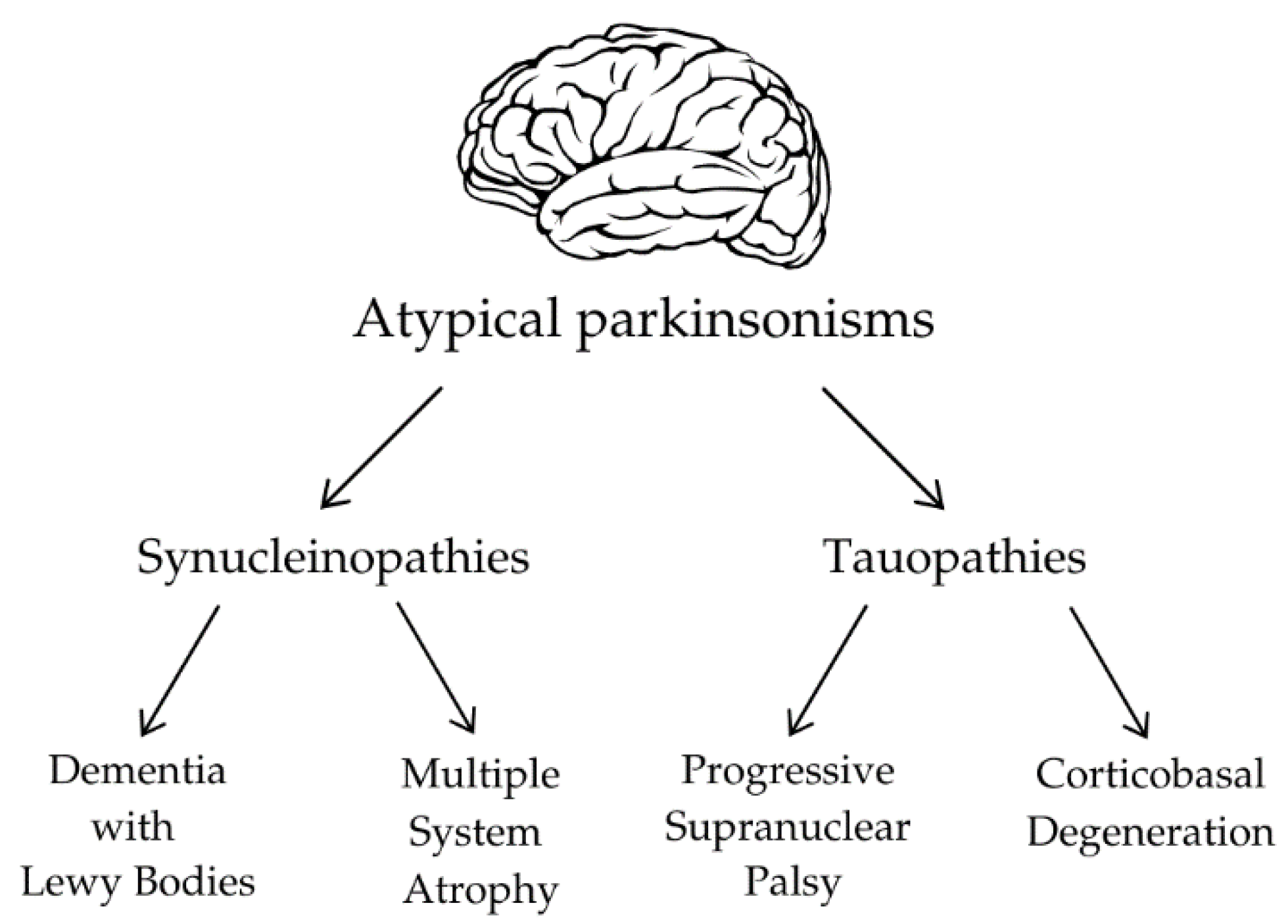
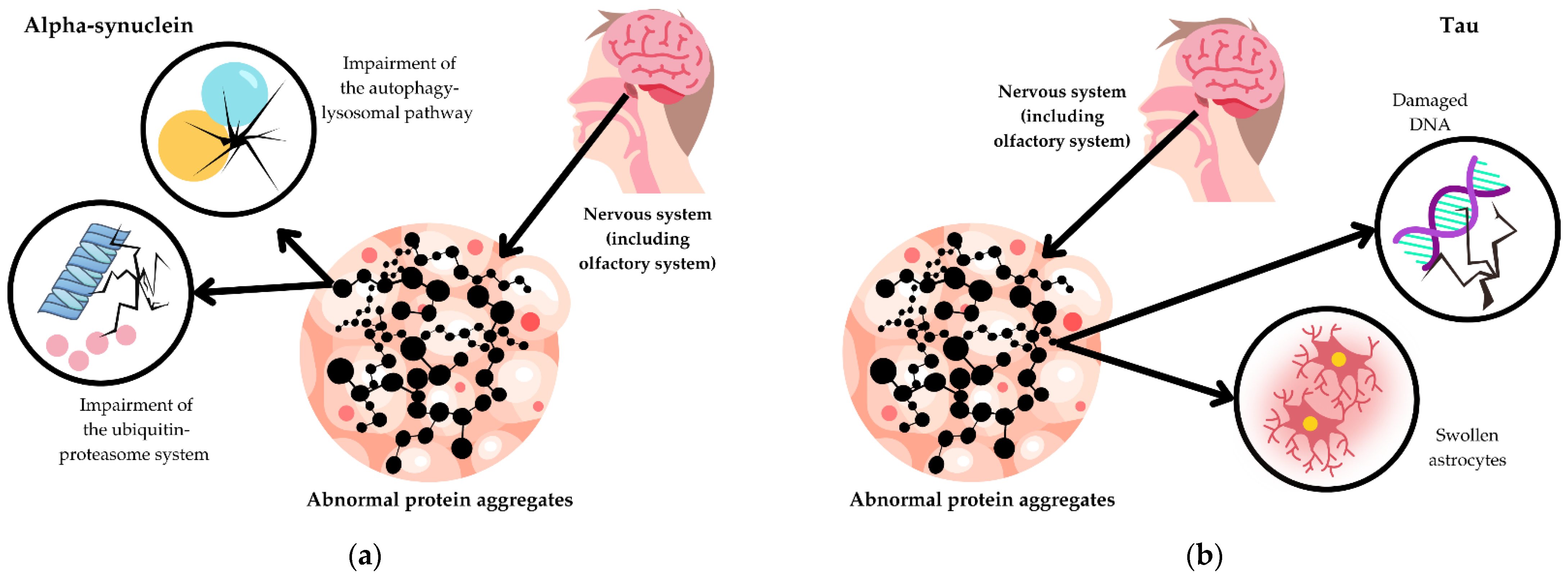
Introduction: Atypical parkinsonisms (APs) present various symptoms including motor impairment, cognitive decline, and autonomic dysfunction. Olfactory loss (OL), being a significant non-motor symptom, has emerged as an under-evaluated, yet potentially valuable, feature that might aid in the differential diagnosis of APs. State of the art: The most pronounced OL is usually associated with Dementia with Lewy Bodies (DLB). While the view about the normosmic course of Multiple System Atrophy (MSA) remains unchanged, research indicates that mild OL may occur in a subset of patients with Progressive Supranuclear Palsy (PSP) and Corticobasal Degeneration (CBD). This might be linked to the deposition of abnormal protein aggregates in the central nervous system. Clinical significance: The aim of this review is to discuss the role of OL and its degree and pattern in the pathogenesis and course of APs. Olfactory testing could serve as a non-invasive, quick screening tool to differentiate between APs and project disease progression. Future directions: There is a need for further evaluation of this topic. This may lead to the development of standardized olfactory testing protocols that could be implemented in clinical practice, making differential diagnosis of APs more convenient. Understanding differences in the sense of smell could create an avenue for more targeted therapeutic strategies.
Keywords: atypical parkinsonisms; dementia with Lewy bodies; multiple system atrophy; progressive supranuclear palsy; corticobasal degeneration; olfactory loss atypical parkinsonisms; dementia with Lewy bodies; multiple system atrophy; progressive supranuclear palsy; corticobasal degeneration; olfactory loss