Perspective

Perspective: Chicken Models for Studying the Ontogenetic Origin of Neuropsychiatric Disorders

by
Xiaohong Huang
1,2,* and
Heng-wei Cheng
2,3
1
Institute of Neuroregeneration & Neurorehabilitation, Department of Pathophysiology, Qingdao University, Qingdao 266071, China
2
Department of Animal Sciences, Purdue University, West Lafayette, IN 47907, USA
3
Livestock Behavior Research Unit, USDA-ARS, West Lafayette, IN 47907, USA
*
Author to whom correspondence should be addressed.
Biomedicines 2022, 10(5), 1155; https://doi.org/10.3390/biomedicines10051155

Submission received: 13 April 2022 / Revised: 13 May 2022 / Accepted: 15 May 2022 / Published: 17 May 2022
(This article belongs to the Special Issue Birds as Model in Biomedical Research)

Abstract

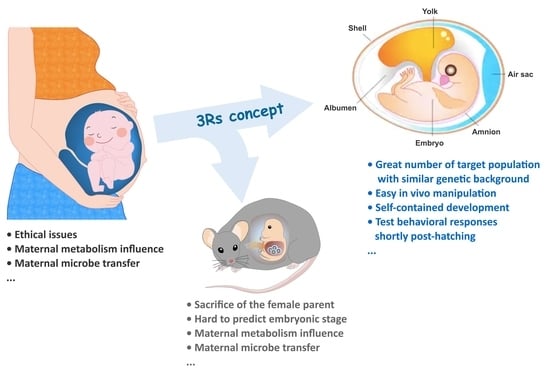
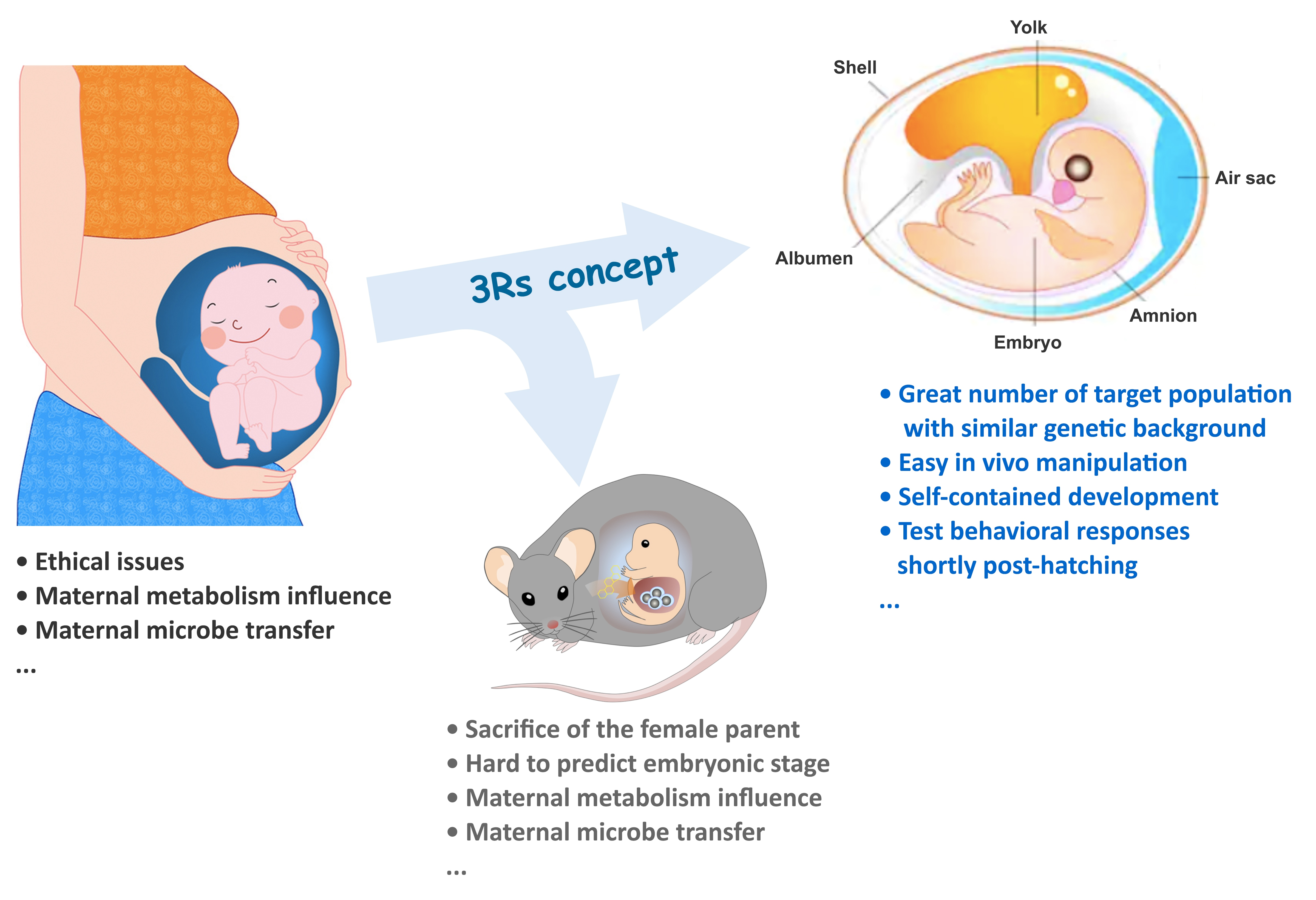
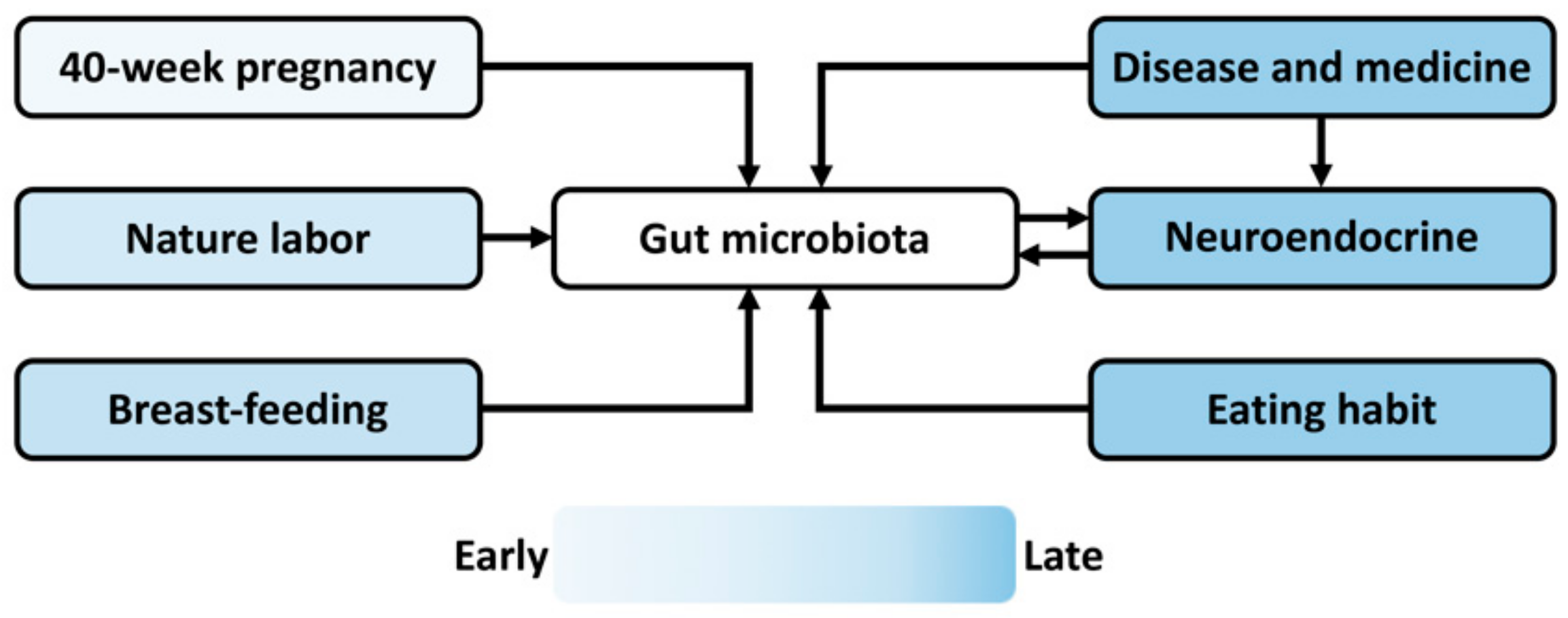
Nutrients and xenobiotics cross the blood–placenta barrier, potentially depositing in the fetal brain. The prenatal exposure affects the neuroendocrine and microbial development. The mechanism underlying maternal risk factors reprograming the microbiota–gut–brain axis with long-term effects on psychosocial behaviors in offspring is not clear. In humans, it is not possible to assess the nutrient or xenobiotic deposition in the fetal brain and gastrointestinal system for ethical reasons. Moreover, the maternal–fetal microbe transfer during gestation, natural labor, and breast-feeding constitutes the initial gut microbiome in the progeny, which is inevitable in the most widely utilized rodent models. The social predisposition in precocial birds, including chickens, provides the possibility to test behavioral responses shortly after being hatched. Hence, chickens are advantageous in investigating the ontogenetic origin of behaviors. Chicken embryos are suitable for deposition assessment and mechanistic study due to the accessibility, self-contained development, uniform genetic background, robust microbiota, and easy in vivo experimental manipulation compared to humans and rodents. Therefore, chicken embryos can be used as an alternative to the rodent models in assessing the fetal exposure effect on neurogenesis and investigating the mechanism underlying the ontogenetic origin of neuropsychiatric disorders.
Keywords: chicken embryo; neurodevelopmental disorders; psychosocial dysfunction; maternal–fetal medicine; microbiota–gut–brain axis; nonclinical safety study chicken embryo; neurodevelopmental disorders; psychosocial dysfunction; maternal–fetal medicine; microbiota–gut–brain axis; nonclinical safety study
Graphical Abstract