Article

Unmet Need for Oral Corticosteroids Use and Exacerbations of Asthma in Primary Care in Taiwan

1
Departments of Chest Medicine, Taipei Veterans General Hospital, Taipei 11217, Taiwan
2
School of Medicine, National Yang Ming Chiao Tung University, Taipei 30010, Taiwan
3
Institute of Clinical Medicine, National Yang Ming Chiao Tung University, Taipei 30010, Taiwan
*
Author to whom correspondence should be addressed.
These authors contributed equally to this work.
Biomedicines 2022, 10(12), 3253; https://doi.org/10.3390/biomedicines10123253

Submission received: 27 October 2022 / Revised: 28 November 2022 / Accepted: 6 December 2022 / Published: 14 December 2022
(This article belongs to the Section Drug Discovery, Development and Delivery)

Abstract

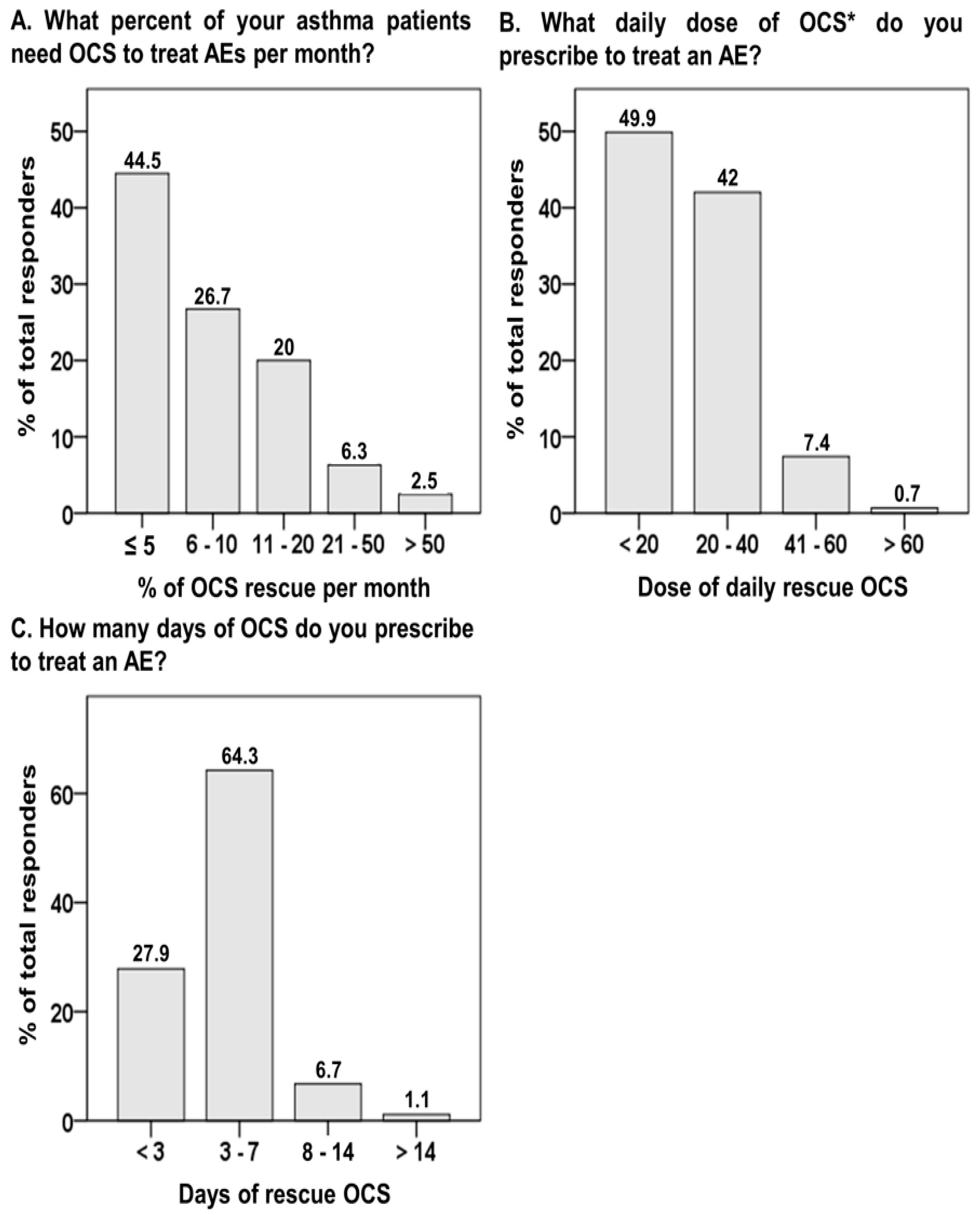
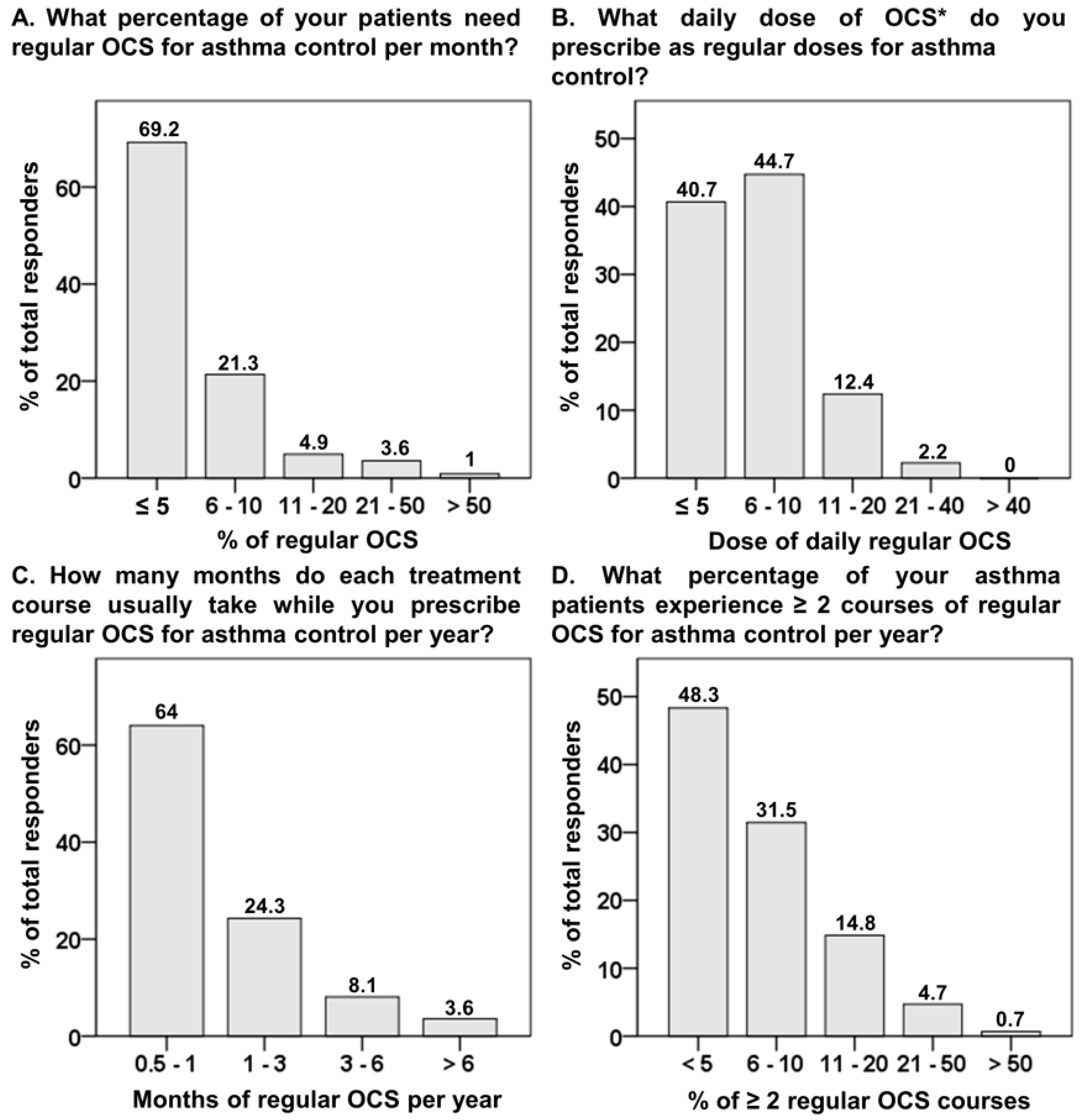
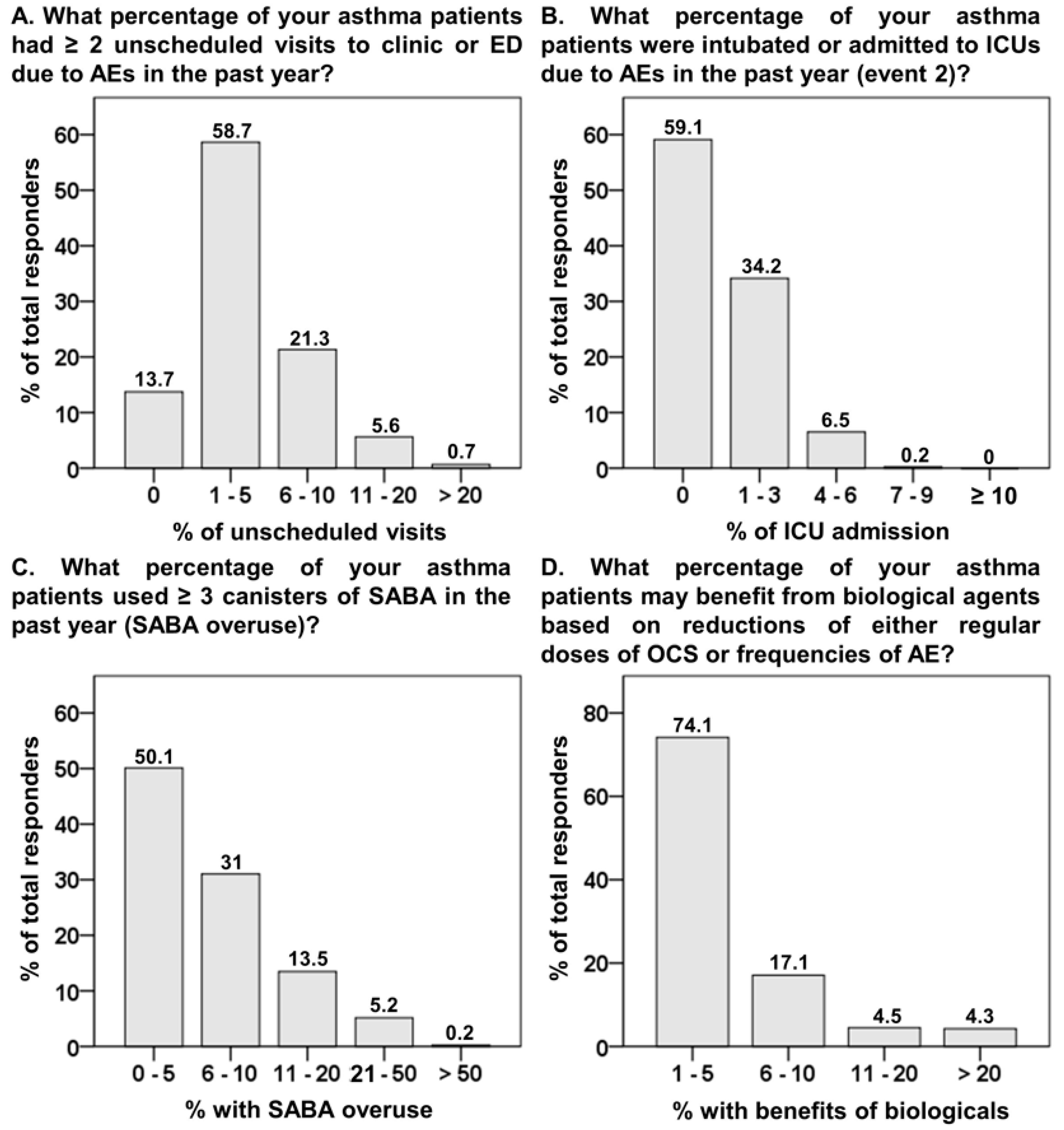
Patients with asthma are treated in primary healthcare facilities (PHCFs) in Taiwan, where the asthma control status associated with acute exacerbation (AE) and use of oral corticosteroids (OCS) and short-acting β2-agonist (SABA) inhalers remains unclear. A cross-sectional, close-ended, face-to-face questionnaire survey invited board-certified physicians who treat adult asthma patients in PHCFs. The contents of the questionnaire included three parts: rescue OCS to treat AE, regular OCS for asthma control, and AE-related adverse outcomes. There were 445 out of 500 physicians who completed the questionnaire, with 61% of them being non-pulmonologists. A substantial proportion of asthma patients needed rescue OCS or regular OCS each month, or ≥3 canisters of SABA inhalers per year. Approximately 86% of physicians reported their patients with ≥2 AE-related unscheduled visits to clinics or emergency departments in the past year. A total of 41% of physicians reported their patients receiving intubation or intensive care in the past year. A total of 92% of physicians prescribed rescue OCS ≤ 40 mg/day. A total of 92% of physicians prescribed rescue OCS for a duration of ≤7 days for AEs. A total of 85% of physicians prescribed regular OCS ≤ 10 mg/day for asthma control. This is the first study to present the perceptions of asthma-treating physicians on the use of OCS in PHCFs. In summary, 31% of physicians reported ≥ 6% of their patients needed OCS for asthma control and 41% of physicians reported their patients with adverse outcomes in the past year. Thus, the need to improve asthma control in Taiwan is suggested by our study results.
Keywords: exacerbation; primary healthcare facility; oral corticosteroid; severe asthma; short-acting β2-agonist exacerbation; primary healthcare facility; oral corticosteroid; severe asthma; short-acting β2-agonist