Article

Spectrofluorometric and Colorimetric Determination of Gliquidone: Validation and Sustainability Assessments


by
Lateefa A. Al-Khateeb
1,
Yasmeen G. Abou El-Reash
2,
Abdullah N. Alotaibi
2,
Nuha Y. Elamin
2,
Nouruddin W. Ali
3,
Hala E. Zaazaa
4,
Mohamed Abdelkawy
4,
Maimana A. Magdy
3 and
Mohammed Gamal
3,*
1
Department of Chemistry, Faculty of Science, King Abdulaziz University, P.O. Box 80203, Jeddah 21589, Saudi Arabia
2
Department of Chemistry, College of Science, Imam Mohammad Ibn Saud Islamic University (IMSIU), P.O. Box 90950, Riyadh 11623, Saudi Arabia
3
Pharmaceutical Analytical Chemistry Department, Faculty of Pharmacy, Beni-Suef University, Alshaheed Shehata Ahmad Hegazy St., Beni-Suef 62514, Egypt
4
Pharmaceutical Analytical Chemistry Department, Faculty of Pharmacy, Cairo University, Kasr-El-Aini, Cairo 11562, Egypt
*
Author to whom correspondence should be addressed.
Chemosensors 2025, 13(11), 382; https://doi.org/10.3390/chemosensors13110382
Submission received: 2 September 2025 / Revised: 23 October 2025 / Accepted: 29 October 2025 / Published: 30 October 2025
(This article belongs to the Section Analytical Methods, Instrumentation and Miniaturization)

Abstract

Two novel, simple, and sensitive methods for the assay of Gliquidone (GLI) were developed and validated in various matrices, including raw material, Glurenor®® tablets, and spiked human plasma (spectrofluorometric approach only). The first method employs spectrofluorimetry to measure GLI fluorescence emission at 404 nm upon excitation at 311 nm, using a solvent mixture of phosphate buffer (pH 4), β-cyclodextrin, and methanol. The second one was colorimetric, based on GLI’s reaction with 7,7,8,8-tetracyanoquinodimethane (TCNQ) in acetone, forming a stable colored product whose absorbance was quantitatively measured at 745.5 nm. The spectrofluorometric approach showed a linear range of 0.05–0.45 µg·mL−1 with a mean recovery of 100.43 ± 0.88%, while the colorimetric method demonstrated a broader linear range (20–200 µg·mL−1) and mean recovery of 101.10 ± 1.27%. GLI and TCNQ react in a 1:1 ratio at 1.7 × 10⁻² M concentrations. Both methods were successfully applied without excipient interference. Sustainability, practicality, and performance (validation) assessments (AGREE, BAGI, and RAPI) favored the spectrofluorometric method due to higher sensitivity, a broader working range, lower detection limits, and better overall practical and environmental performance. In conclusion, the spectrofluorometric approach offers high sensitivity and precision, while the colorimetric one provides a wider linear range and greater complex stability.

1. Introduction

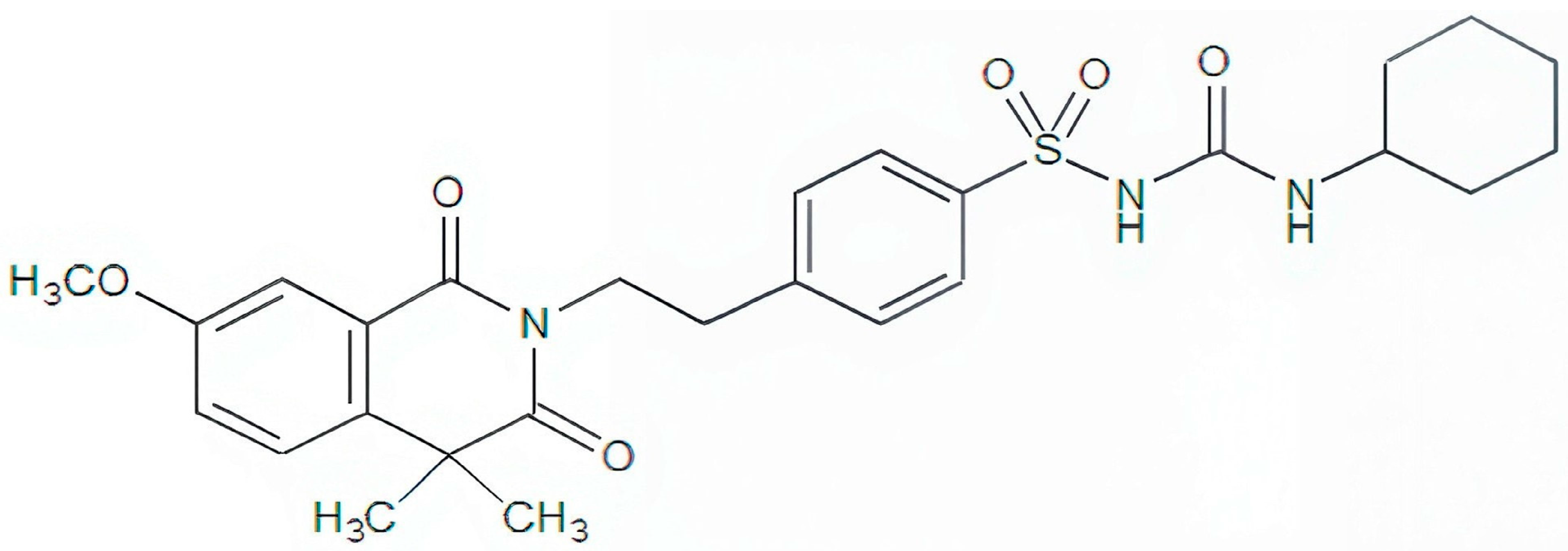
Gliquidone (GLI) is 1-cyclohexyl-3-p-[2-(3,4-dihydro-7-methoxy-4,4-dimethyl-1,3-dioxo2(1H)-isoquinolyl)ethyl]phenylsulphonylurea [1], Figure 1. It is a sulphonylurea hypoglycemic drug, an oral medication for the management of non-insulin-dependent diabetes mellitus via stimulating the production of insulin from the pancreas and promoting the movement of sugar molecules from plasma into the desired biological cell. It is absorbed from the gastrointestinal tract, bound to plasma proteins, and metabolized in the liver, with its metabolites having no significant hypoglycemic effect [2].
Figure 1 depicts the GLI chemical structure, with the molecular formula C27H33N3O6S and a molar mass of 527.64 g/mol. The main functional groups present in GLI are methoxy, ketone groups, sulfonylurea group, which collectively contribute to its pharmacological activity as an oral hypoglycemic agent used effectively in the management of type 2 diabetes. These distinct functional groups are essential for its interaction with pancreatic beta-cell receptors to stimulate insulin release [2].
Several methods for the assay of GLI have been reported in the literature, including spectrophotometric [3,4], TLC-densitometric [5,6,7], HPLC [6,7,8,9,10,11,12,13,14,15,16], LC–MS, and LC–MS/MS techniques [17,18,19,20,21]. At 311 nm, GLI has a moderate ultraviolet (UV) absorbance, according to the British Pharmacopoeia (BP), in contrast to its zero-order UV absorption at 225 nm. Moderate UV absorbance offers improved selectivity whereas strong absorption at 225 nm provides higher sensitivity [3]. The sensitivity of the reported spectrophotometric method based on GLI absorption at 225 nm is very good [3], offering a linear range of 2–20 µg/mL. However, the selectivity of the method was very limited, as neither testing for optional interfering drugs nor detection of impurities or degradation products was conducted [3]. Numerous GLI complexes that included various divalent cations and Fe(III) were examined in methanol to determine how GLI interacts with trace minerals found in the human body or with medications taken in conjunction with multivitamin supplementation [4]. Despite their reliability and efficiency, all reported chromatographic approaches present some limitations: TLC-densitometry suffers from susceptibility to environmental variables and the use of toxic solvents such as chloroform and cyclohexane, while HPLC, though robust, suffers from high costs, energy consumption, and the utility of non-sustainable organic solvents [5,6,7,8,9,10,11,12,13,14,15,16]. Even the highly sensitive LC-MS and LC-MS/MS hyphenated techniques are limited by substantial cost, complexity, pronounced energy consumption if compared to the spectrophotometric ones, and a demanding need for professionals for their operation [17,18,19,20,21]. The determination of GLI in both the drug material and the marketed formulation has been conducted through the development and validation of a stability-demonstrating derivative synchronous spectrofluorometric procedure as well as normal fluorescence [22]. In concentration levels of 0.2–3 μg/mL, the standard spectrofluorometric approach for GLI in methanol was set up using excitation and emission wavelengths at 225 and 400 nm, respectively [22].
To assess sustainability and efficacy in analytical methods, it is necessary to attain a balance between three essential directions: (A) ecological impact, which is achieved by adhering to Green Analytical Chemistry (GAC) codes [23,24,25,26,27], which is measured using the Analytical GREEnness Metric Approach (AGREE) approach [28]; (B) practicality, which encompasses economic feasibility and rapid rate of throughput, which is evaluated using the Blue Applicability Grade Index (BAGI) [29]; and (C) performance, which is characterized by high figures of merit for validation parameters, which is measured using the Red Analytical Performance Index (RAPI) [30]. Noteworthy, the validation of analytical methods has traditionally concentrated heavily on performance measurements while ignoring ecological factors. A computerized analytical ecological evaluation approach, the AGREE tool [28,31] can be used with reliability and simplicity while adhering to the 12 values of green analytical chemistry. BAGI tool [29] presents an innovative approach to evaluating analytical techniques’ applicability and usefulness by centering on the functional features of white analytical chemistry instead of the more common green metrics. Analytical techniques, sample throughput, reagent and material use, predetermination stages, automation levels, sample volume requirements, types of analyses (single or multi-level identity), and analytical techniques all figure prominently among the ten criteria that make up the evaluation process. The Red Analytical Performance Index’s (RAPI) purpose [30] is to assess analytical processes using 10 established criteria. This innovative approach offers a thorough assessment of the unique features of method validation. Additionally, RAPI allows for the quick identification of shortcomings in validation parameters.
This work aims to present sensitive, simple, direct, accurate, precise, cheap, and less time-consuming colorimetric and spectrofluorometric approaches compared to reported analytical approaches for the assay of GLI in pure material, pharmaceutical tablets, and human plasma. The presented colorimetric and spectrofluorometric approaches for GLI offer significant improvements over previously reported ones by combining high sensitivity, accuracy, and cost-effectiveness with remarkable simplicity. These methods demonstrate enhanced greenness and convenient practicality, as confirmed by comprehensive AGREE, BAGI, and RAPI assessments. The spectrofluorometric assay of GLI relies on measuring emission at 404 nm upon excitation at 311 nm in a methanol-based solution containing phosphate buffer (pH 4) and the cyclic surfactant β-cyclodextrin, while the colorimetric method employs TCNQ chromogen for stable color development whose absorbance was measured at 745.5 nm—together providing accurate, reliable alternatives to more complex, energy-consuming, and costly chromatographic techniques.

2. Experimental

2.1. Apparatuses

A. A Shimadzu UV-1601 PC spectrophotometer (Kyoto, Japan) equipped with a 1 cm quartz cell was used, operating with UVPC software (version 3.7), a scanning speed of 2800 nm/min, and a spectral bandwidth of 2 nm.
B. A Jasco FP-6200 spectrofluorimeter (Tokyo, Japan) equipped with a xenon discharge lamp, excitation and emission grating monochromator model, and a 1 cm quartz cuvette was used, operated by a Pentium IV personal computer unit. The instrumental settings were: excitation bandwidth 5 nm, emission bandwidth 10 nm, medium sensitivity, and response time 0.02 s.
Additional equipments included an ultracentrifuge (Model 80-2, 4000 rpm, Haimen, China), a thermostatic water bath (PolyScience®®, TUV, Model 20L-M), and a digital pH meter (JENCO Electronics Ltd., Grand Prairie, TX, USA, Model 671P).

2.2. Materials

(a)
Pure standard
GLI was obtained from Minapharm Company (Heliopolis, Cairo, Egypt) as a gift sample. Its purity was > 99% as concluded by the reference spectrophotometric procedure [3].
(b)
Pharmaceutical formulation
Glurenor®® tablets (Batch No. ALE2857) labeled to have 30 mg of GLI, produced by Minapharm Company (Heliopolis, Cairo, Egypt).
(c)
Chemicals and reagents
Chemicals of analytical grade and solvents of spectroscopic grade were used.
  • Methanol, acetonitrile, and acetone were of HPLC grade.
  • TCNQ (0.35% W/V, 1.7 × 10⁻² M). It is prepared by weighing the desired amount of TCNQ (CHROMASOLV®®, Sigma-Aldrich Chemie GmbH, Seeze, Germany), dissolving in acetone, and diluting to the final volume. The solution should be newly prepared each day.
  • Double-distilled water (Otsoka Pharmaceuticals, Cairo, Egypt).
  • Sodium Hydroxide (0.1 M aqueous solution), sulfuric acid (0.1 M aqueous solution), sodium lauryl sulphate, tween 20, tween 80, potassium di-hydrogen orthophosphate, chloroform, acetone, ethanol and ethyl acetate (El-Nasr Pharmaceutical Chemicals Co., Cairo, Egypt).
  • β-cycloextrin (Sigma-Aldrich Chemie Gmbh, Seeze, Germany).
  • Human plasma was acquired from VACSERA (Giza, Egypt) as a gift.

2.3. Primary and Secondary Standard Solutions

(a)
1 mg·mL−1 in methanol, GLI standard stock solution
GLI (0.1 g) was dissolved in methanol and diluted to 100 mL with methanol in a dry volumetric flask.
(b)
10 μg·mL−1 in methanol, GLI standard working solution
A 1 mL aliquot of the GLI standard stock solution was precisely transferred into a 100 mL volumetric flask and diluted to the mark with methanol.
(c)
Stock standard solution of GLI (1.7 × 10⁻² M) for the assessment of stoichiometry of the reaction
GLI (2.5 mg) was weighed, transferred into a 50 mL volumetric flask, dissolved in methanol, and diluted to volume.

3. Descriptions of Procedures and Methods

3.1. Spectrofluorometric Method

Aliquots (0.05–4.5 mL) of the GLI working solution (10 μg mL−1), corresponding to 0.5–45 μg of GLI, were pipetted into a set of 10 mL volumetric flasks. Then, 1 mL of phosphate buffer (pH 4) and 1 mL of 0.1% β-cyclodextrin were added to each solution. Finally, the remaining volume was completed using methanol. The fluorescence intensities were assessed for GLI at λ emission 404 nm using λ excitation 311 nm against a suitable blank. The blank solution was composed of 1 mL phosphate buffer (pH 4), 1 mL of 0.1% β-cyclodextrin, and methanol to the 10 mL mark in a 10 mL dry volumetric flask, without adding the GLI working solution. The fluorescence intensity was assessed using a single-wavelength measurement. The fluorescence intensities versus the equivalent concentration levels for GLI were plotted to construct the calibration plot and the regression formula.

3.1.1. Optimization of Factors Affecting the Spectrofluorometric Method

i.
Solvent Selection
The effect of solvent on the fluorescence intensity of GLI was explored using water, acetonitrile, methanol, 0.1 M H2SO4, and 0.1 M NaOH. Methanol provided the highest sensitivity and was selected for all subsequent experiments.
ii.
Optimization of Excitation Wavelength
To maximize the sensitivity of the spectrofluorometric approach, various excitation wavelengths (225, 254, 311, and 340 nm) were evaluated. Excitation at 311 nm yielded the optimal results in terms of both the stability and the intensity of the fluorescence signal.
iii.
Effect of pH
The impact of pH on the fluorescence intensity was tested using 1 mL of potassium di-hydrogen phosphate and di-potassium hydrogen phosphate buffers covering a pH range of 2 to 12. The maximum fluorescence intensities were noticed at pH 4, which was consequently chosen for the assay.
iv.
Effect of Surfactants (Micellar Media)
The potential positive effect of micellar formation was investigated using 1 mL of several anionic and non-ionic surfactants, including sodium lauryl sulphate, Tween 20, and Tween 80 [32,33]. Contrary to the expected enhancement, the addition of these surfactants resulted in a significant quenching of the fluorescence signal.
v.
Effect of β-Cyclodextrin
The effect of β-cyclodextrin, which is known to form inclusion complexes with organic solute and potentially enhance its fluorescence, was examined [34,35]. Various volumes (0.2–1.4 mL) of a 0.1% β-cyclodextrin solution were tested. A significant increase in fluorescence intensities was noted, with a maximum enhancement achieved using 1 mL of the β-cyclodextrin solution.

3.1.2. Application of the Spectrofluorometric Approach to Assess GLI in Human Plasma

First, 1 mL blank (drug-free) plasma samples with variable concentration levels of GLI were spiked into a series of 10 mL glass flasks to provide final concentrations from 0.1 to 0.4 μg mL−1, and the volumes were completed using methanol. Vigorous shaking was applied, and then the solutions were centrifuged at 3000 rpm for 15 min. Then, 1 mL of the protein-free supernatant was moved to a set of 10 mL glass flasks, and the aforementioned procedure was applied.

3.2. The Spectrophotometric TCNQ Method

3.2.1. Spectral Characteristics of Gliquidone/TCNQ Reaction Products

Accurately measured volumes of GLI standard stock solution (1 mg·mL−1) equivalent to 500 µg were transferred into a set of 20 mL test tubes sealed with stoppers. To each, 1 mL of a 0.4% TCNQ solution was added, and the volume was adjusted to 7 mL with acetone. The test tubes were placed in a thermostatic water bath set at 80 ± 2 °C for 40 min. Once at ambient temperature, each solution was quantitatively transferred to a 10 mL dry volumetric flask and diluted to the final volume with acetone. The absorbance of the green-colored product was measured against a reagent blank prepared concurrently in the same manner, but without the drug, to correct for background absorbance.

3.2.2. Investigation of Various Items to Optimize Sensitivity and the Reaction Conditions

(i)
Effect of TCNQ concentration
Aliquots of a GLI standard working solution equivalent to 500 µg were transferred into a number of 20 mL test tubes. To each tube, 1 mL of a TCNQ solution at variable concentration levels (ranging from 0.1 to 0.8% w/v) was added, and the aforementioned procedure (Section 3.2.1) was applied. Absorbances of the resultant solutions were measured precisely at 745.5 nm versus a corresponding reagent blank prepared for each concentration level using the same procedure without GLI solution.
(ii)
Effect of temperature on the development of green color products
Into a set of 20 mL stoppered glass test tubes, aliquots of a GLI standard solution equivalent to 500 µg were transferred. To each tube, 1 mL of a 0.4% TCNQ reagent was added. The stoppered glass test tubes were placed into a thermostatic water bath set at variable temperature levels from 50 to 100 °C for heating, and the aforementioned procedure (Section 3.2.1) was exactly repeated. The absorbance of the resulting solutions was measured at 745.5 nm against a corresponding reagent blank.
(iii)
Investigation of heating time factor
Different aliquots of GLI standard solution equivalent to 500 µg were moved into a series of 20 mL stoppered glass test tubes. To each tube, 1 mL of a 0.4% TCNQ reagent was added. Then the tubes were heated at 80 °C at different time intervals from 10 to 60 min. The aforementioned procedures (Section 3.2.1) were repeated.
(iv)
Investigation of various diluting solvent types on the absorbance intensity
Aliquots of the GLI standard solution containing 500 µg were transferred into sets of 20 mL stoppered glass test tubes. Then, 1 mL of a 0.4% TCNQ solution was added to each tube. The thermostatic water bath was set at 80 °C for 40 min. The cooled solution was moved into a 10 mL flask. The solution was then diluted to the mark with the respective solvent (ethanol, methanol, acetone, chloroform, or ethyl acetate), and the procedures were repeated for each.
(v)
Studying the effect of time on the stability of the Gliquidone/TCNQ complex
The aforementioned procedures (Section 3.2.1) were followed, and the absorbance of the resulting green-colored solution, whose absorbance was measured at variable times (5, 10, 20, 30, 40, 50, and 60 min), was compared to a corresponding reagent blank.

3.2.3. Evaluation of the Stoichiometry of the Gliquidone/TCNQ Reaction

Accurately measured aliquots (0.1, 0.2, 0.3, …, and 0.9 mL) of a 1.7 × 10⁻² M GLI methanolic solution were transferred into a set of 20 mL test tubes. Complementary volumes (0.9, 0.8, 0.7, …, and 0.1 mL) of a 1.7 × 10⁻² M TCNQ methanolic solution were added to each tube, and the volumes were adjusted to 7 mL with acetone. The solutions were heated in a thermostatic water bath set at 80 °C for 40 min. After cooling, the solutions were quantitatively transferred into a set of 10 mL volumetric flasks, and the final sizes were completed with acetone. The absorption spectra were documented against their corresponding reagent blank.

3.2.4. Establishing the TCNQ Colorimetric Method’s Measurement Curve

Aliquots of GLI standard stock solution (1 mg·mL−1) equivalent to variable concentration levels from 200 to 2000 µg were transferred into a series of 20 mL stoppered test tubes. To each, 1 mL of a 0.4% TCNQ solution was added, and the volume was adjusted to 7 mL with acetone. The test tubes were placed in a thermostatic water bath set at 80 ± 2 °C for 40 min. After cooling to ambient temperature, the solutions were moved into a set of 10 mL glass flasks, and the volumes were completed with acetone. The absorbance of the resulting green-colored product was measured at 745.5 nm against a reagent blank prepared concurrently. A calibration curve was then constructed, and the regression equation was determined.

3.2.5. Application to Pharmaceutical Formulation (Glurenor®® Tablets)

Ten Glurenor®® tablets were weighed and thoroughly mixed to create a homogenous powder. An amount of powder equivalent to 100 mg of GLI was precisely weighed and moved into a 100 mL flask. A volume of 75 mL of methanol was added, and the solution was sonicated for 0.5 h. The volume was made up to 100 mL with methanol and mixed thoroughly, producing a 1 mg·mL−1 stock solution that was subsequently filtered. Suitable dilutions were tailored, and the aforementioned procedures (Section 3.1 and Section 3.2.1) were followed.

4. Results and Discussions

4.1. Spectrofluorometric Approach

Several experimental factors affecting the spectrofluorometric approach of GLI were investigated. Various solvents were tested, and methanol provided the maximum fluorescence sensitivity, as illustrated in Figure S1A,B, (Bar graph and original spectra). The effect of excitation wavelength was also studied, revealing that λex = 311 nm gave the maximal signal intensity, as demonstrated in Figure S2A,B, (Bar graph and original spectra). Although the published UV-Vis spectrum of GLI shows a very strong absorption band at 225 nm and a weaker one at 311 nm, our fluorescence excitation spectrum recommends the 311 nm band. This phenomenon can be attributed to the specific nature of GLI fluorescence mechanism and the influence of the investigated factors, mostly the pH. At the selected pH (4.0), the electronic configuration of GLI likely alters the quantum yield of the excited states related to these transitions. The 225 nm transition, despite its higher absorption, undergoes clear quenching—possibly due to non-radiative relaxation or internal conversion mechanisms by interactions with the buffer or other added solvent components. Consequently, the 311 nm band exhibits the maximal fluorescence sensitivity, making it the chosen excitation wavelength for obtaining more reliable and sensitive data, as demonstrated in Figure S2. The pH was optimized using potassium dihydrogen orthophosphate buffer across a wide pH range, and the strongest response was attained at pH 4, as displayed in Figure S3A,B, (Bar graph and original spectra). The influence of micellar media was also tested using several surfactants (sodium lauryl sulfate, tween 20, and tween 80), which resulted in quenching rather than augmentation of fluorescence, as shown in Figure S4A,B, (Bar graph and original spectra). Lastly, the effect of β-cyclodextrin concentration using different volumes (0.2, 0.4, 0.6, 0.8, 1, 1.2, and 1.4 mL) was investigated, showing that fluorescence intensity increased with volume up to 1 mL of 0.1% β-cyclodextrin solution, after which no further enhancement was observed, as reported in Figure S5A,B, (Bar graph and original spectra).
Based on the aforementioned trials, the following items were considered for the spectrofluorometric approach of GLI: methanol as the solvent, excitation wavelength of 311 nm with emission monitored at 404 nm, pH adjusted to 4 using potassium di-hydrogen orthophosphate buffer, and the addition of 1 mL of 0.1% β-cyclodextrin solution as the inclusion complexing agent. No surfactants were used, as they considerably minimized fluorescence intensity.
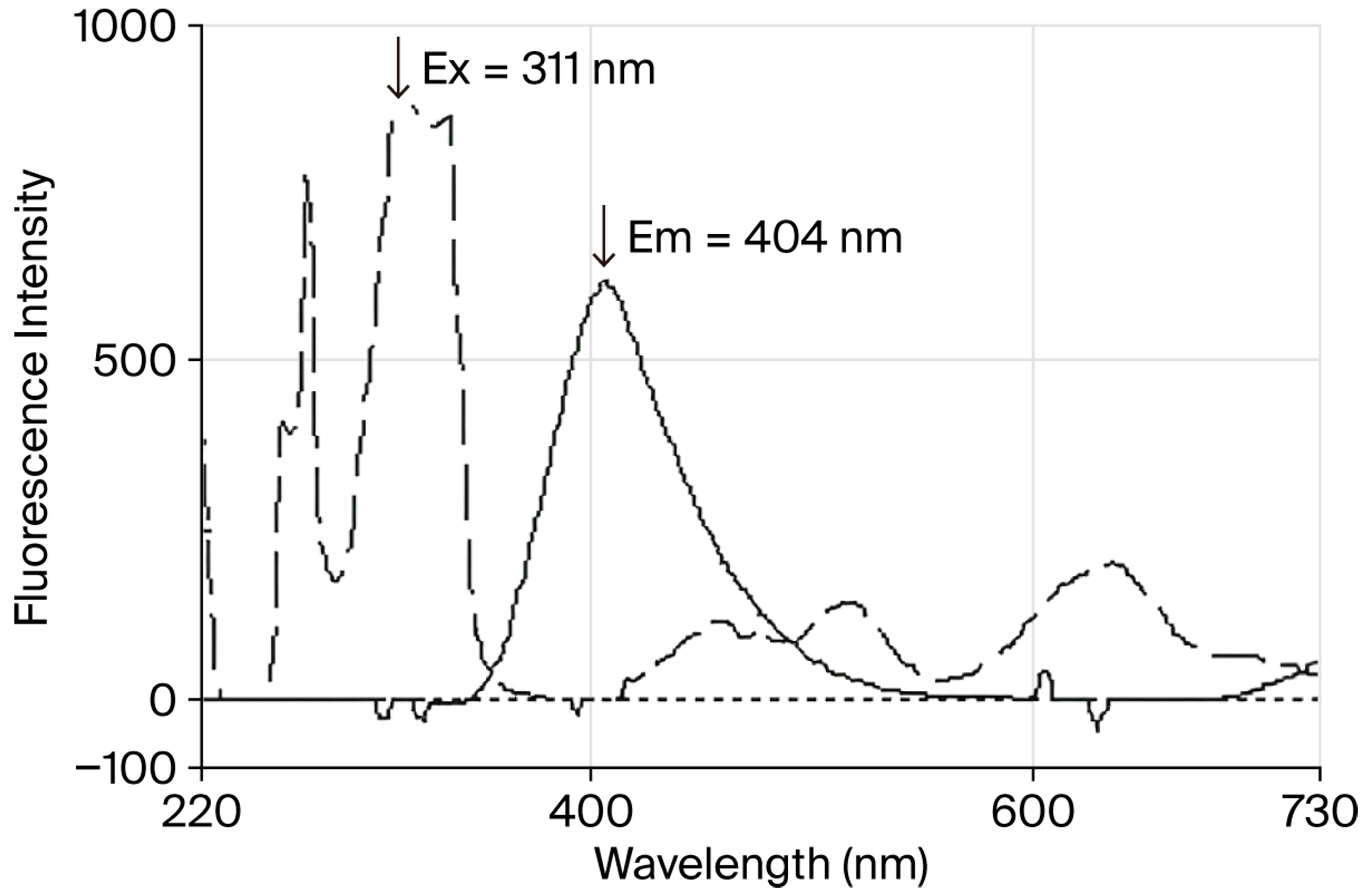
The native fluorescence of GLI at λ emission 404 nm upon excitation at 311 nm was measured and recorded as displayed in Figure 2.
Under the optimized conditions, a calibration curve was constructed by plotting fluorescence intensity versus GLI concentration. The curve was linear over a concentration range of 0.05–0.45 μg·mL−1. The final regression equation was calculated, and the method demonstrated excellent accuracy with a mean percentage recovery of 100.00 ± 0.92, as illustrated in Table 1.
The pronounced sensitivity of the new spectrofluorometric approach allowed for the successful assay of GLI in spiked human plasma samples. The spectrofluorometric approach was precise and accurate in this complex matrix, achieving a mean percentage recovery of 99.50 ± 1.78, as demonstrated in Table 2, which confirms its potential for bioanalytical applications.
Compared to the previously reported spectrofluorometric method [22], which used excitation at 225 nm and emission at 400 nm, the present approach employs a novel diluent solvent that enhances the native fluorescence signal and improves quantification accuracy. Additionally, this novel approach offers a high sensitivity with a low linear range of 0.05–0.45 µg·mL−1 and convenient precision, which is in agreement with the previously published spectrophotometric method [3]. Compared to the previously published spectrofluorometric approach [22], such as the normal fluorescence method with excitation at 225 nm and emission at 400 nm, this novel approach uses a unique diluent solvent that potentially improves the native fluorescence signal and maximizes quantification accuracy. Unlike the derivative synchronous fluorescence techniques that address spectral overlap of GLI from its degradates, our novel spectrofluorometric approach focuses on direct emission measurement in optimized buffer environments, presenting a simpler and sensitive alternative approach for routine GLI assays in pharmaceutical and serum matrices.
In concluding remarks, the novel spectrofluorometric approach has merits over the previously published spectrofluorometric one in its diluent solvent composition and specific wavelength selection, delivering a sensitive and direct assay that balances ease of use and analytical performance compared to the more complex derivative synchronous fluorescence procedures recognized previously.

4.2. Colorimetric TCNQ Approach

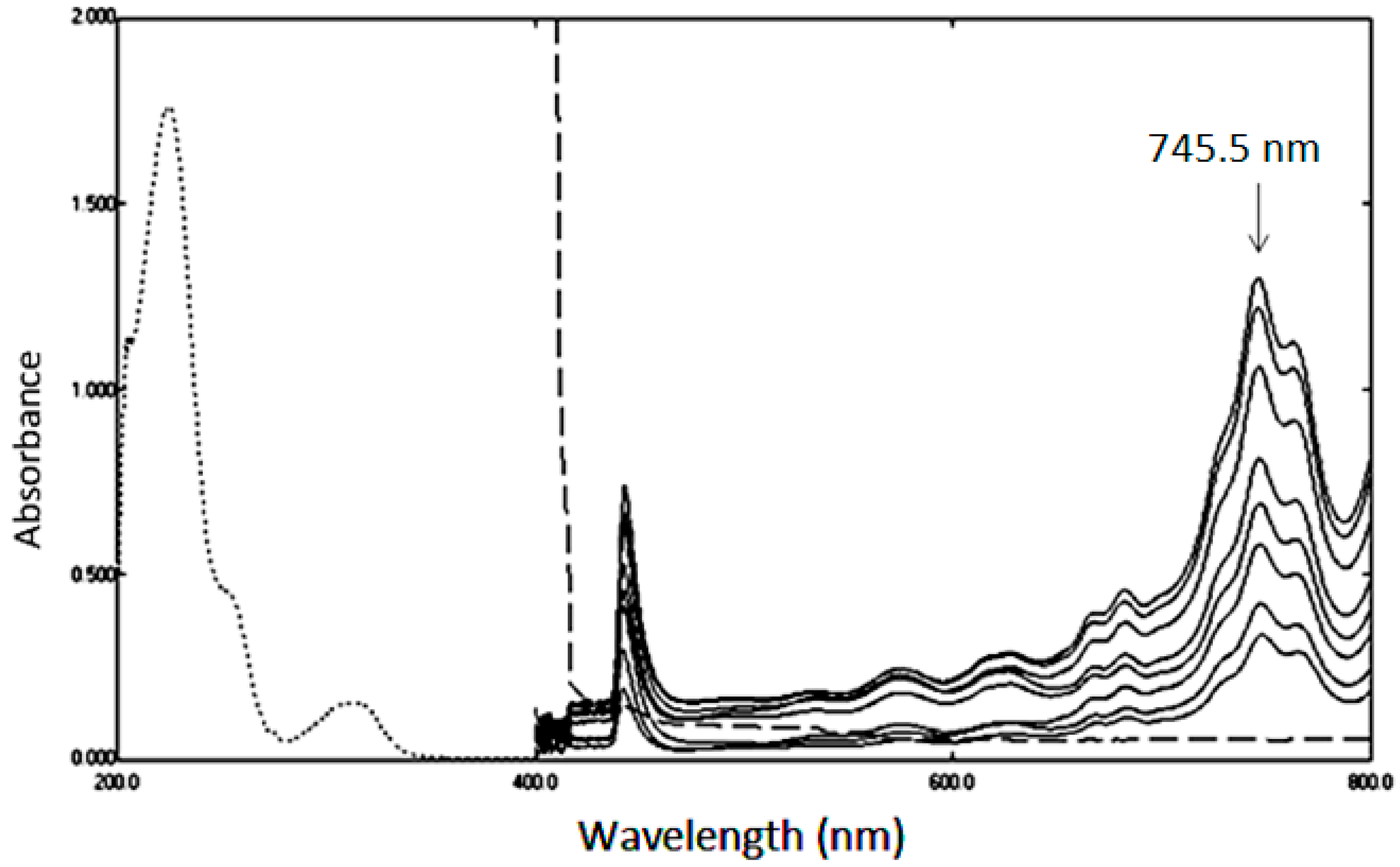
Intensely colored charge transfer complexes that absorb radiation in the visible electromagnetic region form via molecular interactions between acceptors and donors [36,37]. Many drugs have been assessed using 7,7,8,8-tetracyanoquinodimethane (TCNQ) [38,39]. This method introduces a simple and sensitive spectrophotometric approach for analyzing GLI, based on the reaction of GLI with TCNQ to form a highly stable colored product. The resulting highly stable colored product is a charge-transfer complex of GLI with TCNQ, also referred to as an electron donor-acceptor complex [40]. The maximum absorption of the GLI-TCNQ complex was recorded at 745.5 nm, as shown in Figure 3. Different conditions affecting the reaction were optimized for quantitative assessment of GLI.
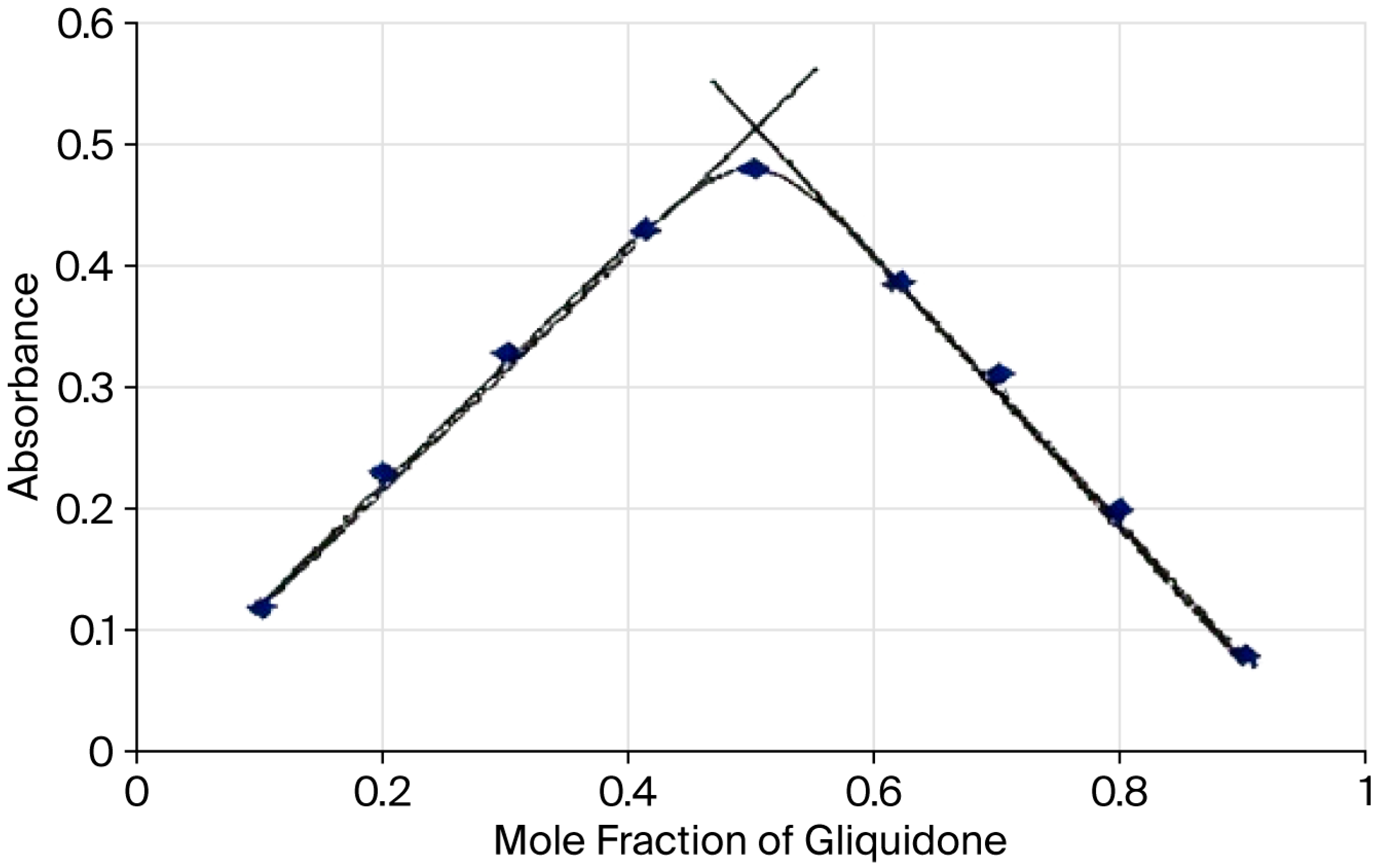
The effect of TCNQ concentration (0.1–0.8% w/v) was studied. 1 mL of 0.4% solution was adequate to produce the greatest color intensity and lowest blank absorbance, as shown in Figure S6. The green GLI-TCNQ complex was obtained at room temperature, but heating increased the intensity of the color. Many temperatures were tested using a thermostatic water bath set at 40–90 °C. The optimum temperature was 80 ± 2 °C as displayed in Figure S7, at which the reaction was completed after 40 min, as demonstrated in Figure S8. Methanol, ethanol, chloroform, ethyl acetate, acetonitrile, and acetone were used as solvents; acetone was the solvent of choice regarding sensitivity, as shown in Figure S9, the color was stable for at least 1 h, as demonstrated in Figure S10. The plausible mechanism of formation for the GLI-TCNQ complex is displayed in the Supplementary Data (Equation (S1)). To investigate the stoichiometry of the reaction of GLI and TCNQ, Job’s method of continuous variation approach [41] was employed. The absorption wavelength used to plot Job’s plot was 745.5 nm. It indicated that GLI interacts with TCNQ in the ratio 1:1 using 1.7 × 10⁻² M solution of both GLI and TCNQ, as noted in Figure 4, and the stability constant of the complex formed between the drug and TCNQ was calculated. The stability constant (Kc) of the charge-transfer complex formed between GLI and TCNQ was calculated using Job’s continuous variation approach. The absorbance values were estimated at the maximum wavelength of the complex, and a plot of absorbance (Y-axis) versus mole fraction (X-axis) was constructed. From the maximum of the Job’s plot, the stoichiometry of the complex was determined (1:1), and the stability constant was calculated from the relation:
Kc = (max absorbance/intersection) / [(1 − (max absorbance/intersection)) × (1 − (max absorbance/intersection))]
Kc = (0.48/0.51)/(1 − 0.94) × (1 − 0.94) Kc = 261.11
Therefore, Kc calculated value is 261.11. The free energy change (∆G) of the interaction between the π-acceptor and the n-donor, which are related to the overall stability constant Kc by the relationship:
∆G = −2.303RT log Kc
where “R” is the universal gas constant, 1.987 Cal/mole, “T” is the absolute temperature in Kelvin, and “∆G” is the Gibb’s free energy, which should be between (−2 and −10) for free radical formation [42]. The free energy of the complex (∆G) was computed and found to be −3.915 KJ/mol. The high value of the stability constant indicates the high stability of the complex formed, and the negative value of ∆G indicates a spontaneous reaction between the drug and reagent.
In summary, using the designated optimum conditions, the plot curve was constructed relating the absorbance of GLI in a concentration range of 20–200 µg·mL−1 at 745.5 nm to its corresponding concentrations with a mean percentage recovery of 101.10 ± 1.27, as noted in Table S1.
The following section focuses on the validation results for both described spectrofluorometric and colorimetric methods. The outcomes demonstrate high accuracy and precision with low standard deviations and relative standard deviations, indicating their reliability. Adequate limits of detection and quantitation were illustrated. Results revealed in Table 3 confirm the novel approaches were successfully applied for the assay of GLI in its formulation (Glurenor®® tablets). Detailed results of accuracy, repeatability, and intermediate precision according to ICH strategies are displayed in Table 4. ICH strategies ensure the analytical method is fit-for-purpose through assessment of many parameters such as accuracy, linearity, and precision. Table 4 demonstrates excellent linearity with correlation coefficients close to 1 (0.9999 for the spectrofluorometric and 0.9997 for the TCNQ method). The limits of detection (LOD) and quantitation (LOQ) indicate that the spectrofluorometric approach is more sensitive, with lower LOD (0.015 µg/mL) and LOQ (0.04 µg/mL) compared to the TCNQ method (LOD 6.05 µg/mL, LOQ 18 µg/mL). Both approaches demonstrated good precision, repeatability, and intermediate precision, as evidenced by the display of low relative standard deviations (below 1%). Figure S11 displays the linearity of fluorescence intensity at λ emission 404 nm to the corresponding concentrations of GLI. The linearity of absorbance of the GLI/TCNQ complex to the corresponding concentrations of GLI at 745.5 nm was illustrated in Figure S12. Table 5 and Table 6 report statistical comparisons of the new approaches against the reported spectrophotometric one [3] for pure GLI and its pharmaceutical formulation, respectively. The mean assay values for both methods approximately matched the reported values, with no statistically significant differences based on Student’s t-test and F-value data. The spectrofluorometric approach generally showed lower relative standard deviations than the TCNQ one, indicating slightly improved precision.

4.3. Greenness, Bluness, and Redness Assessments Using AGREE, BAGI, and RAPI Tools

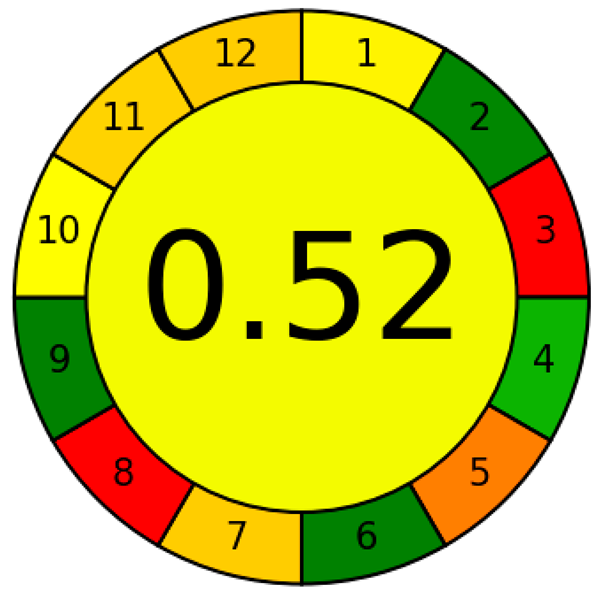
The final AGREE scores for the spectrofluorometric and colorimetric approaches were 0.58 and 0.52, respectively, as shown in Table 7. The lower score for the colorimetric method is primarily attributed to its low analytical throughput. The 40 min heating step, combined with other preparation requirements, limits the process to approximately one sample per hour. This is reflected in the red color for subsection 8 (Analysis output) of the AGREE assessment [28] for the colorimetric method, compared to the faint green indicator for the spectrofluorometric method. Although the colorimetric method uses acetone—a greener solvent than the methanol used in the spectrofluorometric method—this only slightly improved its score in subsection 11 (Toxicity of Reagents). Furthermore, the spectrofluorometric method’s reliance on a phosphate buffer, which is non-renewable, slow to biodegrade, and poses ecological risks, negatively impacted its performance in subsection 11 and contributed to its overall score.
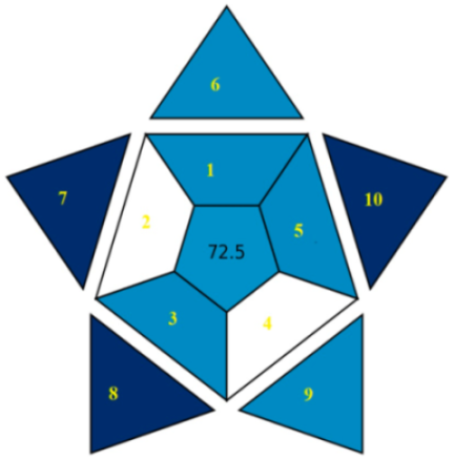
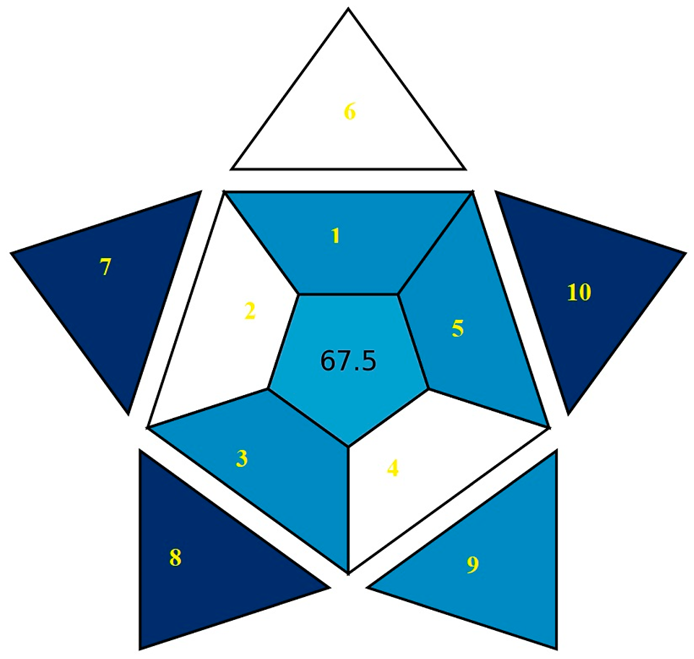
The BAGI tool has an online platform that users may implement to compare different analytical methodologies quickly. Higher numbers of BAGI scores indicate increased practicality and simplicity of use. The effectiveness and practical application of the spectrofluorometric method are illustrated by a pictogram generated by the BAGI approach [29]. A minimum score of 60 points according to the BAGI framework is required for the method to be practical. As shown in Table 7, the new spectrofluorometric protocol achieved a final score of 72.5, indicating the method’s effectiveness. A minimum score of 60 points according to the BAGI framework is required for the method to be practical. The method’s compliance with the given criteria was represented by discrete colors of dark blue, medium blue, light blue, and white, respectively. The final score was then calculated using this color scale. Remarkably, only two subsections (2 and 4) are white, referring to the two main drawbacks in the spectrofluorometric scenario. This is attributable to the uniqueness of the fluorescence technique; subsection 2 is white since only one medication was analyzed, whereas subsection 4 is white due to the preparation of a single sample at a time. The final BAGI score in the colorimetric approach was 67.5, which is lower than the achieved score in the spectrofluorometric approach. The same two subdivisions (2 and 4) were white, in addition to subdivision 6, which refers to one sample prepared in one hour because of the 40 min heating step.
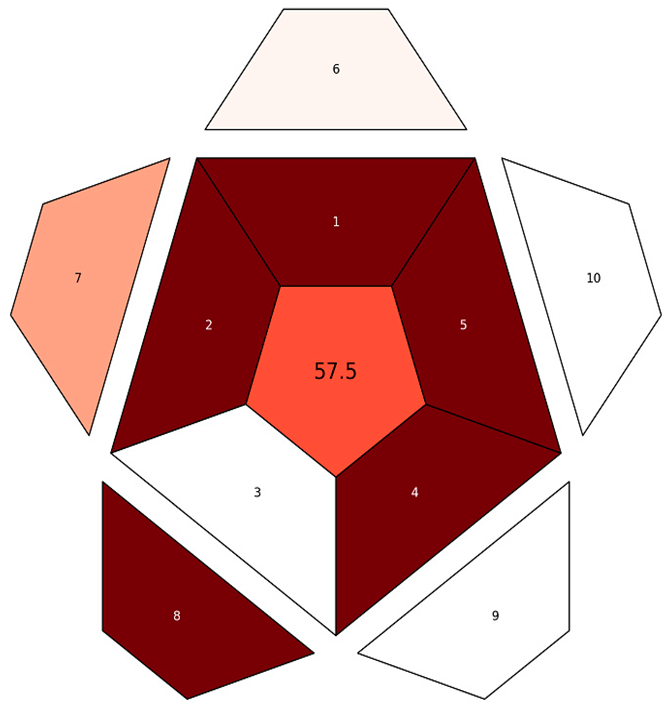
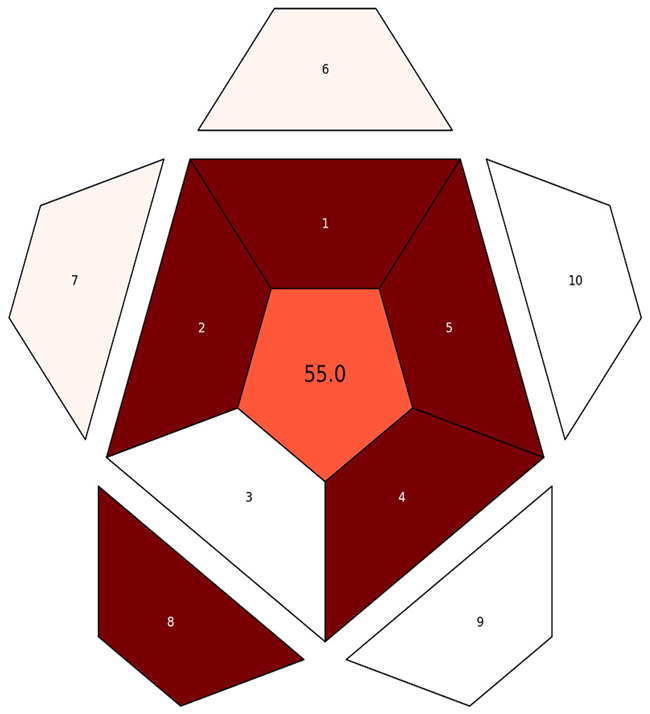
The RAPI is an open-source software program that can be downloaded at https://mostwiedzy.pl/rapi, accessed 15 August 2025. With a 2.5-point increase, each criterion has been given a score between 0 and 10. Color intensity, from white (0) to dark red (10), graphically represents these scores. In the middle of the RAPI, a star-shaped pictogram segmented according to particular criteria displays the total average score (from 0 to 100). As displayed in Table 7 pictograms and reported in Supplementary Tables S2 and S3, final RAPI scores for the spectrofluorometric and colorimetric approaches were 57.5 and 55.0, respectively. The lower scores for the spectrofluorometric and colorimetric approaches were primarily attributed to untested item numbers 3, 9, and 11 for reproducibility, ruggedness, and selectivity. However, the two approaches showed excellent precision, accuracy, linearity, and recovery from matrices. Moreover, moderate performances in the LOQ and working range were noted for both approaches, according to RAPI approach guidelines [30]. In general, the final RAPI scores reflected robust approaches with excellent precision and accuracy values but relatively higher LOQ values and moderate working ranges according to RAPI guidelines.
The spectrofluorometric method’s sensitivity, better working range, and lower detection limits make it more adequate for assaying lower GLI concentrations specifically in plasma samples. Therefore, the overall analytical performance for the spectrofluorometric method was higher than that of the colorimetric approach in alignment with the RAPI appraisals.
Table S4 summarizes the comparative greenness, practicality, and performance of the presented spectrofluorometric and colorimetric (TCNQ) methods versus previously reported spectrophotometric [3], spectrofluorometric [22], HPLC [6], and LC-MS [18] approaches for GLI analysis in many matrices. The assessments use AGREE, BAGI, and RAPI tools, illustrating that the proposed approaches offer improved greenness, while the HPLC method [6] excels in analytical performance in terms of RAPI score, as all RAPI items are well performed and scored except for the inter-laboratory reproducibility test. Furthermore, comparable results were provided in terms of practicality (BAGI scores). This comprehensive comparison makes it imperative to use more sustainable, applicable, and completely validated analytical approaches in future analytical studies.

4.4. Limitations and Future Plans

The RAPI tool was very advantageous for illustrating the details of the validation overview for the studied approaches. Reproducibility is the measure of variation for the analytical method, and it is performed in different laboratories using variable settings. This feature reflects the robustness and transferability of the analytical approach. In the context of the presented approaches, reproducibility testing was not performed because it requires collaboration across multiple laboratories with standardized quality codes. Such multi-laboratory collaborations are very costly and resource-intensive. Furthermore, achieving reproducibility testing is not aligned with the primary objectives of these analytical approaches. Because of the scope and limited resources in our laboratory during the performance of the practical trials of these analytical studies, the selectivity study was limited to investigating the impacts of pharmaceutical excipients and plasma ingredients (in the case of the spectrofluorometric approach). Therefore, it is very crucial to perform selectivity studies comparing the spectral data of GLI with relevant sulfonylurea drugs such as chlorpropamide, tolbutamide, glyburide (glibenclamide), glipizide, and gliclazide for further confirmation of the method’s reliability and selectivity items. Such data will strengthen the method’s applicability in complex matrices.

5. Conclusive Remarks

This study presents two novel analytical methods—a spectrofluorometric approach and a TCNQ-based colorimetric approach—for the assay of GLI in various matrices. The spectrofluorometric method enables direct, sensitive, rapid, and selective assay of GLI in pharmaceuticals and human plasma without complex sample preparation, making it appropriate for pharmacokinetic studies and therapeutic drug monitoring. The colorimetric method offers a simple and economical alternative that avoids expensive instrumentation and preconcentration steps.
Both approaches were successfully validated through application to pure GLI, tablets, and—for the spectrofluorimetry—human plasma, demonstrating high accuracy, selectivity, and absence of matrix interference. The spectrofluorometric approach exhibited superior analytical performance, including higher sensitivity, a broader working range, and lower detection limits, particularly advantageous for plasma analysis. The limits of detection (LOD) and quantitation (LOQ) indicate that the spectrofluorometric approach is more sensitive, with lower LOD (0.015 µg/mL) and LOQ (0.04 µg/mL) compared to the TCNQ one (LOD 6.05 µg/mL, LOQ 18 µg/mL). Redness, greenness, and blueness automated tools (RAPI, AGREE, BAGI) confirmed that the spectrofluorometric method aligns better with sustainability and analytical efficiency criteria. In summary, the spectrofluorometric approach is suitable for plasma bio-analysis, and the colorimetric one offers a low-cost alternative for routine QC assessment.

Supplementary Materials

The supporting data can be downloaded at: https://www.mdpi.com/article/10.3390/chemosensors13110382/s1, Figure S1A,B: Effect of different solvents on the fluorescence intensity of Gliquidone (Bar graph and original spectra). Figure S2A,B: Effect of different excitation wavelengths on the fluorescence intensity of Gliquidone (Bar graph and original spectra). Figure S3A,B: Effect of different pH values on the fluorescence intensity of Gliquidone (Bar graph and original spectra). Figure S4A,B: Effect of different surfactants on the fluorescence intensity of Gliquidone (Bar graph and original spectra). Figure S5A,B: Effect of volume of β-cyclodextrin on the fluorescence intensity of Gliquidone (Bar graph and original spectra). Figure S6: Effect of TCNQ concentration (1 mL) on the absorbance of the reaction product of Gliquidone at 745.5 nm in acetone. Figure S7: Effect of temperature on the absorbance of reaction product of Gliquidone with TCNQ at 745.5 nm in acetone. Figure S8: Effect of heating time on the absorbance of the reaction product of Gliquidone with TCNQ at 745.5 nm in acetone. Figure S9: Effect of different Solvents on the absorbance of the reaction product of Gliquidone with TCNQ at 745.5 nm in acetone. Figure S10: Effect of time on the stability of the reaction product of Gliquidone with TCNQ at 745.5 nm in acetone. Figure S11: Linearity of fluorescence intensity at λ emission 404 nm to the corresponding concentrations of Gliquidone (0.05–0.45 µg·mL−1). Figure S12: Linearity of absorbance of Gliquidone/TCNQ reaction product to the corresponding concentrations of Gliquidone at 745.5 nm. Table S1: Accuracy outcomes for the assay of GLI by the presented TCNQ colorimetric approach. Table S2: The summary of the RAPI ten items scores for the spectrofluorometric method for Gliquidone. Table S3: The summary of the RAPI ten items scores for the colorimetric (TCNQ) method for Gliquidone. Table S4: The summary of comparisons of the two presented approaches and the old reported spectrophotometric, spectrofluorometric, HPLC, and LC-MS ones using the AGREE, the BAGI, and the RAPI tools for the GLI assay. S1 equation: The expected mechanism of formation for the GLI-TCNQ complex is displayed in the supplementary data.

Author Contributions

Conceptualization, L.A.A.-K.; methodology, L.A.A.-K. and M.A.M.; investigation, L.A.A.-K., Y.G.A.E.-R., A.N.A. and N.Y.E.; data curation, L.A.A.-K.; writing—original draft preparation, M.A.M., M.G., N.W.A., H.E.Z. and M.A.; writing—review and editing, M.G., Y.G.A.E.-R., A.N.A., N.Y.E., N.W.A., H.E.Z. and M.A.; supervision, N.W.A., H.E.Z. and M.A.; project administration, M.G., N.W.A., H.E.Z. and M.A.; funding acquisition, Y.G.A.E.-R. All authors have read and agreed to the published version of the manuscript.

Funding

This work was supported and funded by the Deanship of Scientific Research at Imam Mohammad Ibn Saud Islamic University (IMSIU) (grant number IMSIU-DDRSP2502).

Institutional Review Board Statement

Not applied for research not involving animals or humans.

Data Availability Statement

All the data presented in an article (e.g., in Figures or Tables) are original and included in the main article. Many automated softwares were used to assess method’s greenness, redness, and blueness. See references for the information about the software.

Conflicts of Interest

The authors declare that no conflicts of interest concerning this applied research project.

References

  1. British Pharmacopoeia Commission, British Pharmacopoeia 2016; Stationery Office: London, UK, 2015.
  2. van Mil, J.W.F.; Brayfield, A. (Eds.) Martindale: The Complete Drug Reference 2014; Pharmaceutical Press: London, UK, 2014. [Google Scholar]
  3. Arayne, M.S.; Sultana, N.; Mirza, A.Z. Spectrophotometric Method for Quantitative Determination of Gliquidone in Bulk Drug, Pharmaceutical Formulations and Human Serum. Pak. J. Pharm. Sci. 2006, 19, 185–189. [Google Scholar]
  4. Saeed Arayne, M.; Sultana, N.; Zeeshan Mirza, A. Preparation and Spectroscopic Characterization of Metal Complexes of Gliquidone. J. Mol. Struct. 2009, 927, 54–59. [Google Scholar] [CrossRef]
  5. Shi, N.; Yao, J.; Zhang, Q. TLC Method for Screening Sulphonylureas in Antidiabetics Chinese Traditional Patent Medicines and Health Supplementary Foods. Chin. J. Pharm. Anal. 2007, 27, 36–39. [Google Scholar]
  6. El-Ghobashy, M.R.; Yehia, A.M.; Helmy, A.H.; Youssef, N.F. Forced Degradation of Gliquidone and Development of Validated Stability-Indicating HPLC and TLC Methods. Braz. J. Pharm. Sci. 2018, 54, e00223. [Google Scholar] [CrossRef]
  7. Abdelwahab, N.S.; Elsaady, M.T.; Korany, A.G.; Hegazy, M.A. Study of Gliquidone Degradation Behavior by High-Performance Thin-Layer Chromatography and Ultra-Performance Liquid Chromatography Methods. Biomed. Chromatogr. 2017, 31, e4025. [Google Scholar] [CrossRef]
  8. Mirza, A.Z. HPLC-UV Method for Simultaneous Determination of Irbesartan, Candesartan, Gliquidone and Pioglitazone in Formulations and in Human Serum. J. Chin. Pharm. Sci. 2018, 27, 273–280. [Google Scholar] [CrossRef]
  9. Mirza, A.Z.; Arayne, M.S.; Sultana, N. RP-LC Method for the Simultaneous Determination of Gliquidone, Pioglitazone Hydrochloride, and Atorvastatin in Formulations and Human Serum. J. AOAC Int. 2013, 96, 56–59. [Google Scholar] [CrossRef]
  10. Mirza, A.Z.; Arayne, M.S.; Sultana, N. Method Development and Validation of Amlodipine, Gliquidone and Pioglitazone: Application in the Analysis of Human Serum. Anal. Chem. Lett. 2014, 4, 302–312. [Google Scholar] [CrossRef]
  11. Sridevi, S.; Diwan, P.V. Validated HPLC Method for the Determination of Gliquidone in Rat Plasma. Pharm. Pharmacol. Commun. 2000, 6, 303–307. [Google Scholar] [CrossRef]
  12. Guo, P.; Li, Z.W.; Chen, C.H.; Deng, S.P.; Tang, S.G. [Direct Injection of Plasma to Determine Gliquidone in Plasma Using HPLC Column Switching Technique]. Acta Pharm. Sin. 1992, 27, 452–455. [Google Scholar]
  13. Arayne, M.S.; Sultana, N.; Mirza, A.Z.; Siddiqui, F.A. Validated RP-HPLC Method for Quantitation of Gliquidone in Pharmaceutical Formulation and Human Serum. J. Chil. Chem. Soc. 2010, 55, 156–158. [Google Scholar] [CrossRef]
  14. Yao, J.; Shi, Y.Q.; Li, Z.R.; Jin, S.H. Development of a RP-HPLC Method for Screening Potentially Counterfeit Anti-Diabetic Drugs. J. Chromatogr. B Anal. Technol. Biomed. Life Sci. 2007, 853, 254–259. [Google Scholar] [CrossRef]
  15. Arayne, M.S.; Sultana, N.; Mirza, A.Z. Simultaneous Determination of Gliquidone, Pioglitazone Hydrochloride, and Verapamil in Formulation and Human Serum by RP-HPLC. J. Chromatogr. Sci. 2011, 49, 114–117. [Google Scholar] [CrossRef]
  16. Arayne, M.S.; Sultana, N.; Mirza, A.Z.; Siddiqui, F.A. Simultaneous Determination of Gliquidone, Fexofenadine, Buclizine, and Levocetirizine in Dosage Formulation and Human Serum by RP-HPLC. J. Chromatogr. Sci. 2010, 48, 382–385. [Google Scholar] [CrossRef]
  17. Wang, X.; Zhang, L.; Du, A.; Yang, M.; Zhang, Y.; Liu, M.; Zhang, D.; Liu, H. Determination of Gliquidone in Human Plasma by LC-MS/MS and Bioequivalence Study of Its Two Tablets. Chin. J. Pharm. Anal. 2013, 33, 250–254. [Google Scholar]
  18. Maurer, H.H.; Kratzsch, C.; Kraemer, T.; Peters, F.T.; Weber, A.A. Screening, Library-Assisted Identification and Validated Quantification of Oral Antidiabetics of the Sulfonylurea-Type in Plasma by Atmospheric Pressure Chemical Ionization Liquid Chromatography-Mass Spectrometry. J. Chromatogr. B Anal. Technol. Biomed. Life Sci. 2002, 773, 63–73. [Google Scholar] [CrossRef] [PubMed]
  19. Zhong, L.; Ling, X.; Sun, H. HPLC/MS2 Detection of Biguanides and Sulfonylurea Antidiabetics Illegally Mixed into Traditional Chinese Preparations. Chin. J. Pharm. Anal. 2008, 28, 1683–1685. [Google Scholar]
  20. Huang, L.; Zhang, X.; Luo, L.; Mu, H.; Li, W.; Wang, R. Effects of High-Altitude Environment on Pharmacokinetic Parameters of Gliquidone in Rats. J. Zhejiang Univ. (Med. Sci.) 2022, 51, 389–396. [Google Scholar] [CrossRef]
  21. Tang, T.; Zhang, Y.; Xing, X.; Sun, R.; Yu, Z.; Tian, Y.; Zhang, Z.; Zhang, P.; Xu, F. Gliquidone Alleviates DSS-Induced Ulcerative Colitis in Rats by Targeting Carnitine Palmitoyltransferase 1A. J. Pharm. Anal. 2025, 15, 101409. [Google Scholar] [CrossRef]
  22. El-ghobashy, M.R.; Yehia, A.M.; Helmy, A.H.; Youssef, N.F. Application of Normal Fluorescence and Stability-Indicating Derivative Synchronous Fluorescence Spectroscopy for the Determination of Gliquidone in Presence of Its Fluorescent Alkaline Degradation Product. Spectrochim. Acta—Part A Mol. Biomol. Spectrosc. 2018, 188, 619–625. [Google Scholar] [CrossRef] [PubMed]
  23. Imam, M.S.; Abdelrahman, M.M. How Environmentally Friendly Is the Analytical Process? A Paradigm Overview of Ten Greenness Assessment Metric Approaches for Analytical Methods. Trends Environ. Anal. Chem. 2023, 38, e00202. [Google Scholar] [CrossRef]
  24. Płotka-Wasylka, J.; Mohamed, H.M.; Kurowska-Susdorf, A.; Dewani, R.; Fares, M.Y.; Andruch, V. Green Analytical Chemistry as an Integral Part of Sustainable Education Development. Curr. Opin. Green Sustain. Chem. 2021, 31, 100508. [Google Scholar] [CrossRef]
  25. Płotka-Wasylka, J.; Fabjanowicz, M.; Kalinowska, K.; Namieśnik, J. History and Milestones of Green Analytical Chemistry. In Green Analytical Chemistry; Springer: Singapore, 2019; pp. 1–17. [Google Scholar]
  26. Sajid, M.; Płotka-Wasylka, J. Green Analytical Chemistry Metrics: A Review. Talanta 2022, 238, 123046. [Google Scholar] [CrossRef] [PubMed]
  27. Abdelgawad, M.A.; Abdelaleem, E.A.; Gamal, M.; Abourehab, M.A.S.; Abdelhamid, N.S. A New Green Approach for the Reduction of Consumed Solvents and Simultaneous Quality Control Analysis of Several Pharmaceuticals Using a Fast and Economic RP-HPLC Method; a Case Study for a Mixture of Piracetam, Ketoprofen and Omeprazole Drugs. RSC Adv. 2022, 12, 16301–16309. [Google Scholar] [CrossRef] [PubMed]
  28. Pena-Pereira, F.; Wojnowski, W.; Tobiszewski, M. AGREE—Analytical GREEnness Metric Approach and Software. Anal. Chem. 2020, 92, 10076–10082. [Google Scholar] [CrossRef] [PubMed]
  29. Manousi, N.; Wojnowski, W.; Płotka-Wasylka, J.; Samanidou, V. Blue Applicability Grade Index (BAGI) and Software: A New Tool for the Evaluation of Method Practicality. Green Chem. 2023, 25, 7598–7604. [Google Scholar] [CrossRef]
  30. Nowak, P.M.; Wojnowski, W.; Manousi, N.; Samanidou, V.; Plotka-Wasylka, J. Red Analytical Performance Index (RAPI) and Software: The Missing Tool for Assessing Methods in Terms of Analytical Performance. Green Chem. 2025, 27, 5546–5553. [Google Scholar] [CrossRef]
  31. Gamal, M.; Naguib, I.A.; Panda, D.S.; Abdallah, F.F. Comparative Study of Four Greenness Assessment Tools for Selection of Greenest Analytical Method for Assay of Hyoscine N -Butyl Bromide. Anal. Methods 2021, 13, 369–380. [Google Scholar] [CrossRef]
  32. Jang, Y.J.; Kim, B.; Roh, E.; Kim, H.; Lee, S.H. Micellization-Induced Amplified Fluorescence Response for Highly Sensitive Detection of Heparin in Serum. Sci. Rep. 2020, 10, 9438. [Google Scholar] [CrossRef]
  33. Wang, Z.; Jing, J.; Wang, D.; Tong, J.; Wang, N. Dye-Surfactant Solution of Coomassie Brilliant Blue G250 and Tween 20: Micellar and Interaction Parametric Studies. AATCC J. Res. 2019, 6, 20–27. [Google Scholar] [CrossRef]
  34. Xia, D.X.; Fan, L.W.; Ye, M.F.; Sun, W.Q.; Lin, R.L.; Liu, J.X. Supramolecular Inclusion Complexes of β-Cyclodextrin with Bathochromic-Shifted Photochromism and Photomodulable Fluorescence Enable Multiple Applications. Mater. Adv. 2023, 4, 5215–5223. [Google Scholar] [CrossRef]
  35. Bakkialakshmi, S.; Menaka, T. Fluorescence Enhancement of Rhodamine 6G by Forming Inclusion Complexes with β-Cyclodextrin. J. Mol. Liq. 2011, 158, 117–123. [Google Scholar] [CrossRef]
  36. Nampally, V.; Palnati, M.K.; Baindla, N.; Varukolu, M.; Gangadhari, S.; Tigulla, P. Charge Transfer Complex between O-Phenylenediamine and 2, 3-Dichloro-5, 6-Dicyano-1, 4-Benzoquinone: Synthesis, Spectrophotometric, Characterization, Computational Analysis, and Its Biological Applications. ACS Omega 2022, 7, 16689–16704. [Google Scholar] [CrossRef]
  37. Ali, N.W.; Elghobashy, M.R.; Mahmoud, M.G.; Mohammed, M.A. Spectrophotometric and Spectrofluorimetric Methods for Determination of Racecadotril. Pak. J. Pharm. Sci. 2011, 24, 19–23. [Google Scholar]
  38. Salem, H.; Mazen, D.Z.; Heshmat, D.; Mahmoud, M.M.; Ali, E.; Abdelaziz, A. Development and Validation of Three Colorimetric Charge Transfer Complexes for Estimation of Fingolimod as an Antineoplastic Drug in Pharmaceutical and Biological Samples. Chem. Pap. 2022, 76, 6675–6681. [Google Scholar] [CrossRef]
  39. Sheng-Yun, L.; Yu-Cui, H. Spectrophotometric Study of the Charge Transfer Complexation of Tranexamic Acid with 7,7,8,8-Tetracyanoquinodimethane. Bull. Chem. Soc. Ethiop. 2014, 28, 187–194. [Google Scholar] [CrossRef][Green Version]
  40. Schuster, P. The Donor-Acceptor Approach to Molecular Interactions. Fluid Phase Equilib. 1979, 3, 251–252. [Google Scholar] [CrossRef]
  41. Huang, C.Y. [27] Determination of Binding Stoichiometry by the Continuous Variation Method: The Job Plot. Methods Enzymol. 1982, 87, 509–525. [Google Scholar] [CrossRef]
  42. Bazhin, N.M. Standard and Transformed Values of Gibbs Energy Formation for Some Radicals and Ions Involved in Biochemical Reactions. Arch. Biochem. Biophys. 2020, 686, 108282. [Google Scholar] [CrossRef] [PubMed]
Figure 1. Chemical structure of Gliquidone.
Chemosensors 13 00382 g001
Figure 2. Excitation (-----) and emission (ــــــ) spectra of Gliquidone (0.3 µg·mL−1) in methanol, using 1 mL phosphate buffer pH= 4 and 1 mL 0.1% β-cyclodextrin without surfactant.
Chemosensors 13 00382 g002
Figure 3. Absorption spectra of Gliquidone/TCNQ reaction product in the range of 20–200 µg/mL (ــــــ) 20 µg/mL of Giquidone (….…) and reagent blank (-------) using 1 mL of a 0.4% TCNQ solution, acetone as a solvent at 80 ± 2 °C for 40 min in glass stoppered test tubes.
Chemosensors 13 00382 g003
Figure 4. Assessment of the stoichiometry of the reaction of Gliquidone with TCNQ by the continuous variation approach using 1.7 × 10⁻² M solutions.
Chemosensors 13 00382 g004
Table 1. Accuracy outcomes for the assay of GLI using the presented spectrofluorometric approach.
Taken
(µg·mL−1)
Found
(µg·mL−1)
Recovery %
0.050.050100.00
0.100.102102.00
0.150.14898.66
0.200.19999.50
0.250.250100.00
0.300.29899.33
0.350.351100.28
0.400.39899.50
0.450.451100.22
Mean ± SD100.00 ± 0.92
Table 2. Application of the novel spectrofluorometric approach for the assay of pure Gliquidone in spiked human plasma.
Taken
(µg·mL−1)
Found
(µg·mL−1)
Recovery %
0.100.09999.00
0.150.155103.33
0.200.19999.50
0.250.24497.60
0.300.29999.66
0.350.34899.42
0.400.403100.75
Mean ± SD99.5 ± 1.78
Table 3. Assay of GLI in pharmaceutical tablets by the new spectrofluorometric and colorimetric TCNQ approaches and results of standard addition protocol.
Glurenor®® tablets containing 30 mg GLI/tablet (Batch No. ALE2857)TechniqueTaken (µg·mL−1)Found % ± SDStandard addition procedures Mean ± SD
Spectrofluorometric
approach
0.20100.00 ± 0.8499.83 ± 1.62
TCNQ colorimetric
approach
50.00101.84 ± 1.1499.98 ± 0.92
Table 4. Summary of validation items for the spectrofluorometric and colorimetric (TCNQ) for the analysis of GLI.
Criteria Spectrofluorometric ApproachTCNQ Approach
Range0.05–0.45 µg·mL−120–200 µg·mL−1
Regression equation
Slope21.07750.0051
Intercept−0.047460.2773
Correlation coefficient0.99990.9997
Accuracy (Mean ± SD)100.43 ± 0.88101.10 ± 1.27
LOD0.0156.05
LOQ **0.0418
Precision (RSD%)
Repeatability *0.740.55
Intermediate precision *0.850.63
* The intra-day and inter-day relative standard deviations of the average of three concentration levels 0.1, 0.15 and 0.2 µg·mL−1 of GLI for spectrofluorometric approach and 20, 30 and 60 µg·mL−1 of GLI for TCNQ colorimetric approach. ** LOD and LOQ were computed according to formula LOD = 3.3 × the standard deviation of the blank (SD)/the slope (S) and LOQ = 10 × SD/S.
Table 5. Statistical assessments of the results for the novel approaches and the reference spectrophotometric method for the assay of pure of Gliquidone.
ItemsSpectrofluorometric MethodTCNQ MethodReported Method * [3]
Mean100.00101.10100.16
SD0.921.270.89
RSD%0.9201.2560.888
n986
Variance0.8461.6130.729
Student’s t-test0.067 (2.144)1.114 (2.160) **
F-value1.065 (4.146)2.017 (4.206)
* Direct spectrophotometric assay of Gliquidone at 225 nm using methanol. ** Values in brackets refer to tabulated critical values at p = 0.05.
Table 6. Statistical assessments of the results for the novel procedures and the reference spectrophotometric approach for the assay of Glurenor®® tablets.
ItemsSpectrofluorometric MethodTCNQ MethodReported Method * [3]
Mean100.00101.84100.62
SD0.841.141.49
RSD%0.8401.1191.481
n666
Variance0.7061.2992.220
Student’s t-test0.629 (2.228)1.904 (2.228) **
F-value2.660 (5.050)1.725 (5.050)
* Direct spectrophotometric assay of Gliquidone at 225 nm using methanol. ** Values in brackets refer to tabulated critical values at p = 0.05.
Table 7. Results of the (AGREE) greenness, (BAGI) blueness, and RAPI redness appraisals for the two novel methods.
Assessment ToolsSpectrofluorometric MethodTCNQ Colorimetric Method
AGREEChemosensors 13 00382 i001Chemosensors 13 00382 i002
AGREE subdivisions explanations 1. Sample treatment, 2. Sample amount, 3. Device position, 4. Sample preparation steps, 5. Automation and miniaturization approaches, 6. Derivatization, 7. The chemical waste, 8. Analysis throughput, 9. The energy consumption, 10. Source of reagents, 11. Toxicity, 12. Analyst’s safety.
BAGIChemosensors 13 00382 i003Chemosensors 13 00382 i004
BAGI subdivisions explanations 1. Analysis type, 2. Number of analyzed elements, 3. Number of samples, 4. Number of samples simultaneously prepared, 5. Sample preparation steps, 6. Number of samples assessed per hour, 7. The availability of reagents and chemicals, 8. The preconcentration steps, 9. The automation of analytical instrument, 10. Amount of pharmaceutical samples.
RAPIChemosensors 13 00382 i005Chemosensors 13 00382 i006
RAPI subdivisions explanations1. Repeatability, 2. Intermediate precision, 3. Reproducibility, 4. Trueness, 5. Recovery, matrix effect, 6. LOD, 7. Working range, 8. Linearity, 9. Ruggedness/robustness, 10. Selectivity
Disclaimer/Publisher’s Note: The statements, opinions and data contained in all publications are solely those of the individual author(s) and contributor(s) and not of MDPI and/or the editor(s). MDPI and/or the editor(s) disclaim responsibility for any injury to people or property resulting from any ideas, methods, instructions or products referred to in the content.