Project Report

Obstacles and Solutions Driving the Development of a National Teleradiology Network
1
Department of Radiology and Neuroradiology, BG Klinikum Unfallkrankenhaus Berlin, Warener Straße 7, 12683 Berlin, Germany
2
Institute for Diagnostic Radiology and Neuroradiology, University Medicine Greifswald, Ferdinand-Sauerbruch-Straße, 17475 Greifswald, Germany
*
Author to whom correspondence should be addressed.
Healthcare 2021, 9(12), 1684; https://doi.org/10.3390/healthcare9121684

Submission received: 5 November 2021 / Revised: 3 December 2021 / Accepted: 4 December 2021 / Published: 6 December 2021
(This article belongs to the Collection Radiology-Driven Projects: Science, Networks, and Healthcare)

Abstract

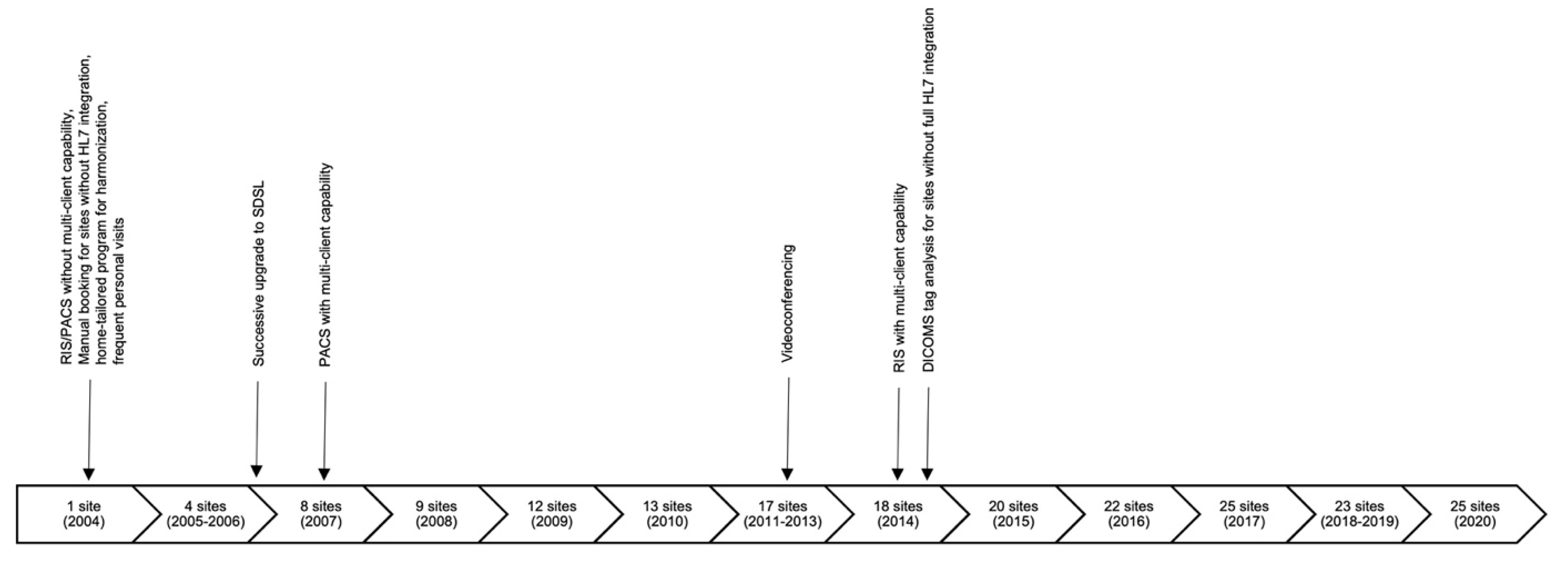
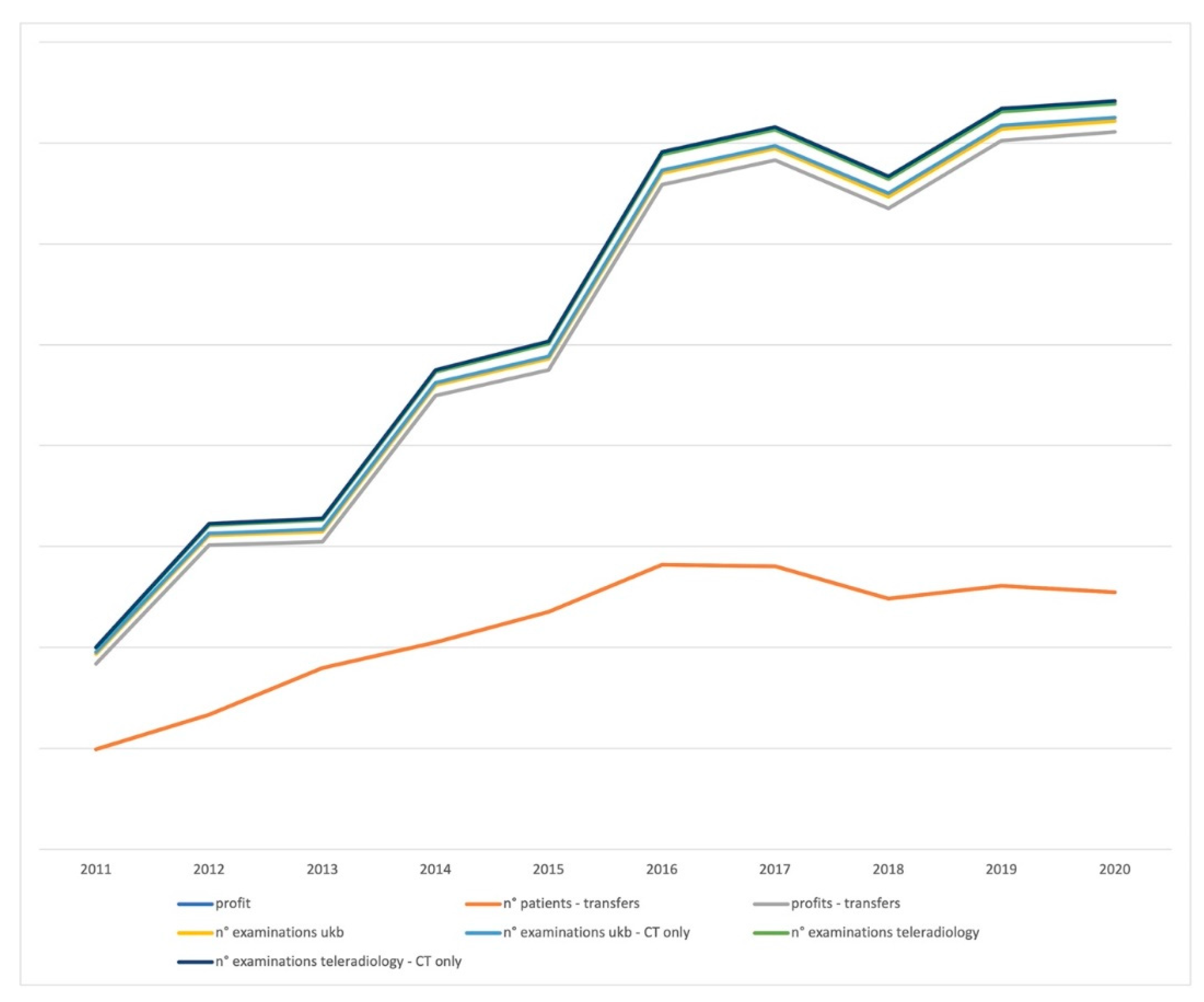
Background: Teleradiology has the potential to link medical experts and specialties despite geographical separation. In a project report about hospital-based teleradiology, the significance of technical and human factors during the implementation and growth of a teleradiology network are explored. Evaluation: The article identifies major obstacles during the implementation and growth of the teleradiology network of the Berlin Trauma Hospital (BG Unfallkrankenhaus Berlin) between 2004 and 2020 in semi-structured interviews with senior staff members. Quantitative analysis of examination numbers, patient numbers, and profits relates the efforts of the staff members to the monetary benefits and success of the network. Identification of qualitative and quantitative factors for success: Soft and hard facilitators and solutions driving the development of the national teleradiology network are identified. Obstacles were often solved by technical innovations, but the time span between required personal efforts, endurance, and flexibility of local and external team members. The article describes innovations driven by teleradiology and hints at the impact of teleradiology on modern medical care by relating the expansion of the teleradiology network to patient transfers and profits. Conclusion: In addition to technical improvements, interpersonal collaborations were key to the success of the teleradiology network of the Berlin Trauma Hospital and remained a unique feature and selling point of this teleradiology network.
Keywords: teleradiology; national; network; obstacles; solutions teleradiology; national; network; obstacles; solutions