Drug Safety in Hospitalized Diabetes Patients: A Retrospective Analysis of Predictors and Clinical Relevance of Potential Drug–Drug Interactions

 , , , , , , and
Abstract
1. Introduction
2. Materials and Methods
2.1. Study Design and Setting
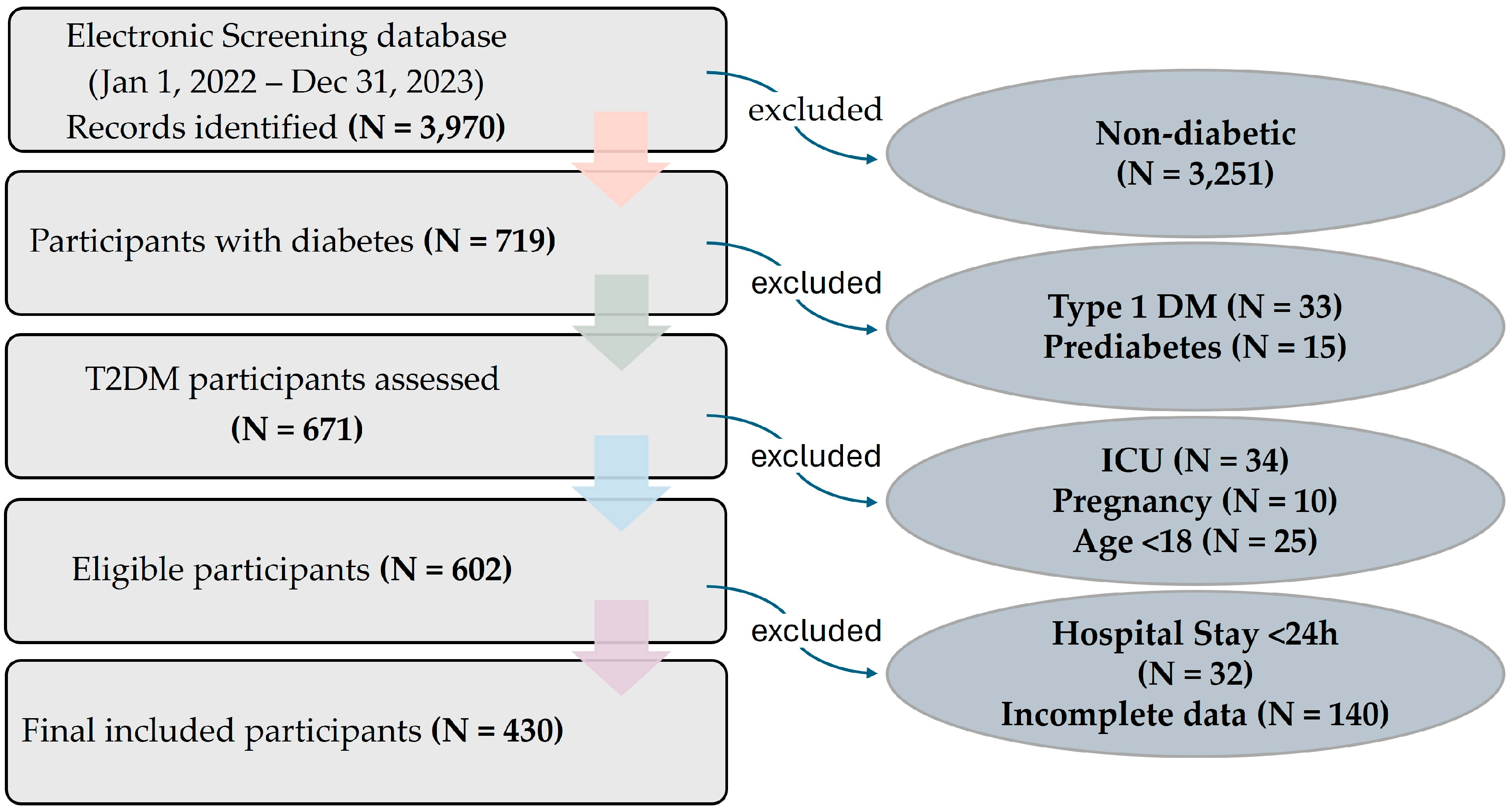
2.2. Study Participants
2.3. Data Source and Collection
2.4. Medications Profiles Screening for pDDIs
2.5. Clinical Relevance and Causality Assessment
- Leukocytosis an abnormal increase in leukocytes in the blood > 11,000/μL;
- Elevated blood urea nitrogen (BUN) level: BUN > 20 mg/dL
- Elevated serum creatinine levels: serum creatinine > 1.00 mg/dL
- Increase d-Dimer level: >500 ng/mL
- Hyperkalemia: serum potassium level exceeding 5.5 mmol/L.
- Hypokalemia: serum potassium level below 3.5 mmol/L
- Hyponatremia: serum sodium level below 135 mmol/L
- Eosinopenia: lower-than-normal level of eosinophils in the blood < 40 cells/µL
- Neutrophilic leukocytosis: increase in leukocytes count > 11,000/μL as well as absolute neutrophil count (ANC) increases >70%.
- Thrombocytopenia: decreased platelet counts below 150,000/µL.
- Prolonged prothrombin time (PT), >15.5 s.
- Hypoglycemia: fasting blood sugar level (FBS) < 60 mg/dL and random blood sugar level (RBS) < 70 mg/Dl.
- Bradycardia: heart rate less than 60 beats/min.
- Tachycardia: heart rate greater than 100 beats/min;
- Hypotension: systolic blood pressure < 80 mm Hg and/or a diastolic blood pressure < 50 mm Hg.
2.6. Variables
2.7. Statistical Analysis
3. Results
3.1. Demographic and Clinical Characteristics of Hospitalized Participants with Diabetes and Their Exposure to Any Type pDDIs and Major pDDIs
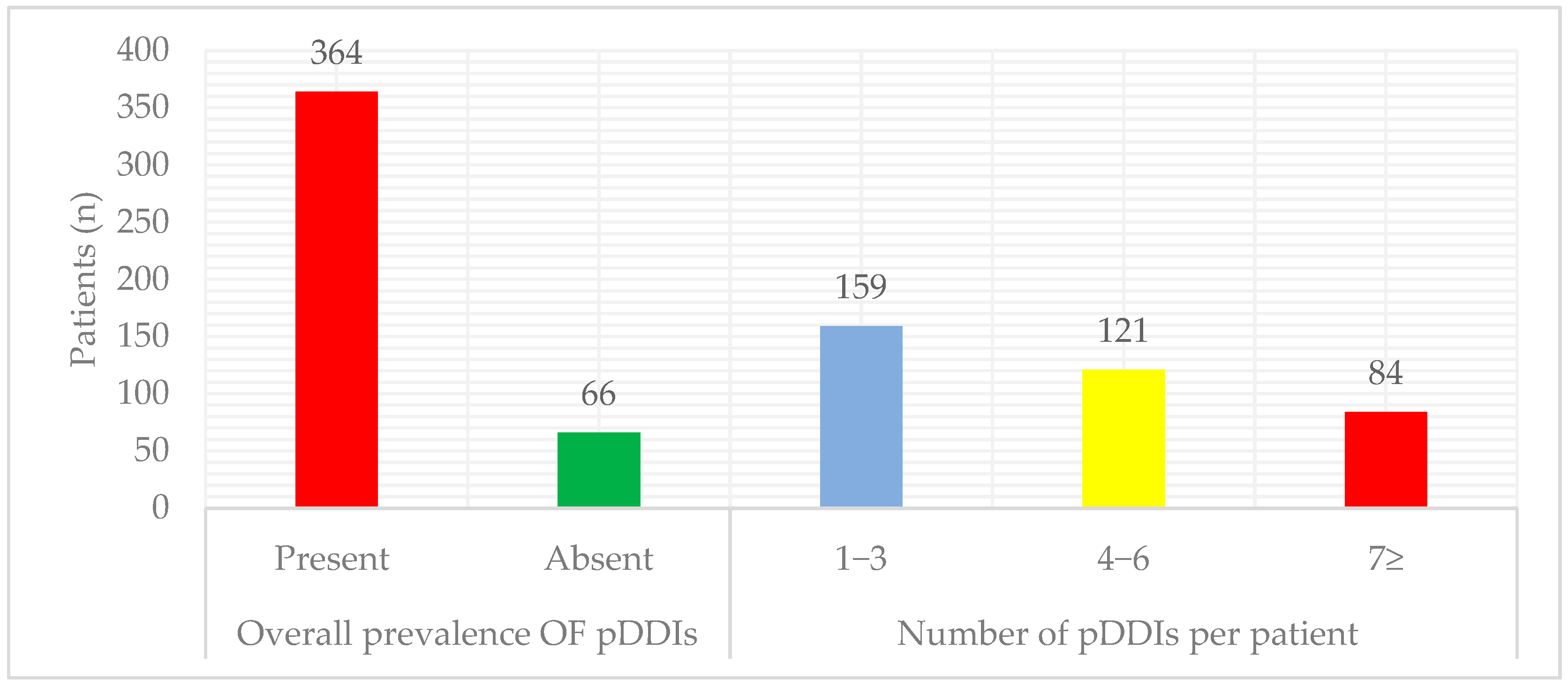
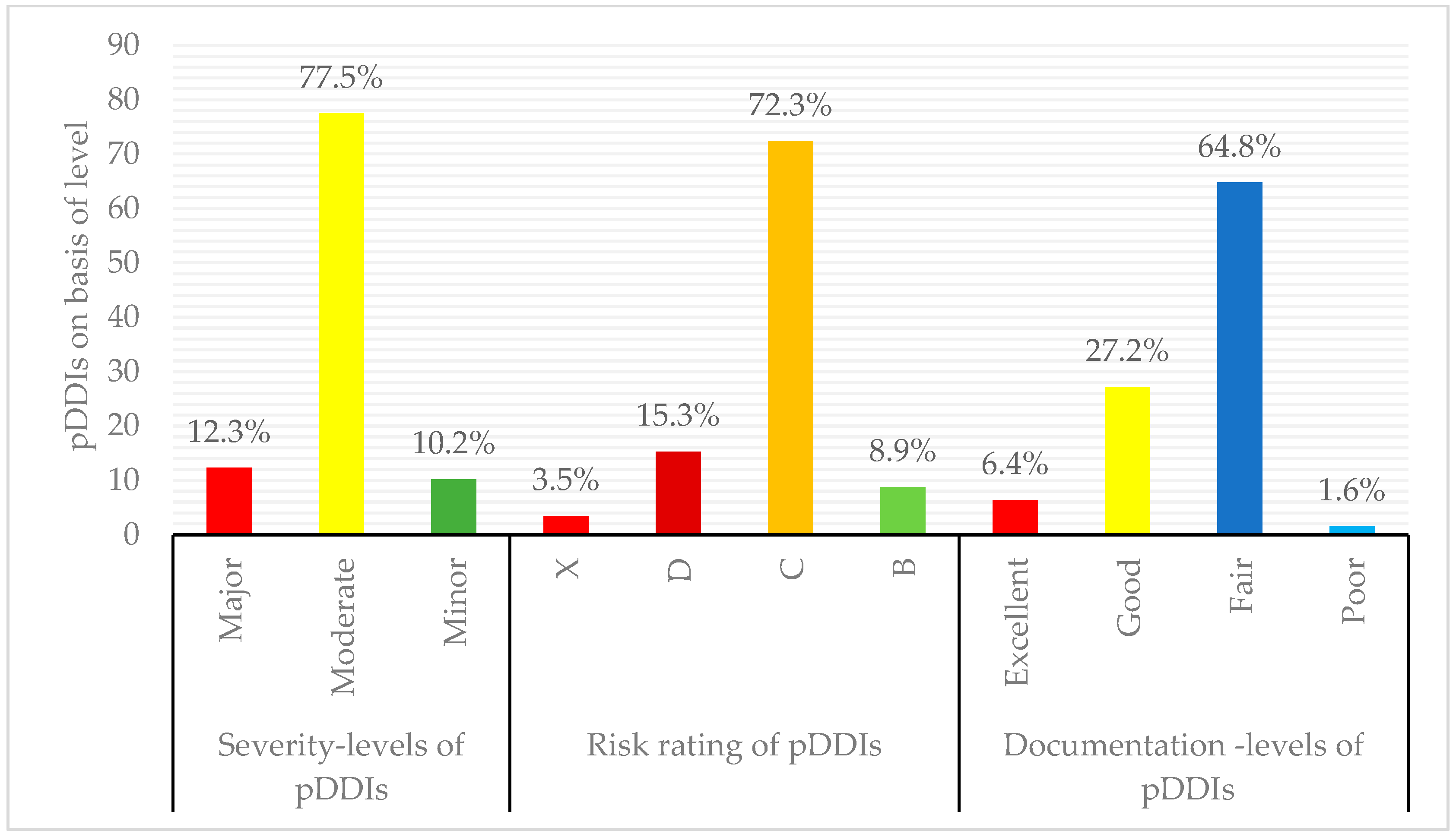
3.2. Prevalence and Classification Levels of pDDIs
3.3. Predictors of pDDIs in Participants with T2DM
3.4. Clinical Relevance and Causality Assessment of the Top 10 Major pDDIs
4. Discussion
5. Limitations
6. Conclusions
Author Contributions
Funding
Institutional Review Board Statement
Informed Consent Statement
Data Availability Statement
Conflicts of Interest
References
- Aloke, C.; Egwu, C.O.; Aja, P.M.; Obasi, N.A.; Chukwu, J.; Akumadu, B.O.; Ogbu, P.N.; Achilonu, I. Current advances in the management of diabetes mellitus. Biomedicines 2022, 10, 2436. [Google Scholar] [CrossRef] [PubMed]
- Sun, H.; Saeedi, P.; Karuranga, S.; Pinkepank, M.; Ogurtsova, K.; Duncan, B.; Stein, C.; Basit, A.; Chan, J.; Atlas, J.M.I.D. Global, regional and country-level diabetes prevalence estimates for 2021 and projections for 2045. Diabetes Res. Clin. Pract. 2022, 183, 109119. [Google Scholar] [CrossRef]
- Wahidin, M.; Achadi, A.; Besral, B.; Kosen, S.; Nadjib, M.; Nurwahyuni, A.; Ronoatmodjo, S.; Rahajeng, E.; Pane, M.; Kusuma, D. Projection of diabetes morbidity and mortality till 2045 in Indonesia based on risk factors and NCD prevention and control programs. Sci. Rep. 2024, 14, 5424. [Google Scholar] [CrossRef] [PubMed]
- Demiral, G.Z.; Akın, S.B. The effects of micro-and macrovascular diabetic complications on ischemic stroke in patients with type 2 diabetes mellitus. Turk. J. Neurol. 2024, 30, 167–172. [Google Scholar] [CrossRef]
- Moke, E.; Demaki, W.; Daubry, T.; Ataikiru, O.; Agbonifo-Chijiokwu, E.; Ofulue, O.; Ekuerhare, B.; Akpoyovwere, O.; Edje, K.; Isibor, N. Coexistence of hypertension with diabetes mellitus and its pharmacotherapy. Sci. Afr. 2023, 22, 135–154. [Google Scholar] [CrossRef]
- Deol, R.; Bashir, S. Exploring the complications of type 2 diabetes mellitus: Pathophysiology and management strategies. EPRA Int. J. Res. Dev. (IJRD) 2024, 9, 173–182. [Google Scholar] [CrossRef]
- Xie, X.; Wu, C.; Hao, Y.; Wang, T.; Yang, Y.; Cai, P.; Zhang, Y.; Huang, J.; Deng, K.; Yan, D. Benefits and risks of drug combination therapy for diabetes mellitus and its complications: A comprehensive review. Front. Endocrinol. 2023, 14, 1301093. [Google Scholar] [CrossRef]
- Kulenovic, A.; Lagumdzija-Kulenovic, A. Minimization of drug interactions in polypharmacy treatments of diabetes mellitus type 2 with cardiovascular comorbidities by using the decision support tool PM-TOM. Inform. Med. Unlocked 2023, 39, 101267. [Google Scholar] [CrossRef]
- Min, J.S.; Bae, S.K. Prediction of drug–drug interaction potential using physiologically based pharmacokinetic modeling. Arch. Pharmacal Res. 2017, 40, 1356–1379. [Google Scholar] [CrossRef]
- Li, L.; Baker, J.; Quirk, R.; Deidun, D.; Moran, M.; Salem, A.A.; Aryal, N.; Van Dort, B.A.; Zheng, W.Y.; Hargreaves, A. Drug–drug interactions and actual harm to hospitalized patients: A multicentre study examining the prevalence pre-and post-electronic medication system implementation. Drug Saf. 2024, 47, 557–569. [Google Scholar] [CrossRef]
- Köhler, G.; Bode-Böger, S.; Busse, R.; Hoopmann, M.; Welte, T.; Böger, R. Drug-drug interactions in medical patients: Effects of in-hospital treatment and relation to multiple drug use. Int. J. Clin. Pharmacol. Ther. 2000, 38, 504–513. [Google Scholar] [CrossRef] [PubMed]
- Kovačević, M.; Vezmar Kovačević, S.; Miljković, B.; Radovanović, S.; Stevanović, P. The prevalence and preventability of potentially relevant drug-drug interactions in patients admitted for cardiovascular diseases: A cross-sectional study. Int. J. Clin. Pract. 2017, 71, e13005. [Google Scholar] [CrossRef]
- Rasool, M.F.; Rehman, A.u.; Khan, I.; Latif, M.; Ahmad, I.; Shakeel, S.; Sadiq, M.; Hayat, K.; Shah, S.; Ashraf, W. Assessment of risk factors associated with potential drug-drug interactions among patients suffering from chronic disorders. PLoS ONE 2023, 18, e0276277. [Google Scholar] [CrossRef] [PubMed]
- Syafhan, N.F.; Andrajati, R.; Wispriyono, B.; Noor, S. Prevalence and Associated Factors of Drug-Drug Interactions in Hospitalized Diabetic Patients: A Cross-Sectional Study. J. Sains Farm. Klin. 2024, 11, 86–94. [Google Scholar]
- Makambwa, E.; Putra, M.Y.; Illahi, A.D.; Khan, M.A.; Yanuar, A. Virtual screening of the Zimbabwe natural product database for glucokinase activators. Asian J. Pharm. Clin. Res. 2025, 18, 56–67. [Google Scholar] [CrossRef]
- AL-Musawe, L.; Torre, C.; Guerreiro, J.P.; Rodrigues, A.T.; Raposo, J.F.; Mota-Filipe, H.; Martins, A.P. Polypharmacy, potentially serious clinically relevant drug-drug interactions, and inappropriate medicines in elderly people with type 2 diabetes and their impact on quality of life. Pharmacol. Res. Perspect. 2020, 8, e00621. [Google Scholar] [CrossRef]
- Ren, W.; Liu, Y.; Jiang, H.; Lv, X.; Zhang, N. Epidemiology of potential drug-drug interactions in hospitalized patients with type 2 diabetes mellitus in China: A retrospective study. Front. Endocrinol. 2024, 15, 1387242. [Google Scholar] [CrossRef]
- Ahmad, A. Assessing Knowledge Gaps and Awareness of Diabetes-Related Drug-Drug, Drug-Food, and Drug-Disease Interactions Among Pharmacy and Non-Pharmacy Students in Saudi Arabia. J. Young Pharm. 2026, 18, 228–234. [Google Scholar] [CrossRef]
- Wiryani, L.S.U.; Putri, E.M.; Herman, H.; Prabowo, P.; Yuniarto, P.F.; Winartiana, W. Analysis of Drug Use and Potential Interactions in Type 2 Diabetes Inpatients at a Type C Hospital, Kediri (2024). MEDFARM J. Farm. Dan Kesehat. 2025, 14, 394–407. [Google Scholar]
- Trevisan, D.D.; Silva, J.B.; Póvoa, V.C.; Araujo, C.P.; Oliveira, H.C.; Araújo, E.P.; Secoli, S.R.; Lima, M.H.M. Prevalence and clinical significance of potential drug-drug interactions in diabetic patients attended in a tertiary care outpatient center, Brazil. Int. J. Diabetes Dev. Ctries. 2016, 36, 283–289. [Google Scholar] [CrossRef]
- Ray, C.-Y.; Wu, V.C.-C.; Wang, C.-L.; Tu, H.-T.; Huang, Y.-T.; Kuo, C.-F.; Chang, S.-H. Hypoglycemia associated with drug–drug interactions in patients with type 2 diabetes mellitus using Dipeptidylpeptidase-4 inhibitors. Front. Pharmacol. 2021, 12, 570835. [Google Scholar] [CrossRef]
- Tuladhar, L.R.; Shrestha, S.L.; Regmi, D.; Bimali, S.; Bhusal, S.; Khadka, P. Drug-drug interactions between hypoglycemic and non-hypoglycemic medication in diabetic patients with comorbidities in a tertiary care center: A descriptive cross-sectional study. JNMA J. Nepal Med. Assoc. 2021, 59, 1125. [Google Scholar] [CrossRef]
- Dash, R.P.; Babu, R.J.; Srinivas, N.R. Reappraisal and perspectives of clinical drug–drug interaction potential of α-glucosidase inhibitors such as acarbose, voglibose and miglitol in the treatment of type 2 diabetes mellitus. Xenobiotica 2018, 48, 89–108. [Google Scholar] [CrossRef]
- Ikäheimo, I.; Karjalainen, M.; Tiihonen, M.; Haanpää, M.; Kautiainen, H.; Saltevo, J.; Mäntyselkä, P. Clinically relevant drug-drug interactions and the risk for drug adverse effects among home-dwelling older persons with and without type 2 diabetes. J. Clin. Pharm. Ther. 2019, 44, 735–741. [Google Scholar] [CrossRef] [PubMed]
- Zanatta, L.; Dalla Cort, F.N.; Silva Mathias, N.; Argenta, C. Analysis of drug interactions and epidemiological profile of individuals with diabetes mellitus in primary care. Rev. Enferm. UFSM 2020, 10, e47. [Google Scholar] [CrossRef]
- Whiteside, H.L.; Hillerson, D.; Buescher, V.; Kreft, K.; Mayer, K.P.; Montgomery-Yates, A.; Gupta, V.A. Establishing a cardiac ICU recovery clinic: Characterizing a model for continuity of cardiac critical care. Crit. Pathw. Cardiol. 2022, 21, 135–140. [Google Scholar] [CrossRef]
- Roblek, T.; Vaupotic, T.; Mrhar, A.; Lainscak, M. Drug-drug interaction software in clinical practice: A systematic review. Eur. J. Clin. Pharmacol. 2015, 71, 131–142. [Google Scholar] [CrossRef] [PubMed]
- Patel, R.I.; Beckett, R.D. Evaluation of resources for analyzing drug interactions. J. Med. Libr. Assoc. 2016, 104, 290–295. [Google Scholar] [CrossRef] [PubMed]
- Baxter, C. Stockley’s Drug Interactions; Pharmaceutical Press: London, UK, 2010. [Google Scholar]
- Horn, J.R.; Hansten, P.D.; Chan, L.-N. Proposal for a new tool to evaluate drug interaction cases. Ann. Pharmacother. 2007, 41, 674–680. [Google Scholar] [CrossRef]
- Pandya, N. Facts and comparisons 4.0. J. Med. Libr. Assoc. 2007, 95, 217. [Google Scholar] [CrossRef][Green Version]
- Bačar Bole, C.; Nagode, K.; Pišlar, M.; Mrhar, A.; Grabnar, I.; Vovk, T. Potential drug-drug interactions among patients with schizophrenia spectrum disorders: Prevalence, association with risk factors, and replicate analysis in 2021. Medicina 2023, 59, 284. [Google Scholar] [CrossRef]
- Habib, S.H.; Saha, S. Burden of non-communicable disease: Global overview. Diabetes Metab. Syndr. Clin. Res. Rev. 2010, 4, 41–47. [Google Scholar] [CrossRef]
- Alemayehu, T.T.; Wassie, Y.A.; Bekalu, A.F.; Tegegne, A.A.; Ayenew, W.; Tadesse, G.; Getachew, D.; Yazie, A.S.; Teketelew, B.B.; Mekete, M.D. Prevalence of potential drug–drug interactions and associated factors among elderly patients in Ethiopia: A systematic review and meta-analysis. Glob. Health Res. Policy 2024, 9, 46. [Google Scholar] [CrossRef]
- Upadhyay, D. Pattern of potential drug-drug interactions in diabetic out-patients in a tertiary care teaching hospital in Nepal. Med. J. Malays. 2007, 62, 294–298. [Google Scholar]
- Santos-Díaz, G.; Pérez-Pico, A.M.; Suárez-Santisteban, M.Á.; García-Bernalt, V.; Mayordomo, R.; Dorado, P. Prevalence of potential drug–drug interaction risk among chronic kidney disease patients in a Spanish hospital. Pharmaceutics 2020, 12, 713. [Google Scholar] [CrossRef] [PubMed]
- Aleksić, D.Z.; Milosavljević, M.N.; Stefanović, S.M.; Bukonjić, A.; Milosavljević, J.Z.; Janković, S.M.; Božović, I.; Perić, S.; Lavrnić, D. Risk factors for potential drug–drug interactions in patients with myasthenia gravis. Neurol. Res. 2021, 43, 1023–1030. [Google Scholar] [CrossRef]
- Castro-Granell, V.; Garin, N.; Jaén, Á.; Cenoz, S.; Galindo, M.J.; Fuster-RuizdeApodaca, M.J. Prevalence, beliefs and impact of drug-drug interactions between antiretroviral therapy and illicit drugs among people living with HIV in Spain. PLoS ONE 2021, 16, e0260334. [Google Scholar] [CrossRef] [PubMed]
- Perić, A.; Udilović, A.; Dobrić, S.; Vezmar Kovačević, S. The impact of treatment choices on potential drug–drug interactions in hypertensive patients. Br. J. Clin. Pharmacol. 2022, 88, 2340–2348. [Google Scholar] [CrossRef]
- Navaratinaraja, T.S.; Kumanan, T.; Siraj, S.; Sreeharan, N. Potential drug–drug interactions among hospitalised elderly patients in northern Sri Lanka, a lower middle-income country: A retrospective analysis. Drugs-Real World Outcomes 2023, 10, 83–95. [Google Scholar] [CrossRef] [PubMed]
- Ismail, M.; Khan, S.; Khan, F.; Noor, S.; Sajid, H.; Yar, S.; Rasheed, I. Prevalence and significance of potential drug-drug interactions among cancer patients receiving chemotherapy. BMC Cancer 2020, 20, 335. [Google Scholar] [CrossRef]
- Humza, A.U.; Akbar, M.A.; Bilal Awan, M.A.; Yousuf, J.B.; Khan, K.; Ammar, A. Prevalence and comparative analysis of potential drug-drug interactions among hospitalized patients at a tertiary care cardiac institute in Pakistan: Findings from a single centre. Pak. J. Pharm. Sci. 2024, 37, 961–968. [Google Scholar] [PubMed]
- Hamidah, K.F.; Rahmadi, M.; Meutia, F.; Kriswidyatomo, P.; Rahman, F.S.; Izzah, Z.; Zulkarnain, B.S.; Aminde, L.N.; Alderman, C.P.; Suprapti, B. Prevalence and factors associated with potentially inappropriate medication and medication complexity for older adults in the emergency department of a secondary teaching hospital in Indonesia. Pharm. Pract. 2022, 20, 2735. [Google Scholar]
- Zafar, R.; Rehman, I.U.; Shah, Y.; Ming, L.C.; Goh, H.P.; Goh, K.W. Comparative analysis of potential drug-drug interactions in a public and private hospital among chronic kidney disease patients in Khyber Pakhtunkhwa: A retrospective cross-sectional study. PLoS ONE 2023, 18, e0291417. [Google Scholar] [CrossRef]
- Samadd, M.A.; Patwary, F.T.; Islam, M.M.; Munia, A.T.; Sikdar, K.Y.K.; Sarkar, M.R. Risk Factors and Patterns of Drug-Drug Interactions in Two Categories of Level-3 Hospitals in Dhaka: A Cross-Sectional Study. Health Sci. Rep. 2025, 8, e70355. [Google Scholar] [CrossRef]
- Rabba, A.K.; Abu Hussein, A.M.; Abu Sbeih, B.K.; Nasser, S.I. Assessing Drug-Drug Interaction Potential among Patients Admitted to Surgery Departments in Three Palestinian Hospitals. BioMed Res. Int. 2020, 2020, 9634934. [Google Scholar] [CrossRef]
- Noor, S.; Ismail, M.; Khadim, F. Potential drug–drug interactions associated with adverse clinical outcomes and abnormal laboratory findings in patients with malaria. Malar. J. 2020, 19, 316. [Google Scholar] [CrossRef]
- Milovanovic, I.R.; Pejcic, A.V. Drug-drug interactions in hospitalized urological patients: A retrospective cohort study. Pharmacology 2025, 110, 15–25. [Google Scholar] [CrossRef]
- Haq, I.; Ismail, M.; Khan, F.; Khan, Q.; Ali, Z.; Noor, S. Prevalence, predictors and outcomes of potential drug-drug interactions in left ventricular failure: Considerable factors for quality use of medicines. Braz. J. Pharm. Sci. 2020, 56, e18326. [Google Scholar] [CrossRef]
- Caratozzolo, S.; Gipponi, S.; Marengoni, A.; Pari, E.; Scalvini, A.; Pasina, L.; Magoni, M.; Padovani, A. Potentially serious drug-drug interactions in older patients hospitalized for acute ischemic and hemorrhagic stroke. Eur. Neurol. 2016, 76, 161–166. [Google Scholar] [CrossRef] [PubMed]
- Andrade, C. The inconvenient truth about convenience and purposive samples. Indian J. Psychol. Med. 2021, 43, 86–88. [Google Scholar] [CrossRef]
- Lobo, M.G.A.d.A.; Pinheiro, S.M.B.; Castro, J.G.D.; Momenté, V.G.; Pranchevicius, M.-C.S. Adverse drug reaction monitoring: Support for pharmacovigilance at a tertiary care hospital in Northern Brazil. BMC Pharmacol. Toxicol. 2013, 14, 5. [Google Scholar] [CrossRef] [PubMed]
- Patidar, D.; Rajput, M.S.; Nirmal, N.P.; Savitri, W. Implementation and evaluation of adverse drug reaction monitoring system in a tertiary care teaching hospital in Mumbai, India. Interdiscip. Toxicol. 2013, 6, 41. [Google Scholar] [CrossRef] [PubMed]
- Chowdhary, R.; Roshi, T.; Tandon, V. Role of free web based software in evaluating the profile of drug-drug interactions. J. Cardiovasc. Dis. 2022, 13, 399–404. [Google Scholar]



| Variables | Participants: n (%) | Exposure to pDDIs: n (%) | |||
|---|---|---|---|---|---|
| pDDIs of All Types | p-Value | Major pDDIs | p-Value | ||
| Gender a | |||||
| Female | 232 (54) | 192 (44.7) | 0.239 | 72 (16.7) | 0.77 |
| Male | 198 (46) | 172 (40) | 64 (14.9) | ||
| Age (years) a | |||||
| 18–60 | 197 (45.8) | 171 (39.8) | 0.255 | 53 (12.3) | 0.05 |
| >60 | 233 (54.2) | 193 (44.9) | 83 (19.3) | ||
| Number of medications used per participant a | |||||
| ≤6 | 102 (23.7) | 47 (10.9) | <0.001 | 6 (1.3) | <0.001 |
| 7–12 | 234 (54.4) | 228 (53) | 70 (16.3) | ||
| ≥13 | 94 (21.9) | 89 (20.7) | 60 (14) | ||
| Hospital stays (days) a | |||||
| ≤3 | 235 (54.7) | 172 (40) | <0.001 | 18 (4.2) | <0.001 |
| ≥4 | 195 (45.3) | 192 (44.7) | 118 (27.4) | ||
| Number of comorbidities a | |||||
| ≤2 | 305 (70.9) | 244 (56.7) | <0.001 | 66 (15.3) | <0.001 |
| ≥3 | 125 (29.1) | 120 (27.9) | 70 (16.3) | ||
| Comorbidities/complications | |||||
| Hypertension a | 132 (30.7) | 123 (28.6) | 0.001 | 57 (13.3) | <0.001 |
| Diabetes complications a | 71 (16.5) | 61 (14.2) | 0.74 | 23 (5.3) | 0.87 |
| CKD a | 48 (11.1) | 41 (9.5) | 0.87 | 19 (4.4) | 0.20 |
| CHF a | 39 (9.0) | 33 (7.7) | 0.99 | 18 (4.2) | 0.04 |
| CAD a | 39 (9.0) | 35 (8.1) | 0.35 | 14 (3.3) | 0.54 |
| AKI a | 35 (8.2) | 34 (7.9) | 0.03 | 12 (2.8) | 0.72 |
| Dyslipidemia a | 29 (6.7) | 26 (6.0) | 0.59 | 12 (2.8) | 0.24 |
| CSVD b | 29 (6.7) | 27 (6.3) | 0.28 | 16 (3.7) | 0.005 |
| Gastroenteritis b | 28 (6.5) | 21 (4.9) | 0.17 | 9 (2.1) | 0.95 |
| UTI b | 25 (5.8) | 22 (5.1) | 0.78 | 12 (2.8) | 0.07 |
| Variables | All Types of pDDIs | Major-pDDIs | ||||||
|---|---|---|---|---|---|---|---|---|
| Univariate Analysis | Multivariate Analysis | Univariate Analysis | Multivariate Analysis | |||||
| OR (95% CI) | p-Value | OR (95% CI) | p-Value | OR (95% CI) | p-Value | OR (95% CI) | p-Value | |
| Gender | ||||||||
| Female | Reference | Reference | ||||||
| Male | 1.4 (0.8–2.4) | 0.24 | - | - | 1 (0.7–1.6) | 0.77 | - | - |
| Age (years) | ||||||||
| 18–60 | Reference | Reference | Reference | |||||
| ≥60 | 0.7 (0.4–1.2) | 0.26 | - | - | 1.5 (0.9–2.2) | 0.005 | 0.9 (0.5–1.5) | 0.77 |
| Drugs prescribed per participant | ||||||||
| ≤6 | Reference | Reference | Reference | Reference | ||||
| 7–12 | 44.5 (18.1–109.3) | <0.001 | 30.1 (11.7–77.8) | <0.001 | 6.8 (2.9–16.3) | <0.001 | 2.1 (0.8–5.8) | 0.12 |
| ≥13 | 20.8 (7.8–55.6) | <0.001 | 5.4 (1.6–19.1) | 0.008 | 28.2 (11.2–71.2) | <0.001 | 5.5 (1.9–16.1) | 0.002 |
| Hospital stays (days) | ||||||||
| ≤3 | Reference | Reference | Reference | Reference | ||||
| ≥4 | 23.4 (7.2–76) | <0.001 | 9.7 (2.5–38.7) | 0.001 | 18.5 (10.6–32.3) | <0.001 | 11.3 (5.9–21.6) | <0.001 |
| Number of comorbidities | ||||||||
| ≤2 | Reference | Reference | Reference | Reference | ||||
| ≥3 | 6 (2.3–15.3) | <0.001 | 1.6 (0.5–5) | 0.42 | 4.6 (2.9–7.2) | <0.001 | 1.4 (0.7–2.5) | 0.25 |
| Comorbidities/complications | ||||||||
| Hypertension | 3.2 (1.5–6.7) | 0.002 | 1.5 (0.5–3.7) | 0.43 | 2.1 (1.3–3.2) | <0.001 | 1.2 (0.7–2.1) | 0.39 |
| Diabetes complications | 1.1 (0.5–2.3) | 0.74 | - | - | 1 (0.6–1.8) | 0.88 | - | - |
| CKD | 1 (0.4–2.5) | 0.87 | - | - | 1.5 (0.8–2.8) | 0.21 | - | - |
| CHF | 0.9 (0.4–2.4) | 0.99 | - | - | 1.9 (1–3.9) | 0.04 | 2.1 (0.9–5.2) | 0.08 |
| CAD | 1.6 (0.6–4.8) | 0.36 | - | - | 1.2 (0.6–2.5) | 0.54 | - | - |
| AKI | 6.7 (0.9–49.8) | 0.06 | 5.4 (0.6–47.7) | 0.13 | 1.1 (0.5–2.4) | 0.72 | - | - |
| Dyslipidemia | 1.6 (0.5–5.5) | 0.44 | - | - | 1.5 (0.7–3.4) | 0.24 | - | - |
| CSVD | 2.6 (0.6–11) | 0.20 | - | - | 2.9 (1.3–6.2) | 0.007 | 1.6 (0.6–4.3) | 0.30 |
| Gastroenteritis | 0.5 (0.2–1.3) | 0.14 | 0.2 (0.6–0.9) | 0.42 | 1 (0.4–2.3) | 0.95 | - | - |
| UTI | 1.3 (0.4–4.6) | 0.63 | - | - | 2 (0.9–4.7) | 0.07 | 3.5 (1.1–10.6) | 0.02 |
| Interactions a | Documentation and Risk Rating [31] | DIPS Score | Clinical Relevance | Monitoring and Management Guidelines [17,32] | |
|---|---|---|---|---|---|
| Signs and Symptoms a | Abnormal Laboratory Results a | ||||
| Ceftriaxone/ Calcium Containing products [30] | Fair D | 5 (n = 4), 4 (n = 5), 3 (n = 22), 2 (n = 4) | Fever (10), Cough (7), Chest pain (1), Sepsis (1), Difficulties in breathing (6), Nephrolithiasis (1) | Leukocytosis (17), Evaluated BUN (16), High serum creatinine (13) | Ceftriaxone should not be administered concurrently with calcium-containing intravenous solutions, including continuous infusions such as parenteral nutrition administered via the Y-site. Avoid mixing them in the same IV administration line. Patients should be monitored for potential nephrotoxicity, thrombosis, precipitate deposition in the lungs, or reduced effectiveness of ceftriaxone. |
| Clopidogrel /Omeprazole [17] | Good X | 4 (n = 1), 3 (n = 15), 2 (n = 1) | Shortness of breath (3), pedal edema (2), fatigue (1) | Evaluated D-dimer (1) | Avoid concurrent use of clopidogrel with omeprazole because that combination may result in decreased effectiveness of clopidogrel. Use of pantoprazole or rabeprazole as an alternative to omeprazole may reduce the risk. |
| Ramipril/ Spironolactone [14] | Good (C) | 5 (n = 2), 4 (n = 2), 3 (n = 10) | Tachycardia (3), chest pain (2), vomiting (1), nausea (1), diarrhea (1) | Hyperkalemia (2), Hypokalemia (1) Hyponatremia (4), Evaluated BUN (5), High serum creatinine (6) | Patients should be closely monitored for persistent hyperkalemia, especially those with diabetes or renal dysfunction, as hyperkalemia may result in serious arrhythmia and be life-threatening. A spironolactone dose of 25 mg daily or on alternate days may be considered for patients co-prescribed with spironolactone and ramipril. |
| Spironolactone/ Candesartan [10] | Fair (C) | 5 (n = 2), 4 (n = 1), 3 (n = 6), 2 (n = 1) | Tachycardia (2), chest pain (2), palpitation (1), vomiting (1), diarrhea (2), difficulties in breathing (1) | Evaluated T wave (2), Hyperkalemia (1), Hyponatremia (4), Evaluated BUN (1), High serum creatinine (1) | Patients should be closely monitored for persistent hyperkalemia, renal toxicity, and hypotension, especially those with diabetes and the elderly, because these conditions may result in serious arrhythmia and death. Dose adjustment or avoidance of concurrent use may be considered in high-risk patients to prevent serious complications |
| Clopidogrel/ Lansoprazole [9] | Fair C | 3 (n = 8), 2 (n = 1) | Shortness of breath (1), pedal edema (1), chest pain (1) | Evaluated D-dimer (1) | Avoid concurrent use of clopidogrel and lansoprazole because that combination may decrease clopidogrel’s effectiveness. The use of pantoprazole or rabeprazole may decrease the risk alternative to lansoprazole. |
| Levofloxacin/ Sucralfate [8] | Excellent D | 4 (n = 1), 3 (n = 6), 2 (n = 1) | Fever (1), urosepsis (1), sepsis (1) | Leukocytosis (5), neutrophilic leukocytosis (2). | Avoid concurrent use of levofloxacin and sucralfate, which reduces levofloxacin absorption, leading to decreased effectiveness. Sucralfate administration at least 2 h before or 2 h after taking levofloxacin. Monitor the patient for treatment response and ensure that the infection resolves as expected. |
| Aspirin/Ketorolac [6] | Fair X | 5 (n = 1), 4 (n = 1), 3 (n = 4) | Tachycardia (1), basal pain with edema (1), blood seeping (1) | Thrombocytopenia (2), High PT (1) | Ketorolac can intensify the toxic effects of aspirin and elevate the risk of bleeding. Monitor patients’ platelet counts and assesses any signs of bleeding. If adverse effects are observed, reduce the dose of aspirin and consider using a proton pump inhibitor for gastrointestinal protection. |
| Insulin–aspart/ Pioglitazone [5] | Fair D | 5 (n = 1), 3 (n = 4), | Tachycardia (1), nervousness or anxiety (1), fatigue (1) | Hypoglycemia (1) | Regular monitoring of blood glucose levels and clinical signs of hypoglycemia is essential, and insulin dose adjustments should be made as clinically indicated to maintain optimal glycemic control. |
| Spironolactone/ Ketorolac [5] | Fair C | 5 (n = 1), 3 (n = 3), 2 (n = 1) | Severe headache (1), palpitations (1), chest pain (1), bradycardia (1) | Hypotension (1), Hyperkalemia (1), Hyponatremia (2), Evaluated BUN (2), High serum creatinine (1) | Ketorolac may reduce antihypertensive activity and enhance the hyperkalemic effect of Spironolactone. Patients should be monitored for hyperkalemia, worsening signs and symptoms of renal dysfunction, the efficacy of spironolactone, and blood pressure in those chronically using spironolactone with ketorolac and should be educated about the decrease in dietary potassium intake. |
| Allopurinol/ Ramipril [5] | Fair C | 3 (n = 5), | Fever (2), bradycardia (2), acral edema (1) | Eosinopenia (1), Leukocytosis (2), | The concomitant use of allopurinol and ramipril increases the risk of hypersensitivity reactions. A patient receiving allopurinol along with ramipril should be closely monitored for signs of hypersensitivity following the start of allopurinol treatment for a period of no less than 5 weeks. |
Disclaimer/Publisher’s Note: The statements, opinions and data contained in all publications are solely those of the individual author(s) and contributor(s) and not of MDPI and/or the editor(s). MDPI and/or the editor(s) disclaim responsibility for any injury to people or property resulting from any ideas, methods, instructions or products referred to in the content. |
© 2026 by the authors. Licensee MDPI, Basel, Switzerland. This article is an open access article distributed under the terms and conditions of the Creative Commons Attribution (CC BY) license.
Share and Cite
Khan, M.A.; Syafhan, N.F.; Noor, S.; Alshammari, M.S.; Alotaibi, M.; Alrohily, W.; Alanazi, A.H.; Alsubhi, W.A.; Al Shammari, L.; Imran, M.R.; et al. Drug Safety in Hospitalized Diabetes Patients: A Retrospective Analysis of Predictors and Clinical Relevance of Potential Drug–Drug Interactions. Healthcare 2026, 14, 1224. https://doi.org/10.3390/healthcare14091224
Khan MA, Syafhan NF, Noor S, Alshammari MS, Alotaibi M, Alrohily W, Alanazi AH, Alsubhi WA, Al Shammari L, Imran MR, et al. Drug Safety in Hospitalized Diabetes Patients: A Retrospective Analysis of Predictors and Clinical Relevance of Potential Drug–Drug Interactions. Healthcare. 2026; 14(9):1224. https://doi.org/10.3390/healthcare14091224
Chicago/Turabian StyleKhan, Muhammad Adil, Nadia Farhanah Syafhan, Sidra Noor, Mohammed S. Alshammari, Meshal Alotaibi, Waad Alrohily, Abdulaziz H. Alanazi, Wael A. Alsubhi, Latifah Al Shammari, Mohd Rasheeduddin Imran, and et al. 2026. "Drug Safety in Hospitalized Diabetes Patients: A Retrospective Analysis of Predictors and Clinical Relevance of Potential Drug–Drug Interactions" Healthcare 14, no. 9: 1224. https://doi.org/10.3390/healthcare14091224
APA StyleKhan, M. A., Syafhan, N. F., Noor, S., Alshammari, M. S., Alotaibi, M., Alrohily, W., Alanazi, A. H., Alsubhi, W. A., Al Shammari, L., Imran, M. R., & Ahmad, A. (2026). Drug Safety in Hospitalized Diabetes Patients: A Retrospective Analysis of Predictors and Clinical Relevance of Potential Drug–Drug Interactions. Healthcare, 14(9), 1224. https://doi.org/10.3390/healthcare14091224