Systematic Review

Evaluating Artificial Intelligence Models for ICU Length of Stay Prediction: A Systematic Review and Meta-Analysis


by
Carlos Zepeda-Lugo
1,
Andrea Insfran-Rivarola
2,
Marcos Sanchez-Lizarraga
3,
Sharon Macias-Velasquez
4,
Ana-Pamela Arevalos
2,
Yolanda Baez-Lopez
1,* and
Diego Tlapa
1,*
1
Facultad de Ingeniería, Arquitectura y Diseño, Universidad Autónoma de Baja California, Ensenada 21100, Mexico
2
Laboratorio de Producción y Métodos, Departamento de Ingeniería Industrial, Universidad Nacional de Asunción, San Lorenzo 2160, Paraguay
3
Unidad Académica de Negocios, Universidad Autónoma de Sinaloa, Los Mochis 81223, Mexico
4
Facultad de Ingeniería, Universidad Autónoma de San Luis Potosí, San Luis Potosí 78290, Mexico
*
Authors to whom correspondence should be addressed.
Healthcare 2026, 14(9), 1131; https://doi.org/10.3390/healthcare14091131

Submission received: 17 March 2026 / Revised: 19 April 2026 / Accepted: 20 April 2026 / Published: 23 April 2026
(This article belongs to the Section Healthcare and Sustainability)

Abstract

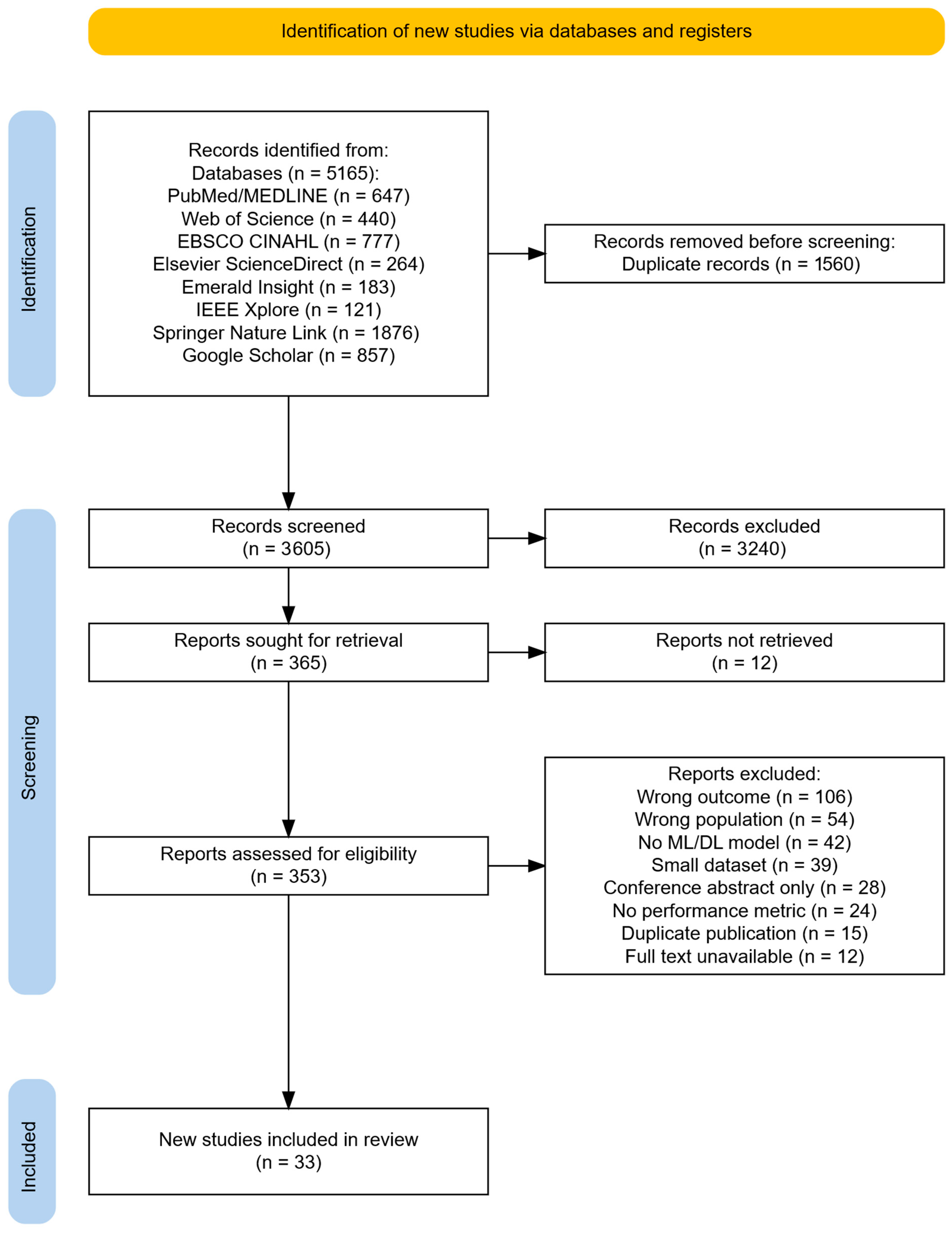
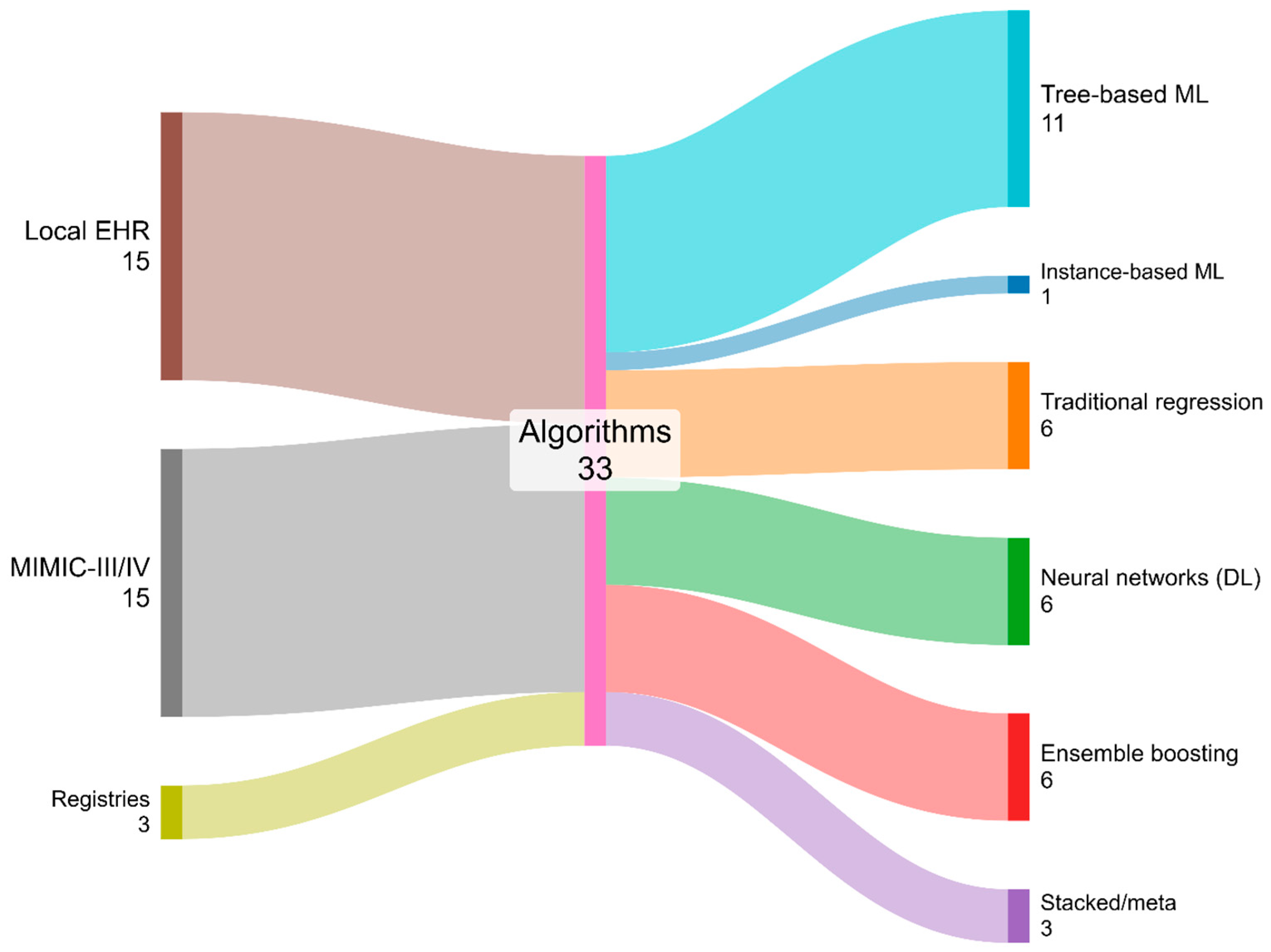
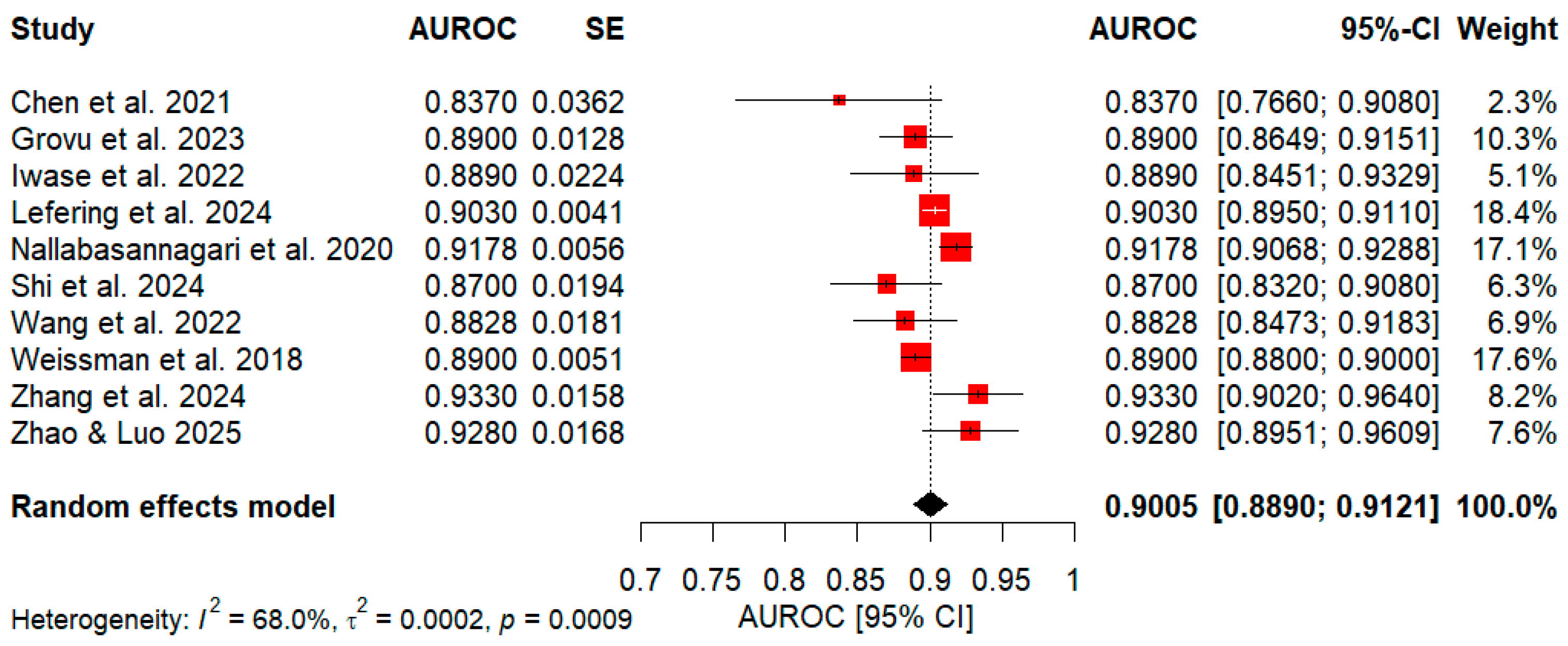
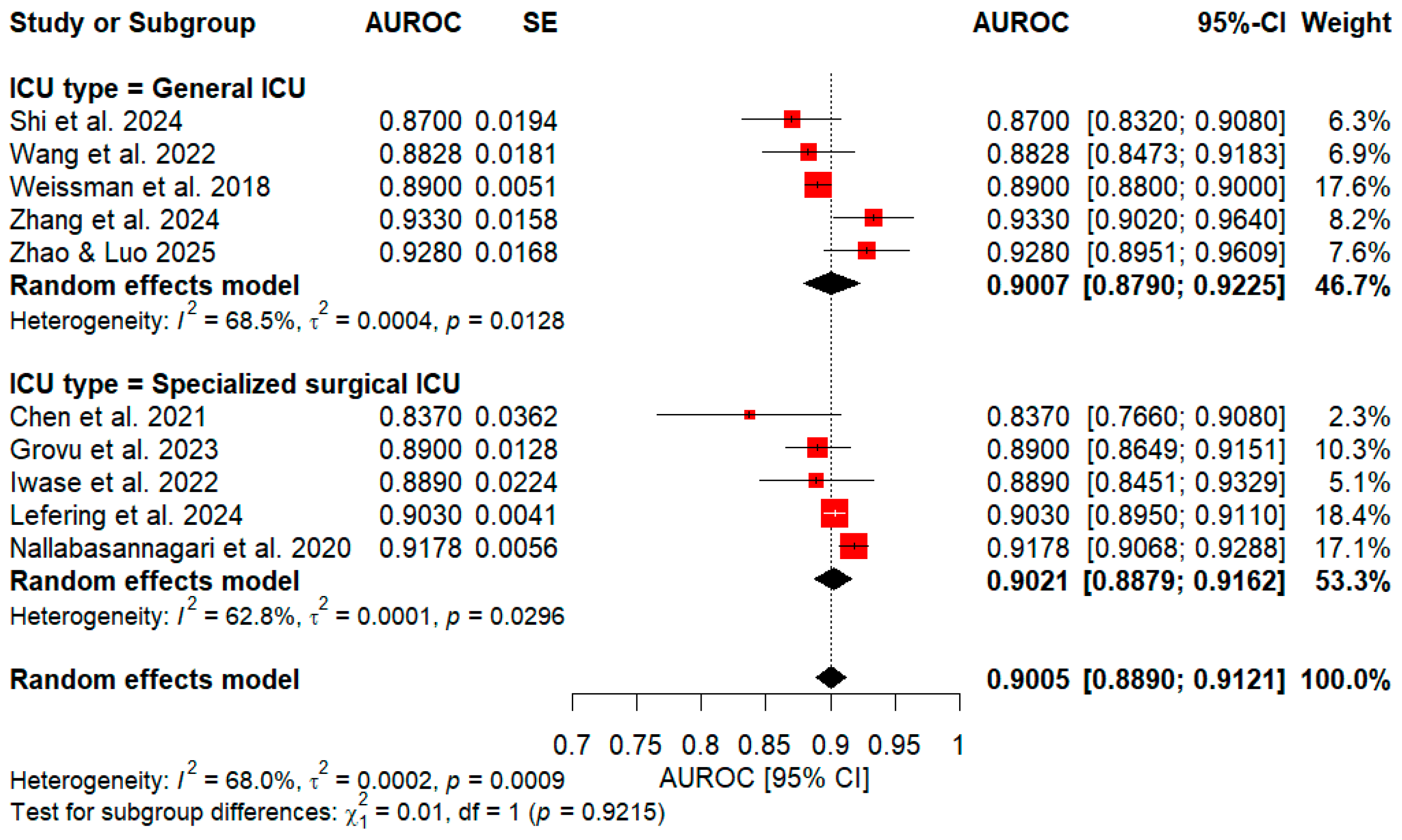
Background/Objectives: Efficient management of intensive care unit (ICU) resources is a critical challenge for modern healthcare systems, which must balance high-quality patient care with operational and financial performance. ICU length of stay (LOS) is a key metric of clinical complexity and hospital efficiency. However, traditional methods for predicting LOS often fail to capture the complex, nonlinear interactions among physiological, demographic, and treatment-related variables. Machine learning (ML) and deep learning (DL) models have emerged as promising tools for enhancing predictive accuracy and supporting data-driven decision-making. Methods: This study presents a systematic review and meta-analysis of ML and DL approaches for predicting ICU LOS in adult patients. Following PRISMA guidelines, eight scientific databases were searched, yielding 33 eligible studies published between 2015 and 2025. Results: Mixed medical–surgical ICUs were the most common setting (51.5%), and 45.5% of datasets were sourced from public repositories. Most studies (19/33) focused on binary classification of prolonged stays, although thresholds ranged from >48 h to ≥14 days. The pooled results from ten studies yielded an AUROC of 0.9005 (95% CI: 0.8890–0.9121), indicating strong predictive capability across diverse clinical contexts. Subgroup analyses showed comparable performance between specialized surgical and general ICUs. Conclusions: These findings suggest that AI-driven LOS prediction models exhibit strong discriminatory power for ICU LOS prediction, supporting hospital capacity planning. However, to translate this into reliable clinical support, the methodological heterogeneity, scarcity of external validation, and near absence of calibration reporting identified in this review need to be addressed.
Keywords: intensive care; length of stay; machine learning; deep learning; health informatics; sustainability intensive care; length of stay; machine learning; deep learning; health informatics; sustainability