Article

Sex Differences in Overall Survival Among Patients with Non-Small-Cell Lung Cancer Across Clinical Stages: A Population-Based SEER Study

1
Center for Clinical Research and Translational Medicine, Yangpu Hospital, Tongji University School of Medicine, Tongji University, Shanghai 200070, China
2
Department of Molecular Diagnostics and Experimental Therapeutics, Beckman Research Institute of City of Hope, Biomedical Research Center, Monrovia, CA 91016, USA
3
Department of Respiratory and Critical Care Medicine, Health Science Center, Peking University Third Hospital, Peking University, Beijing 100191, China
4
School of Medicine, Shanghai Children’s Hospital, Shanghai Jiao Tong University, Shanghai 200062, China
*
Authors to whom correspondence should be addressed.
Healthcare 2026, 14(7), 966; https://doi.org/10.3390/healthcare14070966
Submission received: 14 February 2026 / Revised: 27 March 2026 / Accepted: 30 March 2026 / Published: 7 April 2026

Abstract

Background/Objective: Sex-based disparities in cancer outcomes have gained increasing attention in women’s health research. We examined the relationship between sex and overall survival (OS) among patients with non-small-cell lung cancer (NSCLC), with particular emphasis on the survival advantage observed in women across different clinical stages and treatment settings. Sex-related differences in cancer outcomes have become an important focus in oncology and women’s health research. This study aimed to investigate the association between sex and overall survival (OS) in patients with non-small-cell lung cancer (NSCLC), with particular attention to the observed survival advantage in women across clinical stages and treatment contexts. Methods: A total of 129,864 patients diagnosed with NSCLC were identified, including 78,460 men and 51,404 women. Demographic characteristics, socioeconomic status, tumor features, treatment modalities, and survival outcomes were compared between sexes. Kaplan–Meier survival analyses and stage-stratified Cox proportional hazards models were used to evaluate overall survival differences between female and male patients. Results: Women demonstrated significantly superior OS compared with men across all stages of NSCLC (all p < 0.001). This survival advantage persisted regardless of receipt of chemotherapy. Among patients receiving chemotherapy, survival improvements were observed in both sexes; however, women consistently exhibited longer median OS at each stage. From stage IB to IV, median OS in women was 52.0, 30.0, 13.0, and 5.0 months, respectively, compared with 33.0, 23.0, 11.0, and 4.0 months in men. Notably, the magnitude of sex-related survival differences was more pronounced in earlier stages (IB/II) than in advanced stages (III/IV), suggesting potential biological or treatment response differences favoring women. Age-stratified analyses further demonstrated that women older than 45 years experienced a consistent survival advantage across all stages. Multivariable Cox regression confirmed that female sex was independently associated with reduced mortality risk at every stage (HRs ranging from 0.766 to 0.857; all p < 0.001). Conclusions: Women with NSCLC exhibit a significant and independent survival advantage over men across clinical stages, regardless of chemotherapy status, particularly among patients older than 45 years. These findings highlight the importance of considering sex in prognostic assessment and support further investigation into factors contributing to survival differences in NSCLC.

1. Introduction

Lung cancer is one of the most diagnosed malignancies and remains the leading cause of cancer-related mortality worldwide [1]. Although historically considered a predominantly male disease, the incidence of lung cancer among women has risen substantially over the past decades, making it an increasingly important global women’s health concern. Global estimates indicate that lung cancer accounts for approximately 1.7 million deaths each year [2]. Lung cancer is broadly classified into non-small-cell lung cancer (NSCLC) and small-cell lung cancer (SCLC), with NSCLC accounting for approximately 85% of all cases. The major histological subtypes of NSCLC comprise squamous-cell carcinoma (SCC), adenocarcinoma (AD), and large-cell neuroendocrine carcinoma (LCNC).
Treatment strategies for NSCLC are largely determined by tumor stage. Surgical resection remains the standard and most appropriate treatment for patients with early-stage disease. However, postoperative survival outcomes vary considerably and depend on patients’ physical status, tumor stage, and histological subtype. Previous studies have reported the 5-year survival following surgical resection for NSCLC remains around 25% [2,3,4,5]. Moreover, the risk of recurrence persists even after complete resection.
To improve long-term outcomes, chemotherapy and/or radiotherapy are frequently administered following surgical resection to eradicate residual malignant cells and limit metastatic spread. The beneficial effect of chemotherapy on overall survival (OS) has been consistently demonstrated across multiple clinical trials [6,7]. Furthermore, studies have demonstrated that chemotherapy has been linked to improved survival outcomes in patients with NSCLC, including elderly individuals and those with comorbidities [8,9,10].
Emerging evidence suggests that lung cancer in women may differ from that in men in terms of epidemiological characteristics, tumor biology, treatment response, and survival outcomes [11,12]. Several studies have reported improved survival among women with NSCLC; however, the magnitude of this advantage across different clinical stages remains incompletely understood [13]. In addition, whether sex influences the survival benefit derived from chemotherapy has not been comprehensively evaluated.
Understanding sex-specific survival patterns is essential for optimizing individualized treatment strategies and advancing precision medicine in women’s health.
Therefore, this population-based cohort study was conducted to assess whether sex influences overall survival in patients with NSCLC treated with and without chemotherapy across clinical stages IB–IV.

2. Methods

2.1. Data Acquisition and Cohort Definition

This population-based study utilized data from the Surveillance, Epidemiology, and End Results (SEER) database, a nationwide program consisting of 18 cancer registries in the United States [14]. The SEER database covers approximately 28% of the U.S. population and provides comprehensive clinical and demographic information for cancer patients [15]. It includes variables related to socio-demographic factors (e.g., geographic region, education level, and household income) as well as tumor characteristics such as histology, size, and stage. These data enable large-scale analyses of treatment outcomes and survival.
Patients diagnosed with non-small-cell lung cancer (NSCLC) between 2004 and 2015 were identified from the SEER database. Tumor staging was determined using the Derived AJCC Stage Group variable, which integrates staging information across different AJCC editions and allows for consistent classification across calendar years. Based on this variable, patients were grouped into stages IB, II, III, and IV for subsequent analyses. Patients were excluded if they had incomplete or missing data on survival or tumor stage, were lost to follow-up, or had lung cancer that was not their first primary malignancy.
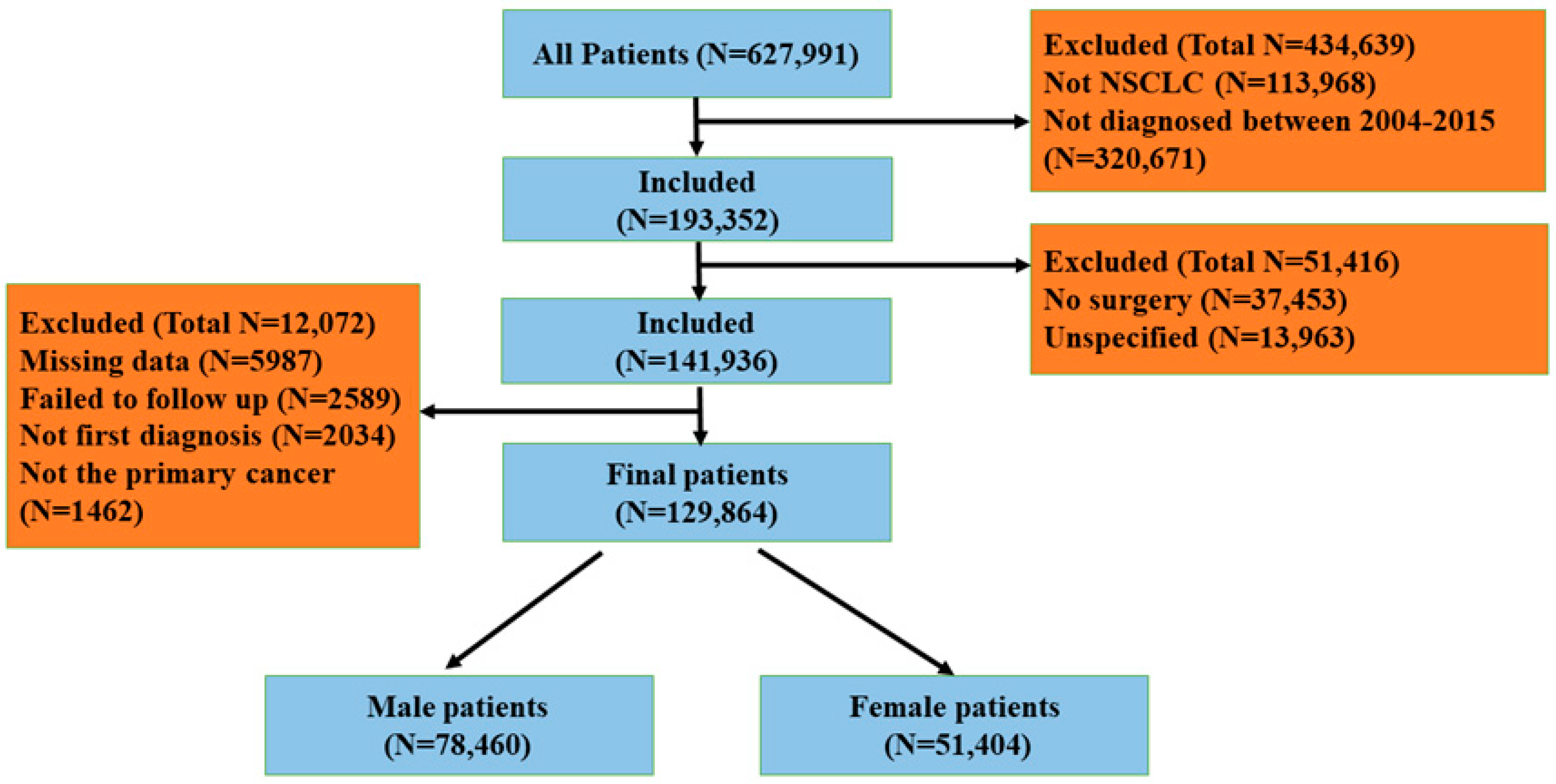
In total, 129,864 patients with pathologically confirmed NSCLC were included in the final analysis, comprising 78,460 males and 51,404 females. All included patients underwent either surgical treatment alone or surgery combined with chemotherapy. The patient selection process is illustrated in Figure 1.

2.2. Study Variables

Clinical and demographic data of patients with NSCLC were obtained from the SEER database. The variables extracted included race, sex, geographic region, primary tumor location, tumor grade, laterality, histological subtype, number of lymph nodes examined, tumor stage, chemotherapy status, and the presence of bone, brain, liver, or lung metastases. Additional variables included first malignant indicator, age at diagnosis, insurance status, marital status, level of high school education, and median family income.
Chemotherapy was defined as a binary variable (yes vs. no) according to SEER registry coding. Detailed information regarding chemotherapy regimen, administration route, timing (adjuvant, neoadjuvant, or palliative), dose intensity, and treatment intent is not available in the SEER database.
Overall, 20 variables were incorporated into the subsequent univariate and multivariable statistical analyses.

2.3. Statistical Methods and Analysis

All analyses were conducted using IBM SPSS software (version 20.0; IBM Corp., Armonk, NY, USA). Baseline characteristics between male and female patients were compared using the chi-square test for categorical variables. Overall survival (OS) was estimated using the Kaplan–Meier method, and differences between groups were evaluated with the log-rank test. Median follow-up time was calculated using the reverse Kaplan–Meier approach. To account for potential confounding, multivariable Cox proportional hazards models were constructed to identify independent predictors of OS for each clinical stage. The proportional hazards assumption was assessed during model diagnostics, and no significant violations were observed for the primary exposure variable (sex) in the stage-specific models. A two-sided p-value < 0.05 was considered statistically significant.

3. Results

3.1. Characteristics of the Study Population

A total of 129,864 patients with NSCLC were included in this population-based study, comprising 78,460 men and 51,404 women. Baseline demographic, clinicopathological, and socioeconomic characteristics stratified by sex are summarized in Table 1.
In both groups, the majority of patients were White (men: 81.8%; women: 83.3%) and predominantly located in the eastern region (49.5% vs. 46.6%). Tumors were most frequently found in the upper lung lobe (52.1% vs. 50.7%) and exhibited a right-sided predominance (55.2% vs. 56.0%). A substantial proportion of tumors were poor differentiation (Grade III/IV) was observed in a considerable proportion of cases (34.0% in men vs. 32.4% in women). Notably, histological distributions differed by sex. Squamous-cell carcinoma was more common in men (78.7% vs. 66.9%), whereas adenocarcinoma was more frequently observed in women (24.5% vs. 13.3%). The proportion of large-cell carcinoma was comparable between groups (8.0% vs. 8.6%). Most patients presented with advanced-stage disease (stage III/IV: 73.9% in men vs. 71.0% in women), and nearly half of patients received chemotherapy (47.5% vs. 44.7%). Rates of distant metastases were relatively low in both groups, including bone (7.3% vs. 6.0%), brain (3.6% vs. 3.8%), liver (3.9% vs. 3.2%), and lung metastases (6.8% vs. 6.7%). Most patients were elderly (age ≥ 65 years: 68.5% vs. 71.3%) and had a positive first malignant indicator (77.0% vs. 77.2%). Regarding socioeconomic characteristics, the majority had insurance coverage (73.0% vs. 74.1%), higher educational attainment (80.2% vs. 79.0%), and higher household income levels (85.7% vs. 88.7%). Differences in marital status were also observed between sexes.
Overall, these findings indicate distinct clinicopathological and demographic patterns between male and female patients with NSCLC.

3.2. Kaplan–Meier OS and Median Survival for NSCLC Patients Stratified by Sex and Age at Stages IB Through IV

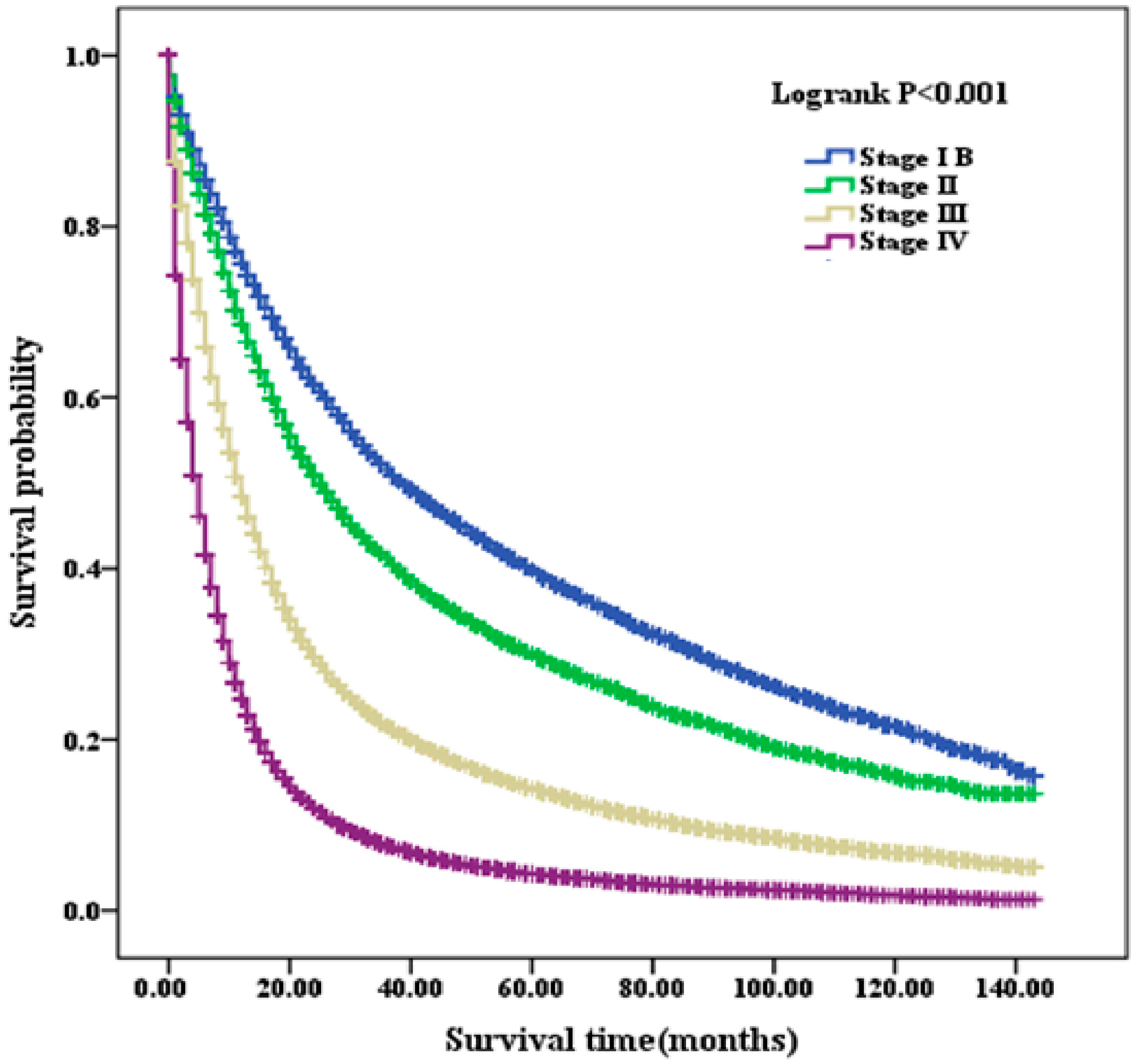
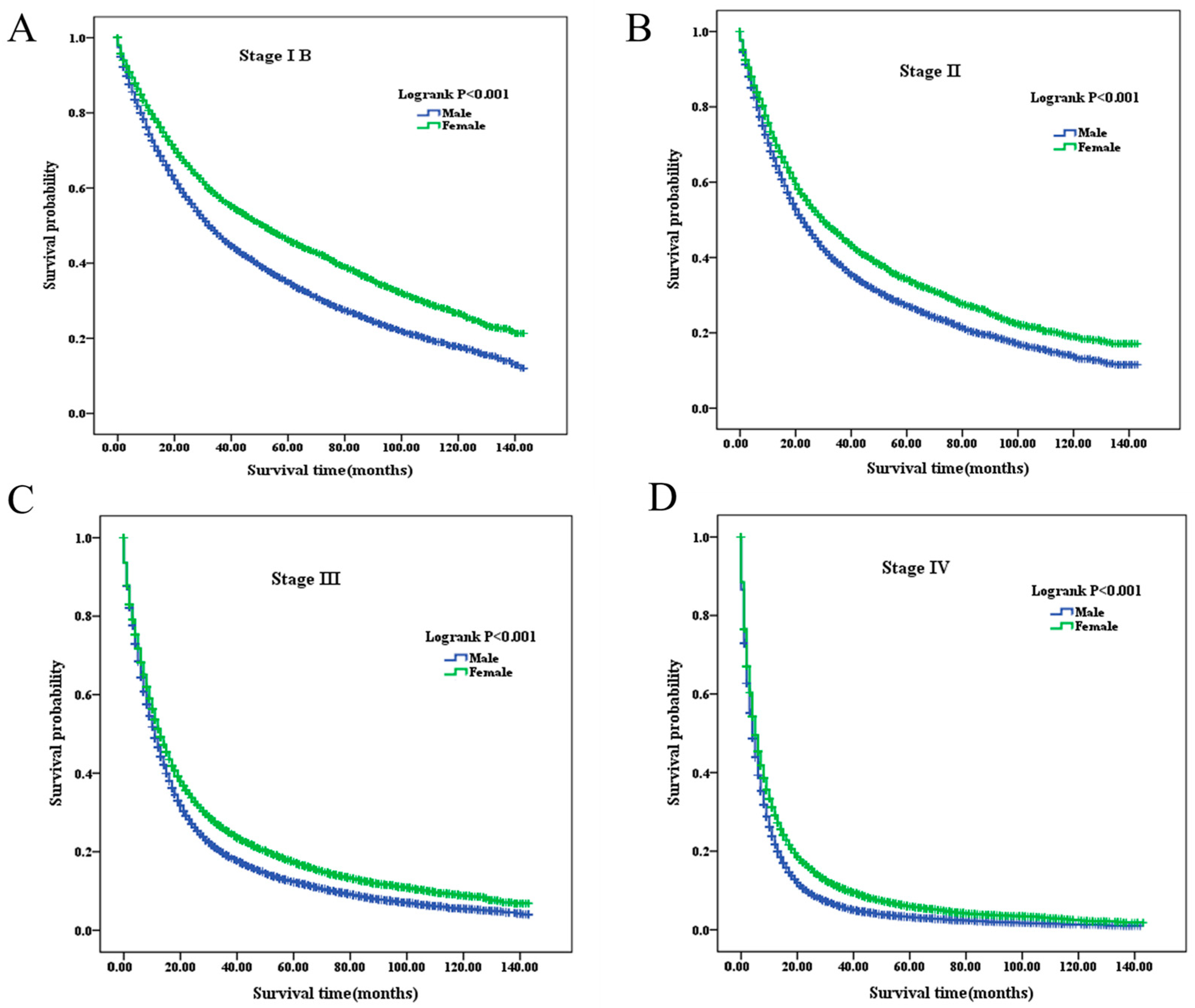
The overall survival (OS) for the entire cohort was 21.8%. Stratified by stage, the OS rates were 42.6%, 34.2%, 20.8%, and 10.0% for stages IB, II, III, and IV, respectively (Figure 2). Stage-specific survival analysis demonstrated that female patients consistently had better survival than male patients across all stages (log-rank test, all p < 0.001) (Figure 3). Kaplan–Meier curves consistently showed improved survival among women throughout stages IB to IV (p < 0.001). Further stratification by age revealed similar survival trends across most subgroups (p < 0.005), with female patients demonstrating superior survival. However, among younger patients (<45 years) in stages IB and II, the survival differences between sexes did not reach statistical significance (p = 0.055 and p = 0.096, respectively) (Figures S1–S4). The mean survival times for male patients at stages IB through IV were 52.82, 44.19, 25.09, and 10.78 months, respectively. In comparison, female patients exhibited longer mean survival times of 66.29, 52.87, 31.35, and 15.14 months (Table 2). Similarly, median OS decreased from 33.00 to 4.00 months across stages IB–IV in male patients and from 52.00 to 5.00 months in female patients across stages IB–IV. Detailed estimates with corresponding 95% confidence intervals are provided in Table 2.

3.3. Chemotherapy and Survival Outcomes Stratified by Sex Across Stages IB–IV

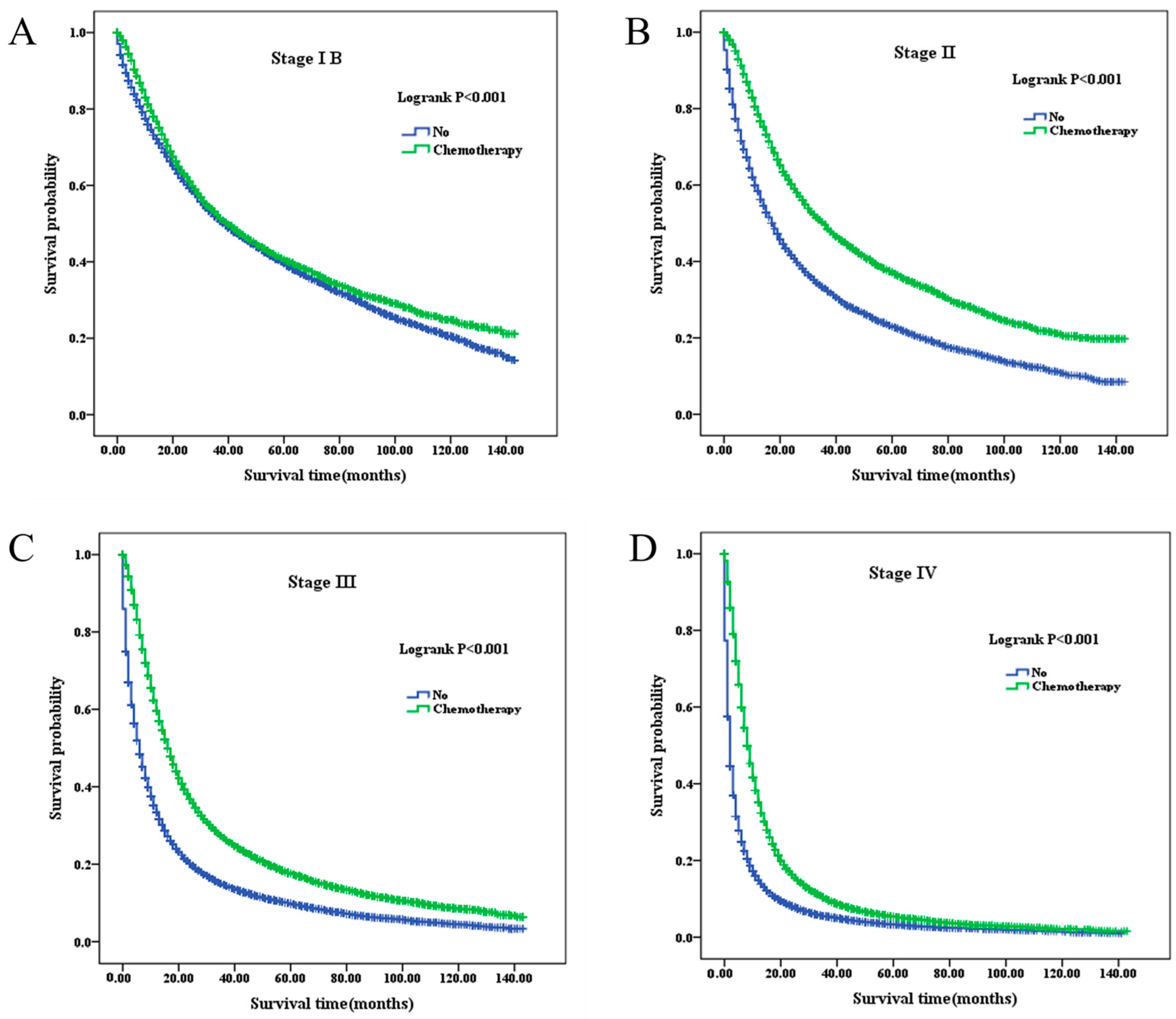
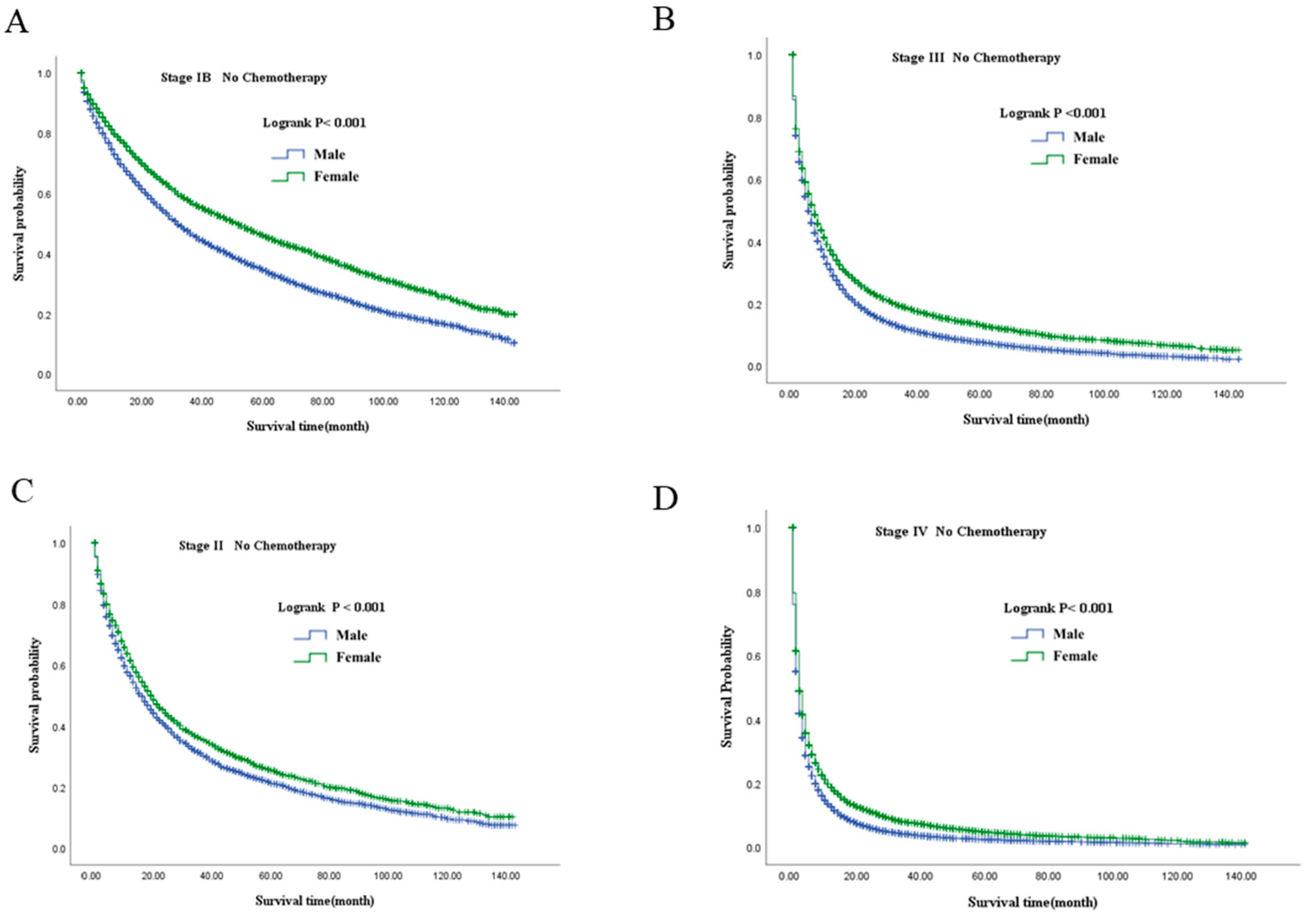
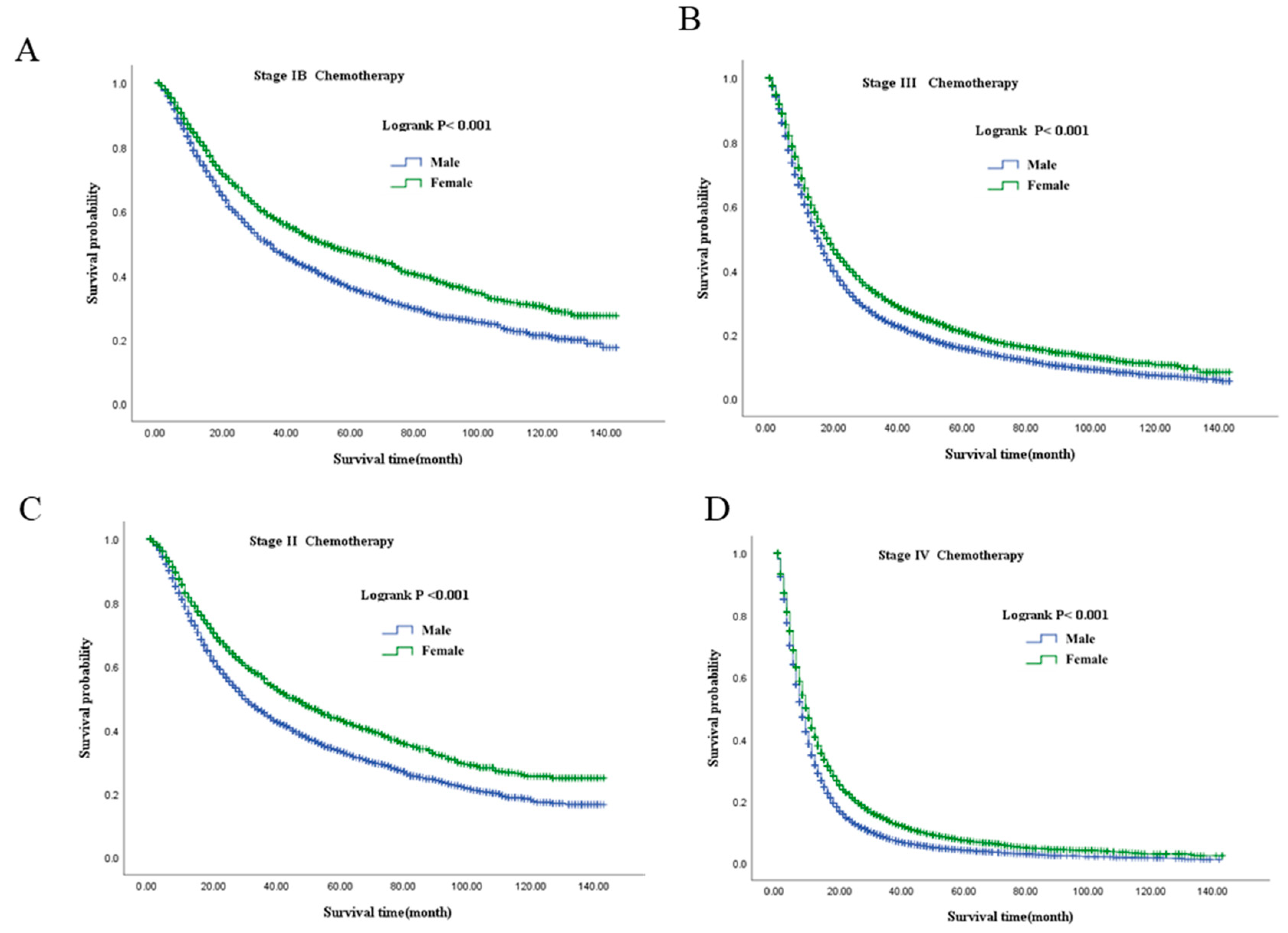
Kaplan–Meier analyses demonstrated consistent sex-based differences in overall survival (OS) across all clinical stages, regardless of chemotherapy status (Figure 4, Figure 5 and Figure 6). In both chemotherapy-treated and untreated groups, female patients consistently exhibited superior survival compared with male patients at each stage (all log-rank p < 0.001).
Among patients who did not receive chemotherapy, females showed prolonged survival relative to males across stages IB–IV, as illustrated in Figure 5. For example, in stage II disease, median OS was 19.00 months (95% CI: 17.34–20.66) in female patients compared with 16.00 months (95% CI: 14.87–17.13) in male patients. Similarly, in stage III, median OS was 7.00 months (95% CI: 6.61–7.39) in females versus 5.00 months (95% CI: 4.78–5.22) in males.
In the chemotherapy-treated cohort, female patients maintained a survival advantage over male patients at all stages (Figure 6). For instance, in stage II, median OS was 46.00 months (95% CI: 42.01–49.99) in females compared with 30.00 months (95% CI: 27.95–32.05) in males, while in stage IV, median OS was 10.00 months (95% CI: 9.73–10.28) versus 8.00 months (95% CI: 7.84–8.16), respectively.
These findings indicate that the observed survival benefit in female patients is robust and persists irrespective of treatment status. Notably, while chemotherapy was associated with improved survival in both sexes, the relative survival advantage of female patients remained evident within each treatment subgroup.
Overall, female patients exhibited longer median OS than male patients at corresponding stages, regardless of chemotherapy status (Table 3).

3.4. Multivariable Cox Regression Analysis

Multivariable Cox regression analysis demonstrated that several demographics, clinicopathological, and socioeconomic factors were independently associated with overall survival across clinical stages. Notably, female sex was consistently associated with a reduced risk of mortality at all stages, with hazard ratios ranging from 0.766 to 0.857 (all p < 0.001).
Advancing age was strongly associated with worse survival, with patients aged ≥75 years exhibiting the highest mortality risk across all stages. In addition, unfavorable tumor characteristics—including higher grade, non-adenocarcinoma histology, and specific primary tumor locations—were associated with poorer outcomes. Treatment-related variables also showed significant associations with survival. Receipt of chemotherapy and a greater number of lymph nodes removed were consistently linked to improved survival across stages. Conversely, the presence of distant metastases (including bone, brain, liver, and lung) was associated with markedly increased mortality risk in advanced-stage disease.
Socioeconomic factors, such as insurance status, marital status, and household income, were also independently associated with survival outcomes, suggesting that both clinical and non-clinical factors contribute to prognosis in patients with NSCLC (Table 4).

4. Discussion

In this large population-based cohort, most patients with NSCLC were elderly, had poorly differentiated tumors, underwent removal of 0–3 lymph nodes, and were diagnosed at advanced stages. Nearly half of the cohort received adjuvant chemotherapy, while the overall proportion of distant metastases remained relatively low.
This study provides a stage-specific assessment of the relationship between chemotherapy and survival outcomes in both male and female patients with NSCLC from stages IB to IV. Across all clinical stages, female patients consistently exhibited a lower risk of mortality compared with male patients. This pattern remained stable after stratification by age, suggesting that the observed difference cannot be fully attributed to age-related factors. When treated with chemotherapy, both male and female patients demonstrated improved survival compared with those who did not receive chemotherapy. These findings suggest that chemotherapy confers significant therapeutic benefits regardless of sex. However, women consistently exhibited longer overall and median survival at corresponding stages.
Although prior studies have reported sex-related survival differences in overall NSCLC populations [16,17,18,19] detailed stage-specific analyses remain limited. Our study addresses this gap by demonstrating that sex independently influences survival outcomes at each stage. Interestingly, no statistically significant survival advantage was observed among younger patients (<45 years) with early-stage disease (IB/II), suggesting that the magnitude of sex-based differences may vary according to age and disease stage. As expected, survival declined substantially with advancing stages in both sexes. For example, female patients in early-stage disease experienced a markedly greater median survival advantage compared with males, whereas this difference narrowed in advanced-stage disease. These findings suggest that sex-related biological or treatment-response factors may exert a stronger influence in earlier stages. Age was identified as an independent prognostic factor across all stages. Increasing age was associated with higher mortality risk, potentially reflecting a greater burden of comorbidities and poorer performance status in older patients [20,21,22]. Nevertheless, our findings are consistent with previous reports demonstrating that elderly patients can derive meaningful survival benefits from chemotherapy [23,24].
Using the SEER database, we further demonstrated that patients with stages IB through IV NSCLC benefit from chemotherapy, particularly those with advanced-stage disease. Survival among stage III/IV patients receiving chemotherapy was substantially longer compared with those who did not receive chemotherapy. These findings are consistent with previous clinical studies supporting the survival benefit of chemotherapy in NSCLC [25,26,27,28,29]. However, some studies have reported limited or stage-dependent benefit, particularly in early-stage disease [30,31], contributing to ongoing debate regarding optimal patient selection.
Importantly, multivariable Cox regression analyses confirmed that sex, age, tumor grade, histological subtype, lymph node status, chemotherapy, first malignant indicator, and socioeconomic variables were significant predictors of mortality. These findings underscore the multifactorial nature of survival outcomes in NSCLC. Although treatment guidelines are stage-based, individualized decision-making should also consider tumor biology, differentiation, patient age, and comorbid conditions rather than relying solely on stage.
The strengths of this study include its large sample size and multi-institutional representation, which enhance statistical power and generalizability compared with single-center studies. However, several limitations should be acknowledged. First, key clinical variables, including smoking history, comorbidity burden, and performance status, were not available in the SEER database, residual confounding cannot be excluded [32,33]. Second, chemotherapy information in the SEER database is recorded as a binary variable (yes vs. no) without detailed information regarding regimen, timing, or treatment intent. As a result, we were unable to distinguish adjuvant from palliative chemotherapy. The observed associations between chemotherapy and overall survival should thus be interpreted as reflecting receipt of chemotherapy rather than a specific treatment strategy. Third, the long study period (2004–2015), together with the lack of molecular and treatment data—such as driver mutations (e.g., EGFR, ALK, KRAS), PD-L1 expression, and the use of targeted or immunotherapy—may introduce heterogeneity in treatment patterns and influence survival outcomes [34]. However, in calendar period–stratified analyses, the association between chemotherapy and survival, as well as the observed sex-related survival difference, remained consistent across all time periods, suggesting that temporal changes in treatment practice are unlikely to have substantially affected the main findings of this study. Future studies incorporating detailed molecular profiling and treatment information are warranted to further elucidate these associations. Despite these limitations, the large sample size and population-based design provide robust evidence supporting a consistent survival difference between female and male patients with NSCLC across clinical stages.

Supplementary Materials

The following supporting information can be downloaded at: https://www.mdpi.com/article/10.3390/healthcare14070966/s1, Figure S1: Comparison of overall survival between male and female cohorts stratified by age in stage IB patients with NSCLC; Figure S2: Comparison of overall survival between male and female cohorts stratified by age in stage II patients with NSCLC; Figure S3: Comparison of overall survival between male and female cohorts stratified by age in stage III patients with NSCLC; Figure S4: Comparison of overall survival between male and female cohorts stratified by age in stage IV patients with NSCLC. Table S1. Median Follow-up Duration of NSCLC Patients Stratified by Sex at Stages IB through IV; Table S2. Overall survival according to chemotherapy status, stratified by sex and calendar period in patients with NSCLC.

Author Contributions

Conceptualization, Y.L., T.N., L.L. and W.W.; Methodology, Y.L.; Software, Y.L.; Formal analysis, T.N., L.L. and W.W.; Resources, L.L.; Data curation, L.L.; Writing—original draft, Y.L., T.N., L.L. and W.W.; Writing—review & editing, Y.L., T.N., L.L. and W.W. All authors have read and agreed to the published version of the manuscript.

Funding

This research received no external funding.

Institutional Review Board Statement

Ethical review and approval were not required for this study because it was conducted using data from the Surveillance, Epidemiology, and End Results (SEER) database. The SEER program provides publicly available, de-identified data, and therefore the study did not involve human subjects.

Informed Consent Statement

Informed consent was not required for this study due to its retrospective design and the use of publicly available, de-identified data from the SEER database.

Data Availability Statement

The data presented in this study are openly available in Surveillance, Epidemiology, and End Results (SEER) Program at https://seer.cancer.gov/ (accessed on 26 May 2025).

Conflicts of Interest

The authors declare no conflicts of interest.

References

  1. Siegel, R.L.; Kratzer, T.B.; Wagle, N.S.; Sung, H.; Jemal, A. Cancer statistics, 2026. CA Cancer J. Clin. 2026, 76, e70043. [Google Scholar] [CrossRef]
  2. Yang, C.Y.; Yang, J.C.; Yang, P.C. Precision Management of Advanced Non-Small Cell Lung Cancer. Annu. Rev. Med. 2020, 71, 117–136. [Google Scholar] [CrossRef]
  3. Detterbeck, F.C.; Boffa, D.J.; Tanoue, L.T. The new lung cancer staging system. Chest 2009, 136, 260–271. [Google Scholar] [CrossRef]
  4. Nagasaka, M.; Gadgeel, S.M. Role of chemotherapy and targeted therapy in early-stage non-small cell lung cancer. Expert. Rev. Anticancer Ther. 2018, 18, 63–70. [Google Scholar] [CrossRef]
  5. Strauss, G.M. Adjuvant chemotherapy of lung cancer: Methodologic issues and therapeutic advances. Hematol. Oncol. Clin. N. Am. 2005, 19, 263–281, vi. [Google Scholar] [CrossRef] [PubMed]
  6. Griesinger, F.; Korol, E.E.; Kayaniyil, S.; Varol, N.; Ebner, T.; Goring, S.M. Efficacy and safety of first-line carboplatin-versus cisplatin-based chemotherapy for non-small cell lung cancer: A meta-analysis. Lung Cancer 2019, 135, 196–204. [Google Scholar] [CrossRef]
  7. Lim, S.M.; Syn, N.L.; Cho, B.C.; Soo, R.A. Acquired resistance to EGFR targeted therapy in non-small cell lung cancer: Mechanisms and therapeutic strategies. Cancer Treat. Rev. 2018, 65, 1–10. [Google Scholar] [CrossRef]
  8. Sakin, A.; Sahin, S.; Atci, M.M.; Sakin, A.; Yasar, N.; Geredeli, C.; Aksaray, F.; Cihan, S. The effect of different treatment modalities on survival in elderly patients with locally advanced non-small cell lung cancer. Pulmonology 2021, 27, 26–34. [Google Scholar] [CrossRef] [PubMed]
  9. Morimoto, K.; Yamada, T.; Yokoi, T.; Kijima, T.; Goto, Y.; Nakao, A.; Hibino, M.; Takeda, T.; Yamaguchi, H.; Takumi, C.; et al. Clinical impact of pembrolizumab combined with chemotherapy in elderly patients with advanced non-small-cell lung cancer. Lung Cancer 2021, 161, 26–33. [Google Scholar] [CrossRef] [PubMed]
  10. Santos, F.N.; Cruz, M.R.; Riera, R. Chemotherapy for Advanced Non-Small-Cell Lung Cancer in Elderly Patients. JAMA Oncol. 2016, 2, 1645–1646. [Google Scholar] [CrossRef]
  11. Ruano-Ravina, A.; Provencio, M.; Calvo de Juan, V.; Carcereny, E.; Estival, A.; Rodríguez-Abreu, D.; Benítez, G.; López-Castro, R.; Belver, M.; Guirado-Risueño, M.; et al. Are there differences by sex in lung cancer characteristics at diagnosis?—A nationwide study. Transl. Lung Cancer Res. 2021, 10, 3902–3911. [Google Scholar] [CrossRef]
  12. Tsai, L.L.; Chu, N.Q.; Blessing, W.A.; Moonsamy, P.; Colson, Y.L. Lung Cancer in Women. Ann. Thorac. Surg. 2022, 114, 1965–1973. [Google Scholar] [CrossRef] [PubMed]
  13. Tanoue, L.T. Women and Lung Cancer. Clin. Chest Med. 2021, 42, 467–482. [Google Scholar] [CrossRef] [PubMed]
  14. Laviana, A.A.; Luckenbaugh, A.N.; Wallis, C.J.D. Seeking the Truth: Understanding the Impact of Missing Data on the Validity of the New Surveillance, Epidemiology and End Results Prostate with Watchful Waiting Database. Eur. Urol. 2020, 78, 345–346. [Google Scholar] [CrossRef] [PubMed]
  15. Tolwin, Y.; Gillis, R.; Peled, N. Gender and lung cancer-SEER-based analysis. Ann. Epidemiol. 2020, 46, 14–19. [Google Scholar] [CrossRef]
  16. Tuminello, S.; Alpert, N.; Veluswamy, R.R.; Kumar, A.; Gomez, J.E.; Flores, R.; Taioli, E. Modulation of chemoimmunotherapy efficacy in non-small cell lung cancer by sex and histology: A real-world, patient-level analysis. BMC Cancer 2022, 22, 80. [Google Scholar] [CrossRef]
  17. Sandler, B.J.; Wang, Z.; Hancock, J.G.; Boffa, D.J.; Detterbeck, F.C.; Kim, A.W. Gender, Age, and Comorbidity Status Predict Improved Survival with Adjuvant Chemotherapy Following Lobectomy for Non-small Cell Lung Cancers Larger than 4 cm. Ann. Surg. Oncol. 2016, 23, 638–645. [Google Scholar] [CrossRef]
  18. Wisnivesky, J.P.; Halm, E.A. Sex differences in lung cancer survival: Do tumors behave differently in elderly women? J. Clin. Oncol. 2007, 25, 1705–1712. [Google Scholar] [CrossRef]
  19. Wang, Z.; Mo, M.; Zhou, C.; Feng, X.; Shen, J.; Ye, T.; Zhang, Y.; Hu, H.; Chen, H.; Zheng, Y. Time-varying effect of sex on prognosis of lung adenocarcinoma surgical patients in China. Thorac. Cancer 2021, 12, 1699–1707. [Google Scholar] [CrossRef]
  20. Arnold, B.N.; Thomas, D.C.; Rosen, J.E.; Salazar, M.C.; Blasberg, J.D.; Boffa, D.J.; Detterbeck, F.C.; Kim, A.W. Lung Cancer in the Very Young: Treatment and Survival in the National Cancer Data Base. J. Thorac. Oncol. 2016, 11, 1121–1131. [Google Scholar] [CrossRef]
  21. Howlader, N.; Mariotto, A.B.; Woloshin, S.; Schwartz, L.M. Providing clinicians and patients with actual prognosis: Cancer in the context of competing causes of death. J. Natl. Cancer Inst. Monogr. 2014, 2014, 255–264. [Google Scholar] [CrossRef]
  22. Gibberd, A.; Supramaniam, R.; Dillon, A.; Armstrong, B.K.; O’Connell, D.L. Lung cancer treatment and mortality for Aboriginal people in New South Wales, Australia: Results from a population-based record linkage study and medical record audit. BMC Cancer 2016, 16, 289. [Google Scholar] [CrossRef]
  23. Bradley, C.J.; Yabroff, K.R.; Mariotto, A.B.; Zeruto, C.; Tran, Q.; Warren, J.L. Antineoplastic Treatment of Advanced-Stage Non-Small-Cell Lung Cancer: Treatment, Survival, and Spending (2000 to 2011). J. Clin. Oncol. 2017, 35, 529–535. [Google Scholar] [CrossRef]
  24. Ganti, A.K.; Williams, C.D.; Gajra, A.; Kelley, M.J. Effect of age on the efficacy of adjuvant chemotherapy for resected non-small cell lung cancer. Cancer 2015, 121, 2578–2585. [Google Scholar] [CrossRef]
  25. Qiu, B.; Guo, W.; Zhang, F.; Lv, F.; Ji, Y.; Peng, Y.; Chen, X.; Bao, H.; Xu, Y.; Shao, Y.; et al. Dynamic recurrence risk and adjuvant chemotherapy benefit prediction by ctDNA in resected NSCLC. Nat. Commun. 2021, 12, 6770. [Google Scholar] [CrossRef] [PubMed]
  26. Hui, Z.; Men, Y.; Hu, C.; Kang, J.; Sun, X.; Bi, N.; Zhou, Z.; Liang, J.; Lv, J.; Feng, Q.; et al. Effect of Postoperative Radiotherapy for Patients With pIIIA-N2 Non-Small Cell Lung Cancer After Complete Resection and Adjuvant Chemotherapy: The Phase 3 PORT-C Randomized Clinical Trial. JAMA Oncol. 2021, 7, 1178–1185. [Google Scholar] [CrossRef]
  27. Burdett, S.; Pignon, J.P.; Tierney, J.; Tribodet, H.; Stewart, L.; Le Pechoux, C.; Aupérin, A.; Le Chevalier, T.; Stephens, R.J.; Arriagada, R.; et al. Adjuvant chemotherapy for resected early-stage non-small cell lung cancer. Cochrane Database Syst. Rev. 2015, 2015, Cd011430. [Google Scholar] [CrossRef]
  28. Winton, T.; Livingston, R.; Johnson, D.; Rigas, J.; Johnston, M.; Butts, C.; Cormier, Y.; Goss, G.; Inculet, R.; Vallieres, E.; et al. Vinorelbine plus cisplatin vs. observation in resected non-small-cell lung cancer. N. Engl. J. Med. 2005, 352, 2589–2597. [Google Scholar] [CrossRef]
  29. Chaft, J.E.; Sima, C.S.; Ginsberg, M.S.; Huang, J.; Kris, M.G.; Travis, W.D.; Azzoli, C.G. Clinical outcomes with perioperative chemotherapy in sarcomatoid carcinomas of the lung. J. Thorac. Oncol. 2012, 7, 1400–1405. [Google Scholar] [CrossRef]
  30. Maneenil, K.; Xue, Z.; Liu, M.; Boland, J.; Wu, F.; Stoddard, S.M.; Molina, J.; Yang, P. Sarcomatoid Carcinoma of the Lung: The Mayo Clinic Experience in 127 Patients. Clin. Lung Cancer 2018, 19, e323–e333. [Google Scholar] [CrossRef]
  31. Butts, C.A.; Ding, K.; Seymour, L.; Twumasi-Ankrah, P.; Graham, B.; Gandara, D.; Johnson, D.H.; Kesler, K.A.; Green, M.; Vincent, M.; et al. Randomized phase III trial of vinorelbine plus cisplatin compared with observation in completely resected stage IB and II non-small-cell lung cancer: Updated survival analysis of JBR-10. J. Clin. Oncol. 2010, 28, 29–34. [Google Scholar] [CrossRef] [PubMed]
  32. Rojewski, A.M.; Tanner, N.T.; Dai, L.; Ravenel, J.G.; Gebregziabher, M.; Silvestri, G.A.; Toll, B.A. Tobacco Dependence Predicts Higher Lung Cancer and Mortality Rates and Lower Rates of Smoking Cessation in the National Lung Screening Trial. Chest 2018, 154, 110–118. [Google Scholar] [CrossRef] [PubMed]
  33. Aredo, J.V.; Luo, S.J.; Gardner, R.M.; Sanyal, N.; Choi, E.; Hickey, T.P.; Riley, T.L.; Huang, W.Y.; Kurian, A.W.; Leung, A.N.; et al. Tobacco Smoking and Risk of Second Primary Lung Cancer. J. Thorac. Oncol. 2021, 16, 968–979. [Google Scholar] [CrossRef]
  34. Tseng, C.H.; Chiang, C.J.; Tseng, J.S.; Yang, T.Y.; Hsu, K.H.; Chen, K.C.; Wang, C.L.; Chen, C.Y.; Yen, S.H.; Tsai, C.M.; et al. EGFR mutation, smoking, and gender in advanced lung adenocarcinoma. Oncotarget 2017, 8, 98384–98393. [Google Scholar] [CrossRef]
Figure 1. Patient selection flowchart. Flowchart of patient selection from the SEER database (2004–2015). After applying inclusion and exclusion criteria, a total of 129,864 patients with NSCLC were included in the final analysis, comprising 78,460 men and 51,404 women.
Healthcare 14 00966 g001
Figure 2. Overall survival across clinical stages IB–IV in patients with NSCLC. NSCLC, non-small-cell lung cancer.
Healthcare 14 00966 g002
Figure 3. Overall survival comparison in male and female NSCLC patients across clinical stages IB–IV. (A): Stage IB; (B): Stage II; (C): Stage III; (D): Stage IV. NSCLC, non-small-cell lung cancer.
Healthcare 14 00966 g003
Figure 4. Overall survival according to chemotherapy status in patients with NSCLC across stages IB–IV. (A): Stage IB; (B): Stage II; (C): Stage III; (D): Stage IV. NSCLC, non-small-cell lung cancer.
Healthcare 14 00966 g004
Figure 5. Overall survival stratified by sex in patients with NSCLC without chemotherapy across stages IB–IV. (A): Stage IB; (B): Stage III; (C): Stage II; (D): Stage IV. NSCLC, non-small-cell lung cancer.
Healthcare 14 00966 g005
Figure 6. Overall survival stratified by sex in patients with NSCLC with chemotherapy across stages IB–IV. (A): Stage IB; (B): Stage III; (C): Stage II; (D): Stage IV. NSCLC, non-small-cell lung cancer.
Healthcare 14 00966 g006
Table 1. Baseline Characteristics of the Study Population.
Covariate Male (n, %)Female (n, %)
Total(78,460)(51,404)
Race
White64,166 (81.8)42,800 (83.3)
Black9745 (12.4)5994 (11.7)
Others4549 (5.8)2610 (5.1)
Region
East38,810 (49.5)23,941 (46.6)
North9101 (11.6)5929 (11.5)
Southwest2190 (2.8)1346 (2.6)
Northwest28,359 (36.1)20,188 (39.3)
Primary Site
Upper lobe40,840 (52.1)26,072 (50.7)
Middle lobe2878 (3.7)2067 (4.0%)
Lower lobe21,843 (27.8)15,500 (30.2)
NOS6949 (8.9)4709 (9.2)
Overlapping lesion1156 (1.5)695 (1.4)
Main bronchus4794 (6.1)2361 (4.6)
Grade
Grade I3288 (4.2)3484 (6.8)
Grade II19,250 (24.5)12,522 (24.4)
Grade III24,628 (31.4)15,206 (29.6)
Grade IV2055 (2.6)1418 (2.8)
Unknow29,239 (37.3)18,774 (36.5)
Laterality
Right43,278 (55.2)28,772 (56.0)
Left32,745 (41.7)21,010 (40.9)
Bilateral909 (1.2)663 (1.3)
Others1528 (1.9)959 (1.9)
Histological type
SCC61,754 (78.7)34,406 (66.9)
AD10,467 (13.3)12,593 (24.5)
LCC6239 (8.0)4405 (8.6)
Lymph nodes removed
0–3 lymph nodes 57,662 (73.5)36,458 (70.9)
≥4 lymph nodes 15,303 (19.5)11,454 (22.3)
Regional biopsy or aspiration3832 (4.9)2344 (4.6)
Sentinel 137 (0.2)116 (0.2)
Others1526 (1.9)1032 (2.0)
Stage
Stage IB13,793 (17.6)10,509 (20.4)
Stage II6744 (8.6)4399 (8.6)
Stage III26,805 (34.2)16,669 (32.4)
Stage IV31,118 (39.7)19,827 (38.6)
Chemotherapy
No41,196 (52.5)28,452 (55.3)
Yes37,264 (47.5)22,952 (44.7)
Bone metastasis
No34,179 (43.6)23,498 (45.7)
Yes5716 (7.3)3095 (6.0)
Others38,565 (49.2)24,811 (48.3)
Brain metastasis
No36,982 (47.1)24,583 (47.8)
Yes2831 (3.6)1974 (3.8)
Others38,647 (49.3)24,847 (48.3)
Liver metastasis
No36,765 (46.9)24,953 (48.5)
Yes3067 (3.9)1639 (3.2)
Others38,628 (49.2)24,812 (48.3)
Lung metastasis
No34,414 (43.9)23,054 (44.8)
Yes5309 (6.8)3458 (6.7)
Others38,737 (49.4)24,892 (48.4)
First malignant indicator
No18,040 (23.0)11,713 (22.8)
Yes60,420 (77.0)39,691 (77.2)
Age at diagnosis (year)
<451096 (1.4)900 (1.8)
≥45, <555622 (7.2)3657 (7.1)
≥55, <6517,933 (22.9)10,178 (19.8)
≥65, <7527,572 (35.1)18,088(35.2)
≥7526,237 (33.4)18,581 (36.1)
Insurance status
Medicaid7935 (10.1)5502 (10.7)
Insured or no specifics49,351 (62.9)32,578 (63.4)
Uninsured1642 (2.1)852 (1.7)
Blanks or unknown19,532 (24.9)12,472 (24.3)
Marital status
Married or domestic partner47,556 (60.6)19,759 (38.4)
Divorced or separated or single or windowed 28,203 (35.9)29,526 (57.4)
Unknown2701 (3.4)2119 (4.1)
High school education (Score)
≤100015,562 (19.8)10,782 (21.0)
1000–2000 40,366 (51.4)27,093 (52.7)
2000–3000 19,808 (25.2)12,122 (23.6)
≥30002724 (3.5)1407 (2.7)
Median family income
($/month)
≤500011,248 (14.3)5820 (11.3)
5000–700037,995 (48.4)24,593 (47.8)
7000–900020,258 (25.8)14,123 (27.5)
>90008959 (11.4)6868 (13.4)
SCC, squamous-cell carcinoma; AD, adenocarcinoma; LCC, large-cell lung carcinoma.
Table 2. Overall survival outcomes in NSCLC patients by sex across clinical stages IB–IV.
StageSexMean Survival, Months (95% CI)Median Survival, Months (95% CI)
Stage IBMale52.82 (51.85–53.80)33.00 (31.88–34.12)
Stage IBFemale66.29 (65.06–67.52)52.00 (49.53–54.47)
Stage IIMale44.19 (42.88–45.50)23.00 (21.93–24.07)
Stage IIFemale52.87 (51.09–54.66)30.00 (27.95–32.05)
Stage IIIMale25.09 (24.60–25.59)11.00 (10.77–11.23)
Stage IIIFemale31.35 (30.62–32.09)13.00 (12.63–13.37)
Stage IVMale10.78 (10.51–11.04)4.00 (3.90–4.10)
Stage IVFemale15.14 (14.71–15.57)5.00 (4.85–5.15)
Abbreviations: NSCLC, non-small-cell lung cancer; OS, overall survival; CI, confidence interval.
Table 3. Overall survival according to chemotherapy status, stratified by sex and stage in patients with NSCLC.
StageChemotherapySexMean OS (Months)95% CIMedian OS
(Months)
95% CI
Stage IBNoMale51.5250.42–52.6232.0030.74–33.26
Female65.4264.04–66.8052.0049.30–54.70
YesMale56.8554.78–58.9235.0032.51–37.49
Female69.4266.71–72.1452.0045.62–58.38
Stage IINoMale35.9534.04–37.3516.0014.87–17.13
Female41.1838.96–43.4019.0017.34–20.66
YesMale52.9250.93–54.9130.0027.95–32.05
Female64.7862.08–67.4946.0042.01–49.99
Stage IIINoMale16.5615.95–17.185.004.78–5.22
Female23.6522.67–24.637.006.61–7.39
YesMale31.2130.49–31.9215.0014.66–15.34
Female37.7236.65–38.7819.0018.38–19.62
Stage IVNoMale7.206.88–7.522.001.96–2.05
Female10.9910.45–11.522.001.90–2.10
YesMale14.5914.17–15.018.007.84–8.16
Female19.6518.98–20.3310.009.73–10.28
Table 4. Multivariable Cox proportional hazards models for overall survival stratified by clinical stage.
CovariateStage IB HR p ValueStage II HR p ValueStage III HR p ValueStage IV HR p Value
Sex (female vs. male)0.766
(0.737–0.793)
<0.0010.797
(0.757–0.836)
<0.0010.846
(0.827–0.866)
<0.0010.857
(0.840–0.874)
<0.001
Race: Black vs. White0.981
(0.923–1.035)
0.5051.002
(0.927–1.084)
0.9670.973
(0.942–1.006)
0.0960.975
(0.947–1.001)
0.068
Race: Others vs. White0.872
(0.803–0.950)
0.0010.919
(0.815–1.034)
0.1630.870
(0.827–0.916)
<0.0010.876
(0.842–0.916)
<0.001
Region: North vs. East 0.986
(0.929–1.047)
0.633 1.029
(0.949–1.120)
0.4950.952
(0.916–0.988)
<0.0010.875
(0.871–0.936)
<0.001
Region: Southwest vs. East1.054
(0.954–1.167)
0.3061.069
(0.919–1.242)
0.3870.950
(0.888–1.017)
0.1340.984
(0.928–1.043)
0.591
Region: Northwest vs. East0.953
(0.924–1.004)
0.0241.058
(1.000–1.122)
0.0550.996
(0.970–1.023)
0.7360.993
(0.970–1.016)
0.549
Primary tumor site: Middle vs. Upper lobe0.960
(0.874–1.033)
0.3370.943
(0.846–1.078)
0.3481.090
(1.029–1.155)
0.0040.957
(0.910–1.007)
0.087
Primary tumor site: Lower vs. Upper lobe1.088
(1.053–1.131)
<0.0010.999
(0.949–1.053)
0.9841.125
(1.097–1.154)
<0.0011.029
(1.006–1.053)
0.013
Primary tumor site: NOS vs. Upper lobe1.423
(1.256–1.616)
<0.0011.063
(0.936–1.250)
0.4161.416
(1.357–1.478)
<0.0011.105
(1.077–1.136)
<0.001
Primary tumor site: Overlapping lesion vs. Upper lobe1.102
(0.938–1.275)
0.2131.098
(0.937–1.303)
0.2661.310
(1.198–1.434)
<0.0011.250
(1.156–1.353)
<0.001
Primary tumor site: Main bronchus vs. Upper lobe1.623
(1.461–1.779)
<0.0010.956
(0.855–1.090)
0.4711.271
(1.220–1.324)
<0.0011.226
(1.178–1.275)
<0.001
Tumor grade: Grade II vs. I1.089
(1.012–1.163)
0.0170.935
(0.822–1.054)
0.2871.217
(1.143–1.297)
<0.0011.191
(1.126–1.259)
<0.001
Tumor grade: Grade III vs. I1.098
(1.020–1.180)
0.0120.983
(0.865–1.111)
0.7931.256
(1.179–1.338)
<0.0011.343
(1.271–1.419)
<0.001
Tumor grade: Grade IV vs. I1.073
(0.943–1.236)
0.3060.952
(0.780–1.142)
0.6121.380
(1.253–1.519)
<0.0011.477
(1.368–1.595)
<0.001
Tumor grade: Unknown vs. I1.387
(1.299–1.506)
<0.0011.043
(0.913–1.184)
0.5281.278
(1.201–1.361)
<0.0011.369
(1.298–1.443)
<0.001
Histology: AD vs. SCC0.614
(0.583–0.642)
<0.0010.771
(0.719–0.832)
<0.0010.703
(0.677–0.731)
<0.0010.737
(0.717–0.759)
<0.001
Histology: LCC vs. SCC0.931
(0.847–1.002)
0.0951.069
(0.962–1.192)
0.2181.075
(1.028–1.125)
0.0021.046
(1.013–1.080)
0.006
Chemotherapy (Yes vs. No)0.889
(0.837–0.910)
<0.0010.642
(0.611–0.673)
<0.0010.562
(0.550–0.575)
<0.0010.510
(0.500–0.520)
<0.001
Lymph nodes removed: ≥4 vs. 0–30.481
(0.456–0.492)
<0.0010.469
(0.444–0.493)
<0.0010.443
(0.428–0.459)
<0.0010.371
(0.350–0.393)
<0.001
Lymph nodes removed: Regional biopsy/aspiration vs. 0–30.758
(0.646–0.889)
0.0010.791
(0.665–0.945)
0.0090.904
(0.864–0.945)
<0.0010.956
(0.915–1.000)
0.048
Lymph nodes removed: Sentinel lymph node biopsy vs. 0–30.532
(0.396–0.727)
<0.0010.445
(0.305–0.644)
<0.0010.380
(0.286–0.504)
0.0010.499
(0.306–0.816)
0.006
Lymph nodes removed: Others vs. 0–30.555
(0.494–0.606)
<0.0010.542
(0.471–0.625)
<0.0010.645
(0.595–0.698)
<0.0010.748
(0.693–0.808)
<0.001
Bone metastasis (Yes vs. No)----1.854
(1.287–2.586)
<0.0011.483
(1.443–1.526)
<0.001
Brain metastasis (Yes vs. No)----2.282
(1.257–3.798)
<0.0011.376
(1.252–1.608)
<0.001
Liver metastasis (Yes vs. No)------1.473
(1.419–1.529)
<0.001
Lung metastasis (Yes vs. No)----1.491
(1.314–1.687)
<0.0011.079
(1.060–1.105)
<0.001
First malignant indicator (Yes vs. No)0.943
(0.899–0.968)
0.0020.937
(0.891–0.991)
0.0161.050
(1.023–1.077)
<0.0011.147
(1.120–1.174)
<0.001
Diagnosis Age: 45–54 vs. <451.360
(1.068–1.743)
0.0141.282
(0.980–1.716)
0.0821.066
(0.961–1.184)
0.2311.119
(1.040–1.203)
0.003
Diagnosis Age: 55–64 vs. <451.679
(1.338–2.124)
<0.0011.486
(1.147–1.962)
0.0041.115
(1.010–1.232)
0.0311.158
(1.081–1.239)
<0.001
Diagnosis Age: 65–74 vs. <452.044
(1.633–2.585)
<0.0011.806
(1.394–2.379)
<0.0011.259
(1.141–1.390)
<0.0011.206
(1.127–1.395)
<0.001
Diagnosis Age: ≥75 vs. <452.812
(2.248–3.560)
<0.0012.331
(1.792–3.066)
<0.0011.474
(1.336–1.629)
<0.0011.303
(1.217–1.395)
<0.001
Insurance: Insured vs. Medicaid0.761
(0.731–0.830)
<0.0010.836
(0.763–0.906)
<0.0010.900
(0.868–0.935)
<0.0010.945
(0.915–0.974)
<0.001
Insurance: Uninsured vs. Medicaid0.952
(0.784–1.132)
0.5981.125
(0.906–1.408)
0.2951.094
(1.006–1.192)
0.0381.043
(0.976–1.112)
0.209
Insurance: Unknown vs. Medicaid0.806
(0.765–0.881)
<0.0010.873
(0.789–0.955)
0.0050.954
(0.915–0.996)
0.0290.973
(0.938–1.009)
0.148
Marital status: Not married vs. Married1.143
(1.115–1.199)
<0.0011.158
(1.099–1.213)
<0.0011.107
(1.082–1.133)
<0.0011.066
(1.045–1.088)
<0.001
Marital status: Unknown vs. Married1.062
(0.972–1.179)
0.2181.020
(0.891–1.153)
0.7611.056
(0.995–1.121)
0.0721.013
(0.965–1.065)
0.595
Education Score: 1000–2000 vs. ≤10000.965
(0.916–1.010)
0.1591.033
(0.966–1.104)
0.3350.998
(0.967–1.030)
0.8880.959
(0.934–0.986)
0.002
Education Score: 2000–3000 vs. ≤10001.046
(0.973–1.117)
0.1990.980
(0.891–1.076)
0.6800.995
(0.952–1.040)
0.8190.964
(0.932–1.006)
0.036
Education Score: ≥3000 vs. ≤10001.084
(0.952–1.210)
0.1871.023
(0.866–1.208)
0.7931.022
(0.948–1.103)
0.5730.976
(0.917–1.047)
0.453
Family Income ($/month): 5000–7000 vs. ≤50000.954
(0.901–1.022)
0.1410.982
(0.872–1.038)
0.6110.994
(0.961–1.038)
0.7390.975
(0.944–1.012)
0.126
Family Income ($/month): 7000–9000 vs. ≤50000.865
(0.808–0.942)
<0.0010.925
(0.801–0.990)
0.0460.949
(0.906–0.998)
0.0060.938
(0.903–0.983)
0.001
Family Income ($/month): >9000 vs. ≤50000.804
(0.744–0.886)
<0.0010.884
(0.769–0.976)
0.0080.902
(0.855–0.955)
<0.0010.903
(0.864–0.953)
<0.001
Disclaimer/Publisher’s Note: The statements, opinions and data contained in all publications are solely those of the individual author(s) and contributor(s) and not of MDPI and/or the editor(s). MDPI and/or the editor(s) disclaim responsibility for any injury to people or property resulting from any ideas, methods, instructions or products referred to in the content.