This study allowed for a detailed characterization of occupational exposure patterns and the risk perception of professionals involved in handling cytotoxic drugs in Portuguese hospital units, simultaneously revealing heterogeneity on the application of established guidelines. Cytotoxic drug handling practices in Portugal had previously been described in another observational study [
32]. That study suggested shortcomings in adherence to recommended practices, particularly regarding staff training and the use of engineering controls [
33]. However, it reflected the practices of individuals who had handled cytotoxic drugs at any time between 2017 and 2022, meaning that some participants were no longer actively performing these activities. The present study provides an updated characterization based exclusively on professionals currently handling cytotoxic drugs and includes 61% more active participants than the previous publication. In addition, the most recent ISOPP guidelines were updated in 2022 [
1] and may not have been implemented at the time of the earlier survey. Given European regulatory expectations for compliance with ISOPP standards [
19,
27], it is reasonable to assume that alignment with these strengthened guidelines would be more likely by 2025 [
1].
A first important finding, regarding sociodemographic characterization, is the clear trend to female participation, which is consistent with both international and national literature on workers exposed to cytotoxic agents [
2,
20,
32,
34,
35,
36,
37,
38,
39], where the proportion of female professionals typically ranges between 75 and 90 age distribution, our sample shows that most participants are between 31 and 40 years old, again aligning with international findings even in different professional groups similarly exposed to cytotoxic risks, as nurses and pharmacists [
2,
27,
32,
34,
36,
37,
38,
39,
40,
41,
42]. Accordingly, the sample are young (the majority being under 50 years old) and predominantly women of reproductive age who may become pregnant or breastfeed. Temporary absences of staff members, for instance for family planning purposes, further exacerbate this pressure and help to explain. In fact, this workforce turnover may contribute to a higher proportion of less experienced professionals being involved in the handling of cytotoxic drugs [
40]. Approximately one-third of the surveyed have less than one year of experience. This highlights the importance of adequate training, competency assessment prior to assuming duties, and structured onboarding processes. Without these, newly hired staff may not be sufficiently prepared, leading to a significantly higher risk of exposure for themselves and their colleagues, an exposure that is cumulative over time.
4.1. Workload and Exposure Patterns
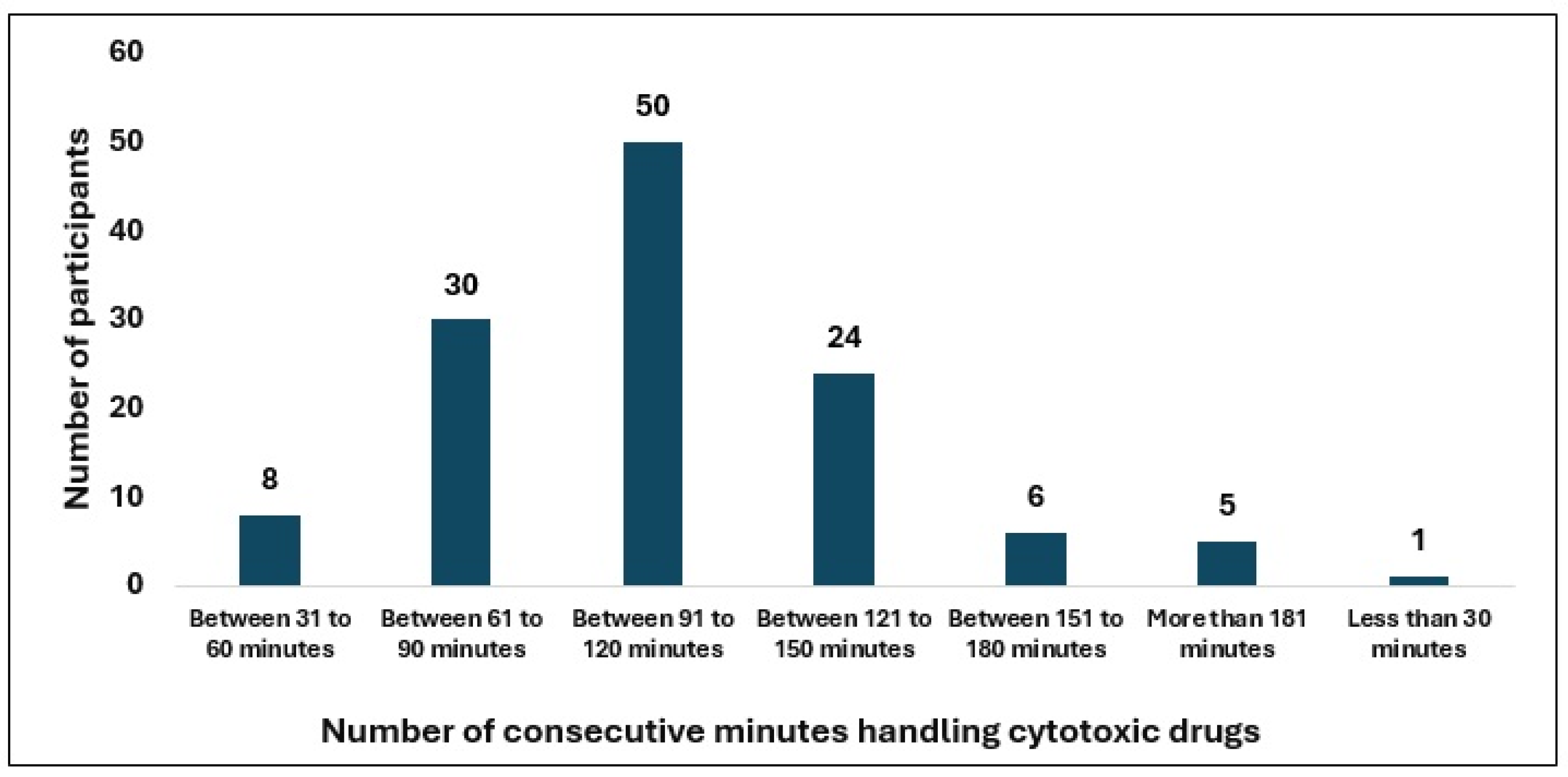
Prolonged (>120 min), uninterrupted work periods inside the biological safety cabinet were observed in almost 30% of the participants, and team sizes may be insufficient to prevent cumulative exposure. Such circumstances raise questions about the extent to which current practices comply with established guidelines [
1,
3]. Although none of the major international guidelines define a strict maximum number of hours per day for cytotoxic drug handling, all emphasize the need to minimize cumulative exposure and to avoid prolonged continuous manipulation. The ISOPP’s, ASHP and USP <800> guidelines recommends limiting uninterrupted work inside biological safety cabinets and introducing regular rest breaks, typically 15 min after every 60 to 90 min of continuous handling, to mitigate fatigue, muscle tremor, ergonomic strain, operational errors and contamination risk [
1,
3,
16].
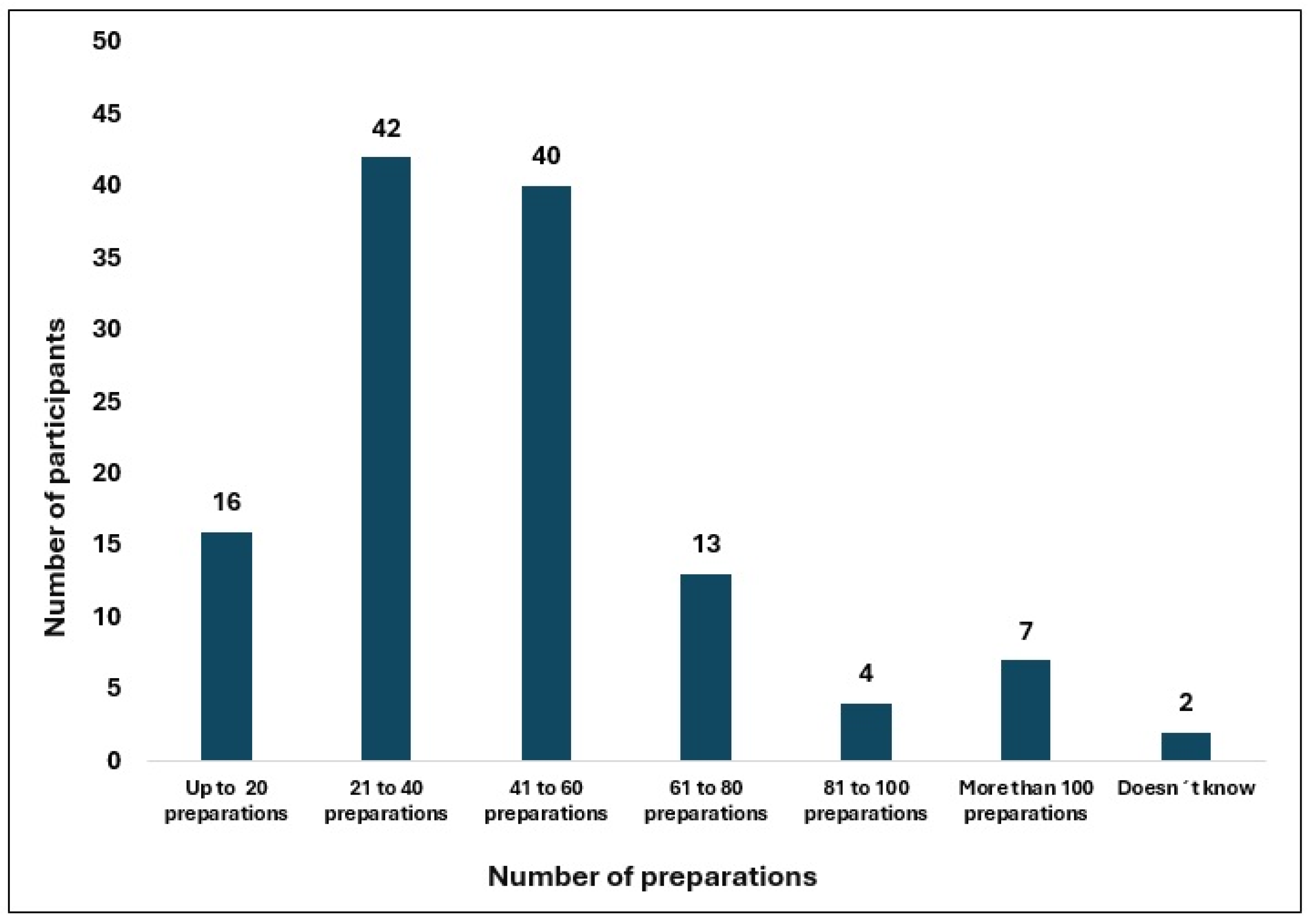
In the present study, more than 40% of respondents reported compounding cytotoxic drugs for 91–120 min without interruption, and approximately 20% exceeded 120 min. These durations may increase the potential for compromised aseptic technique, environmental contamination, and inadvertent exposure [
1,
3,
7,
16]. An important proportion of participants reported no breaks at all, further underscores the need to review organizational models and human-resource allocation. Consistent with these observations, the total daily workload in some cases might also exceed safe ergonomic and operational standpoint, given the prolonged use of PPE, fixed postures, and repetitive tasks. In this study, approximately two-thirds of professionals reported compounding 21–60 preparations per day, but some respondents admitted exceeding 100 preparations/day. However, these numbers also depend on the type of preparation. Such high activity levels may compromise safety may increase the potential for exposure, operational errors, fatigue and muscle problems if not supported by adequate staffing, task rotation, and systematic fatigue monitoring [
33]. Although no guideline establishes a maximum number of daily preparations, it is commonly emphasized that the workload must remain compatible with maintaining technical accuracy and strict adherence to individual and collective protective measures.
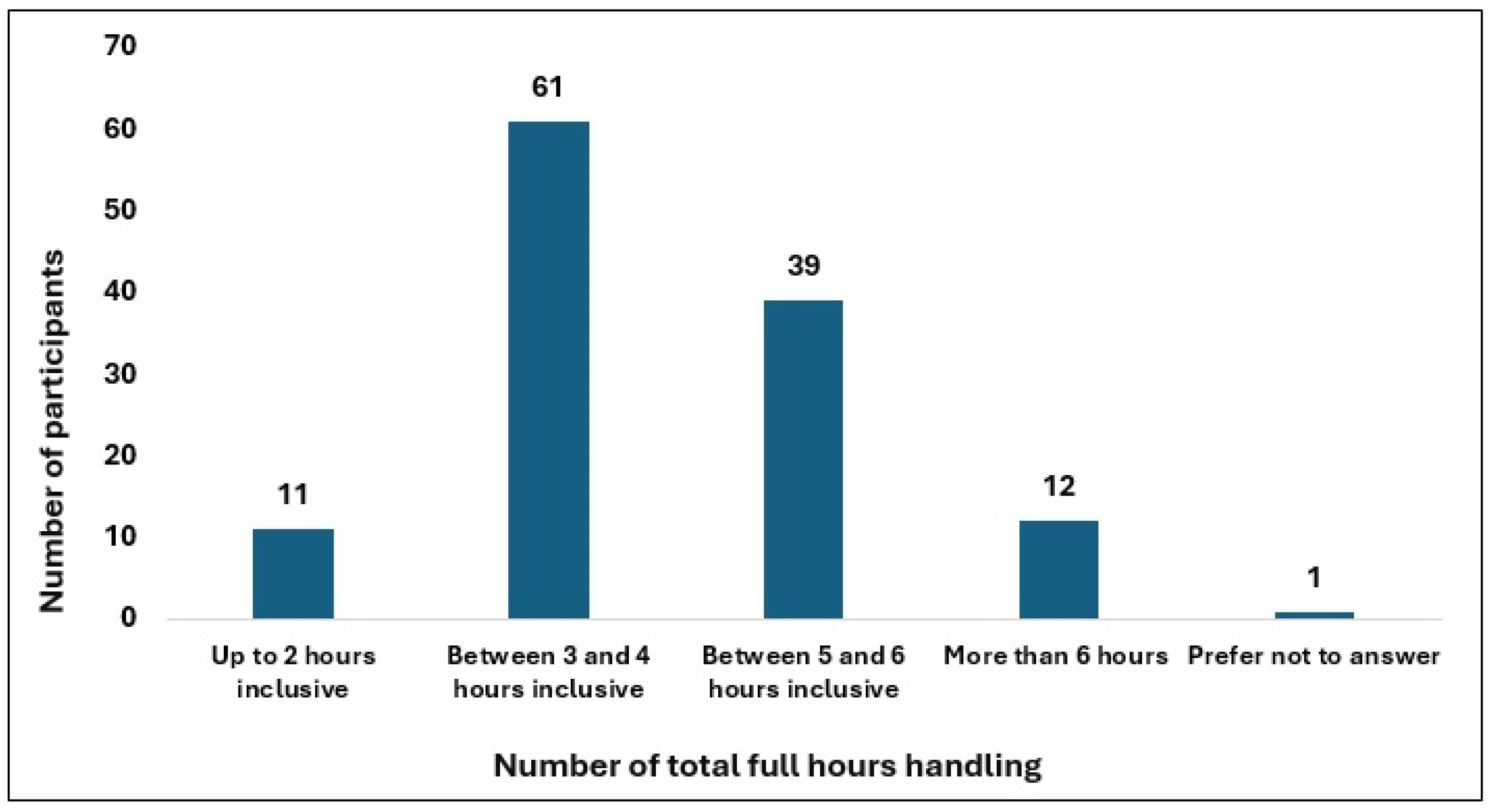
With respect to total hours of daily exposure, nearly 90% of the participants reported handling cytotoxic drugs for more than three hours per day. International guidelines recommend organizational measures aimed at reducing cumulative exposure, including limiting continuous handling time and distributing preparation activities among staff, which in practice implies systematic task rotation [
1,
3,
7,
16,
33]. Once again, the findings of this study indicate that rotation practices are not implemented uniformly at the national level, highlighting a potential area for targeted intervention. Poor workflow design and staff shortages are primary contributors to physical and cognitive overload and may further compromise the ability of services to respond to the increasing workload, while also contributing to increased absenteeism and staff leave [
7,
43].
The assessment of clinical conditions warranting temporary or permanent exclusion from cytotoxic drug compounding revealed marked discrepancies across distinct risk categories. There was remarkably high consensus (>90%) regarding the need to restrict compounding activities for pregnant or breastfeeding workers, as well as those planning to conceive. This strong agreement suggests an important level of institutional awareness of reproductive risks associated with cytotoxic exposure, which are traditionally well-recognized and thoroughly addressed during initial professional training [
1,
3,
7,
17,
18]. Occupational exposure to cytotoxic drugs has been associated with an increased risk of infertility, genetic damage (mutations), spontaneous abortions, fetal malformations, and impaired embryonic development [
5,
44,
45,
46]. In contrast, substantially lower agreement was observed for several conditions that are referenced in international safety guidelines for the handling of hazardous drugs, typically as context-dependent indicators of fitness for duty rather than explicit exclusion criteria, including acute respiratory or gastrointestinal illnesses, recent hematological abnormalities, reduced visual acuity, and certain chronic diseases [
1,
3,
7]. The low risk perception associated with visual acuity, identified in this study, constitutes a relevant and potentially concerning finding. In fact, visual acuity plays a fundamental role in the handling of cytotoxic drugs, being essential for the visual detection of precipitates, foreign particles, and color changes, as well as for the accurate verification of volumes during preparation. These steps are critical and essential to ensure the quality and safety of preparations, having a direct impact on patient safety. According to international recommendations, namely from ISOPP [
1], visual inspection constitutes a mandatory step in the process of preparing cytotoxic drugs and should be carried out under appropriate conditions and by professionals with adequate visual capacity. The underestimation of this factor can compromise the detection of non-conformities, increasing the risk of administering defective preparations, with potential clinical consequences. In this context, it becomes relevant to reinforce the importance of periodic assessment of the visual acuity of professionals involved in handling, as well as the implementation of adequate lighting conditions and strategies that minimize visual fatigue. The integration of these aspects into safety and training programs could contribute to an overall improvement in the quality of practices and patient safety. Accordingly, risk perception may be incomplete in areas less emphasized in training programmes or internal protocols, despite evidence that such conditions may impair adherence to protective equipment, reduce technical precision, or limit the ability to respond effectively to spill incidents. The results indicate that existing institutional policies are more formalized, and considerably more conservative, for women, particularly regarding preconception and pregnancy, reflecting a well-established recognition that occupational exposure to cytotoxic drugs can affect fertility and early embryonic development [
3,
44,
45,
46,
47]. However, these policies appear to place less emphasis on male reproductive risks, despite evidence that cytotoxic agents may induce oligospermia, sperm DNA damage, and broader adverse effects on male fertility [
16]. This difference may partly reflect the shorter window of perceived risk for women, who have a monthly ovulatory cycle, compared with men, whose spermatogenesis cycle takes approximately 60 days. Consequently, male reproductive risks may be underestimated in institutional policies, even though exposure during the spermatogenic period could significantly affect fertility and embryo health. This gap is reflected in the substantially lower agreement across all categories concerning the removal of men from compounding duties, the markedly higher proportion of “I don’t know” responses, and the finding that 16% of participants work in institutions that never withdraw male workers from chemotherapy handling, even during family planning. On the other hand, most participants work in hospital units that protect women from cytotoxic handling several months before conception, typically 4 to 6 months. Nonetheless, a minority of institutions allow women to continue compounding until pregnancy is confirmed, a practice that runs counter to precautionary approaches to reproductive protection [
7,
17,
18,
23,
27].
This asymmetry warrants further consideration in light of how reproductive risk has been historically framed in occupational health systems. In many healthcare settings, preventive policies concerning hazardous drug exposure have been shaped primarily around pregnancy protection, making female reproductive risk more visible, more formalised, and more readily translated into workplace procedures. By contrast, male preconception exposure has often received less explicit institutional attention, not because the risk is necessarily absent, but paternal reproductive risk has been less clearly incorporated into routine occupational guidance, surveillance, and risk-management protocols. This interpretation is especially relevant in the context of cytotoxic drug handling. Reproductive risk from hazardous medicines is not exclusively female, and paternal exposure in the preconception period should not be assumed to be negligible. Yet legal frameworks, occupational-health practice, and institutional policies have not always evolved symmetrically. Consequently, women are more often covered by specific protective pathways linked to pregnancy and maternity, whereas men may remain subject to broader, less explicit, and less operationalised forms of risk management. This imbalance may help explain why workplace practices appear comparatively more standardised for women and substantially more ambiguous for men. In settings where hazardous drugs are handled routinely, the absence of clear preconception guidance for both sexes may create avoidable occupational-health, ethical, and medico-legal vulnerability for institutions.
Overall, the findings reveal a substantial lack of standardization and highlight the urgent need for clear national protocols grounded in international occupational safety guidelines to ensure consistent and evidence-based protection for both female and male workers [
48,
49,
50].
The exploratory inferential analyses did not reveal strong or consistent associations between demographic characteristics, professional experience, and key indicators of safety practices, workload, or training. These findings suggest that variability in occupational practices may be more strongly influenced by structural and organizational factors than by individual characteristics alone. Although some statistically significant associations were identified, their lack of consistent directional trends and weak correlation coefficients indicate limited practical relevance. This reinforces the importance of system-level approaches when addressing occupational safety in cytotoxic drug preparation settings.
The workload patterns identified in this study suggest sustained exposure to cytotoxic drug handling, characterized by prolonged daily activity, extended uninterrupted handling periods, and high preparation volumes. These factors are recognized in occupational settings as contributors to cumulative exposure and task-related risk. However, the interpretation of exposure intensity in this context remains complex, as it is influenced not only by duration and frequency but also by factors such as preparation complexity, drug characteristics, and technical conditions. The absence of well-established, context-specific exposure thresholds further highlights the need for cautious interpretation. Nevertheless, the observed patterns provide important insight into working conditions that may be associated with increased occupational risk.
4.2. Administrative and Organizational Safety Measures
The findings of the aseptic technique assessment reveal a substantial heterogeneity, even though such competencies should be formally evaluated prior to independent practice and revalidated at regular intervals, typically annually in accordance with international guidelines [
1,
3,
7,
16]. The high proportion of professionals who reported not undergoing any validation or who are unaware of its existence suggests the absence of structured competency-certification programs; deficiencies in internal communication and documentation systems; inconsistencies in training pathways; and an overall lack of harmonised quality-assurance procedures. Collectively, these shortcomings may translate into an increased risk of aseptic breaches, medication preparation errors, and heightened occupational exposure issues consistently highlighted as preventable by NIOSH, ISOPP, ASHP, and EAHP [
1,
7,
15,
16,
17,
18]. More than 70% of participants reported not having received any specific follow-up training since beginning their handling activities, which highlights a substantial gap in ongoing competency reinforcement, despite the recognised need for continuous education in high-risk pharmaceutical preparation environments [
1,
3,
7,
16,
51].
Although most respondents reported that regular microbiological monitoring is performed, 15% of participants work in units where no routine microbiological surveillance is conducted. The wide variability in monitoring frequency (ranging from daily to monthly) further underscores the lack of national standardization [
1,
3,
7,
15,
16], deficiencies in communication, transparency, and staff engagement with quality-assurance processes. The absence of routine microbiological monitoring, as well as the reported lack of knowledge regarding particle counting, constitute concerning findings. In Portugal, although there is no specific legislation exclusively dedicated to handling cytotoxic drugs that exhaustively details all environmental monitoring requirements, these practices are framed within broader standards related to the preparation of sterile drugs and cleanroom control. In this context, ISOPP [
1] recommendations, as well as references such as USP <800> [
3], advocate the implementation of environmental monitoring programs, including microbiological control and particle counting, as essential components to ensure the quality and safety of sterile preparations. Thus, the observed variability may reflect not only differences in the interpretation and implementation of these recommendations, but also the absence of specific national standards applied uniformly, with many of these practices depending on the internal policies of the institutions. This fact reinforces the need for greater harmonization and regulatory clarification, to ensure consistent levels of quality and safety across all institutions. Cleanrooms without microbiological monitoring may represent a substantial risk to the sterility of compounded preparations, a concern that is particularly critical during the reconstitution of cytotoxic drugs [
52]. Evidence shows that even when isolators and biological safety cabinets are used, contamination of work surfaces—and occasionally of intermediate products—with antineoplastic agents can still occur, underscoring that engineering controls alone do not prevent contamination without consistent environmental and process monitoring [
53,
54,
55,
56,
57]. Comparative studies show that units implementing formalized aseptic procedures, staff training, and systematic monitoring achieve significantly lower contamination levels [
52,
57,
58,
59,
60].
The results also reveal elevated level of non-compliance in particle monitoring compared with international benchmarks [
1,
3,
7,
16] According to ISOPP and ASHP recommendations, at minimum, annual (preferably semi-annual) particle monitoring, depending on risk assessment and classification of the compounding environment [
1,
16]. Continuous or frequent monitoring in critical areas and periodic monitoring in support zones are also recommended [
1,
16]. The high number of professionals who report not knowing whether particle monitoring occurs (
n = 39) or state that no routine monitoring is performed (
n = 35), suggests an absence of robust environmental qualification processes and a lack of professional integration into quality activities. The pattern further suggests a potential over-reliance on PPE as a compensatory measure, rather than ensuring adequate performance of primary and secondary environmental controls. Despite the importance of PPE, it should be emphasized that, within the hierarchy of controls for preventing occupational exposure, PPE is considered the least effective measure [
20]. In contrast, engineering controls—including cleanrooms, biological safety cabinets, and their operating conditions—are regarded as the most effective means of exposure control when elimination or substitution of these drugs is not feasible [
1].
Taken together, the combined analysis of aseptic technique validation, microbiological monitoring, and particle monitoring indicates marked heterogeneity and incomplete adherence to international guidelines [
16,
29,
47]. This fragmented landscape highlights the urgent need for national harmonization of procedures, strengthening of environmental monitoring programs, and improved communication strategies to ensure that all staff are informed, trained, and actively involved in quality and safety systems.
Training is primarily acquired during undergraduate education and/or through informal workplace-based learning, such as peer mentoring. These findings support the need for more structured, documented, and standardized training programs.
The findings reveal a substantial deficiency in structured training at both the initial and periodic levels for cytotoxic drug compounding. The results shown, in
Table 5, point to the absence of formal certification and recertification programmes, in sharp contrast with international guidelines [
1,
3,
7,
16,
18] and recent systematic reviews [
51], which emphasize mandatory pre-placement evaluation and regular reassessment as essential pillars of safety in cytotoxic compounding.
Moreover, the limited use of innocuous-solution testing represents a missed opportunity for safe practice, hands-on skills reinforcement, and early detection of technical errors, all of which contribute to sustained process reliability and reduced occupational risk.
Globally, the findings suggest that safety in cytotoxic drug handling is primarily supported by locally acquired practices and experiential learning, rather than by fully structured, auditable, and standardized systems. Strengthening formal continuing education, documentation, competency monitoring, and integration of international guidelines could enhance practice harmonization and further reduce occupational risk.
4.3. Engineering Controls and Technical Resources
Most professionals reported that standard preparation materials—including needles, luer-lock
® syringes and spikes—are available and routinely used. It is worth highlighting that luer-lock
® connections should be preferred over slip-tip connections due to their greater stability when attached to the puncture device, thereby reducing the likelihood of detachment [
2,
61]. This study illustrates clear changes in Portuguese practice over a relatively short period, as adherence to CSTD use has increased compared with results published by Campos et al. [
32], in which CSTD use was virtually non-existent. Nevertheless, given the substantial proportion of professionals who still do not have access to or do not use these devices, it will be important to reinforce recommendations for their use, as they offer greater safety compared to other materials [
62,
63]. In line with observations of inconsistent adoption of CSTDs, a survey of UK cancer nurses also identified variable use of closed handling systems and protective measures, highlighting that even in resource-rich settings, the adoption of specific safety practices remains inconsistent [
64,
65]. Variability in the use of CSTDs and other advanced controls has been reported in other settings, indicating that such gaps are not unique to the Portuguese context [
32,
66].
Only 30% to 46% of respondents report having access to automated equipment, such as devices for bag filling, agitation/homogenization, or pump filling. Their use could prevent musculoskeletal injuries, particularly affecting the upper limbs, including the shoulders, wrists, and fingers [
1,
19]. Moreover, despite the costs associated with acquisition, implementation, and maintenance, automated systems may be regarded as valuable solutions for preserving human resources [
45]. Particularly regarding the very low adoption of automated or robotic systems observed in this study (2.4%), it most likely reflects substantial economic and infrastructural barriers, including high initial investment and implementation costs. However, these technologies may offer important long-term benefits besides the prevention of musculoskeletal injuries already mentioned, such as reduced occupational exposure, fewer preparation errors, and improved process consistency. From a broader perspective, these gains may translate into indirect cost savings through the prevention of occupational disease and adverse events, supporting the consideration of automation as a potentially cost-effective strategy for improving safety and quality in cytotoxic drug handling.
4.4. Personal Protective Equipment
In the present study, adherence to the use of mandatory PPE was very high and, overall, higher than that reported in most comparable studies published since 2004, the year in which NIOSH formally introduced the definition of hazardous drugs and subsequently shaped occupational safety recommendations [
2,
9,
32,
41,
67,
68,
69,
70,
71]. Glove use was almost universal, and our findings stand out due to near-complete compliance with protective gowns. Adherence to respiratory protection and head cover was also notably higher than in many earlier studies, where these items often showed considerable variability or substantially lower uptake [
2,
9,
69,
70,
72]. In contrast, the use of overshoes was more inconsistent. From an aseptic workflow perspective, the use of a single pair of shoe covers does not ensure adequate environmental protection during transitions between areas of different cleanliness levels. According to the ISOPP Standards of Practice, PPE must function as an effective barrier system to prevent cross-contamination between controlled and adjacent areas. In practical terms, this requires the use of double shoe covers: one pair worn upon entry into the grey area and a second pair added before entering the cleanroom, allowing the outer pair to be removed upon exit from the cleanroom while maintaining environmental protection in the grey area [
1]. When this functional definition of compliance is applied, more than three-quarters of respondents in our study may be considered non-compliant with best practices for foot protection.
Overall, this study highlights a dual reality: while compliance with long-established protective measures is generally high, several critical components of occupational safety—particularly workload management, environmental monitoring, and structured training—remain inconsistently implemented. This inequality is a systemic, not an individual, risk-governance issue, highly relevant in the European and CMR contexts.
4.5. Thematic Analysis of Open-Ended Responses
The qualitative findings obtained through the thematic analysis of open-ended responses reinforce and contextualize the quantitative results, providing additional insight into the challenges associated with cytotoxic drug handling. Concerns related to occupational safety and environmental conditions—particularly physical symptoms associated with prolonged stays in preparation rooms and instability of pressure differentials—are consistent with the literature, which identifies environmental control as a critical factor in minimizing occupational exposure [
43].
The heterogeneity observed in work organization, including the absence of double-checking procedures and support staff in some settings, raises important concerns regarding process safety. International recommendations, such as those from ISOPP [
1], emphasize that cytotoxic drug handling should occur in controlled environments with standardized procedures, including measures to reduce both exposure and error risk.
The need for greater standardization, frequently highlighted by participants, points to a gap at the national level. The absence of consistent guidelines may contribute to variability in practices and inequalities in professional protection. This is particularly relevant given that international organizations recommend clear standards for PPE use, work organization, and environmental monitoring.
Additionally, concerns related to occupational health surveillance—namely insufficient medical follow-up and difficulties in implementing preventive measures such as “wash-out” periods—suggest gaps in current protective frameworks. These findings align with the broader results of this study, reinforcing the perception that occupational risks associated with cytotoxic drug exposure may be insufficiently addressed.
Overall, the integration of these qualitative data provides a more comprehensive understanding of the realities experienced by professionals, highlighting not only technical issues but also organizational and human factors that should be considered when developing strategies to improve safety in cytotoxic drug handling.
4.6. Strengths and Limitations
This study has several important strengths. First, it provides a comprehensive and up-to-date characterization of cytotoxic drug handling practices among pharmacy technicians in Portugal, focusing exclusively on professionals who were actively involved in cytotoxic preparation at the time of data collection. This represents a significant improvement over previous national studies, which included only professionals with prior exposure and had smaller sample sizes. The relatively large sample size (n = 124) enhances the descriptive power of the findings and enables a detailed analysis of training pathways, workload patterns, engineering controls, PPE use, and administrative safety measures. Second, the questionnaire was developed through a rigorous, multi-stage process grounded in international guidelines and expert consensus, including a focus group of experienced professionals and a pre-test with the target population. This approach enhanced the content validity and practical relevance of the instrument. Although the internal consistency was moderate (Cronbach’s α = 0.648), this value is considered acceptable for an exploratory study covering multiple distinct domains of occupational safety, rather than a single latent construct. The inclusion of both technical and organizational dimensions provides a more comprehensive perspective on occupational exposure risk that extends beyond PPE compliance alone. Third, the direct comparison of current practices with international reference standards (ISOPP, ASHP, NIOSH, USP <800>) represents a key strength, as it enables the identification of concrete gaps, intervention priorities, and opportunities for harmonization at the institutional and national levels. The study also highlights underexplored areas, such as workload management, consecutive handling time, and the recognition of non-reproductive clinical conditions that may contraindicate cytotoxic handling.
However, several limitations must be acknowledged. Data were collected through a self-administered questionnaire, which may be subject to recall bias and social desirability bias, potentially leading to overestimation of adherence to recommended practices. Moreover, responses were collected at the individual level, and multiple participants may have originated from the same hospital unit. This clustering effect may overrepresent certain institutional practices and limit the generalizability of findings to all Portuguese hospital pharmacy services. While demographic and professional characteristics such as age, sex, and years of experience were collected, information on the workplace was deliberately not obtained to preserve participant anonymity. In smaller centers, the combination of these variables could allow indirect identification of individuals. Consequently, clustering by institution could not be assessed, and the findings should be interpreted as reflecting individual-level practices and perceptions rather than institutional-level prevalence. This may have influenced reported rates of training, environmental monitoring, and availability of engineering controls, which are likely to vary across institutions. Additionally, the cross-sectional design precludes causal inference and does not allow for assessment of temporal changes or the impact of specific interventions. The study did not include direct observational assessments, environmental contamination measurements, or biological monitoring data, which would have strengthened the evaluation of actual exposure levels and compliance. Finally, although the questionnaire covered a wide range of safety dimensions, the moderate internal consistency reflects the heterogeneity of the constructs assessed and suggests that future research could benefit from the development of domain-specific validated subscales.


_Rachiotis.png)

 ,
,