Patient Perception and Ethical Trade-Offs in Resource Allocation: A Qualitative Study with Conceptual Simulation in a Romanian Municipal Hospital

 , ,
, ,  ,
,
Abstract
1. Introduction
2. Theoretical Framework
2.1. Resource Allocation Ethics
2.2. Organizational Legitimacy Theory
2.3. Participatory Governance
2.4. Systems Thinking in Hospital Management
3. Materials and Methods
3.1. Study Design
3.2. Setting
3.3. Participants and Data Collection
- Age ≥ 18 years;
- Hospitalization for digestive symptoms;
- Underwent diagnostic investigations (functional, imaging, or endoscopic);
- Provided informed consent.
3.4. Thematic Analysis
3.5. Development of the Conceptual Simulation Model
3.5.1. Derivation of Core Variables
- Perceived legitimacy was conceptualized as the aggregate judgment patients make regarding the hospital’s managerial credibility, seriousness, and responsiveness to community needs. In the qualitative data, legitimacy was closely associated with visible modernization, institutional progress, and alignment between managerial priorities and patient expectations. Legitimacy captures symbolic, distributive, and relational elements.
- Patient satisfaction was distinguished from legitimacy and treated as an experiential evaluation of care processes and interpersonal interactions. Interviews revealed generally positive evaluations of doctor-patient relationships. Patient Satisfaction was frequently framed in relation to attentiveness, communication clarity, and responsiveness. Drawing on established quality-of-care frameworks, satisfaction reflects perceived service quality at the point of care rather than structural institutional evaluation [15,16]. In the simulation model, satisfaction is primarily affected by relational justice and staffing capacity but may also be indirectly influenced by modernization through confidence in clinical adequacy.
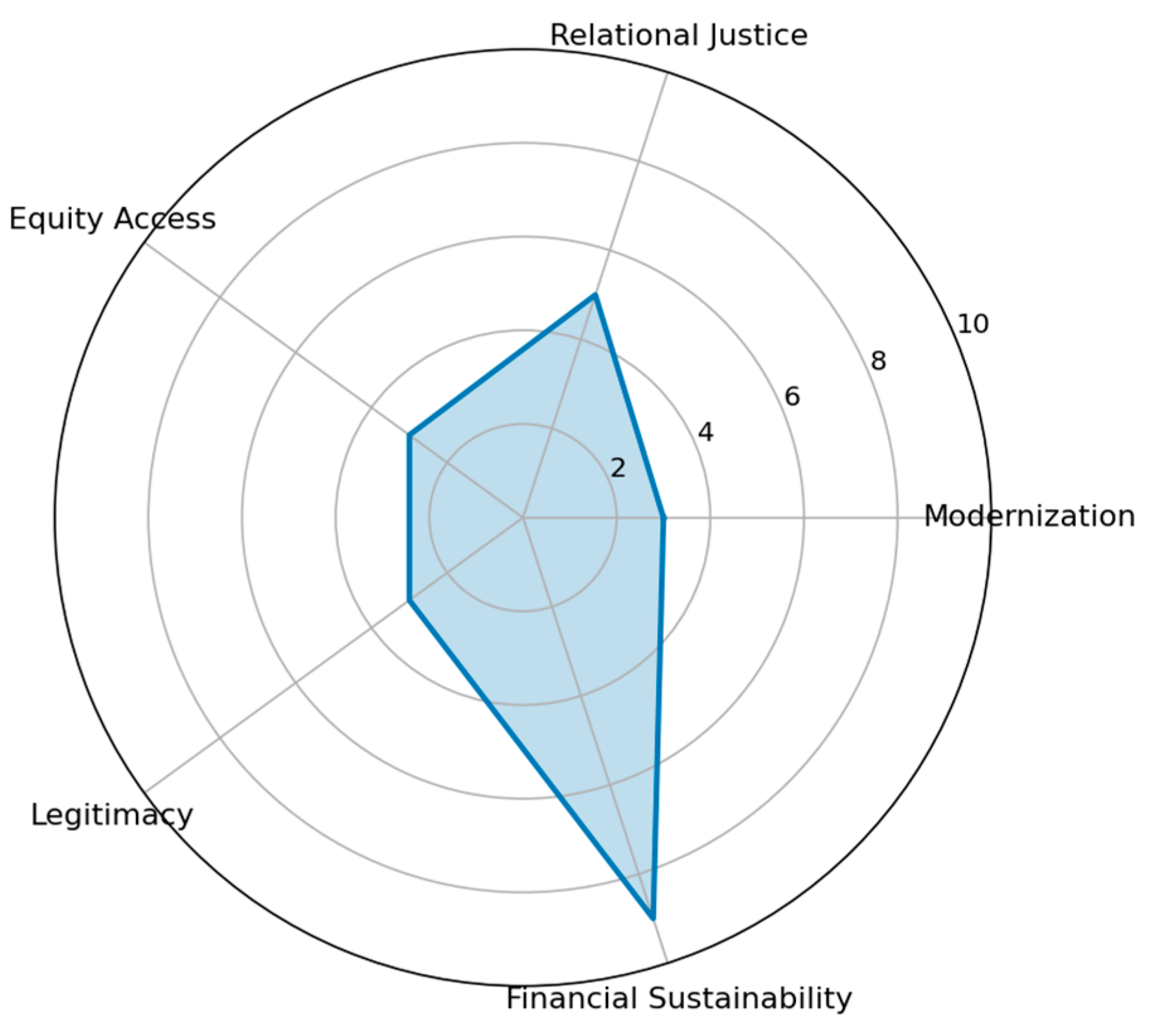
- Equity of access emerged prominently in relation to diagnostic limitations, particularly the absence of on-site CT imaging. Participants frequently associate external referrals with structural inequality relative to better-equipped urban hospitals. Therefore, equity of access was defined as the degree to which patients can obtain necessary diagnostic and therapeutic services within the municipal setting without disproportionate burden. This variable reflects distributive justice considerations and aligns with access theory [3]. In the simulation, equity increases under technological investment scenarios and remains moderate or low under staffing-only or status quo strategies.
- Financial sustainability was derived not from patient perception directly but from the structural context of municipal hospital governance. Romanian municipal hospitals operate under constrained budgets and delayed modernization cycles. Consequently, any strategic investment must be evaluated against fiscal resilience and long-term budgetary equilibrium. Within the simulation, financial sustainability represents the institution’s capacity to maintain operations without generating unsustainable deficit risk. It inversely correlates with capital-intensive modernization and positively correlates with conservative or incremental strategies.
- The Institutional Modernization Index was constructed as a synthetic indicator reflecting visible technological and infrastructural advancement. Its derivation was directly linked to patient emphasis on CT acquisition as a “symbolic legitimacy anchor”. Modernization was repeatedly framed as a marker of institutional seriousness and progress rather than solely as a technical upgrade. The index therefore captures both material improvement and symbolic signaling effects. In the simulation model, modernization exerts a direct positive effect on perceived legitimacy and equity of access, while indirectly influencing patient inflow and workload dynamics.
- Relational justice was derived from patient narratives emphasizing empathy, clear explanation, respectful dialog, and moral engagement. Unlike satisfaction, which reflects evaluative response to service quality, relational justice represents a normative expectation of dignity and fairness within interpersonal encounters. This construct aligns conceptually with the ethical foundations of clinical medicine and with literature linking communication quality to trust formation [12]. In the simulation framework, relational justice is primarily strengthened through workforce expansion and improved availability, and it directly contributes to patient satisfaction and legitimacy formation.
3.5.2. Scenario Construction
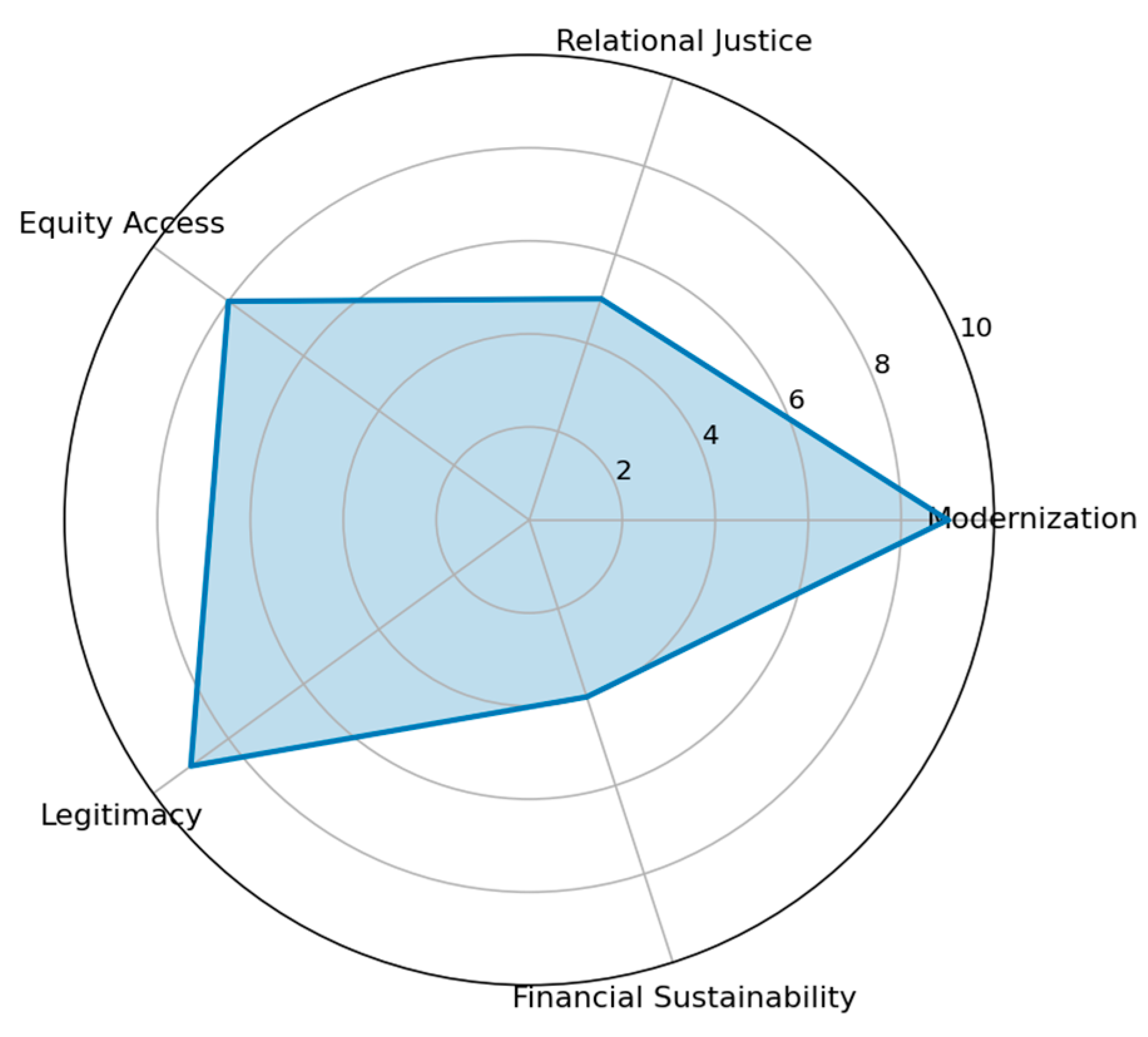
Scenario 1—Technological Investment Strategy
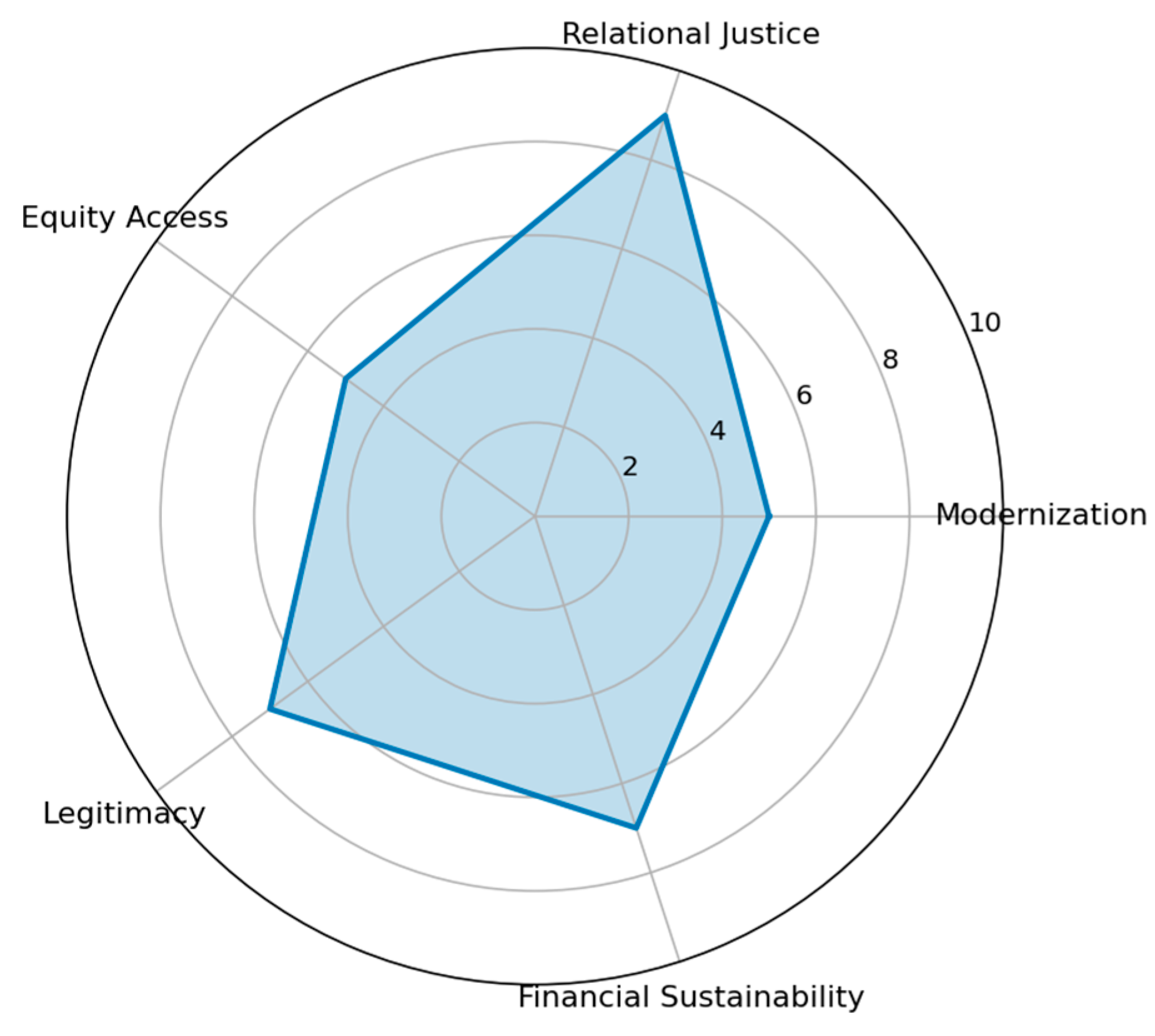
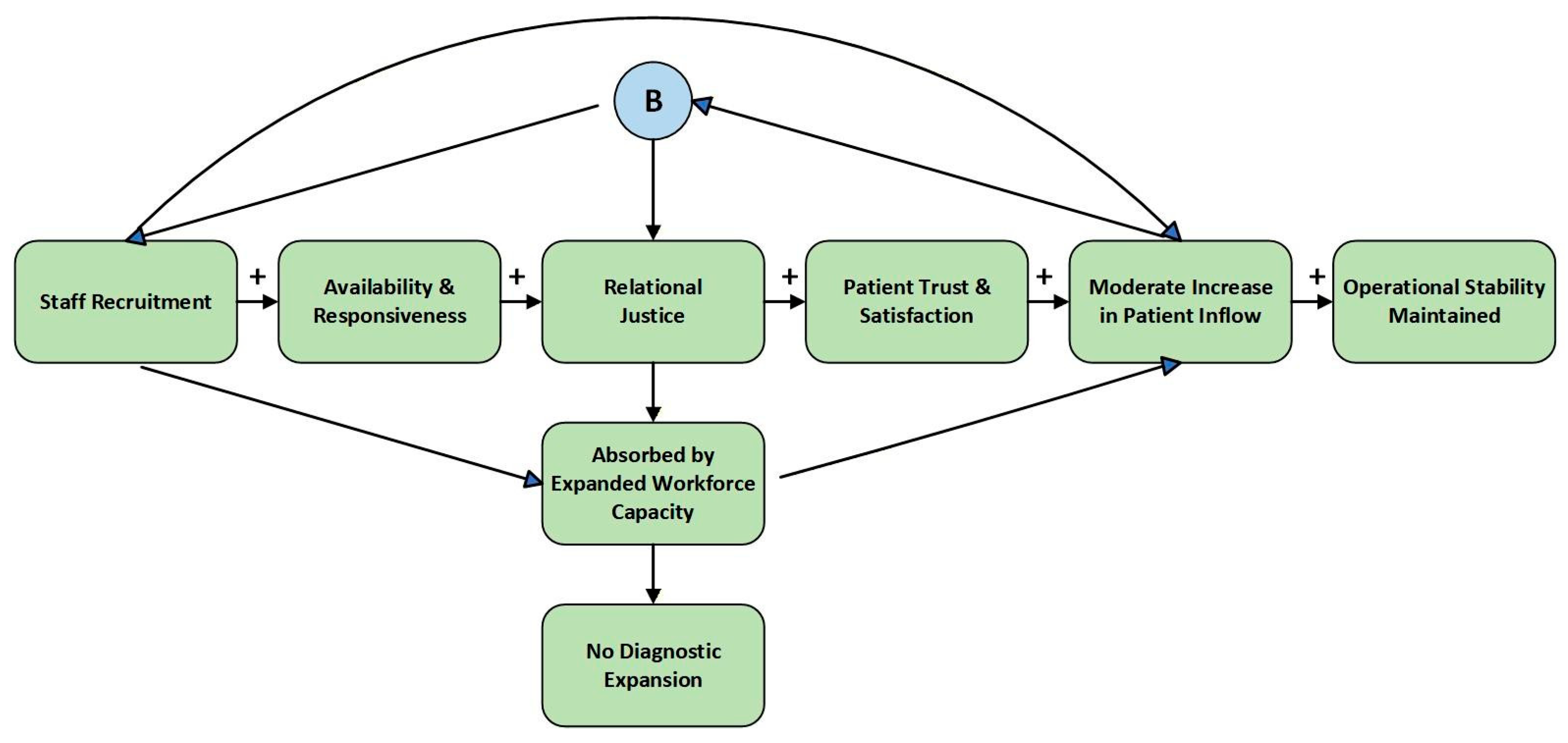
Scenario 2—Human Resource Strategy
Scenario 3—Status Quo Strategy
3.5.3. Simulation Tools
- 1.
- Decision Tree Modeling
- 2.
- Systems Dynamics Framework
- 3.
- Multi-Criteria Ethical Evaluation Grid
3.6. Analytical Approach
4. Results
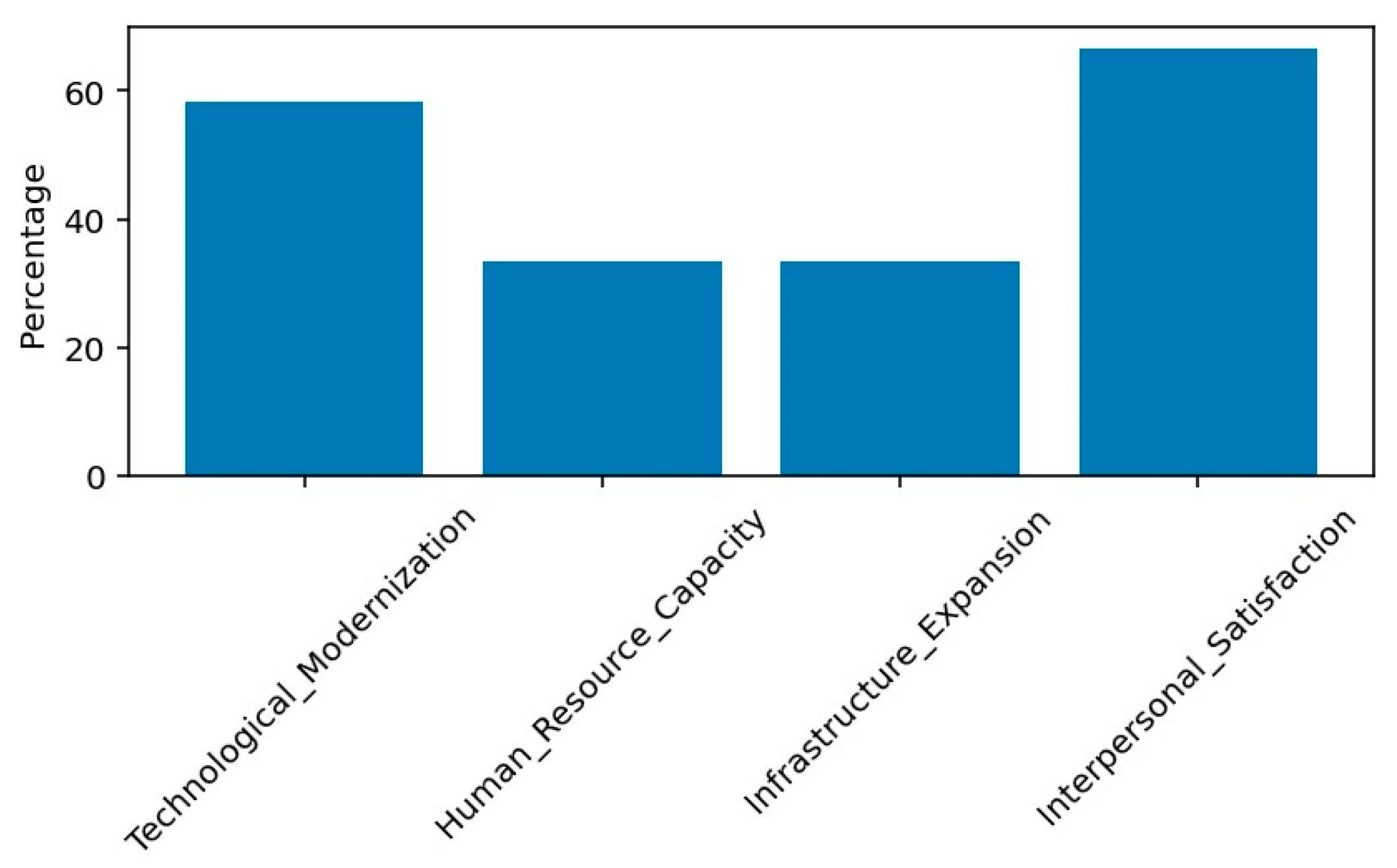
4.1. Qualitative Findings: Patient Expectation Theme
- Technological modernization.
- Human resource capacity.
- Infrastructure modernization.
- Communication and relational care.
4.2. Simulation Outcomes
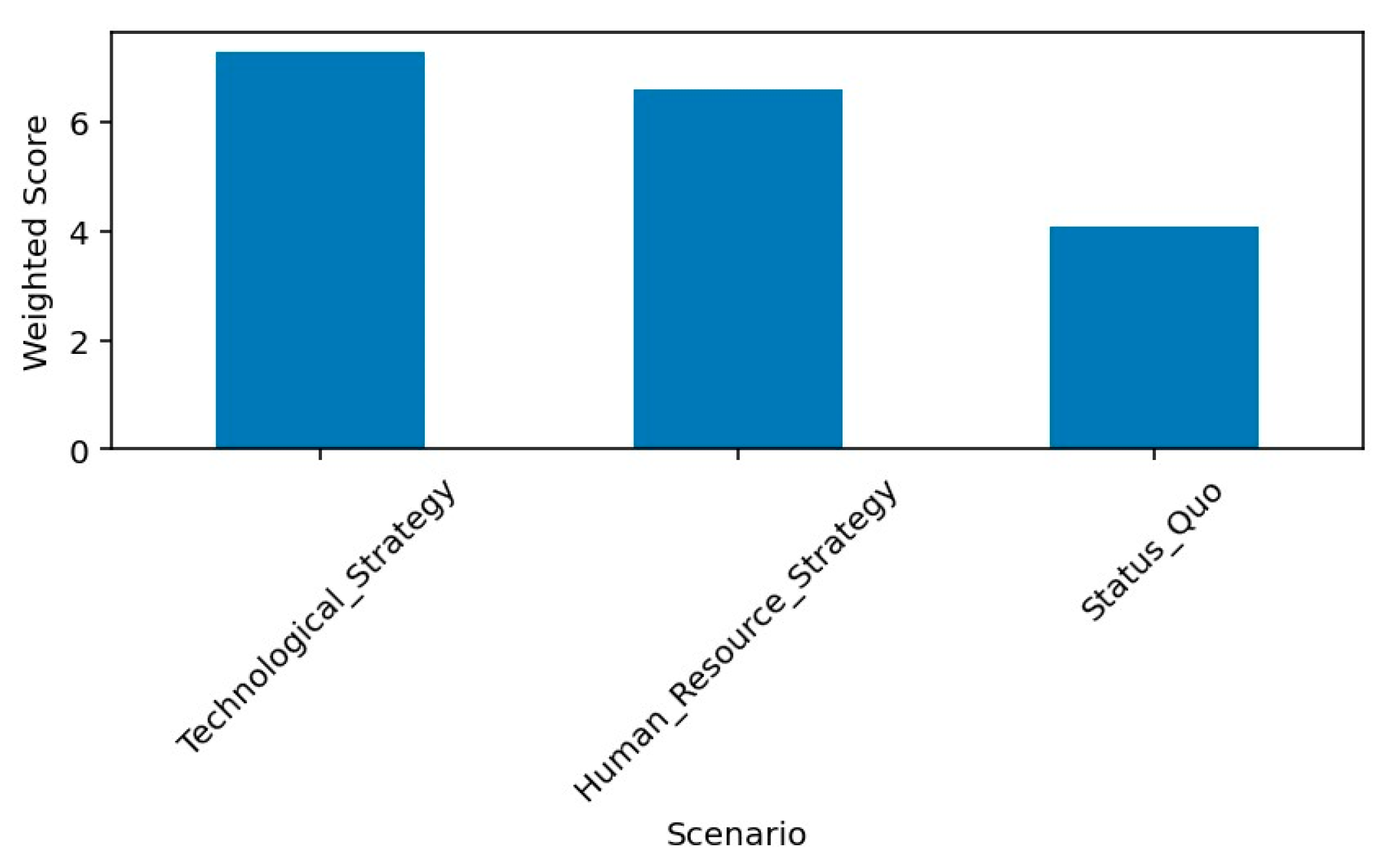
4.2.1. Scenario 1—Technological Strategy
4.2.2. Scenario 2—Human Resource Strategy
4.2.3. Status Quo
4.3. Comparative Ethical Evaluation Table
5. Discussion
6. Limitations
7. Conclusions
Author Contributions
Funding
Institutional Review Board Statement
Informed Consent Statement
Data Availability Statement
Conflicts of Interest
References
- Nicolescu, O.; Nicolescu, C. The development of professional management in Romania. Procedia Soc. Behav. Sci. 2014, 124, 1–10. [Google Scholar] [CrossRef] [Scilit]
- Petre, I.; Barna, F.; Gurgus, D.; Tomescu, L.C.; Apostol, A.; Petre, I.; Furau, C.; Năchescu, M.L.; Bordianu, A. Analysis of the healthcare system in Romania: A brief review. Healthcare 2023, 11, 2069. [Google Scholar] [CrossRef] [Scilit]
- Penchansky, R.; Thomas, J.W. The concept of access: Definition and relationship to consumer satisfaction. Med. Care 1981, 19, 127–140. [Google Scholar] [CrossRef] [Scilit]
- Cosma, S.A.; Bota, M.; Fleşeriu, C.; Morgovan, C.; Văleanu, M.; Cosma, D. Measuring patients’ perception and satisfaction with the Romanian healthcare system. Sustainability 2020, 12, 1612. [Google Scholar] [CrossRef] [Scilit]
- Radu, F.; Radu, V.; Turkes, M.C.; Ivan, O.R.; Tăbîrcă, A.I. A research of service quality perceptions and patient satisfaction: Case study of public hospitals in Romania. Int. J. Health Plan. Manag. 2022, 37, 1018–1048. [Google Scholar] [CrossRef] [Scilit]
- Cumpăt, C.M.; Huţu, D.; Rusu, B.; Zouri, M.; Zouri, N. Characterizing Managerial Decision Making in Public Hospitals: A Case Study from Romania. Healthcare 2024, 12, 2395. [Google Scholar] [CrossRef] [Scilit]
- Moya, D.; Guilabert, M.; Manzanera, R.; Gálvez, G.; Torres, M.; López-Pineda, A.; Jiménez, M.L.; Mira, J.J. Differences in perception of healthcare management between patients and professionals. Int. J. Environ. Res. Public Health 2023, 20, 3842. [Google Scholar] [CrossRef] [Scilit]
- Cumpăt, C.M.; Zouri, M.; Huţu, D.; Cumpăt, M.A.; Zouri, N.; Grădinaru, A.; Agheorghiesei, D.T.; Scripcariu, D.V. Ethical Decision-Making in Public Hospitals Management: Challenges and Models from Romania. Sci. Ann. Econ. Bus. 2025, 72, 541–576. [Google Scholar] [CrossRef] [Scilit]
- Ferreira, D.C.; Vieira, I.; Pedro, M.I.; Caldas, P.; Varela, M. Patient satisfaction with healthcare services and the techniques used for its assessment: A systematic literature review and a bibliometric analysis. Healthcare 2023, 11, 639. [Google Scholar] [CrossRef] [Scilit] [PubMed]
- Dulău, D.; Craiut, L.; Tit, D.M.; Buhas, C.; Tarce, A.G.; Uivarosan, D. Effects of Hospital Decentralization Processes on Patients’ Satisfaction: Evidence from Two Public Romanian Hospitals across Two Decades. Sustainability 2022, 14, 4818. [Google Scholar] [CrossRef] [Scilit]
- Suchman, M.C. Managing legitimacy: Strategic and institutional approaches. Acad. Manag. Rev. 1995, 20, 571–610. [Google Scholar] [CrossRef] [Scilit]
- Pellegrino, E.D. The internal morality of clinical medicine: A paradigm for the ethics of the helping and healing professions. J. Med. Philos. 2001, 26, 559–579. [Google Scholar] [CrossRef] [Scilit]
- Bombard, Y.; Baker, G.R.; Orlando, E.; Fancott, C.; Bhatia, P.; Casalino, S.; Onate, K.; Denis, J.L.; Pomey, M.P. Engaging patients to improve quality of care: A systematic review. Implement. Sci. 2018, 13, 98. [Google Scholar] [CrossRef] [Scilit] [PubMed]
- Beşciu, C.D. Patient satisfaction in the hospital’s emergency units in Bucharest. Procedia Econ. Financ. 2015, 32, 870–877. [Google Scholar] [CrossRef] [Scilit]
- Donabedian, A. Evaluating the quality of medical care. Milbank Q. 2005, 83, 691. [Google Scholar] [CrossRef] [Scilit] [PubMed]
- Pascoe, G.C. Patient satisfaction in primary health care: A literature review and analysis. Eval. Program Plan. 1983, 6, 185–210. [Google Scholar] [CrossRef] [Scilit]
- Needleman, J.; Buerhaus, P.I.; Stewart, M.; Zelevinsky, K.; Mattke, S. Nurse staffing in hospitals: Is there a business case for quality? Health Aff. 2006, 25, 204–211. [Google Scholar] [CrossRef] [Scilit]
- Rogers, A.E.; Hwang, W.T.; Scott, L.D.; Aiken, L.H.; Dinges, D.F. The working hours of hospital staff nurses and patient safety. Health Aff. 2004, 23, 202–212. [Google Scholar] [CrossRef] [Scilit]
- Marley, K.A.; Collier, D.A.; Goldstein, S.M. The role of clinical and process quality in achieving patient satisfaction in hospitals. Decis. Sci. 2004, 35, 349–369. [Google Scholar] [CrossRef] [Scilit]
- Kennedy, G.D.; Tevis, S.E.; Kent, K.C. Is there a relationship between patient satisfaction and favorable outcomes? Ann. Surg. 2014, 260, 592–600. [Google Scholar] [CrossRef] [Scilit]
- Xesfingi, S.; Vozikis, A. Patient satisfaction with the healthcare system: Assessing the impact of socio-economic and healthcare provision factors. BMC Health Serv. Res. 2016, 16, 94. [Google Scholar] [CrossRef] [Scilit] [PubMed]



| Characteristic | Value |
|---|---|
| Age (Mean ± SD) | 59.25 ± 9.39 |
| Age (Min–Max) | 44–76 |
| Age Groups | |
| 41–60 Years | 50.00% |
| >60 years | 50.00% |
| Sex | |
| Male | 66.70% |
| Female | 33.30% |
| Education level | |
| Primary School | 25.00% |
| Middle School | 8.30% |
| Secondary School | 58.30% |
| Post-Secondary School | 8.30% |
| Example Coded Speech | Initial Code | Thematic Cluster | Derived Conceptual Variable | Modeled Outcome in Simulation |
|---|---|---|---|---|
| “We need a CT here. It’s not normal to send patients to another city.” | Diagnostic referral burden | Technological modernization | Institutional Modernization Index (Mt) | ↑ Equity of Access ↑ Legitimacy |
| “Without modern equipment, people don’t trust the hospital” | Equipment as credibility signal | Technological modernization | Perceived Modernization Signal | ↑ Symbolic Legitimacy |
| “There are too few doctors. They are always overwhelmed” | Staff shortage | Human resource capacity | Workforce Capacity Index | ↑ Relational Justice ↓ Workload pressure |
| “You wait a long time before someone explains anything” | Communication delay | Human resource capacity | Staffing responsiveness | ↑ Patient Satisfaction |
| “The building needs renovation; it looks old.” | Facility deterioration | Infrastructure modernization | Infrastructure Quality Index | ↑ Institutional Image ↑ Symbolic Legitimacy |
| “Clean room make you feel safer.” | Environmental safety perception | Infrastructure modernization | Environmental Confidence Indicator | ↑ Perceived Quality |
| “Doctors explain things clearly, and that matters.” | Clear explanation | Communication/relational care | Relational Justice | ↑ Patient Satisfaction ↑ Legitimacy |
| “Respect and empathy are very important.” | Dignity expectation | Communication/relational care | Relational Justice Index | ↑ Trust ↑ Moral Legitimacy |
| “If the hospital had proper equipment, it would be equal to bigger cities.” | Perceived inequality | Technological modernization | Equity of Access | ↑ Distributive Legitimacy |
| Parameter | Governance Domain | Weight |
|---|---|---|
| Perceived Legitimacy (P) | 0.10 | |
| Patient Satisfaction | 0.00 | |
| Equity of Access (E) | 0.20 | |
| Financial Sustainability (F) | 0.15 | |
| Institutional Modernization (M) | 0.25 | |
| Relational Justice (R) | 0.30 | |
| Total | 1.00 |
| Variable | Definition | Reference |
|---|---|---|
| Equity of Access | Degree to which patients can obtain necessary diagnostic and therapeutic services without structural barriers. | [3] |
| Relational Justice | Perceived fairness, respect, empathy, and quality of interpersonal interaction in care delivery. | [12] |
| Institutional Modernization | Level of technological and infrastructural advancement, including symbolic signaling of institutional progress. | [4,5] |
| Perceived Legitimacy | Aggregate patient judgment of institutional credibility, responsiveness, and alignment with expectations. | [11] |
| Financial Sustainability | Capacity of the hospital to maintain operations without generating long-term fiscal imbalance. | [2] |
| Ethical profile | Composite evaluation of governance performance across distributive, relational, symbolic, and financial domains derived from simulation outputs. | This study |
Disclaimer/Publisher’s Note: The statements, opinions and data contained in all publications are solely those of the individual author(s) and contributor(s) and not of MDPI and/or the editor(s). MDPI and/or the editor(s) disclaim responsibility for any injury to people or property resulting from any ideas, methods, instructions or products referred to in the content. |
© 2026 by the authors. Licensee MDPI, Basel, Switzerland. This article is an open access article distributed under the terms and conditions of the Creative Commons Attribution (CC BY) license.
Share and Cite
Palamaru, A.-L.; Cumpăt, C.M.; Vicol, M.C.; Oprea, L.; Zouri, M.; Zouri, N.; Toader, E. Patient Perception and Ethical Trade-Offs in Resource Allocation: A Qualitative Study with Conceptual Simulation in a Romanian Municipal Hospital. Healthcare 2026, 14, 903. https://doi.org/10.3390/healthcare14070903
Palamaru A-L, Cumpăt CM, Vicol MC, Oprea L, Zouri M, Zouri N, Toader E. Patient Perception and Ethical Trade-Offs in Resource Allocation: A Qualitative Study with Conceptual Simulation in a Romanian Municipal Hospital. Healthcare. 2026; 14(7):903. https://doi.org/10.3390/healthcare14070903
Chicago/Turabian StylePalamaru, Andreea-Luiza, Carmen Marinela Cumpăt, Mihaela Catalina Vicol, Liviu Oprea, Muthana Zouri, Nicoleta Zouri, and Elena Toader. 2026. "Patient Perception and Ethical Trade-Offs in Resource Allocation: A Qualitative Study with Conceptual Simulation in a Romanian Municipal Hospital" Healthcare 14, no. 7: 903. https://doi.org/10.3390/healthcare14070903
APA StylePalamaru, A.-L., Cumpăt, C. M., Vicol, M. C., Oprea, L., Zouri, M., Zouri, N., & Toader, E. (2026). Patient Perception and Ethical Trade-Offs in Resource Allocation: A Qualitative Study with Conceptual Simulation in a Romanian Municipal Hospital. Healthcare, 14(7), 903. https://doi.org/10.3390/healthcare14070903