


Abstract
Background: Missed primary care appointments disrupt continuity, reduce care quality, and increase healthcare costs. Despite numerous studies, global patterns and predictors of appointment non-adherence remain inconsistently reported. Objective: To identify, categorize, and evaluate the consistency of predictors of appointment non-adherence in primary care across diverse populations and healthcare systems. Methods: A systematic review was conducted following PRISMA guidelines (PROSPERO ID: CRD420251121963). PubMed/MEDLINE, Scopus, Web of Science, and Cochrane were searched in August 2025 for observational studies examining predictors of missed, canceled, or rescheduled primary care appointments. Study quality was appraised using the MINORS tool. Results: Twenty-seven observational studies (1982–2025) across eight countries were included, representing a total of more than 13 million appointments analyzed. Reported non-attendance varied widely (~5–31%). Predictors clustered into: patient-level (younger age, socioeconomic disadvantage, minority status in North American studies, mental health burden, and lower literacy/greater social needs), appointment-level (prior non-attendance and longer time between booking and visit), and clinic/system-level (access barriers such as transportation and scheduling friction). Telemedicine and continuity with the same clinician were associated with lower non-attendance in more recent studies. Due to heterogeneity in definitions and analyses, the results were synthesized narratively; overall study quality was modest–moderate by MINORS. Conclusions: Missed appointments reflect interacting patient- and system-level determinants, with the highest risk among younger and socioeconomically disadvantaged patients and those with mental health conditions. Interventions that reduce access friction (e.g., reminders, flexible scheduling/shorter lead times, transportation support) and equity-focused hybrid telemedicine may reduce non-adherence.
1. Introduction
Continuity of care is a cornerstone of primary healthcare, ensuring timely diagnosis, effective management of chronic diseases, and improved long-term outcomes. However, missed appointments, or appointment non-adherence, remain a persistent global issue that disrupts care continuity and contributes to poor health outcomes and inefficient healthcare delivery [1,2,3,4,5]. Non-attendance resulted in delayed treatment, unmet health needs, and significant economic burden on healthcare systems through wasted resources and reduced clinic productivity [3,6,7]. Studies from various regions consistently demonstrate that missed appointments are associated with poorer disease control, increased emergency visits, and higher hospitalization rates, underscoring the clinical and economic importance of addressing this challenge [4,5,6].
The determinants of appointment non-adherence are multifactorial, encompassing patient-level, provider-level, and health system-level factors. Patient-level predictors frequently include sociodemographic characteristics such as age, gender, marital status, employment, income, and education [3,8,9,10,11]. Individuals from socioeconomically disadvantaged backgrounds often experience more barriers to attendance due to financial hardship, transportation limitations, or competing life demands [2,10,12,13]. Psychological factors such as depression, anxiety, and reduced self-efficacy have also been linked to missed visits, with evidence suggesting that mental health burden significantly reduces patients’ engagement in care [14,15,16]. Furthermore, low health literacy and reduced awareness of preventive care have been associated with a lack of motivation to attend scheduled visits [14,15,17]. These findings highlight the need for holistic patient-centered approaches that address both clinical and social determinants of health.
Health system and provider-related factors play an equally critical role in shaping attendance behavior. Inefficient scheduling processes, long waiting times, and limited appointment availability are known to increase the likelihood of missed visits [3,18,19]. Evidence from safety net and family medicine clinics suggests that longer consultation times and more flexible scheduling can reduce future no-shows by improving patient satisfaction and trust [4,18]. Geographic accessibility, including distance to clinics and availability of public transportation, also significantly influences adherence, particularly in rural or underserved regions [2,3,20]. Organizational culture, patient–provider communication, and the use of appointment reminders further affect attendance rates [9,19,21]. A realist review highlighted that effective reminder systems, patient engagement strategies, and supportive communication can mitigate missed appointments when adapted to local contexts [17].
Recent developments in digital health and data analytics have introduced novel strategies for predicting and preventing missed appointments. Machine learning and artificial intelligence models have been increasingly employed to identify patients at high risk for non-adherence by analyzing historical data and behavioral patterns [1,21]. These personalized approaches allow healthcare providers to target interventions such as tailored reminders or outreach calls. By identifying consistent global predictors, such as previous non-attendance and socioeconomic status, the results of this review can be used to directly inform feature selection in predictive models, thus closing the gap between traditional epidemiological research and the application of artificial intelligence. However, the generalizability of such models across countries remains uncertain due to variations in healthcare systems, digital infrastructure, and patient populations [1,2,22]. Similarly, the rise of telemedicine during and after the COVID-19 pandemic has had mixed effects on appointment adherence. While virtual care improved accessibility for some populations, it simultaneously created digital barriers for older adults and low-income groups, emphasizing persistent inequities in healthcare access [23,24,25].
Cultural and contextual differences across regions also shape non-adherence behaviors. Studies from Saudi Arabia, Japan, and Australia have identified unique predictors such as employment obligations, cultural attitudes toward preventive medicine, and regional service delivery structures [3,8,11]. In the United Kingdom and the United States, social deprivation, comorbidity burden, and minority status have been consistently associated with higher rates of missed appointments [4,13,20]. These cross-national variations illustrate that predictors of non-adherence are influenced by broader social and cultural determinants, reinforcing the need for context-specific interventions that align with local health system structures and population needs [3,4,8,11,13,20].
Although the literature on missed appointments has expanded significantly over the past four decades, most studies remain localized, focusing on single populations or healthcare systems. Few have synthesized findings across regions to identify universal and context-specific predictors of appointment non-adherence in primary care [17,21]. The recent increase in studies using advanced analytics and international datasets presents an opportunity to reassess these predictors on a global scale.
In order to address the existing gaps, this systematic review was conducted with a specific research question formulated with a PICO approach as follows: “In patients scheduled for primary care visits globally (P), which patient-, appointment-, and system-related factors (E) are consistently associated with appointment non-adherence when compared with factors associated with attendance (C), and how do these factors relate to appointment non-adherence (O).” Prior evidence suggests that both patient-level characteristics, such as demographics, comorbidities, and psychosocial factors, and system-level characteristics, including scheduling processes and clinic organization, play a role in influencing adherence. Through a systematic review, this study aims to synthesize the global evidence on predictors of appointment non-adherence in primary care.
The objectives of this review were fourfold. First, to identify and categorize the predictors of appointment non-adherence (missed, canceled, or rescheduled appointments) among patients in primary care settings worldwide. Second, to assess the strength and consistency of associations between these predictors and appointment non-adherence across studies and healthcare systems. Third, to evaluate whether predictors differed according to population demographics, healthcare system characteristics, and study regions, such as high-income versus low- and middle-income countries. Finally, to provide a comprehensive evidence base to support the development of targeted interventions and healthcare policies aimed at reducing appointment non-adherence in primary care.
2. Methods
In our review, we followed the PRISMA (Preferred Reporting Items of Systematic Reviews and Meta-Analyses) model to minimize selection bias [26]. This study protocol was registered with PROSPERO a priori with the following ID: CRD420251121963. Since the study relied exclusively on previously published data, ethical approval was not required. We conducted a comprehensive search in August 2025 in PubMed/MEDLINE, Scopus, Web of Science, and Cochrane CENTRAL, supplemented by targeted searches and citation chasing. Google Scholar was used as a supplementary source to identify additional records not captured by indexed databases and to support backward/forward citation tracking. Additional studies were identified through manual screening of reference lists of included articles and relevant reviews. The complete database-specific search strategies (all terms/fields and any limits) are provided in Supplementary Materials.
2.1. Methodology for Selecting Studies
We included observational studies (cohort, cross-sectional, or case–control), with either retrospective or prospective data, published in English. The population comprised patients attending or scheduled to attend primary care appointments in any healthcare setting worldwide. Eligible studies examined factors associated with appointment non-adherence, rather than those evaluating specific interventions. The comparison of interest was between patients who attended scheduled appointments and those who missed, canceled, or rescheduled them. Studies were required to report statistically analyzed predictors or associated factors of appointment non-adherence.
We excluded studies conducted in secondary, tertiary, specialty, or inpatient care settings and those focusing solely on interventions to improve adherence without analysis of predictive factors. Studies lacking adherence-based stratification or statistical analysis of predictors were also excluded. In addition, editorials, commentaries, reviews, protocols, qualitative-only studies, and case reports were not considered for inclusion. Details of the predefined inclusion and exclusion criteria are summarized in Table 1.
Table 1.
PICOS criteria for inclusion and exclusion of the study.
2.2. Process of Screening and Data Extraction
One independent reviewer (S.K.) screened papers simultaneously and independently reviewed their title and abstract using the Rayyan search web (https://www.rayyan.ai/, access date: 21 September 2025) and mobile app for systematic reviews [27]. For transparency, title/abstract screening by a single reviewer is a deviation from ideal duplicate screening. However, to ensure the rigor of the selection process and minimize potential bias, full-text eligibility assessment and data extraction were performed in strict duplicate by independent reviewers, representing the more critical stages for ensuring data integrity and study inclusion.
To mitigate selection error, full-text eligibility was assessed by two independent reviewers (A.Z., L.A.), and data extraction was performed in duplicate (J.A., A.A.) with cross-checking to avoid duplication and omissions. General information was collected from the articles, including: author, country, design, sample size, patient age, and year of publication. The target outcomes of missed appointments, canceled appointments, and rescheduled appointments were extracted. In addition, associated risk factors were also extracted. To avoid duplication, the retrieved data were double-checked.
2.3. Assessment of Quality and Bias Risk
The included studies were evaluated for methodological quality and risk of bias using the Methodological Index for Non-Randomized Studies (MINORS) [28]. The MINORS tool is a validated 8-item instrument for non-comparative studies and a 12-item instrument for comparative studies, with each item scored 0–2 (maximum scores of 16 and 24, respectively). Two independent reviewers (K.F., R.A.) conducted the assessment; one reviewer performed the initial scoring, and the other verified the results. Discrepancies were resolved through discussion until consensus was reached.
2.4. Analytic Plan
A quantitative meta-analysis was not performed due to substantial clinical and methodological heterogeneity, including variability in (i) definitions of non-adherence (no-show vs cancellation vs rescheduling; patient-level vs appointment-level outcomes), (ii) populations and settings (general primary care vs disease-specific cohorts; safety net vs teaching vs national datasets), and (iii) analytic approaches and covariate adjustment across studies. To address this heterogeneity, we conducted a structured narrative synthesis by grouping predictors into patient-level, appointment-level, and health system/provider-level domains, and we summarized whether associations were consistent across regions and health system contexts where data permitted. Predictor consistency was defined as the presence of statistically significant associations in at least three independent studies from two or more distinct geographic regions or healthcare systems.
Given the wide study timeframe (1982–2025), we additionally examined temporal heterogeneity by summarizing predictors across three pragmatic eras reflecting major shifts in care delivery and technology: 1982–2004 (pre–widespread EHR/SMS), 2005–2019 (EHR expansion and routine SMS/automated reminders), and 2020–2025 (telemedicine/COVID-19 era). The specific cut points chosen were intended to be indicative of key inflection points in healthcare technologies and service delivery. The cut point of 2004/2005 marks the period in which electronic health records (EHRs) and SMS reminders were implemented, resulting in a significant impact on appointment management. The cut point of 2020 marks the period in which the COVID-19 pandemic resulted in a rapid and widespread shift in the use of telemedicine and virtual care modalities, thereby fundamentally changing patient access and appointment adherence.
Predictors were interpreted within their historical context, and we prioritized consistency of associations across eras when drawing conclusions.
3. Results
3.1. Search Results and Study Selection
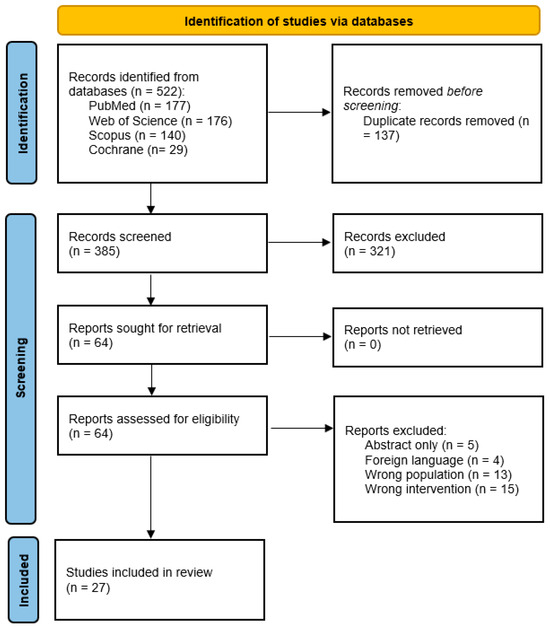
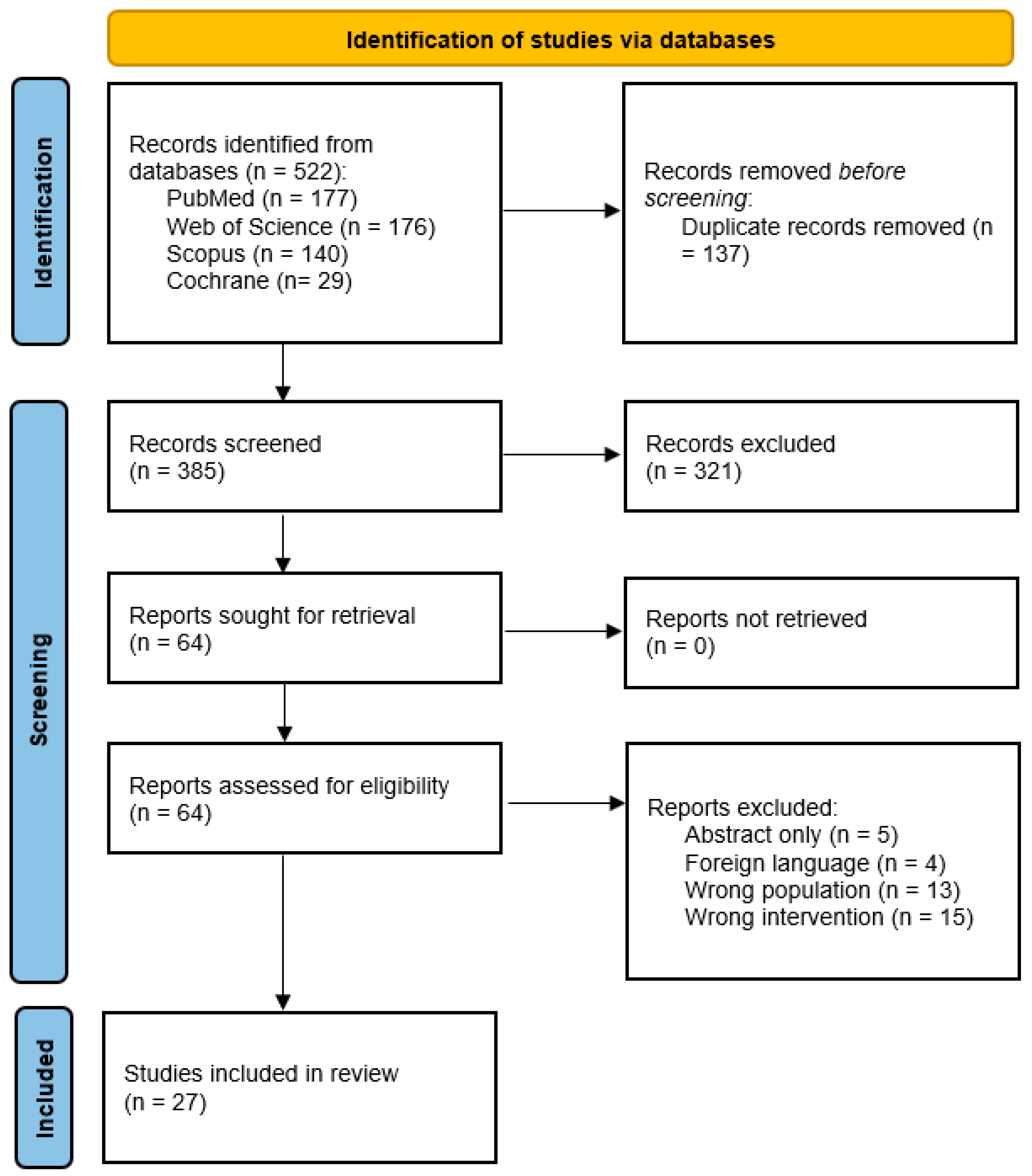
The PRISMA flow diagram shows that 522 records were identified across four databases, with 137 duplicates removed, leaving 385 records screened. After title/abstract screening, 321 records were excluded, and 64 full texts were assessed for eligibility. Of these, 37 were excluded (mainly due to wrong intervention, population, or abstract-only reports), resulting in 27 studies included in the final review (Figure 1).
Figure 1.
PRISMA flowchart of the screening process.
3.2. Characteristics of Included Studies
Twenty-six studies (1982–2025) from the United States, United Kingdom, Canada, Australia, Argentina, Japan, Thailand, and Saudi Arabia assessed missed primary care appointments across multiple designs (retrospective cohorts, prospective cohorts, cross-sectional analyses, quasi-experiments). Sample sizes ranged from 106 to 824,374 patients, with appointment counts ranging from hundreds to 13.6 million. Populations included general primary care users, diabetes cohorts, HIV clinic patients, and health system-wide samples. Across studies, non-attendance was reported in relation to patient demographics, socioeconomic measures (e.g., Medicaid/uninsured), race/ethnicity and language, mental health measures, health literacy, social needs (including transportation), waiting time, continuity measures, provider seniority, and visit modality (including telemedicine). Summary characteristics of included studies are presented in Table 2 [2,3,4,5,6,7,8,9,10,11,12,14,15,16,18,19,20,23,24,28,29,30,31,32,33,34].
Table 2.
Characteristics of the included studies.
3.3. Risk of Bias and Certainty of Evidence
Using the MINORS tool, overall methodological quality was modest to moderate. For non-comparative studies, scores ranged from 6 to 9 (median: 8.5) out of a maximum of 16, while for comparative studies, scores ranged from 12 to 19 (median: 16) out of 24, indicating a moderate level of quality across the included evidence. Common limitations included a lack of prospective sample size calculation, a lack of unbiased endpoint assessment, and incomplete follow-up reporting. Strengths frequently included clearly stated aims, well-defined endpoints, and reporting of patient characteristics (Supplementary Tables S2 and S3).
3.4. Prevalence of Missed Appointments
Reported missed appointment rates varied by setting and population. Across studies reporting appointment-level non-attendance percentages, rates ranged from 5.2% to 38.0%, with a median of 14.2%. In large primary care datasets from Western settings, approximately 7–15% of scheduled visits were not attended. For example, an Australian regional clinic reported a 7.6% missed appointment rate over 2 years [3], and a Maine family practice residency reported a 6.7% no-show rate in 1995 [35]. Higher no-show frequencies were reported in some safety net and urban U.S. settings; a Texas Federally Qualified Health Center network reported high volumes of missed visits linked to specific predictors [18], and a New York urban health system reported 26.6% no-shows for primary care appointments [12]. In other settings, a Saudi Arabian primary care audit reported a 29.5% default rate [8], and an Argentinian clinic reported approximately 23% non-attendance [9].
3.5. Patient Demographic Factors
Age: Across studies, younger adults more frequently had higher non-attendance than older adults. Weingarten et al. reported the highest no-shows among 17–30-year-olds in a family practice clinic [32], and Neal et al. reported decreasing odds of missing with increasing age group in UK general practice [20]. Some studies also reported higher non-attendance among very elderly patients (e.g., >80–90 years) [4]. A Thai diabetes study reported patterns consistent with work and responsibility-related constraints in middle-aged adults [10]. One study reported high kept appointment rates for infants and higher missed rates among adolescents [29].
Gender: Findings were mixed across studies. Some studies reported slightly higher non-attendance among women, including a modestly higher odds estimate in an Australian clinic, with subgroup variation among Aboriginal women [3,36]. Other studies reported limited or no independent association after adjustment; for example, in an HIV clinic analysis, gender was not a key predictor after accounting for poverty and age [13]. In some settings, subgroup patterns were reported (e.g., self-employed men) [3,11].
Race/ethnicity and language: Several North American studies reported higher no-show rates among racial/ethnic minority groups. Goldman (1982) reported higher non-attendance among non-White patients [28]. Adepoju et al. reported higher odds of missed visits among Black patients compared with White patients in Texas safety net clinics [18], and other studies reported differences across racial/ethnic groups, including Black and Hispanic patients. Smith et al. reported differences in appointment keeping by race/ethnicity in a Midwestern clinic [31]. Telemedicine studies reported changes in disparities by race/ethnicity [23]. In Saudi Arabian settings, ethnicity was not a reported variable, while education level was reported as a predictor in that context [8]. Language-related differences were reported in a U.S. study of missed appointments by preferred language, including Spanish, Portuguese, and Haitian-Creole speakers [24].
Socioeconomic status: Low socioeconomic status was frequently associated with higher non-attendance across multiple measures (income/poverty, insurance type, education, area deprivation indices). A Scottish analysis reported deprivation as a strong correlate of repeated missed appointments [4]. In U.S. studies, Medicaid and uninsured status were commonly associated with higher no-show rates [18,32]. Medicaid managed care enrollment was also associated with higher missed appointments in one study [31], and uninsured status was reported as a predictor of poorer retention in HIV care [34]. Educational attainment was reported as a predictor in a U.S. analysis linking EHR to neighborhood measures [2], and limited reading ability was associated with non-attendance in one study [14]. Some studies reported differing patterns by payer categories, including self-pay versus Medicaid, depending on the setting [29]. Area-level deprivation measures were also reported as predictors in U.S. clinic data [2].
3.6. Psychosocial and Health-Related Factors
Mental health: Multiple studies reported associations between mental health measures and missed appointments. Depression screening positivity was associated with missed visits in one study [14]. In a psychiatry referral context, lower distress was associated with non-attendance [16]. Ciechanowski et al. reported complex patterns of healthcare utilization and missed visits among patients with major depression [15]. McQueenie et al. reported higher mortality risk among patients with frequent missed appointments, with stronger associations among those with mental health conditions [6].
Interpersonal factors and beliefs: Ciechanowski et al. reported associations between attachment style and missed primary care visits [15]. Non-completion of depression screening was associated with attendance outcomes in one study [16]. Studies also reported patient-reported reasons for missing appointments, such as issue resolution or perceived lack of necessity [20]. Patient satisfaction was not predictive in Goldman’s study [28].
Comorbidity and chronic disease: McQueenie et al. reported associations between the number of long-term conditions and missed appointments, including interactions with mental health conditions [6]. Diabetes cohorts showed variable non-attendance rates and reported associations with outcomes such as glycemic control and hospitalization [7]. Prior engagement measures (e.g., number of prior visits) were reported as predictors in some studies [18].
Personality and social support: One study reported exploratory findings relating personality traits (e.g., agreeableness) to missed appointments [10]. Neal reported patterns of reattendance after missed appointments in UK general practice [20].
3.7. Healthcare System and Appointment-Related Factors
Lead time: Longer time between scheduling and the appointment date was associated with higher non-attendance in multiple studies [9,32]. In psychiatry referrals, longer wait time was associated with lower attendance [30]. Same-day appointments were reported to have higher keep rates in one study [29]. McQueenie et al. discussed appointment timing in relation to missed visits [6].
Timing: Several studies reported associations between no-shows and appointment time slots or days of the week, including afternoon clinics [8] and patterns by weekday [3,9].
Reminders: Patient-reported reasons for missing appointments included forgetting to cancel or attend [19]. Reminder interventions were reported in a Saudi pain clinic context, with a change in no-show rates after phone reminders [37]. Studies varied in how reminder systems were described.
Transportation and distance: Transportation was reported as a barrier in studies linking social needs and missed appointments and in survey-based reporting [8,12]. Distance-to-clinic measures were included as predictors in multiple settings, with varying reported associations [18,29]. Geographic and rurality-related measures were included as predictors in a U.S. analysis [2]. Telehealth was evaluated as a visit modality in a post-2020 study [23].
Visit type, continuity, and provider type: Studies reported associations between visit purpose (preventive/routine versus other visits), continuity with clinicians, and provider type/seniority and attendance [18,20,29,32]. Teaching settings reported variation by provider training level [32].
Cancellation and rescheduling processes: Studies reported that patients sometimes intended to cancel but were unable to do so [20], and non-attenders frequently did not cancel in advance [19]. Some studies reported higher cancellation volumes relative to no-shows and associations between rescheduling patterns and subsequent care utilization [31].
Telemedicine and post-2020 studies: Telehealth was evaluated as a visit modality in post-2020 primary care studies, including subgroup analyses by race/ethnicity and payer categories [23]. Additional interventions reported included targeted reminder programs [37] and an attendance promotion program in a diabetes cohort [11]. Overbooking was noted as an administrative approach in clinical practice but was not a primary outcome in the included studies.
3.8. Outcomes and Consequences of Missed Appointments
Several studies reported associations between missed appointments and clinical outcomes or healthcare utilization. Hwang et al. reported that higher no-show propensity was associated with incomplete screening and poorer disease control, as well as higher emergency department and hospitalization use [5]. In diabetes populations, missed visits were reported in relation to HbA1c and hospitalization outcomes [37], with post-hospitalization missed visits linked to rehospitalization risk in one study [7]. McQueenie et al. reported associations between frequent missed appointments and higher mortality, with stronger associations among patients with mental health conditions [6]. Neal reported that many patients who missed appointments later reattended within a short period [20]. Economic outcomes were reported, including NHS cost estimates related to missed GP appointments [38,39] and clinic revenue impacts in a U.S. safety net context [24]. Training and workflow consequences were also described in residency settings [32].
3.9. Temporal Patterns in Predictors (1982–2025)
Studies were additionally summarized by study period (pre-2000, 2000–2019, post-2020) and health system context (e.g., tax-funded vs insurance-based systems) in Table 3. Across periods, studies reported consistent inclusion of demographic, socioeconomic, and prior attendance measures, while later-period studies more frequently evaluated EHR-derived predictors, automated reminders, and telemedicine-related factors.
Table 3.
Categorization of included studies by study period and health system type, with corresponding dominant predictors.
4. Discussion
This review synthesized evidence from 27 studies (1982–2025) examining predictors of missed primary care appointments across multiple countries and care contexts. To support interpretation across diverse settings, we apply a multi-level framework in which non-adherence reflects the joint influence of patient-level factors, provider relationships, clinic processes, and wider system conditions.
Across studies, younger age, socioeconomic disadvantage, and prior non-attendance were repeatedly reported correlates of missed appointments [4]. Several studies also reported associations with race/ethnicity and language in North American settings [18,24,29] and with mental health measures in multiple contexts [6,14,15,30]. For instance, the absence of ethnicity as a reported variable in Saudi Arabian contexts, where the level of education was found as a predictor [8], further emphasizes that constructs of disparity are highly contextual and show considerable regional variation.
Collectively, these findings indicate that non-attendance commonly clusters with markers of social and clinical vulnerability.
Appointment adherence should be interpreted within the context of access and service design rather than as an isolated patient attribute. Repeated non-adherence can be framed as a marker of system–patient misalignment and structural constraint, rather than patient failure [39]. Studies addressing attachment style and patient attitudes also reported associations consistent with the relevance of trust, continuity, and perceived value of care [15]. Follow-up approaches described in included studies highlight the role of proactive outreach for patients who miss visits, particularly in groups with higher clinical risk [6]. Mental health factors may contribute to missed visits through amotivation, disorganization, avoidance, and symptom burden, which may interact with logistical barriers.
Structural barriers were frequently reported, including transportation needs [8,12], work constraints, long lead times [9,32], and difficulty canceling or rescheduling [19,20]. Clinic-level process variables (lead time, reminder systems, cancellation ease, and scheduling flexibility) were repeatedly included as predictors and may differ across health systems and care models.
Telemedicine was evaluated in post-2020 studies and was associated with lower no-show rates in primary care, including subgroup patterns by race/ethnicity and payer category [23].
At the same time, telemedicine has limitations and ethical considerations, including digital exclusion related to device access, connectivity, digital literacy, sensory/cognitive limitations, privacy constraints, and appropriateness for conditions requiring physical examination. Apart from these challenges, there are some ethical issues specific to algorithmic bias in access platforms, where there might be an unintentional bias against vulnerable populations if such systems were developed using non-representative data [39,40]. There are also some new privacy issues, such as data breaches during virtual consultations and ensuring patient privacy in shared living spaces [41,42]. In order to address these challenges, new “equity-aware hybrid” models should be implemented, which include integrating proactive digital literacy screening, providing “digital navigators” for vulnerable populations, and auditing these new technologies for algorithmic bias. They should also ensure an uninterrupted experience between virtual and face-to-face care, so that there is no compromise in care quality for vulnerable populations who might be excluded from these new technologies [43,44].
4.1. Limitations
Most included studies were observational, limiting causal inference. Study settings, outcome definitions, and analytic adjustments varied substantially, contributing to heterogeneity. The long inclusion window introduces temporal heterogeneity; therefore, some predictors (e.g., transportation barriers) may not be directly comparable across decades. Publication bias is possible. Finally, heterogeneity limited quantitative pooling; therefore, the results were synthesized narratively with emphasis on predictors repeatedly reported across contexts.
4.2. Future Directions
The synthesized predictors support hypothesis-driven intervention testing. Examples include: (1) a high-risk bundle for patients with prior missed appointments and socioeconomic disadvantage (rapid rebooking + navigator/peer outreach + transport support) compared with standard reminders; (2) friction reduction scheduling for younger adults (short lead times, simplified cancellation/rescheduling, and waitlist backfill) compared with usual scheduling; and (3) hybrid telehealth with digital support for older or low-digital-literacy patients compared with telehealth alone.
Predictive analytics using EHR data has also been evaluated in included studies and may enable targeted outreach based on prior attendance and risk profiles [2,4]. Additional work should assess longer-term outcomes associated with reducing missed appointments, including utilization and mortality endpoints [6]. (4) Policy-level interventions for addressing systemic barriers include the following. In addition to clinic-level and patient-level interventions, there is a need for policy-level interventions for mitigating systemic determinants of non-adherence. It is important for policymakers and payers to explore different payment mechanisms for increasing the length of clinic appointments, especially for patients who are socioeconomically disadvantaged, as studies indicate that longer appointment times can prevent future missed appointments [18]. Furthermore, insurance coverage can also be designed to provide for non-medical determinants of health, such as transportation services, which can help address issues of access as identified in studies [8,12]. Such policy interventions acknowledge non-adherence as a symptom of systemic misalignment with patients and work towards a more equitable healthcare system.
5. Conclusions
Missed primary care appointments were associated with multiple patient-level and system-level factors across included studies. Predictors frequently reported included younger age, socioeconomic disadvantage, prior non-attendance, and mental health measures, alongside clinic process factors such as lead time, reminders, and cancellation/rescheduling pathways. Future research should prioritize targeted, testable interventions aligned with identified risk profiles and local health system context, with attention to equity and access in both in-person and telehealth care.
Supplementary Materials
The following supporting information can be downloaded at: https://www.mdpi.com/article/10.3390/healthcare14050623/s1, Table S1. Search strategy. Table S2. MINORS assessment tool for non-randomized non-comparative studies. Table S3. MINORS assessment tool for non-randomized comparative studies.
Author Contributions
A.Z.J.: Full-text review, formatting, and manuscript design, contributed to writing and revising the manuscript, selected the journal, and submitted the manuscript. S.M.A.: Contacted supervisor, sent proposal, created data extraction sheet, selected the journal, and contributed to writing and revising the manuscript. R.A.A.: Developed the review protocol, assessed bias, drafted the cover letter, and contributed to writing and revising the manuscript. S.K.A.: Retrieved articles, screened titles and abstracts, full-text review, and contributed to writing and revising the manuscript. A.K.A.: Developed the review protocol, created the data extraction sheet, and contributed to writing and revising the manuscript. K.F.A.: Submitted the PROSPERO proposal, assessed bias, and contributed to writing and revising the manuscript. L.A.A.: Contacted supervisor, full-text review, and contributed to writing and revising the manuscript. J.I.A.: Extracted data and contributed to writing and revising the manuscript. A.M.A.: Extracted data and contributed to writing and revising the manuscript. A.A.: Conceptualization, writing—review and editing, and supervision. All authors have read and agreed to the published version of the manuscript.
Funding
This research received no external funding.
Institutional Review Board Statement
Not applicable.
Informed Consent Statement
Not applicable.
Data Availability Statement
No new data were created or analyzed in this study.
Acknowledgments
The authors would like to thank the Researchable platform for providing the opportunity that enabled the formation of the research team and facilitated collaboration among the authors.
Conflicts of Interest
The authors do not have any conflicts of interest.
References
- Tuan, W.J.; Yan, Y.; Abou Al Ardat, B.; Felix, T.; Chen, Q. Predicting Missed Appointments in Primary Care: A Personalized Machine Learning Approach. Ann. Fam. Med. 2025, 23, 294–301. [Google Scholar] [CrossRef] [Scilit] [PubMed]
- Tuan, W.J.; Weems, A.; Leong, S.L. Personal, health system, and geosocial disparities in appointment nonadherence at family medicine clinics in southcentral Pennsylvania, United States. J. Gen. Fam. Med. 2024, 25, 214–223. [Google Scholar] [CrossRef] [Scilit] [PubMed]
- Nancarrow, S.; Bradbury, J.; Avila, C. Factors associated with non-attendance in a general practice super clinic population in regional Australia: A retrospective cohort study. Australas. Med. J. 2014, 7, 323–333. [Google Scholar] [CrossRef]
- Ellis, D.A.; McQueenie, R.; McConnachie, A.; Wilson, P.; Williamson, A.E. Demographic and practice factors predicting repeated non-attendance in primary care: A national retrospective cohort analysis. Lancet Public Health 2017, 2, e551–e559. [Google Scholar] [CrossRef] [Scilit] [PubMed]
- Hwang, A.S.; Atlas, S.J.; Cronin, P.; Ashburner, J.M.; Shah, S.J.; He, W.; Hong, C.S. Appointment “no-shows” are an independent predictor of subsequent quality of care and resource utilization outcomes. J. Gen. Intern. Med. 2015, 30, 1426–1433. [Google Scholar] [CrossRef] [Scilit]
- McQueenie, R.; Ellis, D.A.; McConnachie, A.; Wilson, P.; Williamson, A.E. Morbidity, mortality and missed appointments in healthcare: A national retrospective data linkage study. BMC Med. 2019, 17, 2. [Google Scholar] [CrossRef] [Scilit]
- Nuti, L.A.; Lawley, M.; Turkcan, A.; Tian, Z.; Zhang, L.; Chang, K.; Willis, D.R.; Sands, L.P. No-shows to primary care appointments: Subsequent acute care utilization among diabetic patients. BMC Health Serv. Res. 2012, 12, 304. [Google Scholar] [CrossRef] [Scilit]
- Al-Shammari, S.A. Failures to keep primary care appointments in Saudi Arabia. Fam. Pract. Res. J. 1991, 12, 171–176. [Google Scholar]
- Giunta, D.; Briatore, A.; Baum, A.; Luna, D.; Waisman, G.; de Quiros, F.G.B. Factors associated with nonattendance at clinical medicine scheduled outpatient appointments in a university general hospital. Patient Prefer. Adherence 2013, 7, 1163–1170. [Google Scholar]
- Sae-Ueng, N.; Luvira, V. Missed Appointments and the Potential Correlation between Personal Characteristics, Personality, and Familial Characteristics and Missed Appointments for Adults with Diabetes Mellitus at the Primary Care Unit of Khon Kaen Province. Healthcare 2024, 12, 1992. [Google Scholar] [CrossRef] [Scilit]
- Nakayama, I.; Goto, A.; Hayashino, Y.; Suzuki, H.; Yamazaki, K.; Izumi, K.; Noda, M. Employment status and diabetic outpatient appointment non-attendance in middle to senior working generation with type 2 diabetes: The Japan diabetes outcome intervention trial-2 large-scale trial 005 (J-DOIT2-LT005). Acta Diabetol. 2022, 59, 793–801. [Google Scholar] [CrossRef] [Scilit] [PubMed]
- Fiori, K.P.; Heller, C.G.; Rehm, C.D.; Parsons, A.; Flattau, A.; Braganza, S.; Lue, K.; Lauria, M.; Racine, A. Unmet Social Needs and No-Show Visits in Primary Care in a US Northeastern Urban Health System, 2018–2019. Am J Public Health 2020, 110, S242–S250. [Google Scholar] [CrossRef] [Scilit]
- Howarth, A.R.; Apea, V.; Michie, S.; Morris, S.; Sachikonye, M.; Mercer, C.H.; Evans, A.; Delpech, V.C.; Sabin, C.; Burns, F.M. Associations with sub-optimal clinic attendance and reasons for missed appointments among heterosexual women and men living with HIV in London. AIDS Behav. 2022, 26, 3620–3629. [Google Scholar] [CrossRef] [Scilit]
- Miller-Matero, L.R.; Clark, K.B.; Brescacin, C.; Dubaybo, H.; Willens, D.E. Depression and literacy are important factors for missed appointments. Psychol. Health Med. 2016, 21, 686–695. [Google Scholar] [CrossRef] [Scilit]
- Ciechanowski, P.; Russo, J.; Katon, W.; Simon, G.; Ludman, E.; Von Korff, M.; Young, B.; Lin, E. Where is the patient? The association of psychosocial factors and missed primary care appointments in patients with diabetes. Gen. Hosp. Psychiatry 2006, 28, 9–17. [Google Scholar] [CrossRef] [Scilit]
- Hayashino, Y.; Suzuki, H.; Yamazaki, K.; Izumi, K.; Noda, M.; Kobayashi, M. Depressive symptoms, not completing a depression screening questionnaire, and risk of poor compliance with regular primary care visits in patients with type 2 diabetes: The Japan Diabetes Outcome Intervention Trial 2 (J-DOIT2) study group. Exp. Clin. Endocrinol. Diabetes Off. J. Ger. Soc. Endocrinol. Ger. Diabetes Assoc. 2011, 119, 276–280. [Google Scholar] [CrossRef] [Scilit] [PubMed]
- Lindsay, C.; Baruffati, D.; Mackenzie, M.; Ellis, D.A.; Major, M.; O’Donnell, C.A.; Simpson, S.A.; Williamson, A.E.; Wong, G. Understanding the causes of missingness in primary care: A realist review. BMC Med. 2024, 22, 235. [Google Scholar] [CrossRef] [Scilit]
- Adepoju, O.E.; Liaw, W.; Phillips, C.D. Longer appointment duration reduces future missed appointments in safety-net clinics. Am. J. Manag. Care 2025, 31, e39–e46. [Google Scholar]
- Claveau, J.; Authier, M.; Rodrigues, I.; Crevier-Tousignant, M. Patients’ missed appointments in academic family practices in Quebec. Can. Fam. Physician Med. Fam. Can. 2020, 66, 349–355. [Google Scholar]
- Neal, R.D.; Hussain-Gambles, M.; Allgar, V.L.; Lawlor, D.A.; Dempsey, O. Reasons for and consequences of missed appointments in general practice in the UK: Questionnaire survey and prospective review of medical records. BMC Fam. Pract. 2005, 6, 47. [Google Scholar] [CrossRef] [Scilit] [PubMed]
- Rose, K.D.; Ross, J.S.; Horwitz, L.I. Advanced access scheduling outcomes: A systematic review. Arch. Intern. Med. 2011, 171, 1150–1159. [Google Scholar] [CrossRef] [Scilit] [PubMed]
- Deina, C.; Fogliatto, F.S.; da Silveira, G.J.C.; Anzanello, M.J. Decision analysis framework for predicting no-shows to appointments using machine learning algorithms. BMC Health Serv. Res. 2024, 24, 37. [Google Scholar] [CrossRef] [Scilit] [PubMed]
- Shah, D.A.; Sharer, R.; Sall, D.; Bay, C.; Turner, A.; Bisk, D.; Peng, W.; Gifford, B.; Rosas, J.; Radhakrishnan, P. Racial, Ethnic, and Socioeconomic Differences in Primary Care No-Show Risk with Telemedicine During the COVID-19 Pandemic. J. Gen. Intern. Med. 2023, 38, 2734–2741. [Google Scholar] [CrossRef] [Scilit]
- Jirmanus, L.Z.; Ranker, L.; Touw, S.; Mahmood, R.; Kimball, S.L.; Hanchate, A.; Lasser, K.E. Impact of United States 2017 Immigration Policy changes on missed appointments at two Massachusetts Safety-Net Hospitals. J. Immigr. Minor. Health 2022, 24, 807–818. [Google Scholar] [CrossRef] [Scilit]
- Hamad, A.A.; Selim, R.; Amer, B.E.; Diab, R.A.; Elazb, M.; Elbanna, E.H.; MRGE Collaborative Group; Negida, A. COVID-19 Risk Perception and Adherence to Preventive Measures among Medical Students after Receiving COVID-19 Vaccination: A Multicenter Cross-Sectional Study in Egypt. Vaccines 2022, 11, 7. [Google Scholar] [CrossRef] [Scilit]
- Page, M.J.; McKenzie, J.E.; Bossuyt, P.M.; Boutron, I.; Hoffmann, T.C.; Mulrow, C.D.; Shamseer, L.; Tetzlaff, J.M.; Akl, E.A.; Brennan, S.E.; et al. The PRISMA 2020 statement: An updated guideline for reporting systematic reviews. BMJ 2021, 372, n71. [Google Scholar] [CrossRef] [Scilit]
- Ouzzani, M.; Hammady, H.; Fedorowicz, Z.; Elmagarmid, A. Rayyan-a web and mobile app for systematic reviews. Syst. Rev. 2016, 5, 210. [Google Scholar] [CrossRef] [Scilit]
- Goldman, L.; Freidin, R.; Cook, E.F.; Eigner, J.; Grich, P. A Multivariate Approach to the Prediction of No-Show Behavior in a Primary Care Center. Arch. Intern. Med. 1982, 142, 563–567. [Google Scholar] [CrossRef]
- Smith, C.M.; Yawn, B.P. Factors Associated with Appointment Keeping in a Family Practice Residency Clinic. J. Fam. Pract. 1994, 38, 25–29. [Google Scholar]
- Grunebaum, M.; Luber, P.; Callahan, M.; Leon, A.C.; Olfson, M.; Portera, L. Predictors of Missed Appointments for Psychiatric Consultations in a Primary Care Clinic. Psychiatr. Serv. 1996, 47, 848–852. [Google Scholar] [CrossRef] [Scilit]
- Majeroni, B.A.; Cowan, T.; Osborne, J.; Graham, R.P. Missed Appointments and Medicaid Managed Care. Arch. Fam. Med. 1996, 5, 507–511. [Google Scholar] [CrossRef] [Scilit]
- Weingarten, N.; Meyer, D.L.; Schneid, J.A. Failed Appointments in Residency Practices: Who Misses Them and What Providers Are Most Affected? J. Am. Board Fam. Pract. 1997, 10, 407–411. [Google Scholar]
- McComb, S.; Tian, Z.; Sands, L.; Turkcan, A.; Zhang, L.; Frazier, S.; Lawley, M. Cancelled Primary Care Appointments: A Prospective Cohort Study of Diabetic Patients. J. Med. Syst. 2017, 41, 53. [Google Scholar] [CrossRef] [Scilit]
- Kay, E.S.; Lacombe-Duncan, A.; Pinto, R.M. Predicting Retention in HIV Primary Care: Is There a Missed Visits Continuum Based on Patient Characteristics? AIDS Behav. 2019, 23, 2542–2548. [Google Scholar] [CrossRef] [Scilit] [PubMed]
- Slim, K.; Nini, E.; Forestier, D.; Kwiatkowski, F.; Panis, Y.; Chipponi, J. Methodological index for non-randomized studies (minors): Development and validation of a new instrument. ANZ J. Surg. 2003, 73, 712–716. [Google Scholar] [CrossRef] [Scilit] [PubMed]
- Lee, J. Correlates of and Disparities in Cancellations or Delays of Prenatal Visits During the Covid-19 Pandemic: Emphasis on Racial/Ethnic Minorities and Persons with Low Socioeconomic Status. J. Racial Ethn. Health Disparities 2024, 11, 1564–1577. [Google Scholar] [CrossRef] [Scilit]
- Alharbi, R. How to reduce no-show in pain clinic? Imam J. Appl. Sci. 2019, 4, 45. [Google Scholar] [CrossRef] [Scilit]
- Rakab, A.; Swed, S.; Alibrahim, H.; Bohsas, H.; Abouainain, Y.; Abbas, K.S.; Khair Eldien Jabban, Y.; Sawaf, B.; Rageh, B.; Alkhawaldeh, M.; et al. Assessment of the competence in electrocardiographic interpretation among Arabic resident doctors at the emergency medicine and internal medicine departments: A multi-center online cross-sectional study. Front. Med. 2023, 10, 1140806. [Google Scholar] [CrossRef] [Scilit] [PubMed]
- Akande, O. Architecting Decentralized AI Frameworks for Multi-Modal Health Data Fusion to Advance Equitable and Personalized Medicine. Int. J. Eng. Technol. Sci. 2023, 7, 458–476. [Google Scholar]
- Joseph, J. Algorithmic bias in public health AI: A silent threat to equity in low-resource settings. Front. Public Health 2025, 13, 1643180. [Google Scholar] [CrossRef] [Scilit]
- Karaibrahimoglu, A.; İnce, F.; Hassanzadeh, G.; Alizadeh, A.; Bagheri, K.; Yucel, I.; Shariat, A. Ethical considerations in telehealth and artificial intelligence for work related musculoskeletal disorders: A scoping review. Work Read. Mass 2024, 79, 1577–1588. [Google Scholar] [CrossRef] [Scilit] [PubMed]
- Zendehbad, S.A.; Ghasemi, J.; Khodadad, F.S. Trustworthy AI in Telehealth: Navigating Challenges, Ethical Considerations, and Future Opportunities for Equitable Healthcare Delivery. Healthc. Technol. Lett. 2025, 12, e70020. [Google Scholar] [CrossRef] [Scilit] [PubMed]
- Khoong, E.C.; Casillas, A.; Gutierrez, G.; Lyles, C.R.; Pandita, D.; Richardson, S.; Rodriguez, J.A. Centering health equity in an increasingly digital healthcare environment. Perspect. Biol. Med. 2025, 68, 351–369. [Google Scholar] [CrossRef] [Scilit] [PubMed]
- Prabhu, D.F.; Gurupur, V.; Stone, A.; Trader, E. Integrating Artificial Intelligence, Electronic Health Records, and Wearables for Predictive, Patient-Centered Decision Support in Healthcare. Healthcare 2025, 13, 2753. [Google Scholar] [CrossRef] [Scilit]

Disclaimer/Publisher’s Note: The statements, opinions and data contained in all publications are solely those of the individual author(s) and contributor(s) and not of MDPI and/or the editor(s). MDPI and/or the editor(s) disclaim responsibility for any injury to people or property resulting from any ideas, methods, instructions or products referred to in the content. |
© 2026 by the authors. Licensee MDPI, Basel, Switzerland. This article is an open access article distributed under the terms and conditions of the Creative Commons Attribution (CC BY) license.