Infectious Diseases and Other Health Findings in Refugees Who Arrived Through National Institute for Health, Migration and Poverty (NIHMP)-Verified Humanitarian Corridors in Italy: Changes from 2018 to 2024

 , ,
, , 
Abstract
1. Introduction
2. Materials and Methods
- The date of the corridor;
- The sociodemographic features of the refugee(s): age, gender, nationality, marital status, education level and job/profession;
- Potential vulnerability reports by the UNHCR or other relevant organizations [9];
- The refugees’ categories: family unit, single adult or unaccompanied foreign minor (UFM);
- The specifics of the family unit: size and type;
- The region of Italy of the host;
- The presence of signs, skin manifestations, or symptoms of contagious infectious conditions;
- The presence of other data and/or health findings.
- Child: Unaccompanied or separated child; child accompanied by parent/s, other family members or guardians.
- Sex, Gender, Gender Identity, Sexual Orientation: Pregnant woman or girl, or nursing mother; sole or primary carer/s (of dependent child, elderly person or person with a disability); woman at risk of sexual or gender-based violence, or adult or child experiencing family violence, exploitation or abuse; person at risk of violence due to their sexual orientation and/or gender identity (LGBTI: lesbian, gay, bisexual, transgender or intersex persons).
- Health and Welfare Concerns: Physical and mental health concern; risk of suicide; disability; elderly person; substance addiction; destitution.
- Protection Needs: Refugee and asylum-seeker; survivor of torture and trauma; survivor of sexual or gender-based violence or other violent crime; victim of trafficking in persons, stateless person.
- Other: The interviewer has an opportunity to identify vulnerability factors not captured by the previous domains [9].
3. Results
- Distribution of females and males;
- Mean and median age;
- Number of UFMs (unaccompanied foreign minors);
- Reports of vulnerability;
- Signs, skin manifestations, or symptoms of contagious infectious conditions;
- Other data and/or health findings.
3.1. 2018
3.2. 2019
3.3. 2021
3.4. 2022
3.5. 2024
3.6. Graphic Representations and General Distributions
4. Discussion
5. Conclusions
Author Contributions
Funding
Institutional Review Board Statement
Informed Consent Statement
Data Availability Statement
Conflicts of Interest
Abbreviations
| EU | European Union |
| ES | Effect Size |
| FCEI | Italian Federation of Evangelic Churches |
| HBV | Hepatitis B Virus |
| HCV | Hepatitis C Virus |
| HIV | Human Immunodeficiency Virus |
| INMP | Istituto Nazionale per la promozione della salute delle popolazioni Migranti e per il contrasto delle malattie della Povertà |
| NCDs | Non-Communicable Diseases |
| NIHMP | National Institute for Health, Migration and Poverty |
| PEPs | Protected Entry Procedures |
| SSN | Servizio Sanitario Nazionale |
| TB | Tuberculosis |
| UFM | Unaccompanied Foreign Minor |
| UNHCR | United Nations High Commissioner for Refugees |
References
- Morozzo della Rocca, P. I due Protocolli d’intesa sui “Corridoi Umanitari” tra Alcuni enti di Ispirazione Religiosa ed il Governo ed il loro Possibile Impatto sulle Politiche di asilo e Immigrazione. Dirit. Immigr. Cittadinanza 2017. Available online: https://www.dirittoimmigrazionecittadinanza.it/archivio-saggi-commenti/saggi/fascicolo-2017-n-1/60-i-due-protocolli-d-intesa-sui-corridoi-umanitari-tra-alcuni-enti-di-ispirazione-religiosa-ed-il-governo-ed-il-loro-possibile-impatto-sulle-politiche-di-asilo-e-immigrazione/file (accessed on 9 February 2026).
- Humanitarian Corridors Co-Funded by the European Union. Humanitarian Corridors. 2019. Available online: https://www.humanitariancorridor.org/corridoi-umanitari/ (accessed on 4 September 2024).
- Collyer, M.; Mancinelli, M.; Petito, F. Humanitarian Corridors: Safe and Legal Pathways to Europe. University of Sussex. Report. 2017. Available online: https://sussex.figshare.com/articles/report/Humanitarian_corridors_safe_and_legal_pathways_to_Europe/23452412/1?file=41161286 (accessed on 4 September 2024).
- ISMU Fondation ETS. Capitolo 16. Una comunità che accoglie: L’esperienza dei corridoi umanitari, a cura di Nicoletta Pavesi. In Ventinovesimo Rapporto Sulle Migrazioni 2023; FrancoAngeli s.r.l.: Milano, Italy, 2024. [Google Scholar]
- Centro Studi e Ricerche IDOS. Dossier Statistico Immigrazione 2024; Centro Studi e Ricerche IDOS: Rome, Italy, 2024. [Google Scholar]
- Baxter, L.; McGowan, C.R.; Smiley, S.; Palacios, L.; Devine, C.; Casademont, C. The relationship between climate change, health, and the humanitarian response. Lancet 2022, 400, 1561–1563. [Google Scholar] [CrossRef] [PubMed]
- Marco Guerra—Vatican City. “Cuori Ribelli”, Corridoi Sanitari Per Salvare Bambini Africani Cardiopatici. 2023. Available online: https://www.vaticannews.va/it/mondo/news/2023-06/corridoi-sanitari-di-cuori-ribelli-per-salvare-i-bambini.html (accessed on 9 December 2024).
- Ministry of the Interior. Al via il Progetto Sperimentale “Apertura di Corridoi Lavorativi”. 2024. Available online: https://www.interno.gov.it/it/notizie/progetto-sperimentale-apertura-corridoi-lavorativi (accessed on 10 December 2024).
- UNHCR. UNHCR-IDC Vulnerability Screening Tool—Identifying and Addressing Vulnerability: A Tool for Asylum and Migration Systems. Available online: https://www.unhcr.org/media/unhcr-idc-vulnerability-screening-tool-identifying-and-addressing-vulnerability-tool-asylum (accessed on 27 October 2025).
- INMP; ISS; SIMM. I Controlli Alla Frontiera—La Frontiera dei Controlli Controlli Sanitari All’arrivo e Percorsi di Tutela per i Migranti Ospiti nei Centri di Accoglienza. 2023. Available online: https://www.inmp.it/ita/Rete-Nazionale/Linee-Guida-Salute-Migranti/Linee-guida-sui-controlli-alla-frontiera/Linea-Guida-Controlli-sanitari-all-arrivo-e-percorsi-di-tutela-sanitaria-per-i-migranti-ospiti-presso-i-centri-di-accoglienza (accessed on 23 December 2025).
- Kärki, T.; Napoli, C.; Riccardo, F.; Fabiani, M.; Dente, M.G.; Carballo, M.; Noori e Silvia Declich, Y. Screening for Infectious Diseases among Newly Arrived Migrants in EU/EEA Countries—Varying Practices but Consensus on the Utility of Screening. Int. J. Environ. Res. Public Health 2014, 11, 11004–11014. [Google Scholar] [CrossRef] [PubMed]
- Napoli, C.; Dente, M.G.; Kärki, T.; Riccardo, F.; Rossi, P.; Declich, S.; Network for the Control of Cross-Border Health Threats in the Mediterranean Basin and Black Sea. Screening for Infectious Diseases among Newly Arrived Migrants: Experiences and Practices in Non-EU Countries of the Mediterranean Basin and Black Sea. Int. J. Environ. Res. Public Health 2015, 12, 15550–15558. [Google Scholar] [CrossRef] [PubMed]
- Frederiksen, H.W.; Kamper-Jørgensen, Z.; Agyemang, C.; Krasnik, A.; Norredam, M. Health-reception of newly arrived documented migrants in Europe—Why, whom, what and how? Eur. J. Public Health 2013, 23, 725–726. [Google Scholar] [CrossRef]
- Mishori, R.; Aleinikoff, S.; Davis, D. Primary Care for Refugees: Challenges and Opportunities. Am. Fam. Physician 2017, 96, 112–120. [Google Scholar]
- Baauw, A.; Kist-van Holthe, J.; Slattery, B.; Heymans, M.; Chinapaw, M.; van Goudoever, H. Health needs of refugee children identified on arrival in reception countries: A systematic review and meta-analysis. BMJ Paediatr. Open 2019, 3, e00516. [Google Scholar] [CrossRef]
- Bianco, L.; Bianco, V.; Laurendi, G.; Oliva, S.; Aromatario, M.; Pizzardi, A.; Camponi, C.; Napoli, C. Humanitarian Corridors from War Zones for Vulnerable People and Those Under International Protection: An Example of Safe Migratory Flow Management in Italy. Healthcare 2025, 13, 1561. [Google Scholar] [CrossRef]
- Presidente della Repubblica Italiana-GU Serie Generale n.214 del 15-09-2015, DECRETO LEGISLATIVO 18 agosto 2015, n. 142 Attuazione della Direttiva 2013/33/UE Recante Norme Relative All’accoglienza dei Richiedenti Protezione Internazionale, Nonche’ della Direttiva 2013/32/UE, 2015. Available online: https://www.gazzettaufficiale.it/eli/id/2015/09/15/15G00158/sg (accessed on 9 February 2026).
- National Institute for Health, Migration and Poverty (NIHMP). Deliberazione n.31 del 05 Febbraio 2024 Presa d’atto Della Sottoscrizione del Protocollo di Intesa per la Realizzazione del Progetto Corridoi Umanitari—Evacuazioni Dalla LIBIA; NIHMP: Rome, Italy, 2024. [Google Scholar]
- IBM. V di Cramér. 2024. Available online: https://www.ibm.com/docs/it/cognos-analytics/12.0.0?topic=terms-cramrs-v (accessed on 20 November 2024).
- Chari, F.; Novukela, C. The influence of information and communication technologies on disaster relief operations: A case of Cyclone Idai in Zimbabwe. J. Humanit. Logist. Supply Chain Manag. 2023, 13, 399–409. [Google Scholar] [CrossRef]
- Altay, N.; Heaslip, G.; Kovács, G.; Spens, K.; Tatham, P.; Vaillancourt, A. Innovation in humanitarian logistics and supply chain management: A systematic review. Ann. Oper. Res. 2023, 335, 965–987. [Google Scholar] [CrossRef]
- Ali, I.; Kannan, D. Mapping research on healthcare operations and supply chain management: A topic modelling-based literature review. Ann. Oper. Res. 2022, 315, 29–55. [Google Scholar] [CrossRef]
- Dubey, R. Design andmanagement of humanitarian supply chains: Challenges, solutions, and frameworks. Ann. Oper. Res. 2022, 319, 1–14. [Google Scholar] [CrossRef] [PubMed]
- Konrad, R.; Sorokotyaha, S.; Walker, D. Humanitarian response by grassroots associations during a military conflict. J. Humanit. Logist. Supply Chain Manag. 2024, 14, 140–159. [Google Scholar] [CrossRef]
- Chirambwi, K. Rethinking research methods in protracted violent conflicts in Mozambique: Fieldwork in complex emergencies. J. Humanit. Logist. Supply Chain Manag. 2024, 14, 160–170. [Google Scholar] [CrossRef]
- Knights, F.; Munir, S.; Ahmed, H.; Hargreaves, S. Initial health assessments for newly arrived migrants, refugees, and asylum seekers. BMJ 2022, 377, e068821. [Google Scholar] [CrossRef]
- Canova, C.; Dansero, L.; Destefanis, C.; Benna, C.; Rosato, I. Assessing the health status of migrants upon arrival in Europe: A systematic review of the adverse impact of migration journeys. Glob. Health 2024, 20, 69. [Google Scholar] [CrossRef]
- Lebano, A.; Hamed, S.; Bradby, H.; Gil-Salmerón, A.; Durá-Ferrandis, E.; Garcés-Ferrer, J.; Azzedine, F.; Riza, E.; Karnaki, P.; Zota, D.; et al. Migrants’ and refugees’ health status and healthcare in Europe: A scoping literature review. BMC Public Health 2020, 20, 1039. [Google Scholar] [CrossRef]
- Pottie, K.; Mayhew, A.D.; Morton, R.L.; Greenaway, C.; Akl, E.A.; Rahman, P.; Zenner, D.; Pareek, M.; Tugwell, P.; Welch, V.; et al. Prevention and assessment of infectious diseases among children and adult migrants arriving to the European Union/European Economic Association: A protocol for a suite of systematic reviews for public health and health systems. BMJ Open 2017, 7, e014608. [Google Scholar] [CrossRef]
- Aljadeeah, S.; Payedimarri, A.B.; Kielmann, K.; Michielsen, J.; Wirtz, V.J.; Ravinetto, R. Access to medicines among asylum seekers, refugees and undocumented migrants across the migratory cycle in Europe: A scoping review. BMJ Glob. Health 2024, 9, e015790. [Google Scholar] [CrossRef]
- Norredam, M.; Olsbjerg, M.; Petersen, J.H.; Bygbjerg, I.; Krasnik, A. Mortality from infectious diseases among refugees andimmigrants compared to native Danes: A historical prospectivecohort study. Trop. Med. Int. Health 2012, 17, 223–230. [Google Scholar] [CrossRef]
- Panagiotopoulos, T. Screening for infectious diseases in newly arrived migrants in Europe: The context matters. Eurosurveillance 2018, 23, 1800283. [Google Scholar] [CrossRef]
- Wang, L.-H.; Xu, M.-L. Non-invasive diagnosis of pulmonary tuberculosis and predictive potential for treatment outcomes via miR-146a and miR-155 levels. Diagn. Microbiol. Infect. Dis. 2025, 112, 116795. [Google Scholar] [CrossRef]
- Jacobson, T.A.; Kler, J.S.; Bae, Y.; Chen, J.; Ladror, D.T.; Iyer, R.; Nunes, D.A.; Montgomery, N.D.; Pleil, J.D.; Funk, W.E. A state-of-the-science review and guide for measuring environmental exposure biomarkers in dried blood spots. J. Expo. Sci. Environ. Epidemiol. 2023, 33, 505–523. [Google Scholar] [CrossRef] [PubMed]
- Jacobson, T.A.; Rahbari, K.J.; Schwartz, W.A.; Bae, Y.; Zhang, R.; Nunes, D.A.; Huang, C.; Issa, R.P.; Smilowitz, K.; Yan, L.D.; et al. Dried Blood Spots to Assess Cardiovascular-Kidney-Metabolic Health. J. Am. Heart Assoc. 2025, 14, e037454. [Google Scholar] [CrossRef] [PubMed]
- Fazel, M.; Wheeler, J.; Danesh, J. Prevalence of serious mental disorder in 7000 refugees resettled in western countries: A systematic review. Lancet 2005, 365, 1309–1314. [Google Scholar] [CrossRef] [PubMed]
- Nesterko, Y.; Jäckle, D.; Friedrich, M.; Holzapfel, L.; Glaesmer, H. Prevalence of post-traumatic stress disorder, depression and somatisation in recently arrived refugees in Germany: An epidemiological study. Epidemiol. Psychiatr. Sci. 2020, 29, e40. [Google Scholar] [CrossRef]
- Giuliani, L.; Bucci, P.; Bracalenti, R.; Giordano, G.M.; Conenna, M.; Corrivetti, G.; Palumbo, D.; Dell’Acqua, A.; Piras, F.; Storti, G.; et al. Prevalence of mental disorders and related risk factors in refugees and asylum seekers in Campania. Front. Psychiatry 2024, 15, 1478383. [Google Scholar] [CrossRef]
- Pfeiffer, E.; Behrendt, M.; Adeyinka, S.; Devlieger, I.; Rota, M.; Uzureau, O.; Verhaeghe, F.; Lietaert, I.; Derluyn, I. Traumatic events, daily stressors and posttraumatic stress in unaccompanied young refugees during their flight: A longitudinal cross-country study. Child Adolesc. Psychiatry Ment. Health 2022, 16, 26. [Google Scholar] [CrossRef]
- Bean, T.; Derluyn, I.; Eurelings-Bontekoe, E.; Broekaert, E.; Spinhoven, P. Comparing psychological distress, traumatic stress reactions, and experiences of unaccompanied refugee minors with experiences of adolescents. J. Nerv. Ment. Dis. 2007, 195, 288–297. [Google Scholar] [CrossRef]
- Mattelin, E.; Khanolkar, A.R.; Andersson, J.; Kutabi, H.; Korhonen, L. Mental health and well-being in adolescent and young adult refugees in Sweden: A cross-sectional study of accompanied and unaccompanied individuals. Compr. Psychiatry 2025, 137, 152571. [Google Scholar] [CrossRef]
- Severi, E.; Maguire, H.; Ihekweazu, C.; Bickler, G.; Abubakar, I. Outcomes analysis of new entrant screening for active tuberculosis in Heathrow and Gatwick airports, United Kingdom 2009/2010. BMC Infect. Dis. 2016, 16, 178. [Google Scholar] [CrossRef][Green Version]
- Chetty, T.; Daniels, B.B.; Ngandu, N.K.; Goga, A. A rapid review of the effectiveness of screening practices at airports, land borders and ports to reduce the transmission of respiratory infectious diseases such as COVID-19. S. Afr. Med. J. 2020, 110, 1105–1109. [Google Scholar] [CrossRef]
- Abdelmagid, N.; Abdalla, O.; Yagoub, A.; Taha, A.; Hyder, A.; Yahia, A.; Hassan, B.; Ali, M.; Abdeen, M.; Adam, M.; et al. Salience and perceptions of epidemic-prone diseases in two communities: Findings from freelisting interviews in Khartoum State, Sudan. PLoS Glob. Public Health 2025, 5, e0004814. [Google Scholar] [CrossRef]
- Charani, E.; Cunnington, A.J.; Yousif, A.H.A.; Ahmed, M.S.; Ahmed, A.E.M.; Babiker, S.; Badri, S.; Buytaert, W.; Crawford, M.A.; Elbashir, M.I.; et al. In transition: Current health challenges and priorities in Sudan. BMJ Glob. Health 2019, 4, e001723. [Google Scholar] [CrossRef]
- Abdu, A.; Bakrey, H.; Hamed, M.; Idris, T. Non-communicable diseases in Eritrea: A review of challenges, risk factors and public health strategies. Discov. Public Health 2025, 22, 71. [Google Scholar] [CrossRef]
- Pham, P.N.; Keegan, K.; Johnston, L.G.; Diallo, D.Y.; O’Mealia, T.; Goh, M.; Vinck, P. Assessing the impact of the COVID-19 pandemic among internally displaced persons in Burkina Faso, Mali and Niger: A cross-sectional respondent-driven sampling. BMJ Open 2025, 15, e096795. [Google Scholar] [CrossRef]
- Phillips, S. Enhanced Vulnerability of Asylum Seekers in Times of Crisis. Hum. Rights Rev. 2023, 24, 241–261. [Google Scholar] [CrossRef]
- Shi, L.; Stevens, G.D. Vulnerability and Unmet Health Care Needs: The Influence of Multiple Risk Factors. J. Gen. Intern. Med. 2005, 20, 148–154. [Google Scholar] [CrossRef]
- Ashokan, A.M.; Rajagopal, J.; Krishnaswamy, P.; Sheela, L.R.; Marimuthu, P.D.; Pothumani, D.S. Social vulnerability assessment in the health and disease context: Review. Discov. Soc. Sci. Health 2024, 4, 55. [Google Scholar] [CrossRef]
- European Union (Eurostat-Statistic Explained) Children in Migration—Asylum Applicants. 2025. Available online: https://ec.europa.eu/eurostat/statistics-explained/index.php?title=Children_in_migration_-_asylum_applicants (accessed on 30 December 2025).
- EUAA. 5.6.1 Data on Unaccompanied Minors. Asylum Report 2022. 2022. Available online: https://www.euaa.europa.eu/asylum-report-2022/561-data-unaccompanied-minors (accessed on 30 December 2025).
- European Union. GDPR Text. 2016. Available online: https://gdpr-text.com/it/read/recital-26/ (accessed on 23 December 2025).


| No. I—14 February | No. II—14 November | No. III—19 December | |
|---|---|---|---|
| Total number of refugees | 148 | 50 | 103 |
| Females, n (%) | 85 (57.4%) | 36 (72.0%) | 71 (68.9%) |
| Males, n (%) | 63 (42.6%) | 14 (28.0%) | 32 (31.1%) |
| Mean age, mean ± DS | 23.70 ± 9.26 | 20.3 ± 11.8 | 18.89 ± 11.9 |
| Median age, median (Q1–Q3) | 24.0 (Q1 19.0–Q3 28.25) | 21.0 (Q1 11.25–Q3 28.0) | 20.0 (Q1 12.0–Q3 24.0) |
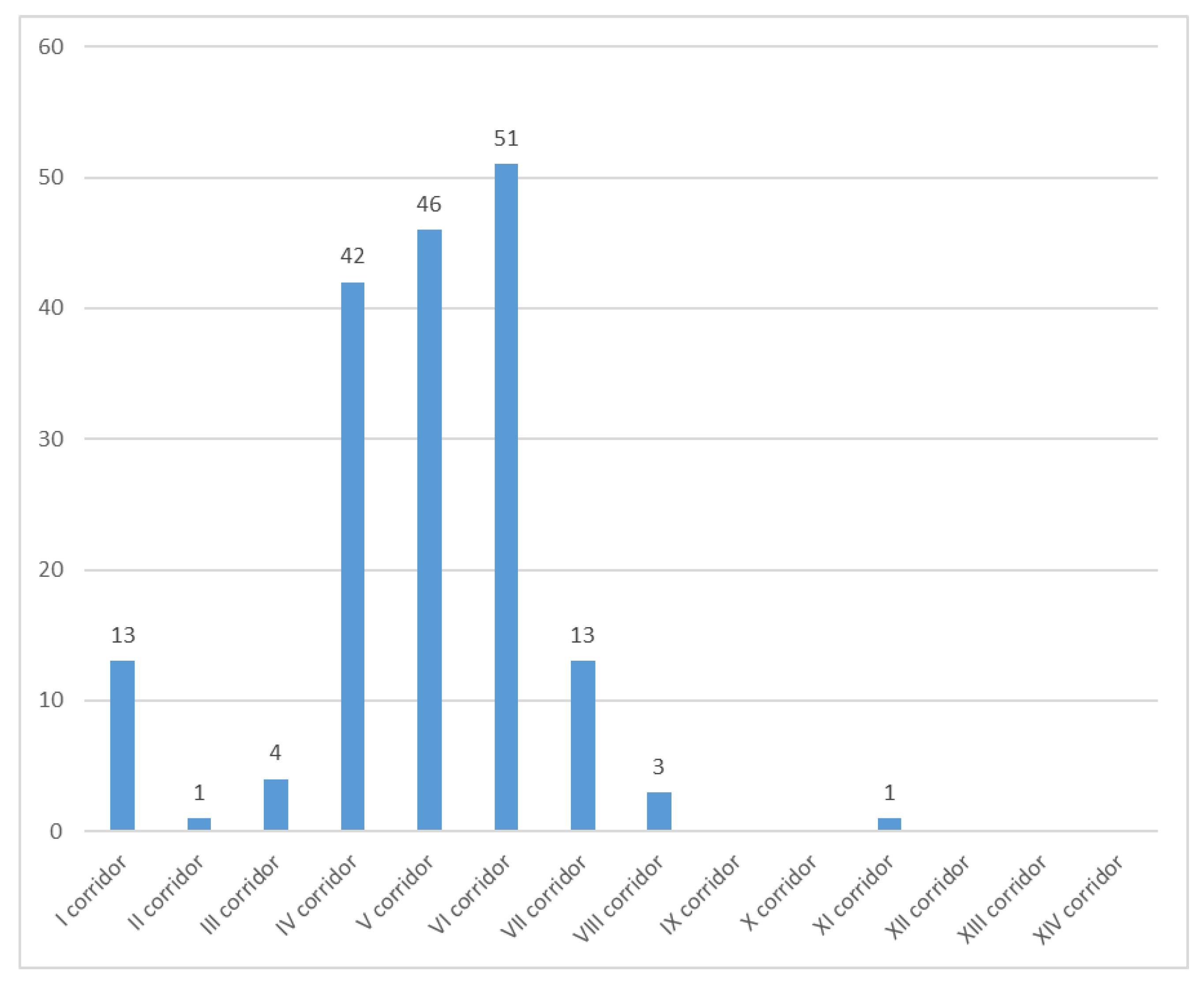
| UFMs, n (%) | 13 (8.8%) | 1 (2.0%) | 4 (3.9%) |
| Reports of vulnerability | |||
| Present, n (%) | 6 (4.1%) | 1 (2.0%) | 97 (94.2%) |
| None, n (%) | 142 (95.9%) | 49 (98.0%) | 6 (5.8%) |
| Signs, skin manifestations, or symptoms of contagious infectious conditions | |||
| Present, n (%) | 55 (37.2%) | 6 (12.0%) | 13 (12.6%) |
| None, n (%) | 93 (62.8%) | 44 (88.0%) | 90 (87.4%) |
| Other data and/or health findings | |||
| Present, n (%) | 43 (29.1%) | 15 (30.0%) | 30 (29.1%) |
| None, n (%) | 105 (70.9%) | 35 (70.0%) | 73 (70.9%) |
| No. IV—29 April | No. V—30 May | No. VI—12 September | No. VII—5 November | |
|---|---|---|---|---|
| Total number of refugees | 144 | 148 | 98 | 54 |
| Females, n (%) | 57 (39.6%) | 69 (46.6%) | 18 (18.4%) | 29 (53.7%) |
| Males, n (%) | 87 (60.4%) | 79 (53.4%) | 80 (81.6%) | 25 (46.3%) |
| Mean age, mean ± DS | 18.6 ± 8.3 | 18.34 ± 7.8 | 18.76 ± 5.6 | 19.31 ± 8.9 |
| Median age, median (Q1–Q3) | 19.0 (Q1 15.75–Q3 23.25) | 19.0 (Q1 15.0-Q3 23.0) | 16.0 (Q1 16.0–Q3 22.0) | 20.0 (Q1 16.0–Q3 25.25) |
| UFMs, n (%) | 42 (29.2%) | 46 (31.1%) | 51 (52.0%) | 13 (24.1%) |
| Reports of vulnerability | ||||
| Present, n (%) | 38 (26.4%) | 85 (57.4%) | 94 (95.9%) | 38 (70.4%) |
| None, n (%) | 106 (73.6%) | 63 (42.6%) | 4 (4.1%) | 16 (29.6%) |
| Signs, skin manifestations, or symptoms of contagious infectious conditions | ||||
| Present, n (%) | 25 (17.4%) | 18 (12.2%) | 32 (32.7%) | 11 (20.4%) |
| None, n (%) | 119 (82.6%) | 130 (87.8%) | 66 (67.3%) | 43 (79.6%) |
| Other data and/or health findings | ||||
| Present, n (%) | 65 (45.1%) | 49 (33.1%) | 28 (28.6%) | 21 (38.9%) |
| None, n (%) | 79 (54.9%) | 99 (66.9%) | 70 (71.4%) | 33 (61.1%) |
| No. IX—28 February | No. X—26 July | No. XI—30 November | |
|---|---|---|---|
| Total number of refugees | 97 | 79 | 101 |
| Females, n (%) | 32 (33.0%) | 13 (16.4%) | 21 (20.8%) |
| Males, n (%) | 65 (67.0%) | 66 (83.6%) | 80 (79.2%) |
| Mean age, mean ± DS | 25.8 ± 10.5 | 23.65 ± 8.9 | 25.36 ± 9.6 |
| Median age, median (Q1–Q3) | 24.0 (Q1 21.0–Q3 30.0) | 19.0 (Q1 18.0–Q3 28.0) | 23.0 (Q1 20.0–Q3 29.0) |
| UFMs, n (%) | 0 (0.0%) | 0 (0.0%) | 1 (0.9%) |
| Reports of vulnerability | |||
| Present, n (%) | 19 (19.6%) | 1 (1.3%) | 17 (16.8%) |
| None, n (%) | 78 (80.4%) | 78 (98.7%) | 84 (83.3%) |
| Signs, skin manifestations, or symptoms of contagious infectious conditions | |||
| Present, n (%) | 9 (9.3%) | 7 (8.9%) | 10 (9.9%) |
| None, n (%) | 88 (90.7%) | 72 (91.1%) | 91 (90.1%) |
| Other data and/or health findings | |||
| Present, n (%) | 12 (12.4%) | 30 (38.0%) | 36 (35.6%) |
| None, n (%) | 85 (87.6%) | 49 (62.0%) | 65 (64.4%) |
| No. XII—7 May | No. XIII—29 July | No. XIV—2 September | |
|---|---|---|---|
| Total number of refugees | 119 | 102 | 4 |
| Females, n (%) | 53 (44.5%) | 19 (18.6%) | 3 (75.0%) |
| Males, n (%) | 66 (55.5%) | 83 (81.4%) | 1 (25.0%) |
| Mean age, mean ± DS | 23.6 ± 10.4 | 24.9 ± 7.2 | 17.0 ± 16.8 |
| Median age, median (Q1–Q3) | 23.0 (Q1 21.0–Q3 30.0) | 25.0 (Q1 21.3–Q3 29.0) | 17.0 (Q1 3.25–Q3 30.75) |
| UFMs, n (%) | 0 (0.0%) | 0 (0.0%) | 0 (0.0%) |
| Reports of vulnerability | |||
| Present, n (%) | 39 (32.8%) | 12 (11.8%) | 3 (75.0%) |
| None, n (%) | 80 (67.2%) | 90 (90.2%) | 1 (25.0%) |
| Signs, skin manifestations, or symptoms of contagious infectious conditions | |||
| Present, n (%) | 13 (10.9%) | 22 (21.6%) | 0 (0.0%) |
| None, n (%) | 106 (89.1%) | 80 (78.4%) | 4 (100.0%) |
| Other data and/or health findings | |||
| Present, n (%) | 45 (37.8%) | 36 (35.3%) | 1 (25.0%) |
| None, n (%) | 74 (62.2%) | 66 (64.7%) | 3 (75.0%) |
| I Corridor | II Corridor | III Corridor | IV Corridor | V Corridor | VI Corridor | VII Corridor | VIII Corridor | IX Corridor | X Corridor | XI Corridor | XII Corridor | XIII Corridor | XIV Corridor | |
|---|---|---|---|---|---|---|---|---|---|---|---|---|---|---|
| Child at risk | 0 | 0 | 26 | 0 | 2 | 2 | 11 | 3 | 2 | 0 | 0 | 16 | 0 | 0 |
| Detainee/held | 0 | 0 | 0 | 0 | 55 | 89 | 6 | 0 | 0 | 0 | 0 | 0 | 0 | 0 |
| Detainee/held—victim of torture and/or physical and/or sexual violence | 0 | 0 | 0 | 0 | 11 | 1 | 0 | 0 | 0 | 0 | 0 | 0 | 0 | 0 |
| Possible or confirmed pregnancy | 5 | 1 | 0 | 10 | 1 | 1 | 1 | 0 | 0 | 1 | 1 | 1 | 0 | 0 |
| LGBTIQ | 0 | 0 | 0 | 0 | 1 | 0 | 0 | 0 | 0 | 0 | 1 | 1 | 1 | 1 |
| Health problems/malnutrition/chronic disease | 1 | 0 | 4 | 20 | 7 | 1 | 0 | 0 | 10 | 0 | 14 | 13 | 9 | 0 |
| Specific legal, economic and physical protection needs | 0 | 0 | 13 | 0 | 3 | 0 | 4 | 0 | 0 | 0 | 0 | 0 | 0 | 0 |
| Torture/physical violence | 0 | 0 | 0 | 7 | 4 | 0 | 2 | 0 | 0 | 0 | 1 | 4 | 2 | 0 |
| Victim of gender-based and/or sexual violence | 0 | 0 | 4 | 1 | 1 | 0 | 7 | 0 | 0 | 0 | 0 | 4 | 0 | 0 |
| Woman at risk | 0 | 0 | 50 | 0 | 0 | 0 | 7 | 0 | 7 | 0 | 0 | 0 | 0 | 0 |
| No report of vulnerability | 142 | 49 | 6 | 106 | 63 | 4 | 16 | 0 | 78 | 78 | 84 | 80 | 90 | 3 |
| I Corridor | II Corridor | III Corridor | IV Corridor | V Corridor | VI Corridor | VII Corridor | VIII Corridor | IX Corridor | X Corridor | XI Corridor | XII Corridor | XIII Corridor | XIV Corridor | |
|---|---|---|---|---|---|---|---|---|---|---|---|---|---|---|
| Acariasis | 1 | 0 | 1 | 0 | 1 | 0 | 0 | 0 | 0 | 0 | 0 | 0 | 0 | 0 |
| Dysentery | 1 | 0 | 0 | 0 | 0 | 1 | 0 | 0 | 0 | 0 | 0 | 0 | 0 | 0 |
| Viral hepatitis | 0 | 0 | 1 | 0 | 0 | 0 | 1 | 0 | 0 | 0 | 2 | 1 | 3 | 0 |
| HIV+ | 0 | 0 | 0 | 0 | 0 | 0 | 0 | 0 | 1 | 0 | 0 | 0 | 0 | 0 |
| Fungal infection | 5 | 1 | 2 | 1 | 1 | 1 | 2 | 1 | 0 | 1 | 1 | 5 | 4 | 0 |
| Suspected or confirmed upper respiratory tract infection | 2 | 0 | 0 | 0 | 0 | 1 | 0 | 0 | 0 | 0 | 0 | 0 | 0 | 0 |
| Viral infection | 0 | 0 | 0 | 0 | 0 | 0 | 0 | 0 | 2 | 0 | 0 | 1 | 0 | 0 |
| Hansen disease | 0 | 0 | 0 | 0 | 0 | 0 | 0 | 0 | 0 | 0 | 0 | 0 | 1 | 0 |
| Multiple contagious infectious conditions | 0 | 0 | 0 | 0 | 2 | 2 | 0 | 0 | 0 | 0 | 0 | 0 | 0 | 0 |
| Intestinal parasitosis | 0 | 0 | 0 | 0 | 0 | 0 | 0 | 0 | 1 | 0 | 0 | 0 | 0 | 0 |
| Pneumonia | 0 | 0 | 1 | 0 | 0 | 0 | 0 | 0 | 0 | 0 | 0 | 0 | 0 | 0 |
| Possible STD | 1 | 0 | 1 | 0 | 0 | 1 | 0 | 0 | 0 | 0 | 0 | 1 | 0 | 0 |
| Scabies | 14 | 0 | 2 | 7 | 5 | 8 | 2 | 1 | 5 | 3 | 4 | 1 | 6 | 0 |
| Acute nonspecific symptoms | 10 | 0 | 1 | 2 | 2 | 3 | 1 | 0 | 0 | 0 | 1 | 2 | 4 | 0 |
| Parainfluenza symptoms | 3 | 4 | 3 | 6 | 3 | 2 | 2 | 0 | 0 | 0 | 0 | 1 | 0 | 0 |
| Suspected exanthematous disease | 0 | 1 | 1 | 0 | 1 | 0 | 0 | 0 | 0 | 0 | 0 | 0 | 0 | 0 |
| TBC | 1 | 0 | 0 | 5 | 2 | 9 | 2 | 0 | 0 | 2 | 2 | 1 | 3 | 0 |
| Cough lasting more than 5 days | 17 | 0 | 0 | 4 | 1 | 4 | 1 | 0 | 0 | 1 | 0 | 0 | 1 | 0 |
| No signs, skin manifestations or symptoms of contagious infectious conditions | 93 | 44 | 90 | 119 | 130 | 66 | 43 | 1 | 88 | 72 | 91 | 106 | 80 | 4 |
| I Corridor | II Corridor | III Corridor | IV Corridor | V Corridor | VI Corridor | VII Corridor | VIII Corridor | IX Corridor | X Corridor | XI Corridor | XII Corridor | XIII Corridor | XIV Corridor | |
|---|---|---|---|---|---|---|---|---|---|---|---|---|---|---|
| Anemia | 0 | 0 | 0 | 0 | 0 | 0 | 0 | 0 | 0 | 1 | 0 | 0 | 0 | 0 |
| Cardiac rhythm abnormalities | 0 | 1 | 0 | 1 | 0 | 2 | 0 | 0 | 1 | 0 | 0 | 2 | 1 | 0 |
| Asthma | 0 | 0 | 0 | 0 | 0 | 0 | 0 | 0 | 0 | 0 | 0 | 3 | 0 | 0 |
| Heart disease | 0 | 1 | 0 | 1 | 0 | 1 | 1 | 0 | 0 | 0 | 0 | 0 | 0 | 0 |
| Headache/migraine | 6 | 3 | 3 | 6 | 4 | 1 | 0 | 0 | 1 | 5 | 8 | 3 | 7 | 0 |
| Diabetes | 1 | 0 | 1 | 0 | 1 | 0 | 0 | 0 | 2 | 0 | 3 | 1 | 1 | 0 |
| Sight issue | 1 | 3 | 1 | 1 | 1 | 3 | 1 | 0 | 0 | 2 | 3 | 4 | 3 | 0 |
| Dermatological issue | 9 | 0 | 2 | 20 | 17 | 6 | 1 | 0 | 0 | 3 | 4 | 4 | 7 | 0 |
| Pain | 8 | 1 | 5 | 9 | 10 | 6 | 4 | 0 | 0 | 3 | 3 | 7 | 8 | 0 |
| Epilepsy | 0 | 0 | 0 | 0 | 0 | 0 | 1 | 0 | 0 | 0 | 0 | 0 | 0 | 0 |
| Pregnancy/puerperium | 6 | 1 | 2 | 11 | 5 | 2 | 3 | 0 | 1 | 1 | 1 | 0 | 0 | 0 |
| Hypertension | 0 | 1 | 2 | 2 | 0 | 1 | 1 | 0 | 1 | 1 | 2 | 5 | 1 | 1 |
| Psychological/psychiatric problems | 1 | 1 | 0 | 0 | 0 | 1 | 3 | 1 | 1 | 1 | 0 | 0 | 0 | 0 |
| Trauma | 1 | 0 | 4 | 2 | 1 | 2 | 0 | 0 | 1 | 3 | 5 | 5 | 2 | 0 |
| Other | 10 | 3 | 10 | 12 | 10 | 3 | 6 | 2 | 4 | 10 | 7 | 11 | 6 | 0 |
| None | 105 | 35 | 73 | 79 | 99 | 70 | 33 | 0 | 85 | 49 | 65 | 74 | 66 | 3 |
| All | Presence of Both Contagious Infectious Conditions and Other Health Findings | Presence of Contagious Infectious Conditions Only | Presence of Other Health Findings Only | Absence of Both Contagious Infectious Conditions and Other Health Findings | p-Value * | Cramer’s V | |
|---|---|---|---|---|---|---|---|
| n | 1250 | 53 | 170 | 361 | 666 | - | - |
| Age (years), mean (SD, min–max) | 21.7 ± 9.21 (0–67) | 25.4 ± 12.24 (0–67) | 19.8 ± 10.1 (0–48) | 23.3 ± 9.7 (0–67) | 21.0 ± 9.1 (0–59) | - | - |
| Gender | 0.568439 | - | |||||
| Male, n (%) | 743 (59.4%) | 33 (62.3%) | 108 (63.5%) | 207 (57.3%) | 395 (59.3%) | ||
| Female, n (%) | 507 (40.6%) | 20 (37.7%) | 62 (36.5%) | 154 (42.7%) | 271 (40.7%) | ||
| Nationality | 0.002086 | 0.090969 | |||||
| Eritrean, n (%) | 560 (44.8%) | 24 (45.3%) | 89 (52.4%) | 136 (37.7%) | 311 (46.7%) | ||
| Sudanese, n (%) | 333 (26.6%) | 8 (15.1%) | 32 (18.8%) | 115 (31.8%) | 178 (26.7%) | ||
| Other, n (%) | 357 (28.6%) | 21 (39.6%) | 49 (28.8%) | 110 (30.5%) | 177 (26.6%) |
| All | Absence of Contagious Infectious Conditions | Presence of Contagious Infectious Conditions | p-Value * | Cramer’s V | |
|---|---|---|---|---|---|
| n | 1250 | 1027 | 223 | - | - |
| Age (years), mean (SD, min–max) | 21.7 ± 9.21 (0–67) | 21.8 ± 9.34 (0–67) | 21.1 ± 10.8 (0–67) | - | - |
| Humanitarian corridors @ | <0.000001 | 0.24978 | |||
| I corridor, n (%) | 148 (11.8%) | 93 (9.0%) | 55 (24.8%) | ||
| II corridor, n (%) | 50 (4.0%) | 44 (4.3%) | 6 (2.8%) | ||
| III corridor, n (%) | 103 (8.3%) | 90 (8.7%) | 13 (5.8%) | ||
| IV corridor, n (%) | 144 (11.6%) | 119 (11.6%) | 25 (11.2%) | ||
| V corridor, n (%) | 148 (11.8%) | 130 (12.6%) | 18 (8.1%) | ||
| VI corridor, n (%) | 98 (7.8%) | 66 (6.4%) | 32 (14.3%) | ||
| VII corridor, n (%) | 54 (4.3%) | 43 (4.2%) | 11 (5.0%) | ||
| IX corridor, n (%) | 97 (7.8%) | 88 (8.6%) | 9 (4.0%) | ||
| X corridor, n (%) | 79 (6.3%) | 72 (7.0%) | 7 (3.1%) | ||
| XI corridor, n (%) | 101 (8.0%) | 91 (8.9%) | 10 (4.5%) | ||
| XII corridor, n (%) | 119 (9.5%) | 106 (10.3%) | 13 (5.8%) | ||
| XIII corridor, n (%) | 102 (8.2%) | 80 (7.8%) | 22 (10.0%) | ||
| Reports of vulnerability | 0.08665 | - | |||
| None, n (%) | 799 (63.9%) | 664 (64.6%) | 135 (60.5%) | ||
| Woman at risk, n (%) | 64 (5.1%) | 58 (5.7%) | 6 (2.8%) | ||
| Child at risk, n (%) | 62 (5.0%) | 49 (4.8%) | 13 (5.8%) | ||
| Other, n (%) | 325 (26.0%) | 256 (24.9%) | 69 (30.9%) | ||
| Gender | 0.23169 | - | |||
| Male, n (%) | 743 (59.4%) | 602 (58.6%) | 141 (63.2%) | ||
| Female, n (%) | 507 (40.6%) | 425 (41.4%) | 82 (36.8%) | ||
| Nationality | 0.00507 | 0.09194 | |||
| Eritrean, n (%) | 560 (44.8%) | 447 (43.5%) | 113 (50.7%) | ||
| Sudanese, n (%) | 333 (26.6%) | 293 (28.6%) | 40 (17.9%) | ||
| Other, n (%) | 357 (28.6%) | 287 (27.9%) | 70 (31.4%) |
| All | Absence of Other Health Findings | Presence of Other Health Findings | p-Value * | Cramer’s V | |
|---|---|---|---|---|---|
| n | 1250 | 836 | 414 | - | - |
| Age (years), mean (SD, min–max) | 21.7 ± 9.21 (0–67) | 20.7 ± 9.29 (0–59) | 23.6 ± 10.03 (0–67) | - | - |
| Humanitarian corridors @ | 0.000285 | 0.166914 | |||
| I corridor, n (%) | 148 (11.8%) | 105 (12.6%) | 43 (10.4%) | ||
| II corridor, n (%) | 50 (4.0%) | 35 (4.2%) | 15 (3.6%) | ||
| III corridor, n (%) | 103 (8.3%) | 73 (8.7%) | 30 (7.2%) | ||
| IV corridor, n (%) | 144 (11.6%) | 79 (9.4%) | 65 (15.7%) | ||
| V corridor, n (%) | 148 (11.8%) | 99 (11.8%) | 49 (11.8%) | ||
| VI corridor, n (%) | 98 (7.8%) | 70 (8.4%) | 28 (6.8%) | ||
| VII corridor, n (%) | 54 (4.3%) | 33 (3.9%) | 21 (5.1%) | ||
| IX corridor, n (%) | 97 (7.8%) | 85 (10.2%) | 12 (2.9%) | ||
| X corridor, n (%) | 79 (6.3%) | 49 (5.9%) | 30 (7.2%) | ||
| XI corridor, n (%) | 101 (8.0%) | 65 (7.8%) | 36 (8.7%) | ||
| XII corridor, n (%) | 119 (9.5%) | 74 (8.9%) | 45 (10.9%) | ||
| XIII corridor, n (%) | 102 (8.2%) | 66 (7.9%) | 36 (8.7%) | ||
| Reports of vulnerability | 0.002371 | 0.10745 | |||
| None, n (%) | 799 (63.9%) | 555 (66.4%) | 244 (58.9%) | ||
| Woman at risk, n (%) | 64 (5.1%) | 46 (5.5%) | 18 (4.3%) | ||
| Child at risk, n (%) | 62 (5.0%) | 45 (5.4%) | 17 (4.2%) | ||
| Other, n (%) | 325 (26.0%) | 190 (22.7%) | 135 (32.6%) | ||
| Gender | 0.494506 | - | |||
| Male, n (%) | 743 (59.4%) | 503 (60.2%) | 240 (57.9%) | ||
| Female, n (%) | 507 (40.6%) | 333 (39.8%) | 174 (42.1%) | ||
| Nationality | 0.008737 | 0.08708 | |||
| Eritrean, n (%) | 560 (44.8%) | 400 (47.8%) | 160 (38.6%) | ||
| Sudanese, n (%) | 333 (26.6%) | 210 (25.2%) | 123 (29.7%) | ||
| Other, n (%) | 357 (28.6%) | 226 (27.0%) | 131 (31.7%) |
| All | UFM | Accompanied | p-Value * | Cramer’s V | |
|---|---|---|---|---|---|
| n | 326 | 174 | 152 | - | - |
| Age (years), mean (SD, min–max) | 10.6 ± 6.60 (0–17) | 15.7 ± 1.07 (12–17) | 4.7 ± 5.21 (0–17) | - | - |
| Reports of vulnerability | <0.000001 | 0.32810 | |||
| None, n (%) | 176 (54.0%) | 85 (48.9%) | 91 (59.9%) | ||
| Child at risk, n (%) | 62 (19.0%) | 20 (11.4%) | 42 (27.6%) | ||
| Other, n (%) | 88 (27.0%) | 69 (39.7%) | 19 (12.5%) | ||
| Gender | <0.000001 | 0.34155 | |||
| Male, n (%) | 218 (66.9%) | 143 (82.2%) | 75 (49.3%) | ||
| Female, n (%) | 108 (33.1%) | 31 (17.8%) | 77 (50.7%) | ||
| Nationality | <0.000001 | 0.36215 | |||
| Eritrean, n (%) | 159 (48.8%) | 98 (56.3%) | 61 (40.1%) | ||
| Sudanese, n (%) | 67 (20.5%) | 12 (6.9%) | 55 (36.2%) | ||
| Other, n (%) | 100 (30.7%) | 64 (36.8%) | 36 (23.7%) | ||
| Signs, skin manifestations or symptoms of contagious infectious conditions | 0.80355 | - | |||
| None, n (%) | 254 (77.9%) | 137 (78.7%) | 117 (77.0%) | ||
| Present, n (%) | 72 (22.1%) | 37 (21.3%) | 35 (23.0%) | ||
| Other health findings | 0.04627 | - | |||
| None, n (%) | 237 (72.7%) | 118 (67.8%) | 119 (78.3%) | ||
| Present, n (%) | 89 (27.3%) | 56 (32.2%) | 33 (21.7%) |
Disclaimer/Publisher’s Note: The statements, opinions and data contained in all publications are solely those of the individual author(s) and contributor(s) and not of MDPI and/or the editor(s). MDPI and/or the editor(s) disclaim responsibility for any injury to people or property resulting from any ideas, methods, instructions or products referred to in the content. |
© 2026 by the authors. Licensee MDPI, Basel, Switzerland. This article is an open access article distributed under the terms and conditions of the Creative Commons Attribution (CC BY) license.
Share and Cite
Bianco, L.; Bianco, V.; Laurendi, G.; Oliva, S.; Aromatario, M.; Pizzardi, A.; Camponi, C.; Napoli, C. Infectious Diseases and Other Health Findings in Refugees Who Arrived Through National Institute for Health, Migration and Poverty (NIHMP)-Verified Humanitarian Corridors in Italy: Changes from 2018 to 2024. Healthcare 2026, 14, 471. https://doi.org/10.3390/healthcare14040471
Bianco L, Bianco V, Laurendi G, Oliva S, Aromatario M, Pizzardi A, Camponi C, Napoli C. Infectious Diseases and Other Health Findings in Refugees Who Arrived Through National Institute for Health, Migration and Poverty (NIHMP)-Verified Humanitarian Corridors in Italy: Changes from 2018 to 2024. Healthcare. 2026; 14(4):471. https://doi.org/10.3390/healthcare14040471
Chicago/Turabian StyleBianco, Lavinia, Valerio Bianco, Giovanna Laurendi, Stefania Oliva, Mariarosaria Aromatario, Aline Pizzardi, Cristiano Camponi, and Christian Napoli. 2026. "Infectious Diseases and Other Health Findings in Refugees Who Arrived Through National Institute for Health, Migration and Poverty (NIHMP)-Verified Humanitarian Corridors in Italy: Changes from 2018 to 2024" Healthcare 14, no. 4: 471. https://doi.org/10.3390/healthcare14040471
APA StyleBianco, L., Bianco, V., Laurendi, G., Oliva, S., Aromatario, M., Pizzardi, A., Camponi, C., & Napoli, C. (2026). Infectious Diseases and Other Health Findings in Refugees Who Arrived Through National Institute for Health, Migration and Poverty (NIHMP)-Verified Humanitarian Corridors in Italy: Changes from 2018 to 2024. Healthcare, 14(4), 471. https://doi.org/10.3390/healthcare14040471