Optimizing Opioid Use in Pain Management: A Comprehensive Review of Clinical Benefits, Risks, and Dependence
 , ,
, ,
Highlights
- Opioids are essential for managing severe acute and cancer-related pain; however, their role in chronic non-cancer pain remains controversial. Concerns regarding dependence, tolerance, and misuse have intensified during the opioid crisis.
- This narrative review synthesizes recent evidence on opioid pharmacology, clinical applications, dependence risk factors, and the influence of genetic, psychological, and social determinants of opioid use. It highlights emerging safer therapies, opioid rotation, and multimodal strategies that combine pharmacological and nonpharmacological approaches.
- Health policies should promote equitable access to essential opioids while minimizing their misuse through individualized prescribing, regular patient monitoring, and the integration of non-pharmacological interventions. Reducing prescription bias and addressing disparities are critical for improving global pain care.
- Clinicians should prioritize a patient-centered, multimodal approach to pain management, reserving opioids for clearly indicated situations and combining them with non-pharmacological therapies to reduce long-term risks and improve functional outcomes.
- Health systems and policymakers should implement prescribing strategies that balance access and safety, including risk stratification, regular reassessment, and efforts to reduce social and racial disparities in opioid availability and pain treatment efficacy.
Abstract
1. Introduction
2. Methods
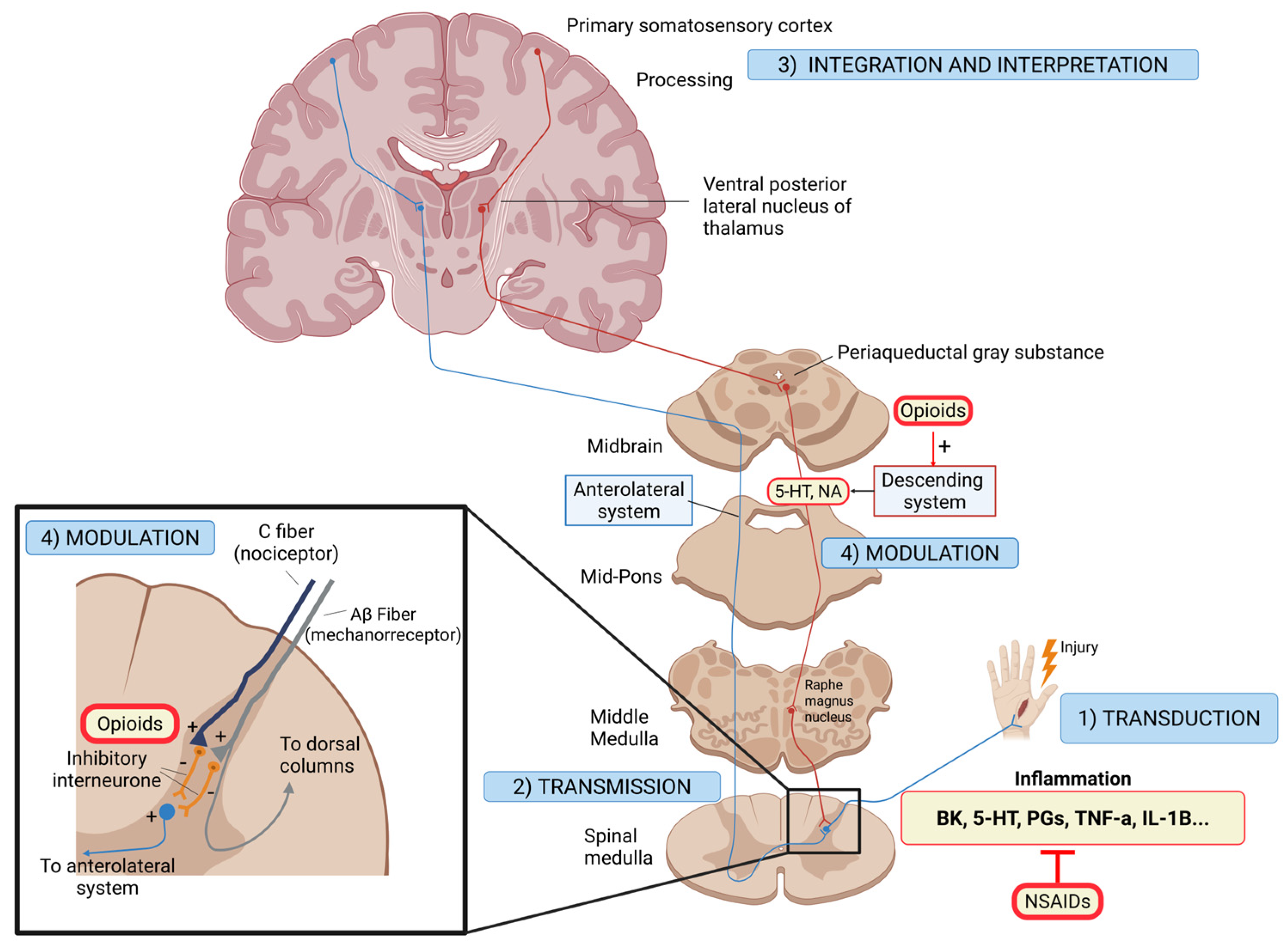
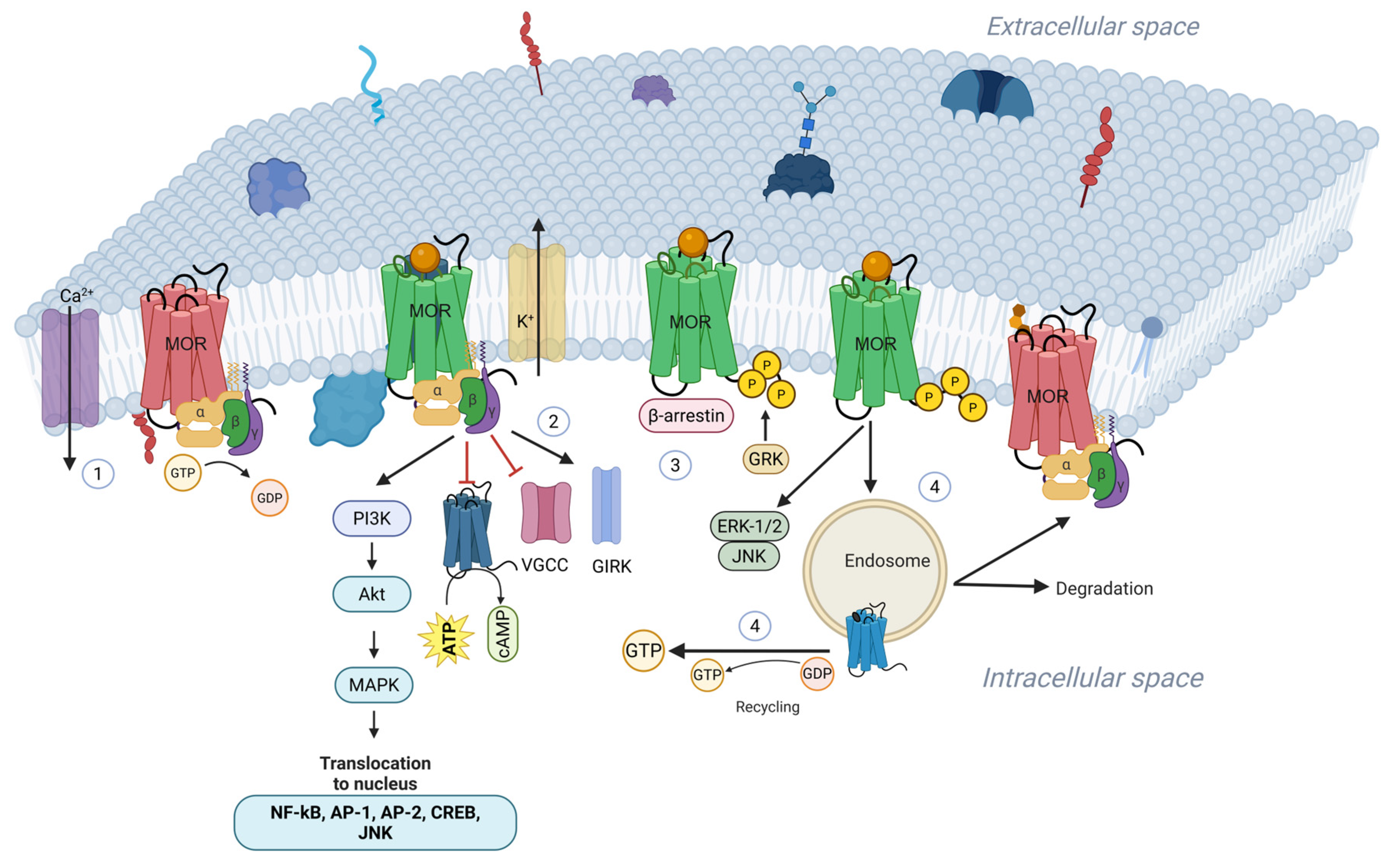
3. Neurobiology and Physiology of Pain Relevant to Clinical Practice
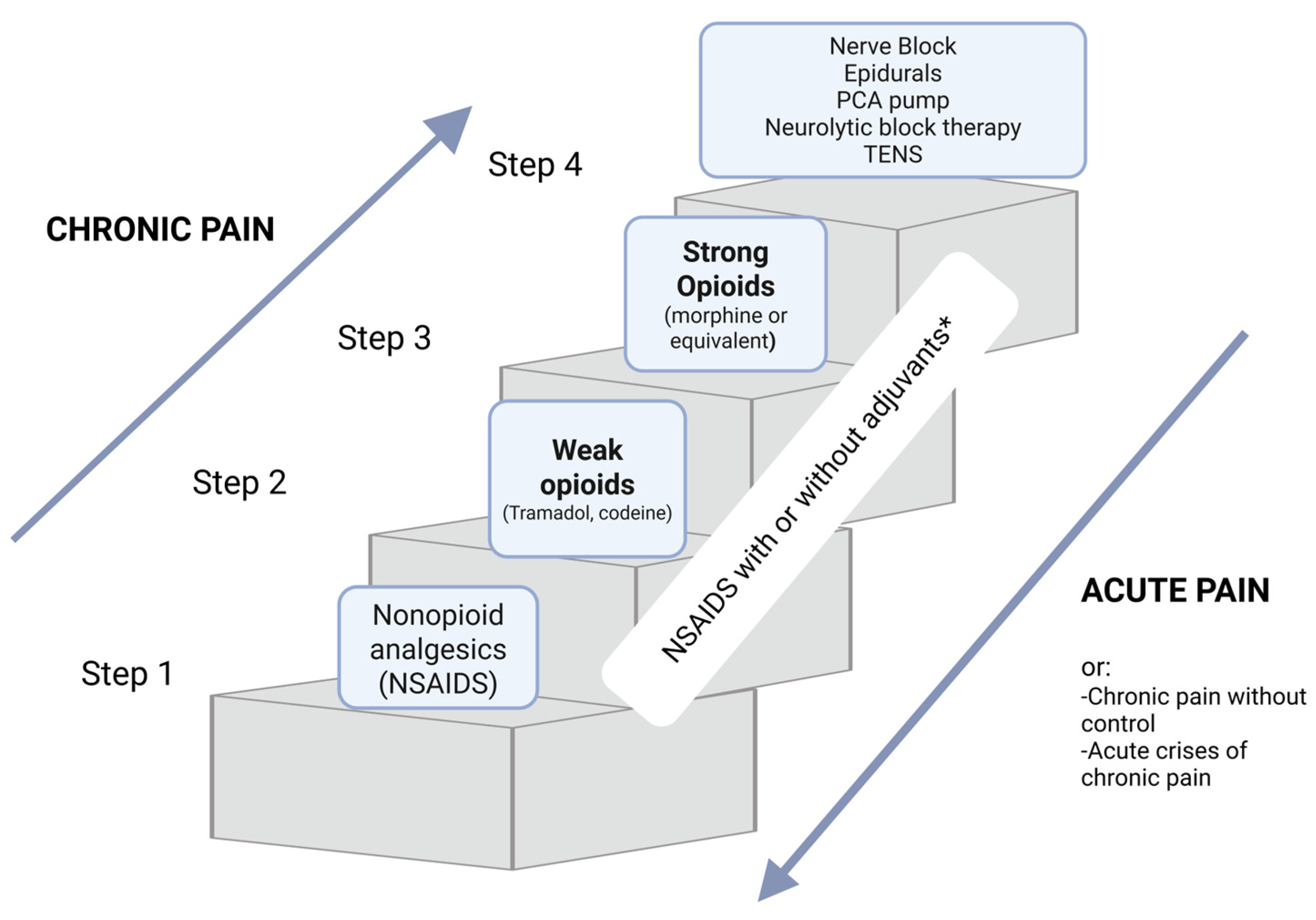
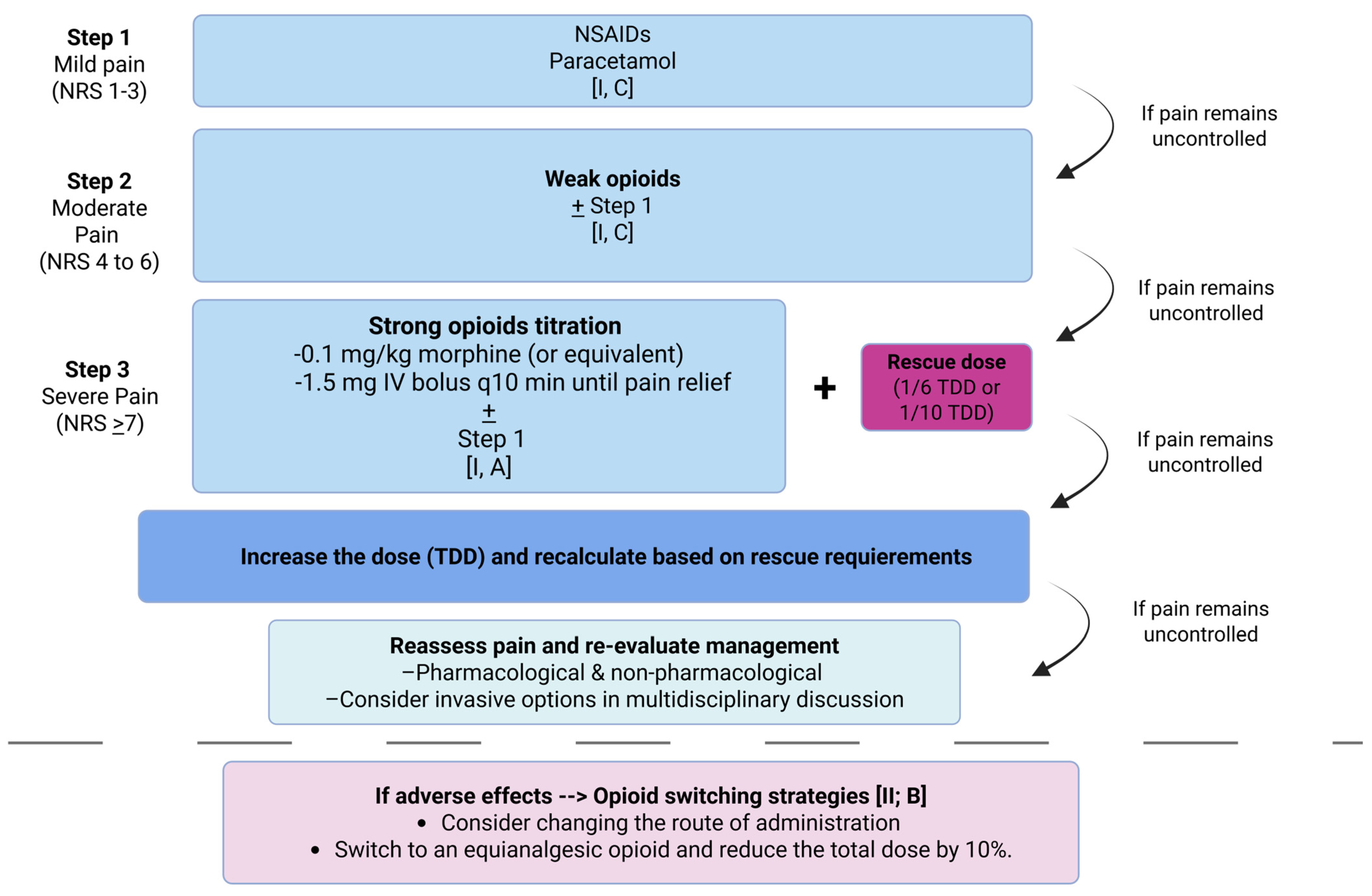
Revisiting the WHO Analgesic Ladder: Historical Perspective and Limitations
4. Clinical Use of Opioids in Acute, Chronic, and Cancer Pain
4.1. Opioid Use in Acute Pain
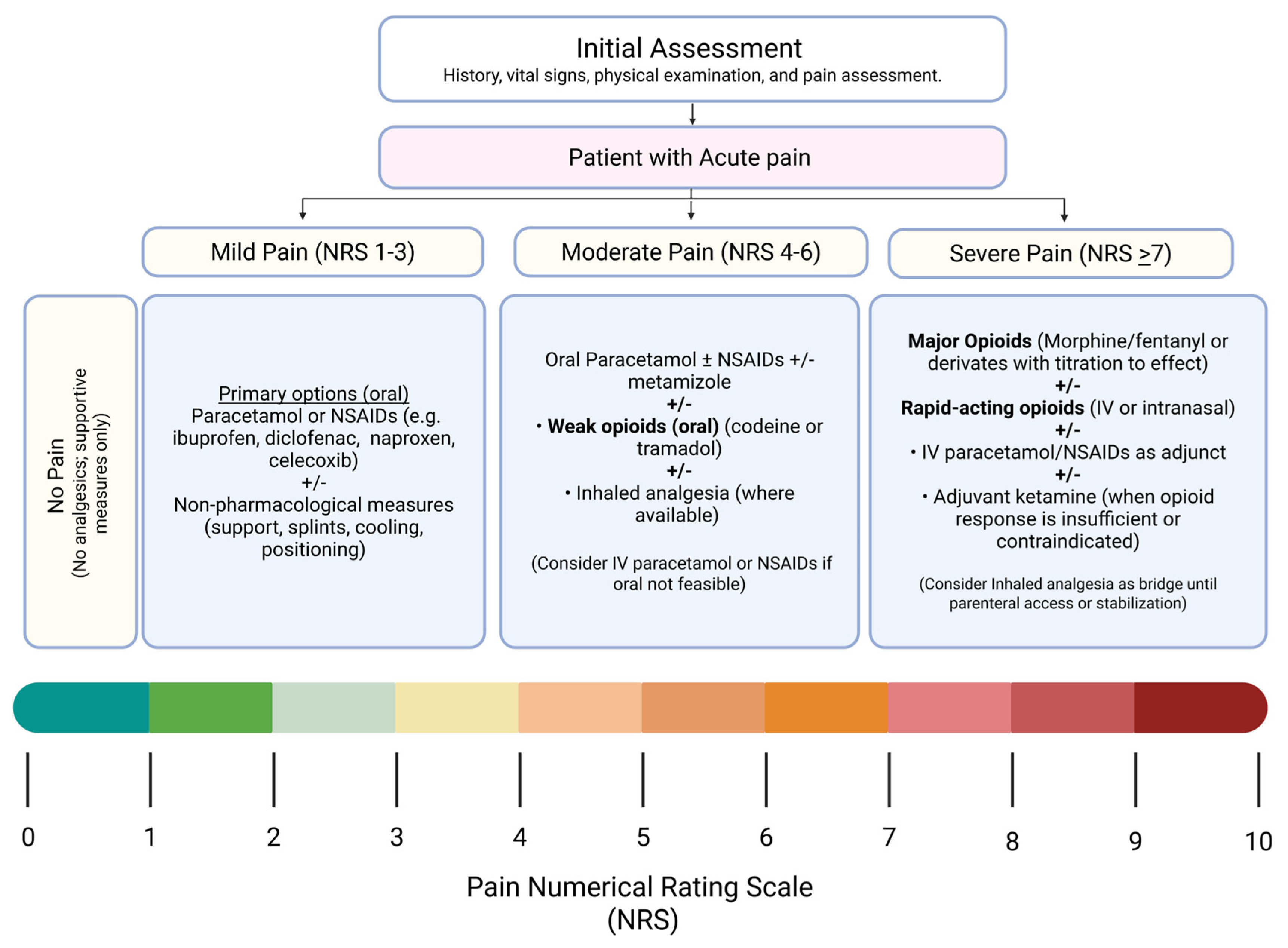
4.2. Management in Acute Pain
4.3. Management in Chronic Pain
4.4. Chronic Non-Cancer Pain
4.5. Cancer Pain
4.5.1. The Role of Weak Opioids in Cancer Pain Management
4.5.2. Management of Moderate to Severe Cancer Pain
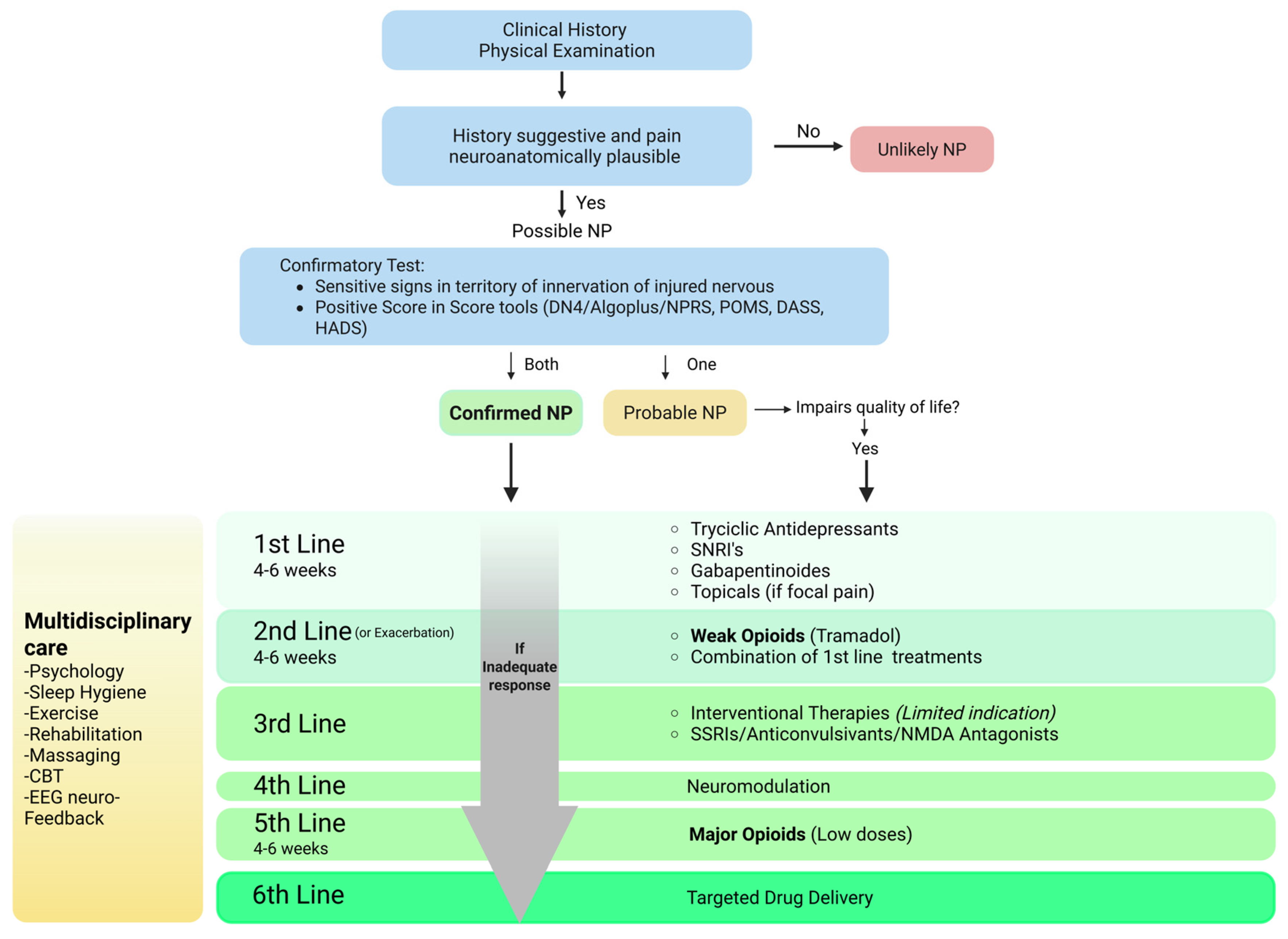
5. Opioid Use in Neuropathic Pain
6. Opioid Use in Other Pain Conditions and New Therapies
Most Recent Opioid Therapies: Tapentadol and Buprenorphine
7. Clinical Safety and Risk Management in Opioid Therapy
7.1. Risks, Adverse Effects, and Safety Considerations
7.2. Opioid Rotation and Optimization of Therapy
8. Opioid Abuse, Misuse and Dependence/Addiction in Clinical Practice
8.1. Opioid Misuse and Abuse
8.2. Opioid Dependence and Addiction
8.3. Underlying Causes of Opioid Dependence: Interracial, Social, and Individual Factors
8.4. Individual Risk Factors for Opioid Addiction
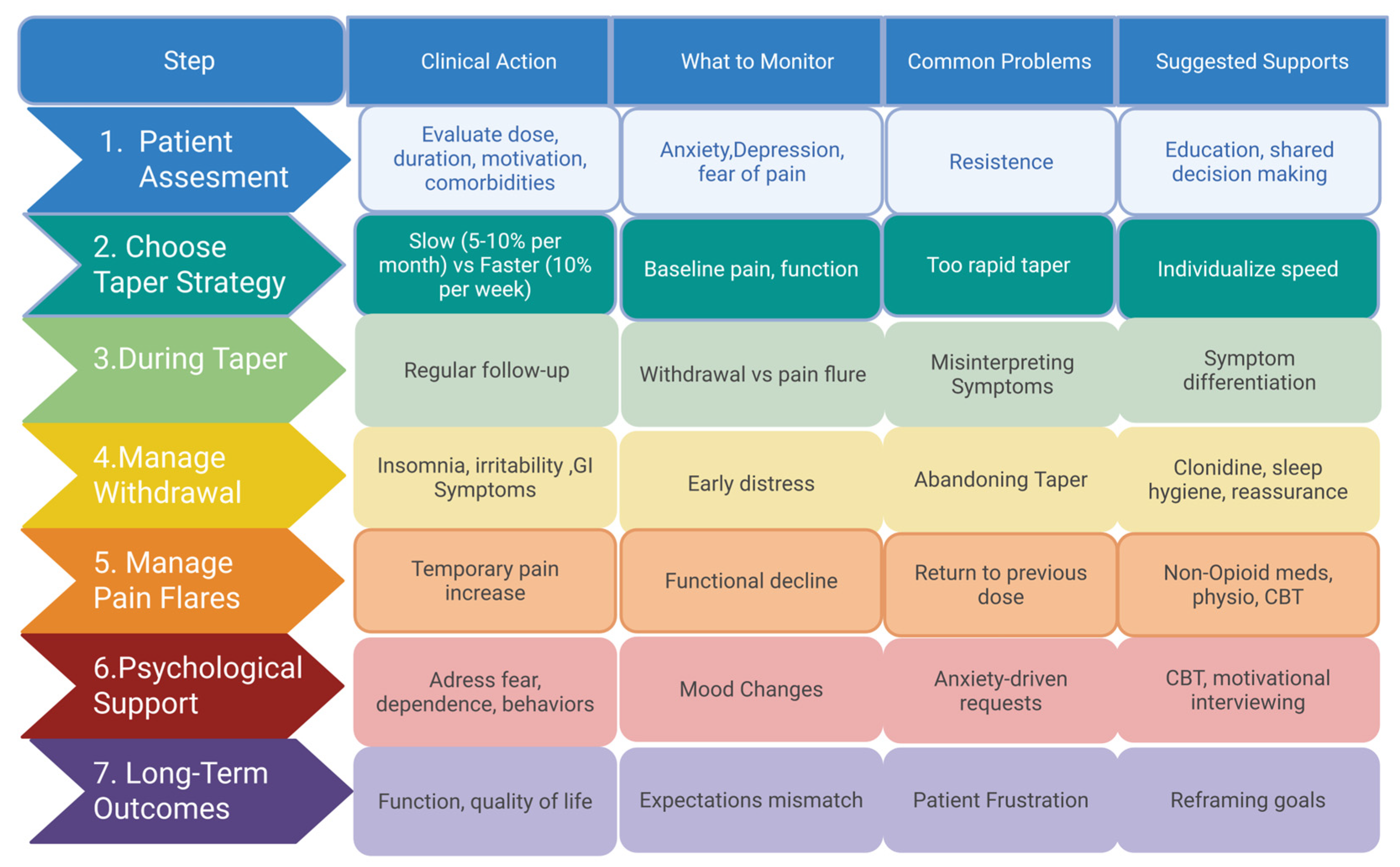
8.5. Treatments for Opioid’s Dependence
8.6. Practical Limitations
9. Conclusions
Supplementary Materials
Author Contributions
Funding
Institutional Review Board Statement
Informed Consent Statement
Data Availability Statement
Conflicts of Interest
Abbreviations
| IASP | International Association for the Study of Pain |
| WHO | World Health Organization |
| NSAIDs | Non-Steroidal Anti-Inflammatory Drugs |
| CNCP | Chronic Non-Cancer Pain |
| CLBP | Chronic Low Back Pain |
| NRS | Numeric Rating Scale |
| VAS | Visual Analogue Scale |
| PDMPs | Prescription Drug Monitoring Programs |
| RCTs | Randomized Controlled Trials |
| CNS | Central Nervous System |
| GI | Gastrointestinal |
| OIH | Opioid-Induced Hyperalgesia |
| OUD | Opioid Dependence |
| MME | Morphine Milligram Equivalents |
| GPCRs | G Protein-Coupled Receptors |
| MOPR | Mu Opioid Receptor |
| DOPR | Delta Opioid Receptor |
| KOPR | Kappa Opioid Receptor |
| NOPR | Nociceptin Opioid Receptor |
| DRG | Dorsal Root Ganglion |
| NMDA | N-Methyl-D-Aspartate |
| TCAs | Tricyclic Antidepressants |
| SNRIs | Serotonin–Norepinephrine Reuptake Inhibitors |
| SSRIs | Selective Serotonin Reuptake Inhibitors |
| TDD | Targeted Drug Delivery |
| MMT | Methadone Maintenance Therapy |
| PTSD | Post-Traumatic Stress Disorder |
| IBS | Irritable Bowel Syndrome |
| MOH | Medication Overuse Headache |
| PAG | Periaqueductal Gray |
| RVM | Rostroventral Medulla |
| COPD | Chronic Obstructive Pulmonary Disease |
| FDA | Food and Drug Administration |
| ESMO | European Society for Medical Oncology |
| NICE | National Institute for Health and Care Excellence |
References
- Raja, S.N.; Carr, D.B.; Cohen, M.; Finnerup, N.B.; Flor, H.; Gibson, S.; Keefe, F.J.; Mogil, J.S.; Ringkamp, M.; Sluka, K.A.; et al. The Revised International Association for the Study of Pain Definition of Pain: Concepts, Challenges, and Compromises. Pain 2020, 161, 1976–1982. [Google Scholar] [CrossRef]
- Idrissi, S.H.; Coffey, F.; Doblas, V.; Hautz, W.; Leach, R.; Sauter, T.; Sforzi, I. Guidelines for the Management of Acute Pain in Emergency Situations; European Society for Emergency Medicine: Brussels, Belgium, 2020; 79p. [Google Scholar]
- Cuomo, A.; Bimonte, S.; Forte, C.A.; Botti, G.; Cascella, M. Multimodal Approaches and Tailored Therapies for Pain Management: The Trolley Analgesic Model. J. Pain Res. 2019, 12, 711–714. [Google Scholar] [CrossRef]
- Melzack, R. Gate Control Theory: On the Evolution of Pain Concepts. Pain Forum 1996, 5, 128–138. [Google Scholar] [CrossRef]
- O’Brien, T.; Christrup, L.L.; Drewes, A.M.; Fallon, M.T.; Kress, H.G.; McQuay, H.J.; Mikus, G.; Morlion, B.J.; Perez-Cajaraville, J.; Pogatzki-Zahn, E.; et al. European Pain Federation Position Paper on Appropriate Opioid Use in Chronic Pain Management. Eur. J. Pain 2017, 21, 3–19. [Google Scholar] [CrossRef] [PubMed]
- Goldberg, D.S.; McGee, S.J. Pain as a global public health priority. BMC Public Health 2011, 11, 770. [Google Scholar] [CrossRef] [PubMed]
- van Hecke, O.; Torrance, N.; Smith, B.H. Chronic Pain Epidemiology and Its Clinical Relevance. Br. J. Anaesth. 2013, 111, 13–18. [Google Scholar] [CrossRef] [PubMed]
- Humphreys, K.; Shover, C.L.; Andrews, C.M.; Bohnert, A.S.B.; Brandeau, M.L.; Caulkins, J.P.; Chen, J.H.; Cuéllar, M.F.; Hurd, Y.L.; Juurlink, D.N.; et al. Responding to the Opioid Crisis in North America and beyond: Recommendations of the Stanford–Lancet Commission. Lancet 2022, 399, 555–604. [Google Scholar] [CrossRef]
- McGuire, D.B. Comprehensive and Multidimensional Assessment and Measurement of Pain. J. Pain Symptom Manag. 1992, 7, 312–319. [Google Scholar] [CrossRef]
- Breivik, H.; Collett, B.; Ventafridda, V.; Cohen, R.; Gallacher, D. Survey of chronic pain in Europe: Prevalence, impact on daily life, and treatment. Eur. J. Pain. 2006, 10, 287–333. [Google Scholar] [CrossRef]
- Knaul, F.M.; Farmer, P.E.; Krakauer, E.L.; De Lima, L.; Bhadelia, A.; Jiang Kwete, X.; Arreola-Ornelas, H.; Gómez-Dantés, O.; Rodriguez, N.M.; Alleyne, G.A.O.; et al. Alleviating the Access Abyss in Palliative Care and Pain Relief—An Imperative of Universal Health Coverage: The Lancet Commission Report. Lancet 2018, 391, 1391–1454. [Google Scholar] [CrossRef]
- Fitzcharles, M.A.; Cohen, S.P.; Clauw, D.J.; Littlejohn, G.; Usui, C.; Häuser, W. Nociplastic Pain: Towards an Understanding of Prevalent Pain Conditions. Lancet 2021, 397, 2098–2110. [Google Scholar] [CrossRef]
- Purves, D.; Augustine, G.; Fitzpatrick, D.; Hall, W.; LaMantia, A.-S.; Mooney, R.; Platt, M.L. Neuroscience, 6th ed.; Sinauer Associates: New York, NY, USA, 2018. [Google Scholar]
- Barrett, K.E.; Barman, S.M.; Brooks, H.L.; Yuan, J.X.-J. Ganong’s Review of Medical Physiology, 26th ed.; McGraw-Hill Education: New York, NY, USA, 2019. [Google Scholar]
- Lopes, D.M.; Denk, F.; Chisholm, K.I.; Suddason, T.; Durrieux, C.; Thakur, M.; Gentry, C.; McMahon, S.B. Peripheral Inflammatory Pain Sensitisation Is Independent of Mast Cell Activation in Male Mice. Pain 2017, 158, 1314–1322. [Google Scholar] [CrossRef]
- Zhang, N.; Inan, S.; Cowan, A.; Sun, R.; Wang, J.M.; Rogers, T.J.; Caterina, M.; Oppenheim, J.J. A Proinflammatory Chemokine, CCL3, Sensitizes the Heat- and Capsaicin-Gated Ion Channel TRPV1. Proc. Natl. Acad. Sci. USA 2005, 102, 4536–4541. [Google Scholar] [CrossRef]
- Damien, J.; Colloca, L.; Bellei-Rodriguez, C.É.; Marchand, S. Pain Modulation: From Conditioned Pain Modulation to Placebo and Nocebo Effects in Experimental and Clinical Pain. In International Review of Neurobiology; Academic Press: Cambridge, MA, USA, 2018; Volume 139, pp. 255–296. [Google Scholar] [CrossRef]
- Kuner, R.; Kuner, T. Cellular Circuits in the Brain and Their Modulation in Acute and Chronic Pain. Physiol. Rev. 2021, 101, 213–258. [Google Scholar] [CrossRef]
- Lee, G.I.; Neumeister, M.W. Pain: Pathways and Physiology. Clin. Plast. Surg. 2020, 47, 173–180. [Google Scholar] [CrossRef] [PubMed]
- Cao, E.; Cordero-Morales, J.F.; Liu, B.; Qin, F.; Julius, D. TRPV1 Channels Are Intrinsically Heat Sensitive and Negatively Regulated by Phosphoinositide Lipids. Neuron 2013, 77, 667–679. [Google Scholar] [CrossRef]
- Corder, G.; Castro, D.C.; Bruchas, M.R.; Scherrer, G. Endogenous and Exogenous Opioids in Pain. Annu. Rev. Neurosci. 2018, 41, 453–473. [Google Scholar] [CrossRef]
- Dworkin, R.H.; O’Connor, A.B.; Audette, J.; Baron, R.; Gourlay, G.K.; Haanpää, M.L.; Kent, J.L.; Krane, E.J.; LeBel, A.A.; Levy, R.M.; et al. Recommendations for the Pharmacological Management of Neuropathic Pain: An Overview and Literature Update. Mayo Clin. Proc. 2010, 85, S3–S14. [Google Scholar] [CrossRef] [PubMed]
- Drewes, A.M.; Jensen, R.D.; Nielsen, L.M.; Droney, J.; Christrup, L.L.; Arendt-Nielsen, L.; Riley, J.; Dahan, A. Differences between Opioids: Pharmacological, Experimental, Clinical and Economical Perspectives. Br. J. Clin. Pharmacol. 2013, 75, 60–78. [Google Scholar] [CrossRef] [PubMed]
- Andreassen, T.N.; Eftedal, I.; Klepstad, P.; Davies, A.; Bjordal, K.; Lundström, S.; Kaasa, S.; Dale, O. Do CYP2D6 Genotypes Reflect Oxycodone Requirements for Cancer Patients Treated for Cancer Pain? A Cross-Sectional Multicentre Study. Eur. J. Clin. Pharmacol. 2012, 68, 55–64. [Google Scholar] [CrossRef]
- Kirchheiner, J.; Schmidt, H.; Tzvetkov, M.; Keulen, J.T.; Lötsch, J.; Roots, I.; Brockmöller, J. Pharmacokinetics of Codeine and Its Metabolite Morphine in Ultra-Rapid Metabolizers Due to CYP2D6 Duplication. Pharmacogenomics J. 2007, 7, 257–265. [Google Scholar] [CrossRef] [PubMed]
- Park, H.J.; Shinn, H.K.; Ryu, S.H.; Lee, H.S.; Park, C.S.; Kang, J.H. Genetic Polymorphisms in the ABCB1 Gene and the Effects of Fentanyl in Koreans. Clin. Pharmacol. Ther. 2007, 81, 539–546. [Google Scholar] [CrossRef]
- Wandel, C.; Kim, R.; Wood, M.; Wood, A. Interaction of Morphine, Fentanyl, Sufentanil, Alfentanil, and Loperamide with the Efflux Drug Transporter P-glycoprotein. Anesthesiology 2002, 96, 913–920. [Google Scholar] [CrossRef]
- Blendon, R.J.; Benson, J.M. The public and the opioid-abuse epidemic. N. Engl. J. Med. 2018, 378, 407–411. [Google Scholar] [CrossRef]
- Miguel, R. Interventional Treatment of Cancer Pain: The Fourth Step in the World Health Organization Analgesic Ladder? Cancer Control 2000, 7, 149–156. [Google Scholar] [CrossRef]
- Crush, J.; Levy, N.; Knaggs, R.D.; Lobo, D.N. Misappropriation of the 1986 WHO Analgesic Ladder: The Pitfalls of Labelling Opioids as Weak or Strong. Br. J. Anaesth. 2022, 129, 137–142. [Google Scholar] [CrossRef]
- Vargas-Schaffer, G. Is the WHO analgesic ladder still valid? Twenty-four years of experience. Can. Fam. Physician 2010, 56, 514–517. [Google Scholar] [PubMed] [PubMed Central]
- Dowell, D.; Ragan, K.R.; Jones, C.M.; Baldwin, G.T.; Chou, R. CDC Clinical Practice Guideline for Prescribing Opioids for Pain—United States, 2022. MMWR. Recomm. Rep. 2022, 71, 1–95. [Google Scholar] [CrossRef]
- Marmura, M.J.; Silberstein, S.D.; Schwedt, T.J. The acute treatment of migraine in adults: The american headache society evidence assessment of migraine pharmacotherapies. Headache J. Head Face Pain 2015, 55, 3–20. [Google Scholar] [CrossRef] [PubMed]
- Eriksen, J.; Sjøgren, P.; Bruera, E.; Ekholm, O.; Rasmussen, N.K. Critical Issues on Opioids in Chronic Non-Cancer Pain: An Epidemiological Study. Pain 2006, 125, 172–179. [Google Scholar] [CrossRef]
- Noble, M.; Treadwell, J.R.; Tregear, S.J.; Coates, V.H.; Wiffen, P.J.; Akafomo, C.; Schoelles, K.M.; Chou, R. Long-Term Opioid Management for Chronic Noncancer Pain. Cochrane Database Syst. Rev. 2010, 2018, CD006605. [Google Scholar] [CrossRef]
- Häuser, W.; Morlion, B.; Vowles, K.E.; Bannister, K.; Buchser, E.; Casale, R.; Chenot, J.F.; Chumbley, G.; Drewes, A.M.; Dom, G.; et al. European* Clinical Practice Recommendations on Opioids for Chronic Noncancer Pain—Part 1: Role of Opioids in the Management of Chronic Noncancer Pain. Eur. J. Pain 2021, 25, 949–968. [Google Scholar] [CrossRef]
- Fallon, M.; Giusti, R.; Aielli, F.; Hoskin, P.; Rolke, R.; Sharma, M.; Ripamonti, C.I. Management of Cancer Pain in Adult Patients: ESMO Clinical Practice Guidelines. Ann. Oncol. 2018, 29, iv166–iv191. [Google Scholar] [CrossRef]
- Chou, R.; Gordon, D.B.; De Leon-Casasola, O.A.; Rosenberg, J.M.; Bickler, S.; Brennan, T.; Carter, T.; Cassidy, C.L.; Chittenden, E.H.; Degenhardt, E.; et al. Management of Postoperative Pain: A Clinical Practice Guideline from the American Pain Society, the American Society of Regional Anesthesia and Pain Medicine, and the American Society of Anesthesiologists’ Committee on Regional Anesthesia, Executive Committee, and Administrative Council. J. Pain 2016, 17, 131–157. [Google Scholar] [CrossRef]
- Hadland, S.E.; Agarwal, R.; Raman, S.R.; Smith, M.J.; Bryl, A.; Michel, J.; Kelley-Quon, L.I.; Raval, M.V.; Renny, M.H.; Larson-Steckler, B.; et al. Opioid Prescribing for Acute Pain Management in Children and Adolescents in Outpatient Settings: Clinical Practice Guideline. Pediatrics 2024, 154, e2024068752. [Google Scholar] [CrossRef] [PubMed]
- Vowles, K.E.; McEntee, M.L.; Julnes, P.S.; Frohe, T.; Ney, J.P.; Van Der Goes, D.N. Rates of Opioid Misuse, Abuse, and Addiction in Chronic Pain: A Systematic Review and Data Synthesis. Pain 2015, 156, 569–576. [Google Scholar] [CrossRef]
- Tamchès, E.; Buclin, T.; Hugli, O.; Decosterd, I.; Blanc, C.; Mouhsine, E.; Givel, J.-C.; Yersin, B. Acute Pain in Adults Admitted to the Emergency Room: Development and Implementation of Abbreviated Guidelines. Swiss Med. Wkly. 2007, 137, 223–227. [Google Scholar] [CrossRef]
- Rahman, N.H.N.A.; DeSilva, T. The Effectiveness of Patient Control Analgesia in the Treatment of Acute Traumatic Pain in the Emergency Department: A Randomized Controlled Trial. Eur. J. Emerg. Med. 2012, 19, 241–245. [Google Scholar] [CrossRef] [PubMed]
- Bounes, V.; Barthélémy, R.; Diez, O.; Charpentier, S.; Montastruc, J.L.; Ducassé, J.L. Sufentanil Is Not Superior to Morphine for the Treatment of Acute Traumatic Pain in an Emergency Setting: A Randomized, Double-Blind, out-of-Hospital Trial. Ann. Emerg. Med. 2010, 56, 509–516. [Google Scholar] [CrossRef]
- Friesgaard, K.D.; Nikolajsen, L.; Giebner, M.; Rasmussen, C.-H.; Riddervold, I.S.; Kirkegaard, H.; Christensen, E.F. Efficacy and Safety of Intravenous Fentanyl Administered by Ambulance Personnel. Acta Anaesthesiol. Scand. 2016, 60, 537–543. [Google Scholar] [CrossRef] [PubMed]
- Wenderoth, B.R.; Kaneda, E.T.; Amini, A.; Amini, R.; Patanwala, A.E. Morphine versus Fentanyl for Pain Due to Traumatic Injury in the Emergency Department. J. Trauma Nurs. 2013, 20, 10–15. [Google Scholar] [CrossRef]
- Paice, J.A.; Bohlke, K.; Barton, D.; Craig, D.S.; El-Jawahri, A.; Hershman, D.L.; Kong, L.R.; Kurita, G.P.; Leblanc, T.W.; Mercadante, S.; et al. Use of Opioids for Adults with Pain from Cancer or Cancer Treatment: ASCO Guideline. J. Clin. Oncol. 2023, 41, 914–930. [Google Scholar] [CrossRef]
- Donroe, J.H.; Holt, S.R.; Tetrault, J.M. Caring for patients with opioid use disorder in the hospital. CMAJ 2016, 188, 1232–1239. [Google Scholar] [CrossRef] [PubMed] [PubMed Central]
- Cheung, C.W.; Chan, T.C.; Chen, P.P.; Chu, M.C.; Chui, W.C.; Ho, P.T.; Lam, F.; Law, S.W.; Lee, J.L.; Wong, S.H.; et al. Opioid therapy for chronic non-cancer pain: Guidelines for Hong Kong. Hong Kong Med. J. 2016, 22, 496–505. [Google Scholar] [CrossRef] [PubMed][Green Version]
- Petzke, F.; Klose, P.; Welsch, P.; Sommer, C.; Häuser, W. Opioids for Chronic Low Back Pain: An Updated Systematic Review and Meta-Analysis of Efficacy, Tolerability and Safety in Randomized Placebo-Controlled Studies of at Least 4 Weeks of Double-Blind Duration. Eur. J. Pain 2020, 24, 497–517. [Google Scholar] [CrossRef]
- Eisenberg, E.; McNicol, E.D.; Carr, D.B. Efficacy and Safety of Opioid Agonists in the Treatment of Neuropathic Pain of Nonmalignant Origin: Systematic Review and Meta-Analysis of Randomized Controlled Trials. JAMA 2005, 293, 3043–3052. [Google Scholar] [CrossRef] [PubMed]
- Mcnicol, E.D.; Midbari, A.; Eisenberg, E. Opioids for Neuropathic Pain. Cochrane Database Syst. Rev. 2013, 2017, CD006146. [Google Scholar] [CrossRef]
- World Health Organization. WHO Guidelines for the Pharmacological and Radiotherapeutic Management of Cancer Pain in Adults and Adolescents; World Health Organization: Geneva, Switzerland, 2018. [Google Scholar]
- Mason, M.; Soliman, R.; Kim, H.S.; Ann Post, L. Disparities by Sex and Race and Ethnicity in Death Rates Due to Opioid Overdose Among Adults 55 Years or Older, 1999 to 2019. JAMA Netw. Open 2022, 5, E2142982. [Google Scholar] [CrossRef] [PubMed]
- Voon, P.; Karamouzian, M.; Kerr, T. Chronic Pain and Opioid Misuse: A Review of Reviews. Subst. Abuse Treat. Prev. Policy 2017, 12, 36. [Google Scholar] [CrossRef] [PubMed]
- Webster, L.R.; Webster, R.M. Predicting Aberrant Behaviors in Opioid-Treated Patients: Preliminary Validation of the Opioid Risk Tool. Pain Med. 2005, 6, 432–442. [Google Scholar] [CrossRef]
- Blanco-Echevarría, A. (Ed.) Manual de Diagnóstico y Terapéutica Médica Hospital Universitario 12 de Octubre, 8th ed.; Merck Sharp & Dohme: Rahway, NJ, USA, 2017. [Google Scholar]
- Ballantyne, J.C.; Fishman, S.M.; Rathmell, J.P. Bonica’s Management of Pain, 5th ed.; Wolters Kluwer: Alphen aan den Rijn, The Netherlands, 2018. [Google Scholar]
- Løhre, E.T.; Thronæs, M.; Klepstad, P. Breakthrough Cancer Pain in 2020. Curr. Opin. Support. Palliat. Care 2020, 14, 94–99. [Google Scholar] [CrossRef] [PubMed]
- Mercadante, S. Once Again. Breakthrough Cancer Pain: An Updated Overview. J. Anesth. Analg. Crit. Care 2023, 3, 23. [Google Scholar] [CrossRef] [PubMed]
- Crawford, G.B.; Lakhani, A.; Palmer, L.; Sebalj, M.; Rolan, P. A Systematic Review of Qualitative Research Exploring Patient and Health Professional Perspectives of Breakthrough Cancer Pain. Support. Care Cancer 2023, 31, 619. [Google Scholar] [CrossRef]
- Camps Herrero, C.; Batista, N.; Díaz Fernández, N.; Escobar Álvarez, Y.; Gonzalo Gómez, A.; Isla Casado, D.; Salud, A.; Terrasa Pons, J.; Guillem Porta, V. Breakthrough Cancer Pain: Review and Calls to Action to Improve Its Management. Clin. Transl. Oncol. 2020, 22, 1216–1226. [Google Scholar] [CrossRef]
- Porta-Sales, J.; Pérez, C.; Escobar, Y.; Martínez, V. Diagnosis and Management of Breakthrough Cancer Pain: Have All the Questions Been Resolved? A Delphi-Based Consensus Assessment (DOIRON). Clin. Transl. Oncol. 2016, 18, 945–954. [Google Scholar] [CrossRef] [PubMed]
- Marchevsky, E.; Guaycochea, S.; Bendersky, M.; González, S. Fenotipos y Diagnóstico En Dolor Neuropático. Multidiscip. Pain J. 2021, 1, 81–90. [Google Scholar] [CrossRef]
- Nicholson, B. Differential Diagnosis: Nociceptive and Neuropathic Pain. Am. J. Manag. Care 2006, 12, 256–262. [Google Scholar]
- Cohen, S.P.; Mao, J. Neuropathic Pain: Mechanisms and Their Clinical Implications. BMJ 2014, 348, f7656. [Google Scholar] [CrossRef]
- Watson, C.P.N.; Moulin, D.; Watt-Watson, J.; Gordon, A.; Eisenhoffer, J. Controlled-Release Oxycodone Relieves Neuropathic Pain: A Randomized Controlled Trial in Painful Diabetic Neuropathy. Pain 2003, 105, 71–78. [Google Scholar] [CrossRef]
- Rosenberger, D.C.; Blechschmidt, V.; Timmerman, H.; Wolff, A.; Treede, R.D. Challenges of Neuropathic Pain: Focus on Diabetic Neuropathy; Springer: Vienna, Austria, 2020; Volume 127. [Google Scholar]
- Nijs, J.; Apeldoorn, A.; Hallegraeff, H.; Clark, J.; Smeets, R.; Malfliet, A.; Girbé, E.L.; De Kooning, M.; Ickmans, K. Low Back Pain: Guidelines for the Clinical Classification of Predominant Neuropathic, Nociceptive, or Central Sensitization Pain. Pain Physician 2015, 18, E333–E346. [Google Scholar] [CrossRef]
- Yoon, S.Y.; Oh, J. Neuropathic Cancer Pain: Prevalence, Pathophysiology, and Management. Korean J. Intern. Med. 2018, 33, 1058–1069. [Google Scholar] [CrossRef]
- Bates, D.; Carsten Schultheis, B.; Hanes, M.C.; Jolly, S.M.; Chakravarthy, K.V.; Deer, T.R.; Levy, R.M.; Hunter, C.W. A Comprehensive Algorithm for Management of Neuropathic Pain. Pain Med. 2019, 20, S2–S12. [Google Scholar] [CrossRef] [PubMed]
- Shaygan, M.; Böger, A.; Kröner-Herwig, B. Predicting Factors of Outcome in Multidisciplinary Treatment of Chronic Neuropathic Pain. J. Pain Res. 2018, 11, 2433–2443. [Google Scholar] [CrossRef]
- Macfarlane, G.J.; Kronisch, C.; Dean, L.E.; Atzeni, F.; Häuser, W.; Flub, E.; Choy, E.; Kosek, E.; Amris, K.; Branco, J.; et al. EULAR Revised Recommendations for the Management of Fibromyalgia. Ann. Rheum. Dis. 2017, 76, 318–328. [Google Scholar] [CrossRef]
- Fitzcharles, M.A.; Faregh, N.; Ste-Marie, P.A.; Shir, Y. Opioid Use in Fibromyalgia Is Associated with Negative Health Related Measures in a Prospective Cohort Study. Pain Res. Treat. 2013, 2013, 898493. [Google Scholar] [CrossRef] [PubMed]
- Bennett, R.M.; Kamin, M.; Karim, R.; Rosenthal, N. Tramadol and Acetaminophen Combination Tablets in the Treatment of Fibromyalgia Pain: A Double-Blind, Randomized, Placebo-Controlled Study. Am. J. Med. 2003, 114, 537–545. [Google Scholar] [CrossRef]
- Corp, N.; Mansell, G.; Stynes, S.; Wynne-Jones, G.; Morsø, L.; Hill, J.C.; van der Windt, D.A. Evidence-Based Treatment Recommendations for Neck and Low Back Pain across Europe: A Systematic Review of Guidelines. Eur. J. Pain 2021, 25, 275–295. [Google Scholar] [CrossRef]
- Oliveira, C.B.; Maher, C.G.; Pinto, R.Z.; Traeger, A.C.; Lin, C.-W.C.; Chenot, J.-F.; van Tulder, M.; Koes, B.W. Clinical Practice Guidelines for the Management of Non-Specific Low Back Pain in Primary Care: An Updated Overview. Eur. Spine J. 2018, 27, 2791–2803. [Google Scholar] [CrossRef]
- Krebs, E.E.; Gravely, A.; Nugent, S.; Jensen, A.C.; DeRonne, B.; Goldsmith, E.S.; Kroenke, K.; Bair, M.J.; Noorbaloochi, S. Effect of Opioid vs Nonopioid Medications on Pain-Related Function in Patients with Chronic Back Pain or Hip or Knee Osteoarthritis Pain: The SPACE Randomized Clinical Trial. JAMA 2018, 319, 872–882. [Google Scholar] [CrossRef] [PubMed]
- Da Costa, B.R.; Pereira, T.V.; Saadat, P.; Rudnicki, M.; Iskander, S.M.; Bodmer, N.S.; Bobos, P.; Gao, L.; Kiyomoto, H.D.; Montezuma, T.; et al. Effectiveness and Safety of Non-Steroidal Anti-Inflammatory Drugs and Opioid Treatment for Knee and Hip Osteoarthritis: Network Meta-Analysis. BMJ 2021, 375, n2321. [Google Scholar] [CrossRef]
- Burr, N.E.; Smith, C.; West, R.; Hull, M.A.; Subramanian, V. Increasing Prescription of Opiates and Mortality in Patients With Inflammatory Bowel Diseases in England. Clin. Gastroenterol. Hepatol. 2018, 16, 534–541.e6. [Google Scholar] [CrossRef] [PubMed]
- Lamb, C.A.; Kennedy, N.A.; Raine, T.; Hendy, P.A.; Smith, P.J.; Limdi, J.K.; Hayee, B.; Lomer, M.C.E.; Parkes, G.C.; Selinger, C.; et al. British Society of Gastroenterology Consensus Guidelines on the Management of Inflammatory Bowel Disease in Adults. Gut 2019, 68, s1–s106. [Google Scholar] [CrossRef]
- Mair, R.; Schnell, A.; Steger-Arand, C.; Herr, W.; Rechenmacher, M. Inhaled Nebulised Medications in Palliative Care—A Survey among Palliative Care Practitioners in Germany. BMC Palliat. Care 2025, 24, 125. [Google Scholar] [CrossRef]
- Osowicka, M.; Janowiak, P.; Gorzewska, A.; Lichodziejewska-Niemierko, M. Inhaled Opioids for Cancer Pain Relief. Medicine 2022, 101, e28921. [Google Scholar] [CrossRef] [PubMed]
- Chen, C.; Kolbe, J.; Paton, J.F.R.; Fisher, J.P. Nebulized Fentanyl Does Not Improve Exercise Capacity or Dyspnoea in Fibrosing Interstitial Lung Disease. Exp. Physiol. 2025, 110, 15–22. [Google Scholar] [CrossRef]
- Follet, C.; Dumont, A.; Roussel, M.; Gillibert, A.; Boedard, C.; Quillard, M.; Ruault, S.; Vallin, F.; Donnadieu, N.; Nunes Ferreira, D.; et al. AEROfen: Protocol for a Phase I, Open-Label, Randomised Crossover Study Evaluating the Efficiency of Nebulised Fentanyl in Healthy Volunteers—Comparing Facial versus Intranasal Administration via Pharmacometric Modelling. BMJ Open 2025, 15, e091125. [Google Scholar] [CrossRef]
- Polati, E.; Canonico, P.L.; Schweiger, V.; Collino, M. Tapentadol: An Overview of the Safety Profile. J. Pain Res. 2019, 12, 1569–1576. [Google Scholar] [CrossRef]
- Freo, U.; Romualdi, P.; Kress, H.G. Tapentadol for Neuropathic Pain: A Review of Clinical Studies. J. Pain Res. 2019, 12, 1537–1551. [Google Scholar] [CrossRef]
- Channell, J.S.; Schug, S. Toxicity of Tapentadol: A Systematic Review. Pain Manag. 2018, 8, 327–339. [Google Scholar] [CrossRef]
- Vellucci, R.; Fornasari, D. Appropriate Use of Tapentadol: Focus on the Optimal Tapering Strategy. Curr. Med. Res. Opin. 2023, 39, 123–129. [Google Scholar] [CrossRef]
- Vu, P.D.; Bansal, V.; Chitneni, A.; Robinson, C.L.; Viswanath, O.; Urits, I.; Kaye, A.D.; Nguyen, A.; Govindaraj, R.; Chen, G.H.; et al. Buprenorphine for Chronic Pain Management: A Narrative Review. Curr. Pain Headache Rep. 2023, 27, 811–820. [Google Scholar] [CrossRef] [PubMed]
- Spreen, L.A.; Dittmar, E.N.; Quirk, K.C.; Smith, M.A. Buprenorphine Initiation Strategies for Opioid Use Disorder and Pain Management: A Systematic Review. Pharmacotherapy 2022, 42, 411–427. [Google Scholar] [CrossRef] [PubMed]
- Ahmed, S.; Bhivandkar, S.; Lonergan, B.B.; Suzuki, J. Microinduction of Buprenorphine/Naloxone: A Review of the Literature. Am. J. Addict. 2021, 30, 305–315. [Google Scholar] [CrossRef]
- Koller, G.; Schwarzer, A.; Halfter, K.; Soyka, M. Pain Management in Opioid Maintenance Treatment. Expert Opin. Pharmacother. 2019, 20, 1993–2005. [Google Scholar] [CrossRef]
- Wang, S.C.; Chen, Y.C.; Lee, C.H.; Cheng, C.M. Opioid Addiction, Genetic Susceptibility, and Medical Treatments: A Review. Int. J. Mol. Sci. 2019, 20, 4294. [Google Scholar] [CrossRef]
- Alford, D.P.; Compton, P.; Samet, J.H. Acute Pain Management for Patients Receiving Maintenance Methadone or Buprenorphine Therapy. Ann. Intern. Med. 2006, 144, 127–134. [Google Scholar] [CrossRef]
- Sandhu, H.K.; Booth, K.; Furlan, A.D.; Shaw, J.; Carnes, D.; Taylor, S.J.C.; Abraham, C.; Alleyne, S.; Balasubramanian, S.; Betteley, L.; et al. Reducing Opioid Use for Chronic Pain with a Group-Based Intervention: A Randomized Clinical Trial. JAMA 2023, 329, 1745–1756. [Google Scholar] [CrossRef] [PubMed]
- Sullivan, M.D.; Turner, J.A.; DiLodovico, C.; D’Appollonio, A.; Stephens, K.; Chan, Y.F. Prescription Opioid Taper Support for Outpatients with Chronic Pain: A Randomized Controlled Trial. J. Pain 2017, 18, 308–318. [Google Scholar] [CrossRef] [PubMed]
- Darnall, B.D.; Mackey, S.C.; Lorig, K.; Kao, M.C.; Mardian, A.; Stieg, R.; Porter, J.; DeBruyne, K.; Murphy, J.; Perez, L.; et al. Comparative Effectiveness of Cognitive Behavioral Therapy for Chronic Pain and Chronic Pain Self-Management within the Context of Voluntary Patient-Centered Prescription Opioid Tapering: The EMPOWER Study Protocol. Pain Med. 2020, 21, 1523–1531. [Google Scholar] [CrossRef] [PubMed]
- McCormack, L.A.; Edlund, M.J.; Thomas, S.M.; Wu, L.-T.; Chelminski, P.R.; Archer, K.R.; Wagner, L.K.; Hirsch, S.; Thompson, J.E.; Dolor, R.J.; et al. Effectiveness of Motivational Interviewing plus Cognitive Behavioral Therapy vs Shared Decision Making for Voluntary Opioid Tapering in Patients with Chronic Pain: The INSPIRE Randomized Pragmatic Trial. Pain Med. 2025, 26, 477–489. [Google Scholar] [CrossRef] [PubMed]
- Heyward, J.; Jones, C.M.; Compton, W.M.; Lin, D.H.; Losby, J.L.; Murimi, I.B.; Baldwin, G.T.; Ballreich, J.M.; Thomas, D.A.; Bicket, M.C.; et al. Coverage of Nonpharmacologic Treatments for Low Back Pain Among US Public and Private Insurers. JAMA Netw. Open 2018, 1, e183044. [Google Scholar] [CrossRef]
- Dhingra, L.; Masson, C.; Perlman, D.C.; Seewald, R.M.; Katz, J.; Mcknight, C.; Homel, P.; Wald, E.; Jordan, A.E.; Young, C.; et al. Epidemiology of Pain Among Outpatients in Methadone Maintenance Treatment Programs. Drug Alcohol Depend. 2013, 128, 161–165. [Google Scholar] [CrossRef]
- Romanowicz, M.; Vande Voort, J.L.; Shekunov, J.; Oesterle, T.S.; Thusius, N.J.; Rummans, T.A.; Croarkin, P.E.; Karpyak, V.M.; Lynch, B.A.; Schak, K.M. The Effects of Parental Opioid Use on the Parent–Child Relationship and Children’s Developmental and Behavioral Outcomes: A Systematic Review of Published Reports. Child Adolesc. Psychiatry Ment. Health 2019, 13, 5. [Google Scholar] [CrossRef]
- Shipton, E.A.; Shipton, E.E.; Shipton, A.J. A Review of the Opioid Epidemic: What Do We Do About It? Pain Ther. 2018, 7, 23–36. [Google Scholar] [CrossRef]
- Rummans, T.A.; Burton, M.C.; Dawson, N.L. How Good Intentions Contributed to Bad Outcomes: The Opioid Crisis. Mayo Clin. Proc. 2018, 93, 344–350. [Google Scholar] [CrossRef] [PubMed]
- Vearrier, D.; Grundmann, O. Clinical Pharmacology, Toxicity, and Abuse Potential of Opioids. J. Clin. Pharmacol. 2021, 61, S70–S88. [Google Scholar] [CrossRef] [PubMed]
- Roxburgh, A.; Hall, W.D.; Burns, L.; Pilgrim, J.; Saar, E.; Nielsen, S.; Degenhardt, L. Trends and Characteristics of Accidental and Intentional Codeine Overdose Deaths in Australia. Med. J. Aust. 2015, 203, 299. [Google Scholar] [CrossRef]
- Gerhard, G.S.; Kaniper, S.; Paynton, B. Fentanyl Overdoses and Pharmacogenetics. Pharmacogenet. Genom. 2020, 30, 5–8. [Google Scholar] [CrossRef]
- Minozzi, S.; Amato, L.; Davoli, M. Development of Dependence Following Treatment with Opioid Analgesics for Pain Relief: A Systematic Review. Addiction 2013, 108, 688–698. [Google Scholar] [CrossRef] [PubMed]
- Levy, N.; Quinlan, J.; El-Boghdadly, K.; Fawcett, W.J.; Agarwal, V.; Bastable, R.B.; Cox, F.J.; de Boer, H.D.; Dowdy, S.C.; Hattingh, K.; et al. An International Multidisciplinary Consensus Statement on the Prevention of Opioid-Related Harm in Adult Surgical Patients. Anaesthesia 2021, 76, 520–536. [Google Scholar] [CrossRef] [PubMed]
- Martyn, J.A.J.; Mao, J.; Bittner, E.A. Opioid Tolerance in Critical Illness. N. Engl. J. Med. 2019, 380, 365–378. [Google Scholar] [CrossRef]
- Busse, J.W.; Craigie, S.; Juurlink, D.N.; Buckley, D.N.; Li, W.; Couban, R.J.; Agoritsas, T.; Akl, E.A.; Carrasco-Labra, A.; Cooper, L.; et al. Guideline for Opioid Therapy and Chronic Noncancer Pain. CMAJ 2017, 189, E659–E666. [Google Scholar] [CrossRef] [PubMed]
- Rauck, R.; Rapoport, R.; Thipphawong, J. Results of a Double-Blind, Placebo-Controlled, Fixed-Dose Assessment of Once-Daily OROS® Hydromorphone ER in Patients with Moderate to Severe Pain Associated with Chronic Osteoarthritis. Pain Pract. 2013, 13, 18–29. [Google Scholar] [CrossRef] [PubMed]
- Lewandowski, C.M. Pathways to Prevention Workshop: The Role of Opioids in the Treatment of Chronic Pain. Ph.D. Thesis, Southern Illinois University Carbondale, Carbondale, IL, USA, 2015. [Google Scholar]
- Brunton, L.L.; Hilal-Dandan, R.; Knollmann, B.C. Goodman & Gilman’s: The Pharmacological Basis of Therapeutics, 13th ed.; McGraw-Hill Education: New York, NY, USA, 2017. [Google Scholar]
- American Psychiatric Association. DSM-5-TR: Diagnostic and Statistical Manual of Mental Disorders, Text Revision; American Psychiatric Publishing: Washington, DC, USA, 2022. [Google Scholar]
- Fishbain, D.A.; Rosomoff, H.L.; Rosomoff, R.S. Drug Abuse, Dependence, and Addiction in Chronic Pain Patients. Clin. J. Pain 1992, 8, 77–85. [Google Scholar] [CrossRef]
- Banta-Green, C.J.; Merrill, J.O.; Doyle, S.R.; Boudreau, D.M.; Calsyn, D.A. Opioid Use Behaviors, Mental Health and Pain-Development of a Typology of Chronic Pain Patients. Drug Alcohol Depend. 2009, 104, 34–42. [Google Scholar] [CrossRef] [PubMed]
- van Amsterdam, J.; van den Brink, W. The Misuse of Prescription Opioids: A Threat for Europe? Curr. Drug Abuse Rev. 2015, 8, 3–14. [Google Scholar] [CrossRef]
- Chiappini, S.; Vickers-Smith, R.; Guirguis, A.; Corkery, J.M.; Martinotti, G.; Harris, D.R.; Schifano, F. Pharmacovigilance Signals of the Opioid Epidemic over 10 Years: Data Mining Methods in the Analysis of Pharmacovigilance Datasets Collecting Adverse Drug Reactions (ADRs) Reported to EudraVigilance (EV) and the FDA Adverse Event Reporting System (FAERS). Pharmaceuticals 2022, 15, 675. [Google Scholar] [CrossRef]
- Jobski, K.; Bantel, C.; Hoffmann, F. Characteristics and Completeness of Spontaneous Reports by Reporter’s Role in Germany: An Analysis of the EudraVigilance Database Using the Example of Opioid-Associated Abuse, Dependence, or Withdrawal. Pharmacol. Res. Perspect. 2023, 11, e01077. [Google Scholar] [CrossRef]
- Feng, Z.; Qin, Q.; Shi, Y.; He, C.; Lian, H.; Li, J.; Zeng, D. Association between Opioid Analgesics and Learning Disorders: A Disproportionality Analysis of the FDA Adverse Event Reporting System (FAERS) and EudraVigilance Databases. Int. J. Surg. 2025. Epub ahead of printing. [Google Scholar] [CrossRef]
- Volkow, N.D.; McLellan, A.T. Opioid Abuse in Chronic Pain—Misconceptions and Mitigation Strategies. N. Engl. J. Med. 2016, 374, 1253–1263. [Google Scholar] [CrossRef]
- Mielau, J.; Vogel, M.; Gutwinski, S.; Mick, I. New Approaches in Drug Dependence: Opioids. Curr. Addict. Rep. 2021, 8, 298–305. [Google Scholar] [CrossRef] [PubMed]
- Adams, E.H.; Breiner, S.; Cicero, T.J.; Geller, A.; Inciardi, J.A.; Schnoll, S.H.; Senay, E.C.; Woody, G.E. A Comparison of the Abuse Liability of Tramadol, NSAIDs, and Hydrocodone in Patients with Chronic Pain. J. Pain Symptom Manag. 2006, 31, 465–476. [Google Scholar] [CrossRef]
- Porter, J.; Jick, H. Addiction Rare in Patients Treated with Narcotics. N. Engl. J. Med. 1980, 302, 123. [Google Scholar]
- Weiss, R.D.; Potter, J.S.; Griffin, M.L.; McHugh, R.K.; Haller, D.; Jacobs, P.; Gardin, J.; Fischer, D.; Rosen, K.D. Reasons for Opioid Use among Patients with Dependence on Prescription Opioids: The Role of Chronic Pain. J. Subst. Abuse Treat. 2014, 47, 140–145. [Google Scholar] [CrossRef]
- Han, W.; Ide, S.; Sora, I.; Yamamoto, H.; Ikeda, K. A possible genetic mechanism underlying individual and interstrain differences in opioid actions: Focus on the mu opioid receptor gene. Ann. N. Y. Acad. Sci. 2004, 1025, 370–375. [Google Scholar] [CrossRef] [PubMed]
- Vieira, C.M.P.; Fragoso, R.M.; Pereira, D.; Medeiros, R. Pain polymorphisms and opioids: An evidence based review. Mol. Med. Rep. 2019, 19, 1423–1434. [Google Scholar] [CrossRef]
- Ren, Z.Y.; Xu, X.Q.; Bao, Y.P.; He, J.; Shi, L.; Deng, J.H.; Gao, X.J.; Tang, H.L.; Wang, Y.M.; Lu, L. The impact of genetic variation on sensitivity to opioid analgesics in patients with postoperative pain: A systematic review and meta-analysis. Pain Physician 2015, 18, 131–152. [Google Scholar] [CrossRef]
- Minnai, F.; Shkodra, M.; Noci, S.; Esposito, M.; Brunelli, C.; Pigni, A.; Zecca, E.; Skorpen, F.; Klepstad, P.; Kaasa, S.; et al. A Genome-Wide Association Study of European Advanced Cancer Patients Treated with Opioids Identifies Regulatory Variants on Chromosome 20 Associated with Pain Intensity. Eur. J. Pain 2025, 29, e4764. [Google Scholar] [CrossRef]
- Morden, N.E.; Chyn, D.; Wood, A.; Meara, E. Racial Inequality in Prescription Opioid Receipt—Role of Individual Health Systems. N. Engl. J. Med. 2021, 385, 342–351. [Google Scholar] [CrossRef]
- Saluja, B.; Bryant, Z. How Implicit Bias Contributes to Racial Disparities in Maternal Morbidity and Mortality in the United States. J. Womens Health 2021, 30, 270–273. [Google Scholar] [CrossRef] [PubMed]
- Cherny, N.I.; Catane, R.; Kosmidis, P.A. Problems of Opioid Availability and Accessibility across Europe: ESMO Tackles the Regulatory Causes of Intolerable and Needless Suffering. Ann. Oncol. 2006, 17, 885–887. [Google Scholar] [CrossRef]
- Cherny, N.I.; Baselga, J.; Conno, F.D.; Radbruch, L. Formulary Availability and Regulatory Barriers to Accessibility of Opioids for Cancer Pain in Europe: A Report from the ESMO/EAPC Opioid Policy Initiative. Ann. Oncol. 2010, 21, 615–626. [Google Scholar] [CrossRef]
- Esteve, R.; Barrado-Moreno, V.; Ramírez-Maestre, C.; Serrano-Ibáñez, E.R.; de la Vega, R.; Ruiz-Párraga, G.T.; Sainero-Tirado, G.; Fernández Baena, M.; Jensen, M.; López-Martínez, A.E. Psychological Profiles and Prescription Opioid Misuse, Craving, and Withdrawal in People with Chronic Pain. Eur. J. Pain 2024, 28, 943–959. [Google Scholar] [CrossRef]
- Nalamachu, S.R.; Shah, B. Abuse of Immediate-Release Opioids and Current Approaches to Reduce Misuse, Abuse and Diversion. Postgrad. Med. 2022, 134, 388–394. [Google Scholar] [CrossRef]
- Wilens, T.E.; Biederman, J.; Licsw, E.B.; Anaabrantes, A.H.B.A.; Deborahneft, B.A.; Millstein, R.; Spencer, T.J. A Family Study of the High-Risk Children of Opioid- and Alcohol-Dependent Parents. Am. J. Addict. 2002, 11, 41–51. [Google Scholar] [CrossRef] [PubMed]
- Nestvold, H.H.; Skurtveit, S.S.; Hamina, A.; Hjellvik, V.; Odsbu, I. Socioeconomic Risk Factors for Long-Term Opioid Use: A National Registry-Linkage Study. Eur. J. Pain 2024, 28, 95–104. [Google Scholar] [CrossRef]
- Quaye, A.; Silvia, K.; Richard, J.; Ibrahim, Y.; Craig, W.Y.; Rosen, C. A Prospective, Randomized Trial of the Effect of Buprenorphine Continuation versus Dose Reduction on Pain Control and Post-Operative Opioid Use. Medicine 2022, 101, e32309. [Google Scholar] [CrossRef] [PubMed]
- Blondell, R.D.; Ashrafioun, L.; Dambra, C.M.; Foschio, E.M.; Zielinski, A.L.; Salcedo, D.M. A Clinical Trial Comparing Tapering Doses of Buprenorphine with Steady Doses for Chronic Pain and Co-Existent Opioid Addiction. J. Addict. Med. 2010, 4, 140–146. [Google Scholar] [CrossRef]
- Kaseweter, K.; Nazemi, M.; Gregoire, N.; Louw, W.F.; Walsh, Z.; Holtzman, S. Physician Perspectives on Chronic Pain Management: Barriers and the Use of EHealth in the COVID-19 Era. BMC Health Serv. Res. 2023, 23, 1131. [Google Scholar] [CrossRef]
- Zanolin, M.E.; Visentin, M.; Trentin, L.; Saiani, L.; Brugnolli, A.; Grassi, M. A Questionnaire to Evaluate the Knowledge and Attitudes of Health Care Providers on Pain. J. Pain Symptom Manag. 2007, 33, 727–736. [Google Scholar] [CrossRef]
- Mezei, L.; Murinson, B.B. Pain Education in North American Medical Schools. J. Pain 2011, 12, 1199–1208. [Google Scholar] [CrossRef] [PubMed]
- Yang, J.; Weng, L.; Chen, Z.; Cai, H.; Lin, X.; Hu, Z.; Li, N.; Lin, B.; Zheng, B.; Zhuang, Q.; et al. Development and Testing of a Mobile App for Pain Management among Cancer Patients Discharged from Hospital Treatment: Randomized Controlled Trial. JMIR mHealth uHealth 2019, 7, e12542. [Google Scholar] [CrossRef] [PubMed]



| Clinical Question/Claim | References | Study Design | Certainty (GRADE) | Strength of Recommendation |
|---|---|---|---|---|
| Acute Pain | ||||
| Weak opioids (codeine/tramadol) for acute pain | [2,32] | Clinical guidelines + RCTs | Low–Very Low | Conditional against (reserve for selected cases) |
| Opioids for severe traumatic or postoperative pain | [38] | Clinical guidelines + RCTs | High | Strong |
| Opioids for severe pain when non-opioids are contraindicated or ineffective | [2,38,42,44] | Clinical guidelines + RCTs | High | Strong |
| Opioids vs NSAIDs for acute musculoskeletal pain | [2,32] | Clinical guidelines + RCTs | High | Conditional for NSAIDs as first-line |
| Opioids for acute migraine | [33] | Guidelines + observational | Very Low | Strong recommendation against opioids |
| Cancer Pain | ||||
| Weak opioids for cancer pain | [37,46] | Guidelines + observational | Low | Conditional |
| Strong opioids for cancer pain | [32,46] | Clinical guidelines + RCTs + Systematic Reviews | High | Strong (first-line for moderate–severe cancer pain) |
| Tapentadol for neuropathic or mixed pain | [48,85,86,87,88] | Phase III RCTs + mechanistic + guidelines | High | Strong for neuropathic/mixed pain |
| Conditional for cancer pain | ||||
| Rapid-Onset Transmucosal Fentanyl (ROOs) for Breakthrough cancer pain | [59,61,62] | Observational/Narrative review/Delphi consensus | Moderate | Weak/Conditional |
| Chronic Non-Cancer Pain (CNCP) | ||||
| Opioids for CNCP (General) | [32,34,35,36,48] | Short-term RCTs + observational | Low | Conditional/Weak against |
| Opioids for chronic low back pain (CLBP) | [35,36,76] | Systematic review + clinical guidelines | Low | Conditional (short-term only) |
| Opioids vs. NSAIDs for osteoarthritis pain | [77,78] | RCT + network meta-analysis + guidelines | High | Strong against opioids as first-line |
| Opioids for neuropathic pain | [36,65,66,67] | Systematic review + RCTs (short duration) | Moderate (short-term)/Very Low (long-term) | Conditional/Weak against |
| Opioids for nociplastic pain (fibromyalgia/some CLBP) | [36,72,73,74,75] | Guidelines + observational + RCT | Very Low | Strong recommendation against |
| Opioids in visceral pain (IBD/IBS/CPP) | [79,80] | Cohort + clinical guidelines | Very Low | Strong recommendation against |
| High-Risk Populations/Safety Strategies | ||||
| Buprenorphine for chronic pain and high-risk patients | [37,46,89,90,91] | RCTs + observational cohorts + expert consensus | Moderate | Conditional (especially in renal impairment, advanced age, respiratory disease, high AE risk) |
| Opioid tapering strategies | [32,94,95,96,97] | Pragmatic RCTs + guidelines | Moderate | Conditional (individualized tapering) |
| Strong against forced/rapid tapering | ||||
| Multimodal strategies combining opioids + non-pharmacological therapies | [29,30,40,96,97,98,99] | Clinical guidelines + pragmatic RCTs | Moderate | Strong |
| Risk management (PDMPs, screening, follow-up) | [8,32,46,54,55] | Observational + quasi-experimental + consensus | Low–Moderate | Strong |
| Opioid Use Disorder/Dependence | ||||
| Buprenorphine/MAT for opioid dependence (OUD) | [89,100,101,102] | RCTs + cohorts + population-level + guidelines | High (mortality/overdose reduction) | Strong |
| Emerging/Investigational Uses | ||||
| Nebulized opioids (palliative/respiratory) | [81,82,83,84] | Observational + PK + Phase I–II trials | Very Low | Conditional/Investigational |
Disclaimer/Publisher’s Note: The statements, opinions and data contained in all publications are solely those of the individual author(s) and contributor(s) and not of MDPI and/or the editor(s). MDPI and/or the editor(s) disclaim responsibility for any injury to people or property resulting from any ideas, methods, instructions or products referred to in the content. |
© 2026 by the authors. Licensee MDPI, Basel, Switzerland. This article is an open access article distributed under the terms and conditions of the Creative Commons Attribution (CC BY) license.
Share and Cite
Cordero-Pérez, F.J.; Pérez-Baena, M.J.; Pina-Ruviralta, N.; Fernández-Testa, A.; Holgado-Madruga, M. Optimizing Opioid Use in Pain Management: A Comprehensive Review of Clinical Benefits, Risks, and Dependence. Healthcare 2026, 14, 457. https://doi.org/10.3390/healthcare14040457
Cordero-Pérez FJ, Pérez-Baena MJ, Pina-Ruviralta N, Fernández-Testa A, Holgado-Madruga M. Optimizing Opioid Use in Pain Management: A Comprehensive Review of Clinical Benefits, Risks, and Dependence. Healthcare. 2026; 14(4):457. https://doi.org/10.3390/healthcare14040457
Chicago/Turabian StyleCordero-Pérez, Francisco Josué, Manuel Jesús Pérez-Baena, Nuria Pina-Ruviralta, Anselma Fernández-Testa, and Marina Holgado-Madruga. 2026. "Optimizing Opioid Use in Pain Management: A Comprehensive Review of Clinical Benefits, Risks, and Dependence" Healthcare 14, no. 4: 457. https://doi.org/10.3390/healthcare14040457
APA StyleCordero-Pérez, F. J., Pérez-Baena, M. J., Pina-Ruviralta, N., Fernández-Testa, A., & Holgado-Madruga, M. (2026). Optimizing Opioid Use in Pain Management: A Comprehensive Review of Clinical Benefits, Risks, and Dependence. Healthcare, 14(4), 457. https://doi.org/10.3390/healthcare14040457