Enhancing Performance and Quality of Life in Lower Limb Amputees: Physical Activity, a Valuable Tool—A Scoping Review


Abstract
1. Introduction
1.1. Benefits of Physical Activity
1.2. Physical Activity, Social Participation, and Quality of Life in Amputees
1.3. Objectives of the Review
2. Materials and Methods
2.1. Search Strategy
2.2. Eligibility Criteria
- -
- Subjects with LLA, any etiology, prosthetic or pre-prosthetic phase; male and female individuals, aged > 18 years (population);
- -
- Non-competitive physical activity and sports practice (exposure);
- -
- Studies including or not a comparison group (comparison);
- -
- Since the aim of the present review is to map the breadth of evidence regarding the field and the topic is characterized by a paucity of studies in literature, the Authors decided to include all clinical and secondary studies, published between 2013 and 2023 (last 10 years); in order to avoid bias due to incorrect translations, the Authors chose to select only the studies written in English or Italian (study design).
- -
- Competitive sports practice: high level performances often require more technical prosthetic elements, which have a significant effect on physical performance but are not always accessible due to the expensive costs; for this reason, the Authors decided to exclude them from the study;
- -
- Association to other therapies (“phantom mirror therapy”, physical therapies, virtual reality, “mental imaging”, cryotherapy, etc.); in order to avoid bias, programs that associated PA to specific physiotherapy treatments were excluded;
- -
- Articles ongoing, not yet completed.
2.3. Data Extraction
2.4. Quality Appraisal
3. Results
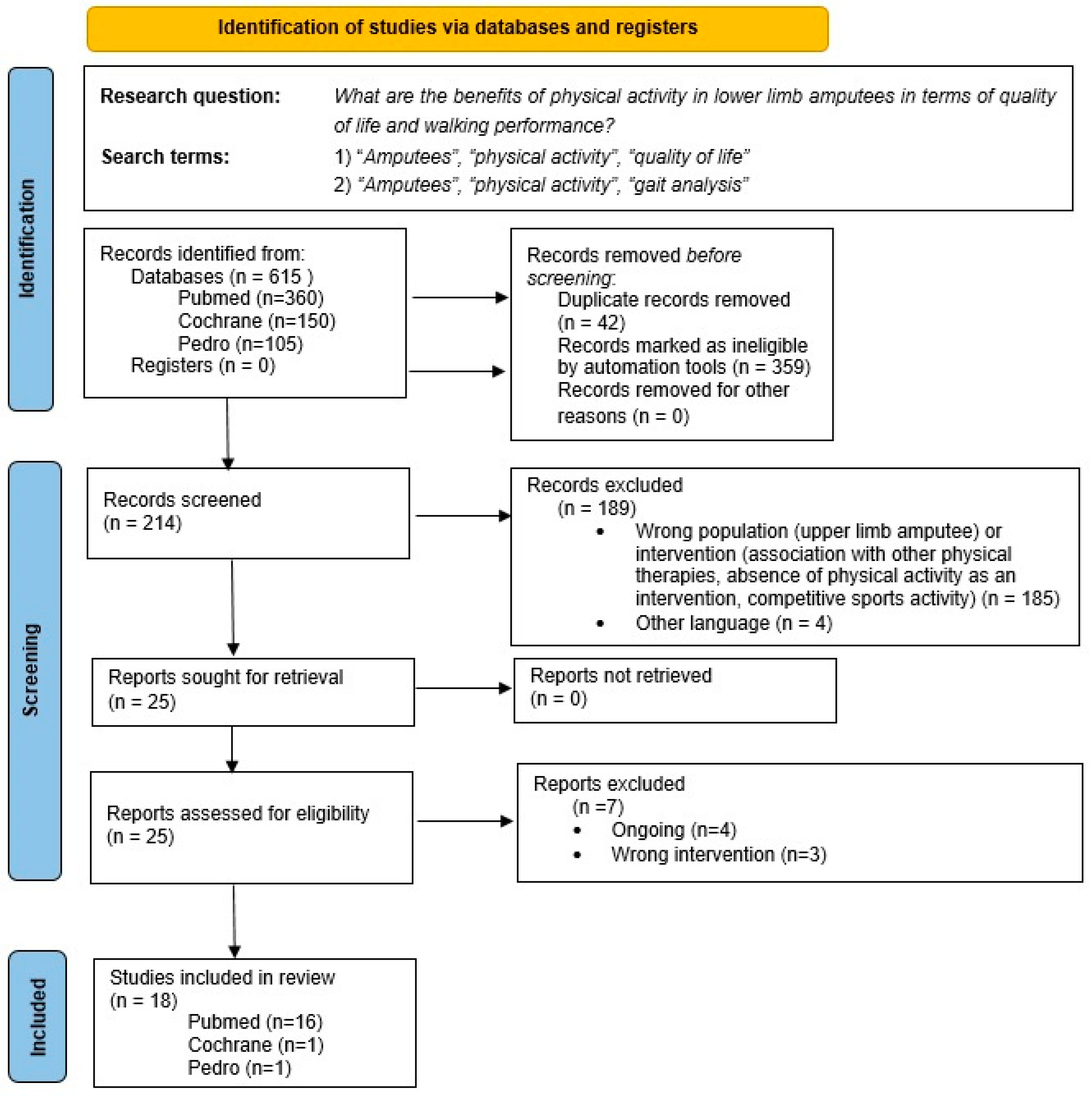
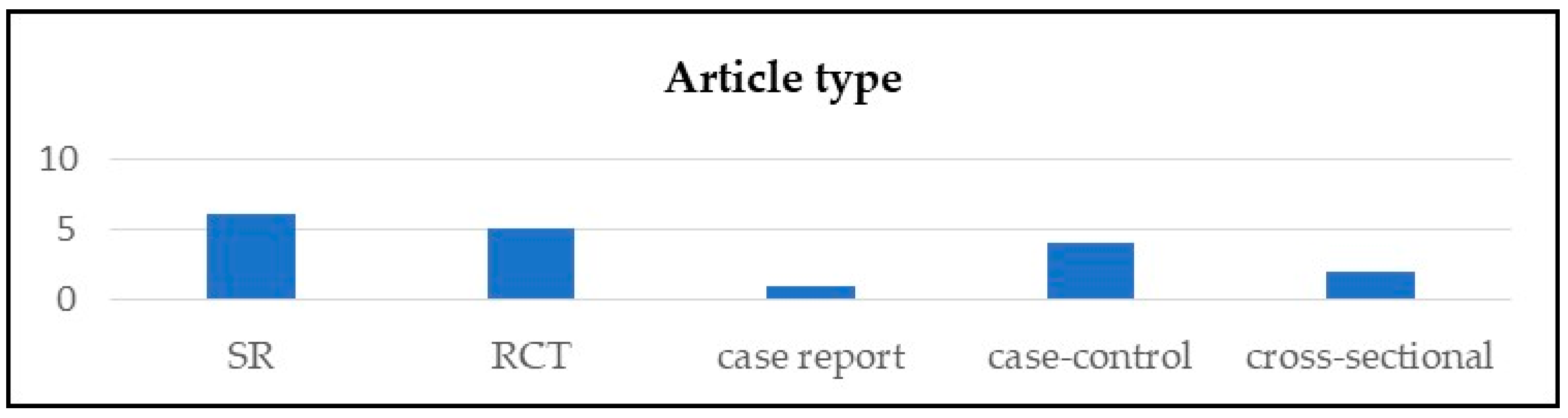
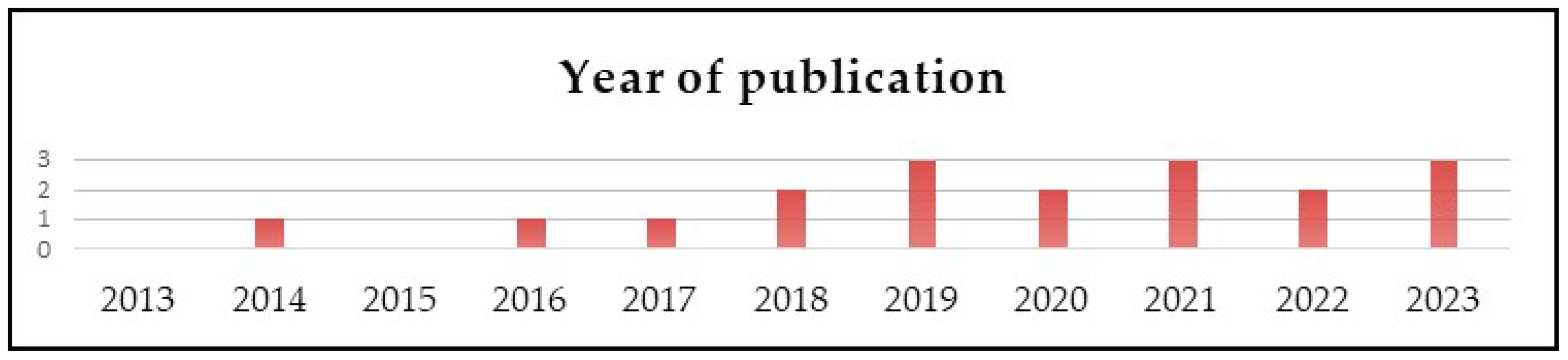
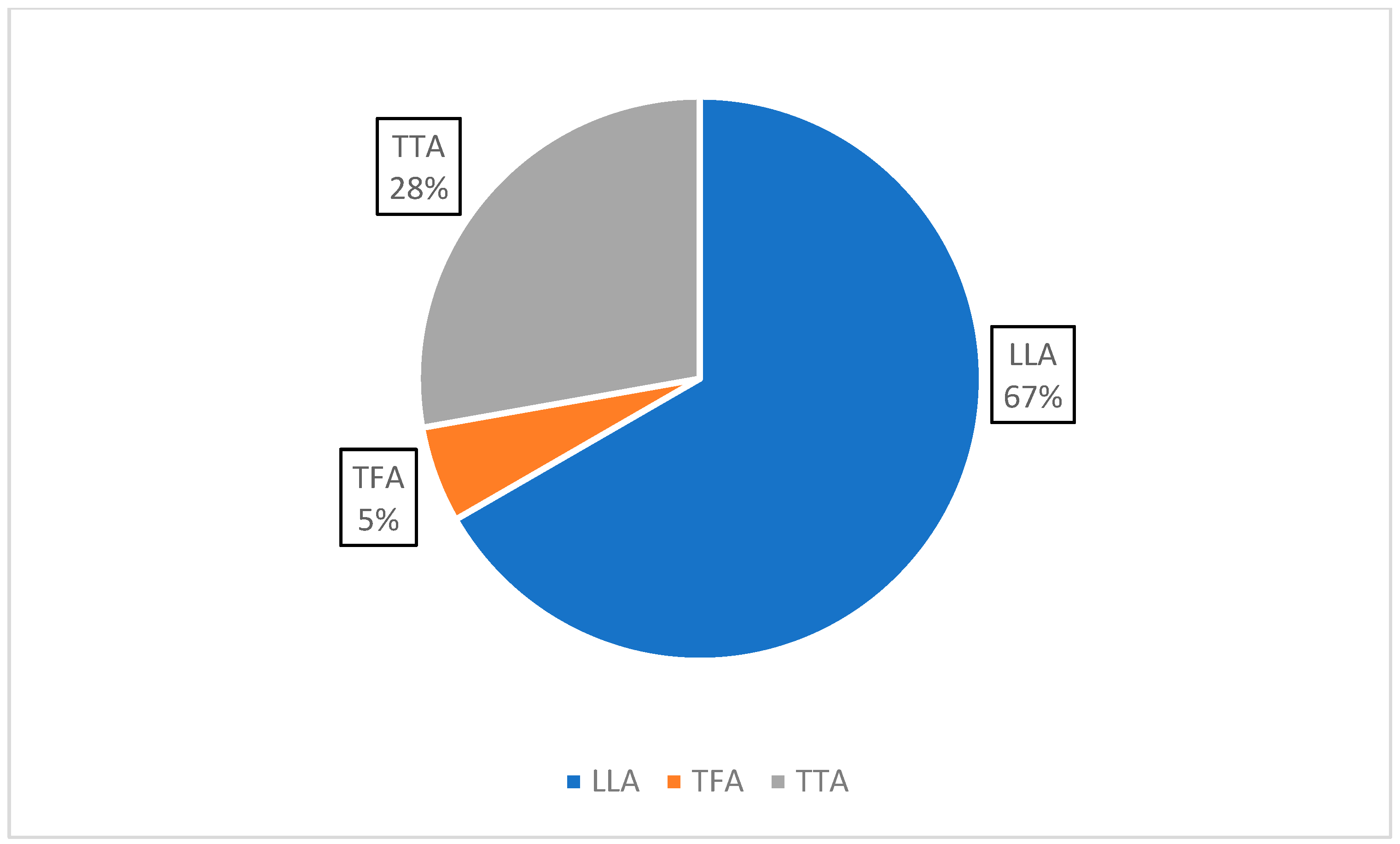
3.1. Study Selection
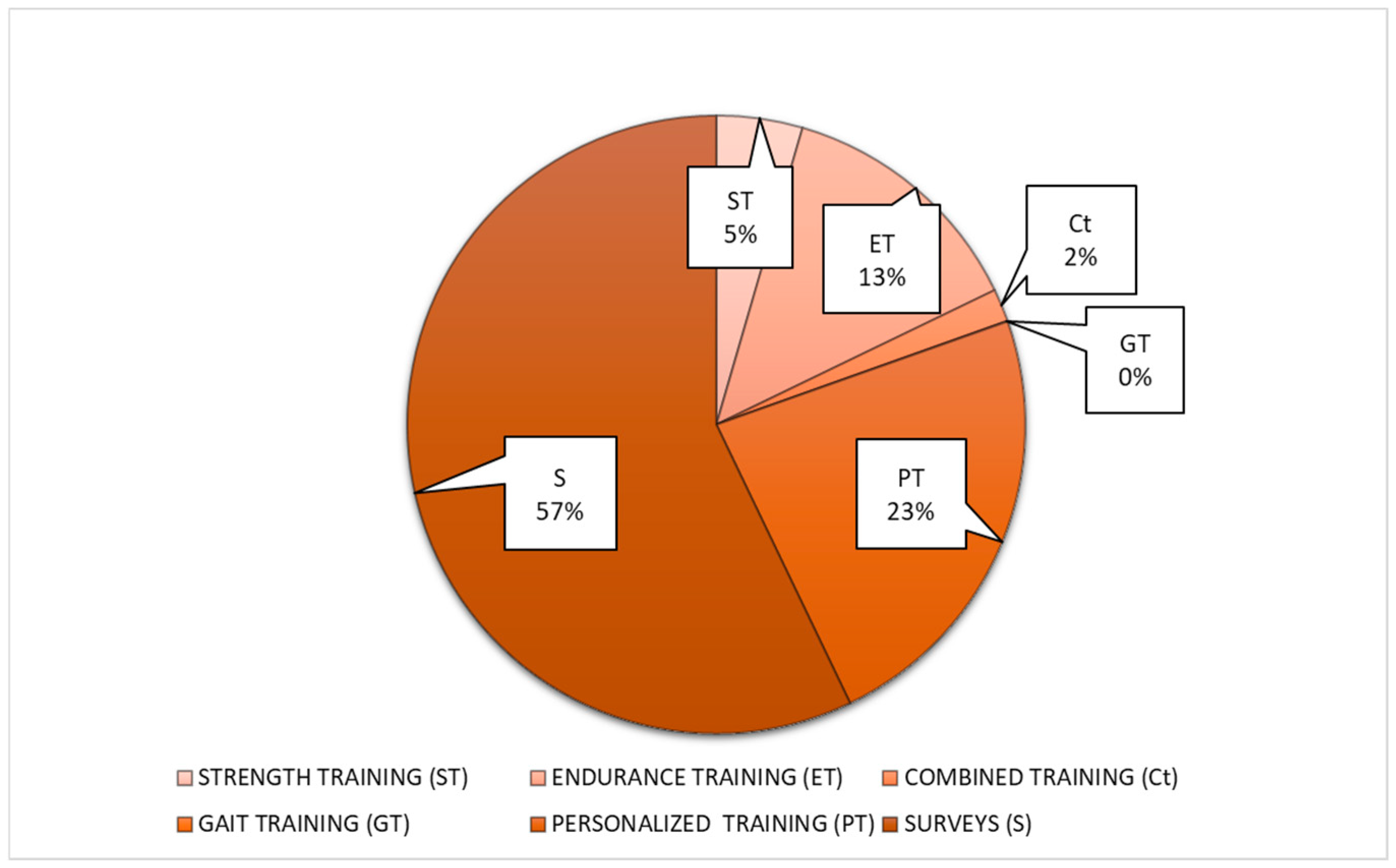
3.2. Intervention Categories
- Strength Training: This category includes articles proposing exercises to train muscle strength, such as weightlifting, elastic band exercises, bodyweight exercises, machine exercises, or isokinetic exercises. This category comprises one review and two RCT [24,25,26]. The review demonstrates that a population of individuals with LLA and LBP undergoing strength training benefits significantly from this type of intervention in terms of improving gait parameters, muscle fitness (increase in strength and cross-sectional area of dorsal and core muscles), and, most importantly, QoL (improvement in Short Form Health Survey 36 (SF 36) scores, Oswestry Disability Index (ODI), Roland Morris Disability Questionnaire (RMDQ), and reduction in LBP secondary to amputation) [24]. An RCT shows that daily strength training for individuals with vascular LLA significantly improves QoL outcomes (but not functional and disability parameters) three months post-amputation compared to a control group receiving conventional treatment. However, at six months post-amputation, the same outcomes do not show significant improvements (Barthel Index (BI), Participation Scale, Timed Up and Go (TUG) test, Modified Locomotor Capabilities (LCI)), suggesting short-term benefits; only the EuroQoL 5D scale maintains improvements at six months [25]. The last RCT claims that strength training focusing on hip abductors and extensors performed twice a week for eight weeks by individuals with TFA significantly increases strength and functionality levels (TUG test, 2-Minute Walk test (2MWT), Activities-specific Balance Confidence (ABC) questionnaire [26].
- Endurance Training: Interventions in this category focus on increasing aerobic capacity, and the main training modalities include the use of the treadmill, cycle ergometer (with only the intact lower limb or with the prosthesis), stationary bike, arm ergometer, rowing machine, and elliptical. Two controlled trials (CT), one RCT, and one SR are included in this category [27,28,29,30]. The two CT consist, respectively, of the administration of three aerobic tests (walking, cycle ergometer, and elliptical) and an aerobic test on the cycle ergometer for 60 min. The first study analyses knee biomechanics in the three tests, showing that the use of the cycle ergometer is the preferred option for TTA patients in terms of reducing secondary damage and preventing osteoarthritis. The second article indicates that, in patients with LLA, maximum oxygen consumption (VO2max) and body temperature parameters do not differ from the control group, but they show higher levels of sweating and dehydration [27,28]. An RCT demonstrates that a population of individuals with TFA and TTA with vascular etiology undergoing four weeks of aerobic training three times a week significantly improves VO2max values (TFA and TTA) and 6-Minute Walk test (6MWT) outcomes (TTA) [29]. On the other hand, an SR shows that cardiovascular parameters of LLA patients, measured after six weeks of training, significantly improve regardless of the type of aerobic exercise proposed (arm ergometer, cycle ergometer, rowing machine, or combinations). However, the study indicates that a combination of sustained aerobic exercise on the cycle ergometer at a percentage ≥ 50% VO2max and on the arm ergometer at a power of 30 Watts is the preferred option to achieve the most significant improvements for effective walking [30].Any type of aerobic training (treadmill, arm ergometer, cycle ergometer, or stationary bike, or other modalities) significantly improves cardiovascular parameters, particularly VO2max, in individuals with LLA. However, the choice of modality may be dictated by the goals and individual capabilities: for example, cycling training not only improves cardiovascular fitness but also helps reduce the risk of knee osteoarthritis in individuals with TTA; on the other side, to gain an effective ambulation (excluding treadmill training), the preferred solution would be a combination of exercises sustained on the cycle ergometer at medium–high intensity (≥50% VO2max) and the arm ergometer (power = 30 W).There are no significant differences in VO2max and body temperature values between a population with LLA and an able-bodied population; nevertheless, post-aerobic exercise sweating and dehydration increase have been observed in amputated individuals, suggesting that amputees need to assume more fluids to cope with increased dehydration [27,28,29,30]. It follows that hydration status and environmental conditions such as temperature and humidity can represent confounder factors.
- Combined Training: This category involves a combination of aerobic and strength exercises in different modalities and proportions. Two studies are included in this category [31,32]. A CT shows that eight weeks of concurrent training (a combination of aerobic and strength exercises) are effective in improving cardiovascular (VO2max, blood pressure (BP)) and muscular (strength in knee flexor and extensor muscles) parameters compared to conventional training in the control group [31]. The other study (RCT) also submits a population with TTA to eight weeks of concurrent training, demonstrating significant improvements in vascular and strength parameters. Additionally, scores related to the TUG test, Sit-to-Stand (STS) test, Stair Climb test (SCT), and postural balance were investigated and increased after the intervention [32].Medium to long-term training programs such as concurrent training in individuals with TTA significantly impact the improvement of cardiovascular and muscular fitness, the reduction of functional and metabolic deficits, and the increase in QoL. This includes a reduction in the risk of chronic diseases and protection from secondary damage. It can be inferred that combined training is a valid and comprehensive training method to improve most of the outcomes of interest. However, further studies on combined training with larger sample sizes would provide more evidence [31,32].
- Gait Training: In this group, interventions primarily focus on walking abilities and gait quality, including exercises for muscle reinforcement, static and dynamic balance, and walking exercises using parallel bars, treadmill, or free walking. This category includes two studies [33,34]: an SR indicates that combined strength, balance, and walking training are effective in improving gait kinematics outcomes in a population of individuals with LLA in subacute or chronic rehabilitation, while a CR shows that a subject with traumatic TTA undergoing four months of functional walking training (Adaptive Training for an Assist Device, ATAD) achieves better results such as gait kinematics, functionality (K level: K0 to K3), and QoL (SF 36 and reduction in contracture of the knee flexor muscles) [33,34].From these interventions, it is evident that positive effects are certainly observed regarding walking parameters, and outcomes related to functionality and QoL also benefit from this type of intervention.
- Personalized Training: This group includes various intervention modalities that cannot be classified into the previous categories. The trainings involve different combinations of strength, endurance, balance, mobility, and walking exercises personalized according to the characteristics and abilities of individuals. Although this category could seem to overlap the “combined training” group, it is focused on the customization of the program and based on the characteristics of the patient. For this category, two SR and two RCT are included [8,9,35,36]. The two SR present improvements in almost all outcome categories; both studies show that combinations of different types of exercises or even just lifestyle interventions for individuals with LLA, significantly improve cardiovascular and muscular fitness values, gait biomechanics, functionality, and QoL. The main outcome measures investigated and showed significant improvement include VO2max, anaerobic threshold (AT), walking energy cost, strength of different muscle groups, 2MWT, Falls Incidence (FI), and gait parameters. No significant improvements were found regarding the TUG test and the LCI scale. The two RCT, finally, propose personalized trainings as intervention, both lasting 12 weeks. The first article analyzes and demonstrates improvements in functionality and disability (Sensory Organization test (SOT), Motor Control test (MCT)), but no improvement in the ABC questionnaire), while the other illustrates significant improvements in the QoL of patients (FI) and gait parameters. It also includes personalised home exercises, suggesting they should be implemented as a method to reduce falls while improving walking ability. In both studies, the first group receives a semi-structured personalization, where a standard program is associated with specific home exercises based on the characteristics of the patient; the semi-structured program permits to associate a standard treatment with a more tailored one. The control group receives standard care in both articles.The choice of exercises to include depends on the needs of every person, customizing the training according to different physical and psychosocial abilities. It is important to emphasize that these training programs include various types of interventions but are individualized for each subject. Consequently, they have shown an overall positive effect on all outcome categories.
- Promoting and monitoring of lifestyleThis category includes three studies [10,37,38]. There are no direct PA interventions, but questionnaires are administered to the population to monitor QoL and participation in PA. One SR and two OS are included, and these studies show that scores related to the International Physical Activity Questionnaire (IPAQ), SF 36, and World Health Organization Quality of Life (WHOQoL) are significantly lower in population with LLA (two studies with traumatic etiology and one with mixed etiology) compared to the non-amputated population. Furthermore, elderly individuals report lower levels than the adult population, especially regarding the “physical function” and “pain” categories.The surveys underlined that the population with LLA reports significantly lower QoL scores compared to able-bodied individuals, especially when dealing with “physical functionality” and “pain” items in older patients; it suggests that a population with LLA needs personalized intervention measures to promote an active lifestyle, improve its quality, and above all, monitor its maintenance over time.

| Category | Main Modalities | Articles | n |
|---|---|---|---|
| Strenght training (ST) | dumbbell or barbell; | Godlwana et al. [25]; | 171 |
| elastic band; | Pauley et al. [26]. | ||
| bodyweight; | |||
| gym machines; | |||
| isokinetic. | |||
| Endurance training (ET) | treadmill; | Orekhov et al. [27]; | 506 |
| arm ergometry; | Burger H. et al. [29]; | ||
| lower limb ergometry or bike; | Fukuhara et al. [28]; | ||
| elliptical; | Klenow et al. [30]. | ||
| exercises on hand-wheel; | |||
| rowing machine. | |||
| Combined training (Ct) | Combination of strength and endurance exercises, in different modalities. | Grecco et al. [31] Grecco et al. [32] | 65 |
| Gait training (GT) | Propaedeutics and exercises of: | Kim et al. [34] | 1 |
| static and dynamic balance; | |||
| strength; | |||
| gait; | |||
| Personalized training (PT) | Personalized combination of: | Van Helm et al. [9] | 884 |
| strength; | Schafer A. et al. [35] | ||
| endurance; | Bouzas et al. [8] | ||
| balance; | Schafer A. et al. [36] | ||
| flexibility; | |||
| gait. | |||
| Surveys (S) | Assessment of QoL, Functionality and Physical Activity levels in LLA populations. | De Melo et al. [37] | 2168 |
| Uçkun et al. [38] | |||
| Christiansen et al. [10] |
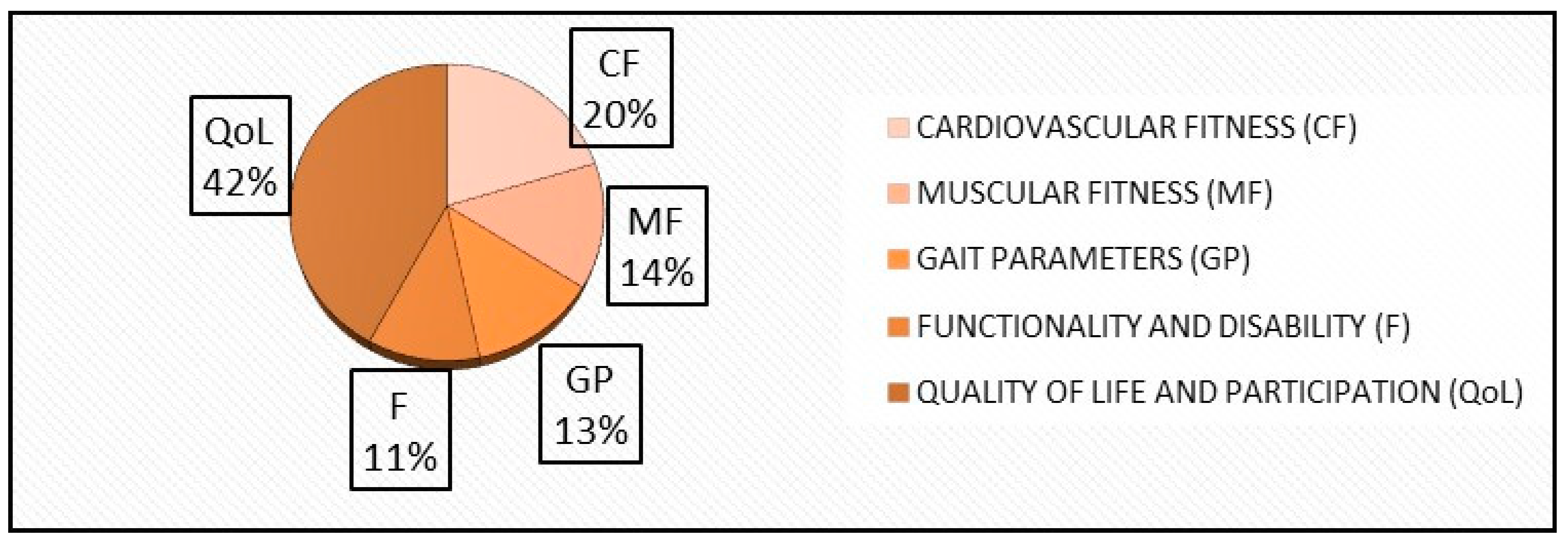
3.3. Outcome Categories
- Cardiovascular Fitness (CV), 6 articles included;
- Muscular Fitness (MF), 6 articles included;
- Gait Parameters (GP), 6 articles included;
- Functionality and Disability (F), 7 articles included;
- Quality of Life and Participation (QoL), 9 articles included.
3.4. Critical Appraisal
4. Discussion
Study Limitations
5. Conclusions
- Physical activity interventions comprehend strength training, endurance training, gait training, combined approaches, and personalized exercises; each strategy seems to positively influence QoL, independently from the type of intervention chosen;
- Endurance activities can have positive effects on cardiovascular fitness, especially when combined with strength training;
- Personalized interventions focusing on balance and gait in addition to strength and endurance can improve walking ability, functionality and QoL;
- The choice of approach must depend on the patient’s needs, ensuring the customization of interventions;
- Since many studies highlighted the short-term effect of these activities, planning long-term interventions and remote monitoring strategies should be taken into consideration; creating meeting situations and promoting initiatives to encourage the maintenance of PA could represent a solution.
Author Contributions
Funding
Institutional Review Board Statement
Informed Consent Statement
Data Availability Statement
Conflicts of Interest
Appendix A
| Outcome 1: Quality of Life | ||||||||
|---|---|---|---|---|---|---|---|---|
| Author | Year | Study | Level of Amputation | Etiology | Age | Intervention | n | Outcome |
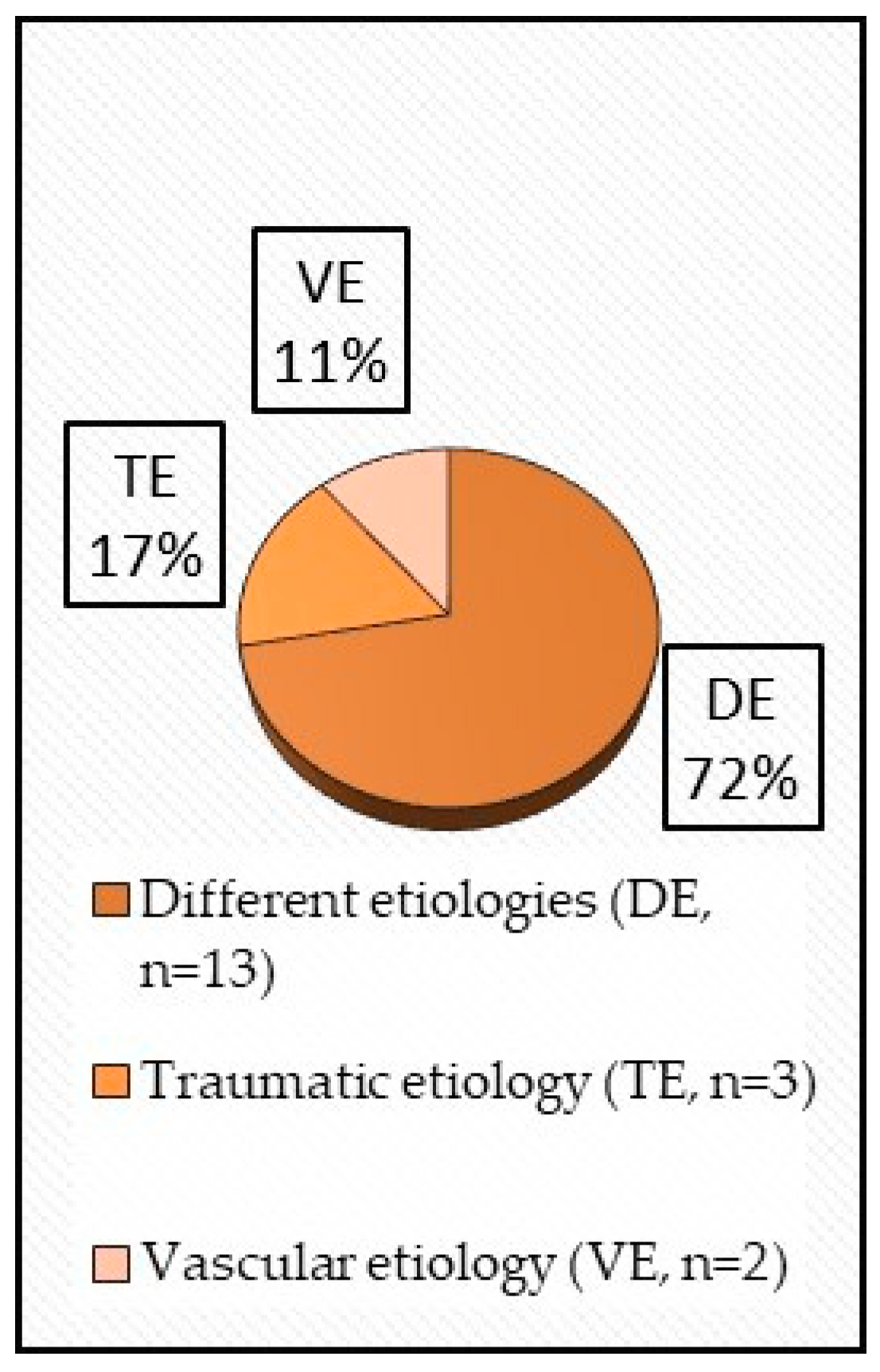
| M.V. Grecco et al. [31] | 2023 | CC | TTA | DE | 18 < age < 50 | strength, aerobic exercises | 34 | VO2 max |
| lower limb strength | ||||||||
| HR max | ||||||||
| Blood pressure | ||||||||
| E. Madou et al. [33] | 2023 | SR | LLA | DE | >18 years old | Gait, balance and strength training | / | gait |
| S. Van Helm et al. [9] | 2022 | SR | LLA | DE | >18 years old | strength, endurance, flexibility, balance and gait exercises | 520 | VO2 max |
| body mass | ||||||||
| lower limb strength | ||||||||
| EuroQoL 5D | ||||||||
| V.H. De Melo et al. [37] | 2021 | CS | LLA | DE | 18 < age < 59: Adults LLA | surveys | 36 | IPAQ |
| >60: Elderly LLA | WHOQoL | |||||||
| L. Godlwana et al. [25] | 2020 | RCT | LLA | VE | >18 years old | education, strength exercises | 154 | EuroQoL 5D |
| TUG test | ||||||||
| J.G. Wasser et al. [24] | 2019 | SR | LLA | DE | / | Strength + resistance exercises | / | pain |
| core fitness/strength | ||||||||
| gait/kinematics | ||||||||
| G. Orekhov et al. [27] | 2019 | CC | TTA | DE | 18 < age < 45 | gait, cycling and elliptical training | 20 | walking speed |
| lower limb ROM | ||||||||
| gait | ||||||||
| A. Uçkun et al. [38] | 2019 | CS | TTA | TE | 18 < age < 65 | surveys | 102 | IPAQ |
| SF-36 | ||||||||
| S.B. Kim et al. [34] | 2017 | CR | TTA | TE | 53 | Balance, strength and gait exercises | 1 | lower limb passive ROM |
| K level | ||||||||
| gait | ||||||||
| SF-36 | ||||||||
| J. Christensen et al. [10] | 2016 | SR | LLA | TE | / | surveys | 2030 | SF-36 |
| QoL | ||||||||
| Outcome 2: Performance | ||||||||
| Author | Year | Study | Level of amputation | Etiology | Age | Intervention | n | Outcome |
| M.V. Grecco et al. [32] | 2023 | CC | TTA | DE | 18 < age < 50 | strength, aerobic exercises | 31 | lower limb strength |
| VO2 max | ||||||||
| postural balance | ||||||||
| TUG test | ||||||||
| SCT | ||||||||
| STS | ||||||||
| Burger H. et al. [29] | 2022 | RCT | LLA | VE | Mean: 65 years old | aerobic training on hand-wheel at 70–80% of heart rate reserve | 20 | VO2 max |
| 6MWT | ||||||||
| K. Fukuhara et al. [28] | 2021 | CC | LLA | DE | Mean: 40.3 years old | Arm ergometer | 18 | VO2 max |
| metabolic heat production | ||||||||
| temperature | ||||||||
| body/local sweating | ||||||||
| Z.A. Schafer et al. [35] | 2021 | RCT | LLA | DE | Mean: 61.5 years old | home-based exercise sessions consisting of balance, flexibility, gait endurance and strength training | 14 | SOT MCT ABC Questionnaire |
| S. Bouzas et al. [8] | 2020 | SR | LLA | DE | Mean: 47 years old | strength, flexibility, aerobic, gait, balance and combined interventions. | 355 | VO2 max |
| muscular strength | ||||||||
| active flexibility | ||||||||
| gait | ||||||||
| 2MWT | ||||||||
| TUG test | ||||||||
| LCI | ||||||||
| Z.A. Schafer et al. [36] | 2018 | RCT | LLA | DE | 34 < age < 91 | combination of strength, endurance, flexibility, balance, and gait exercises; | 15 | FI |
| walking speed | ||||||||
| gait | ||||||||
| T.D. Klenow et al. [30] | 2018 | SR | LLA | DE | mean: 65.4 years old | ergometer, rowing machine | 448 | VO2 max |
| maximal workload (Watt) | ||||||||
| T. Pauley et al. [26] | 2014 | RCT | TFA | DE | > 65 years old | hip strength training | 17 | TUG test 2MWT muscular strength ABC Questionnaire |
| (mean: 67.8 years old) | ||||||||
Appendix B
| Section | Item | PRISMA-ScR Checklist Item | Reported on Page |
|---|---|---|---|
| TITLE | |||
| Title | 1 | Identify the report as a scoping review. | 1 |
| Abstract | |||
| Structured summary | 2 | Provide a structured summary that includes (as applicable): background, objectives, eligibility criteria, sources of evidence, charting methods, results, and conclusions that relate to the review questions and objectives. | 1 |
| Introduction | |||
| Rationale | 3 | Describe the rationale for the review in the context of what is already known. Explain why the review questions/objectives lend themselves to a scoping review approach. | 2–3 |
| Objectives | 4 | Provide an explicit statement of the questions and objectives being addressed with reference to their key elements (e.g., population or participants, concepts, and context) or other relevant key elements used to conceptualize the review questions and/or objectives. | 2–3 |
| Methods | |||
| Protocol and registration | 5 | Indicate whether a review protocol exists; state if and where it can be accessed (e.g., a Web address); and if available, provide registration information, including the registration number. | 3 |
| Eligibility criteria | 6 | Specify characteristics of the sources of evidence used as eligibility criteria (e.g., years considered, language, and publication status), and provide a rationale. | 3–4 |
| Information sources | 7 | Describe all information sources in the search (e.g., databases with dates of coverage and contact with authors to identify additional sources), as well as the date the most recent search was executed. | 3–4 |
| Search | 8 | Present the full electronic search strategy for at least 1 database, including any limits used, such that it could be repeated. | 3 |
| Selection of sources of evidence | 9 | State the process for selecting sources of evidence (i.e., screening and eligibility) included in the scoping review. | 3–4 |
| Data charting process | 10 | Describe the methods of charting data from the included sources of evidence (e.g., calibrated forms or forms that have been tested by the team before their use, and whether data charting was done independently or in duplicate) and any processes for obtaining and confirming data from investigators. | 4 |
| Data items | 11 | List and define all variables for which data were sought and any assumptions and simplifications made. | 4 |
| Critical appraisal of individual sources of evidence | 12 | If done, provide a rationale for conducting a critical appraisal of included sources of evidence; describe the methods used and how this information was used in any data synthesis (if appropriate). | 4 |
| Synthesis of results | 13 | Describe the methods of handling and summarizing the data that were charted. | 4 |
| Results | |||
| Selection of sources of evidence | 14 | Give numbers of sources of evidence screened, assessed for eligibility, and included in the review, with reasons for exclusions at each stage, ideally using a flow diagram. | 5 |
| Characteristics of sources of evidence | 15 | For each source of evidence, present characteristics for which data were charted and provide the citations. | 6–7 |
| Critical appraisal within sources of evidence | 16 | If done, present data on critical appraisal of included sources of evidence (see item 12). | 11–12 |
| Results of individual sources of evidence | 17 | For each included source of evidence, present the relevant data that were charted that relate to the review questions and objectives. | 6–12 |
| Synthesis of results | 18 | Summarize and/or present the charting results as they relate to the review questions and objectives. | 9–11 |
| Discussion | |||
| Summary of evidence | 19 | Summarize the main results (including an overview of concepts, themes, and types of evidence available), link to the review questions and objectives, and consider the relevance to key groups. | 12–13 |
| Limitations | 20 | Discuss the limitations of the scoping review process. | 13 |
| Conclusions | 21 | Provide a general interpretation of the results with respect to the review questions and objectives, as well as potential implications and/or next steps. | 13–14 |
| Funding | |||
| Funding | 22 | Describe sources of funding for the included sources of evidence, as well as sources of funding for the scoping review. Describe the role of the funders of the scoping review. | 14 |
References
- Available online: https://www.who.int/data/gho/publications/world-health-statistics (accessed on 6 October 2023).
- OMS_Glossario 1998_Italiano.pdf. Available online: https://www.dors.it/documentazione/testo/201303/OMS_Glossario%201998_Italiano.pdf (accessed on 27 October 2023).
- Every Move Counts. Le Linee Guida 2020 OMS su Attività Fisica e Sedentarietà. Available online: https://www.epicentro.iss.it/attivita_fisica/linee-guida-oms-2020 (accessed on 6 October 2023).
- Chin, T.; Sawamura, S.; Fujita, H. Physical fitness of lower limb amputees. Am. J. Phys. Med. Rehabil. 2002, 81, 321–325. [Google Scholar] [CrossRef] [Scilit]
- Cansever, A.; Uzun, O.; Yildiz, C.; Ates, A.; Atesalp, A.S. Depression in men with traumatic lower part amputation: A comparison to men with surgical lower part amputation. Mil. Med. 2003, 168, 106–109. [Google Scholar] [CrossRef] [Scilit]
- Kashani, J.H.; Frank, R.G.; Kashani, S.R.; Wonderlich, S.A.; Reid, J.C. Depression among amputees. J. Clin. Psychiatry 1983, 44, 256–258. [Google Scholar] [PubMed]
- Singh, R.; Hunter, J.; Philip, A. The rapid resolution of depression and anxiety symptoms after lower limb amputation. Clin. Rehabil. 2007, 21, 754–759. [Google Scholar] [CrossRef] [Scilit]
- Bouzas, S.; Molina, A.J.; Fernández-Villa, T.; Miller, K.; Sanchez-Lastra, M.A.; Ayán, C. Effects of exercise on the physical fitness and functionality of people with amputations: Systematic review and meta-analysis. Disabil. Health J. 2021, 14, 100976. [Google Scholar] [CrossRef] [Scilit] [PubMed]
- Van Helm, S.; Krops, L.A.; Dekker, R.; Vrieling, A.H. Effectiveness of (Active) Lifestyle Interventions in People With a Lower Limb Amputation: A Systematic Review. Arch. Rehabil. Res. Clin. Transl. 2022, 4, 100207. [Google Scholar] [CrossRef] [Scilit]
- Christensen, J.; Ipsen, T.; Doherty, P.; Langberg, H. Physical and social factors determining quality of life for veterans with lower-limb amputation(s): A systematic review. Disabil. Rehabil. 2016, 38, 2345–2353. [Google Scholar] [CrossRef] [Scilit]
- Lombardo, F.L.; Maggini, M.; Bellis, A.D.; Seghieri, G.; Anichini, R. Lower Extremity Amputations in Persons with and without Diabetes in Italy: 2001–2010. PLoS ONE 2014, 9, e86405. [Google Scholar] [CrossRef] [Scilit] [PubMed]
- Ziegler-Graham, K.; MacKenzie, E.J.; Ephraim, P.L.; Travison, T.G.; Brookmeyer, R. Estimating the prevalence of limb loss in the United States: 2005 to 2050. Arch. Phys. Med. Rehabil. 2008, 89, 422–429. [Google Scholar] [CrossRef] [Scilit]
- Beckley, A.; Ton, Y.; Wong, C.K. Lower Limb Amputations: Epidemiology and Assessment. PM&R KnowledgeNow. 1 March 2017. Available online: https://now.aapmr.org/lower-limb-amputations-epidemiology-and-assessment/ (accessed on 6 October 2023).
- Bragaru, M.; Dekker, R.; Geertzen, J.H.B.; Dijkstra, P.U. Amputees and sports: A systematic review. Sports Med. 2011, 41, 721–740. [Google Scholar] [CrossRef] [Scilit]
- Dillingham, T.R.; Pezzin, L.E.; MacKenzie, E.J. Limb amputation and limb deficiency: Epidemiology and recent trends in the United States. South. Med. J. 2002, 95, 875–883. [Google Scholar] [CrossRef] [Scilit]
- Unwin, N. Epidemiology of lower extremity amputation in centres in Europe, North America and East Asia. Br. J. Surg. 2000, 87, 328–337. [Google Scholar] [CrossRef] [Scilit]
- Moxey, P.W.; Gogalniceanu, P.; Hinchliffe, R.J.; Loftus, I.M.; Jones, K.J.; Thompson, M.M.; Holt, P.J. Lower extremity amputations—A review of global variability in incidence. Diabet. Med. J. Br. Diabet. Assoc. 2011, 28, 1144–1153. [Google Scholar] [CrossRef] [Scilit] [PubMed]
- Renzi, R.; Unwin, N.; Jubelirer, R.; Haag, L. An international comparison of lower extremity amputation rates. Ann. Vasc. Surg. 2006, 20, 346–350. [Google Scholar] [CrossRef] [Scilit] [PubMed]
- Newhall, K.; Spangler, E.; Dzebisashvili, N.; Goodman, D.C.; Goodney, P. Amputation rates for patients with diabetes and peripheral arterial disease: The effects of race and region. Ann. Vasc. Surg. 2016, 30, 292–298.e1. [Google Scholar] [CrossRef] [Scilit]
- Do You Know Your K-Level? Amputee Coalition. 30 September 2013. Available online: https://www.bostonoandp.com/Customer-Content/www/CMS/files/do-you-know-your-k-level.pdf (accessed on 20 October 2023).
- Matthews, D.; Sukeik, M.; Haddad, F. Return to sport following amputation. J. Sports Med. Phys. Fit. 2014, 54, 481–486. [Google Scholar] [PubMed]
- Albert, M.V.; McCarthy, C.; Valentin, J.; Herrmann, M.; Kording, K.; Jayaraman, A. Monitoring Functional Capability of Individuals with Lower Limb Amputations Using Mobile Phones. PLoS ONE 2013, 8, e65340. [Google Scholar] [CrossRef] [Scilit]
- Meier, R.H.; Melton, D. Ideal Functional Outcomes for Amputation Levels. Phys. Med. Rehabil. Clin. N. Am. 2014, 25, 199–212. [Google Scholar] [CrossRef] [Scilit]
- Wasser, J.G.; Vincent, K.R.; Herman, D.C.; Vincent, H.K. Potential lower extremity amputation-induced mechanisms of chronic low back pain: Role for focused resistance exercise. Disabil. Rehabil. 2020, 42, 3713–3721. [Google Scholar] [CrossRef] [Scilit]
- Godlwana, L.; Stewart, A.; Musenge, E. The effect of a home exercise intervention on persons with lower limb amputations: A randomized controlled trial. Clin. Rehabil. 2020, 34, 99–110. [Google Scholar] [CrossRef] [Scilit] [PubMed]
- Pauley, T.; Devlin, M.; Madan-Sharma, P. A single-blind, cross-over trial of hip abductor strength training to improve Timed Up & Go performance in patients with unilateral, transfemoral amputation. J. Rehabil. Med. 2014, 46, 264–270. [Google Scholar] [CrossRef] [Scilit]
- Orekhov, G.; Robinson, A.M.; Hazelwood, S.J.; Klisch, S.M. Knee joint biomechanics in transtibial amputees in gait, cycling, and elliptical training. PLoS ONE 2019, 14, e0226060. [Google Scholar] [CrossRef] [Scilit]
- Fukuhara, K.; Mikami, Y.; Hasegawa, H.; Nakashima, D.; Ikuta, Y.; Tajima, F.; Kimura, H.; Adachi, N. Thermoregulatory responses in persons with lower-limb amputation during upper-limb endurance exercise in a hot and humid environment. Prosthet. Orthot. Int. 2021, 45, 401–409. [Google Scholar] [CrossRef] [Scilit] [PubMed]
- Burger, H.; Erjavec, T.; Kriznar, A.; Kostanisek, L.; Robida, T.; Vipavec, B.; Karan, K. Aerobic Training in the Initial Prosthetic Training Phase for Patients with Lower Limb Loss due to Peripheral Vascular Disease. In Proceedings of the Digital Transformation in an Evolving World: ISPO 18th World Congress, Online, 1–4 November 2021; p. 63. [Google Scholar]
- Klenow, T.D.; Mengelkoch, L.J.; Stevens, P.M.; Ràbago, C.A.; Hill, O.T.; Latlief, G.A.; Ruiz-Gamboa, R.; Highsmith, M.J. The role of exercise testing in predicting successful ambulation with a lower extremity prosthesis: A systematic literature review and clinical practice guideline. J. Neuroeng. Rehabil. 2018, 15, 64. [Google Scholar] [CrossRef] [Scilit]
- Grecco, M.V.; Brech, G.C.; Soares-Junior, J.M.; Baracat, E.C.; Greve, J.M.D.; Silva, P.R.S. Effect of concurrent training in unilateral transtibial amputees using Paralympic athletes as a control group. Clinics 2023, 78, 100165. [Google Scholar] [CrossRef] [Scilit]
- Grecco, M.V.; Brech, G.C.; Camargo, C.P.; Santos-Silva, P.R.; D’Andréa Greve, J.M. The eight-week concurrent training effect on functional capacity in person living with unilateral transtibial amputation: A randomized controlled trial. J. Bodyw. Mov. Ther. 2023, 33, 164–170. [Google Scholar] [CrossRef] [Scilit]
- Madou, E.; Sureshkumar, A.; Payne, M.W.; Viana, R.; Hunter, S.W. The effect of exercise interventions on gait outcomes in subacute and chronic rehabilitation from lower-limb amputation: A systematic review and meta-analysis. Prosthet. Orthot. Int. 2023, 48, 128–148. [Google Scholar] [CrossRef] [Scilit]
- Kim, S.B.; Ko, C.Y.; Son, J.; Kang, S.; Ryu, J.; Mun, M. Relief of knee flexion contracture and gait improvement following adaptive training for an assist device in a transtibial amputee: A case study. J. Back Musculoskelet. Rehabil. 2017, 30, 371–381. [Google Scholar] [CrossRef] [Scilit] [PubMed]
- Schafer, Z.A.; Vanicek, N. A block randomised controlled trial investigating changes in postural control following a personalised 12-week exercise programme for individuals with lower limb amputation. Gait Posture 2021, 84, 198–204. [Google Scholar] [CrossRef] [Scilit] [PubMed]
- Schafer, Z.A.; Perry, J.L.; Vanicek, N. A personalised exercise programme for individuals with lower limb amputation reduces falls and improves gait biomechanics: A block randomised controlled trial. Gait Posture 2018, 63, 282–289. [Google Scholar] [CrossRef] [Scilit]
- Melo, V.H.D.; Sousa RALd Improta-Caria, A.C.; Nunes, M.A.P. Physical activity and quality of life in adults and elderly individuals with lower limb amputation. Rev. Assoc. Medica Bras. 2021, 67, 985–990. [Google Scholar] [CrossRef] [Scilit] [PubMed]
- Çalışkan Uçkun, A.; Yurdakul, F.G.; Almaz, Ş.E.; Yavuz, K.; Ulucaköy, R.K.; Sivas, F.; Bodur, H. Reported physical activity and quality of life in people with lower limb amputation using two types of prosthetic suspension systems. Prosthet. Orthot. Int. 2019, 43, 519–527. [Google Scholar] [CrossRef] [Scilit] [PubMed]


| Category | Outcome Measures | Articles | n |
|---|---|---|---|
| Cardiovascular fitness (CF) | VO2max; | Grecco et al. [31]; | 1388 |
| HR max; | Van Helm et al. [9] | ||
| AT; | Grecco et al. [32] | ||
| cost of walking; | Burger H. et al. [29] | ||
| maximal workload. | Bouzas et al. [8]; | ||
| Klenow et al. [30] | |||
| Muscular fitness (MF) | local strength (hip or knee muscles strength); | Grecco et al. [31]; | 937 |
| general strength | Van Helm et al. [9] | ||
| muscle cross-sectional area. | Grecco et al. [32] | ||
| Bouzas et al. [8] | |||
| Pauley et al. [26] | |||
| Gait parameters (GP) | walking speed; | Van Helm et al. [9] | 871 |
| center of pressure trajectory; | Kim et al. [34] | ||
| step length and stance; | Bouzas et al. [8] | ||
| double support duration; | Schafer A. et al. [36] | ||
| IL cadence; | |||
| IL peak vertical force; | |||
| IL plantarflexion moment in pre-swing phase; | |||
| hip and IL ankle power absorption and generation. | |||
| Functionality and disability (F) | 2MWT and 6MWT; | Van Helm et al. [9] | 757 |
| LCI scale and Modified LCI scale; | Godlwana et al. [25] | ||
| BI and Modified BI; | Kim et al. [34] | ||
| TUG test, SCT, and STS test; | Grecco et al. [32] | ||
| postural balance; | Burger H. et al. [29] | ||
| SOT, MCT, ABC and AMP questionnaires. | Schafer A. et al. [35] | ||
| Pauley et al. [26] | |||
| Quality of life and participation (QoL) | Falls incidence; | Van Helm et al. [9] | 2878 |
| SF 36; | De Melo et al. [37] | ||
| Euroqol 5D; | Godlwana et al. [25] | ||
| PEQ; | Orekhov et al. [27] | ||
| WHOQoL; | Uçkun et al. [38] | ||
| ODI and RMDQ; | Kim et al. [34] | ||
| IPAQ; | Christiansen et al. [10] | ||
| Participation Scale; | Schafer A. et al. [36] | ||
| pain and secondary effects of LLA (such as low back pain, osteoarthritis or contractures); | |||
| passive and active mobility. |
| Author | Year | Article Type | Checklist | Quality | |
|---|---|---|---|---|---|
| 1 | Kim SB [34] | 2017 | case report | NTACT Quality checklist | acceptable |
| 2 | Orekhov G [27] | 2019 | case–control | Newcastle–Ottawa scale | good |
| 3 | Fukuhara K [28] | 2021 | case–control | Newcastle–Ottawa scale | good |
| 4 | Grecco MV [31] | 2023 | case–control | Newcastle–Ottawa scale | good |
| 5 | Grecco MV [32] | 2023 | case–control | Newcastle–Ottawa scale | good |
| 6 | Melo VHD [37] | 2021 | cross-sectional | NIH Quality assessment tool | good |
| 7 | Caliskan UA [38] | 2019 | cross-sectional | NIH Quality assessment tool | fair |
| 8 | Godlwana L [25] | 2019 | RCT | JADAD | good |
| 9 | Pauley T [26] | 2014 | RCT | JADAD | good |
| 10 | Schafer ZA [35] | 2021 | RCT | JADAD | good |
| 11 | Schafer ZA [36] | 2018 | RCT | JADAD | good |
| 12 | Burger T [29] | 2022 | RCT | JADAD | good |
| 13 | Bouzas S [8] | 2020 | SR | AMSTAR 2 | high |
| 14 | Wasser J [24] | 2020 | SR | AMSTAR 2 | very low |
| 15 | Klenow T [30] | 2017 | SR | AMSTAR 2 | low |
| 16 | Madou E [33] | 2024 | SR | AMSTAR 2 | moderate |
| 17 | Van Helm S [9] | 2022 | SR | AMSTAR 2 | low |
| 18 | Christensen J [10] | 2016 | SR | AMSTAR 2 | low |
Disclaimer/Publisher’s Note: The statements, opinions and data contained in all publications are solely those of the individual author(s) and contributor(s) and not of MDPI and/or the editor(s). MDPI and/or the editor(s) disclaim responsibility for any injury to people or property resulting from any ideas, methods, instructions or products referred to in the content. |
© 2026 by the authors. Licensee MDPI, Basel, Switzerland. This article is an open access article distributed under the terms and conditions of the Creative Commons Attribution (CC BY) license.
Share and Cite
Delbello, F.; Zullo, L.; Giacomini, A.; Bizzarini, E. Enhancing Performance and Quality of Life in Lower Limb Amputees: Physical Activity, a Valuable Tool—A Scoping Review. Healthcare 2026, 14, 253. https://doi.org/10.3390/healthcare14020253
Delbello F, Zullo L, Giacomini A, Bizzarini E. Enhancing Performance and Quality of Life in Lower Limb Amputees: Physical Activity, a Valuable Tool—A Scoping Review. Healthcare. 2026; 14(2):253. https://doi.org/10.3390/healthcare14020253
Chicago/Turabian StyleDelbello, Federica, Leonardo Zullo, Andrea Giacomini, and Emiliana Bizzarini. 2026. "Enhancing Performance and Quality of Life in Lower Limb Amputees: Physical Activity, a Valuable Tool—A Scoping Review" Healthcare 14, no. 2: 253. https://doi.org/10.3390/healthcare14020253
APA StyleDelbello, F., Zullo, L., Giacomini, A., & Bizzarini, E. (2026). Enhancing Performance and Quality of Life in Lower Limb Amputees: Physical Activity, a Valuable Tool—A Scoping Review. Healthcare, 14(2), 253. https://doi.org/10.3390/healthcare14020253