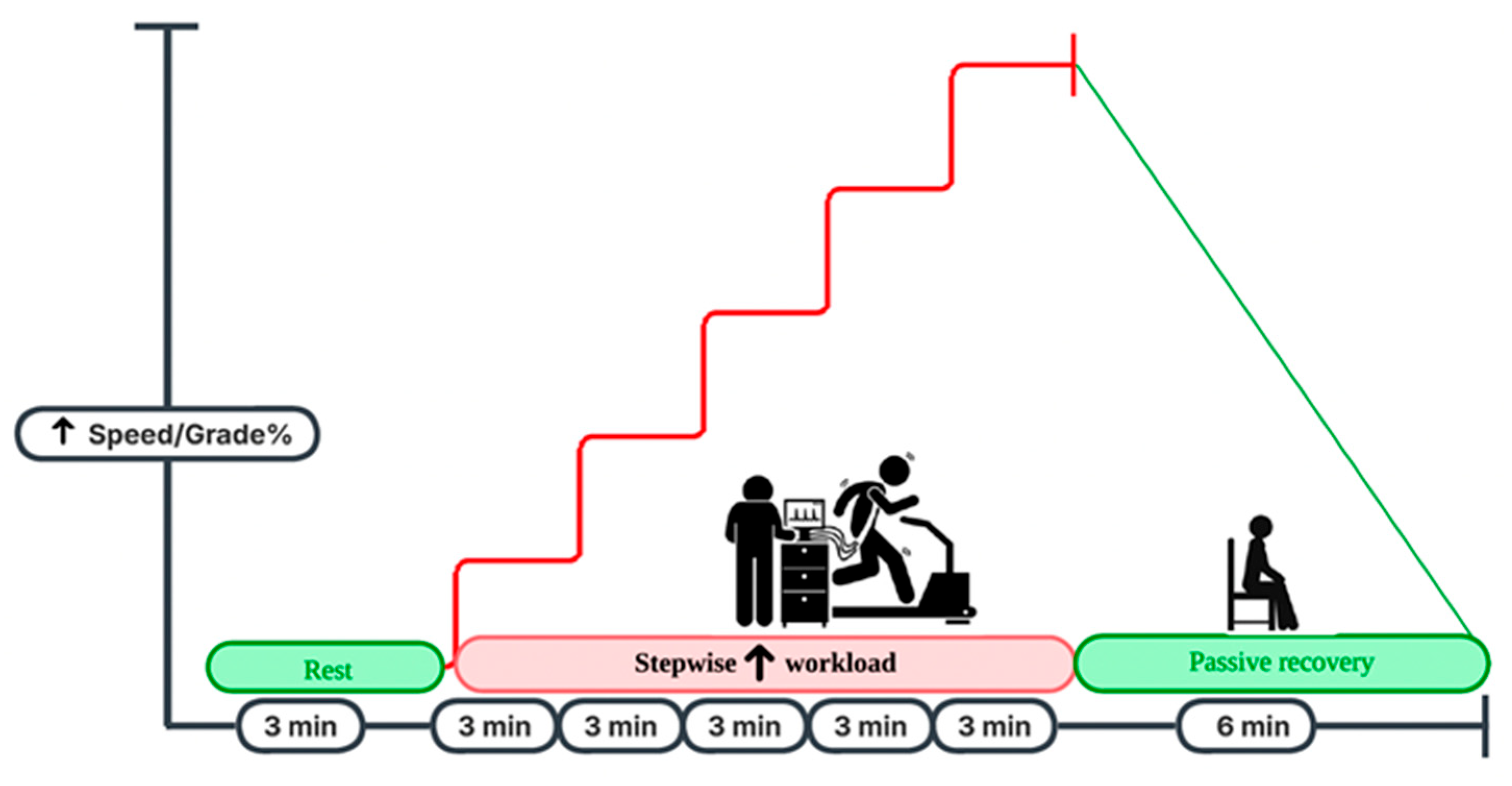
1. Introduction
The global landscape of competitive sports is witnessing an unprecedented surge in female participation, which is prominently reflected in Saudi Arabia’s evolving sports culture. This transformative shift aligns seamlessly with the Kingdom’s Vision 2030, which emphasizes empowering women across diverse sectors, including a dedicated focus on increasing female participation in sports. Vision 2030 provides comprehensive support for female athletes to compete at various levels [
1,
2]. Key milestones already achieved include the establishment of women’s sports leagues and teams across various disciplines [
1,
3]. While the increasing inclusion of women in sports, particularly those demanding significant physical and psychological exertion, marks a crucial advancement towards gender equity, it also necessitates the careful consideration of the concurrent rise in sports-related injuries. The risk of injury poses potential ramifications for both athletes’ well-being and the overall healthcare infrastructure [
4].
The increasing participation of women in competitive sports represents a significant advancement in gender equity and public health promotion. However, this expansion has been accompanied by a parallel rise in sports-related injuries among female athletes, with lower-extremity injuries being the most prevalent [
5,
6,
7]. Recent local surveillance has underscored that during Saudi Arabia’s first national women’s basketball, 15.9% of players sustained injuries, predominantly lower-limb injuries, over one season [
7,
8]. A university-based survey in Riyadh found that 62.2% of female athletes had a history of sports-related injury [
5]. Evidence from both local and international studies indicates that female athletes experience a higher incidence of sports injuries compared with their male counterparts, leading to prolonged recovery periods, time away from sport, and increased healthcare burden [
9,
10]. From a physiological standpoint, women’s physiological systems may not be fully adapted to the rigorous demands of sustained athletic activity [
11], underscoring the critical importance of injury-prevention programs. These findings highlight the importance of developing targeted injury-prevention strategies that address the unique physiological and psychological characteristics of female athletes.
The etiology of sports injuries is multifactorial, involving an interplay between intrinsic and extrinsic factors [
7]. Among intrinsic factors, various physiological attributes have been investigated as potential determinants of injury risk [
7]. In theory, maximizing athletes’ physical fitness, including muscular strength, anaerobic power, aerobic capacity, balance, and agility, is believed to help limit the risk of injury. For instance, greater pre-season aerobic fitness has been associated with a reduced risk of in-season injury among female soccer players [
12]. In addition, functional agility tests have shown predictive value; slower times on the Lower Extremity Functional Test (LEFT), a shuttle run agility test, correlate with higher susceptibility to subsequent lower extremity injuries [
13]. Functional performance testing has emerged as a practical method for identifying athletes at an increased risk of injury. The LEFT is a multidirectional agility-based assessment that integrates strength, power, balance, coordination, and aerobic capacity. Previous studies have demonstrated that prolonged LEFT completion times are associated with a higher likelihood of subsequent lower-extremity injuries, supporting its use as a surrogate indicator of injury risk in athletic populations [
13,
14]. Although LEFT performance does not directly measure injury incidence, it provides a valid and clinically feasible proxy for identifying athletes with functional deficits linked to elevated injury susceptibility, particularly in cross-sectional and screening-based designs [
15].
Beyond physical attributes, psychological factors play an essential role in injury risk and recovery. Psychological resilience, coping strategies, and confidence have been shown to influence rehabilitation adherence, return-to-sport decisions, and performance under pressure [
16,
17]. Athletes with higher psychological readiness often demonstrate better training engagement and more favorable recovery trajectories following injuries [
18]. Self-efficacy, defined as an individual’s belief in their ability to perform the required actions successfully, is a particularly relevant psychological construct in athletic populations [
19]. Higher self-efficacy is associated with improved performance, greater adherence to rehabilitation programs, and enhanced ability to manage physical and psychological challenges during training and competition [
19]. Conversely, insufficient psychological readiness may increase vulnerability to injury and reinjury, highlighting the need for consideration in injury risk assessment [
16,
20]. Despite the growing recognition of the importance of psychosocial factors, injury risk evaluation and return-to-sport decisions continue to rely predominantly on physical healing and performance measures. This underscores the need for more comprehensive approaches that integrate both physiological and psychological components when assessing injury risk and functional readiness in female athletes.
Sports-related injuries among female athletes are influenced by complex interactions among physiological, biomechanical, and psychological factors [
21]. Recognizing these interrelated factors highlights the importance of adopting a multifactorial and sex-specific approach when evaluating injury risk and functional performance in female athletic populations. It is crucial to address the relative lack of research explicitly focused on female athletes, as much of the existing knowledge has been extrapolated from studies primarily conducted on male populations. Understanding associated risk factors in women is essential, as sex-specific physiological, biomechanical, and psychological differences may influence injury susceptibility [
11]. By exploring the interaction between physiological predispositions and psychological factors, a more holistic approach to injury prevention and management can be achieved. Such an approach is vital for safeguarding the health, performance, and long-term athletic participation of female athletes in the Kingdom and elsewhere.
The current gap in female-specific research poses a significant challenge for designing targeted, sustainable injury prevention programs. In light of these considerations, this study aimed to comprehensively examine the physiological and psychological dimensions of sports-related injuries among female athletes. Specifically, this study sought to assess the predictive effects of selected physiological and psychological factors on injury risk. On a physiological level, markers such as isokinetic muscle strength, anaerobic power, fatigue rate, and oxygen consumption were examined. Concurrently, the psychological domain was evaluated using validated measures of self-efficacy (General Self-Efficacy Scale) and resilience (Resilience Scale). Based on existing evidence, we hypothesized that specific physiological markers (isokinetic muscle strength, anaerobic power, fatigue rate, and oxygen consumption) and psychological factors (self-efficacy and resilience) would significantly predict the risk of sports-related injuries in female athletes. These findings may support the development of evidence-based, personalized prevention strategies tailored to the unique needs of female athletes.
3. Results
The physical and training characteristics of the participants are shown in
Table 1. A total of 60 female participants, with an average age of 24.50 ± 6.90 years (range: 19–45), were included in the study. The body mass index (BMI) ranged from 16 kg/m
2 to 30 kg/m
2. Participants demonstrated a moderate training load, with regular weekly training and several years of sports experience (range: 2–13 years). A range of sports disciplines was represented, with volleyball and rugby being the most common, indicating diverse training demands.
The descriptive data of anaerobic performance are presented in
Table 2. The participants demonstrated a moderate-to-high level of anaerobic capacity in comparison to normative data, with mean absolute peak power values reaching 448.06 ± 123.23 Watts (W), and relative peak power averaging 7.53 ± 1.92 W/kg. The mean fatigue index was 60.63%, indicating a rapid decline in power output. Muscular strength values, including peak torque for knee extension and flexion (184.55 ± 44.60 N·m and 95.08 ± 21.44 N·m, respectively), reflected a balanced profile, as shown by an average flexion-to-extension ratio (F:E) of 53.5%.
Additionally, aerobic responses, as reflected by VO
2peak and peak HR, indicated that the players demonstrated a moderate-to-high level of cardiovascular fitness. The mean VO
2peak was 40.82 ± 5.8 mL·kg
−1·min
−1, which falls within the fair to good category for cardiorespiratory fitness [
45]. The peak heart rate of 180 bpm and an average RER of 1.10 indicated that the participants reached maximal effort during the test. The ventilatory equivalents for oxygen (VE/VO
2) and carbon dioxide (VE/VCO
2) were both approximately 32, aligning with normative values and indicating efficient gas exchange without evidence of ventilatory inefficiency.
Table 3 presents several functional and injury risk-related parameters of the participants. The average completion time for the LEFT was relatively prolonged compared to the normative (<135 s) [
31,
32]. The performance on the SLH test was symmetrical on average, with a side-to-side difference of approximately 7 cm, which was within the acceptable threshold. While asymmetries greater than 10% are generally associated with a higher injury risk, the observed difference remained within acceptable margins. A reasonably good level of horizontal power relative to stature was observed in the SLJ, averaging 156.61 cm, approximately 98% of the participant’s height. Similarly, the CMJ height of approximately 33 cm corresponded to a mean peak anaerobic power output of 3066.90 W (ranging from 1762.8 to 4598.5 W), which is higher than the reported average peak power output for females (2993.7 ± 542.9 W). Psychologically, the participants scored moderately on both the brief resilience scale and the GSES, yielding mean scores of 21 and 33, respectively.
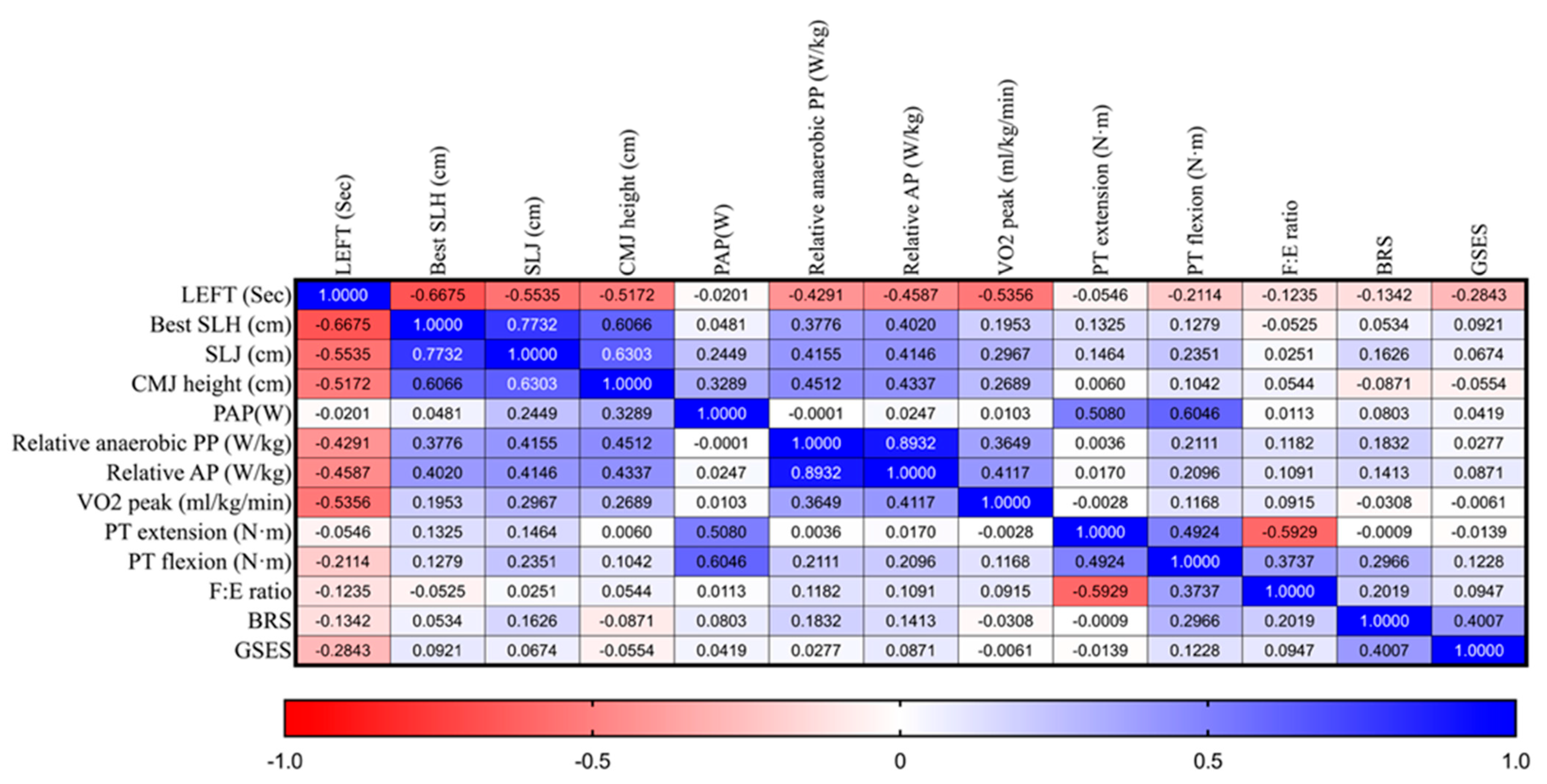
Figure 3 and
Table 4 show the correlation heatmap, which illustrates the correlation matrix and highlights significant relationships between LEFT and various physiological and psychological profiles. Red indicates a close negative correlation, while blue indicates a positive correlation in the data. Notably, LEFT scores were significantly and inversely correlated with multiple performance measures, suggesting that poorer LEFT performance (longer completion time) was strongly negatively correlated with SLH (r = −0.66,
p < 0.001), SLJ (r = −0.55,
p < 0.001), and countermovement jump height (r = −0.51,
p < 0.001) (
Table 4).
Additionally, LEFT performance was significantly negatively associated with relative anaerobic peak power (r = −0.43, p = 0.0005), mean power (r = −0.44, p = 0.0004), and VO2peak (r = −0.53, p < 0.001) in WAnT. Among the psychological variables, GSES exhibited a modest negative correlation with LEFT (r = −0.28, p = 0.02). No significant associations were found between LEFT and muscular strength (PT extension/flexion) or psychological resilience.
Univariate linear regression analysis (
Table 5) revealed that LEFT, as a proxy for the risk of injury, was significantly predicted by multiple mechanical and psychological variables. The strongest predictor was the SLH distance, with a standardized beta (β) of −0.66 (
p < 0.001), explaining 43% of the variance. Other significant predictors included SLJ (β = −0.55,
p < 0.001), CMJ height (β = −0.51,
p < 0.001), and VO
2peak (β = −0.53,
p < 0.001). Both peak power (PP) and mean power (MP) also significantly predicted LEFT (
p < 0.01). Additionally, general self-efficacy was a modest but significant predictor (β = −0.28,
p = 0.02).
Table 6 presents the results of the hierarchical regression analysis with the Test LEFT as the dependent variable. In Model 1, physiological variables were entered, and the model explained 53% of the variance in LEFT performance (R
2 = 0.53,
p < 0.001). Within this model, SLH (β = −0.58,
p < 0.001) and VO
2peak (β = −10.84,
p < 0.001) emerged as significant independent predictors of LEFT performance. In contrast, SLJ, CMJ, peak power (PP), and average power (AP) were not significant contributors. In Model 2, the psychological variable GSES was added to the model, resulting in a significant increase in explained variance (ΔR
2 = 0.05), with the final model accounting for 59% of the variance in LEFT performance (R
2 = 0.59). In this model, SLH, VO
2peak, and GSES remained significant predictors of LEFT performance (F = 6.62,
p = 0.02).
4. Discussion
This study provides empirical support for the role of physiological and psychological factors in predicting injury risk in female athletes. The average LEFT completion time in our cohort exceeded the commonly reported normative cutoffs for athletic performance [
31,
32], suggesting a higher baseline functional risk of lower-extremity injury. This is consistent with previous evidence linking slower LEFT performance to an increased injury incidence. Our findings demonstrate that functional performance is best explained by a combination of task-specific physical capacity and psychological readiness. Specifically, SLH distance, VO
2peak, and general self-efficacy emerged as significant independent predictors of LEFT performance. These results emphasize the importance of horizontal power, aerobic fitness, and confidence in performing demanding lower extremity tasks. In contrast, isokinetic muscle strength, anaerobic power, and psychological resilience did not significantly contribute to the multivariate model. This suggests that absolute strength or generalized psychological traits may be less sensitive predictors of complex functional tasks, such as LEFT performance. It is also possible that strength levels within this cohort were sufficient and therefore not performance-limiting, or that other neuromuscular characteristics (e.g., rate of force development) played a more prominent role. Overall, these findings reinforce the multifactorial nature of injury-related functional performance in female athletes and highlight the need to prioritize task-specific physical measures and psychological self-efficacy when assessing injury risk and designing preventive strategies for female athletes.
The participants demonstrated moderate-to-high levels of anaerobic capacity and aerobic fitness, with a mean relative peak power of 7.53 ± 1.92 W/kg. Although direct normative comparisons for Wingate peak power are sport-specific, these values contribute to the growing body of literature characterizing power output in female athletes [
46,
47]. However, the observed fatigue index of 60.63% indicates a rapid decline in power output, which has been linked to increased susceptibility to injury and decreased athletic performance, particularly during prolonged or repeated exercise [
48]. Aerobically, the participants’ mean VO
2peak aligned with the “fair-to-good” fitness category for females in this age group [
49]. This is consistent with the findings in similar athletic cohorts; for example, a study on elite female futsal players reported a comparable mean VO
2peak of 40.0 ± 5.0 mL/kg/min [
50]. Regarding muscular strength, the average flexion-to-extension (F:E) ratio generally reflects balanced muscular capability. This ratio, where the hamstrings are approximately 50–60% as strong as the quadriceps, is considered within the healthy range for female athletes [
51]. Despite these healthy strength profiles, isokinetic muscle strength did not significantly contribute to the variance in injury risk measures in the multivariate model of our study, suggesting that while foundational, this specific measure of strength might not be the primary determinant of functional performance in this cohort, or that other aspects of strength are more critical predictors.
In terms of functional performance and injury risk indicators, the average LEFT completion time of 160 ± 22 s in our sample was notably prolonged compared to the normative cutoff of <135 s recommended for female collegiate athletes [
32]. Furthermore, while SLH side-to-side differences of 6.96 cm were within acceptable asymmetry thresholds (typically <10) [
52], the overall SLH performance, along with standing long jump (156.61 cm) and countermovement jump height (33.08 cm), and peak anaerobic power (3066.90 ± 638.53 W) provided a comprehensive picture of the athletes’ explosive power and functional capabilities [
53]. These horizontal and vertical jump metrics are widely recognized as indicators of lower extremity function and performance potential [
54]. From a psychological standpoint, participants scored moderately on both the Brief Resilience Scale (21 ± 4) and the GSES (33 ± 7.5). These scores indicate a reasonable level of psychological resilience and self-efficacy, which are essential attributes in athletic populations and influence performance, coping with adversity, and adherence to training and rehabilitation [
55,
56]. Psychological factors, such as self-efficacy, resilience, and fear of re-injury, also play critical roles in both injury occurrence and recovery [
18,
57].
From a physiological perspective, studies have shown that variability in individual physiology may contribute to injury incidence [
16,
58]. From a physiological perspective, studies have shown that variability in individual physiology may contribute to the incidence of injury [
59]. The correlation analyses further highlighted the interplay between physiological, functional, and psychological domains. In this study, Poorer LEFT performance (longer times) showed strong negative correlations with SLH, SLJ, and CMJ, reinforcing the association between lower limb power and agility-based tasks. This finding aligns with a previous study that found the SLH test has potential value when integrated into a comprehensive battery of functional performance assessments for female collegiate athletes [
34]. However, its utility as an independent screening tool for identifying individuals at elevated injury risk remains uncertain and lacks conclusive evidence [
34].
Additionally, significant associations with VO
2peak and anaerobic power indices (PP and MP) underscore the multifactorial nature of functional performance in this population. Previous studies align with these findings; for instance, research has emphasized the critical role of anaerobic capacity [
60,
61] and aerobic conditioning [
29,
62] in injury prevention among athletes, particularly in mitigating lower-extremity injury risk. The modest yet significant negative correlation with the GSES aligns with the literature, suggesting that psychological readiness contributes to physical task efficiency [
19].
The muscular strength profiles of the participants, particularly the average flexion-to-extension (F:E) ratio, did not significantly contribute to the variance in injury risk measures in this study. These findings align with previous literature, which has highlighted the limited predictive value of isokinetic measures in relation to anterior cruciate ligament (ACL) injury risk [
63,
64]. However, Isokinetic testing remains the gold standard for quantifying muscle strength deficits after ACL injury or reconstruction, aiding in rehabilitation [
65]. Therefore, combining isokinetic measures with functional tests (e.g., hop tests) and patient-reported outcomes improves the ability to identify high-risk individuals; however, no single isokinetic parameter is a strong standalone predictor.
In the present study, the univariate linear regression analysis highlighted the best SLH distance as the strongest predictor, explaining 43% of the variance in LEFT scores. These findings are consistent with those of prior studies that identified unilateral horizontal power as a key determinant of functional lower-limb performance [
66,
67]. Additional significant predictors included the standing long jump, countermovement jump, and VO
2peak. Furthermore, recent studies have shown that CMJ, used as a proxy for peak power, is associated with the risk of injury [
68,
69]. However, research comparing countermovement jump force-time characteristics between athletes with a history of ACL injury and their uninjured counterparts, including female athletes, has reported no significant differences 11–13 months post-injury [
70]. These findings differ from those observed in our study and may be attributed to the heterogeneity in the sample populations of previous studies, which included both male and female athletes. Additionally, variations in the methodologies used to assess injury risk may have contributed to inconsistent outcomes.
Furthermore, psychological resilience and GSES were modestly correlated with LEFT, indicating their potential utility in holistic athlete profiling. Specifically, GSES showed a significant predictive association with LEFT, suggesting that psychological factors could complement physical predictors in a comprehensive injury-risk assessment model. Previous research on self-efficacy supports these findings, highlighting the importance of psychological readiness and coping mechanisms in athletic performance and injury resilience [
16,
17,
19]. Studies have highlighted the importance of addressing these psychological factors to enhance injury prevention and rehabilitation outcomes [
57]. However, the limited variability in resilience scores in the current data may limit the ability to detect significant associations with LEFT, as study participants showed relatively high levels of resilience (mean score of 21/30), potentially leading to a ceiling effect. At the same time, the GSES showed a modest association with LEFT (r = −0.28). These findings should be interpreted with caution, and future studies are recommended to assess whether general self-efficacy mediates the relationship between resilience and LEFT using mediation analysis, to provide a clear understanding of the psychological mechanisms underlying the risk of athletic injury. The findings of the current study align with those of previous studies on multifactorial injury risk prediction across various sports. These studies indicate the need to incorporate functional performance testing, inter-limb asymmetry, and psychological factors into injury risk assessments. For instance, limb Y-Balance Test performance and functional asymmetries predicted sports injuries in competitive swimmers and volleyball players [
71,
72]. Similar findings were observed among CrossFit athletes and soccer players, in which psychological and training profiles, as well as previous injuries, correlated with injury prevalence and prevention [
73].
When all predictors were considered simultaneously in the stepwise multivariate model, only SLH performance, VO2peak, and GSES remained as significant predictors. This finding suggests that these three variables independently explain a substantial proportion of the variance in LEFT outcomes, with the final model accounting for 68% of the total variance. The negative coefficients for SLH and VO2peak indicate that greater hop distance and higher aerobic capacity were associated with faster LEFT completion times, which aligns with previous evidence linking lower limb power and cardiorespiratory fitness to multidirectional agility performance. The exclusion of other power and jump metrics (e.g., CMJ height, PP, MP) from the final model may reflect shared variance with SLH performance, highlighting the value of SLH distance as a robust field-based measure capturing multiple performance domains. These results underline the multifactorial nature of injury risk, demonstrating how both physiological and psychological characteristics integrate to influence athletic performance and safety. Incorporating these specific measures into routine pre-participation or in-season athletic assessments could enable the early identification of female athletes at heightened risk, thereby allowing for targeted, proactive intervention programs designed to mitigate injuries.
Despite this study’s strengths, it has several limitations. The cross-sectional design limited the ability to infer causation from the observed associations. A longitudinal design could provide insights into how these factors dynamically influence the risk of injury over time. Although the sample size met the a priori requirement, participants were recruited through convenience sampling from a single geographical region in Saudi Arabia, which may limit the generalizability of the findings. Importantly, cultural context and sports participation patterns may influence training exposure, competitive demands, injury reporting behaviors, and psychological readiness, potentially affecting the transferability of these findings to athletes from other regions or sports systems.
Additionally, the heterogeneous sample—comprising athletes from multiple sports, predominantly rugby and volleyball—further constrains sport-specific generalization. Thus, the LEFT assesses functional performance but does not directly measure injury incidence. Although the LEFT has demonstrated predictive validity in specific athletic populations, its sensitivity and specificity vary by sex and sport. In the present study, the heterogeneous sample comprising participants from multiple sports (predominantly rugby and volleyball) limited the generalizability of injury-related inferences. In the present study, the distribution of LEFT scores was highly unbalanced, with only four participants below the commonly used <135 s threshold [
31,
32]. While this approach allowed the examination of factors associated with poorer LEFT performance within a high-risk subgroup, it restricts score variability, limits sensitivity across the full performance spectrum, and reduces generalizability to lower-risk individuals. Therefore, LEFT findings should be interpreted cautiously as indicators of functional performance rather than direct measures of injury risk.
In addition, all participants in the present study were right-leg-dominant. As limb dominance can affect neuromuscular control and loading patterns, the exclusive inclusion of right-dominant individuals may limit the generalizability of the findings to left-dominant or mixed-dominance populations. Future research should include athletes with diverse limb dominance profiles and should better consider dominance-specific analyses to understand its role in functional performance and injury-related outcomes. Therefore, the results may be generalized with caution to comparable populations until further studies with larger sample sizes and multicenter longitudinal designs with direct injury tracking are conducted.
Therefore, future research should prioritize multicenter longitudinal designs with prospective injury surveillance, include athletes with diverse limb dominance profiles, and conduct sport-specific analyses to enhance sensitivity and external validity. Integrating functional performance measures with direct injury tracking across different cultural and sporting contexts will further clarify the role of combined physiological and psychological factors in preventing injuries.




 ,
,