Distribution of Candida Species Causing Oral Candidiasis in High-Risk Populations: A Systematic Review

 , ,
, ,  ,
,  and
and
Abstract
1. Introduction
2. Materials and Methods
2.1. Review Guidelines
2.2. Selection Criteria
- -
- Articles published between 2013 and 31 October 2025;
- -
- Studies involving human participants clinically diagnosed with oral candidiasis;
- -
- Studies identifying, isolating, or characterizing Candida spp. obtained from the oral cavity;
- -
- Original research studies including cohort (prospective or retrospective), cross-sectional, case-control, or longitudinal studies.
- -
- Articles that did not address oral candidiasis or Candida spp.;
- -
- Systematic or narrative reviews, meta-analyses, case reports, conference abstracts, books, or other non-peer-reviewed documents.
2.3. Eligibility Criteria
2.4. Search Strategy
2.5. Selection of Articles and Data Collection
2.6. Quality Assessment and Risk of Bias
3. Results
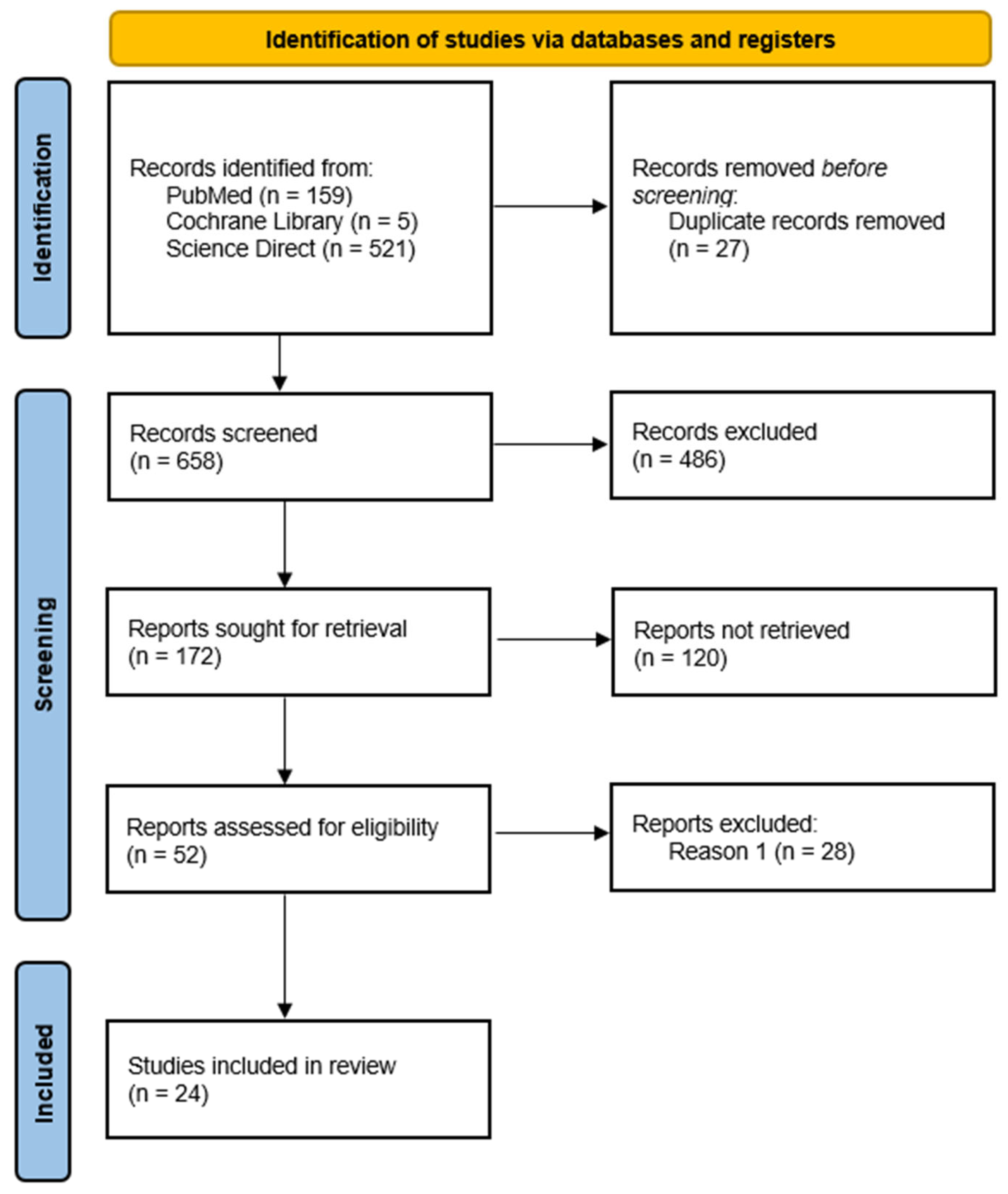
3.1. Selection of Articles
3.2. Sample Characteristics for Study Quality
3.3. Characteristics of the Included Studies
3.4. Quantitative and Geographic Distribution of Candida spp.
4. Discussion
4.1. Oral Colonization and Risk Factors for Candida Infections
4.2. Distribution in High-Risk Populations
4.2.1. HIV-Positive Individuals
4.2.2. Diabetic Individuals
4.2.3. Denture Wearers
4.3. Overview of the Most Prevalent Candida spp.
4.4. Therapeutic Challenges and Resistance Patterns
4.5. Limitations
4.6. Clinical Implications and Future Perspectives
5. Conclusions
Author Contributions
Funding
Institutional Review Board Statement
Informed Consent Statement
Data Availability Statement
Conflicts of Interest
Abbreviations
| C. albicans | Candida albicans |
| C. dubliniensis | Candida dubliniensis |
| C. famata | Candida famata |
| C. glabrata | Candida glabrata |
| C. guilliermondii | Candida guilliermondii |
| C. kefyr | Candida kefyr |
| C. krusei | Candida krusei |
| C. lusitaniae | Candida lusitaniae |
| C. parapsilosis | Candida parapsilosis |
| C. pelliculosa | Candida pelliculosa |
| C. pulcherrima | Candida pulcherrima |
| C. tropicalis | Candida tropicalis |
| Candida spp. | Candida species |
| CSH | Cell Surface Hydrophobicity |
| DIS | Denture-induced stomatitis |
| DW | Denture wearers |
| HIV | Human Immunodeficiency Virus |
| JBI | Joanna Briggs Institute |
| NAC | Non-albicans Candida |
| NDW | Non-denture wearers |
| OLP | Oral lichen planus |
| PL | Phospholipase |
| Rhodotorula spp. | Rhodotorula species |
| SAP | Secreted Aspartyl Proteinase |
References
- Martinez, R.F.F.; Jaimes-Aveldañez, A.; Hernández-Pérez, F.; Arenas, R.; Miguel, G.F.-S. Oral Candida spp Carriers: Its Prevalence in Patients with Type 2 Diabetes Mellitus. An. Bras. Dermatol. 2013, 88, 222–225. [Google Scholar] [CrossRef] [PubMed]
- Casu, C.; Orrù, G.; Scano, A. Curcumin/H2O2 Photodynamically Activated: An Antimicrobial Time-Response Assessment against an MDR Strain of Candida albicans. Eur. Rev. Med. Pharmacol. Sci. 2022, 26, 8841–8851. [Google Scholar] [CrossRef] [PubMed]
- Pinto-Almazán, R.; Frías-De-León, M.G.; Fuentes-Venado, C.E.; Arenas, R.; González-Gutiérrez, L.; Chávez-Gutiérrez, E.; Torres-Paez, O.U.; Martínez-Herrera, E. Frequency of Candida spp. in the Oral Cavity of Asymptomatic Preschool Mexican Children and Its Association with Nutritional Status. Children 2022, 9, 1510. [Google Scholar] [CrossRef] [PubMed]
- Udayalaxmi, J.; Shenoy, N. Comparison Between Biofilm Production, Phospholipase and Haemolytic Activity of Different Species of Candida Isolated from Dental Caries Lesions in Children. J. Clin. Diagn. Res. 2016, 10, DC21–DC23. [Google Scholar] [CrossRef]
- Hernández-Solís, S.E.; Rueda-Gordillo, F.; Flota-Alcocer, A.D.; Agullar-Ayala, F.J.; Rodríguez-Fernández, M.D.S.C.; Lama-González, E.M. Influence of Orthodontic Appliances on the Occurrence of Candida spp. in the Oral Cavity. Rev. Chil. Infectol. 2016, 33, 293–297. [Google Scholar] [CrossRef]
- Černáková, L.; Rodrigues, C.F. Microbial Interactions and Immunity Response in Oral Candida Species. Future Microbiol. 2020, 15, 1653–1677. [Google Scholar] [CrossRef]
- Neppelenbroek, K.H.; Seó, R.S.; Urban, V.M.; Silva, S.; Dovigo, L.N.; Jorge, J.H.; Campanha, N.H. Identification of Candida Species in the Clinical Laboratory: A Review of Conventional, Commercial, and Molecular Techniques. Oral Dis. 2014, 20, 329–344. [Google Scholar] [CrossRef]
- Tits, J.; Cools, F.; De Cremer, K.; De Brucker, K.; Berman, J.; Verbruggen, K.; Gevaert, B.; Cos, P.; Cammue, B.P.A.; Thevissen, K. Combination of Miconazole and Domiphen Bromide Is Fungicidal against Biofilms of Resistant Candida spp. Antimicrob. Agents Chemother. 2020, 64, 10–1128. [Google Scholar] [CrossRef]
- Kumar, S.; Kumar, A.; Roudbary, M.; Mohammadi, R.; Černáková, L.; Rodrigues, C.F. Overview on the Infections Related to Rare Candida Species. Pathogens 2022, 11, 963. [Google Scholar] [CrossRef]
- Li, D.; Li, Q.; Liu, C.; Lin, M.; Li, X.; Xiao, X.; Zhu, Z.; Gong, Q.; Zhou, H. Efficacy and Safety of Probiotics in the Treatment of Candida-Associated Stomatitis. Mycoses 2014, 57, 141–146. [Google Scholar] [CrossRef]
- Bianchi, C.M.P.D.C.; Bianchi, H.A.; Tadano, T.; de Paula, C.R.; Hoffmann-Santos, H.D.; Leite, D.P., Jr.; Hahn, R.C. Factors related to oral candidiasis in elderly users and non-users of removable dental prostheses. Rev. Inst. Med. Trop. Sao Paulo 2016, 58, 17. [Google Scholar] [CrossRef]
- Salimi, M.; Javidnia, J.; Faeli, L.; Moslemi, A.; Hedayati, M.T.; Haghani, I.; Aghili, S.R.; Moazeni, M.; Badiee, P.; Roudbari, M.; et al. Molecular Epidemiology and Antifungal Susceptibility Profile in Nakaseomyces glabrata Species Complex: A 5-Year Countrywide Study. J. Clin. Lab. Anal. 2024, 38, e25042. [Google Scholar] [CrossRef] [PubMed]
- Kessler, S.Q.S.; Lang, P.M.; Dal-Pizzol, T.S.; Montagner, F. Resistance Profiles to Antifungal Agents in Candida Albicans Isolated from Human Oral Cavities: Systematic Review and Meta-Analysis. Clin. Oral Investig. 2022, 26, 6479–6489. [Google Scholar] [CrossRef]
- Aboualigalehdari, E.; Birgani, M.T.; Fatahinia, M.; Hosseinzadeh, M. Oral Colonization by Candida Species and Associated Factors among HIV-Infected Patients in Ahvaz, Southwest Iran. Epidemiol. Health 2020, 42, e2020033. [Google Scholar] [CrossRef] [PubMed]
- Artico, G.; Freitas, R.S.; Santos Filho, A.M.; Benard, G.; Romiti, R.; Migliari, D.A. Prevalence of Candida spp., Xerostomia, and Hyposalivation in Oral Lichen Planus—A Controlled Study. Oral Dis. 2014, 20, e36–e41. [Google Scholar] [CrossRef] [PubMed]
- Vila, T.; Sultan, A.S.; Montelongo-Jauregui, D.; Jabra-Rizk, M.A. Oral Candidiasis: A Disease of Opportunity. J. Fungi 2020, 6, 15. [Google Scholar] [CrossRef]
- Lorenzo-Pouso, A.I.; Pérez-Jardón, A.; Caponio, V.C.A.; Spirito, F.; Chamorro-Petronacci, C.M.; Álvarez-Calderón-Iglesias, Ó.; Gándara-Vila, P.; Lo Muzio, L.; Pérez-Sayáns, M. Oral Chronic Hyperplastic Candidiasis and Its Potential Risk of Malignant Transformation: A Systematic Review and Prevalence Meta-Analysis. J. Fungi 2022, 8, 1093. [Google Scholar] [CrossRef]
- Winocur-Arias, O.; Zlotogorski-Hurvitz, A.; Ben-Zvi, Y.; Chaushu, G.; Edel, J.; Vered, M.; Kaplan, I. The Profile of Chronic Hyperplastic Candidiasis: A Clinico-Pathological Study. Virchows Arch. 2023, 483, 527–534. [Google Scholar] [CrossRef]
- Page, M.J.; McKenzie, J.E.; Bossuyt, P.M.; Boutron, I.; Hoffmann, T.C.; Mulrow, C.D.; Shamseer, L.; Tetzlaff, J.M.; Akl, E.A.; Brennan, S.E.; et al. The PRISMA 2020 Statement: An Updated Guideline for Reporting Systematic Reviews. BMJ 2021, 372, n71. [Google Scholar] [CrossRef]
- JBI Manual for Evidence Synthesis. JBI Manual for Evidence Synthesis; JBI: Mumbai, India, 2024. [Google Scholar] [CrossRef]
- Sanitá, P.V.; Zago, C.E.; de Oliveira Mima, E.G.; Pavarina, A.C.; Jorge, J.H.; Machado, A.L.; Vergani, C.E. In Vitro Evaluation of the Enzymatic Activity Profile of Non-Albicans Candida Species Isolated from Patients with Oral Candidiasis with or without Diabetes. Oral Surg. Oral Med. Oral Pathol. Oral Radiol. 2014, 118, 84–91. [Google Scholar] [CrossRef]
- Muadcheingka, T.; Tantivitayakul, P. Distribution of Candida Albicans and Non-Albicans Candida Species in Oral Candidiasis Patients: Correlation between Cell Surface Hydrophobicity and Biofilm Forming Activities. Arch. Oral Biol. 2015, 60, 894–901. [Google Scholar] [CrossRef]
- Fatahinia, M.; Poormohamadi, F.; Mahmoudabadi, A.Z. Comparative Study of Esterase and Hemolytic Activities in Clinically Important Candida Species, Isolated from Oral Cavity of Diabetic and Non-Diabetic Individuals. Jundishapur J. Microbiol. 2015, 8, e20893. [Google Scholar] [CrossRef]
- Menezes, R.D.P.; Borges, A.S.; Araujo, L.B.D.; Pedroso, R.D.S.; Röder, D.V.D.D.B. Related factors for colonization by Candida species in the oral cavity of HIV-infected individuals. Rev. Inst. Med. Trop. Sao Paulo 2015, 57, 413–419. [Google Scholar] [CrossRef] [PubMed]
- Prakash, B.; Shekar, M.; Maiti, B.; Karunasagar, I.; Padiyath, S. Prevalence of Candida spp. among Healthy Denture and Nondenture Wearers with Respect to Hygiene and Age. J. Indian Prosthodont. Soc. 2015, 15, 29. [Google Scholar] [CrossRef] [PubMed]
- Mun, M.; Yap, T.; Alnuaimi, A.; Adams, G.; McCullough, M. Oral Candidal Carriage in Asymptomatic Patients. Aust. Dent. J. 2016, 61, 190–195. [Google Scholar] [CrossRef] [PubMed]
- Mohammadi, F.; Javaheri, M.R.; Nekoeian, S.; Dehghan, P. Identification of Candida Species in the Oral Cavity of Diabetic Patients. Curr. Med. Mycol. 2016, 2, 1. [Google Scholar] [CrossRef]
- Lourenço, A.G.; Ribeiro, A.E.R.A.; Nakao, C.; Motta, A.C.F.; Antonio, L.G.L.; Machado, A.A.; Komesu, M.C. Oral Candida spp Carriage and Periodontal Diseases in HIV-Infected Patients in Ribeirão Preto, Brazil. Rev. Inst. Med. Trop. Sao Paulo 2017, 59, e29. [Google Scholar] [CrossRef]
- Portela, M.B.; Lima de Amorim, E.; Santos, A.M.; Alexandre da Rocha Curvelo, J.; de Oliveira Martins, K.; Capillé, C.L.; Maria de Araújo Soares, R.; Barbosa de Araújo Castro, G.F. Candida Species from Oral Cavity of HIV-Infected Children Exhibit Reduced Virulence Factors in the HAART Era. Microb. Pathog. 2017, 102, 74–81. [Google Scholar] [CrossRef]
- Del Valle Castillo, G.; de Blanc, S.L.; Sotomayor, C.E.; Azcurra, A.I. Study of Virulence Factor of Candida Species in Oral Lesions and Its Association with Potentially Malignant and Malignant Lesions. Arch. Oral Biol. 2018, 91, 35–41. [Google Scholar] [CrossRef]
- Spalanzani, R.N.; Mattos, K.; Marques, L.I.; Barros, P.F.D.; Pereira, P.I.P.; Paniago, A.M.M.; Mendes, R.P.; Chang, M.R. Clinical and Laboratorial Features of Oral Candidiasis in HIV-Positive Patients. Rev. Soc. Bras. Med. Trop. 2018, 51, 352–356. [Google Scholar] [CrossRef]
- Goulart, L.S.; de Souza, W.W.R.; Vieira, C.A.; de Lima, J.S.; de Olinda, R.A.; de Araújo, C. Oral Colonization by Candida Species in HIV-Positive Patients: Association and Antifungal Susceptibility Study. Einstein 2018, 16, eAO4224. [Google Scholar] [CrossRef] [PubMed]
- Perić, M.; Živković, R.; Milić Lemić, A.; Radunović, M.; Miličić, B.; Arsić Arsenijević, V. The Severity of Denture Stomatitis as Related to Risk Factors and Different Candida spp. Oral Surg. Oral Med. Oral Pathol. Oral Radiol. 2018, 126, 41–47. [Google Scholar] [CrossRef] [PubMed]
- Shirazi, J.H.; Ali, M.I.; Akhtar, Z.; Jamal, A.; Rashid, A. Pediatric Oropharyngeal Candidiasis: A Comprehensive Study on Risk Factors and Most Prevalent Species of Candida. Pak. J. Pharm. Sci. 2019, 32, 2873–2878. [Google Scholar] [CrossRef] [PubMed]
- Lamichhane, K.; Adhikari, N.; Bastola, A.; Devkota, L.; Bhandari, P.; Dhungel, B.; Thapa Shrestha, U.; Adhikari, B.; Banjara, M.R.; Rijal, K.R.; et al. Biofilm-Producing Candida Species Causing Oropharyngeal Candidiasis in HIV Patients Attending Sukraraj Tropical and Infectious Diseases Hospital in Kathmandu, Nepal. HIV/AIDS-Res. Palliat. Care 2020, 12, 211–220. [Google Scholar] [CrossRef]
- De Souza e Silva, V.C.; de Cássia Oliveira, V.; de Sousa, Á.F.L.; Bim, F.L.; Macedo, A.P.; de Andrade, D.; Watanabe, E. Prevalence and Susceptibility Profile of Candida spp. Isolated from Patients in Cancer Therapy. Arch. Oral Biol. 2020, 119, 104906. [Google Scholar] [CrossRef]
- Amarasinghe, A.A.P.B.N.; Muhandiram, M.R.S.; Kodithuwakku, S.P.; Thilakumara, I.P.; Jayatilake, J.A.M.S. Identification, Genotyping and Invasive Enzyme Production of Oral Candida Species from Denture Induced Stomatitis Patients and Healthy Careers. J. Oral Maxillofac. Surg. Med. Pathol. 2021, 33, 467–474. [Google Scholar] [CrossRef]
- Manikandan, S.; Vinesh, E.; Selvi, D.T.; Kannan, R.K.; Jayakumar, A.; Dinakaran, J. Prevalence of Candida among Denture Wearers and Nondenture Wearers. J. Pharm. Bioallied Sci. 2022, 14, S702–S705. [Google Scholar] [CrossRef]
- Sánchez-Vargas, L.O.; Estrada-Barraza, D.; Pozos-Guillen, A.J.; Rivas-Caceres, R. Biofilm Formation by Oral Clinical Isolates of Candida Species. Arch. Oral Biol. 2013, 58, 1318–1326. [Google Scholar] [CrossRef]
- Sharma, U.; Patel, K.; Shah, V.; Sinha, S. Isolation and Speciation of Candida in Type II Diabetic Patients Using CHROM Agar: A Microbial Study. J. Clin. Diagn. Res. 2017, 11, DC09. [Google Scholar] [CrossRef]
- Da Silva, J.J.; da Silva, T.A.; de Almeida, H.; Rodrigues Netto, M.F.; Cerdeira, C.D.; Höfling, J.F.; Boriollo, M.F.G. Candida Species Biotypes in the Oral Cavity of Infants and Children with Orofacial Clefts under Surgical Rehabilitation. Microb. Pathog. 2018, 124, 203–215. [Google Scholar] [CrossRef]
- Hu, L.; He, C.; Zhao, C.; Chen, X.; Hua, H.; Yan, Z. Characterization of Oral Candidiasis and the Candida Species Profile in Patients with Oral Mucosal Diseases. Microb. Pathog. 2019, 134, 103575. [Google Scholar] [CrossRef]
- Molkenthin, F.; Hertel, M.; Neumann, K.; Schmidt-Westhausen, A.M. Factors Influencing the Presence of Candida Dubliniensis and Other Non-Albicans Species in Patients with Oral Lichen Planus: A Retrospective Observational Study. Clin. Oral Investig. 2022, 26, 333–342. [Google Scholar] [CrossRef] [PubMed]
- Zomorodian, K.; Kavoosi, F.; Pishdad, G.R.; Mehriar, P.; Ebrahimi, H.; Bandegani, A.; Pakshir, K. Prevalence of Oral Candida Colonization in Patients with Diabetes Mellitus. J. Mycol. Med. 2016, 26, 103–110. [Google Scholar] [CrossRef] [PubMed]
- Pfaller, M.A.; Diekema, D.J. Epidemiology of Invasive Candidiasis: A Persistent Public Health Problem. Clin. Microbiol. Rev. 2007, 20, 133–163. [Google Scholar] [CrossRef] [PubMed]
- Pinho, S.; Miranda, I.M.; Costa-de-Oliveira, S. Global Epidemiology of Invasive Infections by Uncommon Candida Species: A Systematic Review. J. Fungi 2024, 10, 558. [Google Scholar] [CrossRef]
- Medina, N.; Soto-Debrán, J.C.; Seidel, D.; Akyar, I.; Badali, H.; Barac, A.; Bretagne, S.; Cag, Y.; Cassagne, C.; Castro, C.; et al. MixInYeast: A Multicenter Study on Mixed Yeast Infections. J. Fungi 2020, 7, 13. [Google Scholar] [CrossRef]
- Barros, P.P.; Ribeiro, F.C.; Rossoni, R.D.; Junqueira, J.C.; Jorge, A.O.C. Influence of Candida Krusei and Candida Glabrata on Candida Albicans Gene Expression in in Vitro Biofilms. Arch. Oral Biol. 2016, 64, 92–101. [Google Scholar] [CrossRef]
- Taverne-Ghadwal, L.; Kuhns, M.; Buhl, T.; Schulze, M.H.; Mbaitolum, W.J.; Kersch, L.; Weig, M.; Bader, O.; Groß, U. Epidemiology and Prevalence of Oral Candidiasis in HIV Patients From Chad in the Post-HAART Era. Front. Microbiol. 2022, 13, 844069. [Google Scholar] [CrossRef]
- Li, Y.Y.; Chen, W.Y.; Li, X.; Li, H.B.; Li, H.Q.; Wang, L.; He, L.; Yang, X.P.; Wang, X.C.; Huang, Y.L.; et al. Asymptomatic Oral Yeast Carriage and Antifungal Susceptibility Profile of HIV-Infected Patients in Kunming, Yunnan Province of China. BMC Infect. Dis. 2013, 13, 46. [Google Scholar] [CrossRef]
- Lin, J.N.; Lin, C.C.; Lai, C.H.; Yang, Y.L.; Chen, H.T.; Weng, H.C.; Hsieh, L.Y.; Kuo, Y.C.; Lauderdale, T.L.; Tseng, F.C.; et al. Predisposing Factors for Oropharyngeal Colonization of Yeasts in Human Immunodeficiency Virus-Infected Patients: A Prospective Cross-Sectional Study. J. Microbiol. Immunol. Infect. 2013, 46, 129–135. [Google Scholar] [CrossRef]
- Fernández-Feijoo, J.; Diz-Dios, P.; Otero-Cepeda, X.L.; Limeres-Posse, J.; de la Fuente-Aguado, J.; Ocampo-Hermida, A. Predictive value of oral candidiasis as a marker of progression to AIDS. Med. Oral Patol. Oral Cir. Bucal 2005, 10, 36–40. [Google Scholar]
- Mushi, M.F.; Bader, O.; Taverne-Ghadwal, L.; Bii, C.; Groß, U.; Mshana, S.E. Oral Candidiasis among African Human Immunodeficiency Virus-Infected Individuals: 10 Years of Systematic Review and Meta-Analysis from Sub-Saharan Africa. J. Oral Microbiol. 2017, 9, 1317579. [Google Scholar] [CrossRef] [PubMed]
- Konaté, A.; Barro-Kiki, P.C.M.; Kassi, K.F.; Angora, K.E.; Vanga-Bosson, H.; Djohan, V.; Bédia-Tanoh, A.V.; Miézan, A.J.S.; Yavo, W.; Menan, E.I.H. Oropharyngeal Candidiasis Prevalence among HIV-Infected Patients at the Teaching Hospital of Treichville (Abidjan, Côte d’Ivoire). J. Mycol. Med. 2017, 27, 549–553. [Google Scholar] [CrossRef] [PubMed]
- Erköse, G.; Erturan, Z. Oral Candida Colonization of Human Immunodeficiency Virus Infected Subjects in Turkey and Its Relation with Viral Load and CD4+ T-Lymphocyte Count. Mycoses 2007, 50, 485–490. [Google Scholar] [CrossRef] [PubMed]
- Khan, S.A.; Mirani, Z.A.; Khalid, T.; Khan, E.M.W.A.; Choudhary, Z.; Kazmi, S.M.R. Effect of Polishing Methods on Candida Albicans Adhesion and Contributing Factors in Heat-Cured Acrylic Dentures: An in-Vitro Comparative Study. BMC Oral Health 2025, 25, 197. [Google Scholar] [CrossRef]
- Vila, T.; Ishida, K.; Seabra, S.H.; Rozental, S. Miltefosine Inhibits Candida Albicans and Non-Albicans Candida spp. Biofilms and Impairs the Dispersion of Infectious Cells. Int. J. Antimicrob. Agents 2016, 48, 512–520. [Google Scholar] [CrossRef]


| P | Individuals diagnosed with oral candidiasis. |
| I | Identification and characterization of different Candida spp. involved in oral infections. |
| C | Comparison between C. albicans and non-albicans Candida spp. in terms of prevalence and distribution. |
| O | Determination of the most prevalent Candida spp. responsible for oral candidiasis. |
| Databases | Advanced Research | Articles Found |
|---|---|---|
| PubMed | (Candida spp. AND Oral Candidiasis AND Oral isolates) | 159 |
| Cochrane Library | Candida spp. AND Oral Candidiasis AND Oral isolates | 5 |
| ScienceDirect | Candida spp. AND Oral Candidiasis AND Oral isolates | 521 |
| Were the Criteria for Inclusion in the Sample Clearly Defined? | Were the Study Subjects and the Setting Described in Detail? | Was the Exposure Measured in a Valid and Reliable Way? | Were Objective, Standard Criteria Used for Measurement of the Condition? | Were Confounding Factors Identified? | Were Strategies to Deal with Confounding Factors Stated? | Were the Outcomes Measured in a Valid and Reliable Way? | Was Appropriate Statistical Analysis Used? | |
|---|---|---|---|---|---|---|---|---|
| Sanitá et al. [21], 2014 | U | Y | U | Y | Y | N | N | Y |
| Muadcheingka et al. [22], 2015 | U | Y | U | Y | Y | N | N | Y |
| Fatahinia et al. [23], 2015 | Y | Y | Y | Y | Y | Y | Y | Y |
| Menezes et al. [24], 2015 | Y | Y | Y | Y | Y | Y | Y | Y |
| Prakash et al., 2015 [25] | Y | Y | Y | Y | Y | U | N | Y |
| Mun et al. [26], 2016 | Y | Y | Y | Y | Y | Y | Y | Y |
| Mohammadi et al. [27], 2016 | Y | Y | Y | Y | Y | Y | U | Y |
| Lourenço et al. [28], 2017 | Y | Y | Y | Y | Y | Y | U | Y |
| Portela et al. [29], 2017 | Y | Y | Y | Y | Y | U | U | Y |
| Castillo et al. [30], 2018 | U | Y | U | Y | Y | U | N | Y |
| Spalanzani et al. [31], 2018 | Y | Y | Y | Y | Y | U | N | Y |
| Goulart et al. [32], 2018 | Y | Y | Y | Y | Y | Y | Y | Y |
| Perić et al. [33], 2018 | Y | Y | Y | Y | Y | Y | U | Y |
| Shirazi et al. [34], 2019 | U | Y | U | Y | Y | U | N | Y |
| Lamichhane et al. [35], 2020 | Y | Y | Y | Y | Y | Y | U | Y |
| Souza e Silva et al. [36], 2020 | Y | Y | Y | Y | Y | U | N | Y |
| Amarasinghe et al. [37], 2021 | Y | Y | Y | Y | Y | U | N | Y |
| Manikandan et al., 2022 [38] | Y | Y | Y | Y | Y | U | N | Y |
| Were the Two Groups Similar and Recruited from the Same Population? | Were the Exposures Measured Similarly to Assign People to Both Exposed and Unexposed Groups? | Was the Exposure Measured in a Valid and Reliable Way? | Were Confounding Factors Identified? | Were Strategies to Deal with Confounding Factors Stated? | Were the Groups/Participants Free of the Outcome at the Start of the Study (or at the Moment of Exposure)? | Were the Outcomes Measured in a Valid and Reliable Way? | Was the Follow Up Time Reported and Sufficient to Be Long Enough for Outcomes to Occur? | Was Follow Up Complete, and If Not, Were the Reasons to Loss to Follow Up Described and Explored? | Were Strategies to Address Incomplete Follow Up Utilized? | Was Appropriate Statistical Analysis Used? | |
|---|---|---|---|---|---|---|---|---|---|---|---|
| Sánchez-Vargas et al. [39], 2013 | U | Y | Y | U | N | Y | Y | Y | N | N | Y |
| Sharma et al. [40], 2017 | U | Y | Y | U | N | Y | Y | U | U | N | Y |
| Silva et al. [41], 2018 | Y | Y | Y | U | N | Y | Y | Y | N | N | Y |
| Hu et al. [42], 2019 | Y | Y | U | N | N | U | Y | Y | U | N | Y |
| Molkenthin et al. [43], 2022 | U | U | Y | Y | U | U | Y | Y | U | N | Y |
| Were the Groups Comparable Other Than the Presence of Disease in Cases or the Absence of Disease in Controls? | Were Cases and Controls Matched Appropriately? | Were the Same Criteria Used for Identification of Cases and Controls? | Was Exposure Measured in a Standard, Valid and Reliable Way? | Was Exposure Measured in the Same Way for Cases and Controls? | Were Confounding Factors Identified? | Were Strategies to Deal with Confounding Factors Stated? | Were Outcomes Assessed in a Standard, Valid and Reliable Way for Cases and Controls? | Was the Exposure Period of Interest Long Enough to Be Meaningful? | Was Appropriate Statistical Analysis Used? | |
|---|---|---|---|---|---|---|---|---|---|---|
| Zomorodian et al. [44], 2016 | U | N | Y | Y | Y | U | N | Y | Y | Y |
| Authors and Year of Publication | Study Design | Objectives | Study Population | Country | Candida spp. | Key Findings |
|---|---|---|---|---|---|---|
| Sánchez-Vargas et al. [39], 2013 | Longitudinal observational Study | To evaluate the influence of predisposing factors on colonization, infection, and biofilm formation kinetics. | n = 63 individuals | Mexico | C. albicans (n = 39) C. tropicalis (n = 15) C. glabrata (n = 7) C. krusei (n = 4) C. lusitaniae (n = 1) C. kefyr (n = 1) C. guilliermondii (n = 1) C. pulcherrima (n = 1) | - Oral isolates of C. glabrata were strong biofilm producers, while C. albicans and C. tropicalis were moderate. - Biofilm kinetics varied by strain origin and metabolic profile. |
| Sanitá et al. [21], 2014 | Cross-sectional observational study | To assess phospholipase (PL) and secreted aspartyl proteinase (SAP) expression in C. glabrata and C. tropicalis. | n = 51 individuals (16 healthy, 10 diabetic with oral candidiasis, 25 non-diabetic with oral candidiasis) | Brazil | C. tropicalis (n = 20) C. glabrata (n = 31) | - NAC species also exhibit the ability to secrete secreted aspartyl proteinases (SAPs) and phospholipases (PLs) in vitro. - C. tropicalis showed higher secretion rates of these enzymes compared to C. glabrata. - These virulence mechanisms enable yeasts to colonize oral and mucosal surfaces, invade deeper host tissues, evade host immune defenses, and cause infections. - The secretion of SAPs and PLs by different Candida spp. may represent a potential target for antifungal therapy. |
| Muadcheingka et al. [22], 2015 | Cross-sectional observational study | To determine the prevalence of C. albicans and NAC species and evaluate cell surface hydrophobicity (CSH) and biofilm-forming ability. | n = 207 patients with oral candidiasis (with/without denture) | Thailand | C. albicans (n = 154) C. glabrata (n = 38) C. tropicalis (n = 26) C. kefyr (n = 9) C. parapsilosis (n = 8) C. lusitaniae (n = 5) C. dubliniensis (n = 5) C. krusei (n = 4) C. guilliermondii (n = 1) | - C. albicans was the most prevalent species (61.6%) in patients with oral candidiasis, both with and without dentures. - NAC species included: C. glabrata (15.2%), C. tropicalis (10.4%), C. parapsilosis (3.2%), C. kefyr (3.6%) Others (<2%) - NAC species had higher biofilm biomass and cell surface hydrophobicity than C. albicans. Biofilm formation: 92% of NAC isolates formed biofilm 78% of C. albicans isolates formed biofilm. - Gradual increase in colonization by NAC species may be due to their enhanced biofilm formation and hydrophobicity. |
| Fatahinia et al. [23], 2015 | Cross-sectional observational study | Compare esterase and hemolytic activity in various Candida spp. isolated from the oral cavity of diabetic and non-diabetic individuals. | n = 190 patients (95 diabetics; 95 healthy controls) | Iran | Diabetic group: C. albicans (n = 42) C. dubliniensis (n = 8) C. krusei (n = 9) C. glabrata (n = 4) Non-diabetic group: C. albicans (n = 16) C. dubliniensis (n = 4) C. krusei (n = 4) C. glabrata (n = 4) | - Esterase activity was detected in all Candida isolates. - Hemolytic activity was higher in the diabetic group compared to the non-diabetic group. - Only 21.6% of diabetic patients showed esterase activity. - Hemolytic activity was observed in C. albicans, C. dubliniensis, C. glabrata, and C. krusei. |
| Menezes et al. [24], 2015 | Cross-sectional observational study | To assess colonization and quantify Candida spp. in the oral cavity, determine predisposing factors for colonization, and correlate CD4+ cell levels and viral load in HIV-positive patients. | n = 147 HIV-infected patients | Brazil | C. albicans (n = 94) C. parapsilosis (n = 17) C. tropicalis (n = 15) C. glabrata (n = 8) C. krusei (n = 6) C. dubliniensis (n = 5) C. kefyr (n = 3) C. famata (n = 1) C. guilliermondii (n = 1) C. lusitaniae (n = 2) C. pelliculosa (n = 1) | - C. albicans was the most frequent species (67.6%) in single-species colonization and was also frequently found in association with other Candida spp. in mixed-species colonization. - The main predisposing factors for oral Candida colonization were antibiotic use and oral prostheses. - Reverse transcriptase inhibitor therapy appeared to have a protective effect against colonization. - Low CD4+ T-cell counts were associated with higher yeast density in the saliva of HIV-positive patients. |
| Prakash et al. [25], 2015 | Cross-sectional observational study | To assess the prevalence of Candida spp. in denture-wearing individuals and healthy non-denture-wearing individuals, in relation to age and oral hygiene status. | n = 50 Denture wearers (DW) n = 50 Non-denture wearers (NDW) | India | DW group: C. albicans (n = 29) C. tropicalis (n = 14) C. dubliniensis (n = 6) C. glabrata (n = 1) NDW group: C. albicans (n = 25) C. tropicalis (n = 1) | - The prevalence of Candida spp. was higher in males than in females. - The prevalence of C. albicans increased with age in males: Highest in the 66–75 years age group (66.7%) Lowest in the 36–45 years age group (58.3%) In females, C. albicans prevalence: Highest in the 36–45 years age group (41.7%) Lowest in the 66–75 years age group (22.2%). - Oral hygiene influenced the prevalence of Candida spp. in both groups. - Males had poorer oral hygiene compared to females. |
| Mun et al. [26], 2016 | Cross-sectional observational study | To analyze the prevalence of Candida in the oral cavity of non-oncological individuals, in relation to the presence of external factors affecting the oral environment. | n = 203 individuals | Australia | C. albicans (n = 82) C. krusei (n = 11) NAC species (n = 16) | - Both smoking and the presence of active carious lesions were positively correlated with Candida infection. - Smokers were nearly seven times more likely to have oral candidiasis. - C. albicans was the predominant species, carried by 84.7% of positive cases. - NAC species were present in a minority of cases, either alone or in mixed-species colonization. - Higher yeast loads were more frequently observed in current smokers. |
| Zomorodian et al. [44], 2016 | Case-control Study | To evaluate oral Candida colonization in diabetic patients and its association with species, serum glucose, and antifungal susceptibility. | n = 113 patients with type 2 diabetes, 24 patients with type 1 diabetes, and 105 healthy controls | Iran | Diabetic Group: C. albicans (n = 94) C. dubliniensis (n = 25) C. glabrata (n = 17) C. parapsilosis (n = 5) C. guilliermondii (n = 3) C. krusei (n = 2) C. kefyr (n = 2) C. tropicalis (n = 2) Non-Diabetic Group: C. albicans (n = 47) C. dubliniensis (n = 5) C. glabrata (n = 9) C. guilliermondii (n = 3) C. parapsilosis (n = 1) Rhodotorula (n = 1) | - C. albicans was the most prevalent species, including in mixed colonization. - Poor glycemic control was associated with higher Candida prevalence and density in diabetics. - Highest antifungal resistance was observed for itraconazole, followed by ketoconazole and fluconazole. - C. dubliniensis was frequently found in diabetics and may be misdiagnosed as C. albicans. |
| Mohammadi et al. [27], 2016 | Cross-sectional observational study | To identify and compare the colonization level of Candida spp. in the oral cavity of diabetic and non-diabetic groups. | n = 58 diabetic patients and 47 non-diabetics patients | Iran | Diabetic Group: C. albicans (n = 25) C. krusei (n = 6) C. glabrata (n = 3) C. tropicalis (n = 2) Non-Diabetic Group: C. albicans (n = 13) C. krusei (n = 2) C. kefyr (n = 2) | - The most frequent species were, respectively, C. albicans, C. krusei, C. glabrata, and C. tropicalis. - Xerostomia and alterations in physiological factors, such as salivary pH and glucose, can promote Candida overgrowth in the oral cavity. - These factors are important predisposing conditions for oral candidiasis in diabetic patients. |
| Lourenço et al. [28], 2017 | Cross-sectional observational study | To investigate the effects of periodontal conditions on the prevalence of Candida spp. in HIV-infected and non-HIV-infected individuals. | n = 48 HIV-infected patients and 25 healthy patients | Brazil | Group A—Non-HIV-infected, periodontally healthy C. albicans (n = 7) C. parapsilosis (n = 3) Group B—Non-HIV-infected, periodontally affected C. albicans (n = 8) C. parapsilosis (n = 2) Group C—HIV-infected, periodontally healthy C. albicans (n = 11) C. parapsilosis (n = 1) C. tropicalis (n = 1) Group D—HIV-infected, periodontally affected C. albicans (n = 23) C. krusei (n = 2) C. parapsilosis (n = 2) C. tropicalis (n = 2) C. dubliniensis (n = 1) C. glabrata (n = 3) | - HIV-infected patients with healthy periodontal conditions had similar Candida spp. levels to non-HIV-infected patients. - Periodontal disease in HIV-infected patients significantly increased Candida spp. counts. - In non-HIV-infected patients, periodontal status did not affect Candida spp. prevalence. - Periodontal disease may predispose HIV-infected patients to higher Candida carriage and candidiasis. |
| Portela et al. [29], 2017 | Cross-sectional observational study | To assess the biofilm viability, as well as the phospholipase and protease production of Candida spp. from the saliva of HIV-infected children and healthy controls | n = 43 HIV infected children and 17 healthy children | Brazil | HIV-infected group: C. albicans (n = 33) C. parapsilosis (n = 12) C. krusei (n = 8) C. tropicalis (n = 1) C. dubliniensis (n = 1) C. guilliermondii (n = 1) Healthy group: C. albicans (n = 15) C. parapsilosis (n = 8) | - Biofilm activity and viability were higher in isolates of C. albicans than in isolates of NAC. - Although Candida spp. isolates from HIV-positive children showed higher phospholipase production, in vitro they exhibited reduced virulence factors compared to isolates from healthy individuals. - This finding suggests that immunosuppression may play an important role in the development of Candida virulence. |
| Sharma et al. [40], 2017 | Prospective observational study | To identify and compare different Candida spp. in the oral cavity of Type II diabetic individuals | n = 30 Type II diabetic patients and 30 healthy patients | India | Diabetic Group: C. parapsilosis (n = 8) C. albicans (n = 8) C. glabrata (n = 3) C. krusei (n = 3) C. dubliniensis (n = 3) C. tropicalis (n = 2) Non-Diabetic Group: C. parapsilosis (n = 11) C. albicans (n = 8) C. glabrata (n = 3) C. krusei (n = 2) C. dubliniensis (n = 3) C. tropicalis (n = 3) | - C. albicans, C. glabrata, C. dubliniensis, C. krusei, and C. parapsilosis showed significantly higher occurrence in diabetic patients (except C. tropicalis). - C. parapsilosis was the most frequent species, followed by C. albicans. - The increased presence of C. parapsilosis indicates a higher risk of oral infection, with limited treatment options. |
| Castillo et al. [30], 2018 | Cross-sectional observational study | To analyze the association between malignant and pre-malignant oral lesions and the virulence factor profile of Candida spp. | n = 25 chronic oral candidiasis; 11 atypical lichen planus; 25 Oral squamous cell carcinoma; 15 Asymptomatic healthy individuals | Argentina | C. albicans (n = 33) C. krusei (n = 11) C. tropicalis (n = 11) C. dubliniensis (n = 2) C. glabrata (n = 2) | - NAC species showed higher biofilm formation than C. albicans. - No significant differences were observed in virulence factors between species. - A strong positive correlation was found between proteinase and lipase activity, and between hydrophobicity and biofilm formation, providing evidence of the association between Candida pathogenicity and lesion severity. |
| Spalanzani et al. [31], 2018 | Cross-sectional observational study | To evaluate the correlation between the presence of oral lesions caused by Candida spp. in HIV-positive patients. | n = 66 HIV-infected patients | Brazil | C. albicans (n = 30) C. tropicalis (n = 6) C. krusei (n = 4) C. parapsilosis (n = 2) C. glabrata (n = 2) C. dubliniensis (n = 1) | - Oral lesions, mainly pseudomembranous, were associated with higher levels of immunosuppression. - Candida spp. were frequently detected in HIV-positive patients, both with and without oral lesions. - Lower antifungal susceptibility among NAC isolates highlights the importance of susceptibility testing to guide treatment. |
| Goulart et al. [32], 2018 | Cross-sectional observational study | To analyze antifungal susceptibility and factors associated with oral colonization by Candida spp. in HIV-positive individuals. | n = 197 HIV-infected patients | Brazil | C. albicans (n = 81) C. glabrata (n = 14) C. tropicalis (n = 4) C. krusei (n = 2) | - C. albicans was the most prevalent species (80%). - Age (45 years or older) was the only factor associated with oral colonization by Candida spp. - Low rates of antifungal resistance to azoles were detected in yeast isolates from HIV-positive patients. - Resistance to fluconazole, ketoconazole, and itraconazole was 1%, 1%, and 4%, respectively. |
| Perić et al. [33], 2018 | Cross-sectional observational study | To study possible risk factors associated with denture-induced stomatitis (DIS), assess its severity according to Newton’s classification, and investigate the association with the presence of NAC. | n = 113 patients with DIS | Serbia | C. albicans (n = 47) C. krusei (n = 17) C. tropicalis (n = 13) C. glabrata (n = 12) | - The higher adhesion of some NAC species (C. tropicalis, C. glabrata, and C. krusei) is explained by their relative surface free energy values. - Similarly, more hydrophobic microorganisms, such as C. glabrata, appear to adhere better to acrylic surfaces than C. albicans. - C. tropicalis showed greater resistance to antifungal agents compared to C. albicans. |
| Silva et al. [41], 2018 | Longitudinal observational study | To evaluate the incidence of Candida spp. in groups of children with orofacial clefts during preoperative, postoperative, and up to the first follow-up visit. To assess in vitro antifungal susceptibility and virulence profiles. | n = 46 children with orofacial clefts | Brazil | Period A—pre-asepsis C. albicans (n = 7) C. krusei (n = 4) C. tropicalis (n = 8) C. krusei + C. tropicalis (n = 1) Period B—post-asepsis No species detected Period C—post-surgery C. albicans (n = 4) C. tropicalis (n = 1) Period D—post-surgery follow-up C. albicans (n = 1) C. krusei (n = 5) C. tropicalis (n = 2) C. albicans + C. tropicalis/C. albicans + C. krusei (n = 2) | - Low incidence (39.1%) of oral colonization by Candida spp. was reported. - Significant reduction in Candida frequencies and species changes over the sampling periods indicated dynamic patterns of oral colonization: elimination, maintenance, or recolonization of the biotypes. |
| Hu et al. [42], 2019 | Retrospective observational study | To assess the prevalence of oral candidiasis and the distribution of Candida spp. in patients with oral mucosal diseases. | n = 9769 patients | China | C. albicans (n = 8412) C. tropicalis (n = 676) C. krusei (n = 311) C. glabrata (n = 226) | - Over four years, C. albicans remained the most common species (75.37%), followed by C. tropicalis (6.06%), C. krusei (2.79%), and C. glabrata (2.02%). - Notably, both the proportion and number of C. glabrata isolates increased markedly over this period. |
| Shirazi et al. [34], 2019 | Cross-sectional observational study | To evaluate the most prevalent Candida spp. in pediatric patients and the risk factors associated with oropharyngeal candidiasis. | n = 1152 children | Pakistan | C. albicans (n = 790) C. glabrata (n = 149) C. krusei (n = 98) C. tropicalis (n = 65) C. parapsilosis (n = 36) C. dubliniensis (n = 13) C. lusitaniae (n = 5) | - C. albicans was the most prevalent species (68.6%), while C. lusitaniae was the least prevalent (0.4%). - Associated risk factors included maternal hygiene, the patient’s oral hygiene, and the parents’ economic status. - Since it is a childhood disease, oropharyngeal candidiasis often presents with multiple recurrent episodes and, if not treated properly, can lead to severe invasive and non-invasive infections. |
| Lamichhane et al. [35], 2020 | Cross-sectional observational study | To explore biofilm-producing Candida spp. causing oropharyngeal infections in HIV patients. | n = 174 HIV-infected patients | Nepal | C. albicans (n = 25) C. parapsilosis (n = 6) C. dubliniensis (n = 4) C. tropicalis (n = 3) C. glabrata (n = 2) C. guillermondi (n = 1) | - Oropharyngeal candidiasis is a common opportunistic infection in HIV-infected individuals, affecting 23.6% of patients. - 65% of the isolates were biofilm producers. - C. albicans showed high susceptibility to clotrimazole (96%) and fluconazole (92%). - Biofilm-producing isolates showed higher resistance to antifungal drugs, especially ketoconazole (51.9%). |
| Souza e Silva et al. [36], 2020 | Cross-sectional observational study | To determine the prevalence of Candida spp. in cancer patients and to evaluate the antimicrobial activity of antiseptics in comparison with antifungal agents. | n = 34 cancer patients | Brazil | C. albicans (n = 7) C. glabrata (n = 3) C. tropicalis (n = 2) | - Patients with mucositis are at higher risk of oral colonization by Candida spp. - A high prevalence of mucositis and oral colonization by Candida spp. was observed in cancer patients. - Development of antifungal resistance may occur. The use of antiseptics contributed to maintaining oral health in these patients. |
| Amarasinghe et al. [37], 2021 | Cross-sectional observational study | To identify Candida spp. in individuals with DIS and in healthy individuals, evaluating their production of invasive enzymes. | n = 38 individuals with DIS and 23 healthy individuals | Sri Lanka | DIS group: C. albicans (n = 29) C. glabrata (n = 5) C. parapsilosis (n = 2) C. tropicalis (n = 2) Healthy group: C. albicans (n = 18) C. parapsilosis (n = 3) C. glabrata (n = 1) C. guilliermondii (n = 1) | - C. albicans genotype A was the most common (69%) in both pathogenic and commensal strains, followed by genotype C (20.7%) and genotype B (10.3%) in pathogenic isolates. - C. albicans from DIS patients exhibits significantly higher enzymatic activity (phospholipase, esterase, and hemolysin) compared to commensal isolates. - Increased enzymatic activity likely contributes to the pathogenicity of C. albicans in DIS. |
| Molkenthin et al. [43], 2022 | Retrospective observational study | To identify factors associated with the presence of C. dubliniensis and other NAC species in oral lichen planus (OLP) lesions. | n = 268 individuals with OLP | Germany | C. albicans (n = 138) C. glabrata (n = 14) C. dubliniensis (n = 11) C. krusei (n = 5) C. parapsilosis (n = 5) C. tropicalis (n = 3) C. guilliermondii (n = 3) C. kefyr (n = 3) Other species (n = 9) | - C. albicans was the most frequently isolated species (72.3%), followed by C. glabrata (7.3%), C. dubliniensis (5.8%), and C. krusei and C. parapsilosis (both 2.6%). - The presence of C. dubliniensis was significantly associated with smoking. - Other NAC species were more frequently detected in patients using removable dentures. - In patients with OLP, certain local and systemic factors increase the risk of carrying potentially drug-resistant Candida spp. and developing Candida superinfection. |
| Manikandan et al. [38], 2022 | Cross-sectional observational study | To compare Candida colonization in DW and NDW. | n = 30 complete DW and 30 NDW | India | C. albicans (n = 30) C. tropicalis (n = 20) C. glabrata (n = 11) C. krusei (n = 1) | - A significant association was observed between DW and the growth of C. albicans and C. krusei. - Denture material, duration of denture use, immunosuppression, and age are associated risk factors for the development of oral candidiasis. |
| Candida spp. | Total Isolates (Isolated or Combined) | Percentage (%) |
|---|---|---|
| C. albicans | 10,427 | 81.7 |
| C. tropicalis | 922 | 7.2 |
| C. glabrata | 572 | 4.5 |
| C. krusei | 523 | 4.1 |
| C. parapsilosis | 132 | 1.0 |
| C. dubliniensis | 97 | 0.8 |
| C. kefyr | 20 | 0.2 |
| C. guilliermondii | 15 | 0.1 |
| C. lusitaniae | 13 | 0.1 |
| Other species | 29 | 0.2 |
| Continent | Countries Included | Number of Studies | C. albicans n (%) | NAC n (%) |
|---|---|---|---|---|
| North America | Mexico | 1 | 39 (56.5%) | 30 (43.5%) |
| South America | Brazil, Argentina | 9 | 354 (58.9%) | 247 (41.1%) |
| Asia | Iran, India, Pakistan, Nepal, Thailand, Sri Lanka, China | 11 | 9765 (83.6%) | 1923 (16.4%) |
| Europe | Germany, Serbia | 2 | 185 (66.1%) | 95 (33.9%) |
| Oceania | Australia | 1 | 82 (75.2%) | 27 (24.8%) |
Disclaimer/Publisher’s Note: The statements, opinions and data contained in all publications are solely those of the individual author(s) and contributor(s) and not of MDPI and/or the editor(s). MDPI and/or the editor(s) disclaim responsibility for any injury to people or property resulting from any ideas, methods, instructions or products referred to in the content. |
© 2026 by the authors. Licensee MDPI, Basel, Switzerland. This article is an open access article distributed under the terms and conditions of the Creative Commons Attribution (CC BY) license.
Share and Cite
Carvalho, J.P.; Rodrigues, J.; Rodrigues, C.F.; Andrade, J.C.; Rajão, A. Distribution of Candida Species Causing Oral Candidiasis in High-Risk Populations: A Systematic Review. Healthcare 2026, 14, 159. https://doi.org/10.3390/healthcare14020159
Carvalho JP, Rodrigues J, Rodrigues CF, Andrade JC, Rajão A. Distribution of Candida Species Causing Oral Candidiasis in High-Risk Populations: A Systematic Review. Healthcare. 2026; 14(2):159. https://doi.org/10.3390/healthcare14020159
Chicago/Turabian StyleCarvalho, João Pedro, Jéssica Rodrigues, Célia Fortuna Rodrigues, José Carlos Andrade, and António Rajão. 2026. "Distribution of Candida Species Causing Oral Candidiasis in High-Risk Populations: A Systematic Review" Healthcare 14, no. 2: 159. https://doi.org/10.3390/healthcare14020159
APA StyleCarvalho, J. P., Rodrigues, J., Rodrigues, C. F., Andrade, J. C., & Rajão, A. (2026). Distribution of Candida Species Causing Oral Candidiasis in High-Risk Populations: A Systematic Review. Healthcare, 14(2), 159. https://doi.org/10.3390/healthcare14020159