Designing a Standardized and Sustainable Training Framework for Healthcare Workforce Capacity Building in Punjab, Pakistan

 ,
,  , , , , , , and
Abstract
1. Introduction
1.1. Context of Punjab
1.2. Health Indicators of Punjab
1.3. Structure, Functions, and Responsibilities of the Provincial and District Health Development Centre
1.4. Problem Statement
1.5. Scope and Aim of Study
- Identifying the professional development needs of Punjab’s healthcare workforce by evaluating existing training programs, identifying gaps, and incorporating best training practices and Pakistan’s global commitments.
- Designing a structured in-service training framework for healthcare professionals working under P&SHD, Government of Punjab.
2. Methods
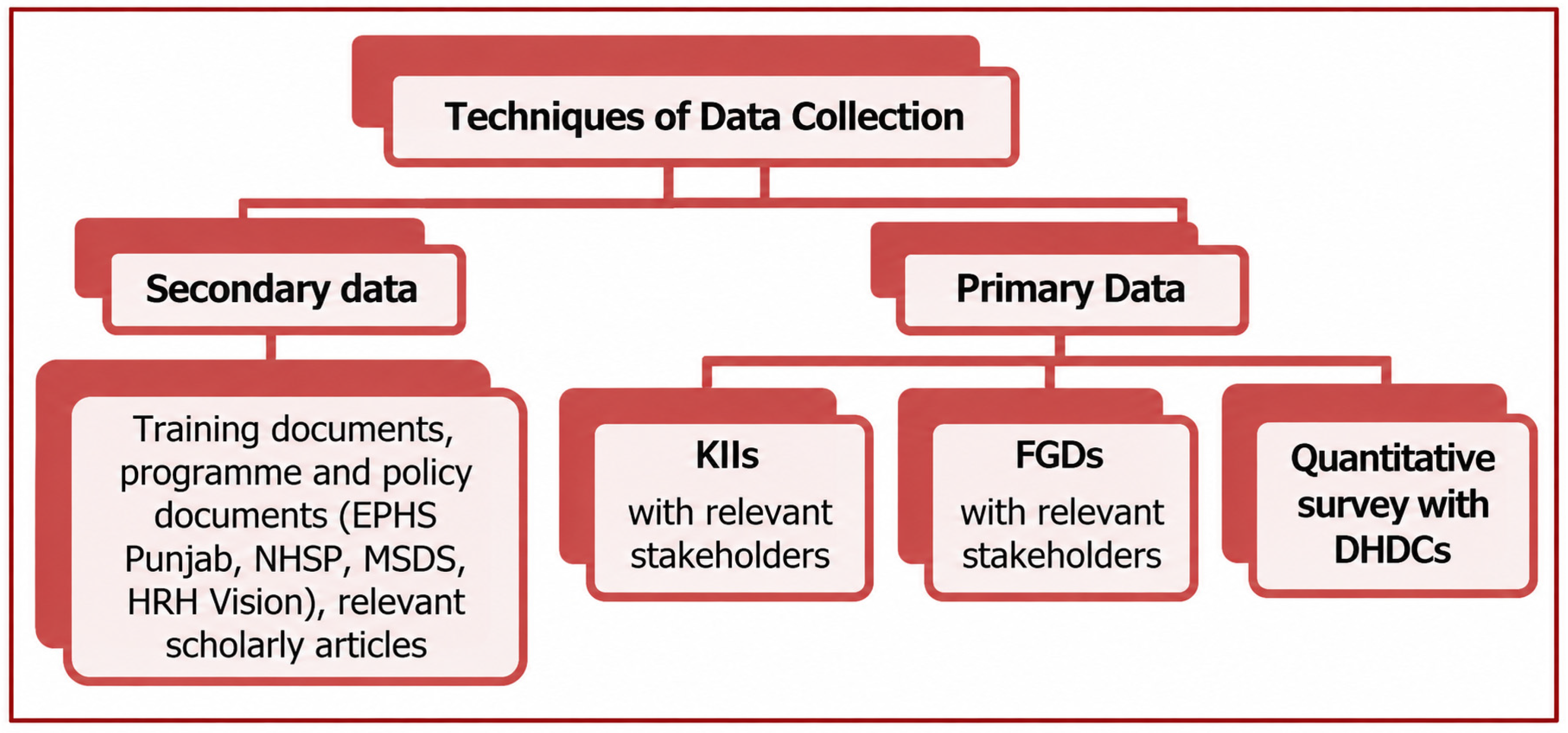
2.1. Quantitative Data
- System-wide factors (framework, roles, responsibilities, institutional linkages);
- Organizational environment (workload, team structure, supervision, management, and support systems);
- Individual factors (skills and expertise of health staff);
- Tools (budget, equipment, and guidelines); and
- Training capacity (frequency, content, and audience of training).
2.2. Qualitative Data

| Key Stakeholders | South | Central | North | Total | |
|---|---|---|---|---|---|
| District Heads | DHDCs Head/CEOs | 3 | 4 | 4 | 11 |
| Senior officials of P&SHD | Secretary | - | 1 (Lahore) | - | 1 |
| DGHS | - | 1 (Lahore) | - | 1 | |
| Director General (DG) Drug Control | - | 1 (Lahore) | - | 1 | |
| DG Nursing | - | 1 (Lahore) | - | 1 | |
| Additional Secretary Technical | - | 1 (Lahore) | - | 1 | |
| Head of PHDC | Program Director (PD) | - | 1 (Lahore) | - | 1 |
| Heads of Public Universities | Institute of Public Health (IPH) Dean | - | 1 (Lahore) | - | 1 |
| University of Health Sciences (UHS)Vice-Chancellor (VC) | - | 1 (Lahore) | - | 1 | |
| University of the Punjab VC | - | 1 (Lahore) | - | 1 | |
| Total | 3 | 13 | 4 | 20 |
2.3. Secondary Data
2.4. Data Analysis
2.5. Data Integration and Development of Training Framework
2.6. Validation of Training Framework
3. Results
3.1. Professional Development Needs of Punjab’s Healthcare Workforce
3.1.1. System-Wide Factors
3.1.2. Organizational Environment
3.1.3. Individual Factors
3.1.4. Tools
3.1.5. Identifying the Priority Needs of Healthcare and the Political-Economy Landscape
3.1.6. Current Training Practices: Clinical/Non-Clinical Priority Areas and Opportunities & Gaps
3.1.7. Best Training Practices for Healthcare Workers in Resource-Limited Contexts
3.1.8. Significance of Accreditation and Standardization in Training Systems
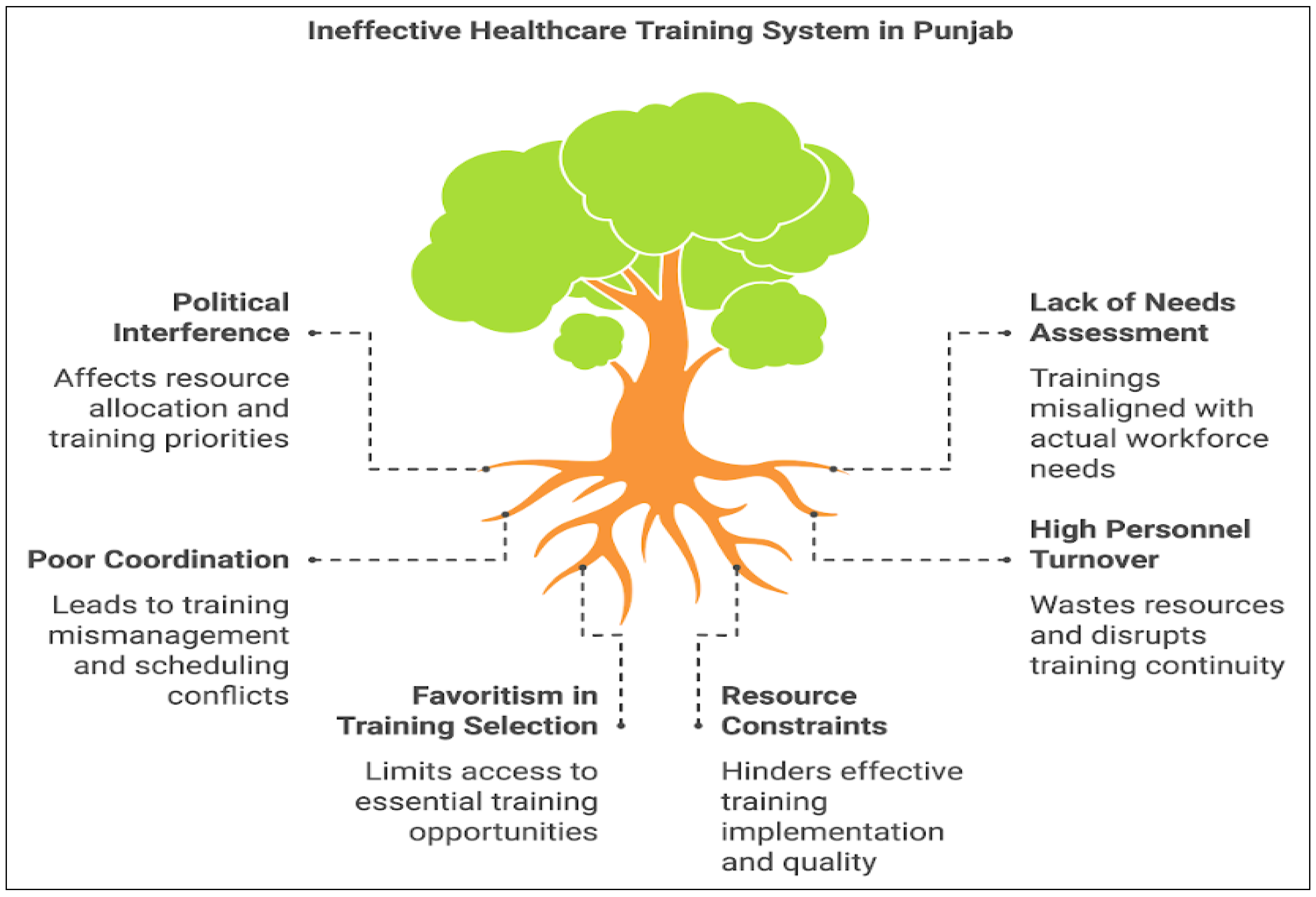
3.2. Systemic Factors Constraining Training Effectiveness
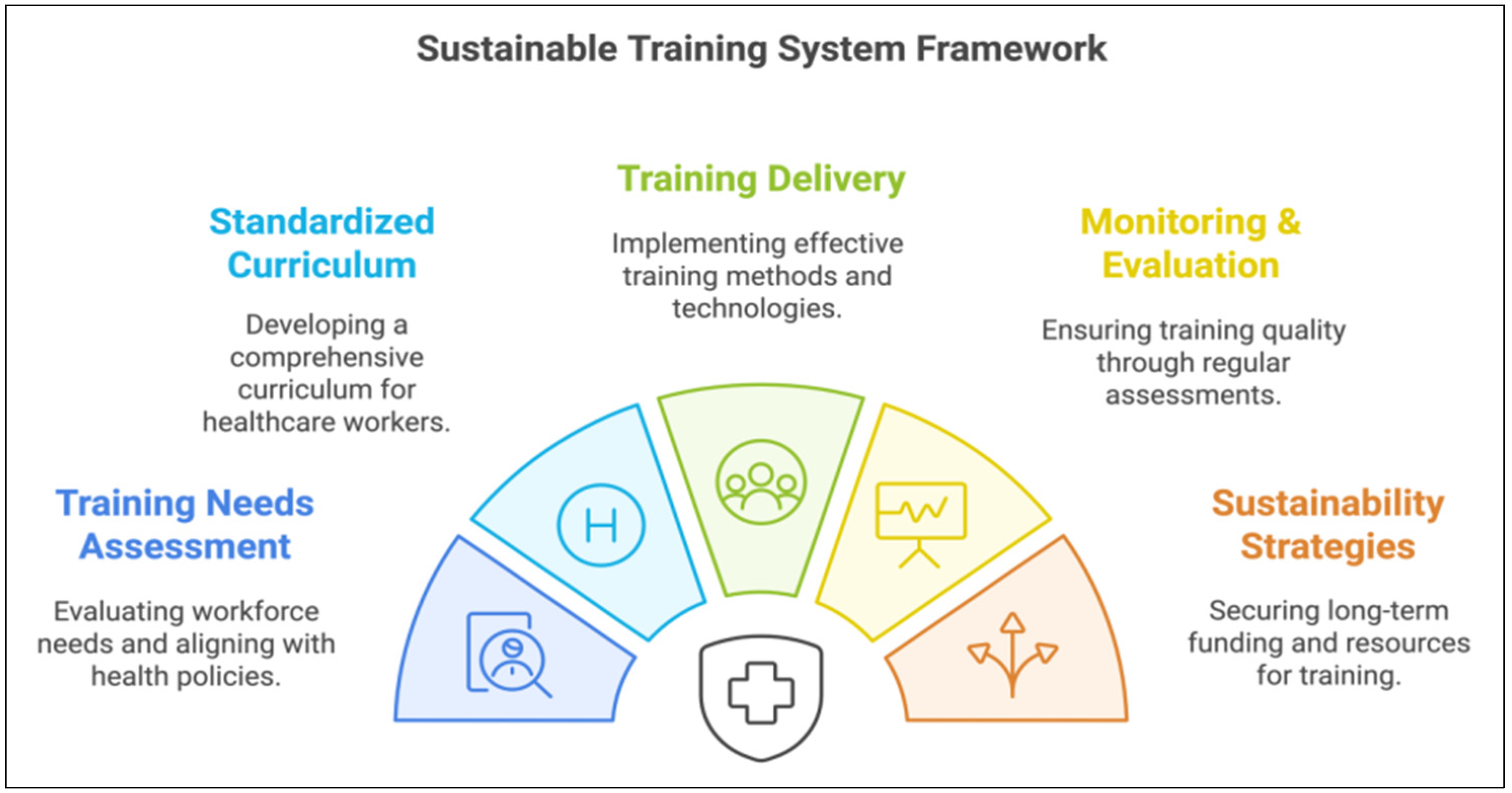
4. Training Framework for Healthcare Providers
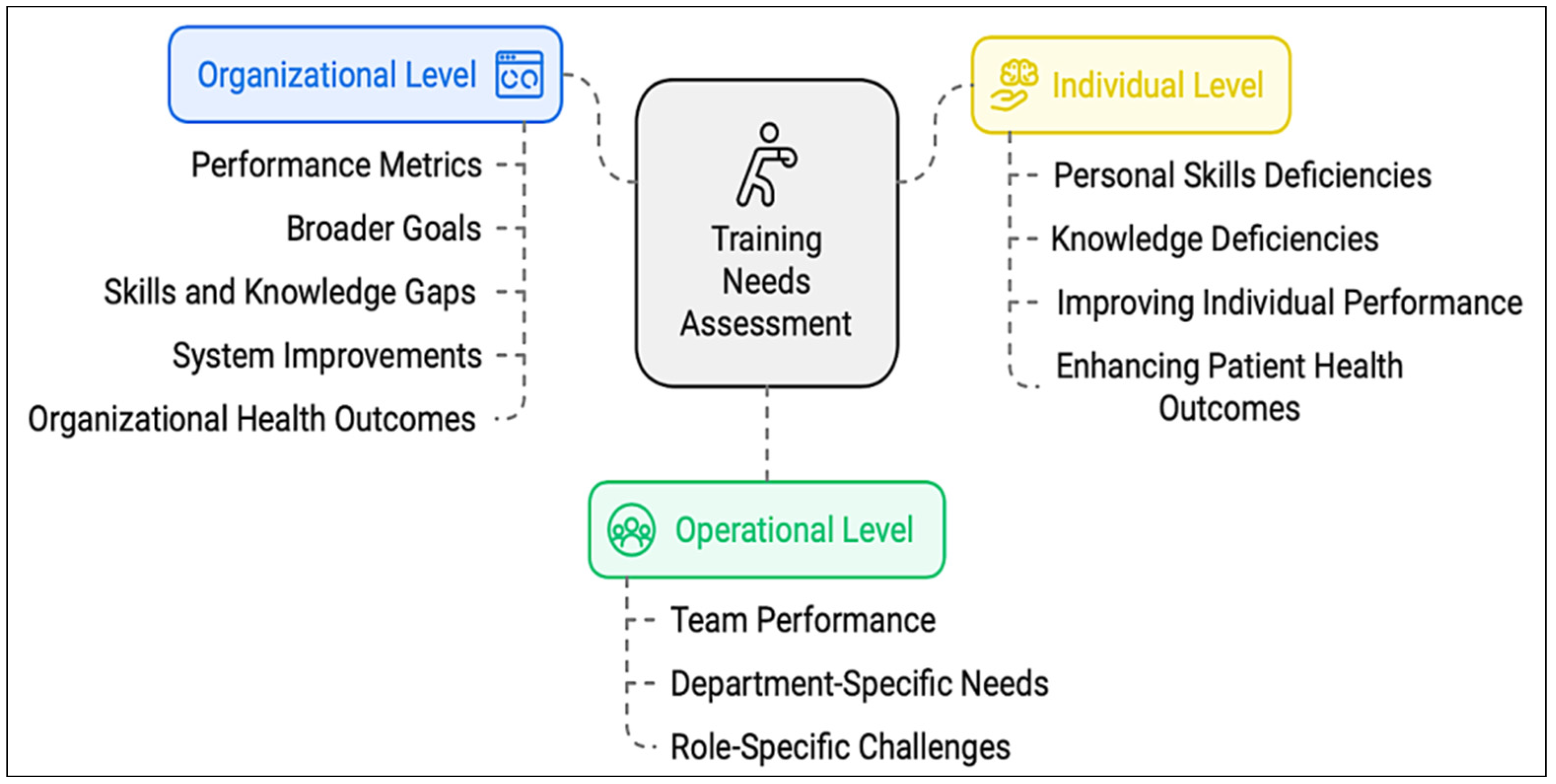
4.1. Training Needs Assessment
- The organizational level focuses on performance metrics and broader goals to determine the training required to meet the Health Department’s objectives. It identifies skills and knowledge gaps and training needs to improve organizational performance, system improvements, and organizational-level health outcomes;
- Operational or job-role level needs assessment identifies specific training needs to improve a team, department, or particular group of healthcare workforce to address role-specific challenges and enhance team performance;
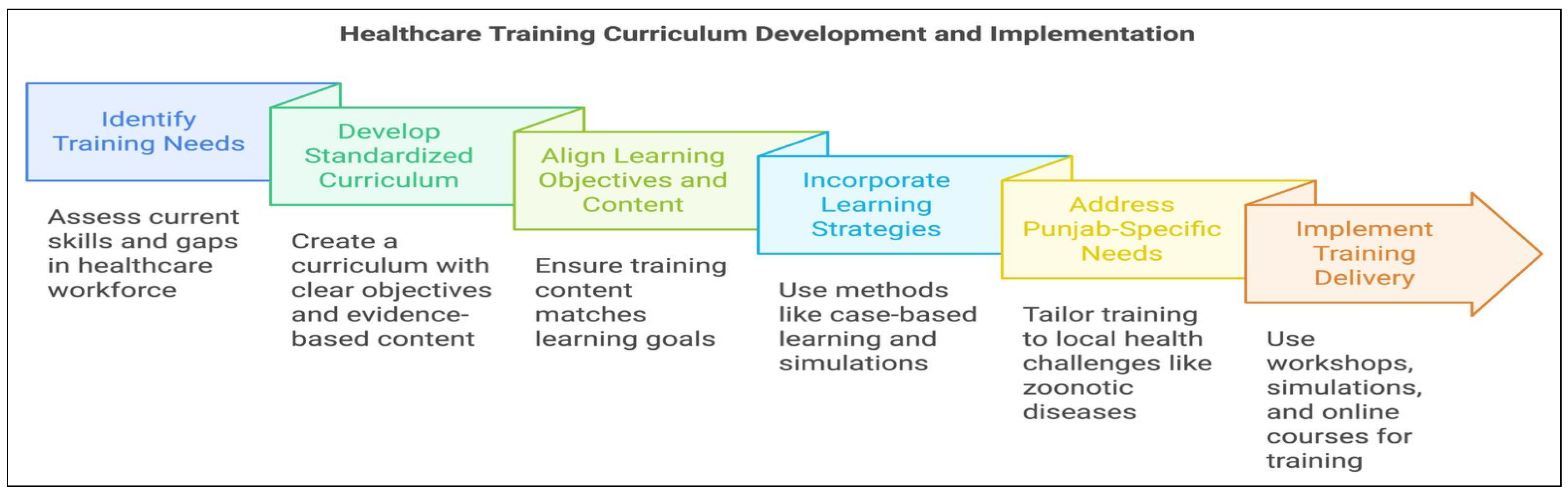
4.2. Standardized Curriculum
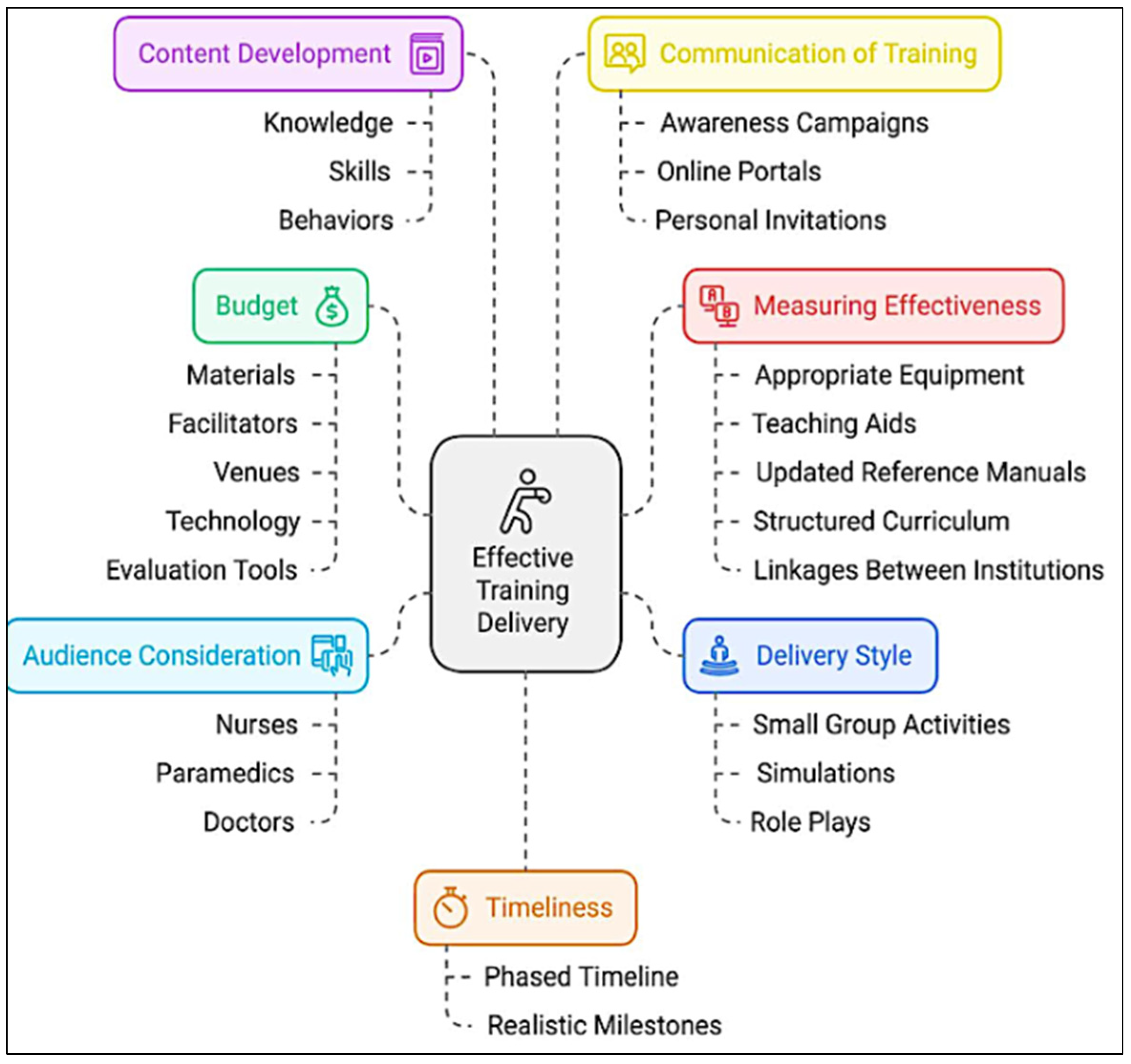
4.3. Training Delivery
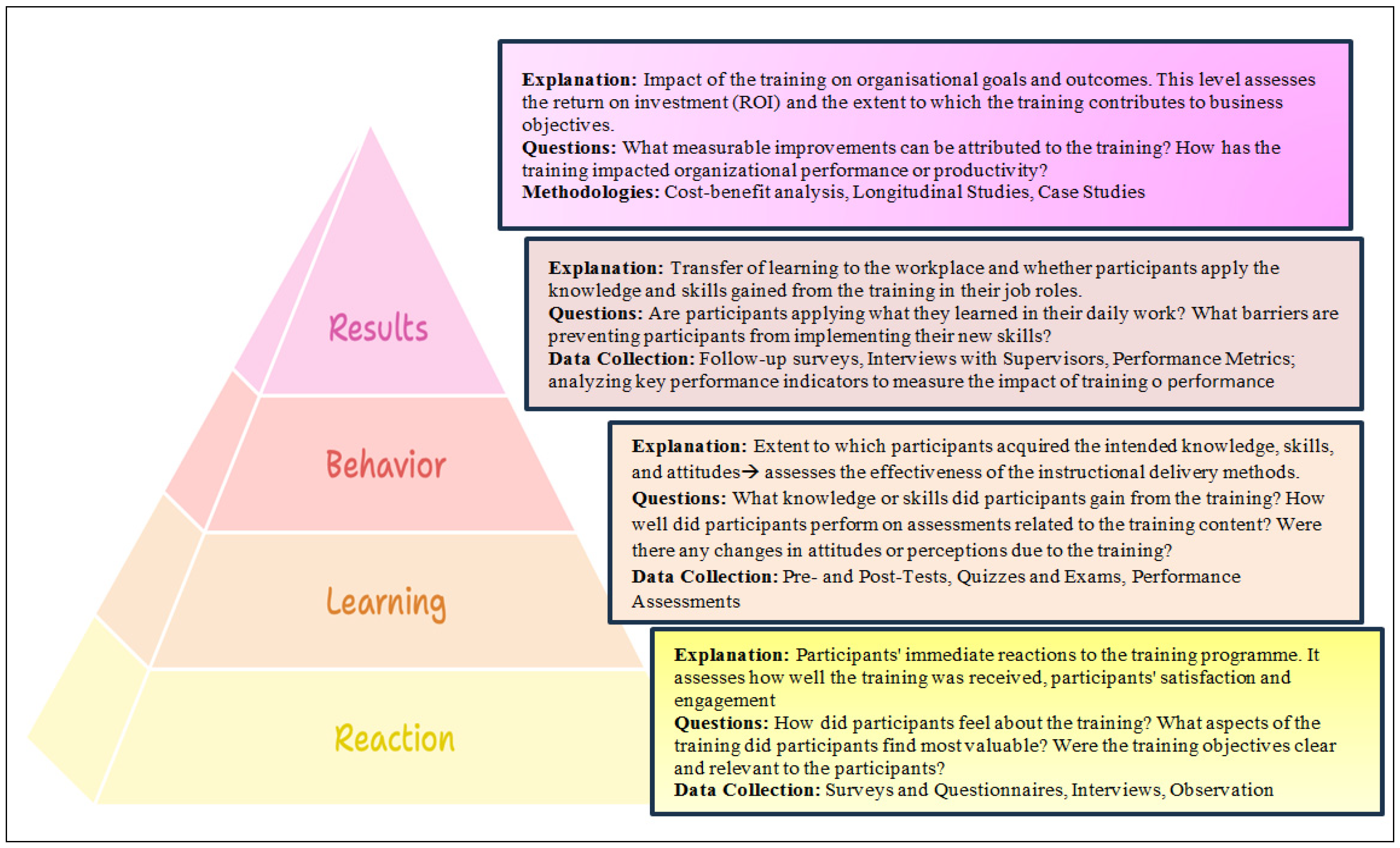
4.4. Monitoring and Evaluation of Trainings
Key Outcomes and Measurable Indicators
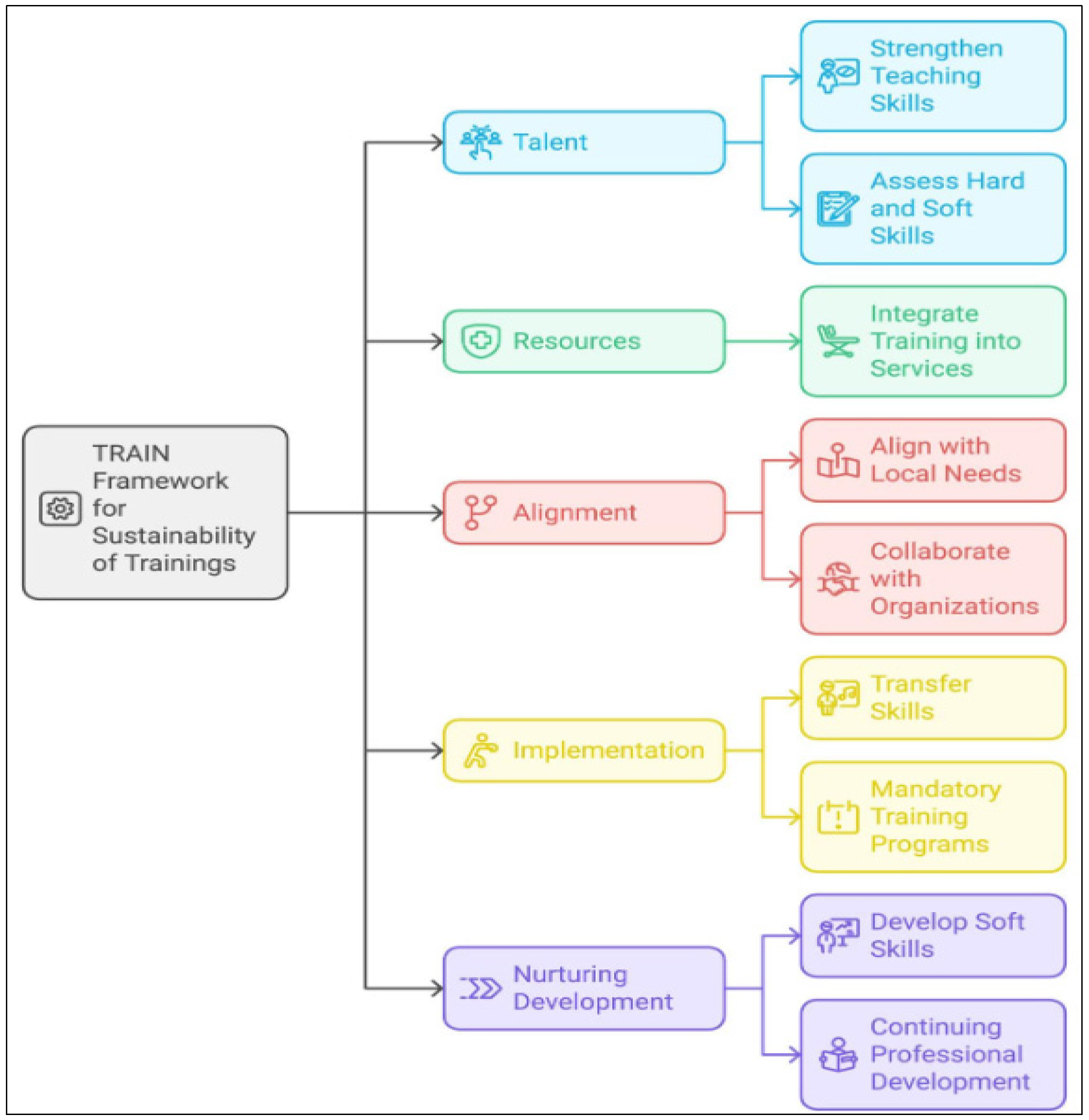
4.5. Sustainability Strategies
4.6. Ensure Quality Through CPD and Accreditation
5. Discussion
5.1. Strengths and Limitations
5.1.1. Strengths
5.1.2. Limitations
6. Conclusions
Author Contributions
Funding
Institutional Review Board Statement
Informed Consent Statement
Data Availability Statement
Acknowledgments
Conflicts of Interest
References
- World Health Organization. World Health Report 2006: Working Together for Health; World Health Organization: Geneva, Switzerland, 2006; Available online: https://www.who.int/publications/i/item/9241563176 (accessed on 20 September 2024).
- Frenk, J.; Chen, L.; Bhutta, Z.A.; Cohen, J.; Crisp, N.; Evans, T.; Fineberg, H.; Garcia, P.; Ke, Y.; Kelley, P.; et al. Health professionals for a new century: Transforming education to strengthen health systems in an interdependent world. Lancet 2010, 376, 1923–1958. [Google Scholar] [CrossRef] [Scilit] [PubMed]
- Aiken, L.H.; Sloane, D.M.; Bruyneel, L.; Heede, K.V.D.; Griffiths, P.; Busse, R.; Diomidous, M.; Kinnunen, J.; Kózka, M.; Lesaffre, E.; et al. Nurse staffing and education and hospital mortality in nine European countries: A retrospective observational study. Lancet 2014, 383, 1824–1830. [Google Scholar] [CrossRef] [Scilit] [PubMed]
- Shiri, R.; El-Metwally, A.; Sallinen, M.; Pöyry, M.; Härmä, M.; Toppinen-Tanner, S. The role of continuing professional training or development in maintaining current employment: A systematic review. Healthcare 2023, 11, 2900. [Google Scholar] [CrossRef] [Scilit] [PubMed]
- World Health Organization. Global Strategy on Human Resources for Health: Workforce 2030; World Health Organization: Geneva, Switzerland, 2016. [Google Scholar]
- Rowe, A.K.; Rowe, S.Y.; Peters, D.H.; Holloway, K.A.; Ross-Degnan, D. The effectiveness of training strategies to improve healthcare provider practices in low-income and middle-income countries. BMJ Glob. Health 2021, 6, e003229. [Google Scholar] [CrossRef] [Scilit] [PubMed]
- Tazion, S.; Mahboob, U.; Aslam, K.; Khan, R.A. Development of continuing professional development standards for Allied Healthcare Professionals in Pakistan. Pak. J. Med. Sci. 2025, 41, 2916. [Google Scholar] [CrossRef] [Scilit] [PubMed]
- Press Information Department, Government of Pakistan. Pakistan Commemorates Universal Health Coverage Day on 12th December 2024: UHC Service Coverage Index at the National Level Improved to 53.9 from a Baseline of 40 in 2015; Press Release No. 122; Ministry of Information and Broadcasting, Government of Pakistan: Islamabad, Pakistan, 2024. Available online: https://pid.gov.pk/site/press_detail/27404 (accessed on 1 June 2026).
- National Institute of Population Studies (NIPS). Pakistan Maternal Mortality Survey 2019; NIPS: Islamabad, Pakistan; ICF: Rockville, MD, USA, 2019; Available online: https://www.nips.org.pk/publication/pakistan-maternal-mortality-survey-pmms-2019-main-report (accessed on 20 May 2024).
- Foreign, Commonwealth & Development Office (FCDO). Institutional Capacity Building Report through Technical Assistance to Primary and Secondary Healthcare Department, Government of the Punjab, Pakistan; Foreign, Commonwealth & Development Office (FCDO): London, UK, 2022.
- Cometto, G.; Nartey, E.; Zapata, T.; Kanda, M.; Md, Y.; Narayan, K.; Pritasari, K.; Irufa, A.; Lamichhane, R.; De Silva, D.; et al. Analysing public sector institutional capacity for health workforce governance in the South-East Asia region of WHO. Hum. Resour. Health 2019, 17, 43. [Google Scholar] [CrossRef] [Scilit] [PubMed]
- Pacqué-Margolis, S.; Ng, C.; Kauffman, S. Human Resources for Health (HRH) Indicator Compendium; USAID: New York, NY, USA, 2011.
- Primary and Secondary Healthcare Department, Government of the Punjab. Competency-Based Training Framework for Service Delivery Staff at Primary Care Level; Primary and Secondary Healthcare Department, Government of the Punjab: Lahore, Pakistan, 2023.
- Deutsche Gesellschaft für Internationale Zusammenarbeit (GIZ) GmbH. The model: An overview of capacity WORKS. In Cooperation Management for Practitioners; GIZ GmbH, Ed.; Springer Gabler: Wiesbaden, Germany, 2015; Available online: https://link.springer.com/book/10.1007/978-3-658-07905-5 (accessed on 20 September 2024).
- Foreign, Commonwealth & Development Office: Evidence for Health (FCDO E4H). Establishing an Effective and Sustainable Training System Through Technical Support to the Department of Health, Khyber Pakhtunkhwa, Pakistan; Evidence for Health (E4H) Programme: Peshawar, Pakistan, 2024. [Google Scholar]
- Braun, V.; Clarke, V. Using thematic analysis in psychology. Qual. Res. Psychol. 2006, 3, 77–101. [Google Scholar] [CrossRef] [Scilit]
- Hennessy, J.; Hicks, W. Training Needs Assessment: A Practical Guide to Designing and Delivering Training; American Society for Training and Development: Alexandria, VA, USA, 1999. [Google Scholar]
- Kern, D.E.; Patricia, A.T.; Donna, J.H. Curriculum Development for Medical Education: A Six-Step Approach; Johns Hopkins University Press: Baltimore, MD, USA, 2016. [Google Scholar]
- Potter, C.; Brough, R. Systemic capacity building: A hierarchy of needs. Health Policy Plan. 2004, 19, 336–345. [Google Scholar] [CrossRef] [Scilit] [PubMed]
- Adams, N.E. Bloom’s taxonomy of cognitive learning objectives. J. Med. Libr. Assoc. 2015, 103, 152–153. [Google Scholar] [CrossRef] [Scilit] [PubMed]
- Kirkpatrick, D.L.; Kirkpatrick, J.D. Evaluating Training Programs: The Four Levels; Berrett-Koehler Publishers: San Francisco, CA, USA, 2006; Available online: https://www.academia.edu/10055210/An_Excerpt_From_Evaluating_Training_Programs (accessed on 24 October 2024).
- Mormina, M.; Pinder, S. A conceptual framework for training of trainers (ToT) interventions in global health. Glob. Health 2018, 14, 100. [Google Scholar] [CrossRef] [Scilit] [PubMed]
- Government of Punjab. Minimum Service Delivery Standards for Primary and Secondary Health Care in Punjab; Government of Punjab: Lahore, Pakistan, 2008.
- USAID. A Global Improvement Framework for Health Worker In-Service Training: Guidance for Improved Effectiveness, Efficiency and Sustainability; University Research Co., LLC: Washington, DC, USA, 2013. Available online: https://pdf.usaid.gov/pdf_docs/PA00WCM4.pdf (accessed on 24 October 2024).
- Pakistan—National Health Support Program (NHSP); World Bank Group: Washington, DC, USA, 2022; Available online: http://documents.worldbank.org/curated/en/438401654609799746/Pakistan-National-Health-Support-Program (accessed on 24 October 2024).
- Ng, V.; Walsh, A.; Grusauskas, H. WONCA Global Standards for Continuing Professional Development (CPD) for Family Doctors. Available online: https://www.globalfamilydoctor.com/getfile.aspx?oid=dfbb765f-f89d-41ac-9fa6-d906430559e4 (accessed on 24 October 2024).
- Swiss Agency for Development and Cooperation (SDC). Case Study 5: Katalyst—Developing Training Systems for Health Workers in Bangladesh; Springfield Centre: Dhaka, Bangladesh, 2014; Available online: https://beamexchange.org/documents/317/katalyst_health_case_bangladesh.pdf (accessed on 24 October 2024).
- Scheffler, R.M.; Herbst, C.H.; Lemiere, C.; Campbell, J. Health Labor Market Analyses in Low- and Middle-Income Countries: An Evidence-Based Approach; World Bank Publications: Washington, DC, USA, 2016; Available online: http://documents.worldbank.org/curated/en/665331476689238449 (accessed on 24 October 2024).
- Aidala, A.A.; Cavaliere, B.; Cinnick, S. Strategies and tools for public health workforce training needs assessments in diverse and changing population health contexts. J. Public Health Manag. Pract. 2019, 25, 490–497. [Google Scholar] [CrossRef] [Scilit] [PubMed]
- O’Malley, G.; Perdue, T.; Petracca, F. A framework for outcome-level evaluation of in-service training of health care workers. Hum. Resour. Health 2013, 11, 50. [Google Scholar] [CrossRef] [Scilit] [PubMed]
- Patnaik, R.; Stefanidis, D. Outcome-based training and the role of simulation. In Comprehensive Healthcare Simulation: Surgery and Surgical Subspecialties; Stefanidis, D., Korndorffer, J., Sweet, R., Eds.; Springer: Cham, Switzerland, 2019. [Google Scholar] [CrossRef] [Scilit]
- Bound, H.; Arthur, C. The Six Principles of Learning Design: Designing Learning for Performance; Institute for Adult Learning: Singapore, 2020. [Google Scholar]
- Natesan, S.; Bailitz, J.; King, A.; Krzyzaniak, S.M.; Kennedy, S.K.; Kim, A.J.; Byyny, R.; Gottlieb, M. Clinical Teaching: An Evidence-based Guide to Best Practices from the Council of Emergency Medicine Residency Directors. West. J. Emerg. Med. 2020, 21, 985–998. [Google Scholar] [CrossRef] [Scilit] [PubMed]
- World Health Organization. Joint External Evaluation of IHR Core Capacities of the Islamic Republic of Pakistan: Mission Report; No. WHO/WHE/CPI/2017.9; World Health Organization: Geneva, Switzerland, 2017. [Google Scholar]
- Harden, R.M. Ten questions to ask when planning a course or curriculum. Med. Educ. 1986, 20, 356–365. [Google Scholar] [CrossRef] [Scilit] [PubMed]
- World Health Organization. Community Engagement: A Health Promotion Guide for Universal Health Coverage in the Hands of the People; World Health Organization: Geneva, Switzerland, 2020; Available online: https://www.who.int/publications/i/item/9789240010529 (accessed on 3 November 2024).
- Institute of Medicine (US) Committee on the Health Professions Education Summit; Greiner, A.C.; Knebel, E. (Eds.) Health Professions Education: A Bridge to Quality Chapter 3, the Core Competencies Needed for Health Care Professionals; National Academies Press (US): Washington, DC, USA, 2003. Available online: https://www.ncbi.nlm.nih.gov/books/NBK221519/ (accessed on 24 October 2024).
- Agency for Toxic Substances and Disease Registry. Principles of Community Engagement. 2011. Available online: https://stacks.cdc.gov/view/cdc/11699 (accessed on 24 October 2024).
- Berrett-Abebe, J.; Mattison, M.; McAdoo, S.P. Community Engagement in Co-designing an Innovative Health Equity Program: A Case Report. Health Interprof. Pract. Educ. 2023, 5, eP2261. [Google Scholar] [CrossRef] [Scilit]
- Santiago, C.J.; Ulanday, M.L.; Centeno, Z.J.; Bayla, M.C.; Callanta, J. Flexible Learning Adaptabilities in the New Normal: E-Learning Resources, Digital Meeting Platforms, Online Learning Systems and Learning Engagement. 2021. Available online: http://asianjde.com/ojs/index.php/AsianJDE/article/view/580 (accessed on 24 October 2024).
- Faculty of Public Health. Good Public Health Practice Framework; Faculty of Public Health: London, UK, 2024; Available online: https://www.fph.org.uk/media/eqnjys3c/good-public-health-practice-framework-october-2024.pdf (accessed on 24 October 2024).
- Daff, L.; Tame, C.; Sands, J. A course design approach that encourages reflective practice habits. Int. J. Manag. Educ. 2024, 22, 100990. [Google Scholar] [CrossRef] [Scilit]
- Kennedy, A. Models of continuing professional development: A framework for analysis. J. In-Serv. Educ. 2005, 31, 235–250. [Google Scholar] [CrossRef]
- Nicol, E.; Turawa, E.; Bonsu, G. Pre- and in-service training of health care workers on immunization data management in LMICs: A scoping review. Hum. Resour. Health 2019, 17, 92. [Google Scholar] [CrossRef] [Scilit] [PubMed]
- Stufflebeam, D.L. CIPP Evaluation Model Checklist; Western Michigan University: Kalamazoo, MI, USA, 2007; Available online: https://citeseerx.ist.psu.edu/viewdoc/download?doi=10.1.1.401.1277&rep=rep1&type=pdf (accessed on 24 October 2024).
- Dorri, S.; Akbari, M.; Dorri Sedeh, M. Kirkpatrick evaluation model for in-service training on cardiopulmonary resuscitation. Iran. J. Nurs. Midwifery Res. 2016, 21, 493–497. [Google Scholar] [CrossRef] [Scilit] [PubMed]
- Schalock, R.L. Outcome-Based Evaluation; Springer Science & Business Media: Berlin/Heidelberg, Germany, 2001. [Google Scholar]
- Miranda, F.M.; Santos, B.V.; Kristman, V.L.; Mininel, V.A. Employing Kirkpatrick’s framework to evaluate nurse training: An integrative review. Rev. Lat.-Am. Enferm. 2025, 33, e4431. [Google Scholar] [CrossRef] [Scilit] [PubMed]
- Bates, R. A critical analysis of evaluation practice: The Kirkpatrick model and the principle of beneficence. Eval. Program Plan. 2004, 27, 341–347. [Google Scholar] [CrossRef] [Scilit]
- Smidt, A.; Balandin, S.; Sigafoos, J.; Reed, V.A. The Kirkpatrick model: A useful tool for evaluating training outcomes. J. Intellect. Dev. Disabil. 2009, 34, 266–274. [Google Scholar] [CrossRef] [Scilit] [PubMed]
- Mehale, K.D.; Govender, C.M.; Mabaso, M. Maximising training evaluation for employee performance improvement. SA J. Hum. Resour. Manag. 2021, 19, a1473. [Google Scholar] [CrossRef] [Scilit]
- Cooke, J. A framework to evaluate research capacity building in health care. BMC Fam. Pract. 2005, 6, 44. [Google Scholar] [CrossRef] [Scilit] [PubMed]
- Ewert, E.G.; Baldwin-Ragaven, L.; London, L. Training trainers in health and human rights: Implementing curriculum change in South African health sciences institutions. BMC Med. Educ. 2011, 11, 47. [Google Scholar] [CrossRef] [Scilit] [PubMed][Green Version]
- Renju, J.; Makokha, M.; Kato, C.; Medard, L.; Andrew, B.; Remes, P.; Changalucha, J.; Obasi, A. Partnering to proceed: Scaling up adolescent sexual reproductive health programmes in Tanzania. Operational research into the factors that influenced local government uptake and implementation. Health Res. Policy Syst. 2010, 8, 12. [Google Scholar] [CrossRef] [Scilit] [PubMed]
- Heo, K.; Cheng, S.; Joos, E.; Joharifard, S. Use of innovative technology in surgical training in resource-limited settings: A scoping review. J. Surg. Educ. 2024, 81, 243–256. [Google Scholar] [CrossRef] [Scilit] [PubMed]
- Nakanjako, D.; Namagala, E.; Semeere, A.; Kigozi, J.; Sempa, J.; Ddamulira, J.B.; Katamba, A.; Biraro, S.; Naikoba, S.; Mashalla, Y.; et al. Global health leadership training in resource-limited settings: A collaborative approach by academic institutions and local health care programs in Uganda. Hum. Resour. Health 2025, 13, 87. [Google Scholar] [CrossRef] [Scilit] [PubMed]
- Bird, M.; McGillion, M.; Chambers, E.M.; Dix, J.; Fajardo, C.J.; Gilmour, M.; Levesque, K.; Lim, A.; Mierdel, S.; Ouellette, C.; et al. A generative co-design framework for healthcare innovation: Development and application of an end-user engagement framework. Res. Involv. Engagem. 2021, 7, 12. [Google Scholar] [CrossRef] [Scilit] [PubMed]
- Malone, S.; Prewitt, K.; Hackett, R.; Lin, J.C.; McKay, V.; Walsh-Bailey, C.; Luke, D.A. The clinical sustainability assessment tool: Measuring organizational capacity to promote sustainability in healthcare. Implement. Sci. Commun. 2021, 2, 77. [Google Scholar] [CrossRef] [Scilit] [PubMed]
- Shari, B. Designing for Healthcare Sustainability: A Framework; American College of Healthcare Executives: Chicago, IL, USA, 2024; Available online: https://www.ache.org/blog/2021/designing-for-healthcare-sustainability-a-framework (accessed on 24 October 2024).
- Sherman, L.; Halila, H.; Chappell, K. An overview of continuing medical education/continuing professional development systems in Europe: A mixed methods assessment. J. CME 2024, 13, 2435731. [Google Scholar] [CrossRef] [Scilit] [PubMed]
- Merkur, S.; Mossialos, E.; Long, M.; McKee, M. Physician revalidation in Europe. Clin. Med. 2008, 8, 371–376. [Google Scholar] [CrossRef] [Scilit] [PubMed]
- Graham, W.J.; Kuruvilla, S.; Hinton, R.; Veitch, E.; Simpson, P.J. Multisectoral collaboration for health and sustainable development. BMJ 2018, 363, k4868. [Google Scholar] [CrossRef] [Scilit] [PubMed]
- Moore, R.H.; Bui, J.; Ouellette, R.R.; Kerner, B.; Awad, M.N.; Leal, A.F.; Edmond, Y.; Williams, S.L.; Gordon, D.M. Leveraging public-private partnerships with community to increase health equity: Building sustainable models guided by data, policy, and practice. J. Health Care Poor Underserved 2022, 33, 138–151. [Google Scholar] [CrossRef] [Scilit] [PubMed]
- Rigby, B.P.; van der Graaf, P.; Azevedo, L.B.; Hayes, L.; Gardner, B.; Dodd-Reynolds, C.J. Challenges, opportunities and solutions for local physical activity stakeholders: An implementation case study from a cross-sectoral physical activity network in Northeast England. BMC Public Health 2020, 20, 1760. [Google Scholar] [CrossRef] [Scilit] [PubMed]
- Nafukho, F.M. Guest Editorial: Investment in health as a form of human capital development. Eur. J. Train. Dev. 2018, 42, 2–4. [Google Scholar] [CrossRef] [Scilit]
- Matovu, J.K.; Wanyenze, R.K.; Mawemuko, S.; Okui, O.; Bazeyo, W.; Serwadda, D. Strengthening health workforce capacity through work-based training. BMC Int. Health Hum. Rights 2013, 13, 8. [Google Scholar] [CrossRef] [Scilit] [PubMed]
- Ben Aryee, G.F.; Amoadu, M.; Obeng, P.; Sarkwah, H.N.; Malcalm, E.; Abraham, S.A.; Baah, J.A.; Agyare, D.F.; Banafo, N.E.; Ogaji, D. Effectiveness of eLearning programme for capacity building of healthcare professionals: A systematic review. Hum. Res. Health 2024, 22, 60. [Google Scholar] [CrossRef] [Scilit] [PubMed]
- Strifler, L.; Barnsley, J.M.; Hillmer, M.; Straus, S.E. Identifying and selecting implementation theories, models and frameworks: A qualitative study to inform the development of a decision support tool. BMC Med. Inform. Decis. Mak. 2020, 20, 91. [Google Scholar] [CrossRef] [Scilit] [PubMed]
- Al-Omary, H.; Soltani, A.; Stewart, D.; Nazar, Z. Implementing learning into practice from continuous professional development activities: A scoping review of health professionals’ views and experiences. BMC Med. Educ. 2024, 24, 1031. [Google Scholar] [CrossRef] [Scilit] [PubMed]
- Rabin, T.L.; Mayanja-Kizza, H.; Rastegar, A. Medical education capacity-building partnerships for health care systems development. AMA J. Ethics 2026, 18, 710–717. [Google Scholar]


| Stakeholders | South | Central | North | Total FGDs | Total Participants |
|---|---|---|---|---|---|
| Doctors (from BHU, RHC & from DHQH, THQH) | 2 | 2 | 2 | 6 | 48 |
| Paramedics (LHVs, Vaccinators/EPI technician, school health & nutrition supervisors, pharmacy technician/Medical Technician) | 2 | 2 | 2 | 6 | 48 |
| Nurses | 2 | 2 | 2 | 6 | 48 |
| Outreach Program (Sanitary Inspector, LHWs, CMWs, LHS) | 2 | 2 | 2 | 6 | 60 |
| Administrative/Managerial Staff | 2 | 2 | 2 | 6 | 48 |
| Developmental Partners/Donors (WHO, UNICEF, International Fund for TB and Lung Disease) | 1 | 1 | 8 | ||
Heads of the following Vertical Programs
| 1 | 1 | 5 | ||
Heads of the following Vertical Programs
| 1 | 1 | 5 | ||
| Total | 10 | 13 | 10 | 33 | 270 |
| Functions Performed by DHDCs | Yes | No | ||
|---|---|---|---|---|
| f | % | f | % | |
| HRH policy and strategy | ||||
| Development of policies, strategies, plans, and frameworks for HRH | 5 | 19.2 | 21 | 80.8 |
| Coordinate an inter-sectoral District health workforce agenda, facilitating permanent mechanisms of collaboration among different line Departments (Education, Finance, Labour, etc.), including the private sector | 5 | 19.2 | 21 | 80.8 |
| Facilitate appropriate linkages on HRH between the District and Tehsil Administration; | 8 | 30.8 | 18 | 69.2 |
| Budgetary and resource planning and mobilization for HRH, in collaboration with the Department of Finance and other relevant constituencies | 4 | 15.4 | 22 | 84.6 |
| Define job descriptions, working conditions, supervisory and performance appraisal mechanisms, reward systems, and career structures for health workers in collaboration with relevant civil service bodies | 5 | 19.2 | 21 | 80.8 |
| HRH data, information and evidence | ||||
| Collection and analysis of health workforce data (e.g., stock, distribution, production, etc.) | 1 | 3.8 | 25 | 96.2 |
| Collection and analysis of health labour market data (e.g., employment status, vacancies, etc.) | 0 | 0.0 | 26 | 100.0 |
| Strategic analysis and monitoring of health workforce trends (including national and international mobility) | 0 | 0.0 | 26 | 100.0 |
| Stewardship of a District agenda on HRH research, including publication and dissemination of good practices | 1 | 3.8 | 25 | 96.2 |
| HRH accreditation, education and training | ||||
| Set policies on regulation, accreditation, certification, and education in collaboration with professional councils and academic institutions | 4 | 15.4 | 22 | 84.6 |
| CPD/training for health workers; Doctors | 26 | 100.0 | 0 | 0.0 |
| CPD/training for health workers; Nursing staff | 26 | 100.0 | 0 | 0.0 |
| CPD/training for health workers; Paramedics | 26 | 100.0 | 0 | 0.0 |
| CPD/training for health workers; Midwives | 26 | 100.0 | 0 | 0.0 |
| CPD/training for health workers; others | 26 | 100.0 | 0 | 0.0 |
| HRH leadership, advocacy, and policy dialogue | ||||
| Build capacity for HRH policy and management | 10 | 38.5 | 16 | 61.5 |
| Advocate for HRH investments and health workers’ rights and working conditions | 6 | 23.1 | 20 | 76.9 |
| Contribute to the management of labour relations with health workers’ unions/representatives | 5 | 19.2 | 21 | 80.8 |
| HR administration and management for health workers | ||||
| Payroll, entitlements, and leave administration | 3 | 11.5 | 23 | 88.5 |
| Decisions on employment, transfer, promotion, and disciplinary measures for staff | 2 | 7.7 | 24 | 92.3 |
| Other functions | 12 | 46.2 | 14 | 53.8 |
| Component | Deficiency Identified in This Study | Supporting Evidence | Model Informing Design |
|---|---|---|---|
| 1. Training needs assessment | Training areas determined administratively rather than by assessed need | Officials acknowledged the absence of a formal needs assessment mechanism; training was reported as politically driven and influenced by international funding, with participants describing existing training as misaligned with on-the-ground requirements; DHDCs prioritized education and capacity building while overlooking managerial and soft skills | Hennessy–Hicks [17]; Kern steps 1–2 [18] |
| 2. Standardized curriculum | No standardized modules, curricula, or criteria for selecting resource persons | Inconsistent training packages reported across districts; 61.5% of DHDCs had a trainer program; participants called for standardized training packages, clear SOPs, and improved modules; a key informant identified module and trainer quality as the principal technical deficiency | Kern steps 3–4 [18]; Bloom’s taxonomy [20]; competency-based framework [13]; MSDS [23] |
| 3. Training delivery | Fragmented and uncoordinated delivery across departments, vertical programmes and development partners | Vertical programs funded through PC-1 budgets and development partners reported to conduct training independently, bypassing DHAs, PHDC and DHDCs; 19.2% of DHDCs coordinated an inter-sectoral workforce agenda and 30.8% facilitated district–tehsil linkages; 19 of 26 reported to multiple authorities; weak interdepartmental synergy and coordination failures with donors was described | Kern step 5 [18]; USAID in-service framework [24] |
| 4. Monitoring and evaluation | Evaluation limited to attendance and satisfaction; no workforce information base | 3.8% of DHDCs collected health workforce data; none collected labor market data or monitored workforce trends; 3.8% stewarded an HRH research agenda; considerable variability was reported in assessment mechanisms including pre- and post-tests and follow-up; participants called for regular M&E to assess training impact | Kirkpatrick [21]; Kern step 6 [18]; NHSP DLI 10 [25] |
| 5. Sustainability strategies | Insecure and procedurally constrained financing; loss of trained personnel through transfer | 15.4% of DHDCs participated in budgetary and resource planning; all reported budgetary constraints; training allowances met by donor-funded programs but not by the department; difficulty recruiting competent trainers attributed to inadequate financial incentives; budget release described as requiring extensive approvals; direct allocation to PHDC and DHDCs advocated by key officials; frequent transfers reported to dissipate institutional capability, with 53.8% of DHDCs having three or more project directors in five years | TRAIN [22]; Kern step 6 [18] |
| Cross-cutting: Quality assurance through CPD and accreditation | No accreditation system or defined quality standards | 15.4% of DHDCs set policies on regulation, accreditation, certification and education in collaboration with professional councils and academic institutions; participants across FGDs identified a centralized accreditation system and intersectoral collaboration with teaching institutions as necessary to ensure quality and consistency | WONCA CPD standards [26] |
| Indicator | Measurement | Timeline | Responsibility | |
|---|---|---|---|---|
| Input Indicators: These indicators track the resources and processes required to deliver training programs effectively. | ||||
| Training Resources | Number of training materials (manuals, guides, digital content) developed and distributed. | Count of training materials distributed to participants (by type and format). | Quarterly. | Training Coordinators. |
| Trainer’s Capacity | Number of qualified trainers and facilitators available. | Total number of trainers certified or trained for the program. | Annually. | PD PHDC |
| Infrastructure | Availability of training facilities and equipment. | Checklists of facilities and equipment required for training (e.g., classrooms, audi–visual aids). | Bi-annually. | PD PHDC &Team. |
| Process Indicators: These indicators track the processes and activities involved in implementing the training program | ||||
| Training Delivery | Number of training sessions conducted. | Count of scheduled and delivered training sessions. | Monthly. | PD DHDC/Training Coordinators |
| Participant Engagement and Attendance | Training attendance rate using digital attendance system | Percentage of registered participants who attended the training sessions. | Real-Time | Training Coordinators/PHDC/DHDCs |
| Training Curriculum Adaptation | Frequency of curriculum updates or revisions based on emerging healthcare needs. | Number of curriculum revisions based on feedback or new healthcare standards. | Annually. | PD PHDC & Team |
| Stakeholder Engagement | Number of collaborative meetings with key stakeholders (government, NGOs, private sector). | Count of formal stakeholder meetings held. | Quarterly | PD PHDC |
| Output Indicators: These indicators track the immediate results or outputs of the training programs. | ||||
| Knowledge Acquisition | Percentage of participants passing post-training assessments using pre- and post-tests | Percentage of participants who score above a predetermined threshold in assessments. | Pre-test before training and post-test immediately after each training session | Trainers, PD DHDC. |
| Feedback mechanism | Percentage of participants satisfied with the training content, structure, and module | Feedback forms and surveys | Immediately post-training | Training Coordinators & Facilitators |
| Skills Application | Percentage of participants reporting improved job performance due to the training. | Self-reported data from post-training surveys or focus groups. | 3–6 months after the training session. | PHDC M&E Team |
| Outcome Indicators: These indicators track the medium-term effects of the training on healthcare services and outcomes. | ||||
| Quality of Care | Improvement in healthcare service quality post-training (e.g., improved diagnosis rates). | Quality assessments (e.g., patient satisfaction surveys). | 6–12 months after the training. | Technical Wing/AS Technical PSHD |
| Health Outcomes | Improvement in health outcomes (e.g., improved vaccination coverage). | Health data from health facility reports (e.g., vaccination rates). | Annually. | HISDU/DHIS Cell. |
| Impact Indicators: These indicators assess the long-term effects of the training program on the health system. | ||||
| Healthcare System Strengthening | Improvement in health system indicators (e.g., health workforce capacity). | Health system performance indicators (e.g., utilization of health services). | Every 2 years. | Technical wing/AS Tech |
| Sustainability of the Program | Percentage of costs covered by government, alternative funding sources | Proportion of the program budget covered by government, alternative sources or self-generation | Annually. | Technical Wing/AS Tech |
Disclaimer/Publisher’s Note: The statements, opinions and data contained in all publications are solely those of the individual author(s) and contributor(s) and not of MDPI and/or the editor(s). MDPI and/or the editor(s) disclaim responsibility for any injury to people or property resulting from any ideas, methods, instructions or products referred to in the content. |
© 2026 by the authors. Licensee MDPI, Basel, Switzerland. This article is an open access article distributed under the terms and conditions of the Creative Commons Attribution (CC BY) license.
Share and Cite
Zakar, R.; Shah, G.; Momina, A.u.; Shah, B.; Mahboob, U.; Shahzad, R.; Janjua, M.A.; Syed, M.H.; Saleem, J.; Ahmad, N.; et al. Designing a Standardized and Sustainable Training Framework for Healthcare Workforce Capacity Building in Punjab, Pakistan. Healthcare 2026, 14, 3187. https://doi.org/10.3390/healthcare14193187
Zakar R, Shah G, Momina Au, Shah B, Mahboob U, Shahzad R, Janjua MA, Syed MH, Saleem J, Ahmad N, et al. Designing a Standardized and Sustainable Training Framework for Healthcare Workforce Capacity Building in Punjab, Pakistan. Healthcare. 2026; 14(19):3187. https://doi.org/10.3390/healthcare14193187
Chicago/Turabian StyleZakar, Rubeena, Gulzar Shah, Ain ul Momina, Bushra Shah, Usman Mahboob, Ruhma Shahzad, Muhammad Anawar Janjua, Mukhtar Hussain Syed, Javeria Saleem, Nabeel Ahmad, and et al. 2026. "Designing a Standardized and Sustainable Training Framework for Healthcare Workforce Capacity Building in Punjab, Pakistan" Healthcare 14, no. 19: 3187. https://doi.org/10.3390/healthcare14193187
APA StyleZakar, R., Shah, G., Momina, A. u., Shah, B., Mahboob, U., Shahzad, R., Janjua, M. A., Syed, M. H., Saleem, J., Ahmad, N., Manal, N., & Zakar, M. (2026). Designing a Standardized and Sustainable Training Framework for Healthcare Workforce Capacity Building in Punjab, Pakistan. Healthcare, 14(19), 3187. https://doi.org/10.3390/healthcare14193187