Exploring the Evidence Base on the Association Between Parents’ Adverse and Positive Experiences and the Developmental, Psychological and Behavioral Outcomes of Their Offspring: A Scoping Review

Highlights
- Exposure to adversity across the lifespan can have intergenerational effects, contributing to negative developmental, psychological and behavioral outcomes in offspring.
- The preliminary and ambivalent nature of the current evidence, particularly for positive experiences, warrants further adequately powered examinations that focus on male and non-biological primary caregivers as well as adolescents.
- Recognizing that parents’ experiences can contribute to the trajectories of offspring is essential for the development of interventions that not only seek to prevent the intergenerational transmission of adversity but also those that seek to promote resilience.
- The limitations in the evidence base demonstrate that practitioners should heed current findings with caution.
Abstract
1. Introduction
Review Questions
- What is the nature of the intergenerational research on the associations between parental adverse and positive experiences (in childhood and adulthood) and the developmental, psychological and behavioral outcomes of their offspring?
- What are the limitations and gaps in the intergenerational research on the associations between parental adverse and positive experiences (in childhood and adulthood) and the developmental, psychological and behavioral outcomes of their offspring?
2. Materials and Methods
2.1. Design
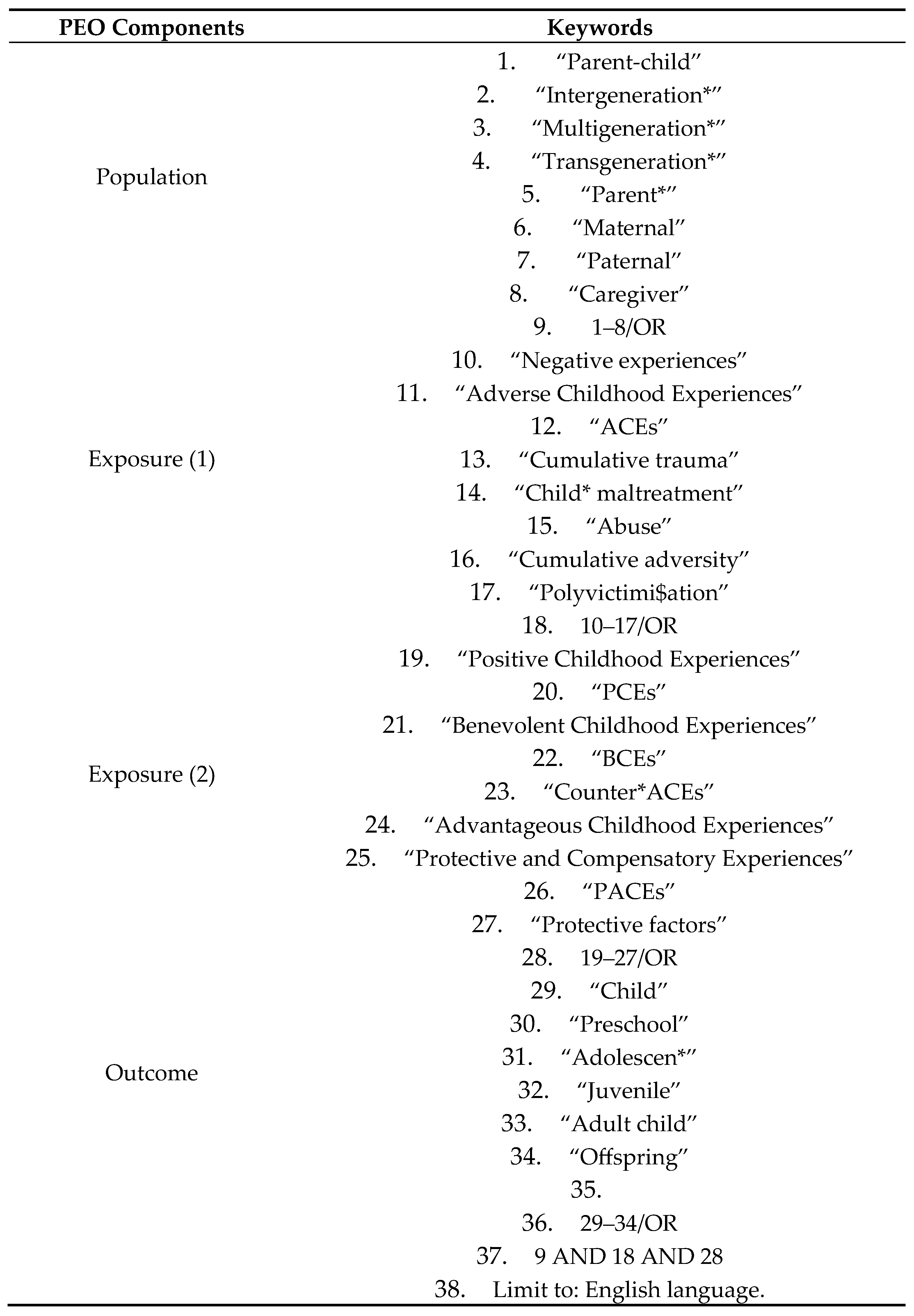
2.2. Search Strategy
2.3. Inclusion/Exclusion Criteria
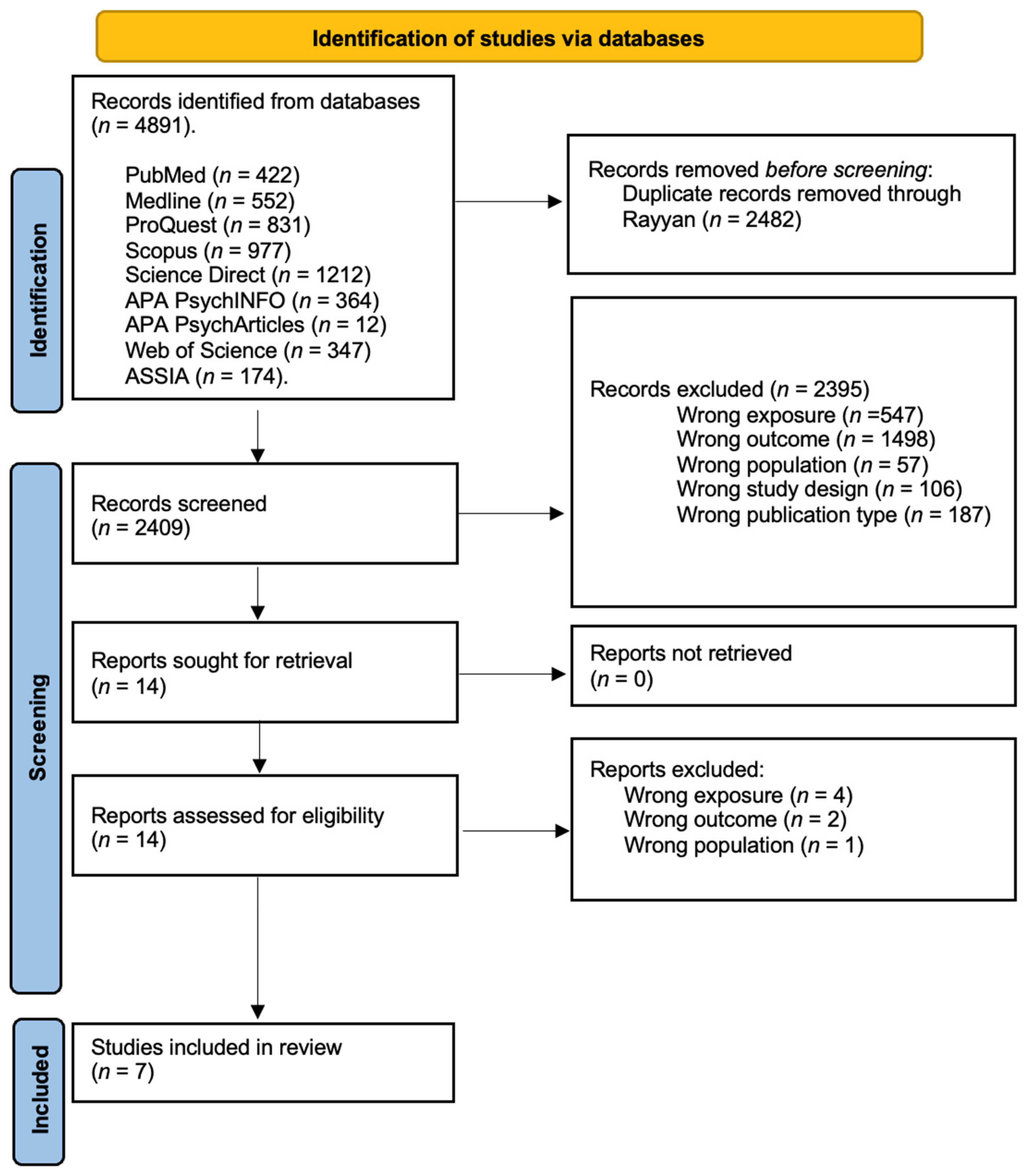
2.4. Study Selection
2.5. Data Extraction
3. Results
3.1. Selected Studies
3.1.1. Study Characteristics
3.1.2. Countries of Data Collection
3.1.3. Employed Measures and Examined Constructs
3.1.4. Adverse Childhood Experiences
3.1.5. Adult Adversity
3.1.6. Positive Childhood Experiences
3.1.7. Social Support
3.1.8. Mediators and Moderators
3.2. Evaluation of Study Methods
4. Discussion
5. Conclusions
Supplementary Materials
Author Contributions
Funding
Institutional Review Board Statement
Informed Consent Statement
Data Availability Statement
Acknowledgments
Conflicts of Interest
Abbreviations
| ACEs | Adverse Childhood Experiences |
| PCEs | Positive Childhood Experiences |
| BCEs | Benevolent Childhood Experiences |
| IPV | Intimate Partner Violence |
References
- Felitti, V.J.; Anda, R.F.; Nordenberg, D.; Williamson, D.F.; Spitz, A.M.; Edwards, V.; Koss, M.P.; Marks, J.S. Relationship of childhood abuse and household dysfunction to many of the leading causes of death in adults. The Adverse Childhood Experiences (ACE) study. Am. J. Prev. Med. 1998, 14, 245–258. [Google Scholar] [CrossRef] [Scilit] [PubMed]
- Struck, S.; Stewart-Tufescu, A.; Asmundson, A.J.N.; Asmundson, G.G.J.; Aififi, T.O. Adverse childhood experiences (ACEs) research: A bibliometric analysis of publication trends over the first 20 years. Child Abus. Negl. 2021, 112, 104895. [Google Scholar] [CrossRef] [Scilit] [PubMed]
- Howell, K.H.; Miller-Graff, L.E.; Martinez-Torteya, C.; Napier, T.R.; Carney, J.R. Charting a course towards resilience following adverse childhood experiences: Addressing intergenerational trauma via strengths-based intervention. Children 2021, 8, 844. [Google Scholar] [CrossRef] [Scilit] [PubMed]
- Hughes, K.; Bellis, M.A.; Hardcastle, K.A.; Sethi, D.; Butchart, A.; Mikton, C.; Jones, L.; Dunne, M.P. The effect of multiple adverse childhood experiences on health: A systematic review and meta-analysis. Lancet Public Health 2017, 2, E356–E366. [Google Scholar] [CrossRef] [Scilit] [PubMed]
- Zhou, X.; Zhao, J.; Feng, A.; Chan, K.H.K.; Wu, W.; Manson, J.E.; Liu, S.; Li, J. Adversities in childhood and young adulthood and incident cardiovascular disease: A prospective cohort study. eClinicalMedicine 2024, 69, 102458. [Google Scholar] [CrossRef] [Scilit] [PubMed]
- Choi, H.; Hwang, S.G. Patterns of adverse childhood experiences and social isolation in young adulthood: Evidence from South Korea. Child. Youth Serv. Rev. 2023, 153, 107083. [Google Scholar] [CrossRef] [Scilit]
- Landry, J.; Asokumar, A.; Crump, C.; Anisman, H.; Matheson, K. Early life adverse experiences and loneliness among young adults: The mediating role of social processes. Front. Psychol. 2022, 13, 968383. [Google Scholar] [CrossRef] [Scilit] [PubMed]
- Hawkins, M.A.W.; Layman, H.M.; Ganson, K.T.; Tabler, J.; Ciciolla, L.; Tsotsoros, C.E.; Nagata, J.M. Adverse childhood events and cognitive function among young adults: Prospective results from the national longitudinal study of adolescent to adult health. Child Abus. Negl. 2021, 115, 105008. [Google Scholar] [CrossRef] [Scilit] [PubMed]
- Bell, C.J.; Foulds, J.A.; Horwood, L.J.; Mulder, R.T.; Boden, J.M. Childhood abuse and psychotic experiences in adulthood: Findings from a 35-year longitudinal study. Br. J. Psychiatry 2019, 214, 153–158. [Google Scholar] [CrossRef] [Scilit] [PubMed]
- Hughes, K.; Ford, K.; Kadel, R.; Sharp, C.A.; Bellis, M.A. Health and financial burden of adverse childhood experiences in England and Wales: A combined primary data Study of five surveys. BMJ Open 2020, 10, e036374. [Google Scholar] [CrossRef] [Scilit] [PubMed]
- Jia, L.; Zhang, Z.; Li, R.; Zha, J.; Fang, P.; He, H.; Wan, Y. Maternal parenting stress and social-emotional problems of Chinese preschoolers: The role of the mother-child relationships and maternal adverse childhood experiences. J. Affect. Disord. 2024, 350, 188–196. [Google Scholar] [CrossRef] [Scilit] [PubMed]
- Wojciechowski, T.W. Early life poly-victimisation and differential development of anxiety as risk factors for the continuity of substance dependence in adulthood. Subst. Use Misuse 2020, 55, 1347–1355. [Google Scholar] [CrossRef] [Scilit] [PubMed]
- Almeida, T.C.; Cardoso, J.; Matos, A.F.; Murça, A.; Cunha, O. Adverse childhood experiences and aggression in adulthood: The moderating role of positive childhood experiences. Child Abus. Negl. 2024, 154, 106929. [Google Scholar] [CrossRef] [Scilit] [PubMed]
- Basto-Pereira, M.; Gouveia-Pereira, M.; Pereira, C.R.; Barrett, E.L.; Lawler, S.; Newton, N.; Stapinski, L.; Prior, K.; Costa, M.S.A.; Ximenes, J.M.; et al. The global impact of adverse childhood experiences on criminal behaviour: A cross-continental study. Child Abus. Negl. 2022, 124, 105459. [Google Scholar] [CrossRef] [Scilit] [PubMed]
- Jiwani, Z.; Drylewski, G.; Sharma, S.; Ahun, M.; Thapa, S.; Steele, M. Adverse childhood experiences and maternal self-efficacy: Examining the mediating role of intimate partner violence and the moderating role of caste membership in rural India. Infant Ment. Health J. 2022, 43, 546–557. [Google Scholar] [CrossRef] [Scilit] [PubMed]
- Rowell, T.; Neal-Barnett, A. A systematic review of the effect of parental adverse childhood experiences on parenting and child psychopathology. J. Child Adolesc. Trauma 2021, 15, 167–180. [Google Scholar] [CrossRef] [Scilit] [PubMed]
- Hanetz-Gamliel, K.; Dollberg, D.G. Links between mothers’ ACEs, their psychopathology and parenting, and their children’s behaviour problems–A mediation model. Front. Psychol. 2022, 13, 1064915. [Google Scholar] [CrossRef] [Scilit] [PubMed]
- Letouneau, N.; Dewey, D.; Kaplan, B.J.; Ntanda, H.; Novick, J.; Thomas, J.C.; Deane, A.J.; Leung, B.; Pon, K.; Giesbrecht, G.F. Intergenerational transmission of adverse childhood experiences via maternal depression and anxiety and moderation by child sex. J. Dev. Orig. Health Dis. 2019, 10, 88–99. [Google Scholar] [CrossRef] [Scilit] [PubMed]
- Mitani, H. Effects of maternal adverse child experiences on parental maltreatment of children: An empirical study of mediating factors among Japanese mothers. Child Fam. Soc. Work 2022, 27, 422–434. [Google Scholar] [CrossRef] [Scilit]
- Fuller, B.E.; Chermack, S.T.; Cruise, K.A.; Kirsch, E.; Fitzgerald, H.E.; Zucker, R.A. Predictors of aggression across three generations among sons of alcoholics: Relationships involving grandparental and parental alcoholism, child aggression, marital aggression and parenting practices. J. Stud. Alcohol Drugs 2003, 64, 472–483. [Google Scholar] [CrossRef] [Scilit] [PubMed]
- Badenes-Ribera, L.; Fabris, M.A.; Prino, L.E.; Giovanna, F.; Gastaldi, M.; Longobardi, C. Physical, emotional, and sexual victimization across three generations: A cross-sectional study. J. Child Adolesc. Trauma 2020, 13, 409–417. [Google Scholar] [CrossRef] [Scilit] [PubMed]
- Moran, G.; Bailey, H.N.; Gleason, K.; DeOliveira, C.A.; Pederson, D.R. Exploring the mind behind unresolved attachment: Lessons from and for attachment-based interventions with infants and their traumatized mothers. In Clinical Applications of the Adult Attachment Interview; Steele, H., Steele, M., Eds.; The Guilford Press: New York, NY, USA, 2008; pp. 371–398. [Google Scholar]
- Racine, N.; Plamondon, A.; Madigan, S.; McDonald, S.; Tough, S. Maternal adverse childhood experiences and infant development. Pediatrics 2018, 141, e20172495. [Google Scholar] [CrossRef] [Scilit] [PubMed]
- Cooke, J.E.; Racine, N.; Plamondon, A.; Tough, S.; Madigan, S. Maternal adverse childhood experiences, attachment style, and mental health: Pathways of transmission to child behaviour problems. Child Abus. Negl. 2019, 93, 27–37. [Google Scholar] [CrossRef] [Scilit] [PubMed]
- Bozovic, D.; Racic, M.; Ivkovic, N. Salivary cortisol levels as a biological marker of stress reaction. Med. Arch. 2013, 67, 371–374. [Google Scholar] [CrossRef] [Scilit] [PubMed]
- Tarullo, A.R.; Gunnar, M.R. Child maltreatment and the developing HPA axis. Horm. Behav. 2006, 50, 632–639. [Google Scholar] [CrossRef] [Scilit] [PubMed]
- McEwen, B.S. Neurobiological and systemic effects of chronic stress. Chronic Stress 2017, 1, 2470547017692328. [Google Scholar] [CrossRef] [Scilit] [PubMed]
- Finlay, S.; Roth, C.; Zimsen, T.; Bridson, T.L.; Sarnyai, Z.; McDermott, B. Adverse childhood experiences and allostatic load: A systematic review. Neurosci. Biobehav. Rev. 2022, 136, 104605. [Google Scholar] [CrossRef] [Scilit] [PubMed]
- Gunnar, M.R.; Donzella, B. Social regulation of the cortisol levels in early human development. Psychoneuroendocrinology 2002, 27, 199–220. [Google Scholar] [CrossRef] [Scilit] [PubMed]
- Christou, A.I.; Bacopoulou, F. Emotion and feeling in parent-child dyads: Neurocognitive and psychophysiological pathways of development. Children 2025, 12, 1478. [Google Scholar] [CrossRef] [Scilit] [PubMed]
- Sfier, M.; Leener, M.D.; Rossignol, M.; Pulopulos, M.M.; Raedt, R.D.; Cassioli, F.; Galdiolo, S. A systematic review on parent-child synchrony: The role of stress, resilience and psychopathology. Clin. Child Fam. Psychol. Rev. 2026, 29, 33–72. [Google Scholar] [CrossRef] [Scilit] [PubMed]
- Quiñones-Camacho, L.E.; Hoyniak, C.P.; Wakschlag, L.S.; Perlman, S.B. Getting in synch: Unpacking the role of parent-child synchrony in the development of internalizing and externalizing behaviors. Dev. Psychopathol. 2021, 34, 1901–1913. [Google Scholar] [CrossRef] [Scilit] [PubMed]
- Xu, J.; Zhang, Y.; Wang, H.; Peng, M.; Zhu, Y.; Wang, X.; Yi, Z.; Chen, L.; Han, Z.R. A context-dependent perspective to understand the relation between parent-child physiological synchrony and child socioemotional adjustment. Dev. Sci. 2024, 27, e13506. [Google Scholar] [CrossRef] [Scilit] [PubMed]
- Lunkenheimer, E.; Tiberio, S.S.; Buss, K.A.; Lucas-Thompson, R.G.; Boker, S.M.; Timpe, Z.C. Coregulation of respiratory sinus arrhythmia between parents and children: Differences by children’s externalizing problems. Dev. Psychobiol. 2015, 57, 994–1003. [Google Scholar] [CrossRef] [Scilit] [PubMed]
- Lunkenheimer, E.; Tiberio, S.S.; Skoranski, A.M.; Buss, K.A.; Cole, P.M. Parent-child coregulation of parasympathetic processes varies by social context and risk for psychopathology. Psychophysiology 2018, 55, e12985. [Google Scholar] [CrossRef] [Scilit] [PubMed]
- Smith, C.G.; Jones, E.J.H.; Charman, T.; Clackson, K.; Mirza, F.U.; Wass, S.V. Anxious parents show higher physiological synchrony with their infants. Psychol. Med. 2022, 52, 3040–3050. [Google Scholar] [CrossRef] [Scilit] [PubMed]
- Cicchetti, D.; Toth, S.L. The past achievements and future promise of developmental psychopathology: The coming of age of a discipline. J. Child Psychol. Psychiatry 2009, 50, 16–25. [Google Scholar] [CrossRef] [Scilit] [PubMed]
- Masten, A.S. Developmental psychopathology: Pathways to the future. Int. J. Behav. Dev. 2006, 30, 47–54. [Google Scholar] [CrossRef] [Scilit]
- Daines, C.L.; Hansen, D.; Novilla, M.L.B.; Crandall, A. Effects of positive and negative childhood experiences on adult family health. BMC Public Health 2021, 21, 651. [Google Scholar] [CrossRef] [Scilit] [PubMed]
- Bethell, C.; Jones, J.; Gombojav, N.; Linkenbach, J.; Sege, R. Positive Childhood Experiences and adult mental and relational health in a statewide sample association across Adverse Childhood Experiences levels. JAMA Pediatr. 2019, 173, e193007. [Google Scholar] [CrossRef] [Scilit] [PubMed]
- Qu, G.; Ma, S.; Liu, H.; Han, T.; Zhang, H.; Ding, X.; Sun, L.; Qin, Q.; Chen, M.; Sun, Y. Positive childhood experiences can moderate the impact of adverse childhood experiences on adolescent depression and anxiety: Results from a cross-sectional survey. Child Abus. Negl. 2022, 125, 105511. [Google Scholar] [CrossRef] [Scilit] [PubMed]
- Nevarez-Brewster, M.; Aran, Ö.; Narayan, A.J.; Harrall, K.K.; Brown, S.M.; Hankin, B.L.; Davis, E.P. Adverse and benevolent childhood experiences predict prenatal sleep quality. Advers. Resil. Sci. 2022, 3, 391–402. [Google Scholar] [CrossRef] [Scilit] [PubMed]
- Crandall, A.; Magnusson, B.M.; Hanson, C.L.; Leavitt, B. The effects of adverse and advantageous childhood experiences on adult health in a low-income sample. Acta Psychol. 2021, 220, 103430. [Google Scholar] [CrossRef] [Scilit] [PubMed]
- Doom, J.R.; Seok, D.; Narayan, A.J.; Fox, K.R. Adverse and benevolent childhood experiences predict mental health during the COVID-19 pandemic. Advers. Resil. Sci. 2021, 2, 193–204. [Google Scholar] [CrossRef] [Scilit] [PubMed]
- Morris, A.S.; Hays-Grudo, J.; Zapata, M.I.; Treat, A.; Kerr, K.L. Adverse and protective childhood experiences and parenting attitudes: The role of cumulative protection in understanding resilience. Advers. Resil. Sci. 2021, 2, 181–192. [Google Scholar] [CrossRef] [Scilit] [PubMed]
- Schofield, T.J.; Conger, R.D.; Neppl, T.K. Positive parenting, beliefs about parental efficacy and active coping: Three sources of intergenerational resilience. J. Fam. Psychol. 2014, 28, 973–978. [Google Scholar] [CrossRef] [Scilit] [PubMed]
- Blackwell, C.K.; Cella, D.; Mansolf, M. Intergenerational transmission of adverse and positive childhood experiences and associations with child well-being. Child Abus. Negl. 2024, 157, 107050. [Google Scholar] [CrossRef] [Scilit] [PubMed]
- Zhu, Y.; Zhang, G.; Anme, T. Intergenerational associations of adverse and positive maternal childhood experiences with young children’s psychosocial wellbeing. Eur. J. Psychotraumatol. 2023, 14, 2185414. [Google Scholar] [CrossRef] [Scilit] [PubMed]
- Boullier, M.; Blair, M. Adverse childhood experiences. Paediatr. Child Health 2018, 28, 132–137. [Google Scholar] [CrossRef] [Scilit]
- Han, D.; Dieujuste, N.; Doom, J.R.; Narayan, A.J. A systematic review of positive childhood experiences and adult outcomes: Promotive and protective processes for resilience in the context of childhood adversity. Child Abus. Negl. 2023, 144, 106346. [Google Scholar] [CrossRef] [Scilit] [PubMed]
- Conching Conching, A.K.S.; Thayer, Z. Biological pathways for historical trauma to affect health: A conceptual model focusing on epigenetic modifications. Soc. Sci. Med. 2019, 230, 74–82. [Google Scholar] [CrossRef] [Scilit] [PubMed]
- Enlow, M.B.; Devick, K.L.; Brunst, K.J.; Lipton, L.R.; Coull, B.A.; Wright, R.J. Maternal lifetime trauma exposure, prenatal cortisol, and infant negative affectivity. Infancy 2017, 22, 492–513. [Google Scholar] [CrossRef] [Scilit] [PubMed]
- Nolvi, S.; Uusitupa, H.; Bridgett, D.J.; Pesonen, H.; Aatsinki, A.; Karaja, E.; Korja, R.; Karlsson, H.; Karlsson, L. Human milk cortisol concentration predicts experimentally induced infant fear reactivity: Moderation by infant sex. Dev. Sci. 2017, 21, e12625. [Google Scholar] [CrossRef] [Scilit] [PubMed]
- McLaughlin, K.A.; Sheridan, M.A.; Lambert, H.K. Childhood adversity and neural development: Deprivation and threat as distinct dimensions of early experiences. Neurosci. Biobehav. Rev. 2014, 47, 578–591. [Google Scholar] [CrossRef] [Scilit] [PubMed]
- Cabecinha-Alati, S.; Langevin, R.; Montreuil, T. A conceptual model of the intergenerational transmission of emotion dysregulation in mothers with a history of childhood maltreatment. Int. J. Child Adolesc. Resil. 2020, 7, 49–71. [Google Scholar] [CrossRef] [Scilit]
- Chamberlain, C.; Gee, G.; Harfield, S.; Campbell, S.; Brennan, S.; Clark, Y.; Mensah, F.; Arabena, K.; Herrman, H.; Brown, S. Parenting after a history of childhood maltreatment: A scoping review and map of evidence in the perinatal period. PLoS ONE 2019, 14, e0213460. [Google Scholar] [CrossRef] [Scilit] [PubMed]
- Graf, G.H.; Chihuri, S.; Blow, M.; Li, G. Adverse childhood experiences and justice system contact: A systematic review. Pediatrics 2021, 147, e2020021030. [Google Scholar] [CrossRef] [Scilit] [PubMed]
- Moreira, D.; Moreira, D.S.; Oliveira, S.; Ribeiro, F.N.; Barbosa, F.; Fávero, M.; Gomes, V. Relationship between adverse childhood experiences and psychopathy: A systematic review. Aggress. Violent Behav. 2020, 53, 101452. [Google Scholar] [CrossRef] [Scilit]
- Racine, N.; Deneault, A.; Thiemann, R.; Turgeon, J.; Zhu, J.; Cooke, J.; Madigan, S. Intergenerational transmission of parent adverse childhood experiences to child outcomes: A systematic review and meta-analysis. Child Abus. Negl. 2023, 168, 106479. [Google Scholar] [CrossRef] [Scilit] [PubMed]
- Zhang, L.; Mersky, J.P.; Gruber, A.M.H.; Kim, J. Intergenerational transmission of parental adverse childhood experiences and children’s outcomes: A scoping review. Trauma Violence Abus. 2022, 24, 3251–3264. [Google Scholar] [CrossRef] [Scilit] [PubMed]
- Cunha, O.; Sousa, M.; Pereira, B.; Pinheiro, M.; Machado, A.B.; Caridade, S.; Almeida, T.C. Positive childhood experiences and adult outcomes: A systematic review. Trauma Violence Abus. 2025, 26, 991–1010. [Google Scholar] [CrossRef] [Scilit] [PubMed]
- Narayan, A.J. Intergenerational continuity of adverse childhood experiences in high-risk families. Doctoral Dissertation, University of Minnesota, Minneapolis, MN, USA, 2015. [Google Scholar]
- Almeida, T.C.; Fernandes, R.M.; Cunha, O. The role of positive childhood experiences in the link between childhood maltreatment and affective lability in a sample of incarcerated men and women. Child Abus. Negl. 2023, 135, 105969. [Google Scholar] [CrossRef] [Scilit] [PubMed]
- Zhu, Y.; Zhan, S.; Anme, T.; Zhang, G. Maternal adverse childhood experiences and behavioural problems in Chinese preschool children: The moderated mediating role of emotional dysregulation and self-compassion. Child Abus. Negl. 2023, 141, 106226. [Google Scholar] [CrossRef] [Scilit] [PubMed]
- Armstrong, R.; Hall, B.J.; Doyle, J.; Waters, E. ‘Scoping the scope’ of a Cochrane review. J. Public Health 2011, 33, 147–150. [Google Scholar] [CrossRef] [Scilit] [PubMed]
- Peters, M.D.J.; Marnie, C.; Tricco, A.C.; Pollock, D.; Munn, Z.; Alexander, L.; McInerney, P.; Godfrey, C.M.; Khalil, H. Updated methodological guidance for the conduct of scoping reviews. JBI Evid. Synth. 2020, 18, 2119–2126. [Google Scholar] [CrossRef] [Scilit] [PubMed]
- Tricco, A.C.; Lillie, E.; Zarin, W.; O’Brien, K.K.; Colquhoun, H.; Levac, D.; Moher, D.; Peters, M.D.J.; Horsley, T.; Weeks, L.; et al. PRISMA extension for scoping reviews (PRISMA-ScR): Checklist and explanation. Ann. Intern. Med. 2018, 169, 467–473. [Google Scholar] [CrossRef] [Scilit] [PubMed]
- Hosseini, M.; Jahanshahlou, F.; Akbarzadeh, M.A.; Zarei, M.; Vaez-Gharamaleki, Y. Formulating research questions for evidence-based studies. J. Med. Surg. Public Health 2024, 2, 100046. [Google Scholar] [CrossRef] [Scilit]
- Lowe, C.; Tsheten, T.; Wagnew, F.; Sarma, H.; Ancha, A.; Gray, D.; Kelly, M. Biomarkers of environmental enteric dysfunction associated with the linear growth of children 0-5 years in low- and middle- income countries: A systematic review. Nutr. Res. Rev. 2026, 39, 1–14. [Google Scholar] [CrossRef] [Scilit] [PubMed]
- Crandall, A.; Magnusson, B.M.; Barlow, M.J.; Randall, H.; Policky, A.L.; Hanson, C.L. Positive adult experiences as turning points for better adult mental health after childhood adversity. Front. Public Health 2023, 11, 1223953. [Google Scholar] [CrossRef] [Scilit] [PubMed]
- Kwong, T.Y.; Hayes, D.J. Adverse family experiences and flourishing amongst children ages 6-17 years: 2011/12 National Survey of Children’s Health. Child Abus. Negl. 2018, 70, 240–246. [Google Scholar]
- Narayan, A.J.; Rivera, L.M.; Bernstein, R.E.; Harris, W.W.; Lieberman, A.F. Positive childhood experiences predict less psychopathology and stress in pregnancy women with childhood adversity: A pilot study of the benevolent childhood experiences (BCEs) scale. Child Abus. Negl. 2018, 78, 19–30. [Google Scholar] [CrossRef] [Scilit] [PubMed]
- Ahmad, S.I.; Rudd, K.L.; LeWinn, K.Z.; Mason, W.A.; Murphy, L.; Juarez, P.D.; Karr, C.J.; Sathyanarayana, S.; Tylavsky, F.A.; Bush, N.R. Maternal childhood trauma and prenatal stressors are associated with Child behavioural health. J. Dev. Orig. Health Dis. 2023, 13, 483–493. [Google Scholar] [CrossRef] [Scilit] [PubMed]
- Barnert, E.S.; Schlichte, L.M.; Tolliver, D.G.; Charite, J.A.; Biely, C.; Dudovitz, R.; Leifheit, K.; Russ, S.; Sastry, N.; Yama, C.; et al. Parents’ adverse and positive childhood experiences and offspring involvement with the criminal legal system. Pediatrics 2023, 6, e2339648. [Google Scholar] [CrossRef] [Scilit] [PubMed]
- Barbee, N.R.; Dunlop, A.L.; Corwin, E.; Brennan, P.A. Intergenerational impacts of racial discrimination on child executive functioning problems. Infant Ment. Health J. Infancy Early Child. 2025, 46, 268–284. [Google Scholar] [CrossRef] [Scilit] [PubMed]
- Gissandaner, T.D.; Littlefield, A.K.; Schmidt, A.T.; Victor, S.E.; Kim, S.; Morrow, A.J.; Borrego, J. Caregiver adverse childhood experiences and preschool externalising problems: The role of factors that contribute to caregiver resilience. Child Abus. Negl. 2024, 147, 106526. [Google Scholar] [CrossRef] [Scilit] [PubMed]
- Hatch, V.; Swerbenski, H.; Gray, S.A.O. Family social support buffers the intergenerational association of maternal adverse childhood experiences and preschoolers’ externalizing behavior. Am. J. Orthopsychiatry 2021, 90, 489–501. [Google Scholar] [CrossRef] [Scilit] [PubMed]
- Kubany, E.S.; Haynes, S.N.; Leisen, M.B.; Owens, J.A.; Kaplan, A.S.; Watson, S.B.; Burns, K. Development and preliminary validation of a brief broad-spectrum measure of trauma exposure: The Traumatic Life Events Questionnaire. Psychol. Assess. 2000, 12, 210–240. [Google Scholar] [CrossRef] [Scilit] [PubMed]
- Straus, M.A.; Douglas, E.M. A Short Form of the Revised Conflict Tactics Scales, and typologies for severity and mutuality. Violence Vict. 2004, 19, 507–520. [Google Scholar] [CrossRef] [PubMed]
- Sarason, I.G.; Sarason, B.R.; Shearin, E.N.; Pierce, G.R. A brief measure of social support: Practical and theoretical implications. J. Soc. Personal. Relatsh. 1987, 4, 497–510. [Google Scholar] [CrossRef] [Scilit]
- Briggs-Gowan, M.J.; Carter, A.S.; Irwin, J.R.; Wachtel, K.; Cicchetti, D.V. The Brief Infant-Toddler Social and Emotional Assessment: Screening for social-emotional problems and delays in competence. J. Pediatr. Psychol. 2004, 29, 143–155. [Google Scholar] [CrossRef] [Scilit] [PubMed]
- McGonagle, K.A.; Schoeni, R.F.; Sastry, N.; Freedman, V.A. The Panel study of income dynamics: Overview, recent innovations, and potential for life course research. Longitud. Life Course Stud. 2012, 3, 188. [Google Scholar] [CrossRef] [Scilit] [PubMed]
- Krieger, N.; Smith, K.; Naishadham, D.; Hartman, C.; Barbeau, E.M. Experiences of discrimination: Validity and reliability of a self-report measure for population health research on racism and health. Soc. Sci. Med. 2005, 61, 1576–1596. [Google Scholar] [CrossRef] [Scilit] [PubMed]
- Jackson, M.F.; Hogue, C.R.; Phillips, M.T. The development of a race and gender-specific stress measure for African-American women: Jackson, Hogue, Phillips contextualized stress measure. Ethn. Dis. 2005, 15, 594–600. [Google Scholar] [PubMed]
- Sherman, E.M.S.; Brooks, B.L. Behavior Rating Inventory of Executive Function–Preschool Version (BRIEF-P): Test review and clinical guidelines for use. Child Neuropsychol. 2010, 16, 503–519. [Google Scholar] [CrossRef] [Scilit]
- Sherlock, P.; Blackwell, C.K.; Kallen, M.A.; Lai, J.; Cella, D.; Krogh-Jespersen, S.; Luby, J.L.; Buss, K.A.; Burns, J.; Wakschlag, L.S. Measuring PROMIS emotional distress in early childhood. J. Pediatr. Psychol. 2022, 47, 547–558. [Google Scholar] [CrossRef] [Scilit] [PubMed]
- World Health Organization. Adverse Childhood Experiences International Questionnaire (ACE-IQ); World Health Organization: Geneva, Switzerland, 2020; Available online: https://www.who.int/publications/m/item/adverse-childhood-experiences-international-questionnaire-(ace-iq) (accessed on 9 July 2025).
- Resilience Research Centre, CYRM and ARM User Manual; Resilience Research Centre, Dalhousie University: Halifax, NS, USA, 2018; Available online: https://www.resilienceresearch.org/ (accessed on 9 July 2025).
- Kamphaus, R.W. Behavior Assessment System for Children, Second Edition (BASC-2). In The Encyclopedia of Clinical Psychology; John Wiley & Sons, Inc.: Hoboken, NJ, USA, 2015. [Google Scholar] [CrossRef] [Scilit]
- Eaton, W.W.; Smith, C.; Ybarra, M.; Muntaner, C.; Tien, A. Center for Epidemiologic Studies Depression Scale: Review and Revision (CESD and CESD-R). In The Use of Psychological Testing for Treatment Planning and Outcomes Assessment: Instruments for Adults, 3rd ed.; Maruish, M.E., Ed.; Lawrence Erlbaum Associates Publishers: Mahwah, NJ, USA, 2004; pp. 363–377. [Google Scholar]
- Zimet, G.D.; Dahlem, N.W.; Zimet, S.G.; Farley, G.K. The multidimensional scale of perceived social support. J. Personal. Assess. 1988, 52, 30–41. [Google Scholar] [CrossRef] [Scilit]
- Achenbach, T.M.; Ruffle, T.M. The Child Behavior Checklist and related forms for assessing behavioral/emotional problems and competencies. Pediatr. Rev. 2000, 21, 265–271. [Google Scholar] [CrossRef] [Scilit] [PubMed]
- Wang, X.; Yin, G.; Guo, F.; Hu, H.; Jiang, Z.; Li, S.; Shao, Z.; Wan, Y. Associations of maternal adverse childhood experiences with behavioral problems in preschool children. J. Interpers. Violence 2021, 37, NP20311–NP20330. [Google Scholar] [CrossRef] [Scilit] [PubMed]
- Du, Y.; Kou, J.; Coghill, D. The validity, reliability and normative scores of the parent, teacher and self-report versions of the Strengths and Difficulties Questionnaire in China. Child Adolesc. Psychiatry Meatal Health 2008, 2, 8. [Google Scholar] [CrossRef] [Scilit] [PubMed]
- Tian, T.; Katz, I.; Shang, X. Unveiling child sexual abuse disclosure in China: An ecological exploration of survivors’ experiences. Children 2024, 11, 688. [Google Scholar] [CrossRef] [Scilit] [PubMed]
- Xie, Q.; Sun, X.; Chen, M.; Qiao, D.; Chan, K.L. What prevents Chinese parents from reporting possible cases of child sexual abuse to authority? A holistic-interactionistic approach. Child Abus. Negl. 2017, 64, 19–31. [Google Scholar] [CrossRef] [Scilit] [PubMed]
- Bacchini, D.; Esposito, C. Growing up in violent contexts: Differential effects of community, family, and school violence on child adjustment. In Children and Peace; Balvin, N., Christie, D.J., Eds.; Springer: Berlin/Heidelberg, Germany, 2019. [Google Scholar] [CrossRef] [Scilit]
- Nichol, M.R.; Curley, L.J.; Sime, P.J. The intergenerational transmission of trauma, adverse childhood experiences and adverse family experiences: A qualitative exploration of sibling resilience. J. Behav. Sci. 2025, 15, 161. [Google Scholar] [CrossRef] [Scilit] [PubMed]
- Buchanan, N.T.; Perez, M.; Prinstein, M.J.; Thurston, I.B. Upending racism in psychological science: Strategies to change how science is conducted, reported, reviewed and disseminated. Am. Psychol. 2021, 76, 1097–1112. [Google Scholar] [CrossRef] [Scilit] [PubMed]
- Hosokawa, R.; Katsura, T. Association between parents’ perceived social support and children’s psychological adjustment: A cross-sectional study. BMC Pediatr. 2024, 24, 756. [Google Scholar] [CrossRef] [Scilit] [PubMed]
- Kurbatfinski, S.; Letourneau, N.; Dewey, D.; Hayes, A.F.; Hayden, K.A.; Anis, L.; Dosani, A. Factors affecting the association between maternal adverse childhood experiences and preschool children’s behavioural problems: A systematic review of mediators and moderators. Clin. Med. Insights Psychiatry 2023, 14, 1–7. [Google Scholar] [CrossRef] [Scilit]
- Schuijers, M.; Greenwood, C.J.; McIntosh, J.E.; Youssef, G.; Letcher, P.; Macdonald, J.A.; Spry, E.; Bas, G.L.; Teague, S.; Biden, E.; et al. Maternal perinatal social support and infant social-emotional problems and competencies: A longitudinal cross-cohort replication study. Arch. Women’s Ment. Health 2024, 27, 1033–1041. [Google Scholar] [CrossRef] [Scilit] [PubMed]
- Ayón, C. Latino child welfare: Parents’ well-being at the time of entry. Fam. Soc. J. Contemp. Soc. Serv. 2018, 92, 295–300. [Google Scholar] [CrossRef] [Scilit]
- Cox, J.; Raimer-Goodman, L.; Gatwiri, C.; Elliott, A.; Goodman, M. Partner cooperation, conflict, maternal mental health, and parenting behaviours in Rural Kenya: Towards a two-generational understanding of gender transformation benefits. Int. J. Child Maltreatment Res. Policy Pract. 2023, 6, 555–566. [Google Scholar] [CrossRef] [Scilit] [PubMed]
- Nomaguchi, K.; House, A.N. Racial-ethnic disparities in maternal parenting stress: The role of structural disadvantages and parenting values. J. Health Soc. Behav. 2013, 54, 386–404. [Google Scholar] [CrossRef] [Scilit] [PubMed]
- McDonald, S.W.; Kehler, H.L.; Tough, S.C. Protective factors for child development at age 2 in the presence of poor maternal mental health: Results from the All Our Babies (AOC) pregnancy cohort. BMJ Open 2018, 6, e012096. [Google Scholar] [CrossRef] [Scilit] [PubMed]
- Montroy, J.J.; Merz, E.C.; Williams, J.M.; Landry, S.H.; Johnson, U.Y.; Zucker, T.A.; Assel, M.; Taylor, H.B.; Lonigan, C.J.; Phillips, B.M.; et al. Hot and cool dimensionality of executive function. Model invariance across age and maternal education in preschool children. Early Child. Res. Q. 2019, 49, 188–201. [Google Scholar] [CrossRef] [Scilit]
- Showunmi, V. Visible, invisible: Black women in higher education. Front. Sociol. 2023, 8, 974617. [Google Scholar] [CrossRef] [Scilit] [PubMed]
- de Bruijn, A.T.C.E.; van Bakel, H.J.A.; van Baar, A.L. Sex differences in the relation between prenatal maternal emotional complaints and child outcome. Early Hum. Dev. 2009, 85, 319–324. [Google Scholar] [CrossRef] [Scilit] [PubMed]
- Roeckner, A.R.; Oliver, K.I.; Lebois, L.A.M.; van Rooji, S.J.H.; Stevens, J.S. Neural contributors to trauma resilience: A review of longitudinal neuroimaging studies. Transl. Psychiatry 2021, 11, 508. [Google Scholar] [CrossRef] [Scilit] [PubMed]
- Stevenson, J. A review of positive psychological factors in the relationship between adverse childhood experiences and outcomes for university students. Child Prot. Pract. 2024, 1, 100009. [Google Scholar] [CrossRef] [Scilit]
- Lee, H.; Slack, K.S.; Berger, L.M.; Mather, R.S.; Murray, R.K. Childhood poverty, adverse childhood experiences, and adult health outcomes. Health Soc. Work 2021, 46, 159–170. [Google Scholar] [CrossRef] [Scilit] [PubMed]
- Rice, S.; Oliffe, J.; Seidler, Z.; Borschmann, R.; Pirkis, J.; Reavley, N.; Patton, G. Gender norms and the mental health of boys and young men. The Lancet 2021, 6, E541–E542. [Google Scholar] [CrossRef] [Scilit] [PubMed]
- Watkinson, R.E.; Linfield, A.; Tielemans, J.; Francetic, I.; Munford, L. Gender-related self-reported mental health inequalities in primary care in England: A cross-sectional analysis using GP patient survey. The Lancet 2024, 9, E100–E108. [Google Scholar] [CrossRef] [Scilit] [PubMed]
- Hogan, K.F.; Clarke, V.; Ward, T. The impact of masculine ideologies on heterosexual men’s experiences of intimate partner violence: A qualitative exploration. J. Aggress. Maltreatment Trauma 2024, 33, 123–142. [Google Scholar] [CrossRef] [Scilit]
- Yaremych, H.E.; Persky, S. Recruiting fathers for parenting research: An evaluation of eight recruitment methods and an exploration of fathers’ motivations for participation. Parent. Sci. Pract. 2024, 23, 1–32. [Google Scholar] [CrossRef] [Scilit] [PubMed]
- Nnyombi, A.; Kirunda, R.; Wandega, A.; Komagum, M.; Yiga, D.; Barker, K.; Lundgren, R. “It isn’t because they don’t love their children”: Social norms shaping young fathers’ caregiving in Uganda. Front. Sociol. 2025, 10, 1568842. [Google Scholar] [CrossRef] [Scilit] [PubMed]
- Davidson, K.K.; Charles, J.N.; Khandpur, N.; Nelson, T.J. Fathers’ perceived reasons for their underrepresentation in child health research and strategies to increase their involvement. Matern. Child Health J. 2018, 21, 267–274. [Google Scholar] [CrossRef] [Scilit] [PubMed]
- Bailey, M.; Fairchild, G.; Hammerton, G.; Bauer, A.; Carpena, M.X.; Murray, J. Associations between childhood trauma and adolescent psychiatric disorders in Brazil: A longitudinal, population-based birth cohort study. Lancet Glob. Health 2025, 13, E309–E318. [Google Scholar] [CrossRef] [Scilit] [PubMed]
- Tamir, T.T.; Tekeba, B.; Mekonen, E.G.; Gebrehana, D.A.; Zegeye, A.F. Shadows of trauma: An umbrella review of the prevalence and risk factors of post-traumatic stress disorder in children and adolescents. Child Adolesc. Psychiatry Ment. Health 2025, 19, 48. [Google Scholar] [CrossRef] [Scilit] [PubMed]
- Mastorci, F.; Lazzeri, M.F.L.; Vassalle, C.; Pingitore, A. The transition from childhood to adolescence: Between health and vulnerability. Children 2024, 11, 989. [Google Scholar] [CrossRef] [Scilit] [PubMed]
- Wang, X.; Cheng, Z. Cross-sectional studies: Strengths, weaknesses, and recommendations. CHEST 2020, 158, S65–S71. [Google Scholar] [CrossRef] [Scilit] [PubMed]
- Liu, L. Heart Failure: Epidemiology and Research Methods, 1st ed.; Elsevier: Amsterdam, The Netherlands, 2018. [Google Scholar] [CrossRef] [Scilit]
- Demetriou, C.; Ozer, B.O.; Esssau, C.A. Self-Report Questionnaires. In The Encyclopedia of Clinical Psychology, 1st ed.; Cautin, R.L., Lilienfeld, S.O., Eds.; John Wiley & Sons, Inc.: Hoboken, NJ, USA, 2015. [Google Scholar] [CrossRef] [Scilit]
- Reuben, A.; Moffitt, T.E.; Caspi, A.; Belsky, D.W.; Harrington, H.; Schroeder, F.; Hogan, S.; Ramrakha, S.; Poulton, R.; Danese, A. Lest we forget: Comparing retrospective and prospective assessment of adverse childhood experiences in the prediction of adult health. J. Child Psychol. Psychiatry 2016, 57, 1103–1112. [Google Scholar] [CrossRef] [Scilit] [PubMed]
- Coleman, O.; Baldwin, J.R.; Dalgleish, T.; Rose-Clarke, K.; Widom, C.S.; Danese, A. Research review: Why do prospective and retrospective measures of maltreatment differ? A narrative review. J. Child Psychol. Psychiatry 2024, 65, 1662–1677. [Google Scholar] [CrossRef] [Scilit] [PubMed]
- Hartas, D. Assessing the foundational studies on adverse childhood experiences. Soc. Policy Soc. 2019, 18, 435–443. [Google Scholar] [CrossRef] [Scilit]
- Wang, Q.; Gülgöz, S. New perspectives on childhood memory: Introduction to the special issues. Memory 2019, 27, 1–5. [Google Scholar] [CrossRef] [Scilit] [PubMed]
- Tzouvara, V.; Kupdere, P.; Wilson, K.; Matthews, L.; Simpson, A.; Foye, U. Adverse childhood experiences, mental health, and social functioning: A scoping review of the literature. Child Abus. Negl. 2023, 139, 106092. [Google Scholar] [CrossRef] [Scilit] [PubMed]
- Nayak, B.K. Understanding the relevance of sample size calculation. Indian J. Ophthamology 2010, 58, 469–470. [Google Scholar] [CrossRef] [Scilit] [PubMed]
- Bovey, M.; Hosny, N.; Dutray, F.; Heim, E. Trauma-related cultural concepts of distress: A systematic review of qualitative literature from the middle east and North Africa, and Sub-Saharan Africa. SSM–Ment. Health 2025, 7, 100402. [Google Scholar] [CrossRef] [Scilit]
- Benjamin, L.; Gillard, S.; Nielsen, J.J.; Silva, M.C.E.; Sin, J. Cultural adaptations to the assessment and treatment of trauma experiences among racial and ethnic minority groups: A mixed-methods systematic review and meta-analysis. Trauma Violence Abus. 2025, 27, 594–610. [Google Scholar] [CrossRef] [Scilit] [PubMed]
- Campbell, M.; Katikireddi, S.V.; Sowden, A.; Thomson, H. Lack of transparency in reporting narrative synthesis of quantitative data: A methodological assessment of systematic review. J. Clin. Epidemiol. 2019, 105, 1–9. [Google Scholar] [CrossRef] [Scilit] [PubMed]
- Madigan, S.; Deneault, A.; Racine, N.; Park, J.; Thiemann, R.; Zhu, J.; Dimitropoulous, G.; Williamson, T.; Fearon, P.; Cénat, J.M.; et al. Adverse childhood experiences: A meta-analysis of prevalence and moderators among half a million adults in 206 studies. World Psychiatry 2023, 22, 463–471. [Google Scholar] [CrossRef] [Scilit] [PubMed]
- Chaudhary, V.; Walia, G.K.; Devi, N.K.; Saraswathy, K.N. Prevalence and predictors of positive childhood experiences and their relationships with adverse childhood experiences among young adults in Delhi-NCR, India. Int. J. Soc. Psychiatry 2025, 71, 932–944. [Google Scholar] [CrossRef] [Scilit] [PubMed]
- Sege, R.; Swedo, E.A.; Burstein, D.; Aslam, M.V.; Jones, J.; Bethell, C.; Niolon, P.H. Prevalence of Positive Childhood Experiences among adults–behavioural risk factor surveillance system, four states, 2015-2021. MMWR Morb. Mortal. Wkly. Rep. 2024, 73, 399–404. [Google Scholar] [CrossRef] [Scilit] [PubMed]
- Villadsen, A.; Libuy, N.; Fitzimons, E. Adverse and Positive Childhood Experiences and Their Associations with Children’s Involvement in Violence: Analyses of Data from the Millennium Cohort Study; Youth Endowment Fund: London, UK, 2025; Available online: https://youthendowmentfund.org.uk/secondary-data-analysis/adverse-and-positive-childhood-experiences-and-their-association-with-childrens-involvement-in-violence/ (accessed on 20 April 2026).
- Yu, Z.; Wang, L.; Chen, W.; Zhang, J.; Bettencourt, A.F. Positive childhood experiences associate with adult flourishing amidst adversity: A cross sectional survey study with a national sample of young adults. Int. J. Environ. Res. Public Health 2022, 19, 14956. [Google Scholar] [CrossRef] [Scilit] [PubMed]
- von Elm, E.; Altman, D.G.; Egger, M.; Pocock, S.J.; Gøtzsche, P.C.; Vandenbroucke, J.P.; Strobe Initiative. The strengthening the reporting of observational studies in epidemiology (STROBE) statement: Guidelines for reporting observational studies. J. Clin. Epidemiol. 2008, 61, 344–349. [Google Scholar] [CrossRef] [Scilit] [PubMed]



| Author | Year of Publication | Country | Study Design | Sample | Parent Variables | Child Variables |
|---|---|---|---|---|---|---|
| Ahmad et al. | 2023 [73] | United States | Longitudinal | N = 1127 mother-child dyads. | Maternal age (m = 26.6, SD = 5.5). | Age (m = 1.1, SD = 0.1). Sex (F = 562, M = 565). |
| Barnert et al. | 2023 [74] | United States | Longitudinal | N = 1854 parent-child dyads. | Parent age (m = 65.1). Sex (M = 753 F = 1101). | Age (m = 38.5, SD = 10.9) Sex (F = 1076, M = 778). |
| Barbee et al. | 2025 [75] | United States | Longitudinal | N = 266 mother-child dyads. | Maternal age (m = 25.2). | Age (m = 2.85, SD = 0.53). Sex (F = 136, M = 130). |
| Blackwell et al. | 2024 [47] | United States | Cross-sectional | N = 2032 parent-child dyads. | Parent age (m = 35.75, SD = 6.24). Sex (F = 693, M = 323). | Age (m = 3.60, SD = 1.41). Sex (F = 505, M = 511). |
| Gissandaner et al. | 2024 [76] | United States | Cross-sectional | N = 125 caregiver-child dyads. | Caregiver age (m = 33.31, SD = 6.81). Sex (F = 108, M = 14, missing = 3). | Age (m = 4.00, SD = 0.78). Sex (F = 67, M =58). |
| Hatch et al. | 2021 [77] | United States | Cross-sectional | N = 121 mother-child dyads. | Maternal age (m = 29.86, SD = 5.32). | Age (m = 4.32, SD = 0.76). Sex (F = 60, M = 61). |
| Zhu et al. | 2023 [48] | China | Cross-sectional | N = 2586 mother-child dyads. | Maternal age (m = 34.38, SD = 4.89). | Age (m = 5.35, SD = 0.86). Sex (F = 1247, M = 1340). |
| Reference | Types of Parental Adversity Measured | Measure(s) of Parental Adversity | Types of Positive Experience(s) Measured | Measures of Positive Experience(s) | Types of Child Outcome(s) Measured | Measures of Child Outcome(s) |
|---|---|---|---|---|---|---|
| Ahmad et al. [73]. | Cumulative childhood adversity, intimate partner violence, socioeconomic risk, and neighborhood violent crime. | Traumatic Life Events Questionnaire [78]; short-form version of the revised Conflict Tactics Scale [79]; national register of crime. | Maternal social support. | The short-form version of the Social Support Questionnaire [80]. | Socioemotional and behavioral problems. | The Brief Infant Toddler Social and Emotional Assessment (BITSEA) [81]. |
| Barnert et al. [74]. | Cumulative childhood adversity. | Items on the Panel Study of Income Dynamics of the Childhood Retrospective Circumstances Study (PSID-CRCS) [82] were matched with items from the Adverse Childhood Experiences questionnaire [1]. | Cumulative positive childhood experiences. | Items on the Panel Study of Income Dynamics (PSID) for the Childhood Retrospective Circumstances Study (CRCS) [82] were matched with items from the Positive Childhood Experience [40] and Benevolent Childhood Experiences [72] questionnaires. | Criminal legal involvement (child arrest and conviction). | Data collected by the Panel Study of Income Dynamics (PSID) for the Childhood Retrospective Circumstances Study (CRCS) [82]. |
| Barbee et al. [75]. | Lifetime experiences of racial discrimination and gendered racial stress. | The Experiences of Racial Discrimination scale [83] and the Jackson, Hogue, Phillips, Contextualised Stress (JHP) scale [84]. | Social support. | The coping subscale of the Jackson, Hogue, Phillips Contextualised Stress (JHP) scale [84]. | Executive functioning. | The Behaviour Rating Inventory of Executive Functioning-Preschool Version (BRIEF-P) [85]. |
| Blackwell et al. [47]. | Cumulative childhood adversity. | Adverse Childhood Experiences questionnaire [1]. | Cumulative positive childhood experiences. | The Positive Childhood Experiences Score [40]. | Well-being and psychopathology. | Items from the Patient-Reported Outcomes Measurement Information System (PROMIS) [86] Early Childhood norming study. |
| Gissandaner et al. [76]. | Cumulative childhood adversity and anxiety. | Adverse Childhood Experiences-International Questionnaire (ACE-IQ) [87]. | Cumulative positive adult and cumulative childhood experiences. | The Adult Resilience Measure-Revised (ARM-R) [88] and the Benevolent Childhood Experiences (BCEs) [72]. | Behavioral and emotional functioning. | The Behaviour Assessment System for Children-3 (BASC-3) [89]. |
| Hatch et al. [77]. | Cumulative childhood adversity and maternal depressive symptoms. | Adverse Childhood Experiences survey [1] and the Center for Epidemiological Studies Depression Scale Revised (CESD-R) [90]. | Perceived family social support. | Multidimensional Scale of Perceived Social Support (MSPSS) [91]. | Behavior problems. | Child Behaviour Checklist for ages 1.5–5 [92]. |
| Zhu et al. [48]. | Cumulative childhood adversity. | The Chinese version of the Adverse Childhood Experiences International Questionnaire (ACE-IQ) [93]. | Cumulative positive childhood experiences. | The Benevolent Childhood Experiences (BCEs) [72]. | Psychosocial well-being. | The Chinese version of the Strengths and Difficulties Questionnaire (SDQ) [94]. |
| Main Findings | |||
|---|---|---|---|
| Reference | Parent Adversity to Child Outcomes | Parents Positive Experiences to Child Outcomes | Moderators and/or Mediators |
| Ahmad et al. [73]. | Maternal childhood trauma exposure, SES risk, and pregnancy IPV were independently positively associated with socioemotional-behavioral problems. However, neighborhood violent crime was not. | Prenatal social support did not have a significant buffering effect on any association. | Maternal knowledge of infant development moderated associations between both maternal CTE and SES risk on socioemotional-behavioral problems. Child sex was not significant. |
| Barnert et al. [74]. | Four or more parental ACEs was associated with higher odd of arrest and conviction. | Parent PCEs were not related to decreased criminal involvement above the effect of parent ACEs and covariates. | Not applicable. |
| Barbee et al. [75]. | Prenatal reports of gendered racial stress and lifetime discriminatory experiences were significantly associated with executive functioning. | Social support did not have a significant buffering effect on any associations. | Maternal education had a significant moderating effect on the relationship between maternal prenatal gendered racial stress (not discriminatory experiences) and executive functioning problems. Maternal income moderated all associations. |
| Blackwell et al. [47]. | Parent ACEs had a significant association with child ACEs and PCEs. Indirect paths from parents ACEs to child outcomes were only significant for depressive symptoms, curiosity, persistence, positive affect, and frustration tolerance. | Parent PCEs had a significant association with child PCEs. All indirect paths from parent PCEs to child outcomes were significant. | Parent ACEs and PCEs influenced child outcomes via child ACEs/PCEs for all but two outcomes (i.e., anger/irritability, curiosity). |
| Gissandaner et al. [76]. | Caregiver anxiety was positively correlated with externalizing problems, particularly in boys. Caregiver cumulative ACEs demonstrated a moderate significant positive effect on externalizing problems. | Caregiver PCEs were not related to decreased externalizing problems above the effect of caregiver cumulative ACEs and covariates. | Not applicable. |
| Hatch et al. [77]. | There was a positive correlation between maternal ACEs and maternal depressive symptoms and internalizing and externalizing behaviors. | Maternal social support had a buffering effect for the relation between maternal ACEs and externalizing behaviors but not internalizing behaviors. | Maternal social support moderated the association between maternal ACEs and externalizing behaviors but not internalizing behaviors. |
| Zhu et al. [48]. | The offspring of mothers who report high ACEs had an increased likelihood of total difficulties and prosocial problems. | The offspring of mothers who report high PCEs were less likely to be at risk for total difficulties and prosocial problems. | Not applicable. |
Disclaimer/Publisher’s Note: The statements, opinions and data contained in all publications are solely those of the individual author(s) and contributor(s) and not of MDPI and/or the editor(s). MDPI and/or the editor(s) disclaim responsibility for any injury to people or property resulting from any ideas, methods, instructions or products referred to in the content. |
© 2026 by the authors. Licensee MDPI, Basel, Switzerland. This article is an open access article distributed under the terms and conditions of the Creative Commons Attribution (CC BY) license.
Share and Cite
Nichol, M.R.; O’Donnell, C.; Campbell, I.; Murphy, C.; Graham, C. Exploring the Evidence Base on the Association Between Parents’ Adverse and Positive Experiences and the Developmental, Psychological and Behavioral Outcomes of Their Offspring: A Scoping Review. Healthcare 2026, 14, 2253. https://doi.org/10.3390/healthcare14152253
Nichol MR, O’Donnell C, Campbell I, Murphy C, Graham C. Exploring the Evidence Base on the Association Between Parents’ Adverse and Positive Experiences and the Developmental, Psychological and Behavioral Outcomes of Their Offspring: A Scoping Review. Healthcare. 2026; 14(15):2253. https://doi.org/10.3390/healthcare14152253
Chicago/Turabian StyleNichol, Miriam Riaz, Christie O’Donnell, Irina Campbell, Carole Murphy, and Christopher Graham. 2026. "Exploring the Evidence Base on the Association Between Parents’ Adverse and Positive Experiences and the Developmental, Psychological and Behavioral Outcomes of Their Offspring: A Scoping Review" Healthcare 14, no. 15: 2253. https://doi.org/10.3390/healthcare14152253
APA StyleNichol, M. R., O’Donnell, C., Campbell, I., Murphy, C., & Graham, C. (2026). Exploring the Evidence Base on the Association Between Parents’ Adverse and Positive Experiences and the Developmental, Psychological and Behavioral Outcomes of Their Offspring: A Scoping Review. Healthcare, 14(15), 2253. https://doi.org/10.3390/healthcare14152253