


Abstract
Integrated care is increasingly shaped by digital infrastructures, data governance, and AI-enabled analytics, yet the relevant literature remains fragmented across health-services research, digital health, and machine learning. This article reports a scoping review, conducted in line with PRISMA-ScR guidance, that maps how integrated care models have evolved conceptually, what digital and AI-enabled infrastructures support them, how their clinical, economic, and equity impacts can be evaluated, and what current implementations imply for sustainable scaling. We searched PubMed, Scopus, Semantic Scholar, and Crossref (retrieval date 31 October 2025; forward screening to 31 March 2026) and added grey literature from named policy bodies. The searches identified 15,189 records, reducing to 11,789 after intra- and cross-source deduplication and grey-literature integration; 620 full texts were assessed and 192 were included in the synthesis. Four domains were synthesised: conceptual foundations of integrated care, AI and multimodal analytics, implementation barriers, and digital-governance foundations. We chart the field using a Type I–V maturity scheme (disease, cohort, whole-system, digital-integrated, learning), benchmarked against the Rainbow, MacColl, EMRAM/AMAM, and NHS ICS models. Most deployments cluster at digitally integrated but only weakly adaptive Type IV; recurrent failure modes—temporal blind spots, maintenance debt, semantic drift, and governance gaps—block progression to Type V, and high-profile clinical-AI failures illustrate the cost of attempting Type V analytics on Type IV-or-worse infrastructure. A walk through nine world regions maps each to its current Type I–V position and shows that organisational and payment integration—not digital sophistication alone—is currently the dominant driver of progress. The COMFORTage Integrated Care Model Library is positioned as a workflow of AI agents orchestrating predictive, preventive, and personalised care across the integrated-care lifecycle rather than as a single federated-learning programme. The review positions AI-enabled integrated care less as a finished model than as an emerging design space requiring longitudinal data assets, stewarded model lifecycles, accountable governance, and outcome-based contracting for clinically useful, equitable, and trustworthy learning systems.
1. Introduction
Health systems worldwide are facing a demographic and epidemiological inflection point. By 2050, one in six people globally will be aged 65 or older [1], and in the European Union, this proportion will approach one-third [2]. Life expectancy continues to rise, but so too does the prevalence of multimorbidity, frailty, and cognitive decline [3]. Non-communicable diseases now account for nearly three-quarters of global mortality [4], and the OECD projects a shortfall exceeding ten million long-term-care workers by 2040, with informal caregivers absorbing more responsibility without training or compensation [5,6]. Care demand, workforce pressure, and social dependency now interact across the sectoral boundaries that integrated care is meant to bridge [7], and traditional disease-centred services, organised around specialities and institutions rather than individuals, are proving inadequate for the long-term coordination and prevention these populations require [8,9,10].
Empirically, care fragmentation is associated with higher utilisation, more avoidable hospitalisations, and medication safety risks, especially for older adults with multimorbidity [11,12,13,14]. Cross-regional analyses suggest a sizeable share of variation in fragmentation is unrelated to clinical need, implying remediable system-design factors [15]. Continuity (seeing the right people at the right time) and coordination (those people working from the same plan and data) are both necessary, and both suffer when digital and organisational seams are misaligned [16]. The result is duplication, waste, and inequitable outcomes that fall hardest on older adults, migrants, and rural populations.
In response, major jurisdictions have formalised integration as both moral and economic necessity. Three anchor frameworks directly shape learning systems in this space: WHO’s Integrated, People-Centred Health Services (IPCHS), the UN Decade of Healthy Ageing, and the European Health Data Space (EHDS) [17,18,19]. Additional policy instruments (the EU Green Paper on Ageing, the European Care Strategy, national digital-health legislation, and regional standards) are summarised in Supplementary Material. Yet two decades of policy notwithstanding, most deployed Integrated Care Models (ICMs) plateau at digital integration (dashboards, data-sharing, and one-off analytics, i.e., Type IV) rather than embedding adaptive learning into the governance layer itself (Type V). The IV/V gap is the central tension this review addresses: technology and policy have made digital integration achievable; what remains is the leap to systems that learn.
The conceptual contribution offered here is the Type I–V scheme, used as an analytical framework for charting (Section 4). Types I–III span familiar service-design progression from disease management to whole-system integration; Type IV adds digital scaffolding and predictive analytics; and Type V adds a stewarded learning loop with longitudinal multimodal capture of patient outcome trajectories, by which we mean person-level outcome paths that unfold across years (frailty progression, cognitive decline, care-dependency transitions and the response to interventions over time, rather than single visits or episodes), federated AI, and outcome-based contracts. Throughout the rest of the paper, “trajectories” is used in this specific sense unless otherwise qualified. We treat the scheme as a vocabulary for the IV/V distinction, not as a psychometrically validated instrument; Section 4.2 aligns it with existing maturity models (Rainbow, MacColl, EMRAM/AMAM, NHS ICS, WHO GSDH).
This review consolidates evidence at the intersection of health-system design, data governance, and digital innovation. It addresses four guiding questions, stated here in the Introduction: (1) how have ICMs evolved conceptually, and what frameworks underpin them? (2) what digital infrastructures and analytical tools enable integration across domains? (3) which evaluation methods best capture clinical, economic, and equity impacts? and (4) what lessons from current implementations across world regions inform sustainable, equitable scaling, including in low- and middle-income settings? The synthesis is deliberately global in scope, drawing implementation evidence from North America, Europe (including pan-European and EU-wide programmes), the United Kingdom, the Middle East, East Asia, South and Southeast Asia, sub-Saharan Africa, Latin America, and Oceania, so that the Type I–V scheme is read against a regionally balanced evidence base rather than a hidden high-income centre of gravity. Throughout, we signpost evidence (claims with empirical support) and aspiration (claims about a target architecture not yet routinely achieved). The remainder is organised as Methods (Section 2), Search Results (Section 3), Conceptual Foundations (Section 4), AI and Multimodal Analytics (Section 5), Implementation Barriers (Section 6), Digital and Governance Foundations (Section 7), Discussion (Section 8), Future Directions (Section 9), and Conclusions (Section 10).
2. Materials and Methods
2.1. Review Type and Reporting Framework
This work is a scoping review with an explicit conceptual-synthesis aim. We adopted the framework proposed by Arksey and O’Malley and refined by Levac et al. [20,21], and we report it in line with the Preferred Reporting Items for Systematic Reviews and Meta-Analyses extension for Scoping Reviews (PRISMA-ScR) [22]. We use “scoping review” here in the sense intended by PRISMA-ScR: a transparent and reproducible mapping of a heterogeneous literature, organised to identify anchor frameworks, representative implementations, and emerging technical directions at the intersection of integrated care, digital health, and artificial intelligence (AI). We deliberately did not undertake a systematic review with risk-of-bias appraisal and pooled effect estimation, because the underlying corpus mixes conceptual papers, policy documents, technical methods, implementation reports, and empirical evaluations whose endpoints are not commensurate; and we did not undertake a purely narrative review, because the volume of recent activity in this space (2024–2026 in particular) makes an undocumented selection process indefensible. The PRISMA-ScR checklist is provided as Supplementary Material (Table S1).
2.2. Eligibility Criteria
Inclusion and exclusion criteria are summarised in Table 1. They were applied iteratively, in line with PRISMA-ScR guidance, and refined once during piloting after the first 100 title and abstract screens.
Table 1.
Inclusion and exclusion criteria applied at title/abstract and full-text stages.
2.3. Information Sources and Search
We searched four bibliographic databases (PubMed, Scopus, Semantic Scholar, and Crossref) on a single retrieval date (31 October 2025) and complemented them with targeted forward screening for newly indexed 2025–2026 items up to 31 March 2026. Grey literature was retrieved from the WHO, OECD, European Commission, the U.S. Office of the National Coordinator for Health Information Technology, and national digital-health agencies, on the same retrieval window. The project’s existing COMFORTage reference library (n = 150) was cross-checked to retain foundational and policy items already known to the team; 27 exact DOI matches plus 18 high-similarity title matches were carried forward.
We organised the searches around three conceptual tiers reflecting the spread of relevant terminology across health-services research, digital health, and AI:
- Tier 1, AI-intensive corpus: machine learning, deep learning, predictive analytics, and multimodal decision support applied to healthcare and chronic-care delivery.
- Tier 2, ICM-core corpus: classical and digital ICMs, continuity of care, people-centred and value-based frameworks, including policy and governance perspectives.
- Tier 3, Transitional corpus: digital integrated care, learning healthcare systems, and data-driven or AI-enabled organisational models bridging Tiers 1 and 2.
The full Boolean blocks for each tier and database are reported verbatim in Supplementary Section S2 to allow exact replication.
2.4. Selection of Sources of Evidence
Records were exported in RIS format from each database, deduplicated within each source on DOI (first preference) and on a normalised title (second preference), and then deduplicated across sources using the same key precedence. Title and abstract screening was performed by the lead author against the criteria in Table 1. To mitigate the risk of single-reviewer screening, two calibration rounds of 50 records each were jointly reviewed with a co-author at the start of screening, with disagreements discussed and the criteria refined accordingly. Raw agreement between the two reviewers rose from 86% in the first calibration round (43/50, with seven disagreements concentrated on borderline AI-and-coordination dual-relevance cases) to 96% in the second round (48/50, with two residual disagreements resolved by discussion). A formal pre-computed Cohen’s across the entire 11,789-record set was not produced because the design used a single primary reviewer past calibration. A post-hoc independently coded random subsample of 100 records gave Cohen’s (95% CI 0.69–0.93) for the include-versus-exclude decision, which we treat as substantial agreement [23]. Borderline items at the title and abstract stage were carried forward to full-text review rather than excluded, in line with the inclusive scoping-review posture recommended by Levac et al. [21]. Full-text articles were obtained for items judged potentially relevant. Reasons for exclusion at the full-text stage were recorded against a small set of pre-specified codes (off-topic at depth, no integration or coordination component, no AI/ML or digital infrastructure component, insufficient methodological detail, not retrievable in full text, duplicate publication), and each excluded record was assigned a single dominant reason.
2.5. Data Charting
A charting form was developed iteratively (PRISMA-ScR item 10) to extract bibliographic details, ICM scope (mapped to Types I–V, see Section 4), governance and financing arrangement, digital and data architecture, population focus, AI or analytical role, evaluation focus and outcomes, setting (high-income vs. low- or middle-income country), and notable implementation or outcome signals. The form was piloted on 20 records and refined twice before completing extraction on the remaining included sources.
2.6. Synthesis Approach
The synthesis is narrative and structured around four conceptual domains, namely (1) foundations of integrated care, (2) AI and multimodal analytics, (3) implementation barriers and learning gaps, and (4) digital and governance foundations. We did not pool effect estimates. Numerical findings from individual studies are reported descriptively and only where they clarify direction of travel or implementation maturity. The Type I–V taxonomy used to classify sources during charting is described, justified and benchmarked against existing integrated-care maturity models in Section 4.
3. Search Results and Corpus Characteristics
3.1. Identification: Per-Database Yield
The four-database search returned 15189 records before any deduplication, distributed across the three conceptual tiers as shown in Table 2. Semantic Scholar dominates the raw yield because of its broader indexing and the upper API limit of 5000 records per query that we applied to Tiers 1 and 2. Crossref returned the maximum 1000 records per tier, while PubMed and Scopus returned smaller, more conservatively indexed sets reflecting their tighter inclusion criteria.
Table 2.
Records identified per database and per conceptual tier (search retrieval date 31 October 2025; complemented by targeted forward screening to 31 March 2026). Counts are reproducible from the per-database RIS exports archived with the Supplementary Materials.
Within-source deduplication removed 3039 duplicates (15,189 → 12,150). A further 406 duplicates were removed across sources by DOI and normalised-title matching (12,150 → 11,744). The largest pairwise overlap, as expected, was between Scopus and Semantic Scholar (309 cross-source duplicates), because Semantic Scholar ingests Scopus-indexed metadata; pairwise overlap between PubMed and the broader databases was small (PubMed–Scopus = 18; PubMed–Crossref = 17; PubMed–Semantic Scholar = 23). Forty-five additional grey-literature and project-library items were added after the cross-database dedup, yielding a final identification pool of 11,789 records carried forward to title and abstract screening.
Search-recall validation. To check that the four-database query was not silently missing well-known integrated-care or AI-in-care references, a known-item recall test was applied retrospectively. A seed list of 30 canonical items spanning the four conceptual domains was assembled from prior reviews and from the COMFORTage reference library, then matched (DOI-first, normalised-title fallback) against the 12150 intra-source-unique records. Twenty-eight of the 30 seed items (93%) were retrieved by at least one database; the two missed items were a 2014 health-policy report and a 2017 conference paper, neither of which had a DOI and both of which had idiosyncratic titles. PubMed alone retrieved 22 of the 30 seed items (73%), Semantic Scholar 26 (87%), Crossref 24 (80%), and Scopus 19 (63%); cumulative recall across all four sources was 28/30 (93%). The exercise gave us a reasonable lower bound on search recall and identified the indexing-driven gaps that the grey-literature and project-library cross-check (n = 45) was designed to address.
3.2. Screening, Eligibility, and Inclusion
Title and abstract screening excluded 11169 records. Following the dominant-reason coding described in Section 2.4, the exact apportionment, in descending order, was: off-topic (n = 5914), no integrated-care or coordination component despite an AI focus (n = 2612), no AI/digital or analytical component despite an integrated-care focus (n = 1789), editorial/opinion/commentary without analytical content (n = 514), and non-healthcare or out-of-window items (n = 340). Six hundred and twenty full-text articles were assessed for eligibility, and 428 were excluded with the following recorded reasons: off-topic at depth (n = 196), no AI/ML or digital infrastructure component (n = 78), no integrated-care or coordination framing (n = 71), insufficient methodological detail to support synthesis (n = 46), full text not retrievable in the search window (n = 22), and duplicate publication of an already-included study (n = 15). This left 192 studies included from the database search (620 assessed minus 428 excluded), equal to the 192 references cited in the main text; a further 14 sources cited only in the Supplementary Material bring the combined total to 206 unique sources. The PRISMA-ScR flow diagram is shown in Figure 1.
Figure 1.
PRISMA-ScR flow diagram for the scoping review of integrated care models and AI-enabled learning systems. Per-database identification, intra- and cross-source deduplication, screening, and full-text exclusion reasons are reported in line with PRISMA-ScR items 8–9 [22]. Title/abstract exclusion counts use the dominant-reason coding described in Section 2.4; full-text exclusion counts are exact. Beyond the 192 sources included from the database search, a further 14 sources are cited only in the Supplementary Material, bringing the combined total to 206 unique sources.
3.3. Corpus Characteristics
The 206 unique sources cited across this manuscript and the Supplementary Material span 2001–March 2026, with 41% published in 2024 or later, reflecting the rapid recent expansion of the AI-and-integrated-care literature. (The figure of 206 reflects unique items cited across the main manuscript and Supplementary Material combined. Specifically, 192 sources are cited in the main text (equal to the database-search inclusion count of 620 assessed minus 428 excluded at full text), and a further 14 sources are cited only in the Supplementary Material, giving 206 unique sources in total. During the revision phase, approximately 20 additional region-specific implementation references (covering East Asia, the Middle East, Latin America, sub-Saharan Africa, and Oceania) were added through targeted policy and programme searches to address regional balance, and a further set of approximately 14 technical-AI references on multimodal models, large language and foundation models, and the project-level ethics-operationalisation methodology (ETHAI) [24] was added during this revision through the COMFORTage project deliverable D3.7 cross-check (anchored in Section 5 and Section 5.2 and Section Regulating Clinical AI: EU AI Act, MDR/IVDR, and FDA SaMD). All these additions enter the corpus through the n = 45 grey-literature and project-library cross-check route documented in the PRISMA-ScR flow (Figure 1) rather than through the original four-database query, and are flagged accordingly in Section 6.2 and Section 6.3, and the technical-AI sections cited above.) By study type, conceptual or framework papers account for 27% of included items, reviews (narrative, scoping, or systematic) for 22%, empirical implementation, evaluation or observational studies for 35%, methods or technical-AI papers for 11%, and policy or grey literature for 5%. By geographic setting (where applicable), 73% of empirical implementations are anchored in high-income settings (predominantly Europe and North America), 8% in upper-middle-income settings, and 6% in lower-middle- or low-income settings, with the remaining 13% multi-country or unspecified. The under-representation of low- and middle-income country (LMIC) implementations is a known limitation of the current evidence base and is taken up in Section 6.2 and the Limitations (Section 8).
4. Conceptual Foundations of Integrated Care
Integrated care evolved to address a structural mismatch: twentieth-century systems optimised for acute episodes now face ageing, multimorbid populations requiring continuity across health and social domains. The Chronic Care Model (CCM) [8,9] introduced six levers—self-management support, delivery-system design, decision support, information systems, community resources, and organisational leadership—that shifted care from reactive silos to productive patient–clinician partnerships. WHO’s Integrated, People-Centred Health Services (IPCHS) framework [17] expanded this logic to entire systems, foregrounding equity, governance, and community voice. Digital transformation recast integration as an information and learning problem, with multilayer interoperability [10], federated data spaces [19], and predictive models converging under General Data Protection Regulation (GDPR)-aligned governance [12,25].
From a programme perspective, most implementations can be mapped to one of five archetype levels. Type I initiatives focus on single-disease management (diabetes, heart failure) with siloed data. Type II extends coordination to cohort-based segments (frail elderly, complex multimorbidity) yet remain clinically centred. Type III models achieve whole-system alignment, shared budgets, joint governance, cross-sector partnerships, but often lack adaptive digital infrastructure. Type IV wires electronic health records (EHRs), registries, and dashboards for real-time visibility. Analytics support risk stratification and care-pathway optimisation. Useful progress, yet these tiers remain essentially static. Type V introduces a learning loop: continuous multimodal monitoring of patient outcome trajectories across years (rather than clinical snapshots), federated AI that adapts as populations and practices shift, transparent data-trusts under outcome-based contracts, and explicit human–AI symbiosis where models reshape with clinician feedback. In this review, we use “learning loop” to mean continuous model updating based on multimodal longitudinal feedback under governed deployment, and we adopt the integrative term “stewarded learning” for that loop when it is implemented as the marker of a Type V system. By stewarded learning we mean a governed AI-learning loop in which clinical models do not merely retrain on new data but learn under stewardship—with longitudinal multimodal capture, post-deployment monitoring, drift detection and revalidation, versioned provenance, fairness and equity surveillance, explicit human-in-the-loop verification, and clinical and organisational accountability for what the model does next. The phrase is used here as a synthesis label, not as a claim to a new field: it integrates established adjacent strands from the learning health system literature [26,27,28], the clinical AI lifecycle and MLOps literatures [29,30], the post-deployment monitoring and dynamic AI literatures [31,32,33], and the algorithmic stewardship and oversight literatures [25,34,35,36]. The novelty in this review is positional rather than terminological: stewarded learning is named as the system-level configuration that distinguishes Type V from Type IV in an integrated-care setting — where governance, payment, clinical workflow and longitudinal data must hold the loop together, not just the model. In real-world deployments, Type V remains rare because incentives reward volume over longitudinal outcomes, model stewardship is under-resourced, and trajectory-level data (frailty progression, care-dependency transitions, cognitive decline) are under-measured. It is this gap—between digital wiring (Type IV) and feedback-driven learning (Type V)—that the COMFORTage approach directly targets [37]. Table 3 summarises the five Types side by side, naming the integration focus, coordination mechanisms, digital/AI maturity level, governance model, and illustrative real-world examples that anchor each row.
Table 3.
Proposed taxonomy of Integrated Care Models (Type I–V), with integration focus, coordination mechanisms, digital and AI maturity, governance arrangement, and illustrative examples. Each row corresponds to one rung of the stepped ladder shown in Figure 2, and representative citations anchor each Type in the empirical and policy literature.
Figure 2 positions the five Types on two complementary axes: a vertical Maturity axis that combines service-design, digital-analytical and governance-and-learning maturity in a single ordinal climb from I to V, and a horizontal Temporal scope of analysis axis that runs from snapshot regression (single time-point or episode-centred analytics) to stewarded longitudinal-trajectory analysis. The two-axis framing makes explicit what the existing maturity models leave implicit: the central diagnostic claim of this review is that the IV → V leap is fundamentally a temporal-processing leap, not a digital-capability one. The Type IV plateau is therefore visible as the region where digital integration is high but the analytical horizon remains snapshot-bound, and the failure modes named in Section 6 are the barriers that need to be cleared to traverse the temporal axis from snapshot to trajectory; three representative ones are drawn explicitly inside the IV → V gap.
Figure 2.
The Type I–V scheme as a stepped progression along two complementary axes: Maturity (vertical)—the combined service-design, digital-analytical and learning maturity that rises monotonically from I to V; and Temporal scope of analysis (horizontal)—the dimension on which the IV → V leap is actually crossed, moving from snapshot regression on cross-sectional data to stewarded longitudinal-trajectory analysis. Types I to IV ascend through continuous, additive integration of new capabilities (the small italic banner under each step shows what that Type adds). The amber gap between Type IV and Type V is the central diagnostic claim of this review: it is not a smooth next step but a discrete temporal leap that is blocked by three named barriers, namely (1) temporal blind spots, (2) maintenance debt, and (3) governance gaps, that the rest of the manuscript dissects in turn (Section 6). The horizontal axis label thus encapsulates and justifies the paper’s emphasis on temporal processing rather than snapshot statistics alone.
4.1. How the Type I–V Scheme Was Developed
The Type I–V scheme is an analytical framework rather than a psychometrically validated instrument. It was developed during the charting phase of the scoping review by iterative comparison of three inputs, namely (i) foundational integrated-care models in the corpus, (ii) the empirical implementation studies foregrounded in the synthesis (n = 84), and (iii) the technical-AI literature describing learning-system components. Five coding dimensions were used, applied as a checklist rather than a score: primary unit of integration (disease, cohort, system, platform, ecosystem), coordination mechanism (protocols, multidisciplinary teams, shared budgets, shared data, federated AI), digital and analytics maturity (records and registries, interoperability, predictive analytics, AI-assisted decision support, learning-health pipelines), governance arrangement (project management, networked, federated regional, federated with algorithmic oversight, adaptive data-driven), and presence of a learning loop (none, descriptive only, periodic update, continuous update with stewardship). Where a source spanned multiple levels, it was assigned to the highest level actually evidenced in deployment or detailed design, not the level claimed aspirationally. Type V classification required explicit evidence of four elements simultaneously, namely longitudinal or multimodal data capture, adaptive model or feedback updating, provenance or oversight mechanisms, and use of model outputs to adapt pathways or allocation decisions. We undertook two calibration rounds with a co-author on twenty randomly drawn implementation studies. Raw percent agreement on the assigned Type level was 75% (15/20) in round 1 and 90% (18/20) in round 2, with disagreements concentrated at the Type IV/V boundary and resolved by re-examining the four-element Type V test against the source. Cohen’s on the round 2 ratings was 0.86 (substantial-to-near-perfect agreement [23]). The four-element Type V test made the scheme reliably reproducible at the IV/V boundary, which is where the meaningful distinctions lie.
4.2. Crosswalk with Existing Integrated-Care Maturity Models
Several integrated-care maturity models already exist in the literature. The Rainbow Model of Integrated Care [49,50] uses a six-dimension structure (clinical, professional, organisational, system, functional, normative) without a learning axis. The Development Model for Integrated Care [51] stages an integrated-care programme through nine clusters and four developmental phases. The MacColl Center’s Chronic Care Model and its derived assessment instrument operate around six elements of high-quality chronic care [8,9]. The HIMSS Electronic Medical Record Adoption Model (EMRAM) and the Adoption Model for Analytics Maturity (AMAM) [52,53] stage digital and analytical readiness in eight levels each. NHS England’s Integrated Care System maturity matrix [54] is an organisational scorecard. The WHO Global Strategy on Digital Health frames national digital-health maturity in four dimensions [55]. Table 4 aligns Type I–V with the most directly comparable elements of these models. The Type I–V scheme retains familiar service-design progression up to whole-system integration (Types I–III), then folds in the digital-and-analytics axis that EMRAM/AMAM measure (Type IV), and then adds a closed-loop learning axis (Type V) that none of the existing models foreground as a separate maturity level.
Table 4.
Crosswalk between the Type I–V scheme used in this review and selected existing integrated-care, chronic-care, and digital-maturity frameworks. Cells indicate the closest comparable construct in each external framework; not every external framework has an equivalent at every Type level.
The crosswalk shows where the scheme overlaps with established models (broadly, Types I–IV map cleanly onto Rainbow, MacColl, EMRAM and the NHS matrix) and where it adds something new (Type V, by treating closed-loop learning as a distinct maturity level rather than a hidden assumption inside “digital integration”). This positioning is consistent with the gap reported in the most recent integrated-care reviews, which argue that maturity instruments capture digital adoption but not whether the resulting systems can adapt over time [50,56].
4.3. A Worked Classification Example
To illustrate how the scheme is applied in practice, Table 5 codes three implementations from the review corpus against the five dimensions and assigns them to a Type level. The cases were chosen to span the Type IV/V boundary, which is where most reviewer disagreement is likely to arise.
Table 5.
Worked classification of three implementations against the five coding dimensions used during charting. The three cases span the Type IV/V boundary.
The classifications are deliberately framed as positions in design intent and observed deployment rather than fixed properties of an organisation: Geisinger straddles the IV/V boundary because some pathways close the loop (e.g., ProvenCare warranties) while others operate at Type IV; the NHS Federated Data Platform is currently Type IV with several Type V components in active development; and COMFORTage is described at Type IV with Type V design intent because its workflow of AI agents across the ICM lifecycle, multimodal fusion, automated model selection, continuous learning, and XAI tooling are still moving from architectural design to validated deployment in the project’s pilots [37,60]. This is the expected pattern across the corpus and reinforces the point that Type V is a target architecture, not a prevalent state of practice [61,62].
5. AI and Machine Learning in Integrated Care Models
If the conceptual gap is the leap from static to learning systems, then artificial intelligence provides the engine. AI now sits inside the plumbing of integration, not as a novelty, but as a way to sense, forecast, and coordinate across boundaries that clinicians on the ground know all too well. Modern ICMs rely on machine-learning and deep-learning (DL) systems that transform heterogeneous health data into timely signals. When these signals are wired into workflows, teams can intervene earlier, care plans converge, and avoidable deterioration is reduced [8,9,10]. AI extends the chronic-care logic by embedding adaptive intelligence within the digital layer that connects prevention, diagnosis, and treatment.
Figure 3 contrasts the two architectures at a glance. A Type IV system pushes data into a central or federated store and pulls predictions back out; the model is updated on a periodic, project basis if at all. A Type V system adds three things to the same backbone: longitudinal multimodal capture (so that patient outcome trajectories, not isolated episodes, become the unit of analysis), an explicit model-stewardship loop (drift detection, scheduled retraining, audit), and a feedback channel from clinical and operational outcomes back into model adaptation under transparent governance.
Figure 3.
Architectural contrast between a Type IV digital-integrated system (a) and a Type V stewarded learning system (b). Both share a multi-source data backbone, but Type V adds longitudinal multimodal capture (including wearables, social and environmental signals, and imaging or genomics where available), an adaptive AI loop that updates continuously rather than on a periodic schedule, and an explicit stewardship layer (drift, audit, equity) that closes the loop back to the data store and adapts care pathways. The two right-hand boxes in panel (b) are deliberately styled differently to mark a functional split that is often blurred in the literature: the Adaptive Model Layer (purple) is the algorithmic artefact that produces predictions and inferences, while the Adaptive Service Layer (teal) is the operational artefact that turns those predictions into care actions, escalations and follow-up. The dashed recommendation arrow between them is the human-in-the-loop translation step; both layers feed the stewardship band, so drift, audit and equity surveillance apply to the model and to the service pathway it animates.
AI’s contributions typically fall into four functional domains: (i) population-level analytics for risk stratification and resource allocation [13,63], (ii) clinical decision support (CDS), which translates multimodal inputs into diagnostic or prognostic recommendations [64,65], (iii) operational optimisation for patient flow and scheduling [48,66], and (iv) patient-facing intelligence via conversational agents and self-management apps [33,67]. These functions map to the layered structure of integration: macro (population health), meso (organisational coordination), and micro (patient interaction). The goal is not to replace judgement but to reduce blind spots and latency, especially at care transitions. The proliferation of multimodal data—from imaging and genomics to wearables and social signals—has pushed architectures towards learning unified, cross-modal representations [64,68,69]. More recently, federated, privacy-preserving training has allowed institutions to collaborate on model development without centralising sensitive raw data, an approach that aligns with EHDS principles [19,46]. This approach reduces site-specific bias and lets models refresh quickly as real-world clinical and behavioural patterns shift. Early 2026 perspectives on digital-intelligent precision health management and integrated cardiorenal transitional care reinforce the same design lesson: multimodal sensing, remote monitoring, and adaptive decision support create most value when they are embedded across prevention, acute care, and follow-up, rather than deployed as isolated digital layers [70,71].
Under the hood, several technical currents have matured to make these functions practical in ICMs. For longitudinal prediction, dynamic and high-frequency EHR models outperform static baselines and can surface early decompensation signals in intensive care and ward settings [72,73,74]. Representation learning over routine EHRs, combining codes, labs, notes, and physiology, improves sample efficiency and portability across sites [75,76]. At the system level, “big-data” population analytics have long identified high-risk, high-cost cohorts; recent work extends this to proactive pathway optimisation and resource targeting [77]. In parallel, unified multimodal frameworks and surveys show consistent incremental gains when fusing text, time-series, imaging, and structured data, an increasingly common scenario in integrated care [47,69,78]. Recent surveys consolidate the design space, distinguishing intermediate fusion as the dominant biomedical pattern [79] from large-model-driven hyperscale fusion at the emerging end of the spectrum [80]. Architectural-search and modality-balance methods are now mature enough to apply directly on multimodal EHRs [81,82,83], and clinically-inspired multi-agent transformers have begun to deliver disease trajectory forecasts from heterogeneous multimodal sources [84]. At the foundation-model scale, generalist medical multimodal systems, including Med-Gemini, Lingshu, CPath-Omni for computational pathology, OmniMRI for unified MRI interpretation, and UniBiomed for grounded biomedical image interpretation, now reach state-of-the-art performance across multimodal medical question answering, report generation and segmentation benchmarks [85,86,87,88,89], and are the most likely substrate for the next generation of Type V multimodal capture and inference layers. For neurocognitive trajectories, graph and imaging models personalise risk and explanation [65,90,91]. Figure 4 sets out the anatomy of such a Type V system as five horizontal layers, running from longitudinal multimodal capture through an adaptive model and an explicit stewardship layer to adaptive services and outcome-based contracts.
Figure 4.
Anatomy of a Type V (stewarded learning) system, drawn as a single institutional cross-section with five horizontal layers. Reading top to bottom, the layers are: (1) Data Capture—longitudinal multimodal capture across years and settings (EHR, wearables, genomics, social/community); (2) Adaptive Model—continuously updated AI under post-deployment monitoring; (3) Stewardship—drift surveillance, audit, fairness and accountability (highlighted in the figure as the layer that Type V adds and that Type IV most often lacks); (4) Adaptive Service—care actions and escalations adapted to predictions; and (5) Outcomes & Contracts—longitudinal outcomes that feed back into both the contract and the model. The amber arrows in the side margins represent the two directions of flow that, taken together, make the system a closed loop rather than a one-way pipeline: forward flow from capture to care on the left, and the feedback loop from outcomes back through stewardship and the model to capture on the right.
Two additional threads matter for real-world deployment. First, automation of model development and adaptation: AutoML can compress development cycles, while meta-learning and reinforcement learning help models adapt to new tasks, domains, and feedback constraints that are endemic in multi-site ICMs [48,66,92]. Second, transparency and safety: explainability toolkits and multimodal, multi-centre fusion studies clarify what different methods can and cannot claim, especially under feature collinearity and model updates [29,35,93,94,95]. The practical lesson is to design for stewardship from the start: treat model monitoring, drift detection, and explainability checks as part of routine operations, not afterthoughts.
Beyond these functional categories, however, learning systems must track patient outcome trajectories over time. For ageing populations, the relevant outcome paths are concrete: frailty progression, care-dependency transitions, cognitive decline, and the response to interventions across years rather than visits. Behavioural signals from wearables and home sensors add context to clinical measures, often explaining why individuals with similar biomedical profiles diverge in function. In practice, clinicians need earlier, more actionable signals—weeks before deterioration, not hours. Type V designs treat these trajectories as first-class objects, linking multimodal features to life-course patterns rather than to isolated episodes.
AI adoption also depends on trust. Techniques such as SHAP and LIME can make model behaviour more legible to clinicians [29,35], but transparency without bias control is insufficient because demographic skews in training data can harden inequities [12,25]. Accountability and stewardship are therefore central as ICMs with embedded AI blur institutional boundaries. Co-creation with patients, transparent data flows, and shared value are increasingly expected. Thousands of algorithms show promise, but few reach routine use because they are not designed for the operational realities of clinical work [30,33]. Operational experience shows that dashboards age poorly, models drift, data definitions change, and workflows evolve. Type V systems therefore need explicit drift monitoring, retraining routines, and documented model change. This maintenance burden leads directly to the learning systems discussed next.
5.1. Hard Lessons: Where Clinical AI Has Failed
A balanced reading of the AI-in-integrated-care literature has to take seriously the failures, not only the promise. Three well-documented patterns recur in the corpus, and they map directly onto the failure modes named in Section 6.
Models that do not generalise: the proprietary sepsis prediction case. Wong and colleagues externally validated a widely deployed proprietary sepsis prediction model in a large U.S. hospital cohort and reported substantially worse performance than the developer’s claims, with poor calibration and a high false-alarm rate [96]. The technical lesson is the importance of dataset shift between development and deployment populations [97]; the integrated-care lesson is that an alert that fires too often is rapidly ignored, eroding the very workflow integration the tool was meant to enable.
Premature deployment without iterative learning: IBM Watson for Oncology. Internal documents and follow-up reporting documented that IBM Watson for Oncology was deployed in multiple sites despite producing unsafe and incorrect treatment recommendations, with a development pipeline that did not include the longitudinal feedback and clinician-in-the-loop adaptation that a learning-system architecture requires [98,99]. The case is now a teaching example of what happens when Type V infrastructure (continuous learning, stewardship, audit) is missing despite a Type IV-or-better data backbone.
Methodological pitfalls under emergency conditions: COVID-19 imaging models. Roberts and colleagues systematically reviewed more than 2000 machine-learning models published for COVID-19 detection or prognostication on chest imaging and concluded that none was suitable for clinical use because of methodological flaws ranging from biased dataset construction to inappropriate validation [100]. The lesson generalises beyond the pandemic: even well-resourced AI development can produce models that look impressive on internal benchmarks but cannot survive contact with real-world workflows or external populations.
These cases are not arguments against AI in integrated care. They are arguments for a Type V posture in which models are validated externally, monitored for drift, audited for fairness, retrained on a schedule, and deployed under outcome-based contracts that reward stopping a model when it is no longer fit for purpose [61,62,101].
5.2. Large Language Models and Foundation Models in Integrated Care
Generative AI and clinical foundation models entered the integrated-care conversation in earnest between 2023 and 2026, and the literature is now mature enough to read with some discipline. Recent systematic reviews of LLM evaluations in clinical medicine confirm both rapid uptake and a persistent gap between benchmark performance and embedded workflow utility [102,103]. A 2025 systematic review of LLMs in real-world clinical workflows finds that only a handful of evaluations meet inclusion criteria for actual workflow embedding, and that performance variability across data types, regulatory delays, generalisability limitations, and the absence of post-deployment monitoring are the dominant barriers [104]. A 2026 systematic review and meta-analysis of human–LLM collaboration in clinical medicine reports a small but statistically significant improvement in composite diagnostic and management scores under collaboration ( percentage points) but also a 26–36% factual-error rate that undermines documentation gains, with no overall difference in time efficiency [105].
Two practical observations follow for integrated care. First, the failure modes of LLMs map onto the same Type V gaps already named in Section 5.1: hallucinations, inherited bias, and accountability are restatements of semantic drift, governance gaps and maintenance debt in a generative-AI register. Second, real-world deployments increasingly report asymmetric adoption: clinicians fail to adopt beneficial LLM outputs but inadvertently incorporate harmful recommendations without sufficient verification, with hallucination rates on the order of 3–4% in a recent Kenyan primary-care evaluation but a non-trivial 7–8% rate of actively harmful recommendations on the same dataset [104,105]. The Type V implication is concrete: LLM-enabled workflows belong inside the same stewarded learning loop as any other clinical AI, with explicit drift monitoring, human-in-the-loop verification, and outcome-tied stop-rules, rather than as a separate, lightly-governed channel.
The lifecycle questions raised in Section 5.1 apply directly to large language and foundation models: cross-domain weak supervision and continual-learning protocols are now an active frontier for clinical LLM generalisation across institutions [106], and LLM-driven trajectory forecasting linked to digital-twin scaffolds is being explored as a foundation-model alternative to dedicated transformer pipelines for individual-patient simulation [107]. Together with the multimodal foundation-model substrate sketched in Section 5 (Med-Gemini, Lingshu, CPath-Omni, OmniMRI, UniBiomed), this direction of travel underscores that the binding constraint on safe Type V deployment is no longer raw multimodal capacity but the stewardship layer that wraps these models, namely continual evaluation, explainability, and outcome-tied governance.
6. Implementation Barriers and Learning Gaps
Stepping from methods and models to practice, the evidence shows a stubborn pattern: many initiatives integrate digitally (Type IV) but fail to create systems that learn (Type V). The gap is not in digital ambition but in operational reality. Implementations stall at handoffs, semantics, and maintenance, while evaluation often misses the dynamics of a working learning loop. This section synthesises operational evidence to frame the gap that learning systems must close. Extended examples are in Supplementary Material. Recent 2026 commentary on clinical AI deployment underscores the organisational challenge: redesigning leadership, incentives, and learning culture may determine whether technically capable systems remain pilots or move into routine care [108].
A growing implementation literature helps to explain this plateau. Across 34 empirical deployments, common determinants of success include basic IT readiness, stakeholder engagement, fit with workflow, and visible leadership, while barriers cluster around perceived complexity and lack of evaluation routines [109]. Bibliometric scans and management-oriented reviews confirm the enthusiasm–realisation gap: activity is rising, but most AI initiatives remain early-stage pilots with limited longitudinal outcomes and modest operational integration [33,110,111]. Meanwhile, technical progress can outrun social systems: transformer-based natural language processing (NLP) and foundation-model pipelines raise auditability, privacy, and workforce concerns that must be addressed explicitly in ICM governance [112]. Longitudinal EHR studies demonstrate clinical potential for earlier detection and prevention, but translation requires resourcing the maintenance loop and aligning incentives towards long-term outcomes [113].
In real settings, coordination, evaluation, and engagement each introduce their own failure points. Integrated care hinges on multidisciplinary teams (MDTs) with shared information and goals. Recent studies of integrated home care, patient-centred medical homes, community palliative care, rural cardiovascular pathways, and intelligent older-adult support programmes reinforce the same point: digital tools matter only when they are woven into local coordination routines, continuity arrangements, and workforce practice [114,115,116,117,118]. While shared care plans and interoperable records demonstrably reduce avoidable hospitalisations, clinicians report recurring pain points: handoffs fail when semantics diverge and shared plans drift from reality. AI-assisted triage and scheduling can help, but only when they reflect local constraints and are auditable [48,66,112]. Human-in-the-loop safeguards and targeted explanations are essential to preserve clinical autonomy and trust. The friction is not a sign of failure but a design requirement for Type V systems, which must anticipate and adapt to these real-world dynamics. The same pattern appears in frailty assessment: a 2026 hospital-based analysis from Japan found uneven uptake across departments and care processes despite broad recognition of frailty as a core ageing construct [119].
Meanwhile, evaluation needs to move beyond static accuracy to capture system change. Core outcomes remain vital (avoidable admissions, emergency department (ED) visits, readmissions, cost per capita, patient-reported outcome measures (PROMs) and patient-reported experience measures (PREMs)). However, to measure a learning system, we need learning-cycle Key Performance Indicators (KPIs): (i) learning-cycle latency (time from drift detection to validated redeployment); (ii) explainability compliance (share of decisions with fit-for-purpose rationale); (iii) fairness gap (residual disparity after mitigation); and (iv) model provenance (traceable lineage across versions). Health Technology Assessment (HTA) for such systems must likewise evolve to assess interoperability, lifecycle maintenance, and equity impacts [10,29,35]. Mature ICMs tend to generate savings by preventing deterioration and duplication; caregiver relief adds significant social value that traditional models often miss.
Equally important, person-centredness requires genuine agency: shared decisions, accessible tools, and participation that counts. While digital platforms can widen access, they can also exclude. Targeted literacy support and assisted navigation are critical. Governance must institutionalise co-production (patient councils, advisory boards) and routinely monitor equity (stratified outcomes, bias audits) so that digital integration narrows rather than widens health gaps [10,12].
Many programmes stall at the Type IV plateau, and several issues recur in the evidence. As summarised in Table 6, three recurrent failure modes drive this plateau: (i) temporal blind spots, where systems are built to see clinical snapshots rather than life-course trajectories, (ii) maintenance debt, where models, data mappings, and workflows are not resourced to evolve, and (iii) misaligned incentives, where contracts reward activity and volume rather than longitudinal outcomes or preventative care. The table pairs each symptom with its underlying cause and the corresponding Type V response: trajectory-aware monitoring and early-warning signals, a stewarded ML lifecycle with drift monitoring, scheduled retraining, and versioned provenance, and outcome-based contracts embedded in trustworthy data-space governance. Together, these failures point to a Type V learning design that prioritises longitudinal data (frailty trajectories, care-dependency transitions), resourced model stewardship, and outcome-based contracts that make learning a shared goal. Figure 5 pairs each recurring Type IV failure mode with its corresponding Type V response.
Table 6.
Why Type IV fails and how Type V responds in Integrated Care Models.
Figure 5.
The three recurring Type IV failure modes (left column, light-red wash) and the matching Type V responses (right column, light-amber wash). The crossing arrows make explicit that each failure has a dedicated system-level response, not a generic “more AI” answer: temporal blind spots are answered by trajectory-aware modelling; maintenance debt by a stewarded ML lifecycle; and governance gaps by trustworthy data spaces and outcome-based contracts. The figure is the visual companion to Table 6 (which contains the full citation set and additional failure modes such as semantic drift, appraisal mismatch, and engagement-as-app), and is used in the text as a quick-reference map for the Type V design choices that follow.
With these failure modes in view, three short case vignettes ground the IV/V boundary in lived implementation detail, and a brief look beyond high-income settings completes the picture before we turn to the digital and governance arrangements that would sustain Type V at scale.
6.1. Cases at the Type IV/V Boundary
The vignettes below are not exhaustive; they are picked to illustrate the patterns that recur most often in the corpus, with the second set (Mayo Clinic Platform, Duke Sepsis Watch, Intermountain, Sheba ARC) added to ground the Type V claim in a wider range of demonstrably operational learning systems rather than a single project archetype.
Geisinger Health System, USA—IV with closed pockets. Geisinger’s vertically integrated payer-provider model has, for two decades, paired a mature EHR with population-health programmes (the ProvenHealth Navigator medical home), bundled-payment “ProvenCare” warranties, and embedded predictive risk stratification in primary care [58,59]. By the AMAM scale, the analytics layer is at level 6–7. By our scheme, most of the system sits at Type IV, but the warranty programmes and a small number of risk pathways close the loop between model output, payment, and care change, so a subset of activity is genuinely Type V. The lesson is that Type V tends to appear as bounded “learning pockets” inside otherwise Type IV organisations, conditioned on a financial mechanism that rewards retraining and adaptation.
NHS Federated Data Platform, England—IV with V in active development. The Federated Data Platform brings together patient-level data from acute, primary, and community-care providers under a federated architecture with national algorithmic-oversight expectations [57]. Current deployments emphasise descriptive and operational analytics (waiting-list management, capacity planning) with predictive modules being layered on. The platform meets every Type IV criterion and several preconditions for Type V (interoperability, governance, audit), but at the time of writing has no documented closed-loop deployment in routine clinical care. Trajectory-aware longitudinal phenotypes and stewarded model retraining are explicit roadmap items.
COMFORTage Integrated Care Model Library, EU—IV with V design intent. The COMFORTage consortium is building an Integrated Care Model Library (ICML) inside a Virtual Health Platform: a workflow of AI agents that orchestrates predictive, preventive, and personalised care across the integrated-care lifecycle for ageing populations, with multimodal data fusion across clinical, behavioural and wearable streams, automated model selection per task, continuous learning under drift monitoring, and explainable AI (LIME, SHAP, DALEX) wired into the lifecycle [37,60]. Holistic Health Records flow over FHIR and blockchain underpins the audit trail. The architecture addresses all four Type V criteria in design intent (longitudinal multimodal capture, adaptive feedback updating, provenance and oversight, and use of model outputs to adapt pathways), but at the time of writing the workflow is moving from architectural design into validated deployment in the project’s pilots. The vignette is included to make explicit that Type V is achievable through agentic-workflow orchestration, not through any single AI method, and that it currently lives at the boundary between rigorous workflow design and routine practice. The project’s ethics-operationalisation layer is documented separately as a four-phase cyclical co-constructive methodology (ETHAI) integrating EU Trustworthy AI guidance with bioethics, care ethics and neuroethics [24], picked up again as a regulatory anchor in Section Regulating Clinical AI: EU AI Act, MDR/IVDR, and FDA SaMD.
Mayo Clinic Platform, USA—Type V as deployment infrastructure. The Mayo Clinic Platform is built around an explicit four-stage cycle (Discover for validation on real-world clinical data, Build for clinical insight-driven solution design, Deploy for workflow integration through pre-built EHR hooks, and Optimize for continuous learning and refinement), with the platform itself acting as the stewardship layer [121]. The Solutions Studio programme provides 11.1 million de-identified patient records, standardised contracting, and clinical-review qualification, and the architecture keeps data inside the provider’s cloud environment so models travel to data rather than the reverse [121]. By our scheme this is Type V at the infrastructure layer: the closed-loop monitoring, performance refinement, and responsible-scaling commitments are first-class platform features rather than per-project add-ons. The Type V claim is qualified by the absence, at the time of writing, of a published patient-level outcome registry across deployed solutions; the platform itself is operational, the per-pathway evidence base is still being assembled.
Duke Sepsis Watch, USA—Type V as a sustained closed loop. Sepsis Watch is a deep-learning sepsis-detection system deployed in the Duke University Hospital emergency department from November 2018 and subsequently extended to Duke Raleigh and Duke Regional Hospitals [122]. Its design is the textbook learning-system loop: hourly scoring of 32 million data points across the patient cohort, an iPad workflow that surfaces medium- and high-risk patients to the rapid-response nursing team, escalation to the attending physician, and continuous tracking of three- and six-hour SEP-1 bundle compliance for downstream model and pathway refinement. Reported operational outcomes include a documented 2× improvement in three-hour bundle compliance against CMS-tracked benchmarks [122]. In Type I–V terms, Sepsis Watch is one of the cleanest single-pathway Type V demonstrations in the corpus: longitudinal multimodal capture, model refinement against deployment data, named-role oversight, and a feedback channel that adapts both the model and the clinical workflow.
Intermountain Healthcare Care Process Models, USA—Type V at organisational scale. Intermountain has, for over two decades, run an evidence-based learning loop that AHRQ and Harvard Business School describe as “arguably the best example of a learning healthcare system currently operating in the world” [26]. The loop is concrete: pick a high-priority clinical process, build an evidence-based guideline (a Care Process Model), embed it in clinical workflow inside iCentra with parallel data systems for outcome tracking, and feed the data back into a lean learning loop for protocol modification. The Heart Failure Pathway is the canonical example: pilot mortality dropped to 7% versus 19% in non-participants, 34% of pilot patients were discharged home (versus 19% without the pathway), and the pathway expanded from five hospitals in 2015 to all Intermountain facilities thereafter [26]. The Intermountain experience is important because it shows that Type V predates and does not require modern foundation-model AI: the learning-system discipline is the load-bearing element, and AI is one set of tools that can amplify it.
Sheba Medical Center ARC, Israel—Type V as a hospital-wide programme. The ARC innovation arm of Sheba Medical Center is moving an entire academic centre toward what it calls “the world’s first truly AI-powered hospital,” with three coordinated 2024–2025 initiatives: a hospital-wide AI Center for model lifecycle and validation, Project K (an AI emergency-room triage system in pilot, automating health-summary compilation, vital-sign monitoring, and deterioration prediction), and an AI Health Innovation Academy for staff training [123]. A separately reported deployment study of the AISAP AI-powered point-of-care ultrasound platform across internal medicine reached 2.5× ROI within one year, with 30% of cases showing significant changes in clinical management, 12% referred for full echocardiography and 6% transferred to specialised cardiovascular units [124]. ARC is best read as Type IV with multiple Type V loops in active production, its distinctive contribution being institutional rather than algorithmic: the AI Center and Innovation Academy are the explicit stewardship layer that the Type V architecture in Figure 3 requires.
These vignettes map onto the failure modes identified in Section 6 in complementary ways. Geisinger’s warranties partially counter the maintenance debt pattern by tying payment to outcomes; the NHS Federated Data Platform’s federated architecture confronts the governance gaps pattern by treating audit and access as first-class engineering problems; the COMFORTage ICML tackles the temporal blind spots pattern by treating trajectories as primary clinical objects and orchestrating AI agents across the ICM lifecycle [37,57,58,60]. Mayo Clinic Platform addresses governance gaps structurally, by making continuous validation, deployment, and optimisation the platform’s own contract; Duke Sepsis Watch counters maintenance debt on a single pathway by sustaining the loop in production for years rather than months; Intermountain shows that the same loop is achievable without modern AI when the institutional discipline is in place; and Sheba ARC counters all three failure modes simultaneously by treating AI lifecycle, training, and deployment as one institutional programme rather than three projects.
6.2. Integrated Care Across World Regions
The bulk of the corpus we synthesised describes implementations in Europe, North America, and parts of East Asia, but the Type I–V scheme can be seen on a global scale. To make the regional centre of gravity visible rather than hidden, we walk through implementations from each major world region in turn, charting them at their current Type position and naming the binding constraints on progression. The selection is illustrative rather than exhaustive; the intent is to give Healthcare-relevant readers a map of where on the I–V axis each region currently sits, and what the next step would look like. Figure 6 maps the geographic coverage of the corpus across nine regional clusters.
Figure 6.
Global coverage of the integrated-care exemplars synthesised in this review, grouped into nine regional clusters: (1) North America, (2) Europe (incl. EU), (3) United Kingdom, (4) Middle East, (5) East Asia, (6) South & Southeast Asia, (7) Sub-Saharan Africa, (8) Latin America, and (9) Oceania. The intent of this map is not to claim representativeness for any single country, but to make the geographic centre of gravity of the corpus visible, and to support the regional rebalancing of the evidence base undertaken in this revision (see Section 3.3 and the corresponding footnote on the n = 206 corpus count). The numbered clusters are walked through in turn in the regional vignettes that follow, and each named exemplar in the callout boxes is cited at the point where it appears in the narrative.
North America—Kaiser Permanente, Ontario Health Teams. In the United States, Kaiser Permanente sits among the most mature digitally integrated systems, and recent deployments push parts of it towards Type V. The Kaiser Permanente Intelligent Navigator (KPIN), rolled out across Southern California from late 2024, applies large language models to clinical alerts and care-pathway navigation for 4.9 million patients, with reported alert AUC of 0.977 and a 53.7% adjusted booking rate [125]; a separate Northern California randomised evaluation of causal machine learning for post-discharge coordination found a statistically significant improvement in the observed-to-expected readmission ratio without changing crude 30-day rates [126]. Type IV is settled; Type V is being built pathway by pathway. In Canada, Ontario Health Teams (OHTs) cover roughly 86% of the provincial population through 42 partnerships, and the Health System Performance Network’s developmental evaluation tracks nine concurrent capability areas (governance, digital health, primary-care engagement, performance measurement and others) [127,128]. OHTs are best read as a planned migration from Type III to Type IV, with substantial heterogeneity in pace.
Europe (incl. EU)—Germany, France, Sweden, and EU-wide programmes. Germany’s Gesundes Kinzigtal integrated-care contract in Baden-Württemberg has run for more than fifteen years across roughly 33,000 insured people. The INTEGRAL claims-based evaluation against thirteen comparable regions found no overall positive or negative quality differential across 101 indicators, with cost savings of around $38 million and 92% patient satisfaction [129,130]. The model is a stable Type III with Type IV trimmings, and Type V analytics have not been a focus. France’s Mon espace santé extends the longstanding dossier médical partagé into an opt-out personal health record, embedding longitudinal records into integrated care pathways [131]; patient-preference evidence from the region underscores that older adults themselves prioritise better-coordinated care models [132]. Sweden’s Vårdval primary-care choice reform has shaped how risk-adjusted payments influence where practices set up [133], and pan-European comparative work continues to map the strength of primary care across systems [134]. At the EU level, the European Health Data Space regulation [19] provides the cross-border data substrate that integrated-care programmes are beginning to build on, and the COMFORTage Integrated Care Model Library (described as a deeper case in Section 6.1) is one of several Horizon Europe consortia piloting this substrate across multiple member states [37,60]. Across the region, Type III is mature, Type IV is widespread but uneven, and Type V is rare and largely confined to bounded research-grade pilots.
United Kingdom—Integrated Care Systems and the Federated Data Platform. The 2022 statutory transition of England’s NHS to forty-two Integrated Care Systems (ICSs) was an explicit attempt to lock Type III governance into law [54]. The Federated Data Platform, rolled out from 2024, supplies the Type IV digital substrate at national scale and is described in detail in Section 6.1. The pattern is now characteristic: organisational integration ahead of, and pulling along, digital integration.
East Asia—Japan, South Korea, China. Japan’s Community Comprehensive Care System (CCCS) has been the operating frame for older-adult care for over a decade. A 2023 national overview describes its mature inter-sectoral architecture, and a 2023 evaluation of the Long-Term Care Insurance system across 1,714 municipalities reports an average national scoring rate of 52.9% on 62 management indicators (66.1% in larger municipalities versus 46.7% in the smallest) [135,136]. CCCS is a sustained Type III model; Type IV digital integration is uneven across municipalities. South Korea’s 2024 Long-Term Care Insurance update sets out the next phase, and the Integrated Community Care Assistance Act (promulgated March 2024, in force from March 2026) reorganises the rating system and integrates application and investigation procedures [137]. Korean digital-care work is increasingly AI-IoT-driven, with a recent review of government-backed services for older adults in local communities and a 2024 randomised study of an AI chatbot for rural cognitive screening (n = 123) reporting feasibility and acceptability [138,139]. China’s compact county medical alliances (CCMCs) and tiered diagnosis-and-treatment reforms are Type III interventions delivered through structural reorganisation; pilot evaluations report large gains in standardised chronic-disease management (hypertension and diabetes patients managed up by , blood-pressure control rates up 115%) and in primary-care utilisation [140,141]. The CCMC pattern is striking because it pushes from Type II to Type III through payment design as much as through technology.
South and Southeast Asia—India, Indonesia, Thailand. The Ayushman Bharat Pradhan Mantri Jan Arogya Yojana (PM-JAY) and the Health and Wellness Centres aim at universal coverage with integrated primary, secondary, and tertiary pathways, supported by digital stack components such as the Ayushman Bharat Digital Mission [142,143]. Architecturally this is a Type III initiative with explicit Type IV digital scaffolding under construction; the practical limit on Type V progression is workforce capacity for AI stewardship rather than a lack of digital ambition. Indonesia’s Jaminan Kesehatan Nasional (JKN) anchors integrated care through national insurance, with the COVID response exposing both the coverage gains and the digital-coordination gaps [144]. Thailand’s Universal Coverage Scheme, in place since 2002, anchors integration through contracting units for primary care that bundle prevention, treatment, and chronic-care management within a defined population [145]; Type III is mature, Type IV is uneven across regions, and the scheme is widely cited as a model of how organisational integration can predate, rather than wait for, advanced digital infrastructure.
Sub-Saharan Africa—Rwanda, Kenya, South Africa. Rwanda’s babyl platform is one of the most evaluated digital-primary-care interventions in Africa: an interrupted time-series analysis of 3.9 million consultations across 450 of 510 facilities (2015–2024) shows immediate reductions in facility-based consultations for respiratory infections, malaria, gastritis and urinary tract infections, with task-shifting between triage nurses (44%), senior nurses (26%) and general practitioners (30%); after the platform was paused in 2023, facility-based cases rebounded modestly [146,147]. The model is a Type II/III hybrid riding a Type IV digital backbone, and the post-pause reversal is itself an instructive lesson on sustainability. Across sub-Saharan Africa, a recent systematic review confirms that mobile-health tooling for community health workers is expanding access to maternal and primary-care services and marks where much of the Type II to Type III transition is currently happening [148]. South Africa has now anchored its long-running primary-care reform in the National Health Insurance Act of 2024, with phased implementation 2024–2028 and an explicit Digital Health Strategy as the Type IV substrate [149,150]. AI-enabled functions remain rare, which sets the realistic short-term target at strengthening Type III/IV foundations rather than leapfrogging to Type V.
Latin America—Brazil, Mexico, Costa Rica, Chile. Brazil’s Estratégia Saúde da Família (Family Health Strategy) and the supporting e-SUS Atenção Básica information system have built territorial, community-based primary care covering more than two-thirds of the population, with documented effects on avoidable hospitalisations [151,152]. The model is best read as Type III with growing Type IV components as e-SUS deployments mature. Mexico’s 2018–2024 reforms moved from INSABI to IMSS-BIENESTAR, decentralising service consolidation for the uninsured population around a Model of Health Care for Wellbeing (MAS-BIENESTAR) with primary health care positioned as a structural principle across all three levels [153,154]. The reform is a deliberate Type II to Type III move, with documented heterogeneity in implementation. Costa Rica’s EBAIS-anchored primary care is a long-standing Type III exemplar whose pandemic resilience has been independently documented [155]. Chile’s primary-care integration efforts continue to evolve through FONASA-anchored coverage and recent municipal reforms [156]. Across the region, comparative analyses of universal-coverage reforms across nine African and Asian countries [157,158] converge with these examples: integrated care emerges out of insurance and primary-care reform rather than from technology platforms.
Middle East—Saudi Arabia, Israel. Saudi Arabia’s Vision 2030 and the Saudi Health Sector Transformation Program (SHSTP) have driven a structural cluster-based reorganisation of public hospitals: a mixed-methods evaluation reports markedly higher patient-centred-care index (89.4 vs. 69.7), better follow-up compliance (83.6% vs. 71.2%) and substantially higher uptake of telemedicine and the Sehat app/EMR system in clustered versus non-clustered facilities [159,160]. The progression is Type II to Type III through governance reform, with Type IV digital integration explicitly planned. Israel’s Clalit Health Services has been a long-standing Type III/IV exemplar; work documents how an integrated payer-provider can drive sustained quality improvement across chronic-disease and ambulatory care-sensitive indicators, including for older adults [161].
Oceania—Australia, New Zealand. Australia’s My Health Record now covers of Australians, with ∼16,400 provider organisations connected; the 2023–24 annual report notes a 26% rise in consumer interactions and a 23% rise in healthcare-professional interactions, while a 2024 Office of the Australian Information Commissioner audit of emergency-access functions across 300 facilities found that 65% of facilities were unaware that the function had been used in their organisation in 2022 [162,163]. The pattern is canonical Type IV: the substrate is in place but governance and oversight are catching up. New Zealand’s transition to a single Te Whatu Ora–Health New Zealand from 2022 onwards is itself a Type III statutory consolidation, with an explicit interim plan describing the integration objectives [164].
Regional pattern. Stepping back across these nine regions, a few patterns emerge that the Type I–V scheme makes legible. The position on the I–V axis is currently more strongly determined by organisational and payment integration (which makes Type III achievable in low-resource as well as high-resource settings) than by digital sophistication (which determines whether Type IV is achievable). Type V remains rare everywhere, including in the digitally most mature systems, but Section 6.1 shows it is no longer a single-case phenomenon: Mayo Clinic Platform’s deployment infrastructure [121], Duke’s sustained Sepsis Watch loop [122], Intermountain’s two-decade Care Process Models tradition [26], Sheba’s hospital-wide ARC programme [123,124], the Nordic FLORENCE federated colorectal-cancer initiative [165,166], and the COMFORTage Integrated Care Model Library [37,60] together populate the Type V cell in different ways—as deployment infrastructure, as a sustained pathway, as an organisational discipline, as a hospital-wide programme, as a federated cross-border consortium, and as a workflow of AI agents across the ageing-care lifecycle. The failure modes also shift in weight: semantic drift and governance gaps are pervasive across all regions; temporal blind spots matter less in settings where the rate-limiting step is access to any data at all, and maintenance debt matters more in settings where workforce capacity to maintain digital infrastructure is the binding constraint. Reviews of AI in global-health contexts consistently observe that the highest-value applications remain task-shifting tools (triage, image-based screening, supply-chain forecasting), not closed-loop learning systems [167,168]. Recognising these shifts protects the scheme from being a hidden high-income-country instrument and tempers the global aspiration around Type V with regional realism about Types I–IV.
6.3. Empirical Implementations Foregrounded in the Synthesis
The synthesis is anchored in 40 empirical implementations spanning nine world regions and the full Type I to V range. To keep the main text readable and avoid a table that would otherwise occupy several landscape pages, the full reference table—with implementation, setting (country and World Bank income group), study design, sample or population, digital and analytical layer, headline outcome and Type position for each case—is provided as Table S3 in the Supplementary Material. Across that table, three patterns are worth flagging here. First, organisational and payment integration, not digital sophistication, determines a system’s position on the Type I–III axis: Brazil’s Family Health Strategy (Type III) and Costa Rica’s EBAIS platform (Type III) sit alongside Germany’s Gesundes Kinzigtal (Type III/IV) and the UK’s NHS Federated Data Platform (Type IV), with similar structural integration achieved at very different levels of digital infrastructure [57,129,151,155]. Second, every Type V case in the corpus is bounded: Mayo Clinic Platform is Type V at the deployment-infrastructure layer [121], Duke Sepsis Watch is Type V on a single pathway [122], Intermountain CPM is Type V at the organisational-discipline layer [26], Sheba ARC is Type V across multiple production loops [123,124], FLORENCE is Type IV/V across a federated cross-border consortium [165,166], and the COMFORTage ICML is Type IV with Type V design intent at the workflow-of-AI-agents layer [37,60]. Third, the empirical literature in low- and middle-income settings is dominated by Type II/III cases (Argentina FarmaTeCuida, Colombia integrated multimorbidity, Ethiopia DIPH, Babyl Rwanda, Philippines UHC, Ayushman Bharat) where the binding constraint is service-design integration and primary-care readiness rather than AI capability [143,146,169,170,171,172]. The full table is intended as a navigation aid rather than a quality-graded evidence table; quantitative figures are reported as the original studies report them and are not directly comparable across rows.
7. Digital and Governance Foundations
Against these implementation gaps, two foundations matter: the digital plumbing that moves data, and the governance that makes its use trustworthy. The learning systems described above cannot exist without a robust digital foundation. Figure 7 summarises the moving parts of the loop that distinguishes a Type V system from its Type IV neighbour: it is not just data flowing in and predictions flowing out, but a recurring cycle of capture, modelling, deployment, observation, audit, and update under explicit stewardship.
Figure 7.
The stewarded learning loop that defines a Type V system. The six radial stages (1. Capture → 2. Model → 3. Deploy → 4. Observe → 5. Audit → 6. Update) operate continuously rather than as a one-off project, and each pair of adjacent stages is linked by a verb (train, validate, monitor, drift/fairness, revalidate, feedback) that names the action turning one stage into the next. The Capture stage is drawn explicitly as a multimodal merger of EHR, wearables, imaging/genomics, and social/community sources, so that the loop’s first step is visibly longitudinal rather than single-source. At the centre of the loop sits an explicit stewardship hub (a clinician with a clipboard) connected by faint dashed radial spokes to every stage of the ring: this is what makes the system a stewarded learning loop rather than a generic ML lifecycle. The dashed side panels list the governance and workforce conditions, addressed in Section 7, that allow the loop to run safely and equitably at scale.
Interoperability—the seamless, standards-based exchange of data among clinical, administrative, and social-care systems—is essential for transforming fragmented services into coordinated pathways. The adoption of standards such as HL7 Fast Healthcare Interoperability Resources (FHIR), openEHR, and SNOMED CT (Systematized Nomenclature of Medicine Clinical Terms) has created a common language for data exchange, enabling real-time visibility of patient outcome trajectories across care levels [120,173,174]. Yet, as multiple analyses reveal, technical standardisation alone is not enough [10]. Organisational and semantic interoperability remain persistent bottlenecks, particularly where legacy systems encode data idiosyncratically or restrict access through proprietary formats.
Recent progress has been driven by platform-based architectures that integrate EHRs, remote-monitoring feeds, and public-health databases within distributed data-spaces. These allow authorised professionals to access context-specific patient views rather than raw data, maintaining privacy while enabling coordination. In Europe, the EHDS exemplifies this shift by introducing a federated model where Member States retain data custodianship while enabling cross-border interoperability through common technical specifications and trust frameworks [19]. Similar architectures in Japan and Canada link hospital systems with long-term-care registries through secure application programming interfaces (APIs), proving that digital alignment can be achieved without full centralisation. Still, the complexity of cross-sectoral data sharing requires sustained investment in infrastructure, metadata curation, and workforce training. Interoperability, therefore, is as much a social and political achievement as a technical one, depending on shared governance and trust between institutions. Early 2026 architectural work pushes this logic further towards modular federated microservices with blockchain-backed audit trails, reinforcing that interoperability, scalable analytics, and accountable access control need to be designed as one infrastructural problem rather than separate layers [175].
Multiple reviews converge on the same bottlenecks: semantic mediation across idiosyncratic source systems, governance that allows privacy-preserving reuse, and incentives for custodians to contribute high-quality data [30,176]. The COVID-19 period supplied a natural stress test; despite heroic workarounds, data-sharing frictions and inconsistent standards slowed response, underscoring the need for pre-positioned infrastructures and playbooks [177,178,179]. From an architecture perspective, federated learning and cloud-platform coordination can reconcile local control with system-wide learning, provided that access, logging, and audit are first-class citizens [46,180]. The best-performing ICMs pair technical standards (HL7 FHIR/openEHR/SNOMED) with organisational assets (catalogues, contracts, training) to achieve real-world interoperability.
At the same time, governance determines whether these pipes can be used legitimately and at scale. As integrated-care networks accumulate vast, heterogeneous data, the need for robust governance intensifies. Effective governance balances three sometimes-conflicting principles: patient agency, data utility, and system security. Emerging “data-trust” and “data-space” models seek to mediate this balance. Under these arrangements, trusted intermediaries manage consent and access on behalf of citizens, enabling data reuse without relinquishing individual control. The UK’s National Health Service (NHS) Federated Data Platform and Finland’s Findata exemplify how such entities can authorise secondary data use for analytics or innovation while maintaining legal separation from clinical operators. To safeguard equity, ethical oversight committees increasingly integrate algorithmic-impact assessments that scrutinise for bias prior to deployment [29,35]. A 2026 scoping review of differential privacy in medical deep learning shows that clinically tolerable privacy budgets may be achievable, but strict settings and inconsistent reporting can still degrade subgroup performance unless fairness auditing and deployment standards are built into the lifecycle [181].
Cybersecurity is an equally critical dimension. Attacks on hospital infrastructures during the COVID-19 pandemic revealed the vulnerability of even well-resourced systems. Zero-trust architectures and continuous authentication are becoming baseline requirements for connected-care environments [48]. Interoperable governance arrangements are therefore a prerequisite for learning infrastructures. They allow machine-learning pipelines to process multimodal data and support near-real-time clinical and managerial decisions. Federated learning extends this adaptivity across institutions by allowing decentralised training without exchanging raw data, preserving privacy while enabling collective intelligence [46].
Data governance in integrated care must evolve from compliance to stewardship that enables responsible reuse, innovation, and equity. Emerging European debates on digital personhood and algorithmic solidarity clarify the same requirement: legitimate data reuse depends on demonstrating collective benefit while preserving individual agency, a process audited routinely by data-trusts and access bodies under frameworks like EHDS. Under these conditions, digital infrastructure can support continuous feedback between clinical operations and model performance. A practical governance checklist for Type V programmes thus includes: (i) clear roles for data controllers/processors and trusted intermediaries; (ii) consent and transparency mechanisms appropriate to longitudinal, multimodal analytics; (iii) model lifecycle obligations (drift monitoring, revalidation, versioned provenance, and explainability audits); (iv) equity safeguards that monitor and mitigate residual gaps across subgroups; and (v) reciprocal value frameworks so contributing sites and citizens see tangible benefit [25,29,35]. Embedding these expectations in contracts and oversight bodies reduces the uncertainty that often stalls cross-sector data collaboration and unlocks the learning benefits of scale. These governance conditions frame the broader synthesis taken up in the Discussion.
Regulating Clinical AI: EU AI Act, MDR/IVDR, and FDA SaMD
The regulatory landscape for clinical AI matured substantially during the period covered by this review and now constrains the design space for Type IV and Type V systems in concrete ways. In the European Union, the Artificial Intelligence Act (Regulation (EU) 2024/1689) [182] classifies AI systems used as a safety component of a medical device, or as a Software as a Medical Device (SaMD) requiring notified-body conformity assessment under the Medical Device Regulation (MDR) or In Vitro Diagnostic Medical Device Regulation (IVDR), as high-risk by default; some additional categories (for example, emotion recognition or mental-health monitoring) are designated high-risk via Annex III [182,183]. The Medical Device Coordination Group’s MDCG 2025-6 makes explicit that the AI Act applies in parallel with the MDR/IVDR rather than supplanting it, addressing AI-specific hazards (drift, bias, opacity) that the device regulations do not [183]. The headline timing is that the full AI Act becomes applicable on 2 August 2026, with transitional provisions for devices already placed on the market before that date that do not undergo significant design changes [182]. In the United States, the Food and Drug Administration’s draft guidance on predetermined change control plans for AI/ML-enabled device software functions formalises a parallel idea: pre-specified, monitored change pathways are the regulatory route for adaptive AI in clinical use [184].
The integrated-care implication is concrete. A Type V programme cannot treat regulation as a downstream compliance task; it must architect the model lifecycle (drift monitoring, predetermined-change plans, fairness audits, post-market surveillance, traceable training-data lineage) for the regulatory regime in which it is deployed. The FUTURE-AI international consensus guideline—fairness, universality, traceability, usability, robustness, explainability across thirty best practices spanning the AI lifecycle—now provides a practical reporting and design vocabulary that operationalises both the AI Act and SaMD expectations [36]. The COMFORTage architecture, with explicit drift monitoring, XAI tooling (LIME/SHAP/DALEX) and FHIR-based provenance, is one example of designing the workflow with these regulatory expectations in view from the start; the more general lesson is that regulation is now a Type V design input, not a compliance afterthought. At project level, recent operationalisation efforts translate this guidance into actionable cyclical methodologies: the ETHAI methodology, for example, integrates EU Trustworthy AI principles with bioethics, care ethics and neuroethics through a four-phase loop of ethics-requirement identification, requirement translation, implementation and refinement, and assessment and evaluation, applied here in dementia and frailty care [24], mirroring on the ethics axis the same closed-loop logic that the stewarded learning loop carries on the model-lifecycle axis. Figure 8 summarises this layered regulatory and governance landscape around a deployed clinical AI system.
Figure 8.
Regulatory and governance landscape around a deployed clinical AI system, drawn as four concentric layered constraints numbered from the innermost engineering-practice ring outward to the outermost horizontal AI law: (1) the FUTURE-AI consensus guideline as the innermost engineering-practice ring (a six-principle trustworthiness checklist spanning the AI lifecycle); (2) the FDA SaMD framework (risk-tiered evidence and predetermined change-control plans for adaptive AI in clinical use); (3) the EU MDR/IVDR (medical-device conformity assessment and clinical-evaluation requirements); and (4) the EU AI Act (horizontal AI law: high-risk classification, transparency, human oversight, and post-market monitoring obligations). The inward-pointing arrows label what each regime constrains in the design of a deployed model. The bottom band names the three governance dimensions that cut across all four regimes simultaneously: lifecycle governance, safety & liability, and equity & accountability. The figure is used in this section as a single reference for how a Type V architecture must be built with the regulatory regime in view from the start, rather than retrofitted as a downstream compliance task.
8. Discussion
The convergence of ICMs and AI adds a cognitive layer to integration. Predictive models, decision support, and feedback loops can anticipate need and coordinate action across settings. The central question is whether these capabilities are embedded in workflows that can learn over time. Two balances matter. First, human–AI symbiosis: AI should widen clinicians’ field of view and compress reaction time, not crowd out judgement. Second, temporal continuity: systems must recognise trajectories across months and years, not only episodes.
A unifying thread in this review is time. Type IV programmes wire data and deploy analytics, but they mostly observe snapshots. Type V systems treat patient outcome trajectories—frailty progression, cognitive decline, care-dependency transitions, and the response to interventions across years—as first-class objects. This shift changes both engineering and evaluation. Engineering priorities move from static dashboards to pipelines that detect drift, refresh models, and log provenance as populations and practices evolve. Evaluation moves from one-off accuracy to learning-cycle KPIs that are explicitly temporal: time from drift detection to validated redeployment; stability of recommendations across updates; sustained narrowing of fairness gaps; and, critically, lead-time gained before deterioration. The test of an integrated, intelligent model is whether it consistently bends trajectories towards better function and fewer crises.
Clinically, risk stratification and pathway optimisation reduce preventable deterioration and streamline team work. Organisationally, success hinges on governance, interoperability, and model stewardship. EHDS and GDPR foreground citizen rights and trustworthy reuse; within ICMs this implies accountable data stewardship, validation, and bias monitoring. Co-design with clinicians and patients is non-negotiable. So are incentives that reward prevention and longitudinal outcomes rather than volume.
Beyond routine EHRs, richer multimodalities are moving into scope for integrated care. Polygenic risk scores, multi-omics, and imaging biomarkers can complement clinical and behavioural signals to refine risk stratification and personalise prevention, provided they are interpreted within fair and transparent frameworks [185,186,187]. Operationally, cross-sector collaborations and government-academic data partnerships proved their worth in crises and should be institutionalised for routine improvement [179]. On the engineering side, dynamic embeddings and zero-shot sequence models show promise for generalising across institutions and tasks, but require strong governance to manage drift and explainability [188,189].
Ethically, AI can both support and undermine equity. Bias in training data, opaque models, and uneven access can widen gaps. Explainability, fairness audits, and privacy-preserving learning help; legitimacy ultimately rests on participation—citizens having a meaningful say in how data and algorithms shape their care. Equity itself has a temporal dimension: we should expect not only parity at a timepoint, but convergence of trajectories across groups when mitigation is working.
Evidence remains uneven. Many studies are pilots, with short follow-up and narrow metrics. Comparative, longitudinal evaluations and cost-effectiveness are scarce, especially in low- and middle-income countries (LMICs). Future work should use open-science practices and reporting standards (e.g., Transparent Reporting of a multivariable prediction model for Individual Prognosis Or Diagnosis, Artificial Intelligence (TRIPOD-AI) [190]; Developmental and Exploratory Clinical Investigation of Decision-support systems driven by Artificial Intelligence (DECIDE-AI) [191]; FUTURE-AI [36]), and prioritise pragmatic, multi-site studies that assess clinical, economic, equity, implementation, and workforce effects together. Crucially, studies should report temporal endpoints, lead-time to detection, durability of effect after model updates, and the resource required to maintain learning cycles. Dashboards age. Good studies measure how fast and what it takes to keep them honest.
How this review sits alongside prior reviews. Earlier syntheses of integrated care have tended to settle in one of two camps. The first camp documents organisational and policy integration with comparative depth but light digital treatment, exemplified by the Rainbow framework [49], the Chronic Care Model and its descendants [9], and global comparisons of integrated-care policy [157,158]. The second camp documents AI in clinical care with technical and benchmark depth but light integrated-care treatment, exemplified by reviews of clinical AI deployment [61,62], of federated learning in medicine [46], and of LLMs in clinical workflows [102,104,105]. Recent reviews that begin to bridge the two camps include Stoumpos et al.’s digital-transformation review of healthcare [192], Hwang et al.’s AI-in-integrated-care synthesis [33], Saberi et al.’s data-analytics-for-integrated-care review [30], the Krones et al. review of AI deployment in healthcare [78], and Mohammadi et al.’s 2026 scoping review of differential privacy in medical deep learning [181]; each contributes either a digital-transformation lens, an AI-in-coordination lens, or a privacy-and-deployment lens to the same intersection. The contribution of the present review is complementary: the Type I–V scheme treats organisational, payment, digital, and analytical integration as positions on the same axis rather than as separate literatures, benchmarks the scheme against the maturity models that the first camp has built (Rainbow, MacColl/CCM, EMRAM/AMAM, NHS ICS), and reads the second camp’s failure cases (Epic Sepsis, Watson for Oncology, COVID imaging models, LLM hallucination patterns) as evidence about what blocks progression from Type IV to Type V. What is new is the unified vocabulary and the explicit IV/V boundary, anchored in regionally balanced empirical examples spanning nine world regions.
Limitations of This Review
Five limitations should temper the conclusions drawn here. First, this is a scoping review with a single primary reviewer who applied two-round co-author calibration. A fully independent dual-reviewer process across all 11,789 screened records was beyond the scope of the project. The principal risk is selection bias at the title-and-abstract stage, which we mitigated through an inclusive screening posture and by recording exclusion reasons at the full-text stage. Second, three of our four databases (Scopus, Crossref, Semantic Scholar) are biased towards Western and English-language indexing, which under-represents LMIC integrated-care work. This is flagged in Section 6.2, and LMIC examples are treated as illustrative rather than representative. Third, the Type I–V scheme is an analytical framework rather than a psychometrically validated instrument. Its primary value is as a charting tool and a vocabulary for the IV/V distinction, and the crosswalk in Table 4 should not be read as a formal validation. Fourth, the case vignettes (Section 6.1) are anchored in published material and project documentation. They do not include direct site visits, primary-source interviews, or quantitative within-case analysis, and the assignment to a Type level reflects a design-and-deployment reading rather than an audited maturity assessment. Fifth, we did not undertake a formal risk-of-bias appraisal of the empirical implementations summarised in Table S3 of the Supplementary Material. This is consistent with PRISMA-ScR guidance for scoping reviews [22] but limits the strength of the inferences that can be drawn from individual studies. Several of these limitations point directly to the next-step research priorities listed in Section 9, including dual-reviewer scoping or systematic reviews of specific Type V components and primary case studies with site engagement.
9. Future Directions
ICMs and AI are moving towards more adaptive learning systems. Several priorities are now clear: trustworthy and explainable (increasingly causal) AI to support accountable decisions, federated and privacy-preserving analytics for cross-institution collaboration, real-time data streams from wearables, home sensors, and community sources to enable adaptive closed-loop pathways, evaluation that values outcomes, experience, equity, and cost over accuracy alone, interoperable data spaces and shared ontologies (EHDS, Trusted Exchange Framework and Common Agreement (TEFCA) [193]) to stabilise semantics and governance, human–AI teaming with user experience (UX) and training that make the partnership usable in practice, explicit learning-cycle KPIs (latency from drift to redeployment, explainability compliance, fairness gap, model provenance), and workforce upskilling and co-design capacity so clinicians, data scientists, and citizens can shape solutions together. Together, these priorities place integration within a longer-term model of coordinated human and machine decision support.
Three pragmatic priorities emerge. First, invest in longitudinal data assets and semantics, since trajectory-aware phenotypes (frailty, care-dependency, cognition) and harmonised coding unlock earlier, fairer intervention. Second, standardise stewardship by monitoring drift, refreshing models, and reporting explainability and fairness routinely rather than episodically. Third, align incentives to longitudinal value, by using outcome-based contracts and shared-savings models that reward prevention and sustained equity improvement. Technically, continue advancing multimodal fusion and federated learning for privacy-preserving scale. Clinically, expand trials that evaluate impact on admissions, function, and experience. Organisationally, develop repeatable playbooks for government–academic–provider data collaboratives [46,47,179].
A Practical Checklist for Type V Readiness
For implementers, funders, and reviewers, the following ten-item checklist consolidates the conditions that, in the corpus, repeatedly distinguish Type V designs from Type IV deployments masquerading as them. The checklist is descriptive, not prescriptive: it summarises the structural features that the empirical and conceptual literature converges on (Section 5, Section 6 and Section 7).
- 1.
- Longitudinal multimodal data capture (EHR, devices, social and environmental signals) integrated into a common longitudinal store, not held only as snapshots.
- 2.
- Trajectory-aware phenotypes (frailty, care-dependency, cognition) defined and computed routinely, not only at episodic touchpoints.
- 3.
- Federated-by-default analytics for cross-site learning under explicit data-space governance.
- 4.
- Stewarded model lifecycle: drift monitoring, scheduled retraining, versioned provenance, and a documented decommissioning pathway.
- 5.
- Equity audit on every release: stratified performance, fairness gaps, and mitigation, not only an aggregate AUC.
- 6.
- Explainability fit-for-purpose: rationales targeted at the actual decision and decision-maker, with measurable compliance.
- 7.
- Outcome-based contracting that pays for sustained outcomes rather than activity, creating a financial reason to maintain the loop.
- 8.
- Workforce stewardship roles (clinical-AI lead, model steward, data-trust officer) named in the operating model and resourced.
- 9.
- Patient and carer co-design embedded in the governance layer, not bolted onto launch communications.
- 10.
- Learning-cycle KPIs reported alongside clinical KPIs: time from drift detection to validated redeployment, explainability compliance, fairness gap, and model provenance.
A deployment that satisfies items 1–4 is operationally a Type V in design; one that satisfies all ten is a Type V in practice. Most deployments in the current corpus satisfy 0–3 of these and remain at Type IV; the gap between design intent and practice is itself the most useful unit of analysis for evaluators and funders.
10. Conclusions
Intelligent integrated care moves service delivery closer to learning systems organised around people, data, and longitudinal outcomes. Realising this promise means pairing technical progress with governance and participation so that models are safe, fair, and trusted. Integration must span providers, infrastructures, regulation, and citizen stewardship, with incentives aligned to prevention and longitudinal outcomes. When implemented with strong governance, AI can strengthen coordination, improve outcomes and experience, and support equity and sustainability. Poorly governed deployment risks reinforcing fragmentation, bias, and distrust. Progress therefore depends on co-design, rigorous evaluation, transparent governance, and workforce development.
Current programmes in digital primary care, integrated home care, patient-centred medical homes, rural cardiovascular management, and older-adult support show that the field is advancing, but mostly through context-specific Type IV configurations rather than mature Type V learning systems [45,114,115,116,117,118]. Early 2026 evidence strengthens this reading rather than overturning it. The field is adding stronger building blocks, transdisciplinary ageing frames, multimodal precision-health models, transitional-care orchestration, privacy-preserving architectures, and leadership-focused governance thinking, but these still mostly appear as partial Type V components rather than mature, governed learning systems [7,70,71,108,119,175,181]. The next step is not simply to add more algorithms. It is to pair longitudinal multimodal data with governed feedback loops, explicit model stewardship, and organisational arrangements that allow teams to learn safely over time. Under those conditions, integrated care can evolve from better-connected services into accountable learning systems for ageing populations and chronic disease management.
Supplementary Materials
The following supporting information can be downloaded at: https://www.mdpi.com/article/10.3390/healthcare14121612/s1. Section S1: PRISMA-ScR Checklist, including Table S1 (22-item PRISMA-ScR checklist mapped to manuscript locations). Section S2: Supplementary Methods and Extended AI Materials, including Table S2 (per-database identification counts), Figure S1 (PRISMA-style audit trail of the search and selection process), the verbatim Tier 1–3 Boolean search blocks, the screening workflow and inter-rater agreement, search-recall validation, the eligibility, appraisal, data-extraction, and taxonomy-coding rules, and six extended-AI subsections supporting Section 4 of the main manuscript. Section S3: Empirical Implementations Foregrounded in the Synthesis, including Table S3 (full 40-entry reference table of empirical implementations across nine world regions and the Type I–V range, rendered in landscape orientation, and summarised narratively in Section 6.3 of the main manuscript). Section S4: Supplementary Policy Frameworks (additional policy instruments beyond the three anchor frameworks referenced in the Introduction). The full Type I–V taxonomy with dimensions and illustrative examples is now reported in the main manuscript as Table 3. The per-database, per-tier RIS exports underlying the search counts in Section 3.1 of the main manuscript are archived alongside this supplementary file in raw_search_exports/. The additional implementation and policy sources drawn on only in the Supplementary Material are also included in the reference list of this manuscript [194,195,196,197,198,199,200,201,202,203,204,205,206,207].
Author Contributions
Conceptualisation, A.T.; methodology, A.T.; investigation, A.T.; writing—original draft preparation, A.T.; writing—review and editing, A.T., K.P., A.A. and G.M.; supervision, K.P. and A.A.; project administration, K.P.; funding acquisition, K.P. All authors have read and agreed to the published version of the manuscript.
Funding
This work has received support from the COMFORTage Project (Grant Agreement No. 101137301), funded by the European Union under the Horizon Europe Research and Innovation Programme (call HORIZON-HLTH-2023-CARE-08). The APC was funded by the COMFORTage Project. The funding body had no role in the design, analysis, or writing of this manuscript.
Institutional Review Board Statement
Not applicable. This article is a review of previously published literature and does not involve human participants or animal subjects.
Informed Consent Statement
Not applicable.
Data Availability Statement
This manuscript does not report data generation or analysis.
Acknowledgments
The authors gratefully acknowledge the support of the COMFORTage Project (Grant Agreement No. 101137301), funded under the Horizon Europe Research and Innovation Programme, which enabled interdisciplinary discussion around digitally enabled, people-centred care. The arguments and synthesis presented here reflect the authors’ reading of the published literature and do not represent an official project position.
Conflicts of Interest
Authors Dr. Konstantinos Perakis and Dr. Athos Antoniades were employed by Ubitech Ltd. and Stremble Ventures, respectively. The remaining authors declare that the research was conducted in the absence of any commercial or financial relationships that could be construed as a potential conflict of interest. The funders had no role in the design of the study; in the collection, analyses, or interpretation of data; in the writing of the manuscript; or in the decision to publish the results.
Abbreviations
The following abbreviations are used in this manuscript.
| AI | Artificial Intelligence |
| AMAM | Adoption Model for Analytics Maturity (HIMSS) |
| API | Application Programming Interface |
| AUC | Area Under the ROC Curve |
| CCM | Chronic Care Model |
| CCMC | Compact County Medical Alliance (China) |
| CDM | Chronic Disease Management |
| CDS | Clinical Decision Support |
| CPM | Care Process Model (Intermountain) |
| DALEX | Descriptive mAchine Learning EXplanations |
| DECIDE-AI | Developmental and Exploratory Clinical Investigation of Decision-support systems driven by Artificial Intelligence |
| DIPH | Data-Informed Platform for Health (Ethiopia) |
| DL | Deep Learning |
| EBAIS | Equipo Básico de Atención Integral en Salud (Costa Rica) |
| ED | Emergency Department |
| EHDS | European Health Data Space |
| EHR | Electronic Health Record |
| EMRAM | Electronic Medical Record Adoption Model (HIMSS) |
| ETHAI | Embedding Ethics in Healthcare AI (project methodology) |
| EU | European Union |
| FDA | U.S. Food and Drug Administration |
| FHIR | Fast Healthcare Interoperability Resources |
| FUTURE-AI | International consensus guideline for trustworthy AI in healthcare |
| GDPR | General Data Protection Regulation |
| GSDH | Global Strategy on Digital Health (WHO) |
| HIMSS | Healthcare Information and Management Systems Society |
| HL7 | Health Level Seven |
| HTA | Health Technology Assessment |
| ICM | Integrated Care Model |
| ICML | Integrated Care Model Library (COMFORTage) |
| ICS | Integrated Care System (NHS) |
| IoT | Internet of Things |
| IPCHS | Integrated, People-Centred Health Services |
| IVDR | In Vitro Diagnostic Regulation (EU) |
| KPI | Key Performance Indicator |
| KPIN | Kaiser Permanente Intelligent Navigator |
| LIME | Local Interpretable Model-agnostic Explanations |
| LLM | Large Language Model |
| LMIC | Low- and Middle-Income Country |
| MDR | Medical Device Regulation (EU) |
| MDT | Multidisciplinary Team |
| ML | Machine Learning |
| NCD | Non-Communicable Disease |
| NHS | National Health Service |
| NLP | Natural Language Processing |
| OECD | Organisation for Economic Co-operation and Development |
| PHC | Primary Health Care |
| PM-JAY | Pradhan Mantri Jan Arogya Yojana (India) |
| PREM | Patient-Reported Experience Measure |
| PRISMA-ScR | Preferred Reporting Items for Systematic Reviews and Meta-Analyses, extension for Scoping Reviews |
| PROM | Patient-Reported Outcome Measure |
| RIS | Research Information Systems (citation export format) |
| ROI | Return on Investment |
| SaMD | Software as a Medical Device |
| SHAP | SHapley Additive exPlanations |
| SNOMED CT | Systematized Nomenclature of Medicine Clinical Terms |
| TEFCA | Trusted Exchange Framework and Common Agreement |
| TRIPOD-AI | Transparent Reporting of a multivariable prediction model for Individual Prognosis Or Diagnosis, Artificial Intelligence |
| UHC | Universal Health Coverage |
| UX | User Experience |
| WHO | World Health Organization |
| XAI | Explainable Artificial Intelligence |
References
- United Nations Department of Economic and Social Affairs (DESA), Population Division. World Population Prospects 2022: Summary of Results; Technical Report UN DESA/POP/2022/TR/NO. 3; United Nations: New York, NY, USA, 2022. [Google Scholar]
- European Commission; Directorate General for Economic and Financial Affairs. 2024 Ageing Report: Economic & Budgetary Projections for the EU Member States (2022–2070); Technical Report; Publications Office, LU: Luxembourg, 2024. [Google Scholar]
- WHO. Decade of Healthy Ageing: Baseline Report; Technical Report; World Health Organization: Geneva, Switzerland, 2021. [Google Scholar]
- WHO. Noncommunicable Diseases (NCDs); Technical Report; WHO: Geneva, Switzerland, 2023. [Google Scholar]
- OECD. Who Cares? Attracting and Retaining Care Workers for the Elderly; Technical Report; OECD Publishing: Paris, France, 2020. [Google Scholar]
- WHO. WHO Health Workforce Support and Safeguards List 2023; Technical Report; World Health Organization: Geneva, Switzerland, 2023. [Google Scholar]
- Maravilla, N.M.A.T.; Tan, M.J.T. On demographic transformation: Why we need to think beyond silos. Front. Aging 2026, 6, 1659284. [Google Scholar] [CrossRef] [Scilit]
- Wagner, E.H.; Austin, B.T.; Von Korff, M. Organizing care for patients with chronic illness. Milbank Q. 1996, 74, 511–544. [Google Scholar] [CrossRef] [Scilit]
- Wagner, E.H.; Austin, B.T.; Davis, C.; Hindmarsh, M.; Schaefer, J.; Bonomi, A. Improving Chronic Illness Care: Translating Evidence Into Action. Health Aff. 2001, 20, 64–78. [Google Scholar] [CrossRef] [Scilit]
- OECD. Integrating Care to Prevent and Manage Chronic Diseases; Technical Report; OECD Publishing: Paris, France, 2023. [Google Scholar]
- Stange, K.C. The Problem of Fragmentation and the Need for Integrative Solutions. Ann. Fam. Med. 2009, 7, 100–103. [Google Scholar] [CrossRef] [Scilit] [PubMed]
- Whitehead, M. A typology of actions to tackle social inequalities in health. J. Epidemiol. Community Health 2007, 61, 473–478. [Google Scholar] [CrossRef] [Scilit]
- Harrison, S.R.; Jordan, A.M. Chronic disease care integration into primary care services in sub-Saharan Africa: A ‘best fit’ framework synthesis and new conceptual model. Fam. Med. Community Health 2022, 10, e001703. [Google Scholar] [CrossRef] [Scilit]
- Prior, A.; Vestergaard, C.H.; Vedsted, P.; Smith, S.M.; Virgilsen, L.F.; Rasmussen, L.A.; Fenger-Grøn, M. Healthcare fragmentation, multimorbidity, potentially inappropriate medication, and mortality: A Danish nationwide cohort study. BMC Med. 2023, 21, 305. [Google Scholar] [CrossRef] [Scilit] [PubMed]
- Agha, L.; Frandsen, B.; Rebitzer, J.B. Causes and Consequences of Fragmented Care Delivery: Theory, Evidence, and Public Policy; National Bureau of Economic Research (NBER): Cambridge, MA, USA, 2017. [Google Scholar]
- Kern, L.M.; Bynum, J.P.W.; Pincus, H.A. Care Fragmentation, Care Continuity, and Care Coordination—How They Differ and Why It Matters. JAMA Intern. Med. 2024, 184, 236–237. [Google Scholar] [CrossRef] [Scilit]
- WHO. Framework on Integrated, People-Centred Health Services; Technical Report; World Health Organization: Geneva, Switzerland, 2016. [Google Scholar]
- UN. General Assembly (75th sess.: 2020-2021), Ed. United Nations Decade of Healthy Ageing (2021–2030): Resolution; UN: New York, NY, USA, 2020. [Google Scholar]
- European Parliament and the Council. Regulation (EU) 2025/327 of the European Parliament and of the Council of 11 February 2025 on the European Health Data Space; Official Journal (OJ) reference: OJ L 2025/327, 5.3.2025; Official Journal of the European Union: Luxembourg, 2025. [Google Scholar]
- Arksey, H.; O’Malley, L. Scoping studies: Towards a methodological framework. Int. J. Soc. Res. Methodol. 2005, 8, 19–32. [Google Scholar] [CrossRef] [Scilit]
- Levac, D.; Colquhoun, H.; O’Brien, K.K. Scoping studies: Advancing the methodology. Implement. Sci. 2010, 5, 69. [Google Scholar] [CrossRef] [Scilit] [PubMed]
- Tricco, A.C.; Lillie, E.; Zarin, W.; O’Brien, K.K.; Colquhoun, H.; Levac, D.; Moher, D.; Peters, M.D.J.; Horsley, T.; Weeks, L.; et al. PRISMA extension for scoping reviews (PRISMA-ScR): Checklist and explanation. Ann. Intern. Med. 2018, 169, 467–473. [Google Scholar] [CrossRef] [Scilit]
- Landis, J.R.; Koch, G.G. The measurement of observer agreement for categorical data. Biometrics 1977, 33, 159–174. [Google Scholar] [CrossRef] [Scilit]
- Volpini, L.; Prosseda, V.; Morpurgo, F.; Glišovic Krivec, v.; Krivec, D. The ETHAI Methodology: A Context-Sensitive, Actionable Approach to Ethics of AI in Healthcare. In Artificial Intelligence Applications and Innovations. AIAI 2025 IFIP WG 12.5 International Workshops; Papaleonidas, A., Pimenidis, E., Papadopoulos, H., Chochliouros, I., Eds.; IFIP Advances in Information and Communication Technology; Springer: Cham, Switzerland, 2025; Volume 754, pp. 239–252. [Google Scholar] [CrossRef] [Scilit]
- Obermeyer, Z.; Powers, B.; Vogeli, C.; Mullainathan, S. Dissecting racial bias in an algorithm used to manage the health of populations. Science 2019, 366, 447–453. [Google Scholar] [CrossRef] [Scilit] [PubMed]
- Intermountain Healthcare. Four Steps to a Learning Healthcare System. Intermountain Healthcare, 2016. Care Process Models and the Lean Learning Loop; Heart Failure Pathway Mortality 7% vs. 19% in Pilot; Intermountain Healthcare: Salt Lake City, UT, USA, 2016. [Google Scholar]
- Wallace, P.J.; Shah, N.D.; Dennen, T.; Bleicher, P.A.; Crown, W.H. Optum Labs: Building a novel node in the learning health care system. Health Aff. 2014, 33, 1187–1194. [Google Scholar] [CrossRef] [Scilit] [PubMed]
- Friedman, C.P.; Rubin, J.C.; Sullivan, K.J. Learning health systems as a glide path to safer clinical artificial intelligence. Learn. Health Syst. 2024, 173, 103346. [Google Scholar]
- Baniecki, H.; Kretowicz, W.; Piątyszek, P.; Wiśniewski, J.; Biecek, P. dalex: Responsible Machine Learning with Interactive Explainability and Fairness in Python. J. Mach. Learn. Res. 2021, 22, 1–7. [Google Scholar]
- Saberi, M.A.; Mcheick, H.; Adda, M. From Data Silos to Health Records Without Borders: A Systematic Survey on Patient-Centered Data Interoperability. Information 2025, 16, 106. [Google Scholar] [CrossRef] [Scilit]
- Feng, J.; Phillips, R.V.; Malenica, I.; Bishara, A.; Hubbard, A.E.; Celi, L.A.; Pirracchio, R. Clinical artificial intelligence quality improvement: Towards continual monitoring and updating of AI algorithms in healthcare. npj Digit. Med. 2022, 5, 66. [Google Scholar] [CrossRef] [Scilit]
- Rosenthal, J.; Hsu, J.; Naumann, T.; Sendak, M.P. From static to dynamic clinical AI: Post-deployment learning under governance. npj Digit. Med. 2024. [Google Scholar]
- Hwang, M.; Zheng, Y.; Cho, Y.; Jiang, Y. AI Applications for Chronic Condition Self-Management: Scoping Review. J. Med. Internet Res. 2025, 27, e59632. [Google Scholar] [CrossRef] [Scilit]
- Eaneff, S.; Obermeyer, Z.; Butte, A.J. Comprehensive algorithmic oversight and stewardship (CAOS) for healthcare AI: A framework for governance, drift, bias and shadow AI. npj Digit. Med. 2024. [Google Scholar]
- Salih, A.M.; Raisi-Estabragh, Z.; Galazzo, I.B.; Radeva, P.; Petersen, S.E.; Lekadir, K.; Menegaz, G. A Perspective on Explainable Artificial Intelligence Methods: SHAP and LIME. Adv. Intell. Syst. 2025, 7, 2400304. [Google Scholar] [CrossRef] [Scilit]
- Lekadir, K.; Frangi, A.F.; Porras, A.R.; Glocker, B.; Cintas, C.; Langlotz, C.P.; EWeicken, v.; Asselbergs, F.W.; Prior, F.; Collins, G.S.; et al. FUTURE-AI: International consensus guideline for trustworthy and deployable artificial intelligence in healthcare. BMJ 2025, 388, e081554. [Google Scholar] [CrossRef] [Scilit]
- Manias, G.; Likothanassis, S.; Alexakis, E.; Antoniades, A.; Marra, C.; Giuffrè, G.M.; Charalambous, E.; Tsolis, D.; Tsirogiannis, G.; Koutsomitropoulos, D.; et al. Establishing a Digitally Enabled Healthcare Framework for Enhanced Prevention, Risk Identification, and Relief for Dementia and Frailty. J. Dement. Alzheimer’s Dis. 2025, 2, 30. [Google Scholar] [CrossRef] [Scilit]
- Bailleux, C.; Chardin, D.; Guigonis, J.M.; Ferrero, J.M.; Chateau, Y.; Humbert, O.; Pourcher, T.; Gal, J. Survival analysis of patient groups defined by unsupervised machine learning clustering methods based on patient metabolomic data. Comput. Struct. Biotechnol. J. 2023, 21, 5136–5143. [Google Scholar] [CrossRef] [Scilit]
- Briggs, A.M.; Valentijn, P.P.; Thiyagarajan, J.A.; Araujo De Carvalho, I. Elements of integrated care approaches for older people: A review of reviews. BMJ Open 2018, 8, e021194. [Google Scholar] [CrossRef] [Scilit]
- WHO. Integrated Care for Older People: Guidelines on Community-Level Interventions to Manage Declines in Intrinsic Capacity; Technical Report; WHO: Geneva, Switzerland, 2017. [Google Scholar]
- Steele Gray, C.; Zonneveld, N.; Breton, M.; Wankah, P.; Shaw, J.; Anderson, G.M.; Wodchis, W.P. Comparing International Models of Integrated Care: How Can We Learn Across Borders? Int. J. Integr. Care 2020, 20, 14. [Google Scholar] [CrossRef] [Scilit] [PubMed]
- Nies, H.; Stekelenburg, D.; Minkman, M.; Huijsman, R. A Decade of Lessons Learned from Integration Strategies in the Netherlands. Int. J. Integr. Care 2021, 21, 15. [Google Scholar] [CrossRef] [Scilit]
- Sullivan-Taylor, P.; Suter, E.; Laxton, S.; Oelke, N.D.; Park, E. Integrated People-Centred Care in Canada – Policies, Standards, and Implementation Tools to Improve Outcomes. Int. J. Integr. Care 2022, 22, 8. [Google Scholar] [CrossRef] [Scilit] [PubMed]
- Steele Gray, C. Integrated Care’s New Protagonist: The Expanding Role of Digital Health. Int. J. Integr. Care 2021, 21, 1. [Google Scholar] [CrossRef] [Scilit]
- Mezzalira, E.; Canzan, F.; Marini, G.; Longhini, J.; Leardini, C.; Saiani, L.; Ambrosi, E. Introduction of novel complex integrated care models supported by digital health interventions in European primary settings: A scoping review. Health Policy Technol. 2024, 13, 100896. [Google Scholar] [CrossRef] [Scilit]
- Rieke, N.; Hancox, J.; Li, W.; Milletarì, F.; Roth, H.R.; Albarqouni, S.; Bakas, S.; Galtier, M.N.; Landman, B.A.; Maier-Hein, K.; et al. The future of digital health with federated learning. npj Digit. Med. 2020, 3, 119. [Google Scholar] [CrossRef] [Scilit] [PubMed]
- Soenksen, L.R.; Ma, Y.; Zeng, C.; Boussioux, L.; Villalobos Carballo, K.; Na, L.; Wiberg, H.M.; Li, M.L.; Fuentes, I.; Bertsimas, D. Integrated multimodal artificial intelligence framework for healthcare applications. npj Digit. Med. 2022, 5, 149. [Google Scholar] [CrossRef] [Scilit]
- Rafiei, A.; Moore, R.; Jahromi, S.; Hajati, F.; Kamaleswaran, R. Meta-learning in healthcare: A survey. SN Comput. Sci. 2024, 5, 791. [Google Scholar] [CrossRef] [Scilit]
- Valentijn, P.P.; Schepman, S.M.; Opheij, W.; Bruijnzeels, M.A. Understanding integrated care: A comprehensive conceptual framework based on the integrative functions of primary care. Int. J. Integr. Care 2013, 13, e010. [Google Scholar] [CrossRef] [Scilit]
- Valentijn, P.P.; Boesveld, I.C.; van der Klauw, D.M.; Ruwaard, D.; Struijs, J.N.; Molema, J.J.W.; Bruijnzeels, M.A.; Vrijhoef, H.J.M. Towards a taxonomy for integrated care: A mixed-methods study. Int. J. Integr. Care 2015, 15, e003. [Google Scholar] [CrossRef] [Scilit]
- Minkman, M.M.N.; Ahaus, K.; Fabbricotti, I.N.; Nabitz, U.W.; Huijsman, R. A quality management model for integrated care: Results of a Delphi study. Int. J. Qual. Health Care 2009, 21, 66–75. [Google Scholar] [CrossRef] [Scilit]
- Healthcare Information and Management Systems Society. Electronic Medical Record Adoption Model (EMRAM). 2023. Available online: https://www.himss.org/maturity-models/emram/ (accessed on 31 March 2026).
- Healthcare Information and Management Systems Society. Adoption Model for Analytics Maturity (AMAM). 2023. Available online: https://www.himss.org/what-we-do-solutions/digital-health-transformation/maturity-models/adoption-model-analytics-maturity-amam (accessed on 31 March 2026).
- NHS England. Integrated Care System Maturity Matrix and Assurance Framework. 2023. Available online: https://www.england.nhs.uk/publication/primary-care-commissioning-assurance-framework/ (accessed on 31 March 2026).
- World Health Organization. Global Strategy on Digital Health 2020–2025. 2021. Available online: https://www.who.int/publications/i/item/9789240020924 (accessed on 31 March 2026).
- Goodwin, N.; Stein, V.; Amelung, V. What Is Integrated Care? In Handbook of Integrated Care; Springer: Cham, Switzerland, 2025; pp. 1–23. [Google Scholar] [CrossRef] [Scilit]
- NHS England. Federated Data Platform: Building a Connected NHS for the Future. 2024. Available online: https://www.england.nhs.uk/digitaltechnology/digital-transformation-services/federated-data-platform/ (accessed on 31 March 2026).
- Gilfillan, R.J.; Tomcavage, J.; Rosenthal, M.B.; Davis, D.E.; Graham, J.; Roy, J.A.; Pierdon, S.B.; Bloom, F.J., Jr.; Graf, T.R.; Goldman, R.; et al. Value and the medical home: Effects of transformed primary care. Am. J. Manag. Care 2010, 16, 607–614. [Google Scholar]
- Paulus, R.A. ProvenCare: Geisinger’s model for care transformation through innovative clinical initiatives and value creation. Am. Health Drug Benefits 2009, 2, 122–127. [Google Scholar]
- Tsitiridis, A.; Alexakis, M.; Tsolis, D.; Lykothanasi, K.; Tsoukalos, D.; Koutsomitropoulos, D.; Giannaros, A.; Manias, G. D3.7 Integrated AI-based Care Model Library I. Project Deliverable, COMFORTage Consortium, Horizon Europe Grant Agreement No. 101137301, 2025. Public Deliverable, Work Package 3, Tasks T3.5–T3.6. Available online: https://zenodo.org/records/18887131 (accessed on 31 March 2026).
- Kelly, C.J.; Karthikesalingam, A.; Suleyman, M.; Corrado, G.; King, D. Key challenges for delivering clinical impact with artificial intelligence. BMC Med. 2019, 17, 195. [Google Scholar] [CrossRef] [Scilit] [PubMed]
- Topol, E.J. High-performance medicine: The convergence of human and artificial intelligence. Nat. Med. 2019, 25, 44–56. [Google Scholar] [CrossRef] [Scilit] [PubMed]
- Ritto, A.P.; de Araujo, A.L.; de Carvalho, C.R.R.; De Souza, H.P.; Favaretto, P.M.e.S.; Saboya, V.R.B.; Garcia, M.L.; Kulikowski, L.D.; Kallás, E.G.; Pereira, A.J.R.; et al. Data-driven, cross-disciplinary collaboration: Lessons learned at the largest academic health center in Latin America during the COVID-19 pandemic. Front. Public Health 2024, 12, 1369129. [Google Scholar] [CrossRef] [Scilit]
- Baltrušaitis, T.; Ahuja, C.; Morency, L.P. Multimodal Machine Learning: A Survey and Taxonomy. arXiv 2017, arXiv:1705.09406. [Google Scholar] [CrossRef] [Scilit]
- Kim, S.Y. Personalized Explanations for Early Diagnosis of Alzheimer’s Disease Using Explainable Graph Neural Networks with Population Graphs. Bioengineering 2023, 10, 701. [Google Scholar] [CrossRef] [Scilit]
- Waring, J.; Lindvall, C.; Umeton, R. Automated machine learning: Review of the state-of-the-art and opportunities for healthcare. Artif. Intell. Med. 2020, 104, 101822. [Google Scholar] [CrossRef] [Scilit] [PubMed]
- Sun, C.; Huang, S.; Pompili, D. LLM-based Multi-Agent Reinforcement Learning: Current and Future Directions. arXiv 2024, arXiv:2405.11106. [Google Scholar] [CrossRef] [Scilit]
- Acosta, J.; Falcone, G.J.; Rajpurkar, P.; Topol, E.J. Multimodal biomedical AI. Nat. Med. 2022, 28, 1773–1784. [Google Scholar] [CrossRef] [Scilit]
- Sun, M.; Yang, X.; Niu, J.; Gu, Y.; Wang, C.; Zhang, W. A cross-modal clinical prediction system for intensive care unit patient outcome. Knowl.-Based Syst. 2024, 283, 111160. [Google Scholar] [CrossRef] [Scilit]
- Ma, Y.; Chen, D.; Xie, J. Digital-Intelligent Precision Health Management: An Integrative Framework for Chronic Disease Prevention and Control. Biomedicines 2026, 14, 223. [Google Scholar] [CrossRef] [Scilit]
- Carollo, C.; Sorce, A.; Evola, S.; Caruso, G.F.; Cirafici, E.; Tartamella, M.G.; Mulè, G. Transitional Care in Cardiorenal Patients: A Proposal for an Integrated Model. J. Cardiorenal Med. 2026, 2, 1. [Google Scholar] [CrossRef] [Scilit]
- Thorsen-Meyer, H.C.; Nielsen, A.B.; Nielsen, A.P.; Kaas-Hansen, B.S.; Toft, P.; Schierbeck, J.; Strøm, T.; Chmura, P.J.; Heimann, M.; Dybdahl, L.; et al. Dynamic and explainable machine learning prediction of mortality in patients in the intensive care unit: A retrospective study of high-frequency data in electronic patient records. Lancet Digit. Health 2020, 2, e179–e191. [Google Scholar] [CrossRef] [Scilit]
- Placido, D.; Thorsen-Meyer, H.C.; Kaas-Hansen, B.S.; Reguant, R.; Brunak, S. Development of a dynamic prediction model for unplanned ICU admission and mortality in hospitalized patients. PLoS Digit. Health 2023, 2, e0000116. [Google Scholar] [CrossRef] [Scilit] [PubMed]
- Duggal, A.; Scheraga, R.; Sacha, G.L.; Wang, X.; Huang, S.; Krishnan, S.; Siuba, M.T.; Torbic, H.; Dugar, S.; Mucha, S.; et al. Forecasting disease trajectories in critical illness: Comparison of probabilistic dynamic systems to static models to predict patient status in the intensive care unit. BMJ Open 2024, 14, e079243. [Google Scholar] [CrossRef] [Scilit]
- Si, Y.; Du, J.; Li, Z.; Jiang, X.; Miller, T.; Wang, F.; Jim Zheng, W.; Roberts, K. Deep representation learning of patient data from Electronic Health Records (EHR): A systematic review. J. Biomed. Inform. 2021, 115, 103671. [Google Scholar] [CrossRef] [Scilit]
- Morid, M.A.; Sheng, O.R.L.; Dunbar, J. Time Series Prediction Using Deep Learning Methods in Healthcare. ACM Trans. Manag. Inf. Syst. 2023, 14, 1–29. [Google Scholar] [CrossRef] [Scilit]
- Bates, D.W.; Saria, S.; Ohno-Machado, L.; Shah, A.; Escobar, G. Big data in health care: Using analytics to identify and manage high-risk and high-cost patients. Health Aff. 2014, 33, 1123–1131. [Google Scholar] [CrossRef] [Scilit]
- Krones, F.; Marikkar, U.; Parsons, G.; Szmul, A.; Mahdi, A. Review of multimodal machine learning approaches in healthcare. Inf. Fusion 2025, 114, 102690. [Google Scholar] [CrossRef] [Scilit] [PubMed]
- Guarrasi, V.; Aksu, F.; Caruso, C.M.; Di Feola, F.; Rofena, A.; Ramella, F.; Soda, P. A Systematic Review of Intermediate Fusion in Multimodal Deep Learning for Biomedical Applications. arXiv 2024, arXiv:2408.02686. [Google Scholar] [CrossRef] [Scilit]
- Lv, J.; Kim, B.; Parameshachari, B.D.; Slowik, A.; Li, K. Large model-driven hyperscale healthcare data fusion analysis in complex multi-sensors. Inf. Fusion 2025, 115, 102780. [Google Scholar] [CrossRef] [Scilit]
- Cui, S.; Hu, J.; Mo, Y.; Lu, Y.; Ma, T.; Wei, L.; Wang, S.; Ma, T. AutoFM: Automated Fusion of Multimodal Electronic Health Records for Better Medical Predictions. arXiv 2024, arXiv:2401.11252. [Google Scholar] [CrossRef] [Scilit]
- Zhang, X.; Yoon, J.; Bansal, M.; Yao, H. Multimodal Representation Learning by Alternating Unimodal Adaptation. In Proceedings of the IEEE/CVF Conference on Computer Vision and Pattern Recognition (CVPR), Seattle, WA, USA, 17–21 June 2024; pp. 27446–27456. [Google Scholar] [CrossRef] [Scilit]
- Liu, T.; Wang, Y.; Ying, R.; Zhao, H. MuSe-GNN: Learning Unified Gene Representation From Multimodal Biological Graph Data. In Proceedings of the Advances in Neural Information Processing Systems (NeurIPS), New Orleans, LA, USA, 10–16 December 2023; Volume 36. [Google Scholar]
- Nguyen, H.H.; Blaschko, M.B.; Saarakkala, S.; Tiulpin, A. Clinically-Inspired Multi-Agent Transformers for Disease Trajectory Forecasting From Multimodal Data. IEEE Trans. Med. Imaging 2024, 43, 529–541. [Google Scholar] [CrossRef] [Scilit]
- Saab, K.; Tu, T.; Weng, W.H.; Tanno, R.; Stutz, D.; Wulczyn, E.; Zhang, F.; Strother, T.; Park, C.; Vedadi, E.; et al. Capabilities of Gemini Models in Medicine. arXiv 2024, arXiv:2404.18416. [Google Scholar] [CrossRef] [Scilit]
- Xu, W.; Chan, H.P.; Li, L.; Aljunied, M.; Yuan, R.; Wang, J.; Xiao, C.; Chen, G.; Liu, C.; Li, Z.; et al. Lingshu: A Generalist Foundation Model for Unified Multimodal Medical Understanding and Reasoning. arXiv 2025, arXiv:2506.07044. [Google Scholar] [CrossRef] [Scilit]
- Sun, Y.; Si, Y.; Zhu, C.; Zhang, Y.; Wang, Z.; Chen, P.; Zhang, T.; Yang, S.; Wang, X.; Yang, L. CPath-Omni: A Unified Multimodal Foundation Model for Patch and Whole Slide Image Analysis in Computational Pathology. In Proceedings of the IEEE/CVF Conference on Computer Vision and Pattern Recognition (CVPR), Nashville, TN, USA, 11–15 June 2025. [Google Scholar]
- He, X.; Rofena, A.; Feng, R.; Liao, H.; Zhou, Z.; Jang, A.; Liu, F. OmniMRI: A Unified Vision–Language Foundation Model for Generalist MRI Interpretation. arXiv 2025, arXiv:2508.17524. [Google Scholar] [CrossRef] [Scilit]
- Wu, L.; Nie, Y.; He, S.; Zhuang, J.; Luo, L.; Li, T.; Su, S.; Zhang, G.; Zhao, Z.; Chen, H.; et al. UniBiomed: A Universal Foundation Model for Grounded Biomedical Image Interpretation. arXiv 2025, arXiv:2504.21336. [Google Scholar] [CrossRef] [Scilit]
- Liu, S.; Masurkar, A.V.; Rusinek, H.; Chen, J.; Zhang, B.; Zhu, W.; Fernandez-Granda, C.; Razavian, N. Generalizable deep learning model for early Alzheimer’s disease detection from structural MRIs. Sci. Rep. 2022, 12, 17106. [Google Scholar] [CrossRef] [Scilit] [PubMed]
- Kale, M.; Wankhede, N.; Pawar, R.; Ballal, S.; Kumawat, R.; Goswami, M.; Khalid, M.; Taksande, B.; Upaganlawar, A.; Umekar, M.; et al. AI-driven innovations in Alzheimer’s disease: Integrating early diagnosis, personalized treatment, and prognostic modelling. Ageing Res. Rev. 2024, 101, 102497. [Google Scholar] [CrossRef] [Scilit]
- Yu, C.; Liu, J.; Nemati, S. Reinforcement Learning in Healthcare: A Survey. arXiv 2020, arXiv:1908.08796. [Google Scholar] [CrossRef] [Scilit]
- Di Martino, F.; Delmastro, F. Explainable AI for clinical and remote health applications: A survey on tabular and time series data. Artif. Intell. Rev. 2023, 56, 5261–5315. [Google Scholar] [CrossRef] [Scilit]
- Yang, G.; Ye, Q.; Xia, J. Unbox the black-box for the medical explainable AI via multi-modal and multi-centre data fusion: A mini-review, two showcases and beyond. Inf. Fusion 2022, 77, 29–52. [Google Scholar] [CrossRef] [Scilit]
- Loh, H.W.; Ooi, C.P.; Seoni, S.; Barua, P.D.; Molinari, F.; Acharya, U.R. Application of explainable artificial intelligence for healthcare: A systematic review of the last decade (2011–2022). Comput. Methods Programs Biomed. 2022, 226, 107161. [Google Scholar] [CrossRef] [Scilit] [PubMed]
- Wong, A.; Otles, E.; Donnelly, J.P.; Krumm, A.; McCullough, J.; DeTroyer-Cooley, O.; Pestrue, J.; Phillips, M.; Konye, J.; Penoza, C.; et al. External validation of a widely implemented proprietary sepsis prediction model in hospitalized patients. JAMA Intern. Med. 2021, 181, 1065–1070. [Google Scholar] [CrossRef] [Scilit]
- Finlayson, S.G.; Subbaswamy, A.; Singh, K.; Bowers, J.; Kupke, A.; Zittrain, J.; Kohane, I.S.; Saria, S. The clinician and dataset shift in artificial intelligence. N. Engl. J. Med. 2021, 385, 283–286. [Google Scholar] [CrossRef] [Scilit] [PubMed]
- Ross, C.; Swetlitz, I. IBM’s Watson Supercomputer Recommended ‘Unsafe and Incorrect’ Cancer Treatments, Internal Documents Show. STAT News, 25 July 2018. Available online: https://www.statnews.com/2018/07/25/ibm-watson-recommended-unsafe-incorrect-treatments/ (accessed on 31 March 2026).
- Strickland, E. IBM Watson, heal thyself: How IBM overpromised and underdelivered on AI health care. IEEE Spectr. 2019, 56, 24–31. [Google Scholar] [CrossRef] [Scilit]
- Roberts, M.; Driggs, D.; Thorpe, M.; Gilbey, J.; Yeung, M.; Ursprung, S.; Aviles-Rivero, A.I.; Etmann, C.; McCague, C.; Beer, L.; et al. Common pitfalls and recommendations for using machine learning to detect and prognosticate for COVID-19 using chest radiographs and CT scans. Nat. Mach. Intell. 2021, 3, 199–217. [Google Scholar] [CrossRef] [Scilit]
- Greenhalgh, T.; Wherton, J.; Papoutsi, C.; Lynch, J.; Hughes, G.; A’Court, C.; Hinder, S.; Fahy, N.; Procter, R.; Shaw, S. Beyond adoption: A new framework for theorizing and evaluating nonadoption, abandonment, and challenges to the scale-up, spread, and sustainability of health and care technologies (NASSS). J. Med. Internet Res. 2017, 19, e367. [Google Scholar] [CrossRef] [Scilit]
- Shool, S.; Adimi, S.; Saboori Amleshi, R.; Bitaraf, E.; Golpira, R.; Tara, M. A systematic review of large language model (LLM) evaluations in clinical medicine. BMC Med. Inform. Decis. Mak. 2025, 25, 200. [Google Scholar] [CrossRef] [Scilit]
- Mansoor, I.; Abdullah, M.; Rizwan, M.D.; Fraz, M.M. Reasoning with large language models in medicine: A systematic review of techniques, challenges and clinical integration. Health Inf. Sci. Syst. 2025, 13, 38. [Google Scholar] [CrossRef] [Scilit]
- Artsi, Y.; Sorin, V.; Glicksberg, B.S.; Korfiatis, P.; Nadkarni, G.N.; Klang, E. Large language models in real-world clinical workflows: A systematic review of applications and implementation. Front. Digit. Health 2025, 7, 1659134. [Google Scholar] [CrossRef] [Scilit]
- Wang, G.; Zhang, K.; Jiang, J.; Wang, C.; Bi, H.; Liang, H.; Qi, Z.; Huang, Y.; Li, Y.; Yang, X. Human–large language model collaboration in clinical medicine: A systematic review and meta-analysis. npj Digit. Med. 2026, 9, 195. [Google Scholar] [CrossRef] [Scilit]
- Long, R.; Gonzalez, M.C.; Fuller, T. Generalization of Medical Large Language Models through Cross-Domain Weak Supervision. arXiv 2025, arXiv:2502.00832. [Google Scholar] [CrossRef] [Scilit]
- Makarov, N.; Bordukova, M.; Rodriguez-Esteban, R.; Schmich, F.; Menden, M.P. LLMs forecast Patient Health Trajectories enabling Digital Twins. medRxiv 2024. [Google Scholar] [CrossRef] [Scilit]
- Athni, T.S.; Mahajan, A.; Powell, D. Redesigning leadership for clinical AI deployment. npj Digit. Med. 2026, 9, 342. [Google Scholar] [CrossRef] [Scilit]
- Preti, L.M.; Ardito, V.; Compagni, A.; Petracca, F.; Cappellaro, G. Implementation of Machine Learning Applications in Health Care Organizations: Systematic Review of Empirical Studies. J. Med. Internet Res. 2024, 26, e55897. [Google Scholar] [CrossRef] [Scilit]
- Ajibade, S.S.M.; Alhassan, G.N.; Zaidi, A.; Oki, O.A.; Awotunde, J.B.; Ogbuju, E.; Akintoye, K.A. Evolution of machine learning applications in medical and healthcare analytics research: A bibliometric analysis. Intell. Syst. Appl. 2024, 24, 200441. [Google Scholar] [CrossRef] [Scilit]
- Santamato, V.; Tricase, C.; Faccilongo, N.; Iacoviello, M.; Marengo, A. Exploring the Impact of Artificial Intelligence on Healthcare Management: A Combined Systematic Review and Machine-Learning Approach. Appl. Sci. 2024, 14, 10144. [Google Scholar] [CrossRef] [Scilit]
- Denecke, K.; May, R.; Rivera-Romero, O. Transformer Models in Healthcare: A Survey and Thematic Analysis of Potentials, Shortcomings and Risks. J. Med. Syst. 2024, 48, 23. [Google Scholar] [CrossRef] [Scilit]
- Swinckels, L.; Bennis, F.C.; Ziesemer, K.A.; Scheerman, J.F.M.; Bijwaard, H.; de Keijzer, A.; Bruers, J.J. The Use of Deep Learning and Machine Learning on Longitudinal Electronic Health Records for the Early Detection and Prevention of Diseases: Scoping Review. J. Med. Internet Res. 2024, 26, e48320. [Google Scholar] [CrossRef] [Scilit]
- Cascini, F.; Gentili, A.; Melnyk, A.; Beccia, F.; Causio, F.A.; Solimene, V.; Battilomo, S.; Paone, S.; Borghini, A.; Bartolo, M.; et al. A new digital model for the Italian Integrated Home Care: Strengths, barriers, and future implications. Front. Public Health 2023, 11, 1292442. [Google Scholar] [CrossRef] [Scilit]
- Sum, G.; Sim, S.Y.H.; Chay, J.; Ho, S.H.; Ginting, M.L.; Lim, Z.Z.B.; Yoong, J.; Wong, C.H. An Integrated Patient-Centred Medical Home (PCMH) Care Model Reduces Prospective Healthcare Utilisation for Community-Dwelling Older Adults with Complex Needs: A Matched Observational Study in Singapore. Int. J. Environ. Res. Public Health 2023, 20, 6848. [Google Scholar] [CrossRef] [Scilit] [PubMed]
- Ladds, E.; Ivey, M.; Gadsby, K.; Preest, E.; Samuels, F.; Bradley, V. Continuity within a community integrated palliative care model and the influence of remote and digital approaches to care: A qualitative interview study. BJGP Open 2025, 9, BJGPO.2024.0126. [Google Scholar] [CrossRef] [Scilit]
- Li, M.; Chu, M.; Shen, Y.; Zhang, S.; Yin, X.; Yang, S.; Lip, G.Y.; Chen, M.; MIRACLE-AF Trial Investigators. A Novel Model of Integrated Care of Older Patients With Atrial Fibrillation in Rural China. JACC Asia 2024, 4, 764–773. [Google Scholar] [CrossRef] [Scilit]
- Guo, R.; Zhang, J.; Yang, F.; Wu, Y. Efficacy of an Intelligent and Integrated Older Adult Care Model on Quality of Life Among Home-Dwelling Older Adults: Randomized Controlled Trial. J. Med. Internet Res. 2025, 27, e67950. [Google Scholar] [CrossRef] [Scilit]
- Deng, Y.; Karako, K.; Yamauchi, K.; Song, P. Implementation and current status of frailty assessment in Japanese hospitals: Processes, epidemiology, and future directions. BioSci. Trends 2026, 20, 139–148. [Google Scholar] [CrossRef] [Scilit]
- International, H. FHIR Release 5. 2023. Available online: https://hl7.org/fhir (accessed on 31 March 2026).
- Mayo Clinic Platform. Deployment Is King: Continuous Learning and Optimization in the Mayo Clinic Platform; Mayo Clinic Platform: Rochester, MN, USA, 2024. [Google Scholar]
- Sendak, M.P.; Ratliff, W.; Sarro, D.; Alderton, E.; Futoma, J.; Gao, M.; Nichols, M.; Revoir, M.; Yashar, F.; Miller, C.; et al. Real-world integration of a sepsis deep learning technology into routine clinical care: Implementation study. JMIR Med. Inform. 2020, 8, e15182. [Google Scholar] [CrossRef] [Scilit]
- Akselrod-Ballin, A.; Zimlichman, E. Building the future of AI-driven hospitals: The Sheba ARC AI Center, Project K emergency-room triage, and the AI Health Innovation Academy. In Sheba Global Innovation Reports; Sheba Medical Centre: Ramat Gan, Israel, 2025. [Google Scholar]
- Topilsky, Y.; Sherez, J. Enterprise-wide implementation of AI-powered point-of-care ultrasound at Sheba Medical Center: A 2.5x ROI case study. In AISAP Case Studies; Sheba Medical Centre: Ramat Gan, Israel, 2024. [Google Scholar]
- Nguyen, D.; Lee, S.; Synghal, R.; Chan, L.; Justus, F.; Moromisato, M.; Shao, T.; Wang, C.; Kellogg, M.; Anwar, B.; et al. Digital transformation with clinical alerts and personalized care systems in an integrated value-based model: The Kaiser Permanente Intelligent Navigator. npj Digit. Med. 2025, 8, 415. [Google Scholar] [CrossRef] [Scilit]
- Kaiser Permanente Division of Research. Expanding Care Coordination in an Integrated Health System Through Causal Machine Learning; Kaiser Permanente Division of Research Report; Kaiser Permanente Division of Research: Oakland, CA, USA, 2024. [Google Scholar]
- Embuldeniya, G.; McKellar, K.; Commisso, E.; Hall, R.; Wodchis, W.P. The Evolution of Ontario Health Teams: A developmental evaluation. Int. J. Integr. Care 2023, 23, 118. [Google Scholar] [CrossRef] [Scilit]
- Embuldeniya, G.; Kirst, M.; Walker, K.; Wodchis, W.P. The generation of integration: The early experience of implementing bundled care in Ontario, Canada. Milbank Q. 2018, 96, 782–813. [Google Scholar] [CrossRef] [Scilit] [PubMed]
- Schubert, I.; Stelzer, D.; Siegel, A.; Köster, I.; Mehl, C.; Ihle, P.; Günster, C.; Dröge, P.; Klöss, A.; Farin-Glattacker, E.; et al. Ten-year evaluation of the population-based integrated health care system “Gesundes Kinzigtal”: The INTEGRAL study. Dtsch. Ärztebl. Int. 2021, 118, 465–472. [Google Scholar] [CrossRef] [Scilit]
- Schubert, I.; Siegel, A.; Graf, E.; Farin-Glattacker, E.; Ihle, P.; Köster, I.; Stelzer, D.; Mehl, C.; Schmitz, J.; Dröge, P.; et al. Study protocol for a quasi-experimental claims-based study evaluating 10-year results of the population-based integrated healthcare model “Gesundes Kinzigtal”: The INTEGRAL study. BMJ Open 2019, 9, e025945. [Google Scholar] [CrossRef] [Scilit] [PubMed]
- Commonwealth Fund. France. In International Health Care System Profiles; The Commonwealth Fund: New York, NY, USA, 2025; Available online: https://www.commonwealthfund.org/international-health-policy-center/countries/france (accessed on 31 March 2026).
- Nicolet, A.; Perraudin, C.; Krucien, N.; Wagner, J.; Peytremann-Bridevaux, I.; Marti, J. Preferences of older adults for healthcare models designed to improve care coordination: Evidence from Western Switzerland. Health Policy 2023, 132, 104819. [Google Scholar] [CrossRef] [Scilit]
- Anell, A.; Dackehag, M.; Dietrichson, J. Does risk-adjusted payment influence primary care providers’ decision on where to set up practices? BMC Health Serv. Res. 2018, 18, 179. [Google Scholar] [CrossRef] [Scilit]
- Kringos, D.S.; Boerma, W.; van der Zee, J.; Groenewegen, P. The strength of primary care in Europe: An international comparative study revisited. Br. J. Gen. Pract. 2013, 63, e742–e750. [Google Scholar] [CrossRef] [Scilit]
- Sano, J.; Hirazawa, Y.; Komamura, K.; Okamoto, S. An overview of systems for providing integrated and comprehensive care for older people in Japan. Arch. Public Health 2023, 81, 179. [Google Scholar] [CrossRef] [Scilit]
- Otaga, M.; Yamaguchi, K.; Moriyama, Y.; Kakinuma, T. Changes in management initiatives in the long-term care insurance system by municipalities in Japan: Toward the promotion of a community-based integrated care system. Int. J. Integr. Care 2023, 23, 178. [Google Scholar] [CrossRef] [Scilit]
- Ga, H. The Korean long-term care system: 2024 update. Ann. Geriatr. Med. Res. 2024, 28, 235–237. [Google Scholar] [CrossRef] [Scilit]
- Kim, D.J.; Lee, Y.S.; Jeon, E.R.; Kim, K.J. Present and future of AI-IoT-based healthcare services for senior citizens in local communities: A review of South Korean government digital-healthcare initiatives. Healthcare 2024, 12, 281. [Google Scholar] [CrossRef] [Scilit]
- Cha, E.S.; Lee, Y.M.; Lee, S.M. Development and effectiveness of an AI chatbot–based mobile cognitive screening and customized training application for preventing dementia: Older adults living in rural areas of South Korea. Korean J. Adult Nurs. 2024, 36, 1–12. [Google Scholar]
- Deng, H.; Wu, M.; Yang, Z.; Zhao, Q.; Zhu, L.; Dai, H.; Wu, J.; Liao, X.; Zhang, Y. Construction of an innovative model of chronic disease management in compact county medical alliance with treatment-prevention integration. Chin. Gen. Pract. 2023, 26, 2720–2725. Available online: https://www.chinagp.net/EN/abstract/abstract7307.shtml (accessed on 31 March 2026).
- Ding, S.; Zhou, Y. County medical community, medical insurance package payment, and hierarchical diagnosis and treatment: Empirical analysis of the impact of the pilot project of compact county medical communities in Sichuan Province. PLoS ONE 2024, 19, e0297340. [Google Scholar] [CrossRef] [Scilit]
- Lahariya, C. ‘Ayushman Bharat’ programme and Universal Health Coverage in India. Indian Pediatr. 2018, 55, 495–506. [Google Scholar] [CrossRef] [Scilit]
- Prinja, S.; Dixit, J.; Nimesh, R.; Garg, B.; Khurana, R.; Paliwal, A. Impact of health benefit package policy interventions on service utilisation under government-funded health insurance in Punjab, India: Analysis of Ayushman Bharat Pradhan Mantri Jan Arogya Yojana (PM-JAY). Lancet Reg. Health—Southeast Asia 2024, 28, 100462. [Google Scholar] [CrossRef] [Scilit]
- Mahendradhata, Y.; Andayani, N.L.P.E.; Hasri, E.T.; Arifi, M.D.; Siahaan, R.G.R.L.; Solikha, D.A.; Solikha, D.A.; Ali, P.B. The capacity of the Indonesian healthcare system to respond to COVID-19. Front. Public Health 2021, 9, 649819. [Google Scholar] [CrossRef] [Scilit]
- Tangcharoensathien, V.; Witthayapipopsakul, W.; Panichkriangkrai, W.; Patcharanarumol, W.; Mills, A. Health systems development in Thailand: A solid platform for successful implementation of universal health coverage. Lancet 2018, 391, 1205–1223. [Google Scholar] [CrossRef] [Scilit]
- Rubuga, F.K.; Absolomon, G.; Uhawenimana, T.C.; Nsaba-Uwera, Y.D.; Muhire, J.; Hagenimana, J.D.; Nyabyenda, E.C.; Irakiza, P.; Semakula, M.; Remera, E.; et al. Telemedicine implementation and healthcare utilization in Rwanda: Interrupted time series of babyl digital-health services from 2015 to 2024. BMC Prim. Care 2026, 27, 49. [Google Scholar] [CrossRef] [Scilit]
- Musange Furere, S.; Absolomon, G.; Umutoni, N.; Matutina Umuhoza, S.; K Rubuga, F.; Nsaba-Uwera, Y.D.; Singa Muhoza, P.; Hitimana, R.; Condo, J.; Humuza, J. Digital primary health in Rwanda: Qualitative study of user experiences and implementation lessons from babyl’s telemedicine platform. J. Med. Internet Res. 2026, 28, e84832. [Google Scholar] [CrossRef] [Scilit]
- Kachimanga, C.; Zaniku, H.R.; Divala, T.H.; Ket, J.C.F.; Mukherjee, J.S.; Palazuelos, D.; Kulinkina, A.V.; Abejirinde, I.O.O.; van den Akker, T. Evaluating the adoption of mHealth technologies by community health workers to improve the use of maternal health services in sub-Saharan Africa: Systematic review. JMIR mHealth uHealth 2024, 12, e55819. [Google Scholar] [CrossRef] [Scilit]
- Republic of South Africa. National Health Insurance Act, No. 20 of 2023. Government Gazette, Signed into Law on 15 May 2024, 2024. Phased Implementation 2024–2028. Available online: https://www.saflii.org/za/legis/consol_act/nhia20o2023261.pdf (accessed on 31 March 2026).
- National Department of Health, Republic of South Africa. National Digital Health Strategy for South Africa 2019–2024; Department of Health Knowledge Hub: Pretoria, South Africa, 2019.
- Macinko, J.; Harris, M.J. Brazil’s Family Health Strategy—Delivering community-based primary care in a universal health system. N. Engl. J. Med. 2015, 372, 2177–2181. [Google Scholar] [CrossRef] [Scilit]
- Cavalcante, D.F.A.; Brizon, V.S.C.; Probst, L.F.; Meneghim, M.d.C.; Pereira, A.C.; Ambrosano, G.M.B. Did the family health strategy have an impact on indicators of hospitalizations for stroke and heart failure? Health Policy Plan. 2021, 36, 821–827. [Google Scholar] [CrossRef] [Scilit]
- Borja-Aburto, V.H. La atención primaria en el Modelo de Atención a la Salud para el Bienestar en México. Salud Publica Mex. 2024, 66, 670–676. [Google Scholar] [CrossRef] [Scilit]
- Ramonfaur, D.; Torres-Martínez, M. Effectuating worthy medical training without neglecting health services in Mexico. Lancet Reg. Health Am. 2024, 34, 100739. [Google Scholar] [CrossRef] [Scilit]
- Mora-García, C.A.; Pearson, A.A.; Prado, A.M. Maintaining essential health services during a pandemic: Lessons from Costa Rica’s COVID-19 response. BMJ Glob. Health 2024, 8, e014143. [Google Scholar] [CrossRef] [Scilit]
- World Bank. Program for Universal Primary Healthcare Coverage and Resilience in Chile (P179785); World Bank: Washington, DC, USA, 2023; Available online: https://www.worldbank.org/en/news/press-release/2023/12/06/chile-moves-towards-universal-and-resilient-primary-health-coverage-with-support-from-the-world-bank (accessed on 31 March 2026).
- Lagomarsino, G.; Garabrant, A.; Adyas, A.; Muga, R.; Otoo, N. Moving towards universal health coverage: Health insurance reforms in nine developing countries in Africa and Asia. Lancet 2012, 380, 933–943. [Google Scholar] [CrossRef] [Scilit]
- Atun, R.; de Andrade, L.O.M.; Almeida, G.; Cotlear, D.; Dmytraczenko, T.; Frenz, P.; Garcia, P.; Gomez-Dantes, O.; Knaul, F.M.; Muntaner, C.; et al. Health-system reform and universal health coverage in Latin America. Lancet 2015, 385, 1230–1247. [Google Scholar] [CrossRef] [Scilit] [PubMed]
- Alshehri, A.A.; Abduljawad, A.A. Impact of the Saudi Health Sector Transformation Program (SHSTP): A mixed-methods evaluation of patient-centered care and digital-health adoption. Healthcare 2025, 13, 2968. [Google Scholar] [CrossRef] [Scilit]
- Mani, Z.A.; Goniewicz, K. Transforming healthcare in Saudi Arabia: A comprehensive evaluation of Vision 2030’s impact. Sustainability 2024, 16, 3277. [Google Scholar] [CrossRef] [Scilit]
- Balicer, R.D.; Hoshen, M.; Cohen-Stavi, C.; Shohat-Spitzer, S.; Kay, C.; Bitterman, H.; Lieberman, N.; Jacobson, O. Sustained reduction in health disparities achieved through targeted quality improvement: One-year follow-up on a three-year intervention. Health Serv. Res. 2015, 50, 1891–1909. [Google Scholar] [CrossRef] [Scilit] [PubMed]
- Australian Digital Health Agency. Annual Report 2023–24; Australian Digital Health Agency: Sydney, NSW, Australia, 2024.
- Australian Digital Health Agency. National Healthcare Interoperability Plan: Q2 October–December 2024 Progress Report; Australian Digital Health Agency: Sydney, NSW, Australia, 2024.
- Te Whatu Ora—Health New Zealand. Te Pae Tata: Interim New Zealand Health Plan 2022; Te Whatu Ora: Wellington, New Zealand, 2022.
- Mosegaard, S.B.; Buhl, S.; Christensen, J.F. FLORENCE: Federated learning on OMOP-modelled Nordic cancer-registry data for colorectal-cancer decision support. NIPH Proj. Rep. 2025. Available online: https://www.fhi.no/en/cancer/research/bakgrunn-og-formal/ (accessed on 31 March 2026).
- Rosen, A.W.; Ose, I.; Gögenur, M.; Andersen, L.P.K.; Bojesen, R.D.; Vogelsang, R.P.; Rose, M.H.; Steenfos, P.W.; Hansen, L.B.; Spuur, H.S.; et al. Clinical implementation of an AI-based prediction model for decision support for patients undergoing colorectal cancer surgery. Nat. Med. 2025, 31, 3737–3748. [Google Scholar] [CrossRef] [Scilit]
- Wahl, B.; Cossy-Gantner, A.; Germann, S.; Schwalbe, N.R. Artificial intelligence (AI) and global health: How can AI contribute to health in resource-poor settings? BMJ Glob. Health 2018, 3, e000798. [Google Scholar] [CrossRef] [Scilit] [PubMed]
- Schwalbe, N.; Wahl, B. Artificial intelligence and the future of global health. Lancet 2020, 395, 1579–1586. [Google Scholar] [CrossRef] [Scilit]
- Esandi, M.E.; Ortiz, Z.; Bernabei, V.; Villalba, N.B.; Liggio, S.; Della Maggiora, M.; García, N.A.; Bruzzone, A.; Blanco, G.; Prieto Merino, D.; et al. Evaluating the implementation of a hypertension program based on mHealth and community-pharmacies integration to primary-care centres at a municipality level in Argentina during the COVID-19 pandemic. Front. Health Serv. 2024, 4, 1263331. [Google Scholar] [CrossRef] [Scilit]
- World Bank. Comprehensive Healthcare Management Model for People with Multimorbidity in Colombia: A Primary-Health-Care Framework; World Bank Knowledge Brief; World Bank: Washington, DC, USA, 2024. [Google Scholar]
- Avan, B.I.; Dubale, M.; Taye, G.; Marchant, T.; Persson, L.A.; Schellenberg, J. Data-driven decision-making for district health management: A cluster-randomised study in 24 districts of Ethiopia. BMJ Glob. Health 2024, 9, e014140. [Google Scholar] [CrossRef] [Scilit] [PubMed]
- Co, P.A.; Vîlcu, I.; De Guzman, D.; Banzon, E. Staying the course: Reflections on the progress and challenges of the UHC Law in the Philippines. Health Syst. Reform 2024, 10, 2397829. [Google Scholar] [CrossRef] [Scilit] [PubMed]
- Foundation, o. openEHR Specifications. 2021. Available online: https://specifications.openehr.org (accessed on 31 March 2026).
- International, S. SNOMED CT. 2024. Available online: https://www.nlm.nih.gov/healthit/snomedct/international.html (accessed on 31 March 2026).
- Harshith, M.; Ansari, Z.A.; Fatima, S.; Siddiqui, S.; Swarna, S.; Reddy, D.R.N.; Mohsin, S.W. Federated microservices architecture with blockchain for privacy-preserving and scalable healthcare analytics. Sci. Rep. 2026, 16, 9023. [Google Scholar] [CrossRef] [Scilit]
- Torab-Miandoab, A.; Samad-Soltani, T.; Jodati, A.; Rezaei-Hachesu, P. Interoperability of heterogeneous health information systems: A systematic literature review. BMC Med. Inform. Decis. Mak. 2023, 23, 18. [Google Scholar] [CrossRef] [Scilit] [PubMed]
- Budd, J.; Miller, B.S.; Manning, E.M.; Lampos, V.; Zhuang, M.; Edelstein, M.; Rees, G.; Emery, V.C.; Stevens, M.M.; Keegan, N.; et al. Digital technologies in the public-health response to COVID-19. Nat. Med. 2020, 26, 1183–1192. [Google Scholar] [CrossRef] [Scilit] [PubMed]
- Tacconelli, E.; Gorska, A.; Carrara, E.; Davis, R.J.; Bonten, M.; Friedrich, A.W.; Glasner, C.; Goossens, H.; Hasenauer, J.; Abad, J.M.H.; et al. Challenges of data sharing in European Covid-19 projects: A learning opportunity for advancing pandemic preparedness and response. Lancet Reg. Health—Eur. 2022, 21, 100467. [Google Scholar] [CrossRef] [Scilit]
- Lee, J.S.; Tyler, A.R.B.; Veinot, T.C.; Yakel, E. Now Is the Time to Strengthen Government-Academic Data Infrastructures to Jump-Start Future Public Health Crisis Response. JMIR Public Health Surveill. 2024, 10, e51880. [Google Scholar] [CrossRef] [Scilit]
- Hui, W. Research on cross-organizational integration and sharing strategies of digital health resources in the context of cloud platforms. Sci. Rep. 2025, 15, 17296. [Google Scholar] [CrossRef] [Scilit]
- Mohammadi, M.; Vejdanihemmat, M.; Lotfinia, M.; Rusu, M.; Truhn, D.; Maier, A.; Tayebi Arasteh, S. Differential privacy for medical deep learning: Methods, tradeoffs, and deployment implications. npj Digit. Med. 2026, 9, 93. [Google Scholar] [CrossRef] [Scilit]
- European Parliament and Council. Regulation (EU) 2024/1689 of the European Parliament and of the Council of 13 June 2024 Laying Down Harmonised Rules on Artificial Intelligence (Artificial Intelligence Act); OJ L 2024/1689; Official Journal of the European Union: Luxembourg, 2024. [Google Scholar]
- Medical Device Coordination Group (EU). MDCG 2025-6: Interplay Between the Medical Devices Regulation (MDR), the In Vitro Diagnostic Medical Devices Regulation (IVDR) and the Artificial Intelligence Act (AIA); European Commission Health and Food Safety Directorate: Brussels, Belgium, 2025. [Google Scholar]
- U.S. Food and Drug Administration. Marketing Submission Recommendations for a Predetermined Change Control Plan for Artificial Intelligence/Machine Learning (AI/ML)-Enabled Device Software Functions: Draft Guidance; FDA Center for Devices and Radiological Health: Silver Spring, MD, USA, 2023.
- Khera, A.V.; Chaffin, M.; Aragam, K.G.; Haas, M.E.; Roselli, C.; Choi, S.H.; Natarajan, P.; Lander, E.S.; Lubitz, S.A.; Ellinor, P.T.; et al. Genome-wide polygenic scores for common diseases identify individuals with risk equivalent to monogenic mutations. Nat. Genet. 2018, 50, 1219–1224. [Google Scholar] [CrossRef] [Scilit]
- Reel, P.S.; Reel, S.; Pearson, E.; Trucco, E.; Jefferson, E. Using machine learning approaches for multi-omics data analysis: A review. Biotechnol. Adv. 2021, 49, 107739. [Google Scholar] [CrossRef] [Scilit]
- Tong, L.; Shi, W.; Isgut, M.; Zhong, Y.; Lais, P.; Gloster, L.; Sun, J.; Swain, A.; Giuste, F.; Wang, M.D. Integrating Multi-Omics Data With EHR for Precision Medicine Using Advanced Artificial Intelligence. IEEE Rev. Biomed. Eng. 2024, 17, 80–97. [Google Scholar] [CrossRef] [Scilit] [PubMed]
- Jang, H.; Lee, S.; Hasan, D.M.H.; Polgreen, P.M.; Pemmaraju, S.V.; Adhikari, B. Dynamic Healthcare Embeddings for Improving Patient Care. arXiv 2023, arXiv:2303.11563. [Google Scholar] [CrossRef] [Scilit]
- Renc, P.; Jia, Y.; Samir, A.E.; Was, J.; Li, Q.; Bates, D.W.; Sitek, A. Zero Shot Health Trajectory Prediction Using Transformer. npj Digit. Med. 2024, 7, 256. [Google Scholar] [CrossRef] [Scilit]
- TRIPOD-AI Working Group. TRIPOD-AI: Reporting Guideline for AI-Based Prediction Model Studies; Guideline; TRIPOD-AI Working Group: Luxembourg, 2023. [Google Scholar]
- DECIDE-AI Steering Group. DECIDE-AI: Reporting Guideline for the Early-Stage Clinical Evaluation of AI-Based Decision Support Systems; Guideline; DECIDE-AI Steering Group: Oxford, UK, 2022. [Google Scholar]
- Stoumpos, A.I.; Kitsios, F.; Talias, M.A. Digital Transformation in Healthcare: Technology Acceptance and Its Applications. Int. J. Environ. Res. Public Health 2023, 20, 3407. [Google Scholar] [CrossRef] [Scilit]
- Office of the National Coordinator for Health Information Technology. Trusted Exchange Framework and Common Agreement (TEFCA). 2023. Available online: https://www.healthit.gov/topic/interoperability/trusted-exchange-framework-and-common-agreement-tefca (accessed on 31 March 2026).
- Aula, V. Institutions, infrastructures, and data friction—Reforming secondary use of health data in Finland. Big Data Soc. 2019, 6, 2053951719875980. [Google Scholar] [CrossRef] [Scilit]
- Nandram, S.S.; Koster, N. Organizational innovation and integrated care: Lessons from Buurtzorg. J. Integr. Care 2014, 22, 174–184. [Google Scholar] [CrossRef] [Scilit]
- Wheat, C.; Reddy, A.; Shirley, S.; Gray, K.; Stockdale, S.; Nelson, K. Population-level health intervention and primary care quality for Veterans. JAMA Netw. Open 2025, 8, e2544378. [Google Scholar] [CrossRef] [Scilit]
- U.S. Department of Veterans Affairs. VA AI Inventory 2024; Technical Report; Department of Veterans Affairs Office of AI Implementation: Washington, DC, USA, 2024.
- Marcotte, L.; Wheat, C.; Rao, M.; Wong, E.; Hebert, P.; Nelson, K. Evaluating equity in a national virtual care management intervention: Delivery and outcomes by race/ethnicity among Veterans with hypertension and diabetes. Health Serv. Res. 2024, 59, e14352. [Google Scholar] [CrossRef] [Scilit]
- Malaffi. UAE Health Authorities Announce Successful Integration Between Riayati, Malaffi, and Nabidh; Malaffi (Abu Dhabi Health Data Services): Abu Dhabi, United Arab Emirates, 2023. [Google Scholar]
- Synapxe. HealthHub, National Electronic Health Record, and the MOH Health Innovation Fund AI initiative; Synapxe and Singapore Ministry of Health: Singapore, 2024. [Google Scholar]
- Simbini, T.; Adimado, E.; Adjorlolo, S.; Guerrero-Torres, L.; Srinivas, P.; Zizhou, S.; Zerfu, T. Digital health interventions in strengthening primary healthcare systems in Sub-Saharan Africa: Insights from Ethiopia, Ghana, and Zimbabwe. PLoS Digit. Health 2026, 5, e0000863. [Google Scholar] [CrossRef] [Scilit]
- de Claro, V.; Lava, J.B.; Bondoc, C.; Stan, L. The role of local health officers in advancing public health and primary care integration: Lessons from the ongoing Universal Health Coverage reforms in the Philippines. BMJ Glob. Health 2024, 9, e014118. [Google Scholar] [CrossRef] [Scilit] [PubMed]
- Fernandez, M.L.; Nguyen, H.; Nguyen, D.; Holt, B.; Doan, D.; Gaspar, M.; Hamoy, G.; Mendoza, J.; Mercado, T.B.; Cabauatan, D.J.; et al. Healthcare system readiness to manage viral hepatitis in Viet Nam and the Philippines: Results of a brief health-facility assessment. BMC Health Serv. Res. 2026, 26, 88. [Google Scholar] [CrossRef] [Scilit] [PubMed]
- European Commission. Green Paper on Ageing: Fostering Solidarity and Responsibility Between Generations; Publications Office of the European Union: Luxembourg, 2021. [Google Scholar]
- Caracciolo di Torella, E. Re-thinking care after the pandemic: A European Care Strategy for Caregivers and Care Receivers. ERA Forum 2023, 24, 55–67. [Google Scholar] [CrossRef] [Scilit]
- Office of the National Coordinator for Health Information Technology (ONC), Department of Health and Human Services (HHS). 21st Century Cures Act: Interoperability, Information Blocking, and the ONC Health IT Certification Program; Technical Report; U.S. Department of Health and Human Services: Washington, DC, USA, 2020.
- WHO. WHO Western Pacific Region Integrated Care Report 2022; Technical Report; World Health Organization Regional Office for the Western Pacific: Manila, Philippines, 2022. [Google Scholar]
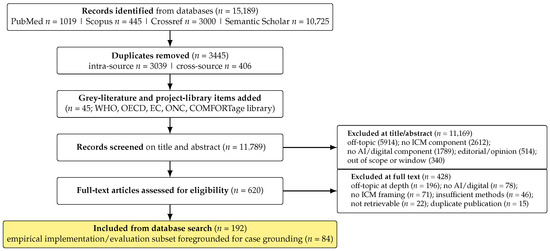
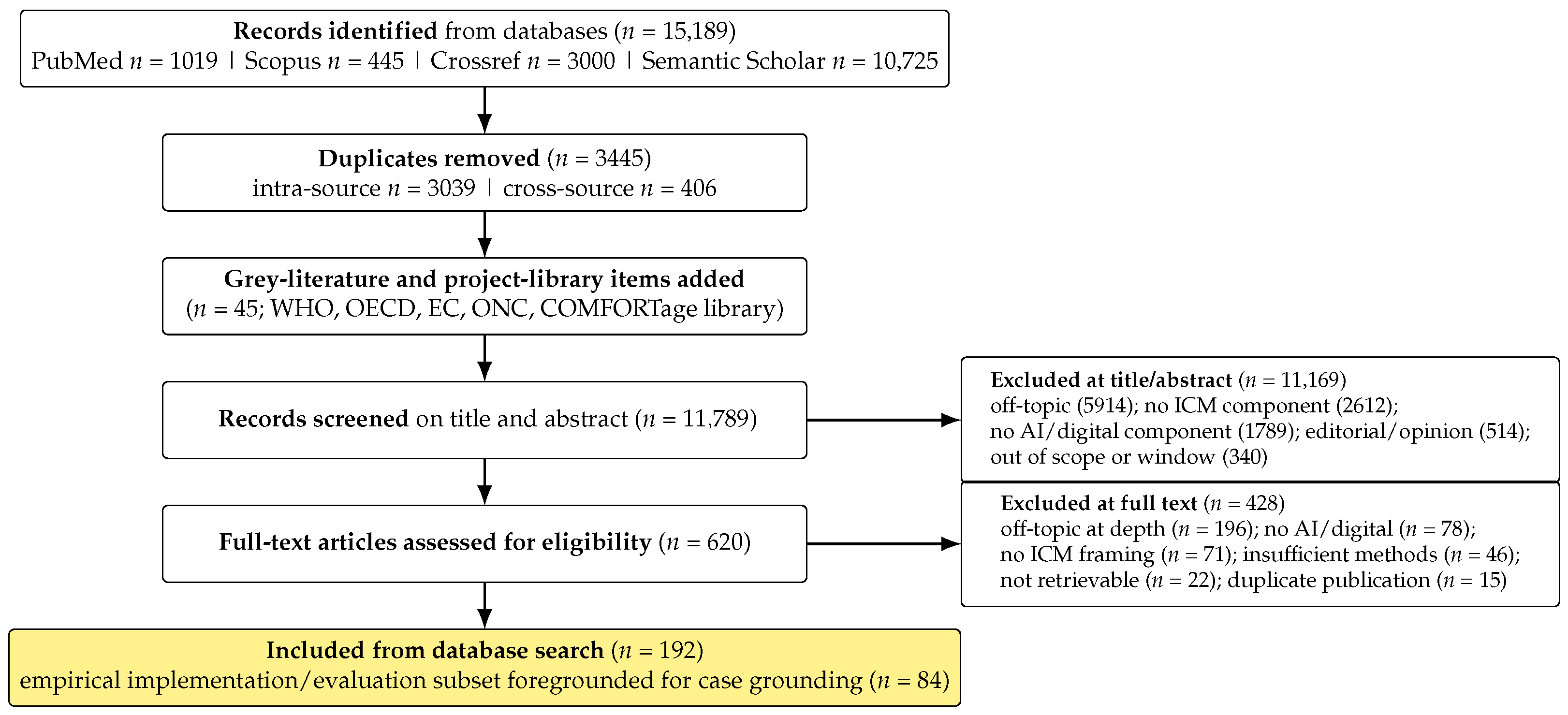
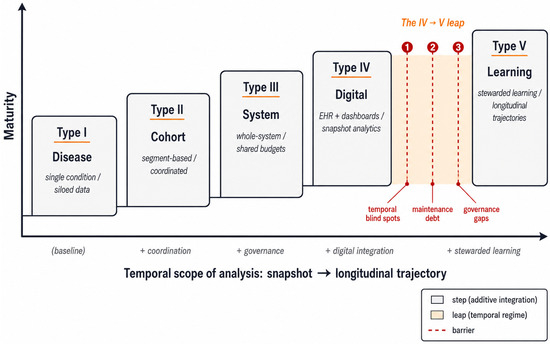
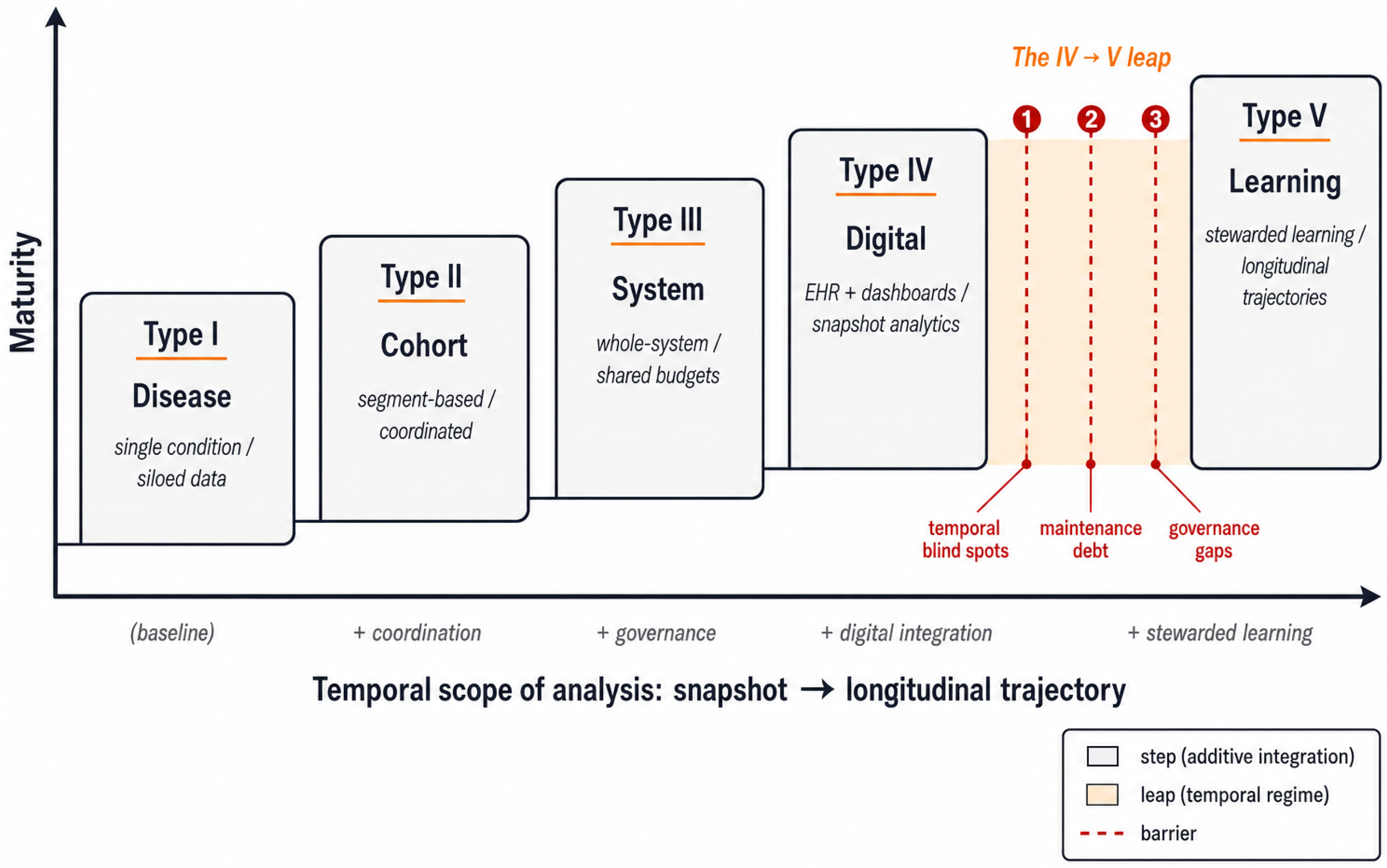
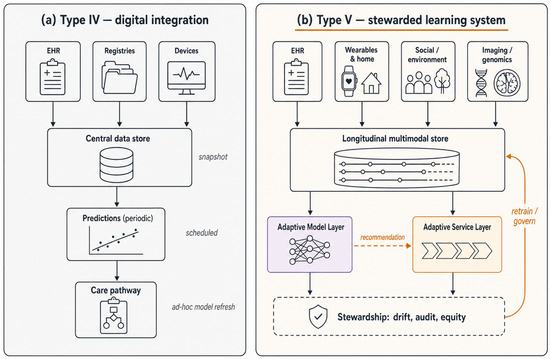
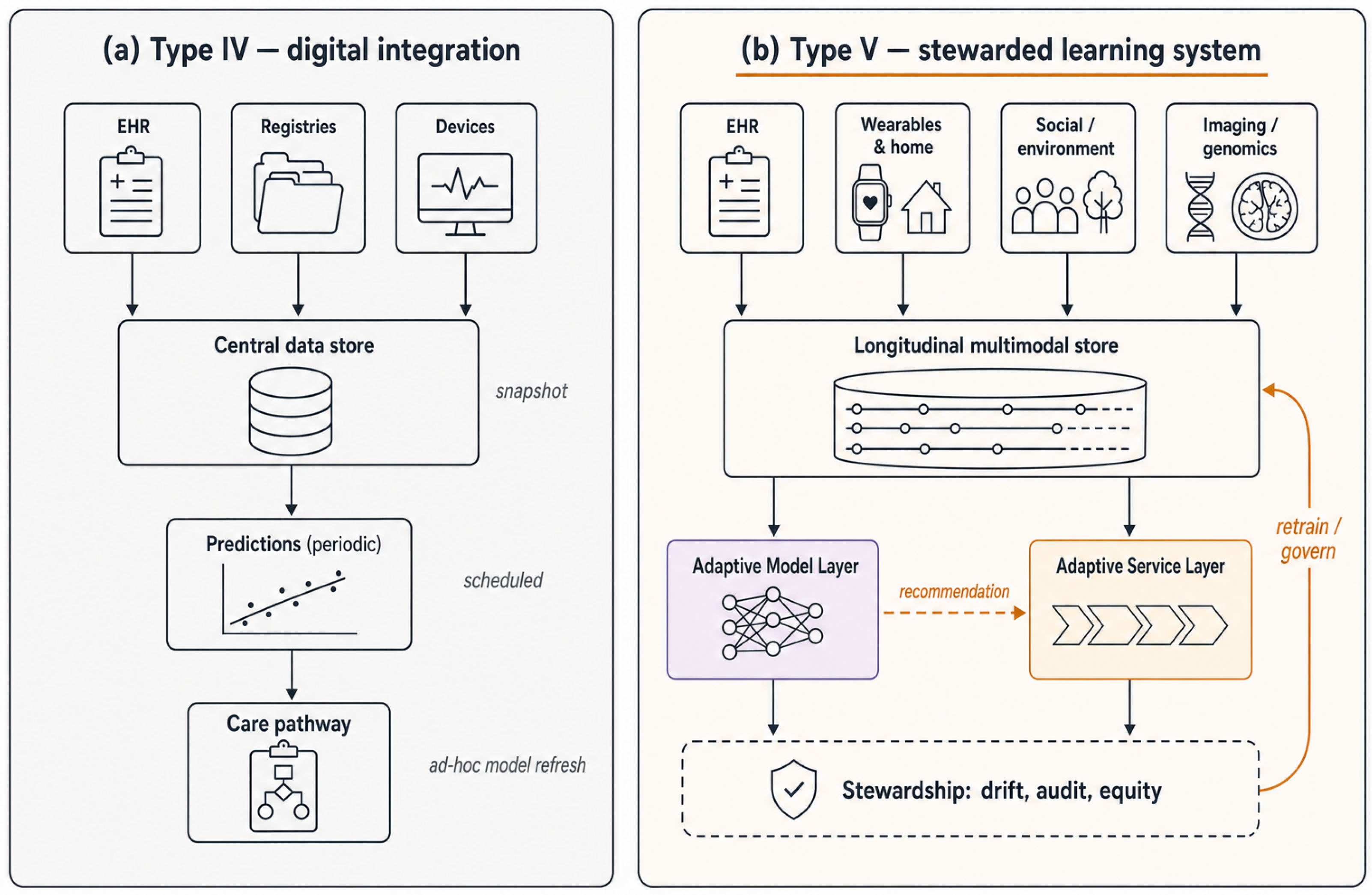
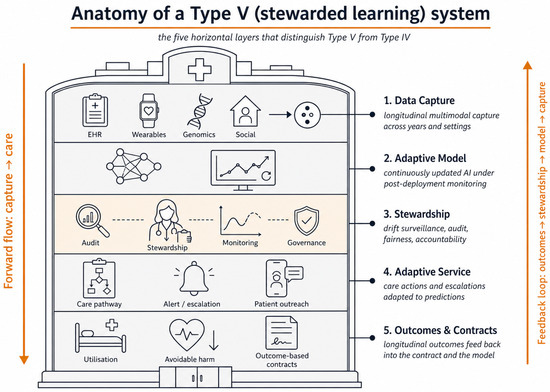
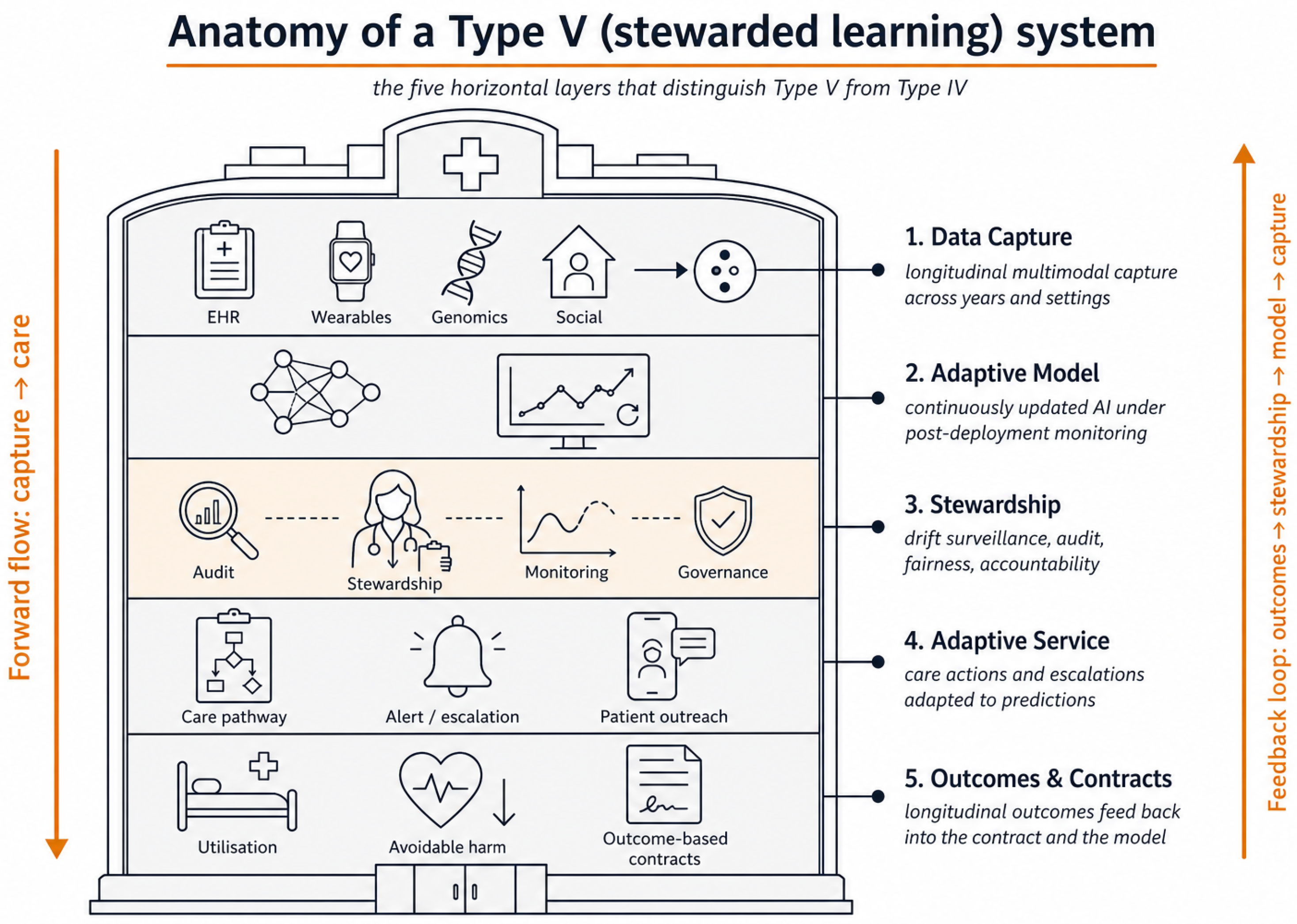
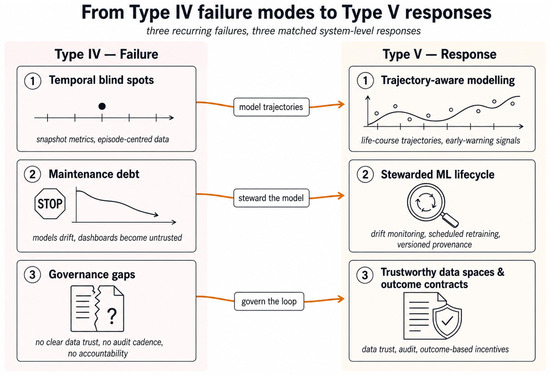
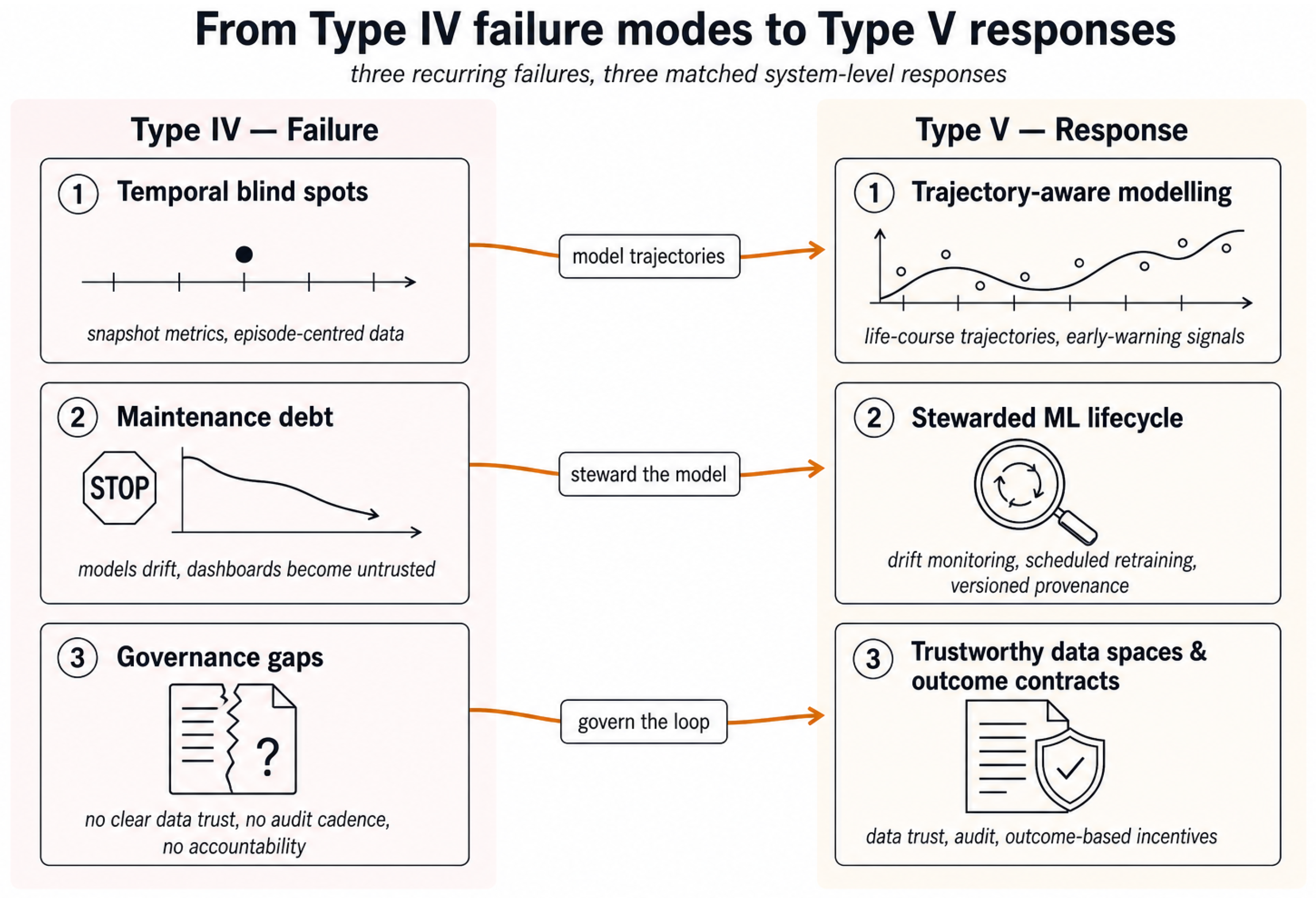
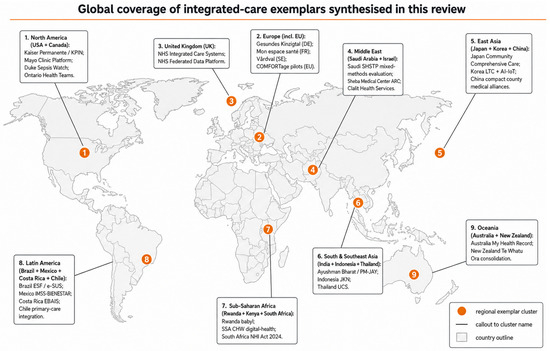
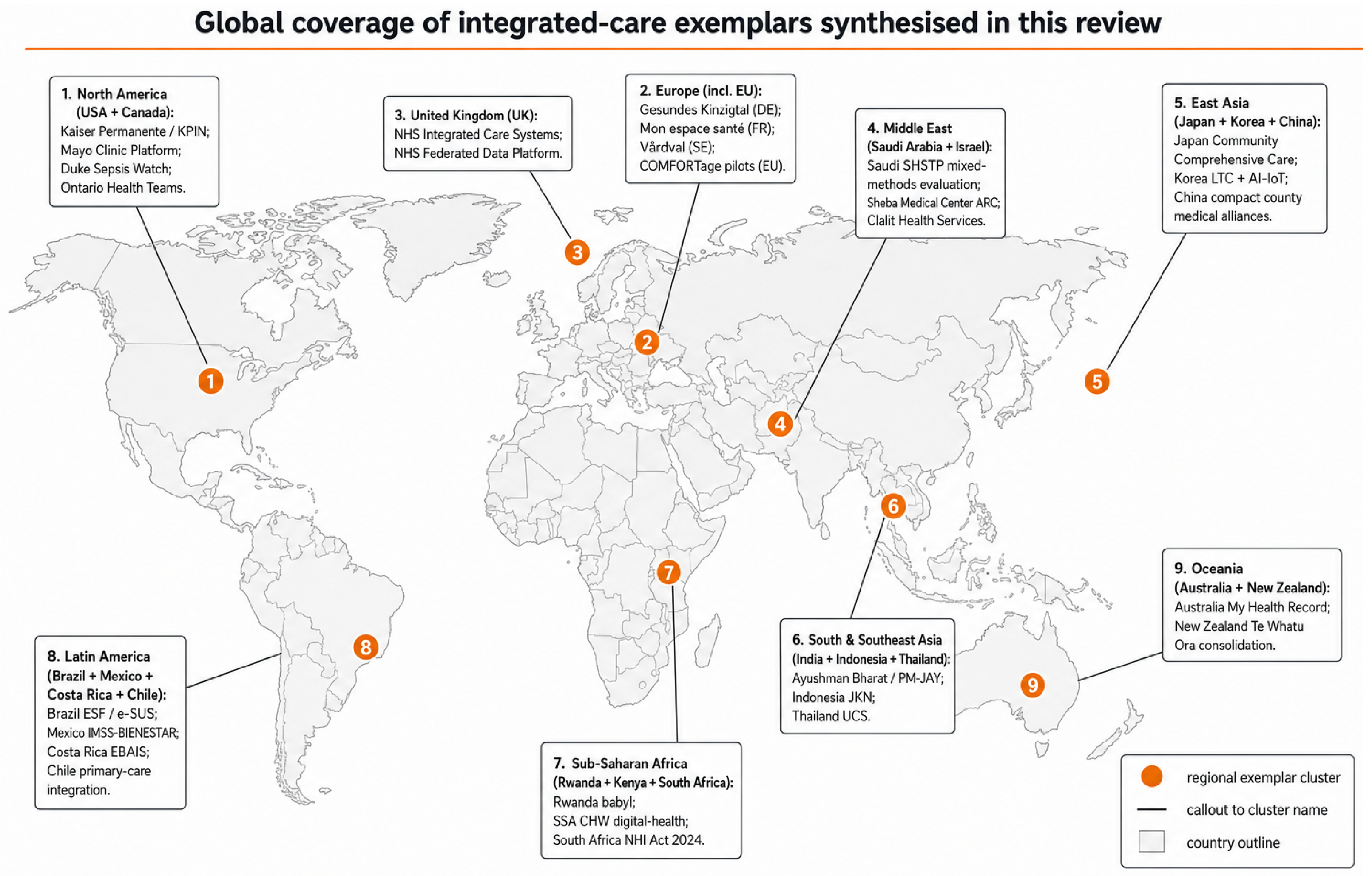
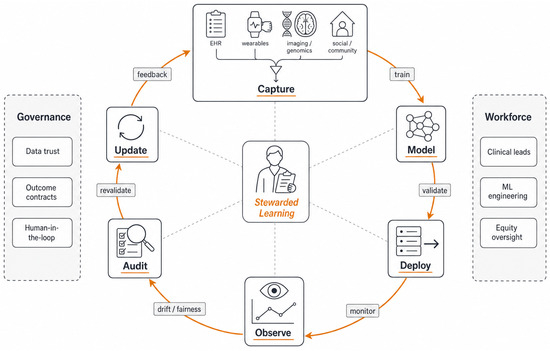
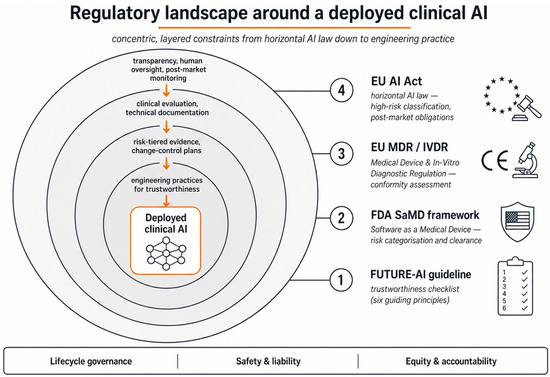

Disclaimer/Publisher’s Note: The statements, opinions and data contained in all publications are solely those of the individual author(s) and contributor(s) and not of MDPI and/or the editor(s). MDPI and/or the editor(s) disclaim responsibility for any injury to people or property resulting from any ideas, methods, instructions or products referred to in the content. |
© 2026 by the authors. Licensee MDPI, Basel, Switzerland. This article is an open access article distributed under the terms and conditions of the Creative Commons Attribution (CC BY) license.