Abstract
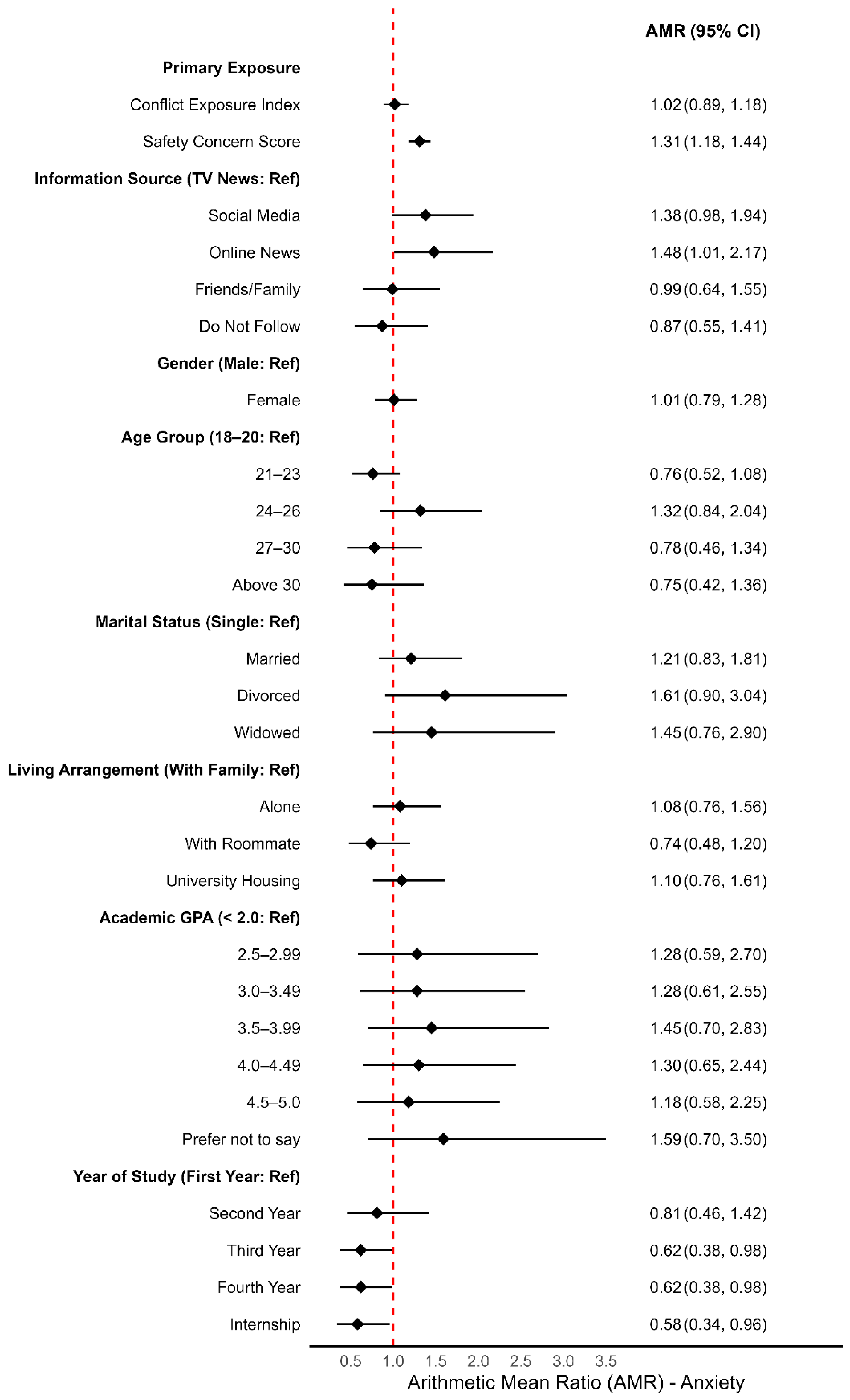
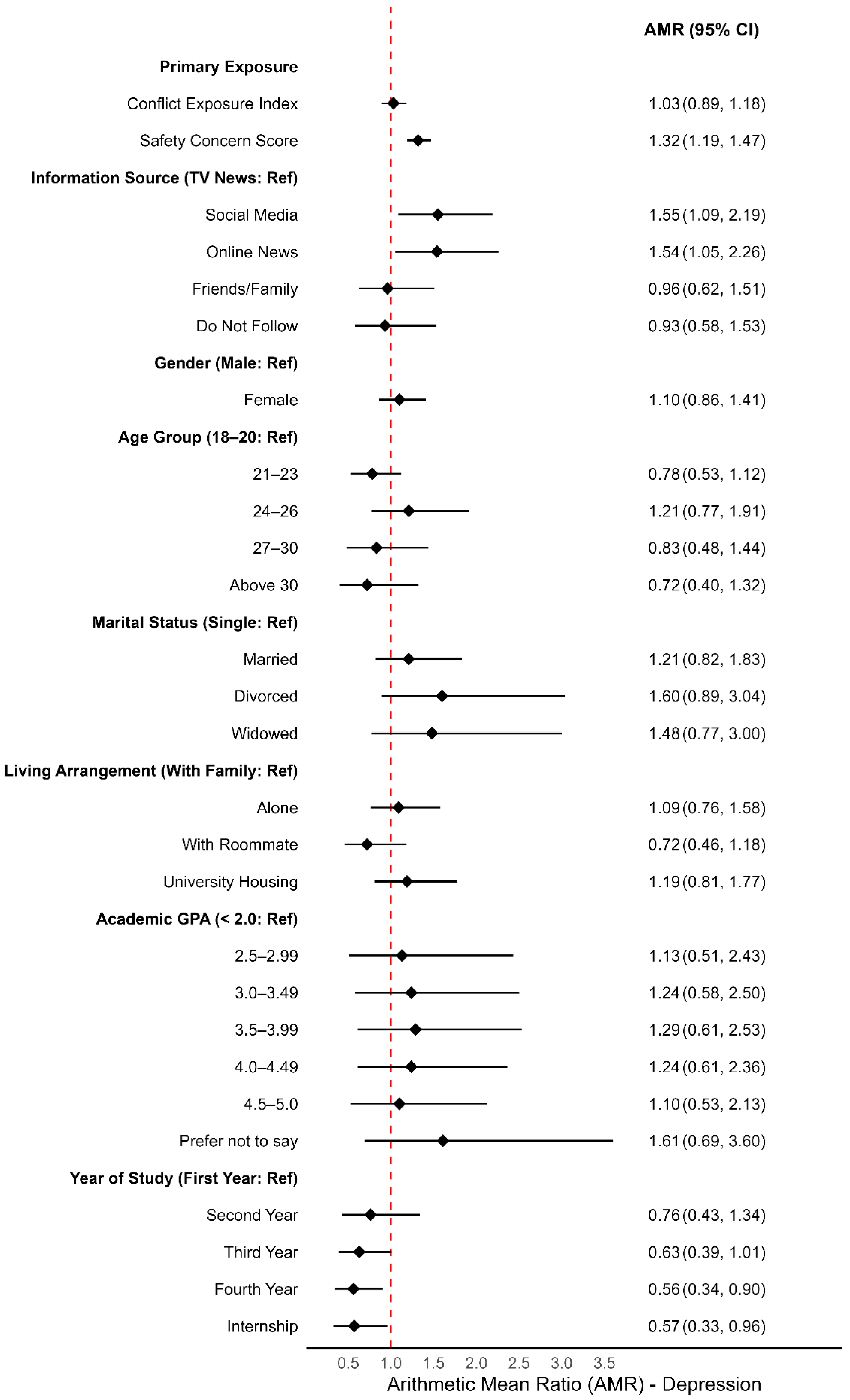
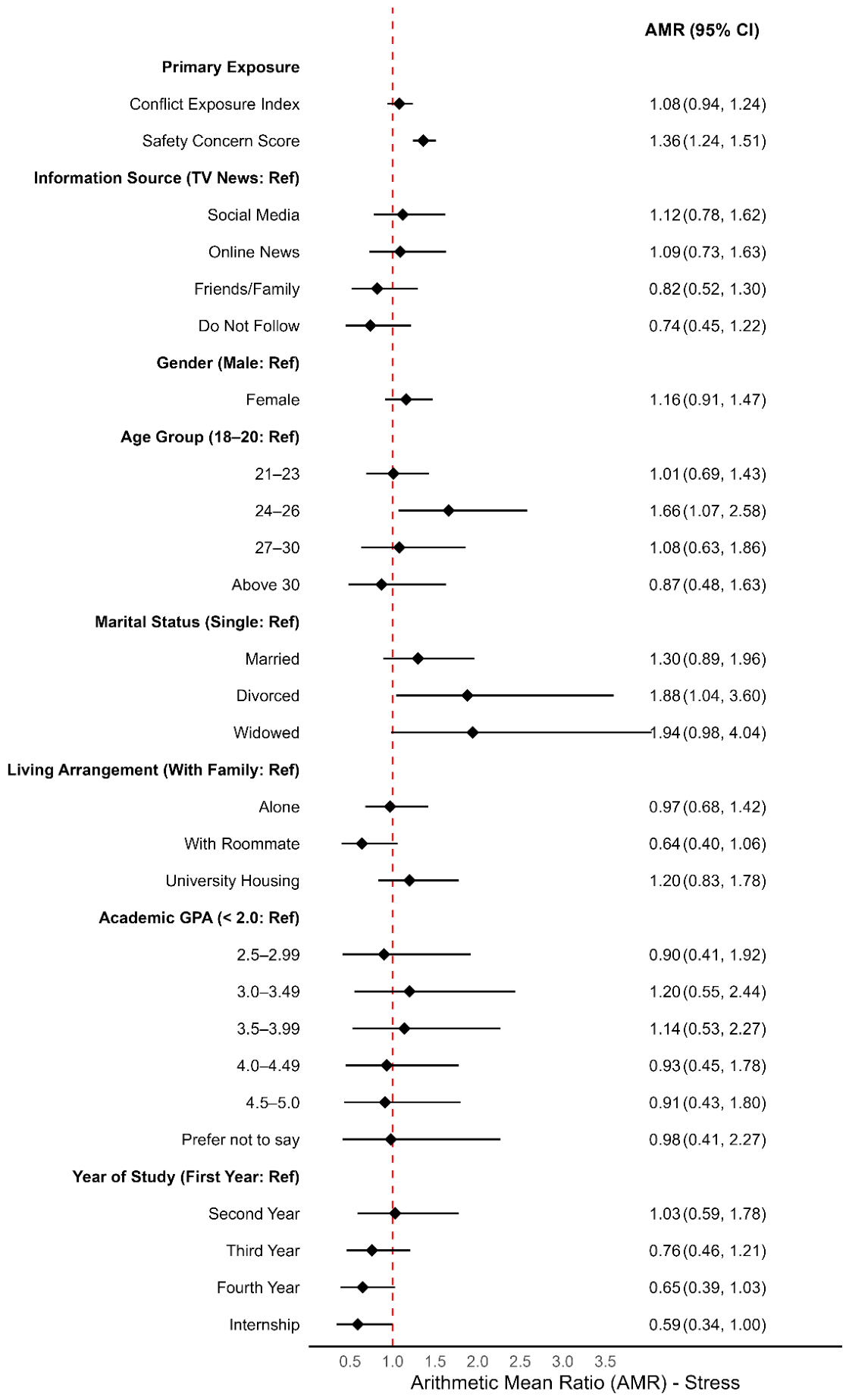
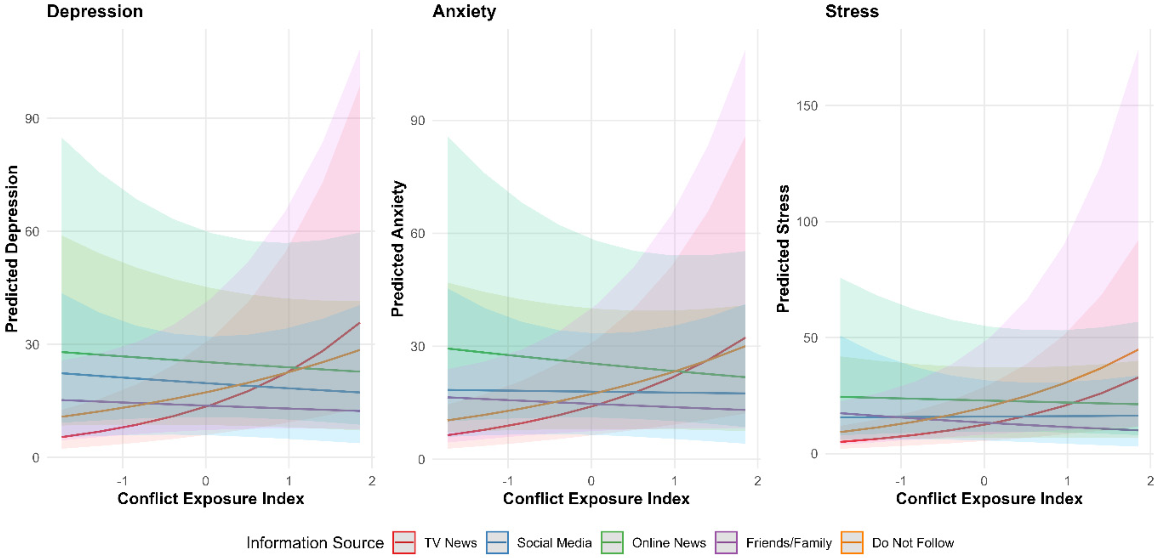
Background: Armed conflict and geopolitical instability increasingly affect mental health beyond directly exposed populations through continuous media exposure and digital information dissemination. Nursing students may be particularly vulnerable because of high academic demands, emotional sensitivity to human suffering, and intensive engagement with social media and online news platforms. This study examined the association between conflict related news exposure and depression, anxiety, and stress among nursing students in Saudi Arabia during the February 2026 regional military escalation involving Iran, and explored the role of perceived safety concern and the potential indirect associations involving sleep difficulty and study disruption. Methods: A multi-center cross sectional study was conducted among nursing students from different public universities across five regions of Saudi Arabia. Psychological distress was assessed using the Depression Anxiety Stress Scale. A composite conflict exposure index was developed from conflict news following frequency and exposure intensity measures. We used Gamma generalized linear models, interaction analyses, and structural equation modeling to evaluate associations, moderation by information source, and mediation pathways. Results were reported as arithmetic mean ratios (AMRs) with 95% confidence intervals, representing the relative change in mean psychological distress scores associated with each predictor. Models were adjusted for sociodemographic, academic, and living-related factors. Results: A total of 247 nursing students were included. Moderate to severe depression, anxiety, and stress were reported by 50.2%, 59.9%, and 32.4% of participants, respectively. Our findings showed that higher conflict exposure was associated with increased stress levels (AMR = 1.17, 95% CI: 1.02–1.34), while associations with depression (AMR = 1.14, 95% CI: 0.99–1.30) and anxiety (AMR = 1.13, 95% CI: 0.99–1.28) were weaker. Associations between conflict-related exposure and depression, anxiety, and stress were substantially attenuated after accounting for perceived safety concern, which remained strongly associated with all psychological distress outcomes (AMR = 1.32, 95% CI: 1.19–1.47), anxiety (AMR = 1.31, 95% CI: 1.18–1.44), and stress (AMR = 1.36, 95% CI: 1.24–1.51). Compared with television news users, students relying on online news demonstrated substantially higher depression (AMR = 1.92, 95% CI: 1.32–2.78), anxiety (AMR = 1.84, 95% CI: 1.29–2.64), and stress scores (AMR = 1.88, 95% CI: 1.29–2.74). Structural equation modeling identified significant indirect associations involving sleep difficulty and study disruption, whereas direct associations between exposure and psychological distress were comparatively weak. Conclusions: Conflict-related media exposure was associated with poorer mental health among nursing students, with perceived insecurity, sleep difficulties, and study disruption showing strong associations with psychological distress and patterns consistent with indirect relationships. Universities and nursing education programs should consider implementing mental health support, media literacy interventions, sleep health promotion, and psychosocial support strategies during periods of regional geopolitical instability.