Examples of Systemic Solutions for Skill-Mix Issues—An Analysis of International Experiences with a Focus on Rural Areas

 , ,
, ,
Abstract
1. Background
2. Materials and Methods
2.1. Study Design
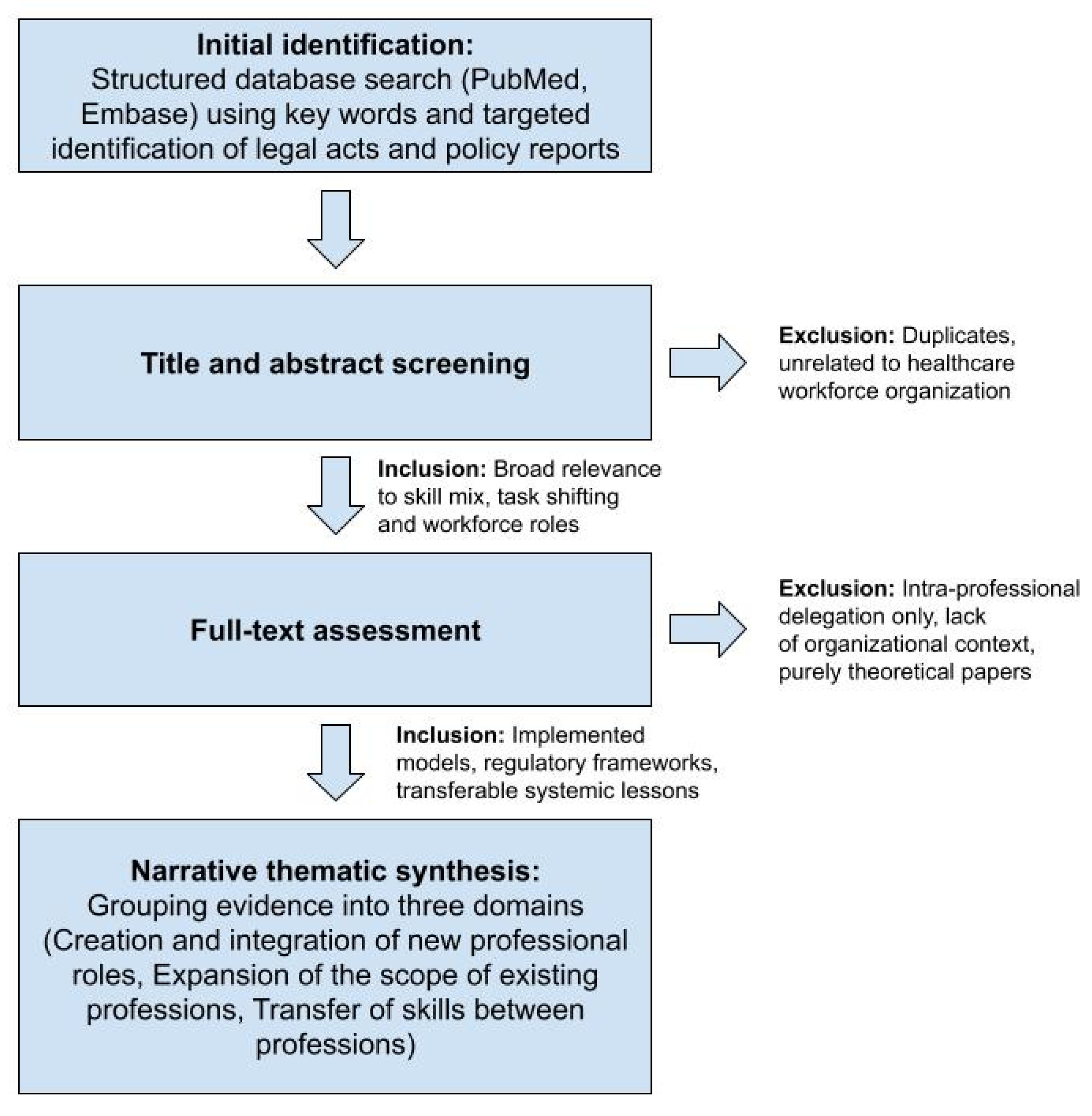
2.2. Literature Identification and Structured Database Search
- “primary care” AND “skill mix”;
- “nurse” AND “skill mix”;
- “physiotherapist” AND “task shifting”;
- “dentist” AND “skill mix”;
- “pharmacist care” AND “risk factors”.
2.3. Selection of Publications
2.4. Data Extraction and Narrative Synthesis
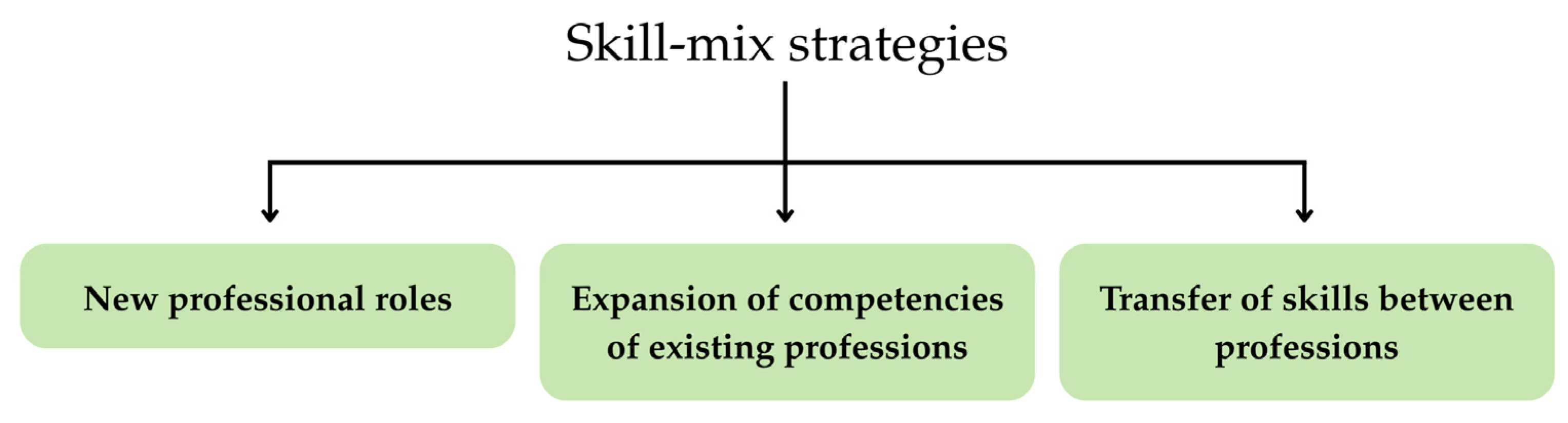
- Creation and integration of new professional roles;
- Expansion of the scope of existing professions;
- Transfer of skills between professions.
2.5. Methodological Considerations
3. Results
3.1. Creation and Integration of New Professional Roles
3.2. Expanding Scope of Existing Professions
3.3. Transfer of Skills Between Professions
3.4. Impact of Introducing Skill-Mix Methods
3.4.1. Cost-Effectiveness
3.4.2. Quality of Care
4. Discussion
5. Conclusions
Author Contributions
Funding
Institutional Review Board Statement
Informed Consent Statement
Data Availability Statement
Conflicts of Interest
Appendix A. Gray Literature Search Strategy
| Source/Organization | Website Domains | Search Terms | Dates Searched | Selection Criteria |
| World Health Organization (WHO) | who.int | “skill mix”, “task shifting”, “health workforce” | February 2025–March 2025 | Foundational frameworks and global guidelines defining skill-mix concepts and task-shifting principles. |
| National Health Service (NHS England) | england.nhs.uk | “Additional Roles Reimbursement Scheme”, “skill mix” | October 2025–November 2025 | Official guidance documents, reimbursement policies (e.g., ARRS), and systemic blueprints for integrating new roles in primary care. |
| National Health Service Scotland (NHS Scotland) | nhs.scot | “Childsmile” | October 2025–November 2025 | Institutional reports and evaluations of national prevention programs utilizing extended professional scopes (e.g., dental nurses). |
| National Health Fund (Narodowy Fundusz Zdrowia—NFZ) | nfz.gov.pl | “opieka koordynowana w POZ” [coordinated primary healthcare] | October 2025–November 2025 | Official programmatic guidelines and structural frameworks detailing the implementation of coordinated care models in Polish primary healthcare. |
| Polish Legislative Bodies and Official Legal Databases, including the Polish Ministry of Health (Ministerstwo Zdrowia) | sejm.gov.pl, isap.sejm.gov.pl, dziennikustaw.gov.pl | “ustawa o zawodach pielęgniarki i położnej” [act on the professions of nurse and midwife], “rehabilitacja lecznicza” [medical rehabilitation], “minimalne wynagrodzenie” [minimum salary] | October 2025–November 2025 | Binding national laws and ministerial regulations that explicitly authorize new scopes of practice (e.g., prescribing rights and rehabilitation tasks) and establish statutory remuneration tiers for the healthcare workforce. |
| Supreme Audit Office of Poland (Najwyższa Izba Kontroli—NIK) | nik.gov.pl | “organizacja pracy” [work organization], “ambulatoryjna opieka specjalistyczna” [outpatient specialist care] | October 2025–November 2025 | Formal state audit reports providing empirical assessments of healthcare organizations, task allocation, and workforce inefficiencies. |
| Organisation for Economic Co-operation and Development (OECD) | oecd.org | “health spending” | October 2025–November 2025 | International economic comparative health data and reports on healthcare system performance. |
| Ministry of Health, Labour and Welfare (Japan) | mhlw.go.jp | “working conditions of doctors”, “overtime” | October 2025–November 2025 | National surveys on healthcare working conditions and workforce policies. |
References
- Buchan, J.; Ball, J.; O’May, F. Determining Skill Mix in the Health Workforce: Guidelines for Managers and Health Professionals; World Health Organization: Geneva, Switzerland, 2000. [Google Scholar]
- Orkin, A.M.; Rao, S.; Venugopal, J.; Kithulegoda, N.; Wegier, P.; Ritchie, S.D.; VanderBurgh, D.; Martiniuk, A.; Salamanca-Buentello, F.; Upshur, R. Conceptual framework for task shifting and task sharing: An international Delphi study. Hum. Resour. Health 2021, 19, 61. [Google Scholar] [CrossRef] [PubMed] [PubMed Central]
- Putri, L.P.; Russell, D.J.; O’Sullivan, B.G.; Meliala, A.; Kippen, R. A critical review of definitions of rural areas in Indonesia and implications for health workforce policy and research. Health Res. Policy Syst. 2022, 20, 46. [Google Scholar] [CrossRef] [PubMed] [PubMed Central]
- Brînzac, M.G.; Kuhlmann, E.; Dussault, G.; Ungureanu, M.I.; Cherecheș, R.M.; Baba, C.O. Defining medical deserts—An international consensus-building exercise. Eur. J. Public Health 2023, 33, 785–788. [Google Scholar] [CrossRef] [PubMed] [PubMed Central]
- Fulton, B.D.; Scheffler, R.M.; Sparkes, S.P.; Auh, E.Y.; Vujicic, M.; Soucat, A. Health workforce skill mix and task shifting in low income countries: A review of recent evidence. Hum. Resour. Health 2011, 9, 1. [Google Scholar] [CrossRef] [PubMed] [PubMed Central]
- Tsiachristas, A.; Wallenburg, I.; Bond, C.M.; Elliot, R.F.; Busse, R.; van Exel, J.; Mölken, M.R.-V.; de Bont, A. Costs and effects of new professional roles: Evidence from a literature review. Health Policy 2015, 119, 1176–1187. [Google Scholar] [CrossRef] [PubMed]
- NHS England and NHS Improvement. Network Contract Directed Enhanced Service: Additional Roles Reimbursement Scheme—Guidance. December 2019. Available online: https://www.england.nhs.uk/wp-content/uploads/2019/12/network-contract-des-additional-roles-reimbursement-scheme-guidance-december2019.pdf (accessed on 6 November 2025).
- Gibson, J.; McBride, A.; Checkland, K.; Goff, M.; Hann, M.; Hodgson, D.; McDermott, I.; Sutton, M.; Spooner, S. General practice managers’ motivations for skill mix change in primary care: Results from a cross-sectional survey in England. J. Health Serv. Res. Policy 2023, 28, 5–13. [Google Scholar] [CrossRef] [PubMed] [PubMed Central]
- Nelson, P.A.; Bradley, F.; Martindale, A.M.; McBride, A.; Hodgson, D. Skill-mix change in general practice: A qualitative comparison of three ‘new’ non-medical roles in English primary care. Br. J. Gen. Pract. 2019, 69, e489–e498. [Google Scholar] [CrossRef] [PubMed] [PubMed Central]
- Kowalska-Bobko, I.; Galazka-Sobotka, M.; Fraczkiewicz-Wronka, A.; Badora-Musial, K.; Buchelt, B. Skill mix in medical and about medical professions. Med Pr. 2020, 71, 337–352. [Google Scholar] [CrossRef] [PubMed]
- Narodowy Fundusz Zdrowia. Coordinated Care in Primary Health Care; Narodowy Fundusz Zdrowia: Warszawa, Poland, 2024. Available online: https://www.nfz.gov.pl/o-nfz/programy-i-projekty/projekty/opieka-koordynowana-w-poz/ (accessed on 6 November 2025). (In Polish)
- Reeves, E.; Liebig, B.; Schweighoffer, R. Care Coordination in Palliative Home Care: Who Plays the Key Role? Int. J. Integr. Care 2020, 20, 15. [Google Scholar] [CrossRef] [PubMed] [PubMed Central]
- Wanyonyi, K.L.; Radford, D.R.; Harper, P.R.; Gallagher, J.E. Alternative scenarios: Harnessing mid-level providers and evidence-based practice in primary dental care in England through operational research. Hum. Resour. Health 2015, 13, 78. [Google Scholar] [CrossRef] [PubMed] [PubMed Central]
- Conrad, D.A.; Lee, R.S.; Milgrom, P.; Huebner, C.E. Estimating determinants of dentist productivity: New evidence. J. Public Health Dent. 2010, 70, 262–268. [Google Scholar] [CrossRef] [PubMed] [PubMed Central]
- Ivanoff, C.S.; Andonov, B.; Hottel, T.L. Expanding the functions of dental assistants in Bulgaria and perceptions about their role in the Bulgarian healhcare workforce. Folia Med. 2023, 65, 283–294. [Google Scholar] [CrossRef] [PubMed]
- Childsmile. Available online: https://www.childsmile.nhs.scot (accessed on 28 October 2025).
- Gnich, W.; Deas, L.; Mackenzie, S.; Burns, J.; Conway, D.I. Extending dental nurses’ duties: A national survey investigating skill-mix in Scotland’s child oral health improvement programme (Childsmile). BMC Oral Health 2014, 14, 137. [Google Scholar] [CrossRef] [PubMed] [PubMed Central]
- Act of 22 July 2014 Amending the Act on the Professions of Nurse and Midwife and Certain Other Acts. Journal of Laws of 2014, Item 1136. Available online: https://isap.sejm.gov.pl/isap.nsf/DocDetails.xsp?id=WDU20140001136 (accessed on 28 October 2025).
- Regulation of the Minister of Health of 13 December 2018 Amending the Regulation on Guaranteed Benefits in the Field of Medical Rehabilitation. Journal of Laws of 2018, Item 2396. Available online: https://isap.sejm.gov.pl/isap.nsf/DocDetails.xsp?id=WDU20180002396 (accessed on 28 October 2025).
- Lovink, M.H.; van Vught, A.; Persoon, A.; Schoonhoven, L.; Koopmans, R.; Laurant, M.G.H. Skill mix change between general practitioners, nurse practitioners, physician assistants and nurses in primary healthcare for older people: A qualitative study. BMC Fam. Pract. 2018, 19, 51. [Google Scholar] [CrossRef] [PubMed] [PubMed Central]
- van Erp, R.M.A.; van Doorn, A.L.; van den Brink, G.T.; Peters, J.W.B.; Laurant, M.G.H.; van Vught, A.J. Physician Assistants and Nurse Practitioners in Primary Care Plus: A Systematic Review. Int. J. Integr. Care 2021, 21, 6. [Google Scholar] [CrossRef] [PubMed] [PubMed Central]
- Huang, L.C.; Lee, J.L.; Liang, Y.W.; Hsu, M.Y.; Cheng, J.F.; Mei, T.T. The skill mix model: A preliminary study of changing nurse role functions in Taiwan. J. Nurs. Res. 2011, 19, 220–229. [Google Scholar] [CrossRef] [PubMed]
- Paier-Abuzahra, M.; Posch, N.; Jeitler, K.; Semlitsch, T.; Radl-Karimi, C.; Spary-Kainz, U.; Horvath, K.; Siebenhofer, A. Effects of task-shifting from primary care physicians to nurses: An overview of systematic reviews. Hum. Resour. Health 2024, 22, 74. [Google Scholar] [CrossRef] [PubMed] [PubMed Central]
- Santschi, V.; Chiolero, A.; Burnand, B.; Colosimo, A.L.; Paradis, G. Impact of pharmacist care in the management of cardiovascular disease risk factors: A systematic review and meta-analysis of randomized trials. Arch. Intern. Med. 2011, 171, 1441–1453. [Google Scholar] [CrossRef] [PubMed]
- Tsuyuki, R.T.; Al Hamarneh, Y.N.; Jones, C.A.; Hemmelgarn, B.R. The Effectiveness of Pharmacist Interventions on Cardiovascular Risk: The Multicenter Randomized Controlled RxEACH Trial. J. Am. Coll. Cardiol. 2016, 67, 2846–2854. [Google Scholar] [CrossRef] [PubMed]
- Chaudhri, K.; Caleres, G.; Saunders, S.; Michail, P.; Di Tanna, G.L.; Lung, T.; Liu, H.; Joshi, R. Does Collaboration between General Practitioners and Pharmacists Improve Risk Factors for Cardiovascular Disease and Diabetes? A Systematic Review and Meta-Analysis. Glob. Heart 2023, 18, 7. [Google Scholar] [CrossRef] [PubMed] [PubMed Central]
- Swieczkowski, D.; Merks, P.; Gruchala, M.; Jaguszewski, M.J. The role of the pharmacist in the care of patients with cardiovascular diseases. Kardiol. Pol. 2016, 74, 1319–1326. [Google Scholar] [CrossRef] [PubMed]
- Birand, N.; Bosnak, A.S.; Diker, O.; Abdikarim, A.; Basgut, B. The role of the pharmacist in improving medication beliefs and adherence in cancer patients. J. Oncol. Pharm. Pract. 2019, 25, 1916–1926. [Google Scholar] [CrossRef] [PubMed]
- NHS England. More than 400 Pharmacists to be Recruited to GP Surgeries by Next Year. Available online: https://www.england.nhs.uk/2015/11/pharmacists-recruited/ (accessed on 28 October 2025).
- Anderson, C.; Zhan, K.; Boyd, M.; Mann, C. The role of pharmacists in general practice: A realist review. Res. Soc. Adm. Pharm. 2019, 15, 338–345. [Google Scholar] [CrossRef] [PubMed]
- Kechichian, A.; Desmeules, F.; Girard, P.; Terrisse, H.; Vermorel, C.; Pinsault, N. Physiotherapists as first-contact practitioners for patients with low back pain in French primary care: A pragmatic cluster randomised controlled trial. BMC Health Serv. Res. 2024, 24, 1427. [Google Scholar] [CrossRef] [PubMed] [PubMed Central]
- Kechichian, A.; Desmeules, F.; Girard, P.; Pinsault, N. Acceptability of a task sharing and shifting model between family physicians and physiotherapists in French multidisciplinary primary healthcare centres: A cross-sectional survey. Fam. Med. Community Health 2022, 10, e001644. [Google Scholar] [CrossRef] [PubMed] [PubMed Central]
- Stotter, G.; McKinlay, E.; Darlow, B. Advanced practice physiotherapists in primary health care: Stakeholders’ views of a new scope of practice. J. Prim. Health Care 2024, 16, 160–169. [Google Scholar] [CrossRef] [PubMed]
- Spooner, S.; McDermott, I.; Goff, M.; Hodgson, D.; McBride, A.; Checkland, K. Processes supporting effective skill-mix implementation in general practice: A qualitative study. J. Health Serv. Res. Policy 2022, 27, 269–277. [Google Scholar] [CrossRef] [PubMed] [PubMed Central]
- Supreme Audit Office of Poland. Organization of Work and Scope of Duties in Outpatient Specialist Care. Available online: https://www.nik.gov.pl/plik/id,24728,vp,27476.pdf (accessed on 28 October 2025).
- Lack, A.; Saddik, M.; Engels, P.; Lethbridge, S.; Nenshi, R. The emergence of the physician assistant role in a Canadian acute care surgery setting. Can. J. Surg. 2020, 63, E442–E448. [Google Scholar] [CrossRef] [PubMed] [PubMed Central]
- Grosso, S.; Longhini, J.; Tonet, S.; Bernard, I.; Corso, J.; de Marchi, D.; Dorigo, L.; Funes, G.; Lussu, M.; Oppio, N.; et al. Prevalence and reasons for non-nursing tasks as perceived by nurses: Findings from a large cross-sectional study. J. Nurs. Manag. 2021, 29, 2658–2673. [Google Scholar] [CrossRef] [PubMed] [PubMed Central]
- Michel, O.; Garcia Manjon, A.J.; Pasquier, J.; Ortoleva Bucher, C. How do nurses spend their time? A time and motion analysis of nursing activities in an internal medicine unit. J. Adv. Nurs. 2021, 77, 4459–4470. [Google Scholar] [CrossRef] [PubMed] [PubMed Central]
- Coales, K.; Jennings, H.; Afaq, S.; Arsh, A.; Bhatti, M.; Siddiqui, F.; Siddiqi, N. Perspectives of health workers engaging in task shifting to deliver health care in low- and middle-income countries: A qualitative evidence synthesis. Glob. Health Action 2023, 16, 2228112. [Google Scholar] [CrossRef] [PubMed] [PubMed Central]
- OECD Health Spending. Available online: https://www.oecd.org/en/data/indicators/health-spending.html (accessed on 28 October 2025).
- Marshal of the Sejm of the Republic of Poland. Announcement of 28 September 2022 on the Publication of the Consolidated Text of the Act on Determining the Minimum Basic Salary of Certain Employees Employed in Healthcare Entities. Journal of Laws 2022, Item 2139. Available online: https://dziennikustaw.gov.pl/DU/2022/2139 (accessed on 6 November 2025).
- OECD. OECD Economic Surveys: Poland 2025; OECD Publishing: Paris, France, 2025; Available online: https://www.oecd.org/content/dam/oecd/en/publications/reports/2025/02/oecd-economic-surveys-poland-2025_3d6f79bd/483d3bb9-en.pdf (accessed on 6 November 2025).
- Lovink, M.H.; van Vught, A.; Persoon, A.; Koopmans, R.; Laurant, M.G.H.; Schoonhoven, L. Skill mix change between physicians, nurse practitioners, physician assistants, and nurses in nursing homes: A qualitative study. Nurs. Health Sci. 2019, 21, 282–290. [Google Scholar] [CrossRef] [PubMed] [PubMed Central]
- Das, S.; Grant, L.; Fearon, D. Mapping the global landscape of task shifting and sharing: Trends, geographic disparities, and terminology from 1970 to 2022. Crit. Public Health 2025, 35, 2501495. [Google Scholar] [CrossRef]
- Malik, M.; Penalosa, M.; Busch, I.M.; Burhanullah, H.; Weston, C.; Weeks, K.; Connors, C.; Michtalik, H.J.; Everly, G.; Wu, A.W. Rural healthcare workers’ well-being: A systematic review of support interventions. Fam. Syst. Health 2024, 42, 355–374. [Google Scholar] [CrossRef] [PubMed] [PubMed Central]
- Ministry of Health, Labour and Welfare. Survey on the Working Conditions of Doctors. 2020. Available online: https://www.mhlw.go.jp/content/10800000/000652880.pdf (accessed on 6 November 2025).
- Okoroafor, S.C.; Christmals, C.D. Optimizing the roles of health workers to improve access to health services in Africa: An implementation framework for task shifting and sharing for policy and practice. BMC Health Serv. Res. 2023, 23, 843. [Google Scholar] [CrossRef] [PubMed] [PubMed Central]



| Profession | Scope of Competencies | Benefits |
|---|---|---|
| Specialist nurses/registered nurses | Diagnosis, treatment, prescribing medications, and care for chronically ill patients | Faster access to care; reduced burden on physicians |
| Nurses | Administrative duties (medical documentation, patient coordination) | Reduced administrative workload for physicians |
| Advanced nurse practitioner (ANP) | Diagnosis, treatment, prescribing medications, and patient education | Improved access to care; reduced physician workload; enhanced clinical outcomes |
| Nurse aides (NAs, Taiwan) | Support for nurses in daily duties | More nursing time dedicated to patient care; cost reduction |
| Clinical pharmacists | Medication reviews, follow-up consultations, and patient education | Fewer medication errors; improved patient adherence; reduced burden on physicians |
| Pharmacists in primary care (Great Britain) | Medication reviews, monitoring of chronic treatments, and patient consultations | Improved pharmacological care; reduced physician workload |
| Paramedics in primary care | Support in managing chronically ill patients | Relief for primary care teams; improved access to care |
| Physiotherapists | Diagnosis of musculoskeletal disorders, issuing sick leave certificates, and prescribing medications | Faster access to rehabilitation; reduced burden on general practitioners |
| Doctors’ assistants | Support in diagnosis; conducting parts of patient consultations | Increased appointment availability; improved organization of physicians’ work |
| Healthcare coordinators | Appointment scheduling, patient record management, initial qualification for diagnostic tests | Streamlined administration; improved care pathway coordination |
| Expanded function dental auxiliaries (EFDAs) | Extended dental assistant duties (e.g., applying dental sealant) | Increased number of dental procedures; reduced workload for dentists |
| Dental assistants (Scotland, “Childsmile” program) | Oral health prevention, dietary advice, and fluoride application | Improved preventive care; reduced burden on dentists |
| Author (Year) | Country | Setting | Cadre(s) Involved | Skill-Mix Strategy | Regulatory/Financing Context | Outcomes Reported | Study Type |
|---|---|---|---|---|---|---|---|
| Tsiachristas et al. (2015) [6] | High-income countries (mostly the UK, USA, Netherlands, and Canada) | Various settings, including primary, ambulatory, acute, and long-term care, often focusing on chronic diseases | Specialist nurses (SNs) and advanced nurse practitioners (ANPs) compared to traditional doctors | Task substitution, involving extended roles (SNs) or new roles (ANPs) for tasks like follow-ups, case management, and first consultations | Driven by rising healthcare expenditure and the need for cost-containment and efficiency improvements | Access, patient information, satisfaction, clinical outcomes, quality of life, quality of care, mortality, utilization, and costs | Systematic literature review comprising 41 studies (predominantly RCTs) |
| NHS England and NHS Improvement (2019) [7] | England (UK) | Primary care/general practice (specifically primary care networks—PCNs) | Clinical pharmacists, social prescribing link workers, physician associates, physiotherapists, and paramedics | Expanding multidisciplinary teams by recruiting up to 20,000 new full-time equivalent (FTE) posts across these five roles to address workforce shortages in general practice | Implementation of the “Additional Roles Reimbursement Scheme” under the Network Contract DES framework. It provides 70–100% salary reimbursement strictly for demonstrably new (additional) staff, preventing funds from being used to fill existing vacancies | N/A (This is not an empirical research study, so no clinical or economic outcomes are measured) | Official policy guidance/implementation framework |
| Gibson et al. (2022) [8] | England (UK) | Primary care/GP practices | Advanced nurse practitioners, specialist nurses, healthcare assistants, physician associates, paramedics, and pharmacists | Employing diverse non-medical staff to match patient needs, increase appointment availability, and release GP time | Driven by GP shortages and increasing patient complexity; financially supported by the Additional Roles Reimbursement Scheme (ARRS) via Primary Care Networks (PCNs) | Practice managers’ motivations for hiring, external funding utilization, and ideal vs. current workforce preferences | Cross-sectional survey |
| Nelson et al. (2019) [9] | England (UK) | Primary care/general practice | Advanced practitioners (APs), physician associates (PAs), and practice pharmacists (PPs) | Introducing non-medical roles to work alongside GPs to fill workforce gaps, cope with demand, and release GP time | Driven by GP shortages; schemes funded via local CCGs and Health Education England (HEE); lack of statutory regulation for PAs is noted as a barrier to integration | Qualitative implementation experiences: role definition, professional boundaries, risk management, training-practice gaps, managing expectations, and role sustainability | Qualitative comparative study (interviews and focus groups) |
| Kowalska-Bobko et al. (2020) [10] | Poland (with references to selected EU countries) | Various settings, including primary care, hospitals, emergency medical services, and rehabilitation | Nurses, midwives, paramedics, physiotherapists, and medical coordinators | Role expansion and task substitution (e.g., independent prescribing for nurses, independent visits for physiotherapists, and extended duties for paramedics) | Driven by severe medical staff shortages and demographic changes; enabled by new national legislation expanding professional rights and the introduction of coordinated care programs | N/A (descriptive review; no empirical clinical or economic outcomes measured) | Review article/policy analysis |
| Narodowy Fundusz Zdrowia (NFZ) (2024) [11] | Poland | Primary care (POZ) | Doctors, nurses, care coordinators, managers, dietitians, and other medical/non-medical staff | Upskilling and training multidisciplinary teams across 1500 facilities to effectively implement and manage coordinated care | EU-funded project (European Social Fund Plus) executed by the Ministry of Health and NFZ (~121.6M PLN) to integrate healthcare and improve access, especially in rural areas | N/A (this is a project description, not an empirical study; it outlines expected results like new training modules, guidelines, and a maturity assessment tool) | Official project description/implementation framework |
| Reeves et al. (2020) [12] | Switzerland | Primary palliative home care | General practitioners (GPs), nurses, and family members | Informal role shifting where nurses and family members assume care coordination and decision-making responsibilities, often substituting for unavailable GPs | Absence of standardized care coordination practices in Switzerland; lack of formal financial or psychosocial reimbursement for family members undertaking coordination tasks | Qualitative experiences, including role ambiguity, interprofessional conflicts, overburdened family members, and coping strategies like clear communication and team stability | Qualitative study (semi-structured interviews) |
| Wanyonyi et al. (2015) [13] | England (UK) | Primary dental care (state-funded National Health Service) | Dentists and mid-level dental providers/dental care professionals (DCPs), specifically dental therapists and hygienists | Task sharing and delegation of diagnostic tasks, preventive care (e.g., fluoride varnish), and routine restorative treatments from dentists to dental therapists | Driven by cost-containment and changing population oral health needs; facilitated by “Direct Access” regulations allowing patients to see DCPs without a dentist referral, though NHS funding mechanisms remain a barrier | Estimated clinical time, whole-time equivalent (WTE) workforce numbers, and salary costs across four different delegation scenarios | Operational research (supply and demand simulation modeling/scenario testing) |
| Conrad et al. (2010) [14] | USA (Oregon) | Primary dental care/general dental practices | General dentists, dental assistants, and dental hygienists | Utilizing dental auxiliaries (assistants and hygienists) alongside dentists to maximize practice productivity and output | Driven by rising dental expenditures, price inflation, and access gaps; analyzes the impact of practice ownership (owner vs. non-owner) and payer mix (% Medicaid) on efficiency | Dentist productivity (measured as patient visits per week) as a function of labor inputs (dentist hours, number of auxiliaries) and capital inputs (number of operatories) | Cross-sectional survey and economic analysis (OLS regression and path analysis) |
| Ivanoff et al. (2023) [15] | Bulgaria | Dental care/dental practices | Dentists and dental assistants/expanded function dental auxiliaries (EFDAs) | Expanding the skillset of dental assistants to perform specific expanded duties (e.g., restorative procedures) without the personal supervision of a dentist | Driven by severe regional disparities in dentist distribution, demographic crisis, and high unmet oral health needs among rural and minority populations; currently restricted by labor laws requiring “personal supervision” by a dentist | Perceptions of dentists and assistants regarding task delegation, expected practice efficiency, required training, and patient trust | Cross-sectional survey |
| Childsmile/NHS Scotland (N/A) [16] | Scotland (UK) | Public health/primary dental care | NHS dentists, health professionals, educators, and community/voluntary sector workers | Multi-sector collaboration to promote preventive oral health and ensure access to dental services for children | State-supported (NHS) public health program focused on reducing oral health inequalities for all children, regardless of income or background | N/A (descriptive program overview) | Program description |
| Gnich et al. (2014) [17] | Scotland (UK) | General dental practice | General dental practitioners (GDPs) and extended-duty dental nurses (EDDNs) | Role supplementation: EDDNs delivering clinical preventive care (e.g., fluoride varnish application, dietary and oral hygiene advice) traditionally undertaken by GDPs | Driven by the national “Childsmile” program to tackle child oral health inequalities; facilitated by regulatory changes extending dental nurses’ duties, and supported by financial incentives (fees for preventive care) | EDDNs’ role satisfaction, perceived utility of training, self-reported frequency of preventive delivery, and behavioral mediators (motivation, skills, barriers/facilitators) | Cross-sectional postal survey |
| Parliament of Poland (2014) [18] | Poland | National healthcare system | Nurses and midwives | Legal authorization for qualified nurses and midwives to independently prescribe certain medications and medical devices and issue diagnostic referrals | A national legislative act amending healthcare laws to integrate nurse/midwife prescriptions into the public reimbursement system (NFZ) | N/A (this is a legal document establishing new rights and restrictions and prescribing procedures, not an empirical study reporting outcomes) | Legislation/legal act |
| Minister of Health, Poland (2018) [19] | Poland | National healthcare system (specifically, outpatient and home-based medical rehabilitation) | Physiotherapists and physicians | Expanding physiotherapists’ autonomy to independently conduct “physiotherapy visits,” plan treatments, and modify physician referrals (requiring consultation only for certain specialists) | A national regulation standardizing the “physiotherapist” title and expanding their independent competencies within guaranteed medical rehabilitation benefits | N/A (Legal regulation establishing new physiotherapy procedures, not an empirical study) | Legislation/legal regulation |
| Lovink et al. (2018) [20] | The Netherlands | Primary healthcare (general practices and community care) focusing on older people | General practitioners (GPs), nurse practitioners (NPs), physician assistants (PAs), and registered nurses (RNs) | Introducing NPs, PAs, and RNs as physician substitutes or supplements to provide routine consultations and proactive healthcare (e.g., geriatric assessments, case management) in order to reduce GP workload | Driven by “ageing in place” policies, growing elderly populations, and heavy GP workload; facilitated by legislation allowing NPs and PAs to perform medical tasks and independently prescribe drugs | Qualitative perceptions on task division, responsibilities, collaboration barriers/facilitators, and perceived impact (e.g., improved care quality and shifting the GP role to focus on complex cases) | Qualitative study (focus groups and individual interviews) |
| van Erp et al. (2021) [21] | International (included studies from the USA, UK, Canada, and New Zealand) | Primary care/community care (“primary care plus”) | Nurse Practitioners (NPs) and Physician Assistants (PAs) (however, all 15 included studies ultimately focused only on NPs | Substitution of care (“primary care plus”)—shifting specialist medical care and consultations from hospitals to primary/community care settings, delivered by NPs | Driven by rising healthcare costs, aging populations, and multimorbidity, structural funding and reimbursement are cited as key barriers to implementation | Quality of care (health status, mortality, patient satisfaction), hospital admission/referral rates, costs, and facilitators/barriers | Systematic review (15 studies) |
| Huang et al. (2011) [22] | Taiwan | Hospital acute care/medical wards | Registered nurses (RNs) and nurse aides (NAs) | Introducing Nas to assist with daily patient care, which shifts RNs’ duties towards delegating tasks, educating, and supervising the Nas | Driven by severe global nursing shortages, cost-containment pressures, and infection control concerns highlighted during the 2003 SARS outbreak; initiated by Taiwan’s Health Department projects | Changes in nurses’ perceived role functions (independent, dependent, and interdependent), job/role satisfaction, and perceived patient care quality | Cross-sectional survey |
| Paier-Abuzahra et al. (2024) [23] | International (studies mostly from the UK, Netherlands, USA, and Canada) | Primary care/general practice | Primary care physicians (PCPs) and various nursing roles (registered nurses, nurse practitioners, advanced nurse practitioners) | Task-shifting (delegation or substitution) of medical activities (such as first contact, patient assessment, prescribing, and ongoing chronic care) from PCPs to nurses | Driven by global shortages and maldistribution of medical doctors across OECD countries. Implementation requires organizational flexibility and adjustments to existing hierarchies and legislation, as well as higher remuneration for nurses assuming greater responsibilities | Patient-relevant outcomes (mortality, hospital admissions, patient satisfaction, quality of life), clinical surrogate outcomes (e.g., blood pressure, HbA1c), and health services-related outcomes (e.g., consultation length, emergency attendances, prescriptions) | Overview of systematic reviews (Umbrella review) |
| Santschi et al. (2011) [24] | International (mostly North America, along with South America, Asia, Europe, and Australia) | Primary care/outpatient clinics and community pharmacies | Pharmacists, primary care physicians, and nurses | Pharmacist-directed or collaborative care for cardiovascular disease (CVD) risk management, including medication management, patient education, patient-reminder systems, and providing feedback/recommendations to physicians | Driven by rapidly rising healthcare costs, suboptimal CVD risk control in the population, and patients’ difficulties in accessing primary care physicians, which promotes greater use of community-based models of care | Clinical outcomes, including changes in systolic and diastolic blood pressure, total cholesterol, low-density lipoprotein cholesterol (LDL-C), and smoking rates | Systematic review and meta-analysis of randomized controlled trials (30 RCTs) |
| Tsuyuki et al. (2016) [25] | Canada (Alberta) | Community pharmacies | Community pharmacists and family physicians | Expanding the scope of practice for community pharmacists to include proactive case finding, cardiovascular risk assessment, independent prescribing of medications, and ordering laboratory tests | Enabled by legislation in Alberta granting pharmacists an advanced scope of practice (independent prescribing authority and ability to order/interpret lab tests); supported by a provincial remuneration program (Alberta Health) that reimburses pharmacists for medication management services | Estimated risk for future cardiovascular events, as well as changes in individual risk factors such as systolic and diastolic blood pressure, LDL cholesterol (LDL-C), glycemic control (HbA1c), and smoking cessation | Multicenter randomized controlled trial (RCT) |
| Chaudhri et al. (2023) [26] | International (included 27 studies from 10 countries, with the majority from the USA) | Primary care | General practitioners (GPs)/primary care physicians and pharmacists | Interprofessional, bidirectional collaboration (verbal or written communication, often co-located) involving patient education, medication regimen assessment, adherence monitoring, and physical assessments | Driven by the rising global prevalence of cardiovascular disease, treatment gaps in primary care, maldistribution of physicians, and high costs of physician-centered care, highlighting the need to better utilize highly accessible pharmacists | Changes in cardiovascular risk factors (systolic and diastolic blood pressure, total cholesterol, LDL, HDL, HbA1c, BMI, and smoking cessation rates) and healthcare costs (visit and medication charges) | Systematic review and meta-analysis of randomized controlled trials (27 RCTs) |
| Swieczkowski et al. (2016) [27] | Poland | Community pharmacies and hospital wards/outpatient cardiovascular care | Pharmacists and physicians (general practitioners, cardiologists) | Integrating pharmacists into multidisciplinary care teams to provide advanced pharmaceutical services (pharmaceutical care), including medication reviews, adherence monitoring, patient education, and identifying drug-related problems | Currently limited in Poland, as pharmacies primarily focus on drug dispensing, significant barriers include a lack of public reimbursement for advanced pharmaceutical services and a lack of integrated communication/IT tools between doctors and pharmacists. However, legislative changes are being discussed to expand the pharmacist’s clinical role | As a review, it synthesizes evidence from other studies on health-related quality of life, medication adherence, clinical cardiovascular risk factors (blood pressure, lipid profile, and HbA1c), and reductions in drug-related problems | State-of-the-art review/special article |
| Birand et al. (2019) [28] | Northern Cyprus | Hospital/oncology department | Oncology pharmacists (alongside oncology nurses and physicians) | Integration of clinical oncology pharmacists to provide direct, face-to-face patient education and counseling (regarding treatment plans, management of side effects, and rational drug use) in order to improve medication beliefs and adherence | Cancer medications are state-funded and excluded from community pharmacies; the intervention introduces previously absent clinical oncology pharmacist roles | Patient medication adherence (measured by the Morisky Green Levine Test) and patients’ beliefs about medicines, specifically the necessity-concern balance, general overuse, and general harm (measured by the Beliefs about Medicines Questionnaire) | Interventional prospective study |
| NHS England (2015) [29] | England (UK) | General practice/primary care | General practitioners (GPs) and clinical pharmacists | Integrating clinical pharmacists into GP practice multidisciplinary teams to manage long-term conditions, advise on multiple medications, provide clinical treatment advice, and alleviate GP workload | Driven by severe GP workforce shortages, escalating patient demand, and unprecedented workload. Enabled by a £31m national pilot funding scheme by NHS England as part of the “GP Workforce 10 Point Plan” | N/A (descriptive program overview) | News release (policy and practice resource) |
| Anderson et al. (2019) [30] | International (mostly UK/England, but includes studies from Australia, Canada, Iceland, etc.) | General practice/primary care | Clinical pharmacists and general practitioners (GPs) | Integrating clinical pharmacists into general practice to conduct medication reviews, solve medication-related problems, act as independent prescribers, and reduce GP workload | Driven by an aging population, rising demand for primary care, and severe GP workforce shortages. Supported by the NHS England national pilot scheme (backed by up to £100m in funding) as part of the “General Practice Forward View” to expand the primary care workforce | Stakeholder perspectives (patients, GPs, and pharmacists), implementation barriers and facilitators, and key mechanisms for success (patient trust, GP confidence, pharmacist capability, funding, and flexible delivery models) | Realist review (43 papers relating to 38 studies) |
| Kechichian et al. (2024) [31] | France | Primary care | Physiotherapists (PTs) and family physicians (FPs) | First-contact physiotherapy (FCP) allows PTs to independently assess low back pain, prescribe medication, and issue sick leave | Driven by physician shortages; enabled by French “Cooperation Protocols” which delegate medical acts to non-medical professionals | Disability, pain, healthcare resource use, wait times, and satisfaction, among others | Cluster randomized controlled trial (RCT) |
| Kechichian et al. (2022) [32] | France | Primary care/multidisciplinary healthcare centers | Physiotherapists (PTs) and family physicians (FPs) | Task sharing and shifting allow PTs to act as first-contact practitioners to diagnose acute low back pain, prescribe analgesic medication, and issue sick leave | Driven by primary care saturation and workforce shortages; enabled by a new legislative text allowing protocol-based care delegation | Acceptability of the model, perceptions of PTs’ competencies, and perceived barriers/facilitators to implementation | Cross-sectional survey |
| Stotter et al. (2024) [33] | New Zealand | Primary healthcare | Physiotherapists (including Advanced Practice Physiotherapists), physicians (general practitioners and medical specialists), and ACC case managers. | Introducing Advanced Practice Physiotherapists (APPs) to manage complex musculoskeletal conditions, triage referrals, provide second opinions, and undertake other related activities | Driven by escalating healthcare costs, specialist workforce shortages, and inefficient primary/secondary care interfaces; enabled by the 2021 Physiotherapy Board regulation of the APP scope | Stakeholders’ perceptions, implementation barriers/enablers, potential impact on patient pathways, and career progression | Qualitative interview study |
| Spooner et al. (2022) [34] | England (UK) | General practice/primary care | General practitioners (GPs), diverse non-GP workforce (e.g., advanced clinical practitioners, advanced nurse practitioners, clinical pharmacists, physician associates, paramedics, physiotherapists), and reception staff | Redistributing unfiltered patient problems from GPs to a diverse non-GP workforce through complex organizational processes, including categorizing patient problems, defining practitioner skillsets, and flexibly matching patients to the appropriate practitioner | Driven by a severe GP workforce crisis and increasing demand for care, enabled by government health policy and subsidized funding for employing diverse practitioners across Primary Care Networks under new contracts | Processes of skill-mix implementation (categorization and matching), mechanisms of flexibility and escalation, and patient experiences with these adaptations | Qualitative case study (including interviews, observations, and focus groups) |
| Supreme Audit Office of Poland (NIK) (2021) [35] | Poland | Ambulatory healthcare: specifically POZ (primary healthcare) and AOS (ambulatory specialist care) | Doctors, nurses, midwives, medical assistants, and administrative staff. | Evaluating task-shifting: delegating e-documents to medical assistants and independent consultations to nurses/midwives | Driven by staff shortages and heavy administrative burdens. Supported by the 2018–2019 legal changes enabling delegation | Severe underutilization of skill mix. Doctors spent 28–43% of visit time on administration, 86% of facilities did not use medical assistants, and 91% burdened nurses with clerical tasks. | National audit report |
| Lack et al. (2019) [36] | Canada | Acute care surgery (ACS) within an academic tertiary hospital | Physician assistants (PAs), physicians (staff surgeons and surgical residents), and allied health providers | Integrating a PA into the ACS team to manage daily ward issues, patient encounters, and multidisciplinary meetings, which ensures care continuity and allows residents more operating time | Driven by resident shortages; PAs in Ontario are unregulated and work under medical directives; a major barrier is the lack of sustainable funding, relying on temporary annual contracts | Quantitative metrics of PA involvement (encounters, consults, meetings), plus qualitative feedback on resident/staff satisfaction and team efficiency | Prospective descriptive study |
| Grosso et al. (2021) [37] | Italy | Hospitals, community settings, and residential care (nursing homes) | Registered nurses (RNs) | An unintended skill-mix consequence where nurses routinely perform “non-nursing tasks” outside their scope, highlighting the need for better task delegation to support staff | Driven by cost-cutting measures, spending reviews, and systemic human resource shortages, which force nurses to compensate for missing support staff | The prevalence and types of non-nursing tasks and factors influencing their occurrence (e.g., resource adequacy and clinical setting) | Cross-sectional survey study |
| Michel et al. (2021) [38] | Switzerland | Internal medicine ward in a university hospital | Registered nurses (RNs) and auxiliary nurses (ANs) | Evaluation of RN and AN task distribution, highlighting suboptimal use of RNs’ scope and recommending the reallocation of non-clinical tasks to increase direct patient care | Driven by complex care and limited resources. Switzerland lacks national nurse-to-patient ratios, and nurses’ clinical autonomy lacks legal recognition in federal health insurance | Time allocated to various practice dimensions, revealing that RNs spend a limited proportion of their work time directly with patients | Observational descriptive study (time and motion analysis) |
| Coales et al. (2023) [39] | Low- and middle-income countries (LMICs), including regions such as sub-Saharan Africa, South Asia, and South East Asia | Diverse healthcare environments, predominantly primary healthcare and community settings, but also including secondary and tertiary care | Specialist health workers (SHWs, e.g., doctors, senior nurses) and non-specialist health workers (NSHWs, including lay health workers) | Task shifting from scarce SHWs to larger cadres of NSHWs, with SHWs taking on supervisory and training roles to expand service capacity | Driven by SHW shortages and rising healthcare demand; success relies on secure funding for resources and clear governance policies to prevent exploitative, unregulated practices | Health workers’ perspectives on task shifting, focusing on the workplace environment, access to resources, and alignment with personal values and emotional resilience | Qualitative evidence synthesis (QES) |
| Organisation for Economic Co-operation and Development (OECD) (N/A) [40] | International/OECD member countries | Macroeconomic health policy/National health systems | N/A (Macro-level data) | N/A (Provides the economic rationale for implementing cost-effective skill-mix interventions, rather than describing a specific clinical strategy) | Defines “health spending” as the final consumption of healthcare goods and services, tracked as a percentage of GDP; skyrocketing costs drive the global need for workforce reorganization | Macroeconomic indicators such as health expenditure and financing | Statistical database/policy definition |
| Parliament of Poland (2022) [41] | Poland | Healthcare entities | Diverse health workforce (doctors, nurses, midwives, allied health professionals like physiotherapists and pharmacists, medical caregivers, and other basic activity staff) | N/A (this is a legal act establishing a statutory minimum wage matrix based on education and specialization levels, rather than a clinical task-shifting intervention) | A national law determines the lowest basic salary for healthcare workers by multiplying a specific work coefficient by the average national wage, effectively linking guaranteed pay levels to required qualifications | N/A (legal text providing a salary classification table for specific professional groups and mechanisms for wage increases, not an empirical study) | Legislation/legal act |
| Organisation for Economic Co-operation and Development (OECD) (2025) [42] | Poland | Macroeconomic health policy/national healthcare system | The entire national healthcare workforce (including doctors, nurses, midwives, dentists, pharmacists, paramedics, healthcare assistants, recovery assistants, care coordinators, and long-term care workers) | Recommends task-shifting by training healthcare assistants for administrative duties, expanding nursing roles to free up doctors, and utilizing “recovery assistants” in mental health | Driven by severe shortages of healthcare workers, an aging workforce, and rising demand due to an aging population, public healthcare spending is historically low but is planned to increase to 7% of GDP by 2027 | Macro-level evaluations of health system efficiency, workforce shortages, and projections of future healthcare staff demand | Economic survey/policy report |
| Lovink et al. (2019) [43] | The Netherlands | Nursing homes | Elderly care physicians (ECPs), nurse practitioners (NPs), physician assistants (PAs), and registered nurses (RNs) | Substituting ECPs with NPs, PAs, or RNs to perform medical tasks previously reserved for physicians (e.g., patient intakes, medical rounds, prescribing medication) in order to reduce physician workload | Driven by an aging population, rising chronic disease rates, and a shortage of ECPs; implementation is sometimes facilitated by government grants for training | Variations in task organization, factors influencing success (e.g., vision, acceptance), and positive impacts on care quality and ECPs’ coordinating roles | Qualitative study (focus group interviews) |
| Transferability Domain | Key System Conditions |
|---|---|
| Governance and regulation | Clear legal boundaries for new competencies and official recognition of new roles (such as independent prescribing). |
| Workforce supply | Sufficient local availability of allied health professionals to take over delegated tasks from doctors. |
| Payment arrangements | Dedicated structural funding (such as POZ PLUS) that secures salaries without burdening local facility budgets. |
| Training capacity | Certified interdisciplinary educational standards and mentorship programs for expanded clinical duties. |
| Professional acceptance | Building mutual trust and demonstrating that task-shifting effectively relieves doctors rather than competing with them. |
| Rural infrastructure | Adequate physical workspaces and secure IT systems (telemedicine) to enable safe task sharing in remote areas. |
Disclaimer/Publisher’s Note: The statements, opinions and data contained in all publications are solely those of the individual author(s) and contributor(s) and not of MDPI and/or the editor(s). MDPI and/or the editor(s) disclaim responsibility for any injury to people or property resulting from any ideas, methods, instructions or products referred to in the content. |
© 2026 by the authors. Licensee MDPI, Basel, Switzerland. This article is an open access article distributed under the terms and conditions of the Creative Commons Attribution (CC BY) license.
Share and Cite
Łuczak, J.; Bochniak, K.; Kaczmarek, W.; Szabelski, M.; Staniaszek, Z.; Ibrahim-El-Nur, J.M.; Łoś, M.; Nitsch-Osuch, A. Examples of Systemic Solutions for Skill-Mix Issues—An Analysis of International Experiences with a Focus on Rural Areas. Healthcare 2026, 14, 1501. https://doi.org/10.3390/healthcare14111501
Łuczak J, Bochniak K, Kaczmarek W, Szabelski M, Staniaszek Z, Ibrahim-El-Nur JM, Łoś M, Nitsch-Osuch A. Examples of Systemic Solutions for Skill-Mix Issues—An Analysis of International Experiences with a Focus on Rural Areas. Healthcare. 2026; 14(11):1501. https://doi.org/10.3390/healthcare14111501
Chicago/Turabian StyleŁuczak, Jan, Katarzyna Bochniak, Wiktoria Kaczmarek, Michał Szabelski, Zuzanna Staniaszek, Jakub Magdziarz Ibrahim-El-Nur, Magdalena Łoś, and Aneta Nitsch-Osuch. 2026. "Examples of Systemic Solutions for Skill-Mix Issues—An Analysis of International Experiences with a Focus on Rural Areas" Healthcare 14, no. 11: 1501. https://doi.org/10.3390/healthcare14111501
APA StyleŁuczak, J., Bochniak, K., Kaczmarek, W., Szabelski, M., Staniaszek, Z., Ibrahim-El-Nur, J. M., Łoś, M., & Nitsch-Osuch, A. (2026). Examples of Systemic Solutions for Skill-Mix Issues—An Analysis of International Experiences with a Focus on Rural Areas. Healthcare, 14(11), 1501. https://doi.org/10.3390/healthcare14111501